This year’s Rosh Hashanah cover art was created by Elaine Arenson in 2024 for Chai Cancer Care, the British Jewish community’s national cancer support organization. “This is my tree of Chai, my tree of light,” she wrote about the image. “Through the art group, we find creativity, renewal, community and exceptional care. We discover we are so much more than a cancer diagnosis.”
There is a story behind the centre’s annual card, which is selected from works created by Chai clients who attend art workshops. In 2013, a Chai client received a Rosh Hashanah card and told the centre: “It was so bright and cheerful. It lifted my spirits and gave me courage and strength when I needed it most.”
So, the brief to workshop participants is simple: create an image that reflects the warmth, light, joy and hope at this special time of year, and the tangible impact Chai support has on its clients. A quote from the artist always accompanies the image, explaining the sentiment and inspiration behind the design.
The centre’s Rosh Hashanah cards not only deliver good wishes but are also a source of income for Chai. They are available to buy blank or with a printed message and as ecards. To purchase some, email [email protected]. For more information about Chai Cancer Care, visit chaicancercare.org.
“At a time when we are all wishing each other a Happy New Year we may well pause to consider what we mean by happiness and what we shall do to attain it. There is one thing that holds true of all of us: there is nothing that we think so much about, care so much for, aim so much at, as somehow to be happy. Yet happiness remains one of the most elusive objects in the world, and even when we stop chasing it long enough to think about it, we find ourselves confused as to what we mean by being happy, anyway.”
“Let us talk friendly with ourselves as we face the New Year,” continues Rabbi Samuel Cass, spiritual leader of Congregation Beth Israel from 1933 to 1941, writing in the Jewish Western Bulletin’s Sept. 26, 1935, Rosh Hashanah edition. “What is it that we’re trying to overcome? Why does that call of renewal of vitality come as a refreshing sound to our ears?”
Cass contends that “many of us” in that day and age were in a “state of boredom,” despite the “manyavenues of excitement that modern civilization has to offer to us for the enjoyment of our leisure hours.” Hours that “ancient man” – who, “when he did not toil, he slept” – did not have.
“Modern man, thanks to a machine civilization with its labor-saving device, enjoys a greater amount of leisure than man had ever enjoyed before, aside from the enforced leisure of unemployment. Yet our leisure hours are the most boring we enjoy. Just an endless round of movies, cards, games.”
Cass goes on to recount a display at the World’s Fair a couple of summers earlier: “the electric marvel of our age, Captain Televox, the mechanical man. This electrical mechanism, when addressed in the proper pitch, gives correct information, and executes various commands. It can start a vacuum cleaner, turn on the electric lights, sets the radio at the proper station.”
The engineer who created “Mr. Televox” predicted “the day when housewives will be able to be away from the house all day and manage the household duties in absentia, by merely calling up the mechanical man and giving it orders.”
Cass laments that life in the 1930s was “reduced to a mechanical existence” with alarm clocks, radios, cars – even newspapers! “Our music comes from the radio, our dramatic entertainment from the motion picture, our philosophy from newspapers,” he writes.
His solution for happiness?
“Find an ideal somewhere and let it life [sic] you above the mechanics of living, let it give you true freedom and stir within you new fountains of personality. We need not seek very far for it. We are living in a world teething with problems, teething with causes that demand to be taken up!”
He asks readers to “embrace some great human ideal in the New Year, and in it experience the blessedness of a Happy New Year.”
This Rosh Hashanah message – and most of those throughout the JWB/Jewish Independent’s 95-year history – hold up remarkably to the test of time. The language differs, of course, but the problems are variants on sadly consistent themes: war, economics, technology, assimilation, antisemitism, etc. And the “solutions” are also relatively consistent over the years: the need for Jewish education, a renewed embrace ofJudaism’s ideals, unity, engagement, financial and physical support of community institutions, self-reflection. This year’s missive contains some of these same ideas.
In addition to holiday-related articles and editorials, Rosh Hashanah papers over the years have featured local and Israel year roundups, games and puzzles for kids, crosswords, recipes, reflective pieces, and more. The front covers generally gave some indication that the New Year’s issue would be special in some way – another tradition we continue to uphold.
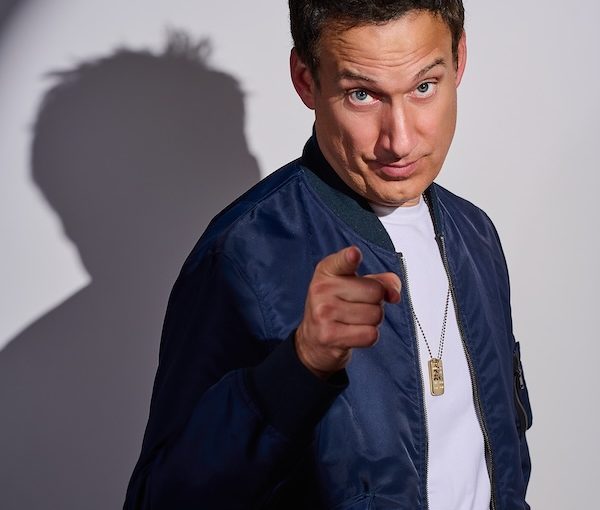
Comedian Elon Gold will perform a full show of comedy at the launch of the Jewish Federation of Greater Vancouver’s annual campaign on Sept. 11. (photo by Limor Garfinkle)
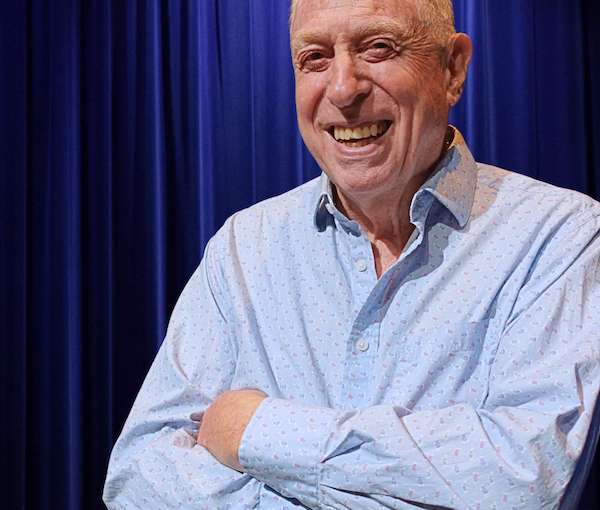
Comedian Elon Gold helps the Jewish Federation of Greater Vancouver launch its annual fundraising campaign on Sept. 11.
The last time the Jewish Independent spoke with Gold, in 2019, he was driving from his home in Los Angeles to Las Vegas, with his family, for a Jewish National Fund event. This time, he had returned home from New York, where he performed gigs all over the East Coast, from DC to Jersey to the Catskills.
It’s a tradition for Gold and his family – wife Sasha and their four children – to spend summers in New York, though, this year, his oldest son, 24, has a job, so had to stay in Los Angeles.
“We all have really fun summers together because both of our families are from New York,” said Gold. All their oldest friends are also in New York, he added. “So, it’s like a summer of recharging, with our roots and our family and all that.”
Amid performing at various venues, working on a film, writing a TV series and creating a new comedy special, among other things, Gold gets great joy from doing shows for Jewish organizations.
“My motto is, ‘everything matters and nothing matters.’ That’s how you should look at life, and that’s how you should look at gigs,” he told the Independent.
The nothing matters isn’t about being “lackadaisical and lazy and dismissive,” he said, but more about reducing the stress level.
“It doesn’t really matter, it’s just a gig. If it doesn’t go well, I’ll have another one tomorrow, whatever, it’s fine. It takes the pressure off,” said Gold. “But everything matters is also a big part of it, because everything does matter, and every gig, to me, is important.
“It’s important for myriad reasons. The whole community is getting together and to let them down would be very upsetting, not just to them, but to me,” he said. “I always call these nights of community, unity and comedy. So, it does matter that you not just do well, but I try to hit it out of the park every time.”
Elon Gold performs in Vancouver Sept. 11. (photo by Limor Garfinkle)
Since the Oct. 7, 2023, Hamas terror attacks on Israel, community gatherings like the Federation’s campaign launch, are especially important, said Gold.
“We need these nights more than ever before,” he said. “We need these nights to forget that the world hates us, which also is perception, not reality…. The world doesn’t really hate us – there’s far too many people who do hate us, but the world as a whole?
“I was talking to my friend in Israel – I’m writing a TV series in Israel that we’re going to film there, hopefully in the spring – and he was saying he just went to Greece. All you see on social media is they hate the Israelis, [but] everyone we met said, ‘Oh, you’re Israeli? Wow, welcome,’ and gave us hugs.”
That being said, Gold acknowledged we’re living in a frightening time and antisemitism is prevalent.
“But it’s not omnipresent, it’s not everywhere,” he said. “It’s groups of people. There have always been groups of people who hate us, and I always say to Jews, don’t take it so personally. Usually, those groups hate other groups. It’s not just us that people hate. Racism doesn’t start and end with us, but, for some reason, we seem to be the favourite scapegoat of humanity and a lot of it is on us. And, again, I’m not dismissing antisemitism – it is so real.”
Referencing the Jewish man in Montreal who was beaten in front of his children, calling it “disgusting,” Gold said, “It’s really a constant, whether it’s Colorado or DC or wherever you look, there’s another attack, so that’s why we have to be strong and vigilant and stay safe, but also we can’t live our life through the prism of everybody hates us and everything’s terrible. The truth is, a lot of people have always hated us, and whether it’s, ‘they are drinking the blood of Christian children’ to ‘they’re starving Palestinian children,’ they’re blood libels. This is the latest iteration of a blood libel that gives the haters an excuse to hate.”
Gold pointed to inaccurate reporting by the media, including the New York Times’s use on its cover of a photo of a sick, emaciated child in Gaza, wrongly claiming the child was starving.
“It turns out it’s a genetic disease that he has,” said Gold, “and so many of the pictures have been falsified and misrepresented as starvation, when they are children with diseases, which is tragic in its own right, but to blame Israel … and to put that on the cover of the New York Times, that incites and emboldens the haters to hate us and attack us even more. So, it’s all based on lies. The only truth is that there is a war that Israel didn’t start or want and must fight to the end or there’ll be Oct. 7 every day until the last Jew standing. So, we shouldn’t apologize for defending ourselves ever again – but we do have to clarify all the mistruths out there that are representing the Jewish state, and thereby the Jewish people, in the worst light.”
After Oct. 7, Gold needed to step back from work. “For the first few weeks, I found no humour, I was in a state of shock and traumatized, like everybody,” he said. “I actually canceled gigs, I couldn’t do them.”
But one gig he wasn’t allowed to cancel was emceeing a Jewish Federation of Los Angeles event that happened in the shadow of Oct. 7.
“Steven Singer from the Federation in LA said, ‘No, no, we’re insisting that you do it, and that you do open with 10 minutes of comedy in a respectful way. We really need this and … even though we’re still mourning, we have to start healing…. It was the first time I went back on stage, almost a month in,” said Gold.
The terror attacks and the hostages are continually on his mind, he said, but he must pull himself back from those thoughts.
Fortunate to have had an “average to normal childhood,” with parents who “are amazing and brought us up in a loving, happy house … my comedy doesn’t come from pain,” he said. “And now, I’m in more pain emotionally than I’ve ever been with everything going on, but I push it away because, if I delve in too much for too long, I won’t be able to come out of it, I won’t be able to be the funny guy.
“And it’s not just my responsibility,” he said. “In life, I’m fulfilling my purpose by being light and fun and funny, and bringing that to other people, so I can’t get too into it because my rage for what happened and what’s happening and how the world is denying or excusing Oct. 7, the way the world’s demanding the end to the existence of our ancestral homeland – it’s so infuriating and so depressing. If I focus and harp on it too much, I won’t be able to deliver the goods.”
And delivering the goods is something he is compelled to do, by his very nature. When COVID-19 hit and the forecast was that it would last only a few weeks, Gold said his first thought was that he’d catch up on every TV streaming service, binge on shows he’d never been able to watch with four kids and a job that is pretty much 24/7. But, by Day 2 of the pandemic, he was doing a daily show on Instagram Live called My Funny Quarantine.
“Every day at 6:13, which is the number of mitzvahs in the Torah, I would do an 18-minute show, which is also, again, significant, 18 is chai [life],” he said. Most of Gold’s Instagram followers are Jewish, so the show had a lot of Jewish themes, though the guests were wide-ranging, including comedians from Jim Gaffigan to Bill Burr to Tiffany Haddish, Jay Leno and Michael Serra.
Gold’s friend, screenwriter and director Jeremy Garelick, loved My Funny Quarantine and suggested Gold do a Jewish dating show every Saturday night.
The Bachor (bachor is Hebrew for young man, guy) ran for a couple of years. “I made two shidduchim [matches],” said Gold.
“It was a way for people to connect, and no one was doing anything, no one could go anywhere, and I had so many people watching live,” he said.
Gold also did Zoom stand-up shows and outdoor performances during the pandemic. More recently, he worked on the film The Badchan, spending a month in Israel for it. He’s been to Israel four times in the last two years, he said, doing shows.
“Badchan is like a wedding jester,” Gold explained. The film was written by Shuli Rand and Gidi Dar, who did the 2004 film Ushpizin (Guests) together.
“To me, every decade has a seminal cultural Jewish film, like Yentl or Fiddler or The Chosen or their Ushpizin,” said Gold. “And I think this is going to be that film of this decade. It’s going to come out in November, hopefully.”
Gold is currently developing a new hour-long comedy special, which will come out sometime near the end of next year perhaps.
“It’s really exciting,” said Gold, “because Chris Rock, one of my comedy mentors, he said every special should be like a thesis and I have the thesis for this one, and I already have been closing for 20 minutes with this thesis. And so, now I’m just building it out, and I think it’s going to be very fun and relatable, because I’m getting more personal in my comedy.”
He said, “The more you reveal, the more they relate.”
“Little arguments with the wife, little stories that happen, when you share them, I have not just men but women coming over to me going, oh my God, are you in my house? How do you know this happens? I’m like, because it happens to me…. The comedian’s job is to relate and connect, to have this shared experience where you’re taking observations about human behaviour … and laughing about it.”
As for Gold’s performance here on Sept. 11, it represents more than just a good many laughs.
“I think everyone should come out,” he said. “I think we all need nights like this event, and supporting your local community and your local Federation, that’s one of the best ways to help us all get through these tough, insane times where the world feels upside down. I’ll try to turn the world right side up for even just a little bit, even just for one night.”
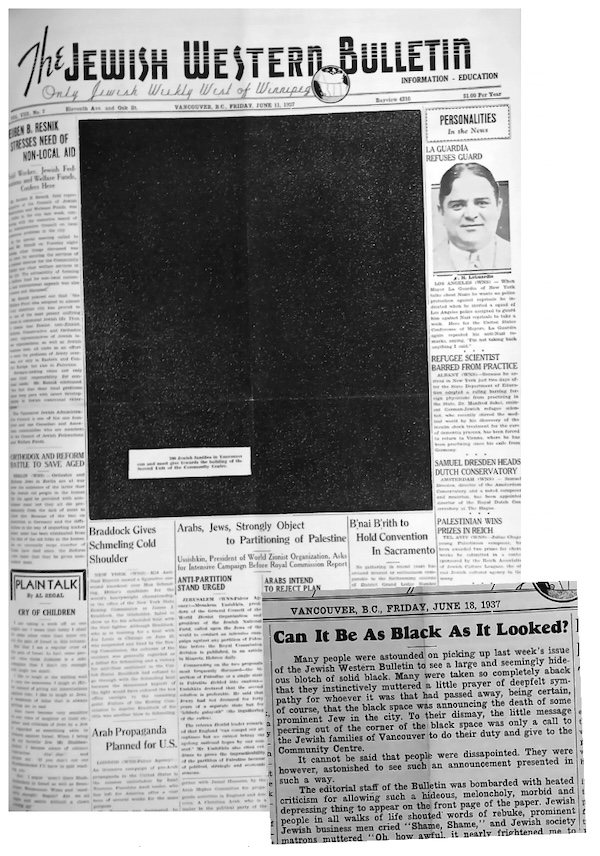
It was the big black square on the cover of the June 11, 1937, Jewish Western Bulletin that caught my attention initially. Then, as I flipped backwards and forwards through the archived papers, it was the weekly drama – that kind of left me hanging – and the sheer bluntness of tactics that drew me in to the JWB’s coverage of the 1937 campaign to raise funds for a second unit of the Jewish Community Centre, then located at Oak and 11th. (The building still exists, the home of the BC Lung Association for a long time now.)
The campaign action plan came out of a shareholders’ meeting in March of that year, at “which over one hundred men of the community were present,” according to the March 12, 1937, JWB, the JI ’s predecessor. I’ve no idea who the shareholders of the centre were. Nor if any women were at that planning meeting, but Lillian Freiman Hadassah, Council of Jewish Women and the Schara Tzedeck Auxiliary were among the organizations that helped solicit and collect pledges.
The appointed campaign committee set a quota of $12,500 (or $271,217 in today’s dollars) and collections were divided into three divisions: donors of $100-$250 (Group A), $25-$100 (Group B) and up to $25 (Group C). The “keynote” of the campaign was “that each give according to his ability,” and every organization on the committee committed “its intention of getting whole-heartedly behind the task ahead.” Meanwhile, “The proposal submitted to shareholders by Schara Tzedeck Congregation of taking over the building has been tabled for a period of three weeks.”
While that proposal obviously fizzled out, I couldn’t find any later mention of it. As I’ve often found when looking through the paper’s archives, it’s easy to find when things start, but harder to find out how they ended up. What is clear is that there was a hard push to raise the $12,500, and, while the March 12 article noted that, “possibly, for the first time in community history, there is no division of opinion concerning the necessity of and the urgent need for doing constructive work for [the] community Centre,” the JWB did feature some disparate views as soon as the next issue.
Rabbi J.L. Zlotnik summed up those concerns in a March 19 article: the quota was too much, given other community concerns and organizations that also needed financial support; and the quota was too little, given that actual building costs are almost always larger than planned, and the community would, therefore, become even more indebted as a result.
“After a period of ten years, twenty thousand dollars are still to be paid before this building can truly be called our own,” wrote Rabbi Samuel Cass in the March 31 issue, about the existing centre, while also pointing to the need for a second unit. He observed, “First, we must not repeat the mistakes of the past,” so the second unit should “be paid for in cash to the very last penny, before the first sod is turned. Second, the campaign must go beyond the amount necessary to erect the contemplated addition.” Lastly, he said, the whole community must agree that the debt on the first unit be paid off “even speedily, and at a near time.”
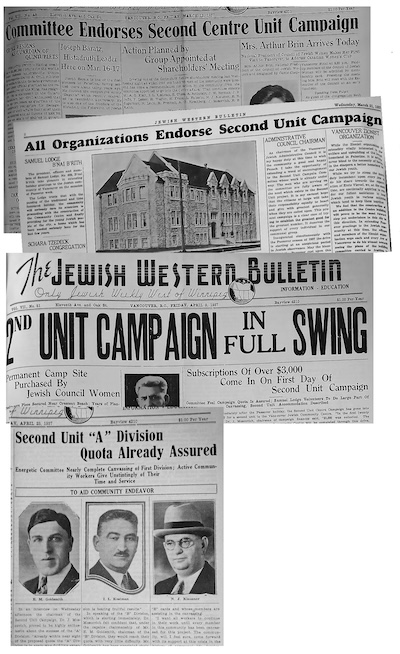
The advice seems to have gone unheeded. In the same March 31 paper as Cass’s article, the page 2 headline read, “All Organizations Endorse Second Unit Campaign.”
The next edition’s cover blared, “2ND UNIT CAMPAIGN IN FULL SWING,” with the news that more than $3,000 had come in on the campaign’s first day, “collected from twenty men.” The building plans were also outlined in the April 9 paper: a two-storey building with a balcony was envisioned. The lower floor would be a gymnasium and banquet room, with “kitchen, showers, wash room, steam rooms, cloak-room, etc.” The upper floor would house an “Auditorium and Ball Room, cloak-room and lounge.” The balcony would be divided into small meeting rooms. “This present building is 33 feet 11 inches on 11th Ave. The addition would be 47 feet 9 inches or more than 40% larger,” the article stated.
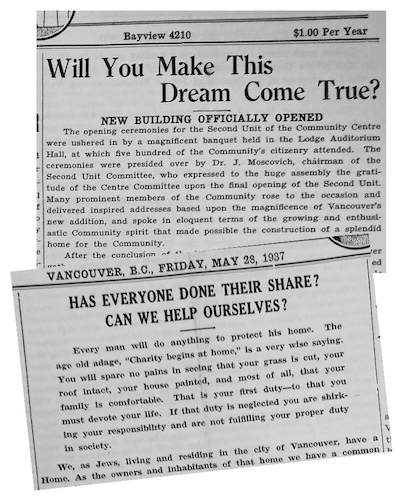
By the April 23 issue, the A Division quota was “already assured.” A couple of weeks later, in the May 7 paper, a completely fictional piece was published on the cover, titled “Will You Make This Dream Come True?” It was written as if the second unit of the centre had opened, with a banquet, a highlight of which was the announcement of a $5,000 gift from an anonymous donor to pay for all the unit’s furnishings and appliances. The article imagined what meetings and other banquets were already being held in the new building and the great number of athletics classes available now that “the use of the gymnasium was available to all persons in the Community.”
By the end of May, though, the JWB was asking whether everyone had “done their share.” By June, the optimism hit a wall.
The cover of the June 11 issue featured the large black square that caught my eye. The label-sized caption with a white background read: “700 Jewish families in Vancouver can and must give towards the building of the Second Unit of the Community Centre.”
The dramatic editorial choice was explained in the June 18 paper:
“The editorial staff of the Bulletin was bombarded with heated criticism for allowing such a hideous, melancholy, morbid and depressing thing to appear on the front page of the paper. Jewish people in all walks of life shouted words of rebuke, prominent Jewish business men cried ‘Shame, Shame,’ and Jewish society matrons muttered ‘Oh, how awful, it nearly frightened me to death.’
“No one, however, said ‘That little message in white, standing so pure, apart from that black hideousness was TRUE. Every body should give to the Centre – How we need that second unit – How essential it is to our Youth to have a proper meeting place.
“What our Community needs is more players, and less bench criticisizers. More workers, and less kickers.”
It concluded: “If you have a conscience, if you have the true community spirit – come through and show it. If you haven’t already given your contribution to the Second Unit – Mail it in to the Centre – tell them this article made you feel your responsibility. If you have given your donation, send in notification to the Centre to have it doubled. No matter what you give, make it as much as you can afford. Don’t let us be criticisers – LET’S BE BUILDERS.”
Over the summer, a couple of meetings were held about the centre. There was a large notice on the cover of the July 2 paper about a July 5 meeting, but I couldn’t find a report in the paper about what transpired. Nor could I find out how the Sept. 22 “mass meeting” on “the Future of Vancouver Jewry” went – its Sept. 14 front-page notice declaring that “By your attendance … YOU SHALL BE JUDGED!”
There are no August or October 1937 papers in the bound archival collection I have, and I don’t know if they were lost to history or never published. Until June 1937, the reporting had been detailed and consistent, but the next mention of a campaign, in the Nov. 12 paper, is “the Recent Centre Drive” – not the second unit drive. In this campaign, there were seven grades, ranging from Grade A ($500 and up) to Grade G ($1 to $49). The Grade A donors were listed by name in that paper, the Grade Bs in the next issue, the Cs in the next, through to the Gs in the Dec. 24 issue, wherein the committee was congratulated for its work and the community for its “whole-hearted support to the campaign.”
Since there is no useable digital archive of the paper, sadly, my time-limited flipping came across no more mention of a second unit. The editorial two years after that campaign, on June 23, 1939, started, “Much water has gone under the bridge since our Centre Building has been re-financed. Inside and outside improvements on the building, in addition to the Amortization Plan itself has gone forward.
“Never have local Jewish efforts been more active, and the response greater, nor has the attendance within the building itself been so large. Much of the success is due to the liberal atmosphere of the Centre itself, which means the use of this building for any and all worthy Jewish efforts with but one thought – helping others to help themselves. One shudders to think of what might have happened to Jewish efforts in our city had not our fellow-Jews responded to the call for funds when it was made.”
The editorial also noted: “Some, however, have through oversight or neglect failed to send their payments in as yet.” It was hoped that “the pledgors in arrears will … see that their respective remittances are made … upon receipt of the notices.”
As far as I know, the second unit of the Oak and 11th JCC never materialized. It would be more than two decades later that a new centre would be built, at Oak and 41st, opening in 1962.
Neshama Carlebach comes to Vancouver for Selichot at Congregation Beth Israel on Sept. 13. (photo by Michael Albany)
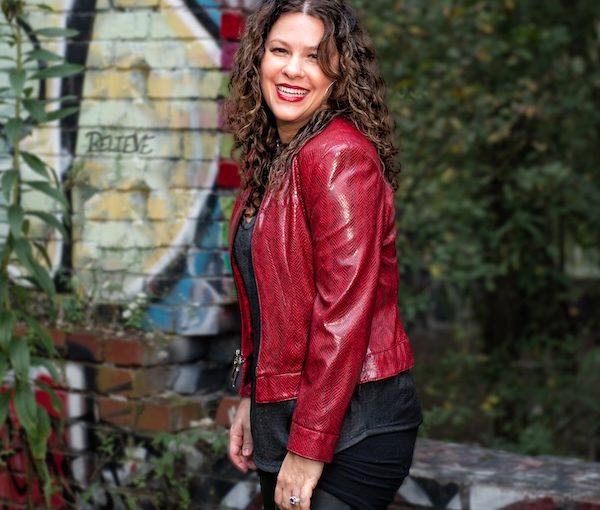
After more than two decades, Neshama Carlebach returns to Vancouver. But not for a concert.
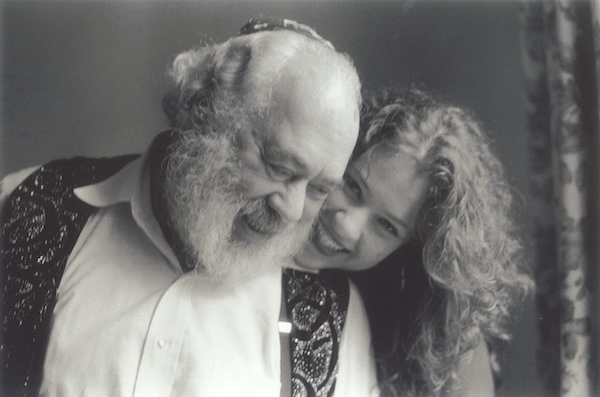
The award-winning singer-songwriter will lead, with her band, a musical service at Congregation Beth Israel for Selichot, the night of Sept. 13. The holiday – whose name translates as forgiveness, or pardon – marks the beginning of a period of penitential prayers that runs through Simchat Torah. In addition to participating in the service, Carlebach will speak with Rabbi Jonathan Infeld about her father, the late Rabbi Shlomo Carlebach, his spiritual and musical legacy, and also the pain caused by the sexual misconduct of which he was posthumously accused.
In January 2018, Carlebach wrote a blog on the Times of Israel that addressed the allegations against her father, who died in 1994. She also shared that she had been sexually abused as a child by one of her father’s friends. Writing that blog, she told the Jewish Independent, “was one of the most painful and soul-wrenching things I have ever done. I was standing at the edge of a precipice, holding the truth of my own pain, the pain of others, and the love I still carry for my father, who was no longer alive to respond. The world was shifting in the wake of the #MeToo movement, and I felt an overwhelming need to finally speak and honour the voices of those who had been hurt and silenced – including my own.
“Simultaneously, my career was, in many ways, canceled. Doors closed. Invitations disappeared. People I loved and trusted turned away from me in anger, some even accusing me of betraying my father and his legacy. Perhaps just as painful was watching my family’s music – music that has brought meaning to so many – be rejected and erased.
“Acknowledging my father’s transgressions broke my heart,” said Carlebach, “but it was time for me to speak out – to stand with those who were hurt and to be a part of the possibility of healing, and for the belief that we must be honest to be whole. We must hold space for truth, even when it shatters the fabric of the life we once clung to.”
From the age of 5, Carlebach’s father invited her to share Chassidic stories for his audiences and, by age 15, she was performing alongside him. Since her first album in 1996, she has released 10 records and, worldwide, is one of the bestselling Jewish artists. She is also an advocate for religious pluralism and human rights, as well as being a community leader in other respects. Living in New York with husband Rabbi Menachem Creditor and their five children, she is in the midst of writing a memoir, as well as studying to become a rabbi at the Academy for Jewish Religion.
In 2026, a documentary about Carlebach’s family will be released, with the support of Jewish Story Partners. The blurb on JSP’s website reads: “Rabbi Shlomo Carlebach, ‘the Singing Rabbi,’ ignited the spiritual landscape for legions of Jews in a post-Holocaust world. Soon after his death, he is accused of sexual abuse. Thirty years later, with intimate access to his family, inner circle, and his victims, Carlebach Project Untitled grapples with a complicated legacy and how – or whether – to separate the art from the artist.”
“I was just 20 when my father died and, in many ways, I was still a child,” Carlebach told the Independent. “He wasn’t just my father; he was my rabbi and my closest friend. Losing him was like losing my grounding in the world. And when, years later, I began to fully confront the complexities of his life and the pain that others experienced because of him, the grief became more complicated. My career crumbled. I lost community. I lost friends.
“I think what helped me to continue was the music and my connection to God. Even when I wasn’t able to sing professionally, within my own heart I sang and I prayed.
“I still carry and honour my father because I am his daughter and because I believe that love and accountability are not opposites,” she said. “Music has a life of its own, it has always been bigger than the entity which creates it. The legacy I hope I’m building now with my sons is one rooted in truth, in justice, in faith and in love. I choose to believe these are the things he wanted for me, and for the world.”
On Selichot, Sept. 13, Neshama Carlebach will speak with Rabbi Jonathan Infeld about her father, the late Rabbi Shlomo Carlebach, his spiritual and musical legacy, and also the pain caused by the sexual misconduct of which he was posthumously accused. (photo by Joan Roth)
It was after the Hamas terror attacks on Oct. 7, 2023, that Carlebach began creating music with her sons, Rafael and Micah.
“To share the sacred legacy of our family with them, and to witness their light, their depth and their gifts has been one of the greatest blessings of my lifetime,” she said. “My Rafael sadly can’t be with us in Vancouver, as he is starting college, but my Micah will be! We will also be joined by my longtime musical collaborators, pianist and musical director Seth Farber, bass player Brian Glassman and drummer Joe Nero.”
“Originally written in support of the Soviet Jewry Movement, ‘Am Yisrael Chai’ has been an anthem of the Jewish people for over 50 years,” Carlebach wrote in a Times of Israel blog last year. “The melody and words have brought energy, sustenance and unity whenever it’s been sung, often inresponse to hardships facing the Jewish world. In times of need, it is simultaneously a call to action and a prayer, a defiant cry and a message of reassurance. The words, translated as ‘The People of Israel Live,’ were set to music by my father in the 1960s and embraced as part of the Jewish canon. Today, since the horrors of Oct. 7, they have once again become a constant refrain in the Jewish community.”
In another blog, Carlebach, who was born on Simchat Torah, explains why she decided to become a rabbi. “After Oct. 7, Simchat Torah, my heart, my essence and my birthday changed forever,” she wrote. “My Jewish identity and desire to learn have never been stronger. I feel a greater sense of urgency to do my part and bring meaning and holiness to our communities, both in the diaspora and Israel.”
She shared with the Independent the importance of participating in the event at Beth Israel.
“Selichot is the beginning of the High Holy Day season, our holiest time of year,” she said. “It is when we begin to turn inward and ask ourselves the hardest questions: Who have I been? Where have I fallen short? What do I need to repair – in myself, in my relationships, in the world? It’s a time of vulnerability, of accountability and of profound possibility.
“I’ve always envisioned that, on Selichot, the Great Gates of Teshuvah – of Return – first begin to creak open, but slowly, almost in a whisper. Selichot is softer than Rosh Hashanah, more intimate than Yom Kippur. We gather, often late at night, to begin to open our hearts as a community – with prayer, with song, with tears. It’s a time for truth and tenderness.
“It will be incredibly meaningful to gather with the Vancouver community in prayer and in conversation this Selichot. This is the kind of gathering I love most!” she said, commending Rabbi Infeld and the Beth Israel community for being “open and brave enough to engage in this complicated topic.”
“Every year, we work hard to make sure that our Selichot service and program makes a difference in people’s lives,” said Infeld. “The topics are often not easy to discuss, but, every year, people leave the synagogue looking at a situation from a different perspective and as better human beings because they came. We love when people discuss the content of what they heard at the synagogue after Selichot. We believe that this year that will happen as well. Shlomo Carlebach is extremely well known, but the underbelly of the person and his personality are extremely important for us all to discuss – and there is no one better in this world to do that than his daughter, who is also extremely musically talented.”
To invite Carlebach was “a natural choice,” he said, given that the event will honour Harley Rothstein.
“Since we had decided to honour Harley for his many years of service this year, I decided I wanted to do something very special from a musical perspective,” said the rabbi.
“Harley is one of the most humble and generous people I know. He is a constant supporter of our synagogue in many ways. We have been honoured to have him lead services over the years. He has a fabulous voice with great kavanah [intention/devotion],” explained Infeld. “He has a magical ability to engage people in congregational singing and to help engender a warm feeling among all the participants. Harley has gone above and beyond by helping to teach the next generation of service leaders. One of his most important aspects of leadership each year has been the Selichot service with our ba’alat tefillah [prayer leader], Debby Fenson.”
On Sept. 5, during the synagogue’s Shabbat with a Difference Kabbalat Shabbat service, the congregation will honour Fenson on her 20th anniversary with Beth Israel. On Sept. 13, she and Rothstein will lead Havdalah.
The Selichot event with Neshama Carlebach is open to the entire community. To attend, RSVP via bethisrael.ca.
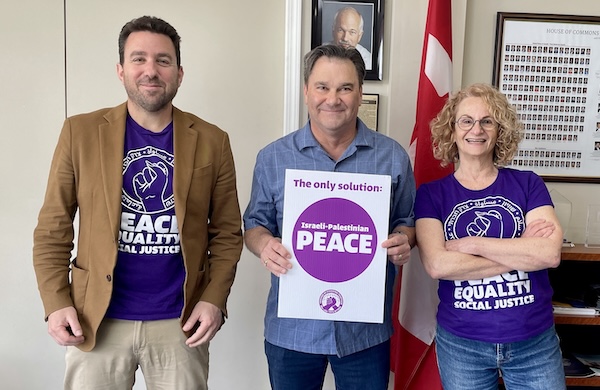
Interim leader of the New Democratic Party of Canada Don Davies, centre, with Itai Bavli and Avril Orloff of Vancouver Friends of Standing Together. (photo from Vancouver FOST)
This summer, Vancouver Friends of Standing Together has been holding weekly vigils in front of City Hall to continue the call for the return of the hostages, an end to the war in Gaza and an end to settler violence against Palestinians in the West Bank.
“We organize rallies, vigils and information sessions to raise awareness of the situation in Israel/Palestine and promote ‘another way’ that is not exclusively pro-Israel or pro-Palestine but pro-humanity,” Avril Orloff, who started the Vancouver Friends of Standing Together (FOST) chapter, told the Independent.
Adi Keidar, one of the chapter’s co-administrators, said, “If you are willing to accept that both Israelis and Palestinians deserve to live freely and safely on this land, I will be standing with and supporting you. Someone told me, ‘if you need to choose between pro-Israel or pro-Palestine, it is obvious for me, as a Jew/Israeli where I stand. However, if I knew and trusted that there is another way, I would choose both.’ Standing Together, for me, brings that other voice.”
“I joined the FOST group in June 2024 because it reflects my values and my belief that finding a just solution to the conflict is the only way forward,” Itai Bavli, also a Vancouver FOST co-administrator, said. “I care about all people living between the river and the sea and believe that both peoples can thrive if given the chance. I support Israelis and Palestinians alike and believe they both have the right to live freely and safely. Which means ending the occupation and supporting a Palestinian state. For me, it’s a responsibility I carry.”
Currently, there are nine local co-administrators, who play active roles as their other work and responsibilities permit, Orloff explained. “We try to divide up responsibilities, so no one is overburdened,” she said, noting that everyone involved is a volunteer. “We meet on an ad hoc basis as needed to brainstorm ways to increase awareness, bring out the voice of Standing Together and address issues that come up.”
Standing Together is an Israeli grassroots social movement made up of Jewish and Palestinian citizens that, according to its website, “envision[s] a society that serves all of us and treats every person with dignity. A society that chooses peace, justice and independence for Israelis and Palestinians, Jews and Arabs. A society in which we all enjoy real security, adequate housing, quality education, good healthcare, a liveable climate, a decent salary and the ability to age with dignity.”
Since the Hamas terror attacks on Oct. 7, 2023, and the ensuing war, Standing Together in Israel has been organizing demonstrations – attended by tens of thousands – calling for a hostage deal and a ceasefire agreement. They also have been engaging in public campaigns “aimed at re-humanizing the discourse, retaining humanity, mourning all lives lost and rejecting violence on social media in Hebrew, Arabic, and English.” Last May, they launched the Humanitarian Guard initiative at Tarqumiyah checkpoint to protect “aid trucks headed to Gaza from attacks by extremist settlers that come out to attack the trucks.” This month, they started a campaign to collect food and humanitarian aid for residents of Gaza.
In addition to the eight chapters of Standing Together that operate in Israel, there are Friends of Standing Together chapters worldwide that have formed since Oct. 7. The chapters in the diaspora raise awareness of and funds for Standing Together, as well as offer a local communal space for people who share the movement’s values and goals. Orloff is an ambassador for ST’s global crowdfunding campaign and recently surpassed her personal goal of raising $6,000 for the movement.
“I started the Vancouver FOST group in February 2024, when I first learned about Standing Together and discovered they had support groups around the world,” said Orloff. “I was drawn to ST because I felt that a lot of groups advocating for either Israel or Palestine focused on only one side or the other, which seemed short-sighted to me. Standing Together’s stance, by contrast, is that, with seven million Jews and seven million Palestinians living ‘between the river and the sea,’ none of whom are going anywhere, the only sustainable future is a shared one grounded in equality, security, peace and justice for all.”
Orloff, Keidar and Bavli said they appreciate that ST is about more than ending the war and that it’s “a broad-based social movement that goes beyond the specifics of Jewish/Palestinian issues to encompass social change at all levels of society, from the bottom up.”
“One of the biggest concerns and confusions I had on Oct. 7 and the events that followed was the rise of hate and polarization on both sides,” said Keidar. “It was rare that I could agree with much that was said, and I was constantly trying to hold two thoughts at the same time. I felt alone and was not seeing the benefit of supporting one side – it felt wrong and unjust and it didn’t fit my values.
Adi Keidar at one of Vancouver Friends of Standing Together’s vigils. (photo from Vancouver FOST)
“When I learned about Standing Together, it was the closest group that I felt spoke to my values and beliefs, as their focus is not one side or the other but humanity, which was the voice I felt was drowning in the hate that was brewing. I wasn’t willing to accept just one side. I believe that the only way to get out of this cycle is by compassionately seeing both sides, taking responsibility, finding the people that speak these values and bringing their voices out.”
Keidar participates in the weekly Bring Them Home rallies. Both she and Bavli spoke at a BTH rally this summer to raise the voice of Standing Together, to show “that it’s possible (indeed, necessary) to support both Israel and Palestine, and remind people that the immediate end of this war is only the beginning of the work to build a shared society in which all peoples live in peace and security.”
Vancouver FOST does local community-building through their WhatsApp group, social events (for example, film evenings, picnics, in-home gatherings), rallies and other activities. They raise awareness on social media via Instagram and work to build their membership, liaising with Standing Together and FOST groups globally. They meet monthly on Zoom with other Canadian FOSTs and build relationships with groups that share ST’s values and principles, like Women Wage Peace and various faith organizations. They have started doing outreach to Canadian politicians.
“We have endorsed Canada FOST’s Call to Action to the Canadian government and politicians to advance key priorities,” said Orloff, “including taking urgent diplomatic action to permanently end the war in Gaza; providing long-term support for peace and equality, not war; and supporting solidarity and partnership in our own society.”
The group organized and hosted an event in June last year, which brought Raja Khouri and Jeffrey Wilkinson to Vancouver to talk about their book, The Wall Between: What Jews and Palestinians Don’t Want to Know About Each Other. (See jewishindependent.ca/not-such-a-great-divide.) They have plans to host an information table at the University of British Columbia in the fall.
In an email, Orloff, Keidar and Bavli described Vancouver FOST as being “for more than we’re against. We don’t argue about terminology or labels or traffic in simplistic black-and-white ‘solutions,’ but are comfortable living with complexity and difference. We love to have juicy discussions, but, more than talk, we’re about supporting action that will bring about real, practical, sustainable change. We aren’t pro-Israel or pro-Palestine but pro-humanity,” they reiterated, “and we don’t see this as a left-right divide or an Israel-Palestine divide, but a divide between those who want peace and life for everyone and those who traffic in death and destruction. We’re here to offer a different way of thinking about the conflict and a different path forward, not to convince people that we’re right.”
Orloff said group members aren’t “settling for simplistic, one-sided solutions that make heroes of one side and villains of the other, but recognize that geopolitical issues have history and context that create layers of complexity, compounded by historical and intergenerational trauma on both sides. What I tell people is that, in this ongoing conflict, there is no win/lose: it’s either win/win or lose/lose. If we don’t find a way to justice, equality, peace and security for all, there won’t be justice, equality, peace or security for anyone.”
“We are involved with Standing Together,” the three co-administrators stressed, “because of deep feeling for Israel and the people living in the land. Many of our FOST members are Israelis who are heartsick at what Israel is doing in Gaza, the West Bank, and to its own Palestinian Israeli citizens. We believe in Israel’s promise and want to hold Israel to its highest ideals. There is no other way. It’s our responsibility to bring about the change.”
On Sept. 16, Stephen Schecter will retell three stories from the Hebrew Bible at the 40th anniversary celebration of L’Chaim Adult Day Centre. He promises the stories will bring laughter and tears.(photo from Stephen Schecter)
“I love the Hebrew Bible,” Stephen Schecter told the Independent. “It is, after all, the template of Western literature and the DNA of the Jewish people. Its stories are all told twice, inviting the reader to ask what is going on here. And the stories invariably end badly, teaching us the importance of getting a handle on our passions if we want to have a halfway decent life together.”
On Sept. 16, in celebration of L’Chaim Adult Day Centre’s 40th anniversary, Schecter will share a few of his favourite biblical tales.
“Retelling these stories,” he said, “is my way of giving the Jews back their pride and their backbone, steeling them to be proud Zionists, once again going back to ‘In the beginning,’ which is the title of my show on Sept. 16. The stories – and I will be retelling three of them – when you examine them closely are rather funny, but this is no laughing matter. Some of them bring you even to tears.”
Schecter, who was a sociology professor at Université du Québec à Montréal, has always been interested in literature, but not necessarily the Hebrew Bible.
“When my kids had their bat and bar mitzvahs, I started going to Shabbat services again, which meant I read the weekly Torah portion and, lo and behold, I was swept away,” he said. “When a friend put me on to a contemporary rewrite of some of the books of The Iliad, I thought I could do that too but within my tradition. The upshot turned out to be a 170-page poem called ‘David and Jonathan,’ published in 1996.
“From there, I went on to lecturing about the Hebrew Bible to multiple audiences in Montreal and ended up doing a one-man show on the first half of the book of Genesis in 2003 at the Saidye Bronfman Centre theatre [now the Segal Centre for Performing Arts]. In 2005, I moved to Vancouver and gave a number of series of talks on the Hebrew Bible to seniors at the JCC.”
Schecter continued to write about sociology and, in 2012, published a book called Grasshoppers in Zion about Israel’s situation in the Middle East. In that book, he said, “I explained how a reading of the Hebrew Bible could help Jews immeasurably in dealing with the Palestinians. No one listened, but I continued to write and now do so on Substack at schecter.substack.com.”
He also noted how people don’t listen to – or even know about – the lessons of the Hebrew Bible. Hence, he quipped, “the constant rewrites. Steinbeck’s East of Eden retells Cain and Abel. Shakespeare’s Romeo and Juliet turns the Dinah story into a five-act play. The end of the Book of Judges replays Sodom and Gomorrah, which now finds its rehash on our TV screens in Gaza. Not for nothing is the Hebrew Bible laced with irony, engendering that particular form of Jewish humour Sholem Aleichem and S.Y. Agnon each captured.”
The English-speaking world once used the Hebrew Bible to learn to read, but people have stopped reading it altogether, said Schecter.
“Many Jewish day schools do not teach it, especially at the high school level, which is where Jewish youngsters could begin to immerse themselves in their tradition,” he said. “When I attend shul, I often hear more about food banks than the wild poetry of the parashah [weekly Torah portion]. The answer to antisemitism lies not in refuting the arguments of those who slander us; it is in asserting the timeless truths of this sacred text, which lay out the indissoluble link between the Hebrew Bible and the land of Israel and our identity as Jews.
“I am blown away every time I reread these stories,” he said.
“So, I hope Jews come to see the show,” said Schecter. “I hope especially community leaders, activists, rabbis, principals and teachers come and hear these magnificent tales and see how they still speak to a modern audience. It is a show to celebrate the 40th anniversary of L’Chaim, the only adult Jewish day centre in the Lower Mainland, whose exceptional level of care would have well served even our founding patriarchs, all of whom could have used its services. Come and see why.”
“We are on our way to becoming the gold standard of adult day programs in Vancouver,” said L’Chaim executive director Leah Deslauriers of but one of the many reasons to celebrate the organization’s 40th year.
“L’Chaim is fortunate to have community support, from foundations to private donors, which allows us to offer an enriched program to our clients and their families. All of us at L’Chaim are forever grateful for this support,” she said, adding that “L’Chaim continues to grow, and shows no signs of slowing down.”
In the coming years, said Deslauriers, “L’Chaim will prepare to move into the new JWest building upon its completion. In the next 10 years, our hope is to increase our funded spaces from 16 to 22 each day. And, if demand increases, maybe even add an additional day and be open on Sundays.”
Tickets ($18) for In the Beginning, which takes place Sept. 16, 7 p.m., at the Rothstein Theatre, can be purchased at eventbrite.ca.
Not surprisingly – “People of the Book,” and all – education is an always-relevant topic that has been covered in the Jewish Independent / Jewish Western Bulletin. The paper seems to have steered clear of editorially supporting any particular Jewish school or type of Jewish schooling, but rather consistently stressed the need for Jewish education, especially for children, but also for youth and adults.
A 1956 editorial noted that “an estimated 50 percent of Jewish children in Canada do not get any Jewish education whatsoever.” While admitting that there were no data to suggest Vancouver fared better than other Canadian cities in this regard, it noted that there were several types of schooling available here, day school, evening classes, religious and secular options. “Only the anti-Semites try to cast all Jews in a common mold, a hateful mold,” it noted. “But the Jews among themselves have always followed diverse paths in the perpetuation of their history, ideals and spiritual heritage.” So, it concluded, “Register your child in the Jewish school of your choice. And, if your child is already enrolled, remind your friend or neighbor about enrolling his child.”
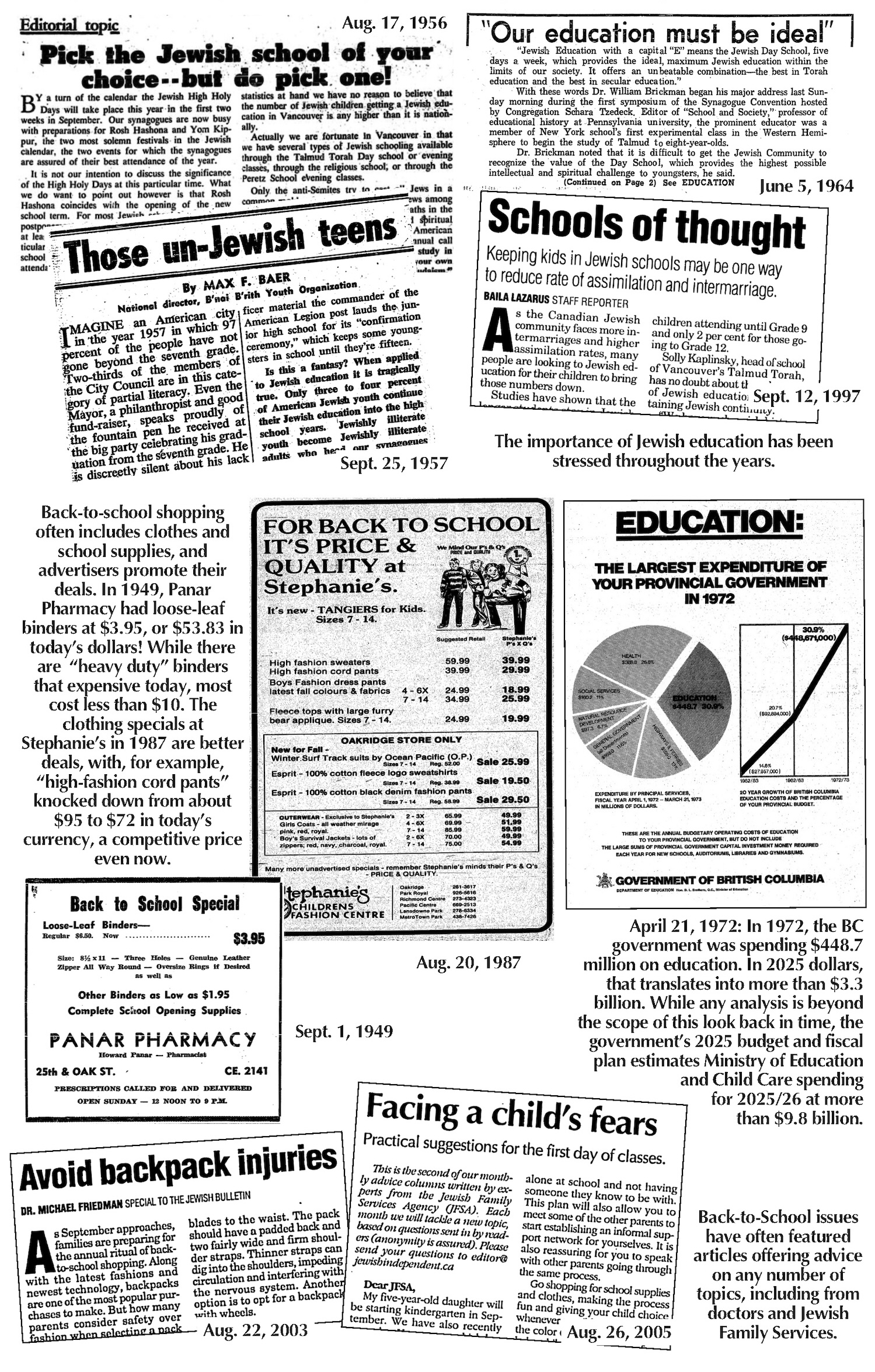
Family Day at Stable Harvest Farm was educational – and fun! (photo by Cynthia Ramsay)
Sunday, July 6, was a beautiful sunny day. Perfect for a visit to Stable Harvest Farms, in Langley, to enjoy one of its Family Days.
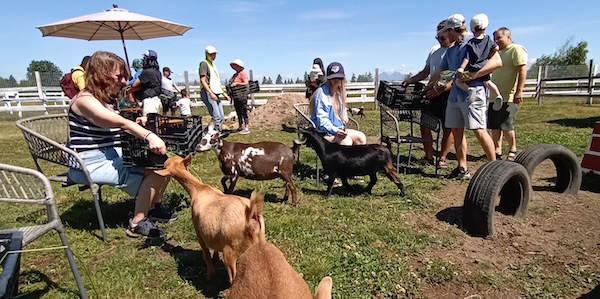
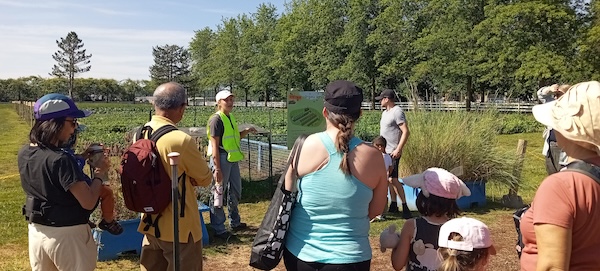
My wife and I joined the first tours of the morning. Our group of maybe 50 people, including lots of young children, was split into two, after a brief introduction by one of the university student interns who work on the farm over the summer. We were then led through some of the fields, where we learned a bit about the vegetables and flowers being grown there, while the other half of the group started at the petting zoo.
Just two of the many animals at Stable Harvest Farm. (photo by Cynthia Ramsay)
Stable Harvest Farms, a nonprofit founded by Syd Belzberg, welcomes more than 15,000 visitors a year – families, educators, students, volunteers, members of various groups. Several Jewish organizations have participated in the educational offerings. For example, Vancouver Talmud Torah has been involved since the farm’s establishment five years ago, with students from grades 2 to 7 visiting once or twice a year.
“We continue to feed and support organizations both Jewish and non-Jewish through JFS [Jewish Family Services] and Meals on Wheels, and countless other nonprofit organizations,” Belzberg told the JI.
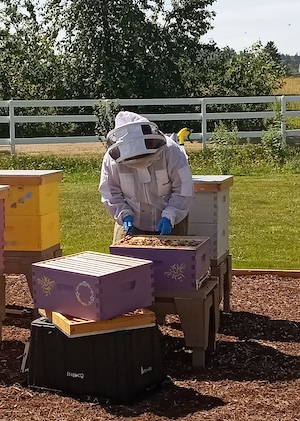
Stable Harvest has donated well over 360,000 pounds of produce since 2020 to various communities in Greater Vancouver. On our tour, we found out how that produce is grown and harvested organically, stopping at some of the 12 education stations that have been created for visiting schoolchildren and others. The stations cover a wide range, from what’s in a seed, to what organic agriculture is, to methods of irrigation. One of the coolest stops was the bat boxes, houses for owls and bug hotels station. But, I have to admit, feeding the sheep and the Nigerian dwarf goats was the most fun. And we got to see the beekeeper in action.
On our tour, we found out how that produce is grown and harvested organically, stopping at some of the 12 education stations that have been created for visiting schoolchildren and others. (photo by Cynthia Ramsay)
In addition to the learning stations, there are signs everywhere. All the crops are labeled with what’s being grown and fun facts abound. Did you know that there are some 27 different types of broccoli, for instance? Or that snapdragons are edible, and can be used for dyeing cloth?
Farmer Maya led our group, making sure we all had enough water and were faring well in the heat. All the staff are “mentored by an experienced educator to develop and deliver impactful, age-appropriate learning experiences aligned with BC’s Ministry of Education goals,” Belzberg told me later.
The focus, he said, has been making sure the learning stations “link directly to the BC curriculum’s ‘Big Ideas’ and core competencies (e.g., communication, thinking, social responsibility),” as well as being sensory- and inquiry-based.
The beekeeper in action at Stable Harvest Farm. (photo by Cynthia Ramsay)
“Students engage through touch, smell, sight and movement – using storytelling, questioning and games to spark curiosity,” he said.
As our Family Day tour proved, the activities offered are inclusive and adaptable for diverse needs, and the staff are well-trained to keep visitors young and old, with varying levels of physical and mental nimbleness, engaged. My wife and I had both an educational and entertaining time. It was well worth the drive from North Vancouver, where we live. Most everyone would enjoy the fresh air and welcoming atmosphere, I think.
To keep track of the many things going on at the farm, including volunteer opportunities, follow it on Instagram and check out the website, stableharvestfarm.com, every now and again. You can find out when the next Family Day is and book a visit on the website or by email, [email protected].
Son of a Seeker follows Kai Balin’s search for where he fits within Judaism and Jewish community. (still from Son of a Seeker)
Kai Balin’s documentary Son of a Seeker, which screened to a sold-out Rothstein Theatre last month, is an official selection of the 2026 Vancouver Jewish Film Festival, which will take place next April.
The very personal work that follows Balin’s search for where he fits within Judaism and Jewish community will be thought-provoking for viewers, generating questions about what religion, family and belonging mean to them.
“I think my mother, sister and even my brother have a more innate sense of security in who they are and in who they are as Jews,” Balin told the Independent. “My dad and I, on the other hand, have a more complex identity. It makes it harder to fully fit in or feel completely rooted. However, I see it – and I know my dad does too – as a kind of blessing. It’s ultimately who we are. And, while it comes with plenty of challenges, being a seeker is also a beautiful way to live.”
Balin dedicates the documentary to his grandparents, who survived the Holocaust. “But survival is not the same as security,” he narrates in the film. “My father and I have spent our lives trying to understand what it means to continue.”
Having grown up in a Jewish but not religious home, where his deeper questions were not answered, Balin’s father, Jeffrey, began looking for answers elsewhere, notably, in Buddhism. And, while Balin’s mother, Jennifer Shecter, grew up in a traditional Jewish family and attended Jewish school, “bringing a strong sense of Judaism into the home wasn’t a priority, but I knew I was a Jew,” says Kai Balin in the film. “And I got to create a version of Judaism that I owned and I loved.”
The home video clips in the film highlight this love. As a child, Balin plays at being a rabbi, wants to be one when he grows up. But, over the years, he loses this connection, just as his father begins to return to Judaism. How the father and son negotiate their respective paths, while being respectful of the other’s journey, is a key aspect of the documentary.
“When I first started making Son of a Seeker, I had no idea what the title would be, or even what the story really was,” said Kai Balin. “I knew I wanted to explore Judaism and what it means to be Jewish, but I didn’t expect it to become so personal. Early on, I interviewed a few dozen Jewish people from across the spectrum on camera. But, in the end, I realized I wanted this film to be something much more intimate.
“My dad initially thought he’d just be one of many voices in the film. He didn’t expect to become such a central figure in the story. It pushed him far beyond his comfort zone, but he ultimately believed in the project and gave me his full blessing to be a part of my documentary.”
Balin’s sister, Justine, and brother, Jackson, are also in the film, his brother in the background, while his sister is featured more prominently.
“My sister was my right-hand woman throughout the entire process – I truly couldn’t have made this film without her,” said Balin. “She filmed what’s arguably the most important scene in the movie, when I’m walking through the town where our grandfather was born and raised until he was sent away to a forced labour camp and had everything taken from him and his family. My sister also spent countless hours in the editing room, helping make the tough calls about what to cut and what to keep. Without her input, the film would’ve easily been two hours long and a lot less focused.
“My whole family really stood behind me on this project,” he said. “They gave me the strength, courage and confidence to see it through.”
Balin came to filmmaking somewhat organically.
“I was studying kinesiology at Western University. After my second year, I worked on an indie film, Volition, as part of the swing crew, helping with lighting and grip. Later that summer, I was the program director at Camp Hatikvah (2017), where the videographer/photographer, Denis Lipman, brought some super cool gear…. Right before my third year, I bought a camera – and, from then on, I started dedicating less and less time to what I was actually studying, and more time learning how to shoot and edit.
“I was running a nonprofit at school that threw club and bar events for local charities, and the first video I ever made was a recap of one of those nights,” said Balin. “I started getting more involved on campus and around the city (London, Ont.), looking for any chance to shoot videos.
“My first paid gig was filming a club event that featured a guy in a robot suit on stilts. I was also on the rugby team, so I made a few hype-up videos for them whenever I was injured (which was quite a bit). Over the last two years at my time in university, I got more invested in videography and less focused on kinesiology. I ended up shooting videos for all sorts of events and student clubs.”
After graduating, Balin pursued videography full time. Not wanting to make corporate videos, he started making a documentary about his dad’s work.
“He was a leadership development coach working mostly with heads of NGOs and social enterprises,” explained Balin. “I lined up a plan to travel to different countries, mostly in East Africa and India, to film these organizations and their leaders. I started shooting, but I didn’t have a clear direction. Eventually, I lost the passion for the project – and for filmmaking altogether. I just wanted to travel.”
It would be almost five years before Balin made another video.
“It took about three months to put My 5 Year Video Project together – I wasn’t working any other job at the time – and we held a small premiere in August 2024 with around 70 people,” he said about the film, which can be seen on YouTube.
“I didn’t expect people to be so moved by what I had created,” he said. “That experience gave me the confidence to pursue my next film project. At the time, it was just a rough idea, and I had no clue it would eventually become something so personal – and so deeply centred around my father’s story as well.”
But, for Balin, it’s the personal aspects of art, films and books that draw him in, “even if I can’t directly relate to what the creator is going through,” he said. “I remember hearing years ago, from a few directors I really respect, that you ultimately have to make the film for yourself – something you’d enjoy watching a hundred times over, and something that excites you to work on every day.
“For me, that excitement comes from sharing something personal. It’s my life, my questions, my struggles, and I find them interesting. So maybe others will too.”
As for what comes next, Balin said, “One side of me just wants to let the river flow, follow life as it comes without getting too attached to any future outcomes. But the other side of me dreams of being a famous, successful filmmaker making big-budget movies. There’s still something in me that maybe wants to be a rabbi one day as well.”
He added, “I know my relationship with Judaism will continue to evolve, but, for now, I’ve found a sense of peace. I feel like I have a steady relationship with it, and I’m much more secure in who I am as a Jew than I was when I started this film.
“These days,” Balin said, “I find myself seeking something else: my soulmate. That might even be the focus of my next documentary – exploring the journey to find ‘the one’ – if that concept even exists.”

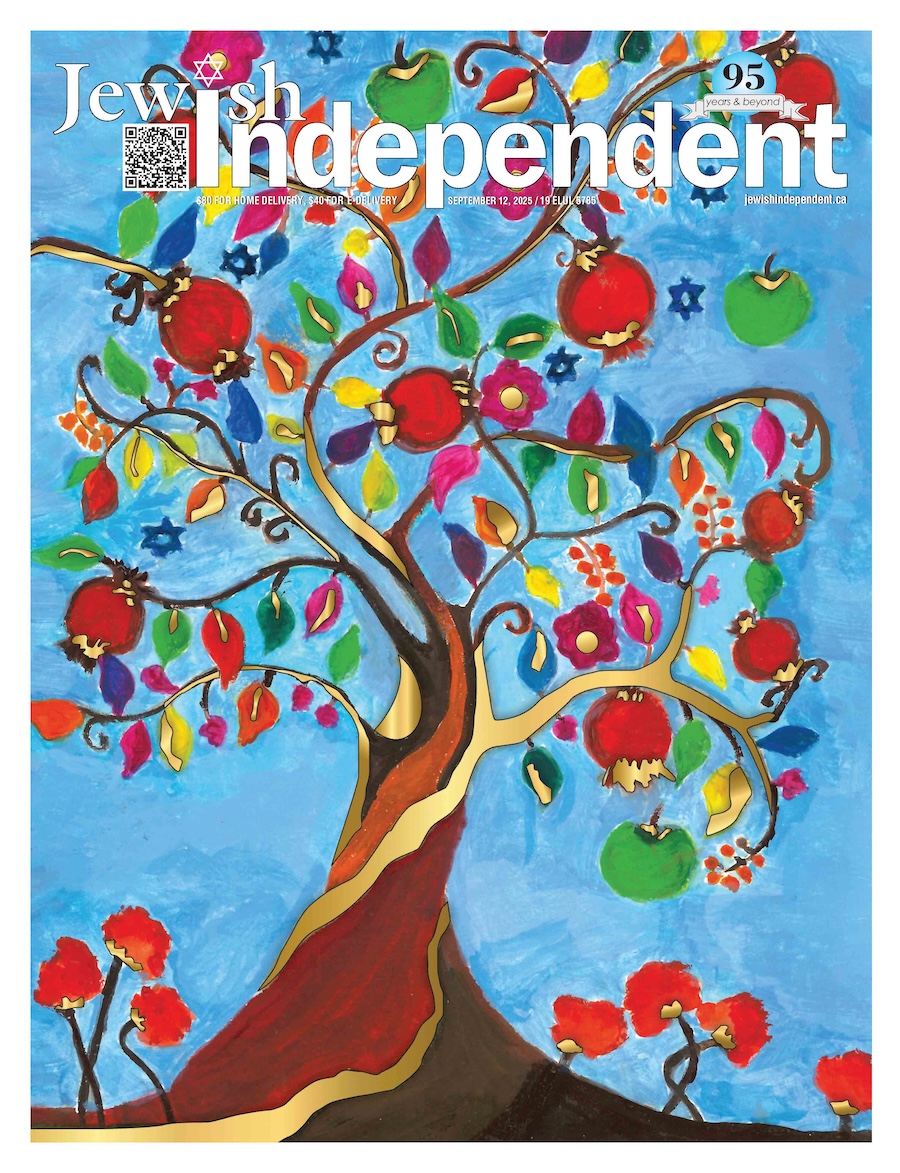 This year’s Rosh Hashanah cover art was created by Elaine Arenson in 2024 for Chai Cancer Care, the British Jewish community’s national cancer support organization. “This is my tree of Chai, my tree of light,” she wrote about the image. “Through the art group, we find creativity, renewal, community and exceptional care. We discover we are so much more than a cancer diagnosis.”