Skip to content
  • Home
  • Subscribe / donate
  • Events calendar
  • News
    • Local
    • National
    • Israel
    • World
    • עניין בחדשות
      A roundup of news in Canada and further afield, in Hebrew.
  • Opinion
    • From the JI
    • Op-Ed
  • Arts & Culture
    • Performing Arts
    • Music
    • Books
    • Visual Arts
    • TV & Film
  • Life
    • Celebrating the Holidays
    • Travel
    • The Daily Snooze
      Cartoons by Jacob Samuel
    • Mystery Photo
      Help the JI and JMABC fill in the gaps in our archives.
  • Community Links
    • Organizations, Etc.
    • Other News Sources & Blogs
    • Business Directory
  • FAQ
  • JI Chai Celebration
  • JI@88! video

Recent Posts

  • BGU fosters startup culture
  • Photography and glass
  • Is it the end of an era?
  • Taking life a step at a time
  • Nakba exhibit biased
  • Film festival starts next week
  • Musical with heart and soul
  • Rabbi marks 13 years
  • Keeper of VTT’s history
  • Gala fêtes Infeld’s 20th
  • Building JWest together
  • Challah Mom comes to Vancouver
  • What to do about media bias
  • Education offers hope
  • Remembrance – a moral act
  • What makes us human
  • המלחמות של נתניהו וטראמפ
  • Zionism wins big in Vegas
  • Different but connected
  • Survival not passive
  • Musical celebration of Israel
  • Shoppe celebrates 25 years
  • Human “book” event
  • Reclaiming Jewish stories
  • Bema presents Perseverance
  • CSS honours Bellas z”l
  • Sheba Promise here May 7
  • Reflections from Be’eri
  • New law a desecration
  • Resilient joy in tough times
  • Rescue dog brings joy
  • Art chosen for new museum
  • Reminder of hope, resilience
  • The national food of Israel?
  • Story of Israel’s north
  • Sheltering in train stations

Archives

Follow @JewishIndie
image - The CJN - Visit Us Banner - 300x600 - 101625

Byline: Cynthia Ramsay

Dance-opera closer to final

Dance-opera closer to final

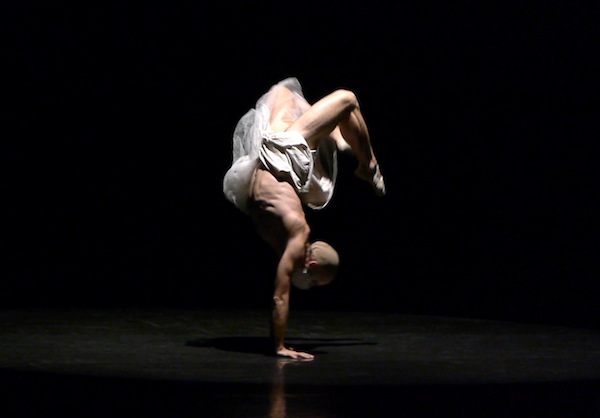
Ted Littlemore is one of seven dancers in the latest iteration of Idan Cohen’s Orfeo ed Euridice, which will be available online April 6-13. (photo by Flick Harrison)

The first article the Jewish Independent published about choreographer and opera director Idan Cohen was about his reimagining of Christoph Willibald Gluck’s opera Orfeo ed Euridice. Much progress has been made in the few years since, and excerpts from the contemporary dance work will be streaming on demand April 6-13.

Cohen was a relatively recent arrival from Israel back in 2018. As artistic director of Ne. Sans Opera and Dance, which he established here in 2017, he has become a prominent part of the Vancouver arts scene. He is currently artist-in-residence at the Dance Centre, which describes Cohen’s approach to this 18th-century opera as one that interprets

“Orpheus not as a god, but as an artist – a human who looks at the complex and sometimes violent history of Western, classical opera and dance with eyes wide open, the dancing body serving as a living example of human strength and fragility.”

In the myth, poet and musician Orfeo mourns the death of his wife, Euridice, and tries to get her back from the Underworld. It is an effort fraught with challenges, not unlike creating a new artistic work.

“Staging an opera is a monumental task, and it is really exciting to have an audience who has been following this production from its inception,” Cohen told the Independent. “Alongside the Dance Centre’s residency, we were given a grant from the Canada Council for the Arts, through the Piercey family – the Sheila Kathleen Piercey Fund – which enabled us to continue and present this final phase of the research, leading to the full production in 2022.

“For the past few months,” he said, “I have been rehearsing with Leslie Dala as the music director and with seven incredible dancers and five opera singers. We are presenting almost 40 minutes of a piano reduction of the score, played live by Leslie, and the singers, as a dance-opera. So you’ll get to see and listen to a live opera that is also a dance performance.”

In 2019, Ne. Sans presented Trionfi Amore, as a part of the research for Orfeo ed Euridice. That production featured Ted Littlemore, Kate Franklin and Jeremy O’Neill. For this April’s production, they are joined by dancers Hana Rutka, Rachel Meyer, Aiden Cass and Stephanie Cyr.

“The wonderful counter-tenor Shane Hanson is singing Orfeo and the chorus singers are Heather Pawsey, Tyler Simpson, Heather Molloy and William Grossman,” said Cohen. Costume designer and stylist is Evan Clayton, while Littlemore pulls double duty – not only performing, but in charge of the makeup and masks.

The number of people involved now brings its own challenges, given the continuing pandemic.

“The Dance Centre’s residency enabled us to rehearse in large spaces that allowed for our relatively big group to remain socially distanced at all times,” said Cohen. “Following COVID-19 protocols meant that we needed to be wearing masks and that the performers could not touch. I tried to look at these not as obstacles but as creative opportunities and I am very proud of what we’ve managed to achieve.”

Ever the one to look on the bright side of things, Cohen added, “It was wonderful to gather musicians and dancers and create. There’s nothing quite like it, and I hope that the result will be as pleasurable to our audience as it was to us.”

The April streaming, which will have been pre-recorded, includes a discussion with Cohen. Tickets are on a sliding scale, and can be purchased from thedancecentre.ca/event/idan-cohen.

Format ImagePosted on April 2, 2021March 31, 2021Author Cynthia RamsayCategories Performing ArtsTags coronavirus, COVID-19, dance, Dance Centre, Idan Cohen, Ne. Sans, opera, Orfeo ed Euridice
R2R fest teaches, entertains

R2R fest teaches, entertains

Seu Jorge, left, and Noah Schnapp in a still from Abe. (image from Reel 2 Real)

The upcoming Reel 2 Real International Film Festival for Youth is not just for youth, though younger viewers are its target audience. There are entertaining and engaging films for all ages among the 18 features and 45 shorts that will be available for streaming online April 14-23.

The focus of this year’s festival is “films that explore the impact of social media, racism and discrimination, with a focus on Germany.” While many of the offerings will interest Jewish community members, at least four cover topics of specific relevance.

The American feature Abe was part of the recent Vancouver Jewish Film Festival. It is carried by the impressive acting of Noah Schnapp as 12-year-old Abe and that of Seu Jorge as Chico, the Brazilian-American chef that Abe idolizes. The food, glorious food, is an added bonus.

While the writing of Abe’s family dynamics is clunky and without nuance – his father’s side is Muslim, his mother’s Jewish, and never the twain shall meet on religion or the Palestinian-Israeli conflict – Abe himself is charming. He puts his heart into trying to bring everyone together, in part, by creating a fancy dinner that comprises several of his grandmothers’ traditional recipes. The grumpy but caring Chico helps, having reluctantly taken Abe in, first as a dishwasher then as one of his prep cooks.

Food doesn’t turn out to be the way to his family members’ hearts but the disastrous fusion meal, which ends in a big fight and Abe running away, does push his family to at least reconsider their priorities.

***

still - Mouize and Ranin become friends over popcorn and a shared love of cinema in Cinema Rex
Mouize and Ranin become friends over popcorn and a shared love of cinema in Cinema Rex. (image from Reel 2 Real)

In another charming film, the young also show the adults the possible way to some form of peace. In the Israeli animated short Cinema Rex, the Jewish boy Mouize and the Arab girl Ranin become friends over popcorn and a shared love of cinema.

Set in Jerusalem in 1938, a new movie theatre opens, “In the heart of the city, on the seam line between the Jewish side and the Arab side, and adjacent to the British police.” It is “co-owned by partners from both sides of [the] divided city” and Mouize’s dad is the projectionist. When Mouize catches a glimpse of someone peeking into the projection room, he follows the trail of popcorn to Ranin, who shares it with him in exchange for a seat beside him in the best seats in the house. The two imagine themselves as the heroes in Robin Hood, as actors in a Laurel and Hardy film, dancers in a Fred Astaire and Ginger Rogers movie, and more.

Ranin’s mother is non-plused to find her daughter hanging out with Mouize, and Mouize’s dad tries to tell him, “Someday, you’ll understand why you and she can’t be friends.” But the kids have none of it.

Beautifully drawn and a story simply told – in Arabic, English and Hebrew with English subtitles – this short is highly recommended viewing.

***

still - Alina is a tension-filled short film
Alina is a tension-filled short film. (image from Reel 2 Real)

A more serious and nerve-wracking short is the tension-filled American film Alina. For 25 minutes, breathing will be more difficult, as the fate of a three-month-old baby lies in the hands of Alina (played by Alia Shawkat). The non-Jewish woman is part of a group of women (and men, as her brother helps) who are smuggling Jewish children out of the Warsaw Ghetto during the Holocaust.

Inspired by factual events, but fictional, the film opens as Nazi soldiers kick their way into a building and make their way up each floor, searching every room for children, with orders to seize them. Alina must escape from an upper-level apartment with the baby through the bathroom window, using a makeshift rope of tied sheets. She must then meet her brother, make it through a checkpoint and even face Nazi soldiers in her own home, as a Nazi captain accompanies her there from the checkpoint, so convinced is he that she is hiding something from him.

Alina is a multiple-award-winning film for many reasons. And it precedes the fascinating feature-length documentary The Lesson, which sees its Canadian première at Reel 2 Real.

photo - The Lesson director Elena Horn
The Lesson director Elena Horn. (image from Reel 2 Real)

Through the lens of German filmmaker Elena Horn, who herself grew up in Fröndenberg and went to Fröndenberg Comprehensive School, The Lesson is a personal look at how students in Germany are taught about the Holocaust. Over a five-year period, Horn followed a handful of students through their classes on the topic, their projects and field trips. She juxtaposes this perspective with archival footage from the 1930s, showing children doing paramilitary exercises, learning about what makes a good German and other propaganda. She also includes current-day nationalism and how some of the students deal with the differences between what they’re being taught in school about the Holocaust and what their families have told them about that period in time.

Horn frames the content in the context of overarching questions such as, could the Holocaust have been initiated by other countries just as easily as in Germany, or is there something inherent about Germany that allowed it to start there? She wonders if history is repeating itself, and she continues to struggle with the question, “What would I have done?” She highlights some of the efforts of those who refused to be bystanders to genocide, and she hopes to inspire some viewers to be courageous if, God forbid, they ever face such a choice.

***

For the full festival schedule and tickets, as well as information on Reel 2 Real’s several youth programs and workshops, visit r2rfestival.org.

Format ImagePosted on April 2, 2021March 31, 2021Author Cynthia RamsayCategories TV & FilmTags animation, anti-racism, Arab-Israeli conflct, courage, education, Elena Horn, entertainment, Holocaust, Israel, movies, Noah Schnapp, peace, Reel 2 Real, Seu Jorge, youth
Navigating gender, sexuality

Navigating gender, sexuality

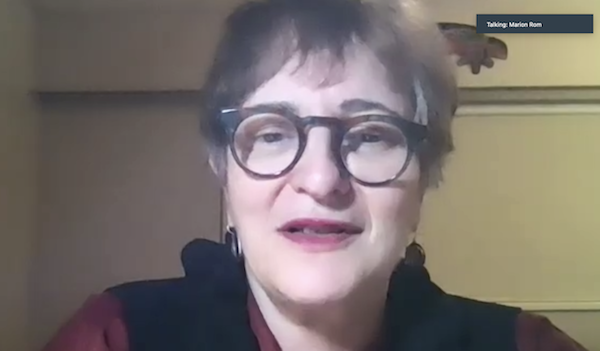
Marion Rom, who works with gender-diverse youth, spoke as part of a Beth Tikvah-hosted panel on the topic Navigating Gender and Sexuality in the 21st Century. (screenshot)

“Almost one-third of people who have gender dysphoria will attempt suicide and have mental health issues, and that’s why we often have such a high rate of kids with eating disorders who are transgender,” said Marion Rom, a counselor who works with gender-diverse youth in the Lower Mainland.

Rom was speaking as part of a March 11 panel on the topic Navigating Gender and Sexuality in the 21st Century. She defined gender dysphoria as when “your body doesn’t match the sense of who you are.” She also explained to the 65-plus attendees of the discussion the difference between sex and gender, some of the terminology around gender, and a few resources for those who want to learn more.

The panel, which was hosted by Beth Tikvah Congregation, also included Dean Kaplan, who joined the conversation from Washington, D.C., and the Abelson family – Kay, Bernard and their son Jason – who live here. The discussion was started by the congregation’s spiritual leader, Rabbi Susie Tendler.

“I think that we have a special mission, as the Jewish people, of finding people who have a potential to be marginalized and always elevating them, along with elevating everyone, to ensure that we are all in a sacred space,” said Tendler. She described her rabbinate as being “about opening doors” and a kehila kedosha, holy community, as one that creates pathways for everyone to be welcome in sacred spaces. She thanked the Zoom participants for their efforts in opening the door of community wider to “welcome everyone as their authentic selves because that’s the only way that, I believe, we really approach God.”

Rom was asked to speak by BT congregant Linda Steiner, who had heard Rom’s talk at a Habonim alumni meeting last year. The presentation was geared to older people, like Rom herself, who is 63.

She defined sexuality, and explained several terms, including lesbian (a female attracted to another female), heterosexual (females attracted to males and vice versa), bisexual (someone attracted to both males and females) and pansexual (someone attracted simply to the person, irrespective of gender). She broke down the acronym LGBTQ+ (lesbian, gay, bisexual, transgender, queer; with the plus including but not limited to asexual, two spirit, and allies). She also went through some of the gender terminology, such as cisgender (“either male or female”) and transgender (someone whose sense of self doesn’t match their birth gender). She spoke briefly about hormone therapy and gender reassignment surgery.

For people wanting to start learning more about gender and sexuality, Rom suggested the books Love Lives Here by Amanda Jette Knox and Transgender Children and Youth: Cultivating Pride and Joy with Families in Transition by Elijah Nealy, the Israeli documentary Family in Transition and the narrative film The Danish Girl (or the book from which it was adapted, written by David Ebershoff).

Dean Kaplan, 28, who goes by the pronouns they, them and their, came out as non-binary a couple of years ago. They spoke about how they see themselves and their relationship to how the world sees people like them. Describing themselves as Jewish, white and having grown up upper-middle-class and with privilege, Kaplan acknowledged that these factors have “contributed to me being able to live as myself comfortably.”

Despite that comfort, Kaplan first came out as queer in terms of their sexuality, at the age of 17 or 18, before identifying as gender-nonconforming.

“An important part of identifying as queer in almost any part of the world,” said Kaplan, “is not only understanding who you are, but also, in some ways, accepting this label as ‘deviant’ by society.”

In their early 20s, Kaplan began to realize “I very much enjoy connecting with parts of myself that would be considered feminine,” such as having longer hair and wearing tights.

From a young age, they said, “I’ve had this latent sense of difference in how I want to emotionally connect with people and that played a lot into my sense that I was gender-nonconforming. I think also a little bit of it is this sense that I want to live in a world and exist in space without a lot the negative aspects of masculinity that I was raised to cherish in a lot of ways. I’m still aware of the fact that almost all of my male friends are embarrassed to cry, even alone; it’s a sign of anti-masculinity. And so, being non-binary for me is very freeing in a lot of ways. I can be who I want to be and who I feel I am without the kind of embarrassment or labels that go with certain actions for certain genders.”

That said, the reactions to their coming out were mixed and some were hurtful. They get misgendered every day – “sometimes I correct, sometimes I don’t,” said Kaplan. That will depend, for example, on whether the person making the mistake is a superior at work or a peer. “Power and economics play into my ability to be myself in the spaces I happen to be in,” they said.

Jason Abelson, 24, started his transition in 2012, but his first memory of wanting to be a boy goes back to a gymnastics class when he was in preschool, so 4 or 5 years old. Initially, he attended an Orthodox elementary school in South Africa, where he was born, but his parents switched him to a public school. He used the fact that he was a swimmer to cut his hair short in Grade 4. He hated it when his parents would correct people who would mistake him for being a boy. “I just wanted to go and hide somewhere,” he said.

When his chest began to develop in puberty, he would try and hide it, but, eventually, he quit swimming. He has since picked the sport up again, and has joined an LGBTQ+ team.

When he was younger, he said, “I didn’t know what transgender was. I didn’t know that you could transition, that the feelings I had for wanting to be a boy were experienced by anyone else until an Oprah show that my mom was watching one summer’s afternoon. In that Oprah show, they had a transgender guy and his family, and shared his story.”

Seeing the possibilities for himself, Abelson thought about next steps and started the process of transitioning, one part of which is convincing a psychologist “that you are transgender.” He then saw an endocrinologist. In Grade 10 at the time, he stayed at the same school throughout. “I finished the first semester as a girl; came back five days later as a boy,” he said. “All we did was we changed the name on the class list.”

While he was given a key to the teacher’s washroom, he didn’t want to call attention to himself, so he avoided using the facilities. “Bathrooms still do give me a little bit of anxiety,” he said.

He started hormones nine years ago, at age 15. About a year after that, he had top surgery – prior to that he had used binders to keep his chest down.

With respect to going to an Orthodox shul after he started his transition, Abelson was told that he could come to services but would have to sit in the women’s section. Even now, attending a new synagogue and sitting on the men’s side, he said, “I don’t feel like I have a place in the shul. Being gay as well, I can’t get married in that shul, so that’s still a world that is being navigated.”

Kay Abelson spoke about both the emotional journey and the “very practical life journey.” She said she struggled with those early years when her son was asserting his identity – in his clothing choices and in his desire to cut his hair short, for example.

“I found it really hard, as a mother,” she acknowledged. “And it did cause some conflict in our family.” However, she noted, “For me, the time before Jason’s transition was more of a struggle than once he transitioned…. I found the earlier time hard, before we knew what we were dealing with. Bernard and I both always had a sense that there was something with Jason when he was growing up, but we just could not put our finger on it. And so, that moment of him watching the Oprah show and having that ah-ha moment was a huge turning point for all of us.”

It took time for her and her husband to understand and digest what was happening. She had fears about what people would think and say, but people were supportive and accepting, she said.

“When you start thinking about the history and the background about all those situations that Jason mentioned,” said Bernard Abelson, such as the first time he cut his hair short. “All I wanted to do was get him earrings so that he could look more feminine.” When people would refer to his son, “I was immediately defending, ‘This is my daughter.’… I thought I was

defending him. That’s the irony of all that, is that, as a parent, you think you’re doing the right thing by

defending them … but, at the end of the day, for him, as you’ve heard, it wasn’t working for him at all.”

One thing that helped the family was watching the documentary Becoming Chaz, about Chaz Bono’s transition. Watching it helped Bernard Abelson to accept, “This is real.”

“It’s been an incredible, incredible journey for all of us,” said Kate Abelson.

While some parents go through a mourning period for the son or daughter they once had, Kay Abelson said, “I never felt like I lost anything. In fact, I actually gained something through the process because, before Jason’s transition, as you heard in his story, he never felt comfortable with who he was. He was always yearning to be someone different, so he was never really happy within himself…. When he transitioned and he could actually stand loud and proud and be who he was … it was just so exciting.”

Rom reentered the conversation by stressing that the level of grieving varies among families. She then opened the question-and-answer session that included Dean Kaplan’s dad, Des Kaplan, talking about some of his challenges in understanding his child’s gender and sexuality. There was also discussion about Jewish tradition, which identifies at least six genders, and that some Jewish communities have changed the b’nai mitzvah rituals to be more gender-inclusive.

To watch the panel discussion, without the Q&A, visit btikvah.ca/inclusion-and-diversity.

Format ImagePosted on April 2, 2021March 31, 2021Author Cynthia RamsayCategories LocalTags Bernard Abelson, Beth Tikvah, Dean Kaplan, diversity, education, gender, inclusion, Jason Abelson, Judaism, Kay Abelson, Marion Rom, Rabbi Susie Tendler, sexuality, transgender
Penn & Teller stumped

Penn & Teller stumped

Illusionist Vitaly Beckman in the midst of fooling Penn & Teller on the March 19 broadcast of Penn & Teller: Fool Us. (screenshot)

Illusionist Vitaly Beckman has done it again – he stumped Penn & Teller a second time. The co-hosts of CW television network’s Penn & Teller: Fool Us could not figure out how Vitaly made a cup of coffee and a muffin appear from seemingly nowhere, brought into existence by his mere drawing of the items. They also could not figure out how he made the breakfast disappear, by simply tearing the illustration out of his sketchbook.

Vitaly’s winning performance, which aired March 19, can be seen via his Facebook page, facebook.com/beckman.vitaly, YouTube, or jewishindependent.ca. He first stumped the famous magicians in 2016 and his return to the reality show brought some tough (joking) remarks from Penn, who said he thought Vitaly was a nice guy the first time they met. Noting that he and Teller don’t like to be fooled once, let alone twice, Penn said, “You’re not a nice guy. You’re someone we have to take down!”

Despite the jovial animosity, Vitaly, who admitted to having been nervous in his first appearance on the show, told the Independent, “I was much more comfortable this time. However, the illusion I prepared, even though it looked simple in its execution, it was quite difficult to perform, requiring a lot of concentration, precision and coordination. I was rehearsing it for a few months before the show. So, when I was performing, I focused all of the nervous energy to work for me and help me execute well.”

Penn & Teller’s guesses at Vitaly’s secret – the use of mirrors and/or hidden assistants off-stage – proved incorrect, garnering Vitaly another Fool Us trophy.

Vitaly performed his act from his home in Metro Vancouver, while Penn & Teller were in Las Vegas, and a virtual audience appeared behind them.

“I’m used to feeding off a live audience’s energy and reactions, so not having any definitely makes it more challenging,” said Vitaly. “When I perform live, I like to interact with the audience, hear them laugh and be amazed; sometimes I bring a volunteer on stage. I purposely designed an act that wouldn’t rely on any of that, yet still translated through the TV screen. I think we all can connect to the idea of making a cup of coffee and a muffin or another favourite dish appear whenever we want one, and it’s certainly nice to have that ability during a pandemic!”

Vitaly is currently working on some TV projects and planning live tours. “I’m also working on brand new illusions, and can’t wait for you to see some of the new things,” he said.

Vitaly added, “I love to stay in touch with my fans, and hear their feedback about their favourite acts and what are they up to, so feel free to send me messages through my Facebook page.”

Format ImagePosted on April 2, 2021March 31, 2021Author Cynthia RamsayCategories Performing Arts, TV & FilmTags illusion, magic, Penn & Teller, Vitaly Beckman
Life-changing impact

Life-changing impact

Sandy Shefrin Rabin’s debut novel is a far-reaching account of Jewish life in a small town in the late 1940s and early 1950s. Targeted to young adult readers, Prairie Sonata may focus on 11-year-old Mira’s friendship with her school (and violin) teacher, a Holocaust survivor, but it touches upon countless issues, from dealing with trauma, to preserving a language and a culture (Yiddish), to understanding different musical forms, to interfaith dating, to society’s views of mental illness, to learning about the impacts of physical disease (polio).

image - Prairie Sonata book coverSet in the fictional town of Ambrosia, Man., an adult Mira reflects back on the impact that one of her teachers – Ari Bergman, called Chaver B by his students – had on her.

Chaver B is introduced to his Peretz School Yiddish class by the principal, who only shares, “Chaver Bergman has been living in Europe and just came over to Canada two weeks ago.” But Mira sees his vulnerability right away, the “melancholy about him,” and senses “that this was a man who needed kindness.”

Invited to Friday night dinner by Mira’s mother, Chaver B spots Mira’s violin and offers to teach her. He becomes a friend to the whole family – Mira’s parents and younger brother – but especially to Mira.

The novel is structured in three parts, like a sonata. As Chaver B explains to Mira, a sonata is comprised of an exposition, in which its themes are declared; a development, where the themes are explored and expanded; and a recapitulation, where the themes are repeated, leading to a resolution. In some cases, a coda is added, “to provide a sense of closure.”

Overall, Prairie Sonata is an intriguing novel, and even older readers will enjoy it, especially those who attended a Peretz School or who grew up in the era of the book. At times, when a character is explaining something, it sounds a bit like a Wikipedia entry, but the writing is strong overall and readers will relate to and empathize with the characters. In addition to all of the questions Mira raises throughout, there is a discussion and study guide at the end, with 17 thoughtful exercises for a school group or book club.

Format ImagePosted on March 19, 2021March 18, 2021Author Cynthia RamsayCategories BooksTags coming of age, fiction, Manitoba, Peretz School, Prairie Sonata, Sandy Shefrin Rabin, Yiddish
Tale of transformation

Tale of transformation

Near the beginning of her acting career more than 50 years ago, Beth Kaplan wanted to improve the world through art. “I believe in the theatre as a tool for social change,” she told the director of the London Academy of Music and Dramatic Art when she arrived for a one-year program. “I’d like to touch people’s lives as a force for good.” His reaction? “Well,” he said, standing up. “I do hope you have a fruitful year. Best of luck.”

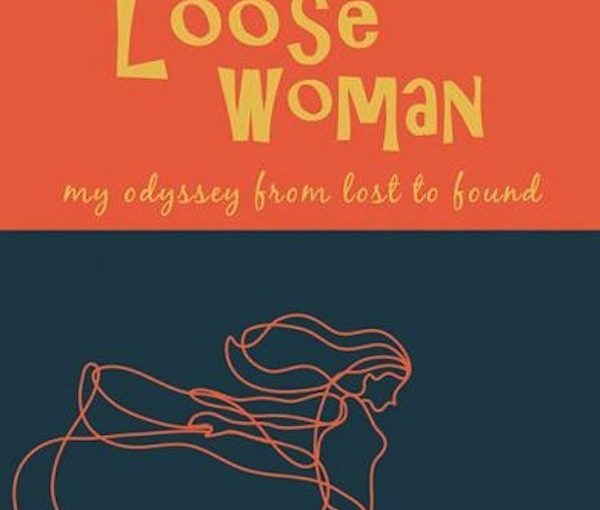
Kaplan writes about her journey from acting to writing, from youth to adulthood, from insecurities to self-acceptance, and more, in her memoir Loose Woman: My Odyssey from Lost to Found. Local JI readers may recall her name, as she was a part of the Vancouver theatre scene in the 1970s. But a 1979 trip that included a visit to France to see her best friend, who had moved there, changed Kaplan’s life.

Through her friend’s husband, Kaplan ended up for a spell living and working in a L’Arche community, which brings people with and without intellectual disabilities together. Initially uncomfortable there, the experience and the slower pace allowed her to learn about herself, and to not treat life as a performance. From her time at L’Arche, she sees how, “in one way or another, we are all handicapped.”

In telling her story, Kaplan seems to rely mainly on thoughts she committed to her diaries over the years. She’s kept one ever since her first, which was a gift when she was 9 years old. Some of the terms she uses, like handicapped, hearken back to that time, and it’s a choice Kaplan makes, “to be true to the time, hoping that readers understand that what is offensive now was not so then.” Indeed, through some of the language and the stories of her objectively wild life during the 1970s, Kaplan highlights the advances that have been made in areas like women’s rights and inclusion.

Loose Woman is an interesting book, even though Kaplan is not a completely likeable heroine, despite it being her own story. Some readers might chafe at her harsh judgments (even when she is the target) and her self-acknowledged mix of confidence (some might say arrogance) and insecurity. But others might revel in her tales of debauchery and her resolute openness.

Format ImagePosted on March 19, 2021March 18, 2021Author Cynthia RamsayCategories BooksTags acting, Beth Kaplan, disability awareness, inclusion, L'Arche, memoir
This year’s Passover cover

This year’s Passover cover

image - JI March 19/21 Passover cover
image - JI April 3/20 Passover cover

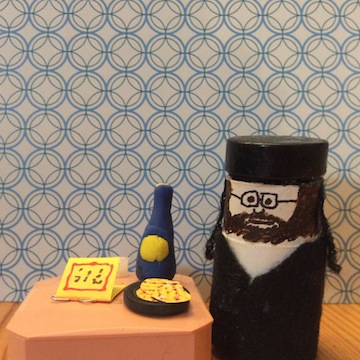
Having spent so much time with my Israelites for last year’s Passover cover photo shoot, I thought it would be nice to see where they ended up. They successfully exodused from Metaphorical Egypt, as COVID was just getting started, and are now living in various places around the world. With the exception of Moses, who is still wandering the desert (but with good wi-fi), they all have solid roofs over their heads and are relatively sedentary, especially now, during COVID. They’ve kept in touch and are marking their one-year anniversary in freedom with a Zoom seder, as depicted on this year’s Passover cover. They offer holiday greetings in English, French, Spanish, Judesmo (or Judeo-Spanish), Hebrew, Yiddish, Portuguese and Russian.

photo - Chassid Passover 2021While one of the Israelites couldn’t join the online gathering for the first night of Passover, as he doesn’t Zoom on the holy days, he does send his best wishes in the language of your choosing. My hope for them is my wish for all of us – that, next year, we can all gather together in-person with our loved ones, whether they be in Jerusalem, Vancouver or anywhere in between. And that we can do so without the need for masks, sanitizer or social distancing.

Format ImagePosted on March 19, 2021March 18, 2021Author Cynthia RamsayCategories From the JITags art, Exodus, Passover
Plays explore future of love

Plays explore future of love

Katherine Matlashewski and Tanner Zerr in Fast Foward. (photo by Emily Cooper)

Since COVID-19, we have been learning how to relate to one another from a distance, as well as how to use the technologies, like Zoom, that have allowed us to retain a more personal connection than we could have if we had experienced the pandemic even a handful of years ago. While our reality seems stolen from the script of a futuristic sci-fi horror film, playwright Rosamund Small’s visions of love in the future and how technology affects it, TomorrowLove, are “hilarious, snappy, moving and refreshingly fun in these times,” according to Shekhar Paleja and Lauren Taylor, co-directors of Studio 58’s production of Small’s playlet collection.

Jewish community members Samantha Levy and Katherine Matlashewski are among the cast members of the production, which will be released online on Feb. 28 and available to watch individually or collectively until March 7.

Studio 58 is Langara College’s professional theatre training program, and this spring’s lineup – which TomorrowLove launches – is the first under the direction of Courtenay Dobbie. Both Levy and Matlashewski are in their second year of study.

“I was finishing up my first year when the pandemic began in earnest here,” Levy told the Independent. “COVID-19 has forced me to be more isolated from my school community through Zoom classes, but it has not taken away the care and dedication of my professors, or the support of my peers. We are still a family, even though we are distanced or online.”

It has become a hybrid program since the pandemic, with some classes online and others held in person with social distancing, said Matlashewski. “Since Studio 58 is a hands-on conservatory program, the transition to online studies was challenging at first,” she admitted. “The faculty and staff, however, have been extremely supportive during these uncertain times. They have all worked tirelessly to adapt our training while also prioritizing our safety.

“That being said,” she added, “as a result of COVID, students are now required to commute to and from the college quite a bit … [and] the hours of online Zoom classes are exhausting. Despite these challenges, I appreciate the continuation of our small in-person classes.”

Prior to her post-secondary training at Studio 58, Matlashewski appeared as Mopsy in King Arthur’s Court (Metro Theatre), where she received the Community Theatre Coalition Award for best supporting actress. Other select credits include Alana in Dear Evan Hansen (Laughing Matters), Luisa in The Fantasticks (Stage 43) and Little Red Riding Hood in Into the Woods: In Concert (Royal City Musical Theatre). Most recently, she was awarded the 2021 Cheryl Hutcherson Award by Applause! Musicals Society.

“I have been a part of the Vancouver theatre and dance community from a very young age,” said Matlashewski. “I feel incredibly blessed to live, create and play on the unceded territories of the Musqueam, Squamish and Tsleil-Waututh Nations.”

In TomorrowLove, Matlashewski said, “I have the pleasure of acting in the playlet called Fast Forward, alongside Tanner Zerr. This playlet explores themes of love, abandonment, age difference, time travel and the consequences that come with it.”

Levy plays the role of Jessie in the short play Take This Soul. “In Take This Soul, Jessie’s ex-partner, Rylan, shows up at her doorstep after having disappeared for four days,” explained Levy. “He tells an outlandish tale of an experiment in a distant country that has allowed him to return and present her with his literal soul.”

Samantha Levy and Riley Hardwick co-star in Take This Sou
Samantha Levy and Riley Hardwick co-star in Take This Soul. (photo by Emily Cooper)

In addition to this Studio 58 production, Levy’s acting credits include Love, Loss and What I Wore (Centaur Theatre), Fancy Nancy: The Musical (Côte Saint-Luc Dramatic Society, Segal Centre) and It Shoulda Been You (Dora Wasserman Yiddish Theatre, Segal Centre). Her TV and film credits include Annedroids and 18 To Life.

“I’ve been performing since the age of 5, when my parents signed me up for an extracurricular theatre troupe in my hometown, Montreal,” said Levy. “Little did they know that I would fall in love with performing! Since then, I’ve acted on stage and on screen, trained at the Stratford Festival’s Theatre Arts Camp, and dabbled in directing both plays and musicals. Now, I am so thrilled my love of acting has led me to Studio 58!”

But the experience is not what it normally would be, of course.

“During the pandemic, the lovely production team has been working extra hard to keep us all safe,” said Levy, “and that includes managing our schedules closely to avoid contact between folks. So, I have come to value the time I have with others in person even more. When we are in person, we are also wearing masks and social distancing at all times. This often means coming up with innovative new ways to express ourselves without proximity or touch on stage, which has been a wonderful challenge. It is incredibly uplifting for me to have the privilege to be able to continue to create with others, be vulnerable and connect.”

Acknowledging that the “pandemic has been an emotional rollercoaster for everyone,” Matlashewski said, “One of the challenges that I have faced is navigating acting while wearing a mask. Prior to COVID, I did not realize how much I relied on the non-verbal cues and facial expressions of my scene partners. However, now that two-thirds of the human face is covered by a mask, I find that I have to listen more closely to fully understand my scene partner. With that in mind, we all have had to adjust and be patient with ourselves and others.

“My biggest take away from acting during COVID is the importance of human connection,” she continued. “We have had to find new ways to connect and communicate while maintaining physical distancing. During the rehearsal process of Fast Forward, I discovered how social distancing impacted my acting choices. Since I had to maintain a two-metre distance from my scene partner, each movement that I made on stage had to be carefully considered. Our fantastic director, Lauren Taylor, guided us through this process and helped specify our blocking.

“Although we are required to maintain physical distance and wear masks while we are acting, I am thankful that I get to act in person for my first mainstage show at Studio 58.”

Reflecting on her connections to Jewish community and culture, Matlashewski said, “Within Judaism, community is a value that is held with the highest importance. Although we cannot gather in person, I invite you all to find the light where you can and share it with those around you.”

For her part, Levy said, “As my parents are across the country in Montreal and my brother (he’s a doctor!) is in St. John’s, Jewish culture and art are an anchor to the family who love me. Seeing Jewish representation in art is healing and beautiful.”

She then added a “non-performance-related anecdote.”

“I walked into a Jewish bakery during Chanukah to get a few latkes,” said Levy, “and I left with tears in my eyes and a bag full of items I had not planned to buy.”

To see one or all 13 of the TomorrowLove playlets, visit studio58.ca.

Format ImagePosted on February 26, 2021February 24, 2021Author Cynthia RamsayCategories Performing ArtsTags acting, coronavirus, COVID-19, Katherine Matlashewski, Langara College, Samantha Levy, Studio 58, theatre
COVID relief delivered

COVID relief delivered

Alex Cristall, Jewish Federation of Greater Vancouver board chair, arrived early at the Jewish Community Centre of Greater Vancouver on Jan. 26 to sign community recovery cheques for grant recipients. (photo by Rob Trendiak)

On Jan. 26, the Jewish Federation of Greater Vancouver released the first round of community recovery funding to address the urgent needs arising from the pandemic’s impacts. A total of $416,000 in grants was distributed among 21 partner agencies and community organizations.

“When COVID first hit, we immediately developed a comprehensive strategic approach to address its impact,” Ezra Shanken, chief executive officer of Jewish Federation, told the Independent. “We met with our partner agencies to learn firsthand about how they were coping, and we released $505,000 in emergency funding just days into the initial lockdown.

“We then worked closely with major donors to launch the Community Recovery Fund, which became a key focus of the annual campaign. We also established the Community Recovery Task Force, comprised of well-respected and experienced community leaders, to work with us to respond effectively to the immediate and long-term consequences of COVID that are affecting our community agencies. During the annual campaign, we asked donors to make an additional gift to support community recovery, if they could.

“We have always been fortunate to have an extremely generous community, and the depth of giving this year has been extraordinary,” he said. “Community members have responded to the call to help in unparalleled ways, however they can. They understand the breadth and scope of need, the immense challenges facing organizations, individuals and families, and that recovery will take some time. Most of all, they appreciate that we are all partners in recovery, and have really stepped up to play their part.”

The initial relief grants were distributed to 19 of Jewish Federation’s partner agencies, as well as to the Louis Brier Home and Hospital and the Hebrew Free Loan Association.

“For the first round of grants, all Jewish community organizations were invited to apply for up to $25,000, regardless of their size,” explained Risa Levine, chair of the Community Recovery Task Force. “Our priority was to meet organizations’ urgent needs resulting from the pandemic, and to ensure they could continue to deliver their programs and services. In the next few weeks, as part of this initial round of funding, we will be recommending grants for synagogues and other places of worship. These grants will be awarded in late February.

“The task force expects the two rounds of funding after that will focus on longer-term needs,” she said. “For example, are there organizational changes that would substantially increase an agency’s capacity to deliver their programs? We also recognize that the pandemic has gone on longer than anyone anticipated, and that the uncertainty of what lies ahead continues. New needs may emerge and COVID-related government subsidies, which have helped a lot of our agencies, may end. So, ensuring organizations’ ongoing sustainability in the face of pressures created by the pandemic will continue to be a priority.”

When the task force met with community organizations last summer and fall, the focus was on understanding how the pandemic had affected the programs and services they offer. While the details differed, said Levine, “they all had been impacted by COVID in similar ways.

“Based on this information, the task force identified six themes, which ultimately became funding categories for the recovery grant application: technology upgrades; critical social services; COVID-related expenses; revenue and rental losses; mental health support for staff and community members; and organizational capacity. Community organizations were invited to apply for a grant to meet urgent, COVID-related needs in two of these six categories.”

The recovery grants comprise but one of three funding streams being distributed in the next couple of months. Other financial assistance will come from the Jewish Community Foundation’s Unrestricted Grant Program, and allocations from the Federation’s annual campaign.

“The Jewish Community Foundation’s Unrestricted Grant Program is designed to complement Jewish Federation’s annual campaign allocations by providing charitable organizations with seed money to support new, innovative programs and services,” explained Shanken.

Grants awarded through the program “give charitable organizations the opportunity to pilot initiatives that address the community’s evolving needs, or to launch startup and capital projects,” he said. “Once the programs demonstrate success over several years, they may then qualify for ongoing funding through Jewish Federation’s allocations.

“This year,” he added, “the foundation adapted some conditions of the program to be as responsive as possible to organizations challenged to deliver their programs and services in new and innovative ways. In this way, the Unrestricted Grant Program is complementing the work of Jewish Federation’s Community Recovery Task Force, which has identified areas of critical need through its consultation process with community organizations.”

The Unrestricted Grant Program funds for 2021 will be awarded in mid-February.

“Jewish Federation has always been proactive and strategic about preparing for crises, so that we can lead a coordinated community response,” said Shanken. “And, while this is unlike anything the community has ever been through, we are in a strong position to respond. We have in place the infrastructure, the community planning expertise, and the staff and team of experienced leaders needed to respond swiftly and effectively to the enormity and ongoing uncertainty of COVID’s impact.

“We know how vital it is to get funds working in the community, and this involves so much more than fundraising,” he noted. “As the pandemic evolves, we will continue to adapt our strategic approach so that we are well-positioned for today and tomorrow, and to convene with all of our stakeholders so that we have our finger on the pulse of the community and can problem-solve together. We’re also collaborating with Jewish federations across North America to leverage their collective knowledge and capacity.”

Levine acknowledged the board and staff of our local Jewish Federation “for their vision and professionalism in organizing the task force and leading the recovery process, as well as the many generous donors who have supported this crucial work.”

She said, “I have been inspired and buoyed by the commitment and passion of everyone involved in the task force’s work to ensure that our community continues to function effectively: by the task force members for their dedication to the work, and by the community organizations for their candour and resilience in adapting their operations to meet the needs of community members.

“The biggest challenge,” she said, “has been to focus and refine our work to be able to respond effectively to the needs we learned about. Hearing firsthand about the challenges that organizations faced revealed the enormity of COVID’s impact through a sharper, more personal lens that added another layer of urgency to our work.”

Despite the challenges, Shanken said, “I remain positive because of the tremendous fortitude and the outpouring of compassion and generosity that I see every day. I am incredibly proud of how this community has pulled together to tackle the road to recovery, and am convinced that we will emerge stronger.”

For more information, visit jewishvancouver.com.

Format ImagePosted on February 12, 2021February 12, 2021Author Cynthia RamsayCategories LocalTags coronavirus, COVID-19, economy, Ezra Shanken, Jewish Federation, philanthropy, Risa Levine, tikkun olam
Novel journeys shared

Novel journeys shared

Ilana Masad participates in the Cherie Smith JCC Jewish Book Festival on Feb. 23. (photo from the JBF)

Women are at the forefront of two new books. Specifically, how we perceive their (our) roles. Especially, with regard to motherhood.

photo - Myriam Steinberg participates in the Cherie Smith JCC Jewish Book Festival on Feb. 24
Myriam Steinberg participates in the Cherie Smith JCC Jewish Book Festival on Feb. 24. (photo from the JBF)

Ilana Masad’s debut novel, All My Mother’s Lovers, is told from the perspectives of a daughter and her mother, and highlights how much we cannot know about the people close to us, while Myriam Steinberg’s graphic novel, Catalogue Baby: A Memoir of Infertility, is a no holds barred sharing of her challenge to become a mom. Both Masad and Steinberg are participating in this year’s Cherie Smith JCC Jewish Book Festival, which takes place online Feb. 20-25.

While the premise is a stretch to my worldview, All My Mother’s Lovers is an extremely relatable read on many levels. Twenty-something Maggie’s mother, Iris, dies in a car crash and Maggie must return home for the funeral and shiva. But, along with her will, Iris has left behind six letters – all addressed to men Maggie hasn’t heard of – and Maggie quickly flees the communal mourning to deliver these missives.

Leaving behind her grief-addled father, who has been the emotional-support parent for her, and her younger brother, with whom she has an older-sister-bossy relationship, Maggie attempts to track down the unknown men. The space from her family and from her current partner, with whom there might actually be a substantial, meaningful relationship brewing, allows Maggie to deal with her long-held insecurities and naïve perceptions of what it means to be married, what it means to be a parent; basically, what it means to be a loving and reliable person. We get to know Iris through the letters and, though Maggie doesn’t get to benefit from these personal musings, she does learn more about her mom, which allows her to connect more deeply with her father, as well as to others in her life.

image - All My Mother’s Lovers book coverMasad’s writing is crisp, intelligent, wry and sensitive. The novel starts with a bang – Maggie answering her brother’s call (telling her about their mother’s death) while having sex with her girlfriend. The pace emphasizes Maggie’s confusion as she tries to understand her mother, and herself. Iris’s letters offer slower moments of reflection, but also were a way for Iris to try and better understand her own missteps and successes.

Steinberg’s Catalogue Baby also took me into a world I’ve never personally experienced, though I do know people who have so wanted to have a child but either could not conceive or had great difficulty conceiving. Steinberg’s refreshing openness on a topic that is often spoken about in whispers, if at all, is most welcome. And her voice is amplified by the colour-bursting, energetic and imaginative illustrations by Christache Ross, which take readers right close up into the physical and emotional upheaval and turmoil that Steinberg has lived.

image - Catalogue Baby book coverCatalogue Baby takes readers from Year One (starting January 2014), and Steinberg’s admission that her dedication to work, organizing the In the House Festival for 11 years, only occasionally gave her the time to put her “loneliness and unrequited motherhood” front of mind. Almost 40 years old at this point, she “didn’t have time to waste with someone who didn’t eventually want a family.” But, people being who we are, Steinberg nonetheless tries to make an unsatisfying relationship work, all while her biological clock (which follows her throughout the novel’s journey) ticked away. From when she finally decides to go it alone to when she gives birth to twins in late 2018, she goes through much. The list includes 123 blood draws, 31 ultrasounds, multiple fertility treatments, five pregnancies, thousands of supplements, about $100,000, help from dozens of family and friends, etc., etc. – and “25 litres of tears.”

To hear more about and from Steinberg, Masad and many other fabulous writers, check out this year’s Jewish Book Festival: jccgv.com/jewish-book-festival.

Format ImagePosted on February 12, 2021February 11, 2021Author Cynthia RamsayCategories BooksTags autobiography, fiction, Ilana Masad, infertility, JCC Jewish Book Festival, LGBTQ+, memoir, motherhood, Myriam Steinberg, women

Posts pagination

Previous page Page 1 … Page 35 Page 36 Page 37 … Page 84 Next page
Proudly powered by WordPress