Skip to content
  • Home
  • Subscribe / donate
  • Events calendar
  • News
    • Local
    • National
    • Israel
    • World
    • עניין בחדשות
      A roundup of news in Canada and further afield, in Hebrew.
  • Opinion
    • From the JI
    • Op-Ed
  • Arts & Culture
    • Performing Arts
    • Music
    • Books
    • Visual Arts
    • TV & Film
  • Life
    • Celebrating the Holidays
    • Travel
    • The Daily Snooze
      Cartoons by Jacob Samuel
    • Mystery Photo
      Help the JI and JMABC fill in the gaps in our archives.
  • Community Links
    • Organizations, Etc.
    • Other News Sources & Blogs
    • Business Directory
  • FAQ
  • JI Chai Celebration
  • JI@88! video

Recent Posts

  • BGU fosters startup culture
  • Photography and glass
  • Is it the end of an era?
  • Taking life a step at a time
  • Nakba exhibit biased
  • Film festival starts next week
  • Musical with heart and soul
  • Rabbi marks 13 years
  • Keeper of VTT’s history
  • Gala fêtes Infeld’s 20th
  • Building JWest together
  • Challah Mom comes to Vancouver
  • What to do about media bias
  • Education offers hope
  • Remembrance – a moral act
  • What makes us human
  • המלחמות של נתניהו וטראמפ
  • Zionism wins big in Vegas
  • Different but connected
  • Survival not passive
  • Musical celebration of Israel
  • Shoppe celebrates 25 years
  • Human “book” event
  • Reclaiming Jewish stories
  • Bema presents Perseverance
  • CSS honours Bellas z”l
  • Sheba Promise here May 7
  • Reflections from Be’eri
  • New law a desecration
  • Resilient joy in tough times
  • Rescue dog brings joy
  • Art chosen for new museum
  • Reminder of hope, resilience
  • The national food of Israel?
  • Story of Israel’s north
  • Sheltering in train stations

Archives

Follow @JewishIndie
image - The CJN - Visit Us Banner - 300x600 - 101625

Byline: Cynthia Ramsay

Gidal’s photos speak volumes

Gidal’s photos speak volumes

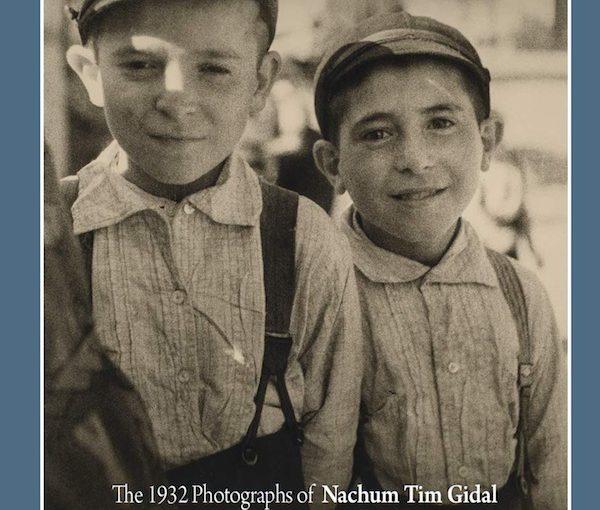
The book Memories of Jewish Poland: The 1932 Photographs of Nachum Tim Gidal lets the photos do most of the talking. And they speak strongly and with passion of a lively, bustling and diverse community, the vast majority of whom were killed in the Holocaust.

“Of the 3.3 million Jewish residents of Poland before World War II, only 380,000 were still alive by 1945,” notes the book’s curator, local scholar, writer and philanthropist Yosef Wosk, in the preface. Wosk will help launch the release of Memories of Jewish Poland on Feb. 11, in a “prologue” event of the Cherie Smith JCC Jewish Book Festival, which opens Feb. 20. He also helped organize Invisible Curtain, the current exhibit of Gidal’s work that is being co-presented by the festival with the Zack Gallery.

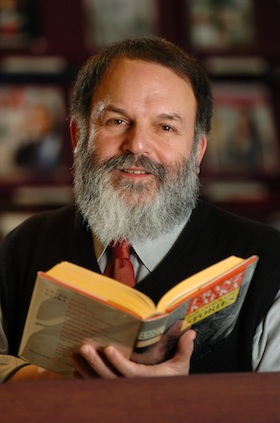
photo - Yosef Wosk will launch the book Memories of Jewish Poland: The 1932 Photographs of Nachum Tim Gidal on Feb. 11 at a virtual Jewish Book Festival event
Yosef Wosk will launch the book Memories of Jewish Poland: The 1932 Photographs of Nachum Tim Gidal on Feb. 11 at a virtual Jewish Book Festival event. (photo by Joshua Berson)

Wosk was friends with Gidal, who he met in Jerusalem, where Gidal lived. Born in Munich in 1909, Gidal had made aliyah in 1936, but then lived in various places before returning to Jerusalem in 1970; he passed away in 1996. It was not only Gidal’s dying wish that the 1932 Polish photos be published in book form, but that they be allowed to “speak for themselves.” And that request has been honoured. In addition to Wosk’s brief preface, the book opens with some notes written by Gidal for a 1984 exhibit and includes an introduction to Gidal’s work by photography historian, researcher, author and curator Nissan N. Perez, founder of the Israel Museum’s photography department. At the end, there is a list of the plates included in the book and a brief biography of Gidal. A map of Poland, indicating the locations in which the photos were taken, bookends the commentary and photographs.

“This book illustrates the largest number of photographs from Gidal’s Polish photo essay ever assembled. It is not, however, a catalogue raisonné: more than 20 images are not included,” writes Wosk. The reproductions included in the volume are taken from prints in Wosk’s collection and that of the Israel Museum. Wosk thanks Diane Evans, “master teacher, photographer, bookseller and friend in photography,” for serving “as a patient, experienced and disciplined midwife in giving birth to this book.”

Gidal – born Ignaz Nachum Gidalawitsch – was motivated to travel to Poland “by his desire to know more about his family’s background,” writes Perez. The photographs Gidal took were “actually a rather small chapter of his oeuvre at the beginning of his outstanding career, an exercise in perfecting his vision.”

“He gains the interest of the viewer not by staging elaborate scenes, but by capturing expressions and gestures that can only be described as both intimate and straightforward,” explains Perez. “As he said in one of the many meetings conducted toward the exhibition in 1995, ‘My photographs, I like to think, are variations on the everlasting tragicomedy of human life.’”

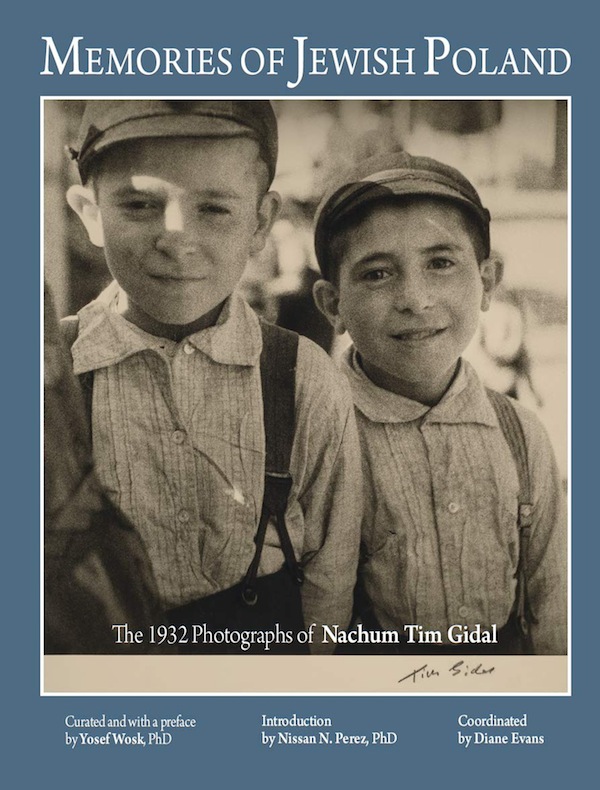
image - Memories of Jewish Poland: The 1932 Photographs of Nachum Tim Gidal book cover

The images in Memories of Jewish Poland are prime examples of Gidal’s ability to capture images of life as it is happening, in all its unromantic but beautiful distinction.

“In the heterogenous assembly of the Polish galut (diaspora), I myself became immersed in the flow of Jewish life from the past to the future,” wrote Gidal for the 1984 exhibit. “When we left Poland after three weeks, I had passed through an invisible curtain, which had separated East and West. Now the curtain had opened, and I was made to feel the unifying presence of Jewry.”

A selection of Gidal’s 1932 Polish photos is currently on display at the Zack Gallery (for the full story, click here). The Memories of Jewish Poland book will be launched at a virtual Cherie Smith JCC Jewish Book Festival prologue event Feb. 11, 7 p.m. For tickets to the prologue and other Jewish Book Festival events, visit jccgv.com/jewish-book-festival.

Format ImagePosted on January 29, 2021January 27, 2021Author Cynthia RamsayCategories BooksTags Cherie Smith JCC Jewish Book Festival, history, Holocaust, Israel Museum, photography, Poland, Tim Gidal, Yosef Wosk
Interview insightful, fun

Interview insightful, fun

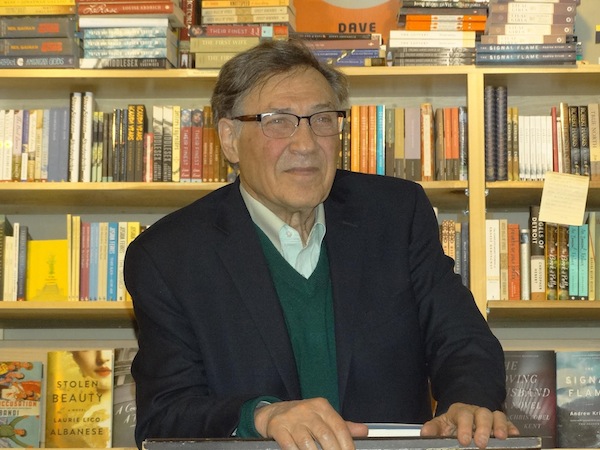
Israeli writer Eshkol Nevo, whose latest novel is The Last Interview, opens the JCC Jewish Book Festival Feb. 20. (photo from JBF)

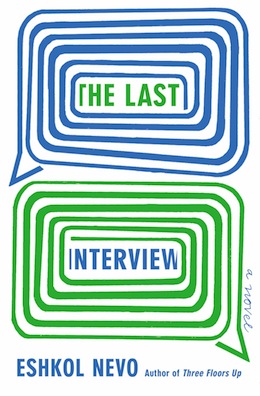
This year’s Cherie Smith JCC Jewish Book Festival opens online Feb. 20, with Israeli writer Eshkol Nevo, whose latest novel, The Last Interview, brilliantly sprinkles facts amid a lot of fiction and interjects humour into much pathos. It entertains, of course, and, as all good books do, it raises many salient points that will get readers thinking – and feeling – about, in this case, storytelling, marriage, truth, parenting, friendship, lies, family, identity, media, politics and relationships. So, life.

In The Last Interview, the protagonist, who is suffering from a chronic form of depression and writer’s block, responds to an interview sent to him “by an internet site editor who collected surfers’ questions.” He later notes, “It was supposed to be only an interview, nothing else, but slowly – it seems I can’t do it any other way – I’ve been turning it into a story. I was supposed to leave Dikla and the kids and the dysthymia out of it. And all of them are in it.” This inability to stop himself from telling stories about others in his published writing is an Achilles’ heal in his personal life, but a boon to his professional one.

His interview answers are sometimes short and direct:

“How do you manage to deal with the loneliness that’s part of writing?

“I don’t.”

But, most often, they are quite involved, going into more detail, retrospection and introspection than the questioners would ever have expected. We learn about his failing marriage, but also its sweet beginnings. We are privy to his feelings about his best friend, who is dying of cancer. We see how he struggles to be a good father to his three kids. We hear some of his travel adventures. We witness his attempts to extricate himself from an unwanted speech-writing gig. We share his discomforts with the Israeli-Palestinian situation. We find out a bit about his motivations for writing:

“If I don’t write, I have nowhere to put my memories, and that’s dangerous. I have a problem. I don’t forget anything. My forgetting mechanism is completely screwed up. All the partings, the deaths, the unexploited opportunities. They are all trapped in my body, and writing is the only way to release them … if I don’t occasionally unburden myself of the weight of some of those memories, I won’t be able to breathe. No air will enter my body. Or leave it.”

Part of his current creative block – “I was supposed to be writing a novel this year. Instead, I’m writing answers to this interview” – is that he and his wife are becoming more distant. “I can’t say that I became a writer to win Dikla’s heart, but I can assume that with another, less stimulating woman, I wouldn’t be writing.” He notes that, since his first letter to her, “In fact, everything I’ve written since then, eight books, is one very long letter addressed to her.” At the end of a lengthy response to the question, “All of your books are written in the same style. Have you ever thought of writing something completely different? Maybe science fiction? Fantasy?” he says that genre wouldn’t make any difference: “In any case, it would turn out that, once again, I wrote about an impossible love.”

image - The Last Interview book coverWhile the overall mood of The Last Interview is solemn, there are many funny parts. One especially hilarious section is the writer’s response to the question, “When will they produce a film adaptation of your latest book? When I read it, I could actually imagine the movie.” As the writer shares the details of an encounter with a filmmaker of a similar opinion, the conversation cynically – but with the ring of truth – moves from flattery to the many ways in which the movie will ultimately be unrecognizable from the book, yet concluding nonetheless with the filmmaker enthusing, “The minute I finished it, I said to my wife: This is a movie!”

With a writer as intelligent, sensitive and amusing as Nevo and an interviewer as experienced as the Globe and Mail’s Marsha Lederman, the book festival’s opening event should be well worth attending. For tickets to it, and for the full lineup of events, visit jccgv.com/jewish-book-festival. The festival runs to Feb. 25.

Format ImagePosted on January 29, 2021January 27, 2021Author Cynthia RamsayCategories BooksTags Cherie Smith JCC Jewish Book Festival, Eshkol Nevo, fiction, humour, Israel, Marsha Lederman, politics, social commentary, writing
Fairy tales still relevant

Fairy tales still relevant

Jack Zipes gives the lecture Resurrecting Dead Fairy Tales on Facebook Feb. 17. (photo from MISCELLANEOUS Productions)

Some fairy tales are timeless in that they still have lessons to impart. For example, The Pied Piper, a story dating back to the Middle Ages, “is a tale of plague, greed, betrayal, conformity/confinement with allusions to child abuse,” explained Elaine Carol, co-founder and artistic director of MISCELLANEOUS Productions.

MISCELLANEOUS’s Plague project will have participating youth, along with professional artists, interpreting the Brothers Grimm’s The Pied Piper “from an intersectional, anti-racist, anti-oppression, queer feminist perspective.” In preparation, Carol told the Independent, “we have been reading our way through the mountain of brilliant writing by Jack Zipes, asking him many questions – even our film editor of Resurrecting Dead Fairy Tales is now reading two of his hundred or more published books.”

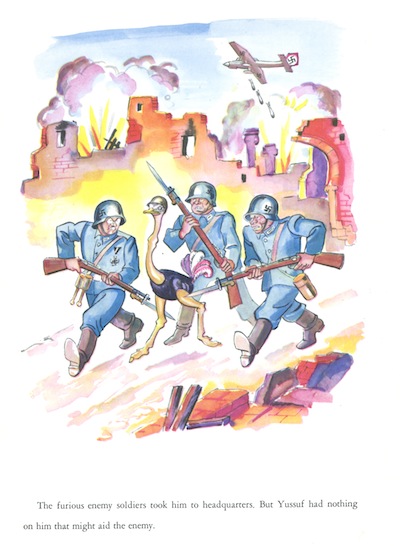
image - In Yussuf the Ostrich, political caricaturist Emery Kelen tells the story of a young ostrich who helps defeat the Nazis in northern Africa during the Second World War.
In Yussuf the Ostrich, political caricaturist Emery Kelen tells the story of a young ostrich who helps defeat the Nazis in northern Africa during the Second World War.

Zipes’ recorded Facebook Watch talk, Resurrecting Dead Fairy Tales, will be streamed Feb. 17, followed by a live Q&A with Zipes. Some of the lecture will be part of the documentary being created about the youth-centred theatre project, which will include various workshops and an eventual stage production at the Scotiabank Dance Centre in 2022.

“I have also been working with young professional artists Tiffany Yang, who was a youth in our Monsters production, national and international tours, and Julia Farry, our production assistant/outreach worker,” said Carol. “Tiffany has translated four indigenous Taiwanese folk tales that are stories of plague – mostly in coastal communities, including animal wonder tales of fantastical fishes and other fascinating narratives. Julia has translated three Japanese folk tales focusing on plagues. There are many plague stories that we still hope to collect, including the facts of disease spread by European settlers to the Indigenous people of Turtle Island, as research materials for our project-in-development.

“We are currently collecting these tales to bring to our youth cast after it is deemed safe to work with them in person,” Carol continued, “as we will be using theatre, hip hop/streetdance, contemporary dance, marimba and world music, urban music, performance art, etc., to co-create a new play. This play will be used as a vehicle for the youth to discuss their own experiences of living in a world pandemic.”

Zipes’ lecture was filmed in Minneapolis by MISCELLANEOUS Productions’ professionals. The professor emeritus of German and comparative literature at the University of Minnesota is an expert on folklore and fairy tales. He is a storyteller himself and the founder of the publishing house Little Mole and Honey Bear.

“My parents and grandmother always told me tales of different kinds,” Zipes told the Independent. “When I began studying for a PhD at Columbia University, I wrote my dissertation on ‘The Great Refusal: Studies of the German and American Romantics in the 19th Century.’ My interest in fairy tales grew as I realized that these imaginary tales hold more truth than the so-called realistic future. And I also was angered by Bruno Bettelheim’s book about fairy tales in which he imposed a Freudian interpretation on readers. Since then, I have been trying to reveal how relevant fairy tales are to our lives.”

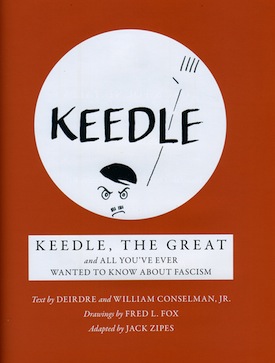
image - One of the fairy tales Jack Zipes has resurrected is Keedle, The Great, first published in 1940
One of the fairy tales Jack Zipes has resurrected is Keedle, The Great, first published in 1940.

The examples given in the lecture’s press release are from two books Zipes has translated and published: “For example, in Yussuf the Ostrich, well-known political caricaturist Emery Kelen tells the story of a young ostrich who helps defeat the Nazis in northern Africa during World War II. In Keedle, The Great, first published in 1940, Deirdre and William Conselman Jr. sought to give Americans hope that the world can overcome dictatorships. To the authors, the title character Keedle represented more than Hitler, but all dictators then and now.”

Zipes said, “I don’t think that my being Jewish accounts for my interest in fairy tales. My Jewishness makes me a bit meshuggah, and this is why I try to think out of the box and have developed a storytelling program for children without sanitizing the fairy tales. The best of folk and fairy tales have never been sanitized, and I use tales to tell so that children will be enabled to tell their own miraculous tales.”

“My Jewishness is complex,” said Carol, “because I am mixed-race Sephardic-Romani and Ashkenazi. One of one million reasons I love Jack Zipes and think his work is crucial is his lucid critique of the Disneyfication of fairy tales and folklore.”

Resurrecting Dead Fairy Tales starts at 5pm on Feb. 17 and is intended for older youth and adult audiences. On the day and time, click here for link to watch.

Format ImagePosted on January 29, 2021January 27, 2021Author Cynthia RamsayCategories Performing ArtsTags coronavirus, COVID-19, dance, education, Elaine Carol, fairy tales, fascism, history, Jack Zipes, MISCELLANEOUS Productions., music, Pied Piper, plague, storytelling, theatre, youth
Hope amid challenges

Hope amid challenges

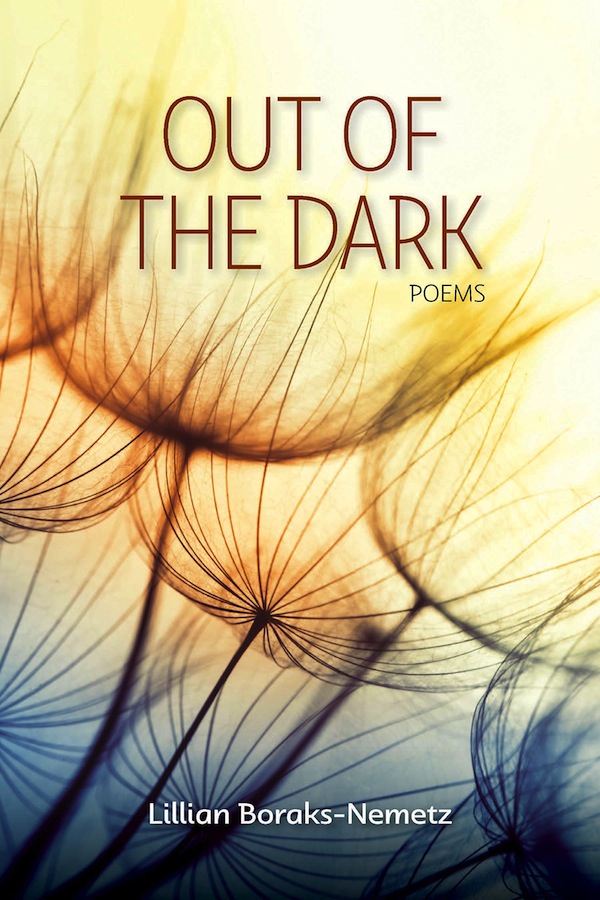
Lillian Boraks-Nemetz’s latest collection of poems offers comfort, even though she does not shy away from the tragedy of her Holocaust experience and ever-present memories of that period. From the very title, Out of the Dark, she gives hope. If she can still see beauty and love, then we can, too.

An established and award-winning writer, Boraks-Nemetz has published many books and her poems have appeared in literary anthologies. A child survivor of the Warsaw Ghetto, she is an eyewitness to some of the most cruel aspects of humanity and openly wrestles, in these poems, with the death she has seen, with the hiding she was forced into and can’t completely shake the habit of, with the stark contrast of her life before coming to Vancouver and the world she has created here. While deeply marked by suffering, she makes space for the pain that others experience.

image -Out of the Dark book cover

Out of the Dark is divided into three sections: Survival, Flickers in the Dark, and Into the Light. Even the most sombre first part, which includes poems about those murdered in the Holocaust, the impacts of war and the existence of antisemitism, starts with a poem called “Flowers of Survival,” in which a daughter recalls the words of her father, from whom she has been separated, forever: “‘Let the wind thrash us if it will // And the foul earth open to swallow us,’ you said, / ‘for in the end / neither the violent wind nor / the foul earth will succeed.’”

In midsection of the book, Boraks-Nemetz gives voice not only to her sadnesses and joys of making a new life in Vancouver, but of the immigrant experience in general. She writes of the difficulties of living in another place, both with regards to location but also in her mind and body, as well as in time, so different is British Columbia than Poland, so changed is Warsaw now from how it was during the war, so renewed a person is she, yet, she advises, in the poem “Identity,” “when they tell you / forget the past – let it go / they are in error // your past is your memory / and memory – a bridge / to you.”

As people are marked by what happens to them, internally and externally, so is nature, and Boraks-Nemetz has included several poems about its splendour, what it has witnessed and how we humans are threatening it, despite its strong will to survive.

There are many poems in Out of the Dark that are dedicated to family, friends, poets and others, but the bulk of them are in the final section. Boraks-Nemetz seems to be saying that, despite our capacity as humans for brutality and destruction, we need one another and we are the only ones who can fix what we have wrought, and make the world a better place.

Format ImagePosted on January 29, 2021January 27, 2021Author Cynthia RamsayCategories BooksTags Holocaust, hope, Lillian Boraks-Nemetz, poetry, writing

Camps plan tentatively

Normally, this issue of the Independent would feature our third Camp Guide of the season, with several camps advertising their summer sessions, and several articles on various topics related to Jewish camp. But COVID-19 seriously affected last summer’s programming and it’s making this year’s planning difficult, to say the least. Camp Hatikvah and Camp Miriam – which are overnight camps – have been particularly impacted by the pandemic.

With record camper enrolment, 2020 was slated to be Camp Hatikvah’s best year ever. By the third week of March, however, it became apparent that the summer wasn’t going to go as planned. By the end of May, the Provincial Health Officer had announced that overnight camps would be prohibited from operating and Camp Hatikvah had to cancel its upcoming season.

“It was devastating,” said Liza Rozen-Delman, the camp’s director. “My heart immediately broke for the 700 participants and 80 young counselors who were signed up for our programming. After such a hard few months in lockdown, I knew everyone was hanging on to the hope that they would still get to go to camp. The fact that this was no longer a possibility was so hard for everyone. I just wanted to fix this for kids but was helpless to do so. It was a very difficult time.”

The cancellation also created a financial crisis, as there was no program revenue to cover fixed costs, such as insurance fees, site maintenance and administrative expenses. Camp Miriam faced financial issues as well, and the Jewish Federation of Greater Vancouver provided emergency funding to both camps last April.

“Our community made it clear that we would not face this challenge alone,” said Joanna Wasel, Camp Hatikvah board president. “They knew we were in trouble and they immediately felt the call to action.” By the first week of June, Hatikvah had raised enough money to cover all of their 2020 fixed operational expenses.

“This was one of the hardest years in the camp’s history and yet, in a strange way, it was also one of our most meaningful,” said Wasel. “The way the community stepped up for us is an incredible affirmation of the value of our work and the impact Camp Hatikvah has had on generations of people. It has touched us beyond words and we will be forever grateful.”

“Last spring, as the reality of the pandemic hit, it was as if the rug had been pulled out from under us,” said Leah Levi, registrar of Camp Miriam. “We were scrambling to figure out how to provide what we do each summer on Gabriola Island – the fun, magic, community, friendship and Jewish experiences that our campers have come to expect from us. It was very overwhelming and we were sort of lost, until our youth staff stepped up and started planning for what was possible: day camps in Vancouver, Victoria and Portland, and even online programming for those who couldn’t attend the day camps. We rented space with the JCC’s Camp Shalom at Vancouver Talmud Torah, and in Victoria at the JCC. Donors and the Vancouver Jewish Federation backed our plans with financial support and, as they say, the rest is history!”

The camp’s staff, who are all between the ages of 17 and 22, got “to spend the summer being mentors and learning valuable leadership skills,” said Levi. “Parents and kids were grateful that we gave them a break from each other and a fun, unplugged, Jewish, social experience during COVID. For over 200 campers, COVID-19 took a backseat for six-and-a-half hours a day, and they were able to enjoy a physically distanced ‘normal.’ Even though they weren’t on Gabriola Island, campers and staff alike felt that they were at Miriam. As one camper put it, ‘We learned that Camp Miriam is not a place, it’s a feeling and we can take it anywhere.’”

For this coming summer, Camp Miriam has opened registration for three two-week sessions on Gabriola.

“All registrations are considered ‘pre-registrations’ and everyone is on a waitlist,” said Levi. “We will only accept campers when we have permission from the B.C. health authority, as their decision made last spring to not allow overnight camp still stands…. If we do not get permission to open … we will offer similar programming as last summer.”

Hatikvah translates to “the hope” in English and, while COVID is still raging, Camp Hatikvah remains hopeful they will be able to operate this summer, too.

“We are full for the upcoming season,” Rozen-Delman said. “Kids need camp, perhaps now more than ever, and we are going to do whatever we can to get them back there this summer.”

Acknowledging that much of the situation is out of their hands, Rozen-Delman is planning for a variety of scenarios. “And, while it is hard to face so many unknowns,” she said, “we are determined to find creative solutions to whatever challenges lay ahead.”

Posted on January 15, 2021January 13, 2021Author Cynthia RamsayCategories LocalTags Camp Hatikvah, Camp Miriam, children, coronavirus, COVID-19, Joanna Wasel, Leah Levi, Liza Rozen-Delman, summer camp
A moving documentary

A moving documentary

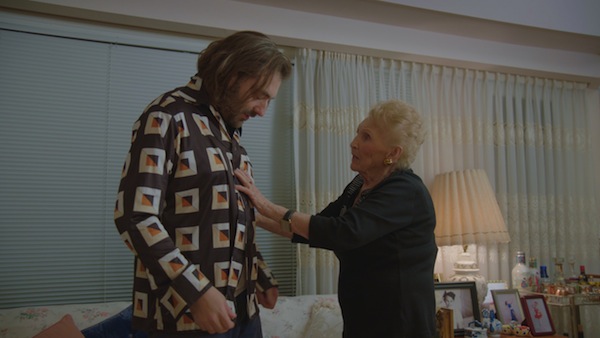
A scene from the documentary Martha, in which director Daniel Schubert is given a more appropriate shirt by his grandmother, Martha Katz. (Courtesy NFB)

Two very different scenes in the National Film Board of Canada’s short documentary film Martha – which will be released on International Holocaust Remembrance Day, Jan. 27 – combine to highlight the joy and pain that is life. Directed and co-written by Daniel Schubert, a grandson of the film’s subject, Martha Katz, there is a funny and relatable interaction where his grandmother questions his choice of shirt for the filming and provides him with a more appropriate one. This lighthearted exchange contrasts with the heart-wrenching tour that Katz takes with her grandson through the Holocaust Museum LA.

Born in Berehove, Czechoslovakia, Katz is 14 years old when she’s taken to the ghetto, then to Auschwitz. Both of her parents and two of her brothers were murdered in the Holocaust; she, along with two other brothers and two sisters, survived the concentration camps. She speaks, with emotions near the surface, about some of her experiences. The documentary is a mix of seemingly spontaneous moments, while other parts are scripted reenactments or prepared questions being asked and answered.

“My original idea for the documentary,” Schubert told the Independent, “was to track Martha and her two sisters’ incredible journey together through the ghettos and, eventually, Auschwitz. After Auschwitz, they were even forced to work at a German bomb factory together in Allendorf, manufacturing the bombs. The fact that Martha and her two sisters managed to stay together and survive through all of the horrors of the concentration camps, to me, was a miracle. I thought that would make an amazing documentary.

“But, as we developed it at the NFB, we realized that a more traditional cinéma vérité documentary could be a viable way to tell her story, too. I did not know many of the facts beforehand, so many of the things she told me in the film came as a surprise. My grandmother and I have a warm and loving relationship and I thought, why not show that on screen as I find out all of these amazing things?

“The other thing about my grandmother,” added Schubert, “is she’s hilarious. She’s the classic Jewish grandmother and I wanted that to come across. I wanted this to also be a real picture of a grandmother and her grandson and how we naturally interact.

“We also decided that in between these cinéma vérité moments would be cinematic vignettes narrated by my grandmother herself. There were many more amazing things she went through, but, due to time constraints, I picked those stories.”

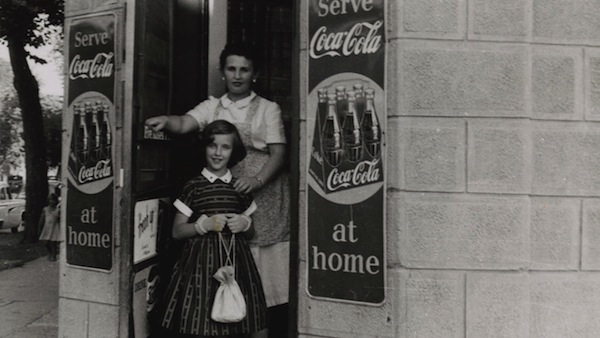
One of the stories is how, after the war, in Vienna, his grandmother met and married Bill Katz, who had been in a labour camp. The couple went to Winnipeg, with $200 they had saved up. They had two children – Jack and Sharon – and struggled financially. It was his grandmother who suggested they go into business for themselves. She went to night school, then saw an ad for a grocery store for sale – she bought it, learning on the job. There are some wonderful photos and video in this part of the film.

photo - Martha Katz saw an ad for a grocery store for sale – she bought it, learning on the job
Martha Katz saw an ad for a grocery store for sale – she bought it, learning on the job. (photo from NFB)

It was her goal in life for her two children to have whatever they wanted and she talks about her happiness at having had them. “We had to have a life again,” she says, stressing that this doesn’t mean she doesn’t think about the Holocaust all the time, because she does – “I hope it should never happen again. That’s all.”

“Bringing her to the museum was a bit of a tough decision, but she encouraged us to go,” said Schubert. “The intention was to see whether there was anything new that she and I could both learn about the atrocities committed. And, as it turned out in the film, there was; specifically, about the excruciating length of time the gas chamber took, in some cases, to exterminate those poor victims trapped inside, including my great-grandmother and her young son. Suffice to say, it took way longer than expected, and neither of us knew how long they may have had to suffer inside.”

It was for health reasons that Katz, who is now 90 years old, moved to Los Angeles.

“My grandmother suffered from chronic bronchitis since the war and, because of Winnipeg’s frigid winters, the doctors advised her to move somewhere warmer, or else her life could be at risk,” explained Schubert. “My grandfather’s brother lived in Los Angeles, so they helped them get settled there. They came to Winnipeg from Europe in 1948 and moved to Los Angeles in 1964.”

The 22-minute documentary is dedicated to the memory of Katz’s older sister, Rose Benovich. The statement at the film’s end notes: “Her courage in Auschwitz is the reason I am alive today.”

Format ImagePosted on January 15, 2021January 13, 2021Author Cynthia RamsayCategories TV & FilmTags Auschwitz, biography, Daniel Schubert, education, Holocaust, Martha Katz, memoir, National Film Board of Canada, NFB, survivors
More than meets eye

More than meets eye

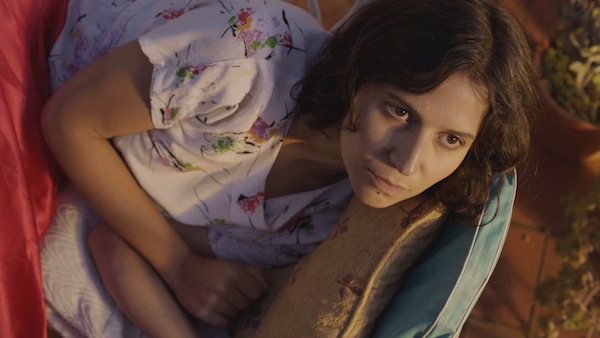
Catalina Beraducci plays Noemí Goldberg in the Topic film Noemí Gold. (photo from Topic)

For his first feature film, writer and director Dan Rubenstein has done well. Noemí Gold, which is currently streaming exclusively on Topic, is a quietly engaging story that touches upon serious issues, though never delves into them. While the story is somewhat scattered and doesn’t always make sense, the acting is strong and the glimpse into Argentine culture interesting.

The title role is played by Catalina Beraducci, who is perfect for the part. Noemí Goldberg, 27, has accidentally become pregnant from a tryst with an egotistical artist of questionable talent and character. She is an unassuming person, recently graduating with her master’s in architecture, though she doesn’t appear to have a job. When she seeks a doctor who can perform an abortion – which was an illegal procedure in Argentina until just last month – she has some trouble raising the money she’ll need to go to Uruguay to get one.

Noemí has a couple close friends – eccentric roommate Rosa and party-girl Sol – both of whom help in small but important ways. Also in Noemí’s court is her grandmother, though we find out later in the movie that their relationship has had its complications. Lastly, while all this is going on, Noemí’s cousin, David, comes to visit from Los Angeles, where his family moved when he was 7, for tragic reasons we eventually find out.

David and Noemí were once close, but, for most of the movie, their interactions are strained. David works for an energy drink company and his job is, literally, to post photos on Instagram of himself enjoying the drink in various places and while doing various activities. (He is the only one in the film who has a job, it seems.) Social media plays a prominent role in the narrative as a whole – and, hopefully, younger viewers will take it not only as a representation of themselves in film but as a critique of how much time they dedicate to promoting the fun they are ostensibly having versus actually having fun.

Women’s rights, religion (via a discussion with and seduction attempt of two young Mormon missionaries), what constitutes art (one amusing scene features an objectively poor dancer filming her own performance using a camera on a selfie stick, while being cheered and applauded by an adoring audience), the importance of forgiveness, the challenges of being a good friend, the imperfection but necessity of family, and many other topics run through Noemí Gold. There are no pronouncements and the laidback pace could fool one into thinking there is not much of substance in the film, but they’d be wrong.

Format ImagePosted on January 15, 2021January 13, 2021Author Cynthia RamsayCategories TV & FilmTags abortion rights, Argentina, Dan Rubenstein, social media, women
Christmas Carol goes online

Christmas Carol goes online

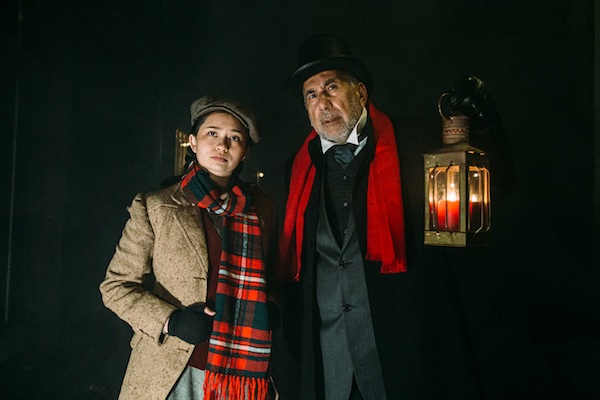
David Adams as Scrooge and Scotia Browner as Tiny Tim in Metro Theatre’s production of A Christmas Carol – The Radio Play. (photo by Nicol Spinola)

Metro Theatre was all set to provide socially distanced, safety-first live performances of A Christmas Carol – The Radio Play this month. But then the provincial restrictions on gatherings came down, and the struggling theatre company had to cancel its in-theatre run. But the production team used what holiday spirit it had to film the show and an online version will be available for viewers to watch from Dec. 21 through Jan. 3.

“We are fortunate to have our talented friends Nico Dicecco and [playwright] Erik Gow film the show and put together a beautiful digital stream of it that is available by donation,” stage manager Kat Palmer told the Independent.

Palmer has had a few shows canceled since the pandemic hit. “Right at the beginning of COVID,” she said, “I was in rehearsals for a sweet little concert Wendy Bross Stuart put together called With a Song in My Heart. I was also looking forward to Hello Dolly! at Theatre Under the Stars. And, most importantly, my company, Raincity Theatre, was gearing up for our production of Cabaret. Obviously, intimate, site-specific theatre is not possible during COVID.”

But A Christmas Carol – The Radio Play was created with COVID-19 protocols in mind. The theatre is a large space, enough for patrons to be distanced from one another. “Even the set was designed to keep actors more than six feet apart at all times,” said Palmer. In rehearsals, every cast member arrived masked and wore their mask until they were in their show spacing, she said. For the stage show, they were ready with two understudies, prepared to go on, lest “any actor wake up with any sort of tickle in their throat.”

But those plans went for naught when, last month, large public gatherings were prohibited and the show, which was to open Dec. 3, was delayed to organize the online version.

“It is no surprise that COVID has deeply impacted our arts community,” said director Chris Adams. “The Metro Theatre is a not-for-profit theatre company that relies on ticket sales to get by. Once a thriving arts hub in a former movie-house, Metro has been hit hard by COVID restrictions that have seriously impacted their revenue. The Metro also rents out their space to schools and dance companies over the quieter spring/summer months but, due to our new reality, that was also impossible this year. The Metro Theatre is at risk of closing its doors.”

Nonetheless, the show is also raising money for the charity Backpack Buddies.

“When Charles Dickens published A Christmas Carol in 1843, charitable giving soared overnight,” said Palmer. “The story has forever changed how we celebrate the holiday season and reminds us of the importance of generosity. It is in this spirit that the Metro always selects a charity to support each year at Christmas.

“Early in the show, we meet Abigail – an orphan who speaks of food insecurity. It is shocking to find parallels between children today and the Dickensian era. British Columbia has one of the highest child poverty rates in Canada, with 20% of children living below the poverty line. The Backpack Buddies program provides backpacks of food to children in need so that they do not go hungry over the weekend.”

A Christmas Carol – The Radio Play is an original work by writer Gow, based on the Charles Dickens novel, of course.

“With Christmas Carol, there is an expected order that ghosts appear. Erik has decided to shake it up,”

said Adams. “There are also some scenes that do not appear in the book that add an extra level of character development.”

The radio play stars David Adams as Ebeneezer Scrooge, who meets all the characters in A Christmas Carol, “from Bob Cratchit to Jacob Marley, but with only six actors creating and voicing over 40 of the beloved characters,” reads the play’s description. Joining David Adams “on stage” will be Roger Monk, Jill Raymond, Chris Ward, Emilia Michalowska and Scotia Browner. The COVID covers were Jim Stewart and Courtney Shields, who is also the assistant director of the production.

“All of our actors have created a character for their narrator in addition to playing every character in the piece,” said Palmer. “For the majority of our performers, they play four or five characters each. For the simplicity of the storytelling, David plays Scrooge but has also created a very unique and distinct character for his narrator. While David has played many Jewish characters, like the Merchant of Venice, Tevye and Fagin, he is not Jewish himself. Although, he has had to learn some Yiddish for roles from time to time.”

As for being a Jewish person working on a Christmas play, Palmer said, “At this time of year, I sometimes feel like Scrooge. I despise the commercialism of the holiday season, how it seems to consume the entire month of December and don’t get me started on cheesy Christmas movies. But, as a Jewish person working on this show, it is easy to see Jewish values on every page of the script. Yes, A Christmas Carol takes place at Christmas but, in many ways, A Christmas Carol is really a story of teshuvah, tzedakah and tikkun olam…. It’s a story that celebrates kindness, charity and human transformation – ideals that all parents hope to instil in their children – ideals that have deep roots in Jewish tradition. Don’t we all want to believe even the worst among us has a core of goodness?”

The filmed version of A Christmas Carol – The Radio Play is available by donation at metrotheatre.com.

Format ImagePosted on December 18, 2020December 16, 2020Author Cynthia RamsayCategories Performing ArtsTags A Christmas Carol, Backpack Buddies, Chris Adams, coronavirus, COVID-19, Kat Palmer, Metro Theatre, Scrooge, theatre, tikkun olam
Painting survivors, life

Painting survivors, life

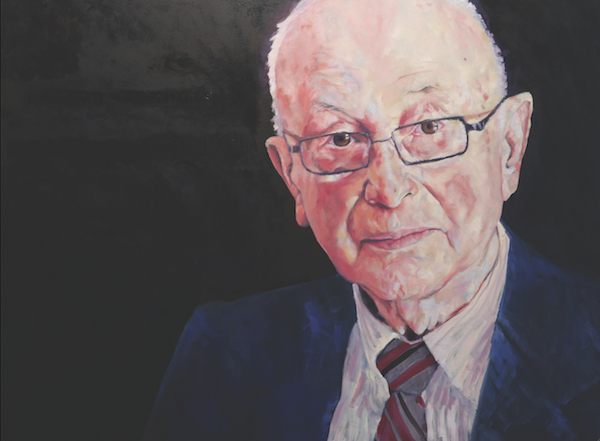
A portrait of Robbie Waisman, by artist Carol Wylie. Part of the exhibit They Didn’t Know We Were Seeds, at the Zack Gallery to Jan. 4.

Even via a wobbly Zoom-led tour, the impact of Saskatoon artist Carol Wylie’s portraits – nine of Holocaust suvivors and nine of residential school survivors – can be felt.

The title of the solo exhibit at the Zack Gallery until Jan. 4 is They Didn’t Know We Were Seeds. It is taken from the proverb: “They buried us … they didn’t know we were seeds.” And the choice of 18 portraits was deliberate.

“It was quite quick and early in the process I decided that 18 had to be the number,” said Wylie at the exhibit’s virtual opening Nov. 19, “because there’s so much darkness in the stories but there’s so much light and life in the survival… [T]here’s three of the Holocaust survivors who are involved with the March of the Living and to actually go back to the camps, to Auschwitz, and to make that walk when you were there; I can’t imagine the courage it takes. And they do it so that others are educated. That’s the rising above it and making something really powerful out of a black, dark experience.

“And I see the same thing with residential school survivors, like Gilbert [Kewistep] and like Eugene [Arcand], who spend so much of their time going around to schools and speaking in public about their experiences to make sure people are educated about that. And, again, reliving what they went through every time they tell it, I’m sure.

“So, the 18 and the connection to chai, to life, came really early in the process. It had to be 18, because that validation of life that these people represent … had to be present.”

The scale of the paintings was also chosen purposefully. “I want these portraits to take up space and to be very present and, for when you’re standing in front of them, to have them fill up your field of vision, so that you can’t wander past, uninterested and unengaged,” said Wylie.

The project started several years ago, she explained. “I saw Nate Leipciger speak at the Holocaust memorial service in Saskatoon and, it’s ridiculous, I’ve been [attending] for lots of years but, for some reason, that year, it hit me for the first time how elderly all these people are getting.”

The firsthand experience that is so powerful is soon to be lost, she said, and “I felt there was something that I had to do to help to preserve that.” And she would do it with the best tool she had, her passion and ability to create portraits.

“What I have learned over the years,” she said, “is that, when you capture the nuances of a person’s face, you really reflect who they are and much of their history and how they’re made up of that history. Even though it’s not like hearing a verbal story, it’s seeing a story in a different form.

“I started this idea to do a series of portraits of Holocaust survivors. And then, as I entered into it, little things started to pop up that were connecting the Jewish survival to the residential school experience. It started with a community seder at our local synagogue, where our rabbi, who is very forward-thinking, always has elements on the tables that recognize other groups … and, that particular year, he had made special mention of making sure that we understand – especially in Saskatchewan, where we have a really dark history of residential schools – the experience of the Indigenous people that we live with.

“And I started thinking, it’s not a parallel experience, but it’s an experience that is shared in terms of pain and suffering and then survival and rising above it…. And, because I live in Saskatchewan, this is part of the history of the land that I call home, that I’m a settler in, that this is a time of truth and reconciliation, it’s a time of trying to address these issues, so, as a personal step towards reconciliation, I can sit down, listen to the stories of some of these residential school survivors and bear witness to them and bring them in to be part of this project, so that they can converse through their portraits, as a group of survivors.”

It was only after making this decision that Wylie discovered that people like Vancouver’s Robbie Waisman – who is among those featured in the exhibit – were already meeting with residential school survivors to share ideas and experiences.

The project took about three-and-a-half years to complete. Waisman is the only Vancouver-based subject. “All the other Holocaust survivors were from Toronto, Edmonton and Saskatoon, and all the residential school survivors are from Saskatchewan,” said Wylie in an email interview with the Independent.

“I had to be really careful,” she noted at the exhibit opening. “There’s a very, very fraught history of non-Indigenous artists and non-Indigenous photographers representing Indigenous peoples and I knew I was stepping into this murky ground. All the way along, I had to keep asking myself questions about my own integrity around this, what are the reasons for why you’re doing this and does every single survivor that you talk to understand fully what this project is about and [are they] fully on board with it. At the end, I thought, if there are people who are criticizing it, that’s fine, but, I feel, after conversations I’ve had with many residential school survivors, that it’s more important that we raise this issue and more important that I make this step towards reconciliation than be fearful of doing something that maybe I shouldn’t be doing or that the art world might perceive that I shouldn’t be doing.”

When the work was completed, Arcand and Kewistep “smudged the work before it went off on its first exhibition. Then they gave me a smudge kit that I could use myself, if I wanted to, in the future. It was extremely meaningful to me; it was almost like they’d given it their stamp of approval, as well as imbuing it with these good graces and these good thoughts and this positive energy before the work went anywhere and anyone had a chance to see it.”

The exhibit has been shown in various places and will travel elsewhere after its time at the Zack.

Wylie’s general process in doing portraits is to speak with her subjects first.

“I think that, in order for the mask that we all wear in the world to protect ourselves, in order for that to drop, there needs to be time spent talking,” she said. “There’s this very strange artificial intimacy that happens when you’re sitting two feet – before COVID times – away from somebody that you’re drawing, and you’re talking and you’re looking intently at them…. So, I always wait until that couple of hours of conversation and visiting is over and then I pull out my camera.

“I need to work from photographs because I like to get a strong resemblance and I can’t have people coming back endlessly to sit for me…. But that’s when I take them, is after that time has been spent, that conversation has happened, and their mask has come down and they are open.”

The openness that is seen in the subject’s faces, stressed Wylie, “is not something that I put there, it’s something that they had. Seriously, I paint what I see… And that captures what they have, what they are, because it’s all within there, it’s all in their face.”

Given the caveat that there is something intangible about what makes a good portrait, Wylie said in an email, “I believe a portrait should bear resemblance to the subject. But, in addition, it should feel like the portrait is inhabited; like it contains the spirit of an individual. You often hear people comment about the eyes in a portrait following them. I think that’s the sensation of some element of the person, and not just their resemblance, being present. I also like to see evidence of the artist in the work in the form of brushstroke, colour choices, etc. This trace of the artist distinguishes a painted portrait from a photo.”

She described her need to create portraits as “a compulsion I’ve had since I was a child. Even then,” she said, “I drew people, made my own paper dolls. In my grad school investigations I discovered, I believe, that it’s because of a fascination I have with the mystery of consciousness, and the fact that we can never share another’s consciousness. We learn about ourselves through our interactions with others and these connections enrich our being.

“The face is a major part of how we communicate and is strongly connected to our identity,” she said. “Yet, we cannot see ourselves the way others see us, so there’s this mystery around faces. What do they hide? What do they reveal? How do you feel as ‘you’ wearing your face? How do I communicate as ‘me’ wearing my face? I am just never tired of painting a portrait, but am always excited when I begin a new one.”

The exhibit opening was hosted by gallery director Hope Forstenzer, who credited her predecessor, Linda Lando, for bringing this show in. The exhibit is open by appointment and via onlyatthej.com. A commemorative book, being prepared with Wylie’s help, is in the works, as well, said Forstenzer.

On Dec. 9, 6-8 p.m., the gallery is having a Zoom event with Waisman and Wylie, as well as Lise Kirchner from the Vancouver Holocaust Education Centre and Shelley Joseph from Reconciliation Canada. Readers interested in attending should email Forstenzer at [email protected].

Format ImagePosted on December 4, 2020December 2, 2020Author Cynthia RamsayCategories Visual ArtsTags art, Carol Wylie, Holocaust, Hope Forstenzer, JCC, portraiture, residential schools, Robbie Waisman, survivors, Zack Gallery

Kliner voices Old Dog

As I watched the National Film Board of Canada short film Old Dog, which preceded a documentary screening at this year’s Vancouver International Film Festival, I did a double take. Or, rather, a double listen. I knew that voice. And the credits confirmed it – former longtime Independent Menschenings columnist Alex Kliner was the voice of the elderly gentleman caring for his elderly dog.

Old Dog was created by writer and director Ann Marie Fleming.

“This film started off as a way of talking about aging, inspired by my namesake, Ann-Marie Fleming, who I often get mixed up with in internet searches,” said Fleming in an interview on nfb.ca. “The other Ann-Marie has a company that makes technologies for aging dogs and also for their humans. I was struck by the compassion she has for these vulnerable animals, helping them navigate the latter stages of their lives, and by how much dogs have to teach human beings.”

“Full disclosure,” Fleming told the Independent, “I made a film about twins and doubles many years ago (It’s Me, Again) and there is another Ann Marie Fleming out there I have been confused with, so it’s not unusual that I would do some sleuthing. When I read Ann-Marie’s interview and mission statement on her website for her company, Dog Quality, which makes technologies for senior dogs, I was really moved by her saying that she felt she was her best self when she was caring for her aging canines.”

So, Fleming contacted her namesake last year, and then approached the NFB, who agreed to produce it, and even suggested she use her “team” to make it: animator Kevin Langdale and composer/sound designer Gordon Durity.

“I went to 100 Mile House to meet Ann-Marie and her old dogs (literally), listen to her stories, see her technologies and get some reference footage for the animation,” said Fleming. “Then I wrote the very simple script and drew a storyboard. Kevin took my designs and made them his own – he definitely improves on them. Then it was recording the voice, cutting together an animatic, doing the animation.

“Gordon and I discussed the vibe I wanted – Dave Brubeck ‘Take 5’ meets ‘Freddy the Freeloader.’ Cool jazz from when our human character would have been in his youth. A few months later and shazam! The film is finished right as we go into a lockdown across the country.”

Fleming listened to many great voices for this film, she said. In her mind, she would think, “Does he sound mature enough? Does he sound like he really has a connection with his dog? Alex didn’t sound like anybody else. (You recognized him immediately, right?) The warmth and vulnerability and humour and care he had was just there.”

Alex was the consummate professional, she added. “I felt he was very generous to me with his performance in this little film. He can say a line a dozen nuanced ways. I love working with actors.”

Alex has been in the industry a long time, and his desire to act goes back even further – to Jewish school, when he just 7 years old, and was asked by the teacher to read the Yiddish poem “Why a Grandmother is the Way She is.”

“And I did the poem, and I got a huge applause – not so much perhaps because of the talent but because I spoke Yiddish so beautifully,” Alex told me. “And I did speak it beautifully, just the way any person who has a first language speaks it beautifully. I liked the applause and I liked doing the poem. I liked the ambience of the whole thing and, at that point, I decided I was going to be an actor. And, 20 years later, at age 27, I became a professional actor, got all my union cards because I was working in the theatre, in a union company.”

Over the years, he has been in theatre, radio, film and television, and he’s worked as both an actor and as a director. A very partial list of people with whom he has shared the screen include Melanie Griffiths, Vince Vaughn, Ellen Burstyn, Ryan Reynolds, Eddie Murphy, William H. Macy, Christopher Plummer, Sylvester Stalone, Jerry Lewis, Laura Linney, Isabella Rosselini, Jack Lemmon, Mariel Hemingway, Valerie Harper, Mandy Patinkin and Robin Williams.

“I worked with them either as an actor or as a background performer who interacted with the actor,” said Alex.

He was Mickey Rooney’s stand-in in Night at the Museum, which is also where he worked with Dick Van Dyke and Ben Stiller, among others.

The audition for Old Dog was an ordinary call, said Alex. While he hasn’t done much by way of voice work, he has done some dubbing of acting parts that didn’t come out properly sound-wise in the filming. The process for Old Dog was similar, he said.

“I just did one line and then the director said, OK, time to do the next line. Sometimes, she would ask me to do it two or three times but never more than three times,” he said. “The whole thing took a little more than an hour.”

In this type of work, while the actor doesn’t see the animation, he said, “You know what she wants, like your attitude toward the dog … and then you bring that attitude or that feeling or emotion to the line. But you do it without seeing the movie and then they sync what I’ve done vocally to the film.”

Alex’s wife, Elaine, works with him in the film industry. “We’re both still working,” said Alex. “It keeps us happy and young.”

Old Dog can be seen at nfb.ca/film/old-dog.

Format ImagePosted on December 4, 2020December 2, 2020Author Cynthia RamsayCategories TV & FilmTags acting, Alex Kliner, animation, Ann Marie Fleming, National Film Board, NFB

Posts pagination

Previous page Page 1 … Page 36 Page 37 Page 38 … Page 84 Next page
Proudly powered by WordPress