Skip to content
  • Home
  • Subscribe / donate
  • Events calendar
  • News
    • Local
    • National
    • Israel
    • World
    • עניין בחדשות
      A roundup of news in Canada and further afield, in Hebrew.
  • Opinion
    • From the JI
    • Op-Ed
  • Arts & Culture
    • Performing Arts
    • Music
    • Books
    • Visual Arts
    • TV & Film
  • Life
    • Celebrating the Holidays
    • Travel
    • The Daily Snooze
      Cartoons by Jacob Samuel
    • Mystery Photo
      Help the JI and JMABC fill in the gaps in our archives.
  • Community Links
    • Organizations, Etc.
    • Other News Sources & Blogs
    • Business Directory
  • FAQ
  • JI Chai Celebration
  • JI@88! video

Recent Posts

  • Sharing her testimony
  • Fall fight takes leap forward
  • The balancing of rights
  • Multiple Tony n’ Tina roles
  • Stories of trauma, resilience
  • Celebrate our culture
  • A responsibility to help
  • What wellness means at JCC
  • Together in mourning
  • Downhill after Trump?
  • Birth control even easier now
  • Eco-Sisters mentorship
  • Unexpected discoveries
  • Study’s results hopeful
  • Bad behaviour affects us all
  • Thankful for the police
  • UBC needs a wake-up call
  • Recalling a shining star
  • Sleep well …
  • BGU fosters startup culture
  • Photography and glass
  • Is it the end of an era?
  • Taking life a step at a time
  • Nakba exhibit biased
  • Film festival starts next week
  • Musical with heart and soul
  • Rabbi marks 13 years
  • Keeper of VTT’s history
  • Gala fêtes Infeld’s 20th
  • Building JWest together
  • Challah Mom comes to Vancouver
  • What to do about media bias
  • Education offers hope
  • Remembrance – a moral act
  • What makes us human
  • המלחמות של נתניהו וטראמפ

Archives

Follow @JewishIndie
image - The CJN - Visit Us Banner - 300x600 - 101625

Author: Cassandra Freeman

Living life to its fullest

My Aunt Hazel is 98 years old. They call her “the Queen” at Louis Brier Home and Hospital because, when she enters a room, she commands attention. I visited her in February, and she told me about her life in India, Iraq, Canada and elsewhere.

photo - Hazel Stevens, 98, has had quite the life
Hazel Stevens, 98, has had quite the life. She still commands attention. (photo from Lisa Stevens)

Hazel Stevens (née Moses) was born in Bangalore, India, in 1928. By the time she was 18, she had five brothers and five sisters. Her parents, my grandparents, were from Baghdad, Iraq.

Despite being one of maybe five Jewish families in the whole city, they kept kosher and made their own matzah. When Passover was over, their Hindu and Muslim friends would bring them bread.

Hazel’s mother and father ran a clothing store, so, to some degree, the six girls in the family, who were born first, were brought up by the servants. The five boys who came next were brought up by the girls.

What I noticed as a child growing up was that Hazel was clearly the funniest person in the family. When we all got together, she would chant slogans from Gandhi’s National Congress Party with incredible enthusiasm. Everyone would laugh. I think that part of my love for comedy came from her.

photo - Hazel Stevens (née Moses) was born in Bangalore, India, in 1928
Hazel Stevens (née Moses) was born in Bangalore, India, in 1928. (photo from Lisa Stevens)

Hazel was also unequaled in her bravery. One day, a monkey grabbed her sister’s little girl, who was just a baby, and took her up onto the roof of the family’s home. Hazel climbed up to the roof to save her.

“I was frightened because the monkey could bite the baby or throw it off the roof,” Hazel told me. “I had to be very calm. I calmly patted myself and said, ‘Give me the baby.’ Finally, the monkey threw the baby at me.”

Luckily, no harm was done. 

A few years later, in 1946, when Hazel turned 18, she visited Baghdad with her parents. It was a time of unrest, just after the Second World War. It isn’t well documented, but my aunt says that there was one week of “hysterical mobs” trying to kill their Jewish neighbours. The Jewish community had faced increasing insecurity for years, including the Farhud (pogrom) in June 1941, during which between 150 and 180 Jews were murdered, 600-plus injured and about 1,500 stores and homes looted, according to the US Holocaust Memorial Museum. In the 1940s, about 90,000 Jews lived in Baghdad, notes the museum, making up a significant portion of the population.

During this time, Hazel and others in the Jewish community were given hand grenades by the Baghdadi government. She fearlessly carried an urn full of them on her shoulder, as she went around the city, delivering grenades to Jewish households.

photo - Hazel Stevens in Baghdad in 1946, with an urnful of hand grenades provided by the government, which she delivered to Jewish community members to use in defence against hostile neighbours
Hazel Stevens in Baghdad in 1946, with an urnful of hand grenades provided by the government, which she delivered to Jewish community members to use in defence against hostile neighbours. (photo from Lisa Stevens)

“When you are young you are not afraid … because you could run,” she told me.

One night, Hazel joined her family on the roof, throwing stones down at a malicious crowd, which eventually left. Miraculously, no one in Hazel’s immediate family was hurt during this period.

Before her stay in Baghdad, Hazel had begun dating a young British soldier named Desmond (Steve) Stevens. He lived by the YMCA where she played tennis and he would come over and tell her not to hit or throw the balls so far away because the young Indian men would have to run far to retrieve them.

Steve would visit Hazel when she worked in her parents’ store. This was dangerous because girls weren’t allowed to speak to boys in those days, she told me. Dangerous in the sense that she should have been chaperoned. 

Hazel would say to Steve, “Quickly, buy something, my parents are coming.”

The pair fell in love, but Hazel’s parents did not approve, as Steve wasn’t Jewish.

When Hazel was in Baghdad, her grandmother set her up with a man she hoped Hazel would marry. But my aunt was as smart as she was daring. She says that, when she met the man, she made all kinds of faces and threw her arms about. It was a very long 30 minutes, said Hazel, but she succeeded in turning him off.

Her daughter Lisa said: “It was her act of insanity that proved to her parents that she loved my dad. She wired him after her parents acquiesced, and he came over to Baghdad to spend some time with her.  She told me they took walks and held hands.” 

photo - Hazel and Desmond (Steve) Stevens were married in Bombay (Mumbai) in 1947.
Hazel and Desmond (Steve) Stevens were married in Bombay (Mumbai) in 1947. (photo from Lisa Stevens)

Steve promised to convert to Judaism and he did. The two were married in one of the beautiful synagogues in Bombay (Mumbai) in 1947. I remember that Steve was very knowledgeable when it came to almost anything Jewish.

Most of our family left India when it looked like there was going to be a civil war in 1948. Hazel and Steve went to England. I’m not sure of the order of their travels, but Steve remained part of the British army and so he and my aunt lived in various places in Canada and Europe. During this time, their first two children – Anita and David – were born.

Hazel told me that she was a dancer and remembers winning a $50 prize in her 30s – she can still pull one leg over her head. At the parties she threw, she would dress up in a belly dancing costume that she made, turn on Middle Eastern music and perform for everyone throughout the house. All the kids at the parties would crawl behind her, picking the shiny gold beads that would fall off her dress.

Nineteen years after her first child, Hazel gave birth to Lisa in Vancouver and soon enrolled her in dance classes. Today, Lisa is a director and choreographer, based between New York and Toronto. 

Steve was a communications engineer at BC Tel (now known as Telus). He worked with new technology and, unknown to the family until after he retired, he provided spy satellites for NORAD. He was responsible for much of the communication capabilities when NORAD was first built, says Lisa.

Hazel was the homemaker for Marpole Neighbourhood House, where she provided in-home care for seniors and for people with disabilities. She won Homemaker of the Year several times. She also spent a lot of time organizing charity events for Vancouver’s Jewish Community Centre and the Hadassah Bazaar.

Steve and Hazel spent much of their spare time in the spring and summer caring for the front and back gardens of their house on Oak Street. Lisa says they often saw people stop their cars in front of the house and take pictures of the abundance of colour and the foliage. 

Hazel ran a bed and breakfast out of her home on Oak Street and continued that after Steve passed away about 26 years ago. She also provided a room for out-of-town families who came here to visit their loved ones at Vancouver General Hospital, as the house was on that bus route.

In her late 80s, Hazel moved into Legacy Senior Living, where she says she led the exercise class at least once when the fitness instructor was away.

In a wheelchair now, Hazel lives at the Louis Brier, where she told me all about her incredible life.

I have a tendency to create funny, bold and daring characters when I improvise onstage and I think that maybe, just maybe, I get that from my aunt. 

Cassandra Freeman is a Vancouver storyteller and improviser. She wrote this article with files from the Moses family and from Hazel Stevens’ daughter, Lisa Stevens.

Posted on March 27, 2026March 26, 2026Author Cassandra FreemanCategories LocalTags Hazel Stevens, history, memoir, Sephardic Jews
Drawing on his roots

Drawing on his roots

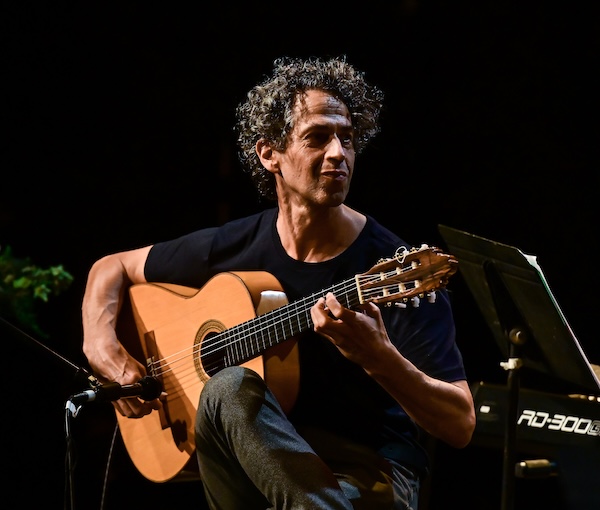
Multi-instrumentalist and songwriter Ezra Ben-Shalom’s debut solo album, Known and Unknown, was released in 2025. (photo by Michelle Behr)

With his debut solo album, released last year, Kelowna musician Ezra Ben-Shalom shows off his personal side, with a uniquely Jewish touch. 

For Ben-Shalom, who reconnected to Jewish ritual practice around five years ago, Known and Unknown – his first solo project – is a deeply personal one. The focus of his music and daily life has become all about asking questions, he said. It’s about finding ways to be of service in the world and creating a connection with something larger than himself.  

“I’m doing my best to be of value to the world and to the culture. And, you know, you step in front of a room of people and take a deep breath and open your mouth and sing – I want to offer something that’s real, that’s authentic and that’s meaningful,” the 43-year-old said in a phone interview.

The album is highly Jewish-inspired, owing to his own reconnections – and, he said, he hopes it will encourage empathy among listeners.  

“I think the album title was maybe a hint to myself to come from that place of humility, that we don’t have the answers, as much as we think we know or that we learn,” said Ben-Shalom. 

The songs on Known and Unknown include some Hebrew words, and the sounds of a shofar on two tracks, though the lyrics are largely in English.

Jewish themes shape much of Ben-Shalom’s interpretation and highly personal expressions; however, he emphasizes that, while his path is Jewish, he sees the disc’s new compositions as something more broadly accessible. The songs, he said, are “about inner experiences and feelings and reflections, and they’re about living in the world as a human being, not as a Jewish human being.”

Themes of transformation, vulnerability and boldness underline the album’s adult alternative and folk-adjacent sounds, and Jewish references abound, with songs titled “Shechina,” “Shake the Dust,” and “El and Gil.” 

New name, old passion

Ben-Shalom is the new-ish musical handle of producer and multi-instrumentalist Ezra Cipes, who grew up in Kelowna and has played in bands since he was 14 years old, he told the CJN.

By the time he was 19, Cipes and one of his three brothers co-wrote a song with Indian-born Canadian punk/alternative music icon Bif Naked, who grew up in Winnipeg. He’s also performed regularly and recorded with the Calgary-born indie-pop-folk artists Tegan and Sara. (Bif Naked’s bassist, Chris Carlson, produced, co-wrote and played most of the other instruments on Ben-Shalom’s 2025 album.)

Prior to the new project, another band featuring the musical Cipes family had been nominated in 2022 for a Juno Award in the children’s music category for the second disc by the troupe, called the Oot n’ Oots. The five-piece band comprised Ezra; his three brothers, Matthew, Gabe and Ari; and his daughter, Ruthie, who was the singer.

When that project wound down following the end of 2023 summer festivals, the guitarist and keyboard player turned to exploring a different expressive musical language. He had set out on that musical exploration when the Oct. 7, 2023, attacks by Hamas in Israel, which triggered the Gaza war, refocused his artistic lens.

“Oct. 7 put a lot of things into focus and showed the ways that, really, we’re all lost in one way or another,” he said. 

The way the world responded after Oct. 7 was a “frustrating and painful” experience, he said.

“You think, ‘What can any of us do?’ And none of us can fix it – you can’t completely change all these cultural narratives and people’s ideas and correct the record or bring a higher perspective on our own, but we can do our part. We can stand strong in our own truth and share it, proudly and with strength and humility.” 

Explaining that he’s always needed “a little spiritual medicine in my life,” Ben-Shalom described reading at night, from literature and philosophy to spiritual and self-help books, and had long realized he needed to do that, even before he connected with Judaism.  

Pivotal turn to Judaism

Growing up, while his family – who own a successful organic vineyard – belonged to a local synagogue, they weren’t traditionally observant, though he became bar mitzvah and attended Jewish summer camp. 

But, as an adult, he reflected, he was “totally disconnected” when it came to traditional Jewish practice and observance. 

It was a moment in 2020, early during the pandemic, following a sweat lodge ceremony led by Ron Hall, a longtime family friend who’s an Indigenous artist and biologist, that brought Ben-Shalom an epiphany. 

“It [the sweat lodge] was one of those moments that really flipped a switch in my whole life, and it was just a hinge moment. I thanked him [Hall] for the ceremony, and I shared with him how powerful it was and how meaningful it was, how deep it was,” said Ben-Shalom.

“And I said to him that he’s lucky to have the traditions to draw on to connect with his own soul and with the creator and I said to him: ‘All I have is this shallow materialistic Western culture.’ 

“And he said, ‘What are you talking about, Ezra? You’re Jewish. You come from an Indigenous people.’”

Nobody had ever said that to him before, Ben-Shalom recalled, and it became a turning point.  

“I had grown up thinking it was cool to be Jewish and, like, neat, but also vaguely embarrassing to be Jewish, and it was something I didn’t really like to talk about or get into very much because … I always felt othered,” he said.

The COVID-era wave of social justice movements brought a resurgence of ideas “about decolonization and equality,” he said. “It’s good to support the Indigenous people keeping their culture, keeping their language, keeping their tradition, keeping the oral culture alive.”

He felt a tinge of hypocrisy. “And then I realized I was not honouring my own ancestors and I didn’t know my own language. I didn’t know my own story,” he said. 

Ben-Shalom now attends the local Chabad, lays tefillin and wears tzitzit and a kippah.

He described one of the first times he performed the new music at a live show at the Kelowna venue Revelry in 2024. 

“I got off stage and my whole body was sore, from holding myself and breathing and keeping myself grounded and keeping myself in a state of service,” he said. (Since then, he’s felt “a little bit more relaxed” performing the new material.) 

“The songs are almost like prayers, and you have to kind of get into that place to sing them, where there’s a genuine connection and not just notes and not just words.” 

Ben-Shalom hopes to bring the album in a live performance to audiences across Canada, and to ensure that includes Jewish audiences, he told the CJN. 

“I’d like to play for all audiences that will have me, but, in particular, I want to go and play for Jewish people,” he said. “I want to share these songs with Jewish people. I want to bring inspiration, pride and honour to our tradition, to Jewish people.” 

Jonathan Rothman is a reporter for the CJN based in Toronto. This article was originally published on thecjn.ca and is reprinted with permission.

Format ImagePosted on March 27, 2026March 26, 2026Author Jonathan Rothman The CJNCategories Local, MusicTags Ezra Ben-Shalom, Judaism, Kelowna, music, Oct. 7
Panama City welcoming

Panama City welcoming

The ceiling of the Sephardic synagogue Shevet Ahim, which is located in the Bella Vista neighbourhood of Panama City. (photo by Janice Masur)

My solo trip to Panama City this past February had seemed so far away when I organized it, knowing I would require some respite from caregiving. I had a yen to experience the Miraflores and San Pedro shipping locks, but not on a cruise. I had listened to a talk from Qesher, a website about Jewish communities worldwide, highlighting Jewish life in Panama, so I gathered my courage to travel alone and booked my hotel and flights. And then my beloved husband died. 

This changed my reason for going and started me thinking, What would I do there by myself? How would I manage to converse in Spanish and make myself understood? Could I give a talk about my Ugandan vanished Jewish community? (See jewishindependent.ca/honouring-community.) Despite my concerns, I made the journey.

photo - Panama City was a great place to travel solo – and as a Jew
Panama City was a great place to travel solo – and as a Jew. (photo by Janice Masur)

I had a half-day tour with an excellent Jewish guide, Patricia, to see all four of the Orthodox synagogues, each one more beautiful, all situated within a small area of Panama City. 

There were all types of Jews staying in my hotel: a Dutch woman who only recently discovered her Jewish heritage, a fur-hatted Jewish man, and two Jewish Tunisian-born sisters, whose family history included having been ousted from their home in Tunis during the Second World War, their home commandeered to be a Nazi headquarters. 

At Kol Shearith Reform synagogue, I struggled with the Spanish and Hebrew prayer book, spellbound by my surroundings. The Sephardic tunes of the prayers made only a handful of them familiar to my ear. The Oneg Shabbat was delicious: fish ceviche and crème caramel, a childhood favourite, as well as several dishes new to me. We stood around the loaded tables and talked.

Jews started arriving in Panama in the 15th century and there are about 17,000 Jews in Panama, with most living in Panama City. Apparently, Panama is a “Jewish bubble,” with basically no antisemitism. I was told that there are many families from Vancouver soon moving there. “Why?” you may ask. Imagine 40 kosher restaurants, two very large kosher stores, apartment buildings housing only Jewish families, a Jewish support system from birth to death, Sephardic Shevet Ahim in the Bella Vista neighbourhood with offshoots in Punta Paitilla, Ashkenazi Beth El Synagogue, two Chabad synagogues, and the oldest synagogue, Kol Shearith.

photo - “The Eternal Flame,” an Oct. 7 memorial at Beth El Synagogue in Panama City. The artists were Ilanit Schwartz and Michael Ostroviack
“The Eternal Flame,” an Oct. 7 memorial at Beth El Synagogue in Panama City. The artists were Ilanit Schwartz and Michael Ostroviack. The sculpture is composed of seven levels, each bearing a word: faith, resilience, hope, unity, perseverance, identity and strength. The flame is a reminder that there will always be light, even in the most difficult times. And, within the flame is the Shema Yisrael prayer. There is also the symbol of the “necklace of liberation,” associated not only with the promise to bring home the hostages, but the struggle for life and freedom for all human beings. (photo by Janice Masur)

Geographically, Panama City is situated on a narrow isthmus, making it an elongated city running east-west, mainly facing the Pacific Ocean. It is full of incredibly high and distinctive skyscrapers lining the long promenade.

The Old Town is being gentrified. Hotel La Compañía Casco Antiguo has a Spanish, French and American wing, each built in a different century. A large cathedral faces onto Plaza Herrera, and I saw my first modern-day monk. He was wearing a brown habit and many nuns were spilling out into the sunlit plaza. Brightly painted buildings and small shops catered to the tourists. The imposing Opera House faces the ocean.

I felt quite safe on my own and was touched by how a local family pointed out animals and kept an eye on me as we wandered around Metropolitan Natural Park, where I saw turtles, agoutis and my first ever armadillo.

I took myself to the botanical garden situated about 40 minutes outside the city. Along the route were American army barracks now being repurposed. At the garden, I enjoyed seeing flowers I had never seen before. A large red flower that only grows from a tree trunk; an orange flower whose seed pod is hard and round and slightly bigger than a tennis ball. The garden also showcased two- and three-toed sloths, plus several monkey species. In its far reaches, I saw a lone jaguar, who let out such sad, lonely notes with his rib cage working like an accordion that I could not bear to stay near his cage. I wondered about the information exhorting visitors to take care of the planet and not to shoot wild animals. Jaguars are on the at-risk list because of habitation loss and human interference. 

On the spur of the moment, I took a Black African walking tour of the old city. The young guide was very good. Highlights included some colourful historic wall paintings and an old church, which is now a Black African museum. We finished the tour at the San Felipe public market, where I had a large, freshly squeezed and most-welcome passion fruit drink in 32˚ C heat and then crashed on my bed for a nap. 

photo - A painted wall in Old Town, depicting Panamanian Black African history
A painted wall in Old Town, depicting Panamanian Black African history. (photo by Janice Masur)

The Biomuseo (biodiversity museum), designed by Frank Gehry, is well worth a visit, with a lovely seawall walk and an eco-friendly garden, where I rested and listened to the birds. I also took a private birding tour, which yielded some wonderful sightings. The couple of hours on my own watching close to 100 pelicans circling and diving for fish was spectacular.

And, of course, I took a tour on a small boat that passed through the Miraflores and San Pedro locks. It was fascinating to observe the speed with which large shipping vessels are lowered and raised through the original canal lock gates, which opened in 1914. Tugs and railway engines synchronize the adjustment of a ship in the lock with steel ropes to prevent it from damaging the canal walls – it’s a specialized job, and I was happy to learn there are some women pilots.

I was warmly welcomed in Panama City, and the Jewish hospitality was inclusive and friendly. It was a fun and easy holiday – it has given me the appetite for more solo adventures. 

Janice Masur is a Vancouver author and speaker. Her book, Shalom Uganda: A Jewish Community on the Equator, tells her story of growing up in the bygone Ashkenazi Jewish community of Kampala from 1949 to 1961.

Format ImagePosted on March 27, 2026March 26, 2026Author Janice MasurCategories TravelTags Ashkenazi Jews, history, Jewish history, Judaism, Panama, Panama City, Sephardic Jews, synagogues, travel
Pesach cleaning

Pesach cleaning

photo - The notes are carefully removed from the Kotel
The notes are carefully removed. (photo from Gil Zohar)

The Kotel – the last remaining part of Herod the Great’s vast Second Temple complex – got a spruce up ahead of Passover. As is tradition, volunteers took to the Western Wall in Jerusalem’s Old City to remove hundreds of thousands of the small prayer notes to God tucked into the cracks of Judaism’s holiest site. The papers are ceremonially buried at the ancient Mount of Olives cemetery. 

The cleaning tradition is repeated at Rosh Hashanah, to keep the Kotel from becoming too cluttered. The notes are carefully removed using sticks that have been dipped in a mikvah (ritual bath), the whole process overseen by the Wall’s official rabbi, Rabbi Shmuel Rabinovitch. This year, there were no worshippers or visitors at the Kotel due to restrictions on gathering in large groups amid the US-Israeli war with Iran.

Gil Zohar is a journalist and tour guide who lives in Jerusalem.

Format ImagePosted on March 27, 2026March 26, 2026Author Gil ZoharCategories Celebrating the HolidaysTags Israel, Kotel, Passover, Western Wall

On the wings of griffon vultures

Liberation. Freedom. Renewal. Recalling our history, our stories. Passover’s themes are many, and the challenge every year is for us to interpret them in a meaningful way for our time.

image - JI Passover cover March 26 2026
This year’s cover of the JI’s Passover issue.

In making this special issue’s cover, I started with the idea that I would use artificial intelligence – one of the most contemporary tools – to create it. Would AI free me from the hours that art creation takes? Short answer: no.

I started with the directive to design a collage centred on the Jewish fight for freedom throughout history, and got lots of great feedback on how to arrange images to tell a powerful story. I could place “key representative figures or symbols at the forefront,” “use overlapping images to create dimension and a sense of ‘flow’” and incorporate “symbolism of ‘tikkun olam.’”

AI had recommendations for typography, what media I could use, what colour palette. It suggested historical struggles I might want to include in a spiral-shaped design: the Exodus and the Maccabees in the outer ring; Conversos and Partisans in the next ring; early kibbutzim and the Iron Dome in yet another ring; and the yellow ribbon for the Oct. 7 hostages or “street-art style seen in Tel Aviv or New York” in the centre.

I eventually figured out how to create an image in AI, but everything I tried looked horrible, so I decided to make my collage the old-fashioned way – with my own hands, using only paper, inspired by artist Deborah Shapiro (deborahshapiroart.com), whose art I’d used on the JI’s 2021 Rosh Hashanah cover. 

After what felt like forever, I figured out what my focus would be. I came across the verse in Exodus (19:4): “You have seen what I did to the Egyptians, how I bore you on eagles’ wings and brought you to Me.”

An article on aish.com by Rabbi Warren Goldstein, chief rabbi of South Africa, helped me think through the symbolism, from both a spiritual and secular perspective.

“Each year, we are told to relive the experience of leaving Egypt – and I imagine being lifted from slavery and oppression ‘on the wings of eagles,’” he writes. “What better way could there be to express our transition from the earthly bonds that constrain us to the spiritual transcendence that God gave us than through the exhilarating, soaring rush of the eagle’s flight.”

image - I tried two different backgrounds for the griffon vulture collage on this issue’s cover, before I decided to make my own. This one is an AI-generated image based on colour suggestions, going from darkness to light
I tried two different backgrounds for the griffon vulture collage on this issue’s cover, before I decided to make my own. This one is an AI-generated image based on colour suggestions, going from darkness to light.

Goldstein goes on to talk about Rashi’s interpretation that “the eagle’s wings represent the nature of God’s protection over us.” The rabbi notes the miracle that Jews are still here, despite a long history of various peoples trying to kill us. And he compares the “rush of the eagle’s flight” to “the speed with which God liberated us from Egypt” – so fast, of course, that our bread didn’t have time to rise, hence, the matzah we eat on seder night as a symbol of our “supernatural” redemption.

“This divine dynamism – depicted by the image of a soaring eagle – becomes a call to action: ‘Be light as an eagle,’ says the mishna in Pirkei Avot. Too often we get bogged down by life,” writes Goldstein. “We become consumed with angst, submerged in introspection and inertia. The mishna urges us to live life energetically and enthusiastically – like an eagle – with a sense of urgency for the task at hand, which is uplifting ourselves and our world through our mitzvot.”

I like this idea of living with a sense of energetic purpose, whether the motivation to improve ourselves and the world is inspired by Torah or other moral codes and teachings. Freedom and responsibility are inextricably intertwined in my view, but it is easy to get overwhelmed, and the thought of being carried sometimes, of soaring above the earth and gaining new perspective, appeals to me.

I decided I would “paint” an eagle.

image - I also asked AI to design a collage of the Jewish fight for freedom, from the Exodus to modern days
I also asked AI to design a collage of the Jewish fight for freedom, from the Exodus to modern days.

As I searched online for what types of eagles would be at home in Egypt or Israel, I came across a few articles about the mistranslation of “nesherim” in Exodus 19:4. Apparently, we were most likely carried out of slavery on the wings of vultures, not eagles, and probably on the wings of griffon vultures specifically.

“Both the biblical nesher and ornithological griffon are known for their ‘bald’ head, enormous wingspan, effortless flight, cliff nesting, devoted nurturing, rapid descent and group feasting on carrion,” writes Dr. Fred Cannon, a professor emeritus at Pennsylvania State University, in Journal for the Study of the Old Testament. “From biblical times until the industrial age, griffons have been ubiquitous in the Middle East but absent in northern Europe or the Americas. However, eagles commonly resided in northern Europe but are uncommon residents or pass-through migrants in the Middle East. Through millennia, when northern Europeans sought translations for biblical plant and animal names, they sometimes replaced Middle Eastern meanings with recognizable northern European ones. So, the nesher became known as the eagle to many northern Europeans and North Americans. However, recent Hebrew-speaking ornithologists concur that the nesher is the griffon. This distinction becomes important when gleaning nuances from biblical metaphors, clarifying kosher dietary regulations and discerning genealogical connections among raptors.”

Natan Slifkin, director of the Biblical Museum of Natural History, in Israel, notes that another part of the verse – “va’esa etchem,” “I bore you,” or “I carried you” – can be translated as “I elevated you.”

“The explanation,” he writes about the symbolism, “is that the nesher is the highest-flying bird, and God raised the Jewish people to spiritual heights above anything in the natural world with His miraculous redemption. The highest-flying birds are griffon vultures.”

As well, he explains, “While people today view the vulture in a negative light, the Torah presents it as an example of a loving and caring parent. This also relates to the vulture’s entire parenting process. Female griffon vultures usually lay one egg, which both parents incubate for an unusually long period of around seven weeks until it hatches. The young are slow to develop and do not leave the nest until three or four months of age. The long devotion of the vulture to its young symbolizes God’s deep dedication to the Jewish people.”

Sadly, it’s more than time for us to dedicate ourselves to the griffon vulture. Only around 230 of them remain today, according to a brochure of the Society for the Protection of Nature in Israel (SPNI), which suggests helping save the griffon vulture as a b’nai mitzvah project. 

The word “nether” comes “from a Hebrew root that means ‘to shed’ or ‘to fall off,’” explains the brochure. “That’s because, as baby vultures grow up, they shed the feathers on their heads – an adaption that actually helps them stay clean! A bald head makes it easier for vultures to stick their heads into carcasses when they eat, without getting messy.”

The brochure notes that griffon vultures live in the Golan Heights, Negev Desert and Carmel Mountains. They have a wingspan of up to 2.65 metres and spend two to three hours a day combing their feathers. They can spot food from seven kilometres away, eating dead animals before the bodies rot, which helps prevent the spread of diseases.

Poisoning, electrolution, land loss, illegal hunting, and that griffon vultures only lay one egg a year, are all threats to their future. To help counter these pressures, SPNI has a breeding program, it is working with electric companies to insulate power poles, lobbying for stronger laws against poisons, and teaching farmers and others about more eco-friendly pest control.

That the griffon vulture is endangered made it, to me, an even more appropriate image for the JI’s Passover cover, underscoring the connection between freedom and responsibility. The words I chose for the cover’s background – cut and ripped from the last few issues of the JI – are my attempt to depict Goldstein’s commentary. While the eagle/vulture is protecting us as much as possible from that which bogs humanity down, giving us some respite and renewed strength, we must continue to try and uplift ourselves and the world around us, grateful for the blessings we have, and working to bring more of them into being.

Chag Pesach sameach. Happy Passover. 

Posted on March 27, 2026March 26, 2026Author Cynthia RamsayCategories Celebrating the HolidaysTags AI, art, collage, endangered animals, Exodus, griffon vultures, Hebrew Bible, Jewish life, Judaism, Passover
Vast recipe & story collection

Vast recipe & story collection

The Jewish Food Society’s website has many Passover options: salads, mains and desserts. For people who prefer cookbooks, the society has published The Jewish Holiday Table, which can be purchased online.

The Jewish Food Society was established in 2017. The nonprofit’s main purpose is “to build the largest archive of Jewish family recipes and stories attached to them in the world.” One can get lost for hours on its website, it’s so extensive. With Passover coming, several holiday stories are highlighted, along with some matzah recipes. It’s well worth a visit: jewishfoodsociety.org.

The society was founded by Naama Shefi, who was born and raised in Israel, on Kibbutz Givat Hashlosha, near Petah Tikva. She went to high school in Tel Aviv and did her army service before moving to New York in 2005. 

“My kibbutz life made me really understand the power of community. Because we are nothing without community,” she told Tablet Magazine in a 2024 interview.

It also made her crave a wider variety of foods and spices. In a 2021 interview with the Forward, she noted that the bland diet she and other former kibbutzniks grew up with led many of them to develop an interest in food. She was speaking to the Forward because another nonprofit she founded was about to launch – Asif: Culinary Institute of Israel, in Tel Aviv, whose “aim is to explore local food culture and provide a home for research, dialogue and a wide range of culinary experiences. Through a library with 1500+ culinary books, revolving exhibitions, cooking workshops, a rooftop farm, and pop-ups hosted by local and international chefs, Asif will help document and articulate the evolving Israeli kitchen.” You can also lose yourself on its website, perusing the online exhibit, going through its library, reading stories from its journal and, of course, trying out some of the many recipes. If you’re heading to Israel, definitely look at asif.org/en, heading to its “The Flavour Mosaic” section, which features a collection of food establishments “handpicked by culinary experts from across the country.”

image - The Jewish Holiday Table book coverFor people who prefer a tangible hold-in-your-hand cookbook, the Jewish Food Society has published The Jewish Holiday Table: A World of Recipes, Traditions & Stories to Celebrate All Year Long, by Shefi and the JFS, with Devra Ferst. It comprises 135 recipes, as well as stories from Jewish families. It’s organized by season and highlights the major Jewish holidays, including Shabbat. 

In that 2024 interview with Tablet, Shefi talked about the cookbook and what makes it unique.

“The concept of the book is really a celebration of Jewish holiday traditions from all around the world, from places as far apart as Ethiopia and Paris and Buenos Aires to here in Brooklyn,” she said. “So, it was very important for us to showcase the diversity of the Jewish experience. Also, the book follows the Jewish agricultural calendar, so it’s extremely seasonal, which I think is unique. And, for each holiday, we showcase four to five family tables and their menu alongside very personal essays with their history and journey.”

The diversity of Jewish experience is a focus of the cookbook.

“There is no one family with one single origin, so it really serves as evidence about our people,” Shefi told Tablet. “It shows how so many families were forced to flee one place and make a life in another place. And, sometimes, there were a few generations that were successful in the new environment and, then again, challenging circumstances forced them to keep going on their journey. That also affected the cuisine in a very substantial way.”

You can buy The Jewish Holiday Table at amazon.ca and other online bookstores – if you order today, it might even arrive before Passover ends. In the meantime, here are a couple of the approximately 10 recipes for charoset at jewishfoodsociety.org. The website has many options for the holiday: salads, mains and desserts.

CARROT CHAROSET
(This recipe was shared by chef Michael Solomonov. It takes about 15 minutes to make.)

4 carrots, peeled and grated
1/2 apple, peeled and grated
1/2 cup walnuts, chopped
1 cup fresh cilantro, chopped
2 tbsp fresh horseradish, grated
2 tbsp raisins
1 tbsp white vinegar
3/4 tsp kosher salt

Combine the carrots, apples, walnuts, cilantro, horseradish, raisins, vinegar and salt in a medium bowl. Toss to combine.

Set aside for at least 15 minutes to allow the flavours to combine. Serve.

APPLE AND ASIAN PEAR CHAROSET
(This recipe was shared by pastry chef Fany Gerson. It takes an hour and 15 minutes to make.)

1 cup honey
1 shallot, minced
3 celery stalks, minced
2 Honeycrisp apples, peeled and diced
1 Asian pear, diced
2 tsp fresh oregano, chopped (about 2 sprigs)
1/2 cup red wine vinegar
1 cup fresh squeezed orange juice, separated (about 3 medium oranges)
1 tbsp + 1 tsp fresh horseradish, grated

In a medium saucepan over low heat, gently warm the honey until it begins to bubble, about five minutes.

Add shallots and celery, stirring for one minute until well incorporated. Add vinegar and stir to combine.

Add apples and pears and reduce heat to very low stirring constantly and making sure the mixture does not get too hot. During this time, the fruit will release water. Continue to stir until the water is completely reduced/evaporated, 45 to 60 minutes. It is important to watch closely and stir often to keep the sugar from burning.

When the water has completely disappeared and the mixture is dark and caramelized, add 3/4 cup of orange juice and reduce again, mixing and smashing the fruit, about 10 minutes.

Remove from heat and stir in remaining 1/4 cup orange juice, chopped oregano and one tablespoon of fresh horseradish.

Transfer to small serving bowl. Garnish with one teaspoon fresh horseradish. Serve immediately. 

Format ImagePosted on March 27, 2026March 26, 2026Author Cynthia RamsayCategories Celebrating the HolidaysTags charoset, cooking, food, Jewish Food Society, Passover, recipes

A word, please …

image - First panel of Beverley Kort 6-panel cartoon about Passover and the Haggadah

image - Second panel of Beverley Kort 6-panel cartoon about Passover and the Haggadahimage - Third panel of Beverley Kort 6-panel cartoon about Passover and the Haggadahimage - Fourth panel of Beverley Kort 6-panel cartoon about Passover and the Haggadahimage - Fifth panel of Beverley Kort 6-panel cartoon about Passover and the Haggadahimage - Sixth panel of Beverley Kort 6-panel cartoon about Passover and the Haggadah

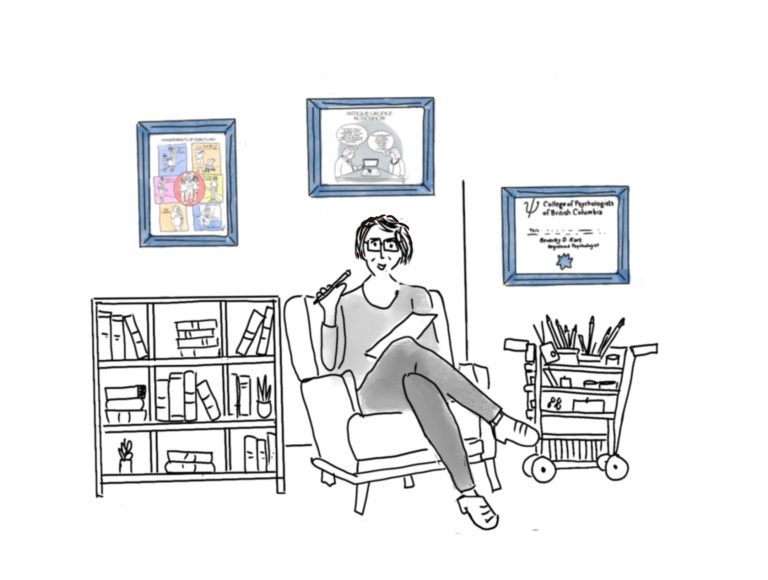
Beverley Kort is a registered psychologist by day and a cartoonist in her off hours. She has a private practice in Vancouver.

Format ImagePosted on March 27, 2026March 26, 2026Author Beverley KortCategories Celebrating the HolidaysTags family, Haggadah, history, Passover

מארק קרני לא ממתין לטראמפ

ראש ממשלת קנדה מארק קרני, הבין מהר מאוד עם מי יש לו עסק והכוונה לנשיא ארצות הברית דונלד טראמפ. קרני קלט מהר שטראמפ הוא נוכל סדרתי ומנהיג שאי אפשר לסמוך עליו. עד עידן טראמפ ארה”ב וקנדה נחשבו לבעלות הברית הקרובות ביותר בעולם במשך עשרות שנים. הגבול המשותף ביניהן שהוא הגבול היבשתי הארוך ביותר בעולם, רק הוסיף לקרבה בין שתי המדינות שנחשבו לאחיות

קנדה נחשבה לשותפה טבעית של ארה”ב בכל נושא ונושא, מהכלכלי ועד הצבאי ומה שביניהם. אך מעת הגעתו של טראמפ הנוכל לבית הלבן הכל השתנה. פתאום קנדה מצאה עצמה במשבר עמוק עם ארה”ב והבינה שהעולם השתנה. קרני ביטא זאת בראיונות לתקשורת כשכאמר שאנו נמצאים כיום במציאות שונה לעומת העבר

טראמפ כהרגלו התחיל לאיים על קנדה לשדבריו עושקת את ארה”ב, למרות שביוזמתו נחתם הסכם מסחרי חדש עם קנדה ומקסיקו בקדנציה הראשונה שלו. אז מה עם טראמפ לא עומד בהסכמים ובמילותיו? הרי הוא גם ביטל את ההסכם הגרעין בין ארה”ב לאיראן שכלל גם את שאר המעצמות ומדינות אירופה. מרבית מומחי הביטחון בישראל ובארה”ב טענו שמדובר היה בהסכם טוב, אך טראמפ שמע בעצת ראש ממשלת ישראל בנימין נתניהו, וביטל את ההסכם. את התוצאות של המעשה החמור הזה אנו רואים עתה במזרח התיכון שנמצא במלחמה אזורית הרסנית

טראמפ לא רק שאיים על קנדה במכסים גבוהים (שבינתיים הוכרזו כלא חוקיים על ידי בית המשפט העליון של ארה”ב), אלה גם החליט שקנדה היא המדינה החמישים ואחת של ארה”ב. וכדי להמשיך ולעלוב בקנדה הוא כינה את קרני מושל קנדה, במקום ראש ממשלת קנדה

כאמור קרני קלט עם מי יש לו עסק. ואחד שמבין בכלכלה בניגוד לטראמפ הנוכל, לאחר ששימש נגיד הבנק המרכזי של קנדה ושל בריטניה, הוא חיפש אלטרנטיבות כלכליות לארה”ב. קרני הבין שקנדה לא תוכל לסמוך עוד על שכנתה מדרום – לפחות בעידן טראמפ – והוא חיפש אטרנטיבות. בשלב ראשון נחתם הסכם סחר חדש עם סין שכולל מכירת רכבים חשמליים לקנדה. ההתקרבות בין קנדה לסין היא באחריות טראמפ חסר האחריות. קרני לא עצר ובשבועות האחרונים חתם על הסכמי סחר עם עוד שלוש מדינות גדולות וחזקות: הודו, יפן ואוסטרליה

קרני גם מתקרב מאוד למדינות אירופה כולל האיחוד האירופי ובריטניה ולכל אלה יש מחנה משותף אחד. לנהל עסקים ביחד ולהימנע כל ככל האפשר לעבוד עם טראמפ, שכידוע אי אפשר ואסור לסמוך עליו

קרני גם מנסה לארגן מחדש את העיניינים בתוך קנדה בכל הרמות. מצד אחד הממשלה הפדרלית תחת הנהגתו מתקרבת יותר ויותר לממשלות של המחוזות השונים בקנדה. ומצד שני היא עוזרת למחוזות לשנות חוקים ותקנות שונות שיאפשרו להגביר את המסחר בתוך קנדה, ולהוריד חסמים שונים ומשונים

זה לא פשוט להפסיק להיות תלוי בארה”ב הגדולה והחזקה אך כשאין ברירה בעידן טראמפ הנוכל, חייבים להיות עצמאיים. תהליך כואב ונחוץ זה להערכתי יימשך לפחות כעשור ובסיכומו קנדה תהיה מדינה חזקה ועצמאית יותר, ותמשיך להסתכל לכיוון אירופה והמערב במקום לדרומה

גם לאזרחי קנדה יש מה להגיד על מדיניותו החולנית של טראמפ והם נוקטים מעשה: מספר התיירים הקנדיים שמבקר את ארה”ב הולך ופוחת משמעותית מאז שטראמפ נכנס לבית הלבן. מספר התיירים הקנדיים שמגיעים לארה”ב כבר פחת בארבעים אחוז לעומת אשתקד. השינוי המשמעותי הזה גורם לכלכת ארה”ב נזק משמעותי ביותר שנאמד בכמה מיליארדי דולרים

Posted on March 25, 2026March 25, 2026Author Roni RachmaniCategories עניין בחדשותTags Canada, Donald Trump, economy, Mark Carney, politics, tariffs, tourism, trade agreements, United States, ארה"ב, דונלד טראמפ, הסכמי סחר, כלכלה, מארק קרני, מכסים, תיירות
On war and antisemitism

On war and antisemitism

Sharren Haskel, Israel’s deputy foreign minister, spoke with Canadian media on March 9. (photo from Consulate General of Israel in Toronto and Western Canada)

A terror attack against Canadian Jews on par with the Bondi Beach attack in Australia last December is inevitable if leaders in this country do not address the growing antisemitism crisis, according to Israel’s deputy foreign minister.

In an interview with the Independent Monday, Sharren Haskel reacted to recent shootings at Toronto synagogues and a larger trend of antisemitic acts. 

“This will end in blood if the government is not taking serious actions. This is going to end exactly like the Bondi massacre,” she said.

Haskel is attuned to the Canadian situation because she was born in this country – one of only three Canadian-born individuals in Israeli history to sit in the Knesset. Her father lives in Canada and she has other family members here, who she visits frequently.  

“I was always so proud of Canada being such a safe haven for Jews,” she said, calling Canada a place where acceptance of minorities, tolerance and coexistence have been strong, defining values.

“And to know where Canada was and where it is today is absolutely devastating,” she said. “It’s heartbreaking for me, and I think that not enough people truly understand the danger the Jewish community is [facing].”

Shootings at Jewish institutions and other acts of vandalism and violence have made Canada, according to an Israeli government report last year, the “champion on antisemitism.”

“It’s insane,” said Haskel. 

When a racialized or other minority community in Canada expresses discomfort with a situation, she said, significant steps are taken to alleviate the problem. 

Jews do not enjoy a parallel level of empathy, she said. “[Jews] say I am violently being attacked. I’m not allowed to enter my classes. I’ve been beaten. My business was shot at,” she said. “And nothing. Nothing.”

Elected officials have allowed the situation to go too far, said Haskel.

“The government is not setting a very clear red line,” she said. “We are far beyond words. Words don’t matter anymore. This is about actions now.” 

The deputy foreign minister added that Canadians, too often, demonstrate inappropriate responses to international events. Critics of Israeli military approaches to Hamas and to the Iranian regime are coming from a place of privilege.

“In Canada, you are very lucky,” she said. “This is one of the most peaceful countries, you enjoy its freedom, and many people in the younger generation have received that freedom on a silver platter. This is not the case in the Middle East. Israel has faced a six-fronted war for the last two years against six different armies – all of them sponsored, trained, armed by this vile, fanatical regime in Iran.” 

The Iranian regime has also undermined Israel’s neighbours, she noted, destroying Lebanon’s politics, social fabric and culture. In Syria, Iran backed the regime of Bashar al-Assad, which was overthrown in 2024 after a civil war in which the government explicitly targeted and murdered its own citizens, particularly minorities, killing at least 300,000 people and possibly as many as 650,000.

“It’s very easy to speak from a very comfortable, liberated place,” said Haskel. “But our reality in the Middle East is a very difficult and harsh one, where we are still fighting for our survival, for our freedom, for our rights as minorities here in this region against very extreme, radical, fanatical terrorist organizations and terrorist regimes.”

Haskel hedged on whether Israel’s war aim in the current conflict with Iran is regime change.

“The goal is to take out the long-term existential threat over Israel,” she said. “This is how we define it, and this is the goal of the war.”

That involves taking out Iran’s nuclear program, she said, as well as its ballistic missile program, and neutralizing the experts who are developing, manufacturing and advancing tools for mass destruction. This war is aimed at conclusively ending that threat, she said.

Past Israeli military and covert actions against the Iranian nuclear program resulted in continued Iranian determination to rebuild, according to Haskel.

“They didn’t get the message of our capability, of how determined we are that they will not be able to reach that master plan of annihilation of the state of Israel,” she said. “They’ve been working tirelessly on renovating, on re-creating, on reconstructing, all of that over again. And we are at the point where we say, look, you know, we cannot go every year into an operation like that to eliminate an immediate threat like a nuclear weapon, mass destruction, disruptive weapons.”

Haskel stops short of declaring whether that requires regime change, echoing US President Donald Trump, who has urged Iranians themselves to overthrow their government.

She is hopeful that the US-Israel actions will open a path “for the Iranian people to liberate themselves and to change these fanatical tyrants who have been abusing and torturing them for so many years.”

Should the regime be replaced by a Western-oriented government, the impacts would be broader than the Middle East. For example, Hezbollah, which is supported by Iran, is engaged in drug trafficking and money laundering in Latin America to help fund their operations, she noted. 

Haskel believes that the world should be grateful to the United States and Israel.

“President Trump and Prime Minister [Binyamin] Netanyahu are leading right now an effort to protect humanity,” she said. “Every leader and every sensible person around the world needs to ask themselves who they want as their friends and who would come to their help when they really needed it the most.

“During our time in history, when freedom, real freedom, is in danger,” she said, “we are very fortunate to have two leaders like Trump and Netanyahu that stood up and took actions to defend humanity, to defend Western democracies.”

Haskel said that representing Israel carries a profound responsibility not only to the country itself but also to Jewish communities around the world. For her, that responsibility is deeply personal, particularly when it comes to Canada, where she has such close ties. Hearing directly from relatives and friends about rising fear and insecurity has reinforced her sense of duty.

Haskel, who has served as deputy foreign minister since 2024, was first elected to the Knesset in 2015. She was born in Toronto to an Israeli father and a Moroccan mother who met in Paris. The family lived in Canada before moving to Israel when Sharren was a year old. She was raised in Kfar Saba and studied in the United States and Australia. First elected on the Likud slate, she joined Gideon Sa’ar’s New Hope party in 2021. 

Format ImagePosted on March 13, 2026March 12, 2026Author Pat JohnsonCategories WorldTags antisemitism, Bondi Beach, Canada, freedom, governance, Iran, Israel, Sharren Haskel, terrorism, United States, war
Jews shine in Canucks colours

Jews shine in Canucks colours

Zeev Buium, top right, and Max Sasson, bottom right, talking to, left to right, Bik Nizzar, Satiar Shah and Josh Elliott-Wolfe of Sportsnet 650 Radio hosts at the JCC Sports Dinner, March 3. (photo by Kyle Berger)

Cheering for the home team is one of the simplest concepts in sports fandom. The players represent the city, wearing its name on their crest, and the fans give those players their cheers and emotional support.

For members of Vancouver’s Jewish community, there is even more of a reason to watch and cheer for the National Hockey League’s (NHL) hometown Canucks. Two current members of the team, Zeev Buium and Max Sasson, are part of a small fraternity of Jewish NHL players.

“One hundred percent,” Sasson answered when asked if it he was proud to represent the Jewish community in the NHL. “Some of the rinks, especially when we got Zeev, there will be signs written in Hebrew during the warms-ups, and that’s pretty cool. Some fans have interacted with me and say I’m an inspiration and stuff, and that means the world to me and my family, having Jewish players in the NHL and representing our community.”

Sasson, who was raised in Birmingham, Mich., where he had his bar mitzvah, said Jewish life, including Shabbat dinners with his grandparents, were a regular part of his childhood and something he still thinks about.

“My dad and I were talking the other day about how my first NHL goal was against [Boston’s star Jewish goaltender] Jeremy Swayman and it’s probably the only first goal ever in the NHL to be a Jewish guy on a Jewish guy,” he said.

Sasson’s pro hockey story is a bit unique, as he wasn’t drafted to the league like most NHL players are. A late bloomer, Sasson was scouted and then signed by the Canucks to an entry-level contract in 2023 after a couple of strong seasons with the Western Michigan Broncos.

He spent most of his first season with Vancouver’s AHL team, the Abbotsford Canucks, leading them to a Calder Cup Championship last season. This season, however, Sasson has spent most of the year with the big club, scoring 11 goals already, and was recently rewarded with a contract extension that will take him through the 2027/28 season.

“When you sit back and think about the journey, it feels really good,” Sasson said about where his pro hockey career currently stands. “Not having anything handed to me, doing it the hard way, getting cut by teams growing up, and even getting to college and not playing a bunch my first year. But I’ve always said I have belief in myself and, every day, I try to improve so that I’m better than I was the day before.”

Though Sasson isn’t thinking too far ahead, noting that goals and milestones get achieved through continual effort and practice, he does hope for a long NHL career beyond his contract. Then, perhaps, he’ll follow that up with a career in the JCC’s recreational hockey league? “I’ll hop in there for sure,” he said with a smile.

* * *

Before joining the Canucks this season, 20-year-old defenceman Zeev Buium had already made waves around the Jewish hockey world as the first NHL player with Israeli parents.

His mom and dad, Miriam and Sorin, met in Israel when they were 16 and went through their military service together. They fell in love while living in Israel, before moving together to San Diego, Calif., when they were both 23.

“I think my parents just wanted to see what the American dream was all about,” Buium explained. “They came over with one suitcase with both their clothes in it and maybe $1,000, and they moved in with our close family friend’s cousin. My dad started his heating and air conditioning company, and it’s done really well. But they obviously love Israel and we talk about going back there all the time.”

Despite being raised in San Diego, Buium has maintained his own close relationship with Israel, as his parents took him and his brothers, Ben and Shai (a prospect with the Detroit Red Wings of the NHL), there every summer, until he was 15, to visit family and friends.

They also always found ways to keep their Jewishness in their hockey adventures.

In 2018, all three Buium brothers represented Team Orange County’s ice hockey team at the JCC Maccabi Games: Zeev and Shai played on the team and older brother Ben served as an assistant coach.

photo - The three Buium brothers – left to right, Zeev, Shai and Ben – at the 2018 JCC Maccabi Games in Orange County, Calif.
The three Buium brothers – left to right, Zeev, Shai and Ben – at the 2018 JCC Maccabi Games in Orange County, Calif. (photo from Raychel Reilly)

In the summer of 2024, shortly after being drafted in the NHL by the Minnesota Wild, Zeev was brought back to the JCC Maccabi world as a keynote speaker at the opening ceremony of the games in Detroit.

“It was very nerve-wracking,” Buium said of speaking in front of thousands at the ceremony. “I had never talked in front of that many people before. It was also cool to go back to see the ceremony again and it brought back memories of when I was there. [JCC Maccabi] was such a fun time in my life and getting to do it with my brothers too was so cool and such a fun experience.

“I always tell people,” he said of his JCC Maccabi experience, “if you get the opportunity to go, you gotta do it. It’s something you can’t miss out on.”

While Buium hasn’t had the opportunity to play hockey in Israel, he recalls watching his brother Ben play in the Maccabiah Games there in 2017, and he loves seeing the sport becoming more popular in Israel.

“It’s cool to see [hockey] growing there and, hopefully we can have more Jewish athletes and Jewish hockey players,” he said, noting that some of the Jewish hockey players in the NHL, like Edmonton’s Zach Hyman, have reached out to him as well. “The Jewish community is small and so is the hockey world – and you put them together and it’s even smaller,” said Buium. “So, it’s cool to run into those guys and share that together.”

Buium has a tattoo on his arm with the dates, written in Hebrew and based on the Hebrew calendar, of his previous hockey championships, though he admits he can’t speak the language as well as he’d like.

“I feel embarrassed speaking Hebrew because my accent is so bad,” he laughed. “I mispronounce words so much, but I try to keep up with it. Especially growing up, my parents’ English wasn’t great, so they would speak Hebrew to us a lot and we responded in English, so it helped all of us out. I’m glad that we never lost touch with understanding it.”

Less than a year after being drafted 12th overall at the 2024 NHL entry draft as his season with the University of Denver wrapped up, Buium was invited by the Wild to join the NHL club for the playoffs, ending his college career and beginning his professional one. He showed well in the 2025 playoffs, leading into his first full season as an NHLer for the 2025/26 season.

Referring to his transition to college and then the NHL as a “whirlwind” time in his life, Buium said he trusted himself, as well as the people close to him, to find his way through it all.

“I’ve always been where my feet are and focusing on what I need to do,” he said. “Everything went really smoothly those two years at Denver. I love that place a lot and it was hard to leave but I can’t pass up an opportunity like that, when Minnesota comes calling and telling you that you’re going to play in the playoffs. So, it was a special moment for me and for my family. It was cool to sit back that summer and reflect on everything that happened and went down, and just be appreciative and grateful for where we are.”

Continuing the whirlwind, 31 games into this season, Buium became the centrepiece player in a blockbuster trade that sent sure-fire future Hall of Famer Quinn Hughes from the Canucks to Minnesota. While Buium admits he wasn’t expecting the trade when it happened, he has embraced the opportunity to be part of a young, rebuilding Vancouver Canucks team.

“Minnesota is a very veteran team with a lot of older guys and a lot of experienced players,” he said, noting, “It’s a different atmosphere here, with younger players and a lot of us trying to prove ourselves and, obviously, there’s going to be a lot of ups and downs with young guys. But we know that, and I think it’s cool to be able to try to put all this together and become something special.” 

Kyle Berger is Jewish Community Centre of Greater Vancouver sports coordinator, and a freelance writer living in Richmond.

Format ImagePosted on March 13, 2026March 18, 2026Author Kyle BergerCategories LocalTags Hockey, Max Sasson, Vancouver Canucks, Zeev Buium

Posts pagination

Previous page Page 1 … Page 7 Page 8 Page 9 … Page 667 Next page
Proudly powered by WordPress