Skip to content
  • Home
  • Subscribe / donate
  • Events calendar
  • News
    • Local
    • National
    • Israel
    • World
    • עניין בחדשות
      A roundup of news in Canada and further afield, in Hebrew.
  • Opinion
    • From the JI
    • Op-Ed
  • Arts & Culture
    • Performing Arts
    • Music
    • Books
    • Visual Arts
    • TV & Film
  • Life
    • Celebrating the Holidays
    • Travel
    • The Daily Snooze
      Cartoons by Jacob Samuel
    • Mystery Photo
      Help the JI and JMABC fill in the gaps in our archives.
  • Community Links
    • Organizations, Etc.
    • Other News Sources & Blogs
    • Business Directory
  • FAQ
  • JI Chai Celebration
  • JI@88! video

Recent Posts

  • Zionism wins big in Vegas
  • Different but connected
  • Survival not passive
  • Musical celebration of Israel
  • Shoppe celebrates 25 years
  • Human “book” event
  • Reclaiming Jewish stories
  • Bema presents Perseverance
  • CSS honours Bellas z”l
  • Sheba Promise here May 7
  • Reflections from Be’eri
  • New law a desecration
  • Resilient joy in tough times
  • Rescue dog brings joy
  • Art chosen for new museum
  • Reminder of hope, resilience
  • The national food of Israel?
  • Story of Israel’s north
  • Sheltering in train stations
  • Teach critical thinking
  • Learning to bridge divides
  • Supporting Iranian community
  • Art dismantles systems
  • Beth Tikvah celebrates 50th
  • What is Jewish music?
  • Celebrate joy of music
  • Women share experiences 
  • Raising funds for Survivors
  • Call for digital literacy
  • The hidden hand of hate
  • Tarot as spiritual ritual
  • Students create fancy meal
  • Encouraging young voices
  • Rose’s Angels delivers
  • Living life to its fullest
  • Drawing on his roots

Archives

Follow @JewishIndie
image - The CJN - Visit Us Banner - 300x600 - 101625

Tag: Sephardic Jews

Living life to its fullest

My Aunt Hazel is 98 years old. They call her “the Queen” at Louis Brier Home and Hospital because, when she enters a room, she commands attention. I visited her in February, and she told me about her life in India, Iraq, Canada and elsewhere.
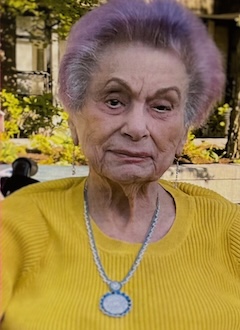
photo - Hazel Stevens, 98, has had quite the life
Hazel Stevens, 98, has had quite the life. She still commands attention. (photo from Lisa Stevens)

Hazel Stevens (née Moses) was born in Bangalore, India, in 1928. By the time she was 18, she had five brothers and five sisters. Her parents, my grandparents, were from Baghdad, Iraq.

Despite being one of maybe five Jewish families in the whole city, they kept kosher and made their own matzah. When Passover was over, their Hindu and Muslim friends would bring them bread.

Hazel’s mother and father ran a clothing store, so, to some degree, the six girls in the family, who were born first, were brought up by the servants. The five boys who came next were brought up by the girls.

What I noticed as a child growing up was that Hazel was clearly the funniest person in the family. When we all got together, she would chant slogans from Gandhi’s National Congress Party with incredible enthusiasm. Everyone would laugh. I think that part of my love for comedy came from her.
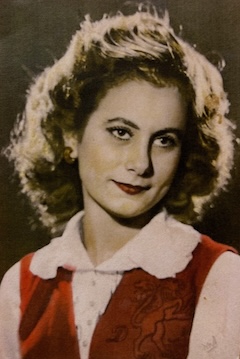
photo - Hazel Stevens (née Moses) was born in Bangalore, India, in 1928
Hazel Stevens (née Moses) was born in Bangalore, India, in 1928. (photo from Lisa Stevens)

Hazel was also unequaled in her bravery. One day, a monkey grabbed her sister’s little girl, who was just a baby, and took her up onto the roof of the family’s home. Hazel climbed up to the roof to save her.

“I was frightened because the monkey could bite the baby or throw it off the roof,” Hazel told me. “I had to be very calm. I calmly patted myself and said, ‘Give me the baby.’ Finally, the monkey threw the baby at me.”

Luckily, no harm was done. 

A few years later, in 1946, when Hazel turned 18, she visited Baghdad with her parents. It was a time of unrest, just after the Second World War. It isn’t well documented, but my aunt says that there was one week of “hysterical mobs” trying to kill their Jewish neighbours. The Jewish community had faced increasing insecurity for years, including the Farhud (pogrom) in June 1941, during which between 150 and 180 Jews were murdered, 600-plus injured and about 1,500 stores and homes looted, according to the US Holocaust Memorial Museum. In the 1940s, about 90,000 Jews lived in Baghdad, notes the museum, making up a significant portion of the population.

During this time, Hazel and others in the Jewish community were given hand grenades by the Baghdadi government. She fearlessly carried an urn full of them on her shoulder, as she went around the city, delivering grenades to Jewish households.
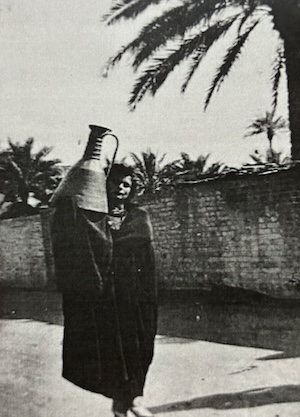
photo - Hazel Stevens in Baghdad in 1946, with an urnful of hand grenades provided by the government, which she delivered to Jewish community members to use in defence against hostile neighbours
Hazel Stevens in Baghdad in 1946, with an urnful of hand grenades provided by the government, which she delivered to Jewish community members to use in defence against hostile neighbours. (photo from Lisa Stevens)

“When you are young you are not afraid … because you could run,” she told me.

One night, Hazel joined her family on the roof, throwing stones down at a malicious crowd, which eventually left. Miraculously, no one in Hazel’s immediate family was hurt during this period.

Before her stay in Baghdad, Hazel had begun dating a young British soldier named Desmond (Steve) Stevens. He lived by the YMCA where she played tennis and he would come over and tell her not to hit or throw the balls so far away because the young Indian men would have to run far to retrieve them.

Steve would visit Hazel when she worked in her parents’ store. This was dangerous because girls weren’t allowed to speak to boys in those days, she told me. Dangerous in the sense that she should have been chaperoned. 

Hazel would say to Steve, “Quickly, buy something, my parents are coming.”

The pair fell in love, but Hazel’s parents did not approve, as Steve wasn’t Jewish.

When Hazel was in Baghdad, her grandmother set her up with a man she hoped Hazel would marry. But my aunt was as smart as she was daring. She says that, when she met the man, she made all kinds of faces and threw her arms about. It was a very long 30 minutes, said Hazel, but she succeeded in turning him off.

Her daughter Lisa said: “It was her act of insanity that proved to her parents that she loved my dad. She wired him after her parents acquiesced, and he came over to Baghdad to spend some time with her.  She told me they took walks and held hands.” 
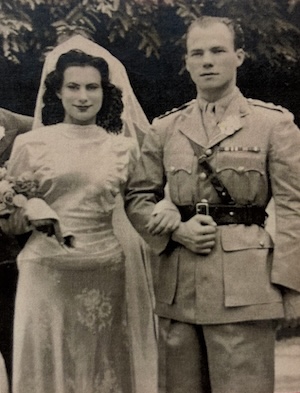
photo - Hazel and Desmond (Steve) Stevens were married in Bombay (Mumbai) in 1947.
Hazel and Desmond (Steve) Stevens were married in Bombay (Mumbai) in 1947. (photo from Lisa Stevens)

Steve promised to convert to Judaism and he did. The two were married in one of the beautiful synagogues in Bombay (Mumbai) in 1947. I remember that Steve was very knowledgeable when it came to almost anything Jewish.

Most of our family left India when it looked like there was going to be a civil war in 1948. Hazel and Steve went to England. I’m not sure of the order of their travels, but Steve remained part of the British army and so he and my aunt lived in various places in Canada and Europe. During this time, their first two children – Anita and David – were born.

Hazel told me that she was a dancer and remembers winning a $50 prize in her 30s – she can still pull one leg over her head. At the parties she threw, she would dress up in a belly dancing costume that she made, turn on Middle Eastern music and perform for everyone throughout the house. All the kids at the parties would crawl behind her, picking the shiny gold beads that would fall off her dress.

Nineteen years after her first child, Hazel gave birth to Lisa in Vancouver and soon enrolled her in dance classes. Today, Lisa is a director and choreographer, based between New York and Toronto. 

Steve was a communications engineer at BC Tel (now known as Telus). He worked with new technology and, unknown to the family until after he retired, he provided spy satellites for NORAD. He was responsible for much of the communication capabilities when NORAD was first built, says Lisa.

Hazel was the homemaker for Marpole Neighbourhood House, where she provided in-home care for seniors and for people with disabilities. She won Homemaker of the Year several times. She also spent a lot of time organizing charity events for Vancouver’s Jewish Community Centre and the Hadassah Bazaar.

Steve and Hazel spent much of their spare time in the spring and summer caring for the front and back gardens of their house on Oak Street. Lisa says they often saw people stop their cars in front of the house and take pictures of the abundance of colour and the foliage. 

Hazel ran a bed and breakfast out of her home on Oak Street and continued that after Steve passed away about 26 years ago. She also provided a room for out-of-town families who came here to visit their loved ones at Vancouver General Hospital, as the house was on that bus route.

In her late 80s, Hazel moved into Legacy Senior Living, where she says she led the exercise class at least once when the fitness instructor was away.

In a wheelchair now, Hazel lives at the Louis Brier, where she told me all about her incredible life.

I have a tendency to create funny, bold and daring characters when I improvise onstage and I think that maybe, just maybe, I get that from my aunt. 

Cassandra Freeman is a Vancouver storyteller and improviser. She wrote this article with files from the Moses family and from Hazel Stevens’ daughter, Lisa Stevens.

Posted on March 27, 2026March 26, 2026Author Cassandra FreemanCategories LocalTags Hazel Stevens, history, memoir, Sephardic Jews
Panama City welcoming

Panama City welcoming

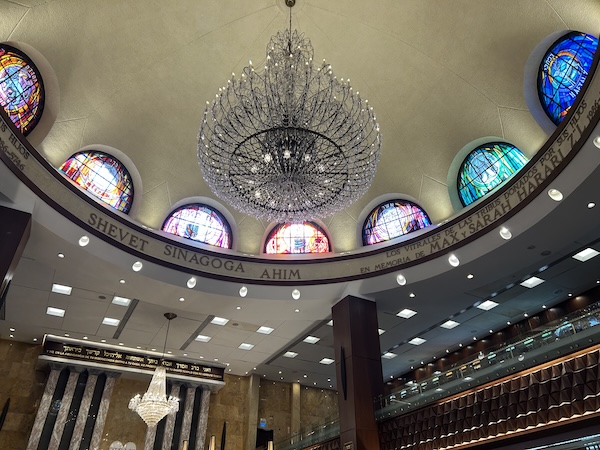
The ceiling of the Sephardic synagogue Shevet Ahim, which is located in the Bella Vista neighbourhood of Panama City. (photo by Janice Masur)

My solo trip to Panama City this past February had seemed so far away when I organized it, knowing I would require some respite from caregiving. I had a yen to experience the Miraflores and San Pedro shipping locks, but not on a cruise. I had listened to a talk from Qesher, a website about Jewish communities worldwide, highlighting Jewish life in Panama, so I gathered my courage to travel alone and booked my hotel and flights. And then my beloved husband died. 

This changed my reason for going and started me thinking, What would I do there by myself? How would I manage to converse in Spanish and make myself understood? Could I give a talk about my Ugandan vanished Jewish community? (See jewishindependent.ca/honouring-community.) Despite my concerns, I made the journey.

photo - Panama City was a great place to travel solo – and as a Jew
Panama City was a great place to travel solo – and as a Jew. (photo by Janice Masur)

I had a half-day tour with an excellent Jewish guide, Patricia, to see all four of the Orthodox synagogues, each one more beautiful, all situated within a small area of Panama City. 

There were all types of Jews staying in my hotel: a Dutch woman who only recently discovered her Jewish heritage, a fur-hatted Jewish man, and two Jewish Tunisian-born sisters, whose family history included having been ousted from their home in Tunis during the Second World War, their home commandeered to be a Nazi headquarters. 

At Kol Shearith Reform synagogue, I struggled with the Spanish and Hebrew prayer book, spellbound by my surroundings. The Sephardic tunes of the prayers made only a handful of them familiar to my ear. The Oneg Shabbat was delicious: fish ceviche and crème caramel, a childhood favourite, as well as several dishes new to me. We stood around the loaded tables and talked.

Jews started arriving in Panama in the 15th century and there are about 17,000 Jews in Panama, with most living in Panama City. Apparently, Panama is a “Jewish bubble,” with basically no antisemitism. I was told that there are many families from Vancouver soon moving there. “Why?” you may ask. Imagine 40 kosher restaurants, two very large kosher stores, apartment buildings housing only Jewish families, a Jewish support system from birth to death, Sephardic Shevet Ahim in the Bella Vista neighbourhood with offshoots in Punta Paitilla, Ashkenazi Beth El Synagogue, two Chabad synagogues, and the oldest synagogue, Kol Shearith.

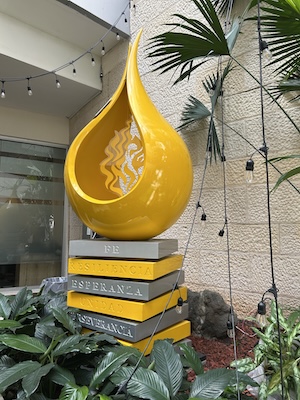
photo - “The Eternal Flame,” an Oct. 7 memorial at Beth El Synagogue in Panama City. The artists were Ilanit Schwartz and Michael Ostroviack
“The Eternal Flame,” an Oct. 7 memorial at Beth El Synagogue in Panama City. The artists were Ilanit Schwartz and Michael Ostroviack. The sculpture is composed of seven levels, each bearing a word: faith, resilience, hope, unity, perseverance, identity and strength. The flame is a reminder that there will always be light, even in the most difficult times. And, within the flame is the Shema Yisrael prayer. There is also the symbol of the “necklace of liberation,” associated not only with the promise to bring home the hostages, but the struggle for life and freedom for all human beings. (photo by Janice Masur)

Geographically, Panama City is situated on a narrow isthmus, making it an elongated city running east-west, mainly facing the Pacific Ocean. It is full of incredibly high and distinctive skyscrapers lining the long promenade.

The Old Town is being gentrified. Hotel La Compañía Casco Antiguo has a Spanish, French and American wing, each built in a different century. A large cathedral faces onto Plaza Herrera, and I saw my first modern-day monk. He was wearing a brown habit and many nuns were spilling out into the sunlit plaza. Brightly painted buildings and small shops catered to the tourists. The imposing Opera House faces the ocean.

I felt quite safe on my own and was touched by how a local family pointed out animals and kept an eye on me as we wandered around Metropolitan Natural Park, where I saw turtles, agoutis and my first ever armadillo.

I took myself to the botanical garden situated about 40 minutes outside the city. Along the route were American army barracks now being repurposed. At the garden, I enjoyed seeing flowers I had never seen before. A large red flower that only grows from a tree trunk; an orange flower whose seed pod is hard and round and slightly bigger than a tennis ball. The garden also showcased two- and three-toed sloths, plus several monkey species. In its far reaches, I saw a lone jaguar, who let out such sad, lonely notes with his rib cage working like an accordion that I could not bear to stay near his cage. I wondered about the information exhorting visitors to take care of the planet and not to shoot wild animals. Jaguars are on the at-risk list because of habitation loss and human interference. 

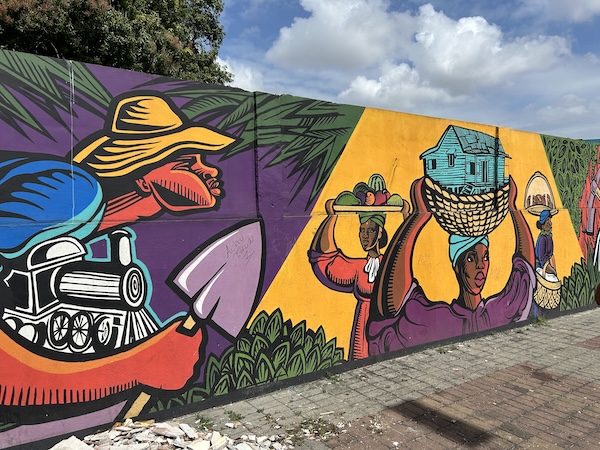
On the spur of the moment, I took a Black African walking tour of the old city. The young guide was very good. Highlights included some colourful historic wall paintings and an old church, which is now a Black African museum. We finished the tour at the San Felipe public market, where I had a large, freshly squeezed and most-welcome passion fruit drink in 32˚ C heat and then crashed on my bed for a nap. 

photo - A painted wall in Old Town, depicting Panamanian Black African history
A painted wall in Old Town, depicting Panamanian Black African history. (photo by Janice Masur)

The Biomuseo (biodiversity museum), designed by Frank Gehry, is well worth a visit, with a lovely seawall walk and an eco-friendly garden, where I rested and listened to the birds. I also took a private birding tour, which yielded some wonderful sightings. The couple of hours on my own watching close to 100 pelicans circling and diving for fish was spectacular.

And, of course, I took a tour on a small boat that passed through the Miraflores and San Pedro locks. It was fascinating to observe the speed with which large shipping vessels are lowered and raised through the original canal lock gates, which opened in 1914. Tugs and railway engines synchronize the adjustment of a ship in the lock with steel ropes to prevent it from damaging the canal walls – it’s a specialized job, and I was happy to learn there are some women pilots.

I was warmly welcomed in Panama City, and the Jewish hospitality was inclusive and friendly. It was a fun and easy holiday – it has given me the appetite for more solo adventures. 

Janice Masur is a Vancouver author and speaker. Her book, Shalom Uganda: A Jewish Community on the Equator, tells her story of growing up in the bygone Ashkenazi Jewish community of Kampala from 1949 to 1961.

Format ImagePosted on March 27, 2026March 26, 2026Author Janice MasurCategories TravelTags Ashkenazi Jews, history, Jewish history, Judaism, Panama, Panama City, Sephardic Jews, synagogues, travel
Proudly powered by WordPress