Skip to content
  • Home
  • Subscribe / donate
  • Events calendar
  • News
    • Local
    • National
    • Israel
    • World
    • עניין בחדשות
      A roundup of news in Canada and further afield, in Hebrew.
  • Opinion
    • From the JI
    • Op-Ed
  • Arts & Culture
    • Performing Arts
    • Music
    • Books
    • Visual Arts
    • TV & Film
  • Life
    • Celebrating the Holidays
    • Travel
    • The Daily Snooze
      Cartoons by Jacob Samuel
    • Mystery Photo
      Help the JI and JMABC fill in the gaps in our archives.
  • Community Links
    • Organizations, Etc.
    • Other News Sources & Blogs
    • Business Directory
  • FAQ
  • JI Chai Celebration
  • JI@88! video

Recent Posts

  • Eby touts government record
  • Keep lighting candles
  • Facing a complex situation
  • Unique interview show a hit
  • See Annie at Gateway
  • Explorations of light
  • Help with the legal aspects
  • Stories create impact
  • Different faiths gather
  • Advocating for girls’ rights
  • An oral song tradition
  • Genealogy tools and tips
  • Jew-hatred is centuries old
  • Aiding medical research
  • Connecting Jews to Judaism
  • Beacon of light in heart of city
  • Drag & Dreidel: A Queer Jewish Hanukkah Celebration
  • An emotional reunion
  • Post-tumble, lights still shine
  • Visit to cradle of Ashkenaz
  • Unique, memorable travels
  • Family memoir a work of art
  • A little holiday romance
  • The Maccabees, old and new
  • My Hanukkah miracle
  • After the rededication … a Hanukkah cartoon
  • Improving the holiday table
  • Vive la différence!
  • Fresh, healthy comfort foods
  • From the archives … Hanukkah
  • תגובתי לכתבה על ישראלים שרצו להגר לקנדה ולא קיבלו אותם עם שטיח אדום
  • Lessons in Mamdani’s win
  • West Van Story at the York
  • Words hold much power
  • Plenty of hopefulness
  • Lessons from past for today

Archives

Follow @JewishIndie
image - The CJN - Visit Us Banner - 300x600 - 101625

Author: Roni Rachmani

קנדה מתחילה לחסן את התושבים

קנדה מתחילה לחסן את התושבים

(photo: 2018 © Qapta.es)

ממשלת קנדה מתחילה בימים אלה להפעיל את מערך המסובך והמורכב של החיסון נגד נגיף הקורונה. מדובר בחיסון של ענקית התרופות האמריקנית פייזר וחברת הטכנולוגיות הגרמנית ביונטק. קנדה הייתה אפוא המדינה השנייה בעולם שהעניקה אישור רגולטורי לשימוש בחיסון של פייזר וביונטק, ועוד לפני ארצות הברית.

רשויות הבריאות של קנדה העניקו ביום רביעי בשבוע שעבר את האישור לשימוש בחיסון לנגיף קורונה של החברות פייזר וביונטק. הלת’ קנדה – הסוכנות האחראית על הרגולציה של תרופות, פרסמה הודעה רשמית באתר האינטרנט שלה כי החיסון יעיל ובטוח לשימוש. קנדה צפויה לקבל כמאתיים וחמישים אלף מנות חיסון של פייזר ויביונטק במהלך חודש זה (דצמבר), ועוד כארבע מיליון מנות חיסון עד חודש מרץ שנה הבאה.

האישור ניתן במסגרת מדיניות זמנית (חדשה) שמאפשרת אישור מואץ של תרופות. זאת, בדומה לאישורי החירום שמעניק האף.די.אי – מינהל המזון והתרופות של ארה”ב. אגב הסוכנות האמריקנית העניקה את האישור שלה לשימוש בחיסון של פייזר ויביונטק בסוף השבוע האחרון.

אישור לחיסון נסמך על ראיות לכך שהוא בטוח, יעיל ובאיכות טובה, כתבה הסוכנות הלת’ קנדה. יצוין כי ממשלת קנדה הליברלית בראשות ראש הממשלה, ג’סטין טרודו, רכשה בסך הכל עשרים מיליון מנות מהחיסון של פייזר וביונטק, המספיקות לחסן עשרה מיליון תושבים. לקנדה שמורה האופציה לרכוש חמישים ושש מיליון מנות חיסון נוספות מפייזר וביונטק. הסוכנות הקנדית הלת’ קנדה בוחנת בימים אלה עוד שלושה חיסונים אחרים, בהם החיסון של חברת מודרנה האמריקנית. חשוב לזכור שממשלת קנדה הזמינה יותר מנות חיסון לנפש מכל מדינה אחרת בעולם.

פקידים קנדים אמרו כי במסגרת הסכם הרכישה עם פייזר וביונטק, מנות החיסון לא יכלו להישלח לקנדה עד לקבלת האישור – שכאמור התקבל בשבוע שעבר. טרודו מצידו אמר כי קנדה תחל לקבל את המשלוח הראשון כבר בשבוע זה, בכפוף לקבלת האישור של הלת’ קנדה. רשויות הבריאות של עשר הפרובינציות ושלוש הטריטוריות של קנדה, יעניקו את החיסונים בחינם לתושביהן. רשויות הבריאות שלהן הן אלה שיחליטו באופן עצמאי איך יקוצו החיסונים בשטחים שלהן – כאשר בשלב זה מספר מנות החיסון של פייזר וביונטק הוא נמוך ביותר.

אונטריו: יוחלף השם של רחוב הקרוי על שמו של קצין נאצי

ארגון בני ברית קנדה ניהל מאבק ממושך במשך שנים, לשנות את שמו של רחוב בעיר אייקס שבמחוז אונטריו, הנושא את שמו של נאצי. למעלה מאלף חתימות הושגו על ידי בני ברית ומועצת העירייה הסכימה להתחיל בהליך לשינוי השם.

הרחוב שמעורר סערה באייאקס, קרוי עד היום על שמו של קצין חיל הים הנאצי, הנס לנגדורף. כאמור לאחר קמפיין ממושך של בני ברית קנדה אישרה מועצת העיר את החלפת השם. יצויין כי לישיבת מועצת העיר הגיע ניצול שואה שהעיד ממושכות על הזוועות של הנאצים.

נציג ארגון בני ברית בקנדה מייקל מוסטין, אמר בסיפוק כי אישור ההחלטה לשינוי שם הרחוב, דווקא בתקופה כזו של התגברות התפרצויות האנטישמיות בקנדה, מהווה בשורה וקרן אור.

קצת הסיטוריה: שהמייסדים של ארגון בני ברית היו שנים עשר מהגרים יהודים מגרמניה, שהקימו את הסניף הראשון בארצות הברית. מטרתם הייתה לאחד את עם ישראל באשר הוא נמצא. כיום הארגון פעיל במספר גדול של מדינות ברחבי העולם. הוא עוסק במגוון רחב של פעילויות חברתיות, רווחה, פעילות למען זכויות האדם, התנגדות למיסיון, והתנגדות לגזענות ואנטישמיות.

Format ImagePosted on December 16, 2020December 16, 2020Author Roni RachmaniCategories עניין בחדשותTags Ajax, B'nai B'rith, BioNTech, Canada, coronavirus, Hans Langsdorff, Nazi, Pfizer, street, vaccines, אייאקס, ביונטק, בני ברית, הנס לנגדורף, חיסון, נאצי, נגיף הקורונה, פייזר, קנדה, רחוב
Painting survivors, life

Painting survivors, life

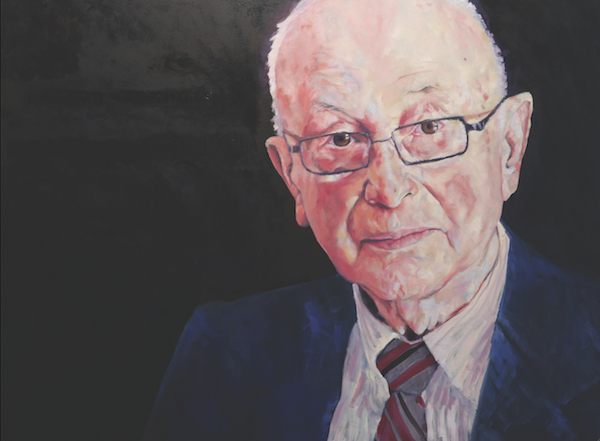
A portrait of Robbie Waisman, by artist Carol Wylie. Part of the exhibit They Didn’t Know We Were Seeds, at the Zack Gallery to Jan. 4.

Even via a wobbly Zoom-led tour, the impact of Saskatoon artist Carol Wylie’s portraits – nine of Holocaust suvivors and nine of residential school survivors – can be felt.

The title of the solo exhibit at the Zack Gallery until Jan. 4 is They Didn’t Know We Were Seeds. It is taken from the proverb: “They buried us … they didn’t know we were seeds.” And the choice of 18 portraits was deliberate.

“It was quite quick and early in the process I decided that 18 had to be the number,” said Wylie at the exhibit’s virtual opening Nov. 19, “because there’s so much darkness in the stories but there’s so much light and life in the survival… [T]here’s three of the Holocaust survivors who are involved with the March of the Living and to actually go back to the camps, to Auschwitz, and to make that walk when you were there; I can’t imagine the courage it takes. And they do it so that others are educated. That’s the rising above it and making something really powerful out of a black, dark experience.

“And I see the same thing with residential school survivors, like Gilbert [Kewistep] and like Eugene [Arcand], who spend so much of their time going around to schools and speaking in public about their experiences to make sure people are educated about that. And, again, reliving what they went through every time they tell it, I’m sure.

“So, the 18 and the connection to chai, to life, came really early in the process. It had to be 18, because that validation of life that these people represent … had to be present.”

The scale of the paintings was also chosen purposefully. “I want these portraits to take up space and to be very present and, for when you’re standing in front of them, to have them fill up your field of vision, so that you can’t wander past, uninterested and unengaged,” said Wylie.

The project started several years ago, she explained. “I saw Nate Leipciger speak at the Holocaust memorial service in Saskatoon and, it’s ridiculous, I’ve been [attending] for lots of years but, for some reason, that year, it hit me for the first time how elderly all these people are getting.”

The firsthand experience that is so powerful is soon to be lost, she said, and “I felt there was something that I had to do to help to preserve that.” And she would do it with the best tool she had, her passion and ability to create portraits.

“What I have learned over the years,” she said, “is that, when you capture the nuances of a person’s face, you really reflect who they are and much of their history and how they’re made up of that history. Even though it’s not like hearing a verbal story, it’s seeing a story in a different form.

“I started this idea to do a series of portraits of Holocaust survivors. And then, as I entered into it, little things started to pop up that were connecting the Jewish survival to the residential school experience. It started with a community seder at our local synagogue, where our rabbi, who is very forward-thinking, always has elements on the tables that recognize other groups … and, that particular year, he had made special mention of making sure that we understand – especially in Saskatchewan, where we have a really dark history of residential schools – the experience of the Indigenous people that we live with.

“And I started thinking, it’s not a parallel experience, but it’s an experience that is shared in terms of pain and suffering and then survival and rising above it…. And, because I live in Saskatchewan, this is part of the history of the land that I call home, that I’m a settler in, that this is a time of truth and reconciliation, it’s a time of trying to address these issues, so, as a personal step towards reconciliation, I can sit down, listen to the stories of some of these residential school survivors and bear witness to them and bring them in to be part of this project, so that they can converse through their portraits, as a group of survivors.”

It was only after making this decision that Wylie discovered that people like Vancouver’s Robbie Waisman – who is among those featured in the exhibit – were already meeting with residential school survivors to share ideas and experiences.

The project took about three-and-a-half years to complete. Waisman is the only Vancouver-based subject. “All the other Holocaust survivors were from Toronto, Edmonton and Saskatoon, and all the residential school survivors are from Saskatchewan,” said Wylie in an email interview with the Independent.

“I had to be really careful,” she noted at the exhibit opening. “There’s a very, very fraught history of non-Indigenous artists and non-Indigenous photographers representing Indigenous peoples and I knew I was stepping into this murky ground. All the way along, I had to keep asking myself questions about my own integrity around this, what are the reasons for why you’re doing this and does every single survivor that you talk to understand fully what this project is about and [are they] fully on board with it. At the end, I thought, if there are people who are criticizing it, that’s fine, but, I feel, after conversations I’ve had with many residential school survivors, that it’s more important that we raise this issue and more important that I make this step towards reconciliation than be fearful of doing something that maybe I shouldn’t be doing or that the art world might perceive that I shouldn’t be doing.”

When the work was completed, Arcand and Kewistep “smudged the work before it went off on its first exhibition. Then they gave me a smudge kit that I could use myself, if I wanted to, in the future. It was extremely meaningful to me; it was almost like they’d given it their stamp of approval, as well as imbuing it with these good graces and these good thoughts and this positive energy before the work went anywhere and anyone had a chance to see it.”

The exhibit has been shown in various places and will travel elsewhere after its time at the Zack.

Wylie’s general process in doing portraits is to speak with her subjects first.

“I think that, in order for the mask that we all wear in the world to protect ourselves, in order for that to drop, there needs to be time spent talking,” she said. “There’s this very strange artificial intimacy that happens when you’re sitting two feet – before COVID times – away from somebody that you’re drawing, and you’re talking and you’re looking intently at them…. So, I always wait until that couple of hours of conversation and visiting is over and then I pull out my camera.

“I need to work from photographs because I like to get a strong resemblance and I can’t have people coming back endlessly to sit for me…. But that’s when I take them, is after that time has been spent, that conversation has happened, and their mask has come down and they are open.”

The openness that is seen in the subject’s faces, stressed Wylie, “is not something that I put there, it’s something that they had. Seriously, I paint what I see… And that captures what they have, what they are, because it’s all within there, it’s all in their face.”

Given the caveat that there is something intangible about what makes a good portrait, Wylie said in an email, “I believe a portrait should bear resemblance to the subject. But, in addition, it should feel like the portrait is inhabited; like it contains the spirit of an individual. You often hear people comment about the eyes in a portrait following them. I think that’s the sensation of some element of the person, and not just their resemblance, being present. I also like to see evidence of the artist in the work in the form of brushstroke, colour choices, etc. This trace of the artist distinguishes a painted portrait from a photo.”

She described her need to create portraits as “a compulsion I’ve had since I was a child. Even then,” she said, “I drew people, made my own paper dolls. In my grad school investigations I discovered, I believe, that it’s because of a fascination I have with the mystery of consciousness, and the fact that we can never share another’s consciousness. We learn about ourselves through our interactions with others and these connections enrich our being.

“The face is a major part of how we communicate and is strongly connected to our identity,” she said. “Yet, we cannot see ourselves the way others see us, so there’s this mystery around faces. What do they hide? What do they reveal? How do you feel as ‘you’ wearing your face? How do I communicate as ‘me’ wearing my face? I am just never tired of painting a portrait, but am always excited when I begin a new one.”

The exhibit opening was hosted by gallery director Hope Forstenzer, who credited her predecessor, Linda Lando, for bringing this show in. The exhibit is open by appointment and via onlyatthej.com. A commemorative book, being prepared with Wylie’s help, is in the works, as well, said Forstenzer.

On Dec. 9, 6-8 p.m., the gallery is having a Zoom event with Waisman and Wylie, as well as Lise Kirchner from the Vancouver Holocaust Education Centre and Shelley Joseph from Reconciliation Canada. Readers interested in attending should email Forstenzer at [email protected].

Format ImagePosted on December 4, 2020December 2, 2020Author Cynthia RamsayCategories Visual ArtsTags art, Carol Wylie, Holocaust, Hope Forstenzer, JCC, portraiture, residential schools, Robbie Waisman, survivors, Zack Gallery

Better choice needed

Yad Vashem holds an almost sacred place in the Jewish world. The foremost repository of materials relating to the Holocaust, and Israel’s official memorial to the victims of Nazism, the centre is practically an obligatory destination for visiting diplomats and foreign dignitaries. It is a solemn place dedicated to the terrible past, but with an explicit vision for a future without hatred and genocide.

Yad Vashem is rightly focused on the Jewish particularity of the Shoah. We take for granted the logic of Yad Vashem being located in Jerusalem. The capital of Israel and, spiritually, of the Jewish people seems a logical place to remember this massive cataclysm in Jewish history. But it commemorates a history that took place thousands of kilometres away, in Europe. Its presence in the Jewish state is itself a statement about Jewish particularism. But this does not erase the universal lessons Yad Vashem advances.

Since its founding in 1953, it has been a model for the world in commemorating and educating about the worst chapters in human history. The events of the 20th century that necessitated the invention of the word “genocide” did not end with the Holocaust. Genocides have occurred since 1945 – and before. Educators and others who strive to preserve and transmit these histories and their lessons struggle over the balance between respecting the very specific characteristics of the Holocaust, for example, with the broader messages for all humanity. At a time when antisemitism is experiencing a resurgence, it is essential that the role of Jew-hatred be addressed and confronted, at least in part with the recent past as a warning for the dangers of complacency.

While the struggle between universality and particularism is challenging, all can probably agree that Yad Vashem stands as a monument to human rights and the dignity of all people – and as a lesson to those in societies where those values are compromised. At the same time, the existence and focus of Yad Vashem safeguards the particular and monumental horrors of the genocide against the Jews.

This is why there is rightful concern over the proposed appointment of former brigadier general Effi Eitam as head of Yad Vashem. His proponents – including Prime Minister Binyamin Netanyahu, who nominated him for the position – contend that Eitam’s career has been spent defending the Jewish state. And among the lessons many people take from the exhibits of Yad Vashem is the necessity of a Jewish state as a bulwark against a world that has yet to cure itself of antisemitism.

But Eitam’s military record is more than troubling, and this is the main reason for concerns about his appointment. During the First Intifada, he brutally instructed his troops to break the bones of a 21-year-old Palestinian prisoner, Ayyad Aqel. The soldiers beat the young man to death. Four of Eitam’s soldiers were court-martialed and the Military Advocate General reprimanded Eitam and recommended he never be promoted. (He was.) In addition to his military career, he served two terms in the Knesset representing various religious parties, and held several cabinet portfolios.

Beyond Eitam’s record of heinous action is a record of deeply concerning and racist ideas. He has referred to Arab Israelis as a “cancer” and promoted ethnic cleansing of West Bank Palestinians: “We’ll have to expel the overwhelming majority of West Bank Arabs from here and remove Israeli Arabs from political system,” he said in 2006.

Referring to human beings with terms like “cancer” is precisely the sort of dehumanization that can be a precondition to genocide. In any society – including one as open as Israel, where diverse views and expressions are the norm – these statements must preclude someone from a role like head of the world’s foremost research centre about, and memorial to, the Shoah. Eitam’s military service – he was part of the raid on Entebbe, among other things – can be seen as evidence that a strong Israel is the best defence for the Jewish people in a world capable of genocide. But Eitam’s statements cannot be justified from the mouth of one who seeks to advance the lessons, particular or universal, that Yad Vashem is expected to convey.

The nomination is threatening to create yet another schism in the government, as Netanyahu’s coalition partner Benny Gantz opposes Eitam’s appointment. Ideally, a more suitable leader will be found for this important role, one who stands as a defender of the sanctity of the Shoah and its lessons for humanity.

Posted on December 4, 2020December 2, 2020Author The Editorial BoardCategories From the JITags Effi Eitam, genocide, Holocaust, Israel, particularism, politics, racism, universality, Yad Vashem

Gift of doing nothing at all

Recently, one of my twins convinced me we needed to look at an online mindfulness app. It featured ocean beaches, a sunset, a waterfall, a forest, a rainstorm …. you get the picture. The notion was that one could stare at each image, take deep cleansing breaths and feel restored. Except, with the twins crowding my iPad screen, within moments we had hopped from one view to the next. The app kicked us out, as we had “seen” all its tranquil views. What was supposed to be meditative became a crazed, erratic two-minute virtual tour of all the outdoors, at once. Oops. That didn’t work out right.

There’s a lot of discussion online and in the media about how the pandemic has caused mental health issues because people are lonely, restless and bored, and many have a hard time with restrictions and lockdown. This may well be true for many people.

For those of us with kids, it feels more like a Ferris wheel/merry-go-round mash-up, where both rides have the music playing, it’s all set on a fast speed and there’s NO. WAY. TO. GET. OFF. We’re crazy busy staying home. We chose remote schooling for safety. This gives no breaks from parenting, and no way to get all the work done. My house is a mess. The housework and cooking? – seriously out of control.

My parents, living alone in Virginia, have an opposite experience. Due to their age and health, they, too, are staying home to stay safe, with lots of time, not enough socializing in person, feeling adrift without their usual travel plans and volunteer activities.

Our extended family is far away and cannot help us in Winnipeg. We can’t support them in person either, so we’ve had a long stretch of time, including holidays, on our own. Chanukah won’t be different. My parents are sending fun toys in the mail, ordered online, to keep the kids busy during the hours and hours ahead indoors this winter, which we will appreciate, whenever they arrive.

We’ve also been planning way in advance. When you celebrate Passover, Rosh Hashanah, Yom Kippur, Sukkot, etc., on your own as a nuclear family, it takes more thought to make it special. Giving ourselves time to prepare has meant we have had some amazing meals and meaningful home-based observances, without going farther than our back deck sukkah.

My husband and I prepared for Chanukah by worrying if we had enough candles or if we had to shop for them – were Chanukah candles considered essential by the Manitoba government? To our relief, unless the kids insist on lighting all the chanukiyot at once, we’re fine. We’ve got plenty left over from last year, no need to go out and buy more. This, and internet ordering for kids, has been the extent of our preparations.

My twins, however, started the Chanukah countdown much earlier than usual. On a quiet Sunday afternoon, I discovered they were making paper chains and complicated construction paper cut-outs of dreidels, jugs of oil, a menorah, and more. The cut-outs were carefully hung up on our living room’s French doors – approximately 17 days before the first candles would be lit. Anticipation makes a holiday special.

However, the gift I love the absolute best these days won’t come on Chanukah. It’s Shabbat, which happens every week. It’s an opportunity to just sit on the couch. We stream services and I cook ahead so there’s nothing to do on Saturday. We sometimes magically find take-out appearing on the table Saturday night, when the leftovers don’t seem appealing. We’re not shomer Shabbat, and I’ve been known to disappear for a cozy chair and some knitting or to spend time with my sewing machine to deepen my relaxation, but Jewish traditional practice was really onto something with Shabbat.

Since having twins – they are now 9 years old – I’ve had people ask what would help, if I could have absolutely anything. I’d say: going to a quiet place in the country, alone, with a big bed with clean white sheets, lots of good food prepared, and time to just sleep, eat, read and hang out by myself. In reality, I felt that leaving my household for any length of time might result in worse chaos when I returned. My husband is well-intended, but an absentminded professor. He often forgets to feed the kids snack or the dog dinner if I don’t remind him over and over.

However, Shabbat at our house has become that oasis, where I get the chance to just be. It’s not the sunset, waterfall, rainfall, forest walk, ocean waves vision that the mindfulness app thinks we need. Not at all. It’s nothing idyllic – or tidy – but it’s a time to step away from social media, the chores, the craziness, and just be. Nowadays, I don’t have to get everyone dressed up for Shabbat services. I can’t invite guests or stress about getting a fancy meal made. I have many fewer work deadlines. And while, yes, there are some negatives in that, there’s a whole lot of positives, too.

We’re facing so many things that aren’t like anything we’ve experienced before. The unexpected can be scary. It can also be an amazing opportunity to let go, embrace and learn something different. Shabbat has long been my favourite holiday, but it took a pandemic for me to settle even more fully into one day a week of rest.

Turns out I don’t need to gaze at a mindfulness app to unwind. I’ll stick with making a huge Shabbat dinner, sleeping (late!) until 8 a.m., and participating in services from the couch, surrounded by the kids’ Lego and Playmobil congregation.

This year might be a chance to discover new gifts within this very challenging experience. Mine might be the best thing I could imagine – doing nothing at all.

Joanne Seiff has written regularly for CBC Manitoba and various Jewish publications. She is the author of three books, including From the Outside In: Jewish Post Columns 2015-2016, a collection of essays available for digital download or as a paperback from Amazon. Check her out on Instagram @yrnspinner or at joanneseiff.blogspot.com.

Posted on December 4, 2020December 2, 2020Author Joanne SeiffCategories Op-EdTags Chanukah, coronavirus, COVID-19, family, gratitude, Judaism, kids, parenting, Shabbat
Making safe, inclusive space

Making safe, inclusive space

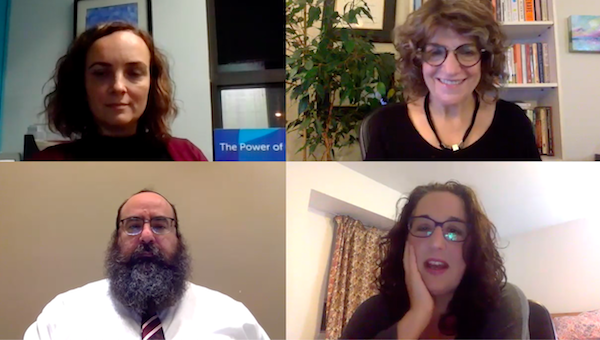
Clockwise from the top left: Tanja Demajo, Shelley Karrel, Amanda Haymond Malul and Rabbi Yechiel Baitelman participate in a JACS Vancouver panel discussion Oct. 15.

“When someone comes through the door and says, ‘I’m an addict. I’m a recovering addict,’ do they feel judged or do they feel accepted? Do they feel that we are putting them in a box, giving them a label?” asked Rabbi Yechiel Baitelman in a recent community discussion. “We have to identify the illness, there’s no question about that. But, is that the only way to view a human being? I think to respect every human being for their humanity, that’s what people are really craving – respect and love.”

Baitelman, director of Chabad Richmond, was one of three panelists on the topic Building Safe and Inclusive Spaces for Those Affected by Addiction and Mental Illness. He was joined by Tanja Demajo, chief executive officer of Jewish Family Services (JFS), and Amanda Haymond Malul, a community member in recovery, in the Oct. 15 event presented by Jewish Addiction Community Services (JACS) Vancouver. JACS Vancouver’s Shelley Karrel moderated the conversation.

Haymond Malul would like to see more community discussions on addiction and people being taught acceptance. She spoke of the need to “have support from the religious leaders of the community, from every single agency in the community, to start talking about it – make it acceptable, educate.” (See jewishindependent.ca/help-repair-the-world.)

And we need to ensure that what we are teaching is in line with our actions, said Demajo. “If we talk to children about acceptance, but we don’t actually practise that, that’s creating double standards where we talk about certain things, but that’s not what people experience,” she said. This could be damaging, she said, to people who “really need that support and want to trust.”

We must see each member of the community as a human being, said Baitelman. Love is important, but, he said, “Love is on my terms, respect is on your terms. If I love you, it’s more a reflection of who I am. But, if I respect you, it’s more of a reflection of how I see you, what you are about – and I think that’s really important. Respect the humanity. If you can love them, that’s even greater. But respect is more fundamental.”

When Karrel asked panelists for tangible ways in which people could be more accepting and inclusive, with love and respect, Demajo said agencies are overwhelmed with the number of people needing support. She said it is up to each of us to connect on a personal level with others, accepting that it will take time for them to trust us enough to share.

“You have to build a relationship, and a relationship is not built overnight,” said Demajo. “I had a client who I often think of, a person who spent a number of years [in the] Downtown Eastside being homeless, not having pretty much anything in his life…. He would come to see me … and we would speak about books, because he was a huge reader and I love reading. It took him six months until he really started talking about things that were going on in his life and what he actually needed, and we started working from there. Now, he has a regular life. He has a home. He brought his family back. He is working. So, things are in a place that he wanted … a number of years ago. Recovery is a process of being vulnerable and, so, if social services don’t have the time to invest in people, I think we are setting ourselves up for a really huge failure.”

All panelists agreed that having a drop-in centre with people who understand is absolutely essential and that, while professional support would be ideal, it is not essential. To be kind, respectful and loving, you do not need to be a professional, they said.

While there are recovery clubs in the general community, Haymond Malul said it would be great if there were also one in the Jewish community – “having a safe place for people to come and be able to drop in, and know that this is the Hillel House of Recovery,” she said.

However, having a community place might inhibit some people from coming out, due to fear of being exposed, warned Demajo. “The other piece is that I do feel that what Amanda has done tonight, speaking of her own experience and being in the community, and [talking about] some of the things that were helpful for her, is important to start with; having those opportunities to open up the conversation – not just for me, in a professional role, but from a personal place – because that is where the relationship happens. I do believe that is the core of whatever we come up with – the core is the relationship.”

Each of us is deserving of respect, regardless of our achievements, successes, failures or addictions, stressed Baitelman. “The fact that you were created by G-d makes you worthy of the highest form of respect and no judgment,” he said.

“Why would I not be involved with somebody who’s in recovery?” asked the rabbi. “After all, these people are accountable. They’re working on character development and are improving certain areas of their lives that they have the courage to acknowledge need to be corrected. They’re actively making amends with people around them. They are working on a conscious relationship with G-d rather than on other forms of success that society often judges success by. This is really an achievement.

“How many of us would like to change even one iota of our character, and people in recovery have changed more than one iota. They have made an incredible change, which is so admirable and should command respect. I think that’s part of the attitude that should be helpful in the broader community, and how we act with people, and the stigma.”

Karrel closed the discussion by giving a brief synopsis of JACS and its services. “We are working to diminish the stigma of addiction,” she told the Independent after the event. “Let’s keep this conversation going so we all feel we belong in our community.”

Rebeca Kuropatwa is a Winnipeg freelance writer.

Format ImagePosted on December 4, 2020December 2, 2020Author Rebeca KuropatwaCategories LocalTags addiction, Amanda Haymond Malul, Chabad Richmond, inclusion, JACS Vancouver, Jewish Family Services, JFS, mental health, recovery, Shelley Karrel, Tanja Demajo, Yechiel Baitelman
Our rights in the age of AI

Our rights in the age of AI

Dr. Rumman Chowdhury, chief executive officer and founder of Parity, gave the keynote address at the Simces & Rabkin Family Dialogue on Human Rights. (photo from rummanchowdhury.com)

Data and social scientist Dr. Rumman Chowdhury provided a wide-ranging analysis on the state of artificial intelligence and the implications it has on human rights in a Nov. 19 talk. The virtual event was organized by the Canadian Museum for Human Rights in Winnipeg and Vancouver’s Zena Simces and Dr. Simon Rabkin for the second annual Simces & Rabkin Family Dialogue on Human Rights.

“We still need human beings thinking even if AI systems – no matter how sophisticated they are – are telling us things and giving us input,” said Chowdhury, who is the chief executive officer and founder of Parity, a company that strives to help businesses maintain high ethical standards in their use of AI.

A common misperception of AI is that it looks like futuristic humanoids or robots, like, for example, the ones in Björk’s 1999 video for her song “All is Full of Love.” But, said Chowdhury, artificial intelligence is instead computer code, algorithms or programming language – and it has limitations.

“Cars do not drive us. We drive cars. We should not look at AI as though we are not part of the discussion,” she said.

screenshot - In her presentation Nov. 19 at the Simces & Rabkin Family Dialogue on Human Rights, Dr. Rumman Chowdhury highlighted the 2006 Montreal Declaration of Human Rights.
In her presentation Nov. 19 at the Simces & Rabkin Family Dialogue on Human Rights, Dr. Rumman Chowdhury highlighted the 2006 Montreal Declaration of Human Rights.

The 2006 Montreal Declaration of Human Rights has served as an important framework in the age of artificial intelligence. The central tenets of that declaration include well-being, respect for autonomy and democratic participation. Around those concepts, Chowdhury addressed human rights in the realms of health, education and privacy.

Pre-existing biases have permeated healthcare AI, she said, citing the example of a complicated algorithm from care provider Optum that prioritized less sick white patients over more sick African-American patients.

“Historically, doctors have ignored or downplayed symptoms in Black patients and given preferential treatment to white patients – this is literally in the data,” explained Chowdhury. “Taking that data and putting it into an algorithm simply trains it to repeat the same actions that are baked into the historical record.”

Other reports have shown that an algorithm used in one region kept Black patients from getting kidney transplants, leading to patient deaths, and that COVID-19 relief allocations based on AI were disproportionately underfunding minority communities.

“All algorithms have bias because there is no perfect way to predict the future. The problem occurs when the biases become systematic, when there is a pattern to them,” she said.

Chowdhury suggested that citizens have the right to know when algorithms are being used, so that the programs can be examined critically and beneficial outcomes to all people can be ensured, with potential harms being identified and corrected responsibly.

With respect to the increased use of technology in education, she asked, “Has AI ‘disrupted’ education or has it simply created a police state?” Here, too, she offered ample evidence of how technology has sometimes gone off course. For instance, she shared a news report from this spring from the United Kingdom, where an algorithm was used by the exam regulator Ofqual to determine the grades of students. For no apparent reason, the AI system downgraded the results of 40% of the students, mostly those in vulnerable economic situations.

Closer to home, a University of British Columbia professor, Ian Linkletter, was sued this year by the tech firm Proctorio for a series of tweets critical of its remote testing software, which the university was using. Linkletter shared his concerns that this kind of technology does not, in his mind, foster a love of learning in the way it monitors students and he called attention to the fact that a private company is collecting and storing data on individuals.

To combat the pernicious aspects of ed tech from bringing damaging consequences to schooling, Chowdhury thinks some fundamental questions should be asked. Namely, what is the purpose of educational technology in terms of the well-being of the student? How are students’ rights protected? How can the need to prevent the possibility that some students may cheat on exams be balanced with the rights of the majority of students?

“We are choosing technology that punishes rather than that which enables and nurtures,” she said.

Next came the issue of privacy, which, Chowdhury asserted, “is fascinating because we are seeing this happen in real-time. Increasingly, we have a blurred line between public and private.”

She distinguished between choices that a member of the public may have as a consumer in submitting personal data to a company like Amazon versus a government organization. While a person can decide not to purchase from a particular company, they cannot necessarily opt out of public services, which also gather personal information and use technology – and this is a “critical distinction.”

Chowdhury showed the audience a series of disturbing news stories from over the past couple of years. In 2018, the New Orleans Police Department, after years of denial, admitted to using AI that sifted through data from social media and criminal history to predict when a person would commit a crime. Another report came from the King’s Cross district of London, which has one of the highest concentrations of facial-recognition cameras of any region in the world outside of China, according to Chowdhury. The preponderance of surveillance technology in our daily lives, she warned, can bring about what has been deemed a “chilling effect,” or a reluctance to engage in legitimate protest or free speech, due to the fear of potential legal repercussions.

Then there are the types of surveillance used in workplaces. “More and more companies are introducing monitoring tech in order to ensure that their employees are not ‘cheating’ on the job,” she said. These technologies can intrude by secretly taking screenshots of a person’s computer while they are at work, and mapping the efficiency of employees through algorithms to determine who might need to be laid off.

“All this is happening at a time of a pandemic, when things are not normal. Instead of being treated as a useful contributor, these technologies make employees seem like they are the enemy,” said Chowdhury.

How do we enable the rights of both white- and blue-collar workers? she asked. How can we protect our right to peaceful and legitimate protest? How can AI be used in the future in a way that allows humans to reach their full potential?

In her closing remarks, Chowdhury asked, “What should AI learn from human rights?” She introduced the term “human centric” – “How can designers, developers and programmers appreciate the role of the human rights narrative in developing AI systems equitably?”

She concluded, “Human rights frameworks are the only ones that place humans first.”

Award-winning technology journalist and author Amber Mac moderated the lecture, which was opened by Angeliki Bogiatji, the interpretive program developer for the museum. Isha Khan, the museum’s new chief executive officer, welcomed viewers, while Simces gave opening remarks and Rabkin closed the broadcast.

Sam Margolis has written for the Globe and Mail, the National Post, UPI and MSNBC.

***

Note: This article has been corrected to reflect that it was technology journalist and author Amber Mac who moderated the lecture.

Format ImagePosted on December 4, 2020December 7, 2020Author Sam MargolisCategories LocalTags AI, Canadian Museum for Human Rights, CMHR, dialogue, education, health, human rights, privacy, Rumman Chowdhury, Simon Rabkin, technology, Zena Simces

The man behind the curtain

It was a beautiful Wednesday morning. I awoke in a tangle of bed sheets and to an IV stuck in my left arm. I had been in a road biking accident in the city the night before, breaking my now throbbing right leg in three places. The night had been a blur of ambulances, narcotics and doctors bustling around the noisy emergency room. It was quiet now. I had been moved to a shared room on the seventh floor. Long beige curtains had been pulled around my hospital bed, shielding me from the other patients. I could see the sunlight splashing through the window on my left, as I looked out to the surrounding city buildings. It was still summer, but mine was over.

A tired nurse interrupted my thoughts, rushing in with an awkward blood pressure machine and a temperature wand. I wondered if the frequent checks were to ensure I was clear of infection and, perhaps, COVID-19. The ward was eerily empty of visitors. Strict regulations were now in place because of the pandemic, and the impact was evident. Suddenly, with fewer family members visiting, there was more for the staff to do. The nursing station seemed to be a never-ending symphony of ringing, as patients buzzed for attention.

On the other side of my bed curtain, I heard a patient cheerfully chatting to a nurse who had arrived to assist with his medication. The nurse’s smile was audible as she told him about her coming birthday plans at the beach, physically distanced, of course. I eavesdropped that day and I realized that my roommate knew the name of every care aide and nurse who came to his side. He greeted them with enthusiasm as they entered the room, as if welcoming each into his home. He called them by name and asked with sincerity about their families and futures. I never once heard this man whisper a word about his own pain.

That night I wept, overwhelmed by self-pity and my coming trip to the operating theatre, where they would screw my splintered bones back together. I lay still and stared at the ceiling, listening to the hum of the machines around me. I thought about how I was going to get the kids to school, how my work would be affected and all the things I could, temporarily, no longer do. This year was not getting any easier. And then, as I attempted to use my bedpan, it spilled.

I awoke the next day to the sunshine dappling on my starchy bed sheets and the scattered magazines on my bedside table. It was agonizingly early, and the birds were chirping loudly as if to flaunt the beauty of the day. I was disheartened by my bedridden state, my swollen leg wrapped in plaster and the unsightly road rash that covered my body. I sat up in bed and dreaded the lonely hours that lay ahead.

The silence of the room was soon broken by a quiet voice from behind the curtain.

“Good morning,” the voice said calmly, clearly directed at me. “Are you doing OK?”

The patient next to me must have heard my sobs the night before. Hesitantly, I responded. From there, he drew me into a conversation and brought me into his world, spinning my despair on its head.

For days, we talked endlessly through the hanging fabric to pass the time, without seeing each other. Each morning he would greet me with unwavering cheer, found somewhere in the depths of his own being, despite his medical challenges.

“Good morning, Caroline,” he would beam. “You are going to get through this.”

He was almost 80 years old, he proudly told me. He had a wonderful life filled with a loving family, amazing friends and memories. His heart was full. And come hell or high water, he was going to get better and get out of this joint.

This stranger became my unrelenting cheerleader, as if it was his personal mission to lift me up from my melancholy. As I told him about my family, he reminded me to enjoy these precious years with my young children and how fortunate I was to have a partner who was by my side, when the hospital allowed. As we talked through the curtain, he encouraged me to find the best in all difficult circumstances, including this one, and to remember that the glass is always half full. Life is not always easy, he would say, but you have to carry on and look for the positive. His optimism radiated throughout our hospital room.

After our hours of conversation, we asked the nurse if we could see each other. Bedridden, connected to IV poles and draped in matching hospital gowns, we waited in anticipation as the curtain was drawn. As his eyes sparkled, he smiled knowingly and told me that I had so much to look forward to. I felt a sense of exhilaration, seeing him for the first time, after all that had been shared in our intimate room.

Despite his own ill health, he continued to coach me from his hospital bed in the days that followed, gracefully placing my injury in perspective. It was left unsaid that I was one of the lucky ones. I only needed to look over to the third patient in our room, who had been in a motorcycle accident, to count my blessings.

My roommate was wise and unrelenting with his words of encouragement. He was infectiously optimistic and didn’t complain, except about the food, assigning a score out of 10 to each meal. We joked about this often, that and the dismal TV options. My discharge papers were finally signed on the fifth day and I waited eagerly to get home to my family. As I was wheeled out of the room, our eyes met and we said our final goodbyes. I felt emotional, as I knew that I would likely never see him again.

I think of my exceptional roommate often and of what a gift he was to me. The impact he made during those difficult days on the hospital ward still resonates. Everything will be okay and there are brighter days ahead, for all of us. Thank you, Sanford, for being my silver lining, my ray of sunshine. I am grateful.

Caroline Dickson lives in Vancouver. This story was originally published in the Globe & Mail and a Jewish community member shared it with the JI. In recognition of Sanford Cohen’s kindness towards everyone he meets, Dickson is collecting Chanukah gifts from the community for him this year. If you would like to contribute a gift or send a card, please email [email protected]. Drop-off locations are available in Richmond and Vancouver.

Posted on December 4, 2020December 2, 2020Author Caroline DicksonCategories Op-EdTags Chanukah, health, kindness, lifestyle, Sanford Cohen
Mother saved by flowing milk

Mother saved by flowing milk

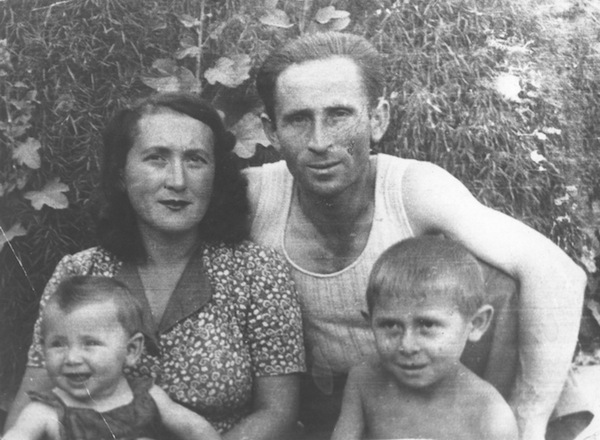
The author as an infant with her parents Sarah and Mechel, and brother Hy, in Kazakhstan, where she was born in 1944. (photo from Reva Kanner Dexter)

A year ago, I attended the 31st Annual World Federation of Jewish Child Survivors of the Holocaust and Descendants, hosted by our own Vancouver Holocaust Education Centre. I have kept the story of my own Holocaust experience suppressed because it never seemed as tragic nor as diabolical as others’. Furthermore, because I was an infant, born in 1944, I did not think that I had the right to call myself a child survivor. However, attending the conference changed that perception.

I claim the dubious distinction of being in the one percent of children born of Polish parents who survived. As three million Jews of Poland were murdered, I feel very privileged.

Of course, the circumstance of my miraculous survival is due to several factors. First, my parents escaped Poland in September of 1939. Second, they were living close to the Ukraine border. Third, they had the essential skills and resilience to overcome many hardships.

My mother Sarah (daughter of Pinchus and Chana) and my father Mechel (son of Israel and Esther) were born and grew up in small towns in southeastern Poland. Krasnystaw and Izbica were 12 kilometres apart. Close enough for biking and walking between the two towns along the Wieprz River.

Typical of small towns in that region and era, Sarah and Mechel grew up poor. Sarah’s father was a barber, who taught her his skills as soon as she could hold a razor blade. Mechel’s father was a tailor who had taught him the art of sewing, also at a young age.

Sarah and my father had moved to Chelm after their marriage, and Sarah was already six months pregnant when the German troops invaded.

Mechel was a member of a Zionist/socialist club, so he got the news early that the Nazis had taken over the town – 1,500 young men were rounded up and shot. Rumours of castration created panic. Mechel took off by bike with some of his pals, telling Sarah he would be returning.

Sarah’s birth mother lived in Rovno, Ukraine, so she made her way alone across the border with the help of a Yiddish-speaking Russian soldier. She had the prescience to bring her barbering tools. Little did she know that trains and train stations were going to dominate her life from that night forward for the next six years.

Sarah and Mechel gave birth to their first child, Chaim (Hy), who an aunt testified was born in Rovno, while an immigration document states that he was born in Novosibirsk, Siberia. Memories do seem to play tricks when the brain is violently assaulted.

The Russians saw and seized the opportunity of so many Jews fleeing Poland into Ukraine. They tricked Jews by telling them that eastern Poland was now under Soviet rule and that they would be given safe passage back home.

It was a lie, a big one. The Jews were shoved into open cattle cars and sent to forced labour camps all over the U.S.S.R. Workers were required to keep the country running under the murderous hand of Stalin.

My parents and baby brother survived the train ride from Rovno or Kiev, which finally stopped in a logging camp on the banks of the Ob River, in Siberia. They realized immediately that their lives were only worth what their labours could produce.

I recall stories of wolves howling in the night and rats “as big as kittens” stealing their meagre rations while they slaved in the tundra in the day and tried to sleep in the frozen barracks in the night.

My father organized a strike – after all, they were in a communist country weren’t they? The demands for better working conditions were answered rapidly by rounding up the leaders during the night and incarcerating them in the Gulag.

Sarah had to fend for herself again. Even though she was freezing, undernourished and exhausted, she had an ample amount of milk flowing from her body. This was noticed by the commandant, whose wife had just given birth and could not nurse their sickly baby. Sarah was promoted from lumberjack to nursemaid.

As the two women became friends, Sarah got news that Mechel and the other men were still alive.

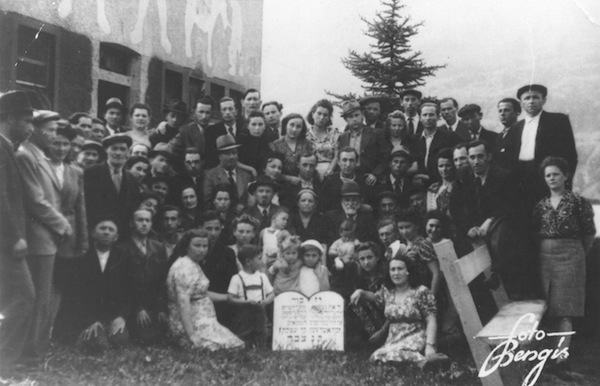
photo - A photo taken at a displaced persons camp in Germany, 1947. The author and her older brother, Hy, are in the centre, with their arms draped over each other
A photo taken at a displaced persons camp in Germany, 1947. The author and her older brother, Hy, are in the centre, with their arms draped over each other. (photo from Reva Kanner Dexter)

In June 1941, when the Nazis attacked Russia, the Soviets granted amnesty to the surviving Polish citizens. Poland and Russia became allies. The Jewish prisoners were released, only into a more dangerous predicament.

With Mechel’s leadership, the ragtag group of Jewish lumberjacks built rafts, trusting the river to lead them to safety. They navigated the Ob River by day, roping up by night.

During the night, the women would scramble up the banks, scavenging for food on adjacent farms. My mother told us that she dodged many bullets through the darkness. But the plan succeeded in getting them to a train station.

The next few years, they were underground, following trains, bartering at train stations, trying to regain health. Sarah would do pop-up barbering, thankful for her tools and endurance.

They finally made it to Czymkient, Kazakhstan, where Mechel got a job sewing uniforms for pilots at a pilot training academy. I was born in December 1944. Hope and optimism returned to our little family.

Of course, the story does not end here. Other chapters will emerge, as I continue to pull pieces of the survival puzzle together.

Thanks to the conference, I realize how important it is to keep searching for objects and recording memories, which return our beloved victims and survivors to us in spirit.

Reva (Rivka) Kanner Dexter has been a docent at the Vancouver Holocaust Education Centre since 2007.

Format ImagePosted on December 4, 2020December 2, 2020Author Reva Kanner DexterCategories Op-EdTags child survivor, Holocaust, memoir, survivors, VHEC
Emerging from the shadows

Emerging from the shadows

Pepi Eirew (photo by Rob Gilbert)

I looked across the table and a boy stared back. I was 11 years old. “Yes! A girl!” he said, incredulous. “A boy,” I replied dryly. We shook hands and took our first moves.

Oddly, Ms. Janet England, my kindergarten teacher, taught the whole class to play chess on Tuesday mornings, because she felt that it was a wonderful game. More than that, she invited non-playing parents to come, too. So, I learned chess and it has been beside me ever since, like one of Phillip Pulman’s The Golden Compass daemons.

It is the best game to take on holiday, as, whatever the location, I can play beyond my years and without a shared language. I remember, when I was small, being in a tough park in New York. My parents wanted to leave, but then we saw some chessboards and, well, my parents’ worries about the surrounding drugs and darkness meant nothing – we just had to stay. Contrary to what is depicted in The Queen’s Gambit, that is the only drug-taking I have seen near the board; never in a tournament. Players know each other quite well, seeing each other at regular events, so anomalies in personality, behaviour or play would quickly be spotted.

I really hope that The Queen’s Gambit will spur many girls on to play more. What other game lets you play on an even footing, irrespective of size or age or language? Under one metre tall, I would approach grown men to play as we traveled. “Are you any good?” they’d invariably ask. I’d shrug and we’d have a good game.

I was selected to play for Canada Girls U18 two years ago, and then invited to the World Youth Championships. It is an amazing hobby, although one I confess I have hidden until fairly recently. I love the game and thinking things through. It is endlessly exciting. I was inspired by the Polgár sisters: grandmasters Susan and Judit and international master Sofia.

photo - Pepi Eirew at the 2015 Canadian Youth Chess Championships
Pepi Eirew at the 2015 Canadian Youth Chess Championships. (photo by Gaby Eirew)

I have played in tournaments that took me into a world of fancy halls and hotels. Some hotels are lovely and offer very reduced room rates, which doubled as our family holidays. Sometimes, I have taken Pesach seder plates with me during weeklong games! Sometimes, the choice of venues is odd, like the time we were part-sponsored to play the National Youth Chess Championships in the halls of a casino, from which I could not buy a Starbucks, as I was underage.

Games are intense and you lose all sense of time, although you are looking at the minutiae of time on the clocks; yours and theirs. Sometimes, I have played five days of 10-hour days of long games, only popping out to the sealed toilets area or to eat a spoonful of yogurt between matches. Other times, I go for long walks or swim in breaks, but, mostly, chess is a gorgeous thinking game and it’s not unusual for my siblings and I to play Bughouse and Crazyhouse, as we rest between significant games.

Six years ago, my brothers and I noticed that many chess-playing girls seemed to evaporate from major tournaments in their teens. At some youth tournaments, girls could win a prize just for turning up! We figured it was because of chess’s macho reputation and stone silent rooms. We sometimes saw kids attend with harsh parents or strict coaches. So, my brothers and I started the Chess Table, a jolly centrepiece at all-day girls’ tournaments, where we offer immediate, free supportive chess coaching, sponsored chocolate chess pieces and pizza, water and buckets of reassurance.

The Queen’s Gambit games are real games from real grandmaster tournaments (like Borat’s real Ivrit in his movies). Every tournament usually has a skittles room, where you meet the person you just played, go over the game or hang out; that is also real. It is a wonderful opportunity to analyze your moves and further understand the opponent’s approach.

I have found the chess community to be a mix of quiet, quirky, erudite people from all disciplines and backgrounds. It is a leveller. My Mr. Scheibel, Stephen Wright, is a wonderful chess tournament director and coach. He is incredibly knowledgeable about music, history and ancestry, too – a real Renaissance man.

What is lovely is that there is space for everyone in chess. It is not as sexy as portrayed in The Queen’s Gambit, but I applaud world champion Magnus Carlsen for being both a chess player and a fashion model, challenging all stereotypes. We play in comfortable clothing, as we want to focus entirely on the game. You dress as you would for an exam. I know that I like to move freely, kneel on the chair, and breathe well, so sports attire works. As ratings grow, so does confidence, which itself is appealing.

Chess has let me think about many things, steps ahead. It lets you focus on what you want the outcome of a project or relationship to be, and then let that inform your actions. It is maybe less good if you want a calm, switched-off brain. I don’t think out things on the ceiling, as the The Queen Gambit’s Beth Harmon does, but any plain surface is fine to think multiple moves through, and many good players can win against a whole room of people simultaneously.

I would like to go on the European Chess Train that Stephen told me about. It takes place each year, winding its way round Europe, with games all the way, so you can jump off and see the sights, get back on and play.

Beth might feel isolated and alone for much of the show. In chess nowadays, you can’t help but see the support in the community, from the coach who patiently explains something important or the doctor volunteer who gives up a week of holiday to be there, and the individuals who spend months planning and hosting tournaments. It is quite a community.

I look forward to there not being division between boys and girls sections in the junior tournaments, when we can all play as equals. I have not had a sponsor or stylist yet, but, then, I wore the same pair of boots for tournaments for 11 years!

Pepi Eirew, Disney scholar in animation at California Institute of the Arts, was invited to the World Youth Chess Championships, 2018-19, and she played U12 to U18 in Canadian Youth Chess Championships. She lives in Vancouver.

Format ImagePosted on December 4, 2020December 2, 2020Author Pepi EirewCategories Op-EdTags chess, games, memoir, Queen’s Gambit, women

Kliner voices Old Dog

As I watched the National Film Board of Canada short film Old Dog, which preceded a documentary screening at this year’s Vancouver International Film Festival, I did a double take. Or, rather, a double listen. I knew that voice. And the credits confirmed it – former longtime Independent Menschenings columnist Alex Kliner was the voice of the elderly gentleman caring for his elderly dog.

Old Dog was created by writer and director Ann Marie Fleming.

“This film started off as a way of talking about aging, inspired by my namesake, Ann-Marie Fleming, who I often get mixed up with in internet searches,” said Fleming in an interview on nfb.ca. “The other Ann-Marie has a company that makes technologies for aging dogs and also for their humans. I was struck by the compassion she has for these vulnerable animals, helping them navigate the latter stages of their lives, and by how much dogs have to teach human beings.”

“Full disclosure,” Fleming told the Independent, “I made a film about twins and doubles many years ago (It’s Me, Again) and there is another Ann Marie Fleming out there I have been confused with, so it’s not unusual that I would do some sleuthing. When I read Ann-Marie’s interview and mission statement on her website for her company, Dog Quality, which makes technologies for senior dogs, I was really moved by her saying that she felt she was her best self when she was caring for her aging canines.”

So, Fleming contacted her namesake last year, and then approached the NFB, who agreed to produce it, and even suggested she use her “team” to make it: animator Kevin Langdale and composer/sound designer Gordon Durity.

“I went to 100 Mile House to meet Ann-Marie and her old dogs (literally), listen to her stories, see her technologies and get some reference footage for the animation,” said Fleming. “Then I wrote the very simple script and drew a storyboard. Kevin took my designs and made them his own – he definitely improves on them. Then it was recording the voice, cutting together an animatic, doing the animation.

“Gordon and I discussed the vibe I wanted – Dave Brubeck ‘Take 5’ meets ‘Freddy the Freeloader.’ Cool jazz from when our human character would have been in his youth. A few months later and shazam! The film is finished right as we go into a lockdown across the country.”

Fleming listened to many great voices for this film, she said. In her mind, she would think, “Does he sound mature enough? Does he sound like he really has a connection with his dog? Alex didn’t sound like anybody else. (You recognized him immediately, right?) The warmth and vulnerability and humour and care he had was just there.”

Alex was the consummate professional, she added. “I felt he was very generous to me with his performance in this little film. He can say a line a dozen nuanced ways. I love working with actors.”

Alex has been in the industry a long time, and his desire to act goes back even further – to Jewish school, when he just 7 years old, and was asked by the teacher to read the Yiddish poem “Why a Grandmother is the Way She is.”

“And I did the poem, and I got a huge applause – not so much perhaps because of the talent but because I spoke Yiddish so beautifully,” Alex told me. “And I did speak it beautifully, just the way any person who has a first language speaks it beautifully. I liked the applause and I liked doing the poem. I liked the ambience of the whole thing and, at that point, I decided I was going to be an actor. And, 20 years later, at age 27, I became a professional actor, got all my union cards because I was working in the theatre, in a union company.”

Over the years, he has been in theatre, radio, film and television, and he’s worked as both an actor and as a director. A very partial list of people with whom he has shared the screen include Melanie Griffiths, Vince Vaughn, Ellen Burstyn, Ryan Reynolds, Eddie Murphy, William H. Macy, Christopher Plummer, Sylvester Stalone, Jerry Lewis, Laura Linney, Isabella Rosselini, Jack Lemmon, Mariel Hemingway, Valerie Harper, Mandy Patinkin and Robin Williams.

“I worked with them either as an actor or as a background performer who interacted with the actor,” said Alex.

He was Mickey Rooney’s stand-in in Night at the Museum, which is also where he worked with Dick Van Dyke and Ben Stiller, among others.

The audition for Old Dog was an ordinary call, said Alex. While he hasn’t done much by way of voice work, he has done some dubbing of acting parts that didn’t come out properly sound-wise in the filming. The process for Old Dog was similar, he said.

“I just did one line and then the director said, OK, time to do the next line. Sometimes, she would ask me to do it two or three times but never more than three times,” he said. “The whole thing took a little more than an hour.”

In this type of work, while the actor doesn’t see the animation, he said, “You know what she wants, like your attitude toward the dog … and then you bring that attitude or that feeling or emotion to the line. But you do it without seeing the movie and then they sync what I’ve done vocally to the film.”

Alex’s wife, Elaine, works with him in the film industry. “We’re both still working,” said Alex. “It keeps us happy and young.”

Old Dog can be seen at nfb.ca/film/old-dog.

Format ImagePosted on December 4, 2020December 2, 2020Author Cynthia RamsayCategories TV & FilmTags acting, Alex Kliner, animation, Ann Marie Fleming, National Film Board, NFB

Posts pagination

Previous page Page 1 … Page 222 Page 223 Page 224 … Page 649 Next page
Proudly powered by WordPress