Skip to content
  • Home
  • Subscribe / donate
  • Events calendar
  • News
    • Local
    • National
    • Israel
    • World
    • עניין בחדשות
      A roundup of news in Canada and further afield, in Hebrew.
  • Opinion
    • From the JI
    • Op-Ed
  • Arts & Culture
    • Performing Arts
    • Music
    • Books
    • Visual Arts
    • TV & Film
  • Life
    • Celebrating the Holidays
    • Travel
    • The Daily Snooze
      Cartoons by Jacob Samuel
    • Mystery Photo
      Help the JI and JMABC fill in the gaps in our archives.
  • Community Links
    • Organizations, Etc.
    • Other News Sources & Blogs
    • Business Directory
  • FAQ
  • JI Chai Celebration
  • JI@88! video

Recent Posts

  • Eby touts government record
  • Keep lighting candles
  • Facing a complex situation
  • Unique interview show a hit
  • See Annie at Gateway
  • Explorations of light
  • Help with the legal aspects
  • Stories create impact
  • Different faiths gather
  • Advocating for girls’ rights
  • An oral song tradition
  • Genealogy tools and tips
  • Jew-hatred is centuries old
  • Aiding medical research
  • Connecting Jews to Judaism
  • Beacon of light in heart of city
  • Drag & Dreidel: A Queer Jewish Hanukkah Celebration
  • An emotional reunion
  • Post-tumble, lights still shine
  • Visit to cradle of Ashkenaz
  • Unique, memorable travels
  • Family memoir a work of art
  • A little holiday romance
  • The Maccabees, old and new
  • My Hanukkah miracle
  • After the rededication … a Hanukkah cartoon
  • Improving the holiday table
  • Vive la différence!
  • Fresh, healthy comfort foods
  • From the archives … Hanukkah
  • תגובתי לכתבה על ישראלים שרצו להגר לקנדה ולא קיבלו אותם עם שטיח אדום
  • Lessons in Mamdani’s win
  • West Van Story at the York
  • Words hold much power
  • Plenty of hopefulness
  • Lessons from past for today

Archives

Follow @JewishIndie
image - The CJN - Visit Us Banner - 300x600 - 101625

Author: Cynthia Ramsay

Making sense of chaos?

Making sense of chaos?

Earlier this fall, the National Film Board of Canada released the short Come to your senses, co-created Alicia Eisen and Sophie Jarvis. It is part of NFB’s The Curve, an online series “featuring the talents of 40 creators and filmmakers, giving a voice to millions whose lives have been touched by COVID-19.”

Eisen, a member of the Jewish community, is an animation filmmaker and visual artist, while Jarvis is a writer and director. Both women are based in Vancouver and have worked together before.

“We met in 2015, when Alicia was in pre-production on her first short film, Old Man,” they co-wrote in an email interview with the Independent. “A mutual friend introduced us, as he knew that Sophie was interested in learning more about stop-motion. It turned out that we live across the street from each other, and a wonderful friendship was formed.

“We first worked together on a short film for kids that blended live action (Sophie’s arena) with stop-motion (Alicia’s arena) and was basically a vessel for us to learn more about each other’s practice and to test the waters of a working relationship. It was an intense experience that threw every obstacle at us, and we came out stronger and ready for more. Which leads us to the stop-motion short film we are currently working on with the National Film Board, Zeb’s Spider.”

When their work was interrupted by the pandemic back in March, they said, “It was very disorienting to have that full-time routine stopped cold, so, when the NFB offered us the opportunity to contribute to their pandemic series, The Curve, it was a blessing to focus our creative energy into something new, and completely different from anything we have ever created before.”

Using the format of a group Zoom, Come to your senses explores the question, “Is the human need to make sense of chaos an inherently chaotic pursuit?”

“The five senses can be a somewhat intangible subject to explore, especially through film (which is an audiovisual medium). We aimed to evoke the other three senses with these limitations, which meant that we had to get a little weird with imagery and sound,” said Eisen and Jarvis. “A large part of our process was to let our intuition guide us; instead of planning what footage we needed to collect to complete the film, we issued open guidelines to ourselves and our artistic collaborators and worked with what we received…. It was exciting to see the patterns and instincts that were shared amongst the group (who were all working remotely from each other), and these similarities helped guide our process into the next phase: the edit.

“Our editor, Kane Stewart, was integral to helping organize this experimental film and to creating what you see in the final cut. We gave him direction on the tone and the arc, and detailed notes on the material that we wanted to include, but ultimately let him organize the material with fresh eyes. Our sound designer, Eva Madden, took the core intention of the project and brought her own spin to the film, which was exciting. The score really sets a tone, and we were thrilled to work with Yu Su, whose personal work we admire.”

The film is voiced by an AI voice-generator, said Eisen and Jarvis. “This way, we could manipulate the speed of the voice and revel in the tech restrictions that come with that choice (which are mirrored in the group video call). We landed on a voice named Tessa, who struck the right tone – gentle but commanding, like a self-help audiobook.”

The artists collaborating on the film were people with whom Eisen and Jarvis had worked over the years: Mona Fani, Suzanne Friesen, Meredith Hama-Brown, Charlie Hannah, Kara Hornland, Arggy Jenati and Janessa St. Pierre.

“We gave everybody a list of creative prompts designed to be completed within two days … things like ‘choose a spherical item from your home and interact with it using each of your five senses.’ We asked each person to approach each prompt with a design sensibility informed by our mood board, but to ultimately bring their own flair and artistry to it, so what we received from each person was unique, yet fit into the collage that ultimately makes the film.”

To watch the short, visit nfb.ca/film/come-to-your-senses.
Format ImagePosted on December 4, 2020December 2, 2020Author Cynthia RamsayCategories TV & FilmTags AI, Alicia Eisen, coronavirus, COVID-19, National Film Board, NFB, Sophie Jarvis
Benefits to writing memoir

Benefits to writing memoir

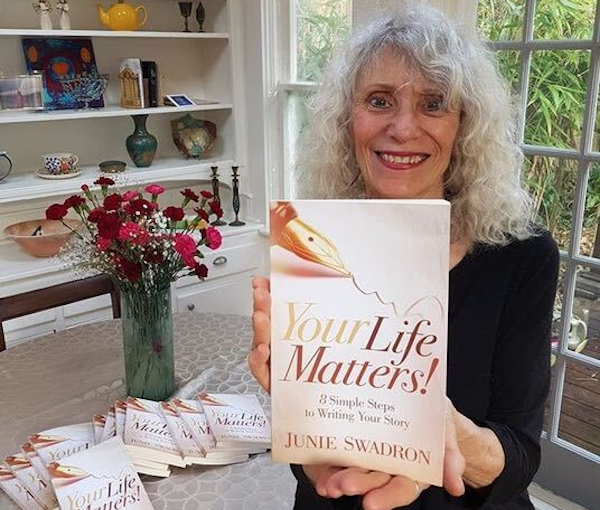
Junie Swadron recently released her latest book. (photo from Junie Swadron)

The Nov. 3 release of Junie Swadron’s most recent book, Your Life Matters! 8 Simple Steps to Writing Your Story, could not have arrived on the shelves of booksellers at a more opportune time. The pandemic has presented an occasion for self-reflection, and a chance to place memories and contemplations onto paper and computer.

Swadron, a Victoria-based psychotherapist, author and writing coach, hopes the book will aid prospective memoirists in writing their story, breaking through blocks with confidence and freeing them from what may have been a painful past. Hard lessons of life can become the greatest gift, she says, and writers can inspire others with the wisdom they have gained.

“In my 30 years practising psychotherapy, the most common theme among clients – whether they be CEOs of large companies or art students – is low self-esteem. Most people don’t value what they have achieved and don’t know how to recognize the good in themselves, to varying degrees,” Swadron, who is Jewish, told the Independent.

“This is a book for people to look at their lives and see the value, the beauty and the contributions they have made. And then to write their life stories from an empowered place, from a place of feeling strong, tall and proud. Not in an egoistic way, but in a way that they can say, ‘Hey, look how far I’ve come. Or, wow, I did that!’”

The challenge of writing a memoir can be daunting, the book notes, even for a professional with years of experience in their chosen field or an individual with a unique point of view. In Your Life Matters, Swadron attempts to guide the reader towards a focus on common themes – while remaining honest and truthful to the past – and the recording of meaningful experiences with certainty and ease. She also shares some of the factors that have helped her become a more assured writer and demonstrates how someone could apply these insights to their own memoir.

The book, too, provides therapeutic exercises for writers to use when drafting their stories. A memoir, Swadron said, can be a useful tool for an individual to work through difficult experiences and reframe their trauma. Your Life Matters lists steps to record the significance of life’s major events and influences. According to Swadron, memoir writing then becomes a memorable and achievable goal.

“The book is for anyone who wants to recount their life journey, whether they be a senior or an entrepreneur, and take the time to understand more about themselves throughout the process and transform pain from the past. What sets me apart from other writing coaches is being a psychotherapist. Not only do I know how to teach people how to write books, I get them to dive deep into their story and come out the other side stronger, as a result of them knowing who they are,” she explained.

“Say a person found a weight loss program and it’s really successful,” Swadron posited. “They got into it in the first place because they needed to lose weight. They lost 200 pounds, kept it off, and they need to not only write the story of how they did that but who they were as someone struggling with a food addiction. And who they have become since they have achieved their maximum goal of what is healthy for them. They need to put themselves in the story for others to be able to relate to whatever it is they are passionate about because they have found a solution and can assist others going through a similar struggle to find their way with more ease and grace.”

She cites her operating principle as “your soul meets you on the page and something shifts. You begin to stand taller. Then, one day, you notice your voice on the page has become your voice in the world.”

Swadron has three previous titles to her credit: Colouring Your Dreams Come True, a colouring book for people of all ages, Re-Write Your Life and Write Where You Are. Additionally, she has penned a piece for the stage, Madness, Masks and Miracles, a play to dispel myths and stigmas about mental illness. Last year, she founded the Academy for Creative and Healing Arts (ACHA) for people with mental health challenges.

Beyond her books, Swadron provides workshops, online courses and meetings throughout the year – all of which are currently taking place on Zoom – to help people with their writing. These include an author mentorship program, a class on creativity during COVID-19 and a Sunday morning “sacred” writing circle. For more information, visit her website, junieswadron.com.

Sam Margolis has written for the Globe and Mail, the National Post, UPI and MSNBC.

Format ImagePosted on December 4, 2020December 2, 2020Author Sam MargolisCategories BooksTags education, Junie Swadron, memoir, mental health, self-help, Victoria, writing
Memoir goes beyond borders

Memoir goes beyond borders

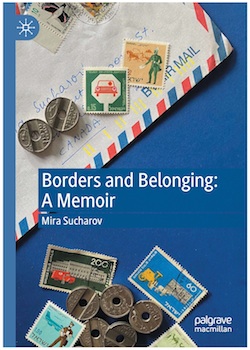
Many Jewish Independent readers will be familiar with the name Mira Sucharov. Whenever the paper ran her op-eds, at least one passionate letter to the editor could be expected. Agree with her or not on the topic of the Israeli-Palestinian conflict, she makes you think. And her latest book, Borders and Belonging: A Memoir, offers insight into how her mind works and how she has come to form her continually evolving ideas on the controversial subject.

But it’s not all politics and there’s no academic speak, though Sucharov is well-trained and has much experience in these areas – she is a professor in Carleton University’s department of political science and is University Chair of Teaching Innovations; she has developed courses for the university and has won teaching awards; she has multiple writing and editing credits. Borders and Belonging explores Sucharov’s political views and their development, but gives more time to childhood experiences, both happy and anxiety-ridden, including being a child of divorce, past romantic crushes, tales from Jewish summer camp, insights gained from living on a kibbutz, and more. It is an at-times cringeworthingly open coming-of-age story.

image - Borders and Belonging cover“I gave my dad and my mom parts to read, and I checked the scene about my daughter with her, as I did want at least their tacit blessing that this memoir wasn’t going to cause pain,” said Sucharov when the Independent asked about her candidness. “As for other family members, I basically let the chips fall where they may. I did make an effort to generally not try to ‘score points’ regarding other family members, for the most part. There’s a maxim in writing creative non-fiction (memoir), one that my writing mentor emphasized to me as well: write from scars, not wounds. Not only did I not try to actively make my family and friends appear in a bad light, I tried, most of the time anyway, to spotlight my own foibles and vulnerabilities. I think it makes for a more interesting read anyway. No one wants to read a memoir written by a narrator who is defensive and who is unaware of her own flaws.”

And Sucharov reveals many of her perceived flaws. She has dealt with high levels of anxiety her whole life, it seems, and, in many an instance, her stomach flips or lurches from feelings of rejection, excitement over a boy, worry over being among kids she doesn’t know, pleasure at being in beautiful surroundings, or tension at being confronted by someone who disagrees with her.

In addition to the sometimes-brutal self-assessment, readers will also be struck by Sucharov’s memory. The details – books read, games played, reimagined conversations, etc. – are noteworthy. And Sucharov did take notes, she said. She kept a journal for a couple of summers when she was a camp counselor and when she was in Israel in the early 1990s. But, she said, “I remember a lot. For some childhood scenes, I juxtaposed memories of objects I knew I owned (specific toys, games, clothing and books) with particular events I recall occurring. So, for example, when ‘Leah’ sleeps over, I don’t recall if I read Roald Dahl on that particular night, but I do know that I read lots of Roald Dahl at that point in my life, so I inserted it as a period detail.

“Same with the Archie comic being read in the cabin while I inadvertently undress in front of a boy, causing me great embarrassment. I don’t know for certain whether we were reading Archie comics on that particular day, but I do know that we read Archie comics during that time in our life. Adding these details is a way of setting scene and drawing the reader into a world, rather than writing, ‘we used to read Archie comics.’ I treasured my toys, books and games. I’m still trying to forgive my mom for selling my remote-controlled R2-D2 robot toy at a garage sale for five bucks one summer, while I was away at camp.”

By way of another example, Sucharov said, “As for the separation scene that takes place before I’ve even turned 4: my own memory is that my parents asked me to pick toys to place in one house and in another. Recently, though, my dad gave me a different account: he said that he and my mom took me into their bed, placed me between them and broke the news. I do not recall this. So, instead, I used the memory that I did have, even if it had been partly of my own creation. In that case, it may not have been totally accurate, but it succeeds at capturing the emotional dynamics of the event – me having to cope with my parents’ separation, which was traumatic.”

Other aspects, such as exactly which scary Disney movie she watched at her dad’s, were verified with one of her “all-time favourite tools: IMDb!” And some instances she recounts are composites of multiple moments.

Sucharov has no regrets about laying so much out there publicly. “I’m a firm believer in modeling vulnerability,” she said.

“In writing and in teaching, it creates a crucial connection between writer or professor/instructor and reader or student,” she added. “By introducing our backstage selves, it can help others better learn how to soar. It is an ethic of generosity.”

Format ImagePosted on December 4, 2020December 2, 2020Author Cynthia RamsayCategories BooksTags camp, childhood, family, Israeli-Palestinian conflict, memoir, Mira Sucharov, politics
Success in Hollywood

Success in Hollywood

In Bloomywood, Michael Bloomstein (played and co-created by David Meyers) wanders around Tinseltown asking random people on the street to help him make a movie about his life. (photo from David Meyers)

When David Meyers moved from New Jersey to Los Angeles, one of his goals was to make it in Hollywood. Without any connections or famous friends, he set out to get a project off the ground. Finding humour in his struggle, Meyers developed a fictional comedic YouTube mini series called Bloomywood, which is loosely based on his experiences.

Meyers plays the main character Michael Bloomstein, a nice Jewish guy who wants to write his uneventful life story for a major Hollywood studio.

“It isn’t autobiographical per se, but is definitely based on my experience of trying to be an artist,” Meyers told the Independent. “Michael Bloomstein has never been to Hollywood before, but he does have an unyielding self-belief and a willingness to do anything to succeed. As he chases his goals, Michael will see the highs and lows of the industry – and question if he really has what it takes to make it.”

Meyers said there is so much rejection and “no” along the way for people trying to succeed in Hollywood that he and his co-creators want to show there can be joy and optimism in chasing your dreams.

In the series, Michael wanders around Tinseltown asking random people on the street to help him make his movie, using an unscripted mockumentary format. “In the tradition of Curb Your Enthusiasm, Ricky Gervais and Sacha Baron Cohen, Bloomywood incorporates man-on-the-street interactions, sketch comedy and improv to explore the absurd realities of Hollywood,” said Meyers.

“When we made the show, I thought no one would stop to talk to Michael when I approached them on the street – but almost everyone did. And I think it is because they were attracted to this character who was determined to be positive and happy, no matter what happened. And I think that’s a message people could really use right now, with all the negativity we are bombarded with.”

Meyers, who was raised in Fort Lee, N.J., went to Rutgers University and Columbia Law School. After graduation, he worked in the staff secretary and communications offices in the White House for three years, then did communications and speechwriting in the U.S. Senate. He worked part-time in journalism, wrote plays and pursued acting, as well. He did a national commercial with Danny DeVito, was in a feature film called Killer Caregiver for Lifetime TV, did a commercial with James Franco, and more.

He has written plays that have been produced around the United States, and has two TV shows in development. His play We Will Not Be Silent – based on the true story of a group of German college students who opposed Hitler during the Second World War – had five productions around the country. “It was supposed to come to New York, starring two-time Oscar-nominee Michael Shannon and directed by Dexter Bullard. Unfortunately, we were derailed by COVID, but I hope not permanently,” said Meyers.

Growing up, Meyers was very active in his Jewish community. His grandfather was Orthodox and his grandparents were a very big part of his childhood. Because of his strong Jewish identity, Meyers wanted to make it clear that Bloomstein was a member of the tribe.

“Viewers will definitely know Michael is Jewish,” he said. “He talks about it all the time. Since so much of the show is improvised, and since being Jewish forms so much of who I personally am, I knew Michael had to be Jewish. Once I came up with the name Michael Bloomstein, it wasn’t even a question. I didn’t try to come up with a Jewish name – it’s just so internal to me, that my first idea of a name was Michael Bloomstein.”

“Not only that,” Meyers continued, “Bloomstein brings up his Jewishness constantly – whether it’s landlords liking him because he’s Jewish and, therefore, responsible, or the fact that his Jewish mother doesn’t believe in him. It informs all of his interactions and, to be honest, he’s definitely a bit of a nebbish.”

Meyers met his co-writer for the show, Taylor Gregory, after an audition in Los Angeles. “The director left right before I was supposed to go on,” he said. “So Taylor and I talked about the way that people mistreat actors and writers (Taylor is also a writer), and how hard it can be to pursue your dreams amid all the rejection.

“Taylor had the idea to create this show – he initially called it Doormat – which would have my character constantly being rejected, but still move forward with hope and optimism. We decided to start filming and see what happened. Taylor’s friend Rory Leland is an incredible editor and he shot all of our footage. On our first day, the character of Michael Bloomstein really came to life. Rory and Taylor had so many great ideas and the three of us put together Bloomywood.”

They started filming Bloomywood last November and, after finishing seven episodes, the pandemic arrived. “COVID hit us really hard. We had to stop production on the show, abridging our season from 10 episodes to seven,” said Meyers, noting that each episode is two to three minutes long.

“We had an amazing social media person who was helping us, who had to withdraw after her mother died from COVID. We had a great press agent who agreed to take us on pro bono because she loved the show – and then she had to leave because of staff cuts at her agency and a death in her family. At times, it felt like the show was cursed,” said Meyers. “But we were inspired to move forward with hope and optimism, just like Michael Bloomstein. The show inspired me to stay positive on a daily basis.”

Meyers is financing the show himself. “I have been using my money from past acting and writing projects to try and invest in myself and get exposure. Right now,” he said, “the main goal is to get as many people to see Bloomywood as possible.”

Meyers is thrilled with feedback they have received. “It’s been amazing,” he said. “We have heard from celebrities and TV writers, including one of the writers from The Goldbergs. It has been really gratifying because we put so much time and so much love into this show.”

One of the people they heard from was Curb Your Enthusiasm actress Cheryl Hines. “We sent Cheryl a cameo request and, in return, we would donate money to charity, asking if she would watch our trailer and send Michael a message,” Meyers explained. “We assumed she wouldn’t do it, but she did! And we could tell by her response that not only had she watched the show, but she enjoyed it, so that was extremely gratifying.”

Although Meyers doesn’t have any ties to Vancouver, he said, “There is so much TV shooting in Vancouver and I’ve often said that I want to move there one day – I am just waiting for the right professional opportunity.”

Who knows, maybe Michael Bloomstein will wind up taking his quest for fame on the road to Canada!

Bloomywood can be found online at youtube.com/bloomywoodtheseries and at bloomywood.com.

Alice Burdick Schweiger is a New York City-based freelance writer who has written for many national magazines, including Good Housekeeping, Family Circle, Woman’s Day and The Grand Magazine. She specializes in writing about Broadway, entertainment, travel and health, and covers Broadway for the Jewish News. She is co-author of the 2004 book Secrets of the Sexually Satisfied Woman, with Jennifer Berman and Laura Berman.

Format ImagePosted on December 4, 2020December 2, 2020Author Alice Burdick SchweigerCategories TV & FilmTags Bloomywood, comedy, David Meyers, Hollywood, Michael Bloomstein, YouTube
Israeli series Nehama on Topic

Israeli series Nehama on Topic

The character of Guy Nehama, played by Reshef Levi, dreams of becoming a standup comic. (photo from Topic)

It took me a couple of episodes, but then I was hooked. Initially, most of the characters on the award-winning Israeli show Nehama – in particular the lead, Guy Nehama, played by Reshef Levi – are completely unappealing, even annoying. While they more or less stay that way, they do start to show shades of competence and compassion, and begin to use humour to salve as often as to stab. But, most importantly, their intrigues, become, well, intriguing, and more plentiful.

The series starts dramatically, to say the least. Guy’s wife careens off the road, the car rolls (if I’m remembering correctly – so much has happened since then). She manages to get out of the vehicle but doesn’t make it far, though she does manage to make a short phone call. Since it’s the starting point of everything and the main plot, it’s not too much of a spoiler to share that she dies, leaving Guy with their five children, ranging in age from baby to high schooler.

A tech guru working for a beast of a man, Guy – as he repeats often – is the household’s sole breadwinner. Before his wife’s death, he had little or no time for parenting. After she dies, he has no choice but to change his attitude and his approach. It’s difficult, though, not just because of his own self-absorption, but because of the people around him and their pressures and secrets.

Overarching all this is Guy’s dream of becoming a standup comic. He had been the more talented half of a comedy duo and the fact that his partner went on to become famous, while he became his family’s breadwinner in a “real” job, frustrates Guy to no end. In the first couple of episodes, where we don’t see Guy perform, it is hard to believe that this whiny, lacklustre man who constantly dictates ridiculous stories into a recorder could be funny, but turns out he is, which, combined with him trying to do right by his kids, makes him an underdog to root for, as he discovers his wife had lied to him on more than one account – and others, including his children, continue to lie to him.

There are 10 episodes in the first season of Nehama. The acting is superb, the comedy is dark; the hour-long shows go quickly. Topic, a streaming service launched last year by First Look Media, can be accessed on topic.com, AppleTV, Android, Roku, Amazon Prime and elsewhere.

Format ImagePosted on December 4, 2020December 2, 2020Author Cynthia RamsayCategories TV & FilmTags comedy, drama, Israel, Nehama, parenting, Reshef Levi, TV
Video on healing, light

Video on healing, light

Loolwa Khazzoom in Iraqis in Pajamas’ video for their song “Cancer Is My Engine,” to be released on Chanukah. (photo by Ailisa Newhall)

With shared themes of finding light in the darkness, Seattle-area band Iraqis in Pajamas is releasing the video for their song “Cancer Is My Engine” on Chanukah.

Amid the global pandemic, volunteer cast and crew drove in from across Washington state, donning masks and practising social distancing, to film the music video against the backdrop of the Olympic Peninsula forest.

The video tells the story of front woman Loolwa Khazzoom’s choice to reject the conventional thyroidectomy treatment for thyroid cancer, despite medical and financial pressure. Khazzoom instead chose to approach the diagnosis as an opportunity for radically transforming her life, such as by going vegan and practising numerous forms of mind-body medicine. (See jewishindependent.ca/healing-powers-of-song.)

After cold-stopping the growth of the nodules for years, through these measures, Khazzoom moved to Washington state from California, returned to her lost love of music, and launched her band, which combines ancient Iraqi Jewish prayers with original alternative rock. Immediately following, the thyroid nodules began shrinking. Through magical realism and metaphor, the music video reveals how, by listening to her inner voice, Khazzoom self-healed through her actual voice, by singing – the ability to do which may have been destroyed by a thyroidectomy, given the proximity of the thyroid gland and vocal chords.

The video begins with Khazzoom standing at the edge of a cliff, singing the opening line of the song, “Cancer is my engine.” As she sings, a candle is lit by her voice. She is transported to a forest, where she is searching in the dark with the light of that candle. She comes across a stuffed bear – representing Khazzoom’s mother – and picks it up, then continues on her quest.

An insurance agent and doctor appear and begin chasing Khazzoom. As she runs from them, she comes to a fork in the road – with the doctor on one side and the insurance agent on the other. She pauses, then runs forward, where there is no path, heading toward the light. She keeps running until she comes to a cliff and jumps off it.

photo - Loolwa Khazzoom in the “Cancer Is My Engine” video
Loolwa Khazzoom in the “Cancer Is My Engine” video. (photo by Ailisa Newhall)

She lands in the middle of a drumming circle and starts dancing wildly. A few scenes later, she is drumming in the middle of the circle, and everyone else is dancing around her. Both circles represent the pivotal importance of music and dance in Khazzoom’s healing. The video then shifts from magical realism and metaphor to real-life shots, with the band playing music in a vegetable patch in Khazzoom’s garden, representing Khazzoom’s regimen of juicing daily and eating a whole-foods, plant-based diet. The video ends with Khazzoom standing on the edge of the cliff and singing the last words of the song, in the original a cappella Iraqi Jewish prayer that exalts the power of the Divine.

The video was sponsored by nonprofit Healing Journeys and funded by the Lloyd Symington Foundation, both of which offer programs for people living with and healing from cancer.

Studies on the healing possibilities of music are documented in books like The Power of Music by Elena Mannes and The Healing Power of Sound by oncologist Dr. Mitchell Gaynor, and the National Institutes of Health has launched a series of studies on the healing powers of music. Whether singing lullabies or sacred chants, mothers and religious leaders have known for millennia what scientists are only beginning to understand. Singing bypasses our mental process, both awakening and soothing us at the core. Among other benefits, we are able to access, release and heal from the experience of trauma, without having to recount and risk getting triggered by painful memories.

Khazzoom has had a career as an educator, activist, journalist, health coach, and more, all with the central organizing principle of individual and collective healing. Her work has been featured in media including the New York Times and Rolling Stone; she has presented at venues including Harvard University and the Simon Wiesenthal Centre; and she has published two books, which are taught at universities nationwide.

Iraqis in Pajamas comprises Khazzoom on both vocals and bass, Sean Sebastian on guitar and Robbie Morsehead on drums. The trio opens up audiences to contemplation about trauma, healing and transformation, whether addressing domestic violence, cancer, racism, mental illness, street harassment, family caregiving or national exile.


Format ImagePosted on December 4, 2020December 2, 2020Author KHAZZOOMusicCategories MusicTags cancer, Chanukah, healing, health, Iraqis in Pajamas, Loolwa Khazzoom, Robbie Morsehead, Sean Sebastian, Seattle

Medical myths & facts

How Well Do Treatments Prevent COVID-19, Shingles, Heart Disease, Diabetes and Anything Else that Might Ail You? That was Dr. James McCormack’s topic at the Jewish Seniors Alliance fall symposium Nov. 22. And some 100 participants Zoomed in to hear his answers.

Gyda Chud, co-president of JSA, welcomed everyone and reviewed the organization’s foundational goals: outreach, advocacy and peer support. She thanked Jenn Propp, Liz Azeroual and Rita Propp for their hard work in facilitating the symposium, which emphasizes education and advocacy.

Marilyn Berger, past president of JSA, spoke a bit about McCormack’s background, noting how amazing his talk had been when he addressed the JSA a few years ago.

McCormack is a professor in the faculty of pharmaceutical sciences at the University of British Columbia, a podcast host and YouTube content creator. He began his remarks by mentioning his philosophical beliefs, which can be found in detail at therapeuticeducation.org. He emphasized that he receives no money from pharmaceutical companies and his only income is his salary from UBC. His medical podcast covers many topics, including nutrition (the Mediterranean diet is recommended) and anti-aging creams (they are all the same).

Regarding treatments and medications, McCormack recommends being skeptical and checking all information, as some are useful but many don’t work well. For example, many new drugs are not much better than those they are replacing, and many doses are too high. (See jewishindependent.ca/medical-myth-busting.)

The doctor shared a number of popular beliefs that are not supported by evidence and, indeed, which science indicates are not true. Examples included the following myths: it is not good to swim immediately after eating; sugar makes children hyperactive; you lose body heat through your head; eating carrots helps your eyesight; and spinach is strengthening.

Also, there is no evidence that you need to finish all medications, he said. For example, with antibiotics, if you are asymptomatic after 72 hours, you can stop taking them. Although we have some incredible medications, McCormack said the Golden Pill Award, given for breakthroughs in new medication, has not been awarded for the past eight years.

McCormack stated that “so-called diseases,” such as elevated blood pressure, bone density issues and high-glucose levels, should be identified as “risk factors,” rather than diseases. He also said many medications do not alter outcomes. It’s all about the numbers, what is the relative reduction of symptoms after taking certain medications. If the reduction is only two percent, is it worth taking a drug that has many side effects? he asked. He said, in the case of cardiovascular disease, following a Mediterranean diet and exercising may have more benefit than many drugs.

Regarding the serums for COVID-19, McCormack said the work has been outstanding and the oversight phenomenal. Vaccines for contagions are very important, he said.

McCormack concluded his talk by reminding us that tests and treatments can help and/or harm people. It is important to think for yourself, ask questions and have hope, he said, before responding to many audience questions.

Ken Levitt, past president of JSA, thanked McCormack for his presentation and for his emphasis on being alert about medications. The participant feedback was extremely positive.

Shanie Levin is an executive board member of Jewish Seniors Alliance and on the editorial board of Senior Line magazine.

Posted on December 4, 2020December 2, 2020Author Shanie LevinCategories LocalTags BS Medicine Podcast, healthcare, James McCormack, Jewish Seniors Alliance, JSA, medicine, seniors
Returning after tragedy

Returning after tragedy

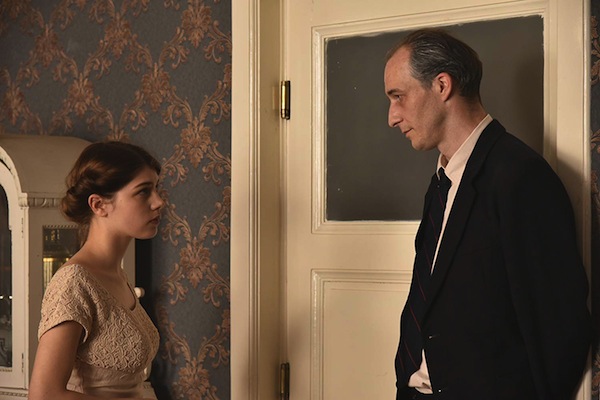
Abigél Szoke and Károly Hajduk in the film Those Who Remained. (photo from Menemsha Films)

The Hungarian movie Those Who Remained has been making the rounds at international film festivals, including, in recent weeks, the Victoria International Jewish Film Festival. And perhaps no other film at this year’s VIJFF, which contained six features and one short, generated as much discussion afterwards.

“In its purest form, Those Who Remained represents near-perfect film composition, entailing exceptional directing, editing, pacing, acting and cinematography. A film of this calibre only comes along every few years,” said Farley Cates, a committee and jury member of this year’s VIJFF.

“This film was selected for its ability to leave such a strong impression on the viewer, pondering its many layers and facets from a psychological and geopolitical perspective. This film is like a wondrous painting in which the longer you look at it, the more you see happening,” added Cates, who will serve as co-director of the festival in 2021.

The film takes place in Budapest during the period between the end of the Second World War and the 1956 Hungarian Revolution. While surviving Hungarian Jews did go to Israel and elsewhere, a large number stayed in their homeland. The Jewish population of Hungary today is estimated to be well over 100,000, the vast majority of whom live in Budapest.

The postwar period for Jews who remained in Hungary was difficult. An Orwellian state of affairs had commenced: people were questioned by the police in the middle of the night; colleagues reported on other colleagues. Amid this upheaval in Hungarian society, the two principal characters in the film – Aldo, a middle-aged doctor, and Klara, a teenage girl – deal with the trauma they experienced during the Holocaust.

Abigél Szoke, who plays Klara, was selected by Variety as one of the “10 Europeans to watch” in 2020. The magazine calls her a “revelation”: “She makes Klara’s energy, pain and smarts palpable, all the while being touchingly tuned to the emotional shadings of Aldo.”

The relationship between Aldo (played by Károly Hajduk) and Klara never develops into anything scandalous, though some of the peripheral characters in the film perceive it to be so. Despite Klara’s advances, Aldo does not allow the relationship to become sexual.

The film is a tale of survival, depicting two people’s attempts to get on with the normal, sometimes banal tasks of everyday life within the shadow of the unspeakable atrocities they witnessed and experienced only a very short time before.

Repressed emotions among survivors was a central theme to the VIJFF panel discussion after the film. Speakers included Budapest-born survivor Adrienne Carter, University of Victoria professor Charlotte Schallié, psychologist and member of the Victoria Shoah Project Robert Oppenheimer and music professor Dániel Péter Biró of the University of Bergen in Norway. Among other things, they discussed the common tendency of many survivors to refuse to talk about the events of the camps and the persecution afterwards, just as, in the film, Aldo refuses to say anything about the loss of his wife and children.

What is interesting, too, about this movie, the panelists noted, is that it was made in a Hungary led by Viktor Orban, a populist, nationalist and authoritarian leader who has presided over the country in an undemocratic fashion for the past 10 years. In fact, Hungary has produced a number of films set in the period around the war recently, including 1945 (2017) and Son of Saul, which was selected as the best foreign language film at the 2015 Academy Awards.

Orban has displayed a penchant for playing up the antisemitic caricature of Jews as the power brokers of the world stage. A popular target of his has been 90-year-old Hungarian-born financier George Soros, a regular figure of derision among right-wing groups in North America, as well. In 2017, Orban, who ironically received a scholarship from the Soros Foundation to study at Oxford in the late 1980s, plastered billboards across the country in an anti-migrant campaign featuring a smiling Soros that read “let’s not let Soros laugh in the end.”

Sam Margolis has written for the Globe and Mail, the National Post, UPI and MSNBC.

***

Note: This article has been amended to reflect the correct name of the film festival. It is the Victoria International Jewish Film Festival.

Format ImagePosted on December 4, 2020December 7, 2020Author Sam MargolisCategories TV & FilmTags Farley Cates, George Soros, Holocaust, Hungary, politics, populism, Those Who Remained, trauma, Vancouver Island Jewish Film Festival, VIJFF, Viktor Orban
Uncovering the story within

Uncovering the story within

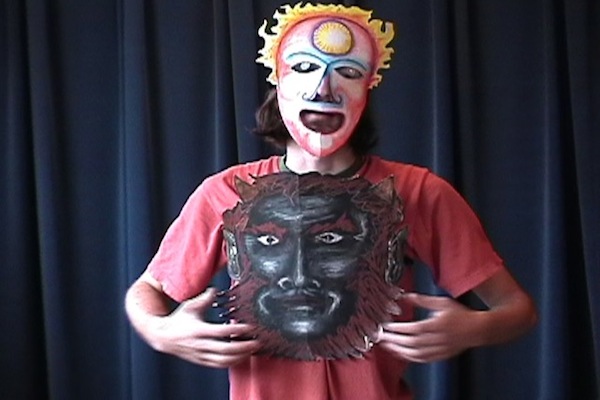
A participant in Yehudit Silverman’s The Story Within process shows off their self-made mask. (photo from Yehudit Silverman)

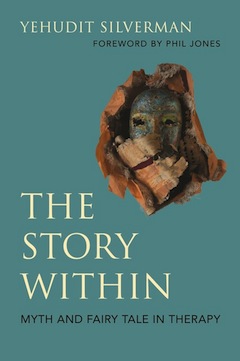
This past spring, Prof. Yehudit Silverman’s new book came out. In The Story Within: Myth and Fairy Tale in Therapy, the Concordia University professor emerita walks people through a step-by-step process to healing.

“When a person embarks on this journey, they feel called to a story, but they don’t know why,” said Silverman. “And it’s the sense of the unknown that’s really important…. Sometimes, in conventional therapy, we just go around in circles and might not necessarily get to the deeper layers that are inaccessible to us. But, through the arts and through the use of a character from a myth or fairy tale, gradually we can access those areas in ourselves.”

In Silverman’s approach, clients start by choosing their own story after going through a couple of exercises. “That process of choosing the story is therapeutic and healing in itself, because it’s part of the person’s sense of their own sense of knowing their own strengths and their own intuition, which is really important,” she explained. “Also, it’s important to stay with one character in a story for a long time, allowing the depth work to be done … recognizing what the character’s quest is, which is so important in myth and fairy tale, which is why I think they are still so relevant.

“The protagonist is on a quest and has to face obstacles and challenges,” she continued. “That can be so helpful when people are facing their own challenges and obstacles, so they don’t feel so alone. Also, they get to work with fiction, which is very safe, providing a certain amount of distance.”

People choose their stories for different reasons.

“Someone might be really drawn to a character that is having to do an impossible task, like in Rumpelstiltskin, where the girl has to make straw into gold,” said Silverman. “A lot of people think they are facing an impossible task, so they might then choose that story.

“Sometimes, it’s just the title of the story. I worked with an adolescent who was homeless and, sadly, addicted to drugs. When I worked with her, she chose the story of the handless maiden, which led to, sadly, to the revelation of her having been abused as a child. It was just the title that drew her.”

Once people choose a character, they start to build a mask. Then, they build the environment for the character and go through the steps that are described in Silverman’s book. The process is usually done within the context of a group, so that it is witnessed, which, according to Silverman, aids significantly in healing.

“They work with other people so that, at some point, they actually direct someone else in their mask and in their costume,” she said. “They get to look at what their character looks like to an outsider. And then, they have people embodying the obstacle and the helper, so they actually embody going through the quest and the challenges of the character.”

Silverman once worked with an anorexic teen who chose the character of Dorothy from The Wizard of Oz. “For her, the tornado was her eating disorder that took her to the Wonderful Land of Oz … which was, for her, magical. It was the ‘Land of Starvation’ and the good witch, Glenda, was actually evil for her, because she was trying to get her to go back to Kansas…. I realized that, for her, everyone in the hospital was evil, was going against what she felt was her sense of reality and her sense of what was magical and important, which was her starvation.

“And so, little by little, she worked with it and she embodied the tornado,” said Silverman. “She was actually swirling around and started crying, and realized how destructive it was. It was the first time she had had that realization – she didn’t have it when people were just talking to her.”

The teen connected and embodied the “chaotic energy of the tornado,” said Silverman. “She began to realize it was destructive and, then, she very slowly started healing. But, for her, having that story was essential.”

Although COVID-19 has made holding in-person group sessions impossible for Silverman, it has opened the door to including people from all over the world in the online groups she leads.

image - The Story Within book coverThe Story Within outlines Silverman’s process step-by-step, taking readers through each one, and it can be useful for both therapists looking to implement the technique, as well as anyone wanting to understand why they do what they do.

“If you’re going through something that is severe or you are in crisis, you should definitely see a therapist,” said Silverman. “And, if you’re going to use the book, you should only use it in context of therapy. But, for people looking for personal healing and a way to have creative reflection about what their life and quest is, then it is definitely for those people – for seekers, for artists and, also, for therapists, as something to integrate into their process with clients. And that’s something I do a lot of right now – supervising therapists insofar as how to integrate this into their work.”

Silverman said already established groups can use the book, as well, to form a more solid structural foundation perhaps. And, “there are so many people at home right now, and they are really questioning what their life is about,” she added. With the anxiety, she said, “having this structure, where they can go through a creative process … is so life-giving. It really allows us to express what’s going on inside into an outside form.”

Rebeca Kuropatwa is a Winnipeg freelance writer.

Format ImagePosted on December 4, 2020December 2, 2020Author Rebeca KuropatwaCategories BooksTags arts, mental health, mythology, self-help, storytelling, The Story Within, therapy, Yehudit Silverman
Breathing life into patients

Breathing life into patients

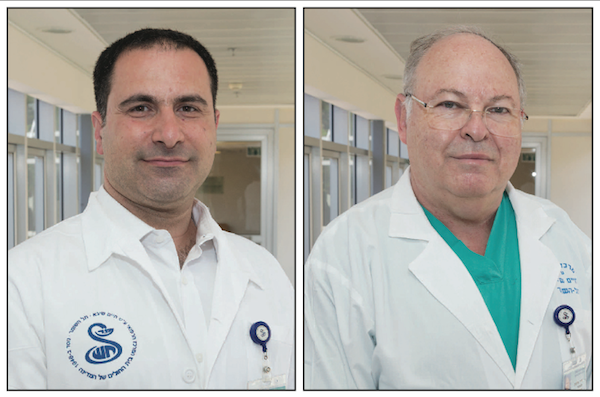
Dr. Liran Levy, left, and Dr. Milton Saute. (photo from IMP)

Sheba Medical Centre in Israel and Canada’s Toronto General Hospital are collaborating to advance the field of lung transplantation in Israel and to enhance medical education in both countries.

In the last year, Sheba’s Institute of Pulmonary Medicine has established a new lung transplant program, headed jointly by Dr. Liran Levy – who, in 2019, completed four years of clinical, research and surgical training at Toronto General – together with surgeon Dr. Milton Saute, an expert in lung transplantation. According to Sheba’s head of pulmonary medicine, Dr. Amir Onn, collaboration with Toronto General will “put Sheba on the map of lung transplantation,” due, in large part, to revolutionary technology that can increase the number of donor lungs by almost 50%.

Toronto General is renowned for having performed the world’s first successful lung transplant, in 1983. They have since expanded their lung transplantation program, both clinically and in terms of research. One of the most groundbreaking discoveries was made in 2013 by Dr. Marcelo Cypel, a staff thoracic surgeon at Toronto General and director of their ECLS (extracorporeal life-support) program. This technique, said Cypel, “effected a change in paradigm for how we do lung transplants.”

photo - Dr. Amir Onn, left, and Dr. Marcelo Cypel
Dr. Amir Onn, left, and Dr. Marcelo Cypel. (photo from IMP)

The innovation, called ex vivo lung prefusion (EVLP), doubles the amount of time that the donor lungs can remain outside of the body. “Previously, donor lungs could be kept for only six to eight hours,” Cypel explained. “Patients had to uproot their lives to live near a transplant centre, and staff had to race against the clock to transfer the organ from the donor to the recipient, often forced to perform the complex surgery in the middle of the night.”

The valuable hours gained don’t just optimize the logistics of the operation, they actually allow for recovery of the organ itself.

“As a rule, over 80% of donor lungs are unsuitable for lung transplantation, due to poor functioning, infection, blood clots or injury,” said Cypel. By pumping a solution of oxygen, proteins and nutrients into the injured donor lungs, the EVLP system enables injured cells to heal themselves, or to be prepared for more sophisticated repair techniques. “The method doubled the number of lung transplants performed in Toronto in the last seven years,” he said.

With the help of Toronto General, Saute estimated that the EVLP program will become operational at Sheba by the middle of 2021. “We anticipate that [EVLP] will make a huge impact and significantly increase the pool of donors for lung transplantation in Israel, especially now, during COVID, with donors reduced by more than 50%,” he said.

According to Cypel, some of the reasons for the reduction in donor lungs during the pandemic include deaths that occur at home, due to reluctance of patients to seek hospital care, and the fewer car accidents (whose victims supply donor lungs) that occur while populations are in lockdown.

Collaboration will encompass clinical care, as well, including consultations regarding challenging patients, as well an exchange of trainees, in both directions. “We hope to send members of our team to Sheba to learn from their unique expertise,” Cypel said.

Onn added that COVID-19 has created new potential candidates for lung transplant. He is currently treating patients in Sheba’s designated post-COVID clinic who present with an unusual combination of symptoms – shortness of breath, chest pain and forgetfulness. Some, he said, have sustained irrevocable damage to the lungs.

A growing population of “COVID-19 survivors,” are being referred to the lung transplant centre. “We are in the process of identifying those who may be potential transplant cases,” said Levy.

Levy remarked that he is looking forward to working with his former colleagues and mentors from Toronto General. Looking back on his years spent in Canada with his wife and four children, he admitted that it was hard to leave. “The Jewish community made us feel very much at home, and we still miss Toronto,” he said. “But I think we have a very important mission here in Israel.”

When the teams from both hospitals met one year ago to discuss collaboration, Cypel and Saute were delighted to discover that they both hail from the same city in southern Brazil. “Although we didn’t meet in Brazil, Dr. Saute told me that he knew my grandparents quite well, and that was very emotional for me,” Cypel shared. Saute added that they both had the same mentor in thoracic surgery and, thus, “We have the same ideas.”

The scope of research and complexity of cases at Toronto General have made it a national and international source for discovery, education and patient care. Sheba Medical Centre, home to the ARC Innovation Centre, and where 25% of all clinical research in Israel takes place, has likewise distinguished itself in patient care, particularly in the era of COVID-19. Patients in both countries, and worldwide, can look forward to the fruits of this collaboration.

– Courtesy International Marketing and Promotion (IMP)


Format ImagePosted on December 4, 2020December 2, 2020Author Sharon Gelbach IMPCategories WorldTags Amir Onn, coronavirus, COVID-19, Liran Levy, lung transplants, Marcelo Cypel, medicine, Milton Saute, science, Sheba Medical Centre, technology, Toronto General Hospital

Posts pagination

Previous page Page 1 … Page 223 Page 224 Page 225 … Page 649 Next page
Proudly powered by WordPress