Skip to content
  • Home
  • Subscribe / donate
  • Events calendar
  • News
    • Local
    • National
    • Israel
    • World
    • עניין בחדשות
      A roundup of news in Canada and further afield, in Hebrew.
  • Opinion
    • From the JI
    • Op-Ed
  • Arts & Culture
    • Performing Arts
    • Music
    • Books
    • Visual Arts
    • TV & Film
  • Life
    • Celebrating the Holidays
    • Travel
    • The Daily Snooze
      Cartoons by Jacob Samuel
    • Mystery Photo
      Help the JI and JMABC fill in the gaps in our archives.
  • Community Links
    • Organizations, Etc.
    • Other News Sources & Blogs
    • Business Directory
  • FAQ
  • JI Chai Celebration
  • JI@88! video

Recent Posts

  • Eby touts government record
  • Keep lighting candles
  • Facing a complex situation
  • Unique interview show a hit
  • See Annie at Gateway
  • Explorations of light
  • Help with the legal aspects
  • Stories create impact
  • Different faiths gather
  • Advocating for girls’ rights
  • An oral song tradition
  • Genealogy tools and tips
  • Jew-hatred is centuries old
  • Aiding medical research
  • Connecting Jews to Judaism
  • Beacon of light in heart of city
  • Drag & Dreidel: A Queer Jewish Hanukkah Celebration
  • An emotional reunion
  • Post-tumble, lights still shine
  • Visit to cradle of Ashkenaz
  • Unique, memorable travels
  • Family memoir a work of art
  • A little holiday romance
  • The Maccabees, old and new
  • My Hanukkah miracle
  • After the rededication … a Hanukkah cartoon
  • Improving the holiday table
  • Vive la différence!
  • Fresh, healthy comfort foods
  • From the archives … Hanukkah
  • תגובתי לכתבה על ישראלים שרצו להגר לקנדה ולא קיבלו אותם עם שטיח אדום
  • Lessons in Mamdani’s win
  • West Van Story at the York
  • Words hold much power
  • Plenty of hopefulness
  • Lessons from past for today

Archives

Follow @JewishIndie
image - The CJN - Visit Us Banner - 300x600 - 101625

Author: Rabbi Ari Federgrun

We Jews are a people of destiny

It was heartbreaking to read Rabbi Denise Handlarski’s op-ed titled “Harris-Emhoff’s significance.” [Jewish Independent, Nov. 27] Heartbreaking, yes. Shocking, unfortunately, not at all. Almost every single Jewish family, including my own, has a relative or close friend who has intermarried or has seriously contemplated intermarriage were the opportunity to present itself. A 2017 Jewish People Policy Institute study shows that, in the United States, 60% of non-Orthodox Jews, aged 40-44, are intermarried. In the 35-39 age bracket, 73% are intermarried; the percentage rises to 75% when dealing with those between 30 and 34. We are clearly witnessing a dramatic upward trend.

Rabbi Handlarski, ordained by the International Institute for Secular Humanistic Judaism, an institution that focuses on living a life with a cultural Jewish identity through a “non-theistic philosophy of life,” expresses her excitement over this popular trend and its prevalence among families of our global leaders. She writes, “Jewish communities have spent the past several decades trying to stop intermarriage. These efforts have failed…. It’s time we embrace our pluralistic and diverse families….”

It is true: we have failed. We have failed as a people to teach about the centrality of Judaism in our lives, the impact we, as a small nation, have made upon the entire world, the destiny of our future and the need to secure our traditions, beliefs and values within our families.

However, as a believer in God and the mission that we, the Jewish People, were charged with more than 3,000 years ago, the embracement of a non-Jewish spouse is: 1) an option that is simply not on the table and 2) even if it were on the table, the acceptance of such marriages is a recipe for failure for anyone with an interest to preserve Judaism.

Why is intermarriage off the table?

There is a well-known atheist, European author and philosopher Alain De Betton, who speaks about Atheism 2.0, a version of atheism that also incorporates our human need for connection, ritual and transcendence. He believes that religion adds a great deal to the world, but he just doesn’t believe in God.

De Betton articulates a defence of the halachic system that is both true and profound. He states: “The starting point of religion is that we are children and we need guidance. The secular world often gets offended by this. It assumes that all adults are mature – and, therefore, it hates didacticism, it hates the idea of moral instruction. But, of course, we are children, big children who need guidance and reminders of how to live. And yet the modern education system denies this. It treats us all as far too rational, reasonable, in control. We are far more desperate than secular modernity recognizes. All of us are on the edge of panic and terror, pretty much all the time – and religions recognize this.”

I once heard an insightful comment from a rabbinic teacher of mine: the word “mitzvah” has two very different connotations – a good deed and an obligation. For an action to be a good deed, it just needs to embed an inherent goodness. To fulfil a commandment means that there is a Commander. As soon as I acknowledge that I am doing a mitzvah, I am metzuvah – I am commanded and there is a Commander. Therefore, God’s word comes before mine.

Even if my rationale leads me to the conclusion that intermarriage expresses the positive values of acceptance and diversity, God has already decided that other values, perhaps unbeknownst to humankind, outweigh it. Maimonides, the 12th-century leading philosopher and codifier of Jewish law, writes in his code of law: “There is a biblical prohibition when a Jew engages in relations with a woman from other nations, [taking her] as his wife or a Jewess engages in relations with a non-Jew as his wife. As [Deuteronomy 7:3] states: ‘You shall not intermarry with them. Do not give your daughter to his son, and do not take his daughter for your son.’”

In truth, the conversation should stop here; it is a law from God and there is nothing more to discuss.

Why is intermarriage destined to fail?

However, not all of us find the word of God a compelling argument, or believe in His existence to begin with. To that group, the statistics should speak for themselves.

Rabbi Handlarski admits that there are very real grounds to fear assimilation, but, she argues, Jewish pride and identity can and does exist within many intermarried families. However, a 2013 Pew Research study showed that more than one in five Americans identify themselves as without a religion, more than two-thirds do not have any affiliation with any synagogue, and more than a third believe that Jesus being the Messiah is compatible with Judaism. The average Jew in North America knows who Jesus and his mother were, but they cannot name our forefathers, foremothers and who was married to whom. The average Jew knows more about Christmas carols than they do about Jewish liturgy.

Doron Kornbluth, author of Why Marry Jewish, writes that even among intermarried families who raise their children as “Jews only,” a mere 11% of those children would be very upset if their own kids did not view themselves as Jewish. The fears of assimilation are very real indeed, and there is an undeniable and direct causal link between intermarriage and assimilation.

Former British chief rabbi Lord Jonathan Sacks, of blessed memory, in his book The Dignity of Difference, writes that the prohibition to intermarry is not racist or intolerant; just the opposite! Without diminishing our love and concern for any fellow Jew, irrespective of her choices, Rabbi Sacks explains that, in our day, global cultural homogenization threatens to

destroy all minority groups and their culture. When we have a bit of everything, we represent nothing. This global phenomenon impacts many minority cultures and limits their impact on the broader world. In order for the Jewish people to continue to spread their values and be a light onto the nations, we must secure and safeguard our tradition from the threat of homogenization. We must first ignite a light before it can shine on others. To choose “romantic” love over faith is to set the trajectory for all future descendants towards a path of Jewish annihilation.

Finally, a few years ago, a guest rabbi lecturer was speaking here in Vancouver. He told the following story. A few years back, he was speaking to university-aged students and, a few minutes into the talk, a young woman raised her hand and said: “Rabbi, we are in attendance today for you to

answer just one question: Why should we marry Jewish?” He responded, “The question is not, Why marry Jewish? The question is, Why isn’t Judaism the central and integral part of your life such that ‘Why marry Jewish?’ is not even entertained as a question?”

The real question we must ask ourselves is, What does it mean to be a Jew? Are we culturally Jewish? Are we socially Jewish? Is our Judaism the same thing as Zionism? History has proven that none of these defines Judaism. Judaism has existed for thousands of years, and the state of Israel is but 70 years old. A Jew from Eastern Europe lived a drastically different cultural life from the Iranian Jew. Judaism is a charge that we were given at Mount Sinai to live a life in service of God, to better the world, and to pass the commandments and values down from generation to generation. It is a heavy responsibility, but history has proven that we can persevere with great pride and fulfilment.

Today, Dec. 18, is the last day of Chanukah. Ironically, if we saw any beauty in intermarriage as Rabbi Handlarski views it, then there would be no holiday, no celebration. The essence of Chanukah is about strong-willed Jews and their ability to withstand the pressure of Greek culture and to retain their identity. “Maoz Tzur,” the song that we sing when lighting the menorah, is all about the survival of the Jew throughout the centuries and our ability to maintain not just some of our values and traditions, but all of them. The solution is not to accept defeat. The solution is to become more aware of our history, understand what it means to be a Jew – today and every day – and live towards a viable future.

Rabbi Ari Federgrun is associate rabbi at Congregation Schara Tzedeck.

Posted on December 18, 2020December 16, 2020Author Rabbi Ari FedergrunCategories Op-EdTags assimilation, Denise Handlarski, intermarriage, Judaism, lifestyle
Jewish Housing Registry live

Jewish Housing Registry live

The Ben and Esther Dayson Residences, located west of the River District, is one of the residences managed by Tikva Housing, which is responsible for long-term housing solutions in the Jewish community, while Jewish Family Services works with those who require immediate assistance in finding a place to live. (photo from Tikva Housing)

On Dec. 2, Jewish Family Services (JFS), in partnership with Tikva Housing, announced the launch of the first-ever Jewish Housing Registry.

There are six agencies involved in the project: JFS, Tikva Housing, Vancouver Jewish Building Society, Yaffa Housing Society, Haro Park Centre Society and Maple Crest Apartments, each playing a role in addressing the issues of homelessness in the Jewish community in a variety of ways, including advocacy, financial aid and subsidies, and housing placement. Each agency has their own application processes, manages their own wait lists, and collects and stores their client data independent of one another even though their work often crosses over. Consequently, housing needs in the community are difficult to determine accurately. For applicants, a lot of time is spent completing similar applications for different housing providers.

The idea for the registry sprouted from a conversation almost 10 years ago among leaders of the Jewish community, including JFS, Jewish Federation of Greater Vancouver and spearheaded by Tikva’s executive director at the time, Susana Cogan (z’l). With the housing registry in British Columbia not set up to collect data on cultural background, and tenant selection priorities based primarily on the housing needs of applicants, a gap focused on community building was missing. The purpose of this new registry is to improve operational efficiencies and also fill that gap – addressing specific cultural needs of our community, which can be fostered within Jewish housing developments; a priority not currently being addressed through any other agencies in the province.

“It’s exciting to see the partnership between different agencies come to fruition,” said Tanja Demajo, JFS chief executive officer. “This is a unique opportunity for us to use the database as a tool to integrate data, help us meet clients’ specific needs and have a better understanding of the issues of homelessness in our community. Having an opportunity not just to house clients, but also support them by building a Jewish community, is what it means for people to ‘create a home.’”

Tikva’s director of operations and housing development, Alice Sundberg, added, “It is commonplace for applicants to register with multiple housing agencies in the Jewish community, resulting in duplicate records, leaving the JFS housing coordinator having to complete a number of similar application forms from each agency. By having this centralized database, that step only has to be completed one time. We look forward to having up-to-date information available in real-time. It will be a huge improvement administratively and will help us better meet the housing needs of applicants.”

Phase I of the registry launched on Dec. 1 for JFS and Tikva to use, and Phase II will launch shortly for Yaffa Housing, Haro Park Centre Society, Maple Crest Apartments and the Vancouver Jewish Building Society.

“We also want to acknowledge that this registry was made possible because of a grant from the Jewish Community Foundation. With their support, JFS and all the other agencies using this software will be better positioned to serve those in need in a timelier manner. Having more accurate data will also serve us in future projects related to housing advocacy and assistance,” said Demajo.

Tikva Housing is responsible for long-term housing solutions in the Jewish community, while JFS works with those who require immediate assistance in finding a place to live. JFS also provides emotional support and assistance to clients residing in buildings managed by Tikva Housing.

For more information about the registry, contact Maya Dimapilis, JFS director of development and communications, by email at [email protected] or by phone at 604-637-3306.

Format ImagePosted on December 18, 2020December 16, 2020Author JFS VancouverCategories LocalTags housing, Jewish Family Services, Jewish Housing Registry, JFS, Tikva Housing
Orchestra faces crises

Orchestra faces crises

Members of the Recycled Orchestra of Cateura, Paraguay, are among those helping provide relief services during COVID-19 and after a devastating fire. (photo from IBB)

Times are tough for everyone, but that hasn’t stopped one Vancouver group from organizing an urgent fundraising drive to support an orchestra that is a testament to the transformative power of music.

Instruments Beyond Borders (IBB) is a registered Vancouver-based charity that supports music education in disadvantaged communities. The group is raising funds to support the Recycled Orchestra of Cateura, Paraguay (aka the Landfill Harmonic) as they are dealing with two major crises: not only the COVID-19 pandemic, but a devastating fire in the landfill, next to which they reside.

Since 2014, IBB has delivered donated instruments and funds to the Recycled Orchestra, which was borne out of a desire to teach music to eager children living in the marginalized landfill community of Cateura.

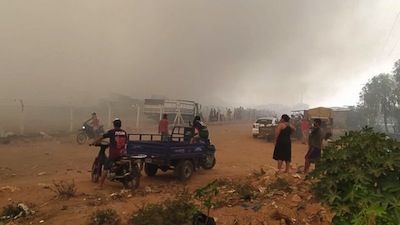
photo - Compounding the hardships wrought by the pandemic, the Cateura landfill recently suffered a major fire, resulting in the destruction of many of the orchestra families’ homes
Compounding the hardships wrought by the pandemic, the Cateura landfill recently suffered a major fire, resulting in the destruction of many of the orchestra families’ homes. (photo from IBB)

The Recycled Orchestra of Cateura is internationally renowned, performing all over the world with their instruments made out of recycled materials from the neighbouring landfill. They deliver a resounding message of environmental stewardship and hope and endurance in the face of poverty.

The pandemic has suspended the capacity of the orchestra to travel internationally – which was a major source of their revenue. Compounding the hardships wrought by the pandemic, the Cateura landfill recently suffered a major fire, resulting in the destruction of many of the orchestra families’ homes. Consequently, this has all but eliminated the opportunity of the parents to derive much-needed income from the gathering of saleable recyclables from the landfill.

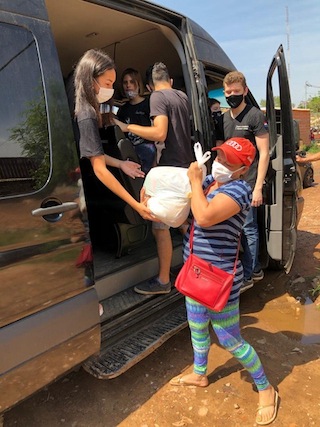
photo - The students of the Recycled Orchestra, along with the Orchestra’s Parents Association, have become the hub of relief services
The students of the Recycled Orchestra, along with the Orchestra’s Parents Association, have become the hub of relief services. (photo from IBB)

In 2014, IBB donated $10,000 towards the building of a music school in Cateura. Fortunately, the school was not damaged by the fire, and today it is temporarily being used as a food relief centre – for the preparation and distribution of upwards of 5,000 meals daily to the devastated local community. Incredibly, the students of the Recycled Orchestra, along with the Orchestra’s Parents Association, have become the hub of relief services.

In the midst of these crises, Favio Chavez, the orchestra’s founder and director, is determined to keep both the orchestra and the hope of music alive, and to support the orchestra’s education program.

The IBB fundraising drive aims to assist the orchestra recover from these dire circumstances. To jumpstart this urgent appeal, the Ben and Esther Dayson Charitable Foundation has pledged to match the first $5,000 donated.

The Recycled Orchestra was the subject of an award-winning 2016 feature film Landfill Harmonic, the trailer for which can be watched on YouTube. Donations can be made at instrumentsbeyondborders.org.

Format ImagePosted on December 18, 2020December 16, 2020Author Instruments Beyond BordersCategories WorldTags Cateura, coronavirus, COVID-19, Dayson, IBB, Landfill Harmonic, music, Paraguay, philanthropy, Recycled Orchestra, recycling, tikkun olam
Community milestones … Order of Canada, Indspire, SFU Gerontology, JCC Jewish Book Awards

Community milestones … Order of Canada, Indspire, SFU Gerontology, JCC Jewish Book Awards

Rabbi Dr. Yosef Wosk speaks at a Vancouver Public Library event in 2017. (photo by Cynthia Ramsay)

The Order of Canada is one of our country’s highest civilian honours. Its companions, officers and members take to heart the motto of the order: “Desiderantes meliorem patriam” (“They desire a better country”).

Created in 1967, the Order of Canada recognizes outstanding achievement, dedication to the community and service to the nation. Appointments are made by the governor general on the recommendation of the Advisory Council for the Order of Canada. This year, among the 114 new appointees, are Vancouver Jewish community members Dr. Carol Herbert and Rabbi Dr. Yosef Wosk. Each recipient will be invited to accept their insignia at a ceremony to be held at a later date.

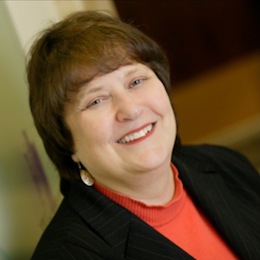
photo - Dr. Carol Herbert
Dr. Carol Herbert (photo from schulich.uwo.ca)

Herbert was appointed a Member of the Order of Canada for her contributions to the fields of clinical and academic medicine, as a family physician, medical educator, researcher and administrator. She and three colleagues were appointed.

“The appointment of Drs. B. Lynn Beattie, Joseph Connors, Carol Herbert and Roger Wong to the Order of Canada is a demonstration of their incredible commitment to the health and well-being of all Canadians,” said Dr. Dermot Kelleher, dean of the University of British Columbia’s faculty of medicine and vice-president, health, at UBC, said in a press release. “We are very proud of each of their contributions, and deeply moved by their passion for improving the lives of patients and families here in B.C., and across the nation.”

Herbert, an adjunct professor in the School of Population and Public Health, “is internationally known for her leadership in primary care research, and for her work in clinical health promotion, patient-physician decision-making, and participatory action research with Indigenous communities, focused on diabetes and on environmental effects on human health,” notes the UBC release. “She was formerly head of the department of family practice, founding head of the division of behavioural medicine and a founder of the UBC Institute of Health Promotion Research.”

This only touches on Herbert’s extensive experience. She also was dean of medicine and dentistry at Western University in London, Ont., from 1999 to 2010, was a practising family physician from 1970 to 2013, and has been involved in medical education since 1971.

Yosef Wosk, PhD, was appointed Officer of the Order of Canada for his far-reaching contributions to his community as a scholar, educator and writer, and for his generous philanthropy. BC Booklook (bcbooklook.com/2020/11/27/41941) cites the governor general: “Yosef Wosk is a Renaissance man of the 21st century. A rabbi, scholar, businessman and art collector, he is a revered educator and community activist who inspired many to become engaged in global issues and local challenges. Former director of interdisciplinary programs in continuing studies at Simon Fraser University, he founded the Philosophers’ Café and the Canadian Academy of Independent Scholars. A poet, explorer and dedicated philanthropist involved with museums, the arts, social services, publishing, nature and heritage conservation, he has endowed hundreds of libraries worldwide.”

Wosk has established more than 400 libraries, including 20 libraries in remote Himalayan villages and 37 in Jewish communities throughout the world. (See jewishindependent.ca/many-milestones-for-wosk-in-2019.) He has supported a range of local building preservation, public garden and other civic enhancement projects. He has helped fund the production of more than 250 books and videos, and has written numerous works, most recently Memories of Jewish Poland: The 1932 Photographs of Nachum Tim Gidal and the forthcoming GIDAL: The Letters of Tim Gidal and Yosef Wosk (Douglas & McIntyre, 2021). He supports several literature, writing, poetry, art and design initiatives, and is founding benefactor of the Dance Centre.

In addition to other honours, Wosk has received the Queen’s Golden and Diamond Jubilee Medals and a Mayor’s Arts Award, as well as the Order of British Columbia.

***

As part of its belief in and commitment to supporting emerging architecture practitioners, the Arthur Erickson Foundation and the Yosef Wosk Family Foundation recently announced a $110,000 donation to Indspire – Canada’s national, award-winning Indigenous registered charity – in support of Indigenous youth in Canada. The donation will fund an awards program focused on increasing Indigenous student success by growing the number of Indigenous architects and landscape architects in Canada.

Central to Arthur Erickson’s work as an architect and theorist was his belief in and commitment to education and research. Having served on the faculties of architecture at the University of Oregon and the University of British Columbia, Erickson understood the need of each generation to contribute to the training of the next. One of the ways the foundation honours Erickson’s belief is by working with donors to develop prizes and scholarships intended to reward and assist students studying architecture and landscape architecture.

“The Arthur Erickson Foundation and Yosef Wosk Family Foundation, along with Indspire, are pleased to announce the establishment of an awards program supporting Indigenous education in architecture and landscape architecture,” said Michael Prokopow, vice-president (East) Arthur Erickson Foundation. “The organizations recognize the profound importance of the shared work of decolonization and reconciliation in Canada for the transformation of society. These awards recognize the deep power of Indigenous thinking and wisdom around the making of habitation and space for well-being across generations and the vitally important stewardship of the natural world.”

Mike DeGagné, president and chief executive officer of Indspire, stated, “This new investment is a significant step in supporting First Nations, Inuit and Métis architecture and landscape architecture students to achieve their potential through education and training. They can in turn enrich their communities and create positive change in Canada. We are grateful for the support of the Arthur Erickson Foundation and the Yosef Wosk Family Foundation for investing in Indigenous achievement and education.”

***

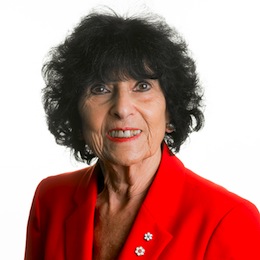
photo - Dr. Gloria Gutman
Dr. Gloria Gutman (photo from sfu.ca)

Simon Fraser University Gerontology Research Centre (GRC) founder Dr. Gloria Gutman and her team – Avantika Vashisht, Taranjot Kaur, Mojgan Karbakhsh, Ryan Churchill and Amir Moztarzadeh – received the Best Paper Award at the International Conference on Gerontechnology, held Nov. 25-27. SFUGero tweeted the news Dec. 1, noting that the paper was a “[f]easibility study of a digital screen-based calming device for managing BPSD [behavioural and psychological symptoms of dementia] during bathing in a long-term care setting.”

A brief biography for Gutman, PhD, appears on the conference website. She is president of the North American chapter of the International Society for Gerontechnology, vice-president of the International Longevity Centre-Canada, past-president of the Canadian Association on Gerontology and the International Association of Gerontology and Geriatrics. She is co-editor (with Andrew Sixsmith) of Technologies for Active Aging (Springer, 2013) and has published widely on seniors housing, long-term care, health promotion, prevention of elder abuse, and seniors and disasters. She is on the advisory of MindfulGarden Digital Health and is the principal investigator on the first feasibility clinical studies for MindfulGarden, which is a digital treatment of hyperactive dementia in long-term care setting. She established the GRC and department of gerontology at SFU and is recipient of many awards and honours, including the Order of Canada.

***

The third edition of the Western Canada Jewish Book Awards, presented by the Cherie Smith JCC Jewish Book Festival in Vancouver, took place Dec. 6. Daniella Givon, chair of the awards committee, opened the evening on Zoom and the five honours were awarded by five different presenters.

Winning the Nancy Richler Memorial Prize for Fiction was Rhea Tregebov for Rue des Rosiers, in which a young Canadian woman’s search for her own identity brings her to Paris in 1982, and face-to-face with the terror of an age-old enemy. Tregebov (Vancouver) is the author of fiction, poetry and children’s picture books. She is associate professor emerita in the University of British Columbia creative writing program.

The Pinsky Givon Family Prize for nonfiction went to Naomi K. Lewis for Tiny Lights for Travellers. When her marriage suddenly ends, and a diary documenting her beloved Opa’s escape from Nazi-occupied Netherlands in the summer of 1942 is discovered, Lewis decides to retrace his journey to freedom. Lewis (Calgary) is the author of the novel Cricket in a Fist and the short story collection I Know Who You Remind Me Of.

Ellen Schwartz was awarded the Diamond Foundation Prize for children’s and youth literature for The Princess Dolls, a story about friendship between a Jewish girl and a Japanese girl, set against the backdrop of 1942 Vancouver. Schwartz (Burnaby) is the author of 17 children’s books, including Abby’s Birds and Mr. Belinsky’s Bagels.

The Lohn Foundation Prize for poetry was given to Alex Leslie for Vancouver for Beginners. In this collection, the nostalgia of place is dissected through the mapping of a city, where readers are led past surrealist development proposals, post-apocalyptic postcards and childhood landmarks long gone. Leslie (Vancouver) is the author of two short story collections and the winner of the 2015 Dayne Ogilvie Prize for LGBTQ Emerging Writers.

The Kahn Family Foundation Prize for writing about the Holocaust was given to Olga Campbell for A Whisper Across Time, a personal and moving story of her family’s experience of the Holocaust through prose, art and poetry, creating a multi-dimensional snapshot of losses and intergenerational trauma. Campbell is a visual artist whose media include photography, sculpture, mixed media painting and digital photo collage.

The jury for the 2020 Western Canada Jewish Book Awards comprised Shula Banchik, arts and culture manager of the Calgary JCC; Judy Kornfeld, former librarian at Langara College; Els Kushner, author and librarian; Norman Ravvin, writer, critic and Concordia University professor; and Laurie Ricou, professor emeritus of English at UBC.

After short acceptance speeches and readings from the authors, Dana Camil Hewitt, director of the JCC Jewish Book Festival, concluded the evening thanking the sponsors, the judges, the awards committee and the extended virtual audience, and inviting everyone to purchase and enjoy the books.

Format ImagePosted on December 18, 2020December 16, 2020Author Community members/organizationsCategories LocalTags Alex Leslie, Arthur Erickson Foundation, Carol Herbert, Ellen Schwartz, gerontology, Gloria Gutman, Indspire, JCC, Naomi K. Lewis, Olga Campbell, Order of Canada, philanthropy, Rhea Tregebov, science, SFU, tikkun olam, Western Canada Jewish Book Awards, Yosef Wosk

Jewish Museum marks 50th

On Nov. 18, the Jewish Museum and Archives of British Columbia held its annual general meeting and JMABC president Carol Herbert gave the following report, which has been edited for length.

What a roller coaster the last months have been! We are most grateful to our three dedicated staff members Marcy Babins, Alysa Routtenberg and Michael Schwartz, who reacted to the pandemic crisis promptly and creatively…. The staff have successfully sought out financial resources from government and granting agencies to allow us to continue our operations, supplemented by the generosity of our members when we put out a special call for donations. We are most grateful to those of you who responded, and especially to those of you who are Sustainers of the Archives.

The board has had a busy year…. We adopted a strategic communications plan prepared by Michael and the development committee, which states our vision and values. We completed and submitted a letter of intent to Federation and JCC to indicate our wish to relocate within the new campus when it is built. The board also endorsed an anti-racism statement, which was posted on our website in response to the troubling events of last summer, and since then has developed a policy on advocacy. A major focus for the board has been the plan for our 50th anniversary celebration of the Jewish Historical Society, which operates as the JMABC….

I have particularly appreciated the support of the executive committee, Daniella Givon, Michael Levy, Phil Sanderson and Perry Seidelman. The finance committee was activated after last year’s AGM, a programs committee has been established…. The Scribe committee has also been active, supporting the production of the 2020-21 issue on Jewish Education in British Columbia: K-12, and reviewing topics for future Scribes…. While we were unable to hold live events from early in March, staff continued to work on expanding the archival collection and preparing the 2020 Scribe, and they have conducted virtual programs…. While we have even been able to sustain some volunteer activity, only 72 hours have been logged since March of the total of 323.5 hours for the year, far less than usual…. Michael and Alysa have been able to recruit terrific students and interns to work with them virtually….

We reactivated the Council of Governors and we are most grateful to the stalwart supporters who serve as advisers to the board. Chaired by our past president, Perry, the council members are Gary Averbach, Isabelle Diamond, Mariette Doduck, Michael Geller, Bill Gruenthal, Richard Menkis and Ronnie Tessler…. We are most grateful to the board members who have continued to serve during these difficult times. We thank departing members Jerry Berkson (2018-20) and Ralph Swartz (2019-20), who served on the finance committee. We also thank Bill Gruenthal, who leaves the board after 22 years of service, though we are very happy that he will continue to serve on the Council of Governors. Three new individuals … are on the board slate….

Helen Aqua is a second-generation, Canadian-born Vancouverite…. Looking back in time has always interested Helen and, at one point, she volunteered as a docent with the Delta Museum and Archives, delivering local history talks to Grade 3 Delta schoolchildren in their classrooms…. After 17 years with Scouts Canada as a cub pack leader, member of the district service team and then the regional service team, Helen returned to school in 1985, earning a diploma in information systems and records management from Douglas College. Many interesting work opportunities resulted, culminating as the office coordinator for Immigrant Services Society’s Drake Street Settlement Services location. Post-retirement … Helen spent four years taking courses on end-of-life studies at Simon Fraser University, which led her to seek qualification as a death doula and then an advance care planning facilitator….

Lianna Philipp grew up in Vancouver and attended Richmond Jewish Day School as well as King David High School. She lived in Kingston, Ont., where she obtained a BComm at Queen’s University and returned to Vancouver to complete her CPA designation. Lianna currently serves on the board of the Jewish Federation of Greater Vancouver and Temple Sholom Synagogue. She is passionate about engaging the next generation of Jewish leaders to help ensure a strong future for our community….

Barb Schober was born in the former Czechoslovakia but grew up in North Delta. She is currently a graduate student in the history department at the University of British Columbia, with a special interest in the history of Vancouver’s Jewish community. She is well-acquainted with the JMABC in that capacity, having made extensive use of the community records during some of her previous work on Holocaust commemoration and Jewish women’s groups. She is working on her PhD thesis, which is about Jewish immigration to Vancouver from Russia and the Soviet Union. She is also the student member of UBC’s faculty of arts Holocaust education committee.

[The AGM marks the official launch of] our 50th anniversary celebration, which will continue throughout 2021. Our first event is the speaker [who] will follow our AGM, Elizabeth Shaffer, who will talk about dialogue and disruption in contemporary museums, particularly in the context of anti-racism and human rights. [See story on page 12.] We will continue with the launch of the 2020-21 Scribe…. Plans are also underway for a photo exhibit from Ronnie Tessler’s fantastic collection that she donated to the archives, for a children’s art contest that we hope will engage young families, and for a gala launch event in November 2021 for the 50th anniversary commemorative book, which will be an overview of 160 years of Jewish history across British Columbia with lots of historical photos…. On our website [jewishmuseum.ca] you will find a sponsorship brochure, which details 50th anniversary and ongoing projects and programs….

Again, let me emphasize that we want every Jewish person in British Columbia to know that JMABC is your organization, keeping the record of community-building that has been accomplished by an array of individuals and families. Our watchwords are diversity and inclusion…. As Perry reminded us every year in his president’s remarks, make sure to seek out your own family stories and don’t throw away family photos and memorabilia. Every one of your stories matters. We will be delighted to interview you so that your oral narrative can be included in our archives – just contact us.

Posted on December 18, 2020December 16, 2020Author Carol HerbertCategories LocalTags AGM, history, Jewish museum, JMABC, The Scribe, volunteerism

Gratz, Carleton partner

A memorandum of understanding (MOU) between Gratz College in Melrose Park, Pa., and Carleton University in Ottawa, promises to enhance the academic reach of both institutions. Signed by Gratz president Paul Finkelman and Carleton president Benoit-Antoine Bacon, the MOU forges a collaboration between the two schools, with a focus on Holocaust studies and international engagement. Possible ventures include the exchange of faculty and staff, student exchange programs, and joint research projects.

“We are honoured and excited to develop a partnership with one the great universities in Canada,” Finkelman said. “The collaboration will make Gratz and Carleton stronger institutions by complementing each other’s programs and strengthening international cooperation in higher education.”

Finkelman noted that “this year, 2020, Gratz is 125 years old, and signing this agreement is a wonderful way to conclude our anniversary year.”

“This international partnership focused on Holocaust studies will greatly benefit students and researchers at both Carleton University and Gratz College,” Bacon said. “This important work will advance the priorities of Carleton’s new Strategic Integrated Plan, International Strategic Plan and brand new Equity, Diversity and Inclusion Action Plan. As the world awaits the return of international travel and cross-border cooperation, we look forward to further engaging with the remarkable team at Gratz College.”

Under the MOU, Gratz will work directly with Carleton’s Max and Tessie Zelikovitz Centre for Jewish Studies. Gratz faculty and students will have access to Carleton’s libraries and archives, as well as opportunities to join the Zelikovitz Centre as research affiliates.

“These opportunities for Gratz faculty and graduate students will enhance our vibrant masters and doctoral programs by offering additional scholarly opportunities,” said Honour Moore, dean of the college.

In exchange, Carleton faculty and students will have access to Gratz’s Holocaust Oral History Archive, which houses one of the largest collections of audiotaped testimony in the United States and is a contributing organization to both the U.S. Holocaust Memorial Museum and Yad Vashem.

“As a small institution, Gratz values academic partnerships that can enrich our students’ learning opportunities in significant ways,” said Ruth Sandberg, director of Gratz’s Jewish-Christian Studies Program. “We are eager to take advantage of what Carleton has to offer us, including ways in which our students can interact with each other, ways in which our faculty members could partner with each other, and ways in which Gratz can become regular participants in the many notable lectures and discussions offered through the Zelikovitz Centre.”

Bacon and Finkelman signed the MOU during a virtual ceremony Dec. 8. The agenda also included remarks from Sandberg and Deidre Butler, director of the Zelikovitz Centre.

“From our first conversations with Gratz leadership, we found true colleagues,” Butler said. “We look forward to strengthening this community by engaging with Gratz faculty and students through a variety of venues.”

The virtual signing ceremony set the tone for the partnership, said Karen Schwartz, associate vice-president of research at Carleton and the university’s international liaison officer. Ahead of the ceremony, faculty members and administrators from both institutions began collaborating by joining each other’s online lectures and discussions.

“Due to the COVID-19 pandemic, it has become even more important – regardless of how challenging – to not only keep in touch with our preexisting international partners, but to continue establishing new ones as well,” Schwartz said. “Holding a virtual MOU signing is certainly not the same as an in-person event on campus, but it is the next best thing. And so, in this spirit, we are excited to make official our partnership with Gratz College. It will allow students and faculty from both institutions to share academic resources and conduct joint research to advance Holocaust education.”

Gratz College, a private nonprofit institution, is accredited by the Middle States Commission on Higher Education. Founded in 1895, it is the oldest independent college for Jewish studies in North America. Today, Gratz enrols a diverse population of students from around the world, with many programs that reflect its historic focus on Jewish studies and education.

Located in Canada’s capital city, Carleton University provides more than 30,000 students from every province and more than 100 countries with academic opportunities in more than 65 programs of study, including public affairs, journalism, engineering, high technology and international studies.

Posted on December 18, 2020December 16, 2020Author Carleton UniversityCategories WorldTags Carleton University, education, Gratz College, Jewish studies, MOU

That glitter gets everywhere

I’ve been thinking about Caillou, a TV show for toddlers and preschoolers. It’s been on television since 1997. Caillou is a little bald French-Canadian kid. He’s broadcast in both French and English, and offers gentle lessons to kids everywhere. My twins watched a lot of Caillou.

The episode I’ve been remembering offers something basic that we should all know. The summary: Caillou’s doing art at preschool with glitter. When he finishes, he doesn’t clean up or wash his hands. The rest of the episode shows off exactly where the glitter ends up, from light switches to friends’ bodies to snack and the table and chairs. That’s why it’s so important to wash your hands after playing with glitter.

The glitter message sticks with kids. It’s also a remarkably easy way to explain germ theory – useful during a pandemic. Glitter, like germs, gets everywhere.

As an early glitter fan, I found this lesson powerful. As a kid, I had several surgeries for birth defects by the time I was 5. I was in the hospital a lot. During one recovery period, I was brought to a big sunny room in the pediatrics ward to do arts and crafts, including glitter, which I loved. My mother still jokes about this more than 40 years later – remembering the day the surgeon came to check my incisions. My mom likely hovered, anxious, as he checked my abdomen and sides. He looked up and grinned when she asked how things were healing. He said things were coming along nicely and were “very colourful!”

What does this have to do with Judaism? I’ve been studying Tractate Pesachim as part of my pursuit of Daf Yomi (a page of Talmud a day). Pesachim’s topic is Passover. In Pesachim 15, the issue is how to burn all the chametz (leavened bread) that we get rid of right before the holiday. It’s considered “impure.”

Impurity here is often defined as something “in the wrong place at the wrong time.” There are many reasons why something is considered impure. The questions the rabbis are weighing are interesting. They wonder, “Is it OK to burn two different kinds of impure things together?” They imagine the Temple priests having to get rid of all this and finish cleaning by the start of the holiday.

The other impure things brought up – and this rabbinic impurity topic is complex – are pigul and nottar, two categories of sacrificial meats that have gone wrong. Jane Shapiro, in introducing this issue on the My Jewish Learning website, explains that pigul is something sacrificed “with improper thought.” That is, something sacrificed in error; that is, the priest thought it was to be burnt or eaten at the wrong time. Nottar was an offering made at the right time and not eaten – basically, leftovers, which are then considered impure. There’s common sense in this. Sometimes we cook things incorrectly (pigul) or, lacking refrigeration, we might just have to get rid of leftovers (nottar) to avoid food poisoning. In these cases, the impurity’s a mess-up. It’s not an unclean animal, another source of impurity, but, rather, a human mistake that leads to the disposing of something.

As the rabbis sort through what can be burned together, they examine how one kind of impurity causes a first-degree impurity, which, if it touches something else, becomes a second or a third degree of impurity. Something in this discussion reminded me of glitter and, then, germ theory.

Even the most careful person can be surprised by a sneeze, or get too close to someone when they are supposed to be social distancing. In fact, keeping oneself safe from invisible germs, like the coronavirus, can be difficult. Even healthcare workers, swathed in protective equipment, can slip up. In a sense, this rabbinic concept of impurity is a lot like catching germs. If we accidently mix items or people inappropriately, we pass along impurity, or germs.

If we visualize germs like Caillou’s glitter or my preschooler hospital craft project, we better understand how tricky a time we’re in. We’re still facing a long haul.

Yes, we hear a vaccine is on its way, but we don’t yet know how long it will take for enough Canadians to be vaccinated. We don’t know how effective the vaccine will be, or if enough people will be willing to take it. Meanwhile, COVID-19 is spreading just like that glitter. It’s everywhere that we are, and it’s scary. There’s every chance that we might encounter the virus through an inadvertent slip up (like the rabbinic impurity of pigul or nottar) but, since it’s germs and not glitter, we won’t know until later. We must act as if we are impure because the virus isn’t visible.

The most poignant part of this whole complicated impurity narrative is that the rabbis just can’t figure it all out. They say more than once that we’ll just have to wait for the prophet Elijah to return to give us the right answers. Reading it, you can imagine their shoulders shrugging as they struggle with what they don’t know and can’t figure out.

Scientists and doctors everywhere are also figuring things out as they go. They have to learn to live with the mystery. We don’t know everything – about the pandemic, how it works, when it will end and about those germs that spread like glitter.

For most, 2020 has been a rocky year. As we turn towards the secular year 2021, it’s important to remember that a vaccine might not be an instant fix. We face the future much as the rabbis faced some of these difficult questions about impurity long ago, and the researchers do today. We don’t know all the answers. We must do our best, square our shoulders, and keep on keeping on.

Yet, every week, as we end Shabbat, we sing about Eliyahu (Elijah) and we welcome him to every Passover and every bris. It’s in yearning for Elijah that we find the faith to keep trying.

Wishing you a happy and healthy 2021! I hope your home celebrations are great – and without glitter!

Joanne Seiff has written regularly for CBC Manitoba and various Jewish publications. She is the author of three books, including From the Outside In: Jewish Post Columns 2015-2016, a collection of essays available for digital download or as a paperback from Amazon. Check her out on Instagram @yrnspinner or at joanneseiff.blogspot.com.

Posted on December 18, 2020December 16, 2020Author Joanne SeiffCategories Op-EdTags arts, Caillou, coronavirus, COVID-19, germs, glitter, health, Judaism, lifestyle

Sabbath of life

I am one of the fortunates who has achieved the treasured time of contemplation, a time to appreciate in the profoundest way some inkling of what it has meant to be alive. I am not unique; I do not claim that. There are many around us who share, and have shared, this gift. Usually, it comes to those who have added years to their time on earth.

We have survived the birthing process in the wider sense. We have learned what it takes to live among our fellows. We have found a trade to gain the resources to provide for our creature comforts. We have succeeded in making connections with others to ensure our emotional needs are met. Hopefully, we have made a contribution to others. These things are in our past although we may carry them on for our own pleasure. They seem to be necessary elements in arriving at a time of peace within ourselves.

No matter what your religious persuasion is, or if you are agnostic or an atheist, there is room for this idea within your consciousness. We can survive “the slings and arrows of outrageous fortune,” as Shakespeare wrote in Hamlet, to arrive at this state and spend some of our time contemplating the mysteries of life. Behind us are so many things we would do differently if only we could. Behind us are the many times of terror, threatening unknowns regarding our plans and projects. Behind us are our brushes with an untimely death for which we were not ready.

If we have been incredibly lucky, we may be leaving behind some material evidence of our passage – a child, a service, some indelible scratch in the wall of time, whether remembered by others or not. Some of us may still have a file folder full of plans, a list of to-do items on our agenda. Godspeed to you! But, if you recognize that this is your Sabbath time, you are now more than willing to pass the baton to others. You are now more than willing to accept that there will always be more things to be done. And you are ready to contemplate that others will be found to carry out and complete those tasks. You are ready to sit back for awhile in the sun, enjoy the beauties of nature, the bounties of nature, the beauty of your children and your children’s children. Or the beauty of other people’s accomplishments, the beauty of other people’s children!

Much remains to be fixed in the world and some of it hurts dreadfully to contemplate. It is not surprising that we sometimes feel overwhelmed. But there are blessings we can count on our fingers. There are things you can point to that you have been responsible for, some positives that you can take credit for. You can take a deep breath and hug yourself. You did good! Real good! You deserve to celebrate the Sabbath, a rest day for your soul.

Max Roytenberg is a Vancouver-based poet, writer and blogger. His book Hero in My Own Eyes: Tripping a Life Fantastic is available from Amazon and other online booksellers.

Posted on December 18, 2020December 16, 2020Author Max RoytenbergCategories Op-EdTags aging, Judaism, lifestyle, philosophy
Using chutzpah in business

Using chutzpah in business

Uri Adoni shares “The Six Rules of Chutzpah” in his book The Unstoppable Startup. (photo from Uri Adoni)

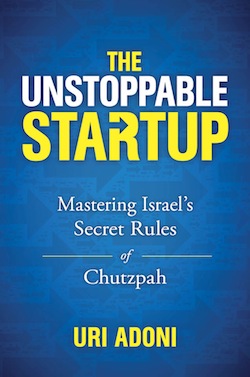
Uri Adoni, author of The Unstoppable Startup – Mastering Israel’s Secret Rules of Chutzpah, is on a mission to teach businesspeople how to use chutzpah to their advantage.

Born and raised in Israel, Adoni was working at a large advertising agency when the internet was just starting to catch fire.

“I really remember the exact moment when I first saw the internet,” Adoni told the Independent. “It was back in 1995 and it really blew my mind. I said, ‘Wow! I can talk to somebody in Singapore!’ It was very slow, dial up. It took ages to download anything, but it was crazy for me. And then I realized I just had to be part of it.

“Funnily enough, one of the partners in the agency at the time, he said to me, ‘This internet thing, it’ll never catch on.’ But, I begged to differ! And the old advertising world, I think, it will change dramatically, because you have so much data and people will know exactly what you were doing. That’s when I joined Microsoft.”

Adoni was chief executive officer of MSN Israel, working for Microsoft, for about seven years. He then moved to managing venture capital, giving him a unique view as to why some venture owners succeed while others fail. After a decade on the job, he decided to share this knowledge in book form.

According to Adoni, “One of the questions we’ve been frequently asked by people from all over the world is, ‘What is the secret sauce behind the Israeli success?’… We’re the second-largest tech hub in the world, second only to Silicon Valley, the largest per capita. We have the highest density of startups per capita, the highest venture capital per capita.”

Adoni shared that Israel has the third most companies on the NASDAQ, after the United States and China, though, in terms of population and geography, Israel is tiny compared to these countries.

“The positive side of chutzpah is what makes the difference between Israeli entrepreneurs and other entrepreneurs from around the world,” said Adoni. “One of my hypotheses is that, unlike charisma, which you’re either born with or not, chutzpah is actually something you can teach. And, I’d say, more than that, by the way. I think that any entrepreneur in the world, whether Israeli or not, they all have chutzpah. They just don’t know how to define it this way. But, I really think it’s a key ingredient in any successful startup.

“I felt the best way to explain it is by demonstrating what it is, and that the best way to demonstrate it would be to interview very successful entrepreneurs who could relate to it – asking them how important chutzpah has been in the success of their startup. If they are Israelis, they’d know it, and be able to put their finger on it.”

image - The Unstoppable Startup book coverIn The Unstoppable Startup, Adoni delves into what he has dubbed, “The Six Rules of Chutzpah,” with plenty of examples. The first rule involves changing one’s mindset, which, in turn, enables you to challenge reality as you know it, by thinking ahead of the curve.

“One of the companies we invested in at the time was a company, called CyActive, in the computer anti-virus world,” he said. “Usually, the way it works is that you have a virus and then you have the anti-virus that comes up with some sort of virus blocking. But it’s a cat-and-mouse thing, because they have to come up with a new virus and the anti-virus has to block it.

“They came up with a really interesting approach by changing the paradigm,” he explained. “They took the existing virus and, with a very smart algorithm, they created tens of thousands of potential viruses that could be expanded or developed from the original virus. And then, once we had all these viruses, we could create a tool to block them, before they even existed. So, they actually built something that blocks viruses that no one had come up with yet, but that there’s a chance they’ll come up with.”

Another rule, Adoni said, is innovating in order to meet future demand. In this context, he gave the example of the navigation app, Waze. Users share real-time data about their travel location and speed, allowing Waze to calculate the quickest way from point A to B.

“Once they use the application, all of this data [is] collected and you can sometimes know and predict where there will be traffic jams, guiding people to different routes and getting them to the destination faster,” said Adoni. “A lot of people were very skeptical about it. They said nobody will share their data; privacy issues. But, they proved everybody wrong. The market actually needed that, but we needed to bring them the tool. Once the tool was introduced, it was adopted very quickly.

“By the way, [Apple’s] Steve Jobs was one of the best – all the way from the Macintosh to the iPhone, having this entrepreneurial mindset that says, ‘I know what people need and will introduce it to them.’”

While Adoni’s book is naturally geared to startups and tech companies, he is adamant that the principles are relevant for any company, “no matter if they are small, big, or what state they are in because, at the end of the day, if you’re just doing more of the same, you may sell, you may make a living, but not necessarily make it big, or breakthrough, or grow in a large way.

“Even if you just have a small coffee shop, you should have your own competitive advantage, whether that’s with your cakes, experience, prices, name, or community. You need to differentiate yourself, showing why people should choose you over others. Random choice will not build return business. Any company around the world, any business you can think of, must think in a mindset of how they can outpace their competition, figure out their competitive advantage.”

Adoni believes his book is also great for investors, as it will teach them what to look for in startups.

In non-pandemic restricted days, Adoni regularly travels the world, speaking with university students.

Not wanting to reveal much, Adoni said he is currently working on a venture to challenge the mindset of Americans about developing new high-tech hubs in places that many people would not even consider a possibility.

Rebeca Kuropatwa is a Winnipeg freelance writer.

Format ImagePosted on December 18, 2020December 16, 2020Author Rebeca KuropatwaCategories BooksTags business, entrepreneurship, Israel, startups, technology, Uri Adoni

Views on various occupations

COVID-19 changed a lot of people’s perceptions as to what types of jobs are essential. Not only doctors, nurses and other healthcare workers are on the front lines, but so are retail clerks, maintenance workers, truck drivers and many others. In this context, it is interesting to think about what occupations, if any, have been promoted or praised in Judaism.

As it turns out, Jewish scholars gave work considerable attention. Talmudic sages advocated for working rather than living off charity. Indeed, this principle provides some food for thought for modern-day Israel, where many ultra-Orthodox do live off charity. According to a January 2020 report by Dr. Lee Cahaner and Dr. Gilad Malach for the Israel Democratic Institute, between the years 2003 and 2018, about 50% of ultra-Orthodox men aged 25-64 and 76% of women in the same age bracket worked.

Scholars had a great deal of respect for labour. The Talmud abhorred idleness and argues that it leads to mental illness and sexual immorality. (See Babylonian Talmud, Tractate Ketubot 59b, at jlaw.com/articles/idealoccupa.html.)

“Rabban Gamliel the son of Rabbi Judah HaNasi would say: Beautiful is the study of Torah with the way of the world, for the toil of them both causes sin to be forgotten. Ultimately, all Torah study that is not accompanied with work is destined to cease and to cause sin.” (Pirkei Avot, Ethics of the Fathers, 2:2). Midrash Rabbah Bereshit (Vayetze chapter) goes even further, saying that practising a craft saved lives.

Yet, the sages believed that being absorbed with making money is not the ideal for an individual. Again referring to the Pirkei Avot (4:10), Rabbi Meir asserted: “Rather limit your business activities and occupy yourself with the Torah instead.”

Historically, teachers were valued – but only to a point. The high priest Joshua ben Gamla (circa the first century CE) issued an opinion that “teachers had to be appointed in each district and every city and that boys of the age of six or seven should be sent.” Where the boy had a father, it was the father’s responsibility to make sure his son had a basic education. Significantly, between the third and the fifth century CE, providing the salary of the Torah and Mishnah teacher became a communal task. Even those without children contributed to the teacher’s wages.

But teachers were not fully trusted. The Mishnah of Tractate Kiddushin 82a teaches that a single man or single woman should not become a teacher. The Gemara explains that the rabbis worried that such a teacher might have an affair with a parent of one of the students.

On torahinmotion.org, Rabbi Jay Kelman contends that the Gemara initially suggests that the Mishnah is afraid that an unmarried teacher might molest his students, but then rejects this explanation, noting that molestation is not something we need to suspect happening. Kelman, however, says, “this is something which no longer can be said with any degree of certainty. What we can say with certainty is such a fear is warranted even with those who are married and that, while rare, when it occurs, the results are devastating and tragic.”

While on the subject of sexual misconduct in certain occupations, here is an idea that might resonate with the #MeToo movement: the Talmud lists certain precarious trades that require men to often be alone with women. For example, a male goldsmith who makes jewelry for women. Talmud scholars were uneasy that such a businessman would be tempted to sin.

Curiously, harsh words were said about doctors. Tractate Kiddushin 82a ends with this statement by Rabbi Yehudah: “The best of physicians deserves Gehenna.” Why do they deserve a damned place? An article on talmudology.com contends that the opinion was based either on the belief that doctors were haughty before G-d or the fact that their treatment sometimes killed the patient.

Even though Israeli citizens highly value their army, Shalom Sabar points out in a Forward video that, in Medieval Haggadot, the “bad son” was portrayed as a soldier. This was because, at the time, non-Jewish soldiers would come to kill Jews.

Sailors, on the other hand, “are mostly pious … with many a ship sinking, sailors were in constant fear causing most to be super honest in the hope that G-d would protect them.” As Kelman summarizes, there really are no atheists in the foxhole.

On myjewishlearning.com, Rabbi Jill Jacobs states that, since Mishnah Zeraim (Seeds) deals solely with agricultural issues, we have proof that Judaism emerged from an agriculturally based community. Yet, in the Torah, farmers get off to a really bad start. Early in Genesis, we learn that Cain was the first farmer. Notwithstanding, G-d refused to accept his offering, accepting only his brother Abel’s. Cain couldn’t accept this rejection. In a jealous rage, Cain killed his brother and hid what he had done. G-d, consequently, reduced Cain to a life of wandering.

At a time when, around the globe, people are learning more about the extreme misconduct of some police officers, it is worth looking further into the Torah to see what Deuteronomy 16:18 and later commentators wrote about the police. Deuteronomy points out that both judges and police should be appointed to govern the people with due justice. Drawing on various Jewish sources, Rabbi Jacobs divides the function of the Deuteronomy-based police into several specific, but integrated parts: the patroling police person who “reminds the public to obey the law”; the roving inspector who ensures fair pricing and compliance with local ordinances; the arresting police officer who, while assuming the person is innocent until judged guilty, nevertheless begins the judgment process by arresting the suspect; the bill collector police officer who extracts payment from the obligated party to give to the aggrieved party; and the police officer who is a leader in his/her community. From Jacob’s assessment on truah.org, it would appear that today’s police have what to improve, especially when it comes to trust-building measures.

Over the centuries, Jewish scholars have taken into account the fallibility of people engaged in certain occupations. With tremendous insight into human behaviour, our sages apparently realized progress is not always in a forward direction. We have a long way to go in (re)establishing the integrity that Jewish scholars outlined for certain professions.

Deborah Rubin Fields is an Israel-based features writer. She is also the author of Take a Peek Inside: A Child’s Guide to Radiology Exams, published in English, Hebrew and Arabic.

***

The abstract of the article “Jewish Occupational Selection: Education, Restrictions or Minorities?” (The Journal of Economic History 65, no. 4 [2005]), Maristella Botticini and Zvi Eckstein reads: “Before the eighth-ninth centuries CE, most Jews, like the rest of the population, were farmers. With the establishment of the Muslim Empire, almost all Jews entered urban occupations

despite no restrictions prohibiting them from remaining in agriculture. This occupational selection remained their distinctive mark thereafter. Our thesis is that this transition away from agriculture into crafts and trade was the outcome of their widespread literacy, prompted by a religious and educational reform in Judaism in the first and second centuries CE, which gave them a comparative advantage in urban, skilled occupations.”

The full article is available at jstor.org.

– DRF

Posted on December 18, 2020December 16, 2020Author Deborah Rubin FieldsCategories Op-EdTags COVID-19, education, history, jobs, Judaism, minorities, Mishnah, occupations, Talmud, work

Posts pagination

Previous page Page 1 … Page 221 Page 222 Page 223 … Page 649 Next page
Proudly powered by WordPress