Skip to content
  • Home
  • Subscribe / donate
  • Events calendar
  • News
    • Local
    • National
    • Israel
    • World
    • עניין בחדשות
      A roundup of news in Canada and further afield, in Hebrew.
  • Opinion
    • From the JI
    • Op-Ed
  • Arts & Culture
    • Performing Arts
    • Music
    • Books
    • Visual Arts
    • TV & Film
  • Life
    • Celebrating the Holidays
    • Travel
    • The Daily Snooze
      Cartoons by Jacob Samuel
    • Mystery Photo
      Help the JI and JMABC fill in the gaps in our archives.
  • Community Links
    • Organizations, Etc.
    • Other News Sources & Blogs
    • Business Directory
  • FAQ
  • JI Chai Celebration
  • JI@88! video

Recent Posts

  • Sharing her testimony
  • Fall fight takes leap forward
  • The balancing of rights
  • Multiple Tony n’ Tina roles
  • Stories of trauma, resilience
  • Celebrate our culture
  • A responsibility to help
  • What wellness means at JCC
  • Together in mourning
  • Downhill after Trump?
  • Birth control even easier now
  • Eco-Sisters mentorship
  • Unexpected discoveries
  • Study’s results hopeful
  • Bad behaviour affects us all
  • Thankful for the police
  • UBC needs a wake-up call
  • Recalling a shining star
  • Sleep well …
  • BGU fosters startup culture
  • Photography and glass
  • Is it the end of an era?
  • Taking life a step at a time
  • Nakba exhibit biased
  • Film festival starts next week
  • Musical with heart and soul
  • Rabbi marks 13 years
  • Keeper of VTT’s history
  • Gala fêtes Infeld’s 20th
  • Building JWest together
  • Challah Mom comes to Vancouver
  • What to do about media bias
  • Education offers hope
  • Remembrance – a moral act
  • What makes us human
  • המלחמות של נתניהו וטראמפ

Archives

Follow @JewishIndie
image - The CJN - Visit Us Banner - 300x600 - 101625

Author: Cynthia Ramsay

Connecting generations

Shane Foxman’s idea for In Your Own Words, “a podcast for you and your family about you and your family,” came from a very personal place.

“My father passed away when my daughter was still very young. While I keep his memory alive by telling stories about him, I’ve often wished she could hear him tell his story himself – his voice, his memories, his reflections – rather than only hearing them from me,” said Foxman, who had an almost-30-year career in journalism before starting his own production company.

“As a storyteller by profession, that realization stayed with me,” he continued. “I began thinking about how many families wish they had asked more questions, recorded more conversations, or simply preserved a parent or grandparent’s voice while they still could.

“That wish is what led me to create In Your Own Words. It’s almost like a personal podcast – a guided, professionally produced conversation about someone’s life and journey. It’s about memory, voice and capturing the stories that might otherwise be lost. Because, when someone is gone, you don’t care how long the recording is. You just wish you had one.”

photo - Shane and Andrea Foxman
Shane and Andrea Foxman (photo from Shane Foxman)

Foxman was born and raised in Toronto. His career took him to many places in Canada, including British Columbia in 1998. 

“I was working at a television station in Edmonton when I was hired by Global Television to cover the legislature in Victoria,” he said. “After two years as bureau chief there, I was transferred to Vancouver, where I continued covering news and eventually began hosting and producing a variety of programs.

“In 2009, I hosted and co-produced Seeking Stanley, which became one of the most successful television programs in BC history. The live show aired after every Vancouver Canucks playoff game and during the team’s 2011 run to the Stanley Cup Final. Viewership topped one million people an episode in the Lower Mainland.”

Vancouver ultimately became home for Foxman. He met his wife Andrea here, and the couple has a 16-year-old daughter, Arlo. 

He is deeply connected to the Jewish community. Most Independent readers will have been at an event emceed by Foxman. He has been on various boards and worked for five years at Vancouver Talmud Torah as associate director of development, retiring from that position last year so he could focus on his company.

Foxman’s decision to switch from journalism to production came just over a decade ago, influenced in part by the changing media landscape.

“Newsrooms were shrinking and budgets were tightening,” he explained. “There was less time and space for deeper, long-form storytelling, the kind of work that really excites me.

“I found myself wanting more creative control and more depth in the kinds of stories I was telling. I wanted to slow things down, spend time with people, and really explore their journeys in a meaningful way.

“Opening my production company allowed me to focus on long-form storytelling. I picked my projects and they weren’t constrained by airtime. It also gave me the flexibility to build something sustainable while still doing what I love most: helping people tell their stories.”

He said, “Every person has a story – about where they came from, what shaped them, the obstacles and challenges they faced and the moments that defined them…. There’s something powerful about giving people space to speak in their own voice. At its best, journalism isn’t just about reporting facts – it’s about capturing humanity.”

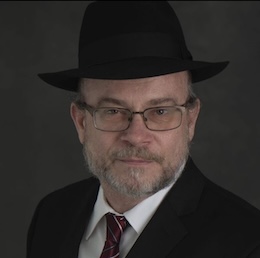
One of the first things visitors to Foxman’s website will notice is the photo of him and Andrea (which accompanies this article). It was taken at a charity event they attended a few years ago. The photographer asked what kind of shot they wanted and the couple joked, “We want Andrea to photobomb me.”

“He took one click, dead serious, and said, ‘Got it,’” shared Foxman. “We didn’t believe him at first, but when we saw the picture, I just loved it. I immediately thought, if I ever needed an album cover, this would be it. It perfectly captures both seriousness and fun – two things I hope come through in my work and in life.”

Foxman Productions is “a small, hands-on company,” said Foxman, who is involved in every project, from concept development and interviewing, to editing and final delivery. 

“That said, one of the advantages of my years in television is the professional network I’ve built,” he said. “Depending on the project, I bring in experienced camera operators, editors, sound technicians and graphic designers – people I’ve worked with and trust. The team is top-notch.

“Every project is different, so I assemble the right people for the job. Clients get the personal attention of working directly with me, combined with the production quality of seasoned broadcast professionals.

“But, at its core, my role is listener,” he said. “That’s the most important part of the work.”

Foxman’s preparation for an interview involves research and conversation. 

“I spend time speaking with the person beforehand to understand the shape of their life – major chapters, turning points and family background. That way, when we sit down to record, the conversation can flow naturally rather than feeling like a checklist,” he explained.

“For the interviewee, it’s all about feeling comfortable and unpressured. It’s not an interrogation or a performance – it’s a guided conversation, often reflective, sometimes emotional, sometimes humorous. There’s no right or wrong way to tell your story – it’s your story.”

The final product can be audio only or video, which may include photos, documents or other visual elements.

“The goal is always to create something that families can return to again and again. It’s not just to remember facts, but to hear tone, laughter and personality,” said Foxman.

“I believe every person and/or family has stories that matter, and every voice deserves to be remembered. Preserving these conversations is more than just creating a record – it’s about connecting generations, sharing lessons, laughter and memories, and leaving something truly meaningful for the future.

For more information about In Your Own Words, go to foxmanproductions.com. 
Posted on February 27, 2026February 26, 2026Author Cynthia RamsayCategories LocalTags family history, Foxman Productions, memoir, Shane Foxman
Vancouver to Vienna

Vancouver to Vienna

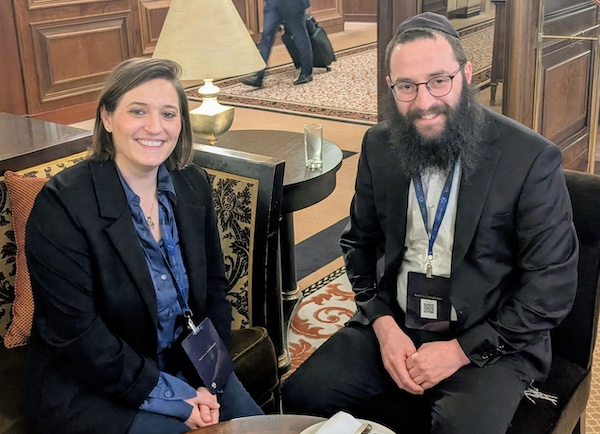
The author, Nicole Grubner, and Rabbi Levi Varnai reconnecting at the Yael Awards in Vienna. (photo by Nicole Grubner)

I grew up in West Vancouver, in a home where Jewish life mattered. We celebrated the chagim (holidays), gathered for family Shabbat dinners and went to synagogue. Jewish identity was present, familiar and important. But, when it came to school, the question my parents faced was not about ideology, but practicality.

At the time, I was attending our local public school, which I loved. The Jewish school was at least a 40-minute drive each way, which would reshape daily family life. This was not a small decision.

My parents had both attended Jewish schools – my father in Chile, my mother, in England – so the value was there. And, in the end, belief won.

It was my uncle, Claudio, who ultimately tipped the balance. He didn’t provide a checklist or a plan. As my mother put it, “He just appealed to us, from his heart to ours.”

In Grade 3, my parents moved me from public school to Vancouver Hebrew Academy. That decision marked the true beginning of my Jewish journey.

Once I arrived at VHA, any lingering doubts faded quickly. My parents felt, almost immediately, that they had made the right choice.

Rebbetzin Shayndel Feuerstein z”l didn’t need to convince them that Jewish education was about more than academics; they already knew that. What stood out was how she conducted herself and the seriousness with which she approached educational excellence. She personally traveled to Israel to interview and hand-pick teachers.

The underlying challenge facing the school was not vision or quality; it was financial. Fundraising was a constant reality and, from one school year to the next, there was never complete certainty that there would be enough resources to continue operating.

When I entered VHA, I joined a class filled with children whose lives were just beginning to take shape. One of them was a boy named Levi Varnai. We were classmates for two years, from 1996 to 1998, before I transferred to Vancouver Talmud Torah for Grade 5. A couple of years later, Levi and his family moved to Israel.

Levi went on to study in yeshivot in Israel and New York, receiving smicha (rabbinical ordination) in 2011, before returning to Vancouver in 2013 to work with the Community Kollel as an assistant rabbi and youth director. Since 2016, he has served as the congregational rabbi of the Bayit in Richmond. Alongside his wife, Rivky, an educator who grew up in Safed, Israel, they have built something truly special.

One of the most powerful expressions of that work is the Bayit’s Kids Zone, an after-school and Shabbat program. Through cooking, crafts, music, games, Torah stories, mitzvot and holiday celebrations, children experience Judaism as warm, relevant and exciting. Pre-teens are guided toward leadership and responsibility, learning values like tzedakah, friendship and connection to Israel.

Many of the children who attend Kids Zone are enrolled in public school. For them, the program becomes a vital Jewish anchor. Parents speak of children singing Hebrew songs at home, lighting Shabbat candles for the first time, and engaging more deeply with Jewish life.

Today, I live in Israel with my family and work in communications. One of my key clients is the Yael Foundation, whose mission is to ensure that every Jewish child has access to quality Jewish education and the opportunity to develop a strong Jewish identity, no matter where they live.

Earlier this month, in Vienna, the Yael Foundation hosted the Yael Awards, celebrating innovation and excellence in Jewish education worldwide. The Bayit’s Kids Zone was among the finalists for the Jewish Experience of the Year Award, recognized alongside outstanding programs from across Europe.

“At the Bayit, we believe that a strong Jewish identity is built through joy, connection and hands-on experiences that make Judaism come alive for every child,” said Rabbi Varnai. “Kids Zone is the heart of that mission – a warm, welcoming space where children explore their heritage, celebrate Jewish life and grow proud of who they are as Jews.”

This year’s Jewish Experience of the Year Award was presented to Beth Habad Canton Vert in France, a community-based program that exemplifies how Jewish life can be made accessible, meaningful and vibrant for families.

Reflecting on the breadth and quality of the finalists, Chaya Yosovich, chief executive officer of the Yael Foundation, noted, “Every one of these educators is deserving of an award. We see, year after year, how educators are raising the bar to ensure the next generation feels connected and proud of their Jewish identity.”

Across the world, Jewish schools and educational programs, particularly in smaller or less visible communities, operate with limited funding and stretched staff. These communities may not sit at the centre of global Jewish attention but, for the families who live there, they are often the entry point into Jewish communal life. By investing in Jewish education globally, the Yael Foundation tries to ensure that excellence is not reserved only for large, well-resourced centres. 

A Jewish journey that began in a Grade 3 classroom in Vancouver has come full circle. A former classmate now leads a community where Jewish identity is being nurtured in the next generations. And, today, I help tell the stories of educators and communities quietly investing in the Jewish future. 

Nicole Grubner, a former Vancouverite who now lives and works in Israel, is a partner at FINN Partners marketing and communications agency.

Format ImagePosted on February 27, 2026February 26, 2026Author Nicole GrubnerCategories LocalTags education, Jewish day school, Levi Varnai, milestones, the Bayit, Yael Foundation

Recipes a form of resistance

As part of its celebration of BC Heritage Week, the Vancouver Heritage Foundation held the online event Recipes of Resistance: Rebecca Teitelbaum and the Ravensbrück Recipe Book, presented by Lise Kirchner and Ellie Lawson of the Vancouver Holocaust Education Centre. Kirchner is the VHEC’s director of education, Lawson its education manager.

The theme of this year’s Heritage Week is “Stir the Pot,” explained VHF director of education Sarah Carlson. She encouraged viewers to “think about the ways that food brings us together, how it holds memory, and how it has contributed to the rich cultural tapestry of your community and beyond.”

Teitelbaum’s recipe book was donated to the VHEC by Teitelbaum’s nephew, Alex Buckman, also a Holocaust survivor, who died in 2023.

“He was Rebecca’s nephew, but he actually was raised as Rebecca’s son…. Rebecca was the only mother that Alex ever knew,” said Kirchner. “His parents perished in Auschwitz, and Rebecca made a promise to God that she would raise Alex as her own son, which she did.

“In the 1990s, Alex discovered this recipe book in the drawer of Rebecca’s home, and he asked her about it. He had never heard the story before. Apparently, she had never told anybody, but she explained to Alex the incredible story of this recipe book, how it was created and how it survived.”

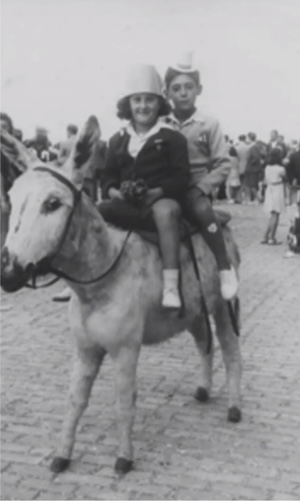
Kirchner showed many archival photographs, including of Teitelbaum and one of Teitelbaum with her younger brother, Isaac Buckman, in the 1930s.

“Isaac is Alex’s father,” explained Kirchner. “These two siblings, Rebecca and Isaac, were very close. They also had a younger brother, Jacques.”

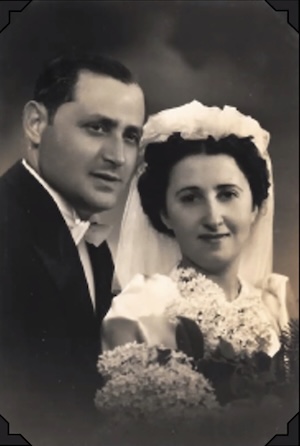
screenshot - Herman and Rebecca Teitelbaum, 1938
Herman and Rebecca Teitelbaum, 1938. (screenshot from VHEC presentation)

Rebecca and her husband Herman were married in 1938. “They had a daughter, Anny, in 1939, and they lived … near Brussels, before the Second World War. Rebecca worked in the accounting department of a department store in the city of Brussels.”

Kirchner also shared a photo of Isaac and Dworja Buckman, who married around the same time as the Teitelbaums.

“The same year that Rebecca’s daughter, Anny, was born, Isaac and Dworja had a son, Alex, in October 1939.”

In May 1940, Germany invaded Belgium and the Nazis set up a military occupation government. “Unlike many other countries where the civil administrations cooperated with Nazi deportations, the situation in Belgium was much different and, as a result, the survival rate of Belgian Jews was higher than many of the Western European countries,” said Kirchner.

Nonetheless, restrictions were placed on Jews and Kirchner went through the progression of anti-Jewish laws in Belgium. There were pogroms, as well, and, in May 1942, all Jews over the age of 6 had  to wear the yellow star to identify them as Jewish.

From 1941 to mid-1942, Anny and Alex were placed into hiding, which worked until their families ran out of money, said Kirchner. When the woman hiding the kids denounced them to the Nazi authorities, the families were in grave danger.

“Between 1942 and 1944, the German occupying forces deported around 25,000 Jews from Belgium to concentration and death camps in the east, primarily to Auschwitz, and only 2,000 of these survived – 43% of the Jewish population in Belgium was murdered,” said Kirchner.

Once the Belgian resistance became more organized, there were resistance networks focused on hiding Jewish children. The largest was the Committee for the Defence of Jews, she said, and it successfully hid some 2,400 Jewish children from the Nazis, including Anny and Alex.

Isaac and Dworja Buckman were deported to Auschwitz-Birkenau in 1943 and murdered. Rebecca and Herman Teitelbaum were deported to forced labour camps in Germany: Herman  to Buchenwald, and Rebecca to Ravensbrück.

“Rebecca spent 17 months in Ravensbrück concentration camp as a slave labourer,” said Kirchner. “She was first assigned to work hard labour, hauling wood and stone and heavy carts in very harsh outdoor conditions, but, because she had worked in that department store in Belgium and she had experience with accounting work, she was able to secure a much better work assignment in the office of the Siemens factory.”

Siemens was one of the private companies that used Jewish slave labour, explained Kirchner, before turning the floor over to Lawson to talk about Ravensbrück.

“It was originally built for a little over a thousand prisoners, but, at its peak in 1945, there were over 50,000 prisoners,” said Lawson, who went into some detail about the factory and Siemens’ cooperation with the Nazis.

Despite the unimaginable circumstances, resistance was evident. Lawson shared a quote from Lidia Beccia Rolfi, an Italian prisoner: “Even the theft of a piece of wire, a sheet of paper, of a cloth rag was seen as sabotage, but everyone committed that. Any form of friendship between inmates was seen as sabotage.”

Lawson played a clip from Alex Buckman’s video-recorded survivor testimony. He explained how Rebecca noticed there weren’t that many supervisors at night.

“And then she stole a piece of brown paper, and she put it in her dress,” he said. “And then she stole a little pencil and a pair of scissors. And, at night, she ran towards her barrack, very nervous because she knew that, if somebody would stop her with all these stolen goods, she would be in trouble and they probably would make an example of her, maybe either shoot her or hang her. But she did it.”

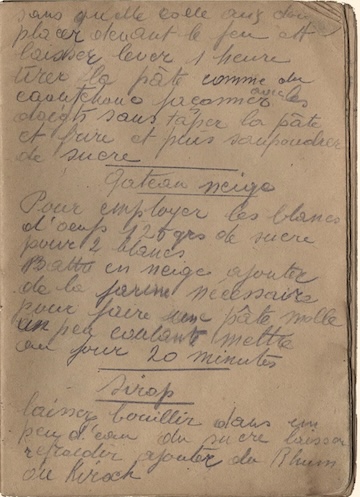
screenshot - A page from Rebecca Teitelbaum’s cookbook, which she compiled at great risk during her incarceration at Ravensbrück concentration camp
A page from Rebecca Teitelbaum’s cookbook, which she compiled at great risk during her incarceration at Ravensbrück concentration camp. (screenshot from VHEC presentation)

In the barrack, she cut the paper into smaller pieces and started to write recipes “of meals that she did for her husband and her daughter before the war…. With the help of other women, who gave her some of their own recipes, and many of hers, she wrote 110 recipes,” he said. “Even though food was very important to stay alive in the concentration camp, she actually traded some of her food for needles and thread, and she made a book so she could keep it.”

The recipes weren’t necessarily accurate, said Kirchner. “You’ll notice most of the recipes are very heavy on butter and sugar and luxury items like raisins and rum or cream. On the other hand, some of the recipes reflect wartime scarcity…. But the dominant theme of these recipes is one of abundance.”

The recipes reflect the cultural diversity of the women imprisoned in the camp, said Kirchner. “These were women from all over Europe … about half of them were Jewish, but many of them were not, and so the recipes reflect a cultural diversity that’s Jewish, Belgian, French, Spanish, Mediterranean.”

Teitelbaum completed three recipe books, giving two to other women in the camp.

“Rebecca also created another thin volume that contains poems and resistance songs,” said Kirchner, adding, “She also made two sets of playing cards, which the Roma women in the camp would use to tell the fortune of other prisoners. So, again, building community between not just the Jewish women in the camp, but across cultures. And this was an essential form of hope and community-building and resistance by the camp inmates.”

Teitelbaum was one of 2,000 women saved in a Red Cross mission that saw 36 buses take the women from Ravensbrück to safety in Denmark and Sweden. However, the area was still a war zone and one fleet was hit by friendly fire.

“This convoy carrying 706 women, including Rebecca, was attacked multiple times by fighter planes and, as a result, there were about 25 fatalities and numerous injuries among the rescued prisoners,” said Kirchner. “Rebecca herself survived the attack, but was hit by shrapnel and badly injured her left arm. And, in the scuffle and the mayhem that followed … she lost her bundle of belongings: a sack that contained her recipe book.”

Herman, Anny, Jacques and Alex also survived.

screenshot - Anny Teitelbaum and Alex Buckman, 1945
Anny Teitelbaum and Alex Buckman, 1945. (screenshot from VHEC presentation)

“Anny and Alex were raised as siblings,” said Kirchner, and Rebecca and Herman had another child after the war. “Rebecca named this baby Christian, in honour of King Christian … who had visited her in the hospital, and who had become a bit of a folk hero in the Jewish community in Denmark.

“In 1951, the family left Europe and they arrived at Pier 21 in Halifax in September of 1951 before making their way to Montreal, where they settled permanently,” continued Kirchner. “They had one last child, named Shirley, who was born in Montreal in 1953, and Rebecca Teitelbaum became a Canadian citizen in 1957. She lived the rest of her life in Montreal, and she died there in 1999.”

The sack Teitelbaum had lost was found near the site of the bombing and, because it contained letters that identified her, the person that found the bag tracked her down.

“Rebecca’s recipe book is one of six Holocaust recipe books that we’re aware of in museums around the world,” said Kirchner. “These artifacts have given historians greater understanding about the unique responses of women to their persecution…. Unlike traditional cookbooks, they’re not about cooking, in practice, they’re about maintaining identity, resisting dehumanization, transmitting a culture that the Nazis were attempting to destroy, and they also functioned as a psychological coping mechanism that forged group cohesion and a spirit of communal care. 

“The creation of these recipe books all came at great risk and sacrifice, and they’re important not only because they demonstrate the agency of female prisoners who were trying to assert control over their hunger by eating with words, but they also provide an archive of women’s communal responses to their persecution, which elevates women’s domestic expertise to the level of historical record.”

In his talks as an outreach speaker, Buckman would give students the Gâteau à l’orange recipe from Teitelbaum’s book.

“This was a cake,” said Kirchner, “that Rebecca would make for Alex every birthday, and he would encourage the children to make it at home with their own parents, to give their parents a hug, to make this orange cake in honour of his Aunt Rebecca, and also in memory of all of those who were murdered in the Holocaust, including his own parents, Isaac and Dworja.”

The recipe is on the VHEC’s website, vhec.org. 

Format ImagePosted on February 27, 2026February 26, 2026Author Cynthia RamsayCategories LocalTags Alex Buckman, BC Heritage Week, education, gateau a l'orange, Rebecca Teitelbaum, recipes, resistance, Vancouver Heritage Foundation, Vancouver Holocaust Education Centre, VHEC

Community milestones … February 2026

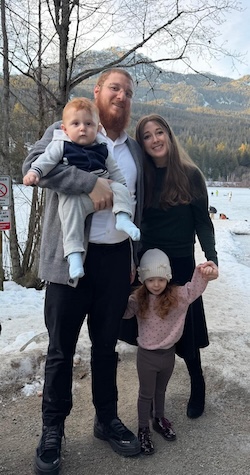
photo - Rabbi Schneur and Bina Druk and family
Rabbi Schneur and Bina Druk and family (photo from Chabad of Whistler)

Rabbi Schneur and Bina Druk and their two children have recently made Whistler their home.

Rabbi Druk was ordained at the central Chabad-Lubavitch rabbinical seminary in Brooklyn and has served Jewish communities across North America and around the world, leading Shabbat services, holiday programs and outreach initiatives in a wide range of settings. His approach is guided by listening to the unique needs of each community and creating a welcoming, inclusive environment.

Bina Druk, a Toronto native, has extensive experience in Jewish education and community engagement, having taught in Jewish schools and held leadership roles at Chabad centres in Toronto and New York. 

The Druks are excited to serve Whistler and the Sea-to-Sky corridor and to help ensure that every Jew, resident or visitor, has a place to connect with Jewish tradition, learning and community.

* * *

The Jewish Museum and Archives of British Columbia has appointed Eli Klasner as its new executive director.

photo - Eli Klasner
Eli Klasner (photo from JMABC)

Klasner brings decades of leadership experience in arts, culture and community development, most recently in Prince George and north central British Columbia, where he played a key role in strengthening cultural infrastructure and fostering inclusive creative communities. His work there included the development of new arts facilities, as well as the revitalization of civic venues.

In addition to his work in the arts, Klasner was instrumental in organizing and supporting the Jewish community in north central British Columbia,

As executive director, Klasner will lead JMABC’s strategic direction, oversee development, public programming and archival initiatives, and work closely with partners across the Jewish and cultural sectors in the province.

“I am incredibly honoured to be joining the Jewish Museum and Archives of BC,” said Klasner. “JMABC plays a vital role in preserving and sharing Jewish history and lived experience in this province. I am excited to … help expand the organization’s work and capacity over the coming years, and to be collaborating with the many Jewish organizations in BC that make this province so rich and dynamic.”

* * *

The Gotta Sing! Gotta Dance! production of Law Law Land has won a BroadwayWorld Regional Award for best theatre for young audiences production. The musical theatre summer program based at the Jewish Community Centre of Greater Vancouver was runner up for the award for best ensemble.

The awards honoured regional productions, touring and other shows that had their first performance between Oct. 1, 2024, through Sept. 30, 2025. Law Law Land, written by Perry Ehrlich and David Hudgins, was the show that last summer’s Gotta Sing! Gotta Dance! participants worked towards and performed at the end of their respective sessions.

The 2026 Gotta Sing! Gotta Dance! program runs July 7-30 and Aug. 4-27. For an audition, apply online at jccgv.com or gottasinggottadance.ca by April 1.

Posted on February 27, 2026February 26, 2026Author Community members/organizationsCategories LocalTags Bina Druk, BroadwayWorld, Chabad, David Hudgins, Eli Klasner, Gotta Sing! Gotta Dance!, Jewish Museum and Archives of BC, JMABC, Law Law Land, Perry Ehrlich, Schneur Druk, Sea-to-Sky Corridor, Whistler

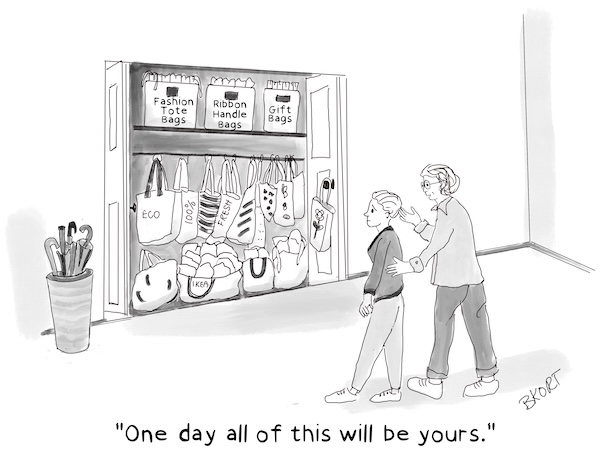
Generations … It’s all yours!

image - Generations cartoon related to inheritance of reusable bags, by Beverley Kort

Posted on February 27, 2026February 26, 2026Author Beverley KortCategories LifeTags cartoon, generations, inheritance

נתניהו לא מתבייש להאשים את ביידן באחריות להרג חיילים ברצועת עזה

ראש ממשלת ישראל בנימין נתניהו, לא בוחל בשום דרך להאשים אחרים במה שקרה ברצועת עזה. הוא לעולם לא יקח אחריות על מחדליו הרבים. הפעם נתניהו שובר שיאים חדשים כאשר הוא מאשים ישירות את נשיא ארה”ב הקודם ג’ו ביידן, באחריות להרג של חיילים בעזה. זאת, כיוון שביידן סירב להעביר לישראל את כל התחמושת שהיא הייתה זקוקה לו. מדובר בעוד שקר מבית נתניהו וחבל שהוא לא משלם מחיר על כך

נתניהו אמר במסיבת עיתונאים כי “בשלב מסוים לא הייתה לנו מספיק תחמושת וגיבורים נפלו. חלק מאובדן התחמושת היה כתוצאה מאמברגו. ואני גמרתי אומר שלא נגיע למצב הזה יותר”. נתניהו הדגיש כי “המצב הזה השתנה מבלי היכר עם כניסת הנשיא הנוכחי דונלד טראמפ”. נתניהו הטיל אפוא את האחריות למותם של חיילים על אמברגו הנשק על ביידן. הדברים הכעיסו ובצדק את בכירי הממשל הקודם, שלא האמינו למשמע אוזניהם והאשימו את נתניהו בכך ששיקר והתגלה ככפוי טובה. תומכיו הרבים של נתניהו בישראל ובארה”ב מאמינים לשקריו ולא לאמת. זאת, בדיוק כמו תומכי טראמפ בארה”ב וישראל. גם הם מאמינים לשקריו ולא לאמת. לא פלא הוא שטראמפ ונתניהו מסתדרים מצויין כי הרי מצא מין את מינו. מדובר שני נוכלים שבמדינות מתוקנות כבר מזמן היו יושבים בכלא

לגבי ממשל ביידן לאור השבעה באוקטובר: התמיכתה שלו ביידן בישראל הייתה איתנה כסלע, וזה נעשה במחיר פוליטי עצום בארה”ב. עמוס הוכשטיין הישראלי, לשעבר שליחו של ביידן, אמר: “הרשו לי להבהיר, לאחר תמיכה צבאית של יותר מ-20 מיליארד דולר, הגדולה ביותר בהיסטוריה של ישראל, שתי נושאות מטוסים מיהרו לאזור, מנעו מלחמה אזורית נרחבת, הביסו את מתקפת הטילים והרחפנים האיראנית פעמיים, הגנו על ישראל ברגעים הפגיעים ביותר, לאחר שהצילו אינספור חיים של ישראלים – התגובה המקובלת היחידה לנשיא ביידן ולעם האמריקני – היא תודה”

עובדתית, ממשל ביידן עצר רק משלוח אחד של פצצות במשקל טון אחד. וכן האמריקנים עיכבו גם טרקטורים כבדים שהיו נחוצים להריסת מבנים ממולכדים. נתניהו טוען כי בגלל מחסור בהם נשלחו חיילים לטהר מבנים וחלקם נהרגו. מצד שני יש לא מעט מומחים צבאיים שטוענים כי צה”ל לא התארגן נכונה למלחמת הגרילה מול החמאס ושילם מחיר כבד שכלל חללים רבים

נתניהו שלא כמפתיע שכח גם את הסיוע החיוני שהגיע מצד ביידן, שהזהיר את איראן וחיזבאללה מניצול המצב וקרא להם בתחילת המלחמה אל תעשו

אם כן מדוע נתניהו בחר להתקיף את ביידן בעת הזו? יש לכך שתי תשובות. הראשונה לרצות את טראמפ שכרגיל מעריך מעריצים שתומכים בו כל הזמן. וכן ניסיון להסיט את תשומת הלב הציבורית מדברים בעייתיים במיוחד שנתניהו אמר בראיון לעיתון זר לפני מספר שבועות. נתניהו הסביר בריאיון כי ישראל בחרה של לבצע הפצצות שטיח נרחבות בעזה וכי ההחלטה הזו, שהייתה שלו באופן אישי, הובילה לאובדן חיי חיילים רבים יותר בקרבות קרקעיים. “איבדנו חיילים רבים בגלל זה”, אמר נתניהו במפורש. ואת זה חוגי הימין הקיצוני בישראל לא רצו לשמוע, שכביכול ישראל פעלה באיפוק יחסי מול ביקורת בינלאומית גוברת. משפט הזה נשמע כמו הודאה בכישלון: החלטותיו האישיות של נתניהו סיכנו חיי חיילים ישראלים

ביידן, שמיד אחרי השבעה באוקטובר שלח נושאות מטוסים, להרתיע את איראן והעניק תמיכה דחופה לישראל ברגעיה הקשים ביותר, הפך פתאום למטרה קלה. ההתקפה עבדה: בתוך יממה הכותרות בישראל עברו להתמקד בבגידתו במקום בראיון שהביך את נתניהו

Posted on February 25, 2026February 12, 2026Author Roni RachmaniCategories עניין בחדשותTags Biden, Gaza Strip, Israel, Netanyahu, Oct. 7, politics, Trump, United States, ארה"ב, ביידן, טראמפ, ישראל, נתניהו, פוליטיקה, רצועת עזה, שבעה באוקטובר
Last hostage home

Last hostage home

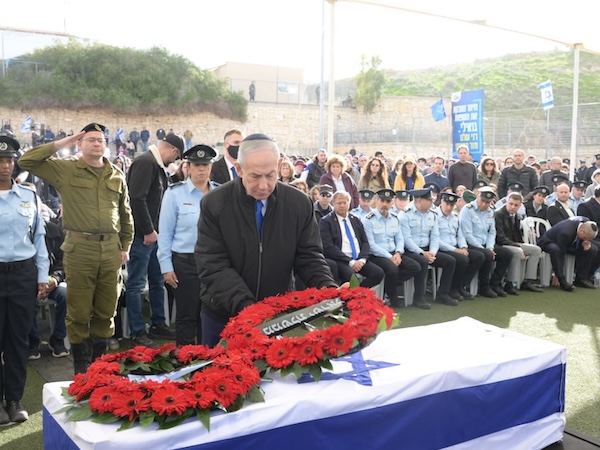
Prime Minister Benjamin Netanyahu lays a wreath at Ran Gvili’s funeral in Meitar on Jan. 28. (photo © Amos Ben Gershom / GPO)

Yasam (Israel Police Special Patrol Unit) Master-Sgt. Ran Gvili z”l was buried on Jan. 28 in his hometown of Meitar. The last remaining hostage from the Hamas attacks of Oct. 7, 2023, his body was brought back to Israel on Jan. 26. After 843 days, the clock in Tel Aviv’s Hostages Square stopped ticking, and the displays of the kidnapped at Ben-Gurion Airport and the National Library of Israel were removed. For the first time since 2014, not a single Israel Defence Forces soldier or civilian is being held hostage in the Gaza Strip.

Two years, three months and 20 days after Gvili, 24, fell in a battle at Kibbutz Alumim near the Gaza Strip, the hero was given a fitting military funeral. Thousands of police officers, IDF soldiers and residents stood in silence along the streets of the Beer Sheva suburb as the funeral procession passed.

The service was attended by President Isaac Herzog, Prime Minister Binyamin Netanyahu, Police Commissioner Daniel Levy and Sephardi Chief Rabbi David Yosef, alongside senior political and security figures. The sombre ceremony was the first funeral of a hostage from Oct. 7 attended by the prime minister.

Netanyahu eulogized Gvili: “He considered his injured shoulder meaningless because he believed with all his heart and strength that the security of the state rested on him and the shoulders of his comrades.

“He saved lives – many, many lives,” said Netanyahu. 

The prime minister also announced that a new town, Renanim, would be established near Meitar in Gvili’s memory.

Addressing the family, Herzog apologized on behalf of the people of Israel, saying: “I’m sorry we were not there for him. I am sorry that, along with so many other families, you had to wait so many long, agonizing days for the return of your loved one.”

He added: “Without hesitation and without asking, again and again, [Gvili] said, ‘Here I am,’ and went into the line of fire to protect us.”

When the attacks began at 6:29 a.m. on Oct. 7, Gvili was at home, where he had been recovering from a broken shoulder sustained in a motorcycle accident. As news began trickling in of kibbutzim and cities near the Gaza frontier being overrun and their residents massacred, he decided to join the battle. Though on medical leave, he reached for his gun and his uniform, and went to help.

His father, Itzik Gvili, told Ynet News that his son “just put on a uniform and said to me, ‘Abba, I’m going.’ I said to him, ‘Where do you think you’re going?’ and he answered, ‘What do you think? Do you think that my friends will fight alone? I’m going to help them.’ He didn’t ask me. Rani can’t be stopped.”

Driving west toward the carnage at the Nova music festival, Gvili rescued an estimated 100 people fleeing the rave. He then engaged in a battle with dozens of Hamas gunmen near Kibbutz Alumim, killing 14 terrorists before being fatally shot when he ran out of ammunition. At 10:50 that morning, he texted friends that he had been shot in the leg. 

For months, Gvili’s family held out hope that he was alive and being held hostage somewhere in the Gaza Strip.

His mother, Tali, told Haaretz in November 2024 that the family had received photos from Oct. 7 showing him arriving unconscious at Shifa Hospital in Gaza City, and later in Zeitoun on the back of a motorcycle, “but they aren’t conclusive … in this situation, hoping for a miracle feels reasonable.”

Gvili’s body was recovered by IDF search teams following a months-long intelligence operation. Under combat conditions in the northern Gaza Strip, some 700 bodies were disinterred at al-Bats Muslim cemetery in Shuja’iya and Gvili’s was identified by IDF dentists after carrying out the forensic examination of 249 corpses. Many noted that the word ran (singing) has a numerical value in gematria of 250. Gvili was still wearing his uniform, and he was buried in it rather than in shrouds as is customary for civilians.

According to the Hostages and Missing Families Forum, “Ran had a passion for motorcycles, enjoyed gatherings with friends, cherished moments with his sister and brother, and relished playing the guitar while sipping lemon arak.” 

Gil Zohar is a journalist and tour guide based in Jerusalem.

Format ImagePosted on February 13, 2026February 11, 2026Author Gil ZoharCategories IsraelTags Israel, Israel-Hamas war, Oct. 7, Ran Gvili
New bill targets hate crimes

New bill targets hate crimes

At rallies held across Canada after the Oct. 7, 2023, Hamas attack on Israel and during the Israel-Hamas war, there were protesters holding antisemitic signs and hollering antisemitic slogans. Bill C-9 would amend the Criminal Code to strengthen existing hate-related offences. (photo from Canadian Handbook on the IHRA Working Definition of Antisemitism)

Parliament resumed last month after its winter break and one of the bills on the agenda for the new session could have significant repercussions for Jewish Canadians. 

While Jewish organizations welcome most components of the proposed legislation, the most important message that its passage would send is that political leaders take hate crimes seriously, according to Jewish organizational spokespeople who were interviewed by the Independent.

Bill C-9 would amend the Criminal Code to strengthen existing hate-related offences. But legal experts and advocacy agencies admit there is no quick fix for the explosion of antisemitic rhetoric and violence in Canada and around the world.

The proposed legislation, which is now in committee stage, would create new offences for intimidation and for intentional obstruction of access to religious or cultural institutions, schools, daycares, seniors residences and cemeteries. It would also create a new hate-crime offence tied to crimes motivated by “hatred,” add a definition of “hatred” and create an offence related to publicly displaying certain hate or terrorist symbols in ways that promote hatred. If passed, the law would remove the requirement of provincial attorneys general to approve police-laid charges and instead place that decision on Crown prosecutors.

In a rare joint statement in December, five national organizations – the Centre for Israel and Jewish Affairs, Friends of Simon Wiesenthal Centre, B’nai Brith Canada, the Alliance of Canadians Combatting Antisemitism, and Canadian Women Against Antisemitism – welcomed the bill. They also called for additional steps, including increased funding for community security and closing gaps in the country’s anti-terror laws. The statement further called for existing laws to be more vigorously and consistently enforced. 

Despite the advocacy of community voices, and existing and proposed legislation, many Canadian Jews feel that antisemitic rhetoric and acts are getting worse, not better, and that few of the actions taken to stanch them are having the desired outcomes.

In British Columbia, for example, Vancouver police recommended charges against Charlotte Kates, a Vancouver resident who publicly called the Oct. 7, 2023, terror attacks “brave and heroic” and who led a rally in chants of “Long live October 7.” The recommendation has been on the desk of BC’s attorney general for more than 18 months. In an interview with the Independent late last year, Premier David Eby committed to providing an update on the case. Despite repeated follow-ups, the premier’s office has not yet responded with an explanation as to why no action has been forthcoming.  

The Independent interviewed leaders in Jewish advocacy organizations, and a clear consensus emerged that expressions of political will may be as important as any particular piece of existing or new legislation.

While many people may feel things are on a downward trajectory, Dylan Hanley, senior vice-president, public affairs, for the Centre for Israel and Jewish Affairs, noted some areas of progress. For example, though the situation on Canadian university campuses is not perfect, he said, there have been improvements in terms of how administrations respond to problems.

Hanley also said credit should be given where due, and intelligence agencies and law enforcement have, crucially, prevented several potential disasters from happening in Canada. More must be done, however, including additional immigration screening around connections to terrorist groups, and maintaining vigilance around foreign interference in politics and civil society, he said.

Further investigation is required around possible foreign support for domestic agitators, said Hanley. Although there is no solid evidence, there has been much speculation about external funding of anti-Israel activities, especially given the apparent preparedness of domestic groups immediately after the 10/7 attacks, he said. 

“Has anybody shown us the smoking gun?” Hanley asked. “No. Do we suspect at least that there are foreign funds going into some of these campaigns? Sure.”

Ensuring government support for community security is an ongoing issue, as funding is cyclical. But Hanley noted that, while this support is necessary, it is also a response to the problem, which requires leadership and action that gets at the root of the issue – radicalization combined with a major increase in antisemitism. 

The proposed changes contained in Bill C-9 are largely a step in the right direction in his view, but Hanley says no single approach can eliminate the underlying problem of antisemitism and hatred.

“None of these things are silver bullets on their own,” he said. “And we don’t want to raise community expectations that there is a silver bullet here.”

The Jewish community is feeling very alone, he said, and is looking for someone to fix the problem. The consensus among all those interviewed for this story is that political leadership must set the tone.

“I think the biggest piece – and we deliver this message at every level of government in every interaction – is we need to see clear leadership on this,” Hanley said. “We need our leaders to come out and say, clearly, this isn’t OK. You can’t target communities in Canada because of anger or frustrations from conflicts going on overseas, and what starts with our community isn’t going to end with our community.”

photo - Even before Oct. 7, 2023, antisemitism was an increasing problem in Canada – this photo comes from a Centre for Israel and Jewish Affairs’ post about Ontario’s 2022 election. A lack of political will at all levels of government is one reason the problem continues to worsen
Even before Oct. 7, 2023, antisemitism was an increasing problem in Canada – this photo comes from a Centre for Israel and Jewish Affairs’ post about Ontario’s 2022 election. A lack of political will at all levels of government is one reason the problem continues to worsen. (photo from cija.ca)

Jewish Canadians are frustrated with what appears like constant buck-passing, he said. 

“The university says, ‘Well, actually, this is the police’s job.’ The police say, ‘Well, you know, we haven’t gotten any political cover from the city.’ The city says it’s the province. The province says it’s the feds,” Hanley explained. “And then you go around in the circle again and the feds say, ‘We don’t get involved in law enforcement in individual cases.’”

Aron Csaplaros, BC regional manager for B’nai Brith Canada, echoed several of Hanley’s comments and lauded the Bill C-9 provision that would create a law that most Canadians probably think already exists. 

“In Canada, we do not right now have a freestanding hate crime offence,” he said. Instead, the Criminal Code prohibits wilful promotion of hatred and public incitement of hatred. At present, acts motivated by hate are usually prosecuted under general offences like mischief or assault, while bias or hate can be treated only as an aggravating factor at sentencing. 

With Bill C-9, prosecutors would be able to lay a specific hate-crime charge that makes bias or hatred part of the offence itself. This means that prosecutions can centre explicitly on antisemitic or hateful motivation, and sentencing may be more severe because the hate element would be built into the crime rather than treated as secondary.

Bill C-9 would also create a prohibition against harassing people outside religious institutions.

“Everyone has the right to freedom of expression and protest,” said Csaplaros. “But, at the same time, those rights cannot come at the expense of the freedom of others.”

His views about the way things are handled – or not – are similar to Hanley’s.

“I think there’s a lot of passing the buck and finger-pointing going on between various levels of law enforcement and government,” said Csaplaros. 

Like the other spokespeople the Independent interviewed, Csaplaros said he is not criticizing law enforcement. 

“Law enforcement really needs to be empowered. They need to ensure that officers are using all of the resources available to them,” he said. “That means that all levels of government –  federal, municipal, provincial – need to support law enforcement by ensuring clear directives and ensuring that they have the mandate.” 

Officers on the frontline may need more awareness of the laws and the extent or limitations of those laws, he said. Crown prosecutors and the 

judiciary might benefit from refreshers as well, he added.

Education is key, he said, not just for people at the frontline of law enforcement but for all Canadians. B’nai Brith is calling for a national digital literacy campaign so that all people, but especially young people, have the tools to be able to differentiate fact from fiction, disinformation from legitimate disagreement.

Jaime Kirzner-Roberts, senior director of policy and advocacy for Friends of Simon Wiesenthal Centre, said education is a core mandate of her organization. In this context, she has seen how the realities facing Jewish Canadians are questioned or discounted. 

The centre educates a broad range of audiences, including law enforcement, government officials and civil society leaders. Almost invariably, she said, when trainers show statistics of antisemitic hate crimes, hands shoot up in the audience to contest the numbers, to question the methodologies or otherwise call into doubt the prevalence of attacks on Jews. Part of this, she believes, is due to the pervasiveness of the myth of the “powerful Jew.”

“This sort of racist understanding of the Jew has compromised the ability of the society to really understand that, in fact, we are the targets,” she said.

Even when people are not challenging the evidence, said Kirzner-Roberts, there seems to be a fundamental disconnect between approaches to antisemitism and reactions to other forms of racism.  

“The response that we so often hear is, ‘Well, it’s a free country,’” she said. “This is not the kind of expression that you would get if the target were, in my opinion, anyone other than Jews.” This societal double standard is a challenge, she said. 

Like the others interviewed, Kirzner-Roberts believes that leadership and political will are crucial to turning the tide. That includes legislation like Bill C-9 and also enforcement of existing laws. “There is a lot of legislation already that is being far underutilized,” she said.

Systemic issues, though, are addressed by leadership at the political level. 

“We’re seeing a lack of political will across the board, and I’m talking here [about] cities, provinces and on the federal level,” said Kirzner-Roberts.

In addition to addressing the rise in hate-motivated crime and closing loopholes in existing laws, she said, Bill C-9 is important because it drives home the message of political will onto police and prosecutors. 

Format ImagePosted on February 13, 2026February 11, 2026Author Pat JohnsonCategories NationalTags Alliance of Canadians Combatting Antisemitism, anti-Zionism, antisemitism, Bill C-9, B’nai Brith Canada, Canada, Canadian Women Against Antisemitism, Centre for Israel and Jewish Affairs, Criminal Code, Friends of Simon Wiesenthal Centre, hate laws, law

Concerning actions

The federal government announced last week that they are eliminating the office of Canada’s Special Envoy on Preserving Holocaust Remembrance and Combatting Antisemitism.

The announcement came in conjunction with the decision to eliminate the similar office of the Special Representative on Combatting Islamophobia, and the announcement that there will be a new Advisory Council on Rights, Equality and Inclusion.

It is hard to find fault with the hope expressed by the government that the new council, which will be comprised of prominent Canadians from academia as well as experts and community leaders, will foster social cohesion, rally Canadians around shared identity, combat racism and hate in all their forms, and help guide the government’s work in fighting racism. However, cutting the one position in Ottawa explicitly committed to addressing antisemitism just doesn’t seem wise.

Given the precipitous rise in antisemitism in Canada, we might assume that the office of antisemitism was not a great success. On the other hand, it is nearly impossible to measure success and failure on these matters. Perhaps things would have been markedly worse without it. In any event, for what was no doubt a barely negligible cost in the bigger scheme of the federal budget, the office was at least a nod toward taking the matter seriously.

Perhaps the new office will have profound impacts that the two eradicated offices did not. The problem is that, in so many ways, antisemitism is different in form and content from other forms of racism. It needs and deserves to be recognized and treated in ways that reflect this meaningful difference.

It is a symptom of the problem of antisemitism itself that this basic recognition of difference elicits condemnations of “Jewish exceptionalism,” or worse. It is an unavoidable truth, though, and the unique challenges of antisemitism are not addressed when elected officials, commentators, academics and antiracist activists seem congenitally incapable of condemning antisemitism without couching that condemnation in a basket of other biases and bigotries that deserve their own condemnation.

It should be reason for concern that the homogenization of antisemitism is now being institutionalized in an agency that lumps biases against Jews – which Statistics Canada says account for 70% of religiously motivated hate crimes and almost one in five of all hate crimes in the country – into a catch-all council dealing with a vast range of social ills. (The fact that antisemitism is grouped with “religiously motivated hate crimes” is a problematic but common misnomer for another editorial.)

A second, seemingly unrelated story in the news last week should amplify this concern.

In a minor political coup, Doly Begum, the deputy leader of the New Democratic Party in the Ontario legislature, blindsided her leader by suddenly resigning her legislative seat and announcing she would run federally – not for their federal counterpart, the NDP, but for Mark Carney’s Liberal party.

Political commentators have had a field day poking the entrails of Ontario’s NDP and wondering what it might mean for the federal Liberal government’s left flank as some people ponder a snap election this year.

Those attuned to other nuances of the story soon found that Begum has been one of the Ontario legislature’s most vocal anti-Israel voices, with a particular inclination toward the “genocide” claim. Given that provincial governments have precisely no foreign policy responsibilities, Begum’s fixation on this issue suggests she may bring a very particular agenda should she be elected in the upcoming by-election.

There is no way that the prime minister, the Liberal party and anyone else involved in these headline-topping machinations was not aware of their new recruit’s repeated and inflammatory comments on this topic.

The welcoming of Begum into the Liberal fold seems like another message to Canadians about this government’s approach to Israel and Palestine and the inevitable fallout of that conflict on domestic harmony.

Coming on the heels of the federal government’s recognition of a “state of Palestine” last year, it is hard to imagine the latest developments as anything short of a slap in the face to Jewish and pro-Israel Canadians, and anyone who cares about combatting Jew-hatred. 

Posted on February 13, 2026February 11, 2026Author The Editorial BoardCategories From the JITags antisemitism, by-election, Canada, Doly Begum, governance, Jew-hatred, Liberal party

Recipes not always required

Were you part of the pandemic sourdough bread baking craze? I’ve been baking bread for around 40 years, but I’m not a sourdough baker. Maintaining the starter was something I couldn’t manage. Although I’ve made many kinds of bread, including weekly challah (twin teens eat a lot!), I found using store-bought yeast was fine. Besides, my biology professor husband disliked the colourful, dangerous things he saw growing when I tried to maintain a starter long ago. He supports our bread habit as we buy one pound of dried yeast at a time. 

My approach isn’t exact. However, I produce bread that rises and tastes good even without a recipe. I don’t use all the technical terms that I saw on the internet during the pandemic bread-baking phase. I stick to basic ingredients and easy methods. Bakers have used these successfully for thousands of years. 

All this seemed familiar when I started studying the Babylonian tractate of Menachot. Menachot delves into the exact ways the rabbis thought meal (grain) offerings should be measured, cooked, burnt and sacrificed in the Temple in Jerusalem. The rabbis who discussed this mostly lived long after the Temple was destroyed. They’d never seen Temple offerings but they still discussed detailed recipes and techniques for proper sacrifice.

I remember the many online discussions about sourdough science. These were often people who, while baking beautiful pandemic sourdough, had never made bread previously, as I had. Of course, all of us would be shamed before our ancestors who, using a wooden bowl ripe with wild yeast, turned out bread consistently, day in and day out, to feed their families.

You might think, well, this isn’t for me if I don’t bake bread. Perhaps you never have worried about the ancient grain offerings in Jerusalem, or the “shrewbread” that became our modern equivalent, challah. All these discussions came to a head in Menachot, page 18a.

A question arises about whether a specific offering is fit (acceptable) and why. First, we learn about a meaningful teacher-student relationship between Rabbi Elazar ben Shammua and Yosef the Babylonian. 

Yosef the Babylonian learns something from Rabbi Elazar ben Shammua that doesn’t seem entirely right to him. He questions his teacher several times. After multiple repetitions of a simple answer, Rabbi Elazar ben Shammua finally gives Yosef the Babylonian more information. He recalls another contradictory teaching from Rabbi Eliezer that agrees with what Yosef the Babylonian remembers. 

Yosef the Babylonian erupts in joy. Both men are emotional, moved by the experience they’ve had, where careful analysis brings them important understanding and resolution. Yosef the Babylonian is relieved – he had worried that what he’d remembered was a mistake because he couldn’t find anyone else who recalled what Rabbi Eliezer had taught. Rabbi Elazar ben Shammua cries, filled with wonder. They celebrate Torah study, which maintains an intellectual genealogy of teachers and students by the historic transmission of knowledge. It’s a careful recounting of discussion and disputes, rather than just a simple, reflexive answer. 

Menachot 18a, like bread-baking, shows that, if we get bogged down in the technical details, we can also be swept up in the transformation that occurs when we get everything – that we study or bake – right. This story is about mistakes, forgetting, misinformation and complex opinions. This tractate might describe how to do defunct sacrifice recipes correctly. It’s also about how we transmit important knowledge. We need to keep the facts straight, without forgetting anything, and synthesize complex opinions.

This is relevant today. We’re struggling daily to keep track of what’s happening in the world. Is it legal? Is it ethical? How does it affect us? In an age of “instant” information, diminished international reporting, social media disinformation campaigns and simplistic interpretations, it’s no wonder that we need to work hard to figure out what’s happening. It’s just as important now to do one’s own footwork. We must ask questions and analyze information carefully, just as when Yosef the Babylonian sat with his teacher, Rabbi Elazar ben Shammua, sometime between 135 and 170 CE. 

We can get swept up in the technical aspects of our lives, whether it’s sourdough baking or legal proceedings. Yet, we also have that practical compass that guides us. I know intuitively, after decades of practice, how to throw together flour, salt, water and yeast, when to add sweetness, oil or eggs, and why. It’s a gut feeling, as deep as my internal moral compass that reacts when I see something wrong happening. Perhaps it’s how Judaism, my family or my community has shaped me, just as environment shapes all of us. Perhaps it’s an innate sense of the worth of each human being, as we are made in the image of the Divine. We know when things are going off the rails, and when we need to keep asking the hard questions to make change.

You could infer that all this refers to the current US upheaval, but it also relates to many other issues. For instance, at home, recent research found that Canadian Jews weren’t wrong about the CBC’s bias in reporting on the Israel-Hamas war. Statistical analysis indicates that yes, headlines, interviewer choices and perspectives lacked objectivity. If you, like me, questioned the CBC’s reporting over the last two years, just like Yosef questioned Rabbi Elazar ben Shammua, this information is reassuring.

Farther away, Israelis care passionately about democracy. Israelis ask their government tough questions, including protesting its poor record in protecting Arab citizens and its failure to provide a sufficient inquiry concerning Oct. 7. Regarding Iran’s upheaval, the Islamic regime’s repression means protesters risk murder, injury, torture and rape. Brave questioning of authority and pursuit of truthful information aren’t specific to one culture or country.

Yosef the Babylonian doubted himself. He repeatedly nudged his teacher. He worried that he’d made a mistake, but then bravely sought clarity to understand the bigger picture. We, too, can be so persistent that authority figures, like our teachers and government officials, must answer with thorough responses. Let’s not get bogged down in the technical details. It’s not whether you say that your bread dough rests, or uses an autolyze. Rather, listen to your gut. Go for the big questions. Think hard. Act to take the moral high ground. We all deserve something better. Let’s hope soon to break bread together, in peace and safety, with emotional, deep discussions. 

Joanne Seiff has written regularly for the Winnipeg Free Press and various Jewish publications. She is the author of three books, including From the Outside In: Jewish Post Columns 2015-2016, a collection of essays available for digital download or as a paperback from Amazon. Check her out on Instagram @yrnspinner or at joanneseiff.blogspot.com.

Posted on February 13, 2026February 11, 2026Author Joanne SeiffCategories Op-EdTags antisemitism, baking, CBC, Judaism, lifestyle, Talmud

Posts pagination

Previous page Page 1 … Page 11 Page 12 Page 13 … Page 667 Next page
Proudly powered by WordPress