Skip to content
  • Home
  • Subscribe / donate
  • Events calendar
  • News
    • Local
    • National
    • Israel
    • World
    • עניין בחדשות
      A roundup of news in Canada and further afield, in Hebrew.
  • Opinion
    • From the JI
    • Op-Ed
  • Arts & Culture
    • Performing Arts
    • Music
    • Books
    • Visual Arts
    • TV & Film
  • Life
    • Celebrating the Holidays
    • Travel
    • The Daily Snooze
      Cartoons by Jacob Samuel
    • Mystery Photo
      Help the JI and JMABC fill in the gaps in our archives.
  • Community Links
    • Organizations, Etc.
    • Other News Sources & Blogs
    • Business Directory
  • FAQ
  • JI Chai Celebration
  • JI@88! video

Recent Posts

  • Sharing her testimony
  • Fall fight takes leap forward
  • The balancing of rights
  • Multiple Tony n’ Tina roles
  • Stories of trauma, resilience
  • Celebrate our culture
  • A responsibility to help
  • What wellness means at JCC
  • Together in mourning
  • Downhill after Trump?
  • Birth control even easier now
  • Eco-Sisters mentorship
  • Unexpected discoveries
  • Study’s results hopeful
  • Bad behaviour affects us all
  • Thankful for the police
  • UBC needs a wake-up call
  • Recalling a shining star
  • Sleep well …
  • BGU fosters startup culture
  • Photography and glass
  • Is it the end of an era?
  • Taking life a step at a time
  • Nakba exhibit biased
  • Film festival starts next week
  • Musical with heart and soul
  • Rabbi marks 13 years
  • Keeper of VTT’s history
  • Gala fêtes Infeld’s 20th
  • Building JWest together
  • Challah Mom comes to Vancouver
  • What to do about media bias
  • Education offers hope
  • Remembrance – a moral act
  • What makes us human
  • המלחמות של נתניהו וטראמפ

Archives

Follow @JewishIndie
image - The CJN - Visit Us Banner - 300x600 - 101625

Author: The Editorial Board

Attack on Jewish kids

Fresh red lines have been crossed by anti-Israel agitators in Canada. These developments should alarm everyone who cares about civil society, diversity and safe spaces for children.

A coalition of antizionist groups is pressuring provincial camping associations to strip accreditation from Jewish summer camps on the basis that the camps integrate Zionism into their programming.

These opponents accuse the camps of politicizing Jewish summer camps, but the irony here is that it is the activists who are doing the politicizing. The land and the state of Israel are integral to Jewish identity. They deserve to be part of a holistic Jewish experience – camping, or any other cultural undertaking – for Jews of any age.

A primary complaint, it seems, is that Jewish camps often employ young Israelis, including (as almost all Israelis are) veterans of the Israel Defence Forces. They take it a step further, though – and this is a lesson about the insidious strategy behind the “genocide” libel. 

The term genocide, we should not need to note, carries a strict definition under international law and no competent international court has made such a finding against Israel. While the term is thrown about with abandon, including by erstwhile legitimate nongovernmental organizations, this is, at best, a contested area of discourse. 

It might have seemed that the widespread use of the term “genocide” was a means to undermine the legitimacy of the Jewish state. It is much more than that.

Having planted the flag of “genocide,” antizionist groups are now moving from this presumed “fact” to employing it as a weapon on new fronts to attack Jewish identity, culture and security worldwide – the first, apparently, being Jewish kids’ summer camp experiences.

The activists targeting Jewish camps are accusing them of endorsing “genocide.” The campaign is part of a broader effort to cast Jewish institutions as unacceptable in public life if they are connected, even tangentially, to anything associated with Israel.

Jewish summer camps have nothing to do with military strategy in Gaza or legislative decisions in Jerusalem. They have everything to do with building community, preserving language and tradition, fostering positive identity and belongingness, and providing childhood experiences that many Canadian Jews cherish and remember fondly for decades. They are also sources of relationships – dating and marriages included – for many in the Jewish world.

And that, of course, may be the point.

The anti-Israel activists know the centrality of Israel to Jewish identity. To undermine Israel, they seem to have concluded, it is necessary to attack the foundations of Jewish identity in Canada and around the world. Starting with kids.

The attempt to weaponize accreditation – a marker of safety, quality and regulatory compliance – threatens to blur the boundary between political disputes and Canada’s multicultural harmony. Provincial camping associations are rightly focused on ensuring that camps meet health, safety and staffing standards. They are not forums for arbitrating geopolitical grievances. 

What is most disturbing about this campaign is not merely its target, but its implications. If any cultural institution can be penalized because it maintains a connection to a nation or narrative that some (rightly or wrongly) find objectionable, then no group is safe from the imposition of political litmus tests in civic life. Imagine if every cultural organization that used Russian, Hausa, Arabic, Urdu or Mandarin were accused of endorsing every foreign government’s actions. The corrosive effect on Canadian pluralism would be profound.

To their credit, camping associations in Ontario and Manitoba have responded appropriately. We await similar expressions from the BC Camps Association.

Jewish camp leaders, Jewish federations and others have rightly pushed back, calling the campaign discriminatory and cautioning that it risks undermining the welfare and safety of Jewish children. Their voices deserve amplification. Protecting our children’s right to participate in enriching experiences free from political and antisemitic harassment is not a partisan concern. It is a foundational element of a just, inclusive society.

In defending Jewish summer camps, we are defending more than campfires and games. We are defending a principle: that identity – religious, cultural or ethnic – must not be a basis for discrimination in Canada. 

To suggest that Jewish camps should lose their accreditation because they use Hebrew words around a campfire, celebrate Jewish holidays or employ staff who have served in the Israeli military is to redefine discrimination as activism. 

Targeting Jewish summer camps for their cultural identity is an assault on the very foundations of multicultural community life. 

Posted on February 27, 2026February 26, 2026Author The Editorial BoardCategories From the JITags antisemitism, antizionism, genocide, Jewish summer camp, language

Multiple benefits of a break

It’s been an incredibly stressful time in our community for more than two years. The relief I felt when Ran Gvili’s body, the last hostage in Gaza, was returned home, was huge. When I saw others at synagogue, all our body language said the same thing. We’re exhausted as a people. It sometimes feels like there is no end in sight to our worry – about the antisemitism, the ongoing violence.

Along with all this, of course, there are the usual life events. For example, we’ve watched the gradual blossoming of independence for our teens. This culminated for me recently when my husband took our twins on a skiing trip with extended family. I got the chance at a staycation – by myself – with our dog. I can almost hear those who would say, “What?! You didn’t join them? You didn’t want to go?”

Reader, I’m not a skier. I’m happiest at home. Staying in a ski house with 15 extended family members isn’t everyone’s idea of bliss. So, for the first time, I wrote the special letter that says I consent to my children traveling outside of Canada without me. I helped everyone pack, drove them to the airport and came home to a quiet house. Once or twice a day, I reminded our worried dog that they weren’t coming home today, while she lingered by the door, waiting.

Friends at synagogue asked what special things I would do. Are you ordering take out? What movies are you watching? What are your plans? At first, I had no answer for them. It’s been 15 years since I was actually by myself for so long. I didn’t even know what I wanted to do.

In the end, what I wanted was small, but it was meaningful. I took walks outdoors every day with my dog, particularly reveling in adventures on the frozen Nestawaya River Trail, right in the middle of the city. I dawdled outside in my crisp winter backyard looking at the stars. I listened to music my household wouldn’t have chosen and ate everyday things that my family doesn’t like. I read a whole book. 

I also made inroads, each day, on routine chores that needed to be done. I vacuumed. Did a load of laundry. Cooked and polished silver. Nothing was crazy or so different. In embracing daily rituals, I kept things feeling normal and predictable. The dog got fed and walked. The lights got turned on and off. The phone got answered. The bed got made. 

To many, this might not seem like a break or a particularly meaningful experience, but I had exchanges with multiple women, moms in mid-life, who absolutely knew what it meant when I said I was going to be staying home – alone. They offered smiles and good wishes. There was a wistful jealousy there, too. I recognized it well. Everyone asked if I was getting the chance to sleep a lot.

Truth is that I had nightmares more than once. There’s a lot to process. It was harder than I thought it would be to relax and rest. Yesterday though, my children, relatively new to downhill skiing, were finally off the mountain and on their way to an airport and back to the prairies, with my husband. They regaled me with what they’d accomplished. Their cross-country skiing experience, learned in Winnipeg public school gym class, had helped them. They joked that the biggest hill they’d ever gone down on a Manitoba school ski trip was small compared to the bunny hill in the Rockies. Their texts and calls showed 14-year-olds alternately nervous and boastful, a normal teen experience. They grew during their trip away, but I did, too.

Lately, I’ve thought about the many pressures parents face as we’re juggling households, kids, work and community. There are frequently calls to volunteer, donate, “get involved” and do more. This is particularly true in a (relatively small) Canadian Jewish community, in which every one of us helps keep things afloat. However, I’d gotten to a place where I kept showing up, feeling completely exhausted. Yes, I’d woken everyone up and dropped them off to volunteer, or I’d helped at another “do something to help others” event myself. The weekend break reminded me viscerally that when your own “cup” is empty, it’s hard to fill everyone else’s.

Everybody needs breaks to rest and restore themselves. Without that space – and, for this introvert, silence – there’s no way to offer our best selves to others. We often quote the famous Pirkei Avot 2:5 passage from Hillel: “In a place where there are no men [people], strive to be a man [person].”  There are many takes on this, including, where there are no leaders, strive to be responsible. Another take is, when people behave as monsters, or aren’t behaving in an upstanding way, try to be a mensch. Yet, when, I woke up after several days by myself, rested and happy, I realized something else.

In a place where there are no other people, self-regulate. Strive to be a good person, one who does the chores and shows up and does her work, even when there’s no one else to hold us accountable. Take responsibility. Make space for recovery, so that we can all “treat others as we wish to be treated.” In the Babylonian Talmud, Tractate Shabbat 31a, Hillel says to the gentile who asks to convert, with the condition that Hillel teach him the whole Torah while he stands on one foot, “That which is hateful to you, do not do to another; that is the entire Torah, the rest is its interpretation. Go study.”

Right in one of our most popular Jewish quotes is a good answer for why a staycation – or a break when you’re tired – matters. Don’t demand something from others that you cannot manage. Instead, give space for others to learn, grow and change. Sometimes, the best restoration and learning happens in the same way we absorb and appreciate music. How do we best appreciate and learn music? In the rests between notes. 

Joanne Seiff has written regularly for the Winnipeg Free Press and various Jewish publications. She is the author of three books, including From the Outside In: Jewish Post Columns 2015-2016, a collection of essays available for digital download or as a paperback from Amazon. Check her out on Instagram @yrnspinner or at joanneseiff.blogspot.com.

Posted on February 27, 2026February 26, 2026Author Joanne SeiffCategories Op-EdTags health care, lifestyle, parenting, self-care, volunteerism
Dialing up the perfect thriller

Dialing up the perfect thriller

Tyrell Crews and Emily Dallas in Dial M For Murder, mounted by Theatre Calgary in 2025. Crews and Dallas reprise their roles in the Arts Club Theatre Company and Theatre Calgary co-production now playing at the Stanley until March 8. (photo by Trudie Lee for Theatre Calgary)

What do a latch key, a handbag, a compromising letter, two blackmail notes and an unexpected telephone call have in common? They are the primary clues in what is supposed to be the perfect murder – you know, the one you get away with. This is the premise for the Arts Club Theatre Company and Theatre Calgary co-production of Dial M for Murder, now playing at the Stanley. 

Frederick Knott’s 1952 play was adapted for cinema early on, with the 1954 thriller starring Grace Kelly and Ray Milland directed by the master of suspense himself, Alfred Hitchcock. About six ago, playwright Jeffrey Hatcher updated the story to add a contemporary and surprising twist. While the 1950s London setting has been preserved, giving it that quintessential British vibe, the cheating wife’s lover is now a woman – definitely a taboo to audiences of that era. Hatcher has also injected comedic moments and witty bon mots into the script, in contrast to the more noirish original.

This is not a murder mystery where the sleuthing detective ultimately exposes the culprit. In this iteration, we know from the beginning what the plan is, how it is to be executed and by whom – the only question is whether the perpetrator will get away with it.

It all starts when Tony Wendice (Tyrell Crews) discovers that his heiress wife, Margot (Emily Dallas), is having an affair with murder mystery writer Maxine Hadley (Olivia Hutt). Since he married Margot for her money, not love, he has no qualms about doing away with her to inherit her fortune. However, he does not want to do the dirty deed himself, so he blackmails a distant acquaintance from his past, Lesgate (Stafford Perry), to carry out the hit. Unfortunately, the plan backfires. Enter Chief Inspector Hubbard (Shekhar Paleja) of Scotland Yard, who, with Maxine’s assistance, attempts to recreate the murder scene to ferret out the mastermind behind the plot. But will they succeed?

Tony is front and centre of the narrative. At the beginning, he is in full control of the situation, callously planning the murder with painstaking attention to the details. He takes the art of manipulation to new heights. As his plan starts to unravel, we see the layers of his confidence peel away. 

Crews commands the role of Tony and Perry ably portrays Lesgate’s nervousness and angst in confronting Margot with the news that he is about to kill her. Dallas, who portrays Margot in a rather subdued fashion initially, is sublime in her portrayal of the hunted housewife, taking the audience on a melodramatic roller-coaster ride of emotions. Flamboyant Hutt infuses the character of Maxine with intelligence, charm and sleek sophistication, and comes across as the smartest person in the room. 

It is a testament to the abilities of these actors that such a small cast can pull off the highs and lows of this psychological thriller. They are assisted in this feat by a talented design team, including Jewish community members Itai Erdal, whose pinpoint lighting directs the audience’s attention to significant clues during scene breaks, and Anton Lipovetsky, whose sound design increases the suspense. 

Then there is set designer Anton deGroot’s revolving turntable stage. All the action takes place in the Wendices’ sparsely furnished drawing room, which slowly and imperceptibly moves back and forth, providing the audience with different perspectives of the action and emphasizing the fluidity of the story. Even the walls and windows move, providing additional layers to the puzzle. 

Jolane Houle’s costumes capture the essence of the stylish 1950s, elegant frocks for the ladies and tailored suits for the gents, all with colour palettes ranging from brown to blue to green that change with Erdal’s lighting. The ladies are perfectly coiffed and made-up à la that glamorous era. Jillian Keily directs her crew well.

This dialogue-dense production requires the audience to pay attention and focus on the various subtle clues that are dropped to determine if indeed Tony gets away with his deception and betrayal. It’s a cat and mouse game at its finest. 

Dial M for Murder runs to March 8. For tickets, go to artsclub.com or call 604 687-1644. 

Tova Kornfeld is a Vancouver freelance writer and lawyer.

Format ImagePosted on February 27, 2026February 26, 2026Author Tova KornfeldCategories Performing ArtsTags Anton Lipovetsky, Arts Club, Dial M for Murder, Itai Erdal, plays, theatre, Theatre Calgary, thrillers

Empowerment & more

CHW’s SHE DAY is a multi-city celebration in honour of International Women’s Day, activating communities across Canada, including in Vancouver on March 8, and elsewhere.

Programming explores themes of women’s empowerment, leadership, health, mental wellness, fashion and beauty. Across the country, participants will experience a lineup of speakers, artists and performers who spark conversation, creativity and change.

SHE DAY Vancouver will feature guest speakers Dr. Tamara Shenkier, Laura Mossey and Ruth M’Rav-Jankelowitz in a panel discussion moderated by Jocelyn Brown.

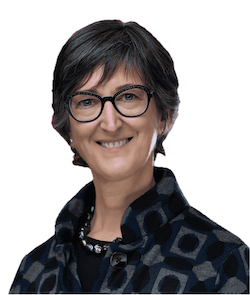
photo - Dr. Tamara Shenkier
Dr. Tamara Shenkier (photo from chw.ca)

Shenkier is a Vancouver-based medical oncologist and educator who retired from BC Cancer in November 2025 after a 31-year clinical career, which was focused on breast cancer care from 2014. She held various leadership roles in medical education and governance, including at the University of British Columbia and the Royal College of Physicians and Surgeons of Canada, and was the inaugural medical director of the After Breast Cancer Service, a BC Cancer-BC Women’s Hospital collaboration supporting survivorship care. More recently, she served as vice-chair of the Provincial Health Services Authority Health Authority Medical Advisory Committee (PHSA HAMAC). She was recognized with the YWCA Women of Distinction Award (education, training and development) in 2024.

Outside of work, Shenkier has raised significant funds through sponsored cycling events for Callanish, a local nonprofit that offers a restorative retreat and healing community for people whose lives have been irrevocably changed by cancer (callanish.org). She also supports the Jewish Federation of Greater Vancouver as a long-time volunteer canvasser and is an inaugural and ongoing board member of the Jewish Medical Association of British Columbia, founded in early 2024 to help create a supportive professional home for Jewish physicians and health professionals, foster mentorship across generations, and strengthen Jewish voice and belonging in health care.

Mossey joins the SHE DAY Vancouver event as an ally.

Raised in Ontario, Mossey earned a bachelor’s in history from the University of Western Ontario, where she was first introduced to Middle Eastern history. She completed her teaching degree at UBC and returned to Ontario for a full-time career as an elementary school teacher and literacy consultant with the Durham District School Board. In 2013, her family relocated to Port Moody.

photo - Laura Mossey
Laura Mossey (photo from chw.ca)

Today, Mossey works as a teacher-on-call with SD43 Coquitlam, often teaching history and using the classroom as an opportunity to clarify misconceptions about Israel. She has committed herself to listening and learning so she can speak with factual integrity in defence of Israel and Canada’s Jewish community. Since the Oct. 7, 2023, Hamas attack on Israel, she has read more than 30 books on Islam, Israel and the broader conflict. In March 2025, she traveled to Israel with Jewish National Fund Greater Toronto.

Also in 2025, Mossey received an Allyship Award from the Vancouver Jewish community, presented through the Jewish Federation of Greater Vancouver. She is an outspoken advocate for social justice and Israel on social media.

Raised in the Anglican Church, Mossey has always understood Israel as the homeland of the Jewish people. Her resolve to stand up for Canada’s Jewish community is rooted in a respect for the Canadian Charter of Rights and Freedoms, and for the Jewish values of ethical responsibility, social justice and compassion. She is currently studying the Torah through participation in Israel’s 929 Project (named for the number of chapters in the Hebrew Bible).

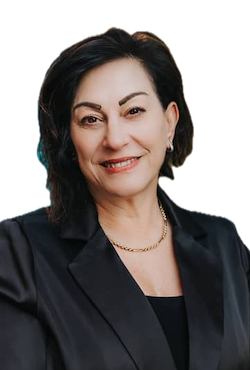
photo - Ruth M’Rav-Jankelowitz
Ruth M’Rav-Jankelowitz (photo from janksdesigngroup.com)

Jankelowitz is an interior designer with more than 30 years of experience in commercial and hospitality design. Known for her strategic and practical approach, she brings expertise in translating brand identity, operational needs and customer experience into built environments that perform.

Jankelowitz has worked internationally with leading fashion and lifestyle brands including Timberland, Bebe, Polo, DKNY, Nike, Balle and Nine West. Her portfolio spans retail, restaurant, corporate and hospitality environments. She currently works with restaurant groups and commercial clients, including OEB Breakfast Co., Tap & Barrel, Earnest Ice Cream, Field and Social, and Return-It.

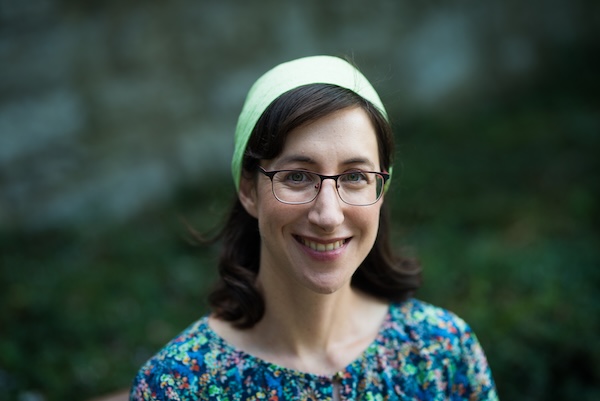
photo - Jocelyn Brown
Jocelyn Brown (photo from chw.ca)

The panel moderator, Brown, is a health and hospital administrator and project manager with more than 25 years’ experience. She has been employed by BC Children’s Hospital, GF Strong Rehabilitation Centre, BC Children’s Hospital Research Institute and the College of Family Physicians of Canada. Currently, she works as a project manager and health-care consultant. 

Born and raised in Winnipeg, Brown has lived in the Lower Mainland since 1997. She and her family currently live in Steveston. She has served the Jewish community as a board member of Hillel BC, CHW, Vancouver Jewish Film Festival, Richmond Jewish Day School, and the Kehila Society of Richmond.

In addition to the speakers, SHE DAY Vancouver will feature a community shuk (market) featuring local, women-led businesses, vendors in beauty, fashion, health and wellness.

Proceeds from SHE DAY events will support the Eden Association Trauma Therapy Centre, which was founded in 1997. The association opened a new treatment centre in the heart of the Gaza Envelope communities following the events of Oct. 7. The centre provides trauma-focused care for girls and women from the northern Negev and Gaza Envelope regions and is strategically located in Kibbutz Dorot, near the city of Sderot.

Since Oct. 7, there has been an urgent need for therapeutic support for women. Untreated trauma worsens over time, affecting mental and physical health, daily life and relationships. For women, the impact extends to their families, communities and Israel’s social resilience. With support from CHW, Eden is expanding its trauma therapy centre to prevent long-term suffering, restore hope and build a healthier future.

To attend SHE DAY Vancouver on March 8, register at chw.ca/she-day. 

– from chw.ca

Posted on February 27, 2026February 26, 2026Author CHWCategories LocalTags CHW, education, fashion, health care, SHE DAY, women
Songs in war of peace

Songs in war of peace

Naomi Cohn Zentner shared how music in the time of war can offer resilience and hope. (photo from Naomi Cohn Zentner)

Earlier this month, ethnomusicologist Naomi Cohn Zentner gave the lecture Music and War: An Optimistic View. Her talk was the fourth in Kolot Mayim Reform Temple’s 2025/26 Many Voices of Jewish Music Zoom series.

Speaking from Israel, Cohn Zentner, a lecturer at Bar-Ilan University, examined how music in the time of war can offer resilience and hope, and is not solely about tragedy and mourning. She started with a photograph of Leonard Cohen and Israeli musician Matti Caspi, who passed away on Feb. 8, the day of her talk. The pair were performing for soldiers during the 1973 Yom Kippur War, Ariel Sharon at their side.

Cohn Zentner then played two songs, composed more than a century apart: “The Battle Hymn of the Republic,” written during the American Civil War, and a 1967 performance by the Nachal Entertainment Troupe called “Hallelujah.”

Contrasting the two, Cohn Zentner argued that the former is a sacralizing, providential song in the war hymn tradition, seeing war very much within a religious way of life and values, while the Israeli song – with lines such as, “If there were no need for rifles anymore, then we would sing ‘Hallelujah’” and “If children could play by the border, then you’d hear their mothers sigh in relief, ‘Hallelujah’” – offers a hope for peace, or a prayer for peace.

“It’s an Israeli war song tradition, which shows just how important peace was in these fighting units,” Cohn Zentner said. “We can see this as two opposing examples of what war songs are about. 

“The religious hymn of the Civil War is ‘Glory, Hallelujah.’ The conflict itself is very religious and violence, while terrifying, is also cleansing and purifying, and death and martyrdom make men free,” she said. In the Israeli song, war is de-romanticized, death is not glorified but used as a reason to end wars, life itself is considered holy, peace is the desired goal, and the music is more national and secular in outlook.

Last year, on the Israeli reality show, Hakokhav Haba (Rising Star), during which a contestant is chosen to represent the country at Eurovision, Daniel Weiss, from Kibbutz Be’eri, selected Cohen’s “Hallelujah” as one of his songs. Weiss, who lost both of his parents during the Oct. 7, 2023, Hamas attacks, performed a duet with Arab singer Valerie Hamaty in both Hebrew and Arabic.

“Of course, this image was so powerful and iconic – of them singing this song together in Hebrew and Arabic after everything that had happened. It was a very emotional moment,” Cohn Zentner said.

Another song Weiss performed, in honour of his parents, was “Ani Guitar” (“I Am a Guitar”) by Naomi Shemer, which contains the lyric “I remember all those who played on me before, and I say thank you.”

“This symbolic issue of a guitar, which used to be a tree, but still has in it the ability to thank all those who [have] played on him … is very, very emotional,” she said.

Weiss lost out to Yuval Raphael in the contest to represent Israel. Raphael, a survivor of the Nova music festival, performed ABBA’s “Dancing Queen” as her final song in the show. She dedicated it to those who died at Nova. 

“I sing about the angels who weren’t fortunate enough to be here now. It hurts because I had this chance not only to come back [from the festival] and to live, but to fulfil my dream. There are those who stayed there, and the shadow behind me is the only thing left of them,” said Raphael, who went on to place second in the 2025 Eurovision with the song “New Day Will Rise.”

At the end of her talk, Cohn Zentner played “Not Alone,” a song penned by Doror Talmon of the band Jane Bordeaux in the weeks following Oct. 7. The song speaks to the feelings of being in the close-knit community of a kibbutz in which everyone has a role and nobody is dispensable; if one person is lost, it affects the entire community.

“The song starts by telling us about all the sad and tragic things that happened, and asks who is going to bring the kibbutz back to what it was,” Cohn Zentner said.

Then, she pointed out, there is a shift in the song to where it answers, “We’ll all extend a hand, we are not alone, and we are partners in fate, in pain and in love, as one people. We will cry and we will overcome, we’re not going to break, we’re going to come together, we have each other, the roots of the trees will go into the earth, and we’re going to be rebuilding.”

The next speaker in Kolot Mayim’s series is Joshua Jacobson, an author, composer and choral director. Jacobson, professor emeritus of music at Northeastern University in Boston, will delve into the history and ongoing evolution of Jewish music in his April 5 talk, Jewish Music: What’s That? For more information, go to kolotmayimreformtemple.com. 

Sam Margolis has written for the Globe and Mail, the National Post, UPI and MSNBC.

Format ImagePosted on February 27, 2026February 26, 2026Author Sam MargolisCategories MusicTags ethnomusicology, Kolot Mayim, music, Naomi Cohn Zentner, peace, songs, war
Successful trip to Cuba 

Successful trip to Cuba 

Cantor Eric Moses led a delegation from his synagogue to Havana, Cuba, this month. (photo from Beth Sholom)

Earlier this month, I traveled to Havana with a delegation from Beth Sholom, the Toronto synagogue where I serve as cantor. Together, we represented the first Canadian Jewish group to visit the island since 2019. Travel to Cuba has been complex and unpredictable for some, but our mission was simple – to support the Jewish community in Cuba and remind them that they are neither forgotten nor alone. 

The island nation continues to face an unprecedented and protracted crisis. There is a shortage of nearly everything, most notably fuel. Gas stations, if open at all, have hours-long lineups. Illicit WhatsApp groups gouge desperate consumers for the little gasoline that remains. Electricity is out for 12 to 14 hours each day. Medical supplies are scarce to nonexistent. Surgeries have been canceled, public transportation suspended and schools closed. Along the highways, people stand with wads of Cuban pesos, hoping someone will stop and offer a ride. And yet, despite these hardships, the small but remarkably resilient Jewish community has not lost hope. 

On Friday evening, we arrived at Beth Shalom Synagogue, locally known as the Patronato, before Shabbat for a briefing with the community’s vice-president. Moments into her remarks, the lights went out. There was no panic, no drama. She calmly pulled out a few flashlights and continued speaking, as though nothing unusual had happened. She then guided us through the synagogue’s modest pharmacy, where scarce medical supplies are distributed not only to Jewish families but to the broader community as well. We were proud to have brought generously donated supplies from pharmaceutical distributor Kohl & Frisch and members of our congregation – though we knew it would not be enough. 

As I entered the sanctuary for services, my contact, William Miller, pulled me aside. “Eric, we have enough generator power for about 20 more minutes.” That meant the Shabbat dinner we had sponsored would likely be served in the dark and with cold food. Again, there was no panic, just another fact of life in today’s Havana. (Our group had helped purchase that very generator during a visit in 2008.) 

Our time on the island was filled with meaningful encounters. We visited all three synagogues – Orthodox, Conservative and Sephardi – participated in hands-on volunteer activities and spent time connecting with community members. We toured the Jewish cemetery, the Holocaust memorial and museum, and visited shut-in seniors during a power outage. We visited the Canadian embassy and heard from the ambassador and her team about Cuba’s precarious future. We found brief moments to experience Havana’s incredible charm, including a ride in a classic car, the taste of a mojito and the sounds of Cuban music. 

By the end of the trip, our group of 16 left Havana feeling enriched, united and deeply humbled. On Friday night, the entire service was led by the youth at the Patronato – a powerful testament to the community’s commitment. I was honoured to address the congregation and shared a simple reflection: in Canada, we have almost everything, while they have almost nothing; yet they possess something we can learn from, a profound sense of pride, spirit and the determination not merely to survive, but to thrive again. One taxi driver summed up the mood of the country when he told me, “We are in a dark tunnel without a way out.” But we were welcomed with open arms and open hearts. 

We departed on Sunday evening on what felt like the last fumes of jet fuel, just hours before Air Canada and WestJet announced the suspension of flights. Those who remain behind do not have the option to leave. They continue to live with constant uncertainty, navigating daily hardships while carrying the weight of more than six decades of a revolution that has failed to deliver on its promises. And yet, the Jews of Havana remain determined, resilient and passionate about their heritage and their future. 

Eric Moses is the cantor at Beth Sholom Synagogue in Toronto.

Format ImagePosted on February 27, 2026February 26, 2026Author Eric MosesCategories WorldTags Beth Shalom Synagogue, Beth Sholom Synagogue, Cuba, Havana, Patronato, tikkun olam

Tackling antizionism head on

Adam Louis-Klein was deep in the Amazon on Oct. 7, 2023 – three months into fieldwork with an Indigenous community, living without any internet or phone contact. Two days later, in a local town, he reconnected with the outside world and saw the news. Then he saw something else: how people in his professional orbit were responding to the atrocities perpetrated against Israelis.

“I spoke up and said I stood in solidarity with Israelis, and spoke up against the bigotry I was already seeing, and I was quickly, basically purged,” he told the Independent.

photo - Adam Louis-Klein
Adam Louis-Klein (photo by Adam Louis-Klein)

Louis-Klein, a McGill University PhD candidate who now lives in New York state, describes a swift loss of “all my social and professional contacts.” But that didn’t stop him from expressing his views. He felt an obligation, he said, to offer a Jewish voice that speaks the same language as the academy and the left, especially in response to antizionism.

“As I wrote more about it, I think my understanding of antizionism got sharper and sharper,” he said. “I got more focused on antizionism itself as an ideology, not just antisemitism.”

That shift – treating antizionism as something that should be named and confronted directly, rather than in the context of its relationship with antisemitism – has become central to his work. In his view, focusing on antisemitism as the lens can become a rhetorical trap, positioning antizionism as a respectable political position.

His ideas went viral. 

“I was posting on Facebook and people kind of liked the little mini-essays I wrote,” he said. He launched a blog at the Times of Israel, then began writing for other outlets. “One thing led to another.”

The visibility has accelerated in recent months, he said. Movement Against Antizionism (MAAZ), the organization he founded and leads, has also caught on rapidly. 

People found his Times of Israel blog and were on the lookout for voices explicitly naming and confronting antizionism, he said. The people he works with have helped refine his language. Looking back at his writing over a short span, he said, “I already see a kind of progression whereby I get sharper at naming antizionism and making that the focus.”

The backlash was instantaneous.

“People tried to shut me down,” he said. “There were fake complaints against me … they would call my advisor, they would call the anthropology department to try and get me expelled.” He said he was removed from WhatsApp groups, a book club he organized collapsed, a presentation he organized on the Soviet roots of antizionist rhetoric was canceled without explanation.

He described a hardened ideological environment.

“I was told that no one would discuss with me whether it’s a genocide,” he said. “The genocide libel was not something that could be discussed.”

While the university environment may be a hotbed of antizionism generally, anthropology is particularly hostile, he said.

Early anthropology was connected to colonial infrastructures and later efforts to reckon with that legacy have put “settler-colonialism” at the centre of the discipline, Louis-Klein said. In his telling, the field has “swallowed wholesale” a narrative in which “Israelis are these evil white settlers.” He no longer sees a future in the discipline. “It’s not a field that Jews who do not profess loyalty to the antizionist movement … can exist in at this point,” he said.

Louis-Klein, who grew up mostly in Seattle and who spent time in Whistler growing up, holds a bachelor’s degree in philosophy from Yale University, a master’s in philosophy from the New School, a master’s in anthropology from the University of Chicago, and is nearing completion of his PhD at McGill.

With academic doors closing in front of him, he sees a new possibility: the creation of a serious intellectual space for the study of antizionism itself. 

“There is now a movement to try and create an academic space for critical studies of antizionism,” he said, adding that he wants to “provide an intellectual framework for treating antizionism as an objective study, as something that we can critically understand, break down, trace its genealogy, understand how it functions in the present as its own phenomenon.”

In his view, the public conversation must change for practical reasons, not just academic ones.

“We cannot fight anti-Jewish violence today without naming and opposing antizionism,” he said. “The vast majority of anti-Jewish violence is directly motivated by antizionism.” 

Even attacks rooted in “more classical” right-wing antisemitism now unfold within “the overall hysteria that has been created by antizionism since Oct. 7 and the genocide libel,” he said. Besides, he argued, as a strategy, equating antizionism and antisemitism is failing.

“Calling antizionism antisemitism is also not working,” he said. “We’re assuming that if we just say it’s antisemitic, a number of institutional levers will set into place Holocaust memory, and it’ll shut it down.”

But that’s not happening, he said, “because antizionism doesn’t look like classical antisemitism.”

Instead, he thinks people need to be taught what antizionism is. 

“You can’t just say it’s antisemitic,” he said. “You have to explain to people what antizionism is as an ideology, and you have to stop treating it as political critique.”

He draws a distinction between debating Zionism and describing antizionism as a social phenomenon. 

“Talking about antizionism also doesn’t mean … explaining how Zionism is actually good. It goes far beyond that. It means explaining how antizionism is a hate movement,” he said.

“It’s a mob movement,” he added. “There are lynch mobs … people who hunt down Zionists and try and shame and humiliate them.… They vandalize buildings, they smash windows.”

MAAZ delivers training in different sectors, including education, business, arts and journalism, designed to help people understand antizionism and “to fight back and to give people a language.”

“We really think naming and labeling is the way to defeat it,” he said.

Louis-Klein described teaching people to “maintain boundaries,” and to label recurring accusations – “colonizer libel, apartheid libel, genocide libel” – as antizionist so that Jews and allies stop feeling obligated to defend their legitimacy and instead “hold antizionism to account.”

The organization also includes legal thinking, with scholar Rona Kaufman developing a legal concept of antizionist discrimination.

Beyond training, MAAZ emphasizes public education. Louis-Klein encourages people to explore the organization’s website (movementagainstantizionism.org), which he describes as “kind of like a museum … a curation where you enter inside of the whole history of antizionism and its different forms and the different libels.” 

He emphasized a point he sees as essential for long-term success: expanding beyond the Jewish community. 

“Having non-Jewish people who can get behind that … will just be the key,” he said. “That will be the thing that catapults it to the next stage.” 

Posted on February 27, 2026March 9, 2026Author Pat JohnsonCategories NationalTags academia, Adam Louis-Klein, antisemitism, antizionism, discrimination, education, MAAZ, Movement Against Antizionism

Thinking of leaving Canada?

Michael Sachs moves to Tulsa, helps others make a similar shift.

When Michael Sachs and his family moved from Vancouver to Tulsa, Okla., he did not expect the response that followed.

“After I came down, I just got lots of people reaching out to me,” said Sachs, who relocated to become senior director of the Jewish Federation of Tulsa. The messages came from all over Canada – Toronto, Windsor, Montreal, Halifax, Winnipeg, Vancouver.

A significant number of Canadian Jews seem to have decided on – or are pondering – relocation, he told the Independent.

Tulsa’s Jewish community has been running an organized outreach effort called Tulsa Tomorrow, designed to give Jewish families a chance to visit, experience the city and its Jewish life, and consider relocating there. After hearing from so many Canadians, Sachs suggested Tulsa Tomorrow create a specifically Canadian-focused initiative. Together, they created Lech L’Tulsa (“Go to Tulsa”), an enhanced Tulsa Tomorrow program that addresses obstacles that face Canadians.

To date, the new initiative has drawn more than 350 applications from Canadian families, representing more than 1,000 people. Groups of prospective movers are invited to come for multi-day exploratory trips that include meeting community leaders, attending Shabbat services, touring neighbourhoods, and connecting with local resources to help them assess whether moving to Tulsa would make sense for their families.

photo - Michael Sachs
Michael Sachs (photo from Michael Sachs)

Sachs’ enthusiasm for his new city is palpable, but he is careful to position the campaign in ways that do not threaten other Jewish communities.

“We’re not trying to steal people,” he said. “We’re not trying to recruit.”

Instead, he describes the effort as practical support for people already considering a move. “We’re just trying to find ways for those who have made this decision … to help lower the bar, to make it be a possibility.”

The exploratory visit planned for late February has already outgrown expectations. “The average cohort in the past would be 15 to 20 people,” Sachs said. This time, they have already reached that capacity and have expanded it to 55.

Cost of living is one of the most significant differences families notice.

“If you are sitting in a decent position on your house in Vancouver and you sell it, you can get a house here, possibly mortgage-free,” said Sachs.

Oklahoma, he added, is “a very friendly state.” Taxes are lower and “you bring home more of your paycheque,” though health care works differently than in Canada.

Health care is a cost, he acknowledged, but it is also more speedily accessible.

Tulsa’s Jewish community, he said, numbers about 7,500, with roughly 2,500 actively involved. There is a 16-acre Jewish community campus, a community centre, a retirement facility, a Jewish day school through Grade 5, a Holocaust centre and synagogues.

“It is a very warm community,” he said. “Southern hospitality is a big thing here.”

Sachs is intentional about how he frames the program.

“With every conversation we have, we start off with two things,” he said. “One, we are not lawyers, so we don’t give you legal advice.” Immigration is complex, and families are directed to law firms offering consultations. “We’re highly encouraging everyone … to use them because we don’t want people to try to do stuff themselves.”

Second, he said, “we’re not finding people jobs.” Each family must evaluate its own employment prospects. Immigration is not simple.

Sachs emphasized that Lech L’Tulsa is a nonpolitical program and he hedged on whether the United States is a better place than Canada for Jews to live.

“A decision of this magnitude cannot be made on a single issue,” he said. For his family, the calculation included “cost of living, future for our children, the fentanyl crisis … antisemitism was one of those factors.”

He cautioned against moving solely because of antisemitism.

“Nowhere is immune,” he said.

At the same time, he said, based on data from Statistics Canada, “a Jew in Canada is nine times more likely to suffer a hate crime than a Jew in the United States.”

That said, most families are driven primarily by practical concerns. “People decide because of economic reasons, cost of living, opportunities,” said Sachs.

He described Tulsa as having a similar hip vibe to Austin, Tex., a decade ago.

Sachs admitted he remains emotionally tied to Vancouver.

“The community of Vancouver is in my heart always,” he said. “My mom is there. My friends are there.”

Ultimately, he views his family’s move and the Lech L’Tulsa project as part of a broader obligation. “This is part of the commitment that I made ultimately … many years ago,” he said, “to speak up, to advocate … and to help.” 

Posted on February 27, 2026February 26, 2026Author Pat JohnsonCategories WorldTags emigration, Lech L’Tulsa, Michael Sachs, Oklahoma
Kindness as a matter of fact

Kindness as a matter of fact

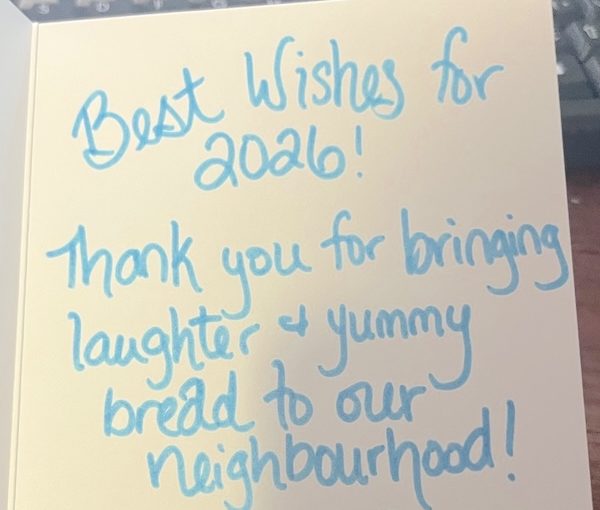
A note that was delivered to the Okanagan Chabad Centre recently. (photo from Okanagan Chabad Centre)

A handwritten note showed up in our mailbox a few weeks ago. It was from neighbours of a different faith, with just a few lines: “Best wishes for 2026! Thank you for bringing laughter & yummy bread to our neighbourhood.”

That was all. No mention of beliefs or interfaith-type language. No apparent agendas. Just the neighbourhood.

Here’s what happened. 

On Friday afternoons, just before sunset, when our family welcomes Shabbat, a few fresh loaves of Fraidy’s homemade challah usually leave our house. Not for any special reason. It’s simply Friday. That’s what the end of the week looks like in our home.

We usually run out with some of the kids. We go next door, across the street, behind the alley, and beyond. We’re making connections, formed among people with very different beliefs and backgrounds.

One week, kosher wine appeared at our door. Another week, neighbours opened their home when our guests needed a place to sleep. Another week, children’s clothing arrived. Another week, unexpected help showed up when it was needed most. The small stories are endless.

All of this just because fresh yummy bread goes out consistently – with no strings attached. That’s all that really happened. 

Kindness now moves back and forth the way it does when it’s real: without announcements, without keeping score, without any agendas.

People don’t live next to ideas. They live next to people.

Long before anyone asks what you believe, they already know whether life feels easier around you. Kinder. More decent. More human.

They know whether generosity shows up naturally, or only when it’s requested. Almost anyone can be kind once, or when there’s a need.

What changes the environment is when kindness happens often enough that it stops feeling like an act that someone did and starts feeling like the way things are.

They didn’t thank us for what we believed. They didn’t thank us for our faith. They didn’t even really thank us for the bread either. They thanked us for what the neighbourhood feels like. 

That’s why this handwritten note is so special. Not because it notices an act we had done, but because it describes the laughter and yumminess that the neighbourhood is starting to feel. And what one neighbourhood feels like is what a city – and a world – will become. 

Kindness will change the world when it grows from being a random act and starts becoming a matter of fact. 

Rabbi Shmuly Hecht is co-director of the Okanagan Chabad Centre with his wife, Fraidy Hecht.

Format ImagePosted on February 27, 2026February 26, 2026Author Rabbi Shmuly HechtCategories LocalTags Chabad, community-building, Jewish life, kindness, Okanagan

Personal stories, vital lessons

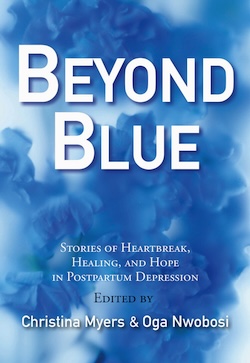
“In the pages of this book,” write Oga Nwobosi and Christina Myers, co-editors of Beyond Blue: Stories of Heartbreak, Healing and Hope in Postpartum Depression, “readers will find the personal stories of 26 writers who all encountered some variety of perinatal mood disorder, whether officially diagnosed at the time or identified only in retrospect many years after the fact. There is rage and sadness and tears and trauma; there is also hope and humour and healing. What these stories have in common is the vulnerability it requires to share out loud – one of the most powerful manifestations of courage.” 

image - Beyond Blue book coverNwobosi and Myers, who met in 2007 at a meet-up of new mothers facilitated by the Pacific Post Partum Support Society in Richmond, note that, while “perinatal mood disorders are better known and openly discussed today than they were then, there are still too many layers of stigma, shame, isolation and uncertainty. Many people still don’t get timely help; most don’t get any help at all.”

There is a lot to learn from reading Beyond Blue, notably that “depression,” or feeling “blue” doesn’t begin to cover the complexities of postpartum depression. It takes many forms – sadness, fear, pain, exhaustion, anger, some of the above, all the above, and so many other configurations. It’s not a matter of every woman feeling any one thing or all women experiencing the same range of emotions and physical sensations. Every instance is different, in both causes (to the extent they can be known) and effects. Every woman is different, not only in personality, but in health, social and other circumstances.

Leanne Charette, for instance, has cerebral palsy. “I pushed for many long months, trying to get apathetic, or downright ableist, doctors to help me achieve the dream of birthing children from my disabled body,” she writes. The doctors’ attitudes impacted her, of course, increasing her anxiety, among other things. She not only successfully conceived, but gave birth to twin boys.

“As my children were placed in my arms for the first time, their tiny fingers and IV tubes tangling with my own, a hypervigilance awoke alongside the all-consuming love in my heart,” writes Charette. “Sleep became impossible. For days, as we waited to be discharged from the hospital, I would hardly close my eyes, convinced my children might be taken away, starved or harmed in the space of a blink.”

Other women also write about the fear of someone, including themselves, harming their children. Sleeplessness is common, as are feelings of guilt about so many aspects of motherhood, such as having trouble during pregnancy, giving birth or breastfeeding.

Contributors talk about good and bad advice they received while struggling with postpartum depression. In a few instances, seeing a mental health professional was life-saving.

Jewish community member Kelley Korbin is one of the contributors. Her bio notes, “She is the proud mum of three thriving adults, but the early years were not easy as she experienced the shame, anxiety and confusion of postpartum depression following two of her pregnancies.” Her essay is about the first turbulent year of her son Jake’s life.

“Just half a day into motherhood I was doubting my ability to nurture,” writes Korbin. Weeks later, things were not going well. “If Jake was awake – and he was awake most of the time – he was either fitfully nursing or crying.”

Korbin mustered the courage to ask the public health nurse what she was doing wrong. “‘Colic,’ the nurse pronounced, and hastily retreated to the get-away car she had parked in the driveway. I was drowning, but she had thrown me the teeniest of life preservers,” writes Korbin. “Armed with a diagnosis, however vague, and the doggedness of my gritty pre-motherhood persona, I scoured the parenting sections of bookstores and libraries.”

What she found was that “evening colic” normally “vanishes after three months.” Even though Jake cried all day, not just at night, Korbin started the countdown. After “the promised three-month colic finish line” came and went, she took Jake back to the doctor for the “umpteenth visit.” He pronounced Jake healthy, but warned the colic wouldn’t end soon. Two months later, she started therapy. By Jake’s first birthday, “he was sleeping through the night,” and so was Korbin.

Beyond Blue should be read by anyone who’s thinking about having children, new parents, and everyone who knows someone who’s just had kids. So, basically, everyone. 

Posted on February 27, 2026February 26, 2026Author Cynthia RamsayCategories BooksTags Beyond Blue, education, family, health, Kelley Korbin, postpartum depression, women, women's health

Posts pagination

Previous page Page 1 … Page 10 Page 11 Page 12 … Page 667 Next page
Proudly powered by WordPress