Skip to content
  • Home
  • Subscribe / donate
  • Events calendar
  • News
    • Local
    • National
    • Israel
    • World
    • עניין בחדשות
      A roundup of news in Canada and further afield, in Hebrew.
  • Opinion
    • From the JI
    • Op-Ed
  • Arts & Culture
    • Performing Arts
    • Music
    • Books
    • Visual Arts
    • TV & Film
  • Life
    • Celebrating the Holidays
    • Travel
    • The Daily Snooze
      Cartoons by Jacob Samuel
    • Mystery Photo
      Help the JI and JMABC fill in the gaps in our archives.
  • Community Links
    • Organizations, Etc.
    • Other News Sources & Blogs
    • Business Directory
  • FAQ
  • JI Chai Celebration
  • JI@88! video

Recent Posts

  • Sharing her testimony
  • Fall fight takes leap forward
  • The balancing of rights
  • Multiple Tony n’ Tina roles
  • Stories of trauma, resilience
  • Celebrate our culture
  • A responsibility to help
  • What wellness means at JCC
  • Together in mourning
  • Downhill after Trump?
  • Birth control even easier now
  • Eco-Sisters mentorship
  • Unexpected discoveries
  • Study’s results hopeful
  • Bad behaviour affects us all
  • Thankful for the police
  • UBC needs a wake-up call
  • Recalling a shining star
  • Sleep well …
  • BGU fosters startup culture
  • Photography and glass
  • Is it the end of an era?
  • Taking life a step at a time
  • Nakba exhibit biased
  • Film festival starts next week
  • Musical with heart and soul
  • Rabbi marks 13 years
  • Keeper of VTT’s history
  • Gala fêtes Infeld’s 20th
  • Building JWest together
  • Challah Mom comes to Vancouver
  • What to do about media bias
  • Education offers hope
  • Remembrance – a moral act
  • What makes us human
  • המלחמות של נתניהו וטראמפ

Archives

Follow @JewishIndie
image - The CJN - Visit Us Banner - 300x600 - 101625

Author: Pat Johnson

Survivor urges vigilance

Resilience and determination were the themes at an International Holocaust  Remembrance Day commemoration at the Bayit synagogue in Richmond Jan. 27. It was the 81st anniversary of the liberation of Auschwitz-Birkenau.

Marie Doduck, a child survivor who was the youngest Jewish orphan admitted to Canada after the war, spoke of her survival story, as well as her life in Canada, and she urged vigilance in the face of rising contemporary antisemitism.

Doduck was born Mariette Rozen in Brussels, Belgium, in 1935, the youngest of 11 children. She was 5 years old when the Nazis invaded her hometown in 1940. She and her siblings were scattered across the city and countryside, hiding with non-Jewish families, in convents and orphanages, and at times assisting the resistance. While her parents and three of her siblings were killed, eight survived, a remarkable number given that an estimated 85% of Belgian Jewish children were murdered.

In 1947, she immigrated to Canada as a war orphan and, with three of her surviving siblings, was brought to Vancouver. Her memoir, A Childhood Unspoken, was published in 2023. (See the Independent’s review of the book at jewishindependent.ca/an-intense-urgent-read.)

Doduck spent the war years being shuffled from one place to another, even serving as a messenger between her siblings and for the resistance, because of her photographic memory.

“I lived mostly in darkness, literally in hiding places where the Nazis could not find me,” she recounted. “When I returned to Brussels years later, I could not recognize the city in the daylight, for my Brussels was a place of darkness.”

Her survival – and that of seven other siblings – is a result of series of near-miracles and near-misses.

“At one of the orphanages, the mother superior hid me in a rat-infested sewer after one of her nuns found out that I was a Jewish child and reported me to the Gestapo,” she said.

After liberation, Doduck was one of 1,123 orphans sponsored by Canadian Jewish Congress to migrate to Canada. Her adaptation to life in Vancouver, while smoother than many of the children, was very difficult.

“When I first tried to tell people what happened to me, they said, ‘Forget the past,’” she recalled. “We all find our own ways of dealing with pain. I became more resilient and learned from life’s harsh lessons to depend only on myself. I, as a child, had a strength to go on despite the mistrust, fear and pain that I then felt. I went on. I went on because I would not consider the alternative. Those lessons are, in a significant way, responsible for whom I am today.”

Doduck explained that the word “holocaust,” which came into the use in 1950s, originally meant a sacrifice burnt entirely on the altar. She contrasted her own experience with that nihilistic image.

“The person you see before you tonight, Marie Doduck, is a happy Jewish mother, a successful businesswoman, an author, a grandmother, a great-grandmother,” she said. “I’ve also been president of my synagogue and on the board of many Jewish organizations in our community.”
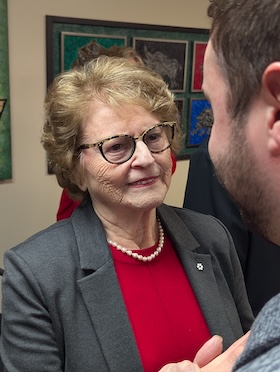
photo - Marie Doduck mingled with attendees after the International Holocaust Remembrance Day commemoration at the Bayit
Marie Doduck mingled with attendees after the International Holocaust Remembrance Day commemoration at the Bayit. (photo by Pat Johnson)

She is a co-founder of the Vancouver Holocaust Education Centre (VHEC). 

Doduck’s personal story of success and happiness is replicated among countless survivors of the trauma of that time.

“Although our childhood was ripped away from us, we survived and continued and we thrived,” she said. “We have achieved so much for ourselves, our families, and for our community. And I and many others will continue to speak about our stories and to remember, to acknowledge those who perished, who cannot speak for themselves. It is estimated that only 11% of Jewish children who were alive in Europe in 1939 lived to see 1945. As many as 1.5 million of the six million Jews cruelly murdered by the Nazis were children under the age of 18.” 

Doduck said the world needs to learn from the past.

“No society is immune to the danger of prejudice, antisemitism and racism, and we must work together to stand up when we see injustice in the world around us,” she said.

She explained that the vision of the VHEC is a world free of antisemitism, discrimination and genocide, with social justice and human rights for all.

“This noble idea can only be achieved when governments, schools, educators and organizations work together hand-in-hand to teach future generations about the danger of racism and discrimination,” Doduck said. “Together, we must remember the past and pass on the teaching of the Holocaust together.… We must make ‘never again’ a reality, not just an ideal.”

Ezra Shanken, chief executive officer of the Jewish Federation of Greater Vancouver, took exception to the term “survivor” to describe people like Doduck. 

“They’re not survivors. They’re thrivers,” he said. “Survivors just get by. Survivors are what they thought we would have as a Jewish people after the Shoah. They thought we would have a group of survivors who could not make it in the world beyond the Shoah.”

The lives of these individuals defied expectations, he said. 

“We have thrivers that not only found meaningful relationships, not only built families, not only had kids, but cured diseases and became artists and won Nobel Prizes,” said Shanken. “They did for the world, but the world didn’t do for them.”

The countries where survivors made their homes and contributed so much have become rampant with antisemitism, he said.

Shanken called on those in the room, especially elected officials, to demonstrate clear leadership.

“It is critical that people understand what is in bounds and what is out of bounds within our society…. I know it’s hard as politicians to get that done,” he said. “But I have to tell you, please, on our behalf, keep doing as much as you can because we need you.” 

Parm Bains, member of Parliament for Steveston-Richmond East, sent greetings from Prime Minister Mark Carney.

Kelly Greene, member of the BC Legislature for Richmond-Steveston and minister for emergency management and climate readiness, brought greetings from Premier David Eby. Also in attendance were fellow MLAs Hon Chan (Richmond Centre), Steve Kooner (Richmond-Queensborough) and Teresa Wat (Richmond-Bridgeport).

Richmond Mayor Malcolm Brodie, in attendance with city councilors Laura Gillanders, Kash Heed, Andy Hobbs, Alexa Loo and Bill McNulty, read a proclamation from the city. He noted that there are fewer Jews in the world now than there were in 1939.

Doduck was joined in lighting memorial candles by three fellow survivors, Amalia Boe-Fishman, Miriam Dattel and Regine Fefer. Brodie and Dave Chauhan, chief superintendent of the Richmond RCMP, also participated in the candlelighting.

Sherri Barkoff, vice-president of the Bayit, emceed the event, which was presented by the Richmond Kehila Society, Friends of Simon Wiesenthal Centre, the VHEC, the Bayit, the Centre for Israel and Jewish Affairs, and the Jewish Federation of Greater Vancouver.

Rabbi Levi Varnai welcomed guests to the event, Cantor Yaakov Orzech chanted El Moleh Rachamim, Café McMullen, program officer at the VHEC, spoke of the organization’s work, and violinist Lior Perry played before and during the ceremony, including a piece from the film Schindler’s List. 

Posted on February 13, 2026February 11, 2026Author Pat JohnsonCategories LocalTags Bayit, Ezra Shanken, Holocaust, Marie Doduck, Richmond, Shoah, survivors
Seniors profoundly affected

Seniors profoundly affected

Dr. Gloria Gutman thought interviewees would have refused to place themselves in situations where they might be targeted or victimized, like rallies or Jewish events, but that wasn’t the case. “People felt more comfortable and secure when they were actively part of the Jewish community,” she said. (internet photo)

There’s been lots in the media about Jewish students feeling intimidated, but we tend not to think about older people,” Dr. Gloria Gutman told the Jewish Independent about a recent study she conducted with Dr. Sharon Avidor on the experiences of older Canadians since the Oct. 7, 2023, Hamas terror attack on Israel. “We really want to raise awareness of older people among service providers and the general community, and let them know that the impact is really on all of our community.”

Gutman, a lifelong Vancouverite, is vice-president of the International Society for Gerontology, director emerita of the Gerontology Research Centre at Simon Fraser University and professor emerita of SFU’s department of gerontology. Wondering how older members of the Canadian Jewish community were coping in the aftermath of Oct. 7, she reached out to the local Jewish community in summer 2024 for help in recruiting participants for the study she conducted with Avidor, a psychologist in the faculty of social and community sciences at Israel’s Ruppin Academic Centre. Their findings were published in the Canadian Journal on Aging last fall, with the title, “I No Longer Can Say ‘Never Again.’”

Avidor and Gutman interviewed 15 older adults, including Holocaust survivors and Russian immigrants to Canada, and 11 service providers. Respondents were not just deeply affected by the Oct. 7 attack and the ensuing Israel-Hamas war, but experienced the public discourse as anti-Israel and at times antisemitic, upending their sense of safety and belonging.

The study found that Holocaust survivors and their offspring, older Russian emigres to Vancouver and LGBTQ+ Jewish seniors were more impacted. Almost everyone interviewed felt a deep connection with Israel, and personally affected by Oct. 7. Many felt isolated from non-Jews in their communities and were shocked at the lack of support they encountered outside of the Jewish community, as well as by the extent of misinformation proliferating about Israel. Given their experiences of antisemitism and discrimination, many were frustrated by the notion that Jews were considered a part of the white majority. 

Interviewees were apprehensive about publicly displaying their Jewish identity and felt deeply offended by the anti-Israel vitriol expressed in pro-Palestinian demonstrations. They felt a strong need to connect with others in the Jewish community, as connecting with like-minded people provided solace at a time when their social circle was shrinking to almost exclusively Jewish friends.

Prior to the study, Gutman thought interviewees would have refused to place themselves in situations where they might be targeted or victimized, like rallies or Jewish events, but that wasn’t the case. “People felt more comfortable and secure when they were actively part of the Jewish community, and some who had not previously been involved came out of the woodwork after Oct. 7, getting comfort from engaging in community-based events,” she said. 

Many of the LGBTQ+ respondents were in a somewhat different situation, alienated from LGBTQ+ groups because of “belligerent, negative, and even hateful comments about Israel, sometimes personally aimed towards them because of their Jewish backgrounds,” notes the study, while also not feeling comfortable attending events with an unequivocal pro-Israel view. Thus, Avidor and Gutman write, many in the LGBTQ+ community “were given to experiences of loneliness and isolation.”

Holocaust survivors said they were retraumatized by Oct. 7 and what has followed – the study’s title comes from a survivor who used to end her talks in schools with “never again,” but told Avidor and Gutman, “My recent talks are that I no longer can say never again.” 

Emigres from the former Soviet Union felt especially vulnerable. One of the service providers for members of this group described why this was the case: “Because they came, you know, after Holocaust, after everything they’ve been through in Soviet Union, it was terrible. It was terrible. Antisemitism was terrible. And I know my parents went through all this too: wouldn’t be able to be accepted to a university or a good job because of their last name. So they all have these previous traumas and experiences.”

Some of the seniors had robust coping abilities because they had overcome immense struggles in the past. “We heard things like, ‘we’ve lived through this before and will live through it again,’” Gutman said.

Her hope is that this research will raise awareness of the impacts of Oct. 7 on Jewish older adults, particularly among service providers.

“Ours is one of the few studies, to our knowledge, to explore the effects of antisemitism among older adults, often a less vocal and less salient group in society,” she said. “The Oct. 7 attack, the Israel-Hamas war and perceived antisemitism and anti-Israeli rhetoric, have had profound effects on Jewish older adults living in Canada, and this must be recognized and given appropriate attention.” 

Lauren Kramer, an award-winning writer and editor, lives in Richmond.

Format ImagePosted on February 13, 2026February 11, 2026Author Lauren KramerCategories LocalTags Gloria Gutman, Oct. 7, seniors, Sharon Avidor, surveys, trauma
Farm transforms lives

Farm transforms lives

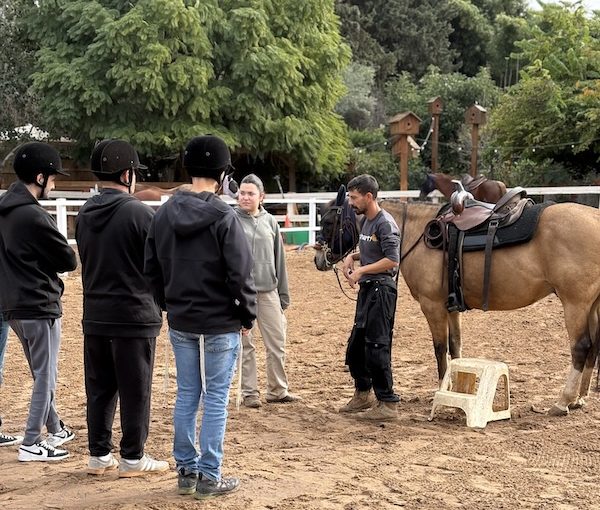
Danny’s Farm is a leading Israeli centre for holistic healing, offering animal-assisted trauma care, among other services. (photo from Danny Stirin)

After Canadian-Israeli media personality Shai DeLuca was critically wounded in 1996 during his service in the Israel Defence Forces, the instructions from his peers were as blunt as they were unhelpful: be a man, move on. 

The injury – that left him with temporary loss of use of his legs –  kept him in hospital and rehabilitation for nearly a year, in an era when post-traumatic stress was rarely named, let alone treated. “Back then, PTSD wasn’t understood the way it is today,” said DeLuca. “No one had language for it. No one recognized the symptoms.”

At the end of July 2025, DeLuca traveled to a ranch southeast of Rehovot, Israel, with a Canadian organization supporting IDF veterans with post-traumatic stress disorder, families of Oct. 7 victims and Israelis living with trauma caused by terror. What began as just a visit to Danny’s Farm, a unique therapeutic centre, turned into a revelation. 

At the end of the tour, ranch owner and chief executive officer Danny Stirin sensed something about DeLuca and asked a pointed question – why had he not dealt with the mental after-effects of his injury?

“I felt like I didn’t even need to say a lot and he understood what I meant,” recalled DeLuca. “He said, ‘the moment you’re ready, just message me. I will be there with you every step of the way.’”

The visit was “life-changing” for DeLuca and returning to the farm later allowed him “to understand parts of my own story buried for years.”

DeLuca credits Stirin as “the person who freed me in a lot of ways from a lot of weight that I’ve been carrying for so many years.”

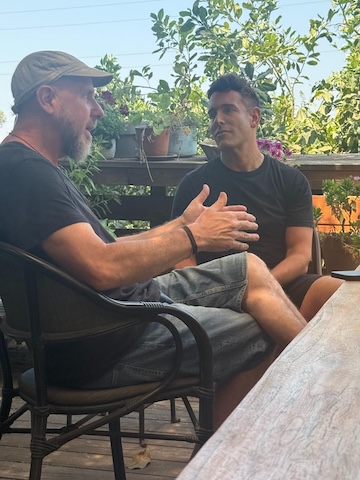
photo - Danny Stirin, left, and Shai DeLuca in conversation. DeLuca credits Stirin as “the person who freed me in a lot of ways from a lot of weight that I’ve been carrying for so many years"
Danny Stirin, left, and Shai DeLuca in conversation. DeLuca credits Stirin as “the person who freed me in a lot of ways from a lot of weight that I’ve been carrying for so many years.” (photo from Shai DeLuca)

Since its inception in 2016, Danny’s Farm has become a refuge for Israelis grappling with trauma, be it from war or terror. At first glance it looks like a ranch – stables with dozens of horses and many small animals about – but amid the pastoral view is a clinic, recognized as a leading Israeli centre for holistic, animal-assisted trauma care. Treatment rooms for art, music, bodywork and complementary medicine sit alongside the barns, and a multidisciplinary staff of psychologists, social workers and emotional-therapy instructors anchors the work with patients. The farm treats some 1,500 people each week.

Even before Oct. 7, the farm was treating children with special needs, survivors of sexual violence, and adults with complex trauma, filling a gap in an under-resourced mental-health system. Since the Hamas attacks and ensuing war, it has become a safe zone for reserve soldiers, evacuees from the south and north, and families coping with loss, dislocation and rocket fire.

For Stirin, the farm grew out of his own brush with crisis and a decision about what kind of fulfilment he sought professionally. “It’s like there’s a point in your life when you’re looking for a purpose,” he said, adding that he wanted the farm to be a tangible example for his children: “so they can see that somebody is going with his heart, all the way.”

A deeper motivation, though, was to help other people with their pain. “I felt that I have to hold the hope for others having a crisis, as I did,” he said. 

Stirin’s choice to place animals at the centre of this work came from his childhood. “Since I was a boy, I had a long attraction to animals. All my life I was near them,” he said.

Born in Argentina to a grandfather who worked as a “gaucho,” or cowboy, he grew up with horses and dogs and carried that bond into adulthood. “I realized in the best way, the very powerful way, I felt the energy of the healing, just being near the simplicity of these creatures,” said Stirin.

On the farm, that idea has been formalized into a program that pairs equine therapy with group and individual treatment, and specialized tracks for traumatized children and families. The model, developed in partnership with the resilience organization Tkuma and supported by various funders, is designed to give long-term structure to people who might otherwise never access, or have access to, sustained care.

If there is a single principle guiding Danny’s Farm, it is that trauma is both ubiquitous and intensely personal. “The human soul is very fragile, and very different from one to one,” Stirin said. “The trauma … it plays with you. It can come in all kinds of different ways, shapes.”

Because the nature of trauma depends on a person’s personality, history, physical and mental structure, he said, therapists must approach treatment with “a lot of flexibility.”

“Each one needs something else. That’s what I believe,” he said. 

For veterans like DeLuca, who was told to tough it out, the encounter with this kind of care was “liberating.” 

Coming back to the ranch last month to introduce visiting media to the farm, he said he found at the farm the space to see his injury “through a different lens,” as part of a story that “did not have to end in silence.” 

He said, “With PTSD, the challenge is not closing the door, but opening it, and dealing with it. And what Danny did was [tell] me that I don’t have to keep that door closed.” 

Dave Gordon is a Toronto-based freelance writer whose work has appeared in more than 100 publications around the world. His website is davegordonwrites.com. His trip to Israel was co-sponsored by the Or Ofir Foundation.

Format ImagePosted on February 13, 2026February 11, 2026Author Dave GordonCategories IsraelTags Danny Stirin, equine therapy, health care, Israel, PTSD, Rehovot, Shai DeLuca, war
Musical legacy re-found

Musical legacy re-found

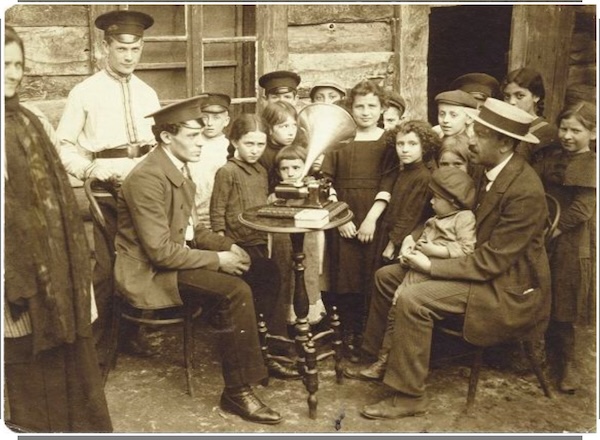
Zusman Kiselgof, member of S. An-sky’s ethnographic expedition, recording folklore in Kremenets, Russian Empire (now in Ukraine), 1912. Four events relating to the An-sky expedition take place in Vancouver Feb. 20-22. (photo from YIVO)

On Feb. 21, Or Shalom hosts Christina and the Zamlers in a special concert, as part of the congregation’s Light in Winter music series, co-sponsored by the Peretz Centre for Secular Jewish Culture and KlezWest. 

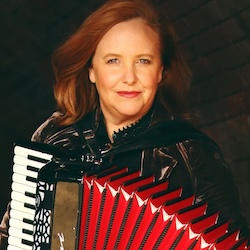
photo - Christina Crowder
Christina Crowder (photo from Peretz Centre)

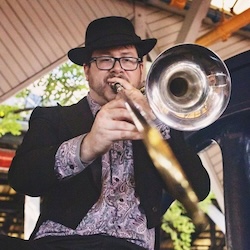
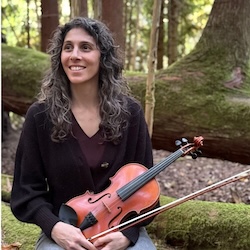
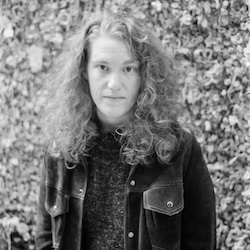
Presenting pieces ranging from lively freylekhs to elegant mazurkas, Jewish wedding melodies to nigunim, Christina Crowder (accordion and tsimbl) and Pacific Northwest klezmer performers Jimmy Austin (trombone) and Mae Kessler (violin) will take the audience on a musical journey. Joined by Ashkenazi dance leader Maia Brown, they will draw from a repertoire of music gathered from shtetls across the Russian Pale of Settlement more than 100 years ago. 

Along with the band’s musical performance and dance session, Crowder will recount the remarkable story of this trove of Ashkenazi music manuscripts, how they came to be collected, largely forgotten and then “rediscovered” in 2017. 

The story begins in 1912, when Yiddish writer and ethnographer S. An-sky, with funding from the Russian government, led a collecting “expedition” to approximately 70 shtetls in the Pale of Settlement. Aware that traditional ways of Ashkenazi life were fading and that people were emigrating, An-sky was determined to gather and preserve both tangible and intangible aspects of the Ashkenazi cultural legacy. 

photo - Jimmy Austin
Jimmy Austin (photo from Peretz Centre)

While not against “modernity,” he believed in the importance of Jews knowing their own history and traditions in order to maintain their identity in a changing world. Members of the project took photographs, collected ceremonial and everyday objects, compiled folk tales and noted local lore.

Collecting music manuscripts was an important part of the project. Music played a prominent role in community life, not only for entertainment or religious purposes, but to accompany and set the tone for many lifecycle experiences, especially weddings. Professional musicians in the shtetls offered more than 1,000 handwritten manuscripts with original and traditional compositions.

When the Russian government withdrew funding in 1914, with the onset of the First World War, the An-sky expedition ceased to exist. The collection appears to have been stored in different locations at various times and, although relatively intact, its location was either uncertain or access was consistently denied. 

However, in 2017, the music collection, stored at the Vernadsky National Library in Kyiv, became accessible. This was the result of a series of serendipitous events, beginning when two attendees at a Tokyo klezmer workshop met, one of them fluent in Ukrainian. She was allowed to view some of the collection at the library and copy 600 manuscripts to a memory stick.

photo - Mae Kessler
Mae Kessler (photo from Peretz Centre)

While klezmer music has developed a following over the past many years, the number of known traditional Ashkenazi melodies was quite small, approximately 300 pieces. The recovery of the An-sky expedition’s repertoire has had a significant impact on the revival of klezmer around the world. The Klezmer Institute, of which Crowder is a co-founder and the executive director, has played an important role in helping musicians, the public and academics view and use the collection. 

Through their Kiselgof-Makonovetsky Digital Manuscript Project, volunteers have translated and transcribed more than 1,300 of the handwritten musical manuscripts, which have been digitized and are universally available on the Klezmer Institute’s website (klezmerinstitute.org).

photo - Maia Brown
Maia Brown (photo from Peretz Centre)

In connection with the Feb. 21 concert event, which will take place at Or Shalom’s temporary home (Cityview Church), there will be two workshops offered at the Peretz Centre on the afternoon of Feb. 22 – one for musicians, led by Crowder, the other for dancers, led by Brown. In addition, at the Peretz Centre’s Fraytik tsu Nakht Cultural Shabbes and Potluck on Feb. 20, Jess Goldman will lead a discussion on An-sky’s ethnography expeditions and more. 

Tickets for the concert and for the workshops are available at orshalom.ca and peretz-centre.org. Admission for the concert is a minimum donation of $18 (suggested amount is $36); both workshops are by donation; and the potluck and talk is $18 or a contribution of a food dish to the dinner (see peretz-centre.org for more information). 

Ann Daskal is a member of Or Shalom, with an interest in facilitating community art and performance.

Posted on February 13, 2026February 11, 2026Author Ann DaskalCategories LocalTags An-sky, former Soviet Union, history, Kiselgof-Makonovetsky Digital Manuscript Project, klezmer

A range of Jewish literature

The 41st annual Cherie Smith JCC Jewish Book Festival opens Feb. 21 with award-winning novelist John Irving and closes Feb. 26 with award-winning singer-songwriter, composer and author Peter Himmelman. In between, a range of writers and topics are presented. As always, this year’s festival fulfils its mission, as expressed by director Dana Camil Hewitt in the program: “to expose the general community to a curated snapshot of recent Jewish literature and ideas.”

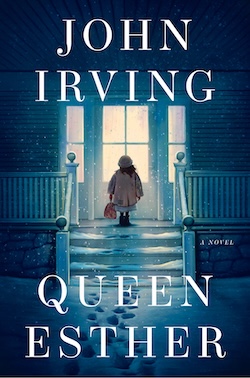
image - Queen Esther book coverWhile Irving, the opening author, is not Jewish, his latest novel, Queen Esther, takes readers back to the era and place of one of his most popular stories, The Cider House Rules, which was made into a movie. He focuses this time on the Winslow family, who adopt Esther Nacht from St. Cloud’s orphanage in Maine. The 14-year-old Viennese Jew was born in 1905 and came to the United States with her parents, her father dying on the voyage, her mother a few years later. Esther was left at the orphanage as a little girl, but no one had wanted to adopt a Jewish child, until the Winslows. 

The Winslows are, to say the least, an unconventional family and, among other things, don’t adhere to the antisemitic attitudes of the times. The novel sheds light on Esther’s background and we witness a bit of her life with the Winslows, but then she mostly drops out of the story, returning to Europe to reconnect with her roots and then settling in Israel. The bulk of the novel centres on Jimmy, Esther’s son, born and raised in true Winslow style – unconventionally.

Truth be told, Queen Esther is not Irving’s best novel, it rambles and doesn’t quite hit the right message, but it’s written with heart and a seeming desire to counter antisemitism and change the narrative about Israel. Irving fans will enjoy reencountering some old “friends,” like St. Cloud’s Dr. Wilbur Larch, and recurring themes, including chosen family, Vienna, wrestling and sexual politics.

Irving is in conversation with Marsha Lederman Feb. 21, 7:30 p.m. Tickets are $36 ($65 with book).

* * *

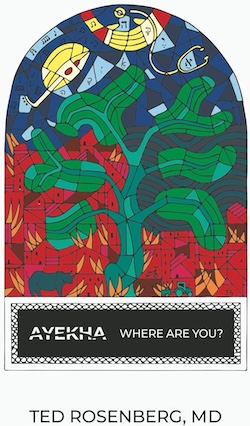
image - Ayekha book coverPolitics and antisemitism are at the fore in Dr. Ted Rosenberg’s book Ayekha, Where Are You? Reading it will provide some healing for fellow members of the Jewish community, most of whom will know that Rosenberg resigned from the University of British Columbia’s faculty of medicine in 2024 (after a 30-year career there) because of the school’s refusal to do anything about the rampant antisemitism on campus, which escalated after Hamas’s massacre of Israelis on Oct. 7, 2023. The situation was so toxic that Rosenberg no longer felt safe.

In his resignation letter to the faculty’s dean, Dermot Kelleher – sent after other attempts to warn UBC leadership of the problems – Rosenberg wrote:

“I lament the carnage and deaths of both Israeli and Palestinian civilians during this horrific war and this seemingly insoluble and interminable complex tragedy. I also understand and appreciate the strong convictions held by people on both sides of this conflict. However, oversimplistic ahistorical demonizing narratives and rhetoric, by either side, will do nothing to deepen our understanding, empathy, respect, or trust of one another, nor hasten a resolution of this crisis. 

“One third of the medical students and some faculty have publicly expressed their contempt towards me, as a Jew. I cannot take the risk of being accused of implicit harassment or racism, which is indefensible, by a ‘triggered’ student. Unfortunately, I have no faith in due process in a faculty that does not even acknowledge the existence or presence of antisemitism/Jew-hatred, or my right to work in a depoliticized environment.”

The award-winning physician, who pioneered a home-based care model for the frail elderly and still practices medicine, wrote the dean, “It deeply saddens me to end my academic career on this note.”

There are so many Jewish academics, medical professionals and others who have been similarly mistreated, both by antisemitic actions and people’s fear of dealing with antisemitism. Reading more about Rosenberg’s experiences is akin to attending a group therapy session. We not only feel less alone afterward, but come away with some knowledge that might help us in processing all that’s happened in the last almost two-and-a-half years, and in confronting the antisemitism we continue to face.

Rosenberg talks at the Vancouver JCC Feb. 22, 1:30 p.m. (tickets are $18), and at the White Rock/South Surrey JCC at 4 p.m. 

* * * 

Since Oct. 7, it seems that learning more about Judaism, its tenets, its folklore, has been a common way for Jews to deal with the trauma inflicted by that day, the subsequent war and the increasingly open Jew-hatred globally. For anyone who likes graphic novels, The Writer might be an invigorating and educational salve.

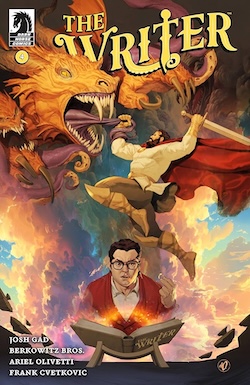
image - The Writer book coverWritten and created by actor Josh Gad and the Berkowitz Bros. production company (founded by Ben and Max Berkowitz) with art by Ariel Olivetti and letters by Frank Cvetkovic, the four-part series stars disheveled English professor and unreliable divorced dad Stan Siegel, the writer of the series’ title, who looks a lot like Gad. Stan’s “sidekicks” are his kickass mom Liz and his daughter Izzy. They encounter all sorts of demons, dybbuks, golems and other characters out of Jewish mythology, as well as various historical figures, while Izzy also must confront current-day antisemitism and racism – harassed by classmates for being Jewish and for being Black.

The Writer is an homage to the creators’ Jewish identities, to the comic books, science fiction shows and adventure movies they loved, as well as to Gad’s Holocaust survivor grandparents and to Boston, where the Berkowitz brothers grew up. While they didn’t grow up surrounded by Jewish mysticism, they were inspired when they discovered it and it “felt like home,” notes the afterword. “This story became a way for them to celebrate that heritage – the rich tapestry of Jewish storytelling in all its forms, from Ashkenazic to Sephardic, Beta Israelite, Hispanic, Asian and beyond.”

The tapestry is so rich and deep that it is hard sometimes to follow all that’s going on in an “episode” of The Writer, but it’s a wild ride, a world that’s wonderfully and colourfully drawn, where good battles all sorts of evil and unlikely heroes prevail.

The Berkowitz brothers are at the festival Feb. 23, 7 p.m. Tickets are $18.

* * *

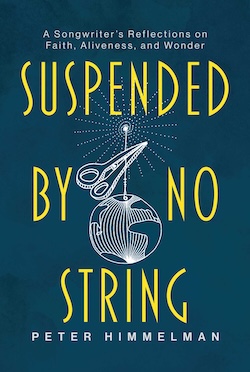
image - Suspended By No String book coverHimmelman closes the book festival on Feb. 26, 8 p.m. (tickets: $25), talking about his collection of essays, Suspended By No String: A Songwriter’s Reflections on Faith, Aliveness and Wonder, with Rabbi Dan Moskovitz. It might seem odd to have a rabbi lead a conversation with a musician, composer and visual artist, but Himmelman describes his book as being about faith, and shares what went into his decision to use the word “God” in it, as opposed to, say, “spirituality,” despite concerns from several people that its use might alienate readers. Hopefully, it won’t, as there is much insight to be gained from Himmelman’s observations, insights and perspectives on wonder, loss and gratitude. His playful sketches are a delightful complement to the text.

* * *

Also appearing at this year’s book festival are, in order of appearance, writers Carol Matas, Lihi Lapid, Aron Hirt-Manheimer, Douglas Century, Yishay Ishi Ron, Yardenne Greenspan, Sasha Senderovich, Marina Sonkina, Claire Sicherman, Danila Botha and Janet Horvath. For tickets and more information, visit jccgv.com/jewish-book-festival. 

Posted on February 13, 2026February 11, 2026Author Cynthia RamsayCategories Books, LocalTags Berkowitz Bros., JCC Jewish Book Festival, John Irving, Peter Himmelman, Ted Rosenberg
A concert of premieres

A concert of premieres

Violist Rivka Golani joins Turning Point Ensemble on Feb. 21 and 22 for Concerti Premiere, which features two works written especially for her. (photo by Peter Beal)

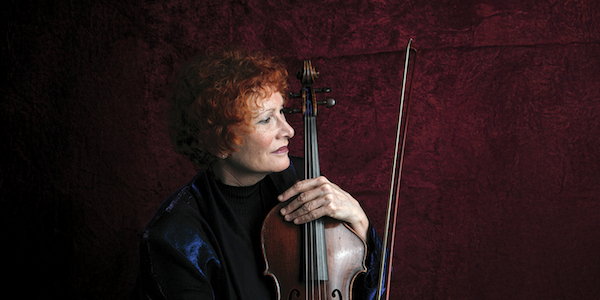
World-renowned violist Rivka Golani joins Turning Point Ensemble on Feb. 21 and 22 for Concerti Premiere, which features two works written especially for the Israeli musician, who currently calls London, England, home. 

The four main works comprising the ensemble’s program are the world premiere of Concerto for Viola – Rivka by TPE artistic director Owen Underhill, featuring Golani as soloist; the North American premiere of Musical Offering No. 2 “Golani” by Canadian composer Michael Pepa, also with Golani as soloist; the world premiere of Morning Twilight by Taiwanese-American composer Chichun Chi-Sun Lee, showcasing TPE bassoonist Ingrid Chiang; and the world premiere of Sauntersludge by Vancouver composer Eldritch Priest.

“TPE had a fantastic opportunity to perform with Rivka Golani on our May 2023 European tour,” explained Underhill as to how he and Golani first connected.

Pepa had proposed composing a new work for Golani and TPE for the ensemble’s concerts in Zagreb and Belgrade. “We were not able to rehearse with Rivka … prior to arriving on tour, so it was very exciting to put Michael’s piece together in the couple days prior to our first concert,” said Underhill. “Rivka was very interactive with and impressed by the ensemble, so you could say we hit it off together. She heard at that time in our concert a work of mine and asked whether I might be interested in composing a new work for her and TPE in the future. So, this is how the idea of working together again came about and my new concerto for her in particular.”

photo - Turning Point Ensemble artistic director Owen Underhill wrote Concerto for Viola - Rivka for violist Rivka Golani, who plays with the ensemble in concerts at the Annex Feb. 21 and 22
Turning Point Ensemble artistic director Owen Underhill wrote Concerto for Viola – Rivka for violist Rivka Golani, who plays with the ensemble in concerts at the Annex Feb. 21 and 22. (photo from TPE)

Golani, who was born in Tel Aviv, studied under violist and composer Oedoen Partos and became a member of the Israel Philharmonic, while also appearing as a soloist with other orchestras. She lived in Canada for more than a decade, from 1974 to 1987, growing her solo career and teaching at the University of Toronto (where she also taught in the 1990s) and the Royal Conservatory of Music. She still teaches, in London.

Over the years, Golani has performed widely as a soloist and as a member of various ensembles, and she has recorded extensively. She is also a recognized visual artist, with her paintings having been exhibited in several countries.

It was during Golani’s time in Canada that Pepa met her, so the two have known each other for decades.

“As a result, his piece and the solo viola part are very much in her character – dramatic, powerful and expressive,” said Underhill. “Also, there are two other important connections which are interwoven in the piece – references to J.S. Bach’s Art of the Fugue, which appears in a variety of ways through quotes and collages in his music, and also a second movement dedicated to his Ukrainian friends, which is based on the Ukrainian folksong ‘Plyve Kacha Po Tysyni’ (‘The Duck Swims Down the Tissina’) and a Serbian folk melody, ‘Kolika je Nočca.’”

As for his work featuring Golani, Underhill said, “It is always a wonderful thing for a composer to work closely with a performer for whom you are composing. It was also fundamental to Rivka’s process to make it a collaborative project. Therefore, beginning in the fall and over the several months I was composing the piece, I would send her instalments and we would meet over WhatsApp and she would play through the music, suggest detailed changes and improvements, and she also made a few gentle requests, including asking for a cadenza before I wrote the third movement.  As a result, I feel that the piece bears her signature and that it is also a unique work of mine that I could not have created without her input.”

According to Golani’s website, more than 350 works have been composed for her, including more than 80 concertos – “a record matched by no other violist in history.” Underhill’s Concerto for Viola – Rivka is the largest-scale work that he has written for TPE and the piece will be recorded by the ensemble after the live performances.

Concerti Premiere is Turning Point Ensemble’s third concert in their 2025/26 season. Written with bassoonist Chiang in mind, the piece Morning Twilight traces the emergence of the sun through five sections and two interludes. “Beyond its astronomical imagery, the concerto reflects Chiang’s personal journey of resilience in overcoming cancer, as well as Taiwan’s collective passage from historical darkness toward renewed international visibility,” notes the press release. Sauntersludge, which was written for the ensemble as a whole, is the only piece in the concert without a soloist.

“While we dedicate ourselves to performing works from the early 20th century to the present day, it is unusual for Turning Point Ensemble to have a concert consisting solely of premieres,” said Underhill in the press release. “It is a joy to be unveiling all this new music here in Vancouver.”

The Feb. 21 concert at the Annex starts at 7:30 p.m.; the Feb. 22 one at 4:30 p.m. For tickets ($45/adult, $33/senior, $19/student), go to turningpointensemble.ca. 

Format ImagePosted on February 13, 2026February 11, 2026Author Cynthia RamsayCategories MusicTags Concerti Premiere, concerts, Owen Underhill, Rivka Golani, TPE, Turning Point Ensemble
Variety telethon on Feb. 22

Variety telethon on Feb. 22

(photo from variety.bc.ca)

On Feb. 22, tune into Global BC from 1 to 5:30 p.m. for this year’s Variety Show of Hearts Telethon. Celebrating six decades of impact, it will also highlight Variety’s vision for the next 60 years. 

The telethon will spotlight the children whose lives have been transformed by the generosity of Variety donors. It will also feature performances by Deborah Cox, William Prince, Johnny Reid and the Trews, among others, with appearances by Yannick Bisson, Patrick Chan, Kim Coates, KC Collins, Fefe Dobson, Jillian Harris, Andrew Phung, Maitreyi Ramakrishnan, Jennifer Robertson, Karen Robinson, Caterina Scorsone, Spencer West and others.

For 60 years, Variety BC has turned donations into life-changing support for children with disabilities and complex health needs. In 2025 alone, donors helped Variety provide direct access to essential services for 23,000 children – from medical and mobility equipment to specialized therapies, mental health services, vital private assessments, and specialized education and tutors. These grants help families avoid long wait times and give kids the chance to thrive.  

“No child should face limits because of circumstance. Children deserve unlimited opportunities to explore, learn and grow to their full potential,” said Andrea Tang, chief executive officer of Variety BC. “More families across BC are reaching out for our help than ever before and, with the support of our donors giving to the Show of Hearts, we can be there for them when they need us most – opening doors, providing support and helping kids thrive.” 

There are several ways to participate in the 60th Variety Show of Hearts Telethon: tune in on Feb. 22; make a one-time donation or become a monthly donor by visiting variety.bc.ca; donate by calling 310-KIDS (5437) toll-free; or text the word “KIDS” to 45678 to make an automatic $25 donation.

All donations made during the 60th Variety Show of Hearts will be matched dollar-for-dollar by a group of donors, doubling the impact for kids across the province.  

To learn more about Variety Show of Hearts Telethon, visit variety.bc.ca. 

– Courtesy Variety – the Children’s Charity of BC

Format ImagePosted on February 13, 2026February 11, 2026Author VarietyCategories LocalTags fundraisers, health care, Variety Show of Hearts Telethon

Victoria club’s many benefits

Since August 2025, a group of enterprising individuals from the Greater Victoria community has been gathering at various venues to discuss prospects, offer guidance and bounce ideas off one another as part of the area’s Jewish Business Club.

photo. -The Jewish Business Club in Victoria offers business owners the chance to create networks and get to know one another. The next gathering takes place Feb. 26
The Jewish Business Club in Victoria offers business owners the chance to create networks and get to know one another. The next gathering takes place Feb. 26. (photo by Joe Mabel / flickr)

The group was guided into its current form by Elvira Molochkovetski, who took on the role of community connector in Victoria last summer. The role is a joint position of the Jewish Federation of Victoria and Vancouver Island (JFVVI) and the Jewish Federation of Greater Vancouver. Other community connectors can be found in the Okanagan, Salt Spring Island, the Comox Valley, South Delta and Squamish.

According to Molochkovetski, some local businesspeople, who had established friendships through their ventures, had been meeting informally and sporadically over coffee for a couple of years.

“We just created something more structured, giving them a space, a reason and a schedule to meet and invite more people,” she said. “The goal was the same goal they always had: create networks, support each other and get to know each other. And many new connections were created through those meetings already.”

Attendees, who come from different backgrounds and places, and represent a range of business sectors, participate in the club, which, Molochkovetski stressed, is open to all. Some, like Molochkovetski, have come to Victoria from Winnipeg, where a similar club was formed at the Rady Jewish Community Centre.

Young entrepreneurs, she said, have also joined because they have ideas for businesses and want to see what other business owners think, or to find out what is happening in a particular market. In some cases, more experienced entrepreneurs have served in a mentor-like capacity.

“When you are business-oriented, you love spending time with other business-oriented people,” Molochkovetski said. “We had a few young people who just … bought a condo and want to rent it out. So, they joined and received some advice from people who had experience in this kind of business before.”

The club’s meetings often start with an introductory circle. Participants can bring promotional materials, share information about their business and ask questions.  Meetings can include playing business-oriented games, solving problems or suggesting what one might like to do or invest in within the community.

At one of the Jewish Business Club’s meetings, a member welcomed everyone to his house to sample some of his culinary creations, as his business centres around the food industry.

Molochkovetski added that the meetings have brought in people who have not maintained ties to Jewish organizations yet feel connected to the community through the club.

One regular attendee who has found the gatherings beneficial is Felix Gelman, who runs Alpha Victoria HVAC Ltd., a company that installs residential heat pumps in Victoria and surrounding communities.

“The Jewish Business Club in Victoria is a strong opportunity to connect with fellow Jewish business owners, exchange referrals and build real local relationships,” Gelman told the Independent. “It’s also an effective way for people to learn what you do, while gaining insight from others’ experiences in the Victoria business community.”

Gelman opened Alpha Victoria HVAC in 2022 after relocating from Winnipeg, where he still operates an active HVAC business specializing in furnaces, air conditioners, heat pumps, ventilation and indoor air quality systems.

Originally from Israel, Gelman, a Red Seal refrigeration mechanic with 30 years of experience in residential HVAC systems, immigrated to Canada in 2005. He is also a licensed general contractor. On Vancouver Island, he helps homeowners build garden suites and lane houses, either to generate rental income or accommodate family members.

In total, roughly 35 people have attended Jewish Business Club meetings in the past six months, with 12 to 15 generally showing up each time. Meetings alternate between mornings and evenings to fit the different schedules of those in the community.  

The next get-together is planned for Feb. 26, 7:30 p.m., at a restaurant in the Westshore region of Greater Victoria. The location will be provided upon registration to those who wish to attend.

Billed as the “Jewish Business Club Night Out,” the event will offer opportunities to share and introduce businesses, chat with fellow entrepreneurs and enjoy a light snack and soft drinks.

“Whether you’re just starting out or growing an established business, this is a chance to connect, collaborate and support one another’s success,” said the organizers.

To register for the upcoming event, visit jewishvancouver.com/jewish-business-club. 

Sam Margolis has written for the Globe and Mail, the National Post, UPI and MSNBC.

Posted on February 13, 2026February 11, 2026Author Sam MargolisCategories LocalTags clubs, Elvira Molochkovetski, entrepreneurship, Felix Gelman, Jewish Business Club, Jewish Federation of Greater Vancouver, Jewish Federation of Victoria and Vancouver Island, JFVVI, meetings, Victoria
Avodah dedicated to helping

Avodah dedicated to helping

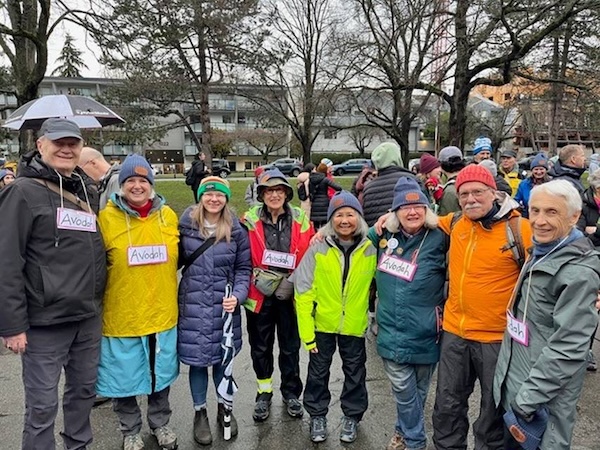
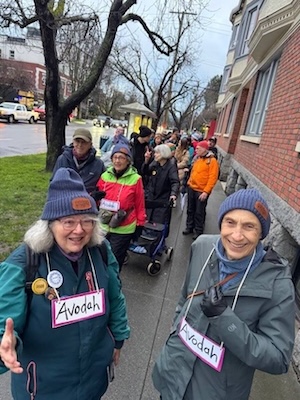
Members of Congregation Emanu-El’s Avodah at last year’s Coldest Night of the Year event. (photo by Penny Tennenhouse)

A 12-member team from Avodah, the social-action arm of Victoria’s Congregation Emanu-El, will be participating for the ninth time in the Coldest Night of the Year, a fundraising walk to support various charities that help people experiencing poverty and homelessness, on Feb. 28.

Funds raised by Avodah will go to Our Place Society, which provides more than 1,400 meals a day, as well as shelter, supportive housing, hot showers, paramedic services and other assistance. It is Vancouver Island’s only long-term therapeutic recovery community.

Penny Tennenhouse, a central figure in Avodah since its inception, said the name of the fundraising event, the Coldest Night of the Year, is misleading – and not because of the temperature reading on a thermometer.

“I call it the warmest night of the year. It’s festive, actually. It’s love in motion because it’s enjoyable to come together, especially after the pandemic. And it’s enjoyable because we feel good about what we’re doing and we know it’s important,” she said.

This year, Avodah’s participation will be in honour of Annette Wigod’s 99th birthday. Wigod has been a regular presence in Avodah’s efforts. Her daughter, Eve Abrams, will be walking with the Avodah team. 

“Annette has been involved with Avodah for many years. She used to come every month with me to Our Place to serve ice cream and cake. She’s a very caring and dedicated person,” Tennenhouse said.

photo - Avodah at last year’s Coldest Night of the Year event
Avodah at last year’s Coldest Night of the Year event. (photo by Penny Tennenhouse)

There are 47 groups and 224 walkers taking part in the 2026 Victoria event, which is divided into two- and five-kilometre routes. 

As of press time, Avodah’s team had raised $6,702, which placed them second in terms of fundraising among the groups participating. 

Over the last three years, Avodah has raised more than $21,000 for Our Place. Collectively, after this most recent walk, it hopes to exceed $50,000 in funds raised since the group first started participating.

“There’s one woman I have to mention, Debbie Yaffe, who I consider my partner in originating this involvement. She’s been amazing,” said Tennenhouse. 

As of earlier this week, Yaffe had raised $2,221, with 30 people donating to her walk, placing her second on the Coldest Night of the Year scoreboard. Tennenhouse, who had raised $1,425 with 18 donors, was in sixth place.

Across Canada, there will be fundraising walks in 222 locations for the Coldest Night of the Year. Nationally, the walks are organized by the Blue Sea Foundation, which is based in Kitchener, Ont.

Avodah was inspired by Rabbi Harry Brechner, who wrote in the synagogue’s newsletter in 2003 that the core beliefs of Judaism – care for one’s neighbour, acts of loving kindness, repairing the world – should be put into practice. Avodah can be translated from Hebrew as work or service.

“Within about a nanosecond of the rabbi’s post, a few other people and I responded that we wanted to be involved in such an initiative,” said Tennenhouse. “Because we were starting from scratch, we thought we would support those groups that are already in existence that are devoted and dedicated to serving people in dire need, vulnerable people in our community.”

Brechner, who retired in 2025 after serving the congregation for 24 years, remains active in the community and holds the title of rabbi emeritus. 

Avodah’s outreach over the years has included offering shelter at the synagogue to youth experiencing homelessness, giving away thousands of pairs of socks to people living on the street and serving up annual lunches during Hanukkah at Our Place, located a block away from the shul. 

“We’ve had a long history in supporting these groups, and it’s been made possible largely through the support of our congregation, because, if we didn’t get the support of our congregation, we wouldn’t be able to do these things,” Tennenhouse said. “We provide financial resources, but we also think it’s important to volunteer our actual time and energy to be connected to people that way as well.”

In addition to Our Place, Avodah gives financial and volunteer support to organizations such as the Burnside Gorge Community Centre, the Quadra Village Community Centre, 1Up Victoria Single Parent Resource Centre, St. John the Divine’s Food Bank and SOLID Outreach, a group that provides harm reduction for those on the street. 

Every Thursday, several Avodah volunteers serve meals, clean tables and engage with visitors at a free lunch sponsored by the James Bay United Church. Monthly, Avodah provides “good food boxes,” fresh fruit and vegetables, to families of students at an inner-city school.

In addition to donations from Emanu-El members, Avodah receives support from Vancouver’s Betty Averbach Foundation.

For more information about Victoria’s Coldest Night of the Year, visit en.cnoy.org/location/victoriapandora. To find a walk near you, go to cnoy.org/locations. 

Sam Margolis has written for the Globe and Mail, the National Post, UPI and MSNBC.

Format ImagePosted on February 13, 2026February 11, 2026Author Sam MargolisCategories LocalTags avodah, CNOY, Coldest Night of the Year, Emanu-El, fundraising, Our Place Society, Penny Tennenhouse, Victoria
Artists explore, soar, create

Artists explore, soar, create

Theresa Kinahan’s “The Fallery Garden That I Love Like My Friends” is part of the Roots and Wings exhibit at the Zack Gallery until March 2.  (photo from Zack Gallery)

The eighth annual Inclusion Art Show returns to the Sidney and Gertrude Zack Gallery at the Jewish Community Centre of Greater Vancouver in celebration of Jewish Disability Awareness, Acceptance and Inclusion Month (JDAIM). The exhibit’s theme, “Roots and Wings,” reflects the grounding strength of heritage and community alongside the freedom to explore, soar and create. The displayed works highlight inclusion, diversity and the creative talents of artists at every stage of their artistic journey.

This year’s Roots and Wings exhibit features Theresa Kinahan, Kevin Lee (Kevo), Mark Li, Gabriel López Demarco, Mariane Stifelmann and Matthew Tom-Wing. 

Art has always been a part of Kinahan’s life. She started to draw when she was just a little girl, and her media have included photography, acrylic, fabric art, enamel, wood-cut printing, charcoal, pastel, watercolour, metalwork, welding and pottery. She taught art in Vancouver high schools for many years, but epilepsy and an ensuing brain injury forced her to retire early. She turned to painting for therapy, drawing inspiration primarily from nature, notably for her acrylic fern series. She signs her paintings with her initials and a heart, which is reflective of the love she feels all around her. 

Kevo was born with Trisomy No.18 and was unable to make a sound until he was 6 years old. Art became a way to communicate and express his creativity and emotions; a way to share his delight with the world. Today, Kevo channels his creativity and love of art into painting, music, dance and clay work. He loves colour and the physical act of painting. Every one of his pieces has a thoughtful story or a kind wish.

Li, who creates at the Art Hive, is a visual artist whose narrative-focused work creates a whimsical world filled with colour and imagination. Every one of his paintings is a tale of friendship and depicts acts of kindness: a bear might be best friends with a cat; a T-Rex smiles with shy humour and sweetness at the viewer; a ladybug and a cat might go dancing in the sunlight; a walk in the park with a friend and his dog is a delightful adventure. 

photo - Gabriel Fernando López DeMarco’s “I Am Born from Desire”
Gabriel Fernando López DeMarco’s “I Am Born from Desire.” (photo from Zack Gallery)

López Demarco, who was born in Buenos Aires, joined his first art workshop at the age of 5. At the age of 13, he entered the Villa Mecenas art school and, at 18, the National University of Art.

During university, López Demarco continued attending painting, sculpture, engraving and printed art workshops, making artistic and conceptual trips through Argentina. In 2013, he traveled through South America and, in 2015, he went to Mexico, where he studied fresco painting. At the same time, he expanded his studies of engraving and printed art.

Since then, he has traveled around Central America, the United States and Europe, carrying out murals and other artistic activities. In 2023 and 2024, he worked as a muralist on the public art team of the municipality of Morón, Argentina. In 2025, he went to China to study calligraphy and Chinese painting. He currently works as a freelance muralist around the word.

Stifelmann was born in Brazil and moved to Vancouver in 2000. She is a former kindergarten and Grade 1 teacher, and studied at the Pan-American School of Arts in São Paulo. 

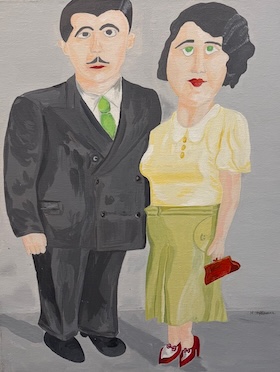
photo - Mariane Stifelmann’s “The Couple”
Mariane Stifelmann’s “The Couple.”  (photo from Zack Gallery)

On display at the Zack is Stifelmann’s “The Couple,” one of her first paintings. It is created in a caricature style with acrylic paint, and expresses her deep love for her family – the work depicts her grandparents, Eda and Jacob Koin, who emigrated from Poland.

Over the years, Stifelmann has evolved her technique and style and has worked with artist Nati Saidi for more than a decade. Her art embraces vibrant colours and evokes feelings of joy, freedom and nostalgia. Through her work, she invites viewers into a world where light and happiness are always in season.

Tom-Wing is an active member of the Bagel Club and part of the JCC Art Hive. “I am an artist and have sold paintings and ceramic pieces,” he said. “I love music. I play the drums and am also the drummer in the Vancouver BFF band.”

Tom-Wing also enjoys acting and being involved in the theatre world. His roles have included the character Magwitch in the play King Arthur’s Night.

Roots and Wings is on display until March 2. One hundred percent of the proceeds from artwork sales goes directly to each artist. 

– Courtesy Sidney and Gertrude Zack Gallery

Format ImagePosted on February 13, 2026February 11, 2026Author Zack GalleryCategories Visual ArtsTags art sale, artwork, diversity, inclusion, painting, Roots and Wings, Zack Gallery

Posts pagination

Previous page Page 1 … Page 12 Page 13 Page 14 … Page 667 Next page
Proudly powered by WordPress