Skip to content
  • Home
  • Subscribe / donate
  • Events calendar
  • Business Directory
  • FAQ
  • News
    • Local
    • National
    • Israel
    • World
    • עניין בחדשות
      A roundup of news in Canada and further afield, in Hebrew.
  • Opinion
    • From the JI
    • Op-Ed
  • Arts & Culture
    • Performing Arts
    • Music
    • Books
    • Visual Arts
    • TV & Film
  • Life
    • Celebrating the Holidays
    • Travel
    • The Daily Snooze
      Cartoons by Jacob Samuel
    • Mystery Photo
      Help the JI and JMABC fill in the gaps in our archives.
  • Community Links
    • Organizations, Etc.
    • Other News Sources & Blogs
  • JI Chai Celebration
  • JI@88! video

Recent Posts

  • Legal help for students
  • Revisiting myth of Lilith
  • Wrong person rebuked
  • Canada’s mixed messages
  • Questions for museum
  • Symposium on antizionism
  • Making soccer political
  • CJPAC lauds Pulver’s impact
  • City recognizes Vrba’s legacy  
  • Organ donation saves lives
  • Theodore’s March premiere
  • A healing Shabbaton
  • Supplying healthy food
  • A chime of metal tags
  • Yellowknife seder a first
  • Ishai energizes, unifies
  • A Lag b’Omer to remember
  • Expanding the healing
  • Hannah Senesh – a unique hero
  • Community milestones … May 2026
  • Sharing her testimony
  • Fall fight takes leap forward
  • The balancing of rights
  • Multiple Tony n’ Tina roles
  • Stories of trauma, resilience
  • Celebrate our culture
  • A responsibility to help
  • What wellness means at JCC
  • Together in mourning
  • Downhill after Trump?
  • Birth control even easier now
  • Eco-Sisters mentorship
  • Unexpected discoveries
  • Study’s results hopeful
  • Bad behaviour affects us all
  • Thankful for the police

Archives

Follow @JewishIndie
image - The CJN - Visit Us Banner - 300x600 - 101625

Images

COVID and other challenges

COVID and other challenges

Dr. Judith Moskowitz (photo from Judith Moskowitz)

Anxiety and stress can be debilitating even in the most normal of times, but, with COVID-19 and all that it encompasses, we have all been presented with a whole other level of challenges.

In this context, the Jewish Independent connected with Dr. Judith Moskowitz, a professor of medical social sciences at Northwestern University Feinberg School of Medicine, in Chicago. She is also the director of research for Northwestern’s Osher Centre for Integrative Medicine. Trained as a social psychologist, with expertise in stress and coping with emotions, Moskowitz started her career in the early 1990s, helping men caring for their partners suffering from AIDS.

“Before there were more effective treatments available, it was essentially a terminal illness,” she said. “Caring for a loved one with AIDS was really one of the most stressful events a human could experience.”

Initially, she said, “We’d ask them, ‘What is stressful about this?’ Then, we’d help them cope with it, really focusing in on the negative part the whole experience and, shortly after the start of the study, the participants started saying, ‘You’re not asking us about the good things in our lives’ … which surprised us, because we’re coming at it from a very much stress and coping way.

“So, we listened to them and started then asking, ‘OK, tell us something positive that happened in the last week.’ And, almost in every single interview, even if their partner had just died, they could talk about something positive … often something small … having to do with something else going on in their lives not necessarily directly related to their care-giving.”

This new perspective helped direct Moskowitz onto a path looking at the positive things within stressful life events, allowing positive emotions to be expressed along with the negative.

“This isn’t about pretending things aren’t happening,” she stressed. “Rather, it’s about knowing that, even when times are really dark and you may be experiencing a lot of negative emotions and a lot of stress – maybe even depression or anxiety – you also have the ability to experience positive emotions as well. So, if you can experience the positive alongside those negative emotions, you’ll be able to cope better.”

Moskowitz and her team put together a program that includes eight to 10 skills, depending on the target group, toward helping participants increase their daily experience of positive emotions – stopping to notice, savour and capitalize on those good aspects.

“When things are stressful, it can be hard to see the positive things going on,” said Moskowitz. “We help people realize there’s usually something positive happening … you just have to be able to notice it.

“Things might be really horrific, but your dog is sitting next to you, really loves you, and it’s very sweet. So, just taking a moment and petting your dog, and then maybe telling someone about it – that would be noticing something positive in your life and savouring or capitalizing on it,” she explained. “We’ve been able to show that people who learn these skills and then practise them have better emotional well-being. They’re less likely to be depressed. In some samples, we were seeing some physical health effects. So, through clinical trials, we showed that the program seems to be helpful.”

When COVID first hit, Moskowitz was inundated with questions about how to cope better with stresses associated with the pandemic. The bottom line is that these skills transcend any particular stressor and can help no matter what the situation.

“For COVID, my advice is the same as it is for coping with breast cancer, diabetes, depression, or being a high school student,” said Moskowitz. “Learn these skills, try them out, see which work for you and, then, keep doing them. It’s like a physical activity, something you need to keep on doing. You can’t just do it once … similar to gratitude, noticing the good things, being thankful … it doesn’t work for you to just be grateful once and then be done with it. You need to take it up as a habit, and that can help you cope with COVID-19 or adapt with whatever kind of life stress you’re facing.”

Moskowitz also teaches the importance of doing acts of kindness. The idea is that, when you do something nice for someone else, it helps you feel better, too. Such an act can be as simple as paying for the coffee of the person in line behind you. Or looking someone in the eye and thanking them, making them feel appreciated and seen. And there are many types of acts that can be done without the receiver knowing the kindness came from you, if you’d rather remain anonymous.

“Doing these acts helps you feel better in a situation where you might think, I’m suffering here, I’m having a really hard time … but, knowing you can do something to help someone else can help your own well-being,” said Moskowitz.

Another skill she pointed to is “positive reappraisal.” When something stressful happens, take a moment to reframe it or think about it in a way that makes it seem not so bad or even like it’s positive thing – find the good in it.

“Sometimes, it takes the form of actually learning something about yourself – like you find that you are stronger than you’d thought you were,” said Moskowitz. “My favourite positive reappraisal is, ‘Well, that could have been worse! It’s bad, but it could have been worse.’

“An extreme example of this happened when we were doing some work with a gun-violence prevention group here in Chicago, teaching them these skills. They work with young men who are at high risk of either being victims or perpetrators of gun violence. The people they work with often are involved in a shooting. [The group members] will talk about it and will say, ‘One of our clients was shot and is in the hospital, but he’s alive.’ Having one of your clients shot is pretty bad and very stressful, but they’re able to say, ‘You know what? It could have been worse. He could have died, but he’s still alive.’ So, that’s a very vivid example of positive reappraisal.”

Moskowitz stressed that there is no one technique that works better than all others. She said, with regard to various anxiety- and stress-reducing methods, it is very much a matter of what fits best for each individual in a particular circumstance.

For more information visit moskowitzlab.com.

Rebeca Kuropatwa is a Winnipeg freelance writer.
Format ImagePosted on May 7, 2021May 7, 2021Author Rebeca KuropatwaCategories WorldTags anxiety, coronavirus, COVID-19, health, Judith Moskowitz, mental health, positive reappraisal, stress
Spinach’s versatility, power

Spinach’s versatility, power

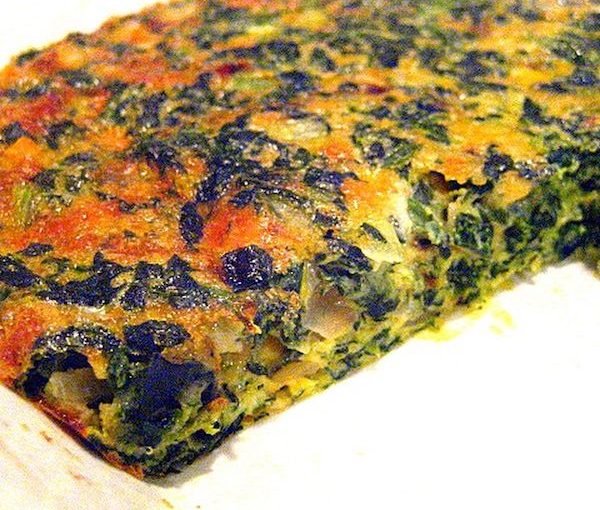
With spinach cheese pie, there likely won’t be leftovers. (photo from Shelley Civkin)

What’s chock-a-block full of healthy vitamins and minerals, packed with fibre and gives you humongous muscles, if Popeye, the muscle-bound, pipe-smoking sailor is to be believed? You got it – spinach! According to the internet (and who doesn’t believe everything there), the comic strip hero Popeye helped increase American consumption of the once-much-maligned spinach by around 30%. All because of his eating habits. Popeye’s famous line – “I’m strong to the finish ’cause I eats me spinach” – while grammatically heinous, does have a whiff of truth to it. Apparently, spinach, which contains lots of iron, can boost muscle strength. So, listen to pumped-up Popeye and eat your spinach! You might even want to try it with a little Olive Oyl.

Personally, I don’t see what all the fuss and resistance is about. It’s such a versatile vegetable – you can sauté it, make a salad out of it, use it in lasagna, mix it together with orzo, feta and sundried tomatoes. The sky’s the limit. Spinach is the quintessential blank canvas, but adds the health factor and colour element that every bona fide foodie seeks.

One of my favourite ways to use spinach is in a dish that can serve as a main or a side. Even spinach haters adore my famous spinach cheese pie. The recipe is straightforward, relatively healthy (unless you’re lactose intolerant or fat-phobic) and never fails to elicit endless oohs and aahs. For those people who can’t tolerate milk products, you can always substitute soy cheese and lactose-free milk. You can barely tell the difference. You can thank me later.

SPINACH CHEESE PIE

2 tbsp butter
3 eggs
3/4 cup flour
1 cup milk
2 10-ounce packages frozen spinach (cooked)
1 tsp salt
1 tsp baking powder
1 lb Monterrey Jack cheese, grated

Preheat oven to 325ºF. Melt butter in a 9-by-13-inch glass pan. Make sure the melted butter coats the bottom and sides of the pan.

Cook and drain spinach. Be sure to squeeze out all the water, then chop it finely in a food processor.

In a large bowl, beat the eggs. Add dry ingredients (flour, salt, baking powder) and milk, alternately. Mix well by hand.

Add grated cheese and spinach, and mix well by hand. Pour into the prepared pan.

Bake for 35 to 40 minutes, until slightly brown on top. Cool at least 30 minutes, then cut into squares and serve. I’m usually too hungry and skip this last step of waiting. Cooling it down, however, does make it easier to cut. And, well, patience is a virtue.

This spinach pie freezes really well and reheats perfectly in the microwave, but, believe me, there usually isn’t anything left to freeze or reheat. On one or two occasions, I’ve been known to eat it cold, right out of the fridge. Late at night. With a certain clandestine aura about me. Right … busted.

While your family – or, in non-COVID times, your guests … remember what those are? – relaxes before dinner, waiting with bated breath for your spinach cheese pie, you can serve them my popular olive dip. Caveat: I don’t have a particular recipe for it and I don’t use specific measurements – I just taste it as I go along. For someone who’s a hardcore Type A personality, this is highly unusual behaviour. But, somehow, I’m able to operate on simple faith when it comes to this. Truth to tell, it’s pretty hard to screw up.

Another caveat: even in non-COVID times, or inside your COVID bubble, be sure not to breathe on strangers or prospective love interests after eating this dip, because the garlic is flavour-forward. Depending on your love/tolerance for garlic, add as little or as much as you want. I start with one clove, but I’ve been known to up the ante for a large batch. This olive dip is decidedly non-dietetic, unfriendly for hypertensives and verboten for those watching their cholesterol. Otherwise, it’s the perfect pre-dinner dip. It makes a great tapas dish, and plays well with other Middle Eastern appies like hummus and baba ghanoush.

In the spirit of full disclosure, I never met an olive I didn’t like. My recipe calls for the plebian green olives stuffed with pimento, but, if you’re a risk-taker, you could try using other kinds. Just be sure not to use ones with an overpowering flavour. The mayonnaise in my recipe tends to smooth out the flavour and make it less sharp, so consider that when choosing your olives.

I never get sick of this recipe and it’s one of those dips you just can’t get enough of. It’s cheap and easy. Pre-COVID, I used to serve this a lot to friends, who would stuff themselves on the dip, then wonder why they were too full to eat dinner. Of course, the pita I serve with it makes it a much more filling appie. People will think you went to all sorts of trouble making it, so, if you want to maintain your kitchen cred, pretend that it’s an old family recipe and politely decline when they ask you to share it. Or … be a sport and let the world know what a lazy cook you really are.

OLIVE DIP

green olives with pimento (also called Manzanilla olives)
mayonnaise
fresh garlic
a squeeze of lemon juice (optional)

Throw all the ingredients into a food processor and blend away! It’s a dish best served cold (as is revenge), but really any temperature will do.

Pita or pita chips are a filling way to stretch this appetizer, but it also works nicely with crackers or thick potato chips. If you want to zhuzh it up a notch, add a couple of black Moroccan olives to it. And make lots of it because, mark my words, it’ll go fast. I’ve been caught dipping my toast into it for breakfast more than once. And, yes, I’m aware that garlic breakfast breath is not overly appealing, but I always floss and brush extra exuberantly after doing this. And, I usually do it when no one’s around. But be sure to turn off the nanny cam first.

Shelley Civkin, aka the Accidental Balabusta, is a happily retired librarian and communications officer. For 17 years, she wrote a weekly book review column for the Richmond Review. She’s currently a freelance writer and volunteer.

Format ImagePosted on May 7, 2021May 7, 2021Author Shelley CivkinCategories LifeTags Accidental Balabusta, cooking, spinach
The road of reckoning

The road of reckoning

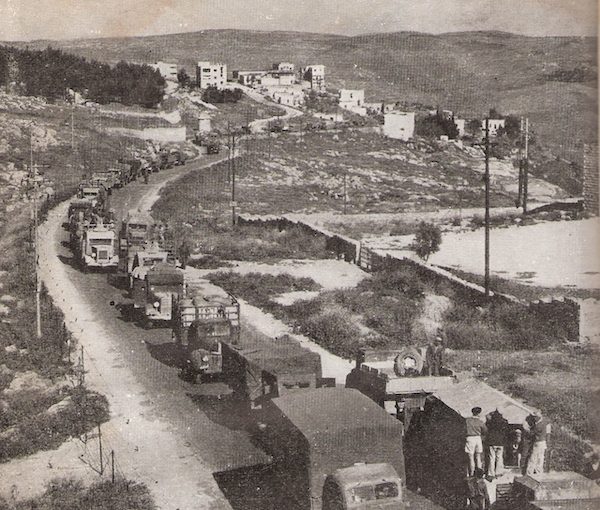
A supply convoy entering Jerusalem, 1948. (image from Shaar Hagai Heritage Museum)

Having just marked Yom Hazikaron and Israel’s 73rd anniversary, it is an appropriate time to recall a piece of Israel’s foundational history, and a new museum that commemorates it.

Seventy-four years ago, the road to Jerusalem was a site of easy ambush. Probably no part of the road was more treacherous than the area around Shaar Hagai. This spot, called Bab el Wad in Arabic, translates into English as the Gate of the Valley. As far back as 1868, French explorer Victor Guerin recognized and commented on this weak spot: he pointed out that the track was so narrow that “a determined band of men could stop an army in it with little difficulty.”

Admittedly, as you today drive on a smooth, paved, two-way, divided Jerusalem/Tel Aviv highway, it is hard to appreciate this reality. But, on Nov. 29, 1947 – the day after the vote on the United Nations Partition Plan, enabling the establishment of the Jewish state – Arab forces began blocking the route to Jerusalem. Not only were Jewish forces shot at, but, because the road curves, drivers couldn’t see where the road was blocked until they were trapped basically.

In David Dayan’s book Roadblock at Shaar Hagai: Creating a State (title translated from the Hebrew), Amos Kochavi recalled one such incident: “The time was approximately two in the afternoon. The long line entered the narrow and dangerous part. They could be anywhere…. We continued to climb … and there was a mighty explosion. The bomb under the road left a huge hole and the convoy stopped. Immediately, terrible shooting began…. We returned fire, but we couldn’t advance. Some of the drivers went into shock…. One driver with shell shock, screamed, ‘I can’t handle it anymore. I’m leaving.’ We yelled back: ‘Don’t move! You won’t come out alive!’ He didn’t hear, jumped from the car and was instantly killed.

“They tried to come down from the hills to get close to the cars, but our fire stopped them. They fire, we fire and the hours go by. No cars have air left in their tires. The number of injured grew. Shalom volunteered … he lay on the road, rolling – to avoid snipers – for a long hour … directing the drivers, one by one, until he had rescued all the cars…. An Australian captain ordered tanks that escorted us back to Gezer. The time was already two at night – 12 hours from when we entered Shaar Hagai.”

Jerusalem was under siege. Essential supplies could not reach the civilian and military population of the city. Jerusalem was dependent on supplies from the rest of the country, and was threatened with being totally cut off from the rest of the country. The only way to reach Jewish Jerusalem was to travel in convoy. (For more information, visit the National Library of Israel website, nli.org.il/en.)

photo - A codebook for sending messages in the time of the siege of Jerusalem, on display at Shaar Hagai Heritage Museum. (photo from Shaar Hagai
A codebook for sending messages in the time of the siege of Jerusalem, on display at Shaar Hagai Heritage Museum. (photo from Shaar Hagai Heritage Museum)

According to the late Sir Martin Gilbert, by the spring of 1948, “Fewer and fewer Jewish food convoys were able to get through to Jerusalem. Towards the end of March, a food convoy failed, for the first time, to get through at all. One food convoy that did get through in March had taken 10 days to do so. By the end of the first week of April, there was only enough flour in Jewish Jerusalem to last for 30 days. Meat, fish, milk and eggs were unobtainable, except in small quantities, for children. The shortage of vegetables was such that children were sent into the fields to collect a weed … known as halamith, it tasted somewhat like spinach, and could be made into soup.” (See Jerusalem in the 20th Century.)

There was also a severe shortage of water. Three days before the state of Israel officially came into existence, the Palestine Post reported that “Jerusalem was still without water yesterday. The two pipelines from Ras el Ein, which were blown up by Arabs between Latrun and Bal el Wad on Friday, have still to be repaired. Crews are scheduled to leave under army escort this morning to continue repair work and, barring further trouble, repairs may be completed today. Water may be pumped into Jerusalem within a few days, according to one municipal official.” So grim was Jerusalem’s situation that archival photos show residents standing in long lines waiting to get their water ration and others rummaging through garbage, in the hopes of finding scraps of food.

Palmach fighters and, even more remarkable, simple truck drivers decided to do whatever they could to keep Jerusalem from being blocked. One now quite senior man, who drove a truck full of live fish for the Sabbath, was interviewed. He recalled looking out his side mirrors to see water streaming from the sides of the vehicle. The truck had been shot in numerous spots. Somehow, he managed to get to Kiryat Anavim, a kibbutz in the Jerusalem Corridor. There, women plugged up the bullet holes with rags. Probably, many of us would have considered giving up at this point, but this driver continued the slow climb to Jerusalem.

The fighters were mostly young people. A significant number were under the age of 18 (today’s conscription age). They came from all backgrounds, religious and non-religious, and from all parts of the country; some were Holocaust survivors. As a number of the fighters had been assigned the task of digging gravesites at Kiryat Anavim, they probably realized they might not survive on the road to Jerusalem.

It was crucial to find a different route for the convoys. Palmach soldiers discovered a detour that went through a hidden valley south of the heavily fortified fortress at Latrun and joined a path descending from Jerusalem. Using heavy tractors, the Palmach slowly cleared a path for vehicles. A water pipeline was also installed along it. The lifeline to the Jews in Jerusalem was secured, providing vital water and other supplies, in the summer months of 1948.

At the point where the road was most unsafe, there is a 19th-century Turkish-built travelers’ khan or inn. On March 23, 2021, Israel’s last election day, a memorial museum was opened at this historic location. The Shaar Hagai Heritage Museum is dedicated to the men and women who prevented Jerusalem from being disconnected in the days leading up to and even following Israel’s independence.

The museum deals less with the chronology of the battles and more with the physical and emotional difficulties convoy members faced, such as confronting dilemmas like whether the trucks should carry guns or food to besieged Jerusalem. There are displays of items used by the convoys, such as codebooks, handguns and rifles. And there are interviews with people who took part in the convoy operations, and part of the exhibit is animated.

Once we are again allowed to travel, the museum is worth a visit on your next trip to Israel. Allow at least an hour-and-a-half for the whole tour, which is recommended for viewers 10 years of age and older. The new museum requires visitors to make advance online reservations, and there are admission fees.

For Hebrew speakers, there’s a preview of the museum at parks.org.il/new/chan.

Deborah Rubin Fields is an Israel-based features writer. She is also the author of Take a Peek Inside: A Child’s Guide to Radiology Exams, published in English, Hebrew and Arabic.

Format ImagePosted on May 7, 2021May 7, 2021Author Deborah Rubin FieldsCategories IsraelTags education, history, Israel, Israeli War of Independence, Shaar Hagai Heritage Museum, siege of Jerusalem
The women of Israel

The women of Israel

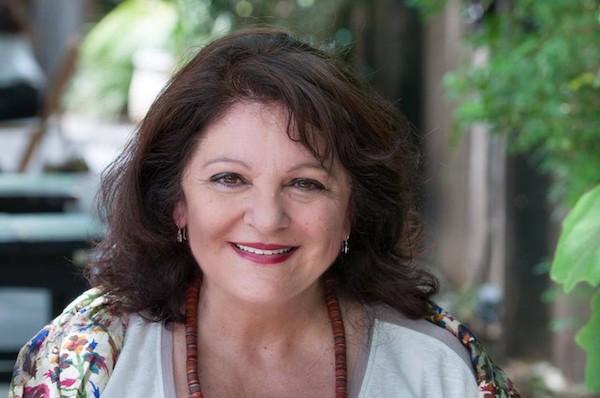
Curator and art historian Yael Nitzan, founder of Israeli Women Museum. (photo by Adi Eder)

How many “she-roes” of Israel can you name? Maybe you’d with Golda Meir, Israel’s first and only female prime minister. Or the tragic and courageous spy Sarah Aaronsohn and paratrooper Hannah Senesh. The list would include physician Vera Weizmann, the first first lady of Israel, who helped establish Chaim Sheba Medical Centre, now the largest hospital in the Middle East; and second first lady Rachel Yanait Ben-Zvi, who taught Jerusalem women how to grow vegetables, milk cows and make cheese so their husbands could go out and build the state.

These and many other women who played – and continue to play  – important roles in the history and culture of Israel will be immortalized later this year when the Israeli Women Museum opens in Haifa. The museum will showcase at least 100 noteworthy but not necessarily well-known women, from architects to lawyers to choreographers, says founder Yael Nitzan.

A curator, art historian and TV producer, Nitzan has overcome many roadblocks and setbacks in realizing her dream of opening Israel’s first museum dedicated to women.

“It was a struggle,” she admitted. “Now, with corona, the world has everyone sitting and listening, and, in three months, I accomplished what I could not accomplish in the past six or seven years.”

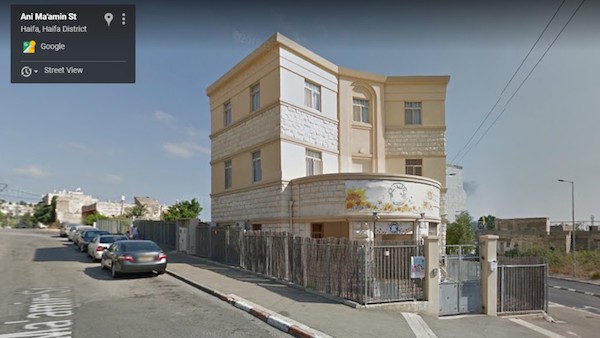
Nitzan gained the help of the Haifa Foundation in raising funds for the project, and she was given the rights to a former private school building in which the collections will be housed.

screenshot - The Haifa building that will house the Israel Women Museum
The Haifa building that will house the Israel Women Museum. (screenshot)

Brig. Gen. Gila Kalifi-Amir, former women’s affairs advisor to the Israel Defence Forces chief of staff, agreed to chair the museum. The board was joined by fellow Haifa residents Nadim Sheiban, director of the Museum of Islamic Art; and Prof. Aliza Shenhar, formerly a deputy mayor, ambassador to Russia and first female rector of an Israeli university.

“I found the right people,” Nitzan told Israel21c.

“There are currently about 45 women’s museums in the world, the most famous of which are the Women’s Rights [National Historic) Park in Seneca Falls, N.Y., and the Women’s Art Museum in Washington,” she said.

“The fundamental challenge in establishing a museum is not only in raising resources, but in creating a diverse and significant human and ideological infrastructure. The Israeli Women Museum must be a magnet of significance to the whole, or at least to large sections of, the population in Israel.”

Though Israel reportedly has the world’s highest ratio of museums per person, this will be the first one dedicated to the mostly unsung females responsible for weaving together its social, agricultural and business fabric. “Our museum will be on women in history and women in the arts,” Nitzan explained.

“The section on history commemorates the role of important women who have not been properly acknowledged.” Women like Hannah Maisel, who immigrated to Palestine in 1909 with a doctorate in agriculture and founded the region’s first agricultural training institute for women. And women like Rachel Roos Hertz (Harel), a Dutch resistance fighter who moved to Israel in 1950 after winning the U.S. Medal of Freedom and the U.K. King’s Medal for Courage in the Cause of Freedom, and became active in the Women’s International Zionist Organization (WIZO) – itself founded by Rebecca Sieff (Ziv) from the Marks family of Marks & Spencer, and whose name graces Ziv Medical Centre in Safed.

Some of the inspiration for this section comes from Prof. Margalit Shilo’s Women Building a Nation, a book published this year in Israel.

photo - Sculpture by 90-year-old Kati Paldi
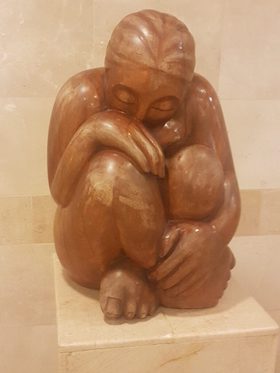
Sculpture by 90-year-old Kati Paldi. (photo by Yael Nitzan)

“In the art section, we will spotlight women whose work was not considered important, as well as very important female artists of today whose work is rarely shown in museums,” said Nitzan.

Artists to be included run the gamut from Ziona (Siona) Tagger, one of the most important female Israeli artists of the early 20th century, to contemporary painter Haya Graetz Ran.

“Women in Israel contributed greatly to the establishment of the state, contributed to the construction of the infrastructure of settlement, education, defence, law, government, society, culture, cinema and theatre,” Nitzan said. “But, although they left their mark, they did not receive proper recognition and respect in building society.  The purpose of the museum is to raise their profile and to reshape the narrative of the critical role of women as full partners in leadership and public space design over the past century.”

Nitzan invites anyone to contribute stories or items relating to Israeli Jewish, Arab, Druze or Christian women, and even artists, poets and leaders from the Holocaust era who did not manage to get to Israel. She can be reached through the museum’s Facebook page. Donations for the project are being funneled through the Haifa Foundation.

Israel21c is a nonprofit educational foundation with a mission to focus media and public attention on the 21st-century Israel that exists beyond the conflict. For more, or to donate, visit israel21c.org.

Format ImagePosted on May 7, 2021May 7, 2021Author Abigail Klein Leichman ISRAEL21CCategories IsraelTags art, history, politics, She-roes, women, Yael Nitzan
Preserving Jewish past

Preserving Jewish past

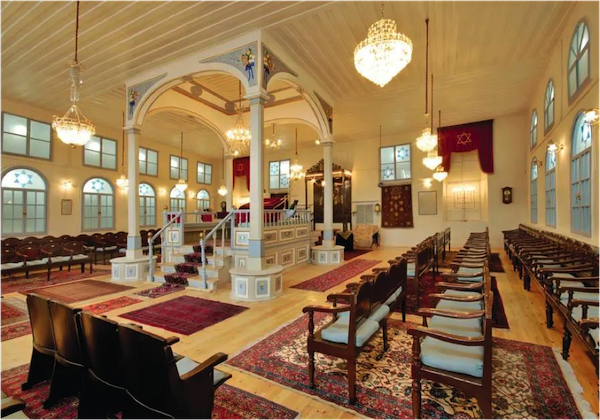
Algazi Synagogue was built in 1724 and has been renovated several times. (photo from Izmir Jewish Community Foundation)

The Izmir Jewish Community Foundation’s Izmir Jewish Heritage Project, for the preservation of Jewish heritage within the Turkish city, has started its activities. The project, financed by the European Commission, also has Our City Izmir Association as a partner.

Home to various cultures and religions, Izmir is one of the cities that has attracted Jewish immigration since ancient times. In the light of current data, the first concrete evidence of the Jewish community’s existence in the city dates to the fifth or sixth century CE. Sephardi Jews expelled from the Iberian Peninsula in 1492 and 1497 came to the Ottoman lands and settled in Izmir and its surroundings.

Since the middle of the 16th century, synagogues, hospitals, cemeteries and other institutions were established within the social, economic, cultural and administrative structure that started to form the present Izmir Jewish community. Most of the historical buildings that have survived to today are located in the Old Jewish Quarter, known as the historical centre and downtown of Izmir.

The Jewish population fluctuated after the 16th century due to earthquakes, epidemics, fires and global political, economic and sociological migrations. In the 1800s, Izmir was home to approximately 50,000 Jews, mostly Sephardi. A significant decrease in the population began in the early 1900s, when many people migrated to Europe and the Americas. Another massive outward move took place to Israel, after the establishment of the Jewish state in 1948. Today, the Jewish population of Izmir is about 1,100 people.

photo - Hevra Synagogue, which was founded in the early 17th century, is located within a complex of four synagogues that share a courtyard marketplace in Izmir
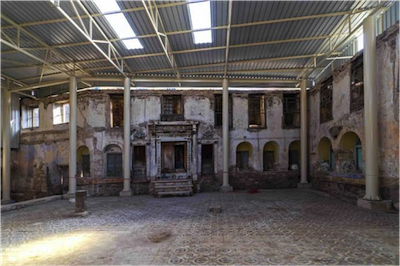
Hevra Synagogue, which was founded in the early 17th century, is located within a complex of four synagogues that share a courtyard marketplace in Izmir. (photo from IJCF)

In parallel with the decrease in population, out of the city’s 34 synagogues, only 13 remained. With shrinking congregations, some of the synagogues were neglected and even disappeared over the years. In addition, seismic activity and environmental threats have put these structures in peril. As a result, all of the synagogues that have survived to the present day have to be preserved and restored.

Six of the nine synagogues in Kemeralti, the bazaar area at the heart of the city, tell the stories of centuries. Adjacent to one another and with their special architecture, they have unique value in the world. Currently, the area, consisting of the nine synagogues, one chief rabbinate building, five kortejos (courtyards) and the Juderia (Jewish district) creates a density of structures that is also of unique cultural and touristic value.

The 36-month heritage project includes:

  • A masterplan for the region of the Old Jewish Quarter, located in the historical centre of Izmir, including conservation and restoration plans for the Hevra and Foresteros synagogues, which date to the 17th century. These synagogues, witnessing much of the Izmir Jewish community history, are unique, as they form a compound of four synagogues facing the same courtyard.
  • This compound of synagogues will be promoted in Turkey and worldwide, to be recognized as a cultural heritage site, a tourist destination and an intercultural dialogue centre.
  • A platform strengthening communication with local, national and international networks will be established. A physical location where the platform will carry out its work is also planned.
  • Four books will be written and published on subjects such as Izmir Sephardi stories, Izmir Sephardi women, Jewish press in Izmir, and traditional synagogue textiles.
  • Conferences, workshops, training and study visits will be organized.
  • Works on corporate identity, website, brochures, short films, etc., will be brought to life in order to increase institutional capacity and promote this heritage.

While the project is funded by the EU, the content is entirely under the responsibility of the Izmir Jewish Community Foundation.

– Courtesy Izmir Jewish Community Foundation

Format ImagePosted on May 7, 2021May 7, 2021Author Izmir Jewish Community FoundationCategories WorldTags Diaspora, history, Izmir, Izmir Jewish Heritage Project, Kemeralti, Turkey
חופשות מקומיות

חופשות מקומיות

הביקור בטופינו התפרש על פני לילה אחד

בפעמיים האחרונות כתבתי ארוכות על הטיול הטוב שעשיתי לוויקטוריה הבירה של מחוז בריטיש קולומביה. זאת בעידן הקוביד כאשר אי אפשר לטוס יותר לאירופה שאני אוהב אלה “רק” לטייל במחוז היפה שלנו.

לאחרונה הספקתי לבקר בשני מקומות בבריטיש קולומביה לראשונה מאז עברתי לקנדה לפני למעלה משש עשרה שנה. הראשון שלא היה מעניין במיוחד – היה לעיירה טופינו בקצה הרחוק (המערבי) של האי ונקובר והשני שהיה מאוד מעניין – היה העיר קולונה בעמק אוקנגן.

לטופינו טסתי במטוס הים שנוחת במים כך שפגשתי מעט נוסעים בטרמינלים הקטנים של ונקובר ושל טופינו. הטיסה לטופינו נמשכה שישים וחמש דקות ובמטוס הקטן מלבד הטייס היו עוד שתי נוסעות. הנוף מהמטוס שטס בגובה נמוך מרשים ביותר. תחילה רואים את פארק סנטלי ולאחר מכן את מי האוקיאנוס השקט השקטים בדרך לאי ונקובר. גם חציית האי מהצד המזרחי למערבי כדי להגיע לטופינו יפה ביותר.

photo - Tofino - Totem poleטופינו היא עיירה קטנה שמונה בסך הכול כאלפיים תושבים. מרבית התיירים באים אליה כדי לגלוש בגלים הגבוהים של האוקיאנוס או לעשות ספורט אתגרי אחר. וכן לטייל ביערות הגשם ובסביבה.

בגלל מגפת הקוביד האיים של האינדיאנים שסמוכים לטופינו היו סגורים למטיילים ולכן נאצלתי להסתפק בטופינו הקטנה בלבד. בתור תייר שמחפש תרבות לא מצאתי הרבה לעצמי בטופינו. לאחר הנחיתה הלכתי ברגל בערך כרבע שעה למלון מאק הממוקם ברחוב הראשון בסמוך למים. המלון היה נחמד ונקי אך בגלל המגפה הקפטריה שלו הייתה סגורה ולכן אכלתי במסעדות בחוץ.

הביקור בטופינו התפרש על פני לילה אחד בלבד וטוב שכך מבחינתי כי לא מצאתי עניין בעיירה הקטנה והנידחת הזו. ירדתי לחוף הים הפראי וטיילתי להנאתי. לאחר מכן הסתובבתי במרכז העיירה הקטן ומצאתי קפה נחמד לאחר הצהריים. בחיפושי הנואשים אחר תרבות מצאתי את הגלריה של רועי הנרי ויקרס. מדובר באמן אינדיאני (בן שבעים וחמש כיום) שזכה להכרה ברחבי העולם ואף קיבל פרסים רבים. רכשתי ספר שמכיל את היצירות שלו אותו הבאתי כמתנה לבת זוגתי בוונקובר. לאחר הביקור בגלריה המעניינת חיפשתי מקום לארוחת ערב. מתברר שבערב בטופינו ישנן ארבע מסעדות פתוחות וחוץ מזה כל העיירה סגורה. לאחר הארוחה הסתובבתי קצת באזור ומצאתי שתושבי העיירה הולכים לישון מוקדם מאוד. אחרי שמונה בערב הכול חשוך וסגור.

למחרת בשעות הצהריים המוקדמות הייתי אמור לטוס בחזרה לוונקובר במטוס הימי אך בגלל הערפל הכבד הטיסה בוטלה לצערי. כיוון שבקו טופינו ונקובר יש רק טיסה יומית אחת של המטוס הימי הבנתי שלא אוכל באותו יום לעשות את הדרך חזרה עמו כאמור בגלל הערפל. בנוסף הייתה טיסה אחת בלבד של מטוס רגיל (מופעל על ידי חברת פיסיפיק קוסטל) אך היא כבר יצאה לכיוון ונקובר. לכן לא הייתה לי בררה אלה לחפש אוטובוס הביתה.

למזלי ברגע האחרון מצאתי אוטובוס בקו טופינו אל העיר נאיימו שבמזרח האי ונקובר. היה זה אוטובוס קטן והנסיעה נמשכה כארבע עשות תמימות. באמצע נאלצנו לעצור לחצי שעה כיוון שתיקנו את הכביש בין טופינו לננאיימו. לאחר מכן עצרנו למספר דקות לשתייה ושירותים בפורט אלברני ומשם הגענו במהירות יחסית לננאיימו. המעבורת עדיין לא עזבה את המעגן בנניאמו, כך שיכולתי לעלות עליה ולשוט בנוחות לעבר ווסט ונקובר. משם מצאתי אוטובוס מהיר לדאון טאון ונקובר והגעתי סוף סוף הביתה. אם כן הדרך חזרה נמשכה שעות מרובות עד שהגענו לוונקובר.

Format ImagePosted on May 5, 2021May 5, 2021Author Roni RachmaniCategories עניין בחדשותTags British Columbia, corona test, coronavirus, COVID-19, gallery, Roy Henry Vickers, Tofino, travel, בדיקה לקורונה, בריטיש קולומביה, גלריה, טופינו, לנסוע, קורונה, רועי הנרי ויקרס
B.C. observes Yom Hashoah

B.C. observes Yom Hashoah

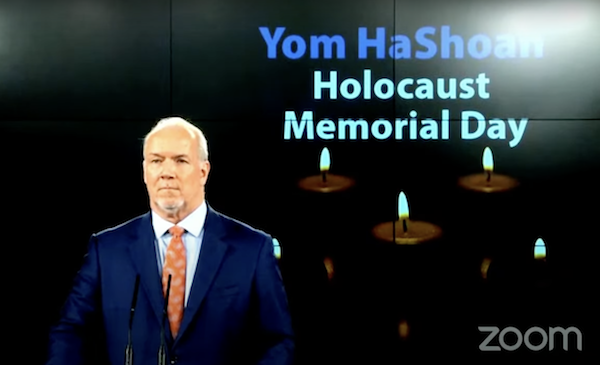
B.C. Premier John Horgan opened the commemorative event. (screenshot)

A uniquely British Columbian virtual commemoration of Yom Hashoah, Holocaust Remembrance Day, took place April 8, convened by the Government of British Columbia in partnership with the Vancouver Holocaust Education Centre (VHEC) and the Centre for Israel and Jewish Affairs, Pacific Region.

Premier John Horgan opened the event.

“On Yom Hashoah, we remember the six million Jewish lives that were lost during the Holocaust. We also remember and honour the millions who lost their lives or were murdered because of their ethnicity, sexual identity or disability,” said the premier. “Today, we also pay tribute to Holocaust survivors and, as that community grows smaller, it’s all the more important that we work together to carry that message forward – that we will never forget and it will never happen again, especially in light of the ongoing threats of violence and discrimination Jewish people are facing worldwide today.”

Horgan noted an incident in Victoria where a Chabad centre was defaced with antisemitic graffiti a day earlier.

“These are the types of acts we must stand together and fight against with a united voice, regardless of where we come from, regardless of our orientations or ethnicities or our faith. We must stand against antisemitism and racism whenever we see it,” said Horgan. “As we light the candles at Yom Hashoah in remembrance, we must remain vigilant and, as we take action today and honour those who lost their lives and those who have struggled since the Holocaust, we must again remember that we cannot repeat our past.”

Michael Lee, MLA for Vancouver-Langara, also spoke.

“As the living memory of the Holocaust fades, the important act of remembering and coming together each year grows in importance,” he said. “It is our collective responsibility to ensure that we never forget and such a thing never happens again, because, sadly, this is not just about remembering history, but about standing together today against the racism, bigotry and antisemitism that still exists in our world.… As a community, now and every day, we must stand against these acts of hate and bigotry.

“Today, on Holocaust Remembrance Day, we are reminded of why it is so important to come together, to reflect and to ensure that the past is not forgotten. We must remember both the parts of this dark, dark history that we must not let be repeated and the acts of heroism that took place amid such tragedy. Even during a period of humanity’s darkest chapters, there was still good in the world, people who risked their lives to hide and save others from the Shoah. Amidst the horrors and atrocities, there were tales of love, hope and bravery, including with the many righteous among nations, people who demonstrated that light can triumph over darkness. Today, we reaffirm our commitment to never forget; remember the victims, the survivors and the heroes; and we pledge to build a better world in their memory.”

Dr. Robert Krell, founding president of the VHEC, lit six memorial candles. The premier lit a seventh candle “to honour the millions of Roma, Slavic, LGBTQ2+ and people with disabilities who lost their lives.”

Krell, speaking on behalf of Holocaust survivors, noted that 1.5 million of the six million Jews murdered in the Holocaust were children. An estimated 93% of Jewish children in Europe were murdered, which makes his survival extremely remarkable. The fact that both his parents survived, when more than 80% of Dutch Jews were killed, is additionally miraculous.

screenshot - Dr. Robert Krell spoke on behalf of Holocaust survivors
Dr. Robert Krell spoke on behalf of Holocaust survivors. (screenshot)

“I had lost all grandparents, uncles and aunts,” Krell said. “One first cousin remained. The war left its mark and I bear a special responsibility to remember what happened and try to derive lessons from that unfathomable tragedy. The tragedy was unique in its objectives, its focus and its ferocity. Jews were extracted wherever they resided, whether Paris, Prague or Vienna, whether city or countryside or the isles of Rhodes or Corfu. The enemy pursued us and tortured and murdered without mercy, without exception.”

While Dutch citizens remember the Canadian military’s role in liberating that country, Krell also noted Canada’s failure to save European Jews before the war.

Krell also addressed the issue of the International Holocaust Remembrance Alliance’s Working Definition of Antisemitism. Around the world, he said, 34 countries have adopted the definition, as has the province of Ontario.

“As a survivor who has been deeply involved in Holocaust remembrance and education, it strikes me as unconscionable not to accept the IHRA definition to assist us all in recognizing the signs and symptoms of the scourge of Jew hatred,” he said.

Yom Hashoah fell the day before the federal New Democratic Party convention that was to consider a resolution rejecting the IHRA definition. The matter never made it to the floor, but another resolution condemning Israel passed by an overwhelming margin.

“It is my hope that we will soon see the provincial government’s adoption of the IHRA definition of antisemitism,” said Krell.

Rabbi Dan Moskovitz of Temple Sholom also took up the issue of the antisemitism definition.

“The International Holocaust Remembrance Alliance’s definition of antisemitism is, I think, the tool that guides us in our work to combat anti-Jewish sentiments,” he said. “I want to urge our provincial government to join other jurisdictions in embracing the action that is required to combat both historical and contemporary hatred of the Jewish people.”

He added: “When we think of the death of a human being, we mourn the loss of the body and the soul, but, in my work, standing with too many grieving families at graveside, it is not the body that we miss most, that is merely the vessel for the soul, the part of that person that is unique in all the world,” he said. “That’s the part that we fall in love with and are forever changed by. The soul of another leaves an imprint on our heart. So, today, we remember six million murdered Jewish souls, their lives that have been extinguished, their dreams unrealized, their loves and relationships gone forever. We pray that those dear souls are comforted and embraced under the wings of God’s presence and that now, remembered so publicly, will never be forgotten.”

Moskovitz then chanted El Moleh Rachamim and a version of the Mourner’s Kaddish that includes the names of the Nazi death camps.

In addition to the B.C. event, the Vancouver Holocaust Education Centre also partnered on April 8 with the Neuberger Holocaust Education Centre in Toronto, the Azrieli Foundation, Canadian Society for Yad Vashem, Facing History and Ourselves, Friends of Simon Wiesenthal Centre, March of the Living Canada and UIA in a Canada-wide Yom Hashoah online program that included survivor testimony from individuals across the country and a candlelighting ceremony.

A day earlier, the VHEC partnered with the Montreal Holocaust Museum for a virtual program focusing on the importance of remembrance in the intergenerational transmission of memory. Survivors and members of the second and third generations spoke about their experiences. Video recordings of all three events are available at vhec.org.

Format ImagePosted on April 23, 2021April 22, 2021Author Pat JohnsonCategories LocalTags anti-racism, antisemitism, Centre for Israel and Jewish Affairs, CIJA, Dan Moskovitz, Holocaust, IHRA, John Horgan, Michael Lee, remembrance, Robert Krell, Vancouver Holocaust Education Centre, VHEC, Yom Hashoah
COVID’s impacts on mental health

COVID’s impacts on mental health

(image from bastamanography)

Purim 2020, which took place in early March, brought with it added significance. For some, it represented the last time they gathered in a Jewish setting in person, outside the home. For others, it was the first “live” service to be canceled as a result of SARS-CoV-2. In the days that ensued, lives changed as the perils of the coronavirus became apparent. School, work and religious services all moved online; personal contact with friends and family became exceedingly limited; travel, for most people, ceased.

Among the societal issues compounded by the pandemic have been increased isolation, drug dependence, and food and job insecurity. Underlying these problems has been COVID-19’s effect on mental health, including within the local Jewish community. As a result, numerous groups have stepped up their efforts to help the most vulnerable, and all those who have been impacted by the pandemic. During the past weeks, as the first anniversary of COVID-19 came and went, the Jewish Independent spoke with several people at the forefront of handling the Greater Vancouver Jewish community’s response.

At Jewish Family Services (jfsvancouver.ca), efforts to tackle mental health issues have widened, as more people have been seeking the agency’s support. Early on, JFS opened a crisis line that runs seven days a week, from 9 a.m. to 9 p.m. (604-588-5719 or [email protected], with the promise to respond within 24 hours).

“People are struggling, without a concrete end to the restrictions, and so demand for emotional support and learning different coping skills has surged. Our crisis line is always there for people who need immediate help and, for many community members, this is the easy way to connect with a counselor. If someone wants to remain anonymous, that is absolutely an option, we do not require a caller to identify themselves,” JFS chief executive officer Tanja Demajo told the Independent.

From its launch at the start of the pandemic to August 2020, the JFS Community Crisis Line received 955 calls, serving 494 individuals. Case workers spent 2,052 hours on the line. Additionally, 166 individuals accessed free programs offered by the JFS mental health and wellness team via telehealth and video conference – a 40% increase compared to pre-COVID times.

“Many are struggling with the added role of being a caregiver in the pandemic context, as well as dealing with their own emotions, so our workshops and support groups provide a community where people are able to vent, talk and support one another. We also connect people with friendly callers. These services have been a lifeline for many of our clients,” Demajo said.

A report released by the JFS client advisory committee last summer highlighted many ongoing concerns. One alarming quote from a client cited in the report reads, “COVID-19 has been depressing and frightening for me. My anxiety has been through the roof and I’ve had an increased number of panic attacks and migraines. My chronic health conditions have increased in severity and I have new ones. My nightmares and terrors have also increased.”

Prior to the pandemic, some JFS clients were already battling with mental health issues, often severe, which have been aggravated by the need to now cope with unaccustomed fears and anxieties. Some people, according to JFS, have refused to go outside, whether it be to the grocery store or outside for a walk. This problem is often felt by seniors, who, like everyone, need exercise and who confront serious health conditions such as heart disease, diabetes and high blood pressure.

Many housebound JFS clients depended on family and friends visiting for social and emotional connection before COVID hit and have been feeling deeply alone since the pandemic began. Irritability and anger are rising. Senior clients who were used to spending significant time with their grandchildren are missing them desperately. “I miss hugging my grandchildren,” is a common refrain.

Since mid-May of last year, there have been weekly depression and anxiety support group meetings with JFS’s mental health outreach therapist, Kevin Campbell. Run on Zoom, the 90-minute sessions teach coping skills and allow a safe place to talk and share. The group focuses on cognitive behavioural therapy and mindfulness techniques. JFS also has an active seniors caregivers support group led by Lily Shalev.

Not all COVID-19 developments in connection to mental health are grim, JFS notes. Due to technological developments, some of those experiencing isolation are able to access telehealth, work from home, get home deliveries and view a variety of educational and cultural offerings online, including many synagogue activities.

Jewish Addiction Community Services Vancouver (jacsvancouver.com), an organization that helps community members navigate the troubles of various substance abuse issues, has held one-on-one meetings on Zoom ever since COVID started.

“Clients seem to like this kind of individual counseling better, as it allows for greater intimacy, even though it is on Zoom,” said Shelley Karrel, manager of counseling and community education at JACS. “What people liked most about the group meeting was the getting together physically.”

To help those who would prefer to meet in person, Karrel has arranged for one-on-one socially distant coffee meetings. “What JACS has done is to make ourselves more available to someone when they want to talk, and to be able to schedule a meeting fairly quickly. As a registered clinical counselor, I am able to offer clients tools and exercises for managing their symptoms and for exploring the root causes when the issues of anxiety and depression are evident. Some of my clients are finding AA meetings helpful online. And, like with our clients, some are not using that medium for the same reason – it’s not personal enough.”

For ongoing support, JACS has a monthly email that lists many resources for people, if they want to reach out for specific help. JACS is also beginning a new program, Sustaining Recovery, that offers additional support in the form of a structured plan to help someone develop goals and be able to keep track of their progress. This plan, JACS finds, is very useful in creating accountability and support.

Inclusion services at the Jewish Community Centre of Greater Vancouver (jccgv.com/inclusion) continues to provide a number of targeted social and recreational programs intended to engage, educate and provide meaningful lifelong learning opportunities, as well as engage individuals with diverse needs. The programs are rooted in Jewish values and the principles of social connection, community building and belonging.

“Social isolation is a prevalent issue for individuals with diverse abilities [and] this reality was exacerbated by the COVID-19 shutdown,” explained Leamore Cohen, coordinator of inclusion services. “These communities have been particularly impacted by the loneliness, uncertainty and economic hardships caused by the global pandemic, leaving these individuals at higher risk for numerous health challenges. The work we do in the inclusion services department creates the needed awareness of the individuals we support. But, now more than ever, community members are looking to us for routine and engagement at a time when they are most vulnerable.”

As people have settled into life with COVID-19, “these individuals continue to be shut in and vulnerable to mental health challenges,” she added. “In response, we offer a hybrid of virtual and in-person programming throughout the week that is both accessible and safe. In-person programs adhere to best COVID practices, and our virtual offerings allow for those who are unable to attend in person to access programming and community virtually.”

The Bagel Social Club, for example, met weekly in pre-COVID times as a means to increase avenues for integration, self-reliance and wellness. The program has shifted to weekly social clubs over Zoom and a weekly Relax and Just Breathe class, which includes gentle stretching, breathing exercises and visualizations.

As the lockdown took effect last year, Jewish Federation of Greater Vancouver (jewishvancouver.com) began convening multiple stakeholder groups to determine the pandemic’s impact on many aspects of Jewish communal life. A common thread during these discussions involved concerns about the impacts of increased social isolation on seniors, families and youth. Federation also hosted several webinars on mental health for community members, related to the impacts of COVID-19.

“Through this work, we were able to identify a number of key initiatives that we could support both financially and organizationally,” said Shelley Rivkin, vice-president of global and local engagement at Federation. “These include over $170,000 in emergency funds to Jewish Family Services, part of which was used to support the emergency care line; funds for Jewish Seniors Alliance to expand their peer support program; and the organization of several webinars with community psychologists directed toward young adults, families and teens.

“The Jewish Community Foundation, Federation’s endowment program, has also supported a number of projects to enable community agencies to undertake mental health initiatives,” she added. “Support for mental health issues for both agency employees and leaders was also identified as a priority for the community recovery task force when they launched their first grant round. It will continue to be highlighted as we move into the next grant round.”

Last December, youth workers voiced concern about the mental well-being of youth and young adults. Consequently, Federation hosted a roundtable with key leaders to ascertain how community members in this age range are faring, especially when faced with so many disappointments and cancellations over the past year. Based on these conversations and others, Federation will be collaborating with these agencies to develop a community mental health strategy for children and youth.

Sam Margolis has written for the Globe and Mail, the National Post, UPI and MSNBC.

Format ImagePosted on April 23, 2021April 22, 2021Author Sam MargolisCategories LocalTags addiction, coronavirus, COVID-19, inclusion, JACS Vancouver, JCC, Jewish Community Foundation, Jewish Family Services, Jewish Federation, JFS, Leamore Cohen, mental health, Shelley Karrel, Shelley Rivkin, Tanja Demajo, youth
Chai Quilt grows and changes

Chai Quilt grows and changes

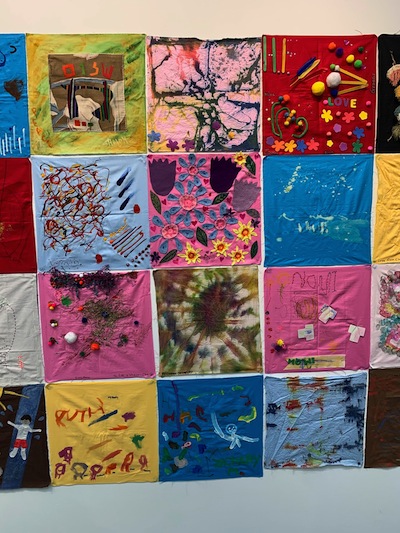
When I first entered the Zack Gallery to view its new show, the Chai Quilt, my first impression was that it was an amateur show. Only one wall of the gallery featured art, and it looked like the work of a kindergarten class, with several exceptions. I soon found out that that is indeed what it is!

In talking to gallery director Hope Forstenzer, I learned that this exhibit is different from most of the shows the gallery has produced. Many of the amateur artists are actually 3 to 5 years old and attend the JCC’s preschool.

“We sent out a call for participation in this show to everyone on the mailing lists of the JCC and the gallery,” said Forstenzer. “I wanted this show to connect the gallery to the community, to make it a mixed show. Whenever someone expressed an interest, we gave them the fabric squares and the craft kits. Some families received four or five squares for every family member. Our preschool at the centre had several, too. A few professional artists also responded to the call, as did some of the JCC staff.”

photo - A portion of the Chai Quilt at Zack Gallery
A portion of the Chai Quilt at Zack Gallery (photo by Hope Forstenzer)

The show takes place in conjunction with the JCC’s Festival of Israeli Culture and, therefore, shares the festival’s theme, which is celebrating life – chai, in Hebrew.

“We asked everyone to create their own celebration of life and spring,” explained Forstenzer. “No matter how hard the pandemic hit us all, there is still life worth celebrating.”

When the squares came back from the artists, Forstenzer created a quilt of them on one long wall of the gallery, a continuous artistic surface reflecting community members’ united vision of life. “The squares touch sides,” she said. “Even if we can’t meet because of the pandemic, we’re still in this together. Our art brings us together.”

The show’s unique blend of professional and amateur artists means there are several profound differences from previous Zack shows. One of those differences is that there are no name cards. If a participant signed their square, everyone can see their name; if not, the square’s creator is anonymous.

Another difference is that the show started a week later than planned.

“Many of the participants are families with children,” said Forstenzer. “They kept calling me and asking for more time. Even now, when the show is open, the squares are still trickling in. There are already over 70 on the wall. I had three new ones today, waiting on my desk, and more are coming, I’m sure. I’m going to add them on to the end of the quilt as they come.”

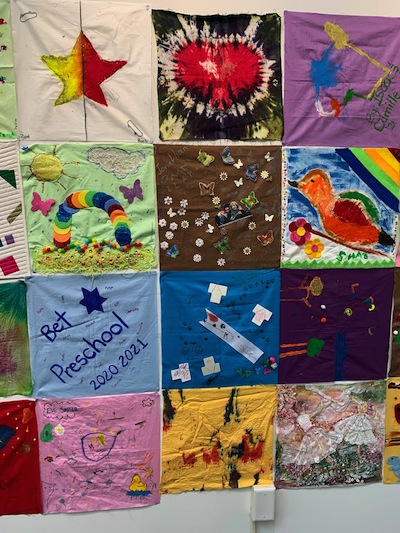
photo - Another part of the Chai Quilt at Zack Gallery
Another part of the Chai Quilt at Zack Gallery (photo by Hope Forstenzer)

The show, or rather the quilt, grows daily; resembling a living organism. And, it also changes. As I was speaking to Forstenzer, one of the participants, Jessica Gutteridge, artistic director of the Rothstein Theatre, came into the gallery. She wanted to rotate her square, which was already on the gallery wall. “It would look better the other way,” she offered, and Forstenzer agreed.

“I was excited to have an opportunity to participate in this community art project,” Gutteridge said. “Although my professional artistic practice is in the theatre, I have been involved as a hobbyist and student in visual arts and crafts, particularly needlework, for most of my life. During the early part of the pandemic, Hope and I created a virtual drop-in community art program called the Creative Kibbitz. It was based on a project I had started – to invite people to my home to socialize and make creative work. This show was a nice way to extend that work, and a theme based on celebrating life and renewal seemed very appropriate and inspiring in this moment.”

Although Gutteridge has never participated in a Zack show before, her pink square with its jolly cherry blossoms looks like it belongs on the gallery’s wall. “Cherry blossom time is one of my favourite moments of the year,” she said. “It is so ethereally beautiful for the short time it lasts. To me, it captures the rebirth of spring perfectly and the stirring of new life. I decided to make a spray of cherry blossoms using two of my favourite media, yarn and rhinestones, in an effort to make something that captures the shimmer and sparkle of spring.”

In addition to needlework, the quilt pieces have been made using an astounding variety of media. Photo collages and paintings. Feathers and beads and felt flowers. Dried leaves and confetti paper ribbons. Letters and abstract glitter splashes. Buttons and lace.

The creator of one square, which has dancers in lacy costumes, is Beryl Israel, a retired teacher. “I am a member of the fantastic JCC Circle of Friends program,” she said in an email interview. “Up to the start of COVID, I taught tap dancing at one of the local community centres.” Her love of dancing poured into her contribution to this show.

“My motivation for this work was to concentrate on the happiness and positivity around us in a gentle, hopeful way, with the inspiration from the dancing figures of Matisse,” she explained. “I wanted to record some of my old dress fabrics, laces from my mother, favourite photos, handmade paper, flowers, etc., plus the use of acrylic paints and stitching, which resulted in my composition.”

The imagination all the artists infused into their squares seems to know no bounds, as if they wanted to say, the ways in which we each see life is different, but, together, we can create a life as diverse and colourful as the Chai Quilt on the wall of the Zack Gallery.

The quilt is on exhibit until May 14.

Olga Livshin is a Vancouver freelance writer. She can be reached at [email protected].

Format ImagePosted on April 23, 2021April 22, 2021Author Olga LivshinCategories Visual ArtsTags art, Beryl Israel, chai, Chai Quilt, Hope Forstenzer, Jessica Gutteridge, life, multimedia, Renewal, spring, textiles, Zack Gallery
Evaluating info online

Evaluating info online

Dr. Noah Alexander was the keynote speaker at the Jewish Seniors Alliance Spring Forum on March 21. (photo from medicalmentorcommunity.com)

Can I Trust That? Evaluating Health Information Online was the topic of the Jewish Seniors Alliance Spring Forum, held virtually on Sunday, March 21.

Gyda Chud, co-president of JSA, welcomed about 100 people to the afternoon event. She reminded attendees of the four foundational elements of JSA: outreach, education, advocacy and peer support. She then turned the mic over to Tamara Frankel, a member of the program committee, to introduce the guest speaker, Dr. Noah Alexander.

Alexander is a practising emergency physician at Vancouver General Hospital. Although he usually works on the front line, he also works to empower patients. He does this through his role as the associate director of digital health literacy at the InterCultural Online Health Network. This organization helps members of many different communities understand and manage their chronic health conditions.

Alexander began his talk by stating that his goal was to provide a systemic approach to health education. He highlighted many elements, beginning with the question, How do you know who to trust in this information age?

When using a search engine (he likes to use Google Chrome), use key words or short sentences to find information. When looking at the search results, consider whose website it is, their credibility and the value of the content. Credibility and content are key to the whole process. For example, who wrote the article or blog, and are they known and respected? How old is the entry? Is it relevant to the question you’re asking? Is it peer-reviewed or is the writer or organization accredited? Check the site’s URL: for example, .com entities are usually commercial and profit-based, whereas URLs ending in .org, .gov and .edu are not-for-profit.

Check both the credentials of the authors and whether they are being paid and, if so, by whom. If the entry has advertisements, there is likely to be a bias involved, Alexander warned. He said people should not trust a Wikipedia entry for important information, as anyone can add their own comments to the post. Rather, use a credible health website such as the BC Centre for Disease Control, HealthLink BC, Vancouver Coastal Health, or any other government agency.

If an article’s page contains links to other websites, there could be a conflict in that they may be selling merchandise. Red flags should be raised when cures are being offered and sold online, said Alexander. Do not trust simple, non-medically proven solutions, or advice contained in group chats. Make sure that there is a privacy policy.

Alexander then presented an interactive quiz based on his presentation, after which Chud thanked him for clarifying the elements involved in seeking accurate health information online. She also summarized the questions attendees posted in the chat and Alexander answered a number of them.

The answer to the question posed about health information online – “Can I Trust That?” – is yes … if you follow Alexander’s suggestions.

Shanie Levin is program coordinator for Jewish Seniors Alliance and on the editorial board of Senior Line magazine.

Format ImagePosted on April 23, 2021April 22, 2021Author Shanie LevinCategories LocalTags health, internet, Jewish Seniors Alliance, JSA, medicine, technology

Posts pagination

Previous page Page 1 … Page 147 Page 148 Page 149 … Page 494 Next page
Proudly powered by WordPress