Skip to content
  • Home
  • Subscribe / donate
  • Events calendar
  • Business Directory
  • FAQ
  • News
    • Local
    • National
    • Israel
    • World
    • עניין בחדשות
      A roundup of news in Canada and further afield, in Hebrew.
  • Opinion
    • From the JI
    • Op-Ed
  • Arts & Culture
    • Performing Arts
    • Music
    • Books
    • Visual Arts
    • TV & Film
  • Life
    • Celebrating the Holidays
    • Travel
    • The Daily Snooze
      Cartoons by Jacob Samuel
    • Mystery Photo
      Help the JI and JMABC fill in the gaps in our archives.
  • Community Links
    • Organizations, Etc.
    • Other News Sources & Blogs
  • JI Chai Celebration
  • JI@88! video

Recent Posts

  • Federation now across BC
  • Israel fighting for its existence
  • Deal strengthens Iran
  • Patriotic belonging diminishes
  • A campaign to engage
  • Upstanders’ first live event
  • Responding to Carney
  • Having your own home
  • Music a family tradition
  • Musical to warm heart
  • Community milestones … June 2026
  • Sharing her passion for Israel
  • Or Shalom reopens its doors
  • JFS from past to future
  • Need holistic approach
  • Sharing stories, advice
  • Journalist shares fears
  • Skills to live together
  • Road to independence
  • Cutting grass with scissors
  • Zionism as a solution
  • Deceit, desire & the divine
  • Reclaiming sacredness
  • Creative project ideas
  • Summer squares and cobbler
  • Thou shalt … summer commandments
  • Legal help for students
  • Revisiting myth of Lilith
  • Wrong person rebuked
  • Canada’s mixed messages
  • Questions for museum
  • Symposium on antizionism
  • Making soccer political
  • CJPAC lauds Pulver’s impact
  • City recognizes Vrba’s legacy  
  • Organ donation saves lives

Archives

Follow @JewishIndie
image - CJN box ad Rockowers 2026

Tag: politics

Can King Bibi hang on?

Can King Bibi hang on?

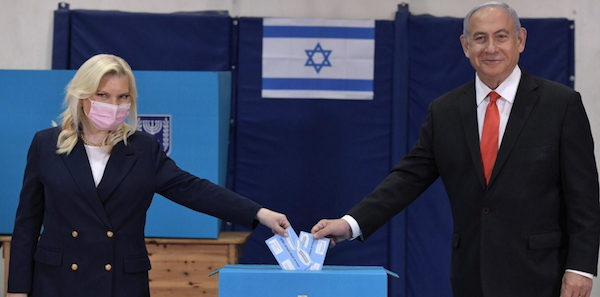
Israeli Prime Minister Binyamin Netanyahu and his wife, Sara, vote on March 23. While the prime minister’s party won the most number of seats in the Knesset, he will still struggle to form a government. (photo from IGPO)

Israeli Prime Minister Binyamin Netanyahu makes a stunning deal with lawmakers to abandon his post and replace Reuven Rivlin as president of the country when the president’s term expires later this year. An agreement to pardon Netanyahu around corruption charges he currently faces is part of a deal that leads to Netanyahu ending his run as the country’s longest-serving leader. With “King Bibi” finally in a sinecure of symbolic eminence, the polarized Knesset manages to cobble together a coalition and stave off the fifth round of elections in two years.

This was one of the most fantastical possibilities mooted in a webinar presented by the Centre for Israel and Jewish Affairs (CIJA) March 25, just two days after Israelis voted in the fourth of a series of elections during a two-year period of instability.

The panelists were CIJA’s chief executive officer Shimon Koffler Fogel and Adir Krafman, the agency’s associate director for communications and analytics. They sifted the entrails of the convoluted election outcome.

While ideological schisms divide Israeli politics, as does the secular-religious divide and other fractures, Fogel and Krafman concurred that the elephant in any discussion of the next Knesset is Netanyahu. CIJA is a nonpartisan organization and Fogel emphasized that the panelists, and moderator Tamara Fathi, were not advocating any outcomes, merely commenting on possibilities.

And the possibilities are almost endless. The vote sent 13 parties into the 120-seat Knesset. Some of these are not even parties, so much as umbrellas under which different factions coalesced for electoral purposes, so the mosaic of the chaotic chamber could refract in countless ways. But, while there are myriad permutations of possible coalitions and strange bedfellowships, Fogel, Krafman and most commentators in Israel and abroad think the most likely outcome is a fifth election. That is how difficult it would be for either side to patch together 61 members of the Knesset to govern.

Krafman presented graphic evidence of the challenges the pro- and anti-Netanyahu factions face in reaching that magic number. The pro-Bibi side likely has 52 dependable seats; his opponents probably have 57. That means an anti-Netanyahu coalition could form with the support of Naftali Bennett’s Yamina party, which holds seven seats. For Netanyahu to eke out 61 seats would require the backing not only of Bennett but also of the four seats won by the Arab party Ra’am. Such a partnership would be historic and would have been almost unthinkable in the recent past. But Netanyahu of late has been making amenable noises toward Arab Israelis in general and to the Arab parties in particular. However, even if the prime minister and his unlikely allies in the Arab sector made a deal, it could upend the consensus on the other side, as some on the right would probably balk at joining a coalition that includes Ra’am.

Ra’am is one of the big stories of the election. Exit polls indicated the party would not make it over the 3.25% threshold to win any Knesset seats. That created a scenario where Netanyahu and his probable allies were seen as almost certain to form a government.

But, as actual counting took place through the night and into the morning, it became clear that Ra’am would cross the minimum support for representation. Instantly, the calculations shifted.

If Ra’am were to enter a coalition government, or even if it merely supported a government from the sidelines, it would be a turning point in the role Arab parties play in Israeli politics. Ra’am has already upended conventional Arab approaches to politics. The umbrella of Arab parties, recently running under the banner of the Joint List, has always played a spoiler role. They are oppositionist and anti-Zionist groups that are as much protest movements as conventional political parties.

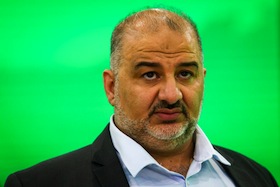
photo - Ra’am leader Mansour Abbas has put his party into a potentially advantageous position
Ra’am leader Mansour Abbas has put his party into a potentially advantageous position. (photo from hamodia.com)

Perhaps learning a lesson from the outsized power of small, right-wing and Jewish religious parties, Ra’am adopted a more pragmatic and transactional position than their former allies in the Arab bloc. The leader, Mansour Abbas, has not ruled out supporting a coalition or playing a role in government. Like smaller Jewish parties, he would be expected to come to coalition discussions with a shopping list of demands, such as more funding for projects and programs that benefit his constituents.

Ra’am’s success makes it an unqualified winner in the election sweepstakes. Fogel and Krafman discussed other winners and losers.

“The first loser, I think, is Netanyahu,” said Fogel. “Despite his party winning the most number of seats, 30 seats out of 120 in the Knesset, [he] is still not able to form a government.”

That might have been survivable if other parties that are Netanyahu’s likely backers did not also come up short.

“The other two losers are other right-wing parties,” Fogel added. Naftali Bennett, whose Yamina took seven seats, and Gideon Sa’ar, whose New Hope party took six, had hoped to siphon off a larger chunk of Likud’s votes.

“Both of them really failed to do that, winning only a handful of seats,” said Fogel.

It is a profound statement about tectonic changes in Israel’s ideological fault lines that the Labour party, which took seven seats, and another left-wing party, Meretz, which took six, are viewed as having had a good night. In the days leading up to the vote, there were questions whether either party would overcome the minimum threshold. The Labour party was the indomitable establishment political party for the first three decades of Israel’s existence.

Another loser, Fogel said, was Avigdor Lieberman and his Yisrael Beiteinu party. Lieberman is a right-wing but avowedly secularist politician. He ran a campaign promoting separation of religion and state and against Charedi privileges. His message may have backfired: while turnout was down overall from the last election, Charedi voters turned out in greater numbers, possibly in reaction to Lieberman’s message.

The discussion turned again to what may be the most likely path for a right-wing government, which could be the exit of Netanyahu. There are centrist parties, Fogel said, that do not have issues with Likud policies so much as they do with the prime minister personally. With him gone, a bloc of anti-Bibi members might engage with Likud under a new leader and form a centre-right coalition.

As unlikely as this scenario might be, it would stave off another unsavoury development.

Any hope of forming a Netanyahu-led coalition probably depends on support from the extremist grouping called Religious Zionism. This new umbrella of racist, misogynistic and homophobic extremists, which holds six seats, would taint any coalition as the most far-right government in Israel’s history. (Click here to read this week’s editorial.)

Whatever happens – whether someone can manage to hammer together a government, or whether exhausted Israelis will trudge to the polls for a fifth time – there are serious issues facing the country.

“There are some pretty daunting challenges out there,” Fogel said. “Most especially on the economic side. We see that some other countries have already begun to emerge [from the pandemic] with a fairly robust recovery. Israel isn’t there yet…. There is a sense of urgency that they do have to get an Israeli government in place that is going to be able to effectively address these issues and it’s not clear that the election result will offer that to Israelis, so I think it makes a situation, if anything, more desperate.”

Format ImagePosted on April 2, 2021April 1, 2021Author Pat JohnsonCategories IsraelTags Adir Krafman, Bibi, Centre for Israel and Jewish Affairs, CIJA, coalition, democracy, elections, Israel, Netanyahu, politics, Shimon Koffler Fogel

IHRA definition stifles speech

On June 25, 2019, the Liberal government of Justin Trudeau adopted the International Holocaust Remembrance Alliance (IHRA) definition of antisemitism, as part of Canada’s anti-racism strategy. Widely proposed around the world, the definition has evoked fierce debate.

In Canada, the NDP will consider a resolution against the definition at its national convention this month, one penned by B.C. former MPs Libby Davies and Svend Robinson. Meanwhile, a coalition of 100 Canadian Jewish organizations has objected to the NDP resolution.

Wherein lies the controversy with the IHRA definition?

The definition, though vague, is not, in itself, controversial: “Antisemitism is a certain perception of Jews, which may be expressed as hatred toward Jews. Rhetorical and physical manifestations of antisemitism are directed toward Jewish or non-Jewish individuals and/or their property, toward Jewish community institutions and religious facilities.” IHRA has promoted it as a “non-legally binding working definition.”

As is so often the case, the devil is in the details, and the details here are found in the 11 examples of what the definition considers actionable antisemitism: seven of them concern the state of Israel.

Those who defend the definition argue that Israel is treated unfairly in the media and in international political discourse and see antisemitism as the root of this discriminatory treatment. Yet Israel is a country whose founding wars and subsequent military occupation of the West Bank and Gaza have meant displacement of millions of Palestinians followed by the occupation and policing of that same population. The circumstances of the displacement and occupation are such that even the most generous interpretation of Israeli actions should recognize that an ongoing critical scrutiny of the Israeli state is a moral duty. Voices within and without Israel – and especially the voices of Palestinians and their allies – must be free to speak their experience and, yes, their accusations.

This is exactly the freedom that the IHRA definition would curtail. The burden should not be on those who criticize the Israeli state to prove that their statements are not antisemitic. Rather, the Israeli state, like any other, should bear the burden of demonstrating that criticisms of it are discriminatory, made in bad faith and nonfactual.

The definition’s history

The International Holocaust Remembrance Alliance was initiated in 1998. In 2016, it adopted a definition drafted by Kenneth Stern, director of the Bard Centre for the Study of Hate, to aid in the collection and sorting of possible instances of antisemitism. Stern has acknowledged that the definition has been misappropriated and is being “weaponized” against critics of Israel and has warned against the definition “being employed in an attempt to restrict academic freedom and punish political speech.”

In Canada, the adoption of the definition has been opposed by the B.C. Civil Liberties Association and the Ontario Civil Liberties Association. More than 450 Canadian academics have signed on to an open letter opposing its adoption by governing bodies. In 2021, the New Israel Fund Canada, which had previously urged Ontario to adopt the definition, reversed its position, citing concerns over free speech and academic freedom.

There have already been unjust consequences. Lives, livelihoods and reputations have been damaged, particularly in universities where academics have been harassed, censured and dismissed for teaching about the Israeli-Palestinian conflict or scheduling speakers on that topic – instances where the definition is acknowledged to be in play. The definition also has created what some argue is a limiting of speech critical of the Israeli state on social media platforms like Zoom or Facebook.

In one example, law professor Faisal Bhabha was accused of antisemitism by B’nai Brith Canada for his remarks in a debate that was sponsored by the Centre for Free Expression at Ryerson University. A petition was launched using the IHRA definition, calling for Bhabha to no longer teach human rights classes. The professor’s allegedly antisemitic act was to argue that Zionism as practised today in Israel amounts to “Jewish supremacy,” an opinion shared not only by many human rights organizations and Palestinian activists, but also by many Jews. Yet for those wielders of the definition the question cannot even be debated.

Similar incidents have been reported in the United States. To get a sense of the extreme rhetoric involved, consider that, in 2020, the U.S. State Department announced its intentions to declare the advocacy groups Oxfam, Amnesty International and Human Rights Watch antisemitic and to withdraw U.S. support for these groups. If only advocacy groups in Canada and the United States could find a way to declare criticism of the genocidal actions of the Burmese state to be merely anti-Asian prejudice, what a coup for Myanmar’s military junta that would be.

Not only is the speech of Jews not immune to these accusations, but even Jewish Holocaust survivors are not immune. When survivor Marika Sherwood attempted to give a talk at Manchester University called You’re Doing to the Palestinians What the Nazis Did to Me, Mark Regev, Israeli ambassador to the United Kingdom, intervened. The embassy claimed the title breached the definition and accused the Holocaust survivor of hate speech towards Jews.

Incredibly, the Simon Wiesenthal Centre listed the European Union’s insistence that products made in Israeli settlements must be so labeled as the third most serious antisemitic incident in 2015.

These examples, which are only a sample of many more, should be enough to convince anyone that there are few limits to the measures that Israel’s absolute defenders will take to use the IHRA definition to silence criticism of the Israeli state.

Opinions in Canada

Can the centuries-old hatred of Jews be redefined as criticism of the state of Israel or is this an unacceptable slippage of meaning? A recent (2020) poll indicated that a strong majority of Canadians believe that criticism of Israel is not antisemitic. Considering the importance of holding the state of Israel up to criticism, it must be demonstrated that said criticism is rooted in antisemitism, not assumed.

One of the examples in the IHRA definition states that referring to Israel as a “racist endeavour” is antisemitic, because it denies the Jewish people their right to self-determination. But surely there are methods of national self-determination that can be judged to be racist.

The definition claims that holding Israel to a higher moral standard than other countries is antisemitic. Considering the fact that every government on the planet receives vitriolic criticism, together with the previous claim that calling Israel a “racist endeavour” is antisemitic, one gets the sense that what is sought for Israel is a higher level of exemption from criticism than any other nation receives. We are perfectly free to call Canada a “racist endeavour,” after all. This happens frequently, often by the main victims of Canada’s very real history of racism, Indigenous peoples. Would we want to criminalize such speech in Canada as somehow a form of racism against Anglo-Saxons, or the French? Obviously not, yet our prime minister is willing to penalize the speech of Palestinians calling out Israel’s structural racism.

Most Jews live outside of Israel. Some are not Zionists or do not identify with the Israeli state as part of their Jewish identity. Yet, since Israel was founded as a reclamation of the ancient Jewish homeland and seeks to identify itself as “the Jewish state,” obviously those who hate Jews may hate the Israeli state and attempt to attack it. Yet states are prone, by their very nature, to all kinds of ethical challenges and must be held open to free and vociferous criticism. Again, the burden should be on the Israeli state to demonstrate that criticism of its actions is unfair and rooted in antisemitism. The claim that criticism of Israel is antisemitic should not be the first assumption but rather the last, after the criticisms – or, in the case of the recent investigation of Israel launched by the International Criminal Court, the legal allegations – have been fairly assessed.

Matthew Gindin is an independent journalist, writer and teacher of Jewish studies. You can follow his writing at matthewgindin.substack.com. Marty Roth is a retired professor of American literature and film studies, a freelance writer and member of Independent Jewish Voices.

Posted on April 2, 2021March 31, 2021Author Matthew Gindin and Marty RothCategories Op-EdTags academic freedom, antisemitism, discrimination, freedom of speech, IHRA, International Holocaust Remembrance Alliance, Israel, Israeli-Palestinian conflict, Judaism, NDP, politics, university campuses
Israeli election jigsaw puzzle

Israeli election jigsaw puzzle

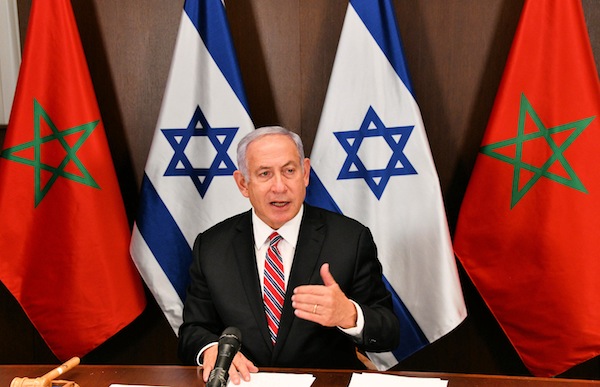
Prime Minister Binyamin Netanyahu at the start of a cabinet meeting this past January in Jerusalem. The two outside flags are the Moroccan national flags, placed there to celebrate the fact that Israel and Morocco had just established diplomatic relations. (photo by Haim Zach/IGPO via Ashernet)

The Israeli elections, which take place March 23, are not turning on conventional ideological schisms, according to two top observers. Rather than a left-right divide, the ballot question for most voters is yes-Bibi/no-Bibi.

Lahav Harkov, diplomatic correspondent for the Jerusalem Post, and Chemi Shalev, senior columnist and U.S. editor for Haaretz, analyzed the possible outcomes in a virtual event presented by the Centre for Israel and Jewish Affairs March 2.

Israel is in its fourth election cycle in two years, an unparalleled time of political turmoil. Harkov said she tends to err on the side of optimism but expects a fifth election before too long.

“I don’t see how we get out of this mess,” she said.

Shalev concurred, using a sports metaphor. “There is a saying in soccer, or football,” he said. “You play soccer for 90 minutes and, in the end, the Germans win, meaning no matter what you think during the game, the result is always that the German team wins and, in soccer, it’s usually true. In Israeli politics, it is also usually true.”

In each of the past three election campaigns, Shalev said, media and opponents of Prime Minister Binyamin Netanyahu convince themselves he is headed for defeat. Then the votes come in and coalition talks begin and he holds onto office.

True to script, said Shalev, polls suggest Netanyahu’s support is faltering, estimating his Likud party will take about 28 of the 120 Knesset seats, down from the 36 he holds now. But, as much as Netanyahu will face an uphill climb to cobble together 61 votes to form a working coalition, his opponents face even steeper challenges.

Netanyahu, nicknamed Bibi, has led Likud since 2006 and has been prime minister since 2009. Having also served for three years in the late 1990s, Netanyahu is the longest-serving prime minister in Israeli history and his doggedness in holding on to power has earned him another nickname: King Bibi.

Shalev depicted Netanyahu’s manoeuvrings after the last vote, in March 2020, as a sheer political masterstroke. Benny Gantz led Kahol Lavan (Blue and White), a centre-left coalition whose principal promise was to keep Netanyahu from another term. When coalition talks appeared doomed and another election inevitable, Gantz entered into a power-sharing agreement that delivered another term to Netanyahu and, in the process, exploded the Blue and White coalition. The broad spectrum of centre-left politics that had come together under Blue and White disintegrated and some of those voters have drifted off to the right and may never return to the left, said Shalev.

Gantz is running again but, while the question last election was whether he could best Netanyahu, the issue now appears to be whether he can garner the 3.25% threshold needed to eke out any Knesset seats whatsoever.

In fact, many parties are hovering in the polls around the cutoff mark, which could be a defining factor in the outcome. The Labour party, once the indomitable force in national politics, is on the ropes. Likewise, another erstwhile force on the left, Meretz, could also be wiped out of the Knesset. On the other hand, the smaller parties that do cross the electoral threshold will have outsized influence on whether Netanyahu hangs on or whether another leader can topple him.

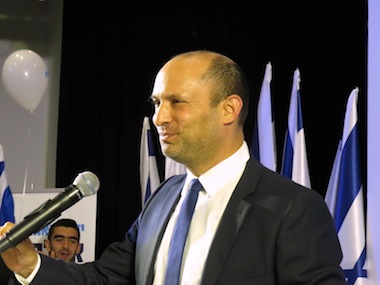
photo - Naftali Bennett speaks in Ramat Gan, in 2019. Among the parties Binyamin Netanyahu would need to form a governing coalition is Yamina, which is led by Bennett
Naftali Bennett speaks in Ramat Gan, in 2019. Among the parties Binyamin Netanyahu would need to form a governing coalition is Yamina, which is led by Bennett. (photo from IGPO via Ashernet)

Netanyahu’s political survival will depend on the ability of small right-wing parties to pass the electoral threshold to enter the Knesset and help him get to 61 seats. Among the parties Netanyahu would need to depend on are Yamina, led by Naftali Bennett, which is seen as an ideological heir to the defunct National Religious Party.

He would probably also need to rely on another new entity, called the Religious Zionist Party, which iss in an electoral agreement with two other small, far-right factions. The RZP, which tends to represent settlers and Charedi voters, is in partnership (for this round of elections, at least) with Noam, a party whose primary issue is opposition to rights for LGBTQ+ Israelis, which party adherents equate with the “destruction of the family.” The third party in the triumvirate is the extremist party Otzma Yehudit (Jewish Power), which Harkov said is a descendant of the outlawed movement of the late Rabbi Meir Kahane.

Kahane was an anti-Arab politician whose speeches in the Knesset were usually boycotted by all other members, leaving him to speak to a room consisting only of the speaker and the transcriptionists. In 1985, the Knesset passed a law banning parties that incite racism, effectively outlawing Kahane’s Kach party. He was assassinated in New York City in 1990 by an Egyptian-born terrorist.

While Kahane and his compatriots were shunned in their time, Harkov noted that Netanyahu intervened with the smaller right-wing parties, encouraging them – including Otzma Yehudit – to band together to help them collectively pass the electoral threshold.

“If they had not run together, they probably wouldn’t have made it into the Knesset,” she said, adding that tens of thousands of right-wing votes would have been effectively wasted.

Harkov added that she found it “interesting and sad” that, in the first of this four-election cycle, Netanyahu encouraged the small right-wing parties to run together and this caused a huge scandal, given the extremism of Otzma Yehudit.

“When Kahane was in the Knesset, everyone would walk out, no one would listen to Kahane speak when he would have his racist rants in the Knesset,” Harkov said. “Now, the prime minister is encouraging them to be in the Knesset.”

She credits an exhaustion with politics for the lack of outrage over the alliance this time around.

Shalev agreed. Israelis have had more than enough, he suggests.

“I have never seen such fatigue and, if I venture something about the elections, [friends] all look at me as if I’m a lost case,” he said.

Where the fault lines in Israeli politics were once left versus right, that paradigm is at least temporarily inoperable. The Israeli left is in disarray and Netanyahu’s greatest challenges come from the right, including several former allies. Gideon Sa’ar challenged Netanyahu for the Likud leadership last year and was soundly defeated. Frozen out by the prime minister, he left the party and formed New Hope.

“Policy-wise, they’re not that different from Likud,” said Harkov. “Sa’ar is quite right-wing.” He is pinning his hopes on voters seeking more of the same with less of the corruption surrounding the incumbent, who is under indictment on a number of bribery, fraud and breach of trust charges.

The second-largest party in the current Knesset is Yesh Atid, led by Yair Lapid. This more centrist, secular grouping could bridge some of the divide and make Lapid a possible successor to Netanyahu, but, like all scenarios, would require a coalition-building process akin to a jigsaw puzzle. While there are factions that would be happy to support Netanyahu and others that would support anyone but Bibi, the divisions are exacerbated by internal grievances and personality clashes.

Given the moving parts in any coalition talks, Shalev predicted a potential “outrageous scenario.” Netanyahu has been courting Arab voters and, with the Arab Joint List in disarray, he hopes he can dislodge some votes from those quarters. However, after the election, he would face a new challenge. Cobbling together 61 members might require recruiting Arab parties, which would likely be met with flat-out rejection by the far-right and religious parties Netanyahu would also need to hold. Likewise, religious and secular factions that might agree on supporting a particular candidate for prime minister might balk at joining a coalition with one another. In other words, while there might be 61 members ready to support Netanyahu, they might refuse to do so if it required sitting alongside ideological enemies. Every potential prime minister faces a similar dilemma.

A recent high court decision threw the issue of religious-state separation and the influence of the ultra-Orthodox on national policy and life into the headlines. The ruling recognizes conversions by Reform and Masorti (Conservative) rabbis in Israel (but not abroad). While this re-ignition of the divide between secular and religious Israelis is significant, it may or may not have a major impact on voters. Yesh Atid is avowedly secular, as is Avigdor Lieberman’s Yisrael Beiteinu party. Whether they will gain any political traction from the issue is a mystery.

While overseas observers assume the big political issues in Israel are the Palestinian conflict, Iran and national security, Harkov and Shalev say voters are more focused on bread-and-butter topics, including the pandemic and pocketbook issues. But the biggest question of all for voters, they both agree, turns on personality – primarily that of Netanyahu and voters’ feelings toward him.

Harkov believes Netanyahu has benefited from the Abraham Accords. It also won’t hurt him that Israel leads the world in the rollout of the coronavirus vaccine.

A particular challenge that a reelected Netanyahu would face is building a relationship with the new administration in Washington. Netanyahu bound his fortunes so personally to Donald Trump that Shalev believes it is impossible to build a meaningful connection with the Biden administration. Netanyahu was not an outlier on this front, he noted, citing opinion polls that suggested Israelis, were they able to vote for a U.S. president, would have supported Trump by a massive landslide.

Format ImagePosted on March 19, 2021March 18, 2021Author Pat JohnsonCategories IsraelTags Binyamin Netanyahu, Centre for Israel and Jewish Affairs, Chemi Shalev, CIJA, democracy, elections, Haaretz, Israel, Jerusalem Post, Lahav Harkov, politics
Immigration challenges

Immigration challenges

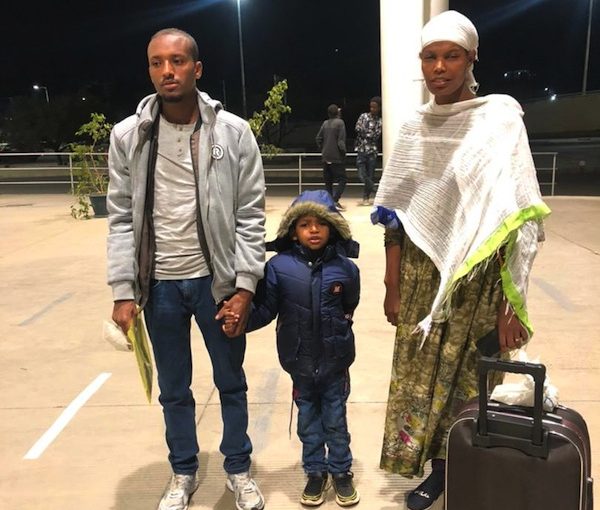
Six-year-old Biniyam Tesfahun with his family shortly before being transported to Israel for heart surgery. (photo by Basleel Tadesse)

Last month, while Israel was still in lockdown, an urgent flight from Ethiopia arrived at Ben-Gurion Airport. The airport was closed and incoming commercial flights had been banned in an effort to contain coronavirus infection rates. The privately chartered plane, sponsored by the International Christian Embassy Jerusalem, taxied onto the tarmac in the early hours of Friday, Feb. 12, carrying some 296 Ethiopian Jewish olim and six children in need of heart surgery.

One of those children was Biniyam Tesfahun, a 6-year-old Ethiopian-Jewish descendant who had not been granted aliyah by Israel. Doctors had discovered a rare congenital defect a month earlier that had produced a hole in his heart. The Israeli nonprofit Save a Child’s Heart had secured seats on the plane for five Ethiopian children and there was room for one more. But about a week before the flight was to depart, the family received word that the Ministry of the Interior had denied a visa.

Word spread quickly within the Ethiopian community in Israel.

Israelis began posting the news on Facebook sites, anguished that the child could die without treatment. Readers in the United States, Britain and Ethiopia stepped in to write articles and post pictures calling for the government to grant aliyah for the little boy and his family.

In no time, the news reached the office of the minister of immigration and absorption, Pnina Tamano-Shata, who insisted the surgery was an emergency and urged the Ministry of Interior to reconsider its position. A day before the flight was to take off, Biniyam’s parents were told the request was approved. The boy and his family would be issued a 10-day permit for medical treatment in Israel.

“It was all very dramatic,” said Avi Bram, who works for the Gondar, Ethiopia-based aid organization Meketa and helped coordinate the family’s transport to the airport. “None of the family is on the aliyah list, and they have not been given any permission to stay,” but the airlift was finally allowed.

Biniyam’s story, which has now traveled around the globe and been published in multiple languages, is a testament to the bond between the 150,000 members of Israel’s Ethiopian community, the Beta Israel, and the roughly 7,000 descendants still living in Ethiopia. It’s a connection, said Uri Perednik, that dominates the consciousness of many Ethiopian-Israelis on a daily basis and impacts their lives. Perednik serves as the chair for the Struggle for Aliyah for Ethiopian Jewry (SAEJ), a nonprofit organization based in Jerusalem that advocates for the repatriation of the Beta Israel to the Jewish homeland.

Perednik said what happens to the family members in Ethiopia economically and socially continues to have a direct impact on the community in Israel. He added that some of the Beta Israel have been waiting decades to be reunited with their family members. “They are torn between Ethiopia and Israel,” he said. “They send half of their salaries to Ethiopia for their families there.”

The coronavirus pandemic shutdown last year and the growing civil unrest in Ethiopia have only exacerbated concerns. “Now people also have smaller salaries or no salaries because of the COVID economic situation in Israel. So it is very tough on the families,” he added.

Ethiopian-Israelis continue to be among the lowest-paid workers in the country. A study by a media outlet (2018) found that almost 70% of Ethiopian-Israelis work junior positions to cover their household expenses, in a country that has the seventh-highest cost of living in the world (2019). For new arrivals from Ethiopia, that economic disparity can be a Catch-22, as they find they are now the major breadwinners for two entirely separate households.

Absorption challenges

Tamano-Shata, who was appointed in 2020 to direct the country’s immigration and absorption programs, says improving economic opportunities for immigrants starts with equipping them with better tools. Tamano-Shata, who arrived in Israel at the age of 3 during the 1980s Operation Solomon airlift, is the first Ethiopian-born woman to hold a Knesset seat. She understands well the challenges that Ethiopian Jews face as new citizens.

Over the past year, her ministry has restructured several core services of the country’s immigration program. She has expanded Hebrew language study for immigrants from one-and-a-half years to 10 years to help new citizens gain competency in Hebrew. Language barriers, said Tamano-Shata, are “shared [by] all olim from all over the world – those who speak English, Amharic, French, Russian, Portuguese and more.” Studies in Israel have shown that language fluency often affects employment opportunities.

Tamano-Shata has also drafted a five-year plan for “optimal integration” of new olim and targeted benefits, tax breaks and housing assistance that can help new immigrants get started when they begin looking for a new home.

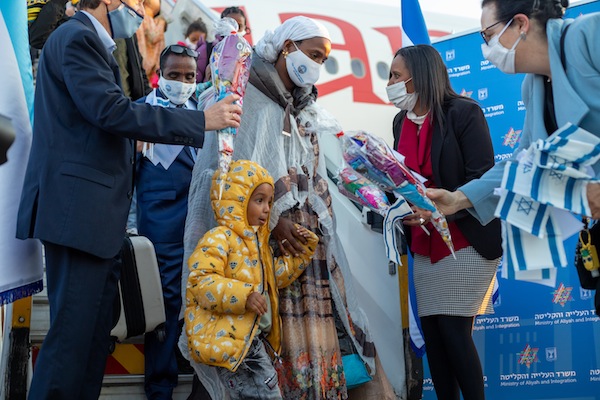
photo - Minister of Immigration and Absorption Pnina Tamano-Shata, second from the right, greets Ethiopian olim as they arrive in Israel. In November 2020, Tamano-Shata announced the planned aliyah of 2,000 olim from Ethiopia, and her ministry recently reached that target
Minister of Immigration and Absorption Pnina Tamano-Shata, second from the right, greets Ethiopian olim as they arrive in Israel. In November 2020, Tamano-Shata announced the planned aliyah of 2,000 olim from Ethiopia, and her ministry recently reached that target. (photo by Naga Malasa/Ministry of Aliyah and Integration)

Perednik said the government has been trying for years to address immigrant housing shortages, which are exacerbated by a national housing crisis. “There have been a few housing programs by the government that were supposed to help young Ethiopian families move to better houses,” Perednik said, but “nothing has really changed.” There is hope that Tamano-Shata’s efforts will finally help the situation.

In 2016, Tamano-Shata gained notoriety as a junior Knesset member for calling attention to discrimination against Ethiopian-Israelis. Her calls led to changes to the way racial discrimination is addressed within the halls of the Israeli government. They helped open a national dialogue about racial profiling and discrimination, problems that Perednik said still continue today.

Jewish identity in Israel

Israeli author Rabbi Menachem Waldman agrees that racism is a problem in Israel. In his opinion, the greatest obstacle that the Beta Israel face is how they are perceived by other Israelis. Waldman is the author of 10 books on Ethiopian Jewry. At present, he serves jointly as the manager of Israel’s absorption program and rabbi for the Jewish communities in Ethiopia.

Waldman said the main obstacle that Ethiopian-Israelis continue to face is “their Jewish identity and their colour.” He said, even though rabbis ruled decades ago that the Beta Israel were Jewish and should be allowed to immigrate as Jews, Ethiopian-Israeli citizens continue to face scrutiny and disbelief that they are “100% Jewish.”

The more recent immigrants were required to undergo conversion as a condition of aliyah and are frequently subjected to additional scrutiny when they apply for marriage. Waldman said he believes this type of stereotyping is harmful to new immigrants. “It [leads] to racism,” he said.

Ethiopian-Israelis face economic challenges, he added, but, still, in his view, it is the constant questions about the authenticity of their Jewish identity that pose the greatest risk. “If he is a strong Jew, like other Israelis, he can overcome the difficulties,” said Waldman. “But, if he [is led to believe] that because he is Black he isn’t like other [Israelis] … it [can sow doubt] in his life in Israel.”

Tamano-Shata’s proposed changes to the immigration and absorption programs take some of these concerns into consideration. She said the government continues to make amendments to the ulpan program, which aids in the successful integration of new immigrants. She also advocates that “education, [innovation] and role models are undoubtedly significant and important tools” when it comes to overcoming prejudice.

There have been recent advances when it comes to a broader acceptance of Beta Israel traditions and customs, which generally date back to pre-talmudic times and are not widely understood by many Israelis. In 2008, the Sigd festival was formally recognized as a national holiday. While the festival has changed dramatically since its early days in Ethiopia, there are signs of a growing appreciation of the holiday in Israel, which occurs 50 days after Yom Kippur. According to Beta Israel beliefs, it is the date when God was first revealed to Moses.

In 2020, then-deputy minister Gadi Yevarkan proposed that Sigd should become an integral part of Israeli Rosh Hashanah celebrations, and celebrated by all Jews. The yearly attendance of the festival by the prime minister and other dignitaries has helped publicize the significance of the holiday and, in turn, encourage better acceptance of the Beta Israel and their traditions in the Jewish homeland.

Jan Lee’s articles, op-eds and blog posts have been published in B’nai B’rith Magazine, Voices of Conservative and Masorti Judaism, Times of Israel and Baltimore Jewish Times, as well as a number of business, environmental and travel publications. Her blog can be found at multiculturaljew.polestarpassages.com.

Format ImagePosted on March 19, 2021March 23, 2021Author Jan LeeCategories WorldTags Avi Bram, Beta Israel, Biniyam Tesfahun, equality, Ethiopia, governance, identity, immigration, Meketa, Menachem Waldman, Pnina Tamano-Shata, politics, SAEJ, Struggle for Aliyah for Ethiopian Jewry, Uri Perednik
Conspiracists not new

Conspiracists not new

Prof. Simon Devereaux (photo from Twitter.com/UVicHumanities)

The belief in far-fetched plots is not a new phenomenon. There have always been people who gravitate towards and embrace conspiracy theories. In a Feb. 18 talk, hosted by the Jewish Community Centre of Victoria, University of Victoria history professor Dr. Simon Devereaux focused on “the golden age of conspiracy thinking,” highlighting various false intrigues of the latter half of the 20th century.

According to Devereaux, there are three principal elements to conspiracy theories that give them persuasive power among their adherents: big events must have big causes; no big event is random or accidental and must, therefore, be the result of a sinister and nebulous group’s intents or actions; and the most complicated explanation must, by its nature, be the correct explanation.

In his talk – entitled Conspiracy Thinking: A Rational Guide to Thinking Irrationally – Devereaux gave the November 1963 assassination of President John F. Kennedy as an example of “commensurate scale,” the need to equate consequential events with convoluted background planning. A 1992 letter to the New York Times by historian William Manchester was cited as both an explanation of and a counter to this tendency: “if you put the murdered president of the United States on one side of a scale and that wretched waif [Lee Harvey] Oswald on the other side, it doesn’t balance. You want to add something weightier to Oswald. It would invest the president’s death with meaning, endowing him with martyrdom. He would have died for something. A conspiracy would, of course, do the job nicely. Unfortunately, there is no evidence whatever that there was one.”

Devereaux then debunked many of the arguments employed by conspiracy theorists as reasons for why Kennedy might have been killed, including the belief that the young president was prepared to keep the United States out of Vietnam. He argued that Kennedy was a “hawkish” president who had the same secretaries of state and defence as his successor, President Lyndon Johnson.

On segueing into his second point – the inability of conspiracy theorists to accept that big events can happen randomly – Devereaux explained, “conspiracy thinkers ultimately want to believe that the world is an orderly place in which individuals are capable of keeping events under control. They don’t want to believe that the world is a sometimes chaotic place in which deeply upsetting events can happen for no apparent reason. It must, therefore, follow that some superlatively powerful group of individuals must be the directive force behind all events of enormous human significance.”

Growing disenchantment in the late 20th century of the nation state as a power to do good compounded the problem. As the United States lurched deeper into the ethical morass of Vietnam, Western governments, which were often seen as solutions to societal ills, with such programs as the 1930s New Deal, were no longer viewed as virtuous. The Watergate scandal of the mid-1970s, too, contributed to the increasingly held notion that people in government may be inherently corrupt.

Economically, the OPEC crisis and stagflation of the 1970s further demonstrated the “sad proof that government could not ensure that postwar prosperity could last forever,” and led to the presidency of Ronald Reagan and the distrustful neoconservative view of government, which continues to the present, said Devereaux.

“It is more consoling to think that there is someone in control, even if their intentions and purposes are entirely evil, rather than think there is no good explanation for the terrible things that sometimes befall us,” Devereaux argued.

To conspiracy theorists, the more elaborate and bizarre the assertions of conspiracies, the more compelling the argument. They are wont to believe, said Devereaux, that an unconventional approach to seeking answers is the right approach, and are dismissive of any reasoned proposition that runs counter to their argument.

“It is a world of amateur knowledge refusing to accept the world of professional knowledge. Any pattern of systematic, analytical thinking embodied, for instance, in a university, entails conventions,” he said.

To a conspiracy thinker, university professors represent people who are controlled; academics cannot say or do certain things without incurring professional censure. A common aspect of conspiracy thinking is to “trust no one,” i.e., “do not accept any conventional form of received wisdom.”

The rejection of conventional wisdom fuels their notions of being braver and deeper thinkers than others, as only they can follow the elaborate and frequently ludicrous connections of the conspiracy, said Devereaux. Thus, a conspiracy appeals to their intellectual vanity – they believe they are sharing hidden knowledge, therein fostering the idea that they are smarter than everyone else by not falling prey to “fake” mainstream news. Paradoxically, according to Devereaux, the more gullible the conspiracy believers, the more intelligent they think they are.

In his concluding remarks, Devereaux pointed out that there have been numerous conspiracies throughout history. However, most were either limited in their scope or inept, or both. Somewhere along the way, human nature ruins the plot; someone leaves the group, exposes the operation, or bungles the job.

Sam Margolis has written for the Globe and Mail, the National Post, UPI and MSNBC.

Format ImagePosted on March 5, 2021March 4, 2021Author Sam MargolisCategories LocalTags conspiracy theories, critical thinking, Kolot Mayim, politics, Simon Devereaux, University of Victoria, UVic

Trump’s golden idol status

When Moses went up Mount Sinai, the Israelites grew restless and constructed a golden calf to worship. Every Jew and everyone with any theological literacy knows what happened next. So it came to pass that, last weekend at the annual convention known as the Conservative Political Action Conference in the United States, a giant golden statue of Donald Trump was wheeled around, drawing adulation and selfies. With an apparent absence of irony, the defeated president was transformed into a literal golden idol.

CPAC has been an annual shindig for Christian and other religious conservatives, libertarians, right-leaning economic thinkers and a big tent of the country’s centre-right. As evidenced by last weekend’s iteration, it is now, like so much of that country’s political establishment, in thrall to Donald J. Trump.

This is the latest in an avalanche of evidence that, despite losing the election, Trump maintains a stranglehold on the Republican party and much of the country. The literal idolatry he inspires deserves fresh consideration. It is the inevitable end-point (we hope) of a trend that was predictable.

It is easy – and not wrong – to view the perpetrators of the Jan. 6 insurrection at the U.S. Capitol as domestic terrorists who threatened the very foundation of American democracy. But these people view themselves – or, at least, some do, based on interviews after the incident – as saviours of democracy. They (or, at least, many of them) genuinely believe that the election of Joe Biden was a result of a rigged process; that millions of votes were stolen or some other jiggery-pokery ensured that the true voice of the people was thwarted.

They believe this because they have been told, repeatedly and as recently as last Sunday at CPAC, by Trump, the man they believe won the election, that the process was rigged, that American democracy has already collapsed and that the election was stolen. Thus, we observe people attempting to steal a free and fair election carrying signs demanding, “Stop the steal.”

Certainly, some recognize that the election was fair but hop on a bandwagon arguing otherwise simply because they dislike the outcome. But there are many who are absolutely convinced that corruption and trickery unjustly deprived Trump of a second term. More alarmingly, a subset apparently believes in an entirely alternate reality, in which Trump is still president, operating the “legitimate” government from his Mar-a-Lago retreat or, even more fancifully, that a series of events is yet to unfold in which the election will be proven wrong and Trump will triumphantly return to the White House.

Listening to the comments of some Americans on cable TV or in online sources is chilling. It is hard to decide whether the scarier position is the one that winks at the truth, as many Republican members of Congress do, claiming disingenuously that they merely want to investigate to make sure the election process was fair, or the one that is rooted in thin air, asserting, despite all evidence and scores of court decisions, that Trump was cheated.

There is much talk of the political polarization that the United States and other countries are experiencing, a result in part of a refraction of the media universe. We are now all capable of consuming a diet of news and information that completely reinforces our prejudices. Combined with a charismatic (to many, anyway) leader who repeats lies endlessly while stoking a narrative of grievances, this refraction has led not to differences of opinion but to incongruities about the very facts of history and current events. To use a condescending and clichéd construction, the people who are convinced Trump won are themselves victims of their leaders’ lies.

This is not to let either side entirely off the hook in this time of division. Much has been made of perceived snobbery that dismisses or diminishes the intelligence or goodwill of Trump supporters. Terms like “wokeness,” which suggest one side has awakened to incontrovertible truth while the rest of the world is mired in somnambulant ignorance, do not leave much room for constructive dialogue. The certainties of the left are visible online and on cable news as well, if for now at least founded more sturdily on a foundation of reality.

There is much talk of healing the divided society that Biden has inherited. Even this elicits disagreement, however, with some demanding accountability for the egregious oversteps of the Trump era before moving on to making nice.

This challenge runs deeper than politics. The United States may be an urgent example but all societies must confront the divisions created by the diffusion of information and contested ideas of “truth” in the internet era. This is a challenge for educators, for elected officials, for thinkers and activists and, significantly and problematically in a free society, for media.

A society requires some shared understanding of reality. When we are literally arguing over the definition of truth, when terms like “alternative facts” are uttered without a smirk, we have a problem. To say nothing of a chunk of the population who reject science, including denial around whether a virus that has killed more than 500,000 Americans actually exists. This is a desperately urgent, possibly existential, challenge for democratic societies. The first step may, as in other cases of human behaviour, be acknowledging we have a problem.

Trump exploited, and continues to exploit, a situation in which it is possible to convince large swaths of people that up is down and black is white. But, while he makes excellent use of the ambiguity of our time, he is a product of it. Whether Trump remains an influential figure or not, we have inherited a world where others like him will emerge from a miasma of mistruth unless we find some common foundations of fact.

Posted on March 5, 2021March 4, 2021Author The Editorial BoardCategories From the JITags Conservative Political Action Conference, CPAC, idol worship, internet, politics, Trump, United States
Israel’s corona experience

Israel’s corona experience

A Stitches by Orli mask, modeled by the designer Orli Fields.

A little over a year ago, Israeli radio news reported that Dr. Li Wenliang, an eye doctor in Wuhan, China, had tried to warn people that there were too many sick in his region. The report caught my attention because it stated that the doctor had been silenced by Chinese authorities.

When the coronavirus outbreak first became newsworthy, Israelis – from the prime minister on down – were sure we wouldn’t be seriously encumbered by it. We were in the mood to confidently assist others. I remember a man in front of me at the grocery checkout, turning around to ask if I knew why he was buying so many packages of toilet paper. When I said no, he told me he was sending toilet paper to family and friends in the United Kingdom.

In an unexpected turn of events, however, the virus became not just a key topic of discussion, but the manager of our daily lives. Over the long months of 2020, family visits and events were severely curtailed. In Israel, for religious and non-religious alike, Jewish holidays are always occasions for get-togethers, but not so this past year.

Some friends and acquaintances have become so nervous about catching the virus, they no longer want to converse, even outdoors, at a safe distance and from behind a mask. Fearing the spread of the pandemic, government officials, in turn, have put the kibosh on live cultural events.

Many people have learned to work from home and some have managed to re-create themselves, opening new businesses, such as those involving logistics, shipping and delivery. For example, a tour guide who used to lead groups through the colourful Mahane Yehuda Market now prepares and delivers baskets of shuk food items. Notably, during the pandemic, some lucky artists and galleries have found more of a demand for their work. Possibly this is due to the fact that people are home so much, staring at the walls, as it were. Yet, most artists-musicians, singers, actors and all the crews that keep theatres and other cultural facilities running have found themselves without work and without significant governmental bailout grants. All tolled, thousands of people have been laid off or have become unemployed altogether.

Whether because we were in lockdown or because we were anxious about being in situations where we might be exposed to people who have the virus, we have perfected online shopping to the level of an art. But some of us have also taken advantage of the farmers who are selling their produce directly to clients rather than through the now-quiet public markets.

We have learned to see ourselves as others see us, that is, in tiny boxes on Zoom. Some cultural institutions – such as the National Library of Israel, the Zionist Confederation House, Beit Avi Chai, Yad Izhak Ben-Zvi and others – have been broadcasting lectures and even some festivals on Zoom. I know one lecturer whose delivery has actually improved over Zoom.

photo - Another Stitches by Orli mask, also modeled by the designer Orli Fields
Another Stitches by Orli mask, also modeled by the designer Orli Fields.

Not only have we learned that we can talk and be understood with a mask over our nose and mouth, I have heard that there are people who, being self-conscious of their teeth and mouth, are now more confident in public because they are wearing a mask.

And masks have changed over the course of the pandemic. In Tel Aviv especially, you will see people wearing designer masks, even while most of us are dressing more simply. In my neighbourhood, for instance, the vast majority of people wear sweatpants and sweatshirts (called “training” in Hebrew) on a daily basis. Teenagers wear indoor-outdoor pajamas; sometimes, they venture outside in their slippers.

The pandemic has brought out lots of dark humour, something Israelis have always been good at. And people have become more cynical about government proclamations. As but one example, the “last lockdown we will have” has happened four times already.

The coronavirus has aided in dividing Israel even more, as certain segments of the population are singled out for their non-adherence to government policy, but are not held accountable for their non-compliance. As one doctor candidly told me, “healthcare decisions are hampered by political considerations.”

Until this pandemic, many discharged Israeli soldiers would travel to southern Asia or to South America to “clear their heads.” With the spread of corona, however, travel has no longer been a safe option, so, in the past year, some soldiers who finished their compulsory service decided to immediately enrol in colleges and universities.

Altogether, the pandemic has caused tremendous financial and emotional stress. We have learned that corona is the loneliest hospitalization and death. But government budget problems have left social service agencies and nonprofits with little or no funding to continue their work of easing the tension, so the psychological damage continues to spread, untreated.

On the brighter side, people have picked up new hobbies, such as gardening or building terrariums. Baking has become a big thing, too. Working on jigsaw puzzles is another activity going through a revival. There seems to be more appreciation of nature, as well, as people have been going out for walks or picnics near their homes as a way to cope. And there has been a significant rise in the number of people adopting dogs, which may help reduce or prevent stress disorders during the pandemic. (While the number of abandoned pets has not dropped in Israel, it has not increased.)

It is generally acknowledged that doctors, nurses and other hospital staff are on the frontlines of the pandemic, so they were the first to receive coronavirus vaccinations. However, there is no shortage of vaccines in Israel and two things happened just recently: “pop-up” inoculation stations opened, to accommodate both citizens and non-citizens, so that, basically, anyone who walks in with an ID can get one; and Israel’s prime minister began talking about vaccine diplomacy – selling or giving vaccines to other countries.

The few pluses of 2020 notwithstanding, however, I doubt most Israelis, if not all, would object to having skipped the past year.

Deborah Rubin Fields is an Israel-based features writer. She is also the author of Take a Peek Inside: A Child’s Guide to Radiology Exams, published in English, Hebrew and Arabic.


Format ImagePosted on March 5, 2021March 4, 2021Author Deborah Rubin FieldsCategories Op-EdTags coronavirus, COVID-19, Israel, lockdown, masks, Orli Fields, politics, vaccinations
Human rights above all

Human rights above all

A poster in Marseille, France, in July 2020, calling for Nasrin Sotoudeh’s release from prison.

The National Council of Jewish Women of Canada spotlighted the remarkable story of Iranian lawyer and human rights activist Nasrin Sotoudeh during a showing of the eponymously titled film, Nasrin, on Jan. 10.

Narrated by actress Olivia Colman, the film takes us into Sotoudeh’s life in Tehran, where she has been a stalwart in defending a wide array of people: political activists, women who refused to wear a hijab, members of the religiously oppressed Baha’i faith, and prisoners sentenced to the death penalty for crimes allegedly committed while they were minors. Her work has come with a tremendous amount of personal sacrifice, including prolonged periods in jail.

Among the notable cases brought up in the film is that of Narges Hosseini, who, in 2018, stood on an electricity box on Tehran’s Revolution Street and removed her headscarf to protest Iran’s mandatory hijab law. She was immediately arrested, and Sotoudeh soon took up her cause. At her trial, the prosecutor claimed she was trying to “encourage corruption through the removal of the hijab in public.”

Iranian filmmaker Jafar Panahi is another of Sotoudeh’s clients. In 2010, Panahi was given a 20-year ban on making films, but he has nonetheless continued to create widely praised cinematic works, such as Taxi, in which he played a Tehran taxi driver – Sotoudeh was one of his passengers. The movie won the top prize at the 65th Berlin International Film Festival in 2015. Together with Sotoudeh, Panahi was co-winner of the European Parliament’s Sakharov Prize for Freedom of Thought in 2012.

And there is the unassuming hero we encounter in Sotoudeh’s husband, Reza Khandan. His unflagging loyalty to his wife and family is underscored throughout the film. He, too, has been imprisoned several times, most recently from September to December 2018, after he wrote about human rights violations in Iran on Facebook. He was accused of operating against Iran’s national security by backing the “anti-hijab” movement. Khandan currently faces a six-year prison sentence.

The film relies on secret footage, made possible by intrepid camerapeople within Iran who took on incredible risk to record Sotoudeh in both her professional and private lives. In the midst of filming, in June 2018, Sotoudeh was arrested for representing several women protesting Iran’s mandatory hijab law. Due to health concerns, she was briefly released from prison late last year, but has since been incarcerated again.

During Sotoudeh’s furlough, she was scheduled to undergo tests to monitor her heart. At one time, she was moved to intensive care in a Tehran hospital after a 46-day hunger strike, protesting the conditions political prisoners in Iran have to endure. She also has pressed for their release during the time of the pandemic.

Shortly before her own release from the Qarchak women’s prison, Sotoudeh contracted COVID-19 but has since recovered.

Following the film’s presentation, a panel discussion took place with the film’s director, Jeff Kaufman; its producer, Marcia Ross; activist Shaparak Shajarizadeh; and former Canadian minister of justice Irwin Cotler. The discussion was led by NCJWC president Debbie Wasserman.

“One of the intents of the film is to say it is not just about Sotoudeh and Iran, it is about applying her standards to our countries and ourselves. Let’s take her example and make it global,” said Kaufman.

The filmmakers said they wanted to tell Sotoudeh’s story because she personifies a commitment to democracy and justice, and represents the power of women to shape society. Further, Sotoudeh holds a deep conviction that people of all faiths and backgrounds deserve equal opportunity and protection.

Both Kaufman and Ross spoke of the extraordinary caution taken to preserve the anonymity and security of those shooting the footage in Iran.

Asked about her reaction upon seeing the screening, Shajarizadeh said, “I cried the whole time. We could see ourselves in every minute of the movement.” Shajarizadeh, who now resides in Canada, was a women’s rights activist and political prisoner in Iran – she fought against the country’s mandatory hijab law for women.

“Nasrin is not only the embodiment of human rights in Iran, but a looking-glass into the persecution of all those who are imprisoned in Iran,” Cotler said.

Cotler advocated for “showing the film as much as we can, and [to] have the sort of conversations we are having now, and mobilize the different constituencies that she has been helping.”

Ross said the film will be out later in the year on Amazon and iTunes.

Established in 1897, NCJWC is a voluntary organization dedicated to furthering human welfare in the Jewish and general communities locally, nationally and internationally. To learn more, visit ncjwc.org.

Sam Margolis has written for the Globe and Mail, the National Post, UPI and MSNBC.

Format ImagePosted on February 12, 2021February 11, 2021Author Sam MargolisCategories WorldTags activism, Debbie Wasserman, human rights, Iran, Irwin Cotler, Jeff Kaufman, justice, law, Marcia Ross, movies, Nasrin Sotoudeh, NCJW, politics, Shaparak Shajarizadeh
Klein speaks on climate crisis

Klein speaks on climate crisis

Seth Klein brings his book A Good War: Mobilizing Canada for the Climate Emergency to the Jewish Book Festival on Feb. 22. (photo by Erica Johnson)

At this year’s virtual Cherie Smith JCC Jewish Book Festival, which runs Feb. 20-25, Seth Klein is among the many writers featured. He will talk about his new book, A Good War: Mobilizing Canada for the Climate Emergency, which came out last September.

Klein was the founding director of the B.C. office of the Canadian Centre for Policy Alternatives (CCPA), a position he held from 1996 to 2018, and was also a founder of the B.C. Poverty Reduction Coalition. He is a board member with the nonprofit Dogwood and an advisory board member for the Columbia Institute’s Centre for Civic Governance. He is a founder, advisor and instructor for Next Up, a leadership program for young people committed to social and environmental justice, as well. He spoke with the Independent in advance of his Feb. 22 book festival presentation.

JI: How did you come to write this book?

SK: When you spend 22 years at the CCPA, you’re forever in this place of what you think should happen versus what our governments are prepared to consider, but never more so than in the case of the climate emergency, where we all live in this harrowing space. I wanted to write a book that would tackle that, that would convince particularly our political leaders, specifically those who say they get it, to be more daring than they have been to date in tackling the emergency.

Originally, the book was to have a single chapter on the Second World War, as an example of rapid economic transformation, but the more I delved into that story, the more I saw parallels between the war and the current crisis – not just on the economic front, but well beyond that. I saw parallels in terms of the role of civil society, the mobilization of the populace, the role of Indigenous people and the need to take care of those who make sacrifices; for example, those working in the fossil fuel industry, who need a just transition, modeled after the care for returning soldiers. I also saw cautionary tales around the squashing of civil rights, the things we don’t want to repeat. To speak to a parallel to which the Jewish community has the most connection: the response to refugees.

JI: Can you say a little more about that last point?

SK: Despite Canada rallying to fight the good fight in Europe, we slammed the door on Jewish refugees before, during and after the war. Years ago, I heard Cindy Blackstock, the amazing Indigenous child welfare advocate, give a very simple definition of reconciliation: reconciliation means not having to say “sorry” twice – you learn from what you did. Canada’s behaviour towards the Jewish community during the Second World War was shameful. I believe that the issue of global climate refugees is going to be one of the defining issues of the next 50 to 100 years. We’re going to have to decide who we want to be this time.

image - A Good War book coverJI: You write that the Mackenzie King government resisted entering the Second World War until the last moment and, even after joining, was slow to ramp up efforts to what was needed. You note that the first nine months of the war are called by historians “the phony war,” and write that we seem to be in the “phony war” stage in our fight against the climate crisis. Can you elaborate on that?

SK: The comparison is really strong. The “phony war” is the period between when they declared war and when things got real. At the beginning of the war, the threat was not clear and present to most Canadians. The fall of France was the moment that the popular zeitgeist shifted. Today, we have the Trudeau government passing a bill acknowledging the climate emergency one day, in the summer of 2019, and then, the next day, re-approving the Trans Mountain pipeline expansion. That is what I call “the new climate denialism.” It manifests in all these governments who say they get it but don’t act like they actually do. In our province, it manifests most clearly in having the most robust climate plan in the country, which we do, and, at the same time, doubling down on fracking and LNG – and you can’t make the math work. That’s the phony war.

JI: What are the assumptions that block government progress on climate action?

SK: The measures that have been adopted so far are largely grounded in what are called “neoliberal” assumptions, which state that society should self-organize according to individual economic interests – the “free hand of the market,” as opposed to the idea that government should function to ensure what is in the best interests of all, so change is left to be voluntary. That’s not working now, and it wouldn’t have worked during the war. When something is an emergency, you don’t make it voluntary.

JI: There is an incredible parallel to COVID-19.

SK: Yes! How do you know when a government knows it’s in emergency mode? These are the four markers: 1) You spend what it takes to win; 2) You create new economic institutions to get the job done, like C.D. Howe, the Liberal cabinet minister [in King’s government] who created 28 new crown corporations to get the job done; 3) You move from voluntary, incentive-based measures to mandatory ones as needed; 4) You tell the truth about the nature and the extent of the crisis and what you have to do.

We did all four of those things in the war. In COVID, we can quibble about the extent that our government has done all four of those things, but I would argue that they have. We’re spending – though it still doesn’t hold a candle to what we did in the war, by the way, but we’re spending. We shifted to mandatory – we locked down the whole economy for some time. We’ve created audacious new programs like CERB that, 10 months ago, none of us would have imagined. Is it too slow sometimes? Yes, but they’ve shifted the mindset. And we have briefings every day, which tell us the truth about the severity of what’s happening. Yet, when it comes to the climate emergency, none of our provincial or federal governments hits any of those markers.

JI: You also describe some cautionary lessons from our wartime experience. Can you elaborate on those?

SK: Aside from the response to refugees, there were all kinds of shameful things, such as War Measures Act stuff, like interning political activists and making political parties illegal, and, most shamefully, the wholesale internment of Japanese-Canadians. There was also the poisoning of Indigenous lands by the very crown corporations whose formation I was so impressed by. These are all examples of state over-reach. The point in recalling these things is to go eyes wide open into the next emergency. To some extent, we have, in fact, already learned as a society – [Brian] Mulroney replaced the War Measures Act with the Emergencies Act, which has safeguards against those types of things. We need the leaders of today to be as bold and innovative as the leaders we had then – and we also need them to be different.

JI: What was the scale of the economic transformation during the war, and how did they pull that off? What are a couple of highest priority steps in your “battle plan”?

SK: The same four steps I’ve already outlined: spend what you have to spend to win, create new economic institutions, move from voluntary to mandatory as required, and rally the public by telling the truth. During the war, they increased government spending tenfold. When C.D. Howe was pressed about the amount of money being spent, he simply said, “If we lose the war, nothing matters.” He carefully controlled all of the supply chains to prioritize the war, including recruiting private businessman, big names like H.R. Macmillan, J.W. Woodward, who abandoned their private interests and served for years as “dollar-a-year men” to serve as controllers and head up these crown corporations because, in an emergency, you don’t leave the allocation of scarce resources to the market – you prioritize what has to be done.

Remember, from 1942 to 1945, the sale of private automobiles in the U.S. of A., the heart of car culture, was illegal. That didn’t happen due to the goodwill of the automakers. They were told. They were busy making stuff for the war effort, making money, but they didn’t decide what to make. We need to approach the climate emergency like C.D. Howe approached the war. We need to conduct an inventory. How many electric buses do we need, how many heat pumps, how many solar arrays, how many wind farms? And, if there is a gap – and there is – we need to decide how we’re going to fill it. Through contracts with the private sector? OK. And, if that’s not enough, we create a new generation of crown corporations to expedite what needs to happen.

JI: Do you think we can rise to the climate emergency in time?

SK: I am trying, in the book, to walk a line. I think, too often, for years, climate communication has been polarized between Pollyannas and pessimists. The leaders we most remember from the Second World War walked a careful line between telling the truth about the severity of the crisis and still imparting hope. Can we do this in time? We don’t know. The reminder I offer to readers is that Canada had a population of 11 million people in the Second World War and over one million Canadians enlisted. You know what they didn’t know? Whether they could win. We know how the story ended, but they didn’t [when they volunteered]. They did what they had to do anyway, and that’s what we have to do.

Matthew Gindin is a freelance journalist, writer and lecturer. He has been published in Philosophy Now, Tricycle, the Forward and elsewhere. He blogs on Medium and is master teacher at Or Shalom Synagogue in Vancouver.

Format ImagePosted on January 29, 2021January 29, 2021Author Matthew GindinCategories BooksTags Cherie Smith JCC Jewish Book Festival, climate crisis, policy, politics, Second World War, Seth Klein

Hope in the presidency

There is no perfection in human affairs. We are imperfect beings and our creations are always flawed. But this does not stop us from striving for perfection, knowing that our reach should exceed our grasp.

The preamble to the United States Constitution begins with, “We the People of the United States, in Order to form a more perfect Union …” and then sets forth the things that the founders agreed to aspire toward, knowing that perfection is unreachable but that aiming for a “more perfect” future is still an ideal to pursue.

This idea is central to Judaism also, that the world was created imperfect and unfinished because it is the role of humanity to complete that work – or, rather, to advance in the direction of completion/perfection even knowing it is unattainable.

This theme appeared also in the poem by Amanda Gorman, the first United States National Youth Poet Laureate, at the inauguration last week of President Joe Biden. “Somehow we’ve weathered and witnessed / a nation that isn’t broken / but simply unfinished,” she said.

That day, Inauguration Day, felt to many like a collective swerve away from an abyss. After the violence at the Capitol two weeks earlier, after four years of chaos and cruelty at the top of the U.S. administration, and at what we hope is the beginning of the end of the pandemic of our lifetimes, it felt like a move in the right direction, a reversal from the trajectory of spiraling rancour. The violence at the Capitol on Jan. 6, so horrific and deadly, may have been the wakeup call that enough Americans needed to recognize the destination to which the “Trump train” was always headed.

The most fundamental component of a democratic society – the peaceful transition of power – was assaulted on Jan. 6, a day most of us never dreamed we would see, an experience that people in autocratic societies know too well but we hoped we never would. We may never know how close the United States came to genuinely losing its democracy but we can hope that the shock of the violence and the widespread refusal to accept the outcome of a properly run election opened enough eyes to the dangers of that approach. As President Biden said, “enough of us have come together to carry all of us forward.”

Regardless of party affiliation, the transfer of power seemed to many like a return to the project of a more perfect union.

By the skin of their teeth, the Democratic party held the House of Representatives and reclaimed the White House and the Senate. The new Biden administration better reflects the diversity of the country’s racial, religious, gender and other components, not least of which is exemplified by the first female vice-president and the first one who is not white.

The refusal of the outgoing president and his wife to adhere to longstanding decorum and decency and their petulant retreat to Florida before the inauguration was a slap in the face for the very idea of democracy itself. To the credit of the vice-president, Mike Pence, he stepped up where the president would not. So, too, did all the living former presidents, three of them in person at the inauguration and the fourth, Jimmy Carter, calling Biden the night before the inauguration to offer wishes of support. This was a powerful show of respect for the office that Trump never exhibited when he held it and which he further despoiled while leaving it. But he is gone now from there, ideally forever, and we trust that a less divisive and corrupt government will carry that country forward.

It is notable that our hopes for 2021 focus so much on a vaccine. The idea of this science – that injecting a dose of a virus into a body to develop an antibody to a more destructive manifestation – might be extrapolated into our body politic. The virus of extremism, tyranny and violence that we saw on Jan. 6 may have inoculated some Americans to combat the spread of such threats. As we strive for herd immunity in our public health, we can perhaps seek a similar degree of protection in our public life. There will always be bad people and bad ideas. Ensuring that they are kept in check and not permitted to reach pandemic levels is as close to perfection as we can possibly attain. We can hope that, in the spirit of Biden’s words, enough people will come together in defence of the great values that country was founded on to carry all of us forward.

Posted on January 29, 2021January 27, 2021Author The Editorial BoardCategories From the JITags Biden, coronavirus, hope, politics, racism, Trump, United States

Posts pagination

Previous page Page 1 … Page 19 Page 20 Page 21 … Page 36 Next page
Proudly powered by WordPress