CHW’s Fashion Blooms

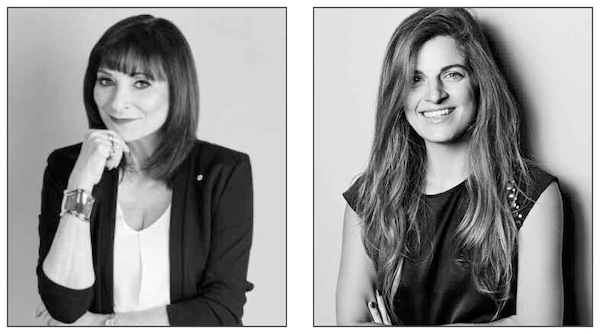
As part of Fashion Blooms on March 31, Canadian journalist, media personality and fashion entrepreneur Jeanne Beker, left, will interview Israel’s Sharon Tal, head designer of Maskit. (photos from CHW)

Canadian Hadassah-WIZO (CHW) presents the second annual Fashion Blooms on March 31. The national virtual fundraising event – highlighting innovation, sustainability and the future of Israeli fashion – will feature Canadian journalist, media personality and fashion entrepreneur Jeanne Beker interviewing Sharon Tal, head designer of Maskit.

Israel fashion house Maskit was conceived in 1954 by then-designer Ruth Dayan, as a contemporary luxury clothing brand. Known for its intricate ethnic embroidery, Maskit was revolutionary in advancing economic opportunities and bridging cultural divides by employing thousands of Jewish, Arab and Bedouin women artisans. Since Tal took over the helm in 2014, she and Maskit have launched collections that are shown internationally and adored by celebrities. One of Tal’s latest designs, a peacock-embroidered caftan, was created in close collaboration with Sarah Jessica Parker and featured in the first episode of And Just Like That, the HBO revival of Sex and the City. Tal continues to honour and innovate, revitalizing a brand while earning plaudits for Maskit’s designs.

“As the former head of embroidery at Alexander McQueen and intern under Alber Elbaz at Lanvin, Sharon’s appreciation for tradition is matched only by her diligence and willingness to reinvent,” said Beker, event emcee. “She has what it takes to build upon the Maskit dynasty while also creating a legacy of her own.”

Fashion Blooms is also the Canadian debut of two trailblazing female fashion designers based out of Tel Aviv: Maya Reik Belfer, founder and designer of Marei1998, a luxury brand focused on sustainability and eco-conscious materials; and Danit Peleg, founder and creative director of Danit Peleg, known for its disruptive and innovative approach that is revolutionizing the fashion industry through open-source designs and 3D printed technologies.

Restrictions permitting, CHW centres across the country will host VIP invitation-only in-person viewing parties for Fashion Blooms. The virtual event will include an exclusive online auction, featuring fashion accessories and luxury brands, and an online vendor marketplace for a virtual shopping experience.

To register, participants can visit chw.ca/fashion-blooms. Tickets start at $40. Fashion Blooms proceeds support the CHW Neri Bloomfield Academy of Design in Haifa, Israel, supporting student scholarships and ultramodern equipment to enhance the future of the Israeli fashion industry.

The CHW Neri Bloomfield Academy of Design awards academic degrees in a wide variety of creative fields, including graphic design, architecture and fashion. This institution is building academic excellence and becoming an influencer and innovator in the world of design. It nurtures individual creativity among its pluralistic student body while instilling a sense of community and coexistence.

For more information, contact Rebecca Bowslaugh, CHW director of marketing and communications, at rebecca@chw.ca or 416-477-5964, ext. 111.

CHW is a non-political, nonpartisan national network of volunteers and professionals who believe that the advancement of education, healthcare and social services transcends politics, religion and national boundaries. Over the last century, CHW has been involved in all aspects of Israeli life, supporting women, children and families in Israel and here in Canada. Learn more about CHW at chw.ca.

– Courtesy Canadian Hadassah-WIZO
Community milestones … Pikuah Nefesh Award, community food program, Klein-Thompson wedding, Jerusalem Talmud

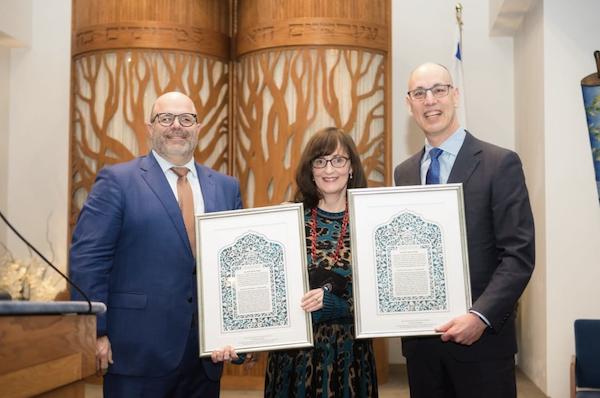
Rabbi Dan Moskovitz, left, Dr. Patricia Daly and Dr. Eric Grafstein (photo from Temple Sholom Twitter)

On Feb. 26, Temple Sholom awarded community members Dr. Patricia Daly and Dr. Eric Grafstein with the Pikuah Nefesh Award (to save a life) for their leadership and dedication to our community throughout the pandemic. Mazel tov to both of them! You can watch the presentation on the synagogue’s YouTube channel, along with the evening’s concert featuring Israeli cellist Amit Peled performing “Journeys with my Jewishness.”

* * *

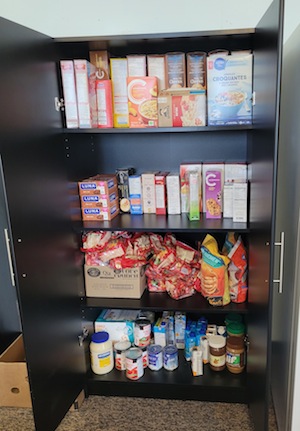
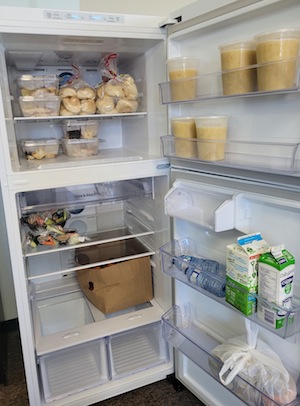
The pilot of the new Richmond Jewish Day School (RJDS) and Kehila Society of Richmond food program to enhance students’ access to healthy and nutritious food is now in progress. With start-up funds provided by Jewish Federation of Greater Vancouver and TD Bank, once a week, JFS Vancouver delivers hot meals to RJDS at no cost to the students or their families. In addition, the funds were used to purchase a community fridge and pantry cupboard that will be kept stocked by JFS, Kehila and the Richmond Food Bank. Students and their families can access healthy snacks, dry goods, fresh produce and meals, during school hours.

* * *

photo - Aden Klein and Nikki Thompson
Aden Klein and Nikki Thompson (photo from their families)

Denise and Wayne Thompson and Gerri and David Klein are thrilled to announce the engagement of their children, Nikki and Aden. A fall wedding is planned.

* * *

photo - Paul and Pamela Austin
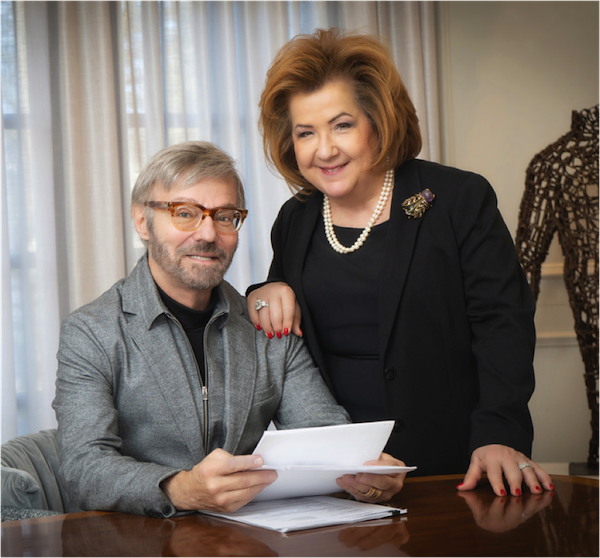
Paul and Pamela Austin (photo from CFHU)

The Canadian Friends of the Hebrew University recently announced a transformative gift to establish the Pamela and Paul Austin Research Centre on Aging at the Centre for Computational Medicine at the faculty of medicine of the Hebrew University of Jerusalem.

The Pamela and Paul Austin Research Centre on Aging will implement an approach to combating disease by integrating computational data analysis into medical research and practice, and by preparing the next generation of computation-science-trained doctors and researchers. It will bring together leading researchers to leverage the power of data-driven analyses, applying computational methods to study and help combat a variety of age-related diseases, including Alzheimer’s and Parkinson’s; pain; psychiatric disorders; genetic disorders; congenital impairment; immune and inflammatory diseases; cardiovascular aging, and the effects of aging on cancer, osteoarthritis, pulmonary disease and metabolic disease.

The Centre for Computational Medicine and its research programs are specifically designed to enable data information flow and collaborative interdisciplinary research efforts with the most advanced equipment and a disease modeling unit, all in proximity to a major medical centre.

Globally, the number of people over the age of 60 is soon expected to outnumber children under the age of 5. As life expectancy rises, so does the prevalence of age-associated diseases, posing a central challenge to healthcare systems worldwide. The gift from the Austins will go beyond the centre, establishing scholarship opportunities for students and an annual lecture.

* * *

A new edition of the Jerusalem Talmud is now available in Sefaria’s free library of Jewish texts – available on sefaria.org and the Sefaria iOS and Android apps.

The Jerusalem Talmud, also known as the Talmud Yerushalmi or Palestinian Talmud, is the sister text to the better-known Babylonian Talmud. It was compiled in Israel between the third and fifth centuries from oral traditions. Like the Babylonian Talmud, the Jerusalem Talmud is a textual record of rabbinic debate about law, philosophy, and biblical interpretation, structured as a commentary on the Mishnah. However, a language barrier (it is written in a different dialect of Aramaic), reduced elaboration, and complex structure can make it difficult to study.

The new Jerusalem Talmud on Sefaria includes:

  • Complete English translation,
  • Fully vocalized text to assist learners in reading the distinctive Aramaic dialect,
  • Extensive interlinking to the Bible, Babylonian Talmud and other works, providing connections that help with understanding the work and placing it in context,
  • Topic tagging, so searches on Sefaria will surface references from the Jerusalem Talmud,
  • Six of the standard Hebrew commentaries included in the Vilna edition of the Talmud available and linked on Sefaria, including Korban HaEdah, Penei Moshe, Mareh HaPanim and others,
  • Standardized organization of the different published formats of the Jerusalem Talmud so readers can more easily find their place in the text.

The only fully extant manuscript of the Jerusalem Talmud was set down by Rabbi Jehiel ben Jekuthiel Anav in 1289, which formed the base for the first printing in Venice by Daniel Bomberg in 1524. Sefaria has manuscript images from both of these editions visible in the resource panel, to see the original format of the texts alongside the modern, digital version.

The English translation of the Yerushalmi was completed in 2015 by Heinrich Guggenheimer, a mathematician who also published works on Judaism. He spent the last 20 years of his life working on translating the Jerusalem Talmud. With his blessing, Sefaria approached his publisher, de Gruyter GmbH, who agreed to partner on this open access version of Guggenheimer’s historic work. Guggenheimer passed away on March 4, 2021, at the age of 97.

New foundation established

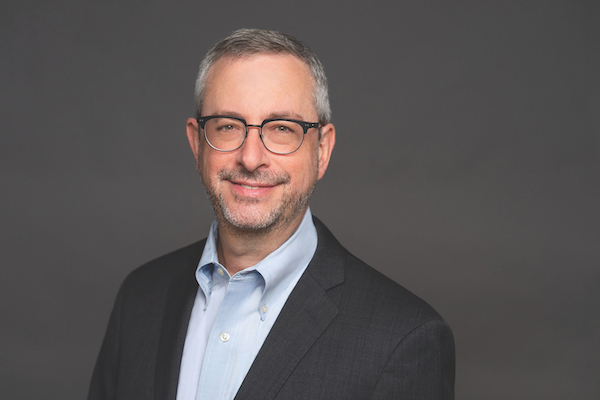
Mark Gurvis returns to Vancouver as head of the new Ronald Roadburg Foundation. (photo from Jewish Federation of Greater Vancouver)

Feb. 1 was Mark Gurvis’s first full day on the job as chief executive officer of the Ronald Roadburg Foundation. A newly established Vancouver-based organization, the foundation aims to bolster Jewish communities locally and internationally while developing innovative solutions to challenging societal issues.

A fixture in the community when he headed the Jewish Federation of Greater Vancouver from 2002 to 2013, Gurvis is excited to be back in town.

“I had a wonderful professional experience and my family had a wonderful life experience being part of the community,” he told the Independent. “We had a great run with the Federation. It is great to come back to a fresh opportunity. We are looking forward to getting involved again.”

At the outset, Gurvis will be busy doing many of the things needed to get a young foundation up and running: sorting out technical matters, getting the office organized, and reaching out to and reconnecting with people to determine the needs of the community.

“This is a complete start-up,” said Gurvis. “As with any new organization, an awful lot goes into the beginning to work out vision, goals and priorities. We have all of that ahead of us. We have a lot to learn about the current state of affairs in each area of focus we want to dive into and explore how we can best make a difference with the resources that will become available. There is a lot of organizational development stuff to tend to as well in starting up an organization from scratch.”

The foundation will be active in examining and assessing the needs of the community. “It’s too early to be putting oars in the water and say this is where we are going,” Gurvis stressed. “I encourage everyone to be patient as we do all the things to get the focus of the organization in place and then see how we can have a positive impact on the community and the region.”

Gurvis has had a full schedule since leaving his job at the Jewish Federation. He was executive vice-president of Jewish Federations of North America through 2020. In 2021, he created Community Network Consulting, a venture that focused on the strategy of nonprofits, community planning and organizational development.

Upon learning of the new position opening up, however, it seemed like the right opportunity to return to Vancouver, he said.

The Ronald Roadburg Foundation was founded by Jack Bogdonov, Stephen Gaerber and Bernard Pinsky, all of whom serve on its board. Gurvis, as CEO of Federation, worked with Gaerber, who was chair of the Coast-to-Coast partnership with the Galilee Panhandle in Israel, and with Pinsky, who was involved with the Jewish Federations of Canada (JFC-UIA).

“We recognized Mark’s intellect, creativity, calm demeanor, and ability to build consensus among constituencies as second to none among all Jewish professionals we had encountered,” said Pinsky. “When Jack, Stephen and I looked for a CEO that could help us accomplish the transformational change we aim for, there was only one person we reached out to: Mark Gurvis.”

Pinksy added, “Our board agrees that we are very fortunate to have Mark join us and, in our view, Mark gives us a big leg up on other start-up foundations because of all of the qualities mentioned above, as well as Mark’s depth and breadth of knowledge of the Jewish community, in Vancouver, Canada, the United States, Israel and the world.”

Ronald Roadburg, the foundation’s namesake, was a local businessman who passed away in 2021. Born and raised in Vancouver, he learned business from his father, Al Roadburg, who also headed the family enterprise, Broadway Properties.

“Two things his father taught him that he especially took to heart were: own property that is where people immediately know its location; and try not to sell properties, ever. These two principles led to the Roadburgs’ great success in the property business. Ron’s will left most of his assets to charity, and the foundation named after him will carry out his intention,” Pinsky said.

To those who knew him, Ronald Roadburg stood out for his sense of humour and compassion. “He loved helping people and he loved animals. He loved art, supporting local artists, and he collected many whimsical and unusual pieces,” Pinsky recalled. “During the last 10 years of his life, he was a director and participated wholeheartedly in making donations to worthy causes through a foundation established by his father.”

Roadburg commissioned numerous murals, which still appear on buildings that he owned around town. He championed several causes to help the less privileged in society and was an unwavering supporter of Israel.

The Ronald Roadburg Foundation will be situated on West Broadway. Over the next few months, the leadership will be honing its focus on specific areas of philanthropic investment and establishing its grant-making policies and practices. To learn more about the foundation, visit roadburgfund.org.

Sam Margolis has written for the Globe and Mail, the National Post, UPI and MSNBC.

It’s been a hard two years

Last summer, given COVID’s continued presence and restrictions, campers were especially happy to be at camp. (photo from Camp Hatikvah)

Prior to 2020, Camp Hatikvah was experiencing unparalleled success. With enrolment maximized, the organization was in the position to focus not only on capital and program development but also on long-term financial planning. According to Liza Rozen-Delman, the camp’s executive director, Hatikvah’s future had never looked brighter. “It was a period of great excitement for us,” she said. “We honestly thought that nothing could get in the way of our growth and success.”

The pandemic, however, changed everything. “The impact of COVID was immediate and devastating,” Rozen-Delman said. “We went from being on top of the world to worrying about our very survival.”

photo - Boys during a service at Camp Hatikvah
(photo from Camp Hatikvah)

Luckily for Hatikvah, donors immediately stepped in to cover the camp’s mounting financial losses. “People knew we were in trouble and they rallied around us,” said Rozen-Delman, with great emotion and gratitude. “Not only did they cover our operational expenses entirely in 2020, they made it possible for us to open in 2021 by funding all of the camp’s COVID-related expenses, like testing, site upgrades and more.”

Rozen-Delman went on to share how incredible it was to welcome campers back to camp last summer. While capacity had to be dramatically reduced to adhere to government group-size limits, close to 400 children participated in Hatikvah’s program in 2021.

“We rearranged our session lengths to make sure that every single Jewish child wishing to attend our camp was able to do so,” explained Rozen-Delman. “While this meant that each camper was at camp for a little less time than is typical, everyone was just so grateful to be there.”

“Our campers are always happy to be at camp but last summer, they were elated,” added Eden Gutterman, the camp’s associate director. “They needed to socialize, to be outdoors and to be away from technology and it was just so beautiful to watch them revel in camp and each other.”

photo - Campers at Camp Hatikva give a thumbs up
(photo from Camp Hatikvah)

Gutterman shared her favourite memory from last summer. “One Shabbat, we asked all of the campers who had their bar and bat mitzvah’s over Zoom to stand in the middle of a circle made up of the rest of the campers and counselors. We then did the hora around them as a tribute to their milestone and accomplishment. None of these campers got to celebrate their simchah in person so it was incredibly touching to see them surrounded and celebrated by their friends. It is something we – and they – will never forget.”

photo - Camper jumps into the water
(photo from Camp Hatikvah)

Camp Hatikvah is now busy preparing for summer 2022.

“We recognize that COVID will likely not be over by summer,” acknowledged Rozen-Delman. “And, while we wish it wasn’t the case, we feel well-prepared to deal with anything.”

Rozen-Delman shared that the Gutman family and Rockdoc Consulting Inc. have provided the funding for the camp to build a new infirmary in time for this summer.

“Given the realities of the ongoing pandemic, this gift couldn’t have come at a better time,” said Rozen-Delman. “Our new infirmary has been designed with COVID and any future infectious disease in mind and will have recovery rooms that can be used as properly ventilated isolation space if necessary. Its functional space has also been thoughtfully designed to allow us to meet and exceed current best practices in camper care. It is a gift our camp so desperately needed and we couldn’t be more grateful to Sam and Belinda and Gloria and their families for their generosity.”

Joanna Wasel, Camp Hatikvah’s board president, commented that, while she wished the world hadn’t had to experience this pandemic at all, she believes that the camp will ultimately be stronger because of it.

“We are entering 2022 with a renewed sense of purpose,” said Wasel. “Our community supported us through this challenging time because they believe in our mandate to help raise the next generation of strong, confident and resilient Jewish leaders. Their faith means everything to us and we are determined to make them proud.”

– Courtesy Camp Hatikvah

First aid funds distributed

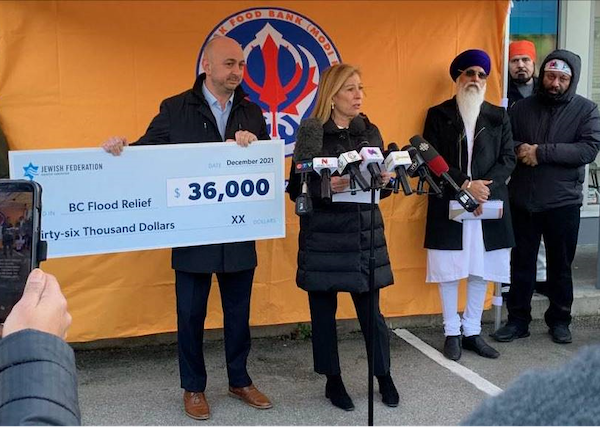
Candace Kwinter, Jewish Federation of Greater Vancouver board chair, and Ezra Shanken, Jewish Federation chief executive officer, present a cheque to the Surrey Sikh Temple and Guru Nanak Food Bank on Dec. 2, as the temple’s head priest and president of the Guru Nanak Food Bank, Narinder Singh, and two volunteers look on. (photo from Jewish Federation)

The Jewish Federation of Greater Vancouver presented a $36,000 cheque for flood relief to Gurdwara Dukh Nirvan Sahib (Surrey Sikh Temple) and the Guru Nanak Food Bank on Dec. 2. The funds will be used to transport urgently needed items to flood victims in Merritt, to offset the cost of rent for a new food bank, and to purchase air mattresses and blankets for people who have been displaced, lost their possessions, or both.

This is the first disbursement from Jewish Federation’s B.C. Flood Relief Funds, which has topped $300,000, thanks to the support of hundreds of donors. The Centre for Israel and Jewish Affairs helped facilitate the partnership – with their main contact being Nick Walia, who is the fundraising coordinator for the food bank – and the Jewish Federation of Victoria and Vancouver Island supported the fund, making it a truly provincial effort from the Jewish community.

Speaking at the Guru Nanak Food Bank, Jewish Federation’s board chair, Candace Kwinter, who was joined by chief executive officer Ezra Shanken, spoke of her pride in being able to partner with the Sikh community, and “to see the remarkable work [they] are doing” at their operations centre. The temple’s head priest and president of the food bank, Narinder Singh, was on hand for the ceremony.

Kwinter spoke of the special meaning this partnership had for the Jewish community during Chanukah: “Chanukah is a time when we remember a miracle that took place after a devastating period of destruction and loss. The holiday takes place at the darkest time of the year, and we light the candles of the menorah each night to bring light and hope into our homes and into the world around us. We want to share that light with our friends and neighbours who need us now, so we can bring them a ray of hope.”

Jewish Federation has long supported non-sectarian humanitarian aid whenever and wherever disaster strikes, and is developing a long-term strategic approach to its flood relief efforts to ensure support will be available as needs evolve over time. To support Jewish Federation’s B.C. Flood Relief Fund, visit jewishvancouver.com/bcflood.

– Courtesy Jewish Federation of Greater Vancouver

Centre for Judaism helps out

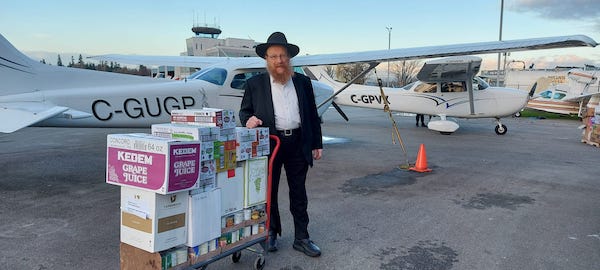
Rabbi Falik Schtroks of the Centre for Judaism of the Fraser Valley/Chabad with one cartful of the donations that were flown to flood victims. (photo from Centre for Judaism)

One of the often-quoted phrases heard in the Centre for Judaism of the Fraser Valley/Chabad is “A little light dispels a lot of darkness.” So, when darkness, in the form of devastating floods, hit parts of the Fraser Valley and other parts of British Columbia, Rabbi Falik and Simie Schtroks took it as their cue to spread light.

“Without knowing yet how we would get the food over to those in crisis, I put out a call to the community to bring non-perishable, ready-to-eat, nourishing food items,” said Simie Schtroks. “Meanwhile, I was in touch with MPs, MLAs and pastors in the impacted regions, as well as various pilots of small planes. I was told by the secretary for MP Randeep Sarai that they had done the first airlift and people were literally lined up for the food at a gas station. Snow had begun to fall, so they dropped the food to be distributed and returned immediately, planning to go back in as soon as the weather improved. The imperative for a collection became even stronger as a new storm was threatening more flooding.”

At least one of the families evacuated from Merritt was from the Jewish community. They were stuck in Kamloops for the week but at least they were in a motel, said Schtroks.

“With the help of an anonymous donor,” she continued, “we managed to purchase caseloads of items that would be very helpful.”

Although the centre was in the midst of producing various Chanukah programs at the time, they stopped what they were doing in order to organize the items and get them to a volunteer pilot at the Langley airport.

“We are very proud of our small Jewish community with a big heart, who came forth to help their neighbours,” said Schtroks. “May G-d bless everyone and keep us all safe. Our hope is that we brought at least a bit of light and hope to Hope, as well as to those evacuated from Mission, Princeton [and other areas].”

– Courtesy Centre for Judaism of the Fraser Valley/Chabad

Community support valued

Camp Hatikvah donors are not only helping ensure the quality of the camp but its inclusivity. (photo from Camp Hatikvah)

Camp Hatikvah is well known for its program offerings, as well as its facilities and its spectacular natural setting in the Okanagan Valley. What many people may not know, however, is that the camp is only the place that it is because of community backing. Camper fees cover things like counseling staff, food, insurance and site maintenance. Everything else – including every building and almost every piece of equipment – has been donated by supporters who want to ensure that Camp Hatikvah can continuously improve without passing on the cost of doing so to the young families whose children attend.

Camp Hatikvah was established in 1937. Its donor base understands the unparalleled value and impact of a Jewish camping experience. They know that today’s campers are tomorrow’s Jewish leaders and that a donation is not a gift to just the organization but an investment in the future of the Jewish community.

More than 20% of campers attend Hatikvah’s program with the help of financial assistance and it is estimated that another 25% are on the cusp of needing to do so as well. Donors appreciate that many camp families are struggling with the affordability of Jewish life in Metro Vancouver and want to help control fee increases without the camp having to compromise program growth or site improvements. By funding program enhancements, equipment upgrades or capital improvements, donors are not only helping ensure the quality of the camp but its inclusivity. While summer camps are expensive – and Camp Hatikvah is no exception – it is because of donors that, on a per-day basis, Camp Hatikvah is one of the least expensive Jewish camps in North America.

Donors have also played an instrumental role in getting Camp Hatikvah through the pandemic. Not able to operate in 2020, the camp was facing a financial crisis. Similarly, in 2021, while the camp was allowed to open, it had to dramatically reduce its capacity in order to manage the COVID protocols. The financial toll of both these summers had the potential to financially devastate the organization for years to come. Yet, as they always have, donors stepped in and stepped up immediately – they covered all the financial losses the camp was facing. The level of generosity and support not only got the camp through the financial challenges caused by the pandemic, but also gave the camp a renewed sense of purpose, determination and passion for serving the community.

The board and staff of Camp Hatikvah thank each and every donor who has played a role in helping the camp become – and remain – one of the best Jewish camps. To learn more about the camp’s programs and the donors who make them possible, visit camphatikvah.com. 

– Courtesy Camp Hatikvah

Supporting Jews worldwide

Michelle Pollock, chair of Jewish Federation of Greater Vancouver’s Israel and global engagement committee. (photo from JFGV)

For Montreal native Michelle Pollock, chair of Jewish Federation of Greater Vancouver’s Israel and global engagement committee (IGEC), love and loyalty to world Jewry were firmly established early in life – at home, school and in the community at large.

That deep affinity was further solidified after a two-month trip to Israel with her ninth-grade class. More recently, while serving as president of the Jewish Community Centre of Greater Vancouver in 2016, Pollock took a trip with her husband Neil to visit the Krakow and Moscow JCCs.

“These visits were incredibly powerful,” Pollock told the Independent. “Witnessing the young adults of these communities, discovering and exploring their Jewish heritage was beautiful. Even more inspiring was the hard work and dedication of the Polish and Russian volunteers and staff in creating welcoming spaces to facilitate this Jewish self-discovery.”

In November 2017, Pollock traveled to northern Israel as a participant on a Centre for Israel and Jewish Affairs mission. “Many of the participants on the trip were IGEC members or staff and their passion for our partnership region was infectious. I joined the IGEC soon thereafter,” she said.

A visit to Federation’s partnership region, Etzba HaGalil (the Galilee Panhandle), followed, in November 2019. That experience was multifaceted. The area is known for its physical beauty and the warmth of its residents, said Pollock, but the harsh reality of security issues and the regional challenges of jobs, infrastructure and opportunity also prevail, she noted.

“Seeing this firsthand infused me with gratitude to our Federation, which has worked so closely with the region since the mid-1990s to bring desperately needed aid and programming in a continuing effort to address the challenges faced by its residents,” Pollock said. “Jewish Federation has strategically invested funds to strengthen this region through education and social welfare programs, capital projects and regional development, and building enduring relationships between members of our community and residents of Etzba HaGalil.”

Similar to efforts locally, some of the funds to Israel have been allocated to new programs addressing youth mental health issues, violence and abuse at home, educational gaps and food security – all problems that have been compounded by the pandemic.

As for the challenges in another region in need, Far East Russia, where many Jews live in remote locations, Federation partners with the Joint Distribution Committee. The JDC is a global organization that addresses critical rescue and relief needs in more than 60 countries, including in the former Soviet Union (FSU).

“Working together with the JDC, life-saving aid is provided to over 80,000 elderly Jewish people in the former Soviet Union who struggle to survive on meagre pensions of $2 per day. They are the poorest Jews in the world, most without family or government support. Their distress and vulnerability are exacerbated by the region’s remoteness and freezing winters,” Pollock explained.

Many of these elderly Jews are well-educated and trained as doctors, lawyers, scientists and educators, she said. Having spent most of their working lives under communism, however, they were unable to accumulate savings. When the Soviet Union collapsed, along with the region’s pension and social assistance infrastructure, they were left poverty-stricken.

“Vancouver is geographically the nearest Jewish community to the Jewish communities in the easternmost part of Russia, adjacent to Siberia. As a strategic priority to strengthen Jewish life around the world, Jewish Federation (as the closest Federation) plays a very active role in supporting this region,” Pollock said. “We ensure long-term economic and social stability for Jews living overseas and in Israel by funding much-needed programs that provide a safety net for our most vulnerable people.”

These specialized programs, funded in part by the Jewish Federation of Greater Vancouver through the annual campaign, impact the lives of at-risk youth, low-income seniors and those living in economically fragile areas.

This year, Federation is funding a program directed at youth in the FSU called Active Jewish Teen (AJT). Engagement in the Jewish community, it believes, is an essential first step in making communal responsibility an inseparable part of one’s Jewish identity. Though still building momentum, AJT already has more than 3,200 members in 63 locations across seven countries.

Besides investing strategically, Federation’s IGEC has made solid connections with the groups it is serving in the FSU, said Pollock. It is also attentive to urgent needs arising in other Jewish communities around the world, helping fund operations and campaigns in South America, Ethiopia, the United States and elsewhere, she said.

Closer to home, throughout the year, Jewish Federation’s Israel and global engagement department brings opportunities for the Vancouver community to experience Israeli culture. Next year’s Yom Hazikaron (Israel’s Memorial Day) and Yom Ha’atzmaut will present opportunities for the community to come together in person.

“Building off the success of last year’s virtual Israeli Independence Day celebration, we will include more local talents and have community fun projects such as the community song and more surprises,” said Pollock, adding that there is a contingency plan in place should the COVID situation change.

Further, shinshinim, teenage emissaries from Israel, will be in town in the coming year. The shinshinim engage local young people in various activities and help foster meaningful ties between Disapora Jews and Israel.

Members of the Vancouver community have a chance to travel to Israel next summer, as well. Federation is facilitating a community mission from July 24 to Aug. 5, 2022.

“I know many of us are keen to travel and get back to Israel and this is going to be an amazing experience,” said Pollock. “At this point, we are looking for people to register their interest and there are a number of information sessions coming up.”

To learn more about the trip to Israel and to donate to the annual campaign, visit jewishvancouver.com.

Sam Margolis has written for the Globe and Mail, the National Post, UPI and MSNBC.

At the top of his game

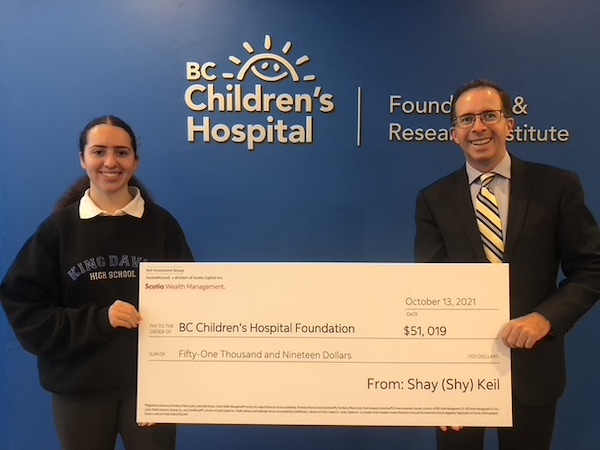
Shay Keil with daughter Tali, a student at King David High School. (photo from Shay Keil)

A Vancouver-area wealth manager and philanthropist is celebrating a trifecta of milestones.

Shay Keil (pronounced “Shy Kyle”) has just been named one of Canada’s 150 top wealth advisors by the Globe and Mail’s Report on Business magazine. The accolade comes just as Keil marks 30 years in the finance industry. To top it off, he set out to mark the 30-year milestone by raising and donating $30,000 to B.C. Children’s Hospital – instead, he recently handed over a cheque for $51,000.

photo - Shay Keil has been named one of Canada’s 150 top wealth advisors by the Globe and Mail
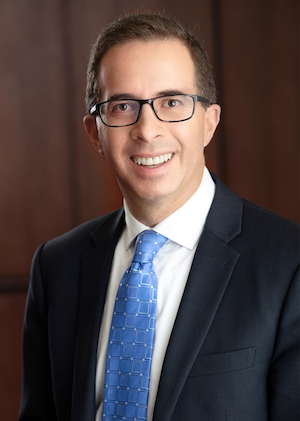
Shay Keil has been named one of Canada’s 150 top wealth advisors by the Globe and Mail. (photo from Shay Keil)

In addition to his work anniversary, the fundraiser was inspired by the son of Keil’s former assistant, who was in Children’s Hospital for an extended period last summer.

“He was diagnosed with a very severe form of epilepsy and he suffered from dozens of seizures in the month of July,” Keil said. “He is recovering well and the treatment program at Children’s Hospital seems to have resolved all of his seizure problems and he’s been seizure-free August, September, October. It’s quite a testament to the amazing work they did.”

Keil initially wasn’t certain his $30,000 goal was realistic.

“I was worried I wouldn’t even raise $30,000 but lots of people have rallied,” he said. “It was really amazing, so I was very proud.”

That achievement was still fresh when Report on Business rolled off the presses, placing Keil among the foremost Canadians in his field.

“I don’t often toot my own horn,” he said, “but, frankly, having 30 years, raising $51,000 and then being voted in by the Globe and Mail to be in the top list of wealth advisors is an enormously proud moment in my career. It’s validating all the hard work I’ve done all these years at delivering top-quality financial guidance to my clients and building a large client base of people who trust me.”

Keil’s work focuses on tax, income and charitable strategies. A confirmed “numbers guy,” he thrives on helping clients realize their goals, he said.

“I’m giving people comfort and peace of mind in dealing with their financial future,” he said.

Keil was born in Tel Aviv and moved to Vancouver as a child. He attended Vancouver Talmud Torah and graduated from Eric Hamber Secondary School. His entire three-decade career has been with Scotiabank, where he started as a bank teller and moved up through the ranks to become a wealth advisor with ScotiaMcLeod.

“Honoured, overwhelmed, proud,” are the words he uses to describe his feelings at the confluence of accolades.

“I’m very committed to giving back to my community and to educating young people on how to understand their financial pictures and objectives,” he said.

photo - nOne of Shay Keil’s passions is driving racecars
One of Shay Keil’s passions is driving racecars. (photo from Shay Keil)

Keil has been involved in a panoply of Jewish community institutions as a volunteer and financial supporter. He is a past president of Richmond Jewish Day School and is currently on the board of directors of the Jewish Federation of Greater Vancouver, as well as co-chair of major donor gifts for Federation’s annual campaign. His other significant commitments include Jewish Family Services, Chabad of Richmond, Beth Tikvah and Beth Israel synagogues, the Jewish Community Centre of Greater Vancouver, King David High School and the Louis Brier Home and Hospital.

When not working or volunteering, Keil spends time with his family – wife Mickey, son Trevin (a third-year university student) and daughter Tali (Grade 11 at King David). He also loves camping and golf and has a thrill-seeking side, which he feeds driving racecars.

“I’m having so much fun I’m going to continue doing what I’m doing,” he said. “I’m having the time of my life.”

Community milestones … Goldschmidt, Mines, BGU & Weizmann Institute

A German translation of the Talmud, and the first translation of the book ever completed by a single person, is now available on Sefaria, a free nonprofit online library of Jewish texts. The translation by scholar Lazarus Goldschmidt was the first German translation of the Talmud and was released in 1935. While it is used in German Jewish studies departments and universities, it had not been widely accessible to the general public until now.

screenshot - Penny Goldsmith
(screenshot)

A celebration of the release took place virtually on Oct. 24. One of the speakers was Penny Goldsmith, Goldschmidt’s eldest granddaughter. Goldsmith is a longtime anti-poverty community worker in Vancouver, and owns a small independent publishing company, Lazara Press, named after her grandfather, who died a few months before she was born. She spoke of her grandfather’s books, “beautiful typographical masterpieces.”

“Grandfather was a type and book designer,” she said. Among his books were literature and poetry, including a collection of poetry he wrote in his early 20s, in Hebrew, “a very unusual choice,” Goldsmith noted, “as Hebrew at that time was reserved for religious study only.”

Goldschmidt was a scholar of Near Eastern languages and, in addition to the Talmud, he translated other religious texts, including a Hebrew translation of the Ethiopic Book of Enoch and a German translation of the Koran. Born in Lithuania, he learned German at the age of 18. His translation of the Talmud took 39 years to complete and he continued to make revisions after publication. He was also a collector of rare books and his extensive collection is now part of the Royal Library in Copenhagen.

After the Goldschmidt Talmud translation became public domain in January 2021, a team of four led by Igor Itkin, a rabbinical student at Rabbinerseminar zu Berlin, integrated its 9,434 pages of text into Sefaria’s free online library. The team’s work included manually linking sections of the translation to corresponding Talmud texts in English and Hebrew/Aramaic already in the Sefaria library. The connections allow scholars, educators and others to navigate between the translations and connect them to the larger library of Jewish scholarship. The team’s work was supported by a grant from the Rothschild Foundation Hanadiv Europe.

***

image - The Rivals book coverThe Rivals and Other Stories by Jonah Rosenfeld, translated from the Yiddish by Vancouver’s Rachel Mines – who recently retired from Langara College’s English department – has been selected by the Yiddish Book Centre as one of its picks for the 2022 Great Jewish Books Club. The book is available through the Yiddish Book Centre’s store and other online booksellers, including its publisher, Syracuse University Press, which is offering The Rivals at a 50% discount until Dec 1, 2021 (press.syr.edu).

Rosenfeld was a prolific and popular writer from the early 1900s until his death in 1944. Although his writing received critical praise, very little was translated into English until the publication of The Rivals. His stories foreground social anxiety, cultural dislocation, family dysfunction and the search for meaningful relationships – themes just as relevant today as they were to their original audiences. (See jewishindependent.ca/stories-that-explore-the-mind.)

***

photo - The National Autism Research Centre of Israel
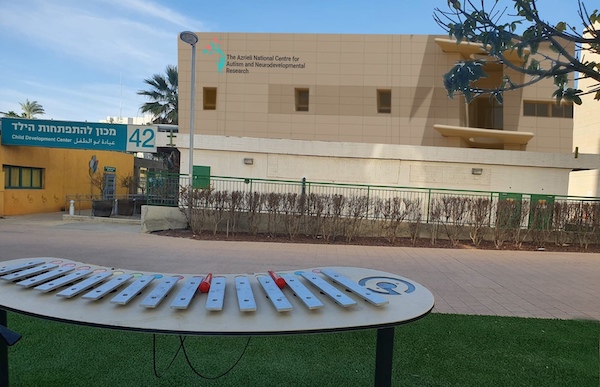
The National Autism Research Centre of Israel (photo from Canadian Associates of Ben-Gurion University of the Negev)

The Azrieli Foundation recently donated $15.6 million Cdn to the National Autism Research Centre of Israel, a collaboration between scientists from Ben-Gurion University of the Negev and clinicians from Soroka University Medical Centre (SUMC), both in the city of Be’er Sheva, Israel. The centre, originally established by the Ministry of Science and Technology, is dedicated to translational research that aims to revolutionize diagnosis techniques and interventions for autism and other neurodevelopmental conditions. In honour of the donation, the centre has been renamed the Azrieli National Centre for Autism and Neurodevelopment Research.

A dedicated facility inside SUMC will be constructed that will double the space for working with children with autism spectrum disorder and performing research. It will house genetics/bioinformatics, biomarker-detection and neuroimaging labs. Existing data collection will be expanded to many autism clinics throughout Israel, where multiple types of clinical and behavioural data, biological samples (e.g., DNA and blood samples) and neuroimaging data will be collected. This data collection will enable the rapid expansion of the National Autism Database, which will triple in size within five years. New faculty members, post-docs and graduate students, as well as scientific, clinical, technical and administrative support staff will be recruited to manage the data collection and sharing effort.

***

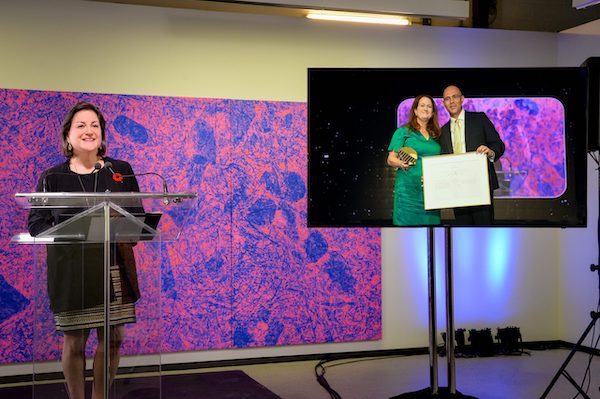
photo - Naomi Azrieli, chief executive officer, Azrieli Foundation Canada, and co-chair, Azrieli Foundation Israel, at the Nov. 7 announcement in Montreal, which took place concurrently with the announcement in Israel
Naomi Azrieli, chief executive officer, Azrieli Foundation Canada, and co-chair, Azrieli Foundation Israel, at the Nov. 7 announcement in Montreal, which took place concurrently with the announcement in Israel. (photo by PBL Photography)

The Weizmann Institute of Science and Weizmann Canada recently received a donation of $50 million US from the Azrieli Foundation, to enable catalytic brain research with the establishment of the Azrieli Institute for Brain and Neural Sciences. A longstanding supporter of the institute, this latest donation adds to past philanthropic investments of nearly $30 million US by the foundation towards Weizmann research facilities and fellowships.

Weizmann’s Azrieli Institute for Brain and Neural Sciences, which will be located at the Weizmann Institute campus in Rehovot, Israel, will promote the full spectrum of neuroscience research, from basic, curiosity-driven studies to translational work of high clinical relevance, with global impact. The donation will enable the construction of a new building that will serve as a hub for neuroscience activities, facilities and technologies.

The Azrieli Institute will focus on research in the development of neural networks; perception and action; mental and emotional health, positive neuroscience; learning, memory and cognition; the aging brain; neurodegeneration; injury and regeneration; theoretical and computational neuroscience; development of innovative neurotechnologies; and integrative brain disorders.