Skip to content
  • Home
  • Subscribe / donate
  • Events calendar
  • Business Directory
  • FAQ
  • News
    • Local
    • National
    • Israel
    • World
    • עניין בחדשות
      A roundup of news in Canada and further afield, in Hebrew.
  • Opinion
    • From the JI
    • Op-Ed
  • Arts & Culture
    • Performing Arts
    • Music
    • Books
    • Visual Arts
    • TV & Film
  • Life
    • Celebrating the Holidays
    • Travel
    • The Daily Snooze
      Cartoons by Jacob Samuel
    • Mystery Photo
      Help the JI and JMABC fill in the gaps in our archives.
  • Community Links
    • Organizations, Etc.
    • Other News Sources & Blogs
  • JI Chai Celebration
  • JI@88! video

Recent Posts

  • SFU honours Gloria Gutman
  • Lifting people’s spirits
  • Wedding a ray of light
  • Indigeneity and Zionism
  • Rule of law broken: councilor
  • Football and its roles
  • The burden of defence
  • Fish Café returns after fire
  • All right in what goes wrong
  • Nuns & mermaids at TUTS
  • Camp offers holiday retreat
  • Students and mentors inspire
  • Once-in-a-lifetime trip
  • 100 dancers, one heart
  • Money for the sciences
  • What “Jewish food” means
  • Have a cookie, schnitzel too
  • Federation now across BC
  • Israel fighting for its existence
  • Deal strengthens Iran
  • Patriotic belonging diminishes
  • A campaign to engage
  • Upstanders’ first live event
  • Responding to Carney
  • Having your own home
  • Music a family tradition
  • Musical to warm heart
  • Community milestones … June 2026
  • Sharing her passion for Israel
  • Or Shalom reopens its doors
  • JFS from past to future
  • Need holistic approach
  • Sharing stories, advice
  • Journalist shares fears
  • Skills to live together
  • Road to independence

Archives

Follow @JewishIndie
image - CJN box ad Rockowers 2026

Tag: coronavirus

Angels deliver despite COVID

Angels deliver despite COVID

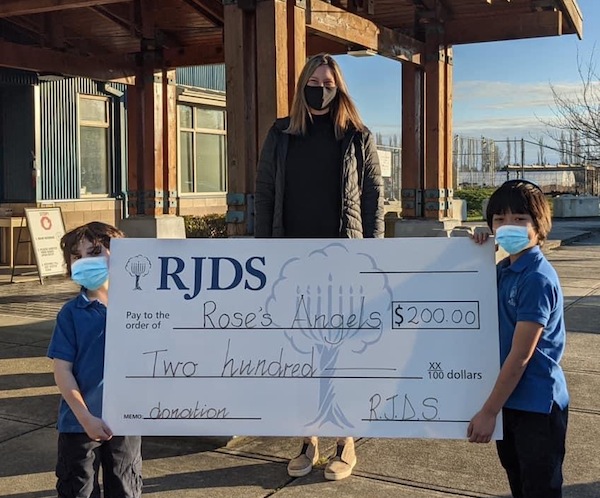
Outside Richmond Jewish Day School, Courtney Cohen accepts a donation to Rose’s Angels, which was collected by RJDS students and staff. (photo from Rose’s Angels)

This past February, the eighth annual Rose’s Angels event took place, although it looked very different from that of previous years, due to COVID-19.

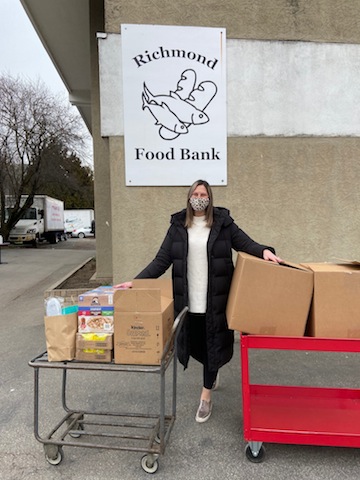
photo - Courtney Cohen outside the Richmond Food Bank, delivering donations
Courtney Cohen outside the Richmond Food Bank, delivering donations. (photo from Rose’s Angels)

Rose’s Angels, which is under the umbrella of the Kehila Society of Richmond, was founded in memory of Courtney Cohen’s grandmothers, Rose Lewin and Babs Cohen. It was established after Courtney Cohen and family friend Lynne Fader came together to discuss how to best honour the grandmothers, while giving back to the community – Rose Lewin and Babs Cohen were both very philanthropic and instilled this value in their families. Since its inception in 2013, Rose’s Angels has donated more than 6,000 care packages to not-for-profit organizations within the City of Richmond.

With the pandemic impacting not-for-profits around the city, Cohen and Fader knew it was essential to push forward and fundraise for donation items and monetary gifts for recipient agencies. Gift cards, slippers, non-perishables, toiletries and feminine hygiene products were among the donations received from the community.

“We adapted and innovated this February’s event to allow for volunteers to still play an integral role,” said Cohen. “Volunteers assisted with pickup and delivery of the bulk donation items to our recipient agencies. Volunteers are an essential part of Rose’s Angels and we truly appreciate their support and dedication year after year.”

photo - A donation of hygiene products
A donation of hygiene products. (photo from Rose’s Angels)

Rose’s Angels donated to 12 Richmond not-for-profit agencies servicing those most vulnerable. Among these agencies were Turning Point Recovery Society, Light of Shabbat (Chabad of Richmond), Richmond Family Place, Tikva Housing, Richmond Food Bank, Pathways Clubhouse, and Nova Transition House (Chimo Community Services).

“Although we were unable to host our large community care-package event in person this February, our community came together in another wonderful way,” said Cohen. “People donated generously and this allowed us to purchase specific items that were both needed and wanted by our recipient agencies.”

She added, “We look forward to 2022, when we can have our amazing volunteers together again to safely assemble the Rose’s Angels care packages.”

For more information about Rose’s Angels, or to make a donation, contact Cohen or Fader at the Kehila Society of Richmond, 604-241-9270, [email protected] or via kehilasociety.org.

Format ImagePosted on March 19, 2021March 18, 2021Author Rose’s AngelsCategories LocalTags coronavirus, Courtney Cohen, COVID-19, Kehila Society, Lynne Fader, philanthropy, Richmond Jewish Day School, RJDS, Rose’s Angels, tikkun olam, volunteerism
Spreading joy on Purim

Spreading joy on Purim

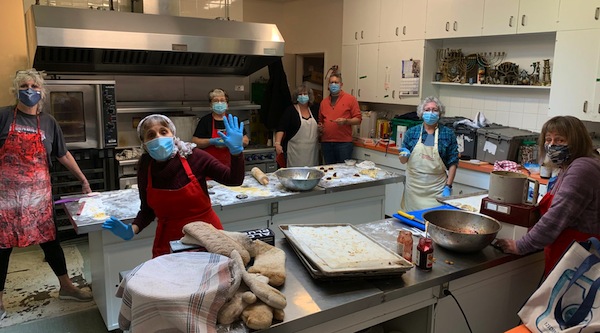
In the kitchen, left to right, are Stacey Kettleman, Leah Reghatti, Francie Steen, Deborah and David Freedman, Shelley Ail and Linda Rothberg. (photo from Beth Tikvah)

This Purim, Beth Tikvah Congregation packaged more than 240 holiday bundles, delivering one to every member household – spreading not only joy, but raising funds for the synagogue’s preschool and Hebrew school.

“As we enter the month of Adar, our tradition teaches, we must increase joy,” explained Rabbi Susie Tendler, the congregation’s spiritual leader. “The talmudic statement (Ta’anit 29a) is not specific about whose joy we are increasing, rather that it is incumbent upon us to spread joy and cheer, brightening these dark days. Communities around the globe have certainly been wrestling with how to deepen connections and spread joy this past year. Beth Tikvah decided to take the wisdom of our tradition and do so through festive and colourful mishloach manot, Purim packages, that went to every member family living in British Columbia.”

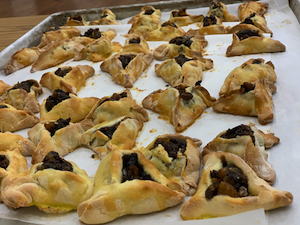
photo - More than 1,000 hamantashen were baked and more than 240 mishloach manot delivered
More than 1,000 hamantashen were baked and more than 240 mishloach manot delivered. (photo from Beth Tikvah)

The effort was multigenerational. There were the volunteers in the kitchen, who made more than 1,000 hamantashen. B’nai mitzvah families and the congregation’s youth groups (USY and Kadima) helped assemble the packages. There were the volunteers who counted, sorted and put the finishing touches on the packages, and those who picked up and delivered the packages all over Richmond and Vancouver. And, of course, the whole endeavour would not have been possible without those who funded it.

photo - More than 240 mishloach manot were delivered
The finished packages. (photo from Beth Tikvah)

In addition to all the congregants who ordered the mishloach manot and volunteered in various ways, Isha L’Isha was a sponsor of the initiative, Leanne Hazon supported the program “relentlessly during all hours of the day,” Alon Sabi designed the ordering system, and BT program manager Yvette Sabi created the boxes.

“For me,” said Tendler, “particularly during COVID, the opportunity to hang a bundle from someone’s door, ring the bell, and then step back three metres or so, and wish someone a happy holiday personally was splendid. However, the joy did not stop there. We received an outpouring of communications from people testifying to the joy and surprise felt from these packages which, in turn, deepened the joy felt by all of the volunteers. It is true, sometimes the little things bring the biggest smiles, and one smile significantly sparks another smile.

Format ImagePosted on March 19, 2021March 18, 2021Author Beth Tikvah CongregationCategories Celebrating the HolidaysTags Beth Tikvah, coronavirus, COVID-19, Judaism, mishloach manot, Purim, Susie Tendler, synagogue
A tree-lined memorial

A tree-lined memorial

Left to right: Rabbi Dov Bakst, presidential advisor, Yitzhak (Buji) Herzog and Rabbi Shlomo Raanan at the March 4 launch of the Ayelet Hashachar initiative to create a promenade in Kiryat Shmona to commemorate Jewish COVID victims from around the world. (photo from IMP)

“What is the main defining characteristic of the COVID-19 era?” asks public activist Rabbi Shlomo Raanan. “The coronavirus brought about separation and disconnect. It separates between countries, divides communities and splits families. It’s about being lonely and alone. My goal is to foster connection. Every Jew has an intrinsic connection to Israel. Let’s help them develop that connection and make it grow.”

Raanan’s organization, Ayelet Hashachar, has recently launched an initiative to foster connection with Diaspora Jewry: a promenade in Kiryat Shmona to commemorate Jewish COVID victims from around the world. More than 100 olive trees will line the kilometre-long walkway. Each tree will represent a different Jewish community from across the globe, serving as a vehicle to commemorate members who passed away from the coronavirus. Visitors to the site can learn about the communities and members who succumbed to COVID by standing next to the tree and getting the story on a dedicated app via a QR code. Each community will have its own mini-site, featuring eulogies, historical anecdotes and any extra information the community wishes to include, for a bona fide living memorial.

“Throughout the years, Diaspora Jewry has always been there for Israel,” said Raanan, explaining what inspired him to reach out to Diaspora communities and provide this free service. “We felt that the time had come for us, here in Israel, to show them our solidarity and support during this very challenging time.”

The significance of the location of the commemorative promenade is not limited to the views of Mount Hermon that Kiryat Shmona affords. Israel’s northernmost city is no stranger to bereavement – its very name commemorates eight people, including hero Joseph Trumpeldor, who were killed, in 1920, while defending the area. More recently, the proximity of Kiryat Shmona to the Lebanese border has made it a frequent target for terror and rocket attacks.

Kiryat Shmona is a symbol of Jewish determination and tenacity. Off the beaten track, it needs to invest twice the effort to make itself relevant to the centre of the country. Despite the hardships associated with leading a border city, Mayor Avihay Shtern has been making strides to promote development and attract residents. The growing food-tech industry and the establishment of large academic institutions are examples of those efforts.

“I am proud and gratified to have this opportunity to reach out to Diaspora communities and commemorate their COVID victims,” said Shtern. “There are many memorials, but I’ve yet to see one honouring those who succumbed to the pandemic, even though we’re almost a year in, and it’s taken such a heavy toll globally.”

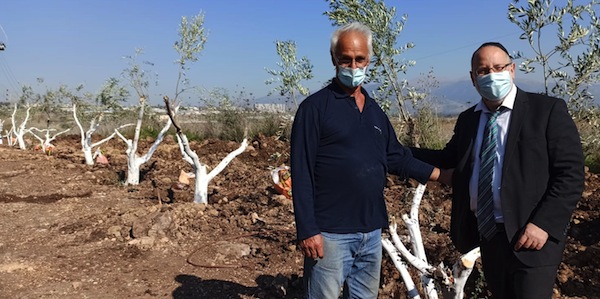
photo - Kiryat Shmona Mayor Avihay Shtern, left, with Rabbi Shlomo Raanan
Kiryat Shmona Mayor Avihay Shtern, left, with Rabbi Shlomo Raanan. (photo from IMP)

Shtern noted that the walkway, to be named “the Path of Life,” will serve as “a living history lesson” for local residents, as well as the many visitors and tourists who flock to the Upper Galilee. “I think it’s important for us to remember, and for the children of the future to know, what happened during this period. The coronavirus will soon disappear, but we must never forget those who were lost to the disease.”

A grand opening ceremony for the promenade was held on March 4, with the participation of the mayor, Raanan, senior public figures, as well as Jewish Agency chair Isaac (Bougie) Herzog.

Each tree, a story

Raanan sees special significance in planting trees as commemoration. “There is a beautiful verse in the book of Job: ‘For a tree has hope; if it is cut it will again renew itself and its bough will not cease.’ Trees signify revival, particularly olive trees,” he said. “They are a perfect metaphor for the Jewish people. Even when it looks lifeless, the olive tree still retains vitality deep inside. Olive trees are also very adaptive; they survive tough periods and can live for thousands of years. It’s certainly appropriate that the olive tree is the symbol of the state of Israel.”

Raanan welcomes community leaders and members who wish to have their community represented by a tree on the promenade. His staff of web developers will prepare the relevant text and visual material at no charge.

“The coronavirus separated people from their loved ones, often forcing victims to die alone,” he said. “This memorial accomplishes the opposite, bringing communities together and uniting people.”

Raanan has other plans to connect Diaspora Jewry with Israel, as well.

Parallel to the commemoration project in Kiryat Shmona, he is offering interested communities the opportunity to plant not just one tree but an entire olive orchard. “There are vast tracts of land across Israel that are neglected…. Communities can plant their own orchards in areas of national importance – the Galilee, the Negev, the Jordan Valley,” he said.

Of established projects, Raanan’s Chavrutah program was started more than two decades ago, with the aim of encouraging dialogue between secular and religious Israelis. The program now features close to 20,000 people studying in partnerships, in Israel and abroad.

Ayelet Hashachar’s goal in all its projects is to heal the divisiveness of Israeli society by working to eliminate mistrust between sectors, thereby breaking stereotypes and encouraging mutual respect.

For more information about how to have a community featured in the Path of Life commemoration project, email [email protected] or call 97-252-617-6222.

– Courtesy International Marketing and Promotion (IMP)


Format ImagePosted on March 19, 2021March 18, 2021Author Sharon Gelbach IMPCategories IsraelTags Avihay Shtern, Ayelet Hashachar, coronavirus, COVID-19, Diaspora, Israel, Kiryat Shmona, memorial, olive trees, Path of Life, Shlomo Raanan
When we unmask matzah

When we unmask matzah

(photo from pngkey.com)

Imagine that you are sitting at your kitchen table, sewing masks for your family so that you can go outside. There are no more masks left in stock in any store near you so you are left to make them on your own. Suddenly, as you attach a button to the fabric, you hear loud shouting outside. You run to your door and cautiously peek out to see what has caused all the uproar.

You are confronted by an extraordinary sight: people are filling the streets, singing, dancing and embracing. You put on your unfinished mask and venture a little closer, but still six feet away, and ask one of the revelers what happened. She replies: “They found a cure for coronavirus. It is going to be available immediately. Everyone who is sick will immediately recover, and a vaccine will protect the rest of us.”

You stuff your half-finished mask into your pocket and join the revelry, rejoicing that the coronavirus nightmare has come to an end.

When you come back into your home the next day, you carefully place your mask on the mantel. In later years, when visitors ask why you have a piece of fabric with one button and a rubber band featured prominently in your living room, you tell them your story of how you found out that you were saved from the coronavirus pandemic, and how the fear and anxiety completely dissolved. Every time you look at that piece of fabric, you remember that your situation can change in an instant, that fear and loss can be replaced by comfort and hope.

This story may seem like wishful thinking, but it is the story we tell at our seder every Passover. Our ancestors were slaves, oppressed and fearful. They suffered and thought their suffering would never end. And then everything changed.

We recite at the seder: “This matzah – why do we eat it? To remind ourselves that, even before the dough of our ancestors in Egypt had time to rise and become leavened, the King of Kings, the Holy One Blessed be He, was revealed and redeemed them.” In less than the time it would take to bake a loaf of bread, our ancestors’ lives were totally transformed. The mightiest empire in the world was defeated by the slaves’ G-d. They became free people, about to leave their land of oppression for their own land. The bread that they had started baking in captivity became the bread that they would always associate with their liberation.

We can relate to this experience of life-altering moments in our personal lives. Think of a moment when you received a phone call or met someone and your life immediately changed. Sometimes, yes, the phone call or encounter brought sorrow or pain. But, sometimes, it brought new opportunities for joy or freedom that you never expected, and your life was never the same. Maybe, the day after despairing you would ever find a soulmate, you met the person with whom you would spend the rest of your life. Or perhaps you were at a professional crossroads and an opportunity came your way out of the blue.

Of course, the mask sitting on your mantel is not a simple thing to contemplate. It invites much more than joy. Your thoughts are so complex when you look at it. On one hand, it symbolizes recovery and deliverance and, sometimes, when asked about it, you tell about the magical moment when you learned that a cure had been found. But, other times, you recall the dark days of the virus, the many people we lost, the overwhelmed emergency rooms, our crumbled illusions that our technological competence could protect us from epidemic.

The matzah, too, is complex. The Talmud, in Pesachim, suggests that matzah is called lechem oni because it is bread that invites much discussion: “lechem she’onim alav devarim harbeh,” “bread about which we answer many things.” There is so much to say about it because it brings up so many conflicting thoughts and emotions. It reminds us of our slavery in Egypt, when we had no control over what happened to us or to the people we loved. And it also reminds us that our lives can turn around in an instant, in less than the space of time that it takes for dough to rise. It is at once both liberating and deeply unsettling. It gives us hope and it frightens us. It forces us to acknowledge that we have but an illusion of control.

At our Pesach seder, we model to the next generation how to respond to a world that is beyond our control. We try to create structure and order (seder). We acknowledge our vulnerability (“ha lachma anya” – “this is the bread of our affliction”). We help others in need, feeding them and including them at our table (“kol difchin yetei veyechol” – “all who are in need, come eat with us”).

We fight against oppression (the episode of the five rabbis in Bnei Brak). We express gratitude for all the good we have in our lives (“Dayenu”). We delve deeply into these questions and reaffirm the possibility of redemption (“and, even if we are all wise, it is still incumbent upon us to tell the story”) and share our wisdom with our children (“vehigadeta l’vincha” – “and you shall tell your children”).

We commit ourselves to building a redeemed world (“l’shana haba’ah beyerushalayim” – “next year in Jerusalem”). And, as we eat our matzah, we acknowledge with faith and humility, that we never know what will come next.

Aliza Sperling teaches Talmud at the Yeshivat Maharat/Yeshiva Chovevei Torah Beit Midrash Program and directs Svivah’s HerTorah, an inclusive and open women’s learning community. She serves as a Shalom Hartman Institute research fellow and a Wexner faculty member, and articles by Sperling and other institute scholars can be found at shalomhartman.org. This article was originally published on blogs.timesofisrael.com.

Format ImagePosted on March 19, 2021March 18, 2021Author Aliza Sperling SHICategories Celebrating the HolidaysTags coronavirus, COVID-19, Judaism, Passover, Shalom Hartman Institute, slavery
Israel’s corona experience

Israel’s corona experience

A Stitches by Orli mask, modeled by the designer Orli Fields.

A little over a year ago, Israeli radio news reported that Dr. Li Wenliang, an eye doctor in Wuhan, China, had tried to warn people that there were too many sick in his region. The report caught my attention because it stated that the doctor had been silenced by Chinese authorities.

When the coronavirus outbreak first became newsworthy, Israelis – from the prime minister on down – were sure we wouldn’t be seriously encumbered by it. We were in the mood to confidently assist others. I remember a man in front of me at the grocery checkout, turning around to ask if I knew why he was buying so many packages of toilet paper. When I said no, he told me he was sending toilet paper to family and friends in the United Kingdom.

In an unexpected turn of events, however, the virus became not just a key topic of discussion, but the manager of our daily lives. Over the long months of 2020, family visits and events were severely curtailed. In Israel, for religious and non-religious alike, Jewish holidays are always occasions for get-togethers, but not so this past year.

Some friends and acquaintances have become so nervous about catching the virus, they no longer want to converse, even outdoors, at a safe distance and from behind a mask. Fearing the spread of the pandemic, government officials, in turn, have put the kibosh on live cultural events.

Many people have learned to work from home and some have managed to re-create themselves, opening new businesses, such as those involving logistics, shipping and delivery. For example, a tour guide who used to lead groups through the colourful Mahane Yehuda Market now prepares and delivers baskets of shuk food items. Notably, during the pandemic, some lucky artists and galleries have found more of a demand for their work. Possibly this is due to the fact that people are home so much, staring at the walls, as it were. Yet, most artists-musicians, singers, actors and all the crews that keep theatres and other cultural facilities running have found themselves without work and without significant governmental bailout grants. All tolled, thousands of people have been laid off or have become unemployed altogether.

Whether because we were in lockdown or because we were anxious about being in situations where we might be exposed to people who have the virus, we have perfected online shopping to the level of an art. But some of us have also taken advantage of the farmers who are selling their produce directly to clients rather than through the now-quiet public markets.

We have learned to see ourselves as others see us, that is, in tiny boxes on Zoom. Some cultural institutions – such as the National Library of Israel, the Zionist Confederation House, Beit Avi Chai, Yad Izhak Ben-Zvi and others – have been broadcasting lectures and even some festivals on Zoom. I know one lecturer whose delivery has actually improved over Zoom.

photo - Another Stitches by Orli mask, also modeled by the designer Orli Fields
Another Stitches by Orli mask, also modeled by the designer Orli Fields.

Not only have we learned that we can talk and be understood with a mask over our nose and mouth, I have heard that there are people who, being self-conscious of their teeth and mouth, are now more confident in public because they are wearing a mask.

And masks have changed over the course of the pandemic. In Tel Aviv especially, you will see people wearing designer masks, even while most of us are dressing more simply. In my neighbourhood, for instance, the vast majority of people wear sweatpants and sweatshirts (called “training” in Hebrew) on a daily basis. Teenagers wear indoor-outdoor pajamas; sometimes, they venture outside in their slippers.

The pandemic has brought out lots of dark humour, something Israelis have always been good at. And people have become more cynical about government proclamations. As but one example, the “last lockdown we will have” has happened four times already.

The coronavirus has aided in dividing Israel even more, as certain segments of the population are singled out for their non-adherence to government policy, but are not held accountable for their non-compliance. As one doctor candidly told me, “healthcare decisions are hampered by political considerations.”

Until this pandemic, many discharged Israeli soldiers would travel to southern Asia or to South America to “clear their heads.” With the spread of corona, however, travel has no longer been a safe option, so, in the past year, some soldiers who finished their compulsory service decided to immediately enrol in colleges and universities.

Altogether, the pandemic has caused tremendous financial and emotional stress. We have learned that corona is the loneliest hospitalization and death. But government budget problems have left social service agencies and nonprofits with little or no funding to continue their work of easing the tension, so the psychological damage continues to spread, untreated.

On the brighter side, people have picked up new hobbies, such as gardening or building terrariums. Baking has become a big thing, too. Working on jigsaw puzzles is another activity going through a revival. There seems to be more appreciation of nature, as well, as people have been going out for walks or picnics near their homes as a way to cope. And there has been a significant rise in the number of people adopting dogs, which may help reduce or prevent stress disorders during the pandemic. (While the number of abandoned pets has not dropped in Israel, it has not increased.)

It is generally acknowledged that doctors, nurses and other hospital staff are on the frontlines of the pandemic, so they were the first to receive coronavirus vaccinations. However, there is no shortage of vaccines in Israel and two things happened just recently: “pop-up” inoculation stations opened, to accommodate both citizens and non-citizens, so that, basically, anyone who walks in with an ID can get one; and Israel’s prime minister began talking about vaccine diplomacy – selling or giving vaccines to other countries.

The few pluses of 2020 notwithstanding, however, I doubt most Israelis, if not all, would object to having skipped the past year.

Deborah Rubin Fields is an Israel-based features writer. She is also the author of Take a Peek Inside: A Child’s Guide to Radiology Exams, published in English, Hebrew and Arabic.


Format ImagePosted on March 5, 2021March 4, 2021Author Deborah Rubin FieldsCategories Op-EdTags coronavirus, COVID-19, Israel, lockdown, masks, Orli Fields, politics, vaccinations

Passover’s second chances

Passover is coming! I’m actually looking forward to this second chance at the pandemic seder. Sounds crazy, perhaps, but the rabbis in talmudic times believed in second chances, and this is one of them – an opportunity to make a smaller holiday experience meaningful.

The second-chance concept has a long history. Have you ever noticed Pesach Sheini on the Jewish calendar and wondered? Well, a month after Passover started, there was a second opportunity. Those who’d been impure (interacted with a corpse, for instance) or been on a distant journey, could still potentially sacrifice the Paschal lamb at the Temple on this second Passover date.

This second Passover was not a huge, inclusive repeat opportunity. The Jewish community was required to plan ahead. It wasn’t acceptable to say, “Oops, I missed #1, so now I have a free do-over.” The only opportunities to do Pesach Sheini were spelled out very clearly. Most of those who messed up the first time weren’t eligible for the second round.

Planning ahead for the Passover sacrifice was spelled out in the Talmud. It struck me as interesting because, even now, like many big Jewish holidays, Passover requires a ton of planning. Even when the Temple was standing, one had to “register” to sacrifice a lamb. For Passover, everyone needed to do it, so imagine that version of old-fashioned registration, long before curbside pickup, cellphones, computers or online platforms came on the scene!

We all know many people who are more “in the moment” and aren’t good at the planning-ahead parts of life. Whether it’s a holiday, a big winter storm or a pandemic, some people are just better able to prepare in advance. This isn’t a modern issue, it’s a human one. It’s something akin to Aesop’s poem about the ant and the cricket. While the cricket sings and dances away the summer, the ant prepares for winter.

In some ways, my household was oddly ready for a pandemic. To clarify, no one is really ready for emergencies like this. However, our household had an odd assortment of skills that allowed us to make the best of a difficult situation. I’m not making light of the situation, not at all – having lost a relative during this time, we know the virus means business. Even with such a serious challenge, however, it’s possible to see things that worked out.

For one thing, I’m married to a biology professor. Although he scared the pants off me in early 2020, I can’t say I wasn’t warned about what might happen as the coronavirus spread. It gave me an early warning system that worked, although it was hard to manage my anxiety at the beginning, too, since no one else seemed as alarmed.

We might have been practically prepared in some ways. We have always tried to eat carefully, with homemade local foods. We had full freezers. Our canning closet was stocked with homemade jams, pickles, and more. We had homebody skills, too. I’ve been making bread (and not just challah!) for years. We were fine in the food department.

The transition to learning and staying at home involved screaming, upset twin 8-year-olds at first. Again, though, we felt oddly lucky. I used to be a teacher and, while that never involved grade school students for anything other than religious school, we got into the swing of things. “Once a teacher, always a teacher” is apparently true. I wasn’t swayed by the screaming – I taught high school and community college in urban U.S. environments, where occasional weapons (and screams) weren’t unusual. I’ve figured it out. We’re still voluntarily remote schooling. It has worked for us.

We’re also mostly introverted. As creative folk, our stash of things to do has kept us sustained. There’s been lots of reading, as well as sewing, knitting, weaving and spinning, as well as coin collecting and building with Lego, and we’ve made good use of the kids’ art supplies. We’ve felt well-occupied.

Yet, the story of “second Passover” and planning ahead struck hard these past few weeks. We had a serious issue with our car. Then our boiler needed repairs during a frigid part of Winnipeg’s winter. And our hot water heater needed replacing.

When the weather began to warm up, we glibly thought we’d solved all the hard stuff. Whew. Never think that! On a Sunday evening, my husband went to the basement to get the dog food. He heard a trickling sound. In short order, he was dismantling part of the basement. We had a radiator pipe that froze and then burst as things warmed up. This cued yet another round of emergency plumbers’ visits during a pandemic, with the kind of repairs for which you just can’t plan ahead.

All this led me to thinking about our second, upcoming pandemic Passover. Passover is always a home-based holiday. We can make plans. We can save up and attempt to make everything work. Yet, some things are like the Yiddish saying, “Man plans. G-d laughs.” Even so, we keep trying. My parents in Virginia have already told us that they plan to join us (via Zoom) for the first seder. Our twins seem surprisingly motivated to clean up a mountain of toys, as we tidy the house before the holiday. We’re getting ready.

These days, Jews mostly don’t observe Pesach Sheini, but I’m really hopeful about enjoying another “first” Passover while apart. For months to come, a continuation of the Purim “everything’s upside down” spirit will be normal. We’re not done with this pandemic yet, so we must both plan ahead – and be grateful for flexibility and all these second chances.

Joanne Seiff has written regularly for CBC Manitoba and various Jewish publications. She is the author of three books, including From the Outside In: Jewish Post Columns 2015-2016, a collection of essays available for digital download or as a paperback from Amazon. Check her out on Instagram @yrnspinner or at joanneseiff.blogspot.com.

Posted on March 5, 2021March 4, 2021Author Joanne SeiffCategories Op-EdTags coronavirus, COVID-19, Judaism, lifestyle, Passover, Pesach Sheini
הדירוג החדש של בלומברג

הדירוג החדש של בלומברג

(Marco Verch/flickr)

כמעט שנה מאז התפרצה הקורונה, נראה כי ארה”ב וחלקים מאירופה מתחילים לצאת מהחשכה ומטפסים במעלה הדירוג החדש של בלומברג, שמבקש לבחון את האופן שבו מתמודדות 53 מדינות עם הנגיף.

למרות שבראש הכותרות בחלק ממדינות אלה, הופיעו בחודש האחרון בעיקר המאמצים שלהן בנושא החיסונים, ההתקדמות של חלק מהן במעלה הדירוג הושגה במידה רבה בזכות מאמצים משמעותיים יותר שננקטו על ידן בנושא חבישת מסיכת והותרת אזרחים בבתיהם. ארה”ב, מתכוננת להתאוששות כלכלית מהירה מהצפוי, ובדירוג פברואר של בלומברג זינקה המדינה שמונה מקומות לעבר המקום ה-27 ברשימה.

מי שממשיכה להוביל את הדירוג של בלומברג זה החודש הרביעי ברציפות היא ניו זילנד עם ציון של 77.6. בין היתר, הצליחה המדינה לשמור על הדירוג הגבוה היות ששמרה על הגבולות שלה סגורים במהלך פברואר, ביצעה ארבע עסקאות להשגת חיסונים והצליחה כמעט לחסל כליל את התפשטות הנגיף בקרבה.

במקום השני צועדת אוסטרליה, שעלתה מקום אחד בדירוג, וסינגפור במקום השלישי שירדה מקום אחד, ופינלנד במקום הרביעי שעלתה שלוש מקומות מהמקום השביעי. עוד בצמרת המדינות שמתמודדות בצורה הטובה ביותר עם הקורונה בעולם: נורווגיה במקום החמישי שעלתה מהמקום השישי, סין במקום השישי שירדה מקום אחד מהמקום השביעי, וטיוואן במקום השביעי שירדה שלושה מקומות מהמקום הרביעי. סוגרות את העשירייה הראשונה: דרום קוריאה במקום השמיני שעלתה ארבע מקומות, יפן במקום התשיעי שירדה בדירוג מקום אחד, ותאילנד במקום העשירי שעלתה ארבע מקומות. במקום האחד עשרה דנמרק, במקום התשיים עשרה קנדה, במקום השלוש עשרה הונג קונג ובמקום הארבעה עשרה ישראל עם ציון כולל של 59.6 והתקדמה מקום אחד מהמקום ה-15 – כמעט אך ורק בזכות מספר המתחסנים הגבוה. בפרמטר אחר שנבחן על ידי בלומברג – מספר מקרי הקורונה החודשי – ישראל צועדת בתחתית הרשימה עם 1,874 נדבקים בקורונה ל-100 אלף איש שנמדדו בחודש האחרון. רק פורטוגל (1,598 מקרים ל-100 אלף איש) וצ’כיה (2,156 מקרים ל-100 אלף איש) יותר גרועות ממנה. אחריה איחוד האמירויות במקום החמישה עשר, הודו במקום השישי עשרה ווערב הסעודית במקום השבעה עשר.

עורכי הדירוג כותבים כי “ישראל – המובילה העולמית בתחום החיסונים – מספקת הוכחה בעולם האמיתי לכך שחיסוני ה- mRNA הניסיוניים פועלים לא רק למניעת מקרי מוות אלא גם מאטים את קצב העברת הנגיף”. בבלומברג מציינים כי ישראל עלתה שלב אחד בדירוג למקום ה-14 “עם השקת החיסונים המהירה”, אף שזו עדיין לא השכיחה את גל המוטציה הבריטית שפוקד את המדינה ומדגים את הסכנה שהמוטציות ממשיכות להוות.

הדירוג מבוסס על פרמטרים שונים, ובכלל זה את מספר הנדבקים בקורונה בחודש האחרון ל-100 אלף איש, מספר המתים מקורונה בחודש האחרון ל-100 אלף איש, מספר המתים מהנגיף למיליון איש מתחילת המגפה, שיעור המאומתים העדכני בבדיקות קורונה, נגישות לחיסונים (שיעור האזרחים ששוריינו עבורם חיסונים), ומספר המתחסנים בפועל ל-100 תושבים.

עורכי הדירוג מציינים, בין היתר, כי כלכלות עשירות שהיו בעבר בתחתית הרשימה, כמו צרפת, בלגיה ואיטליה, טיפסו במעלה הדירוג מאז החלה לפרסם אותו בלומברג בנובמבר ודחקו מטה מדינות כמו דרום אפריקה ואינדונזיה. כעת השליש התחתון של הדירוג מורכב ממדינות מתפתחות באמריקה הלטינית ובאפריקה.

השליטה של מדינות עשירות באספקת החיסונים העולמית – שמנכ”ל ארגון הבריאות העולמי כינה כ”כישלון מוסרי קטסטרופלי – ככל הנראה תמנע ממדינות עניות להתקדם במעלה הדירוג בחודשים הקרובים. כך לדוגמה מקסיקו נותרה בתחתית הדירוג במקום ה-53, האחרונה בין כל המדינות שנבדקו.

Format ImagePosted on March 3, 2021March 3, 2021Author Roni RachmaniCategories עניין בחדשותTags Bloomberg, Canada, coronavirus, COVID-19, Mexico, New Zealand, ranking, United States, vaccines, ארה"ב, בלומברג, דירוגשל, חיסונים, מגיפת הקורונה, מקסיקו, ניו זילנד, קנדה
Plays explore future of love

Plays explore future of love

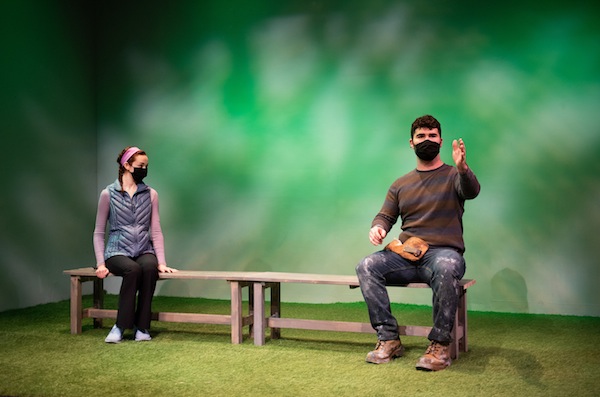
Katherine Matlashewski and Tanner Zerr in Fast Foward. (photo by Emily Cooper)

Since COVID-19, we have been learning how to relate to one another from a distance, as well as how to use the technologies, like Zoom, that have allowed us to retain a more personal connection than we could have if we had experienced the pandemic even a handful of years ago. While our reality seems stolen from the script of a futuristic sci-fi horror film, playwright Rosamund Small’s visions of love in the future and how technology affects it, TomorrowLove, are “hilarious, snappy, moving and refreshingly fun in these times,” according to Shekhar Paleja and Lauren Taylor, co-directors of Studio 58’s production of Small’s playlet collection.

Jewish community members Samantha Levy and Katherine Matlashewski are among the cast members of the production, which will be released online on Feb. 28 and available to watch individually or collectively until March 7.

Studio 58 is Langara College’s professional theatre training program, and this spring’s lineup – which TomorrowLove launches – is the first under the direction of Courtenay Dobbie. Both Levy and Matlashewski are in their second year of study.

“I was finishing up my first year when the pandemic began in earnest here,” Levy told the Independent. “COVID-19 has forced me to be more isolated from my school community through Zoom classes, but it has not taken away the care and dedication of my professors, or the support of my peers. We are still a family, even though we are distanced or online.”

It has become a hybrid program since the pandemic, with some classes online and others held in person with social distancing, said Matlashewski. “Since Studio 58 is a hands-on conservatory program, the transition to online studies was challenging at first,” she admitted. “The faculty and staff, however, have been extremely supportive during these uncertain times. They have all worked tirelessly to adapt our training while also prioritizing our safety.

“That being said,” she added, “as a result of COVID, students are now required to commute to and from the college quite a bit … [and] the hours of online Zoom classes are exhausting. Despite these challenges, I appreciate the continuation of our small in-person classes.”

Prior to her post-secondary training at Studio 58, Matlashewski appeared as Mopsy in King Arthur’s Court (Metro Theatre), where she received the Community Theatre Coalition Award for best supporting actress. Other select credits include Alana in Dear Evan Hansen (Laughing Matters), Luisa in The Fantasticks (Stage 43) and Little Red Riding Hood in Into the Woods: In Concert (Royal City Musical Theatre). Most recently, she was awarded the 2021 Cheryl Hutcherson Award by Applause! Musicals Society.

“I have been a part of the Vancouver theatre and dance community from a very young age,” said Matlashewski. “I feel incredibly blessed to live, create and play on the unceded territories of the Musqueam, Squamish and Tsleil-Waututh Nations.”

In TomorrowLove, Matlashewski said, “I have the pleasure of acting in the playlet called Fast Forward, alongside Tanner Zerr. This playlet explores themes of love, abandonment, age difference, time travel and the consequences that come with it.”

Levy plays the role of Jessie in the short play Take This Soul. “In Take This Soul, Jessie’s ex-partner, Rylan, shows up at her doorstep after having disappeared for four days,” explained Levy. “He tells an outlandish tale of an experiment in a distant country that has allowed him to return and present her with his literal soul.”

Samantha Levy and Riley Hardwick co-star in Take This Sou
Samantha Levy and Riley Hardwick co-star in Take This Soul. (photo by Emily Cooper)

In addition to this Studio 58 production, Levy’s acting credits include Love, Loss and What I Wore (Centaur Theatre), Fancy Nancy: The Musical (Côte Saint-Luc Dramatic Society, Segal Centre) and It Shoulda Been You (Dora Wasserman Yiddish Theatre, Segal Centre). Her TV and film credits include Annedroids and 18 To Life.

“I’ve been performing since the age of 5, when my parents signed me up for an extracurricular theatre troupe in my hometown, Montreal,” said Levy. “Little did they know that I would fall in love with performing! Since then, I’ve acted on stage and on screen, trained at the Stratford Festival’s Theatre Arts Camp, and dabbled in directing both plays and musicals. Now, I am so thrilled my love of acting has led me to Studio 58!”

But the experience is not what it normally would be, of course.

“During the pandemic, the lovely production team has been working extra hard to keep us all safe,” said Levy, “and that includes managing our schedules closely to avoid contact between folks. So, I have come to value the time I have with others in person even more. When we are in person, we are also wearing masks and social distancing at all times. This often means coming up with innovative new ways to express ourselves without proximity or touch on stage, which has been a wonderful challenge. It is incredibly uplifting for me to have the privilege to be able to continue to create with others, be vulnerable and connect.”

Acknowledging that the “pandemic has been an emotional rollercoaster for everyone,” Matlashewski said, “One of the challenges that I have faced is navigating acting while wearing a mask. Prior to COVID, I did not realize how much I relied on the non-verbal cues and facial expressions of my scene partners. However, now that two-thirds of the human face is covered by a mask, I find that I have to listen more closely to fully understand my scene partner. With that in mind, we all have had to adjust and be patient with ourselves and others.

“My biggest take away from acting during COVID is the importance of human connection,” she continued. “We have had to find new ways to connect and communicate while maintaining physical distancing. During the rehearsal process of Fast Forward, I discovered how social distancing impacted my acting choices. Since I had to maintain a two-metre distance from my scene partner, each movement that I made on stage had to be carefully considered. Our fantastic director, Lauren Taylor, guided us through this process and helped specify our blocking.

“Although we are required to maintain physical distance and wear masks while we are acting, I am thankful that I get to act in person for my first mainstage show at Studio 58.”

Reflecting on her connections to Jewish community and culture, Matlashewski said, “Within Judaism, community is a value that is held with the highest importance. Although we cannot gather in person, I invite you all to find the light where you can and share it with those around you.”

For her part, Levy said, “As my parents are across the country in Montreal and my brother (he’s a doctor!) is in St. John’s, Jewish culture and art are an anchor to the family who love me. Seeing Jewish representation in art is healing and beautiful.”

She then added a “non-performance-related anecdote.”

“I walked into a Jewish bakery during Chanukah to get a few latkes,” said Levy, “and I left with tears in my eyes and a bag full of items I had not planned to buy.”

To see one or all 13 of the TomorrowLove playlets, visit studio58.ca.

Format ImagePosted on February 26, 2021February 24, 2021Author Cynthia RamsayCategories Performing ArtsTags acting, coronavirus, COVID-19, Katherine Matlashewski, Langara College, Samantha Levy, Studio 58, theatre
Reform shuls partner

Reform shuls partner

Rabbi Allan Finkel of Temple Shalom in Winnipeg initiated the collaboration. (photo from facebook.com/TheCJN)

Five Reform synagogues in Western Canada have banded together to offer their congregants greater opportunities to share resources, participate in services, celebrate holidays, and connect at cultural and educational events. The congregations participating in the Western Canadian Reform Collaboration include Temple B’nai Tikvah in Calgary, Temple Beth Ora in Edmonton, Kolot Mayim Reform Congregation in Victoria, Temple Sholom in Vancouver and Temple Shalom in Winnipeg.

Rabbi Allan Finkel, spiritual leader of the Winnipeg congregation, initiated the collaboration. “I had come to recognize that, because of COVID-19, we were all starting to develop innovative digital content – educational and cultural programs and events – that we were each delivering within our own congregations and communities,” Finkel said.

The delivery of that digital content, whether for holiday celebrations or for Jewish ritual events such as baby namings and shivas, consistently demonstrated that people thousands of miles apart could sit side by side online and connect in meaningful and spiritual ways.

“For me, the Western Canadian Reform Collaboration was a practical next step – simply, the opportunity for each of us to share our unique liberal Jewish programs and events with fellow congregations and congregants across Western Canada,” he said.

Reform Judaism in Western Canada, as in the rest of the country, remains a relatively small denomination compared to that of the United States. And yet, every one of the synagogues has experienced increased membership interest and engagement in the months since COVID arrived and synagogue life moved from the sanctuary to virtual space.

“Surprisingly, our participation has risen sharply during the pandemic,” said Rabbi Mark Glickman, spiritual leader at Calgary’s Temple B’nai Tikvah. “I think the isolation that people are feeling has made them yearn for connection, which is something the religious community is uniquely positioned to provide.”

Rabbi Lynn Greenhough has found that to be the case among her congregants in Victoria, as well. “We have had more people attend services than ever before,” she said. “Their attendance may be a human hunger for connection with others. Even if all we see is a face and hear one voice at a time, there is connection and continuity.”

photo - Since COVID-19, Kolot Mayim Reform Temple’s Rabbi Lynn Greenhough said, “We have had more people attend services than ever before”
Since COVID-19, Kolot Mayim Reform Temple’s Rabbi Lynn Greenhough said, “We have had more people attend services than ever before.” (photo from Kolot Mayim)

That sense of connection and continuity will be enhanced through joint programming with the other Western Reform synagogues. Much of the programming is still being developed, but it already includes a livestreamed, co-sponsored event scheduled for March in celebration of International Women’s Day. The event will be hosted by Finkel and feature Greenhough and Temple Beth Ora’s Rabbi Gila Caine as two of the speakers.

Even after COVID restrictions are lifted entirely and in-person synagogue attendance is allowed to resume, the Western rabbis intend to keep offering virtual programming and to keep working together. The collaboration might have been initiated by the pandemic, Greenhough said, but it is not limited to the pandemic. “In many ways, I think this pandemic has forced us to reassess what works for those of us in organized, institutional religious practice, what are our delivery systems, and how can we make these systems most effective and most inclusive,” she said.

That reassessment is motivating the members of the Reform collaboration to keep redefining what they mean by community, developing a variety of learning and liturgical opportunities, and breaking out beyond the traditional walls of their buildings.

“As for the long term of our Western Canadian Reform Collaboration,” Finkel said, “we see this as a work in progress as we figure out what to share and how, but it has a solid foundation of rabbis finding that we like each other and that we enjoy working with each other. Our championing of this initiative and in developing shared, co-sponsored events won’t stop when COVID-19 ends.”

This article originally was published on facebook.com/TheCJN. For more on Rabbi Lynn Greenhough, see jewishindependent.ca/kolot-mayim-installs-rabbi.

Format ImagePosted on February 26, 2021February 24, 2021Author Sharon Chisvin The CJNCategories NationalTags Allan Finkel, coronavirus, COVID-19, education, Lynn Greenhough, Mark Glickman, Reform, technology, Western Canada
Waldman thrives

Waldman thrives

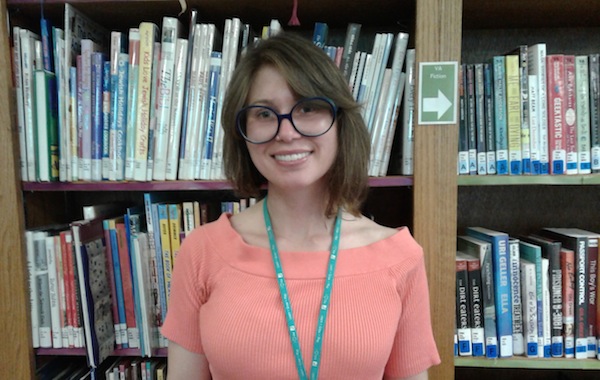
Aviva Rotstein, full-time coordinator of the Isaac Waldman Jewish Public Library, is only the fourth person to head the facility. (photo from Waldman Library)

In a time of reduced social interaction, people have turned to books, videos, audiobooks and other pursuits to entertain and enrich. Libraries have had to find ways to deliver their services while maintaining strict protocols around cleaning and maintaining distancing.

For the Isaac Waldman Jewish Public Library, the last year has been a period of adapting to changing public health directives, and finding new ways to provide services to members and the public. Having marked its 25th anniversary in recent years, the library, located in the Jewish Community Centre of Greater Vancouver, like so many other agencies worldwide, turned on a dime to meet readers’ needs.

Aviva Rotstein had just taken over as interim library coordinator after the retirement of longtime librarian Helen Pinsky in December 2019. She became permanent coordinator in May. Guided by provincial rules and in coordination with the JCC, Rotstein and the library responded rapidly.

Like most of the world, the library shut down completely in March 2020, but continued providing access to ebooks and audiobooks online. New members joined specifically for these resources, said Rotstein.

In May, the library started offering curbside pickup and drop-off services, as well as launching a delivery service to Vancouver residents, later expanded to Richmond. By late summer, the library was open by appointment. It is now back to regular hours of 10 a.m. to 6 p.m. Monday to Thursday, and Sundays 10 a.m. to 1 p.m. Families are especially welcome on Sundays and kids’ storytimes can be arranged by request.

Cleaning protocols remain vigilant, with hard cover books and items like DVDs sanitized on return and other items sequestered before being recirculated.

Rotstein assumed the leadership of the library at this extraordinary time and she is one of a surprisingly small number of individuals – four, to be precise – who have headed the facility.

Talk of a Jewish public lending library began seriously almost 30 years ago. The first meeting of the JCC’s ad hoc library committee took place Oct. 29, 1991. The minutes include a brief synopsis of the Jewish community’s libraryscape. There were existing small libraries in synagogues and schools, as well as a Jewish Resource Centre, run by Betty Nitkin and aimed at educators, and a small Jewish library with no budget, run by Rita Weintraub.

While the Waldman Library is, to many visitors, a central part of the JCC experience, it was not a foregone conclusion when the building was being redeveloped in the early 1990s. Larry Barzelai, a family doctor who was on the board of the JCC, chaired the library committee.

The redevelopment of the community centre was the impetus for the push to get a permanent library, he said.

“We had to convince them that the library was a good thing to have,” Barzelai recalled. “My friend Karl Taussig was quite supportive of the library from day one. He was president of the JCC at that time.”

There were concerns about the economic viability of the project and the idea was not secured until Weintraub obtained the enthusiastic support of philanthropist Sophie Waldman. Waldman’s late husband, Isaac, was good friends with Weintraub’s husband, Marvin. Waldman saw the library project as a fitting tribute to her husband, who, she said at the time, “had a deep interest in education and agreed with Ahad Ha’am that the future survival of the Jewish people depends on learning through the richness of our literary heritage.”

With the library’s viability assured, any hesitation on the part of the JCC board dissipated.

“They were totally on side by the time the new JCC was built and the library took a prominent place in there,” said Barzelai.

After years of planning, the library opened with a literary splash on Nov. 15, 1994. Renowned Israeli author Amos Oz spoke on “Israel through its literature” and Rabbi Dr. Yosef Wosk affixed the mezuzah. (Wosk succeeded Barzelai as chair of the library board.)

The first librarian was Eric Pellow, who served a number of months until Karen Corrin began a 20-year run at the head of the library. Corrin had just finished library school when she was hired, but her previous work experience was ideally suited to the role. She had worked with the Vancouver Volunteer Centre (now Volunteer Vancouver) and, since the Waldman Library’s vision was to engage volunteers, Corrin’s combination of experience and skills was deemed an ideal fit.

From the start, she said, the Waldman Library was surprisingly unique. At conferences of the Association of Jewish Libraries, Corrin discovered there were very few community centres that had a public library independent of a school or as part of the local Jewish federation.

Corrin credits Rita Weintraub, who passed away last year, as the mobilizing force behind the project.

The purpose of the library was a matter of discussion and the first years were a time of learning, as new technologies in the world generally and libraries in particular were burgeoning.

“When I went to library school, it was just the beginning of the internet,” said Corrin. “When I got to the library, it was card catalogue … there was no computer system and that had to be developed.”

Figuring out what the community wanted in a Jewish public library was paramount, she continued. It was decided that it should be a lending library that is also a meeting place for everybody in the community – religious, secular, academic and avocational, all ages and interests, including resources in English and Hebrew.

“It is not an Orthodox library or Reform library, it’s a Jewish library,” said Corrin. “It meets the needs of the whole community.”

Like Corrin, Helen Pinsky had also just completed library school when she was tapped to lead the Waldman Library.

Pinsky was a lawyer who, after the last child took off to university, decided to make a shift herself and returned to study. Library people, she determined, were more her type.

“Lawyers were smart people who wanted to show off their smarts and were Type A and librarians were smart people who were curious and were Type B,” she said. “Going to university was a hoot in your 50s, oh my God. I was the bubbe of the group.”

While still a student, Pinsky spoke to Corrin about volunteering. She ran some storytime programs and filled in for other volunteers at the library. She completed her program in spring 2011 and then took the summer off.

“Come September, I decided one day that I’d better brush off my resumé and start thinking about actually doing something with this degree that I had just earned in May,” Pinsky recalled. “So I went to my computer and I found this very old copy of my resumé and was just looking at it and the phone rang and it was Karen, who said, hi Helen, have you graduated from library school yet? She said, congratulations. How would you like a job?”

Pinsky filled in while Corrin took a leave of several months, then worked as library assistant until Corrin retired in 2015. Pinsky retired on Dec. 31, 2019.

Reflecting on the meaning of a Jewish public library, Pinsky said, “I think it plays the role of any public library and then some. What is a public library to a community? It’s a place for gathering, it’s a place for learning, it’s a place for connecting, with knowledge, with information, with resources and with people.”

Rotstein, the latest in a short line of library leaders, is the first to have childhood memories of the place.

“When I was a child, I came into this library,” she said. “It’s very familiar.”

In addition to her long personal connection to the library, Rotstein sees the place in the context of a much larger connection.

“I think we provide a link to Jewish thought and imagination from the Jewish past and the present,” she said. “We offer a low barrier to participation as much as we can, and we strive to be an accessible and welcoming place for everyone. We try to uphold the Jewish value of learning and knowledge.”

Format ImagePosted on February 26, 2021February 24, 2021Author Pat JohnsonCategories LocalTags Aviva Rotstein, coronavirus, COVID-19, Helen Pinsky, history JCC, Karen Corrin, Larry Barzelai, Waldman Library

Posts pagination

Previous page Page 1 … Page 3 Page 4 Page 5 … Page 16 Next page
Proudly powered by WordPress