Skip to content
  • Home
  • Subscribe / donate
  • Events calendar
  • Business Directory
  • FAQ
  • News
    • Local
    • National
    • Israel
    • World
    • עניין בחדשות
      A roundup of news in Canada and further afield, in Hebrew.
  • Opinion
    • From the JI
    • Op-Ed
  • Arts & Culture
    • Performing Arts
    • Music
    • Books
    • Visual Arts
    • TV & Film
  • Life
    • Celebrating the Holidays
    • Travel
    • The Daily Snooze
      Cartoons by Jacob Samuel
    • Mystery Photo
      Help the JI and JMABC fill in the gaps in our archives.
  • Community Links
    • Organizations, Etc.
    • Other News Sources & Blogs
  • JI Chai Celebration
  • JI@88! video

Recent Posts

  • SFU honours Gloria Gutman
  • Lifting people’s spirits
  • Wedding a ray of light
  • Indigeneity and Zionism
  • Rule of law broken: councilor
  • Football and its roles
  • The burden of defence
  • Fish Café returns after fire
  • All right in what goes wrong
  • Nuns & mermaids at TUTS
  • Camp offers holiday retreat
  • Students and mentors inspire
  • Once-in-a-lifetime trip
  • 100 dancers, one heart
  • Money for the sciences
  • What “Jewish food” means
  • Have a cookie, schnitzel too
  • Federation now across BC
  • Israel fighting for its existence
  • Deal strengthens Iran
  • Patriotic belonging diminishes
  • A campaign to engage
  • Upstanders’ first live event
  • Responding to Carney
  • Having your own home
  • Music a family tradition
  • Musical to warm heart
  • Community milestones … June 2026
  • Sharing her passion for Israel
  • Or Shalom reopens its doors
  • JFS from past to future
  • Need holistic approach
  • Sharing stories, advice
  • Journalist shares fears
  • Skills to live together
  • Road to independence

Archives

Follow @JewishIndie
image - CJN box ad Rockowers 2026

Tag: coronavirus

Combat online hate

Since the beginning of the pandemic, we have been confronted by two viruses: COVID-19 and, in its wake, the rampant spread of online hate.

As much of the world has been forced indoors, our time on the internet using social media has increased, which has advantages. We have found new ways to engage, stay in touch with our loved ones, and maintain and transform our connections to our workplaces and the world.

But the same technologies that have allowed us to keep connected have also served as springboards for the spread of online hate and conspiracy theories, which form the perfect Venn diagram of antisemitism. Since the pandemic broke, we have witnessed the emergence of ludicrous conspiracy theories accusing Jews of being responsible for the spread of COVID-19 or of profiting from the havoc. As a community that has consistently encouraged compliance with public health measures, we may be tempted to dismiss these outlandish conspiracy theories as nonsense. It is a type of nonsense, however, that spreads quickly and remains a cause for great concern.

Recent history has taught us that what begins online as the absurd mutterings of a few haters can, and too often does, turn into real-world violence. What we witnessed in Pittsburgh, Christchurch and Halle can certainly happen again. The threat is even greater today because people are spending more time online while also under considerable financial and emotional stress, a combination that makes people even more susceptible to messages hate-mongers are peddling.

Curbing online hate has been a priority for the Jewish community – and, therefore, for the Centre for Israel and Jewish Affairs – for nearly a decade. Since the beginning of the pandemic, we have remained on high alert, monitoring the emergence of antisemitic and hateful activity and bringing it to the attention of law enforcement and social media platforms.

Recently, we launched Stop the Transmission! (cija.ca/stop-the-transmission), a campaign powered by CIJA and funded by Canadian Heritage through the Anti-Racism Action Program. The campaign has provided practical tools and tips to hundreds of thousands of Canadians to identify and slow the spread of conspiracy theories, misinformation and deliberate disinformation.

We have also engaged directly with social media giants and are proud to have collaborated with our colleagues at the World Jewish Congress to urge Facebook to ban Holocaust denial, one of the most pernicious forms of Jew-hatred, from their platform, an action they took earlier this year.

We continue to call on social media companies to adopt the International Holocaust Remembrance Alliance definition of antisemitism, the most widely accepted definition in use today, including by the Government of Canada, who adopted it as formal policy in its 2019 Anti-Racism Strategy. In response to the global collective effort of our community, Facebook’s chief operating officer, Sheryl Sandberg, said “the IHRA’s working definition of antisemitism has been invaluable – both in informing our own approach,” and that Facebook would “continue to refine” its “policy lines as speech and society evolve.”

A continuing aspect of our work is advocating for governments to advance policies to address online hate directly. Federally, we continue our call for a national strategy on online hate that includes clear, harmonized and uniform regulations that apply to platforms and providers operating in Canada, as well as an independent regulator to enforce them. You can help by visiting notonmyfeed.ca and taking action.

CIJA is also working with Canadian Heritage to host the Action Summit to Combat Online Hate, scheduled for April 14-15. You can pre-register at cija.ca/action-summit. The summit will feature discussions with experts, law enforcement, industry leaders and community groups like ours. The goals are to create greater understanding of the issue and develop concrete actions to address it.

Even once the pandemic is over, our migration to the digital world will endure. We, therefore, must stay committed and united in our efforts to combat antisemitism and other forms of hatred online.

Judy Zelikovitz is vice-president, university and local partner services, at the Centre for Israel and Jewish Affairs.
Posted on February 26, 2021February 24, 2021Author Judy ZelikovitzCategories Op-EdTags anti-racism, antisemitism, Canadian Heritage, Centre for Israel and Jewish Affairs, CIJA, coronavirus, COVID-19, Facebook, online hate, Stop the Transmission!

A livelihood, not a hobby

So enthralled am I by the sheer volume and calibre of free online Jewish learning opportunities since the start of the pandemic, that I sometimes forget that the people who do the teaching do it as their livelihood, not as a hobby. Therein lies the problem.

We, the students, the partakers of all manner and sorts of online classes and lectures during COVID, gobble up the learning as though it’s candy, or fine wine. We sit in front of our laptops, tablets and smartphones and act for all the world as though we deserve this high level of education. It should rain down upon us. We’re Jews. We’re the People of the Book. We’re entitled. Teach us!

Make no mistake: we are blessed to be the recipients of this stratospheric level of dedication, and we should not and cannot take it for granted.

But, sometimes, we forget.

We forget that the rabbi or rebbetzin or Jewish scholar or educator who is teaching us needs to feed their family and pay their bills. We forget that we need to support them just like they support us. Too often, we blithely go on learning from week to week, month to month, blissfully ignoring this reality. Yet, we expect a paycheque. Or a pension check, if we’re lucky. Why shouldn’t they?

Zoom classes have become as common as dust since the beginning of the pandemic. Every Jewish religious and/or spiritual organization I can think of is offering Zoom classes weekly, if not daily. They have filled the gaping holes that once were our thriving, healthy, “normal” lives. These same Jewish organizations recognize the desperate need for some kind of normalization, some sort of lifesaver for people to hang onto. In the absence of our daily routines of work, socializing and gathering together as a community, there is little left to celebrate, never mind sustain us. Local synagogues have leaped into the abyss to lift us all up, or those of us who needed lifting, anyway. They have rallied together to create curricula, offer Torah classes, general Jewish study courses, podcasts, livestream videos and so much more. Not only because it’s the source of their livelihood, but because they feel our desperate need, the soul’s yearning for Jewish learning.

There is enormous comfort in seeing others – even if only virtually – and knowing that we are studying Jewish topics together, learning as a community. The overwhelming isolation felt by so many people right now is beyond description. The personal losses, the devastating repercussions from COVID-19 can’t be counted. Our lives have been turned upside down in every way imaginable. And then some. But learning offers hope.

Sure, everyone copes differently with the pandemic, but anybody who says they haven’t been affected by it is just plain lying. Being the adaptable creatures that we are, we take comfort (or relief) where we can find it. For some, it’s food, or alcohol, or Netflix. For others, it’s learning. And, for others still, it must be Jewish learning. Something draws us – something draws me – to our heritage, our history, our Judaism. And, suddenly, we are home.

Myriad times, sitting in front of my computer during or after a Zoom class, usually given by a rabbi, I find myself weeping. Partly as a release from all the stress and anxiety I’m feeling right now; but mostly from a deep sense of gratitude. Gratitude that we, as a community of Jews, haven’t been forgotten. That, amid the detritus of COVID, our faith leaders have intuitively known that we need help, that we can’t do this on our own. So they step up to the plate, full of enthusiasm and inspiration, and they fill us up. Not only do the classes inform us and expand our brains, but they benefit us by keeping us moving forward in a meaningful, purposeful way.

So, why am I writing all this? To remind each and every one of us, myself included, that we should be menschen and pay the favour forward. Pay it, literally, to every rabbi and rebbetzin and Jewish scholar or other educator who shares not only their time, but their wisdom, to help us get through this pandemic in the most meaningful way they know how. Make a donation. Show you care. Make as many donations as you’re able. Big or small, the act is a sign of appreciation. A sign that we value the learning. A sign that we know little, and yearn to know more. A sign that we appreciate their caring, knowing that they will do anything in their power to help. And G-d knows we need it right now. So, whatever we do, we shouldn’t forget to support those who support us.

It would be the century’s grossest understatement to say that I’ve learned a lot during the pandemic. Sure, I’ve learned immeasurable things about human nature and caring and compassion. But I’ve also expanded my Jewish learning a hundred-fold, maybe a thousand-fold. The pandemic has given me the time. But those doing the teaching have given me the inspiration, the foundation, the thirst for more. Instead of being overcome with hopelessness, I’m filled with hope. I see a pattern to life, a way out of this. That is no small thing. We need to pay it forward. Or pay it back. Either one will do.

If there’s a global sense of helplessness pervading much of what we do these days, we can counteract that by not only feeling grateful, but showing it. It could be construed as crass to say that we should pay for our Zoom classes and livestream lectures and podcasts. So be it. Call me crass. It wouldn’t be the first time. Just get out that credit card and do the right thing.

Shelley Civkin is a happily retired librarian and communications officer. For 17 years, she wrote a weekly book review column for the Richmond Review. She’s currently a freelance writer and volunteer.

Posted on February 26, 2021February 24, 2021Author Shelley CivkinCategories Op-EdTags coronavirus, COVID-19, education, Judaism, online learning, synagogues
בעידן המגפה הקשה

בעידן המגפה הקשה

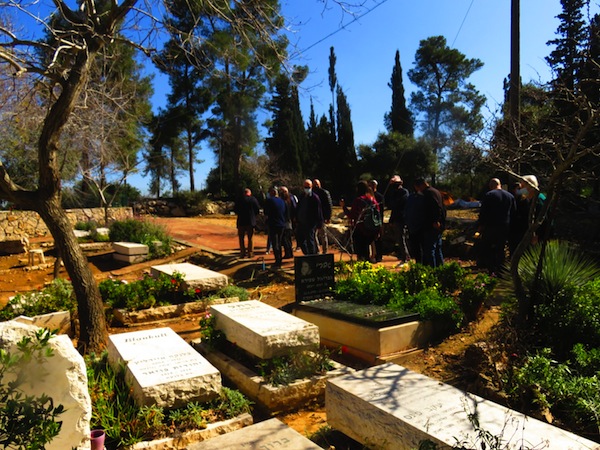
את הלוויות של אבי ראיתי עם עוד מספר בני משפחה וחברים באמצעות “הזום” בשעה שתיים לפנות בוקר לפי שעון ונקובר.

הפעם הרגשתי מקרוב את הנזקים האיומים שמגיפת הקורונה עושה לנו, לחיינו, לקרובים כמו גם לרחוקים. אבי, משה רחמני, בן התשעים ואחד נדבק בנגיף בבית החולים איכילוב שבתל אביב, ולאחר פחות משבועיים נפטר מסיבוכים קשים. אני לצערי לא הצלחתי לעזוב את ונקובר והגיע להלוויתו שהתקיימה ביום ראשון האחרון, בבית הקברות האזרחי של קריית ענבים, בגלל שקשה מאוד לטוס מכאן בעת הזו. לפחות שתיים-שלוש עצירות בדרך ואני הייתי צריך לקבל בנוסף אישור מיוחד ממשלת ישראל להגיע להלוויה. לאחר מכן היה עלי להיכנס לסגר באיזה שהיא מלונית בישראל למשך כשבועיים ימים. ובחזרה לקנדה הייתי צריך לעבור הליך סיוטי דומה. החלטנו לכן במשפחתי שלא אטוס. זו היתה החלטה קשה אך מתבקשת בימים אלה.

את הלוויות של אבי ראיתי עם עוד מספר בני משפחה וחברים באמצעות “הזום” בשעה שתיים לפנות בוקר לפי שעון ונקובר. בקריית ענבים השעה הייתה שתיים עשרה בצהרים, וכארבעים איש הורשו להגיע לבית הקברות, בראשות אמי, לוצי רחמני שגם היא בת תשעים ואחת, ואחי, אמיר רחמני, שניהל את הטקס הקשה הזה. זה לא פשוט לראות איך קוברים את אבא שלך כל כך מרחוק – באמצעות הטכנולוגיה המתקדמת, במקום פשוט להשתתף בטקס צנוע עם חברי משפחה וחברים קרובים. זה מאוד מוזר ויוצר הרגשה של ניכור ומרחק המאוד אופיינית לעידן מגיפת הקורונה, ששינתה את חיינו לחלוטין.

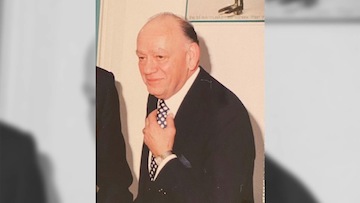
photo - My father, Moshe Rahmani, ninety-one years old, contracted the virus at Ichilov Hospital in Tel Aviv, and after less than two weeks died of serious complications
אבי, משה רחמני, בן התשעים ואחד נדבק בנגיף בבית החולים איכילוב שבתל אביב, ולאחר פחות משבועיים נפטר מסיבוכים קשים

אני נפגשתי עם אבי לאחרונה רק לפני קרוב לשנה. היה זה בחודש מארס אשתקד, שבוע לפני שקנדה הכריזה על סגר לאור המגפה שהחלה לתפוס תאוצה בכל רחבי העולם. הגעתי לישראל למספר ימים כדי לפגוש את הורי בביתם בתל אביב. הם חששו קצת מהחלטתי לטוס כי אולי אני אדבק ואז גם אסכן אותם. הביקור עבר בשלום ובשלווה. הספקתי לשבת עם הורי ערב ערב ולשוחח שעות על שלל נושאים. אחרי שבוע טסתי בחזרה לוונקובר ולא ידעתי אז (כמובן) שאלו יהיו הפגישות האחרונות שלי עם אבי.

אבי נולד בירושלים. הוא גדל בבית דתי אך כבר כתלמיד תיכון החליט לבחור בדרך אחרת – חילונית. אמי ילידת אוסטריה הגיעה עם משפחתה לישראל עת הייתה בת שמונה. תחילה לנהלל ולאחר מכן המשפחה התיישבה בירושלים. הורי הכירו איפוא בירושלים ולאחר שלוש שנות חברות התחתנו ונשארו ביחד למשך שבעים שנה עד למועד פטירתו של אבי. הם הספיקו לגדל את אחי ואותי בביתם ברחוב המלך ג’ורג’ שבמרכז העיר. לאחר שעזבנו את הבית, הורי עברו לשכונת בית הכרם. לבסוף הם מאסו בירושלים ולפני כשבע עשרה שנה עזרו אומץ ועברו לתל אביב ופתחו בחיים חדשים.

אבי עבד כל חייו בתחום הביטוח בתקופת מגוריו בירושלים. הוא יצא לפנסיה עם המעבר לתל אביב. בעת שגר בירושלים נחשב לאוהד שרוף של קבוצת הכדורגל בית”ר ירושלים, וצפה במשחקים רבים מהיציעים במגרשי הכדורגל ברחבי הארץ. בשנות השמונים המיר את המגרשים בטלוויזיה ועד לאחרונה צפה במרבית המשחקים של בית”ר.

אבא נחלש בתקופה האחרונה ולפני שלושה שבועות הוא אושפז לטיפול מאסיבי בבית החולים איכילוב. שם לתדהמת כולנו נדבק בקורונה ומטבע הדברים מצבו החמיר מיום ליום. אמי, אחי ושתיים מהנכדות הספיקו לבקר אותו יום לפני מותו. התמונה הייתה קשה מנשוא. עכשיו הוא לא סובל יותר.

היום אני יכול להביו היטב את המשפחות שאיבדו את יקיריהם שנדבקו בקורונה.

Format ImagePosted on February 17, 2021February 17, 2021Author Roni RachmaniCategories עניין בחדשותTags Canada, coronavirus, COVID-19, death, Israel, mourn, parents, הורים, ישראל, להתאבל, מוות, קורונה, קנדה
COVID relief delivered

COVID relief delivered

Alex Cristall, Jewish Federation of Greater Vancouver board chair, arrived early at the Jewish Community Centre of Greater Vancouver on Jan. 26 to sign community recovery cheques for grant recipients. (photo by Rob Trendiak)

On Jan. 26, the Jewish Federation of Greater Vancouver released the first round of community recovery funding to address the urgent needs arising from the pandemic’s impacts. A total of $416,000 in grants was distributed among 21 partner agencies and community organizations.

“When COVID first hit, we immediately developed a comprehensive strategic approach to address its impact,” Ezra Shanken, chief executive officer of Jewish Federation, told the Independent. “We met with our partner agencies to learn firsthand about how they were coping, and we released $505,000 in emergency funding just days into the initial lockdown.

“We then worked closely with major donors to launch the Community Recovery Fund, which became a key focus of the annual campaign. We also established the Community Recovery Task Force, comprised of well-respected and experienced community leaders, to work with us to respond effectively to the immediate and long-term consequences of COVID that are affecting our community agencies. During the annual campaign, we asked donors to make an additional gift to support community recovery, if they could.

“We have always been fortunate to have an extremely generous community, and the depth of giving this year has been extraordinary,” he said. “Community members have responded to the call to help in unparalleled ways, however they can. They understand the breadth and scope of need, the immense challenges facing organizations, individuals and families, and that recovery will take some time. Most of all, they appreciate that we are all partners in recovery, and have really stepped up to play their part.”

The initial relief grants were distributed to 19 of Jewish Federation’s partner agencies, as well as to the Louis Brier Home and Hospital and the Hebrew Free Loan Association.

“For the first round of grants, all Jewish community organizations were invited to apply for up to $25,000, regardless of their size,” explained Risa Levine, chair of the Community Recovery Task Force. “Our priority was to meet organizations’ urgent needs resulting from the pandemic, and to ensure they could continue to deliver their programs and services. In the next few weeks, as part of this initial round of funding, we will be recommending grants for synagogues and other places of worship. These grants will be awarded in late February.

“The task force expects the two rounds of funding after that will focus on longer-term needs,” she said. “For example, are there organizational changes that would substantially increase an agency’s capacity to deliver their programs? We also recognize that the pandemic has gone on longer than anyone anticipated, and that the uncertainty of what lies ahead continues. New needs may emerge and COVID-related government subsidies, which have helped a lot of our agencies, may end. So, ensuring organizations’ ongoing sustainability in the face of pressures created by the pandemic will continue to be a priority.”

When the task force met with community organizations last summer and fall, the focus was on understanding how the pandemic had affected the programs and services they offer. While the details differed, said Levine, “they all had been impacted by COVID in similar ways.

“Based on this information, the task force identified six themes, which ultimately became funding categories for the recovery grant application: technology upgrades; critical social services; COVID-related expenses; revenue and rental losses; mental health support for staff and community members; and organizational capacity. Community organizations were invited to apply for a grant to meet urgent, COVID-related needs in two of these six categories.”

The recovery grants comprise but one of three funding streams being distributed in the next couple of months. Other financial assistance will come from the Jewish Community Foundation’s Unrestricted Grant Program, and allocations from the Federation’s annual campaign.

“The Jewish Community Foundation’s Unrestricted Grant Program is designed to complement Jewish Federation’s annual campaign allocations by providing charitable organizations with seed money to support new, innovative programs and services,” explained Shanken.

Grants awarded through the program “give charitable organizations the opportunity to pilot initiatives that address the community’s evolving needs, or to launch startup and capital projects,” he said. “Once the programs demonstrate success over several years, they may then qualify for ongoing funding through Jewish Federation’s allocations.

“This year,” he added, “the foundation adapted some conditions of the program to be as responsive as possible to organizations challenged to deliver their programs and services in new and innovative ways. In this way, the Unrestricted Grant Program is complementing the work of Jewish Federation’s Community Recovery Task Force, which has identified areas of critical need through its consultation process with community organizations.”

The Unrestricted Grant Program funds for 2021 will be awarded in mid-February.

“Jewish Federation has always been proactive and strategic about preparing for crises, so that we can lead a coordinated community response,” said Shanken. “And, while this is unlike anything the community has ever been through, we are in a strong position to respond. We have in place the infrastructure, the community planning expertise, and the staff and team of experienced leaders needed to respond swiftly and effectively to the enormity and ongoing uncertainty of COVID’s impact.

“We know how vital it is to get funds working in the community, and this involves so much more than fundraising,” he noted. “As the pandemic evolves, we will continue to adapt our strategic approach so that we are well-positioned for today and tomorrow, and to convene with all of our stakeholders so that we have our finger on the pulse of the community and can problem-solve together. We’re also collaborating with Jewish federations across North America to leverage their collective knowledge and capacity.”

Levine acknowledged the board and staff of our local Jewish Federation “for their vision and professionalism in organizing the task force and leading the recovery process, as well as the many generous donors who have supported this crucial work.”

She said, “I have been inspired and buoyed by the commitment and passion of everyone involved in the task force’s work to ensure that our community continues to function effectively: by the task force members for their dedication to the work, and by the community organizations for their candour and resilience in adapting their operations to meet the needs of community members.

“The biggest challenge,” she said, “has been to focus and refine our work to be able to respond effectively to the needs we learned about. Hearing firsthand about the challenges that organizations faced revealed the enormity of COVID’s impact through a sharper, more personal lens that added another layer of urgency to our work.”

Despite the challenges, Shanken said, “I remain positive because of the tremendous fortitude and the outpouring of compassion and generosity that I see every day. I am incredibly proud of how this community has pulled together to tackle the road to recovery, and am convinced that we will emerge stronger.”

For more information, visit jewishvancouver.com.

Format ImagePosted on February 12, 2021February 12, 2021Author Cynthia RamsayCategories LocalTags coronavirus, COVID-19, economy, Ezra Shanken, Jewish Federation, philanthropy, Risa Levine, tikkun olam
Protect ecommerce ventures

Protect ecommerce ventures

(image from pxhere.com)

Many businesses are shifting their focus to ecommerce, and many new ecommerce businesses are popping up due to the COVID-19 pandemic. British Columbia has recognized this by launching a plan to support these businesses.

Whether your business operates its own ecommerce site or operates through a service like Shopify or Etsy, how you deal with conflict in the ecommerce environment is up to you. I always caution people against finding website policies and legal documents online, as I’ve yet to see one that adequately deals with the concerns of the business.

There are two major areas fraught with risk when using out-of-the-box or cobbled together online legal documents. Not surprisingly, one of them is privacy law. Unlike the United States, Canada has strict privacy laws that are similar to those in the European Union. You know those prompts you get now to “accept cookies” on websites? Those are to make the site compliant with the European GDPR – a set of regulations dealing with the collection and use of personal information. If you are operating a business in British Columbia, any information you collect from visitors to your website, from a visitor’s computer’s ID address (automatically collected by the web server) to the personal information they submit to buy things from your site, is governed by the Personal Information Protection Act (PIPA). Right away, that should tell you that you need a privacy policy that’s made in British Columbia or you risk penalties under PIPA.

The other areas that I find suffer from a one-size-does-not-fit-all problem are dispute resolution and intellectual property.

Dispute resolution is an often-overlooked part of any agreement, especially ecommerce terms of use. Clients often tell me that disputes won’t happen or they’re not worried. I remind them that lawyers get a lot of our work from situations that no one expected. And that solving a messy dispute is much more expensive than anticipating it and being prepared.

There are many types of disputes that can arise and many types of resolution tools. No one tool is the best for all situations.

Ecommerce businesses have certain aspects that make arbitration the best path, and some that would be more appropriate for the court system.

For example, intellectual property disputes often have to be tried in Supreme Court, not Small Claims. The cost of making a claim in Supreme Court is often higher than the cost of arbitration.

Arbitration is often used for ecommerce disputes because you can select an arbitrator with the specialized knowledge needed to understand the claim. If arbitration is an appropriate dispute resolution tool, you should discuss with your lawyer what set of rules and what type of panel will be used.

I recently advised regarding a dispute involving a breach of contract related to intellectual property in an ecommerce situation. I looked at the contract and the situation and thought about it from the perspective of a solicitor drafting terms of use.

Let’s say you craft custom mezuzot and you sell them through Etsy. There are two main areas where I see disputes arising.

One of them is sale completion, like payment, delivery, etc. This is pretty standard business stuff, such as, who is responsible for the mezuzah after payment is made but before either the payment is received or the product is delivered? There is a wealth of case law dealing with this, and it’s important that you understand what kind of insurance you’ll need in case it’s stolen or lost during that interim period.

Another type of dispute arises from the originality of your artwork. The mezuzot themselves are covered by copyright law, as are the photos of them, but how will you deal with someone who makes unauthorized copies of either the mezuzot or the photos? If the copies are slightly different, who will be the best person to determine whether there is infringement?

What if someone takes an idea that is clearly yours and makes their own mezuzot that are similar but definitely not the same? Is there a style that identifies them as part of your business? That might be a trademark issue, which cannot be dealt with in Small Claims in British Columbia. If they’re not copies of the mezuzot but inspired by them, is there infringement? Likely not. This brings us back to the terms of use.

Let’s say you have a site called TeleSeder. You sell an app and run a course to help people run their Passover seders through videoconferencing software, like Zoom or Skype. Someone signs up for the course, pays for everything, and then turns around and creates VirtuaPesach. It does almost exactly the same thing – it’s clearly using your idea, including a similar app and course, right down to the course materials. But the person running VirtuaPesach has done their homework on copyright and made sure that they’ve made enough changes to escape a claim for copyright infringement.

Copyright doesn’t protect ideas; it protects the specific works expressing those ideas. But that’s not fair, you say. They came to my site, even paid for my materials, and then ran off with them to create a competitor!

This is where a made-for-you ecommerce agreement can help. It’s true that VirtuaPesach probably doesn’t infringe your copyright, but the person behind VirtuaPesach did sign an agreement when they paid for TeleSeder. When they paid for your product, there was an exchange, and that exchange can have more terms than just “pay money, receive product.” What if you included a clause in the terms of use saying that they agree not to create a competitive product based on yours? There are limits to how far you can go with that, but it’s definitely an option. Now, you have them for breach of contract. Choosing whether to use court or arbitration to settle the dispute will be based on a discussion of certain details with your lawyer, but why not build some of the resolution right into the agreement?

You can put remedies – as long as they’re not excessive and they’re realistically tied to the problem – right into the agreement. There’s a way that the agreement can say, “Not only will you not steal my idea, but if you do, whatever you create with it will be mine.” Enforcing that could put the brakes on VirtuaPesach and hand over all of its assets to TeleSeder. The extent to which you can do that depends on circumstances, of course, but this is something to consider when transitioning to an online business.

Using carefully crafted online documents for your ecommerce business helps protect you and your business. From securing what’s yours to controlling dispute resolution before a dispute arises, an ecommerce venture has new challenges and new spins on old challenges that can be managed by getting the right advice.

Jeremy Costin is a business and estates lawyer practising in Vancouver. He sits on the board of directors and is the chair of the governance committee of the Vancouver Holocaust Education Centre, and is a frequent guest instructor at the Law Society of British Columbia.

***

Disclaimer: This article should not be construed as legal advice. Only your lawyer can give you proper advice specific to your needs.

Format ImagePosted on February 12, 2021February 11, 2021Author Jeremy CostinCategories Op-EdTags business, coronavirus, COVID-19, ecommerce, economy, law
פורסמו בפייסבוק על ידי ישראלים

פורסמו בפייסבוק על ידי ישראלים

(pixy.org/58340)

ביידן שוחח לראשונה עם טרודו

מנהיגי מדינות עמם שוחח הנשיא ביידן עד כה, שבוע אחרי ההשבעה, לפי סדר השיחות: טרודו קנדה, לופז אוברדור מקסיקו, ג׳ונסון בריטניה, מקרון צרפת, מרקל גרמניה, סטולטנברג נאטו, פוטין רוסיה ויושיהידה סוגה יפן.

גידול במספר העולים לישראל מקנדה

גידול משמעותי במספר העולים מאארצות הברית, קנדה ובריטניה וכעת הם באים גם מלב המיינסטרים.

על תנועת העליה מקנדה – נפש בנפש

נפש בנפש היא תנועת העליה מאצורת הברית, קנדה ובריטניה. לפני שנה פורסם על קפיצה במספר המתענינים בעליה לארץ. בגלל הקורונה רבים דחו את הגעתם. משרד הפנים בישראל דורש מהם יותר ויותר מסמכים שלא ניתן להנפיק בימי הסגרים. ומה מה שחדש פרופיל העולים לעתיד: עד כה היו כמעט כל העולים מהארצות האנגלו סקסיות ארה”ב, בריטניה וקנדה. בהם מהפריפריה שלהן: דתיים, חרדים, מהגרים (בני יורדים), רוסים, פרסים, וגם גרי צדק. פה ושם עוד כמה בוגרי תגלית.

לא רק בבני ברק

משטרת מונטריאול פיזרה מתפללים יהודים חרדים שהפרו את הנחיות הקורונה. חלק מהמתפללים תקפו את השוטרים באלימות וקראו להם נאצים. שארבעה שוטרים נפצעו קל באירועים חמורים אלה.

הקלות של רישום ברשות המיסים הקנדית

בניגוד למדינות אחרות, כמו קנדה למשל, שבה אדם צריך רק להירשם ברשות המיסים ולקבל מיד, בלחיצת כפתור, כאלפיים דולר לחשבונו. את מרבית הכסף לא צריך כלל להחזיר. בישראל זה אחרת: ולמה כוונה? בלחיצת כפתור אני מקבל כסף יפה מן הממשלה מתוך ידיעה ברורה שאני כורה בור לעצמי. כי אחרי כן יהיה עלי להשיבו לקופת האוצר בריבית דריבית.

סדאמן של קנאטק יבוא מאורורה קנדה

תמונות שמטופל שלח לי, אומר שנראה מדהים.עוד לא עישן את הקנאביס, אם מישהו לקח אשמח לחוות דעת?

הדרכון הפורטגלי עבר את הקנדי

ארה״ב, אנגליה, נורווגיה, אוסטרליה, קנדה ועוד קרוב למעלה ממאה ושמונים מדינות אחרות כולן נשארו מאחורי הדרכון הפורטוגלי – שדורג בתור אחד מששת הדרכונים המובילים בעולם.

אינוקאן הישראלית נסחרת בבורסת טורונטו

כבוד לאינוקאן הישראלית שנסחרת בבורסת טורונטו בקנדה על הדרך שהיא עושה. אני עוקבת אחר החברה שהשקעתי בה, עוד בהיותה סטארט אפ לפני כשנתיים. הסיבה שבחרתי להשקיע דווקא בה מכל הסטארטאפים האחרים היתה לאחר כנס משקיעים בו פגשתי את הנהלת החברה.

חברות ישראליות בקנדה

משהו יודע היכן ניתן למצוא חברות ישראליות שיש להם סניפים בקנדה?

מחפשת בתי גידול לכלבים בבריטיש קולומביה

מישהו מכיר בתי גידול בקנדה? רצוי באיזור ונקובר בבריטיש קולומביה?

מחפשים יועץ מס בקנדה

מחפשים יועץ מס שמבין בסוגיות מיסוי בין ישראל לקנדה רצוי ישראלי, אבל מניחה שלא חובה.

עזרה למובטלים נפגעי הקורונה

ביום שלאחר הקורונה נשאר עם אלפי מובטלים, אחוז ניכר מהם בעלי משפחות שחיו מעל קו העוני לפני המשבר. איך מחזירים אותם לעמוד על הרגליים?

למען היום שלאחר המשבר, צריך להקים כבר עכשיו תכניות שיקום כלכליות ותעסוקתיות שיחלצו את המשפחות מהעוני ויחזירו אותן למסלול העבודה במהירות.

בינתיים, הרמנו את הכפפה והתחלנו עם תכנית משלנו. קידום, תכנית חירום מבית ידידות טורונטו למשפחות שנפגעו כלכלית כתוצאה ממשבר הקורונה, מציעה להן ליווי כלכלי, תעסוקתי ומשפחתי מותאם אישית, באמצעות מלווה משפחות בעל הכשרה בתחום. התכנית מסובסדת באופן מלא, עם עלות דמי רישום בלבד.

אנו קוראים לממשלה להקים תכנית דומות שיחלצו את המשפחות מהעוני שנכפה עליהן, ויחזירו אותן ליציבות כלכלית.

Format ImagePosted on February 3, 2021February 1, 2021Author Roni RachmaniCategories עניין בחדשותTags Biden, Canada, coronavirus, Facebook, immigrants, Israel, ישראל, נשיא ביידן, עולים, קורונה, קנדה

Hope in the presidency

There is no perfection in human affairs. We are imperfect beings and our creations are always flawed. But this does not stop us from striving for perfection, knowing that our reach should exceed our grasp.

The preamble to the United States Constitution begins with, “We the People of the United States, in Order to form a more perfect Union …” and then sets forth the things that the founders agreed to aspire toward, knowing that perfection is unreachable but that aiming for a “more perfect” future is still an ideal to pursue.

This idea is central to Judaism also, that the world was created imperfect and unfinished because it is the role of humanity to complete that work – or, rather, to advance in the direction of completion/perfection even knowing it is unattainable.

This theme appeared also in the poem by Amanda Gorman, the first United States National Youth Poet Laureate, at the inauguration last week of President Joe Biden. “Somehow we’ve weathered and witnessed / a nation that isn’t broken / but simply unfinished,” she said.

That day, Inauguration Day, felt to many like a collective swerve away from an abyss. After the violence at the Capitol two weeks earlier, after four years of chaos and cruelty at the top of the U.S. administration, and at what we hope is the beginning of the end of the pandemic of our lifetimes, it felt like a move in the right direction, a reversal from the trajectory of spiraling rancour. The violence at the Capitol on Jan. 6, so horrific and deadly, may have been the wakeup call that enough Americans needed to recognize the destination to which the “Trump train” was always headed.

The most fundamental component of a democratic society – the peaceful transition of power – was assaulted on Jan. 6, a day most of us never dreamed we would see, an experience that people in autocratic societies know too well but we hoped we never would. We may never know how close the United States came to genuinely losing its democracy but we can hope that the shock of the violence and the widespread refusal to accept the outcome of a properly run election opened enough eyes to the dangers of that approach. As President Biden said, “enough of us have come together to carry all of us forward.”

Regardless of party affiliation, the transfer of power seemed to many like a return to the project of a more perfect union.

By the skin of their teeth, the Democratic party held the House of Representatives and reclaimed the White House and the Senate. The new Biden administration better reflects the diversity of the country’s racial, religious, gender and other components, not least of which is exemplified by the first female vice-president and the first one who is not white.

The refusal of the outgoing president and his wife to adhere to longstanding decorum and decency and their petulant retreat to Florida before the inauguration was a slap in the face for the very idea of democracy itself. To the credit of the vice-president, Mike Pence, he stepped up where the president would not. So, too, did all the living former presidents, three of them in person at the inauguration and the fourth, Jimmy Carter, calling Biden the night before the inauguration to offer wishes of support. This was a powerful show of respect for the office that Trump never exhibited when he held it and which he further despoiled while leaving it. But he is gone now from there, ideally forever, and we trust that a less divisive and corrupt government will carry that country forward.

It is notable that our hopes for 2021 focus so much on a vaccine. The idea of this science – that injecting a dose of a virus into a body to develop an antibody to a more destructive manifestation – might be extrapolated into our body politic. The virus of extremism, tyranny and violence that we saw on Jan. 6 may have inoculated some Americans to combat the spread of such threats. As we strive for herd immunity in our public health, we can perhaps seek a similar degree of protection in our public life. There will always be bad people and bad ideas. Ensuring that they are kept in check and not permitted to reach pandemic levels is as close to perfection as we can possibly attain. We can hope that, in the spirit of Biden’s words, enough people will come together in defence of the great values that country was founded on to carry all of us forward.

Posted on January 29, 2021January 27, 2021Author The Editorial BoardCategories From the JITags Biden, coronavirus, hope, politics, racism, Trump, United States

Tu b’Shevat when it’s -30°C

As I went through my undergraduate and graduate school years, I cobbled together several different part-time jobs. One of my favourites was teaching Jewish music at weekend religious schools. This time of year, Tu b’Shevat (aka the New Year of Trees), songs were part of the lesson plan. Often, the kids I taught were just learning Hebrew for the first time, so I taught in English, too. One of my all-time hits was “The Garden Song,” which started with “Inch by inch, row by row, I’m gonna make this garden grow. All it takes is a rake and a hoe and a piece of fertile ground.” My second chart-topper was “Inchworm, inchworm, measuring the marigolds, won’t you stop and try to see how beautiful they are?”

Now, as I write this, I feel transported to a warm, sunny day in my garden, which is good, because it was -30°C with the windchill when I walked my dog in Winnipeg this morning! It’s good to be in touch with both the long-term hopes and dreams of summer and the realities of where we are. Holding that paradox, of both frostbite weather and sunny heat at once, is a great metaphor for where many of us are these days.

As a dual U.S.-Canadian citizen, I’ve been in knots over the unrest “down south” and the U.S. presidential transition. As well, I’m worried about the pandemic and about how poorly vaccine roll out has gone so far in Manitoba, and in Canada overall. I’m both thrilled to hear that all my children’s grandparents have gotten their first vaccine shot in the States, and also so sad to know that our local “adopted” Manitoba grandparents, both over 80, have no idea when they’ll get theirs.

Many people who have been sick with COVID-19 have struggled with challenging effects afterwards, including significant mental health issues. The anxiety and mortality struggles are pretty serious concerns for many of us, even if we haven’t gotten sick. One way my household has succeeded in coping is in burrowing in at home – into learning, good books, art and other DIY projects, building Lego and cooking. Everyone here, from age 9 and up, has kept busy with work and learning. We try to keep positive things in mind as much as we can.

I’ve been thinking about all of this, as I’ve considered what my plans are for the next days, months and even the year. In early January, I celebrated a birthday and the one-year anniversary of starting to study Daf Yomi, a page of Talmud a day. I am proud of finding the time to do this, however brief and poor my attention span may be sometimes. While I struggled with finding good (quick) resources for study, I found an Instagram page, posted by a rabbi, which seemed to summarize each page of study.

Hurray! I thought, I can review this in a glance while I help my kids with remote school lessons. Of course, anything that is in my Instagram feed has to then be kid-safe. Imagine my surprise when my account dumped two Daf Yomi posts with very scary images at me. One showed a person with a plastic bag over her head, struggling to breathe. The other showed someone’s hands, coated and dripping with blood.

Normally, I would simply unfollow this kind of thing without comment. However, these posts about Talmud were written by a rabbi, so I messaged her. “Hey!” I said, “I am so pleased to be doing Daf Yomi. I followed your posts, but I have to unfollow. These images on Tractate Pesachim 57 & 59 are too graphic. I don’t want my kids to see them.”

I got a response that left me, well, reminded that rabbis are just people, and that some of them may miss the mark at times. It was a “sorry to offend” kind of message. She indicated that she was a visual learner, that these posts were meant for those over 18 and that, to her, these seemed essential as an artist/interpreter, and she was guessing others felt the same. While she congratulated me on taking on Talmud study, I was also “othered,” as she, an artist, felt that dedicated followers would prefer this gory imagery in their social media feed.

I was disappointed. Although I am way past age 18, I am choosing, over and over, to focus on what I can gain positively from the talmudic text, even during a hard time. The talmudic rabbis, in parsing what had happened in Temple sacrifice, were trying to understand ritual events that had occurred a long time before. It was a disruptive period in history. Things weren’t stable. In fact, they weren’t actually doing sacrifices or actively harming people who didn’t observe properly. They were ironing out Jewish law for centuries to come, by confronting the past and figuring out the future through discussion, debate and study.

They did this by examining one small thing at a time. Much like the “Inchworm” song, Jewish rabbinic tradition teaches us to examine what is in front of us and to find solutions to challenges. I am distraught when I have to “hold” overwhelming images of rioting in the U.S. Capitol, the pandemic illness and deaths, and even a gory Instagram feed in my mind. Instead, I’m choosing a different path. It’s one that focuses on the next kids’ snack and meal, the next dog walk, and the next time I pick up the warm handknit mitts from the radiator as I face a cold morning outside. Inch by inch, row by row, we will get to sunny days in the garden ahead.

Sometimes, we do best when we embrace the ritual of “one thing at a time.” It’s one wintertime walk and, even, to knit each stitch as it presents itself on the needle to make more mittens. We’ve got a lot on our plate these days. Even so, we must eat only one bite at a time. It’s a metaphor and a paradox that the talmudic rabbis knew well. It might be a cliché but, for us, it also works.

Joanne Seiff has written regularly for CBC Manitoba and various Jewish publications. She is the author of three books, including From the Outside In: Jewish Post Columns 2015-2016, a collection of essays available for digital download or as a paperback from Amazon. Check her out on Instagram @yrnspinner or at joanneseiff.blogspot.com.

Posted on January 29, 2021January 27, 2021Author Joanne SeiffCategories Op-EdTags coronavirus, COVID-19, daf yomi, education, Instagram, Judaism, lifestyle, parenting, ritual, social media, Tu b’Shevat
Fairy tales still relevant

Fairy tales still relevant

Jack Zipes gives the lecture Resurrecting Dead Fairy Tales on Facebook Feb. 17. (photo from MISCELLANEOUS Productions)

Some fairy tales are timeless in that they still have lessons to impart. For example, The Pied Piper, a story dating back to the Middle Ages, “is a tale of plague, greed, betrayal, conformity/confinement with allusions to child abuse,” explained Elaine Carol, co-founder and artistic director of MISCELLANEOUS Productions.

MISCELLANEOUS’s Plague project will have participating youth, along with professional artists, interpreting the Brothers Grimm’s The Pied Piper “from an intersectional, anti-racist, anti-oppression, queer feminist perspective.” In preparation, Carol told the Independent, “we have been reading our way through the mountain of brilliant writing by Jack Zipes, asking him many questions – even our film editor of Resurrecting Dead Fairy Tales is now reading two of his hundred or more published books.”

image - In Yussuf the Ostrich, political caricaturist Emery Kelen tells the story of a young ostrich who helps defeat the Nazis in northern Africa during the Second World War.
In Yussuf the Ostrich, political caricaturist Emery Kelen tells the story of a young ostrich who helps defeat the Nazis in northern Africa during the Second World War.

Zipes’ recorded Facebook Watch talk, Resurrecting Dead Fairy Tales, will be streamed Feb. 17, followed by a live Q&A with Zipes. Some of the lecture will be part of the documentary being created about the youth-centred theatre project, which will include various workshops and an eventual stage production at the Scotiabank Dance Centre in 2022.

“I have also been working with young professional artists Tiffany Yang, who was a youth in our Monsters production, national and international tours, and Julia Farry, our production assistant/outreach worker,” said Carol. “Tiffany has translated four indigenous Taiwanese folk tales that are stories of plague – mostly in coastal communities, including animal wonder tales of fantastical fishes and other fascinating narratives. Julia has translated three Japanese folk tales focusing on plagues. There are many plague stories that we still hope to collect, including the facts of disease spread by European settlers to the Indigenous people of Turtle Island, as research materials for our project-in-development.

“We are currently collecting these tales to bring to our youth cast after it is deemed safe to work with them in person,” Carol continued, “as we will be using theatre, hip hop/streetdance, contemporary dance, marimba and world music, urban music, performance art, etc., to co-create a new play. This play will be used as a vehicle for the youth to discuss their own experiences of living in a world pandemic.”

Zipes’ lecture was filmed in Minneapolis by MISCELLANEOUS Productions’ professionals. The professor emeritus of German and comparative literature at the University of Minnesota is an expert on folklore and fairy tales. He is a storyteller himself and the founder of the publishing house Little Mole and Honey Bear.

“My parents and grandmother always told me tales of different kinds,” Zipes told the Independent. “When I began studying for a PhD at Columbia University, I wrote my dissertation on ‘The Great Refusal: Studies of the German and American Romantics in the 19th Century.’ My interest in fairy tales grew as I realized that these imaginary tales hold more truth than the so-called realistic future. And I also was angered by Bruno Bettelheim’s book about fairy tales in which he imposed a Freudian interpretation on readers. Since then, I have been trying to reveal how relevant fairy tales are to our lives.”

image - One of the fairy tales Jack Zipes has resurrected is Keedle, The Great, first published in 1940
One of the fairy tales Jack Zipes has resurrected is Keedle, The Great, first published in 1940.

The examples given in the lecture’s press release are from two books Zipes has translated and published: “For example, in Yussuf the Ostrich, well-known political caricaturist Emery Kelen tells the story of a young ostrich who helps defeat the Nazis in northern Africa during World War II. In Keedle, The Great, first published in 1940, Deirdre and William Conselman Jr. sought to give Americans hope that the world can overcome dictatorships. To the authors, the title character Keedle represented more than Hitler, but all dictators then and now.”

Zipes said, “I don’t think that my being Jewish accounts for my interest in fairy tales. My Jewishness makes me a bit meshuggah, and this is why I try to think out of the box and have developed a storytelling program for children without sanitizing the fairy tales. The best of folk and fairy tales have never been sanitized, and I use tales to tell so that children will be enabled to tell their own miraculous tales.”

“My Jewishness is complex,” said Carol, “because I am mixed-race Sephardic-Romani and Ashkenazi. One of one million reasons I love Jack Zipes and think his work is crucial is his lucid critique of the Disneyfication of fairy tales and folklore.”

Resurrecting Dead Fairy Tales starts at 5pm on Feb. 17 and is intended for older youth and adult audiences. On the day and time, click here for link to watch.

Format ImagePosted on January 29, 2021January 27, 2021Author Cynthia RamsayCategories Performing ArtsTags coronavirus, COVID-19, dance, education, Elaine Carol, fairy tales, fascism, history, Jack Zipes, MISCELLANEOUS Productions., music, Pied Piper, plague, storytelling, theatre, youth

Camps plan tentatively

Normally, this issue of the Independent would feature our third Camp Guide of the season, with several camps advertising their summer sessions, and several articles on various topics related to Jewish camp. But COVID-19 seriously affected last summer’s programming and it’s making this year’s planning difficult, to say the least. Camp Hatikvah and Camp Miriam – which are overnight camps – have been particularly impacted by the pandemic.

With record camper enrolment, 2020 was slated to be Camp Hatikvah’s best year ever. By the third week of March, however, it became apparent that the summer wasn’t going to go as planned. By the end of May, the Provincial Health Officer had announced that overnight camps would be prohibited from operating and Camp Hatikvah had to cancel its upcoming season.

“It was devastating,” said Liza Rozen-Delman, the camp’s director. “My heart immediately broke for the 700 participants and 80 young counselors who were signed up for our programming. After such a hard few months in lockdown, I knew everyone was hanging on to the hope that they would still get to go to camp. The fact that this was no longer a possibility was so hard for everyone. I just wanted to fix this for kids but was helpless to do so. It was a very difficult time.”

The cancellation also created a financial crisis, as there was no program revenue to cover fixed costs, such as insurance fees, site maintenance and administrative expenses. Camp Miriam faced financial issues as well, and the Jewish Federation of Greater Vancouver provided emergency funding to both camps last April.

“Our community made it clear that we would not face this challenge alone,” said Joanna Wasel, Camp Hatikvah board president. “They knew we were in trouble and they immediately felt the call to action.” By the first week of June, Hatikvah had raised enough money to cover all of their 2020 fixed operational expenses.

“This was one of the hardest years in the camp’s history and yet, in a strange way, it was also one of our most meaningful,” said Wasel. “The way the community stepped up for us is an incredible affirmation of the value of our work and the impact Camp Hatikvah has had on generations of people. It has touched us beyond words and we will be forever grateful.”

“Last spring, as the reality of the pandemic hit, it was as if the rug had been pulled out from under us,” said Leah Levi, registrar of Camp Miriam. “We were scrambling to figure out how to provide what we do each summer on Gabriola Island – the fun, magic, community, friendship and Jewish experiences that our campers have come to expect from us. It was very overwhelming and we were sort of lost, until our youth staff stepped up and started planning for what was possible: day camps in Vancouver, Victoria and Portland, and even online programming for those who couldn’t attend the day camps. We rented space with the JCC’s Camp Shalom at Vancouver Talmud Torah, and in Victoria at the JCC. Donors and the Vancouver Jewish Federation backed our plans with financial support and, as they say, the rest is history!”

The camp’s staff, who are all between the ages of 17 and 22, got “to spend the summer being mentors and learning valuable leadership skills,” said Levi. “Parents and kids were grateful that we gave them a break from each other and a fun, unplugged, Jewish, social experience during COVID. For over 200 campers, COVID-19 took a backseat for six-and-a-half hours a day, and they were able to enjoy a physically distanced ‘normal.’ Even though they weren’t on Gabriola Island, campers and staff alike felt that they were at Miriam. As one camper put it, ‘We learned that Camp Miriam is not a place, it’s a feeling and we can take it anywhere.’”

For this coming summer, Camp Miriam has opened registration for three two-week sessions on Gabriola.

“All registrations are considered ‘pre-registrations’ and everyone is on a waitlist,” said Levi. “We will only accept campers when we have permission from the B.C. health authority, as their decision made last spring to not allow overnight camp still stands…. If we do not get permission to open … we will offer similar programming as last summer.”

Hatikvah translates to “the hope” in English and, while COVID is still raging, Camp Hatikvah remains hopeful they will be able to operate this summer, too.

“We are full for the upcoming season,” Rozen-Delman said. “Kids need camp, perhaps now more than ever, and we are going to do whatever we can to get them back there this summer.”

Acknowledging that much of the situation is out of their hands, Rozen-Delman is planning for a variety of scenarios. “And, while it is hard to face so many unknowns,” she said, “we are determined to find creative solutions to whatever challenges lay ahead.”

Posted on January 15, 2021January 13, 2021Author Cynthia RamsayCategories LocalTags Camp Hatikvah, Camp Miriam, children, coronavirus, COVID-19, Joanna Wasel, Leah Levi, Liza Rozen-Delman, summer camp

Posts pagination

Previous page Page 1 … Page 4 Page 5 Page 6 … Page 16 Next page
Proudly powered by WordPress