Skip to content
  • Home
  • Subscribe / donate
  • Events calendar
  • Business Directory
  • FAQ
  • News
    • Local
    • National
    • Israel
    • World
    • עניין בחדשות
      A roundup of news in Canada and further afield, in Hebrew.
  • Opinion
    • From the JI
    • Op-Ed
  • Arts & Culture
    • Performing Arts
    • Music
    • Books
    • Visual Arts
    • TV & Film
  • Life
    • Celebrating the Holidays
    • Travel
    • The Daily Snooze
      Cartoons by Jacob Samuel
    • Mystery Photo
      Help the JI and JMABC fill in the gaps in our archives.
  • Community Links
    • Organizations, Etc.
    • Other News Sources & Blogs
  • JI Chai Celebration
  • JI@88! video

Recent Posts

  • Federation now across BC
  • Israel fighting for its existence
  • Deal strengthens Iran
  • Patriotic belonging diminishes
  • A campaign to engage
  • Upstanders’ first live event
  • Responding to Carney
  • Having your own home
  • Music a family tradition
  • Musical to warm heart
  • Community milestones … June 2026
  • Sharing her passion for Israel
  • Or Shalom reopens its doors
  • JFS from past to future
  • Need holistic approach
  • Sharing stories, advice
  • Journalist shares fears
  • Skills to live together
  • Road to independence
  • Cutting grass with scissors
  • Zionism as a solution
  • Deceit, desire & the divine
  • Reclaiming sacredness
  • Creative project ideas
  • Summer squares and cobbler
  • Thou shalt … summer commandments
  • Legal help for students
  • Revisiting myth of Lilith
  • Wrong person rebuked
  • Canada’s mixed messages
  • Questions for museum
  • Symposium on antizionism
  • Making soccer political
  • CJPAC lauds Pulver’s impact
  • City recognizes Vrba’s legacy  
  • Organ donation saves lives

Archives

Follow @JewishIndie
image - CJN box ad Rockowers 2026

Tag: Canada

There is value in diluted wine

Recently, a stranger responded to a forum post I wrote on Ravelry, a knitting website. I’ve worked off and on for many years designing knitting patterns. In the last four years, I’ve been distracted by the pandemic, by moving house and renovation, and the war. I haven’t put out any new patterns for awhile. Then, hit by a variety of antisemitic interactions, I decided I didn’t want to market my past work either. Most of my patterns are like anyone else’s, but a few show my Jewish identity. This includes two kippah knitting patterns and a hamantashen grogger design. 

So, I mentioned my hesitancy about marketing during wartime to a Jewish knitters’ group. Out of the blue, I got a screed from an outsider that shows just why I’m wary. According to this response, I’m one of those “people without a soul.” Among many other comments, it was insinuated that 

Israelis appropriated everything – we even stole hummus. Of course, the “we” showed exactly how jumbled up this person was. She assumed all Jews were Israelis or that all Israelis were Jews. The person didn’t understand the word “antisemitism” at all. It was quite a daunting paragraph. I knew many things about this hateful post were off base, as did others who were on this forum. Despite multiple reports about this screed, however, the website’s owners didn’t respond to us or promptly remove the hateful post.

Meanwhile, my household encountered hateful graffiti about the war in our neighbourhood again, which we reported to the police. This is at least our fifth report; there’s an investigation complete with incident numbers, as most of the graffiti isn’t about the war but simply Jew-hatred.

I then read a biased media report online. Recognizing the name of a journalist associated with it, I contacted her – and here’s where the narrative changes.

The journalist was open to my concerns, thoughtful, and the article was immediately edited. The police contacts I have dealt with have been unfailingly responsive and empathetic. I was comforted by professionals who saw our concerns, indicated they too saw the hate or bias, and acted on it. These were smart people who used their roles to stand up for what is right. Were they allies in every way? I wouldn’t go so far as to say that, but, in these instances, I felt less alone.

As part of my Daf Yomi (page of Talmud a day), I’ve been learning the Babylonian tractate of Bava Batra. In Bava Batra, on page 96, a question arises. At what point is a food so significantly transformed that we need to change the blessing we say when eating it? Rabbi Elliot Goldberg introduces this in an essay on My Jewish Learning, and it gets at the weird gradations we encounter and how to categorize them. On this page, there’s a question that relates to beverages. At what point is a drink derived from grapes so watered down that it’s no longer wine, and now just some sort of flavoured water? I immediately understood this because, centuries later, I’ve also had those bubbly waters flavoured with “real fruit.” Is there any actual nutrition from the fruit in what we are drinking? No, there isn’t. It’s usually just a little grape taste in the carbonated water. It tastes good, but it’s not juice.

My household traveled in September to a family bat mitzvah in New York City. There were many great moments during the weekend, including the bat mitzvah, which was held at the famous congregation, the Society for the Advancement of Judaism. This is where Rabbi Mordecai Kaplan served on the pulpit and the cantor was famous for composing “Hava Nagila.” Reconstructionist Judaism started in this building. There was good food, some great sightseeing. I especially enjoyed the perfect fall weather in Central Park during Shabbat, watching cousins play and chat in the playground. 

Even so, I don’t love travel. A 12-hour journey, two airplanes, an international border and huge crowds can be a drag. Like the diluted wine conversation, it reminds me that not everything is obvious. Some dilution (or travel) is fine. Too much can result in a less pleasurable experience that we must bless and define differently.

On the airplanes, I read a novel, Suzanne Joinson’s A Lady Cyclist’s Guide to Kashgar. At first, it appeared to be a story about women missionaries and their proselytizing efforts in Western China. By the end of the novel, it was about sexual assault, lack of medical care, gender identity, riots and war, colonization, British identity, exoticism, refugees and more. Just like diluted wine, sometimes things are not what they initially appear to be about. A book I sought out as entertainment was something more.

So, too, what we see as entertaining or as a diverting hobby – a knitting project, for instance – can be more. The design is a piece of technical writing, the finished garment keeps us warm and, somehow, discussion about it can turn into an opportunity for those who hate. Even the chore of reporting something can turn positive, via an opportunity for dialogue with a journalist or police officer, or negative, when a site’s moderators and owners fail to respond appropriately or quickly.

During the High Holy Days, we reflect on our behaviour, with clear markers of right and wrong, good and evil. Usually, that is more than enough to think about, but, this year, everything I ponder is tinged with this last year of tragedy, war and its aftermath. As I escape into the outdoors, a good conversation or a novel, I go back to the talmudic conversation about diluting wine. The past year has felt “diluted” to me by the sadness and the war and antisemitism. Yet, I hope, as always, that Sukkot will bring good weather for sitting outdoors, and interesting conversations. Simchat Torah might give me a chance to dance with the Torah with joy and without reservation.  

As I sat in Central Park, a cousin asked me, with only a little smirk, if I was still into “the knitting thing.” I paused. It’s OK to acknowledge that our intellectual energies and what we find entertaining have changed or diluted during this time. Many have changed irrevocably since Oct. 7, 2023. The High Holy Days offer us an opportunity to get back in touch with ourselves and consider who we are. The changes may be hard ones. We may be “diluted” differently, but the change itself isn’t bad. Rather, it’s part of life’s journey. Here’s hoping for sunny moments in the sukkah this fall, but, if it snows instead here in Winnipeg or it rains in Vancouver, we can’t control that. We can just control how we understand and bless it. Gam zu le’tovah, this too is for the best. 

Joanne Seiff has written regularly for the Winnipeg Free Press and various Jewish publications. She is the author of three books, including From the Outside In: Jewish Post Columns 2015-2016, a collection of essays available for digital download or as a paperback from Amazon. Check her out on Instagram @yrnspinner or at joanneseiff.blogspot.com.

Posted on October 11, 2024October 10, 2024Author Joanne SeiffCategories Op-EdTags antisemitism, bias, Canada, daf yomi, ethics, High Holidays, Judaism, Talmud
Relations at low ebb: Shamir

Relations at low ebb: Shamir

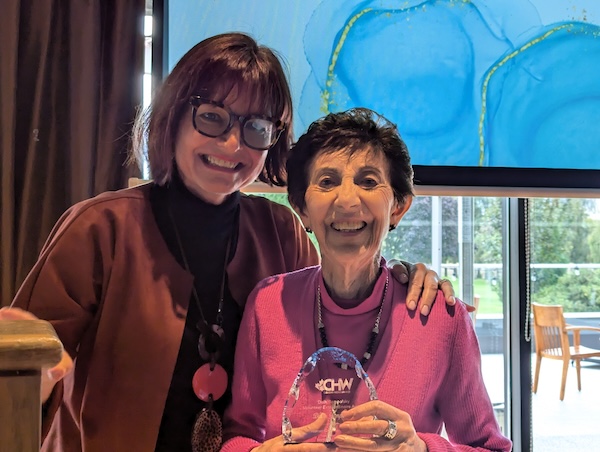
Claudia Goldman, left, presents Bev Corber with the Claudia Goldman Award for Excellence in Leadership. (photo by Pat Johnson)

Diplomatic relations between Israel and Canada have never been worse, according to Israel’s envoy to Toronto and Western Canada. 

“The relationship between Israel and Canada is at an all-time low,” said Idit Shamir, consul general of Israel for Toronto and Western Canada. “Canada, according to many, has abandoned Israel, the only democratic ally they have in the region.”

Speaking via remote video link to the opening event of the Vancouver branch of CHW (Canadian Hadassah-WIZO) Sept. 22, Shamir cited, among other things, the Canadian government’s legitimizing of Hamas information, rather than Israeli government sources, when commenting on the conflict.

“Many times, they have been proven as mistaken,” said Shamir. “Not as many times, they have taken the time to correct themselves.”

Canadian Jews are asking themselves if there is a future for their families in Canada, the envoy said. 

“This is a question that I don’t think was asked here before Oct. 7, and that’s very, very sad,” said Shamir.

Israelis and Canadians alike were shocked by the alarming spike in antisemitism in Canada and worldwide in recent years, but especially in the past 12 months, she said. 

Shamir addressed concerns about the climate on university campuses and even in public elementary and secondary schools. She spoke just after the controversy erupted over an officially sanctioned Toronto public school field trip to what evolved into an anti-Israel rally. 

Making Jews unwelcome on campuses will have negative repercussions for the entire society, she said.

“Jews have been instrumental in the university system here, and pushing them out is going to have a serious impact on the future of Canada,” she warned.

Regrettably, Shamir said, Canada has been the launchpad over the years for several negative developments, including Israel Apartheid Week, which began at the University of Toronto before spreading internationally, and, more recently, the concept of “anti-Palestinian racism,” which was adopted as policy by the Toronto and District School Board. The idea, she said, paints any expression that is critical of the prevailing Palestinian narrative as racist.

“When you see that happening already at the elementary school level, we can imagine the depth of indoctrination that is going on in the universities,” said Shamir.

On the positive side, the consul general said, opinion polls indicate that most Canadians support Israel. 

“Most Canadians can understand that … we didn’t choose this war,” she said. “We are fighting a war for our survival, for the survival of the only Jewish democracy and country in the world. And now we understand more than ever the need for a safe haven for Jews.”

Among the 101 hostages remaining in captivity, Shamir said, the Israeli government believes more than half remain alive. The body of Judy Weinstein Haggai, a dual Canadian-Israeli citizen who is known to have been killed, remains in Gaza.

“The hostages are the utmost priority,” Shamir said, “releasing the ones who are alive and returning the bodies of those who are not.”

She linked the Gaza conflict to wider geopolitical issues, pointing to Iranian-backed forces launching missiles from Lebanon, Iraq and even Yemen. She was speaking before Iran launched more direct attacks on Israel Oct. 1.

“We cannot forget that Iran is behind this, and we can see that rockets are coming from Iranian-sponsored sources in places we would not have imagined,” she said.

In response to these challenges, the consul general called for unity among the Jewish community and its allies, stressing the need for resilience and solidarity.

Noting that “Jews are coming together and becoming a united force to be reckoned with in Canada,” Shamir said members of the Jewish community must remain vigilant and continue to fight antisemitism and support Israel.

The envoy lauded CHW’s long-standing efforts to empower women and children, provide health care and assist displaced Israelis.

“It’s a labour of love that touches hearts and changes lives every single day,” she said.

The CHW Vancouver event, held at the Richmond Country Club, benefited the Michal Sela Forum, an Israeli organization dedicated to preventing domestic violence through innovative technology and collaboration.

photo - Toby Rubin, president of CHW Vancouver, presents the inaugural Dolly Jampolsky Volunteer Extraordinaire Award to Jampolsky
Toby Rubin, president of CHW Vancouver, presents the inaugural Dolly Jampolsky Volunteer Extraordinaire Award to Jampolsky. (photo by Pat Johnson)

Longtime CHW leaders Beverley Corber and Dolly Jampolsky were the honourees. Corber received the Claudia Goldman Award for Excellence in Leadership, and Jampolsky received the inaugural Dolly Jampolsky Volunteer Extraordinaire Award. Sylvia Cristall and Claudia Goldman were inducted into the CHW Lillian Freeman Society by Lisa Colt-Kotler, national chief executive officer of CHW, who spoke at the opening and interviewed the consul general. Toby Rubin, president of CHW Vancouver, emceed the event. 

Format ImagePosted on October 11, 2024October 10, 2024Author Pat JohnsonCategories LocalTags Canada, Canadian Hadassah-WIZO, CHW, Idit Shamir, Israel, politics
The need for transparency

The need for transparency

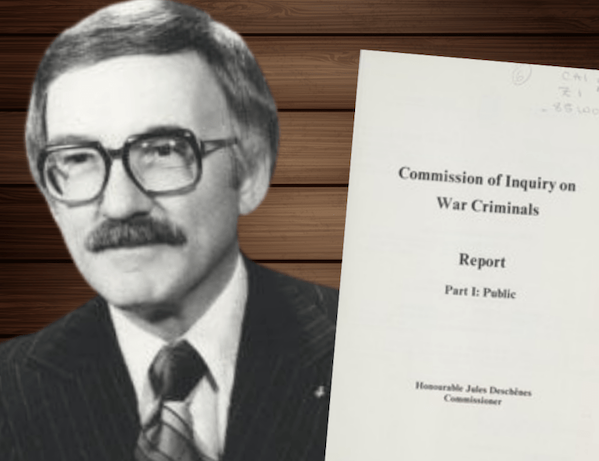
Justice Jules Deschênes, who was appointed by the Canadian government in February 1985 to oversee the Commission of Inquiry on War Criminals in Canada. (screenshot from B’nai Brith Canada)

For nearly four decades, Jewish human rights organizations have been trying to figure out how Nazi war criminals were able to gain citizenship and refuge in Canada following the Second World War. Why were high-ranking members of the Nazi Allgemeine Schutzstaffel (Nazi SS) and Waffen SS troops who fought on Germany’s behalf considered eligible for Canadian citizenship? And who were they? What were their names?

The answers to many of these questions can be found in an obscure list of reports held in government archives. Since 1985, when the Deschênes Commission was appointed to investigate allegations that Nazi war criminals were living in Canada, B’nai Brith Canada and other Jewish organizations have been urging the federal government to release all the commission’s findings. Those records include an historical account of Canada’s post-Second World War immigration policies, written by historian Alti Rodal (the Rodal Report).

“We have always felt that providing the general public with a greater understanding of Canada’s ‘Nazi past’ is a significant venture to providing closure to that time period,” explained Richard Robertson, B’nai Brith’s director of research and advocacy. “This is important because, at a time of rising antisemitism, where there are less and less survivors of the Holocaust around, it is essential that we furnish educators and advocates with as many tools as possible to enable as fulsome a teaching of the [history of the] Holocaust,” including, noted Robertson, those decisions that may have indirectly made it easier for Nazi perpetrators to escape prosecution. 

The Hunka affair

Last September, a critical portion of the documentation was made public by the federal government after it was revealed that a former member of the Waffen SS Galicia Division, Yaroslav Hunka, had received a standing ovation in Parliament. Human rights advocates wasted no time in calling for the rest of the Deschênes Commission’s documents to be released, arguing that the unredacted reports could help further Holocaust education in Canada and avoid such mistakes. More than 15 groups, representing Jewish, Muslim, Iranian and Korean ethnic communities and interests, supported B’nai Brith’s petition and, on Feb. 1, the Trudeau government released the bulk of Rodal’s account. 

That move has given human rights organizations access to a wealth of information about the politics, the thinking and the apprehensions that often steered the government’s decision not to prosecute or extradite war criminals. Compiled as an historical account of Canada’s post-Second World War policies, the 618-page redacted Rodal Report provides details that aren’t revealed in Deschênes’ deliberations.

Set against the backdrop of today’s rising antisemitism, the report illustrates that Canada’s current struggle to balance the needs of those targeted by antisemitism and discrimination with other democratic principles, like free speech and privacy, is nothing new.

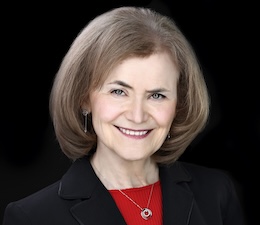
screenshot - Alti Rodal, author of the Rodal Report
Alti Rodal, author of the Rodal Report. (screenshot from Ukraine Jewish Encounter)

According to Rodal, Canada’s postwar immigration policies were heavily influenced by a belief that extraditing naturalized Canadian citizens for war crimes would be, in the words of Prime Minister Pierre Elliot Trudeau, “ill-advised.” 

“Trudeau’s concern,” Rodal wrote, “was that the revocation [of citizenship of an alleged war criminal] could alarm large numbers of naturalized citizens who would be made to feel that their status in Canada could be insecure as a consequence of the politics and history of the country they left behind.”

And Pierre Trudeau was not alone in his reticence to bring Nazi war criminals to court.

“All those goals which Canadian society has set for itself can certainly not be achieved by short-circuiting the legal process in the hunt for Nazi war criminals,” the commission wrote, while examining whether a military court might be an appropriate venue for litigating charges of war crimes. 

By the time the commission concluded its research, it had effectively struck down every available legal mechanism for pursuing action against most former Nazis living in Canada. The Deschênes Commission determined that war criminals could not be prosecuted under Canada’s Criminal Code, but neither could they be tried by military tribunal. Nor could they be successfully prosecuted under the Geneva Conventions for acts of genocide or crimes against humanity. And Canada’s extradition laws would be ineffectual in many instances, including when it came to approving requests from Israel. Israel didn’t exist at the time of the Holocaust, the commission reasoned, and thus didn’t meet Canada’s requirements for requesting extradition of Second World War criminals.

New laws, similar challenges

Canada’s only remedy would be to amend its laws going forward. In 2000, nearly 14 years after the release of the Deschênes Commission’s report, the Crimes Against Humanity and War Crimes Act was given Royal Assent. Antisemitism, hate speech and hate crimes are now federal offences as well, covered under Section 319 of the Criminal Code. However, some legal experts say the process of bringing charges of antisemitism or hate crimes to court remains too onerous.

In June, the Matas Law Society and B’nai Brith hosted an educational webinar on the legal strategies available to Canadian lawyers when pursuing charges of antisemitism. Gary Grill and Leora Shemesh, two Toronto-based lawyers who have recently represented victims of alleged antisemitism in Ontario, offered different views as to why it is so hard to bring a hate crime to court.

“We have the tools,” acknowledged Shemesh, “we’re just not effectively using them.” She said she has represented several alleged victims of antisemitism and, in each one of the cases, the charges were later dropped.

Grill, on the other hand, suggested that the issue had to do with initiative. “It’s about political will” when it comes, for example, to ensuring that prosecutors understand that “death to Zionists” is veiled hate speech and should be prosecuted as antisemitism. “The education is easy,” he said. “We can educate prosecutors. We can educate police. It’s not a problem. [But] this is about will. It’s not about law.”

“There are problems with certain [parts] of Section 319 and [its] enumerated defences,” Shemesh said. “Prosecutions under the Criminal Code for the promotion of hatred … require the approval of the attorney general to proceed, which, I say, has partially explained why such prosecutions have been rare in Canadian jurisprudence.” 

In Robertson’s opinion, there can be value in legislative oversight. The attorney general’s sign-off “is a safeguard to ensure that our hate crimes legislation … is only utilized when warranted. I believe it is designed to prevent overuse,” he said. “Listen, there’s nothing wrong with that. There’s nothing wrong with having checks and balances to ensure that the proper charges are being laid and the severity of these charges warrant such. The issue is the reluctance of the attorney general to sign off on these charges and the procedural, I would say, slow-downs in effecting the sign-off. These are the issues. If we can perfect the procedures around the sign-off, then this is a completely fine check and balance.”

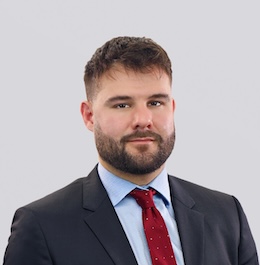
photo - Richard Robertson, director of research and advocacy for B’nai Brith Canada
Richard Robertson, director of research and advocacy for B’nai Brith Canada. (photo from  B’nai Brith Canada)

As for addressing the rise in antisemitism that Canada is experiencing today, Robertson believes the answer lies in ensuring Holocaust education is available and continues. That requires ensuring public access to the documents that most accurately tell the story – including those of Canada and other allied nations.

“With the recent issues that we’ve seen regarding immigration into Canada, I think [the Deschênes and Rodal reports serve as a] narrative that is more relevant than ever. I think it is important for us to understand our mistakes of the past so that we don’t repeat them in the future,” Robertson said. “And, as well, when it comes specifically to Holocaust education, I think it is important for Canadians to appreciate the level of complicity, if there was any complicity, in our government helping Nazis escape prosecution following the culmination of the Holocaust in World War II…. It helps to paint the totality of the picture of just how widespread the Holocaust was.”

Robertson said Canadians often think of the Holocaust as a “European issue,” that it only adversely impacted Jews in Europe. “So, understanding Canada’s role and [the Holocaust’s] aftermath helps to globalize the narrative, and perhaps that will help Canadians to better appreciate the truly global impact of the Holocaust [and the trauma] that is still ongoing.” 

To date, most of the Deschênes documents have been made public, with the exception of Part II of the original report, containing the identity of members of the Nazi party who were granted immigration to Canada. The ancillary documents, such as the Rodal Report, also contain information that has not been made public. B’nai Brith Canada continues to lobby for their release.

Jan Lee is an award-winning editorial writer whose articles and op-eds have been published in B’nai B’rith Magazine, Voices of Conservative and Masorti Judaism and Baltimore Jewish Times, as well as a number of business, environmental and travel publications. Her blog can be found at multiculturaljew.polestarpassages.com.

Format ImagePosted on September 20, 2024September 18, 2024Author Jan LeeCategories NationalTags antisemitism, B’nai Brith Canada, Canada, Deschênes Commission, history, Holocaust, immigration, Nazis, Richard Robertson, Rodal Report

Visit here inspires hope

Recently, I had the opportunity to visit Vancouver for the first time to meet  with members of the Jewish community and local business leaders. It was a wonderful experience that enabled me to see the Jewish community up close, and I plan to return soon to this city with its beautiful landscape, and warm and friendly people. 

Through my work, I know how difficult it has been for the Jewish community given the explosion of antisemitism, especially since Oct. 7. The sharp rise in antisemitic incidents, including attacks on synagogues and the shocking experiences of students at the University of British Columbia, have created an ambiance of fear, anger and uncertainty. At the same time, this troubling climate has brought together Jews from all walks of life to defend our values, our people and the state of Israel. 

One name that repeatedly arose – a nongovernmental organization I am very familiar with through my work at NGO Monitor – was Samidoun. Samidoun is a Canadian-registered not-for-profit, founded by a member of the Popular Front for the Liberation of Palestine (PFLP), Khaled Barakat. Barakat’s spouse, Vancouver resident Charlotte Kates, is its international coordinator.

Although Canada declared the PFLP a terror group in 2003 and, despite Samidoun’s antisemitic and pro-terror rhetoric, the government still has not taken action to shut down this NGO. 

Like the PFLP, Samidoun disseminates messages and an agenda supporting violence, terror and antisemitism as a means to destroy the state of Israel. Since the Oct. 7 atrocities, Samidoun has expanded its local activities, contributing centrally to the sinister atmosphere facing Canadian Jewry. Illustrative examples include a July seminar in Toronto that called for eliminating “Israel as a military, political and economic establishment” and an event in Vancouver where the PFLP, Hamas and Hezbollah were praised. There have been dozens more such events.

In contrast to Canada, Samidoun activities have been banned in several countries, including France and Germany. Meta (formerly Facebook) shut down the social media accounts of the Vancouver and Toronto chapters of Samidoun, while Stripe, a major credit card processing company, closed Samidoun accounts on its platform, preventing online fundraising in Canada. 

Let’s not be naïve. Samidoun is not the only NGO that is problematic, and it joins more than 100 other groups in Canada engaging in offensive and, at times dangerous, rhetoric. Moreover, the hatred stemming from Samidoun’s headquarters in Vancouver is not just against Israel and Jews, but against Canada and all Canadians. The NGO uses strategic attacks against the state of Israel and the Jewish people to distract from their assaults on the very values that enable Jews, Muslims, Christians and others to peacefully live side by side in Canada, Israel, and around the democratic free world. 

Samidoun’s threat to Canadians, beyond the Jewish community, is blatant in their statement declaring Canada a settler colony “that require[s] the same settler logics and brutalities as ‘Israel’” and their claim that international law allows for people living in a colonialist society to “resist.”  All law-abiding Canadians should be extremely concerned for Samidoun’s justification of Hamas’s Oct. 7 abduction, rape, mutilation and murder of innocent children, women, Holocaust survivors and eight Canadian citizens (including Vancouver’s Ben Mizrachi) as “resistance.” Moreover, Samidoun’s argument about Israel, that “imperialist warmongers will call it terrorism, but we know this is anti-imperialist resistance,” defends any terrorist activities they choose to initiate anywhere and is not reserved only for Israel but rather for all Western “imperialistic” countries. 

While Kates is working to overturn Canada’s designation of Hamas and Hezbollah as terror groups, Samidoun is allowed to operate and flourish. After her appearance recently on Iran’s national television station to commend “the brave, heroic Oct. 7 operation” by Hamas that killed Canadian Jews, it is all the more critical to terminate Samidoun’s soapbox of hate that is based in Vancouver.

One of the impressive aspects of the BC Jewish community is the collective desire to work closely with those outside of their faith toward building a better society for all in Canada. After my visit to Vancouver, I am optimistic that Jews and non-Jews will work collaboratively against the seeds of divisiveness and hate sown by Samidoun. This will not end antisemitism in Canada, which has become, unfortunately, widespread. But it is an important first step. 

Olga Deutsch is vice-president of NGO Monitor and has extensive expertise in international politics, humanitarian aid, funding to nongovernmental organizations, international development, post-Oct. 7 antisemitism, efforts to delegitimize Israel, and BDS. 

Posted on September 20, 2024September 18, 2024Author Olga DeutschCategories Op-EdTags antisemitism, Canada, Charlotte Kates, democracy, Iran, NGO Monitor, Samidoun, terrorism, Vancouver

האנטישמיות שוברת שיאים בקנדה ובישראל לא מבינים למה

לפי נתונים אחרונים של ההסתדרות הציונית העולמית מאז השבעה באוקטובר האנטישמיות בקנדה גדלה בקרוב לשבע מאות אחוזים, לעומת התקופה המקבילה אשתקד. כשבעים אחוז מפשעי שנאה בקנדה מכוונים כנגד הקהילה היהודית המקומית. זאת בזמן שאוכלוסיית היהודים בקנדה מהווה קרוב לאחוז וחצי מאוכלוסיית המדינה

האנטישמיות שוברת שיאים בלתי נתפסים בקנדה ובעצם בכל מדינות המערב והם מדאיגים ביותר. ולמרות זאת בישראל לא מבינים בכלל מה הסיבה העיקרית לעלייה באנטישמיות נגד יהודים ואזרחי ישראל כאחד. וישראל לא מנסה להפעיל אפוא מדיניות הסברה ולימוד ברחבי העולם כדי לנסות ולהתמודד עם האתגר הקשה הזה

רובם של הישראלים מדגישים בהרחבה את העלייה באנטישמיות ברחבי העולם. זאת כדי להצדיק שהרבה יותר בטוח לחיות בישראל מאשר מחוצה לה. את הישראלים זה בכלל לא מעניין כי הסיבה לגידול המשמעותי באנטישמיות נגד יהודים וישראלים בעולם, נעוצה בתוצאות ההרסניות של פעילות צה”ל בעזה. רבים ברחבי העולם צופים ושומעים על כמות גדולה של אזרחים פלסטינים ובהם נשים וילדים שנהרגים עקב התקפות בלתי פוסקות של צה”ל. הצבא הישראלי מחפש לחסל את אנשי החמאס, הג’יהאד האיסלאמי וחברי ארגוני טרור נוספים. אך באותה עת תושבי עזה משלמים מחיר כבד מנשוא. רבים מקפחים את חייהם ומאות אלפים נותרו חסרי בית, והם נעים אנא ואנא בין איים של חורבות

לאור האובדן הגדול של חיים אדם בעזה חל כאמור הגידול המשמעותי באנטישמיות והשינאה כנגד יהודים וישראלים בכל רחבי העולם. ונראה כי לפי מדיניות ממשלת ישראל הנוכחית והעומד בראשה, בנימין נתניהו, לא יחול שום שינוי לטובה בעת הקרובה. כך שאלו שבחרו לגור מחוץ לישראל משלמים מחיר כבד שלא באשמתם

אומר יעקב חגואל, יו”ר ההסתדרות הציונית העולמית: מדובר בעלייה חסרת תקדים. בשבעה באוקטובר לא פרצה מלחמה רק נגד מדינת ישראל, אלא נגד העם היהודי כולו, עם קמפיין מתוזמן וממומן שמעורר אנטישמיות. זו תופעה שלא נראתה מאז השואה, ואנחנו יחד עם ממשלות ומדינות נוספות צריכים להילחם בתופעה הזו ולעקור אותה מהשורש. אנחנו לא ניתן לעולם לחזור לימי מלחמת העולם השנייה. כאמור חגואל לא מתייחס כלל לסוגיה מה הסיבה הישירה לעלייה באנטישמיות והיא מותם של אלפי פלסטינים בעזה בעקבות פעולת צה”ל. אי הכירה בסיבה לא תאפשר להילחם משמעותית באנטישמיות

ואילו ד”ר רחלי ברץ, ראש המחלקה למאבק באנטישמיות בהסתדרות הציונית העולמית מוסיפה: הנתונים בלתי ניתנים להכחשה. בחודשים האחרונים חל שינוי גדול לרעה ביחס אל יהודי קנדה. הדבר ניכר מאוד ברחובות ובריבוי האירועים האלימים, אבל לא פחות מכך בקרב סטודנטים, מרצים וחברי סגל בקמפוסים השונים. הרעות החולות שהפכו פופולריות במערב אירופה ובארה”ב הגיעו גם למדינה שבה מהווים היהודים פחות מאחוז וחצי מהאוכלוסייה. עם זאת, בקנדה חיים למעלה מארבע מאות אלף יהודים. מדובר בתפוצה היהודית השלישית בגודלה בעולם, וראוי שכל הגורמים הרלוונטיים יתנו את דעתם ויטפלו בתופעה חמורה זאת

לעומתם ראש ישיבת סלבודקה בבני ברק, הרב משה הלל הירש (שהוא גם חברת מועצת גדולי התורה של דגל תורה), טוען כי הניסיון לצמצם את עולם התורה, הוא זה שמביא להעצמת תופעת האנטישמיות בעולם. הרב הירש מוסיף כי עלינו שהכל מתנהל לפי פעילותו של אלוהים והכל בעצם לטובתנו. הרב מציין עוד כי אנו חיים כיום בתקופה שאינה חסרת תקדים וכלל ישראל חיות במשך מאות שנים לפני בית המקדש ולאחריו, עם אתגרים מאותם סוג של היום

Posted on September 4, 2024September 4, 2024Author Roni RachmaniCategories עניין בחדשותTags antisemitism, Canada, Gaza, Israel, Moshe Hillel Hirsch, Netanyahu, Oct. 7, Racheli Bartz-Rix, World Zionist Organization, Yaakov Hagoel, אנטישמיות, בנימין נתניהו, ההסתדרות הציונית העולמית, יעקב חגואל, ישראל, משה הלל הירש, עזה, קנדה, רחלי ברץ

ישראלים מגיעים לקנדה בעקבות השבעה באוקטובר

קנדה מעניקה לישראלים ויזה הומנטרית בעקבות השבעה באוקטובר והמלחמה המתמשכת. לפי הערכות מאות ישראלים ניצלו אופציה זו והם מהגרים בחודשים האחרונים לקנדה. מיכל הראל שהקימה אתר לישראלים הרוצים להגר לקנדה אומרת כי קנדה מציעה חיים נוחים בחברה פלורליסטית וקוסמופוליטית, עם מערכות חינוך ובריאות טובות. כך שיש אופק כלכלי לישראלים ולדורות הבאים שלהם כאן. כמובן יש לציין שלקנדה יש גם טבע מרהיב הכולל יערות ואגמים. ויש לזכור שגם לנושא איכות הסביבה יש כאן חשיבות גדולה

לכל הטוב הזה בקנדה יש אפילו הכרה עולמית: אשתקד דורגה קנדה במקום השני והמכובגברשימה של המדינות הטובות בעולם לחיות בהן. וזאת מתחת לשווייץ שבמקום הראשון, ומעל שבדיה שבמקום השלישי. קנדה מדורגת שמינית בעולם מבחינת גובה ההכנסה ליחיד. מדובר במדינה ענקית, השניה בגודלה בעולם אחרי רוסיה ששטחה גדול הרבה מזה של ארה”ב, אבל מספר תושביה רק קצת יותר מעשירית ממספר תושבי ארה”ב. לקנדה מסתבר יש מקום לקלוט הרבה מאוד בני אדם שיחזקו את אוכלוסייתה, והיא מעודדת הגירה אליה. ועכשיו כאמור מדובר בתוכנית הגירה חדשה ומיוחדת לישראלים. התוכנית שהוכרזה בתחילת השנה הוארכה בימים האחרונים בשנה נוספת. יש שהטוענים שהארכה נובעת בשל ההסלמה בצפון והחשש למלחמה בין ישראל לחיזבאלה.
הראל עשתה רילוקיישן לקנדה לפני חמש שנים. זאת כדי להקים את הסניף של החברה שלה ושל בן זוגה בצפון אמריקה. בעקבות השבעה באוקטובר פנו אל הזוג חברים רבים שלהם מישראל והחלו לשאול אותם איך הם עברו לקנדה. החברים ביקשו שהראל ובן זוגה יעזרו גם להם להגיע לקנדה. אחרי שבועיים של שיחות טלפוניות עם אנשים מישראל הראל ביקשתה מבן זוגה שיעזור לה להקים אתר עם כל המידע שהם נתנו לאנשים בארץ בטלפון. וזאת כדי שהם יוכלו לקרוא על ההגירה לקנדה ובמה היא כרוכה. וכן שהם יעבירו את הלינק של האתר שלהם לחברים ומשפחה שלהם בישראל. במקרה, אחרי זמן קצר שהאתר היה באוויר נפתח המסלול לישראלים שנותן ויזת עבודה לשלוש שנים בקנדה, במהלכן ניתן להגיש בקשה לתושבות של קבע או אזרחות מלאה. הזוג החליט לעזור בהתנדבות לכל מי שירצה להגיע לקנדה בעקבות המלחמה

מה עם הפטריוטיות הישראלית ומה האומרים לאלה שטוענים שאנשים איכותיים עוזבים ובסיוע ממשלת קנדה וגורמים ישראלים כמו האתר של עוברים לקנדה, יורדים מהארץ, ועוד במהלך מלחמה. לדברי הראל ישנם מקרים בודדים של תגובות פחות נעימות ברשתות, אבל רובם מאוד שמחים על הפרויקט ועל ישראלים שעוזרים לישראלים. מי שלא מסוגל יותר וחייב הפסקה מגיע לו לנוח מהטירוף ונהדר שממשלת קנדה מאפשרת את זה. הציונות לא מסתיימת רק בגלל שכמה משפחות רוצות לנוח.
יהודים זכו בקנדה בדרך כלל לחיים נוחים ושלווים, נטולי גילויים אנטישמיים ברמות שחוו ברחבי העולם. כמו בכל מקום, הכל השתנה מאז השבעה באוקטובר, כידוע. אבל, המדינה הייתה מאז ומעולם יעד הגירה מועדף של יהודים מרחבי התפוצות ומאז קום המדינה גם של ישראלים.
לפי הערכות, בקנדה חיים למעלה מארבע מאות אלף יהודים. לפי מפקד אוכלוסין מרבית הישראלים ומדובר בכחמישים אלף איש, חיים ברובם בטורונטו. על פי הערכה מדי שנה מגיעים כשלושת אלפים ישראלים נוספים לקנדה ומספרם הולך וגדל לאור המצב הקשה בו נמצאת ישראל בימים אלה

יצויין שתוכנית ההגירה לישראלים כוללת רישון עבודה התקף לשלוש שנים ומאפשר לעבוד כמעט בכל עבודה. התוכנית לישראלים הוארכה והיא תפוג ביולי שנה הבאה

Posted on August 21, 2024July 24, 2024Author Roni RachmaniCategories עניין בחדשותTags Canada, humanitarian visa, immigration, immigration program for Israelis, Israel, work visa, ויזה הומנטרית, ישראל, קנדה, רישון עבודה, תוכנית הגירה לישראלים
Support Victory Square 100

Support Victory Square 100

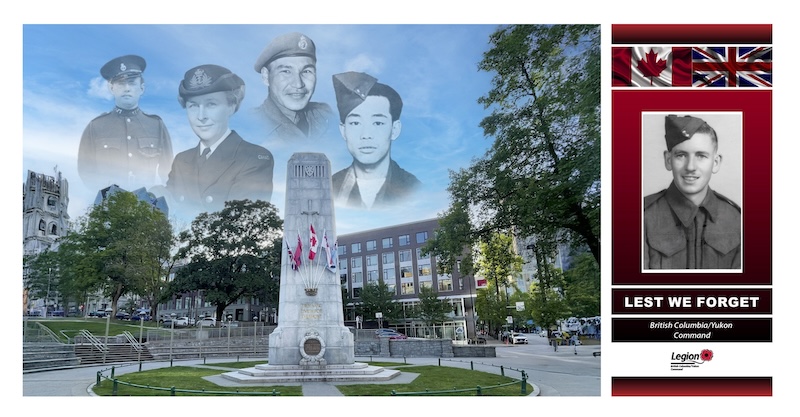
Victory Square 100 will create banners featuring photographs of veterans, which will be flown about Vancouver around the time of this year’s Remembrance Day commemorations, when the Victory Square Cenotaph in Vancouver turns 100. (images from RCL BC/Yukon Command)

Every year, from the last Friday of October to Nov. 11, tens of millions of Canadians wear a poppy as a visual pledge to honour Canada’s veterans. This year, the Victory Square Cenotaph in Vancouver will turn 100 years old and so the Royal Canadian Legion BC/Yukon Command has created the Victory Square 100 program.

Victory Square 100 invites all interested individuals and organizations to participate in creating banners adorned with pictures of veterans, which will be flown around the city of Vancouver.

If you are a veteran or if you have a loved one who served in the military, submit a high-quality picture of yourself, or the veteran, in uniform. Pictures need to be submitted digitally.

These photographs will be transformed into banners that showcase the faces of Canada’s veterans. Each banner will be crafted to ensure the dignity and respect befitting heroes.

There is a cost to creating and displaying the banners. The legion encourages the community, businesses and organizations to join them in the Victory Square 100 initiative and to sponsor a banner. If veterans or their loved ones who submit a photo choose to do so, they can also donate to the program.

There are a couple of options: a general donation to support the banner program (any amount), and $229 to support the banner program and have a veteran featured on the banner.

Victory Square 100 is more than just a gesture of appreciation – it’s a tangible expression of gratitude and respect for Canada’s veterans. By participating, you are helping ensure their legacy lives on and their service is never forgotten.

For additional information, visit legionbcyukon.ca or call Danny Redden, president of the Royal Canadian Legion’s Shalom Branch #178, at 604-739-1571. 

– Courtesy Shalom Branch 178

Format ImagePosted on July 12, 2024July 10, 2024Author Shalom Branch 178Categories LocalTags Canada, Royal Canadian Legion, Vancouver, veterans, Victory Square 100
Team Canada wins cup

Team Canada wins cup

Team Canada and Team Israel at Softball City July 3 to compete for the Canada Cup International Softball Championship, Women’s division. (photo by Cynthia Ramsay)

The Canada Cup International Softball Championship, Women’s division, took place June 28-July 7, with Team Canada winning the competition in a game against TC Colorado (7-0) on the last day of the tournament.

This year, 12 women’s teams competed for the cup: Saskatchewan 222s, TC Colorado, Team Australia, Team Canada, Team Chinese Taipei, Team Czechia, Team Greece, Team Hong Kong, Team Israel, Team Mexico, Team New Zealand and Team Philippines.

Team Canada and Team Israel played each other July 3 at Softball City, and attendees cheered on both teams, despite the presence of anti-Israel protesters outside the stadium. While Team Israel scored the first two runs of the game, Team Canada went on to win 10-3. In all, Israel won four of its seven games and Canada won all its eight games, which included the final.

For more about the annual event, visit canadacup.com. 

Format ImagePosted on July 12, 2024July 10, 2024Author Cynthia RamsayCategories LocalTags Canada, Canada Cup, Israel, softball, women

Who are the cynical ones?

The Islamic Revolutionary Guard Corps is the world’s foremost state sponsor of terror. The IRGC’s Quds Force (“Quds” meaning “Jerusalem,” to note the ultimate priority of the corps’ aims), is effectively the international terrorism arm of the Iranian government and military.

Ottawa finally got the message. Last week, the Government of Canada designated the IRGC a terrorist entity under Canadian law. 

“The Canadian Jewish community has persistently called for this decisive action against the IRGC, recognizing its role in promoting violence and instability globally, including through its support for terrorist groups targeting Jews and others,” said a statement from Shimon Koffler Fogel, president and chief executive officer of the Centre for Israel and Jewish Affairs. “While we applaud this step, it is disappointing that it took so long for the government to act on its commitment.” 

Iran has destabilized (the word seems profoundly modest) Lebanon, by backing Hezbollah, the terror group that has wreaked havoc by upending that country and turning it into a staging ground for attacks on Israel, and Syria, by supporting Bashar al-Assad, the strongman who has waged war on his own people for more than a decade. Terrorism by the Iranian regime has prevented Iraq from becoming a functioning state. Tehran’s long arm has also terrorized individuals and organizations in the large Iranian diaspora. In 2020, the IRGC shot down Ukrainian International Airlines Flight 752, killing all 176 passengers and crew, including 55 Canadian citizens and 30 Canadian permanent residents.

And still Canada’s government did not take the seemingly simple step of calling the IRGC what is so clearly is.

In 2020, the US State Department estimated that Iran was supplying Hamas and other Palestinian terror groups with $100 million per year in training and military and financial support. An Israeli source put that number, by 2023, at $350 million.

Part of the intelligence catastrophe of Oct. 7 was an apparent assumption by Israeli intelligence that Hamas did not have the capacity to organize as complex an attack as it did against Israel that day. This was a tragic intelligence failure on many fronts, but it was certainly a failure in Israel’s massive underestimation of the extent and complexity of what Hamas was capable of, thanks directly to the IRGC. 

Canada is grappling with the fact that foreign actors have meddled in our politics, with China and Russia the prime suspects in this still-shrouded issue, but Iran has certainly had its fingers in our pie. The Iranian regime is also suspected of laundering money through Canada.

Iranian-Canadian human rights activist Nazanin Afshin-Jam addressed a parliamentary committee this month, putting a fine point of who we’re dealing with, not only internationally but domestically in Iran as well.

“Any time you have seen video footage of women in Iran being beaten and dragged screaming into police vans because of not properly wearing a hijab or of Christians arrested for worshipping in underground churches or Kurds being gassed or children being executed or peaceful protesters being intentionally shot at, blinded, raped or tortured, these are all the acts of the IRGC and its paramilitary subgroup, the Basij,” she said.

So why did Canada act now?

The announcement came less than a week before a pivotal byelection in Toronto. Voters in the riding of St. Paul’s, a Liberals stronghold since 1993 and considered one of the party’s safest seats in the country, went to the polls Monday.

The riding has one of the largest concentrations of Jewish voters – about 15%, which may not seem a lot but is 15 times the national Jewish population average and enough to swing a tight race, certainly. Another 1,500 of so residents list Farsi as a mother tongue and those, presumably Iranian-Canadians, know as well as anyone what the IRGC is capable of.

The very suggestion that a Canadian government would make a crucial, long-delayed decision like this based on crass political motivations is almost beyond the imagination.

Asked point blank by a reporter whether the decision was linked to the byelection – which many suggested could have existential implications for Prime Minister Justin Trudeau’s political career – Trudeau seemed to glass over and deliver a robotic reply.

Canada, he said, has already been “extremely preoccupied with the activities of the murderous regime in Tehran.” His government, he said, has “been working very, very hard on this for years.” He suggested that the delay was based on concerns for Iranian-Canadians and their families back home.

We are glad our government has taken this step. We are also revolted at the very suggestion that the decision could have been motivated by political expediency. It is unfathomably cynical – but who are the cynics? Is it reporters and commentators who accused the government of politicizing this move? Or is it a cadre of political advisors and elected officials who calculated that a few Jewish voters in midtown Toronto could save the prime minister’s hide if they were just thrown a bone?

We may never know exactly. But, if that was Liberals’ calculation, it failed. Conservative candidate Don Church upended tradition and won the riding. Liberals and others are still poking through the entrails to divine the wider implications for Canadian politics. 

Posted on June 28, 2024June 27, 2024Author The Editorial BoardCategories From the JITags Canada, Election, IRGC, Islamic Revolutionary Guard Corps, politics, St. Paul’s, terrorism
Unique heritage trip to China

Unique heritage trip to China

Len, Jeffrey, Sharon and Valerie on their family trip to China in 2009. (photo from Valerie [Chan] Hum)

Little did we realize when our son, Jeffrey, married Sharon Szmuilowicz in August 2008 that we would find ourselves visiting China nine months later as a family and visiting all our ancestral homes.

My family comes from the village of Sui Nam, Toi San district, Guangdong province. My grandfather was sponsored by a tailor and moved to Victoria in 1893 as a 16-year-old from a very poor family. He eventually married, started a restaurant business (the Panama Café) and fathered 12 children. Today, more than 140 Chan family members have been born in Canada over five generations and 131 years.

My husband Len’s family was from a small village of 30 houses in Chongkou, Kaiping district, Guangdong province. Len’s father traveled back and forth between China and New Westminster to earn money to support his family. In 1950, Len and his grandmother left China for Vancouver and then met up with Len’s father, who had moved to Ottawa. Two years later, the rest of Len’s family arrived in Canada. The family owned a number of restaurants over the years.

When our son married a Jewish woman from Toronto, we never thought we would learn that her family has ties to China as well.

The idea for the trip to China was initiated by Sharon. She felt it was important to learn about Jeffrey’s culture and family history. However, since the Szmuilowicz clan also had a direct link to China via Shanghai, it was an opportunity to explore both their histories.

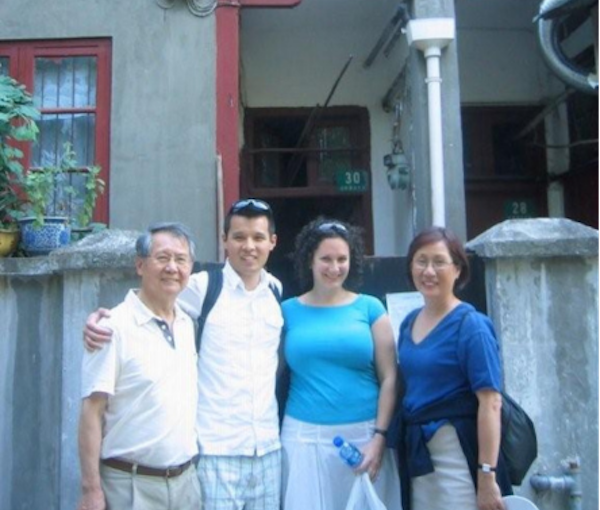
On May 13, 2009, 62 years after Sharon’s family left China, our tour guide Hao brought us to the Shanghai Jewish Refugees Museum, the former Ohel Moishe Synagogue, at Sharon’s request, where we were able to access a computer database listing all the refugees who had lived in Shanghai. We were so pleased to see Sharon’s grandfather and great-grandfather listed in the database, including their former address. Jacob and Samuel Szmuilowicz, age 59 and 21, were listed as Polish refugees living at 30-50 Zangyang Rd. What a tremendous discovery! And, to top it off, 30-50 was next door to the synagogue and was still standing.

photo - Valerie and Sharon outside the Shanghai Jewish Refugees Museum, the former Ohel Moishe Synagogue
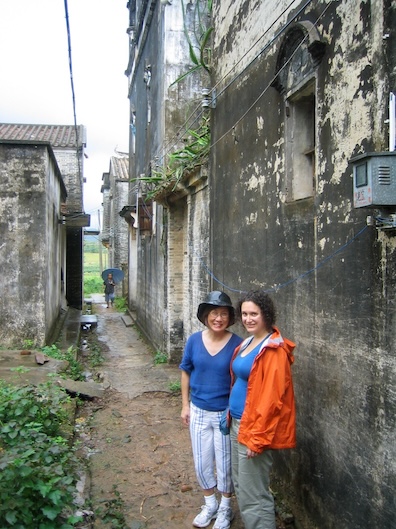
Valerie and Sharon outside the Shanghai Jewish Refugees Museum, the former Ohel Moishe Synagogue. (photo from Valerie [Chan] Hum)
We decided to knock on their door and see if anyone remembered Sharon’s family. The present residents moved into the building in 1950 and had no recollection of the previous Jewish residents who had crammed into these small apartments more than 70 years ago. Although we could not find anyone who knew Sharon’s family, it was still a remarkable discovery to find the records and the home they had lived in.

For the purposes of our trip, Sharon’s story begins with her grandfather, Samuel. To escape conscription into the Russian army, Samuel and his father, Jacob, left their homes, by foot, in 1939, making their way to Japan via Manchuria. At the time, Samuel was at university in Vilna (now Lithuania; then under Polish occupation), studying mathematics, and Jacob was running a general store in Lida, then in Lithuania (now in Belarus). 

Their transit visas were issued by Japanese diplomat Chiune Sugihara. He was giving out these visas without the knowledge of his government. It was dangerous for him to do so, but he knew that he needed to do something to save as many Jews as possible. In 1985, Sugihara was the first and only Japanese citizen to be listed by Yad Vashem as a Righteous Among the Nations.

With visas in hand, the journey took nearly two years to complete. They traveled by day and hid at night, finally arriving in 1941. In January 1942, they were transferred to Shanghai, where they joined the approximately 20,000 Jews who had migrated there in three waves beginning in the 1800s.

During their five years in Shanghai, Jacob sold rice while Samuel, who was attending the American School and learning English, ended up driving jeeps for the American army. They made enough money to leave for Mexico City in 1947, where they ran a textile factory that manufactured cotton goods, and started the Spanish-speaking arm of the Szmuilowicz clan. Sharon’s parents met in Mexico and moved to Canada, so her dad could pursue a career in medicine.

We learned that there were many Jews who fled Eastern Europe and ended up in Hong Kong or China.

The next part of our discovery trip found us traveling by ferry from Hong Kong over to the mainland city of Zha Hai, where we were then met by distant Hum clan relatives, who drove us to my paternal grandfather Chan’s hometown of Sui Nam. I suspect I am the only descendant who has made the trek back to the town of Sui Nam, which appears very old and somewhat decayed, but still standing. 

photo - In the village of Lohk Hing Leih, 90-year-old Mrs. Tam remembered Len, who used to play with her eldest son
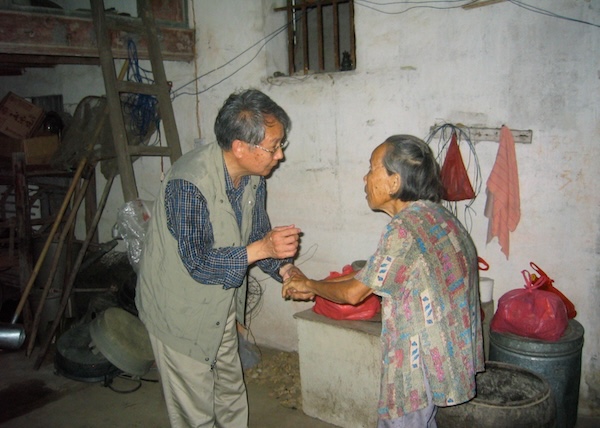
In the village of Lohk Hing Leih, 90-year-old Mrs. Tam remembered Len, who used to play with her eldest son. (photo from Valerie [Chan] Hum)
Half an hour later, we arrived in the small village of Lohk Hing Leih, a cluster of 27 buildings housing the remaining Hum clan. Len’s family left the village in 1949, spending a year-and-a-half in Hong Kong awaiting their papers for entry into Canada. The village remains very poor, comprised of mostly vacant buildings surrounded by rice paddies and vegetable gardens.

Ninety-year-old Mrs. Tam, looking remarkably spry and pleasant, incredibly, remembered Len, who used to play with her eldest son. The other village residents were too young to remember him, but they swiftly brought out some food offerings, the incense, paper money to burn before the family altar, and lit some Chinese firecrackers. These are age-old traditions, in honour of the Hum ancestors. There were no young people living in the village. They had all left to find jobs in the cities. We wonder if the village will even exist in 20 years’ time.

Call it fate or bashert that, from the 1940s, three different families who started off in China, one a Jewish refugee family in Shanghai and two native Chinese families living in small villages near Canton, would be reunited in Canada through marriage 70 years later. The biggest blessing is that, on May 11, 2024, a Szmuilowicz-Hum great-great-granddaughter celebrated her bat mitzvah in Toronto. We were all be thrilled to be there. 

Valerie (Chan) Hum lives in Ottawa. She was born in Victoria, where her family have lived since 1893. Her grandparents ran the Panama Café at 1407 Government St. for many decades. This article was originally published by the Ottawa Jewish Bulletin.

Format ImagePosted on June 28, 2024June 27, 2024Author Valerie (Chan) HumCategories NationalTags Canada, China, family history, Holocaust, travel

Posts pagination

Previous page Page 1 … Page 3 Page 4 Page 5 … Page 26 Next page
Proudly powered by WordPress