Skip to content
  • Home
  • Subscribe / donate
  • Events calendar
  • News
    • Local
    • National
    • Israel
    • World
    • עניין בחדשות
      A roundup of news in Canada and further afield, in Hebrew.
  • Opinion
    • From the JI
    • Op-Ed
  • Arts & Culture
    • Performing Arts
    • Music
    • Books
    • Visual Arts
    • TV & Film
  • Life
    • Celebrating the Holidays
    • Travel
    • The Daily Snooze
      Cartoons by Jacob Samuel
    • Mystery Photo
      Help the JI and JMABC fill in the gaps in our archives.
  • Community Links
    • Organizations, Etc.
    • Other News Sources & Blogs
    • Business Directory
  • FAQ
  • JI Chai Celebration
  • JI@88! video

Recent Posts

  • Sharing her testimony
  • Fall fight takes leap forward
  • The balancing of rights
  • Multiple Tony n’ Tina roles
  • Stories of trauma, resilience
  • Celebrate our culture
  • A responsibility to help
  • What wellness means at JCC
  • Together in mourning
  • Downhill after Trump?
  • Birth control even easier now
  • Eco-Sisters mentorship
  • Unexpected discoveries
  • Study’s results hopeful
  • Bad behaviour affects us all
  • Thankful for the police
  • UBC needs a wake-up call
  • Recalling a shining star
  • Sleep well …
  • BGU fosters startup culture
  • Photography and glass
  • Is it the end of an era?
  • Taking life a step at a time
  • Nakba exhibit biased
  • Film festival starts next week
  • Musical with heart and soul
  • Rabbi marks 13 years
  • Keeper of VTT’s history
  • Gala fêtes Infeld’s 20th
  • Building JWest together
  • Challah Mom comes to Vancouver
  • What to do about media bias
  • Education offers hope
  • Remembrance – a moral act
  • What makes us human
  • המלחמות של נתניהו וטראמפ

Archives

Follow @JewishIndie
image - The CJN - Visit Us Banner - 300x600 - 101625

Tag: Canada

מתהדק הקשר בין קנדה לאיראן

מתהדק הקשר בין קנדה לאיראן

שר החוץ, סטפן דיון. (צילום: Facebook)

מתהדק הקשר בין קנדה לאיראן: הוסרו מספר סנקציות כלכליות נגד המדינה האיסלאמית

קנדה ואיראן פותחות בדיאלוג לאחר כשלוש וחצי שנים של נתק טוטאלי בין שתי המדינות. במסגרת זו הממשלה הקנדית החליטה להסיר כבר מספר סנקציות כלכליות נגד איראן, בהן הקשורות בשירותים פיננסיים, יצוא ויבוא. כך הכריז שר החוץ, סטפן דיון, בסוף השבוע האחרון. סנקציות נוספות יוסרו בהמשך הדרך בשלבים כולל חידוש היחסים הדיפלומטיים, תוך שקנדה בוחנת את הפיקוח של האו”ם על תוכנית הגרעין של איראן, כדי למנוע מאיראן להמשיך ולפתח אותה, כמו למנוע ממנה את הפיתוח של טילים בליסטיים ארוכי טווח. דיון ציין כי קנדה תמשיך לבדוק מה קורה באיראן ותפעיל מדיניות בשלבים להסרת הסנקציות, לאור החששות מתפקידה של איראן במזרח התיכון כולל מול בני הברית כמו ישראל, ולאור “הרקורד” של איראן בתחום נושא זכויות האדם. דיון הוסיף עוד: “אני חושב שזה טוב לישראל שקנדה תוכל לדבר עם איראן. זו הייתה טעות לחשוב כי הבידוד עדיף על קשר וקשר אינו מהווה הסכמה”.

לדברי דיון תחומים רבים של הכלכלה הקנדית ירוויחו ממערכת היחסים המחודשת עם איראן. זה לא רק תעשיית התעופה והחלל, אלה גם תחבורה, חקלאות, התעשייה הפטרוכימית, תעשיית הכרייה ותעשיות הנפט והגז. לקנדה יש עדיין חששות כבדים בנוגע לשאיפותיה הגרעיניות של איראן, ולכן ימשכו המגבלות החמורות של יצוא מוצרים רגישים שלא ישלחו לאיראן וכל היתר יצוא ישקל בכל מקרה לגופו. קנדה תמשיך אפוא לקיים הגבלות חמורות על היצוא לאיראן של מוצרים, שירותים וטכנולוגיה שנחשבים לרגישים מהבחינה הביטחונית, לרבות מוצרים שיכולים לעזור לאיראן לייצר טילים גרעיניים או בליסטיים.

בתגובה להחלטת הממשלה להסיר את הסנקציות הצרכז לענייני ישראל והיהודים בקנדה פרסם את תגובתו בנידון. המרכז מציין כי איראן ממשיכה להיות איום ממשי עבור ישראל והיהודים ברחבי העולם. הסרת הסקנציות הבינלאומיות בעקבות ההסכם על תוכנית הגרעין של איראן, תנוצל על ידי המשטר האיראני וזה מקור חרדה רציני למרכז לענייני ישראל והיהודים בקנדה ושותפיו ברחבי העולם. קיימת סכנה ממשית שהקהילה הבינלאומית, מתוך נאיביות לאור הסכם הגרעין עם איראן, תקבל את איראן כחברה לגיטמית בקהילה הלאומית, למרות שהיא ממשיכה לתת חסות לטרור, מתעללת בזכויות אדם, מחוללת כאוס באזור וקוראת להשמדת ישראל.

עמדת המרכז לענייני ישראל והיהודים בקנדה לגבי החלטת הממשלה הקנדית החדשה ברורה. איראן מהווה איום רב לשלום העולמי והביטחון העולמי, וקנדה צריכה להתעמת עימה באמצעות כלים דיפלומטיים וכלכליים.

המרכז יודע כי המפלגה הליברלית של קנדה למרות תמיכתה בעמדתה תקיפה נגד איראן, מזה זמן רב מעדיפה גישה המאופיינת במעורבות קונסטרוקטיבית בניגוד לממשלה השמרנית הקודמת שתמכה חד-משמעית בבידודה של איראן. המרכז ישאר מאוד מודאג מהמאמץ של הקהילה הבינלאומית לחידוש הקשרים אם איראן, “ואנו נמשיך להראות שדיפולמטיה ללא לחץ כלכלי לא הייתה מביאה שינוי בהתנהגותה של איראן. תפקידנו להבטיח לבחון את הציוד והסחורות שיועברו לאיראן מקנדה, כדי לבחון שחברות קנדיות לא יעזרו לתוכנית הגרעין שלה ולבניית מערך הטילים הבליסטיים שלה”.

המרכז אומר עוד: “עכשיו יותר מתמיד הקהילה היהודית בקנדה צריכה לקחת חלק במדיניות הציבורית המקומית. אנו זקוקים לחברי הקהילה באשר הם כדי שישמיעו את קולם. בימים הקרובים המרכז לענייני ישראל והיהודים בקנדה, ישיק קמפיין חדש לגיוס אזרחי קנדה שמודאגים לקרוא לשר החוץ דיון, להמשיך ולהפעיל לחץ על איראן. יש באפשרותה של הקהילה היהודית להשפיע על הטיפול הכושל של הממשלה בתיק איראן, כשנעים קדימה”.

Format ImagePosted on February 9, 2016February 9, 2016Author Roni RachmaniCategories עניין בחדשותTags Canada, CIJA, economy, Iran, nuclear deal, Stéphane Dion, איראן, הסכם הגרעין, כלכלה, מרכז לענייני ישראל והיהודים, סטפן דיון, קנדה
Don’t vote for Momma!

Don’t vote for Momma!

A few weeks ago, I sat in the High Holy Day services looking around the room at the omany folks who make their annual pilgrimage to the synagogue that time of year. Most of them are there out of guilt or a sense of obligation instilled in them from when they were kids. Momma said, “You go to services on the High Holy Days!” And that was that! Most of them also hang onto a sense of Jewish identity and feel that attending that service once a year keeps them connected and fulfilled.

A few rabbis might wince as they read this, but I say there is nothing wrong with that. Religion is whatever we each want, need or don’t need it to be. It is personal. However we wish to acknowledge or pay attention to it is up to us. We don’t owe our beliefs or religious commitments to anyone but ourselves – and maybe our mommas.

This certainly isn’t just a Jewish-specific behavior. All sorts of folks in all sorts of religions follow a similar path, engaging at certain key times of the year to fulfill their personal obligations or commitments.

Unfortunately, too many Canadians carry on a similar mentality when it comes to national politics, with election time being the one time they feel compelled to celebrate their democratic rights by heading to the polling stations and voting.

While participating in a religious service without understanding the issues or knowing what it’s really about can still offer personal benefits, influencing politics and voting without knowing what it’s really about is concerning.

Everywhere I look on social media for the past month I see folks pleading with the country to show up and vote. We live in a democracy, after all. We are lucky to have the opportunity and the right to vote and, thus, we should. Many people sacrificed their lives so that we can have these choices today, with the right and freedom to vote for our leaders.

But it’s not just about stepping up to a pole and filling out a ballot. Important decisions are being made while every single vote carries the same weight.

It’s not just about the action of voting. It’s about contributing. It’s about respecting the rights and privileges we once fought for and now defend in this country. So please, don’t vote blind. Don’t vote based on the color of the lawn post you prefer. Don’t vote because the person in your riding has the same first name as you. Don’t vote because your momma told you who to vote for.

Everyone should vote! But if you can’t find some time to have at least a basic understanding of who or what you are voting for I am suggesting that you do not vote.

If you think you might fall under that category, take the time to read the posts linked here – both great places to start. Then get out there and vote!

Everything you need to know about the platforms, and JI interviews with the Liberals, Conservatives, Greens and NDP for all you need to about the federal leaders’ views on Israel, Iran, security, and more. And there’s even more at Federal Election 2015.


Format ImagePosted on October 18, 2015October 19, 2015Author Kyle BergerCategories It's Berger Time!Tags Canada, Canadian election, democracy, Election, Federal, vote
Expanding free trade

Expanding free trade

On July 21, Prime Minister Stephen Harper announced that negotiations toward an expanded and modernized Canada-Israel Free Trade Agreement (CIFTA) had concluded. “Israel is a priority market for Canada and holds great potential for Canadian companies in a variety of sectors. An expanded and modernized free trade agreement will lead to a strengthened bilateral relationship as well as an increase in jobs and opportunities for Canadians and Israelis alike,” said Harper.

The modernized CIFTA will notably provide expanded market access opportunities for agricultural, fish and seafood products through the reduction or elimination of Israeli tariffs on a large number of products, and duty-free access under tariff rate quotas for certain products.

Four existing areas of the current CIFTA have been amended, namely market access for goods, rules of origin, institutional provisions and dispute settlement. In addition, seven new chapters have been included in the areas of trade facilitation, sanitary and phytosanitary measures, technical barriers to trade, intellectual property, electronic commerce, labor and environment.

Israel is a priority market for Canada under the Global Markets Action Plan. Since CIFTA came into force in 1997, Canada’s two-way merchandise trade with Israel has tripled to $1.6 billion in 2014. Key opportunities for Canadian companies exist in sectors such as defence, information and communications technology, life sciences, sustainable technologies, agriculture and agri-food, and fish and seafood.

The modernized CIFTA will provide expanded market access opportunities for Canadian businesses through the elimination of tariff and non-tariff barriers, and help in creating new sources of jobs, growth and prosperity for both countries in the years ahead. It will support Canadian businesses and investors, deepen trade and investment linkages, and further strengthen Canada’s bilateral relationship with Israel.

Format ImagePosted on July 31, 2015July 28, 2015Author Prime Minister’s OfficeCategories NationalTags Canada, CIFTA, economics, free trade, Israel

Sacred task of Canada

Canada has changed dramatically in the past half-century. In two years, we will mark the 150th anniversary of Confederation. When we last celebrated such a momentous landmark birthday – in 1967 – it was a time of perhaps unprecedented optimism and belief that the world was better for having Canada in it. Yet, even in that celebratory year, the culmination of a decade of upheaval both positive and negative, no one could have predicted the Canada we would build in the next generation.

It was in that decade that Canada’s immigration laws – which since the 1920s had been notoriously stringent and oriented almost exclusively to white migrants – became part of the multi-hued world. A royal commission on bilingualism and biculturalism opened the door to viewing Canada outside the British colonial and cultural prism through which it originated in 1867. Within a few short years, the ethnic mix of the country would expand the concept of multiculturalism, opening up an exciting new amalgam of peoples from around the world, though not without some significant social challenges. Even so, for a country whose demographic face has changed so dramatically in a relatively short amount of time, we have adapted to it in ways that should inspire pride.

It has been said that Canadians, polite and welcoming to strangers by reputation, are also self-critical in ways almost unknown in other countries. When there have been incidents of which Canadians should be ashamed – and, as in any country, there have been plenty – we do have a tendency to self-castigate.

On the other hand, sometimes not quickly or adequately enough. As we wrote in this space last week, the Truth and Reconciliation Commission report on the catastrophic history and legacy of the Indian residential schools program highlights one of this country’s worst open sores – and that confronts only one portion of this country’s treatment of indigenous peoples. It took too long to reach this point of truth and reconciliation and it remains to be seen if action and genuine reconciliation will be the result. It is worth repeating, in this Canada Day edition of the paper, that it is our responsibility as Canadians to ensure that the recommendations of this report are not ignored or dismissed.

And Canada has a legacy of racism and antisemitism. Not just a legacy, but an active problem in many places and in many contexts. But, in a country as diverse as ours, in the year 2015, we as a collective are doing pretty well at getting along.

It has not only been the comparatively speedy and dramatic shift in ethnic demographics that has changed Canada. The Canadian Charter of Rights and Freedoms has been the lynchpin for judicial and legislative changes that have altered the face of the country and the day-to-day lives of its citizens. From the start, the entrenched equality of women was a significant constitutional right. By the 1980s, when the Charter took effect, it may have seemed ludicrous that a woman would not be considered legally equal – but let us not forget that the country to our south had spent a chunk of the previous decade arguing over precisely that point and the effort to entrench in the U.S. Constitution an equal rights provision failed, leaving women constitutionally unequal to men.

Court interpretations of the Charter have led to some of Canada’s most stunning progressive steps, including marriage equality. Yes, it was the courts (successive provincial decisions and then the Supreme Court of Canada) that made marriage equal, but Parliament quickly acceded (not that they had much choice) and public opinion is now overwhelmingly on side. Numerous less prominent cases have swung on the Charter’s provisions and while our American cousins fret over judicial “overreach” or “activism” when courts interpret the laws of the land (as is their constitutional role in both countries), Canadians seem to accept and even admire our Charter and its impact on the country. Polls, reliable as they may or may not be, suggest that 82% of us like the Charter.

Canada has sometimes been seen as an unnatural country, not one united by language or race or even geography, because we’ve got too much diversity for any of these to be a unifying factor. But we have found things to unify us.

In a world where diverse people stuck within random national boundaries seem to have too often sought out differences, accentuated them and fought over them, Canadians have accepted our lot as destined to share this space – and found our own ways to coexist, to identify the things that unite us, even celebrate the things we do not share in common, and make the best of it.

We are not perfect. No country is. Jewish tradition says that God created an imperfect world and it is humanity’s responsibility to strive to repair it. Perhaps, in a constitutionally mandated non-denominational way, this is also the role of successive generations of Canadians: inherit a country and strive to make it better. On Canada Day this year, may we rededicate ourselves to this sacred task.

Posted on June 26, 2015June 25, 2015Author The Editorial BoardCategories From the JITags Canada, Confederation

Rise of modern management

Since Scottish economist Adam Smith published The Wealth of Nations in 1776, arguing the importance of the division of labor and launching the era of specialization, a formal managing role – initially personified by the owner of the enterprise – became necessary to coordinate the diverse tasks and operations of machines and workers.

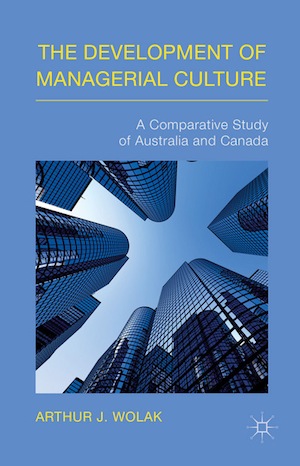
image - The Development of Managerial Culture: A Comparative Study of Australia and Canada book coverAs a modern profession, management is relatively new. It rose in importance during the 20th century as formerly unskilled preindustrial workers transformed into skilled workers, and their increasingly specialized knowledge and skills needed coordinators and supervisors to ensure the attainment of organizational objectives. Although the managerial role subsequently shifted from owners to professional managers, the latter tended to pursue similar goals as the wealthy elite who retained corporate ownership interest.

Comparing business owners in two of the largest English-speaking nations, the United States and the United Kingdom, suggests they were quite distinct from each other. The American business leader was typified by Horatio Alger-type stories of rising from the depths of poverty to the height of financial success. The rapid economic growth of the Gilded Age in the decades that followed the Civil War contributed to a stereotype of achievement, suggesting the existence of “equality of opportunity.” This American cultural striving for – and adulation of – achievement reflects the strength of individualism in American society. In contrast, the role of the businessman in Britain and Canada was different. Australian sociologist Sol Encel suggests that the typical representative during the 18th and 19th centuries was not just a male who owned a small business but one who was capable of seizing the opportunities provided by technological change to increase the size of his plant or create a completely new enterprise, revealing “a tradition of hard work, self-denial, the ploughing back of profits and the gradual building up of small firms into large ones.” There was less ruthless competition and vicious battles with trade unions compared to the United States but, similar to the U.S. tradition, British leaders of industry were viewed as “self-made men,” typified by a Scotsman like Samuel Smiles.

Encel rightfully alludes to Alger and Smiles for they provided flattering images of individuals who successfully built up their enterprises ostensibly on their own initiatives, whose achievements were admired by their peers and workers alike. There is a notable absence of such images in Australia where, in contrast with these other cultures, Encel observes, “Businessmen, apart from isolated individuals, are not generally regarded as having contributed prominently to the ‘development’ of Australia.” Credit for this largely belongs to members of the working class who championed egalitarianism and preferred flatter hierarchies, often to the chagrin of the more individualist managerial class.

As the managerial role evolved following the Second World War, it was no longer seen exclusively in the context of business. In the words of American management guru Peter Drucker, management “pertains to every human effort that brings together in one organization people of diverse knowledge and skills.” In a modern sense, “management” applies as much to the functioning of nonprofit organizations – from religious institutions, charities, social service agencies and public academic institutions – to the world of business and government. The term “manager,” therefore, signifies a role known by various titles, from supervisor, director and department head, to team leader and coordinator, among numerous other possibilities. Regardless of the title, contemporary managers focus their efforts on controlling, directing or coordinating the work of others.

Although the activities of managers have evolved to include a more supportive role to help the work efforts of people by coaching and otherwise supporting their labors, whether first-line, middle or top managers, they have customarily been defined as people to whom other people directly report. This arrangement suggests vertical hierarchy with management above workers, so the term manager applies to holders of positions of authority who not only possess the ability to influence how people work or behave but also indirectly impact their quality of life. Hence, the origins and implications of differences between Australian and Canadian egalitarianism and the role of political ideology in the development of the managerial outlook expose subtle variances in managerial culture. Management models also provide a window to identify salient Anglo-Celtic cultural features in managerial style. How workers organized is also revealing.

Unions in Australia and Canada emerged in the late 19th century as powerful representatives of workers in their dealings with management. In the last quarter of the 20th century, however, there was a rise in employment arrangements with individual employees rather than the workforce as a collective entity, a development that reflects a largely Anglo-Protestant management’s preference to reduce as much as possible union involvement in employment policy matters. Even in instances when union involvement could not be excluded from the bargaining process, the heightened focus on the individualization of employment has been evident in the increased use of performance-based pay systems over job- or grade-based pay, and with greater reliance on individual goal-setting procedures and appraisal, and more direct communication with individuals instead of unions as an intermediary. Prior to the rise of this individualist trend, however, collectivism strongly affected employment policies due to the strength of unions and the ideological and ethnic influences that helped shape Australian and Canadian society. The ideological influences on each culture were not identical. But what do the terms individualism and collectivism mean when applied specifically to the context of management? Above all, they provide a useful way to see influences on labor-management relations.

Arthur Wolak is a freelance writer based in Vancouver. He received his PhD in management from Macquarie Graduate School of Management, Australia. He has published articles in Australian, Canadian, U.S., U.K. and Israeli academic journals, as well as written for numerous newspapers, including the Jerusalem Post and the Jewish Independent. This is an excerpt from his book The Development of Managerial Culture: A Comparative Study of Australia and Canada (Palgrave Macmillan, 2015).

Posted on February 13, 2015February 12, 2015Author Arthur WolakCategories BooksTags Australia, Canada, management, Peter Drucker, Sol Encel

Posts pagination

Previous page Page 1 … Page 25 Page 26
Proudly powered by WordPress