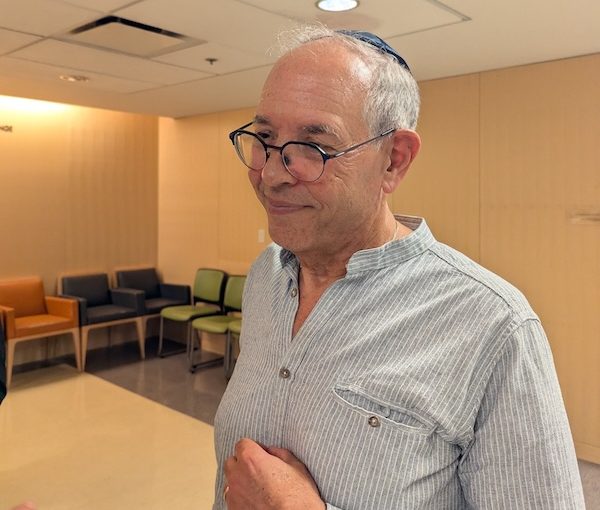
An Ontario court has handed down a 12-month prison sentence to a man who incited hate against Jews in public during a vigil last year at Nathan Phillips Square in Toronto.
“We commend the Court for making clear that there is a difference between free speech and hate speech, and for demonstrating that those who target our community, or any Canadian community, will be held accountable under our country’s laws,” said Richard Robertson, B’nai Brith Canada’s director of research and advocacy.
Razaali Bahadur, 45, was convicted this past June of inciting hatred at the April 7, 2024, event. His outbursts included blood libel, such as that Jews enjoy killing children and are, as a collective, responsible for killing Jesus.
During Bahadur’s sentencing, B’nai Brith Canada delivered an impact statement reflecting the fear and anguish many Jewish Canadians have felt as antisemitism has increased in this country.
As part of its advocacy at the federal level, B’nai Brith Canada penned a formal submission to the House of Commons Standing Committee on Finance, which is preparing an official report to inform the federal government’s fall budget.
In addition, B’nai Brith Canada is calling on the federal government to use the Budget Implementation Act to eliminate a loophole that temporarily allowed Samidoun, which was listed as a terrorist entity in this country in 2024, to continue operating as a nonprofit corporation.
“It is astonishing that, in Canada, an organization does not automatically lose its corporate status when it is declared a terrorist entity,” said Robertson.
In its fall budget submission, B’nai Brith recommended that the government:
• Make new investments to strengthen Canada’s resilience against violent extremism;
• Ensure that recipients of federal grants are in compliance with Canada’s anti-racism strategy: Changing Systems, Transforming Lives, 2024-2028;
• Develop a five-year plan to enhance Canadian youths’ understanding of contemporary antisemitism, as outlined in the IHRA working definition of antisemitism, which Canada adopted in 2019; and
• Make mandatory the existing antisemitism training approved for federal public servants.
אנו עדים לעליה משמעותית באנטישמיות ברחבי העולם אחרי השבעה באוקטובר. על כך אין מחלוקת
אך נשאלת השאלה מה הביא לעלייה הכל כך משמעותית באנטישמיות כולל פגיעה פיזית ביהודים וישראלים בעולם? למרבה הצער בישראל מעדיפים שלא להתעסק בסיבות אלה רק בתוצאות שכידוע הן קשות מאוד ולא מוצדקות בשום מקרה
קודם כל: הגל האנטישמי הנוכחי לא החל מהשבעה באוקטובר אלא לאחריו. זאת, לאחר שבעולם החלו לראות את התמונות הקשות מרצועת עזה. גם הפעולות המזויעות של החמאס ושותפיו בשבעה באוקטובר שכללו רצח, אונס ועוד מעשים בלתי אנושיים – לא יכולים לשמש כתירוץ לפגיעה והריגת אלפי ילדים, נשים ואחרים שגרו ברצועת עזה. אי אפשר לטעון שכל תושבי הרצועה הם אנשי חמאס ושאר הארגונים, למרות שקל לעשות זאת. המראות הקשים האלה מהרצועה הם שהדליקו את מדורת השנאה הנוכחית כנגד הישראלים והיהודים בעולם. בישראל לא רוצים להבין זאת וממשיכים להתעלם מהמציאות הקשה של תושבי רצועת עזה, שחלקם הגדול אף מורעבים. לא פלא שישראל הפכה כיום לאחת המדינות השנואות בעולם. כצפוי ראש הממשלה, בנימין נתניהו, הוא אחד האנשים השנואים ביותר בישראל וכן ברחבי העולם כולו
הדיבורים של שרי הממשלה בדבר החלת הריבונות הישראלית על השטחים הכבושים, תוך כדי עיבוי ההתנחליות שהן דבר ביומו, וכן הגליית כל תושבי הרצועה בהתאם למשנתו הגרועה של נשיא ארה”ב המטורף, דונלד טראמפ, רק מגבירה את השנאה כלפי הישראלים והיהודים בעולם. החלת הריבונות והגליית הפלסטינים מהרצועה עשויות גם להרחיק מדינות ערביות מהסכמי השלום עם ישראל
ולאור זאת ולמרות הכל, ממשלת נתניהו מאלצת את צה”ל להמשיך ולהילחם בעזה כאשר מחיר הדמים הוא גבוה ביותר. כשש מאות חיילים נהרגו מאז כניסת צה”ל לעזה לאחר השבעה באוקטובר
מרבית החטופים שחזרו לישראל שוחררו באמצעות משא ומתן וצה”ל הצליח לשחרר בעצמו מספר בודד של חטופים. ומהצד השני נהרגו אלפי אזרחים מקומיים ברצועת עזה כתוצאה מפעילות צה”ל
לאור זאת אני שואל בקול גדול: כמה עוד חפים מפשע משני הצדדים צריכים להיהרג בעזה כדי שממשלת הדמים של נתניהו תואיל להוציא את הצבא משם? האם המספרים הגבוהים האלה שהשאירו אלפי משפחות יתומות מתאבלות על אובדן יקיריהם – לא מספיקים לכם? האם אתם רוצים וצריכים בעוד נהרות של דם באזור
בישראל בדרך כלל לא חושבים על רק על היום ולא על מחר ובוודאי ובוודאי שזה לא מטריד את ממשלת נתניהו: לא העליה הקשה באנטישמיות ברחבי העולם, לא העמקת הפילוג בתוך ישראל ולא המשך אבדן חיים משני הצדדים. בישראל בעידן של נתניהו שכחו כנראה שהאירועים הקשים האלה ברצועת עזה ישליכו גם על עתידה של ישראל ושכנותיה
יש לזכור שרבים בקרב הטרוריסטים הפלסטינים שאחראים על פעולות טרור רצחניות בישראל לאורך השנים, שייכים למשפחות שאיבדו את יקיריהן בפעולות שונות של צה”ל. ולכן לא מן הנמנע שתמונה זו תחזור על עצמה בעתיד הנראה לעין, וחלק מהטרוריסטים העתידים לפגוע בישראלים ימנו על משפחות פלסטיניות שאיבדו את יקיריהן ברצועת עזה. אני חושש שהתוצאה של הנזק העצום בעזה תעלה לישראל במחיר כבד בעתיד. וכמו שציינתי היינו כבר בסרט הזה בעבר
ארה”ב השאירה נזק רב במקומות בהן צבאה פעל בהם אפגניסטן, עיראק ווייטנאם. אך מדינות אלו רחוקות מאוד מארה”ב, לעומת רצועת עזה הסמוכה לישראל. מוטב היה אם ממשלת נתניהו הייתה חושבת גם על המחר, ועל כך שישראל מוקפת בשכנות שצריך להמשיך לחיות עימן גם בעתיד
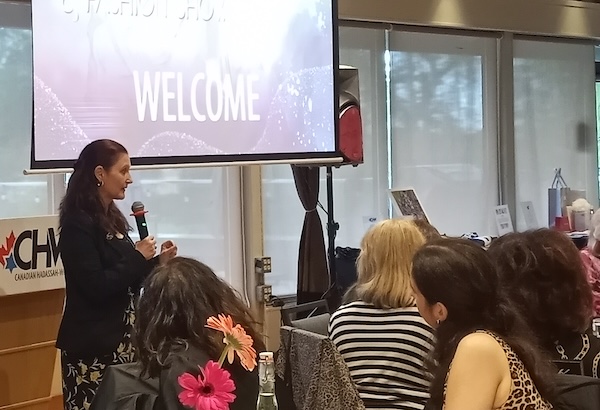
Israeli journalist Rolene Marks, chair of WIZO’s Hasbara Division, was the keynote speaker at CHW Vancouver Centre’s Opening Lunch and Fashion Show on Sept. 14. (photo by Cynthia Ramsay)
“I know that, as a community, you are feeling vulnerable and you are feeling that you have to be the mouthpiece or, as I call it, the litmus test, for however Israel is prosecuting a war so many miles, so far away, from you,” Israeli journalist and advocate Rolene Marks told those gathered at CHW Vancouver Centre’s Opening Lunch and Fashion Show on Sept. 14. “And I want to tell you that, although Israel’s not perfect – even though we are the only country in the world expected to prosecute a perfect war – you can be proud of the state of Israel.”
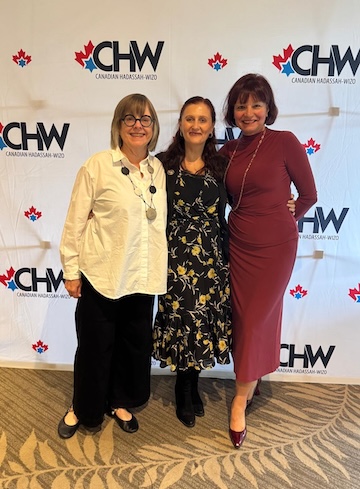
Left to right: Claudia Goldman, Rolene Marks and Toby Rubin at the Sept. 14 event. (photo from CHW)
Marks, who, among other things, chairs WIZO’s Hasbara Division, was the event’s keynote speaker. Toby Rubin, president of CHW Vancouver Centre, welcomed the 150-plus guests at the Richmond Country Club Sept. 14, acknowledging the presence of Judy Mandleman, Rochelle Levinson and Claudia Goldman – three local Jewish community members who have been presidents of national CHW. She noted that the current national president, Tova Train, would be speaking, as would Lisa Colt-Kotler, chief executive officer of CHW, and Marks.
“This luncheon today is raising funds for two very important projects that we have here locally,” said Rubin. “One is JOLT, and the other is Franny’s Fund [which supports six youth advocacy centres across Canada, including the Treehouse Vancouver Child and Youth Advocacy Centre]. JOLT is the Jewish Outreach Leadership Training program at Canadian Young Judaea, and provides camperships to seven camps across Canada, including our very own Camp Hatikvah. Today, we are honoured to have with us the president of Camp Hatikvah, Joanna Wasel, who, along with the camp director and staff has worked with CHW these past two summers with the campers.”
Last year, Wasel and staff spearheaded making keychains and bracelets for Israeli soldiers, which Colt-Kotler and Train hand-delivered on a visit last January to patients at the Gandel Rehabilitation Centre at Hadassah Hospital, said Tobin.
This year, campers in Hatikvah’s first session created their own version of the Maccabi Games, as a fundraiser for HaGal Sheli (My Wave), “a surfing program that is used to help people combat stress, anxiety and PTSD,” said Rubin. “And you can only imagine, since Oct. 7, how important that program is.”
The initiative raised more than $7,000 for HaGal Sheli, said Rubin, who also noted that the brunch’s table decorations of books, toy cars and pens would be given to Treehouse Vancouver. Many of the books were donated by Vancouver Talmud Torah, she said.
Train, who came to the event from Toronto, spoke about being from Edmonton, calling herself “a Westerner at heart.”
“I never imagined myself taking on the role of national president,” she said, “but I’ve always believed with my whole heart that, if I cannot serve Israel by wearing a uniform, then my obligation is to serve in every other way I can. That’s why CHW speaks so deeply to me. For more than a century, this organization has invested in education, health care and social services. And, today, especially after Oct. 7, those needs have never been greater – Rolene shared with me a statistic this morning that more than 10,000 IDF soldiers have been treated for mental health issues across the country since Oct. 7.”
After a video about CHW’s various impacts, Colt-Kotler presented a plaque to Bernard Pinsky, in his role as chair of the Ronald S. Roadburg Foundation.
“CHW, at our core, is philanthropy, and we were founded, as you know, in 1917, by a very dedicated, special woman named Lillian Freiman,” said Colt-Kotler, describing Freiman as “an example of philanthropy” and “of dedication to the Jewish community,” and as “the essence of what a CHW woman is … an empowered woman.”
Lisa Colt-Kotler, chief executive officer of CHW, presents a plaque to Bernard Pinsky, chair of the Ronald S. Roadburg Foundation. (photo from CHW)
She continued, “We created the Lillian Freiman Society to recognize individual donors for their generous philanthropy, starting at $100,000, and the Ronald S. Roadburg Foundation generously donated to Michal Sela Forum …to combat domestic violence, to provide innovative solutions for the protection from and prevention of intimate partner violence,” said Colt-Kotler.
Pinsky said he pushed the foundation to have women’s empowerment as one of its focuses because, from the time he was a teenager, he has been influenced by his sister, Helen Pinsky, who attended the brunch.
“She’s a real feminist,” he said. “And somebody who taught me that women’s empowerment and women’s protection is very, very important in life, and I think it’s no less important today than it was over 50 years ago, when she talked to me about it.”
When Marks took to the podium, she acknowledged the Israel Defence Forces soldiers, who are “fighting 24/7 to protect the state of Israel.”
“I also want to take a moment to acknowledge the over 900 soldiers who have fallen in defence of the state of Israel and the many who are wounded, both physically and who carry those invisible wounds,” said Marks.
“It is an absolute imperative that I mention that we still have 48 hostages languishing in the hell of Gaza,” she added. “Every second counts…. We want them home now.”
Marks specializes in media, public relations and training on Jewish- and Israel-related issues. She hosts a radio program called Modiin and Beyond and is a contributor on Johannesburg’s Chai FM. She co-founded Lay of the Land, hosts The Israel Brief on YouTube and serves as a national spokesperson for the South African Zionist Federation. She is currently doing a doctorate at Middlesex University London, in media, politics and antisemitism.
“I’m the W in the CHW [Canadian Hadassah-WIZO] – I represent World WIZO, Israel’s foremost women’s organization in terms of working for empowerment,” said Marks. “And we have seen, certainly in the last two years, the voices of Jewish women and the experience of Israeli women on the 7th of October completely erased from the feminist landscape.”
Israel is fighting a war on multiple fronts, she said, acknowledging how vulnerable the diaspora community feels because of what is put out in the media, which filters onto the streets and makes it into government policy.
“I know that every day you hear the accusations: genocide, mass starvation, bombing of civilian infrastructure, like hospitals. And I can tell you that, as somebody who is living through the war and covering the war, the situation is not what you are being painted out to answer for.”
Marks was in Gaza a few weeks before the CHW brunch.
“I saw mountains – mountains and mountains – of humanitarian aid marked United Nations, UNICEF, World Food Program, and more. Things like medical kits, baby formula, flour, oil, pasta, hygiene kits, all languishing in the sun. Now, accompanying the few of us that went in, apart from our incredible soldiers, were two journalists from Australia’s ABC [network]…. The IDF said to us, we’re here to answer questions, but, guys, go off, find your stories; there was no interference. And these two journalists stood in front of a big mountain of aid marked United Nations and, in his piece to camera, the correspondent said, ‘This is the image that Israel wants you to see with regards to humanitarian aid.’ And you could hear the collective jaw drop from the rest of us, including colleagues from the Arab media, because we know what we saw. But my point is this: the bias and the narrative-building start in the field.
“I’ve had several instances where I’ve gone into the field with the foreign media,” she said. “And, despite what they have seen, they have turned it into an agenda that they can push to put the pressure on Israel, and to put the pressure on you as a community.”
Marks stressed that “we can hold our heads up high as a community and as a people. There is nothing dirty about the Z word.”
Zionist, she said, “just means a belief in the existence of the nation-state of the Jewish people in our ancient homeland.”
In the fight against antisemitism, everyone must play a role, said Marks, whether “sharing on your social media or writing letters to the press or getting involved in your community organizations. We are a people that have survived millennia of blood libels, persecution, and attempts to erase our history and our narrative.”
This can include something like wearing a Magen David, she said: “When you show your pride and you show your strength, you stand up to the hate, you stand up to the misinformation.”
She added, “The truth always comes, but we need your help to make that happen. When people accuse us of genocide, I can tell you, as somebody who has been working on the ground, the complete opposite is true.… Our army inoculates children against polio in the Gaza Strip, and drops leaflets, and moves civilians out of harm’s way.”
She recommended people follow Israel’s COGAT (Coordinator of Government Activities in the Territories) website, where you can track the humanitarian aid going to the Gaza Strip and related news.
Referring to the murder of American activist Charlie Kirk, she said “it was symptomatic of something very, very frightening that is spreading around the world, and that is a move to disengage in discourse, a move to shut down conversation. And it is so important that we have these conversations. It is so important that we interrogate the truth and the facts.”
In the question-and-answer period, Marks suggested the lack of support from allies like Canada, France, the United Kingdom, Australia and others, is “a big campaign to deflect from problems that are domestic.”
“It’s very, very distressing for us in Israel to see our allies taking the side of Hamas, and also treating us like the naughty child of the world,” she said. “And part of that is, we believe, that many countries have forgotten or don’t know what it’s like to live under constant threat. We live under constant threat … wars within wars.”
Marks recalled what Israeli President Isaac Herzog told British Prime Minister Keir Starmer in a recent meeting: “Friends can sometimes disagree – but don’t reward terror.”
While in Vancouver, Marks also spoke at a CHW-Community Kollel event on Sept. 12.
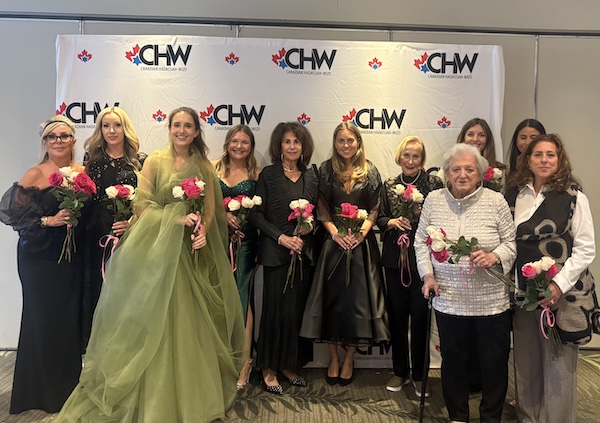
The fashion show part of CHW Vancouver Centre’s opening event featured local community members sporting clothes from Maison Labelle Boutique and After Five. (photo from CHW)
The Sept. 14 speeches and brunch were followed by an intergenerational fashion show, with models sporting clothes from MaisonLabelle Boutique and After Five. Walking down the runway were grandmothers, mothers, daughters, granddaughters and friends.
“Delible (poppy, watermelon, wheat, walnut, blackberry)” is on display at the Art Gallery of Greater Victoria until Oct. 26, as part of the Architectures of Protection exhibition. (photo by Toni Hafkenscheid, courtesy Susan Hobbs Gallery)
Beth Stuart’s “Delible (poppy, watermelon, wheat, walnut, blackberry)” is part of the Architectures of Protection exhibition, which opened at the Art Gallery of Greater Victoria (AGGV) on May 24 and ends Oct. 26.
In each of the five “Delible” pieces, a black ledge has replicas of food items on top of it and a length of black mesh suspended below. Stuart used plaster, iron oxide pigment, dyed silk, steel and Sumi ink to create the works. The replicas are casts of halved walnuts, pizza crusts, poppy hulls, blackberries and watermelon seeds. According to the artist, each original mold was made from the source itself, except for the watermelon seeds, which were cast from clay originals.
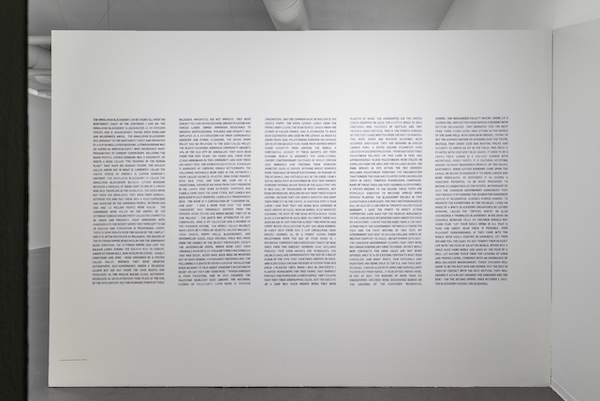
On a wall leading to the five pieces, there is a several-square-foot textual display featuring more than 1,600 words, written entirely in capital letters, with the thoughts seeming to randomly jump from one topic to another; there are no paragraphs, but the words cover five columns. The text, an integral element of the overall artwork, was hand-stenciled by Stuart and relates to the physical pieces.
Beth Stuart’s “Delible (poppy, watermelon, wheat, walnut, blackberry)” installation comprises a wall of text and five structures. (photo by Mike Andrew McLean, courtesy Art Gallery of Greater Victoria)
The text begins with mention of the Himalayan blackberry, an invasive species in British Columbia, and then moves to Luther Burbank, an American botanist, horticulturist and eugenicist, before discussing the Armenian Genocide (1915-16) and Canada’s residential schools.
In the middle portion of the textual display, Stuart describes what she sees as the plight of Gazans and the attitudes of certain Israelis.
“AS I WRITE, THERE HAS BEEN NO AID OF ANY KIND FOR ALMOST TWO MONTHS AND EVERY WATER DESALINATION PLANT HAS BEEN BOMBED,” Stuart writes. “IN EARLY 2024 THERE WAS A CLIP CIRCULATING FROM ISRAELI CHANNEL 14, OF A PUNDIT SAYING EVERY PALESTINIAN OVER THE AGE OF FOUR YEARS IS A POTENTIAL TERRORIST AND A NECESSARY TARGET OF WAR. SINCE THEN TWO KNESSET MEMBERS HAVE DECLARED PUBLICLY THAT EVEN INFANTS ARE TERRORISTS. THE DELIBLES BAGS ARE APPROXIMATELY THE SIZE OF A BAG OF FLOUR OF THE TYPE THAT SOMETIMES ARRIVES IN GAZA, AND ALSO COULD CONTAIN THE BODY OF A FOUR-YEAR-OLD CHILD.”
Stuart then talks about tree-planting, which she apparently did in university, then writes: “THIS IS THE FOURTH VERSION OF THIS TEXT I HAVE WRITTEN OVER THE PAST 20 MONTHS. THIS WEEK THERE ARE MASSIVE WILDFIRES NEAR OCCUPIED JERUSALEM. THEY ARE BURNING IN AYALON CANADA PARK, A SEVEN SQUARE KILOMETER PARK LOCATED IN OCCUPIED PALESTINE. THERE HAD BEEN THREE PALESTINIAN VILLAGES ON THIS LAND IN 1948. AND APPROXIMATELY 10,000 PALESTINIANS WERE KILLED OR EXPELLED FROM THE AREA AND THE VILLAGES RAZED.”
She talks more about “THE ORGANIZATION THAT FUNDED THE PARK” without naming it and then raises the issue of the Canadian government’s involvement with Israel and, specifically, its military.
“BETWEEN OCTOBER 7TH 2023 AND THE FIRST WRITING OF THIS TEXT, MY GOVERNMENT HAD SENT 30 MILLION DOLLARS WORTH OF MILITARY SUPPORT TO ISRAEL,” she writes. “ON SEPTEMBER 10TH 2024 THE CANADIAN GOVERNMENT CLAIMED THAT THEY WERE NO LONGER SENDING ANY ARMS TO ISRAEL. IN FACT, WHILE CONTRACTS FOR ARMS SALES ARE NOT BEING OFFERED, ONLY 12% OF EXISTING CONTRACTS HAVE BEEN CANCELLED, AND MANY PARTS, RAW MATERIALS AND MUNITIONS ARE BEING SOLD TO THE U.S. AND THEN SENT TO ISRAEL. CANADA ALSO BUYS ARMS AND SURVEILLANCE TECHNOLOGY FROM ISRAEL.”
The text moves into Stuart’s comments on residential schools before she concludes with the sentence: “FOR THE SECOND SPRING SINCE OCTOBER 7, 2023 THE BLACKBERRY HEDGES ARE BLOOMING.”
To at least one member of the Victoria Jewish community, Stuart’s work is an example of “artfully coded antisemitism – all the more reprehensible for its coyness.”
“In itself, ‘Delibles’ are very beautiful, evocative works,” Maurice Yacowar, a professor emeritus (English and film studies) of the University of Calgary, wrote in a letter to the art gallery that was also sent to the Independent.
“What renders the work problematic is the full-wall text – in spectral grey – that accompanies the sculptures,” Yacowar said.
He said,“As a whole, the work contrasts the self-renewal of nature’s produce with humans’ murderousness. Unfortunately, the art is undermined by the artist’s ignorance and prejudice in its Palestinian references.”
He said Stuart misrepresents Israel and its media by choosing to reference a news outlet “that even in Israel is considered extremist.” And, he argues,“She omits the Oct. 7 context. A Hamas spokesman flatly stated, ‘There are no civilians in Israel’ – ie., only targets in war.”
Stuart’s exhibit does not include the word “Hamas.”
In a statement to the Independent, the AGGV said:
“The gallery is aware that some members of the community disagree with the subject matter of a current work of art on display. We are always interested to hear how the public, and our members, respond to our exhibitions. We also embrace learning, new ideas and critical perspectives.
“At the AGGV, we respect the artists and curators who work with us to create exceptional exhibitions. As an arts institution, our role is to amplify artists’ voices and create space for conversation and learning. We encourage an exchange of ideas that results in meaningful dialogue and understanding through art.”
The Architectures of Protection exhibition, in the synopsis posted by the AGGV, is supposed to reflect “on ideas and modes of protection and refuge – with regards to oneself, to community, knowledge, culture, identity and land. What are these spaces and practices? What is protection for some and not for others?
Together, in the wake of the COVID-19 pandemic and in the current global social and political climate, the artworks in Architectures of Protection direct critical attention towards systems and structures that shape and impact everyday and sacred environments and encounters, alongside individual and collective relationships with the land.”
The exhibit also features the artwork of Dana Claxton, Jessica Karuhanga, Emilio Rojas and France Trépanier.
Sam Margolishas written for the Globe and Mail, the National Post, UPI and MSNBC.
Dr. Ted Rosenberg speaks with an audience member at the Medical Outcomes of Emerging Antisemitism event held at Beth Israel Sept. 4. (photo by Pat Johnson)
Dr. Ted Rosenberg never imagined he’d become an activist but, after the anti-Zionism and antisemitism he witnessed at the University of British Columbia faculty of medicine after Oct. 7, 2023, he couldn’t keep silent.
The 30-year practitioner, who resides in Victoria, addressed a group at Congregation Beth Israel on Sept. 4.
Rosenberg resigned from his post as clinical assistant professor at UBC’s faculty of medicine in January 2024, after repeated attempts to get the school to address antisemitism were essentially ignored. Since Oct. 7, he has written blogs, testified about the antisemitism before the House of Commons and, most recently, self-published the book Ayekha, Where Are You?
After Oct. 7, Rosenberg said he noticed that Jewish doctors weren’t regarded the same way they had been. Before that day, he’d experienced the odd antisemitic comment from patients. After it, he knew that a torrent of hatred towards Jews was coming, and that he needed the language to deal with it.
His activism began after 225 UBC medical students signed the petition “A Call for Action on Gaza,” which called for a ceasefire, condemned Israel as “a settler-colonial state,”
accused Israel of “collective punishment through indiscriminate bombing of civilians” and claimed that “Palestinian people have been continually abused, traumatized and killed by the settler state of Israel and its Western allies for over 75 years.”
In response, Rosenberg wrote to UBC president Benoit-Antoine Bacon, dean of the faculty of medicine Dermot Kelleher and other university officials.
“I assumed they didn’t understand these complex issues,” he said. “I explained to them that antisemitism leads to dehumanization, and I suggested we work together to meet with the students, talk about the petition and about antisemitism.”
Rosenberg described the dean’s response as a “boilerplate letter.”
“He said I could file a complaint through the university’s DEI [diversity, equity and inclusion] program – which has nothing about Jews or antisemitism,” Rosenberg noted.
Demoralization set in as further incidents in the faculty failed to garner any action from the university.
Some 284 physicians wrote to the dean, describing the dangerous environment at UBC for Jewish students, faculty and patients. They received no response. Then, a professor Rosenberg worked with posted a picture of Jesus in the rubble of Gaza on social media. Rosenberg made the decision to resign.
“I’d been begging these leaders to stand up and speak about this, to model respectful dialogue, and no one was saying anything,” he said. “I realized the faculty of medicine had adopted hardwired ideological positions, and I felt I had to opt out and make a public statement about it.”
After his resignation, Rosenberg received a call from a retired dean, who admitted, in tears, how badly he’d felt about his colleague’s treatment. “He said the senior administration at UBC had silenced him and others, tying their hands. He spoke of how people were intimidated to speak out even when they shared my views, because they feared they’d be marginalized. He was looking for absolution.”
In May 2025, Rosenberg received a call from Member of Parliament Anthony Housefather, requesting he testify in Parliament the following week about the antisemitism he’d experienced. Rosenberg felt an enormous responsibility to get his testimony right. “In my work as a physician, I look after old people. I’m not a genocidal maniac,” he said. “But that’s what my students are thinking about me.”
While antisemitism has not subsided, Rosenberg is optimistic that truth and sanity will ultimately prevail. In his work with Doctors Against Racism and Antisemitism, he’s been writing letters to different medical departments, but, for the most part, those letters have been dismissed.
“I think there’s a systemic bias in the Western world against Israel and Zionism and a lingering bias against Judaism,” he said. “The title of my book, Ayekha, is a question to the world: where the hell are you? People need to wake up and look at the truth.”
Rosenberg noted that one requirement of entrance into medical school at UBC right now is a demonstration of your social justice activism.
“The epitome of evil in the social justice narrative is settler-colonialism, and the worst settler-colonialism is Zionism,” he noted of the school’s view.
“This means Jews are not going to get into medical school. I’ve had Jewish medical students email me to say they changed their names to non-Jewish names, just to get in. This is real, and BDS [boycott, divestment and sanctions] is happening. We need to speak out against it and be aware that DEI does not include us as Jews.”
Lauren Kramer, an award-winning writer and editor, lives in Richmond.
כאשר גרתי בישראל צפיתי שהמדינה תלך למקומות לא נכונים והיא תעמוד מול סכנות הולכות וגוברות מכל הכיוונים. אחד מחברי הטובים טען אז שאני רואה שחורות, מגזים בפסימיות שלי ונבואותי הרעות לא יתגשמו. לאורך השנים האחרונות החבר שינה את דעתו לגבי נבואותי מקצה לקצה. ועכשיו הוא טוען שהמציאות הקשה בה ישראל נמצאת, היא הרבה יותר קשה ממה שחזיתי ולכן נבואותי היו אופטימיות מידי
אני יכול להבין את אלה שרוצים להיות אופטימיים, לראות את האור, לשמוח ולעסוק בדברים חיוביים. אך אסור לשכוח שמי שמתעלם מהמציאות הקשה ביותר בה ישראל נמצאת כיום, מאפשר לראש הממשלה המושחת, בנימין נתניהו, להמשיך בדרכו הגרועה תוך חיסול הדמוקרטיה. ההיסטוריה מלמדת אותנו שמנהיגים רעים הולכים ותופסים תאוצה כאשר אין כח גדול שעומד מולם ועוצר אותם. אזרחים שמעדיפים לעסוק בחיי היום יום ולהתעלם ממה שקורה בישראל, יתעוררו יום אחד ויראו שהדמוקרטיה נמוגה לחלוטין, שזכויותיהם נעלמו ואין להם יותר זכות בחירה. ישראל בשליטת נתניהו צועדת לכיוון המסוכן הזה במלוא העוצמה. כי כידוע נתניהו חושב רק על נתניהו ולא אכפת לו מאחרים, בהם המשפחות השכולות, משפחות החטופים, תושבי ישובי הספר ואחרים
כל עוד לא יתאגדו כל כוחות האופוזיציה בניסיון רציני להפיל את ממשלת נתניהו המסוכנת, כל עוד לא יצאו לרחובות מיליוני אזרחים להפגין נגדה ונגד המדיניות שלה, הרכבת שצועדת אל התהום האסוני הזה לא תיעצר. על תושבי ישראל לנקוט בכל הצעדים האפשריים לעצור את נתניהו וממשלתו הרעה ולמנות תחתם ממשלה שפוייה שתדאג לישראל ולא לעצמה. המלחמה בעזה מיותרת, עולה במחיר רב של חיילים שנופלים, החטופים לא משוחררים וגם פלסטינים רבים נהרגים ללא סיבה מוצדקת. לאור זאת, ישראל הפכה כיום להיות אחת המדינות המנודות והשנואות בעולם. ולא פלא שהאנטישימיות מרימה ראש, וישראלים ויהודים נפגעים כל הזמן פיזית מאלה ששונאים אותם. האנטישמיות צפויה להחמיר כל עוד צה”ל ממשיך לפעול בעזה ולפגוע ולהרוג אזרחים מקומיים שם
את הישראלים המתנגדים לנתניהו אפשר לחלק לשלוש קבוצות: הקבוצה הראשונה כוללת את אלה שיעשו כל מאמץ להילחם בו, להביא לפיטוריו ובעצם פיטורי כל הממשלה הנוראית הזו. הקבוצה השנייה כוללת את אלה שמבינים שישראל תמשיך להידרדר לתהומות עמוקים עוד יותר. ועל כן מבחינתם הפתרון היחידי האפשרי הוא לעזוב את המדינה. הקבוצה השלישית כוללת את החלשים והתבוסתנים המציינים כי אין מה לעשות אלה לקבל את גזרות נתניהו כמו שהן, ולקוות לטוב
בתור אחד שנולד וגדל בישראל עצוב לי לראות את תהליך הנסיגה הגדולה של המדינה וההידרדרות הבלתי נתפסת הזו. יש שטוענים שכל הרע החל מהשבעה באוקטובר, אך אני חושב שזה התחיל הרבה שנים קודם לכן. בחודשים האחרונים, חברו הטוב של נתניהו במשך שנים, הסופר איל מגד, התנתק ממנו והחל לבקר אותו בחריפות. מגד הוא דוגמא טובה לחברים ומעריצים מושבעים של נתניהו ומשפחתו, שיום אחד התעוררו והבינו שהוא אסון למדינה. אני כבר אמרתי זאת בסוף שנות השמונים. נתניהו תמיד היה נתניהו: נוכל, שקרן פתולוגי, אינטרסנט ומגלומן. טועה מגד ה מציין כי הוא הבחין בתכונותיו השליליות של נתניהו רק אחרי השבעה באוקטובר. מגד היה עד אז פשוט עיוור שהעריץ את נתניהו
אם לא יקומו הישראלים ברובם ויהפכו לאקטיביים כדי להעיף את שלטונו של נתניהו, ישראל תלך לאבדון. אם לא תקום ממשלה חדשה ושפויה בקרוב זה יהיה אסון. הנזק שנתניהו גורם כל יום הוא כבד מנשוא.
It was mayhem outside the BC Provincial Court, near Main and Hastings, Aug. 20, as anti-Israel protesters screamed, chanted and shouted into megaphones to drown out the words of Dallas Brodie, member of the BC Legislature for Vancouver-Quilchena and leader of the upstart OneBC party.
Brodie attempted a media conference outside the courthouse before filing a “private prosecution” against Charlotte Kates, the Vancouver woman who is international coordinator for Samidoun, a group the government of Canada has designated a terrorist entity.
Kates was arrested by Vancouver police in April 2024 under suspicion of public incitement of hatred and wilful promotion of hatred, a criminal offence in Canada, after a public rally where she led a crowd in a chant of “Long live Oct. 7,” called the Hamas attack “heroic and brave” and described designated terrorists as “heroes.”
She was released on condition that she refrain from participating in any protest activities. Those conditions expired Oct. 8, 2024, when the BC Prosecution Service and the assistant deputy attorney general had not approved the charges recommended by police. It was a week later that her organization, Samidoun, was officially designated as a terrorist entity by the government of Canada.
Brodie’s prosecution – an obscure legal move similar to a citizen’s arrest – is unlikely to have a direct impact on the case, though it might refocus the spotlight on the failure of authorities to follow through on a criminal prosecution.
In a statement, the Centre for Israel and Jewish Affairs noted that a report to Crown counsel has been sitting on the desks of relevant officials for more than a year.
“Every day they do not press charges,” said CIJA’s Pacific region vice-president Nico Slobinsky in a statement, “she acts with increasing impunity, including by flying to Iran to receive a ‘human rights’ award from its government and attending the funeral of Hezbollah leader Hassan Nasrallah in Lebanon. Our legal system must send a clear message: antisemitism and hate have no place in British Columbia or anywhere else in Canada. Charges must be pressed without delay.”
Ezra Shanken, chief executive officer of the Jewish Federation of Greater Vancouver, observed that more than two-thirds of the BC Jewish community have reported experiencing an antisemitic hate incident.
“Individuals and organizations like Charlotte Kates and Samidoun have exacerbated this dramatic wave of antisemitism, which is why our community has been calling for accountability since her despicable remarks on April 26, 2024, on the steps of the Vancouver Art Gallery,” Shanken said. “Justice delayed is justice denied.”
We wrote in this space recently about an incident at the Jewish Community Centre of Greater Vancouver that clearly violated existing laws banning political protests at locations where official school functions are taking place. Police did not recommend charges in that instance.
The inner workings of the Crown prosecutors’ office and other components of the judicial process are not entirely transparent, the sensitivity of the issues they address necessitating a degree of privacy. However, some observers have suggested that there is a systemic problem up the ladder of the process. Police often do not pursue instances of apparent offences because they have seen prosecutors decline to charge. Prosecutors are said to hesitate to lay charges because they have seen courts throw out cases they presented.
There has been a great deal of hand-wringing about a massive spike in antisemitism, including violent incidents. There are many remediative and preventive opportunities that do not involve criminal charges – public awareness campaigns and restorative justice and diversion programs among them. But, at some point, the laws on the books to prevent the spreading of hatred and incitement to violence must be tested. If they do not stand up in court, then we as a society need a dialogue about what we will tolerate.
We may find that we need new laws that courts will uphold, so that Crown prosecutors will be empowered to lay charges, so that police will know that enforcement is not a waste of energy, and so that Canadians will recognize what is acceptable and what is not in our country.
Back to school is a time of excitement and anxiety for parents and kids. It is a time of new beginnings. For Jewish people, it generally coincides, as it roughly does this year, with the new year and the High Holidays. This confluence creates a somewhat chaotic frenzy in many households.
Jewish tradition is deeply tied to cycles of time, weaving renewal and return into every layer of life. The turning of the calendar is reflected not only in Shabbat, the progression of holy days and the annual cycle of Torah reading, but also in agricultural rhythms, the monthly sanctification of the new moon and daily prayers mapping sunrise, midday and nightfall.
This year, as we move from the beginning of the school year through the procession of holidays, we approach the anniversary of Oct. 7, and the terrible realization that the surviving hostages in Gaza have been held for nearly two years – as well as the continued reality facing Israelis, Palestinians, Jews worldwide and everyone who cares about human life.
As the new school year begins, Jewish families have additional anxieties, knowing as we do that the public school system – not least some teachers’ unions in Canada, including the one in British Columbia – in many cases have not only failed to address the unique challenges faced by Jewish students but exacerbated existing problems while creating new ones. Almost everyone has heard anecdotally of insults and distress faced by Jewish students in public schools, and the situation on post-secondary campuses locally and internationally has been in the news for all the wrong reasons for most of the past two years.
Additionally, this school year marks the first in which British Columbia’s education system officially mandates the teaching of the Holocaust. Most students did learn about the Holocaust before, but it had been left up to the discretion of individual teachers. Now, the Social Studies 10 curriculum requires that the topic be included. (See jewishindependent.ca/teaching-about-shoah.) This is something that the Jewish community and others have long promoted.
It does, however, create new openings for challenges. Given the allegations of genocide in Gaza, and overheated rhetoric against Israel in the public discourse – often invoking the memory of the Holocaust, the mantra “never again” and the appropriation of Jewish historical experiences for political advantage – there is a real possibility that individual teachers in the comparative privacy of their classrooms will attempt to inculcate anti-Israel narratives in the guise of genocide education. We expect there will be reports of inappropriate comparisons made between the Jewish experience in the Shoah and current tragedies in the Middle East – and we know that most such incidents will never be reported.
It should never have come to this with regard to antisemitism, but powerful new generations of Jewish leaders have been forged on university campuses and, yes, in high schools and even elementary schools, rising to occasions they should never have had to meet, but doing so in ways that often have surprised even themselves. As tough as the past two years have been, all evidence so far points to young Jews continuing to rise to every challenge.
When all is said and done, we hope that the next generation of our community grows up stronger, smarter and more determined, individually and collectively. To students and parents: May you go from strength to strength this year and always.
Why do international media outlets seem intent on repeating the Hamas narrative? According to British military expert Maj. (ret.) Andrew Fox, there are a few key factors – including antisemitism.
“The first [factor] is a human desire not to admit when they are wrong and we don’t understand how powerful this is because it means that they have to admit that they have been wrong for the last 18 months,” he told JNS during a visit to Israel earlier this year.
Fox continued: “The second reason is the power of the narrative. Once you have achieved the dominance of your narrative, it is very, very difficult to present another narrative. The third one is antisemitism. While everything is not antisemitism – and I am really wary of saying that it is – certainly there are biases.”
Fox was a panelist at the International Conference on Combating Antisemitism hosted by the Ministry of Diaspora Affairs in Jerusalem on March 27. As a research fellow at the Henry Jackson Society who served as a top officer in the British army from 2005 to 2021, he is an authoritative voice supporting Israel, explaining how the Israel Defence Forces operates, and fighting disinformation about the Israeli military and its terrorist enemies.
In December 2024, Fox released a report under the auspices of the Henry Jackson Society titled “Questionable Counting: Analyzing the Death Toll from the Hamas-Run Ministry of Health in Gaza.” The report presented clear indications that Hamas was padding casualty numbers. Despite this, he said, many in the media repeated, without question, whatever Hamas put out.
Fox is not the only publisher of a report that backs Israeli data with empirical evidence. On March 18, he pointed out, British historian Lord Andrew Roberts presented the All-Party Parliamentary Group report on the atrocities of Oct. 7, 2023. The 318-page report lays bare the depravity of the Hamas attack in detail.
“The immediate reaction online is that it’s biased,” Fox said. “Lord Roberts is not Israeli, Israel is not his area of focus and everything is meticulously referenced. Yet, it has been utterly dismissed out of hand, and that is absolutely astonishing.”
He added: “Of course, there will be a strong counter campaign with Qatari money. I had the same thing with my report. The final aspect is that the Palestinian campaign has 10 times the supporters that Israel does. It’s a numbers game, ultimately.”
Is antisemitism in the form of anti-Zionism, or what some call “Israelophobia,” ingrained in some media institutions?
According to Fox, the answer is yes. “It is institutional with the BBC. Twice this year [as of March] they have had to put out major apologies breaching their own impartiality guidelines – when they platform Hamas royalty in a documentary about kids in Gaza or when they email the Israeli embassy asking for a speaker who is specifically anti-Netanyahu,” he said.
“There are three parts to an apology: ‘I am sorry, it’s my fault and I will do better.’ They haven’t really done that third part at all. It is endemic and institutionalized.”
While the IDF has faced criticism from journalists who are not being allowed into Gaza, with some saying this strategy has impaired Israel’s ability to present the facts on the ground, Fox backed the Israeli military’s position.
“If you give a journalist free rein in Gaza, they will either do what Hamas tells them or they will be killed – and that will be blamed on the IDF anyway. From a military perspective, you don’t want anyone filming an airstrike because they don’t have all the supporting data to report fairly without knowing what went into the targeting process.”
To illustrate his point, Fox said he had flown to Israel with Sir John McColl, a former British army four-star general who had been “very anti-IDF.”
“All week he was pushing the IDF like a hawk – and then came home and wrote an op-ed saying he was convinced Israel is doing everything it can to protect civilians, and that’s what the IDF should be showing journalists,” Fox said.
He added: “You can’t send journalists in with fighting troops; that is too dangerous. Fighting in Gaza is a 360-degree war. You have high-rise buildings, ground level, underground. As a soldier, I would probably refuse to take a journalist into that battle.”
Fox expressed concern that we are in a very dangerous information environment when many people turn to social media for information because of the 24-hour news cycle, and very often what is posted is not factual and has not been verified. In the rush to make the news cycle, journalists are also not fact-checking properly, he said.
“The fight against antisemitism is the most important thing to me,” he said. “The stories I hear from my friends are just shocking.”
When asked what communities around the world could be doing better, he said: “We are not going to stop 2,000 years of antisemitism; it is not something we can defeat. It is not easy, but I would work to bring the silent majority on to our side.”
He added: “From a British perspective, we need to make it about a community that is part of the country. The ‘Palestine’ marches are horrendous and very un-British. It’s about how we frame it.”
Rolene Marksis a journalist and commentator specializing in Israeli advocacy, global Jewish affairs and Middle Eastern politics for JNS.org. She is a member of Media Team Israel and Truth be Told, both dedicated to promoting accurate reporting on Israel. Additionally, she serves as the chair of WIZO’s hasbara division, where she leads efforts in public diplomacy and advocacy. This article was originally published on jns.org.
* * *
Marks’s two stops here
Rolene Marks (photo from CHW)
Israeli journalist, advocate, and chair of WIZO’s hasbara (communications) division Rolene Marks is touring Canada this September with Just the Facts, about the current situation in Israel, the realities of the war between Israel and Hamas (and other hostile groups), and the resilience of the Israeli people. Marks stops in Vancouver on Sept. 12 for an event hosted by CHW and the Ohel Ya’akov Community Kollel, and also helps open CHW Vancouver Centre’s new year, on Sept. 14.
At the Kollel young professionals event, Marks will talk about the United Nations, Gaza and Israel-related topics, and the Canadian government’s agenda, as it affects Israel and the Jewish diaspora. She will dispel lies, misinformation and blood libels, sharing links for where people can find accurate information and sources, stressing the need for Jews in Canada to share accurate information on social media. As well, she will discuss WIZO’s work in Israel and the importance of belonging to CHW (Canadian Hadassah-WIZO).
To join the CHW-Kollel Young Adults Shabbat experience on Sept. 12, 7:30 p.m., go to chw.ca/just-the-facts. Registration is by donation.
The CHW Vancouver Centre’s opening luncheon and fashion show on Sept. 14, 10:30 a.m., will feature fashions from After Five and Maison Labelle,lunch and door prizes, as well as an exclusive pre-event meet-and-greet for sponsors with Marks, CHW national president Tova Train and CHW chief executive officer Lisa Colt-Kotler. Tickets ($96) are available at chw.ca/region/western-region.
Left to right: Emily Bonnell-Marcus (Friends of Simon Wiesenthal Centre), Zelda Dean (Emanu-El), Johanna Herman (FSWC), April Nowell (Jewish Federation of Victoria and Vancouver Island), Frances Grunberg (JFVVI) and Jaime Stein (FSWC, Western Canada). (photo fromFSWC)
On Aug. 12, more than 80 people from diverse faith backgrounds gathered at Victoria’s Congregation Emanu-El for Friends of Simon Wiesenthal Centre’s flagship antisemitism education workshop – Antisemitism: Then and Now.
Geared for professionals, community members and volunteers who are interested in combating hatred, the workshop is presented by Jewish Federation of Victoria and Vancouver Island in partnership with FSWC. It is designed to build historical understanding of antisemitism and the Holocaust, examine how antisemitism shows up today, offer practical strategies to recognize and respond to antisemitic rhetoric and behaviour, and strengthen an organization’s capacity for allyship and inclusivity.
While in British Columbia, FSWC advocacy team members also attended the Canadian Association of Chiefs of Police Annual Conference. During the event, they strengthened their partnership with the Canadian Police Knowledge Network to advance the development of a national antisemitism training module, which will be made available to police services across the country. They also established new connections to support their law enforcement training initiatives, and promoted the upcoming Building a Case Against Hate Conference in Vancouver, scheduled for February.