Krieger takes on new roles

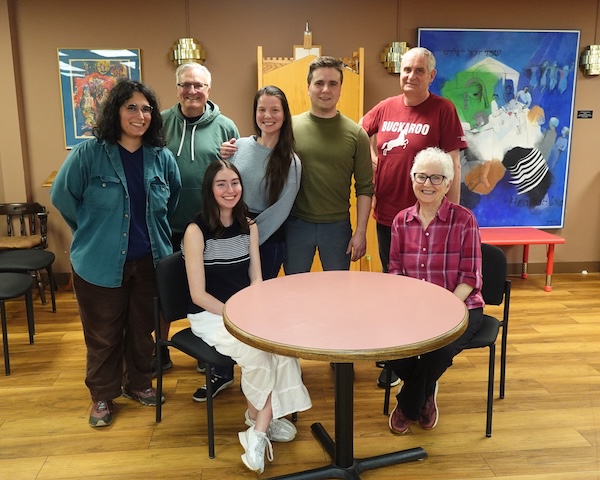
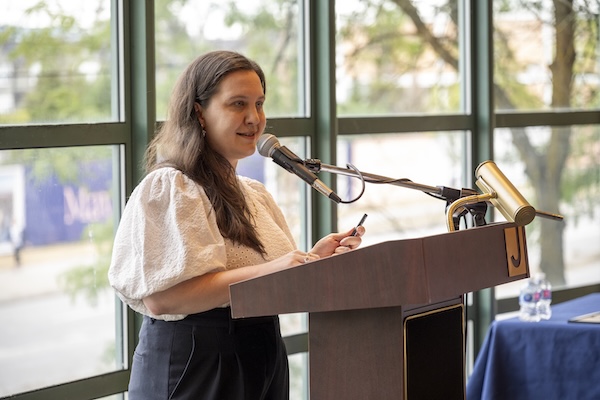
Nina Krieger, centre, member of the BC Legislative Assembly for Victoria-Swan Lake, connects with community members. Krieger is the new public safety minister and solicitor general. (photo from Nina Krieger)

After a cabinet shuffle last week, Nina Krieger, member of the legislative assembly for Victoria-Swan Lake, is the new public safety minister and solicitor general, replacing Garry Begg, who became parliamentary secretary for Surrey infrastructure. 

Saying she is “humbled and excited” to take on the position, Krieger told the Independent: “Our province faces complex challenges, and I am committed to working with my colleagues, local governments, Indigenous leadership, police services, business and community organizations to build safe, healthy and resilient communities for everyone.

“Public safety is one of the central issues of our time,” she said, “and British Columbians are looking to us to strengthen public safety through effective support of our law enforcement services and working across government to address the root causes of public disorder. 

“I look forward to working with partners around the province to take meaningful action to keep BC a safe place to live, work and enjoy this beautiful province we call home,” she added.

Before being elected to the Legislative Assembly of British Columbia last fall, Krieger was the executive director of the Vancouver Holocaust Education Centre (VHEC). She takes over her new cabinet position after having served as parliamentary secretary for arts and film. Prior to this shift in roles, she spoke with the Independent about her time in office since being sworn in.

“The role of MLA is a unique opportunity and responsibility. I don’t think anything can quite prepare you for the busy, ever-changing schedule, and the range of issues and people that you encounter on any given day,” Krieger said.

“The learning curve is steep but exciting and I’m grateful to be learning alongside other new MLAs, from veteran members of caucus and from the incredible teams behind the scenes at the BC legislature.”

Krieger describes the move from the VHEC as “bittersweet,” saying it was difficult to leave an organization and a community for which she cares deeply. Nonetheless, she said the skills, experience and values she honed during her work at VHEC have proved meaningful and timely in her current role.

“I keep in close touch with former colleagues and the Holocaust survivor community and was honoured to return to the VHEC this spring to emcee a Yom Hashoah commemorative program featuring Premier David Eby, presented in partnership with the Province of BC and the Centre for Israel and Jewish Affairs,” she said.

Her introduction to the legislative side of the MLA job came during the recent spring session that concluded in May. She sat in the house and committee rooms, sometimes late into the night, delivering speeches about her community and constituents’ achievements and needs, as well as debating and voting on proposed legislation. 

“I was proud to deliver several statements in the house, marking days of significance for BC’s Jewish community,” said Krieger.

“This spring, government passed legislation to protect consumers, respond to the threat of tariffs and implement countermeasures, deliver more renewable energy projects and major infrastructure projects, among other work,” she said.

During the summer months, MLAs return to their communities. 

“I visit and meet with local organizations to hear about the work they do and how we can spotlight and support them,” she said. “I also have the chance to attend local events as an MLA over the summer, from graduation ceremonies to festivals, markets and sports games. With so many amazing people putting on great events around town here over the summer, it adds to the fun of this role.”

As the parliamentary secretary for arts and film, Krieger worked closely with the minister of tourism, arts, culture and sport to advance the 

development and growth of British Columbia’s film, television and animation sectors, as well as supporting and growing the arts and culture sectors in the province. One of the perks of that job was attending film-related events and meetings, like local film festivals.

“It has been amazing to see the talent and work coming out of BC, and rewarding to stand strong in support of workers in the face of tariff threats,” she said.

Krieger acknowledges that it is a difficult time for Jews in the province and throughout Canada, with challenges in finding their political “homes.” She is grateful that there were Jewish voters whose values aligned with those of the BC NDP.

“I know that there is work to do to ensure that Jewish people in BC feel safe and supported, and that nobody is targeted because of who they are,” Krieger said. “Combatting antisemitism – which is illiberal, toxic to democracy and dangerous – requires the work of all levels of government and civil society.”

She continues to be in active contact with Jewish constituents and community leaders in Victoria, which, she says, is home to a diverse Jewish community. Constituents from a range of backgrounds have contacted her and expressed deep concern about the toll of the ongoing Israel-Hamas war on the civilian populations of the region. 

“While foreign policy is beyond my scope as a provincial representative, it is vital to discuss ways to ensure that BC is a safe and inclusive place for all people,” Krieger said. “From my work as a Holocaust educator, I know that it is vital to counter misinformation, disinformation and conspiracy theories, which can fan the flames of xenophobia, antisemitism and hate, and keep communities divided. In my work as MLA, I hope to counter this by bringing people together, modeling respectful dialogue and upholding the values of truth and trust in democratic institutions.”

Krieger explained that her experience as an anti-racism educator showed her the importance of listening and continually learning with openness and compassion. It is relevant to her current work, she believes, because she is entrusted with the stories and experiences of many constituents, which are often shared to build a more just and inclusive society.

“The province helps fund anti-racism and anti-hate work done around BC,” said Krieger, “and I have the opportunity to talk to organizers that are the recipients of grant funding and hear about their work, share experiences and learn how we can continue to collaborate to do this vital work effectively.”

Sam Margolis has written for the Globe and Mail, the National Post, UPI and MSNBC.
Marazzi at VHEC helm

Hannah Marazzi is the new executive director of the Vancouver Holocaust Education Centre. (photo by Alina Ilyasova)

The Vancouver Holocaust Education Centre, which is marking three decades of educating about and commemorating the Shoah, has a new executive director: Hannah Marazzi. She is the first person of non-Jewish background to hold the role.

Barry Dunner was the first executive director of the Vancouver Holocaust Centre Society for Education and Remembrance, the not-for-profit organization that operates the VHEC. Ronnie Tessler then helmed the centre, followed by the late Dr. Roberta Kremer, then Frieda Miller. Nina Krieger served more than a decade as head of the institution before successfully running for the British Columbia legislature last fall. (See story, jewishindependent.ca/krieger-takes-on-new-roles.)

Marazzi had been the VHEC’s director of communications and special projects for about 10 months before being appointed interim executive director. Her permanent appointment was announced on June 17, at the annual general meeting of the society.

The organization’s president, Al Szajman, credited Marazzi’s background as a good fit.

Formally announcing Marazzi’s appointment, Szajman noted her role as “Irwin Cotler’s right-hand person” and her existing relationships with partner groups like the International Holocaust Remembrance Alliance, and with various foundations, government leaders and influencers locally, nationally and internationally.

“In short, we’ve come to recognize Hannah as a leader, someone with passion, vision and maturity. Her Italian-Mennonite background reminds everyone that you don’t have to be Jewish to stand against antisemitism and advance the lessons that everyone should have learned about the Shoah,” he said.

Marazzi has an undergraduate degree in history, political science and government from Trinity Western University and a master’s degree in public policy from Cambridge, where she served as an assistant editor of the Cambridge Review of International Affairs. 

Early in her career, she was working on Parliament Hill when Cotler reached out to her boss, then-MP for West Vancouver-Sunshine Coast-Sea to Sky Country John Weston, to become involved in the case of a woman sentenced to death in Iran. Through the Cotler connection, Marazzi went on to help organize the Nuremberg Legal Symposium. The gathering, which was co-created by March of the Living and the Raoul Wallenberg Centre for Human Rights, in 2016, educated legal professionals and the next generation about the lessons of Nuremberg and how to apply them today, especially as the legal sector addresses hate, denial and incitement. Marazzi became administrative coordinator for the event.

She went on to work for the Cardus Institute, a Christian think tank, and then for United Nations Volunteers, in Amman, Jordan, before Cotler coaxed her to join him when he was appointed to inaugurate the office of Canada’s Special Envoy on Preserving Holocaust Remembrance and Combatting Antisemitism.

Marazzi returned to the West Coast – she grew up in the Fraser Valley – to be closer to her family when her father faced a health crisis.

Addressing the VHEC annual meeting, Marazzi paid tribute to the founders of the organization, who opened the doors to the centre 30 years ago, including Dr. Robert Krell, the founding president, who was present at the meeting.

She reflected on her first visit to Auschwitz, at age 22, 10 days after graduating from university.

“I did not know then that I would return to places like Auschwitz, Treblinka and many other sites of memory and begin learning in my own country at places like the Vancouver Holocaust Education Centre,” she said. “I feel strongly in my bones that we must not allow the lessons of the Holocaust to fade from memory. As my mentor Irwin Cotler says, ‘No one can say that we did not know. We knew. But we did not act.’ This is why I believe so resolutely in the power of Holocaust education to awaken us to the reality of what happens when a society, through silence and inaction, allows evil to flourish unchecked.”

The VHEC has become Western Canada’s leading Holocaust museum dedicated to the promotion of social justice, human rights and genocide awareness. It is at a turning point in its history, as all such facilities prepare for an era when there are no longer eyewitnesses to the events who can share their narratives.

Holocaust museums have increasingly used technology to capture and immortalize those stories – and Marazzi credited Krell as a pioneer in that field, having begun one of the world’s earliest archives of video-recorded survivor testimonies, beginning when the technology was fresh.

Broader developments in the community will have a profound impact on the VHEC. The centre is slated to double in size and attain a new visibility thanks to JWest, the redevelopment of the Jewish Community Centre of Greater Vancouver, where the VHEC is located.

Marazzi emphasized the importance of partnerships in the VHEC’s success, including local connections, such as with the Roma and Rwandan communities. After the Russian invasion of Ukraine, the VHEC partnered with the University of British Columbia to bring to Vancouver 

Dr. Nataliia Ivchyk – an expert on Holocaust studies in Ukraine and East-Central Europe, focusing on gender, memory politics and the experiences of Jewish children during the Holocaust – who was identified as a scholar-at-risk. At the VHEC, Ivchyk took on the Russian-Language Holocaust Testimony Project, conducting interviews with Russian-speaking survivors in the Lower Mainland.

Internationally, World Jewish Congress has reached out to borrow the centre’s current exhibit, Age of Influence, which focuses on how the Nazi regime used propaganda specifically targeted at raising and indoctrinating young Germans. Demand for this exhibit, an original VHEC creation, has led to the creation of traveling versions. 

Marazzi acknowledged that, when she tells people where she works, they sometimes suggest it must be a depressing daily grind.

“It’s actually the most hopeful place you can be at this time,” she said. “You have the survivors who have experienced unimaginable horrors and yet not only are they here with us contributing to society in extraordinary ways, they are willing to dig deep into what was the worst experience of their life and share it to educate students.”

The VHEC has never been busier, she added. Hundreds of kids, teachers and adults, including elected officials and diplomats, law enforcement, groups of coworkers, unions and others, attend the exhibits every week. At national and international conferences, Marazzi has discovered this is not the case in all such institutions. Security fears and possibly other factors have seen attendance drop in many Holocaust education institutions, she said, even amid a flourishing of antisemitism and intolerance, the phenomena they are intended to address.

Marazzi credits the trajectory of success with the work that the VHEC has done for the past 30 years in creating relationships based on trust and mutual respect with other communities, school districts and educators across the province. 

“We are completely inundated and it’s exhausting but it’s delightful,” she said.

The confluence of events – Marazzi’s appointment, the impending expansion of the VHEC and the global increase of antisemitism – place the organization at a moment of challenge and opportunity, said Szajman.

“The moment is – I was going to say big, but it’s huge,” he said. “In my lifetime, I’ve never seen the kind of antisemitism that I’m witnessing now. It sounds horrible, but I’m glad my father, a Holocaust survivor who passed away a few years ago, doesn’t have to see it. I think there’s been a very overt and visible right-wing antisemitism for decades. What we’ve witnessed over the last few years in particular is this explosion of left-wing antisemitism, sometimes overt, sometimes veiled – and thinly veiled at that.” 

The organization’s work has never been more important, he said.

While the eventually expanded VHEC will accommodate more visitors, Szajman noted that the centre has always reached beyond its walls, going to audiences where they are – both in-person and through virtual technologies even before these became everyday tools during COVID.

Szajman used to call the VHEC “the little engine that could.”

That’s not true, though, he said.

“It’s the little engine that does. It’s remarkable. This tiny little group of people who bust their butts every day putting in incredible hours, are so committed, including not just Jewish staff. It’s non-Jewish staff, too, that are so committed to this that, as a board member and as president, I couldn’t be any more motivated if you paid me,” he said, adding with a trademark laugh: “And they don’t.”

Editor’s note: This article is different than the print version that ran July 25, 2025, to reflect more fully the list of executive directors who helmed the VHEC.

Jewish students staying strong

Since Oct. 7, 2023, antisemitism and intimidation have been rife on campuses, including the University of British Columbia, where there have been numerous incidents of graffiti and personal attacks on the university’s president, among others. (photo from Hillel BC)

Jewish university students and their allies are reflecting on a challenging year at British Columbia’s postsecondary institutions. Activists continue to make life difficult – but leaders at the campus organization Hillel BC are emphasizing the resilience of students and the unity of the community.

The first full academic year since the Oct. 7 terror attacks and the ensuing war wrapped up recently. In some ways, it was less chaotic than the previous year, but more intense, according to Ohad Gavrieli, executive director of Hillel BC.

“If we could summarize this year,” Gavrieli said, “it would be that there were fewer fires but they blazed with greater intensity.”

Last year, campuses across North America, including at the University of British Columbia, the University of Victoria and Vancouver Island University, were occupied by anti-Israel protest encampments. 

“Last summer, the encampment occupied the campus, literally and figuratively, for months, demanding responses and counter-narratives that detracted from our primary work,” said Gavrieli. 

Those disruptions ended before the new academic year, but 2024-’25 began with a flurry of hostility from anti-Israel activists. UBC’s main Point Grey campus seems to be the locus of the activism, with other campuses showing similar but reduced agitation commensurate with their size, he said.

At UBC, the activists’ scattershot tactics have been honed into more targeted protests, boycotts and campaigns, he said. At the same time, Hillel, Jewish students and a significant group of allies are more prepared than they were when the explosion of anti-Israel – and often overtly antisemitic – activism roiled campuses beginning in October 2023.  

The 2024-’25 school year opened with vandalism, including a pig’s head being mounted on a gate near the home of the university’s president in a protest that apparently targeted the RCMP, Israel and the UBC administration. The head was accompanied by a sign reading “Pigs off campus.” The incident, for which anti-Israel activists took credit online, was an apparent reference to the surname of UBC’s president, Benoit-Antoine Bacon, but, in online discourse, Israelis, Zionists and Jews are often depicted as pigs. 

The UBC campus, and others, were swathed in anti-Israel graffiti as students returned to school last September. 

photo - Anti-Israel activists have targeted UBC’s president Benoit-Antoine Bacon in various ways
Anti-Israel activists have targeted UBC’s president Benoit-Antoine Bacon in various ways. (photo courtesy Hillel BC)

In October, a conference featuring an Israeli archeologist had to be relocated from UBC’s Green College after the facility’s windows were smashed and hateful messages were spray-painted on the building during the night before the scheduled event. 

In November, a coordinated “Strike for Palestine” was organized, including an occupation of UBC’s Global Lounge, the office where students access international academic exchanges. Anti-Israel groups also gathered outside the Buchanan Building, the main arts complex, demanding UBC’s financial divestment from Israel.

In December and January, the campus was blanketed with posters accusing UBC’s board of governors of supporting genocide. Graffiti and harassment continued, with some students reporting they no longer felt safe in class.

In February and March, UBC saw a student referendum campaign calling for divestment from Israel. This was followed by another “Student Strike for Palestine.” 

When Vancouver and Whistler, including UBC, hosted the Invictus Games, an international adaptive sports competition for wounded, injured and sick military personnel and veterans, protesters homed in on the presence of Israeli soldiers and veterans, causing disruptions and engaging in further extensive vandalism.

As the school year ended, convocation ceremonies were targeted, with protesters and some graduates wearing keffiyehs or other symbols and carrying or unfurling signs, disrupting numerous graduation events throughout the province.

Despite these and many more challenges, Gavrieli said, Hillel continued to serve as a refuge of safety, belonging and Jewish pride. 

“We continued to host weekly Shabbat dinners, hot lunches and holiday celebrations across our campuses, including new programming at UBC Okanagan and Thompson Rivers University,” he said. 

The campus organization has seen significantly increased interest in their programs and expanded involvement over the past two academic terms, as students, faculty and staff converged on Hillel for emotional and practical support. These programs include significantly enhanced mental health services, said Gavrieli, as well as building organizational capacity empowering students to advocate for themselves and their community. 

The achievements of Jewish students and their allies were marked at a Night of Resilience, held at Hillel UBC on March 27. 

Looking back at the year past, Gavrieli emphasized the high points, especially the strength of Jewish students who have “risen with courage, dignity and pride.” He also cited continuing healthy dialogue with university administrators and other stakeholders, though he expressed the wish that university leadership were more vocal in condemning hate-motivated language and acts, and addressing abuse of podium. Many professors and teaching assistants have pressed their personal political opinions on students, Gavrieli said, including instances in which the subject matter was not remotely related to the instructors’ disciplines.

Relations with campus security and the respective police services have been universally positive and constructive.

“We have received nothing short of exemplary cooperation from all areas of security and policing,” Gavrieli said. 

Other achievements include a “We Are Here” toolkit, an online resource that helps students file formal complaints and access support. This technological response systematized reporting procedures to make intelligence gathering more effective and to ensure easy and immediate access for students needing supports. 

Hillel staff successfully assisted several students in navigating institutional processes, according to Gavrieli, including challenging biased grading. They condemned the disruption of academic spaces, voiced concerns to the administration and stood with students who felt abandoned.

Gavrieli expressed gratitude to individual and organizational allies in the Jewish community, who have ensured that the campus organization has the resources it needs to respond as best as they can to the situations arising on campuses province-wide. 

Roman Chelyuk is one of a small but increasingly visible group of non-Jewish allies who have coalesced around Hillel in recent years. Growing up in Ukraine, Chelyuk had Jewish peers and family friends, and has traveled twice to Israel. He was supposed to travel there again last month with the Canadian Jewish Political Affairs Committee but the conflict canceled that mission.

photo - Roman Chelyuk was one of the non-Jewish allies honoured at the event Night of Resilience, held at Hillel UBC on March 27. He is pictured here with Ishmaeli Goldstein, Hillel’s campus advocacy specialist
Roman Chelyuk was one of the non-Jewish allies honoured at the event Night of Resilience, held at Hillel UBC on March 27. He is pictured here with Ishmaeli Goldstein, Hillel’s campus advocacy specialist. (photo courtesy Hillel BC)

He first connected with Hillel when the Ukrainian students’ club did a joint program with the Jewish students and he hung around, partly motivated by the isolation he was seeing among his new Jewish friends.

Chelyuk, who just graduated in international relations, was treasurer and, for a time, interim president of the Israel on Campus club.

One of the clearest signs he sees of the changed situation on campus is that Jewish students are challenged in making connections with other affinity and interest groups like the one through which he was first introduced to Hillel. Joint initiatives with other student clubs have largely dried up.

“That was easy to organize before Oct. 7 and it was not after,” he said. “It’s generally heartbreaking.”

Sara Sontz, who expects to graduate next spring in sociology, was president of UBC’s Jewish Students’ Association this past year.

“It’s definitely still been challenging,” she said, citing protests on campus, professors derailing topics by discussing the Israel-Hamas conflict when it is unrelated to the discipline, even singling out students with Jewish names and asking for their opinions on current events.

“I find it really frustrating because students are there to learn on a specific topic for their degree and it’s frustrating when Jewish students are then forced to almost hide their identities because they don’t want to be called on or put into an awkward position within the class,” she said.

“We haven’t let all the hate and all the protests affect how strong we feel about ourselves and our community. I think that’s the most important thing.”
– Sara 
Sontz

“I’ve always been open about my Jewish identity,” said Sontz, “but, after Oct. 7, I and many other Jewish students stopped wearing our Magen David necklaces or, for some, they stopped feeling comfortable even going to class – and some stopped going to class – just because of the safety concerns and the emotional discomfort.”

There are silver linings, Sontz said.

“I always try to look for the bright side,” she said. “The one thing I found is that the community got stronger after Oct. 7, due to the necessity of having to have a unified front, to have a community to go to when you have such difficult problems and having your fellow Jewish students, or Hillel and Chabad on campus, really provided that safe space.”

She hopes for better things in the new academic year, though her optimism has limits. 

“It’s constant,” she said. “It’s never-ending.… But we haven’t lost hope. We are a really strong community.… We haven’t let all the hate and all the protests affect how strong we feel about ourselves and our community. I think that’s the most important thing.” 

Trying to counter hate

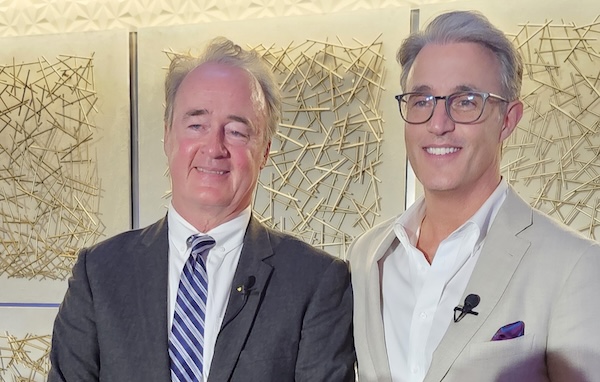
Warren Kinsella, left, and Ben Mulroney at Montreal’s Beth Israel Beth Aaron Synagogue June 19. (photo by Dave Gordon)

In 1980, when Warren Kinsella was in Calgary performing with his punk rock band, one of his friends tapped him on the shoulder to say some men in the crowd were giving a Nazi salute.

“I didn’t believe him. I didn’t think it was possible,” said Kinsella, now a Toronto Sun columnist, at a recent talk. “There, in fact, were three big guys, shaved heads, T-shirts, jeans, suspenders, Doc Martin boots, coloured laces, and they were making Nazi salutes.”

Kinsella confronted one of them, twice asking him to stop the salutes, and was greeted with an expletive and the word “Jew.” As the Irish-Catholic Kinsella tells it, a fist came his way, he hit back – a fight involving his buddies and the skinheads erupted. Eventually, the “skinheads retreated, battered or bruised,” said Kinsella. After the show, one of them pointed at Kinsella, saying, “We’ll be back.” 

“And the truth, my friends, is they never really left.” 

On June 19, at Montreal’s Beth Israel Beth Aaron Synagogue, Kinsella was joined by syndicated radio host Ben Mulroney, who acted as the moderator of the event called Weaponizing Genocide: Exposing Propaganda and Hate in the Age of Misinformation. It was a fundraiser for the Foundation for Genocide Education, which was founded in 2014 by Heidi Berger, a child of Holocaust survivors. The nonprofit aims to ensure that the subject of genocide is taught in North American high schools. 

Since that incident 45 years ago, Kinsella has battled Jew-hatred as a lawyer and as a journalist – at times with rifles jammed in his chest, police protection, bomb threats and death threats.

“I’ve seen lots of hate, but I have never seen it as bad as it is,” he said at the June event. What the Jewish people are fighting is not only a seven-front military war, but a propaganda war “we are losing,” he said.

Kinsella, the author of 10 books, will soon publish The Hidden Hand: The Information War and the Rise of Antisemitic Propaganda, along with an accompanying documentary.

Exactly 18 months before Oct. 7, 2023, social media profiles started popping up all around the Muslim world, Kinsella said. They had “very few followers” and were filled with “stuff about soccer matches and celebrities and pictures of kittens.” On the morning of the seventh, as Hamas and its allies were attacking Israel, thousands of these social media profiles came to life, he said, noting those that had just a few followers suddenly had half a million. 

“They pushed out lies,” he said, such as “there had been no murder, no rapes.” 

“It was an indication of how sophisticated and how effective these guys were, as they were able to get that word out into the stratosphere,” said Kinsella.

“Antisemites,” he added, “know that … this is the greatest political, cultural and economic revolution of our lifetimes,” with Generation Z’s primary source of information being TikTok, “one of the principal platforms for antisemitism on the planet.” 

After the event, Berger told the Jewish Independent that social media literacy for students is critical, to “learn when the term genocide is being used to manipulate their views and their emotions.”

In his remarks, Kinsella said some three million members of Gen Z in Canada believe Israel should be wiped off the map and that Hamas was justified in its actions. Weeks before Israel sent troops into Gaza, he said, young people across Western democracies were chanting the lies that they had seen online.

These were organized campaigns of protests, with professionally made signs, and the “disrupting and terrorizing of Jewish neighbourhoods with military precision,” said Kinsella. “They had talking points. They had food, drink, transportation. They even had legal representation for free….  And many of them were being paid to show up.” 

He said, “It was principally a campaign to seize the sympathies of our young. And it’s a campaign that’s winning.” 

Kinsella, president of Daisy Consulting Group, who has worked for various high-profile US and Canadian political campaigns, noticed that protesters used pithy phrases “very much like what political mainstream parties do,” such as “from the river to the sea” and “free Palestine.”

“Who’s against freedom?” he asked. “It’s nice.”

Media, government and nongovernmental organizations continue to take Hamas at its word, said Kinsella, citing an early example. On Oct. 17, 2023, when the Gazan Health Ministry declared that Al-Ahli Arab Hospital in Gaza City had been bombed by Israel and that 500 people were dead, it made headlines around the world. “The bombing was cited as evidence of Israel’s genocidal war,” yet evidence later showed it was a Palestinian Islamic Jihad rocket that hit the parking lot, and perhaps a few dozen were killed.

The day of the Montreal talk, Iran bombed Soroka Medical Centre in Beer Sheva, Israel – a war crime that almost no media reported on, said Kinsella.

“The line I always use with politicians: facts tell, but stories sell,” said Kinsella. “That’s why they try to overwhelm us, because they know if our story gets heard, if it gets seen, if it gets read, they will be defeated, because, at the end of the day, their story is a litany of hate.” 

Dave Gordon is a Toronto-based freelance writer whose work has appeared in more than 100 publications around the world. His website is davegordonwrites.com.

Will you help or hide?

Bema Productions’ The Last Yiddish Speaker cast, director and crew: standing, left to right, Tess Nolan, Kevin McKendrick, Andrea Eggenberger, Nolan McConnell-Fidyk and Ian Case; seated, Siobhan Davies, left, and Zelda Dean. The play imagines a world in which the Jan. 6, 2021, attack on the Capitol in Washington, DC, was successful and Christian nationalists have taken over the United States. (photo by Peter Nadler)

Victoria’s Bema Productions is staging the international premiere of Deborah Laufer’s The Last Yiddish Speaker at Congregation Emanu-El’s Black Box Theatre June 18-29.

The drama imagines a dystopian world in which the Jan. 6, 2021, attack on the Capitol in Washington, DC, was successful and Christian nationalists have taken over the United States. In the play, a Jewish father and daughter must be careful and cunning, as any deviation from the norm could be deadly. When an aged Yiddish-speaking woman lands on their doorstep, they must decide whether to take the risk of helping the woman or focus on saving themselves.

Laufer has numerous full-length plays to her credit, as well as dozens of short plays and even musicals (written with composer Daniel Green). Her plays have been produced around the world and she has been recognized with numerous awards.

While The Last Yiddish Speaker focuses on Judaism and the right for Jews to exist, the play could be about any marginalized group, in any country.

“Although the play is set in the USA, the theme is universal: the struggle of good over evil,” Zelda Dean, founder and managing artistic director of Bema, told the Independent. “In this play, Canada is still a safe place for Jews.” 

That said, it has a message for Canadian audiences, as well, Dean said. “It is very important that we address social and political issues, particularly with the huge increase in antisemitism in Canada. The play is entertaining, engaging and enlightening. It takes place in 2029, when the fascists have taken over the USA. It is timely and powerful.”

Directed by Kevin McKendrick, The Last Yiddish Speaker features Ian Case, Siobhan Davies, Nolan McConnell-Fidyk and Dean.

McKendrick is an award-winning director, notably being recognized by the Alberta Theatre Projects for significant contributions to theatre in Calgary. Case, a veteran stage actor on Vancouver Island, is also a director and arts advocate. Davies, meanwhile, is a stage and cinematic performer – she will be appearing in the upcoming film Allure, shot in Victoria. McConnell-Fidyk is a local actor who appeared in Survivors, a play aimed at spreading information about the Holocaust to audiences from Grade 6 and up. (See jewishindependent.ca/theatre-that-educates and jewishindependent.ca/survivors-play-brings-tears.)

Before the November 2024 presidential elections, Laufer told Philadelphia public radio station WHYY about her reasons for writing the play, including that she was deeply disturbed by the events of Jan. 6. “I thought, ‘Is this the end? Is our democracy completely ended?’” she said.

“The play reminds us there are times in history when we have the choice to speak out against oppression or choose to remain silent. You get the government you deserve,” McKendrick told the Independent. “How will you respond when faced with outright injustice?”

Tickets for The Last Yiddish Speaker can be purchased at ticketowl.io/lastyiddishspeaker. 

Sam Margolis has written for the Globe and Mail, the National Post, UPI and MSNBC.

Israel and its neighbours at an inflection point: Wilf

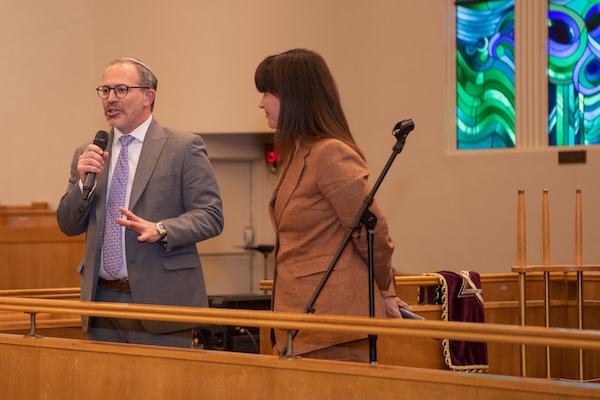
Rabbi Andrew Rosenblatt speaks with Einat Wilf, Israeli author and thinker, who shared her views on the ongoing Israeli-Palestinian conflict. (photo by AdeleLewin)

Israel and its region are in a moment of danger and opportunity, according to Einat Wilf, who spoke in Vancouver April 25.

The Israeli author, commentator and former Labour Party member of the Knesset, said Israel and those who wish to destroy it have been locked in a repetitive series of disasters for almost 80 years. The current moment could alter – or enforce – that dynamic. 

“This is a moment when, if we do not do the right things, we will remain stuck in a loop,” she said at Schara Tzedeck Synagogue. 

The cycle of conflict has dragged on because of a scenario in which, she said, “the Jews are never allowed to win, the Arabs are never allowed to lose – or at least are never allowed to acknowledge defeat.”

Wilf calls this the “tragedy of ceasefires.”

The Arab world tried to prevent the creation of a Jewish state and then, since 1948, has attempted to undo the existence of that state. This is the core of the conflict, she argued. 

“When it becomes clear that they are about to fail, what people call for is a ceasefire,” she said. “But what would actually help us is not a ceasefire. What would help us is to bring back the great ideas of victory and defeat, because those are actually necessary for us to get to peace.”

Instead, the world demands that the parties go back to the negotiating table, as if nothing had happened, she said.

“People talk about the conflict constantly going on, as if it’s by some bizarre coincidence,” she said. “It’s not. It’s because the Arab side for decades has been constantly told, try again, try again. If you haven’t succeeded this time, try again.”

One of the ruptures in the dialogue, Wilf said, is the idea that the only thing standing between 

Israelis and peace is the establishment of a Palestinian state. This has been the driving force in decades of peace efforts, “only to realize that this is not what the Palestinians had ever wanted.”

The problem, she said, is that many Jews and others refuse to take the plainly stated Palestinian and Arab message at face value. Many Jews on her social media feed disagree with her, she said. Many Arabs, by contrast, are up-front. 

“The Arabs on my feed would write this: ‘You are settler-colonialist, white Europeans. Get out.’ I love that,” she said. “They’re saying there shouldn’t be a Jewish state.” And yet, the Jews who comment, she said, keep coming back to settlements, the occupation and other issues that ignore that the root of the problem is a Palestinian and larger Arab refusal to accept the existence of a Jewish state in any part of the region, said Wilf.

Two Israeli prime ministers, Ehud Barack in 2000 and Ehud Olmert in 2008, tried to negotiate a resolution, only to find that two different Palestinian leaders, Yasser Arafat in 2000 and Mahmoud Abbas in 2008, walked away and reverted to violence, she said. Between those two administrations, a different prime minister, Ariel Sharon, decided that, if the Palestinians would not sign an agreement, he would just give them land. 

“He gets out of the Gaza Strip to the last square inch, and we know what they did with that control of the territory,” said Wilf. 

The devastation experienced by Gaza and its people in the current war is a tragic moment, but also a possible turning point.

“Moments of ruin and destruction, both in personal as in collective lives, can be moments of growth and transformation,” she said. “But only if you acknowledge the possibility.”

Wilf admits that people say she speaks harshly.

“I do,” she agreed. “Because we have not benefited from people who soften the message. We try to cut corners, we don’t go to touch the molten lava that is at the core of our conflict.”

For years, long before Oct. 7, European capitals have been sending money to Palestinian regimes to feel good about themselves, she said. “But it does no good. It just extends the conflict.” 

She tells European audiences to change their approach. “You want to do good?” she asks. “You need to tell the Palestinians, given that your goal in the last century was to prevent and then to undo the existence of a Jewish state: you lost, and it’s over. You can find a dignified life next to a Jewish state but not instead of it.”

Hard truths are difficult to dislodge, said Wilf, and they can be perpetuated at the highest levels. When Joe Biden, then the US president, visited Israel after Oct. 7, Wilf said, he went out of his way to argue that Hamas does not represent ordinary Palestinians.

“It’s a lie that we often tell to comfort ourselves,” argued Wilf. “Hamas is merely the most brutal and successful executor of the ideology that we’ve come to call Palestinianism.”

The ideology, she said, does not hide its goal of eradicating the existence of Israel “from the river to the sea.” 

Terms like “right of return” hold equally brutal meanings.

“You look at Palestinian Arab texts from the ’50s, the ’60s, they are very clear about the term,” she said. “They talk about ‘We will tear their hearts out of their bodies, their fingernails from their limbs.’ That’s why you have euphoria on Oct. 7 – euphoria across the people of Gaza, euphoria across the people of the West Bank, Palestinians and their collaborators around the world. The euphoria was not [because Palestinians were] breaking out of some open-air prison…. The euphoria was that they finally saw the moment that they had been groomed for, for decades.… Hamas executed Oct. 7 on behalf of Palestinianism, on behalf of the Palestinian people – for them and of them.”

That is the only way to understand what happened, she argued, or to understand how billions of dollars in international aid have resulted not in social progress but in a militarized terror regime with hundreds of kilometres of tunnels under schools, mosques, homes and kindergartens. 

“You can only do something like that among a supportive population, when you are intent on carrying out the vision of that population,” she said. “So, the enemy is not just Hamas. That’s too easy. The enemy is Palestinianism. And that ideology has to die so that Jews and Arabs can finally live.”

An ideology can indeed be killed, she argued. “In fact, it happens all the time. We all live in a world where ideologies are constantly killed and dying and replaced by others.”

A first step, Wilf contended, is rejecting what she calls “trauma determinism” – the idea that people who are collectively traumatized can only respond with violence and stubborn resistance. This manifests in the idea that Israel’s actions will only further radicalize Palestinians. “I don’t know that there is much further to radicalize,” she noted.

Trauma determinism is not real, she said – or, at least, it need not be. “Exhibit A: the Jewish people,” she said. But she also raised the examples of Nazi Germany and imperial Japan. “They suffered violence. The issue is not the violence,” she said. “The issue is what is the story that gets told. That’s why this moment is so important. Because, just like nothing succeeds like success, nothing fails like failure. People begin to run away from failure.”

To move on and embrace peace, she said, Palestinians, like Germans and Japanese before them, have to acknowledge defeat.

“Embracing defeat is not necessarily a bad thing,” she said. “And that process needs to happen. I’m not denying that there is ruin and devastation in Gaza. The question is, how is that ruin and devastation understood? Because, if the story is big, bad evil Israel did that to you and you are just innocent Gazan victims of Israel’s evil nature, then nothing will change. What needs to happen is something that has never happened in the last century of the conflict, which is a connection between cause and effect, action and consequences.” 

Palestinians, the broader Arab polity and the world need to understand that the ruin and devastation inflicted upon Gaza is the outcome of their ideology. Some other peoples in the region have awakened to this idea and begun to give up their fruitless hostility to Israel, Wilf said.

“It is always the mark of failed societies in crisis, looking to scapegoat, looking to find someone to blame, looking to divert attention from their failures,” she said. “It’s not a coincidence, therefore, that those countries in the Arab world who are trying to forge a modern vision, a forward-looking vision of what it means to be an Arab and Muslim, are the ones that are letting go of anti-Zionism and normalizing relations with Israel. This is the only vision forward. And I’m under no illusions. It remains a minority view in the Arab and Islamic world. But, for the first time ever, it exists, vocally.”

photo - Israeli commentator and former member of the Knesset Einat Wilf, right, was thanked after her presentation by Tracy Ames
Israeli commentator and former member of the Knesset Einat Wilf, right, was thanked after her presentation by Tracy Ames. (photo by Adele Lewin)

While they might not embrace the term themselves, Wilf suggests these parties are exhibiting what she calls “Arab Zionism” – the simple acknowledgement that Israel exists and has a right to do so. 

It is voices in the West who are most resistant to change, she said.

“The tragedy of this moment is that some in the Arab world are waking up from decades of anti-Zionism as a waste and a ruin, and seeking to have a different vision,” said Wilf. “You have so many here in the West rushing to fill the void and to essentially keep fueling the conflict so that the erasure of Israel can finally be achieved. That is the tragedy. It is also, of course, remarkably dangerous. Because what’s happening now in the West, as much as it pretends to be about the conflict, it’s not.”

It’s about something more insidious, she contended. What is portrayed as anti-Zionism has historically shown itself to be something baser.

“What happens to Jews when societies allow anti-Zionism to become institutionalized?” she asked. Everywhere that anti-Zionism rises to the level of being institutionalized or legislated, the environment turns hostile to Jewish life, she said.

“In the Arab world, how did they get rid of their Jews in the two decades when anti-Zionism was at its height? They never legislated against the Jews. They legislated against Zionists. Iraq, Egypt – the legislation was against Zionists,” she said. “But the way it works is that the Jews are charged with Zionism and no Jew – I know some really try hard but no Jew – will ever be able to disavow Zionism because, heaven forbid, they just celebrated Passover and said, ‘Next year in Jerusalem.’ And that’s how it works.” If such actions are not stopped, she said, “ultimately, no Jews are left.”

“This is what happened in the Arab world, in Iran, in the history of Europe, in the Soviet Union, in Venezuela and it’s happening on American campuses as we speak,” she contended.

Now, efforts are underway in Canada and elsewhere to codify “anti-Palestinian racism,” which Wilf dismisses as a prohibition against Zionism.

On the other hand, there is, she clarified, genuine anti-Palestinian racism. “It is the racism of refusing to listen to Palestinians and take them at their word,” she said. “There is a refusal to really acknowledge them as agents in history who know what they are doing and who actually have their own rational vision of no Jewish state.”

The future depends on how Palestinians and the world interpret the destruction that has taken place in Gaza. 

“We are facing a moment that has at once great peril but also great hope,” said Wilf. “Amazingly, so much rides on whether we will ensure that the ruin and destruction in Gaza will finally be associated as the consequence, the outcome, the effect of the Palestinian choice to pursue the always-destructive vision of no Jewish state, because, if they can finally be made to embrace defeat, and to begin the slow process [toward peace] then, at the end of the day, I can assure you that, if they become Arab Zionists, it would be better for everyone.”

Rabbi Andrew Rosenblatt welcomed the audience and thanked the Hayes Family Israel Initiative for funding Wilf’s visit, in memory of Dr. Arthur and Arlene Hayes z”l. 

Ways to overcome negativity

In times of rising antisemitism and violence, fear is valid. When the world feels like it’s unraveling, anchoring yourself in a deeper sense of purpose can be healing. (screenshot)

Fear is not a weakness. It’s a deeply human response to a real or perceived threat. In times of rising antisemitism and violence, fear is valid. But we must not let it be the only voice in the room.

By acknowledging the fear – whether of violence, isolation or helplessness – we reduce its power. At the same time, we also make space for other emotions, such as courage, care and resilience, to emerge.

There are many things we can do to help us overcome the foreboding atmosphere of negativity and fear that is knocking at our door. Focusing on what we can do, gives us a sense of agency when we might otherwise feel helpless and alone.

There is the physical aspect of fear. It is important to be aware of what is happening as you notice you are feeling anxious, by staying present and being grounded. The brain often races into the future during fear: What if this happens to my community? My family? Me? This kind of “catastrophic thinking” pulls us out of the moment and floods our bodies with stress hormones.

It is important to know how to manage physical symptoms as they come up. Have you ever practised mindful breathing or meditation? Going to the beach and being aware of the beauty of our surroundings is a way to relax the constant noise that comes with stressful thinking. It is important to stay informed, but we often tend to keep scrolling for more information when there might not be anything else available. Learn how to say “dayeinu,” it is enough for today.

Build connection, not isolation

Fear thrives in silence. One of the most powerful antidotes to fear is community; connecting with people who understand your pain and can help hold it with you. It is important to build community to fight isolation. Ask yourself:

• Who in my life can I be vulnerable with?

• Is there a synagogue, support group or mental health resource I can lean on?

• Can I be that presence for someone else?

There is strength in the simple act of saying, “You’re not alone.” It may be that your reaching out to ask for help will in fact help someone else.

Not everyone will be on the front lines of activism – and that’s OK. But each of us has a role to play in healing the world, even in small ways:

• Check in on someone who may be afraid or isolated.

• Wear your Jewish identity with pride – a Magen David, a kippah – if it feels right to you.

• Educate others, kindly and clearly, when misinformation spreads.

• Support Jewish organizations and security efforts.

Courage doesn’t always roar. Sometimes, it whispers, “I will keep showing up.” 

When the world feels like it’s unraveling, anchoring yourself in a deeper sense of purpose can be healing. Ask yourself where you can make an impact. Do you have a particular skill that may make a difference to individuals or an organization? Judaism has a rich tradition of resilience, moral clarity and hope. Pirkei Avot 2:5 reminds us that, “In a place where there are no leaders, strive to be that leader.” In other words, act with integrity, even when others do not. This is real courage and takes strength and commitment.

Judaism teaches us to choose hope

Our tradition teaches us to choose hope, again and again. Hope isn’t naïve. It’s an act of spiritual resistance. It’s choosing to believe, even with trembling hands, that goodness still exists and that we are its agents. When you are with friends and family, celebrate moments of kindness. Remind one another of stories, not only of loss, but of survival and joy. 

Living Jewishly, publicly and proudly, in today’s world takes immense strength. You are not alone in your fear – nor in your resolve. Fear may visit, but it doesn’t get to move in and take over. Our world needs as many of us to be positive ambassadors as we need those fighting antisemitism on the front lines. As Mahatma Gandhi once expressed it, “be the change you wish to see in the world.”

Shelley Karrel is a registered clinical counsellor in Vancouver; you can reach her at karrelcounselling.com. 

Students are resilient

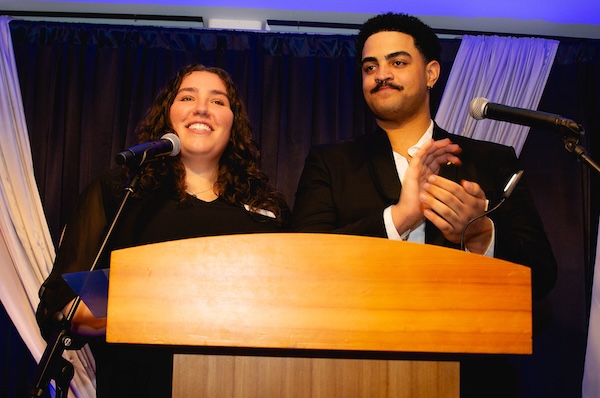
A Night of Resilience, held at UBC Hillel House March 27, was emceed by students Samantha Schwenger and Izaiah Isaac. (photo from Hillel BC)

Jewish students, allies and community members packed the second-floor social hall at the University of British Columbia’s Hillel House March 27 for A Night of Resilience. It was a celebration of the determination and tenacity of students since the Oct. 7 terror attacks and the spike in antisemitism on campuses.

The evening was emceed by Izaiah Isaac, a third-year student studying forest biology, and Samantha Schwenger, a third-year cellular and molecular neuroscience student. They expressed solidarity with the hostages and the broader Israeli population.

“Tonight, we gather here at Hillel to honour more than just achievements,” said Isaac. “We are here to pay tribute to something far deeper – to the resilience of Jewish students, their unwavering courage and their relentless pursuit of justice in a world that has felt, at times, unbearably heavy.”

“In the past year-and-a-half, Jewish students across British Columbia have been faced with an unimaginable reality,” Schwenger said. “The war in Israel, beginning on Oct. 7, brought with it a wave of violence and sorrow that impacted not only our families, but our very sense of security. And, in its wake, antisemitism surged, leaving Jewish students on campuses everywhere to bear the brunt of hatred, fear and division.”

Rabbi Kylynn Cohen, Hillel’s senior Jewish educator, spoke of the strength she has seen among students.

“We are always living Torah and our students have truly exemplified that in the past 17 months,” she said. “I have watched you grieve, pray, teach, love, protest, rally and get up every day … to fight the violence, gaslighting and antisemitism which has been coming at you from all sides. It is truly an honour to celebrate you tonight.”

Ohad Gavrieli, executive director of Hillel BC, spoke of the changed climate on campuses after Oct. 7, 2023.

“One by one, students started showing up at Hillel, some in tears, some shaken, all looking for support,” he said. “They came not only because of the violence and devastation in Israel, but because the atmosphere on campus was already starting to change. Their [teaching assistants] were praising the massacre, their classmates were posting support for Hamas. The shift was fast and it wasn’t subtle. Now, it’s almost 18 months later and we’re still in it. It’s not over.”

photo - Ohad Gavrieli, executive director of Hillel BC, was one of the speakers during the March 27 event
Ohad Gavrieli, executive director of Hillel BC, was one of the speakers during the March 27 event. (photo from Hillel BC)

He noted that the UBC student union had endorsed a student strike for Palestine, part of a larger trend that, he said, has “left Jewish and Zionist students feeling unsafe and unwelcome.”

“Despite all of it, our students didn’t back down,” said Gavrieli. “They continue to speak up. The strength and resilience of our students should make everyone in this room proud. We have leaders here, we have a future in students who are brave, grounded and unwilling to be pushed aside. At Hillel, we do everything we can to stand with them, to be their Jewish home away from home, a place of strength, a place of safety and a place they are never alone. Tonight is about them. It’s about all of you who made this evening possible, as well, and those who stood with Hillel and our students through it all.”

Ezra Shanken, chief executive officer of the Jewish Federation of Greater Vancouver, lauded students, as well as the staff and lay leadership of Hillel.

“This is such an incredible evening that I wish we didn’t have to do,” he said. “I wish that you, as students, were not going through what you’re going through. The hostile environment that’s being created for you here on this campus and on campuses across BC is unacceptable and your courage is incredibly, incredibly inspiring.”

The event featured the presentation of Maccabee Awards to students from campuses throughout the province. 

Shanken presented a Maccabee to Simon Fraser University student Yael Toyber, who Shanken noted is also the recipient of Federation’s 2024 Young Leadership Award. 

“This student fights for justice not through confrontation, but through education – using their creativity and insight to create educational materials that are accessible and compelling,” he said.

Toyber’s work with StandWithUs and their leadership of the Jewish Students’ Association, Shanken said, has made her instrumental in strengthening the Jewish community at SFU.

Gavrieli presented the award to UBC student Rachel Seguin, who he credited for her contributions to the Israel on Campus group, and as “a bold voice for Jewish students, ensuring that our community stands proud.”

“This student has bravely stepped into conversations with UBC administration to address antisemitism, ensuring that Jewish students feel heard and valued,” said Gavrieli. 

Gordon Brandt, president of the board of Hillel BC, recognized University of Victoria student Audrey Gaulin, who he called “a force to be reckoned with.”

“Beyond Hillel,” Brandt said, Gaulin has “stepped into leadership roles as a Common Ground Ambassador with Allied Voices for Israel and as a director-at-large with the University of Victoria Student Society.”

Ellie Sherman, Hillel BC’s director of student life, presented an award to Langara College student Ethan Doctor.

Doctor is a Canadian Jewish Political Affairs Committee (CJPAC) Fellow, an active member of Alpha Epsilon Pi fraternity, and “a champion for the Jewish community,” said Sherman. In his role as the Western Canada representative for the J7 Working Group on Campus Antisemitism, he has “amplified student voices, pushing for meaningful change at both local and national levels.”

Ishmaeli Goldstein, Hillel’s campus advocacy specialist, recognized Roman Chelyuk with an award for allyship. Chelyuk is a senior fellow with CJPAC and an Emerson Fellow with StandWithUs, treasurer of Israel on Campus (IOC) and a past executive of the Ukrainian Club, who has “shown a deep commitment to standing with the Jewish community.”

Andy Gitelson, campus support director from Hillel International, attended the event from Portland, Ore., and presented the second Allyship Award to UBC student Zara Nybo.

“As the president of IOC, a StandWithUs Emerson Fellow, a CJPAC Fellow and a Campus Media Fellow with Allied Voices for Israel and Honest Reporting Canada, this person has consistently demonstrated a strong commitment to using their voice to advocate for the Jewish community,” said Gitelson, who credited Nybo with being a powerful voice on social media, raising awareness, sparking important conversations, “and defend[ing] the Jewish community time and time again.”

photo - Jewish students, allies and community members packed the second-floor social hall at the University of British Columbia’s Hillel House March 27 for A Night of Resilience
Jewish students, allies and community members packed the second-floor social hall at the University of British Columbia’s Hillel House March 27 for A Night of Resilience. (photo from Hillel BC)

Yael Segal, a UBC alumna and co-founder of the Justin and Yael Segal Family Fund, presented the Kehilah Award to Jacoba Moscovitz. The award celebrates students who demonstrate leadership and dedication to the Jewish community by going above and beyond to support their fellow students, foster a sense of belonging and contribute to building a home for Jewish students on campus.

Segal credited Moscovitz as “a familiar and welcoming presence at UBC – somebody who helps others feel at ease and contributes to an inclusive atmosphere.… In many ways, this student has acted as the glue, bringing people together. As a member of the Jewish Students’ Association executive team and [as] a StandWithUs Emerson Fellow, they’ve also taken on leadership roles that strengthen Jewish life on campus. This student also bravely stepped up to be in ongoing conversations about antisemitism with UBC administration, and continues to work hard to ensure Jewish students are welcome and safe at UBC.”

Talia Chivo, Hillel’s lead campus professional at the University of Victoria, presented a second Kehilah Award to Bea Banack Tapia.

“This individual has a gentle way of listening to those around them,” said Chivo. “They take the time to connect one-on-one with so many members of our community and offer support and genuine friendship. Behind the scenes, they’ve put countless hours into making sure things run smoothly. Their dedication isn’t always loud, but it’s felt by everyone around them.”

Tina Malka, director of antisemitism research and education at Hillel International, traveled to the event from San Diego. 

A Night of Resilience took place as the academic term concluded, marking the second year of unparalleled anti-Israel activism and antisemitic agitation on campuses. Speakers repeatedly credited students with the courage to confront the challenges facing them. 

Test of Bill 22 a failure

A small cluster of anti-Israel activists protested outside the Jewish Community Centre of Greater Vancouver last week, apparently assuming incorrectly that an Israeli diplomat was in the building. Regardless of the motivations, the protest was against the law. And police did not enforce the law.

In May of last year, the provincial government passed Bill 22, the Safe Access to Schools Act, which includes provisions known as “bubble zone” legislation. The law prohibits protests that could interfere with or threaten students in schools or engaged in formal school activities off school premises. In other words, if there is a class field trip, say, to the Vancouver Aquarium, it would be illegal for protesters against cetacean captivity to protest there. 

Students from King David High School routinely use the gymnasium and other facilities at the JCC. They were there when the protesters were outside. And there was another formal program taking place in the building involving elementary school students. In other words, the law set out under Bill 22 was undeniably broken. (The existing legislation affects only public and private elementary and secondary schools, so the fact that there is a permanent childcare facility in the JCC does not mean protests of the premises are universally prohibited.)

This is a relatively new law, less than a year old, but, of course, police are required to be aware of legislation as it emerges or is amended. It was not, for example, the responsibility of the JCC or others in the building to notify the police that the law was being broken.

At a minimum, police should have ascertained whether there were school programs happening at the JCC and, discovering that there were, informed the protesters that they were in contravention of Bill 22 and ordered them to disperse.

One can agree or disagree with the law, based on free expression. But the law exists and the protesters were breaking it.

This incident speaks to a larger problem.

In recent years, there has been discussion about the need to address online hatred and harassment. Last year, a federal online harms proposal, known as Bill C-63, met with concerns on civil liberties grounds and underwent significant amendments, including being broken into two separate bills. Both bills died on the order paper when the federal election was called last month.

As commentators pointed out during that debate, Canada already has laws prohibiting expressions of hatred and harassment. Should it matter whether those expressions happen online or in person? And, while elected officials are busy passing new laws, existing laws that might remedy the problems they are trying to address are going unenforced. 

There are problems in our legal system. Occasionally, police will defend their actions (or inaction, as the current case may be), complaining that when they recommend charges to the prosecution service, the prosecution service does not pursue them. 

In turn, prosecutors sometimes contend that courts, too often, do not convict. In each case, it is an example of one level of the system blaming the one above for inaction.

While governments need to step gently and seriously around the danger of political interference in policing, prosecution and the judiciary, it is unequivocally governments – primarily provincial and federal – who have the responsibility for setting guidelines around things like hate speech and harassment. Governments need to send a message to police, prosecutors and courts that we, as a society, take these issues seriously. We do not send that message when a clear breach of the law results in no consequences whatsoever.

From the perspective of the Jewish community, what happened at the JCC last week may have been the first test of Bill 22’s efficacy. It was a failure.

Considering that clear violation of provincial law, British Columbia’s Attorney General Niki Sharma has an obligation to explain what went wrong. She would also do well to reiterate (or iterate) that the government takes seriously harassment of Jewish students. (Harassment of the broader Jewish community is also a serious concern, but there seems to be a societal consensus that young people deserve greater protections from this sort of behaviour.)

If police will not enforce the law because they do not believe prosecutors will press charges, we need to address, as a society, this problem in the system. If prosecutors will not act because they have been dissuaded by courts that won’t convict, then we need to educate the judiciary or amend the laws. 

Work still left to finish

Last week, the Jewish Federation of Greater Vancouver, in conjunction with the Centre for Israel and Jewish Affairs, released the results of a community survey on antisemitism. There were, perhaps, few surprises.

Of those surveyed, 85% said that antisemitism has “increased a lot” since Oct. 7, 2023. More than 60% of respondents said they avoid displaying items that would identify them publicly as Jewish and almost two in three said they avoid particular places and events out of concern for their safety.

A public opinion poll released around the same time indicated that the often-discussed “silent majority” is on our side – most British Columbians are concerned about antisemitism. More than three-quarters of respondents to a Research Co. poll said they are concerned about “aggressive behaviour by pro-Palestinian protesters,” “protesters targeting Jewish neighbourhoods and Jewish-owned businesses” and “rising prejudice against Jewish Canadians.”

While we would appreciate if the solidarity expressed in this survey were articulated more vocally and visually, it is reassuring to know that the targeting of our community is not unnoticed or uncontested. The survey is, in any event, a rare encouraging sign.

It may seem delusional to seek rays of light amid reports of unabating antisemitism. But is one narrative of Passover not precisely to remind us that we have met and overcome suffering and subjugation in the past? When we celebrate the holiday, we are reanimating our collective experience of resistance to tyranny and oppression, the birth pangs of our peoplehood, and the victory over apathy and forgetting. An unequivocal through-line across Jewish history is resilience.

We retell the story of Exodus every year during the seder not as history but as a living, spiritual framework for Jewish identity and values.

While this is a very difficult time, it also has the capacity to bring out tenacity, determination and unity among the Jewish people.

Difficulty can also create cracks in unity. This is the night when, more than other nights, we reflect on liberation from literal or figurative slavery – in today’s situation, perhaps, freedom from violence and discrimination – and the imperative of Jews to protect and advocate for liberation. So, as we witness growing fissures in the Jewish world, let us rededicate ourselves to the project of liberation and peoplehood based on fundamental values of freedom, love, unity and community.

On Passover, we are reminded that there are pharaohs in every generation who seek to destroy and oppress. We utter the words “You shall tell your children,” because a vivid memory of the past is central to facing our present and creating our future. Every generation faces its own “Egypt.” The work of liberation is not yet finished. 

May those who are held captive in Gaza, those who are fighting to defend Israel, those experiencing violence and discrimination, or seeking freedom in any form, be redeemed.