
Spinach’s versatility, power
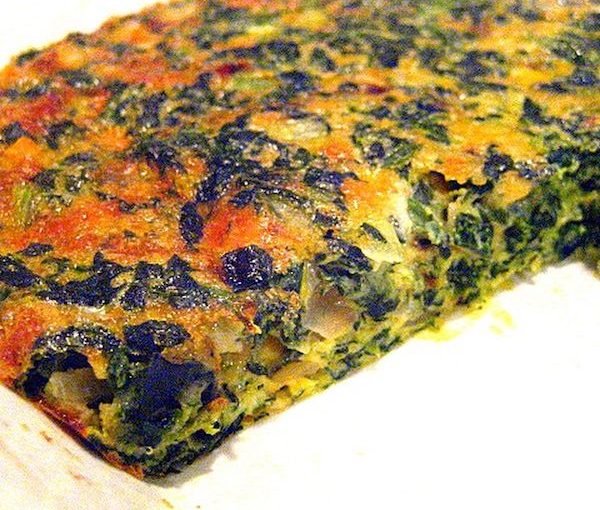
With spinach cheese pie, there likely won’t be leftovers. (photo from Shelley Civkin)
What’s chock-a-block full of healthy vitamins and minerals, packed with fibre and gives you humongous muscles, if Popeye, the muscle-bound, pipe-smoking sailor is to be believed? You got it – spinach! According to the internet (and who doesn’t believe everything there), the comic strip hero Popeye helped increase American consumption of the once-much-maligned spinach by around 30%. All because of his eating habits. Popeye’s famous line – “I’m strong to the finish ’cause I eats me spinach” – while grammatically heinous, does have a whiff of truth to it. Apparently, spinach, which contains lots of iron, can boost muscle strength. So, listen to pumped-up Popeye and eat your spinach! You might even want to try it with a little Olive Oyl.
Personally, I don’t see what all the fuss and resistance is about. It’s such a versatile vegetable – you can sauté it, make a salad out of it, use it in lasagna, mix it together with orzo, feta and sundried tomatoes. The sky’s the limit. Spinach is the quintessential blank canvas, but adds the health factor and colour element that every bona fide foodie seeks.
One of my favourite ways to use spinach is in a dish that can serve as a main or a side. Even spinach haters adore my famous spinach cheese pie. The recipe is straightforward, relatively healthy (unless you’re lactose intolerant or fat-phobic) and never fails to elicit endless oohs and aahs. For those people who can’t tolerate milk products, you can always substitute soy cheese and lactose-free milk. You can barely tell the difference. You can thank me later.
SPINACH CHEESE PIE
2 tbsp butter
3 eggs
3/4 cup flour
1 cup milk
2 10-ounce packages frozen spinach (cooked)
1 tsp salt
1 tsp baking powder
1 lb Monterrey Jack cheese, grated
Preheat oven to 325ºF. Melt butter in a 9-by-13-inch glass pan. Make sure the melted butter coats the bottom and sides of the pan.
Cook and drain spinach. Be sure to squeeze out all the water, then chop it finely in a food processor.
In a large bowl, beat the eggs. Add dry ingredients (flour, salt, baking powder) and milk, alternately. Mix well by hand.
Add grated cheese and spinach, and mix well by hand. Pour into the prepared pan.
Bake for 35 to 40 minutes, until slightly brown on top. Cool at least 30 minutes, then cut into squares and serve. I’m usually too hungry and skip this last step of waiting. Cooling it down, however, does make it easier to cut. And, well, patience is a virtue.
This spinach pie freezes really well and reheats perfectly in the microwave, but, believe me, there usually isn’t anything left to freeze or reheat. On one or two occasions, I’ve been known to eat it cold, right out of the fridge. Late at night. With a certain clandestine aura about me. Right … busted.
While your family – or, in non-COVID times, your guests … remember what those are? – relaxes before dinner, waiting with bated breath for your spinach cheese pie, you can serve them my popular olive dip. Caveat: I don’t have a particular recipe for it and I don’t use specific measurements – I just taste it as I go along. For someone who’s a hardcore Type A personality, this is highly unusual behaviour. But, somehow, I’m able to operate on simple faith when it comes to this. Truth to tell, it’s pretty hard to screw up.
Another caveat: even in non-COVID times, or inside your COVID bubble, be sure not to breathe on strangers or prospective love interests after eating this dip, because the garlic is flavour-forward. Depending on your love/tolerance for garlic, add as little or as much as you want. I start with one clove, but I’ve been known to up the ante for a large batch. This olive dip is decidedly non-dietetic, unfriendly for hypertensives and verboten for those watching their cholesterol. Otherwise, it’s the perfect pre-dinner dip. It makes a great tapas dish, and plays well with other Middle Eastern appies like hummus and baba ghanoush.
In the spirit of full disclosure, I never met an olive I didn’t like. My recipe calls for the plebian green olives stuffed with pimento, but, if you’re a risk-taker, you could try using other kinds. Just be sure not to use ones with an overpowering flavour. The mayonnaise in my recipe tends to smooth out the flavour and make it less sharp, so consider that when choosing your olives.
I never get sick of this recipe and it’s one of those dips you just can’t get enough of. It’s cheap and easy. Pre-COVID, I used to serve this a lot to friends, who would stuff themselves on the dip, then wonder why they were too full to eat dinner. Of course, the pita I serve with it makes it a much more filling appie. People will think you went to all sorts of trouble making it, so, if you want to maintain your kitchen cred, pretend that it’s an old family recipe and politely decline when they ask you to share it. Or … be a sport and let the world know what a lazy cook you really are.
OLIVE DIP
green olives with pimento (also called Manzanilla olives)
mayonnaise
fresh garlic
a squeeze of lemon juice (optional)
Throw all the ingredients into a food processor and blend away! It’s a dish best served cold (as is revenge), but really any temperature will do.
Pita or pita chips are a filling way to stretch this appetizer, but it also works nicely with crackers or thick potato chips. If you want to zhuzh it up a notch, add a couple of black Moroccan olives to it. And make lots of it because, mark my words, it’ll go fast. I’ve been caught dipping my toast into it for breakfast more than once. And, yes, I’m aware that garlic breakfast breath is not overly appealing, but I always floss and brush extra exuberantly after doing this. And, I usually do it when no one’s around. But be sure to turn off the nanny cam first.
Shelley Civkin, aka the Accidental Balabusta, is a happily retired librarian and communications officer. For 17 years, she wrote a weekly book review column for the Richmond Review. She’s currently a freelance writer and volunteer.
The road of reckoning
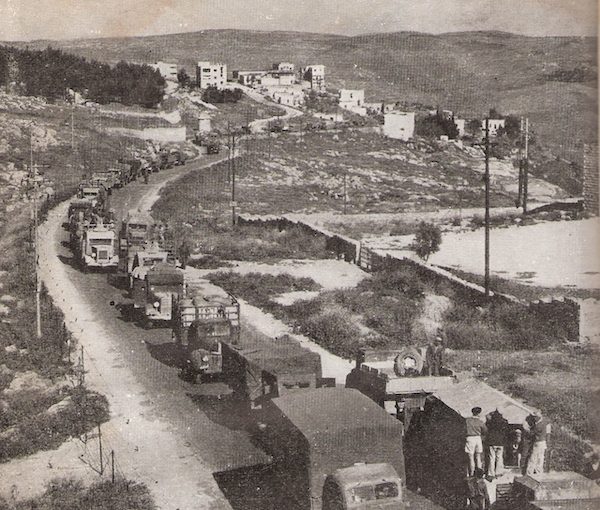
A supply convoy entering Jerusalem, 1948. (image from Shaar Hagai Heritage Museum)
Having just marked Yom Hazikaron and Israel’s 73rd anniversary, it is an appropriate time to recall a piece of Israel’s foundational history, and a new museum that commemorates it.
Seventy-four years ago, the road to Jerusalem was a site of easy ambush. Probably no part of the road was more treacherous than the area around Shaar Hagai. This spot, called Bab el Wad in Arabic, translates into English as the Gate of the Valley. As far back as 1868, French explorer Victor Guerin recognized and commented on this weak spot: he pointed out that the track was so narrow that “a determined band of men could stop an army in it with little difficulty.”
Admittedly, as you today drive on a smooth, paved, two-way, divided Jerusalem/Tel Aviv highway, it is hard to appreciate this reality. But, on Nov. 29, 1947 – the day after the vote on the United Nations Partition Plan, enabling the establishment of the Jewish state – Arab forces began blocking the route to Jerusalem. Not only were Jewish forces shot at, but, because the road curves, drivers couldn’t see where the road was blocked until they were trapped basically.
In David Dayan’s book Roadblock at Shaar Hagai: Creating a State (title translated from the Hebrew), Amos Kochavi recalled one such incident: “The time was approximately two in the afternoon. The long line entered the narrow and dangerous part. They could be anywhere…. We continued to climb … and there was a mighty explosion. The bomb under the road left a huge hole and the convoy stopped. Immediately, terrible shooting began…. We returned fire, but we couldn’t advance. Some of the drivers went into shock…. One driver with shell shock, screamed, ‘I can’t handle it anymore. I’m leaving.’ We yelled back: ‘Don’t move! You won’t come out alive!’ He didn’t hear, jumped from the car and was instantly killed.
“They tried to come down from the hills to get close to the cars, but our fire stopped them. They fire, we fire and the hours go by. No cars have air left in their tires. The number of injured grew. Shalom volunteered … he lay on the road, rolling – to avoid snipers – for a long hour … directing the drivers, one by one, until he had rescued all the cars…. An Australian captain ordered tanks that escorted us back to Gezer. The time was already two at night – 12 hours from when we entered Shaar Hagai.”
Jerusalem was under siege. Essential supplies could not reach the civilian and military population of the city. Jerusalem was dependent on supplies from the rest of the country, and was threatened with being totally cut off from the rest of the country. The only way to reach Jewish Jerusalem was to travel in convoy. (For more information, visit the National Library of Israel website, nli.org.il/en.)
According to the late Sir Martin Gilbert, by the spring of 1948, “Fewer and fewer Jewish food convoys were able to get through to Jerusalem. Towards the end of March, a food convoy failed, for the first time, to get through at all. One food convoy that did get through in March had taken 10 days to do so. By the end of the first week of April, there was only enough flour in Jewish Jerusalem to last for 30 days. Meat, fish, milk and eggs were unobtainable, except in small quantities, for children. The shortage of vegetables was such that children were sent into the fields to collect a weed … known as halamith, it tasted somewhat like spinach, and could be made into soup.” (See Jerusalem in the 20th Century.)
There was also a severe shortage of water. Three days before the state of Israel officially came into existence, the Palestine Post reported that “Jerusalem was still without water yesterday. The two pipelines from Ras el Ein, which were blown up by Arabs between Latrun and Bal el Wad on Friday, have still to be repaired. Crews are scheduled to leave under army escort this morning to continue repair work and, barring further trouble, repairs may be completed today. Water may be pumped into Jerusalem within a few days, according to one municipal official.” So grim was Jerusalem’s situation that archival photos show residents standing in long lines waiting to get their water ration and others rummaging through garbage, in the hopes of finding scraps of food.
Palmach fighters and, even more remarkable, simple truck drivers decided to do whatever they could to keep Jerusalem from being blocked. One now quite senior man, who drove a truck full of live fish for the Sabbath, was interviewed. He recalled looking out his side mirrors to see water streaming from the sides of the vehicle. The truck had been shot in numerous spots. Somehow, he managed to get to Kiryat Anavim, a kibbutz in the Jerusalem Corridor. There, women plugged up the bullet holes with rags. Probably, many of us would have considered giving up at this point, but this driver continued the slow climb to Jerusalem.
The fighters were mostly young people. A significant number were under the age of 18 (today’s conscription age). They came from all backgrounds, religious and non-religious, and from all parts of the country; some were Holocaust survivors. As a number of the fighters had been assigned the task of digging gravesites at Kiryat Anavim, they probably realized they might not survive on the road to Jerusalem.
It was crucial to find a different route for the convoys. Palmach soldiers discovered a detour that went through a hidden valley south of the heavily fortified fortress at Latrun and joined a path descending from Jerusalem. Using heavy tractors, the Palmach slowly cleared a path for vehicles. A water pipeline was also installed along it. The lifeline to the Jews in Jerusalem was secured, providing vital water and other supplies, in the summer months of 1948.
At the point where the road was most unsafe, there is a 19th-century Turkish-built travelers’ khan or inn. On March 23, 2021, Israel’s last election day, a memorial museum was opened at this historic location. The Shaar Hagai Heritage Museum is dedicated to the men and women who prevented Jerusalem from being disconnected in the days leading up to and even following Israel’s independence.
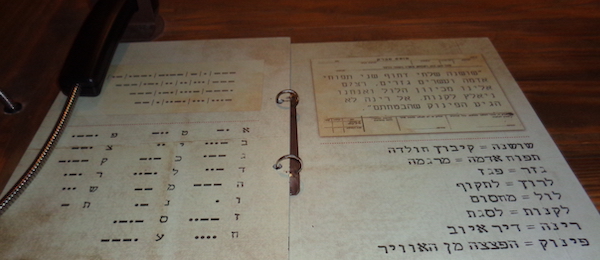
The museum deals less with the chronology of the battles and more with the physical and emotional difficulties convoy members faced, such as confronting dilemmas like whether the trucks should carry guns or food to besieged Jerusalem. There are displays of items used by the convoys, such as codebooks, handguns and rifles. And there are interviews with people who took part in the convoy operations, and part of the exhibit is animated.
Once we are again allowed to travel, the museum is worth a visit on your next trip to Israel. Allow at least an hour-and-a-half for the whole tour, which is recommended for viewers 10 years of age and older. The new museum requires visitors to make advance online reservations, and there are admission fees.
For Hebrew speakers, there’s a preview of the museum at parks.org.il/new/chan.
Deborah Rubin Fields is an Israel-based features writer. She is also the author of Take a Peek Inside: A Child’s Guide to Radiology Exams, published in English, Hebrew and Arabic.
The women of Israel
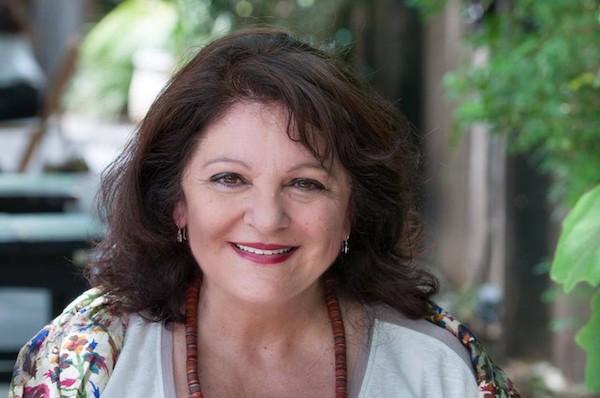
Curator and art historian Yael Nitzan, founder of Israeli Women Museum. (photo by Adi Eder)
How many “she-roes” of Israel can you name? Maybe you’d with Golda Meir, Israel’s first and only female prime minister. Or the tragic and courageous spy Sarah Aaronsohn and paratrooper Hannah Senesh. The list would include physician Vera Weizmann, the first first lady of Israel, who helped establish Chaim Sheba Medical Centre, now the largest hospital in the Middle East; and second first lady Rachel Yanait Ben-Zvi, who taught Jerusalem women how to grow vegetables, milk cows and make cheese so their husbands could go out and build the state.
These and many other women who played – and continue to play – important roles in the history and culture of Israel will be immortalized later this year when the Israeli Women Museum opens in Haifa. The museum will showcase at least 100 noteworthy but not necessarily well-known women, from architects to lawyers to choreographers, says founder Yael Nitzan.
A curator, art historian and TV producer, Nitzan has overcome many roadblocks and setbacks in realizing her dream of opening Israel’s first museum dedicated to women.
“It was a struggle,” she admitted. “Now, with corona, the world has everyone sitting and listening, and, in three months, I accomplished what I could not accomplish in the past six or seven years.”
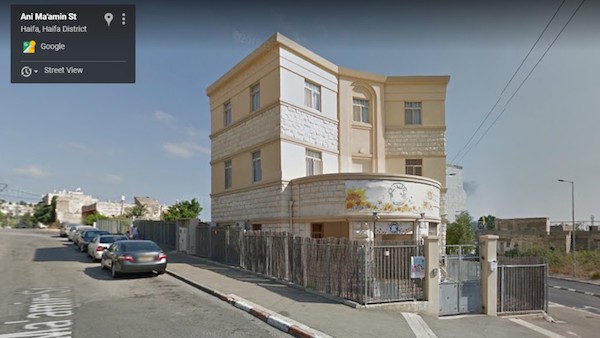
Nitzan gained the help of the Haifa Foundation in raising funds for the project, and she was given the rights to a former private school building in which the collections will be housed.
Brig. Gen. Gila Kalifi-Amir, former women’s affairs advisor to the Israel Defence Forces chief of staff, agreed to chair the museum. The board was joined by fellow Haifa residents Nadim Sheiban, director of the Museum of Islamic Art; and Prof. Aliza Shenhar, formerly a deputy mayor, ambassador to Russia and first female rector of an Israeli university.
“I found the right people,” Nitzan told Israel21c.
“There are currently about 45 women’s museums in the world, the most famous of which are the Women’s Rights [National Historic) Park in Seneca Falls, N.Y., and the Women’s Art Museum in Washington,” she said.
“The fundamental challenge in establishing a museum is not only in raising resources, but in creating a diverse and significant human and ideological infrastructure. The Israeli Women Museum must be a magnet of significance to the whole, or at least to large sections of, the population in Israel.”
Though Israel reportedly has the world’s highest ratio of museums per person, this will be the first one dedicated to the mostly unsung females responsible for weaving together its social, agricultural and business fabric. “Our museum will be on women in history and women in the arts,” Nitzan explained.
“The section on history commemorates the role of important women who have not been properly acknowledged.” Women like Hannah Maisel, who immigrated to Palestine in 1909 with a doctorate in agriculture and founded the region’s first agricultural training institute for women. And women like Rachel Roos Hertz (Harel), a Dutch resistance fighter who moved to Israel in 1950 after winning the U.S. Medal of Freedom and the U.K. King’s Medal for Courage in the Cause of Freedom, and became active in the Women’s International Zionist Organization (WIZO) – itself founded by Rebecca Sieff (Ziv) from the Marks family of Marks & Spencer, and whose name graces Ziv Medical Centre in Safed.
Some of the inspiration for this section comes from Prof. Margalit Shilo’s Women Building a Nation, a book published this year in Israel.
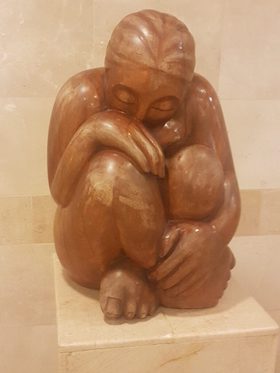
“In the art section, we will spotlight women whose work was not considered important, as well as very important female artists of today whose work is rarely shown in museums,” said Nitzan.
Artists to be included run the gamut from Ziona (Siona) Tagger, one of the most important female Israeli artists of the early 20th century, to contemporary painter Haya Graetz Ran.
“Women in Israel contributed greatly to the establishment of the state, contributed to the construction of the infrastructure of settlement, education, defence, law, government, society, culture, cinema and theatre,” Nitzan said. “But, although they left their mark, they did not receive proper recognition and respect in building society. The purpose of the museum is to raise their profile and to reshape the narrative of the critical role of women as full partners in leadership and public space design over the past century.”
Nitzan invites anyone to contribute stories or items relating to Israeli Jewish, Arab, Druze or Christian women, and even artists, poets and leaders from the Holocaust era who did not manage to get to Israel. She can be reached through the museum’s Facebook page. Donations for the project are being funneled through the Haifa Foundation.
Israel21c is a nonprofit educational foundation with a mission to focus media and public attention on the 21st-century Israel that exists beyond the conflict. For more, or to donate, visit israel21c.org.
Preserving Jewish past
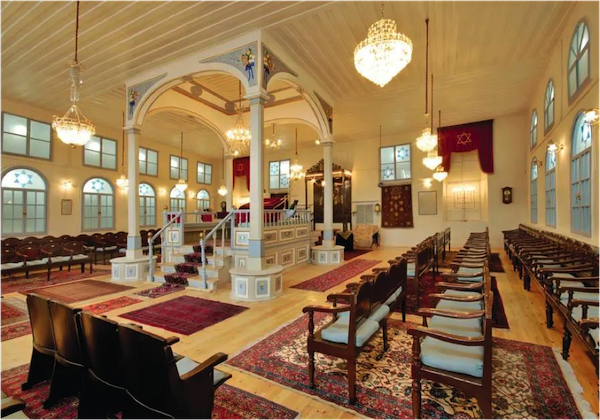
Algazi Synagogue was built in 1724 and has been renovated several times. (photo from Izmir Jewish Community Foundation)
The Izmir Jewish Community Foundation’s Izmir Jewish Heritage Project, for the preservation of Jewish heritage within the Turkish city, has started its activities. The project, financed by the European Commission, also has Our City Izmir Association as a partner.
Home to various cultures and religions, Izmir is one of the cities that has attracted Jewish immigration since ancient times. In the light of current data, the first concrete evidence of the Jewish community’s existence in the city dates to the fifth or sixth century CE. Sephardi Jews expelled from the Iberian Peninsula in 1492 and 1497 came to the Ottoman lands and settled in Izmir and its surroundings.
Since the middle of the 16th century, synagogues, hospitals, cemeteries and other institutions were established within the social, economic, cultural and administrative structure that started to form the present Izmir Jewish community. Most of the historical buildings that have survived to today are located in the Old Jewish Quarter, known as the historical centre and downtown of Izmir.
The Jewish population fluctuated after the 16th century due to earthquakes, epidemics, fires and global political, economic and sociological migrations. In the 1800s, Izmir was home to approximately 50,000 Jews, mostly Sephardi. A significant decrease in the population began in the early 1900s, when many people migrated to Europe and the Americas. Another massive outward move took place to Israel, after the establishment of the Jewish state in 1948. Today, the Jewish population of Izmir is about 1,100 people.
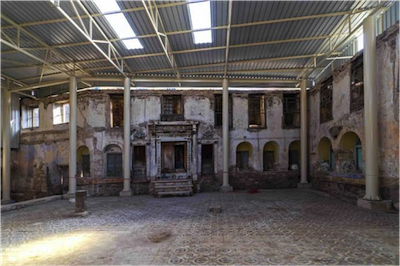
In parallel with the decrease in population, out of the city’s 34 synagogues, only 13 remained. With shrinking congregations, some of the synagogues were neglected and even disappeared over the years. In addition, seismic activity and environmental threats have put these structures in peril. As a result, all of the synagogues that have survived to the present day have to be preserved and restored.
Six of the nine synagogues in Kemeralti, the bazaar area at the heart of the city, tell the stories of centuries. Adjacent to one another and with their special architecture, they have unique value in the world. Currently, the area, consisting of the nine synagogues, one chief rabbinate building, five kortejos (courtyards) and the Juderia (Jewish district) creates a density of structures that is also of unique cultural and touristic value.
The 36-month heritage project includes:
- A masterplan for the region of the Old Jewish Quarter, located in the historical centre of Izmir, including conservation and restoration plans for the Hevra and Foresteros synagogues, which date to the 17th century. These synagogues, witnessing much of the Izmir Jewish community history, are unique, as they form a compound of four synagogues facing the same courtyard.
- This compound of synagogues will be promoted in Turkey and worldwide, to be recognized as a cultural heritage site, a tourist destination and an intercultural dialogue centre.
- A platform strengthening communication with local, national and international networks will be established. A physical location where the platform will carry out its work is also planned.
- Four books will be written and published on subjects such as Izmir Sephardi stories, Izmir Sephardi women, Jewish press in Izmir, and traditional synagogue textiles.
- Conferences, workshops, training and study visits will be organized.
- Works on corporate identity, website, brochures, short films, etc., will be brought to life in order to increase institutional capacity and promote this heritage.
While the project is funded by the EU, the content is entirely under the responsibility of the Izmir Jewish Community Foundation.
– Courtesy Izmir Jewish Community Foundation

חופשות מקומיות
הביקור בטופינו התפרש על פני לילה אחד
בפעמיים האחרונות כתבתי ארוכות על הטיול הטוב שעשיתי לוויקטוריה הבירה של מחוז בריטיש קולומביה. זאת בעידן הקוביד כאשר אי אפשר לטוס יותר לאירופה שאני אוהב אלה “רק” לטייל במחוז היפה שלנו.
לאחרונה הספקתי לבקר בשני מקומות בבריטיש קולומביה לראשונה מאז עברתי לקנדה לפני למעלה משש עשרה שנה. הראשון שלא היה מעניין במיוחד – היה לעיירה טופינו בקצה הרחוק (המערבי) של האי ונקובר והשני שהיה מאוד מעניין – היה העיר קולונה בעמק אוקנגן.
לטופינו טסתי במטוס הים שנוחת במים כך שפגשתי מעט נוסעים בטרמינלים הקטנים של ונקובר ושל טופינו. הטיסה לטופינו נמשכה שישים וחמש דקות ובמטוס הקטן מלבד הטייס היו עוד שתי נוסעות. הנוף מהמטוס שטס בגובה נמוך מרשים ביותר. תחילה רואים את פארק סנטלי ולאחר מכן את מי האוקיאנוס השקט השקטים בדרך לאי ונקובר. גם חציית האי מהצד המזרחי למערבי כדי להגיע לטופינו יפה ביותר.
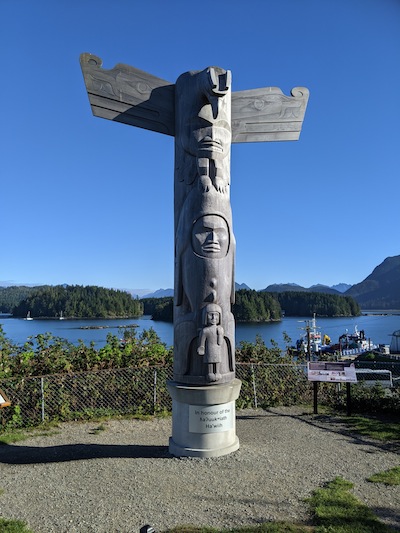 טופינו היא עיירה קטנה שמונה בסך הכול כאלפיים תושבים. מרבית התיירים באים אליה כדי לגלוש בגלים הגבוהים של האוקיאנוס או לעשות ספורט אתגרי אחר. וכן לטייל ביערות הגשם ובסביבה.
בגלל מגפת הקוביד האיים של האינדיאנים שסמוכים לטופינו היו סגורים למטיילים ולכן נאצלתי להסתפק בטופינו הקטנה בלבד. בתור תייר שמחפש תרבות לא מצאתי הרבה לעצמי בטופינו. לאחר הנחיתה הלכתי ברגל בערך כרבע שעה למלון מאק הממוקם ברחוב הראשון בסמוך למים. המלון היה נחמד ונקי אך בגלל המגפה הקפטריה שלו הייתה סגורה ולכן אכלתי במסעדות בחוץ.
הביקור בטופינו התפרש על פני לילה אחד בלבד וטוב שכך מבחינתי כי לא מצאתי עניין בעיירה הקטנה והנידחת הזו. ירדתי לחוף הים הפראי וטיילתי להנאתי. לאחר מכן הסתובבתי במרכז העיירה הקטן ומצאתי קפה נחמד לאחר הצהריים. בחיפושי הנואשים אחר תרבות מצאתי את הגלריה של רועי הנרי ויקרס. מדובר באמן אינדיאני (בן שבעים וחמש כיום) שזכה להכרה ברחבי העולם ואף קיבל פרסים רבים. רכשתי ספר שמכיל את היצירות שלו אותו הבאתי כמתנה לבת זוגתי בוונקובר. לאחר הביקור בגלריה המעניינת חיפשתי מקום לארוחת ערב. מתברר שבערב בטופינו ישנן ארבע מסעדות פתוחות וחוץ מזה כל העיירה סגורה. לאחר הארוחה הסתובבתי קצת באזור ומצאתי שתושבי העיירה הולכים לישון מוקדם מאוד. אחרי שמונה בערב הכול חשוך וסגור.
למחרת בשעות הצהריים המוקדמות הייתי אמור לטוס בחזרה לוונקובר במטוס הימי אך בגלל הערפל הכבד הטיסה בוטלה לצערי. כיוון שבקו טופינו ונקובר יש רק טיסה יומית אחת של המטוס הימי הבנתי שלא אוכל באותו יום לעשות את הדרך חזרה עמו כאמור בגלל הערפל. בנוסף הייתה טיסה אחת בלבד של מטוס רגיל (מופעל על ידי חברת פיסיפיק קוסטל) אך היא כבר יצאה לכיוון ונקובר. לכן לא הייתה לי בררה אלה לחפש אוטובוס הביתה.
למזלי ברגע האחרון מצאתי אוטובוס בקו טופינו אל העיר נאיימו שבמזרח האי ונקובר. היה זה אוטובוס קטן והנסיעה נמשכה כארבע עשות תמימות. באמצע נאלצנו לעצור לחצי שעה כיוון שתיקנו את הכביש בין טופינו לננאיימו. לאחר מכן עצרנו למספר דקות לשתייה ושירותים בפורט אלברני ומשם הגענו במהירות יחסית לננאיימו. המעבורת עדיין לא עזבה את המעגן בנניאמו, כך שיכולתי לעלות עליה ולשוט בנוחות לעבר ווסט ונקובר. משם מצאתי אוטובוס מהיר לדאון טאון ונקובר והגעתי סוף סוף הביתה. אם כן הדרך חזרה נמשכה שעות מרובות עד שהגענו לוונקובר.
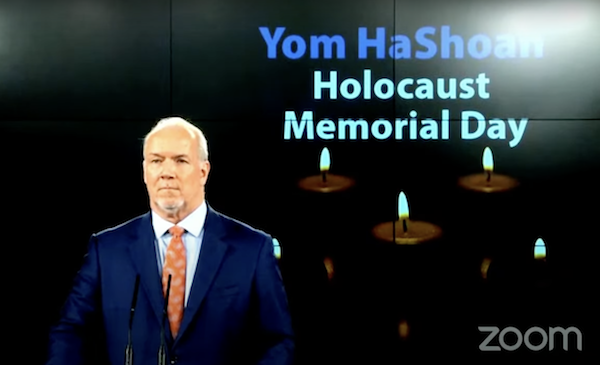
B.C. observes Yom Hashoah
B.C. Premier John Horgan opened the commemorative event. (screenshot)
A uniquely British Columbian virtual commemoration of Yom Hashoah, Holocaust Remembrance Day, took place April 8, convened by the Government of British Columbia in partnership with the Vancouver Holocaust Education Centre (VHEC) and the Centre for Israel and Jewish Affairs, Pacific Region.
Premier John Horgan opened the event.
“On Yom Hashoah, we remember the six million Jewish lives that were lost during the Holocaust. We also remember and honour the millions who lost their lives or were murdered because of their ethnicity, sexual identity or disability,” said the premier. “Today, we also pay tribute to Holocaust survivors and, as that community grows smaller, it’s all the more important that we work together to carry that message forward – that we will never forget and it will never happen again, especially in light of the ongoing threats of violence and discrimination Jewish people are facing worldwide today.”
Horgan noted an incident in Victoria where a Chabad centre was defaced with antisemitic graffiti a day earlier.
“These are the types of acts we must stand together and fight against with a united voice, regardless of where we come from, regardless of our orientations or ethnicities or our faith. We must stand against antisemitism and racism whenever we see it,” said Horgan. “As we light the candles at Yom Hashoah in remembrance, we must remain vigilant and, as we take action today and honour those who lost their lives and those who have struggled since the Holocaust, we must again remember that we cannot repeat our past.”
Michael Lee, MLA for Vancouver-Langara, also spoke.
“As the living memory of the Holocaust fades, the important act of remembering and coming together each year grows in importance,” he said. “It is our collective responsibility to ensure that we never forget and such a thing never happens again, because, sadly, this is not just about remembering history, but about standing together today against the racism, bigotry and antisemitism that still exists in our world.… As a community, now and every day, we must stand against these acts of hate and bigotry.
“Today, on Holocaust Remembrance Day, we are reminded of why it is so important to come together, to reflect and to ensure that the past is not forgotten. We must remember both the parts of this dark, dark history that we must not let be repeated and the acts of heroism that took place amid such tragedy. Even during a period of humanity’s darkest chapters, there was still good in the world, people who risked their lives to hide and save others from the Shoah. Amidst the horrors and atrocities, there were tales of love, hope and bravery, including with the many righteous among nations, people who demonstrated that light can triumph over darkness. Today, we reaffirm our commitment to never forget; remember the victims, the survivors and the heroes; and we pledge to build a better world in their memory.”
Dr. Robert Krell, founding president of the VHEC, lit six memorial candles. The premier lit a seventh candle “to honour the millions of Roma, Slavic, LGBTQ2+ and people with disabilities who lost their lives.”
Krell, speaking on behalf of Holocaust survivors, noted that 1.5 million of the six million Jews murdered in the Holocaust were children. An estimated 93% of Jewish children in Europe were murdered, which makes his survival extremely remarkable. The fact that both his parents survived, when more than 80% of Dutch Jews were killed, is additionally miraculous.

“I had lost all grandparents, uncles and aunts,” Krell said. “One first cousin remained. The war left its mark and I bear a special responsibility to remember what happened and try to derive lessons from that unfathomable tragedy. The tragedy was unique in its objectives, its focus and its ferocity. Jews were extracted wherever they resided, whether Paris, Prague or Vienna, whether city or countryside or the isles of Rhodes or Corfu. The enemy pursued us and tortured and murdered without mercy, without exception.”
While Dutch citizens remember the Canadian military’s role in liberating that country, Krell also noted Canada’s failure to save European Jews before the war.
Krell also addressed the issue of the International Holocaust Remembrance Alliance’s Working Definition of Antisemitism. Around the world, he said, 34 countries have adopted the definition, as has the province of Ontario.
“As a survivor who has been deeply involved in Holocaust remembrance and education, it strikes me as unconscionable not to accept the IHRA definition to assist us all in recognizing the signs and symptoms of the scourge of Jew hatred,” he said.
Yom Hashoah fell the day before the federal New Democratic Party convention that was to consider a resolution rejecting the IHRA definition. The matter never made it to the floor, but another resolution condemning Israel passed by an overwhelming margin.
“It is my hope that we will soon see the provincial government’s adoption of the IHRA definition of antisemitism,” said Krell.
Rabbi Dan Moskovitz of Temple Sholom also took up the issue of the antisemitism definition.
“The International Holocaust Remembrance Alliance’s definition of antisemitism is, I think, the tool that guides us in our work to combat anti-Jewish sentiments,” he said. “I want to urge our provincial government to join other jurisdictions in embracing the action that is required to combat both historical and contemporary hatred of the Jewish people.”
He added: “When we think of the death of a human being, we mourn the loss of the body and the soul, but, in my work, standing with too many grieving families at graveside, it is not the body that we miss most, that is merely the vessel for the soul, the part of that person that is unique in all the world,” he said. “That’s the part that we fall in love with and are forever changed by. The soul of another leaves an imprint on our heart. So, today, we remember six million murdered Jewish souls, their lives that have been extinguished, their dreams unrealized, their loves and relationships gone forever. We pray that those dear souls are comforted and embraced under the wings of God’s presence and that now, remembered so publicly, will never be forgotten.”
Moskovitz then chanted El Moleh Rachamim and a version of the Mourner’s Kaddish that includes the names of the Nazi death camps.
In addition to the B.C. event, the Vancouver Holocaust Education Centre also partnered on April 8 with the Neuberger Holocaust Education Centre in Toronto, the Azrieli Foundation, Canadian Society for Yad Vashem, Facing History and Ourselves, Friends of Simon Wiesenthal Centre, March of the Living Canada and UIA in a Canada-wide Yom Hashoah online program that included survivor testimony from individuals across the country and a candlelighting ceremony.
A day earlier, the VHEC partnered with the Montreal Holocaust Museum for a virtual program focusing on the importance of remembrance in the intergenerational transmission of memory. Survivors and members of the second and third generations spoke about their experiences. Video recordings of all three events are available at vhec.org.
Stunning Concordia apology
In 2002, when the once and future prime minister of Israel, Binyamin Netanyahu, visited Montreal, a violent riot by anti-Zionists erupted at Concordia University. That was a turning point in a now two-decades-long period of anti-Israel and, in some cases, anti-Jewish activism on Canadian campuses.
Universities across Canada would go on to host events such as Israel Apartheid Week and, on multiple campuses, countless peaceful and less peaceful attacks on Israel and its supporters have occurred. As all of this has transpired, Concordia has had the reputation of having probably the most anti-Zionist and antisemitic campus culture in the country. So, many Jews and other observers were stunned when the Concordia Student Union issued an apology to the Jewish community. Released the day before Yom Hashoah, the statement from the CSU began: “Today, we strive to acknowledge our mistakes and begin the process of correcting ourselves.”
The 500-word letter of apology was an unequivocal denunciation of past CSU actions and approaches.
“Overall, our mistakes can be described in one word, indifference,” it reads. “Indifference to one of the world’s oldest forms of discrimination. Indifference to the concerns of our Jewish students. Indifference to the struggles they have faced. While a common topic of our meetings has been how the CSU can tackle other forms of discrimination or support certain minority groups, the Jewish community and antisemitism are seldom brought up.… The CSU has assisted in fostering a campus culture where Jewish students are afraid to openly identify as Jewish…. Our silence on these issues only benefits the oppressors and sets the belief that these acts are somehow justifiable, which encourages the oppressors to continue this behaviour. This behaviour continues well outside the boundaries of our campus and into a society where they may harm many more individuals.”
In addition to the apology for past behaviours, the statement promises concrete action now and in the future. All elected student union officials will receive training on antisemitism every year. Executive members of all Concordia campus clubs will also receive annual training to identify antisemitism and help foster an environment where Jewish students and members of the community can feel safe and fully included. A bystander prevention program is being developed to help students “identify and safely intervene and/or support Jewish students if they witness an act of antisemitism.”
“While we stood idly by in the past while acts of antisemitism occurred, we hope not to repeat those mistakes again and hope the Jewish community will give us another chance to support them in the future,” the apology concludes.
The statement was issued after a process of listening to Jewish students express their fears and experiences with antisemitism at the university. It was drafted by Eduardo Malorni, currently the student life coordinator of the CSU, who will assume the role of general coordinator (the equivalent of union president) in June.
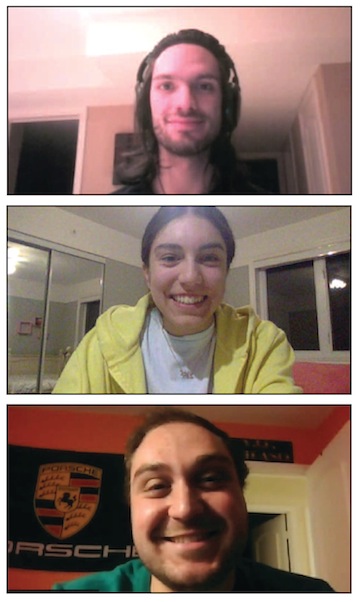
“We got feedback that it was very appreciated,” Malorni told the Independent. “Some people brought up that it was too little, too late, which is a fair criticism for an organization that’s been around as long as us. But our feedback all seems to be positive.”
Two Jewish campus leaders who also spoke with the Independent were emotional.
“I cried the first time I read it,” said Nicole Nashen, an elected CSU councilor and incoming president of Concordia Hillel.
“We cried together,” said Harrison Kirshner, a vice-president of Concordia Hillel, a CSU councilor and incoming executive member.
“As a student, when I first came to Concordia, I knew in my mind what type of institution this is and I knew that I had to hide part of myself in a sense,” said Kirshner. He would think twice, he said, before mentioning celebrating Jewish holidays, for example. Part of the progress that culminated in the apology, he suggested, was students like him opening up and sharing their experiences.
“I realize that conversation and speaking to people about what we face is a much better way than hiding it and not talking about it and not addressing those issues,” he said. “Because, if we don’t address them, nothing is going to change. But, if we do address and we do talk about the experiences that we face, change can stem from that. That’s what we are seeing happening.”
The campus climate is significantly better than he expected when he arrived.
“I noticed that people were receptive to those discussions, people that I thought maybe wouldn’t be receptive to those discussions were receptive to those discussions,” he said. “Part of the reason is because, instead of going in with a fighting attitude, we need to go in with a respectful attitude, a dialogue attitude, an attitude that allows us to open up a conversation with our fellow councilors who I consider to be allies, friends.”
Nashen also acknowledged a feeling in the pit of her stomach when fellow students would raise the topic of ethnicity.
“I didn’t know how I was going to be labeled or what the reaction was going to be or what assumptions are going to be made about me because of the fact that I’m Jewish,” she said. Elected to the CSU recently for the second time, she said she never foresaw being so welcomed.
Both Kirshner and Nashen credit Malorni, who is not Jewish, for encouraging them to share their stories and for making other Jewish students comfortable to come forward and share their experiences. The letter, they said, came from his heart.
“It did come from the heart,” Malorni admitted, “but it only came from the heart because Harrison and Nikki were so open about talking about the issues they faced and also in setting up meetings with other Jewish students who would never have come near the CSU with a 10-foot pole, setting up meetings and saying it’s safe, you can explain it to them, they’re not going to bite your hand off, because students would never have told us 95% of what they told us, unless those meetings were facilitated by both Harrison and Nikki. That’s why I think, in terms of writing the apology, when it came down to it, it became – I wouldn’t say it was easy to write it – but the words were a little easier to come from brain to paper.”
The letter, of course, comes from a new group of CSU leaders, not from the individuals who were involved before and perpetrated some of the extreme activities, such as a Passover Against Apartheid event a few years ago. The current crop of leaders was elected in a campus vote that saw extremely low turnout. However, Malorni noted, student union votes at Concordia and most universities are notoriously and chronically low, so the small number of voters who endorsed the current leaders is commensurate with the number who voted for the earlier, problematic representatives.
“The majority of messages that I’ve received are shock,” Nashen said. “I would have never imagined this could have ever happened at Concordia.… I think a lot of people, especially maybe people who went to Concordia and were involved in Concordia 10 to 20 years ago, but haven’t kept in the loop about CSU affairs, were just utterly shocked, could not believe it. Then, a lot of current students were reaching out to me saying, ‘I just had shivers reading this.’ I can’t believe that our issues are really being taken seriously and that the CSU really cares to help us fight antisemitism.”
She acknowledged that the apology is the beginning of a process, not the end.
“I don’t think this was a fix-all,” she said. “I think this was the first step that the CSU is taking toward telling the Jewish community that they do care about us now and they are ready to start listening to us and taking our issues seriously. What really put the cherry on top was not just words but it came along with actionable steps.”
Malorni said Concordia has had a national reputation as a tough campus for Jewish students, but he is well aware that other campuses have also had their experiences with conflict.
“While we had the worst reputation for it, it’s not something that doesn’t exist at the other universities,” he said. When the apology was posted, he said, commenters from all over North America recounted their own experiences with antisemitism at their universities.
“It’s not a thing limited to Concordia, despite our little extra bad reputation,” he said. “It’s something that seems to have crossed the bounds of our land.”
Model of resilience
As we have reveled in the summer-like weather of this extraordinary spring, we face, on the one hand, a looming overload of our health system as COVID variants lead to an especially worrisome wave, while, on the other hand, we enjoy a sense of huge optimism every time we see another friend’s vaccination selfie. There is a race between the spread of the virus and the distribution of the vaccine.
There will be time to reflect on the responses of governments around the world, but, for now, we thank again the medical professionals and other frontline workers, which in the circumstances includes retail and restaurant workers and anyone whose position puts them in front of the public so that the rest of us can live with comparative ease.
We are now in the second round of annual events held virtually. We have celebrated Passover with online seders two years in a row and likewise have marked simchas and solemn occasions through our devices. This is becoming something close to routine.
The past couple of weeks have been especially packed with virtual community events. It is remarkable how meaningful and moving ceremonies like Yom Hashoah (Holocaust Remembrance Day) and Yom Hazikaron (Israel’s Memorial Day) can be even when mediated through technology. Joyous occasions like Yom Ha’atzmaut (Israel’s Independence Day) were different but delightful.
On Sunday, Jewish Family Services held a virtual grand opening and tour of their new food hub, dubbed the Kitchen, a centre for sustainable food, education and community-building around this most central of human necessities. (See story next issue.)
What was inspiring about the JFS event, in addition to the project itself, is the resolve and optimism demonstrated by the very act of launching the facility in the midst of a pandemic. It is a bit of wonderful audacity, or chutzpah, to start a new initiative like the Kitchen and to see it through to a physical opening, despite the challenges thrown at the organization by COVID.
Of course, there are countless similar examples, in our community and others, of people doggedly pursuing great causes in the face of the crisis we are in. There is the small miracle that this pandemic hit us at a time when we have the technology to see and talk to people worldwide in real time. But the technology is only as good as the people operating it. On a dime, schools, synagogues, arts and cultural institutions, education and advocacy agencies, as well as families, adapted as best they could under sometimes nearly impossible circumstances. The quality of so many of these efforts has been remarkable.
What makes things like the Kitchen so significant is that it was not an existing program that went virtual, but a fresh concept in community well-being that was envisioned and created. Sunday’s Chanukat Habayit was the culmination of that foundational work and the beginning of what should be decades of programs and services.
If there were a model of behaviour to inspire clients of Jewish Family Services, and all of us, that demonstration of resilience and determination in times of difficulty is an ideal one.
Counting the Omer at home
For university students or professors, like my husband, the end of term is coming. Some universities call this winter term, others say spring term. Even though I haven’t been in school for a long while, I still remember the feeling at the end. Many of my classmates were elated after they sat their last exam. They’d yell loudly after they left the exam hall, or go drinking or do something celebratory and crazy. I often had an entirely different experience.
Most of my coursework, in the humanities and social sciences, required writing papers instead. During the study week and the exam period that followed, I’d line up the due dates, create a calendar and plow through. Each paper would require its set of books, carefully piled up, with scraps of paper as bookmarks or long lists of online references. I’d check the professor’s requirements – five pages? 12? 20? – and sometimes crank out a paper every day or two.
In that era, the professors liked hard copies, so I’d print out my work, staple it, and trudge across campus, leaving it in a professor’s mailbox. Then, I’d walk home and, sometimes, I’d take a break from writing. Other times, I’d just start the next paper. When the last research paper was written and submitted, that was it. No fanfare. No yelling or parties or even shared experience with classmates. In some cases, by the time I finished writing, the dormitories would be emptying out. I’d feel hollow and exhausted, but, even while I was alone, I was triumphant. It was all finished. I could go home.
Real life isn’t a lot like the end of a semester. True, holidays end (buh-bye, Passover!! See ya next year!) and big work projects get turned in, but, many times, there’s no big completion marker, no hurrah. It’s a lot more like turning in those term papers. It’s a lot less like the group partying after exams.
Our triumphs and mile markers during the pandemic have been quieter, overall, for me – a lot like that feeling of turning in my research papers by myself. I cheer every time someone shows off their COVID vaccination information on social media. I’m in awe of what many have accomplished during this independent time in terms of learning new skills (sourdough, pottery, whatever) or in their career trajectory; again, mostly seen via social media. It’s sometimes hard to “see” oneself the same way, though, particularly when vaccinations are going so slowly.
Whlie I know, objectively, that many of us are accomplishing a ton, it’s also equally valid to do a reasonable job just staying afloat during such a crisis. Getting meals on the table, kids educated and – not to be forgotten – working are big accomplishments right now. As some are struggling with mental health, food or housing insecurity, it can be important to recognize how many of us are doing OK, and could potentially help someone else.
The Jewish calendar has really steered our household during this stay-home period. For instance, right now, we’re counting the Omer at home, for the first time ever. My kids did it in preschool, and I’ve been vaguely aware of it some years, but I certainly wasn’t raised with doing this at home.
What’s the Omer? It’s the verbal counting of the days between Passover and Shavuot. While we no longer bring a grain offering to the Temple in Jerusalem on Shavuot, we still measure this stretch between the holidays. The kabbalistic mystics added a level of meditative imagery, too, a way of preparing ourselves to mark the gift of the Torah to the Jewish people on Shavuot.
One of my twins is keen to cross days off the calendar. He and I are counting the Omer together. To remember, I’ve been writing the right number on a chalkboard and he and I turn to each other at some point and announce, “It’s the Xth day of the Omer!” Then we say, for instance, “NINE, NINE, NINE!” and laugh. But, in all seriousness, for us, it has become a way of keeping track of time. It’s an accomplishment, if not a divine mystical meditation.
I’m very much looking forward to being vaccinated – and I’m hoping to say the Shehecheyanu blessing (being grateful for having reached this moment and season). I can’t wait to feel, with the vaccination, that I’ve done all I can to cherish life, according to Jewish tradition, and be healthy for my family.
On the Jewish calendar, we’re looking forward to having a family barbeque on Lag b’Omer. Both 9-year-olds here are excited about their hot dogs and maybe getting to eat them outside.
It still feels like an absolutely uphill trudge in the snow, though. This is literal – we’re also in the midst of a big April snowstorm in Winnipeg. The plows are working outside my home as I write this. However, using this ancient system to count the days, or the Omer, both connects us to our past and helps us make incremental gains towards whatever is to come in our hopefully brighter, post-pandemic future.
Every year, we receive the Torah on Shavuot, and it’s something to celebrate, a milestone. Each moment, no matter how mundane, is something for which to feel grateful.
Many say that, when the pandemic is over, there will be a roaring ’20s feel, that people will party wildly in the streets. I suspect it’s going to be a lot more like the trickling sensation of writing and turning in one paper at a time, until I’d met all my undergraduate course load deadlines. Even so, I’m counting the days until I can feel relieved at the end, and celebrate with family, at home. Since no one knows when that end will be scheduled on any calendar, I’ll just keep counting the Omer, instead.
Joanne Seiff has written regularly for CBC Manitoba and various Jewish publications. She is the author of three books, including From the Outside In: Jewish Post Columns 2015-2016, a collection of essays available for digital download or as a paperback from Amazon. Check her out on Instagram @yrnspinner or at joanneseiff.blogspot.com.