Skip to content
  • Home
  • Subscribe / donate
  • Events calendar
  • News
    • Local
    • National
    • Israel
    • World
    • עניין בחדשות
      A roundup of news in Canada and further afield, in Hebrew.
  • Opinion
    • From the JI
    • Op-Ed
  • Arts & Culture
    • Performing Arts
    • Music
    • Books
    • Visual Arts
    • TV & Film
  • Life
    • Celebrating the Holidays
    • Travel
    • The Daily Snooze
      Cartoons by Jacob Samuel
    • Mystery Photo
      Help the JI and JMABC fill in the gaps in our archives.
  • Community Links
    • Organizations, Etc.
    • Other News Sources & Blogs
    • Business Directory
  • FAQ
  • JI Chai Celebration
  • JI@88! video

Recent Posts

  • Story of Israel’s north
  • Sheltering in train stations
  • Teach critical thinking
  • Learning to bridge divides
  • Supporting Iranian community
  • Art dismantles systems
  • Beth Tikvah celebrates 50th
  • What is Jewish music?
  • Celebrate joy of music
  • Women share experiences 
  • Raising funds for Survivors
  • Call for digital literacy
  • The hidden hand of hate
  • Tarot as spiritual ritual
  • Students create fancy meal
  • Encouraging young voices
  • Rose’s Angels delivers
  • Living life to its fullest
  • Drawing on his roots
  • Panama City welcoming
  • Pesach cleaning
  • On the wings of griffon vultures
  • Vast recipe & story collection
  • A word, please …
  • מארק קרני לא ממתין לטראמפ
  • On war and antisemitism
  • Jews shine in Canucks colours
  • Moment of opportunity
  • Shooting response
  • BC budget fails seniors
  • Ritual is what makes life holy
  • Dogs help war veterans live again
  • Remain vital and outspoken
  • An urgent play to see
  • Pop-up exhibit popular
  • An invite to join JWest

Archives

Follow @JewishIndie
image - The CJN - Visit Us Banner - 300x600 - 101625

Accessibility seems improved

Accessibility seems improved

(image from flickr / Province of British Columbia)

Last November, the American advocacy organization Respect Ability announced some good news. New research it had conducted in 2021 suggested that disability awareness and inclusion was improving in Jewish communities across North America and Israel. According to its most recent survey, more synagogues, Jewish community centres, schools and private institutions are designing programs that consider the needs of people with disabilities. And more individuals are able to find Jewish organizations that support individuals with invisible disabilities like autism and attention-deficit/hyperactivity disorders.

Respect Ability’s goal for the survey was to determine the health of disability rights in diverse Jewish communities, particularly in countries where there were laws against employment and housing discrimination. Its last survey had been in 2018, and researchers wanted to know whether accessibility and acceptance had improved in the past three years.

There were just over 2,000 respondents in total, primarily from Canada, the United States and Israel. The overall message was that inclusion and accommodation was expanding. Accessibility for wheelchairs and improved opportunities for individuals with sight or hearing challenges were on the rise, as were outreach efforts for individuals with disabilities in general.

What is more, the number of faith organizations hiring rabbis and staff who had disabilities and, therefore, understood firsthand the challenges of a physical or cognitive disability, had increased by more than 73%. More than half (57%) of the survey-takers also said that the organizations had made public commitments to support diversity.

But the survey also identified a key obstacle: many community leaders wanted to help expand opportunities for inclusion, but “didn’t know how.” Roughly one-fifth of all respondents said that expanding opportunities in their faith communities was limited by leaders’ lack of knowledge or experience in making settings more accessible. This meant, in some cases, that members with invisible disabilities like autism or ADHD didn’t have access to resources or were turned away from programs and activities.

Most of the responses to the survey came from Respect Ability’s home base: U.S. states like California and New York, where laws and advocacy initiatives are different from those in Canada. Only about 7% of the responses came from Canada, where disability rights are protected by the federal Charter of Rights and Freedoms. The survey also did not reveal how much, or if any, of the Canadian data came from the Vancouver area. So, are the survey’s findings reflective of diversity inclusion here?

The last three years have been challenging for many, but particularly for organizations that rely on in-person community participation. The 2020 shutdown of schools, synagogues and community centres due to COVID forced many organizations in the Vancouver area to suspend programs that offered disability-inclusive services. Still, the Jewish Independent found that a number of organizations were able to develop creative ways to maintain their inclusive classes and programs.

Trying to inspire inclusion

In 2018, the Jewish Federation of Greater Vancouver launched its Inspiring Inclusion grant program to assist community organizations in designing or improving inclusive programs. The grant competition was created as part of its 2020 Strategic Priorities, and it offered up to $2,500 to organizations that developed a new program or idea that would expand disability inclusion.

Four one-year grants, which were awarded in 2020, went to Vancouver and Richmond applicants. Each offered a unique way for engagement, ranging from new educational strategies that catered to individual learning approaches to special equipment that helped expand creative participation in the classroom.

The Jewish Community Centre of Greater Vancouver’s Family Yoga Fundamentals program was designed to appeal to a variety of abilities and offered options for in-person family participation. It later gave rise to a virtual format that attendees could link up with from home. According to the JCC’s adult programs coordinator, Lisa Cohen Quay, Family Yoga Fundamentals integrates adaptable exercises that are non-stigmatizing and fit a variety of abilities. Quay said the program has also been shown to help with pandemic stress and loneliness.

Richmond Jewish Day School turned to music as a way to inspire inclusion. According to principal Sabrina Bhojani, the grant provided funding for specially adapted Orff percussion instruments, or xylophones that could be used by students with special needs. “Music education is an integral component of both our B.C. and Hebrew curriculum at RJDS,” Bhojani said. “Weaving music into [the] curriculum is a meaningful way to help our students develop their Jewish identity and better understand their culture.”

Congregation Beth Tikvah used the funding to help develop Kavod. According to Rabbi Susan Tendler, the program aims to ensure that the synagogue’s services and activities are open to everyone, “regardless of personal physical, financial, or accessibility limitations.” Kavod’s development is ongoing.

Congregation Beth Israel received a grant to create new Hebrew school programming. Beth Israel’s director of youth engagement, Rabbi David Bluman, said the funding helped make the Hebrew reading program more inclusive to children with learning challenges. “We always strive to be [as inclusive] as we can,” he said, adding that many of Beth Israel’s youth programs are adaptable to students’ abilities, such as the use of “shadow” companions who function as a “big brother or big sister” for a child during activities and lessons. The shadow program can be used for age levels. “We want our teens to be as independent as possible,” Bluman said.

B’nai mitzvah programs

Both Beth Israel and Temple Sholom tailor their b’nai mitzvah programs to meet the specific abilities of the child. Temple Sholom School’s principal, Jen Jaffe, said about 10% of the student body have varying needs.

“All b’nai mitzvah-aged children are given the opportunity to have a b’nai mitzvah, and the clergy works with each family to make sure expectations and goals are feasible and met. Each child is given the chance to shine regardless of any disabilities,” Jaffe said. The school also trains madrachim, or helper students, to support students with invisible disabilities.

Beth Israel is also known for its inclusive b’nai mitzvah program, which is led by ba’allat tefilla Debby Fenson. She said the program is designed to ensure that a child, irrespective of ability, can participate in the service: “I think that the expectation is that every child should be called up to [the bimah]. It’s not about how well they read the Torah, it’s about welcoming them into the community.”

Fenson said the community has celebrated more than one b’nai mitzvah in which a child’s medical challenges needed to be considered. In one case, the child, who was nonverbal, was aided by his mother in saying the Shema. “There was clear understanding on his part,” Fenson said. “His mother helped him in forming the words and saying along with him. He was welcomed into the community.”

Leadership by inclusion

Respect Ability’s survey of North American and Israeli Jewish communities highlighted two factors that are often important to creating inclusiveness: the top-down commitment to diversity and a leader’s personal experience. All of the above synagogues, schools and community services – as well as others – benefit from clear initiatives that attract families with accessibility needs and see inclusion as an expanding mission. In some cases, they also benefit from leadership that is open about their own health challenges as well.

Beth Israel Rabbi Jonathan Infeld said he is aware that his willingness to talk openly about his own challenges can help create a supportive environment for others. Infeld was born with a congenital heart defect.

“Unfortunately, I have firsthand experience with health issues that I am happy to share with people about, certainly because I want to be transparent about who I am as a human being…. I would hope, had I been born with a whole heart and not a hole in it, that I would still have a whole heart,” he said, noting that when we’re forced to reflect on our own abilities and limitations, it can inspire empathy for others faced with similar challenges.

One area that was not addressed in the survey was accessible housing, which helps expand disability inclusion. Tikva Housing Society’s very first housing project in 2008 contained accessible units. The organization’s third inclusive property, Dogwood Gardens, opens this year in the West End. This will be the subject of a future story in the Jewish Independent.

Jan Lee is an award-winning editorial writer whose articles and op-eds have been published in B’nai B’rith Magazine, Voices of Conservative and Masorti Judaism and Baltimore Jewish Times, as well as a number of business, environmental and travel publications. Her blog can be found at multiculturaljew.polestarpassages.com.
Format ImagePosted on February 25, 2022February 23, 2022Author Jan LeeCategories LocalTags b'nai mitzvah, Beth Israel, Beth Tikvah, Debby Fenson, disability awareness, health, inclusion, JCC, JDAIM, Jen Jaffe, Jewish Community Centre of Greater Vancouver, Jewish Federation, Jonathan Infeld, Lisa Cohen Quay, music, Respect Ability, Richmond Jewish Day School, RJDS, Sabrina Bhojani, survey, Susan Tendler, Temple Sholom, Tikva Housing
MONOVA’s new space

MONOVA’s new space

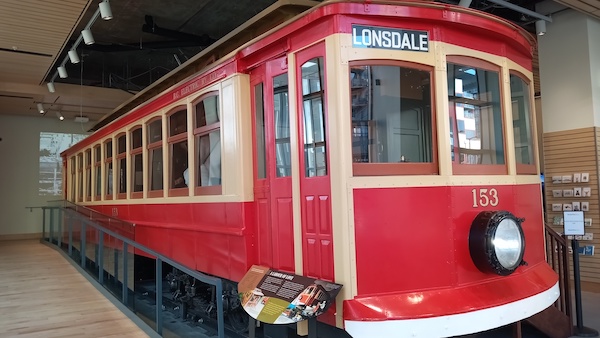
Housed in the lobby of the Museum of North Vancouver, visitors can once more hop on Streetcar #153, which carried passengers along the Lonsdale Line from 1912 to 1946. (photo by Cynthia Ramsay)

This story took me a long time to write. Everything I read about the Museum of North Vancouver (MONOVA) set me off on another path of exploration. I’ve watched (really) old home movies, looked at countless archival photos, perused online exhibits – all of this after I was treated in December to a tour of the museum’s beautiful new space at 115 West Esplanade. Such is the seemingly never-ending amount of wonder the museum offers.

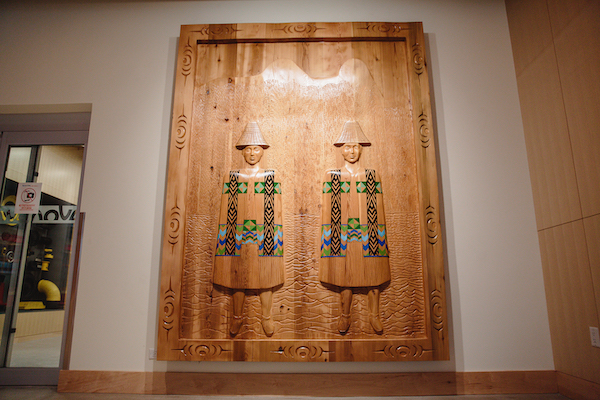
Days after the official opening on Dec. 4, curator Barbara Hilden walked me through the exhibits. I arrived early and had time to buy a few things in the gift shop – there are some excellent books, clothing, toys and other merchandise for sale. I also walked through the restored electric Streetcar #153, which carried passengers up and down the Lonsdale Line from 1912 to 1946, and admired Squamish (Sḵwx̱wú7mesh) artist Wade Baker’s cedar carving of Sch’ich’iyuy (the Two Sisters).

“The red cedar Sch’ich’iyuy panel is based on the ancient Sḵwx̱wú7mesh Sister’s Mountain Transformer legend,” says Baker on MONOVA’s website. “The twins were raised from childhood to be leaders for their people. They asked their father, the siyam, the chief, to bring peace to the warring tribes along the coast. He could not refuse their request and fires were lit all along the coast to signal a great welcoming feast to bring peace. For their efforts, the twins were immortalized in the mountain peaks you see today that watch over us.”

photo - The museum’s lobby features a cedar carving of Sch’ich’iyuy (the Two Sisters) by Squamish carver Wade Baker
The museum’s lobby features a cedar carving of Sch’ich’iyuy (the Two Sisters) by Squamish carver Wade Baker. (photo by Alison Boulier)

Beyond the museum lobby is a sparse area and a space for activities, a moveable wall separating the two. Visitors then walk through a corridor with images of trees on the walls, their branches continuing onto the ceiling. The Indigenous Welcome Circle, which highlights Squamish and Tsleil-Waututh (Səl̓ílwətaɬ) stories and items, is the anchor of the room. There is the notable presence and prominence of Indigenous involvement in the displays and, the day before the new museum’s opening, there was a memorandum-of-understanding signing ceremony that included members of the Tsleil-Waututh and Squamish nations.

“The MOUs affirm our commitment to working with Tsleil-Waututh and Squamish nations as equal partners,” Hilden told the Independent in an email interview after the tour. “MONOVA formed the Indigenous Advisory Committee several years ago to inform our programming, collecting, curatorial and operational activities. We rely on IVAC members to direct our strategic priorities in these areas and others, and to liaise with the nations. These needs do not diminish with opening our new location; on the contrary, their importance only increases. IVAC will continue to exist and we anticipate it growing larger and more robust as we look to incorporate Indigenous ways of knowing throughout the institution.”

Exhibits in the new permanent gallery include the Indigenous Welcome Circle, as well as themed displays – on sports, women in wartime, shipbuilding on the North Shore, and more. Interactive children’s displays help young visitors understand, for example, how to load a cargo ship and what various animals eat and what their poop looks like (this was a particularly fun exhibit, I must admit). An interactive map takes people through the history of the North Shore by water, trail, rail and road. Panels on one of the walls take us from the late 1700s to the present day with several photos and brief descriptions of notable events, good and bad, listed chronologically. There is a section – Truth and Reconciliation – dedicated to residential school survivors.

The museum’s first feature exhibition is called You Are Here @ The Shipyards. “It discusses the changing nature of North Vancouver’s lower Lonsdale area, from Indigenous settlement to working shipyards to contemporary tourist destination,” explained Hilden. “The exhibition features historic objects, archival photos and film … [and] will open in the spring of 2022 and run for one year. In the future, it’s anticipated that our calendar will be a mix of internally curated and traveling exhibitions.”

The North Vancouver Museum opened in 1972 in the old Pacific Great Eastern Historic Railway Station and moved to Presentation House in 1976, where it remained until last year. With the new location, came the new name, MONOVA.

“It’s taken more than 50 years, a multitude of meaningful discussions with community members and Indigenous leaders, countless volunteer hours, and painstaking research to amass a collection of more than 9,000 artifacts, but, after 20 years of planning, finally, the Museum of North Vancouver is ready to welcome the public,” reads the press release announcing the December opening.

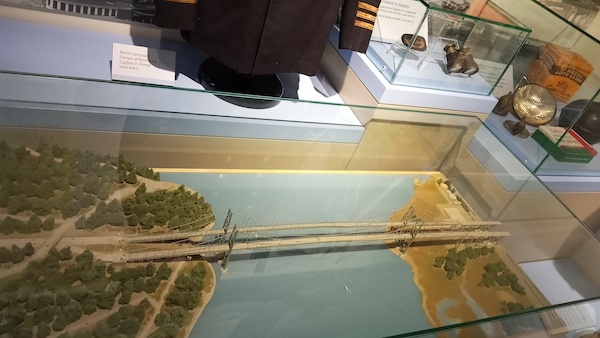
photo - Squamish Nation partnered with architect Moshe Safdie in the 1990s and proposed building a twin span next to the original, congested Lion’s Gate Bridge, but rehabilitation work of the existing bridge was undertaken instead. This model is currently on display at MONOVA
Squamish Nation partnered with architect Moshe Safdie in the 1990s and proposed building a twin span next to the original, congested Lion’s Gate Bridge, but rehabilitation work of the existing bridge was undertaken instead. This model is currently on display at MONOVA. (photo by Cynthia Ramsay)

In addition to the exhibits and activities that take place at 115 West Esplanade, there are many online exhibits. Archivist Dr. Jessica Bushey noted that two – Walter Draycott’s Great War Chronicle, and Climbing to the Clouds: A People’s History of B.C. Mountaineering – were created by the North Vancouver Museum and Archives, all departments working together.

“These were very large endeavours, taking nearly a year to create and involving consultants and partners,” said Bushey. “More recently, the archives team has focused on creating online exhibitions drawing upon archival materials that provide virtual access to the collections and offer a companion to on-site exhibitions at the archives building in Lynn Valley. These are smaller in scale, but strong in their interactivity and showcasing of archival photographs, moving images and oral histories.”

Currently, there is no specific Jewish connection in any of the material on display, but the museum is actively seeking additions to its collection.

“At the moment,” said Hilden, “we have materials exhibited from North Vancouver’s Ismaili, Iranian and Japanese communities. All the exhibits in our long-term gallery are designed to be flexible and changed out regularly, so we do anticipate updating and rotating these stories as more communities become aware of MONOVA and our desire to represent all North Shore stories.”

She said, “We would be thrilled to hear of more Jewish connections. We currently have very few tangible objects in our collection that would help us tell these stories, and I’d love to hear from members of North Van’s Jewish community.”

“The archives of North Vancouver is very interested in acquiring donations of archival materials from the Jewish community working, residing and thriving in the city and district of North Vancouver,” agreed Bushey, also noting the archives’ current lack of these materials.

“We have one file on Samuel Davis Schultz, who was a judge and alderman in North Vancouver and founded the honour roll of North Vancouver High School in 1912, a photograph of S. Schultz and a 2014 copy of the special issue of the Western States Jewish History quarterly journal, which focuses on the Davies and Schultz families. Lastly, we have the photographs from a City of North Vancouver 2000 millennium project on Diversity on the North Shore, which included the Jewish community and led to the publication From Far and Wide: Cultural Diversity in North Vancouver,” said Bushey.

“If anyone has archival records (e.g., correspondence, photographs, albums, diaries, home movies, business records etc.) they would like to donate,” she added, “they can email the archives with the particulars and we will get in touch.”

“MONOVA considers donations that have a close connection to the community of North Vancouver,” said Hilden. “The artifacts don’t need to be extremely old or extremely valuable to be considered. Sometimes, the most thought-provoking pieces are those that tell quotidian stories of everyday life. (Of course, the old and valuable belongings are welcome also!) We care for everything in our collection and, when we make the decision to acquire a piece, we commit to preserving, conserving and making it available for generations to come.”

To connect with the museum or archives, visit monova.ca.

Format ImagePosted on February 25, 2022February 23, 2022Author Cynthia RamsayCategories Arts & CultureTags archives, history, MONOVA, museums, North Vancouver, Squamish Nation, Tsleil-Waututh

Community milestones … Duhan Kaplan, B.C. Flood Relief Fund, Community Recovery Task Force

The Committee on Teaching and Learning of the American Academy of Religion has honoured Rabbi Dr. Laura Duhan Kaplan with the 2022 Katie Geneva Cannon Excellence in Teaching Award, which recognizes the importance of teaching and celebrates outstanding teaching in the field.

Duhan Kaplan currently serves as the director of inter-religious studies and is a professor of Jewish studies at Vancouver School of Theology. The award committee was deeply impressed by her commitment to critical and trauma-informed pedagogy, meaningful interreligious dialogue and community engagement. They also noted her innovative classroom practices, including an intensive course that culminates in a public-facing conference on contemporary interfaith issues.

The American Academy of Religion, in Atlanta, Ga., is dedicated to the academic study of religion, with more than 5,000 members around the world. Its mission is to foster excellence in the academic study of religion and enhance the public understanding of religion.

***

Late last fall, storms flooded the entire cities of Princeton, Merritt and Abbotsford, and many other areas across the Fraser Valley. In response to the damage and displacement caused, the Jewish Federation of Greater Vancouver was among the organizations that set up mechanisms to aid those affected.

In November 2021, Federation opened the B.C. Flood Relief Fund with a $10,000 disbursement from its emergency relief fund. Since then, thanks to the support of hundreds of donors, including funds from Jewish Federation of Victoria and Vancouver Island, more than $359,000 has been raised.

To date, $36,000 has been given to Gurdwara Dukh Nivaran Sahib (Surrey Sikh Temple) and the Guru Nanak Food Bank to offset the cost of shipping the goods to Merritt and renting a warehouse to establish a new food bank there, as well as to purchase blankets and air mattresses for people who were displaced by the flooding or lost their possessions or both.

Additionally, $50,000 has been used to purchase emergency kits for First Nations Emergency Services Society (FNESS) to distribute to 30 First Nations communities. As well, $25,000 has been directed to GiveClear to support ongoing efforts, which includes $12,000 to support displaced agricultural workers from Mexico whose belongings were lost in the floods.

On Feb. 14, Jewish Federation was one of the donors that participated in GiveClear Foundation Canada’s Celebration of Giving event at Arnold Community Church in Abbotsford. The online platform, a registered charity operated out of Abbotsford, created a quick and simple way for people and businesses to donate to local flood recovery and, so far, more than $600,000 has been raised through various campaigns facilitated by GiveClear.

Jewish Federation has formed key partnerships to maximize the impact of the B.C. Flood Relief Fund, and it takes networks both within Federation and beyond to nurture these relationships. Much of what has been accomplished in the last several months is the result of many years of ongoing efforts. Shelley Rivkin and Rabbi Philip Bregman from Federation’s office, and Nico Slobinsky and Etti Goldman at the Centre for Israel and Jewish Affairs, have done invaluable work in this area.

***

In July 2020, the Jewish Federation of Greater Vancouver established the Community Recovery Task Force, chaired by Risa Levine. Combined with the emergency funds released at the start of the initial lockdown almost two years ago, Federation has distributed nearly $1,320,000 to aid community recovery from the impact of COVID.

Here is a summary of Community Recovery Fund distributions to date:

  • Initial grants ($593,100) addressed the immediate consequences of the pandemic on the day-to-day operations of local organizations in the areas of technology, mental health, operational losses, COVID-associated expenses, critical social services, and capacity building.
  • Camp grants ($111,000) helped offset the significant expenses summer camps incurred in order to meet new public health guidelines.
  • Capacity grants ($25,500) assisted organizations in hiring an outside facilitator to help them develop a recovery plan.
  • Transformation grants ($385,000) are for developing innovative and collaborative programs and services that will lead to long-term change in the community.
  • Transition grants ($200,000) enabled agencies to maintain stability and restore their revenue streams.

Additional funds have been distributed recently for continuing COVID needs, such as N95 masks for schools and community organizations, and small gifts to frontline community staff in special recognition of their outstanding commitment over the last year.

The task force’s final recommendation is that, when it is determined that the pandemic is truly over, if there are funds remaining, these should be used so that the community can continue to be prepared to help agencies in future crises.

A subcommittee of the task force, comprised of Levine, Candace Kwinter, Hodie Kahn, Shawn Lewis and David Porte, with additional assistance from Diane Switzer, has been formed to respond to anticipated needs as a result of the continuation of the pandemic. They will consult with Shelley Rivkin, Federation’s vice-president, global and local engagement, on the further expenditure of COVID recovery funds when new needs arise.

Federation thanks the task force – Levine, Porte, Kwinter, Kahn, Lewis, Andrew Altow, Jill Diamond, Michelle Gerber, Justin L. Segal and Isaac Thau – for their commitment, as well as Rivkin and Marcie Flom, executive director of the Jewish Community Foundation, who provided professional support to the task force, and everyone who has contributed to the Community Recovery Fund or helped in others ways.

Posted on February 25, 2022March 24, 2022Author Community members/organizationsCategories LocalTags Community Recovery Task Force, COVID, flood relief, Jewish Federation, Laura Duhan Kaplan, pandemic, recovery
Passionate about JNF

Passionate about JNF

Michael Sachs, executive director of the Jewish National Fund of Canada Pacific Region. (photo from JNFPR)

It is full steam ahead for Michael Sachs as he enters the home stretch of his first year as executive director of the Jewish National Fund of Canada’s Pacific Region.

“This has been the job of a lifetime. I really feel like this is something I have always wanted to do and had a passion for, and now, to actually be able to do it, it doesn’t feel like working,” said Sachs, who started at JNF on April 5, 2021.

Like anyone taking the helm of an organization, particularly during a pandemic, Sachs has had to confront some challenges and JNF has had to adapt and be nimble. For example, events such as the Negev Dinner, the black-tie fundraising gala that is ordinarily a premier item on the organization’s calendar, was one that might not play well in the virtual world. So, JNF switched course and focused on other ways to attain its goals. It collaborated with ALUT, the Israeli Society for Autistic Children, to help restore Jerusalem’s Aviv House, a half-century-old building in need of maintenance, accessibility and safety renovations. The facility allows its residents, all individuals with autism, to live semi-independently.

“It was, for JNF, a project to take on wholeheartedly. We can say it was a very successful campaign and we raised more money than we set out to,” said Sachs, who praised the efforts of honorary Negev Project co-chairs Penny Sprackman and David Goldman.

For Sachs, who arrived at JNF from the private sector, achieving such an outcome in his first year was gratifying. Prior to joining JNF, Sachs was vice-president of sales and operations for ERL Diamonds.

“I wanted to bring that business approach – that we are coming in and we are taking on a project and we are going to get it done in a good time frame and on budget. These are things that are really important to donors. They really appreciate that and it resonates very well,” he said.

Sachs, too, is constantly striving to connect the community with JNF. Much like a peacock, he said, the organization wants to show its feathers, as its range of projects has expanded considerably over the years. He sees JNF Pacific Region as educating the community on the range of issues with which JNF is involved, from the climate change solutions campaign it is running this year, to reinforcing shelters in Israel that are targeted by rockets – at the same time as supporting an organization for autism.

“The days of our grandparents’ JNF, of the blue tzedakah box, are not gone,” said Sachs. “But JNF has evolved and become so much more. We invest in water desalinization and social infrastructure, and this will create an opportunity for donors to see we are more than just planting trees. We want to do events with our community that allow the community to see JNF for who we are and allow us the opportunity to be in front of our community.”

A recent example Sachs highlighted is the Kids Got Talent project last Hanukkah, in which grade school students presented videos for a chance to win gift cards from Amazon. This initiative provided the opportunity for JNF to engage with a generation of younger parents, as well as their children.

Sachs is pulling out all the stops to reach every demographic. Active on social media, he may well be the only executive director of a Jewish organization on TikTok. “If we don’t engage younger people, there’s not going to be a future here for our community,” he said. “This group may not come to us, we have to go find them.”

On Feb. 28, JNF Pacific Region, along with PJ Library, Jewish Federation of Greater Vancouver, the Jewish Community Centre of Greater Vancouver and JCC inclusion services, are hosting Let’s Talk Neurodiversity, a panel discussion with teachers and mental health professionals. On March 31, together with Rise of the Comics, JNF will provide a means for the community “to laugh again” with an evening of stand-up they are dubbing “Jewish National Funny.” These are all vehicles, Sachs said, for JNF to showcase what it does in Israel.

Sachs is no stranger to community organizations. He has been president of the Bayit in Richmond and has volunteered with Jewish Federation, the Centre for Israel and Jewish Affairs, Tikva Housing Society and Kehila Society of Richmond, among others. In 2017, he was recognized with the Jewish Federation’s Young Leadership Award, as well as the Jewish Independent’s 18 under 36.

Sachs said the switch to heading a nonprofit has been immensely enjoyable. As he moves into his second year of steering JNF Pacific Region, his enthusiasm has not waned one iota.

For more information on what JNF Pacific Region is doing, visit jnf.ca/vancouver.

Sam Margolis has written for the Globe and Mail, the National Post, UPI and MSNBC.

Format ImagePosted on February 25, 2022February 23, 2022Author Sam MargolisCategories LocalTags Israel, Jewish National Fund, JNF Pacific Region, Michael Sachs
Gaining Spanish citizenship

Gaining Spanish citizenship

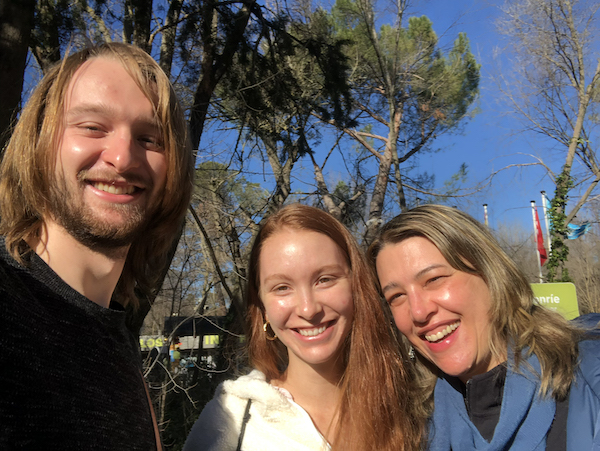
Michelle Valenzuela, centre, along with her brother, Pedro de Jesus Valenzuela Mora, and mother, Diana Mora. (photo from Michelle Valenzuela)

Almost 500 years after her Sephardi ancestors were forced out of Spain, Michelle Valenzuela is on a path back.

The 28-year-old artist and art teacher from Colombia is currently living and studying in Vancouver as the Spanish government finishes processing her citizenship application along with one from her brother. Their mother is pursuing a similar process with Portugal after both countries opened their doors to the descendants of Sephardi Jews persecuted during the Inquisition.

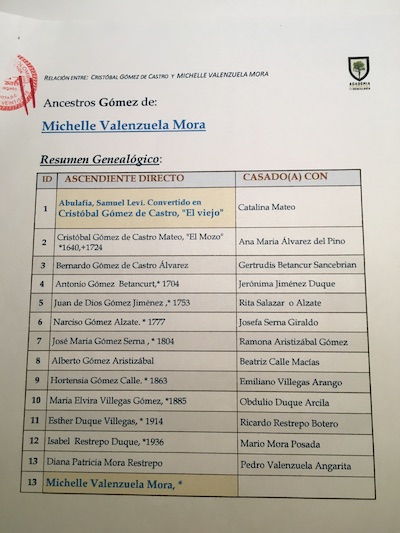
Growing up in a deeply Catholic family, Valenzuela had no inkling of a Jewish heritage until a cousin who works at the Colombian Academy of Genealogy told them what he had discovered: their family descended from Samuel Levi Abulafia, who had adopted the Christianized name of Cristobal Gomez de Castro before being expelled from Spain in 1570. He had been found guilty of sacrilege, bigamy, heretical ideas and promoting Judaism.

“We found out the Jewish background of our family story,” Valenzuela told the Independent. “For me, it was shocking. I don’t have a good relationship with Catholicism so I always felt like the black sheep of the family. It was an explanation for myself that our origins weren’t that Christian.

“There’s something particular about my mother’s family, the whole personality of the family, which is really different from other cultures in Colombia.”

Her grandmother, for instance, started a successful business that still exists, unusual at a time when most Latin American women were expected to stay home and care for children.

Although her cousin had earlier discovered the Jewish origins, he didn’t tell the rest of the family until after Spain passed legislation in 2015 to offer citizenship to members of the Sephardi diaspora.

“I think it’s related with the fact that the family became really Catholic and proud of being Catholic. One of his brothers is a priest,” explained Valenzuela.

Jews who came to Colombia hundreds of years ago had to hide their faith because the colonies of Spain carried out their own inquisitions.

As Sephardi people spread to all corners of the earth, the largest communities were established in Israel and Turkey, followed by the colonial holdings of Spain and Portugal in the New World. The expulsion of Jews followed Spain’s campaign to also rid the country of followers of Islam, known as Moors.

The 2015 law is aimed at historical redress for the descendants of about 160,000 Jews expelled on the 1492 orders of King Ferdinand and Queen Isabella. About 100 years later, another 300,000 Jews who had converted to Catholicism, but nonetheless incurred the wrath of Spanish authorities, were also expelled – including Valenzuela’s ancestor.

Remarkably, documents from the hearings that forced people into exile are accessible online due to digitization of the Catholic Church’s records.

Now, her parents face the knowledge that the church they serve – her mother as a Bible teacher and her father as a deacon in training – is the same one that forced her ancestors to convert or flee.

“I tried to ask [my mother] about her thoughts about her family being Jewish and I think she’s not able to confront it,” Valenzuela said. “Her answers are vague, evasive. I think she’s surprised as well with her Jewish roots, but she has always referred to the Jewish people as older brothers to the Christians.”

Accountant to the king

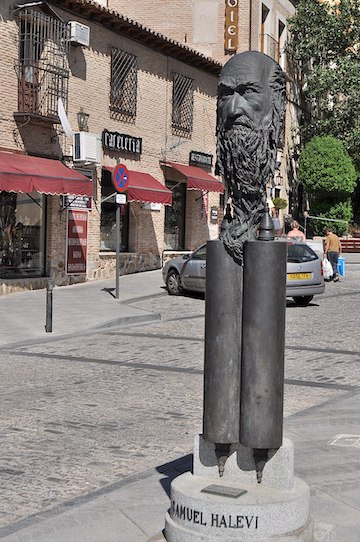
photo - A bust of Samuel ben Meir Ha-Levi Abulafia in Toledo, Spain, near the synagogue he founded in the 14th century
A bust of Samuel ben Meir Ha-Levi Abulafia in Toledo, Spain, near the synagogue he founded in the 14th century. (photo from Michelle Valenzuela)

Research into the family’s roots in Spain and Portugal also led to a much more famous Samuel Levi Abulafia, a 14th-century advisor and treasurer to Pedro I, the king of Castile and Léon.

Abulafia was prominent between about 1320 and 1360, first as an aide to Portuguese nobility and ultimately as a wealthy and powerful official in Toledo, where Abulafia commissioned construction of El Transito Synagogue on a street now bearing his name and statue. His nearby former palace in the city’s Jewish Quarter now houses a museum of El Greco’s paintings.

Also known as Samuel ben Meir Ha-Levi Abulafia, he fell out of favour with the king as anti-Jewish sentiment grew in the Late Middle Ages. Accused of disloyalty to the king, he was imprisoned, tortured and killed in 1360 and his assets seized by the crown.

The synagogue was converted to a Catholic Church and declared a national monument in 1877. It has since been restored as a synagogue and now includes a Sephardi museum.

Applying for citizenship

The process to gain citizenship is long and costly, requiring money and persistence to complete. Even now, two years after the deadline for applications closed in Spain, Valenzuela and her brother are waiting for final citizenship documents to arrive.

photo - Genealogy prepared for Michelle Valenzuela for her application for Spanish citizenship. It dates back to a man exiled from Spain in 1570 for being Jewish despite his adoption of a Catholic name, Gomez de Castro
Genealogy prepared for Michelle Valenzuela for her application for Spanish citizenship. It dates back to a man exiled from Spain in 1570 for being Jewish despite his adoption of a Catholic name, Gomez de Castro. (photo from Michelle Valenzuela)

Files received by the 2019 Spanish deadline are still being reviewed, while a similar program in Portugal continues to accept applications.

About 132,000 have applied to the Spanish program and at least 34,000 new citizenships have been granted so far. Most have come from Mexico, Venezuela and Colombia, according to news reports. The program began refusing a high number of applications in 2019, saying that fraudulent cases were on the rise.

Even before the Spanish bureaucracy considers the evidence, the Federation of Jewish Communities of Spain, along with a Jewish community in countries of origin, must approve the application. Then, there is the need to show a “special connection” to Spain, which the Valenzuela family fulfilled by contributing to the Spanish Chamber of Commerce in Bogota. Applicants must also speak Spanish.

There is no requirement to be a practising Jew or give up citizenship from their home country.

New possibilities

It’s not lost on Valenzuela that the process brings cash into Spain – a 100 euro application fee, about 600 euros for notarizing original documents delivered in person to Madrid and another 80 euros to write a test on knowledge of Spanish history, society and culture. Applicants also travel to Spain at their own expense, putting it far out of reach for many applicants from Latin American countries with high unemployment and weak currencies.

It means successful petitioners will have both money and education. And many are young, bringing the possibility of adding new workers to an aging country. United Nations data indicates 10% of the Spanish population was over 60 in 1950, but that will rise to 30% in 2025.

For Valenzuela and her partner, Carlos Perdomo, a lawyer from Colombia working in Vancouver, proving Jewish roots in Spain is another chance at finding a way out of the economic difficulties in their home country. They are both also permanent residents of Canada.

“We wanted to improve our possibilities for the future [outside Colombia],” she said, and obtaining a European Union passport should help.

“It’s so great to know more about your family and have a material link. We would love to use it, maybe for a master’s degree in the future. It would be cheaper and easier for me to travel there, having citizenship.”

Valenzuela says her trip to Spain in December was her first and she was surprised at how much it is like Bogota: disorganized, loud and crowded.

“Being a Colombian is always linked to the notion that Europeans are better in every way. It’s easy to romanticize and idealize Spanish culture and art, but the reality is we’re very similar.”

Erin Ellis is a former newspaper reporter and copy editor for the Edmonton Journal and Vancouver Sun. She also contributes to Canada’s National Observer and CBC News. She’s keenly interested in history and loves telling people’s stories.

Format ImagePosted on February 25, 2022February 23, 2022Author Erin EllisCategories LocalTags citizenship, Colombia, immigration, Portugal, Spain
Podcasts a vital part of CJN

Podcasts a vital part of CJN

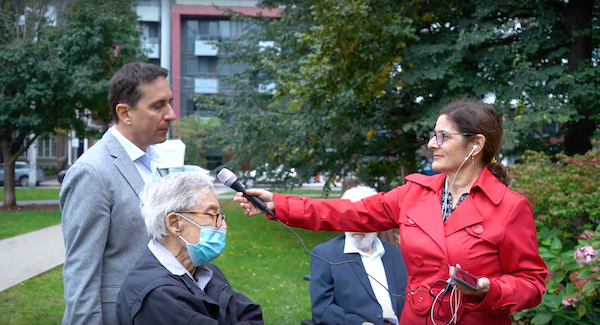
Ellin Bessner in the field reporting, October 2021, for her podcast, called The CJN Daily. (photo from Ellin Bessner)

Ellin Bessner is the host of The CJN Daily, one of several new podcasts featured on thecjn.ca, the Canadian Jewish News’ recently revamped website.

A veteran journalist, Bessner caught the reporting bug early in life.

“I have been a journalist since I was 10 years old – even though I didn’t know I was at the time. I was like the fictional character Harriet the Spy, writing notes about my parents’ friends,” she said of her first recollections as an aspiring member of the press.

These days, she hunts around for and discovers stories throughout the country that others might miss – all with the objective of depicting “what Jewish Canada ‘sounds’ like.”

“I read a lot, I scour the internet. There are literally stories everywhere. I don’t have enough time or enough podcasts to do [them all],” Bessner said, as The CJN Daily nears its first anniversary.

Bessner has broadcast stories on people as diverse as Rabbi Yehuda Sarna, the Montreal-born chief rabbi of the United Arab Emirates; Ashley Waxman Bakshi, a Canadian Israeli social media influencer; and Rabbi Arnold Noteh Glogauer, the first Canadian Jewish chaplain to set sail with the Royal Canadian Navy.

She also attempts to present all sides of contentious issues. During the February blockades in Ottawa, for example, she interviewed Jews who were involved in counter-protests against the truckers and two Jews (both vaccinated) who supported the convoy.

The CJN Daily has done several British Columbia stories, as well. To date, the show has aired a discussion with Aaron Levy, an Abbotsford disc jockey broadcasting about the November floods; a dispatch from a Jewish woman in Kamloops on her experience this summer in the path of British Columbia’s largest wildfire; an interview with Bernard Pinsky on security at the Jewish Community Centre of Greater Vancouver; a talk with environmental activist Seth Klein after COP26, the climate change conference in Glasgow; reflections on high school graduation from King David High School’s Class of 2021; a look at the number of people converting to Judaism in Kelowna; and a report about Jews in Kamloops and their reaction to the discovery of hundreds of Indigenous child graves in their community.

“British Columbia really had a terrible year,” said Bessner. “You had drought, forest fires, smoke, Indigenous issues … security issues and hunger. There is room for a B.C. story every single day. I really try to do as many as I can.”

CJN reinvents itself

In April 2020, a month into the pandemic, the CJN closed for the second time. The first time, in 2013, it returned after several months. This latest closure ended in December 2020, with a new CJN that is mainly a digital periodical.

“They chose to close after the Pesach issue in 2020. There was no revenue coming in and they decided to shut down,” explained Bessner. “A few months later, everyone thought that was CJN’s demise. Other websites came in to fill the gap. Meanwhile, those associated with CJN had decided to pivot to digital.

“It was a good opportunity to do that while everyone was at home and Zooming,” she said. “They re-launched digitally on Facebook only and got rid of the old website. Eventually, more money came in. The CJN doesn’t have the same look as before. We are doing it in a more modern way. These are the times and we have to be with the times.”

That said, for those who want to have a more traditional copy of the paper, the CJN still offers a printable weekly digest of stories every Friday (available on its website) and The CJ Magazine, a quarterly that will have its first issue later this year.

image - The CJN Daily logoAs for The CJN Daily, its start last spring did not go off according to script, Bessner recalled. “The podcast was launched on May 3, right when the Mount Meron tragedy occurred on Lag b’Omer,” she said. “All our planned interviews on Jewish Heritage Month were rescheduled. And then Israel had a war.”

The CJN Daily provides Monday to Thursday updates on the Canadian Jewish scene, from coast to coast to coast. The show can be heard on Spotify, Apple and other podcast platforms, as well as on the CJN website. There are also extended versions of Bessner’s interviews on the CJN’s YouTube channel.

Other podcasts on the CJN roster include Bonjour Chai, a weekly current affairs show; Yehupetzville, a look at Jewish life across Canada; Rivush, interviews with Jews of Colour hosted by Rivka Campbell; Menschwarmers, “the world’s most popular Jewish sports podcast”; and A Few of My Favourite Jews, with comedian Laura Leibow.

Bessner has worked for the Canadian Press, CTV News, CBC News and JazzFM. As a correspondent, she has reported from across Canada, Europe and Africa. As a professor, she has taught journalism at Ryerson University, Seneca College and, most recently, at Centennial College.

She is the author of Double Threat: Canadian Jews, the Military and World War II (2018) and a contributor to Northern Lights: A Canadian Jewish History (2020). In 2019, thanks to her efforts, Veterans Affairs Canada created a section on its website recognizing the contributions of Jewish men and women who served in the Canadian military during the Second World War.

Sam Margolis has written for the Globe and Mail, the National Post, UPI and MSNBC.

Format ImagePosted on February 25, 2022February 23, 2022Author Sam MargolisCategories Arts & CultureTags Canadian Jewish News, CJN, Ellin Bessner, journalism, newspapers, podcasts, Second World War

Care for the caregiver

On Feb. 14, Jewish Seniors Alliance presented the third of its 2021/22 Empowerment Series. The event – Care for the Caregiver – was co-sponsored with L’Chaim Adult Day Centre and the Council of Senior Citizens’ Organizations of British Columbia, and the program was presented by Royce Shook of COSCO’s Health and Wellness Institute and Leah Deslauriers, administrator of L’Chaim.

Gyda Chud, co-president of JSA welcomed everyone and thanked the agency’s partners for participating.

Barb Mikulec, vice-president of COSCO, explained that COSCO is a nonprofit group for seniors helping seniors and that its Health and Wellness Institute presents many free workshops on seniors issues. She introduced Shook, who has been in the field of education for more than 40 years and has worked in curriculum studies. He advises or serves on various seniors committees/councils.

Shook spoke about the stress and burnout experienced by caregivers. In Canada, he said, there are approximately five million unpaid caregivers supporting family members; an economic value of $6 billion to $9 billion.

Caregivers provide both physical and emotional support, he said. This role could involve home management, such as bill paying, grocery shopping, driving to appointments, cooking and cleaning. For the caregivers, they may benefit from a sense of personal satisfaction and a sense of purpose. They learn more about their inner strength and gain a purpose in life by the act of helping. They can help pull family and friends together, but there will be changes in family dynamics and relationships. At times, the recipients of care may be resentful at their loss of independence and privacy.

There is an emotional impact on the caregiver in that they may worry about not being strong enough to carry the load. At the same time, they may avoid asking for help, and this could lead to burnout, Shook warned. There are a number of warning signs to watch for, such as a loss of energy, the neglect of personal needs, trouble relaxing, irritability with the senior and isolation. To avoid burnout, he advised caregivers to learn about the disease or condition plaguing the senior and take any help that is offered for that condition. Know your limits and specify them to others, i.e. family and friends, sharing the burden with them. Make sure to have regular breaks, and talk with others about your feelings.

Communication is very important, he said. Keep up to date on information from the health team. Let the recipient of the care lead, try to be a good listener and maintain eye contact. Always remember that the person has changed, so avoid giving advice or quarreling over minor issues. Do not say, “I know how you are feeling,” but instead say, “How do you feel?” Have a consent form so you can accompany the recipient to the doctor and have questions ready and take notes. There are three major areas of decision-making that need to be arranged with the recipient and not for them, said Shook. These are medical, the need for a representation agreement; legal, power of attorney; and financial, also covered by power of attorney.

Always remember to take care of yourself by accessing, for example, adult day care for respite, home help and community support groups. There is no such thing as a perfect caregiver. Always remember to respond to the present situation and not to the person you once knew. If you don’t care for yourself, you can’t care for others, he said.

After Shook completed his presentation, Eireann O’Dea introduced Deslauriers, who, prior to joining L’Chaim five years ago, was the coordinator of the seniors program at the Jewish Community Centre of Greater Vancouver. She has also been active in seniors housing issues and is a family caregiver for her parents.

L’Chaim is one of 12 adult day centres in the region funded by Vancouver Coastal Health. Referrals are made by a caseworker at the health unit and the programs provide stimulation for the recipients and respite for the caregivers.

At L’Chaim, clients arrive about 10 a.m. and have a light breakfast after which the programs begin. The morning may consist of word games, followed by news and a discussion. A full lunch is served during which socialization is encouraged. The afternoon consists of a guest speaker and/or a musical program. Clients are usually picked up about 3 p.m. Any pertinent information is passed on to the caregivers.

L’Chaim is similar to other centres but it is culturally Jewish. It is funded for 13 clients/day, three days/week and costs $10/day. More information is available at lchaim.ca.

A list of resources for caregivers will be made available on the JSA website, jsalliance.org. Also watch the website for information on the next Empowerment program, April 26, in co-sponsorship with Jewish Family Services, and the Spring Forum on May 15.

Shanie Levin is program coordinator for Jewish Seniors Alliance and on the editorial board of Senior Line magazine.

Posted on February 25, 2022February 23, 2022Author Shanie LevinCategories LocalTags caregiver, COSCO, Council of Senior Citizens’ Organizations, health, Jewish Seniors Alliance, JSA, Leah Deslauriers, L’Chaim Adult Day Centre, Royce Shook, seniors
Freedom found in art

Freedom found in art

Riva Lehrer, author of Golem Girl, recently spoke on the topic Art Celebrating JDAIM (Jewish Disability Awareness, Acceptance and Inclusion Month). (photo from JBF)

Artist, writer and curator Riva Lehrer spoke at this month’s Cherie Smith JCC Jewish Book Festival on the topic Art Celebrating JDAIM (Jewish Disability Awareness, Acceptance and Inclusion Month). Lehrer’s work focuses on issues of “physical identity and the socially challenged body.”

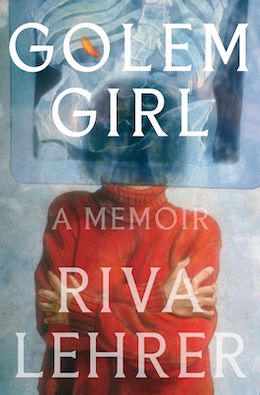
In the Feb. 7 Zoom talk from her home in Chicago, Lehrer discussed her 2020 illustrated memoir, Golem Girl,and her life as an artist born with disabilities into a world determined to “fix” her. Later in life, she found freedom through the flourishing disability arts movement.

Lehrer was born in 1958 with spina bifida. Throughout her early years, the message she received from those around her was that she was broken and would never have a job, a romantic relationship, or an independent life.

The memoir is comprised of two parts. The first deals with growing up in a time when people with disabilities were supposed to be hidden away from the rest of the world. The second looks at reaching adulthood after being raised to think that she was a mistake.

“I grew up thinking I was always wrong and always needed to be fixed, not just from medical professionals, but from everyone in society, who treated me like something to stare at or feel pity for. A lot of the book is taking that apart and addressing why people are stigmatized,” she said.

During Lehrer’s youth in Cincinnati, most children with a condition like hers were institutionalized. There was not a lot of modeling as to how to parent a child with disabilities. Lehrer, however, does credit her mother, who had worked as a medical researcher, for being much less fearful of the situation than an average parent might have been and for refusing the inclination to have her institutionalized.

Lehrer attended a school for children with impairments. “When you are surrounded with others like you, you are just a kid. You stop thinking you are different,” she recalled. The downside, however, was that kids at the time were not encouraged to imagine what they could be as far as a career, and high schools and colleges were not obligated to admit people with disabilities.

“The force of the message that I was a mistake was pretty powerful. By the time I was 12, I knew I was going to live in a body like this forever,” she said.

A resulting feeling of self-loathing persisted until her mid-30s, when novelist and disability rights activist Susan Nussbaum invited her to meet with a group of artists in Cincinnati. Lehrer reluctantly agreed to go and found it a life-changing experience.

“The sight of a lot of disabled people who were not hiding, and who were also funny and bright, gave me a way to understand my life and not just endure it,” she said.

The group showed Lehrer that disability is an opportunity for creativity and resistance. Finding inspiration and empowerment from people in the group, Lehrer asked them if she could paint their portraits. Even though she worked in portraiture, she “was very aware that she never saw images of people with disabilities ever, in museums or classes, only in telethons. It was never anything good.”

image - Golem Girl book coverNowadays, she said, her main interest is how people deal with and survive stigmatization. These are at the forefront of the 65 images contained in her book. Among the works she shared at the talk were a charcoal portrait of Nomy Lamm, an amputee musician, political activist and director of Sins Invalid in the Bay Area; a charcoal image of Mat Fraser, a British actor, writer and performance artist who was a regular cast member in American Horror Story: Freak Show television series; and a painting of Liz Carr, a British comedian, broadcaster and international disability rights activist.

“There is such a story behind each of these people,” Lehrer reflected.

As for the title, Golem Girl, Lehrer revealed a lifelong fascination with monsters. “One of the things monsters do is that they break boundaries,” she said. “Dead and moving, animal, person, person and machine, there is always something that violates a boundary. I was thinking how much this is like disability, that people don’t understand the disabled body. They think it is not human in some way. It is treated like it is alien.”

Lehrer is a faculty member of the School of the Art Institute of Chicago, and an instructor in medical humanities at Northwestern University.

The discussion was moderated by book festival director Dana Camil Hewitt.

Sam Margolis has written for the Globe and Mail, the National Post, UPI and MSNBC.

Format ImagePosted on February 25, 2022February 23, 2022Author Sam MargolisCategories BooksTags art, disability awareness, Golem Girl, JCC Jewish Book Festival, Riva Lehrer, stigma
Shira Choir focus of lecture

Shira Choir focus of lecture

Reverend Hazan Daniel Benlolo (photo from Kolot Mayim)

“To repair the often-shattered world, I cannot think of a better way than to give a voice to those less heard,” said Reverend Hazan Daniel Benlolo, leader of the Montreal Shira Choir, a vocal ensemble comprised exclusively of people with physical and intellectual challenges.

Benlolo was speaking at a Feb. 13 lecture co-hosted by Montreal’s Spanish and Portuguese Synagogue and Victoria’s Kolot Mayim Reform Temple during Jewish Disability Awareness and Inclusion Month, or JDAIM.

Born in Morocco, Benlolo settled with his family in Canada in the 1970s and became the cantor of Montreal’s Spanish and Portuguese Synagogue at the age of 17. He is also a rabbi and an artist who, among other things, designs ketubot (Jewish marriage contracts). Despite his many hats, Benlolo’s true passion, as evidenced throughout his talk, is to provide a stage for those who have seldom been listened to, accepted or appreciated in the community.

While working in Ottawa in 2002, he helped lead the Tamir Neshama Choir, which toured throughout Canada, the United States and Israel.

“It really inspired me and opened my eyes to a new life that I never explored before. To be able to spend time with people of special abilities made my life that much better in so many different ways,” Benlolo said of his Ottawa experience, for which he received a Governor General’s Caring Canadian Award in 2013.

The move back to Montreal came a few years ago. There, Benlolo and his wife Muriel Suissa founded the Shira Choir in 2019, with the assistance of Federation CJA and the Jewish Community Foundation of Montreal. The choir, made up of singers from many cultural backgrounds, performs a wide range of music, from liturgical to Broadway and pop.

Not long after the choir’s formation, the pandemic struck in early 2020. Nevertheless, Benlolo has managed to keep the music playing through Zoom rehearsals and socially distanced visits with choir members.

Benlolo stressed that, too often, people with special needs come in and out of our lives, without our taking the time to engage with them. His simple request to the Zoom audience was “to take the time,” as “it could make a world of difference.”

“They teach me more than I could ever teach them,” is the view Benlolo expresses regularly, saying there is no way to place a value on these relationships.

He emphasized the importance of not patronizing anyone in the choir. That is, audiences should give them a standing ovation only because members of the choir deserved one for the quality of their singing, not for the act of performing itself.

“They have hopes and aspirations. Some are going to fulfil them, some are not,” asserted Benlolo.

The future for the choir, he declared, is to continue to spread love, positivity, inclusion and the sense of community, but not tolerance, a word to which he has a particular aversion. “I don’t want to tolerate you, I want to love you. I want to count you in the community as a full member,” he said.

“We want to continue building from here,” he added. “It can only come to fruition if everyone puts in some effort. Just a little bit of an effort, the results will be so satisfactory, both for the individual and the community, [and] we will learn some new things, we will learn a way of life, that for so long has been hidden.”

Benlolo’s talk covered the recently premièred documentary Just As I Am, which can be viewed on CBC Gem (gem.cbc.ca/media/absolutely-canadian/s21e26). The film, a profile of the adults with special needs in the choir, explores the universal language of music and its ability to transform lives.

Benlolo also presented two short videos, both available on YouTube, showing members of the Shira Choir singing Ed Sheeran’s “Perfect” and Leonard Cohen’s “Hallelujah.”

In his concluding remarks, Benlolo urged the audience to not look upon those who are differently abled as “different” in a pejorative sense. “Different is great,” he said. “Different is beautiful. There is so much untapped talent out there that I am always in search of these people who are hidden gems.”

The Spanish and Portuguese Synagogue in Montreal is the oldest in Canada, tracing its history back to 1760, when the first Jewish settlers arrived in Quebec, making it as old as the province itself.

Now in its 14th year, JDAIM is a unified effort among Jewish organizations and communities throughout the world to build awareness and foster inclusion of people with disabilities and those who love them.

Benlolo’s presentation was the fifth in Kolot Mayim’s six-part series on the theme of Building Bridges: Celebrating Diversity in Jewish Life. The final session in the series features Indigenous artist Patricia June Vickers and Rabbi Adam Cutler of Adath Israel Congregation in Toronto, which is co-sponsoring the event. The topic on March 20, 11 a.m., is An Indigenous and Jewish Dialogue on Truth and Reconciliation. To register, visit kolotmayimreformtemple.com.

Sam Margolis has written for the Globe and Mail, the National Post, UPI and MSNBC.

Format ImagePosted on February 25, 2022February 23, 2022Author Sam MargolisCategories MusicTags Building Bridges, choral singing, Daniel Benlolo, JDAIM, Kolot Mayim, Montreal, music, Shira Choir, Spanish and Portuguese Synagogue
Stepping back from abyss

Stepping back from abyss

Daniel Sokatch, New Israel Fund chief, urges openness to narratives of both peoples. (photo from JCC Jewish Book Festival)

The experiences of Jews and Arabs in the area between the Jordan and the Mediterranean are complex and both peoples deserve to have their stories understood, according to a leading voice of progressive Zionism.

Daniel Sokatch was the keynote speaker at the closing event of the 2022 Cherie Smith JCC Jewish Book Festival Feb. 10. Sokatch is chief executive officer of the New Israel Fund, a U.S.-based nonprofit funding Israeli civil and human rights organizations and initiatives, which also engages in reconciliation and conflict resolution efforts between Israelis and Palestinians. He shared reflections from his new book Can We Talk About Israel? A Guide for the Curious, Confused and Conflicted, which was illustrated by Christopher Noxon.

“Over my years of service at NIF as the chief executive officer – I’ve been there for over 13 years now – I witnessed personally the discourse about Israel become more heated, more vituperative, more emotional and less fact-based,” Sokatch said. He wrote the book to give average people “a GPS to the conflict that would help them negotiate their own relationship to this complex issue.”

Israel was at the edge of an abyss before the new eight-party coalition government was sworn in last year, Sokatch said.

“This government is a Frankenstein’s monster made up of parties of the right, centre, left and Arab community that shouldn’t work but does work because enough people from all parties, except for the hard right-wing parties, knew that Benjamin Netanyahu was leading Israel over a cliff,” he said. “That was my editorial opinion but it is also the rationale for this government.”

A chunk of the Israeli public realized that Netanyahu was moving Israel toward neo-authoritarianism and a “democracy recession,” said Sokatch. This was exemplified, in part, by moves to abrogate the country’s balance between its Jewish and its democratic identities, he said.

image - Can We Talk About Israel? book cover“Israel passed a series of laws – most of them, I think it’s important to note, passed only barely – that really reduce the standing of Arab citizens of Israel to something that looked a lot more like second-class citizenry,” said Sokatch. “The worst of these laws was something called the Nation-State Law.… The Nation-State Law essentially said to Arab-Israeli citizens, you may have the right to vote but only Jewish citizens of the state have the right to what the law says is ‘self-determination.’… It stripped Arabic of its official language status…. The only reason you do things like that is if you want to throw red meat to your base and make a statement to the minority about where they stand. Anyone who has been to Israel recently – and by recently I mean at any point during its entire existence as a state – knows that the Jewish character of Israel is under no threat. In that sense, the alarm raised by Netanyahu and that Nation-State Law was like [former U.S. president Donald] Trump’s Muslim ban. It was a draconian solution for a problem that doesn’t actually exist.”

Reuven Rivlin, who was president of Israel at the time, acknowledged that he was obligated to sign the bill into law, but promised to sign in Arabic, which he did as a symbol of protest.

Sokatch addressed the recent Amnesty International report that accuses Israel of operating an apartheid system. He said that any honest and fair-minded left-wing observer who traveled the length and breadth of Israel would recognize that the apartheid label does not fit. But, he added, any honest and fair-minded right-wing observer who traveled the length and breadth of the West Bank would see things that could legitimately justify the terminology.

“I happen to think that the Amnesty report is deeply flawed,” he said. But, on the flip side: “To dismiss it all as antisemitism is to, like an ostrich, stick your head in the ground and ignore the reality of the problem.”

If Jews worldwide are held responsible for Israel’s actions, that is antisemitic, he said. Likewise, if Israel is depicted as a tentacled monster controlling the world, or if Jews are depicted as clannish, disloyal and the embodiment of “cosmic evil,” these are examples of antisemitism. The hostage-taking at a Texas synagogue in January is another example.

“Why did the guy go to a synagogue, instead of a church or McDonald’s or wherever?” Sokatch asked. “He went to the synagogue because he thought the Jews could get him what he wanted. He thought that we were so powerful in the United States that we could pick up the phone and tell Joe Biden to let the person he wanted let out of jail let out of jail. When criticism of Israel engages in those tropes, you can bet your life it’s antisemitism.”

But these examples of bias should not blind people to the legitimate criticisms being leveled against Israel, he warned. He hopes his book will open up more dialogue.

“Too often, I think, we are afraid to talk about the hard things,” he said. “What is the role of Israel’s Arab citizenry? What is the relationship between the U.S. and Israeli Jewish communities, the two largest Jewish communities in the history of the world? What is the deal with the settlements? Is Israel an apartheid state? What is the boycott, divestment and sanctions movement? I didn’t want to shy away from those things. But I also felt strongly that, in order to have an intelligent conversation about them, or to hold informed opinions about them, you have to know what you’re talking about.”

The first half of his book is mostly straightforward history, he said, with his analysis in the second half. He encourages a more fluent understanding of the narratives of both peoples.

“These are two peoples, Israelis and Palestinians, Jews and Arabs, who have been victims of the world, of each other and of themselves,” said Sokatch. “I felt that it was important to hold both of their stories with compassion and curiosity and concern, and to acknowledge that both parties have legitimate claims to this little place between the Mediterranean Sea and the Jordan River. Both of these peoples have real histories of trauma and persecution and both of them have stories that help them understand who they are and where they are in the world and their connection to this place, and I wanted to tell those stories rather than just one of the stories.”

Sokatch appeared virtually in conversation with Dana Camil Hewitt, director of the book festival. Rikki Jacobson, chair of the festival committee, welcomed the audience and thanked the speaker.

Format ImagePosted on February 25, 2022February 23, 2022Author Pat JohnsonCategories BooksTags Amnesty International, Daniel Sokatch, democracy, Israel, JCC Jewish Book Festival, New Israel Fund, NIF, Palestine

Posts pagination

Previous page Page 1 … Page 181 Page 182 Page 183 … Page 662 Next page
Proudly powered by WordPress