Skip to content
  • Home
  • Subscribe / donate
  • Events calendar
  • News
    • Local
    • National
    • Israel
    • World
    • עניין בחדשות
      A roundup of news in Canada and further afield, in Hebrew.
  • Opinion
    • From the JI
    • Op-Ed
  • Arts & Culture
    • Performing Arts
    • Music
    • Books
    • Visual Arts
    • TV & Film
  • Life
    • Celebrating the Holidays
    • Travel
    • The Daily Snooze
      Cartoons by Jacob Samuel
    • Mystery Photo
      Help the JI and JMABC fill in the gaps in our archives.
  • Community Links
    • Organizations, Etc.
    • Other News Sources & Blogs
    • Business Directory
  • FAQ
  • JI Chai Celebration
  • JI@88! video

Recent Posts

  • Eby touts government record
  • Keep lighting candles
  • Facing a complex situation
  • Unique interview show a hit
  • See Annie at Gateway
  • Explorations of light
  • Help with the legal aspects
  • Stories create impact
  • Different faiths gather
  • Advocating for girls’ rights
  • An oral song tradition
  • Genealogy tools and tips
  • Jew-hatred is centuries old
  • Aiding medical research
  • Connecting Jews to Judaism
  • Beacon of light in heart of city
  • Drag & Dreidel: A Queer Jewish Hanukkah Celebration
  • An emotional reunion
  • Post-tumble, lights still shine
  • Visit to cradle of Ashkenaz
  • Unique, memorable travels
  • Family memoir a work of art
  • A little holiday romance
  • The Maccabees, old and new
  • My Hanukkah miracle
  • After the rededication … a Hanukkah cartoon
  • Improving the holiday table
  • Vive la différence!
  • Fresh, healthy comfort foods
  • From the archives … Hanukkah
  • תגובתי לכתבה על ישראלים שרצו להגר לקנדה ולא קיבלו אותם עם שטיח אדום
  • Lessons in Mamdani’s win
  • West Van Story at the York
  • Words hold much power
  • Plenty of hopefulness
  • Lessons from past for today

Archives

Follow @JewishIndie
image - The CJN - Visit Us Banner - 300x600 - 101625

Category: News

“Rainbow Maccabees” talk

“Rainbow Maccabees” talk

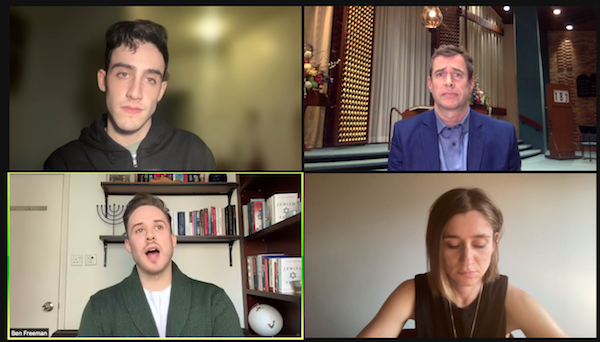
Participants in the Jan. 19 event Rainbow Maccabees: The LGBTQ+ Jews Leading the Fight Against Jew-Hate, included, clockwise from top left, Blake Flayton, moderator David Sachs, Eve Barlow and Ben M. Freeman. (screenshot)

Blake Flayton arrived at George Washington University, in Washington, D.C., four years ago, from a progressive home where ideas were fodder for passionate debate and disagreement. He anticipated vibrant engagement and free- flowing discussion on campus. Instead, he came head-on with a progressive culture that viewed free thinking as apostasy.

It took Flayton some time to assimilate the cognitive dissonance he experienced when he realized his political cohort had an ideology that rejected dissent – and an almost universal antipathy to Israel.

“I believed them, because how could I not?” he recalled. “I figured to myself, if I agree with these people on A through Y, I must also agree with them on Z. They plant these pervasive lies into the heads of young Jews that your community lied to you, your community betrayed you, your community brainwashed you into believing something horrible and we are here to save you from it. Sounds awfully like Christianity, right? We are here to redeem you from that so that we can all walk into a more blessed future. It has such ancient themes.”

Flayton was one of three young Jews, all members of the LGBTQ+ community, who participated virtually in a Canada-wide panel discussion on Jan. 19 called Rainbow Maccabees: The LGBTQ+ Jews Leading the Fight Against Jew-Hate. They speculated on why an apparently disproportionate number of the rising young stars in the pro-Israel movement come from the queer community.

Flayton, co-founder of the New Zionist Congress and recently appointed director of new media for the Jewish Journal, was joined by Eve Barlow, a Scottish-born, Los Angeles-based music journalist, and Ben M. Freeman, an educator and the author of Jewish Pride, who is also Scottish and is now based in Hong Kong. They met in conversation with Ottawa-area writer David Sachs, in an event funded by Congregation Beth Shalom of Ottawa Legacy Fund and a Jewish Federation of Ottawa micro-grant. It was supported by 11 national, regional and local Jewish organizations across Canada.

Left-leaning social and political spaces are where gays and lesbians first found widespread social acceptance. For queer Jews, this longtime safe harbour has become less welcoming – and this might account for why a seemingly disproportionate number of the new, young activists standing up to anti-Jewish hatred come from the LGBTQ+ community, Flayton speculates.

“I think it might be because we are naturally more likely to be exposed to progressive spaces and, therefore, we are more likely to find fault and to see the flaws of said progressive spaces,” he explained.

Freeman said being an openly gay man may give him an advantage in standing up to Jew-hate. LGBTQ+ people have been forced to advocate for themselves, he said, while the prevailing tendency, in some Jewish circles, is to keep one’s head down and not make trouble.

The hypocrisy progressive activists often display in their treatment of Jewish people versus LGBTQ+ or other minority communities is something Freeman has faced.

“When I tell people that I’m gay, the first thing they say to me is, what are your pronouns? Are you gay, are you queer, are you LGBTQ+? They want me to define my own identity,” he said. “But when I tell people that, as a Jew, I don’t identify as white, although I understand that I benefit from the advantage of being perceived as white, I am immediately told, no that’s incorrect. That hypocrisy you just can’t ignore.”

Barlow became politically engaged based on her own experiences in progressive British spaces – particularly seeing non-Jewish friends enthusiastically embrace the antisemitic Labour Party leader Jeremy Corbyn.

“I saw the hypocrisy with people who claim to be about morally righteous causes and liberalism and who have this screaming a blind spot when it comes to anti-Jewish bias,” Barlow said.

As Jews and as queer individuals, Barlow and her co-panelists embody characteristics that are not always welcome in today’s progressive environment, she said.

“Intellectualism and individual thought is discouraged,” said Barlow. “We are doing what so many people in social justice spaces have been actively discouraged from doing, which is having our own ideas about what we think is right and wrong.”

Barlow stressed that she has had to pick her battles, in part because she realizes that tormenting Jews online, rather than good-faith debate or actual persuasion, is the goal for many.

“The more that you are on the other side of antisemitism, the more you understand the love that people who hate Jews have for picking on the Jew and tripping the Jew up and making the Jew feel small and bad,” she said. “It’s this pleasure that they get out of their antisemitic rhetoric.”

In the antisemitic mind, “the Jew” takes the shape of whatever the perpetrator fears most, said Freeman.

“It’s not about us as Jews, it’s about the ideas of Jews,” he said. “If you are a society which is positioning itself as capitalist, the Jew can represent communism. If you are a society that is communist, you can frame the Jew as the capitalist. If you’re a society which views white people as the apex predators, then Jews are white. If you’re a society that views non-white people as conspiring to bring down Western society, white society, then the Jew is not white.… All these different forms share a common core. They are saying basically the same things about us, expressed in a slightly different language.”

As a people who have maintained a particular identity across millennia and continents, Jews exemplify a stubbornness that resists assimilation, which can enflame some people. Similarly, because Jewish security and social flourishing has been most assured in liberal, democratic societies, Jews have a vested interest in perpetuating stable societies, so are often targeted by those who seek to subvert them.

“There is a very strong association between antisemitism and illiberal ideologies, ideologies that hold contempt and disdain for institutions of liberal democracy and that hold contempt for the ideas that come from liberal democracy, like meritocracy, like freedom of speech, like academic freedom, like gender equality, etc., etc.,” said Flayton. “Jews have often been portrayed, or at least been treated, as a proxy for these institutions.… Today, there is illiberalism bursting out of every corner, from the farthest you can go left on the spectrum to the farthest you can go right and everywhere in between. There is a rise in populism, there is a rise in anti-intellectualism, there is a rise in anti-establishmentism and it’s been replaced with conspiracy thinking and grievance politics.”

Throughout Jewish history, Flayton continued, there have been repeated attempts by various ideologies to convince Jews that they will be better off if they abandon their uniqueness and assimilate into the new orthodoxy – or, conversely, that the Jews’ refusal to do so is the primary inhibitor of progress or the impediment to utopia.

“Of course, that’s never the case,” he said, citing instances from the Hellenizing ancient Greeks in the Hanukkah story, to the Christians who are convinced that Jews are holding humanity back from salvation by refusing to accept Jesus, to the Soviets, who camouflaged antisemitism in the guise of anti-Zionism.

Today, said Flayton, this takes the form of Jews being told that, if they only reject Israel or check their Zionism at the door, they will “be granted a seat at this table of diversity, equity and inclusion and that everything will be grand and the Jews will be protected, if only they give up their birthright to the land of Israel.”

He concluded: “It never works and, in fact, the Jews who were so vehement are not spared from antisemitism at all, because once the ideology has succeeded there is no longer any use for them.”

The event opened with greetings from Idan Roll, Israel’s deputy foreign minister, who is himself a young, gay Jew.
Format ImagePosted on January 28, 2022January 27, 2022Author Pat JohnsonCategories WorldTags Ben M. Freeman, Blake Flayton, Eve Barlow, free speech, identity, Jew-hate, leadership, LGBTQ+, moderator David Sachs, Zionism
ADI Race for Inclusion

ADI Race for Inclusion

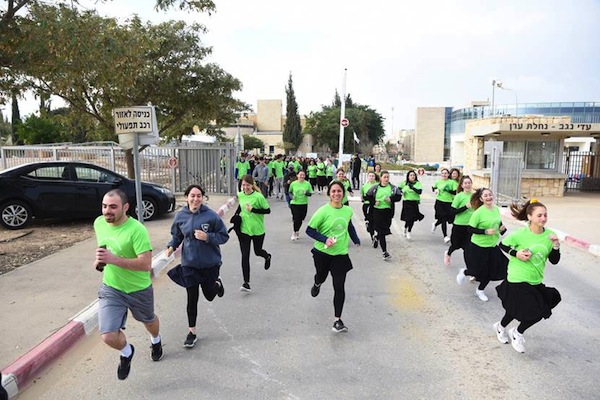
Vancouverite Vida Sussman (centre) was among those who pounded the pavement at ADI Negev-Nahalat Eran rehabilitation village to raise disability awareness at ADI’s first annual Race for Inclusion, which took place Dec. 29. (photo from ADI)

On the morning of Dec. 29, following a week of gloomy weather, the clouds gave way to sunshine as ADI, one of Israel’s most comprehensive providers of residential and rehabilitative care for individuals with severe disabilities, hosted its first annual Race for Inclusion. The 2.5-kilometre fun run highlighted the importance of disability inclusion while also raising more than $14,000 US to enhance ADI’s respiratory therapy and hydrotherapy programs.

More than 250 runners of varied ages, backgrounds and levels of ability ran together along a fully-accessible track that encircled ADI Negev-Nahalat Eran, the 25-acre rehabilitation village. This newest iteration of ADI Fleet – the organization’s inclusive running team – featured ADI residents, special education students and international volunteers, as well as nearly 180 North American gap year students studying at Israeli yeshivot and seminaries, including Mechinat Ruach HaNegev, Torah Tech, Tiferet, Yeshivat Ashreinu, Yeshivat Torat Shraga and Amudim. Among the runners was Vancouverite Vida Sussman, who is studying at Amudim this year.

Elie Klein, ADI’s North American director of development, said, “There is something very special and wonderfully symbolic about others coming to meet our residents and special education students where they are. ADI works so hard to ensure that every man, woman and child has tangible opportunities for encountering disability and promoting acceptance, and moments like these prove that we are on the right track and making serious strides for inclusion.”

At the conclusion of the race, all of the runners gathered in the village’s amphitheatre for a celebration featuring food, live music and speeches from special guests and ADI’s leadership. Three finalists from Israel Ninja Warrior received cheers after calling those assembled “heroic.”

“We thought we were strong,” said Israeli athlete Gur Arad. “But after seeing all of you running together today, we know that you are the strong ones.”

Sussman, one of eight Canadians who participated in the event, also volunteers one day a week at ADI Jerusalem, the organization’s residential and rehabilitative centre in Israel’s capital.  She describes the atmosphere as “loving, familial and an incredible learning experience,” noting that she jumped at the opportunity to do more for the organization.

“I feel very lucky to be volunteering at ADI, and I was so excited to participate in the Race for Inclusion. The energy that everyone brought to the event was incredible, and it made me so happy to see all the participants from different levels of ability having so much fun together,” said Sussman.

“This amazing event highlights exactly why supporting ADI is so important to me,” she added. “Not only are they committed to providing the best medical and rehabilitative care for their residents and special education students, but they do everything possible to advocate for them and infuse their lives with joy. I look forward to continuing to be a part of the ADI family and supporting the important work they do for years to come.”

Maj.-Gen.  (Res.) Doron Almog, the founder and chair of ADI Negev-Nahalat Eran, closed out the event by thanking the gap year students for raising disability awareness and encouraging them to continue “carrying the message of inclusion and love.”

“Always remember that we are all just temporary creatures. We come one day and we pass the next, and we need to give meaning to our lives in between. We do that by taking responsibility for one another, especially those with severe disabilities who need extra love and care,” said Almog. “By coming here today to participate in ADI’s Race for Inclusion, you fulfilled the most noble of responsibilities, to truly ‘care for your neighbour as yourself.’”

To learn more about ADI, visit adi-israel.org.

– Courtesy ADI


Format ImagePosted on January 28, 2022January 27, 2022Author ADICategories IsraelTags ADI, disability awareness, Doron Almog, fun run, inclusion, Israel, tikkun olam, Vida Sussman
Fostering nature’s care

Fostering nature’s care

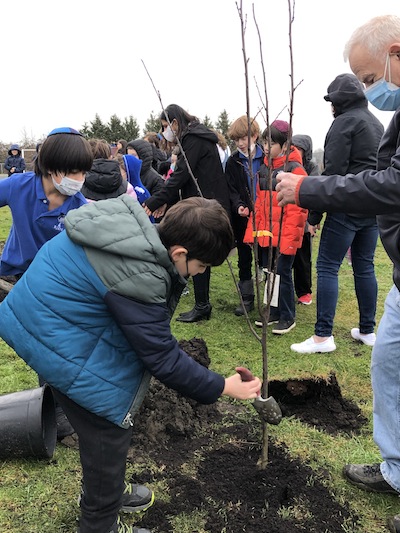
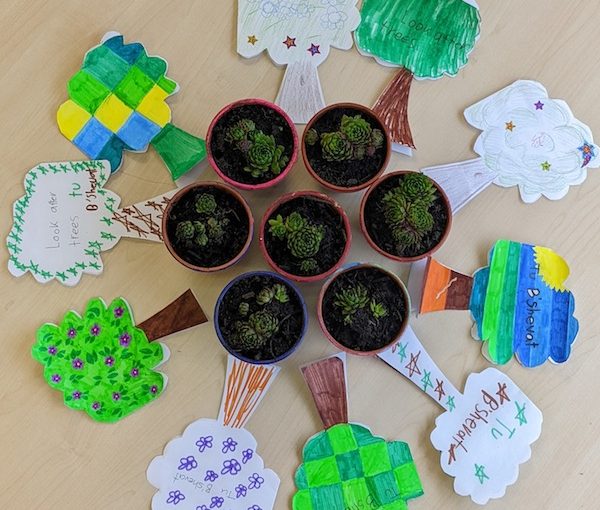
Richmond Jewish Day School held a week of activities revolving around Tu b’Shevat. (photo from RJDS)

Richmond Jewish Day School held a weeklong event celebrating the holiday of Tu b’Shevat, which fell this year on Jan. 17. Tu b’Shevat has developed into an ecological holiday that reminds us of humanity’s connection to the earth and to our role as caretakers of the environment.

photo - Students assisted in planting several fruit trees in the school garden, sponsored by the Jewish National Fund
Students assisted in planting several fruit trees in the school garden, sponsored by the Jewish National Fund. (photo from RJDS)

On the holiday Monday, each classroom performed a model Tu b’Shevat seder, a meal that partly mirrors the Passover seder and involves eating biblical foods native to the Holy Land and drinking four cups of wine or, in the students’ case, grape juice. Additionally, all of the students assisted in planting several fruit trees in the school garden, sponsored by the Jewish National Fund.

On the Tuesday of that week, students potted succulents from the garden to give away to seniors in the Richmond community. And, in the remainder of the week, classes planted parsley and other herbs for Passover, and assisted in a large-scale, school-wide garden clean-up.

When students are able to see the effort and care needed to grow plants, they develop a sense of ownership for these living organisms. Developing this awareness of how precious nature is can help children become better connected to their environment, learning to be strong community ambassadors and advocates in protecting the planet.

Judaism is not alone in advocating for environmental protection. From Buddhism to Christianity to Hinduism to Islam, various faiths acknowledge the need for environmental stewardship and their scriptures urge followers to be caretakers of the planet, looking after the natural earth and the organisms that live in it.

– Courtesy Richmond Jewish Day School

Format ImagePosted on January 28, 2022January 27, 2022Author Richmond Jewish Day SchoolCategories Celebrating the Holidays, LocalTags education, environment, Jewish National Fund, JNF, Judaism, Richmond Jewish Day School, RJDS, trees, Tu b'Shevat
Community milestones … Temple Sholom endowment, awards for Alex Leslie, Sandy Shefrin Rabin, Hannah Moscovitch

Community milestones … Temple Sholom endowment, awards for Alex Leslie, Sandy Shefrin Rabin, Hannah Moscovitch

Temple Sholom treasurer Daniel Gumprich, left, president Melody Robens-Paradise and Rabbi Dan Moskovitz. (photo from JCF)

Temple Sholom has a new $1 million endowment fund that will provide the congregation with stable, long-term income for the synagogue in perpetuity.

“We chose to establish this fund at the Jewish Community Foundation because we know that they will manage it carefully and expertly. We are thrilled that Temple Sholom will be able to rely on income from the fund to meet its needs for generations to come,” said the family who seeded the fund.

It was important to the family that they be able to leverage their giving to inspire others. So, in addition to seeding the fund, they established a program to match contributions, which not only maximized their own impact but that of every donor who joined them in giving.

“The foundation supported our staff and leadership to confidently approach congregants about contributing to the fund,” said Cathy Lowenstein, director of congregational engagement at Temple Sholom. “We were able to give everyone the opportunity to participate, which created the momentum necessary to reach our goal.”

“The endowment will ensure our ability to serve every facet of our congregation through dynamic programming, strong leadership and robust outreach for generations to come,” said Temple Sholom’s Rabbi Dan Moskovitz. “It also means we can undertake a long-term approach to planning, because we have the financial strength to adapt to the changing needs of our congregation.”

Many local Jewish agencies, congregations and other organizations have endowment funds at the Jewish Community Foundation, including the Jewish Community Centre of Greater Vancouver, Jewish Family Services Vancouver, the Vancouver Holocaust Education Centre, and others. In addition, individual fund holders often choose to support an organization through their own donor-advised or -designated funds.

Diane Switzer, chair of the foundation’s board of governors, said, “We are very proud to manage endowment funds on behalf of so many crucial organizations across our community, and we take our responsibility to manage these investments prudently extremely seriously. This is how we carry out the important work of building and enriching our community.”

People can make a contribution to the Temple Sholom Endowment Fund via jewishcommunityfoundation.com. They can also establish a fund for an organization or an area of need about which they care by contacting JCF executive director Marcie Flom at 604-257-5100.

* * *

image - Vancouver for Beginners book coverAlex Leslie’s Vancouver for Beginners was one of the works shortlisted for the 2020/2021 City of Vancouver Book Award. The honour recognizes authors of excellence of any genre who contribute to the appreciation and understanding of Vancouver’s diversity, history, unique character, or the achievements of its residents.

In the poetry collection, “[n]ostalgia of place is dissected through the mapping of a city where Leslie leads readers past surrealist development proposals, post-apocalyptic postcards, childhood landmarks long gone and a developer who paces at the city’s edge, shoring it up with aquariums.”

* * *

image - Prairie Sonata book coverPrairie Sonata by Sandy Shefrin Rabin was named one of the best books of 2021 by Kirkus Reviews. The novel tells the story of Mira Adler, a teenage girl growing up on the Prairies after the Second World War, and what she learns about life and love from her Yiddish and violin teacher, Chaver B, a recent immigrant from Prague. Kirkus called it “a compelling work with a wistful longing for days of childhood innocence. A poignant and eloquent reflection on tradition, family, friendship, and tragedy.”

Winner of the Independent Press Award, and named a 2021 New York City Big Book Award Distinguished Favourite in the young adult fiction category, Prairie Sonata has been introduced into high school curricula.

* * *

The Canada Council for the Arts’ 2021 Governor General’s Literary Awards winners include, in the drama category, Sexual Misconduct of the Middle Classes by Hannah Moscovitch.

image - Sexual Misconduct of the Middle Classes book cover“Hannah Moscovitch’s play is an articulate, poetic, beautifully written play with characters who are complex and complicated,” noted the peer assessment committee. “A superb piece of writing that shines as a play, as a living piece of theatre and, no doubt, literature that will endure.”

In the drama, “[t]he archetypal student-teacher romance is cleverly turned on its head for the post-#metoo era…. Jon, a star professor and author, is racked with self-loathing after his third marriage crumbles around him when he finds himself admiring a student – a girl in a red coat. The girl, 19-year-old Annie, is a big fan of his work and also happens to live down the street. From their doorways to his office to hotel rooms, their mutual admiration and sexual tension escalates under Jon’s control to a surprising conclusion that will leave you wanting to go back and question your perceptions of power as soon as you finish.”

Format ImagePosted on January 28, 2022January 27, 2022Author Community members/organizationsCategories LocalTags Alex Leslie, Cathy Lowenstein, City of Vancouver Book Award, Dan Moskovitz, Diane Switzer, fiction, Governor General’s Literary Award, Hannah Moscovitch, historical fiction, Independent Press Award, JCF, Jewish Community Foundation, Kirkus Reviews, New York City Big Book Award, poetry, Sandy Shefrin Rabin, Temple Sholom, theatre, young adult
שבע שנים בוונקבר

שבע שנים בוונקבר

בחודש פברואר הקרוב ימלאו שבעה שנים לחיים שלי בוונקובר. קשה להאמין שבפברואר אלפיים וחמש עזבתי את תל אביב לצמיתות בדרכי לוונקובר. מאז אני חי כאן ואפילו באותה  שכונה יפה – הווסט אנד

הערב סיפרתי לבת הזוג שלי (שגרה כאן למעלה משבע שנים) כי אני בעצם רציתי לעזוב את ישראל כבר בראשית שנות השמונים. אחרי שסיימתי את שירותי הצבאי והתחלתי ללמוד באיניברסיטה העברית (בחוג ליחסים בינלאומיים), החלו המחשבות לעזוב את ישראל לעלות במוחי והן לא עזבו אותי עד שאני עזבתי את המדינה

בתחילה רציתי להגר ללונדון כי זו העיר הראשונה שביקרתי בה. בפעם הראשונה זה קרה עוד לפני הגיוס לצבא, ולאחר השירות הגעתי אליה פעם נוספת. מאז ביקרתי בלונדון מספר פעמים אך לא עברתי אליה. מעניין לציין כי דווקא אחד מחברי הטובים שמע בעצתי ועזב את ירושלים ללונדון באלף תשע מאות שמונים ושש. .ומאז הוא חי שם

במשך שנים על גבי שנים – הוא זה שהציע לי לעשות כמוהו אך זה לא קרה. תמיד היו לי תרוצים מתרוצים שונים

לאחר מספר ביקורים בניו יורק חשבתי (לפחות בדימיוני) לעבור אליה וגם זה לא קרה. את ניו יורק החלפתי באמסטרדם שהיא בעצם העיר האהובה עלי עד עצם היום הזה. ביקרתי בה פעמים רבות והתחלתי לברר מה האופציות העומדות בפני כדי לאוכל להגר אליה. אך לא הייתי מספיק נחוש ורציני לבצע את הפעולות   הנחוצות להגר. הפחדים והחששות ניצחו גם הפעם לצערי

בראשית שנת האלפים התחלתי בתהליך ההגירה לקנדה, כיוון שחבר טוב שלי עבר אז מתל אביב לוונקובר. התהליך כלל הרבה שלבים בהם: בדיקות רפואיות, בדיקת עבר פלילי ומבחן באנגלית. עברתי את כולם בהצלחה מרובה. ובחודש נובמבר אלפיים ובארבע קיבלתי את הניירת המיוחלת להגר לקנדה

כעבור שלושה חודשים הגעתי לוונקובר ואני כאן עד עצם היום הזה. הפעם לא נתתי לעצמי שום אפשרות לחשוב, לדון, או להרהר בנושא. פשוט סגרתי את פרק חיי בתל אביב ובעצם בישראל בשלושה חודשים קצרים, עליתי על הטיסה לוונקובר והתחלתי פרק חדש בחיי

הדבר הקשה מכל עבורי שהשארתי מאחור (בישראל) היה העבודה שכה אהבתי, בתחום המדיה. במשך שנים הייתי כתב (ובעצם גם סגן עורך) לתחום המדיה בעיתון ובאתר הראשון בישראל בנושא זה. זו העבודה שאהבתי יותר מכל בכל חיי בישראל ובקנדה כאחד. הרגשתי בה כמו דג השוחה להנאתו בים. זה היה המחיר. הכבד ביותר ששילמתי עבור עצם ההגירה מישראל לקנדה

בשנים הראשונות כאן עוד התגעגתי למדיה בישראל ולעבודתי שם. לשמחתי כיום זה מאוד רחוק ממני, ממש כמו ישראל כולה

כשאני חושב מה עבר אלי בשבע עשרה שנות חיי כאן, ממהגר חדש ועד היום, אני מתקשה להאמין. היו ימים קשים, בדידות נוראית וכל מיני צרות שונות. אני שמח שהצלחתי בכוחות עצמי להגבר על כל הקשיים ולהצליח להשתקע כאן ולצמיתות. יש לי כיום בת זוג קבועה מזה כארבע וחצי שנים, עבודה מסודרת על תקן כמנהל מזה כשבע וחצי שנים, וכן לא מעט חברים

אני שמח בחלקי ושמח על כך ששיניתי את חיי מקצה לקצה. זה לא היה קל אך זה היה משתלם וזה ממשיך להשתלם כל יום בחיי. אולי יום אחד עוד אשב ואכתוב מדריך למהגר בו אציע למי שמעוניין לשמוע, מה מומלץ לעשות כדי להתחיל בחיים חדשים במדינה חדשה

Format ImagePosted on January 20, 2022January 20, 2022Author Roni RachmaniCategories עניין בחדשותTags immigration, Tel Aviv, Vancouver, בוונקבר, הגירה לקנדה, תל אביב
Meet new ambassador

Meet new ambassador

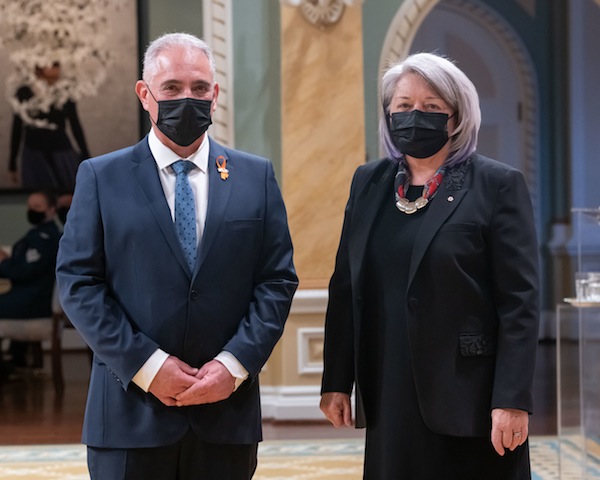
Governor General of Canada Mary Simon welcomed Ronen Hoffman as Israel’s new ambassador to Canada during a formal presentation ceremony at Rideau Hall in Ottawa, Dec. 7, 2021. (photo from Government of Canada)

Israel’s new ambassador to Canada, Ronen Hoffman, is a hockey dad. Plus, he wants to fight terrorism and antisemitism, strengthen research and development projects between the two countries, and forge ties with Canada’s Indigenous peoples. He also needs to remember to wear his winter coat when he leaves for work.

Hoffman, 58, arrived in Ottawa in the week of Hanukkah to take up his new duties. The diplomatic post had been vacant for two years, since Nimrod Barkan stepped down in November 2019. With the instability in Israeli politics – until Naftali Bennett’s government took office in June 2021 – and the COVID pandemic hampering international travel, Hoffman wasn’t able to arrive until just a few weeks ago.

Hoffman was born to a farming family in Afula, in the Jezreel Valley. He hasn’t been to Canada since he was in his 20s, when he did some traveling after the army while working as a shaliach (emissary) to a Jewish summer camp in Atlanta, Ga. Hoffman was an aide to former Israeli prime minister Yitzhak Rabin, and was on the team negotiating the unsuccessful peace talks with Syria.

After earning his doctorate in 1999, Hoffman was elected to the Knesset in 2013 as a member of Yair Lapid’s Yesh Atid party. He did a stint as co-chair of the Israel-Canada Parliamentary Friendship Group. This is his first posting as an ambassador. He is a father of three; his partner is a scientist at the Weizmann Institute.

On Hoffman’s first Christmas in wintry Ottawa, he made a TikTok video showing him walking through Lansdowne Park, trying out his snowball throwing technique and doing some tobogganing. (He didn’t wear winter boots, though.)

Hoffman sat down with The CJN Daily to outline his mandate and his hockey dad chops. Readers can listen to his interview in the podcast at thecjn.ca/podcasts/ronen-hoffman-interview.

CJN: Describe what it was like when you presented your credentials to Canada’s first Indigenous governor general, Mary Simon, on Dec. 7, 2021.

RH: Well, I have to say that it was a very moving and a wonderful ceremony. I went there with my family, which is here with me, my partner and my 4-year-old son, Tomer, and my team from the embassy. There were three other ambassadors that also presented: the ambassadors of the United States, Spain and Sri Lanka. It was an opportunity for us to get a little bond together and speak to each other. And, of course, meeting the governor general and her spouse and the people. I’m very happy that we had an opportunity to really do it, not through Zoom or through the internet, but really do it there, face to face.

CJN: Did you wear or bring or do anything that meant something meaningful to you?

RH: Yes. Can you see the little lapel pin on my jacket? Can you see these Canadian and Israeli flags here? Around it, we have an orange pin, in solidarity with the Indigenous people, also. It was just a little gesture, and I feel that’s part of what I’m going to do here. I would like to educate myself more on the First Nations communities here. I feel that there is a common ground for us to stand on, all of us, as the Jewish people, who for us the state of Israel is, in essence, a return of the Jewish people to our indigenous homeland and traditions and culture. My goal is to build bridges of dialogue, cooperation, collaboration with communities, and we really wanted to show that we care.

CJN: Would you say that you’re planning to reach out to the Assembly of First Nations and all the Indigenous groups … to try to meet them?

RH: Absolutely. I’m the Israeli ambassador to Canada, not only to Ottawa and not only to a specific province. It’s a big and wonderful and beautiful country with lovely people. And so, of course, I intend to travel throughout the country and meet as many people as I can and community members and heads of communities. It would be an important part of what I’m going to do here.

Fighting antisemitism

CJN: Let’s move on a little bit towards your agenda. You’re coming to Canada seven months after the war between Hamas and Israel, where Canada’s Jewish community experienced an unprecedented level of antisemitism not seen since the Second World War. First of all, were you surprised when you heard about what the Canadian Jewish community was feeling? And what is your mandate to deal with this here in Canada?

RH: I can’t say that I was surprised because, before I became an ambassador, I’ve been a lecturer. And, as a lecturer, I met with many delegations from the Jewish communities of North America, including Canada, who came to Israel. I heard a lot before the conflict in May about challenges and opportunities of the Jewish communities here, vis-à-vis other communities and vis-à-vis other minorities and governments. I’m aware of the antisemitism and I agree with you that the wave around the conflict in May has been a tremendous one, one that has been very significant when you compare it to previous waves.

I think that, as Israeli diplomats, my role as an Israeli ambassador to Canada is to help and to coordinate, to cooperate and to join forces in the combat of antisemitism and anti-Zionism and anti-Israel [sentiments]. They’re all connected to each other. Sometimes, some of the people would say, ‘Oh, some of these activists just want to show some criticism towards the government of Israel.’ It’s not that. It’s much deeper than that. Maybe now it’s not hidden anymore. They’re actually against the right of Israel to exist as a Jewish state. This is antisemitism. And I think that the Jewish communities here in Canada are not alone in facing this threat and challenge: the Israelis, your brothers and sisters and families, we all face the same kind of challenge in this respect. So, of course, part of my mandate is to work hand in hand with the leaders of the Jewish communities here, and try to find ways to combat it together.

CJN: It’s a big part of your mandate. But it wasn’t number one on the list. Your number one priority for your mandate is?

RH: It is to strengthen the relationship between Israel and Canada, which have very close relations, a very close friendship, and we have shared and we still share common values and common interests. And, like Canada, Israel is committed to human rights, to justice, to the rule of law. We are liberal democracies. We also have shared interests, for example, to combat terrorism, global terrorism, to help to create more stability in our areas, in our regions and to work together vis-à-vis opportunities and challenges. That is, I would say, my number one goal here: to continue and to strengthen those bilateral relations and the close friendship that Israel has with Canada.

CJN: What concerns does the Israeli government have about Canada’s decision during the May hostilities with Hamas to give money – about $25 million – to agencies such as UNRWA that have had a very problematic history when it comes to anti-Zionist and anti-Israel and Jew-hatred materials? How does Israel feel about that?

RH: We face some organizations, international and Palestinian organizations, that call themselves organizations that care for human rights, and they kind of hide behind that high language and terms that we are all committed to. But, actually, they are terror organizations. Our concern is that our friends around the world, including Canada, would be with us, looking at those organizations, exposing the lies and getting to see exactly what they’re doing. This is a concern in our mission and a real objective as part of our diplomatic work.

CJN: OK, so back to your mandate and what you’re here for. In a news release when you presented your credentials to the governor general, you said that you want to help with start-ups, and harness Israeli know-how to help Canada solve problems. Is there any area in particular that you want to focus on? We just finished re-upping the Canada-Israel Free Trade Agreement, which was re-signed under a previous Trudeau government. What more is there to do?

photo - Ronen Hoffman, Israel’s new ambassador to Canada
Ronen Hoffman, Israel’s new ambassador to Canada. (photo from Israeli embassy)

RH: There’s a lot to do. Look, Israel and Canada are closely working on finalizing a research and development agreement to mutually invest in know-how in joint research projects, and innovation in several fields, such as food tech, health tech, environment, energy and climate security. And then, of course, letting start-ups and the industrial ecosystem get to know each other and to develop ties and relations. We’re working on it. And I’m optimistic here. I think that we could really enlarge our relationship and find and create more joint projects on innovation. This is, again, one of the first high priorities on my agenda.

CJN: Would you say that there’s a date when they are expecting to sign it? In 2022 or 2023?

RH: There is no specific date. But, as an ambassador, I’m going to push and I’m going to try to do it as soon as possible. And it’s just one specific agreement – I have some ideas for other agreements, as well, to start MOUs [memoranda of understanding]. Every agreement or project starts with dialogue, right?  So, my idea is to create more dialogue between government to government, meaning some of the ministries in Israel that are relevant to innovation, hopefully, would speak in a structured dialogue process to some of the ministries here in Canada – for example, the ministries of energy and ministries of environment, agriculture and others. And so, we’ll set a set of several bilateral dialogues that eventually, I hope, would produce new agreements.

CJN: A lot of the research work is done at the university level, though, and that brings us to the problem where a lot of Canadian universities have faced the boycott, divestment and sanctions issue, with clubs or groups of academics trying to have the BDS policies adopted. How can the Israeli ambassador and the Israeli embassy negotiate this minefield to bring about your MOUs and this cooperation?

RH: Well, I think that there are at least two ways to go about it. One is to differentiate between the political talks around campuses and the industry of lies, and cooperate in joint research: start new projects with universities, connect universities here to universities in Israel and work together on tikkun olam, of doing something that the world would be able to benefit from. We have so many other scholars and researchers who we should work with. We should fight and combat against this BDS and all these things, but, at the same time, cooperate with our friends.

CJN: I know you were involved with Canadian parliamentarians before. How does that prepare you for this job?

RH: As a member of Knesset (2013-2015), I then chaired – from the Israeli side, of course – the Inter-Parliamentary Friendship Association with Canada, and it enabled me to meet some members of the Canadian Parliament … and host them in Israel. When they came in a delegation, it helped me to understand the political system here, better, I would say. But now, when I’m here, I have to tell you that I have so much more to learn. I knew a little bit, but I have to say I’m fascinated by the political system here and by the structure and by the Constitution and the history of it. It’s different than the political system that we have in Israel. We have a multi-political party system based on coalition. We have small political parties who have been and still are the king-makers. The power of veto in our political system, it’s different. We have a prime minister and a president, but we don’t belong to any other group of countries like the Commonwealth. It’s fascinating.

CJN: Had you ever been to Canada at all before this time?

RH: When I was a student, I was sent by the Jewish Agency to be shaliach to a JCC summer camp here in North America, in Atlanta, Ga. And, every summer after the camp, we still had the visa, that would enable us to travel for a few more weeks. So, for a few summers, I remember that, after finishing the camp, I came here to Canada and I traveled, mainly in the west, I have to say, in the Rockies and in Vancouver and British Columbia, but I remember being in Toronto and Niagara Falls.

When I was a kid, I grew up in kind of an outdoor atmosphere. My father was a farmer and I was educated with a love and appreciation for the environment and for the outdoors. I remember when I first came to Canada as a traveler, the nature, the environment, the outdoors impressed me so much. And now, as an ambassador, again, this is another thing I would like to do, to learn from you in Canada – how to appreciate the environment and the outdoors. I think that Israel can contribute, but also can learn from Canada at many levels and many aspects.

Son plays hockey

CJN: So, let’s pivot to some more fun things. I was told to ask you about your son in hockey. That is a door opener to anybody in Canada – just mention that and they’ll greet you with open arms! Are you allowed to tell me? Will your son kill you? (He now plays on the Columbia University men’s hockey team in New York.)

RH: Well, he will kill me anyway, but I’m going to tell you! I have three children. Eitan is my oldest: he’s 26 now, he’s a student at Columbia University in New York. My daughter, Tamara, is 24, and she’s also a student at Columbia University in New York. And my little son, Tomer, is 4 years old and he is here in Ottawa with me.

When Eitan, my oldest, was in elementary school in Israel, hockey just started to be introduced to Israel by friends who immigrated from Russia. But since, in Israel … there was only one [ice arena at the time,] in Metula, in the north [founded with the financial help of Canadians] … they started with roller hockey. My son started when he was in the first grade, or second, and, at some point, they started to build ice arenas for ice hockey. So, he moved from roller hockey to ice hockey.

By the time when he was 16 or 17, he was the captain of the youth national team and they were part of hockey in the Europe leagues and they competed there. And, at some point, they became number two in Europe – the Israelis who had no hockey in our tradition. I was very proud then.

And now, of course, he’s in New York … and, hopefully, he could come here. We will go together to hockey games, and he will explain to me what it’s all about, because that’s another thing I need to learn, right?

CJN: But if you are a hockey dad, you would know all this stuff, like going to the arenas with your thermos of coffee and being cold. Right? You never did that?

RH: Of course I did it. I went with him to Europe. I accompanied him and, yeah, well, I know how it feels, but I still need some explanation. The teams and who’s against who. I still need to learn.

CJN: And the European rinks are different. But what number did he wear in Israel?

RH: Eighty-eight.

CJN: Any particular reason?

RH: I don’t know how it started, but it was 88 and his last name, because I’m proud of him saying our last name. Under the number 88, Hoffman.

CJN: OK. So, unfortunately, Israel is not going to be in the hockey part of the Beijing Winter Olympics. They didn’t make it, but they’re number 34 overall in the IIHF [International Ice Hockey Federation] rankings. Are you a hockey fan at all?

RH: Not a hockey fan, for sure. But now is my opportunity; now it is my opportunity to become a real hockey fan.

CJN: All right. What is the funniest thing that’s happened to you since you came to Canada as an ambassador?

RH: OK, look, it’s not that funny, but whenever I leave home and get into the car to go somewhere, I’m still forgetting to take my coat…. I’m still used to going out with almost just a T-shirt, but it’s taking me longer than I expected to get used to winter.

For more national Jewish news, visit thecjn.ca.

Format ImagePosted on January 14, 2022January 13, 2022Author Ellin Bessner THE CJNCategories NationalTags amabassador, Canada, governor general, Israel, Mary Simon, politics, Ronen Hoffman
It’s been a hard two years

It’s been a hard two years

Last summer, given COVID’s continued presence and restrictions, campers were especially happy to be at camp. (photo from Camp Hatikvah)

Prior to 2020, Camp Hatikvah was experiencing unparalleled success. With enrolment maximized, the organization was in the position to focus not only on capital and program development but also on long-term financial planning. According to Liza Rozen-Delman, the camp’s executive director, Hatikvah’s future had never looked brighter. “It was a period of great excitement for us,” she said. “We honestly thought that nothing could get in the way of our growth and success.”

The pandemic, however, changed everything. “The impact of COVID was immediate and devastating,” Rozen-Delman said. “We went from being on top of the world to worrying about our very survival.”

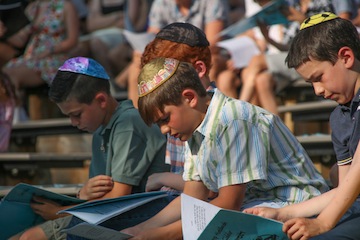
photo - Boys during a service at Camp Hatikvah
(photo from Camp Hatikvah)

Luckily for Hatikvah, donors immediately stepped in to cover the camp’s mounting financial losses. “People knew we were in trouble and they rallied around us,” said Rozen-Delman, with great emotion and gratitude. “Not only did they cover our operational expenses entirely in 2020, they made it possible for us to open in 2021 by funding all of the camp’s COVID-related expenses, like testing, site upgrades and more.”

Rozen-Delman went on to share how incredible it was to welcome campers back to camp last summer. While capacity had to be dramatically reduced to adhere to government group-size limits, close to 400 children participated in Hatikvah’s program in 2021.

“We rearranged our session lengths to make sure that every single Jewish child wishing to attend our camp was able to do so,” explained Rozen-Delman. “While this meant that each camper was at camp for a little less time than is typical, everyone was just so grateful to be there.”

“Our campers are always happy to be at camp but last summer, they were elated,” added Eden Gutterman, the camp’s associate director. “They needed to socialize, to be outdoors and to be away from technology and it was just so beautiful to watch them revel in camp and each other.”

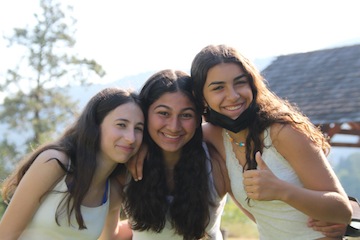
photo - Campers at Camp Hatikva give a thumbs up
(photo from Camp Hatikvah)

Gutterman shared her favourite memory from last summer. “One Shabbat, we asked all of the campers who had their bar and bat mitzvah’s over Zoom to stand in the middle of a circle made up of the rest of the campers and counselors. We then did the hora around them as a tribute to their milestone and accomplishment. None of these campers got to celebrate their simchah in person so it was incredibly touching to see them surrounded and celebrated by their friends. It is something we – and they – will never forget.”

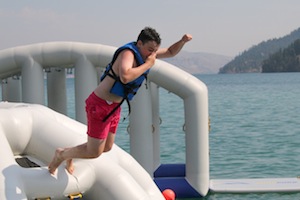
photo - Camper jumps into the water
(photo from Camp Hatikvah)

Camp Hatikvah is now busy preparing for summer 2022.

“We recognize that COVID will likely not be over by summer,” acknowledged Rozen-Delman. “And, while we wish it wasn’t the case, we feel well-prepared to deal with anything.”

Rozen-Delman shared that the Gutman family and Rockdoc Consulting Inc. have provided the funding for the camp to build a new infirmary in time for this summer.

“Given the realities of the ongoing pandemic, this gift couldn’t have come at a better time,” said Rozen-Delman. “Our new infirmary has been designed with COVID and any future infectious disease in mind and will have recovery rooms that can be used as properly ventilated isolation space if necessary. Its functional space has also been thoughtfully designed to allow us to meet and exceed current best practices in camper care. It is a gift our camp so desperately needed and we couldn’t be more grateful to Sam and Belinda and Gloria and their families for their generosity.”

Joanna Wasel, Camp Hatikvah’s board president, commented that, while she wished the world hadn’t had to experience this pandemic at all, she believes that the camp will ultimately be stronger because of it.

“We are entering 2022 with a renewed sense of purpose,” said Wasel. “Our community supported us through this challenging time because they believe in our mandate to help raise the next generation of strong, confident and resilient Jewish leaders. Their faith means everything to us and we are determined to make them proud.”

– Courtesy Camp Hatikvah

Format ImagePosted on January 14, 2022January 13, 2022Author Camp HatikvahCategories LocalTags Camp Hatikvah, COVID, Eden Gutterman, education, Gutman, health, Jewish camp, Joanna Wasel, Judaism, kids, Liza Rozen-Delman, pandemic, philanthropy, Rockdoc Consulting, summer camp
There’s no place like Miriam

There’s no place like Miriam

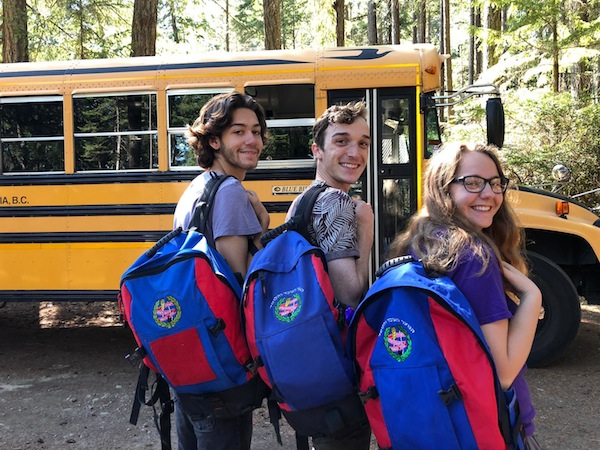
Judah Altman, left, Daniel Fine and Marina Levy all packed up for the bus. (photo from Camp Miriam)

Returning to Camp Miriam every summer is like going home. The kids shouting and laughing for joy, the bright smiles of the counselors, beautiful Gabriola Island – there’s no other place like Camp Miriam.

My first summer at Miriam was 2013. I’ve returned every summer since, more in love with the place and the people each time. I’ve grown up at Camp Miriam. I’ve grown up with the people; they are some of my best friends. I’ve grown up as a person; I’m always learning about myself and the world in ever-changing new ways. Most importantly, I’ve grown up at Camp Miriam having fun – summers at camp are what I look the most forward to most and I never want them to end.

photo - Left to right are “Visionaries” Daniel Fine, Marina Levy, Judah Altman, Mira Macnair, Kieran Macnair and Mica Hastings
Left to right are “Visionaries” Daniel Fine, Marina Levy, Judah Altman, Mira Macnair, Kieran Macnair and Mica Hastings. (photo from Camp Miriam)

I’ve been a camper, a junior counselor, a counselor and, last summer, a counselor for the leadership training program. Last summer was my favourite summer yet, and I can’t wait for this coming summer. To me, Camp Miriam has always been special for two reasons: the first is the activities, and the second is the people.

This summer, as chinuch (educational director) on our youth-led executive team, or mazkirut, I will be in charge of activities for the entire camp. I could not be more excited. One of the main reasons I continue to return to Camp Miriam is the unique options it provides for campers. There are the classic undertakings – like swimming, soccer, art and music. But then there are the programs that few other summer camps have, such as special days where all camp activities run around a surprise theme, ocean swimming as the sun sets, Jewish learning, and a focus on social justice.

I’m also looking forward to seeing the new and returning campers bond with their cohorts and with their counselors. I know firsthand that Miriam friendships last forever. The people I’ve met at camp will undoubtedly remain my friends for the rest of my life. These are the deepest connections I have.

photo - Judah Altman with friends Meital Smith, left, and Rakeea Chesick Gordis
Judah Altman with friends Meital Smith, left, and Rakeea Chesick Gordis. (photo from Camp Miriam)

After two years of COVID, these connections couldn’t be more important: for counselors like me, and especially for kids. Camp Miriam empowers youth and provides a space for kids to be themselves and to continue to discover who they are. It is a place to make new friends and reaffirm old ones. It is a place to talk for hours on end about all manner of issues, and to play and be silly without fear of judgment. It is a place to learn what true friendship means.

I am excited for the summer because, once again, I will get to meet new campers and counselors and help create the community that is the essence of Camp Miriam. I also can’t wait to see all the familiar faces. I can’t wait to run memorable programming for the kids that will be fun, while also empowering them to grow as people. Camp Miriam is the most important place in the world to me – I feel so fortunate that my parents have given me the opportunity to return summer after summer.

Judah Altman is a student at Columbia University, studying philosophy and sociology. He will be chinuch, or director of education, at Camp Miriam this summer.

Format ImagePosted on January 14, 2022January 13, 2022Author Judah AltmanCategories LocalTags Camp Miriam, COVID, education, Jewish camp, Judaism, kids, summer camp
Fun and safety during pandemic

Fun and safety during pandemic

In these uncertain times, JCC Camp Shalom set out to continue to be a constant source of fun and a safe environment for the whole community. For the second year, the exceptional circumstances of the COVID-19 pandemic demanded that the camp’s plans be reevaluated and adapted, as it partnered with King David High School to move the majority of its operations to the school’s building for last summer.

Camp Shalom is an inclusive Jewish day camp serving children, youth and teens from ages 3 to 18 years old, year-round, during school breaks and professional development days. Since the inception of the Inclusive Summer Camp Experience program in 2009, more and more children with diverse needs have attended Camp Shalom and participated in group activities, including overnight camping trips.

The number of children with diverse needs who attend Camp Shalom has grown from a handful to more than a dozen per summer – and the range of assistance provided for families has grown as well. Families are able to access more camp sessions and the camp can now support a wider range of ages and needs. Huge improvements have been made in accommodating campers in a true inclusion model and in providing opportunities for more Jewish programming beyond the summer, including Sunday Hebrew schools for those who did not have access to them prior to their experience with Camp Shalom.

photo - Camp Shalom offers an inclusive setting for all ages, abilities
(photo from JCC Camp Shalom)

Thanks to the contributions of the Diamond Foundation and the Snider Foundation, Camp Shalom is able to support more campers and staff with diverse needs by providing special training sessions, mentorship programs and one-on-one support for those campers who need it. Campers who were part of the first inclusive camp experiences are now teenagers and young adults who are still connected to Camp Shalom, and some are now camp staff. This past year’s biggest achievements included engaging about two dozen children, youth and teens with diverse needs and successfully integrating them into the general camp program alongside 120 to 150 other campers in the camp’s preschool, school-age and teen programs.

JCC Camp Shalom likes to think of all youth as being in transition. It pays special attention to campers transitioning from childhood into teenagehood and those teens who are about to become counselors. Work experience is a huge milestone as they enter high school. At camp, they go from being campers to participating in the teen programs, to joining the staff team.

Regardless of their developmental stage and/or maturity level, and taking into consideration their diverse needs, these teens need more support and adaptations than any other group with which the camp works. Careful planning and consideration of their needs has resulted in a successful program that provides them with social and organizational education that will benefit them in the future, as they look for employment, as well as in other areas of their lives.

JCC Camp Shalom is the largest summer Jewish day camp for youth in Vancouver, but its responsibility continues, as the engagement with youth extends beyond summer camp to throughout the year. As teens develop, Camp Shalom recognizes their need for adults with whom they can connect, that they can trust and who can be positive role models. Staff from the summer teen camp programs are educated and qualified to sustain positive and appropriate relationships with youth as they age. The inclusion model of camp programming allows campers with diverse needs to have an unforgettable Jewish experience at Camp Shalom.

For more information about the Inclusive Summer Camp Experience or Camp Shalom’s teen programs, contact Ben Horev, camp director, at 604-813-4236 or [email protected].

– Courtesy JCC Camp Shalom

Format ImagePosted on January 14, 2022January 13, 2022Author JCC Camp ShalomCategories LocalTags Alliance for Jewish Renewal, Camp Shalom, COVID, day camp, inclusion, JCC, Jewish camp, Judaism, kids, pandemic
Back to camp, to being a kid

Back to camp, to being a kid

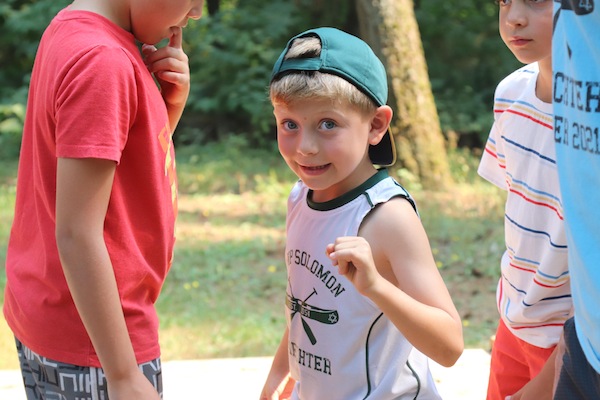
At summer camp, kids build community, take on challenges, become independent and develop leadership skills. (photo from Camp Solomon Schechter)

There’s a place where kids can simply be themselves. Where they build community, take on challenges, become independent and develop leadership skills. And, through it all, they think it’s just fun and friendships. That’s the magic of summer camp – a healthy dose of nature and nurture.

One year after sleepaway camps across the country were shuttered by the pandemic, many kids packed their shorts and hiking shoes once again, dug out their sleeping bags, and reunited with camp buddies to rekindle fond traditions.

We asked the directors of three Jewish summer camps in Washington state to share their perspective on the role camp plays in the social and emotional health of children, and how it was especially vital in the summer of 2021.

Welcome back to camp

“Welcoming the kids back this summer was extra special,” said Zach Duitch, director at Camp Solomon Schechter in Tumwater. “We could see it in their faces. After being online for a year-and-a-half, they were ready to be outside, with their friends, and having fun.”

Many parents were understandably concerned about sending their kids back to camp this past summer. Attendance numbers dipped somewhat, but families also recognized the value of getting their kids back to outdoor healthy summer fun, Duitch said. Away from everyday social pressures, camp staff works to create an environment that’s a safe place for kids to be their authentic selves.

“Parents trust us with their kids’ safety, security and health – and also with their spiritual and emotional needs. We take that trust incredibly seriously,” said Rabbi Ilana Mills, director at URJ Camp Kalsman in Arlington. “Camp is life-changing in so many ways. It’s an opportunity to grow as a whole person.”

Fun with lasting impact

When kids come home from one, two or three weeks at summer camp, the changes may not be immediately evident. In fact, many campers and counselors only realize as adults how much the experience has shaped them, instilling them early on with courage, compassion and independence. Kids can head off to camp as early as the summer after first grade. Many progress through the years to become counselors, taking on leadership roles as high school and college students, in what many describe as the “best job ever.”

Ask a kid and they’ll say camp is about boating, hiking, arts, sports, cookouts – and the thrill of a high-ropes course. Along with the fun, each camp has its own unique culture with familiar traditions passed down from summer to summer. Camp culture is what ties the community together with singing and celebrations, skits and games. Jewish summer camps also integrate religious observance and community into daily life.

“Camps are these bubbles – their own societies – where kids play a central role,” said Rabbi Kenny Pollack, camp director at Sephardic Adventure Camp in Cle Elum. “Our kids are immersed in the culture of camp, and it helps shape their identity.”

Healthy dose of silliness

When camp directors describe how their programs nurture kids, it can sound pretty serious. But one thing they take extremely seriously is fun.

“At Camp Solomon Schechter we do a lot of ‘shtick.’ Campers love seeing their counselors act silly,” said Duitch, as he explained a beloved trivia game that ends with participants messy and everybody laughing.

Mills described how “we really try to be as outside the box as possible. We push our counselors to teach their passion, be creative and try new things.”

She even got a chance to join the fun, playing a zombie during the culmination of their outdoor survival unit at URJ Camp Kalsman.

Leave real world behind

Kids leave their parents and their digital devices at home when they arrive at camp. There may be homesickness at first but soon their days are consumed by activities and friendships. And, since more and more camps are going device-free, campers get a break from their screens.

“Camp is a place where kids get to be their authentic selves,” said Pollack.

Each summer, as kids are reconnecting with old friends and making new ones, they’re also connecting across borders. Increasingly, camps are bringing counselors from international locations to supplement the programming with games and traditions from their home countries.

“As much as kids love their parents, camp is a great opportunity for them to learn from other role models,” said Duitch, explaining how the camp experience broadens kids’ viewpoints and connects them to lifelong friends.

Many parents, kids and camp staffers found it heartbreaking to cancel camp in 2020. That’s why camps throughout Washington banded together, lobbying the state government to make sure that camp happened in 2021 and that it would be a safe and extra-memorable summer. In the end, it may be difficult to measure the social and emotional impact of returning to camp after a trying year. But parents could no doubt see it in the hugs, the joy and the happy exhaustion as they picked their kids up at the end of camp this past year.

This article, courtesy Camp Solomon Schechter, comes from the Samis Foundation, which was established in 1994 by Samuel Israel, z”l, and is the largest Jewish philanthropy in Washington state. Grantmaking is focused on the foundation’s mission of supporting local Jewish education and initiatives in Israel. Samis is honoured to support the three Jewish overnight camps located in Washington state, working to keep Jewish children and teens engaged in their culture, religion and communities.

Format ImagePosted on January 14, 2022January 13, 2022Author Samis FoundationCategories LocalTags Camp Solomon Schechter, COVID, education, Ilana Mills, Jewish camp, Judaism, Kenny Pollack, kids, pandemic, Samis Foundation, Sephardic Adventure Camp, summer camp, URJ Camp Kalsman, Zach Duitch

Posts pagination

Previous page Page 1 … Page 88 Page 89 Page 90 … Page 314 Next page
Proudly powered by WordPress