Skip to content
  • Home
  • Subscribe / donate
  • Events calendar
  • News
    • Local
    • National
    • Israel
    • World
    • עניין בחדשות
      A roundup of news in Canada and further afield, in Hebrew.
  • Opinion
    • From the JI
    • Op-Ed
  • Arts & Culture
    • Performing Arts
    • Music
    • Books
    • Visual Arts
    • TV & Film
  • Life
    • Celebrating the Holidays
    • Travel
    • The Daily Snooze
      Cartoons by Jacob Samuel
    • Mystery Photo
      Help the JI and JMABC fill in the gaps in our archives.
  • Community Links
    • Organizations, Etc.
    • Other News Sources & Blogs
    • Business Directory
  • FAQ
  • JI Chai Celebration
  • JI@88! video

Recent Posts

  • Eby touts government record
  • Keep lighting candles
  • Facing a complex situation
  • Unique interview show a hit
  • See Annie at Gateway
  • Explorations of light
  • Help with the legal aspects
  • Stories create impact
  • Different faiths gather
  • Advocating for girls’ rights
  • An oral song tradition
  • Genealogy tools and tips
  • Jew-hatred is centuries old
  • Aiding medical research
  • Connecting Jews to Judaism
  • Beacon of light in heart of city
  • Drag & Dreidel: A Queer Jewish Hanukkah Celebration
  • An emotional reunion
  • Post-tumble, lights still shine
  • Visit to cradle of Ashkenaz
  • Unique, memorable travels
  • Family memoir a work of art
  • A little holiday romance
  • The Maccabees, old and new
  • My Hanukkah miracle
  • After the rededication … a Hanukkah cartoon
  • Improving the holiday table
  • Vive la différence!
  • Fresh, healthy comfort foods
  • From the archives … Hanukkah
  • תגובתי לכתבה על ישראלים שרצו להגר לקנדה ולא קיבלו אותם עם שטיח אדום
  • Lessons in Mamdani’s win
  • West Van Story at the York
  • Words hold much power
  • Plenty of hopefulness
  • Lessons from past for today

Archives

Follow @JewishIndie
image - The CJN - Visit Us Banner - 300x600 - 101625

Category: News

Summer of a lifetime awaits

Summer of a lifetime awaits

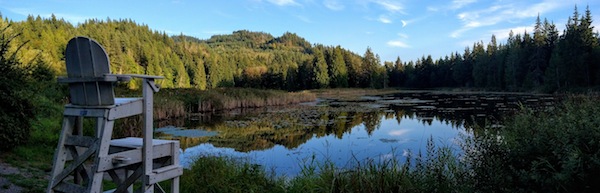
Camp Kalsman has almost 300 acres, perfect for a wide range of activities. (photo from Camp Kalsman)

Rabbi Ilana Mills, director of URJ Camp Kalsman, started attending camp when she was 8 years old. “I remember being uncertain what the experience would be like, trying to picture how it would feel to live in a bunk. It was greater than I ever imagined,” she said.

“Jewish camping helped me learn more about myself and my Jewish identity,” she added. “I learned independence that served me my whole life and what it means to be part of a community. I have experienced the powerful impact camp can have on someone’s life and now get to watch my children experience it as well.”
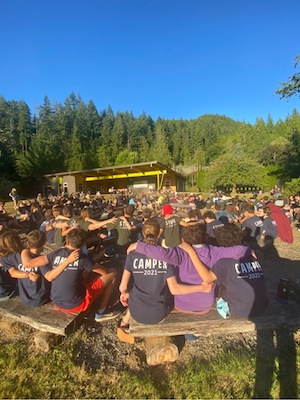
photo - Campers gather together
(photo from Camp Kalsman)

Camp Kalsman knows kids need places to be celebrated for who they are and places that help them grow. Camp Kalsman is one of those places – where a child can feel comfortable being their true self and learn independence while they climb the tower, play pool volleyball, and tie-dye.

Located in Washington, the camp has almost 300 acres, perfect for a wide range of activities: arts, sports, team-building, hiking, high ropes, guitar, and so much more. Each camper can explore all aspects of camp and participate in various programs, while exploring and gaining pride in their Jewish identity. Camp isn’t just a fun thing for kids to do when they’re out of school. Studies have shown that camp is one of the most powerful tools in a parenting toolbox for successfully launching an adult.

Discover new passions

Camp Kalsman strives to make every camper’s experience nurturing and fulfilling, and does so by making sure that every child feels welcomed and supported, while challenging themselves. Campers engage in activities and programs, develop lifelong friendships and live with a super staff. Jewish values infuse everything the camp does and, each year, new and returning staff members bring unique chugim, activities, based on their passions, so there are always more options being added to an already long list.

Arts: painting, ceramics, improv/drama, guitar, song writing/leading, digital media, Kalsman musical, photography, dance, cooking.
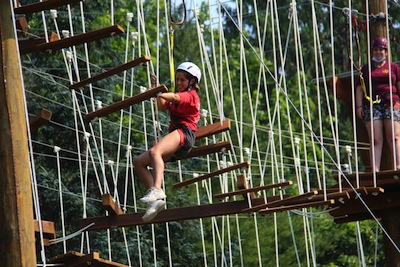
photo - Camp Kalsman ropes course
(photo from Camp Kalsman)

Sports: balloon volleyball, giant soccer, archery, Gaga, tetherball, ultimate frisbee, basketball, softball/kickball, Kalsman football (extra special/silly combination of sports).

Waterfront: pirate ball on the lake, cardboard box boat-making, mermaid contest, water polo, canoeing, kayaking, pool volleyball, pool basketball.

Teva (Nature): hiking, outdoor cooking, outdoor survival skills, wilderness first aid, gardening, animal care.

Ropes: high ropes obstacle course, tower, giant swing, zipline, low ropes team-building.

Unit programs: Israeli cooking, ice cream pool party, messy night, scavenger hunt, and so much more.

Shabbat shalom

Everyone can feel the magic that falls over Camp Kalsman every Shabbat. The entire camp community changes into white clothes and cleans up after a very busy week. The camp joins together in a Shabbat walk that ends at the outdoor beit tefilah (sanctuary). There are interactive services, a traditional Shabbat dinner in the dining hall, with challah and grape juice, and the night ends with Shabbat Shira (song session), where campers and staff alike can dance and sing the night away.

Since it is still Shabbat, Saturdays also look a bit different at camp. There is chofesh, free time, where campers can choose activities more freely and for longer amounts of time than during the full schedule of the rest of the week. They can focus on finishing their art project, challenge themselves on a different path on the high ropes course, or even chill on the quad with friends and really rest and reset for the days ahead.

– Courtesy Camp Kalsman
Format ImagePosted on January 14, 2022January 13, 2022Author Camp KalsmanCategories LocalTags Camp Kalsman, Canadian Summer Camp Research Project, COVID, Ilana Mills, Judaism, kids, pandemic, summer camp
Studying social sense

Studying social sense

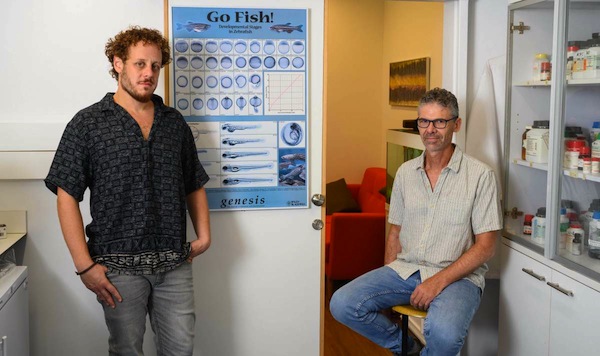
Michael Gliksberg, left, and Prof. Gil Levkowitz are among the researchers who have discovered that oxytocin in a developing zebrafish brain determines later social behaviour. (photo from Weizmann Institute)

Whenever we decide to throw a party, invite in-laws to dinner or embark on a cruise, we are driven by the most basic component of social behaviour: the desire to hang out with other humans. Considering that the drive to form groups with members of one’s own species has been conserved throughout evolution, it’s evident that social behaviour is governed by genes, at least to some degree. But our parents and teachers help us hone our social graces, so teasing apart the effects of nature and nurture on this behaviour is hard, if not impossible. By studying zebrafish, Weizmann Institute of Science researchers, in collaboration with scientists in Portugal, have managed to solve part of the riddle of how social behaviour is hardwired into the developing brain.

Zebrafish are perfect for studying the inborn basis of behaviour because they receive zero nurturing from parents. “Some fish species take care of their young, but not zebrafish,” explained Prof. Gil Levkowitz of the Weizmann Institute’s molecular cell biology and molecular neuroscience departments, who headed the research team together with Prof. Rui F. Oliveira of Instituto Gulbenkian de Ciência in Portugal. “The female zebrafish spawns several hundred eggs, which are fertilized by sperm released into the water by the male. She does provide her offspring with a ‘lunchbox’ – a protein sac, or yolk, that makes up part of the egg – but, otherwise, her message to her children is: manage on your own.”

At about four weeks of age, the centimetre-long juvenile fish, just out of the larval stage, begin to socialize. Though not as exquisitely synchronized as the schools of moonfish in the movie Finding Nemo, they do exhibit a strong tendency to swim together as a group, termed a shoal. Much like humans, they have an incentive to seek company; in their case, the group provides them with advantages in searching for food, overcoming currents, avoiding predators and finding mates. The shoaling behaviour of zebrafish requires sophisticated processing of visual and social cues, very similar to that which takes place in the brains of socializing humans. In particular, the zebrafish must be able to identify other fish as belonging to their own, “friendly” – as opposed to different or, worse yet, predatory – species.

To learn how the social behaviour of zebrafish develops, the researchers focused on the hormone oxytocin, one of the most important neurochemicals known to enhance social interactions, including bonding. Postdoctoral fellow Dr. Ana Rita Nunes and doctoral student Michael Gliksberg created a system for exploring the effects of oxytocin on the developing brains of zebrafish larvae. They produced transgenic larvae whose oxytocin-making neurons harboured a bacterial gene encoding fatal sensitivity to antibiotics. The researchers could then eliminate these neurons from the brains of the larvae at different stages of their development by adding antibiotics to the water, and they later observed the zebrafish behaviour as they became adults.

The scientists discovered that the larvae whose brains lacked oxytocin early on – specifically, in the first two weeks of life – grew into adult fish with an impaired capacity for social interaction, namely, swimming in a shoal. Although their brains regenerated the oxytocin neurons later in life, this capacity was not restored. This meant that, for adults to be capable of social behaviour, their brains had to be organized by oxytocin in a certain manner during a critical time window of brain development in which the social traits are established.

The researchers further discovered the mechanisms by which oxytocin primes the growing brain for socializing. They showed that oxytocin-producing neurons were critical to the birth of another type of neuron, one that releases the neurotransmitter dopamine, which is known to regulate feelings of reward and motivation. Zebrafish whose brains had not been exposed to oxytocin during the first two weeks of life had reduced numbers of dopamine-making neurons, as well as a reduced number of connections to these neurons, in two distinct brain areas.

One of these areas was responsible for processing visual stimuli, apparently of the kind essential for recognizing potential swimming partners. An analogous area in the brains of mammals, including humans, is involved in processing visual cues in social situations. It controls eye movements that scan, for example, different elements of the face in a particular order to decipher facial expressions. This pattern is often absent in people with autism, suggesting that their brains respond to social-based visual cues differently.

The other dopamine-deficient brain area in the zebrafish was analogous to a major reward centre in the mammalian brain, which is involved in the positive reinforcement of social interactions.

A lack of oxytocin in the critical early developmental period also disrupted a system of neuronal connections known as the social decision-making network – a group of brain areas that work together to process social information. In fish whose brains had developed without oxytocin, the synchronization patterns of neuronal activities among these centres were completely different from those of regular fish.

Nunes summarized: “Oxytocin organizes the developing brain in a way that’s essential for responding to social situations.”

– Courtesy Weizmann Institute

Format ImagePosted on January 14, 2022January 13, 2022Author Weizmann InstituteCategories IsraelTags Ana Rita Nunes, Gil Levkowitz, health, Michael Gliksberg, oxytocin, research, science, social behaviour, Weizmann Institute, zebrafish
mRNA & cancer drugs

mRNA & cancer drugs

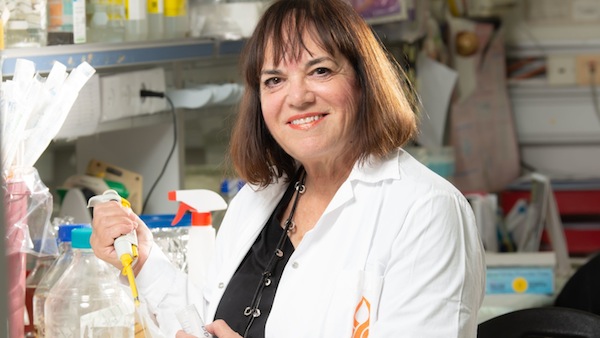
Prof. Etta Livneh (photo by Shay Shmueli/BGU)

Most everyone on the planet has now heard of mRNA, thanks to the vaccines against COVID-19 from Pfizer and Moderna, which are based on messenger RNA. But, before mRNA was used to address COVID, research was conducted into how it could fight cancer. Now, researchers at Ben-Gurion University of the Negev have discovered a key connection between mRNA, peptide proteins and tumour progression.

Messenger RNA codes for different proteins, each with a unique function. There are both “long” and “short” peptides. Until now, scientists were not sure if short peptides had any biological function.

Prof. Etta Livneh of BGU’s Shraga Segal Department of Immunology, Microbiology and Genetics has shown that single short peptides in fact have a very important role – as a kinase inhibitor that can slow tumour growth and invasion, cancer cell survival and metastasis.

Proteins (and protein kinases in particular) propagate signals that carry instructions to the cells and dictate cell fate. There are more than 500 different kinases in the human body.

With cancer, a kinase erroneously tells the cells to divide and reproduce in a rapid and uncontrollable manner. But the flipside is also true: if a kinase can be inhibited, it should block the proliferation of cancer cells.

And that’s “just the tip of the iceberg,” said Livneh, whose discovery has been a decade in the making. “Now that we know that at least some peptides have a biological function, we can begin to discover the roles of many more.”

Kinase inhibitors are already one of the hottest areas of cancer research, in some cases replacing chemotherapy. Livneh’s research will allow scientists to better understand how to control this cancer-fighting technology.

The research was supported by a grant from the Israel Science Foundation and published in PNAS (Proceedings of the National Academy of Sciences of the United States of America).

Israel21c is a nonprofit educational foundation with a mission to focus media and public attention on the 21st-century Israel that exists beyond the conflict. For more, or to donate, visit israel21c.org.

Format ImagePosted on January 14, 2022January 13, 2022Author Brian Blum ISRAEL21CCategories IsraelTags Ben-Gurion University, BGU, cancer, Etta Livneh, health, kinase, mRNA, research, science
בבית החולים בשתיים לפנות בוקר

בבית החולים בשתיים לפנות בוקר

 הרופאה המומחה החליטה שעלי לעשות בדיקת אם. אר. איי. לאזור הצוואר שלי לאור מוגבלות מסוימת שאני חש בו. בדיקת הסי. טי. שעשיתי בבית החולים סנט פול לא הייתה מספיק טובה מבחינתה, והיא התעקשה על בדיקת אם. אר. איי. שהיא הרבה יותר מקיפה. הרופאה הזכירה לי, בביקור במרפאתה בסוף חודש נובמבר, כי התור לאם. אר. איי. הוא ארוך מאוד, ולכן כדאי שארשם לכל בית החולים שעושים אותה באזור ונקובר. אני סירבתי בכל תוקף ואמרתי לה שאני מוכן לעשות את הבדיקה רק בשני בתי החולים המרכזיים של ונקובר: סנט פול וונקובר ג’נרל – כיוון שלהם יש את ציוד הטוב ביותר

המזכירות הרפואית במרפאה בה עובדת הרופאה רשמה אותי לבדיקה וידעתי שיתכן ואאלץ להמתין חודשים ארוכים ואולי אף יותר מכך לבדיקה המיוחלת. לכן מספר ימים לאחר הפגישה עם הרופאה המומחית התקשרתי למזכירות וביקשתי מהם לרשום אותי גם לתור של ביטולים באחד משני בתי החולים בעיר. מניסיוני לאחר שבע עשרה שנים של מגורים בוונקובר, אני יודע שברוב המקרים זה עובד מצוין. מטופל נאלץ לבטל תור לבדיקה מסוימת או אפילו לניתוח, ואז מי שנמצא בתור הביטולים מקבל התראה קצרה על תאריך פינוי לביצועה. קנדים רבים כאן לא חושבים כלל על האופציה של תור הביטולים והם ממתינים בשקט לתור שלהם, גם אם זה כרוך בחודשים רבים מאוד. אני כבר הבנתי מזמן את הפרינציפ: צריך להיות קצת קריאטיבי ואז אפשר להשיג את מבוקשתך

במקביל להמתנה לבדיקת האם. אר. איי. במערכת הציבורית, החלטתי לנסות ולבדוק מה המצב במכונים הפרטיים שבעיר. מצאתי בסך הכול שני מכונים בלבד שמבצעים בדיקה שכזו, והעלות יקרה מאוד: קרוב לאלף דולר. החלטתי לשמור את האופציה היקרה הזאת למקרה שאאלץ להמתין חודשים ארוכים לבדיקה באמצעות המערכת הציבורית. ולשמחתי זה לא קרה. ביום שני בשבוע שעבר (שחל בשבוע האחרון של דצמבר) קיבלתי פתאום טלפון ממספר לא מזוהה. תחילה חשבתי שמדובר בעוד שיחה של נוכלים שמנסים באמצעות תרגילים שונים לגנוב כסף. אך לא כך הוא. על הקו הייתה אחת העובדות במזכירות הרפואית של בית החולים סנט פול, שאמרה לי כי התפנה תור לבדיקת האם. אר. איי למחרת – יום שלישי בשעה שתיים לפנות בוקר. כמובן קפצתי על המציאה והסכמתי מייד. העובדת הסבירה לי כי בשעות שכאלה בית החולים סגור ואפשר להגיע למכון לבדיקת האם. אר. איי. רק דרך חדר המיון. כיוון שהבדיקה בשעות מאוד מאוחרות בלילה היא שאלה אותי היכן אני גר? ואז עניתי לה בפשטות: במרחק חמש דקות הליכה בלבד מבית החולים

ביום שני בלילה בשעה אחת וחמישים אחרי חצות צעדתי בקור המקפיא של ונקובר אל סנט פול. הגעתי כעבור חמש דקות לחדר המיון, ומשם הופניתי אל המכון לבדיקת האם. אר. איי. הלכתי במסדרונות הריקים והכמעט חשוכים של בית החולים עד שמצאתי את דלת המכון. המזכירה הרפואית קיבלה אותי בסבר פנים יפות וביקשה ממני לשבת ולמלא מספר טפסים פשוטים. במקביל היא בדקה את פרטי האישיים. המזכירה הסבירה לי שהבדיקה לוקחת כחצי שעה ובתוך כשבוע הרופאה המומחית ורופאת המשפחה שלי יקבלו את תוצאותיה. המתנתי כעשר דקות ואז הופיע טכנאי נחמד בשם פול שהזמין אותי לחדר הבדיקה. קודם לכן נאלצתי להחליף את בגדי בבגדים של בית החולים. הבדיקה נמשכה כחצי שעה ואז יצאתי לחופשי

Format ImagePosted on January 13, 2022January 13, 2022Author Roni RachmaniCategories עניין בחדשותTags health, hospital, MRI, Vancouver, waitlists, אם. אר. איי., בית החולים, וונקובר, תור של ביטולים
Educating the next leaders

Educating the next leaders

King David High School student and Climate Education Reform British Columbia member Sara Bauman (photo from Sara Bauman)

Weather events like the recent floods across British Columbia and last summer’s record fire season are prompting questions about how to plan long-term for the changing environment. One King David High School senior has come up with part of the answer: create a climate curriculum that prepares tomorrow’s leaders for addressing climate change.

Sara Bauman is a member of Climate Education Reform British Columbia (CERBC), a group of approximately 20 high school students who believe that the world’s pressing environmental challenges deserve a place in the province’s education system. Bauman says lessons about the physical climate system and the science behind phenomena such as greenhouse gases and sea-level rise should be a standard part of what students learn in school.

CERBC is pushing for a new curriculum that includes mandatory courses on climate-related topics and for the subjects to be taught across K-12 grade levels. At the present time, Grade 11 and Grade 12 students have the option to take environmental sciences, which contains a certain number of units relating to climate change. But the elective aspect, Bauman explained, means that not all students are learning about climate science or its implications.

“We want to get students to understand the urgency of the climate crisis and the need to act now,” Bauman told the Independent. “[If] not every student has to take it, different students are going to be receiving different knowledge, some less than others. [We] need the whole generation to be prepared to combat climate change, not just a few.”

A 2019 study conducted by researchers at Lund University, in Sweden, found that Canadian schools as a whole fell short when it came to educating students about climate change. In British Columbia specifically, research indicated that schools often failed to teach three core concepts: that the climate is warming, that there is consensus among experts that climate change exists, and that human-driven solutions are possible. The researchers also noted that there is no consensus among provinces or school districts when it comes to teaching students about climate change.

In October, CERBC met with B.C. Minister of Education Jennifer Whiteside to discuss its proposal. The students outlined six needs that they felt would be essential to a successful K-12 climate curriculum, including enabling students to “understand the urgency of the climate crisis” and to recognize that there are ways to mitigate or slow climate change.

Bauman said the program needs to be interdisciplinary because climate change has social implications as well. “We want students to understand the relationship that climate change has with social justice issues,” she said, noting that environmental advocacy “can’t be separated from other movements, like the Black Lives Matter or Indigenous rights movements, because, at the end of the day, climate change does come down to systems and how we structure our lives. And we also want to inspire students to start to critically engage in politics and see how they can create policy change.”

KDHS head of school Russ Klein said CERBC’s call for a mandatory climate curriculum reflects a wider sentiment among today’s students that the topic needs to addressed. Even though Bauman is the only KDHS student representing CERBC at this time, other students at KDHS are finding their own ways to raise social awareness.

photo - King David High School head of school Russ Klein
King David High School head of school Russ Klein (photo from KDHS)

“[In] the last two or three years, especially with Greta Thunberg and the climate protests, we’ve had a whole bunch of students actively engaging with the school, the [administration], climate protests and [other types of] activism,” said Klein.

Students at KDHS have a variety of avenues in which to get involved, including the youth groups Sustainabiliteens and the Green Club, which are aligned with addressing social and environmental issues.

Klein said Bauman brings an important quality to this dialogue. “She lends a Jewish voice of perspective to some of what she’s been doing, which I think is also very relevant for other people,” he said. “We need more diversity in the room.”

Of course, students aren’t the only ones who want to see a curriculum that reflects today’s challenges. Many teachers do as well. The B.C. Teachers’ Federation publishes downloadable “Climate Change Heroes Lesson Plans” to help teachers develop new learning modules.

Still, Klein said, many schools want the province to lead this effort. “There are so many different things and priorities for schools to do, and I think this one has to be very high on the list. And how we do that, of course, is [we] look to government. These things must be mandated,” he said, pointing out that, until the province implemented LEED-compliant building codes requiring contractors to adhere to sustainable practices, “builders weren’t doing anything. Because why would they? But when it’s the law of the land, they have no choice.”

Last week, Whiteside’s office issued a statement acknowledging that it is working with the BCTF and the Climate Change Secretariat to increase climate-related resources for teachers. It noted, “The flexible nature of B.C.’s curriculum provides many opportunities in which topics like climate change can be explored in various levels of detail.”

The ministry maintains that both K-10 and 11-12 curricula contain resources for “possible connections” to climate change that allow teachers to introduce new study topics. The elective nature of 11 and 12 grade courses, it said, “offer[s] interested students an opportunity to delve deeper [and] encourage exploration from a local to a global scale.”

While the ministry did not say whether it will invite the students to participate in writing a new climate curriculum, Bauman said she hopes the ministry will accept CERBC’s input – “Because we are the students. We know what is best for our generation [when it comes to] learning. I think the ministry doesn’t realize what an asset we are to helping this process.

“We want to create a relationship with them,” said Bauman. “We want to partner with them [and] help the process in any way that we can.”

Bauman said it’s important for students to be part of the solution.

“The most important thing, at least for me,” she said, “is to get students to envision a better world and help them feel inspired, empowered and engaged because, a lot of the time, we hear about climate change and it’s a lot of doom and gloom. [Working] with CERBC has allowed me to put my climate anxiety into other things and channel it into meaningful action, and I want other students to have the chance to do the same.”

Jan Lee’s articles, op-eds and blog posts have been published in B’nai B’rith Magazine, Voices of Conservative and Masorti Judaism, Times of Israel and Baltimore Jewish Times, as well as a number of business, environmental and travel publications. Her blog can be found at multiculturaljew.polestarpassages.com.

Format ImagePosted on December 17, 2021December 16, 2021Author Jan LeeCategories LocalTags CERBC, climate change, curriculum, education, environment, governance, Jennifer Whiteside, KDHS, King David High School, Russ Klein, Sara Bauman
Victoria’s first kosher bakery

Victoria’s first kosher bakery

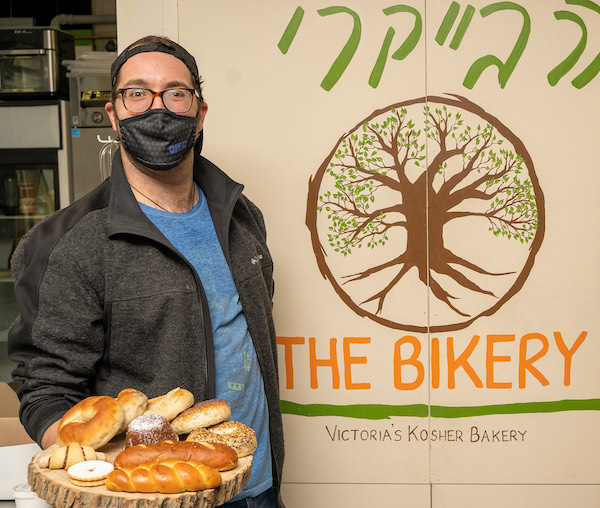
Markus Spodzieja, owner of the Bikery, the first and only certified kosher bakery on Vancouver Island. (photo from the Bikery)

Victoria’s Jewish community and area foodies received welcome news for their taste buds this summer. For the past four months, the Bikery, the first and only certified kosher bakery on Vancouver Island, has been operating at a permanent address, the Victoria Public Market, 1701 Douglas St. Until now, local households that wished to keep kosher would either bake their own breads or order from Vancouver.

As its name implies, the Bikery had, before moving to the market, been selling its goods from a bicycle – a 250-pound mobile vending bicycle to be precise – as part of a pilot project for the City of Victoria’s Mobile Bike Vending Permit. Started in 2017, the program gave local business owners the chance to operate a service via bicycle.

“I figured that the streets of Victoria could use more pretzels, so I rented out some kitchen space and built a box for the back of my bike, becoming a pedal-powered pretzel peddler,” Bikery owner Markus Spodzieja told the Jewish Independent.

In 2020, Spodzieja, along with his business partner Kimanda Jarzebiak, established a connection with Rabbi Meir Kaplan of Chabad of Vancouver Island. Though COVID-19 arrived on the scene shortly thereafter, the positive trajectory of the Bikery was not derailed.

“During the pandemic, as people became isolated at home, I pivoted my roadside-vendor business model to a delivery service and expanded my menu to include breads, buns and, most importantly and coincidentally, challah. After a few months of biking bread around the city, my now-business partner contacted me requesting weekly challah for her community’s Shabbat dinners,” Spodzieja said. “As the weekly orders began to grow, we arranged a meeting to discuss the need for a kosher bakery in Victoria, and spent the following nine months working out of Chabad of Vancouver Island perfecting our new menu.”

Since the Bikery’s pretzel beginning, the choices have expanded. Spodzieja’s selection now includes bagels of all sorts: poppyseed, cinnamon raisin, plain, and everything seasoning.

In addition, the Bikery presently offers classic challah loaves, braided challah, honey-apple challah, mini challahs, pocket pitas, pretzel buns, and hamburger and hot dog buns. It also serves up confections reminiscent of the Old World, such as rugelach filled with a home-made hazelnut spread, lemon poppyseed muffins, linzer cookies, kipferl cookies and a “personal-sized, decadently spiced” honey cake.

And there are still pretzels of all kinds on the menu, from the original “sweet and salty and chewy” to the chocolate drizzle pretzel “dedicated to the sweet tooth in all of us.” There is a roasted garlic and rosemary pretzel, each batch of which contains an entire head of garlic. As well, there is a cinnamon sugar pretzel, which, as the Bikery’s website asks, “Who needs a mini donut when you’ve got a pretzel with an ample dusting of sugar and locally processed cinnamon?” There is even the blending of two baked worlds – a pretzel bagel, which the Bikery touts as offering “the soft chewyness of the bagel combined with the salty flavour of the pretzel.”

The child of a German-Polish household, Spodzieja spent a lot of time in his youth in the kitchen. Both of his parents went to culinary school and his father ran a bakery in Campbell River.

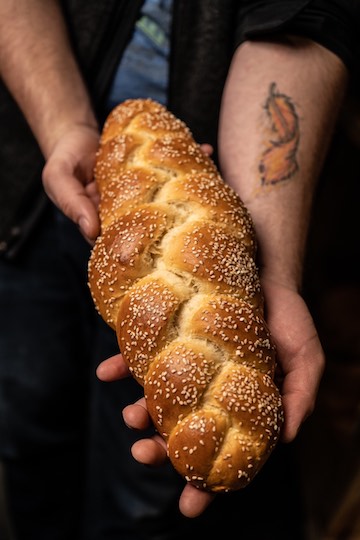
photo - A kosher challah made at the Bikery in Victoria
A kosher challah made at the Bikery in Victoria. (photo from the Bikery)

“Little did I know that, growing up, baking would become a sort of unconscious habit. And while now I hold a BFA in acting, it gave me the life skills I needed to turn my baking hobby into something that better benefits my community,” he said.

For the time being, Spodzieja said, his focus is “working to establish ourselves into the Victoria Public Market, work on some new menu additions and [to] ensure the integrity of our products as we continue to grow. Rest assured, we have plenty of ideas coming down the pipe. We’ll just have to wait and see as they arrive.”

The Bikery is certified pareve kosher by BC Kosher Check and supervised by Chabad of Vancouver Island. Besides being kosher, most of the items sold at the Bikery are vegan as well.

The Bikery also strives to be environmentally friendly. Not only is its kitchen 100% electric powered, but all deliveries are made by a combination of bicycle and EV car. Its minimum fee for delivery is $10. Deliveries usually cover a radius of five kilometres, but it has temporarily expanded to 15 kilometres.

Victoria’s Public Market is situated close to City Hall and Centennial Square and is a few blocks away from the Empress Hotel and the Parliament Buildings. It is housed in a building that operated for several decades as a Hudson’s Bay department store. Located toward the back entrance (near free two-hour parking), the Bikery shares the market with, among others, a high-end chocolatier, a vegan butcher shop and an exclusive kitchenware store.

For more information or to place an order, visit thebikery.ca.

Sam Margolis has written for the Globe and Mail, the National Post, UPI and MSNBC.

Format ImagePosted on December 17, 2021January 6, 2022Author Sam MargolisCategories LocalTags bakery, BC Kosher Check, Bikery, business, food, kashrut, Markus Spodzieja, Victoria
Debbie Tabenkin set to retire

Debbie Tabenkin set to retire

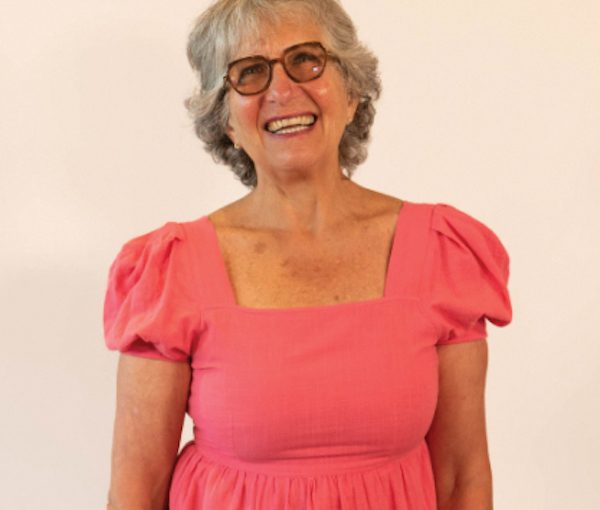
Debbie Setton Tabenkin sees travel, genealogy and fun with grandkids in her future. (photo by Jocelyne Hallé)

Debbie Setton Tabenkin, one of the most familiar faces to anyone who has frequented the Jewish Community Centre of Greater Vancouver in the past three decades, is retiring at the end of January.

Tabenkin began teaching English as a second language at the JCC in 1995. In conjunction with that role, she was instrumental in creating the drop-in child-minding program for kids of parents using the centre’s facilities or attending programs. In the succeeding quarter-century, she has served in a variety of roles and retires as director of programming and strategic initiatives, where she oversees about 10 program areas and 12 budgets.

Tabenkin’s interesting family history plays a role in her approach to her work. Her parents’ lineage is from the Syrian and Turkish Jewish communities and, in the early part of the 20th century, parts of her family migrated to Jamaica and Panama. Because there was a polio pandemic in Jamaica when her mother was pregnant, they traveled to Panama, where Tabenkin (née Setton) was born, returning to Jamaica as a babe in arms.

“I was used to what the community centre meant in Latin America,” she said of her philosophy around the work she does. “It was a social place where you came and you met people.” The “living room” of the community, she calls it. That is what she believes she has helped foster in Vancouver.

But there was a winding road before she ended up here.

The Setton home in Jamaica was the holiday destination for any Jews who happened to be on the island, whether American Peace Corps volunteers or Israelis helping the nation with agricultural infrastructure.

When she was 16, the family left Jamaica, where violence was becoming frequent, and moved back to Panama.

Her grandfather owned the kosher supermarket in Panama City, where family members – she has about 100 first cousins – still operate it. The store moved into new digs that include a kosher sushi restaurant just two weeks ago.

She was the black sheep of the family, she cheerfully admits.

“I came from a very traditional family where the girls got married,” she said. “One [sister] got married at 19 and one got married at 17 – and I knew I wanted a different lifestyle.”

She did a two-year associate’s degree at the American college in the Canal Zone and then taught Grade 2. She wanted to further her education and her parents said she could either go to New York City, where a sister had moved, or to Vancouver, where her brother, Victor Setton, had settled in 1975.

She completed her bachelor of education at the University of British Columbia, but the federal government at the time did not have a program that allowed her brother to sponsor her to remain in the country. So, she returned to Panama and taught English at the Jewish day school, Instituto Alberto Einstein.

She decided to pursue a master’s degree and, in 1980, was accepted at both Columbia and New York University. She got her MA at Columbia in the then-new field of educational technology and media.

“I lived in New York for five years and, you know, everything is for a reason,” said Tabenkin. “I’m so happy the Canadian government didn’t take me because that gave me five years in New York and those five years made me the person I am.”

She drank in the cultural offerings of the city and became very involved with the Sephardi association there.

“I became very proud of being Sephardic,” she said. “I really learned the history of the rich culture that Sephardic Jews have. I took multiple classes. I accessed everything and that’s when I learned Hebrew.”

She returned again to Panama but, then aged 30, set her sights on a new conquest.

“I really wanted to have a child and I really wanted to get married,” she said. “I decided, OK, I’m going to go to Israel. My mother was delighted when I left to Israel.”

She had taken up scuba diving in Panama and poked her head into a scuba store in Tel Aviv looking for information about opportunities to pursue the sport. She chatted with a young man named Yair Tabenkin.

A few days later, a friend invited Debbie to tag along to a Purim party and a scuba expedition in Eilat being organized by a young man. When the friend described the pal who was planning the trip, Debbie replied, “I think I met him.”

When the mutual friend told Yair who she was bringing along, he said, “Oh, is that the girl with the beautiful blue eyes?”

“He remembered my eyes – and that was it,” she said. “The rest is history. We met that Purim and we got married in August.

“On the year anniversary that I had moved to Israel, I was married and pregnant,” she said. “Let’s put it this way: I accomplished my goal.”

Before that happened, there had been some snooping. Yair Tabenkin had some family in Panama and queried about the Setton family. A similar investigation was happening in reverse.

“My mother went to the rabbi and said, look, my daughter is dating this guy named Yair Tabenkin,” she said. “And the rabbi said ‘Tabenkin? It’s like marrying a Kennedy.’”

Yair’s grandfather, Yitzhak Tabenkin, was a founder of the kibbutz movement and a leading figure in the creation of Mapai, the precursor to the modern Labour Party, along with David Ben-Gurion and Berl Katznelson, and was a member of the first Knesset.

After Debbie and Yair married, they were speaking with Debbie’s brother in Vancouver, who said he had an opportunity for the new husband. The couple moved here in 1990.

Her responsibilities at the JCC expanded quickly from that first ESL gig. She began organizing events – something she had been doing since her teenage years, when she created a Purim party in Panama.

On New Year’s Eve 2003, Tabenkin organized a multi-generational event at the JCC, where kids were entertained by camp counselors in the gym and pool while parents dined and discoed before everyone came together at midnight.

In 2004, she began Festival Ha’Rikud, a celebration of Israeli culture through music, dance, food, art, workshops, literature, family activities and marketplace. This year saw the festival’s 18th iteration.

In 2008, she spearheaded the Israel at 60 festival in Stanley Park, one of the largest and most visible public celebrations in Jewish community memory.

As director of programming and strategic initiatives, she has a finger in pretty much every pie at the centre, but a particular point of pride is the inclusion department.

“Debbie’s had a very distinct impact on many people’s lives in the community,” said JCC executive director Eldad Goldfarb. “She’s a very caring person, both to her staff and team and to the members of the community, always trying to find what she likes to call the ‘magic moment,’ basically trying to find something good out of the bad and trying to solve problems and make people happy.”

Tabenkin holds a great deal of institutional memory not only of the JCC but of the entire community, Goldfarb added.

“She’s definitely someone whose big shoes are going to be difficult to fill,” he said. “She’s someone who’s got not just the history, but the personal connection to a lot of people in the community.”

In retirement, Tabenkin may do some consulting, spend more time with her three adult children and two grandchildren and she hopes to get back to some exotic adventures. Just before COVID, she returned from Ethiopia. Before that, she visited Uzbekistan. She wants to delve deeper into genealogy and would love to spend a month in Turkey investigating that branch of her family.

She looks back with more than fondness.

“I truly love this place,” she said. “My whole family has benefited so much. I always say a membership to the JCC buys you 15 extra years of your life. You’re keeping healthy, you’re working out, you’re with people, you’re not isolated. It’s truly a place where everyone can be together, it doesn’t matter what your socioeconomic background is, it doesn’t matter your religion. It’s a place where we all get to be together. It’s our living room.”

Format ImagePosted on December 17, 2021December 16, 2021Author Pat JohnsonCategories LocalTags community engagement, Debbie Setton Tabenkin, diversity, Eldad Goldfarb, immigration, JCC, Jewish Community Centre, retirement, travel
Bringing community together

Bringing community together

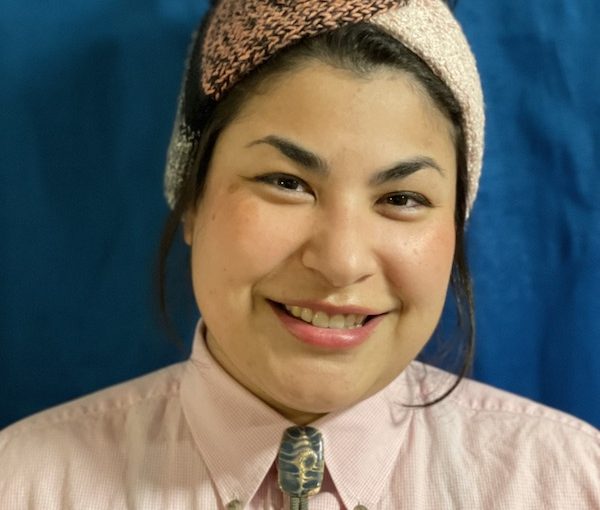
Carmel Tanaka has many diverse community projects on the go. (photo by Heather McCain)

Community engagement professional Carmel Tanaka gave a talk entitled A Day in the Life of a Queer, Neurodivergent, Jewpanese Millennial to a Zoom audience on Dec. 5. The lecture was part of Kolot Mayim Reform Temple’s 2021-22 speaker series Building Bridges: Celebrating Diversity in Jewish Life.

Tanaka, who founded and helms Vancouver’s JQT (pronounced J-Cutie), a nonprofit that advocates for the Jewish queer and trans community through dialogue and education, began her presentation by discussing her Jewish and Japanese heritage and the generational impact of both the Holocaust and the Japanese internment camps in Canada.

She introduced her family through numerous photographs going back two generations; her mother is a first-generation Ashkenazi Jewish Israeli from Haifa and her father is a third-generation Japanese Canadian.

Though she had an opportunity to meet three of her grandparents, they all passed away when she was relatively young. “I was definitely at an age when I was not nearly old enough to ask them the questions that I would desperately want to ask them now, particularly what they went through in the Holocaust, and Japanese Canadian internment,” Tanaka said. “The traumas of those two periods have greatly affected my family and informed the social justice work that I do.”

Fast-forwarding to December 2020, the screen shifted to the scene around the table during her father’s 75th birthday party. On what she described as a “completely normal to me” dining room table were doriyaki (Japanese steamed, sweet-filled pancakes), Jewish coffee cake, Japanese tea and Chanukah candles.

“Perhaps many of the tables in the local community have a similar melding of traditions as well,” she mused.

The offspring of two gifted cooks, Tanaka became a foodie in her own right. Many of her recipes – these include miso maple steelhead trout for Rosh Hashanah and matcha cheesecake for Shavuot – can be found on the internet, on such sites as My Jewish Learning.

With her recipes available online, many people of mixed Jewish and Japanese descent from around the world have reached out to Tanaka, making her realize that the global Jewpanese community is larger than she first thought it was.

Tanaka segued to the importance of names, and how her name differs depending on which group she may be addressing. For example, she uses Carmel in Jewish settings and Aya in Japanese setting because the name Carmel can be difficult to pronounce for Japanese speakers.

She then discussed JQT, which dedicates itself to creating connections and seeking space to celebrate the intersectional identities of Jews of all ages, diverse sexual orientations, as well as gender and sex identities, by “queering” Jewish space and “Jewifying” queer space.

One of the ways she queers Jewish space is through food. A pre-pandemic photo featured her selling community-donated rainbow challot glazed with apricot jam and rainbow sprinkled hamantashen at the Jewish Community Centre of Greater Vancouver.

JQT is also a partner organization of a project called Prism, a North American initiative that brings together Jewish artists of colour and is a place where, Tanaka said, she can celebrate all of her identities.

Another JQT venture is the B.C. Jewish Queer and Trans Oral Project, a collection of oral histories conducted in partnership with the Jewish Museum and Archives of British Columbia, and the first project of its kind in the province. Its objective is to make the archives more complete by providing the stories of older queer and trans members of the community. The first phase of the project was to conduct the interviews from May 2020 to July 2021. The second phase, now underway, is to use the material for a public online exhibit to give a voice to “a marginalized community within a marginalized community.”

Lastly, and fitting for the time of year, Tanaka spoke about JQT’s Hanukkah Hotties initiative, a daily set of Facebook livestreams throughout the holiday, in which a different guest lights their chanukiyah or shares another tradition. Guests chat about their life, art, activism and intersecting Jewish, queer, trans identities for the duration of the candles’ burning. This year’s lineup included, among others, Karen Newmoon, an Indigenous Jew-ish farmer; the Klezbians, “a band of unruly, chutzpah-licious musicians from the Isle of Klezbos”; and the Empress Mizrahi, a nonbinary/queer Persian Jewish Instagram content creator and activist in Los Angeles.

The pandemic has clearly not slowed Tanaka down by any means. She continues to be involved in another group she founded, Genocide Prevention BC, a cross-cultural collective of provincial representatives committed to the prevention of genocide and crimes against humanity.

She also works on her initiative, the Cross Cultural Walking Tours, a grassroots endeavour celebrating the multicultural history of Vancouver’s Downtown Eastside. These tours build awareness of the contributions of early immigrant communities and take place in May, which, in Canada, is both Asian Heritage Month and Jewish Heritage Month.

Tanaka, who once served as Hillel director at the University of Victoria, was recently named one of seven LGBTQ+ Jews of Colour You Should Know by Be’chol Lashon, a group that gives voice to cultural diversity in the Jewish community. She was also one of four local leaders featured in the article “The Push for Progress,” which was in the Fall/Winter 2021 issue of BCAA magazine.

Tanaka sees herself as well positioned to bring communities together. “As a mixed-race person, I have felt what it’s like to not be fully accepted by my own community. The art of bridging communities and bringing people together is my humble craft,” she said.

On Dec. 19, 6 p.m., Tanaka will take part in a discussion with Sara Yacobi-Harris from the Toronto-based group No Silence On Race, hosted by Victoria’s Temple Emanu-El, called Let’s Talk About Diversity, Equity and Belonging in the Victoria Jewish Community. For more information, visit congregationemanuelnews.wordpress.com/2021/11.

As for Kolot Mayim’s Building Bridges series, Rivka Campbell, co-founder of the organization Jews of Colour Canada, is the next speaker. On Jan. 9, Campbell will talk on the topic Harmony in a Divided Identity: A Minority within a Minority. To register, visit kolotmayimreformtemple.com.

Sam Margolis has written for the Globe and Mail, the National Post, UPI and MSNBC.

Format ImagePosted on December 17, 2021December 16, 2021Author Sam MargolisCategories LocalTags Building Bridges, Carmel Tanaka, community engagement, diversity, genocide prevention, inclusion, JQT, Kolot Mayim, LGBTQ+, oral histories, Victoria, walking tour
BGU advances in rankings

BGU advances in rankings

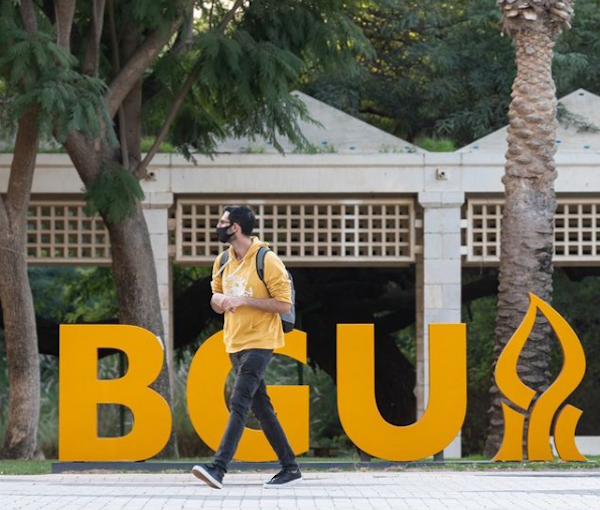
(photo from CABGU)

Ben-Gurion University of the Negev ranks among the top 50 universities graduating successful entrepreneur company founders from its undergraduate programs, according to Pitchbook, a financial data firm that publishes annual data. BGU moved up two spots from last year’s rankings, marking its third consecutive year on the top 50 list.

BGU has graduated 314 founders whose companies have raised a total of $8.3 billion, according to Pitchbook. Among the top five companies led by BGU entrepreneurs in capital raised are Deel ($630m), Fireblocks ($492m), Exaware ($420m), Fabric ($336m) and Hibob ($277m).

BGU’s entrepreneurial focus is led by Yazamut 360°, a suite of program offerings designed to enhance BGU’s academic curriculum and infuse entrepreneurship into the DNA of a BGU student. Yazamut 360° established Cactus Capital – Israel’s first student-run venture capital fund. It has also created two accelerators, one focused on technology entrepreneurship (Oazis) and one on e-commerce. Oazis pairs faculty members with chief executive officers to create companies through BGN Technologies. The accelerators serve as a resource for all entrepreneurs on campus through professional mentoring, financial consulting and technological consulting.

The 2021 Pitchbook university rankings are based on the number of founders whose companies received a first round of venture funding between Jan. 1, 2006, and Oct. 31, 2021.

– Courtesy Canadian Associates of BGU, B.C. and Alberta Region

Format ImagePosted on December 17, 2021December 16, 2021Author CABGUCategories IsraelTags Ben-Gurion University, BGU, education, entrepreneurship, high-tech, Israel, milestones, Pitchbook
נסיעה לישראל בעידן הקוביד חלק ב

נסיעה לישראל בעידן הקוביד חלק ב

הכנסות לנסיעות בימים אלה הרבה יותר מסובכות בגלל תקנות הקוביד, השונות בין מדינה למדינה. אני טסתי ברחבי העולם פעמים רבות אך הפעם הטיסה לישראל ובחזרה עם עצירת ביניים באירופה מורכבת מאוד.

נדרשתי להקדיש מספר לא מבוטל של ימים ללמוד את הנושא, ובעיקר להתייעץ עם אחרים שכבר טסו לישראל, בעיקר מקנדה. ניסיונם חשוב לי מאוד כיוון שלא לא היה מושג בנושא, עד שפתחתי בהכנות לנסיעה בדצמבר. אני מתחיל עם ישראל לבקר את אמי ומשם ממשיך לגרמניה והולנד, כאשר מספר הנדבקים בשתי מדינות אלה גדל בימים האחרונים.

מזה חודשים ארוכים אני מתכנן את הנסיעה לישראל ונאלצתי לדחותה בגלל המגבלות השונות. הפעם אני מקווה התכנון יצא אל הפועל ואנחת בישראל בראשית דצמבר. הפעם בניגוד לביקורים קודמים שלי בתל אביב, אני מתכנן להקצות את מרבית זמני להיום עם אמי.

בשלב ראשון הבנתי שעלי לעבור ארבע בדיקות קוביד בנסיעה זו. הראשונה כאן בוונקובר עד שבעים ושתיים שעות לפני ההמראה, השנייה מיד עם הנחיתה בנמל התעופה בן גוריון, השלישית בתל אביב עד שבעים ושתיים שעות לפני ההמראה לאירופה, והרביעית באמסטרדם שבעים ושתיים שעות לפני ההמראה בחזרה לוונקובר. למרבית הפלא בדיקות קוביד בקנדה עבור הטסים נחשבות משום מה ליקרות בעולם. הבדיקה כאן עולה לי כמאתיים דולר. להערכתי עלות שלוש הבדיקות הנוספות (בישראל ובאירופה) יעלו לי גם כן ביחד כמאתיים דולר. כך שעלויות הנסיעה מתייקרות משמעותית.

לשמחתי הצלחתי לקבל חיסון שלישי של פייזר לקראת הנסיעה וזה אמור להקל עלי לעבור בין המדינות, וכמובן לשמור על בריאותי. יש לי כבר את פספורט החיסונים של הממשלה הפדרלית הקנדית שרק הוא טוב לנסיעות בעולם, בניגוד לפספורט החיסונים של ממשלת בריטיש קולומביה.

ומה קורה בנושא הטפסים: בעשרים וארבע השעות האחרונות לפני הנחיתה בישראל עלי למלא טופס מיוחד בנושא הקוביד מטעם מדינת ישראל. בעשרים וארבע השעות האחרונות לפני עזיבת ישראל עלי למלא שוב טופס מיוחד בנושא הקוביד מטעם מדינת ישראל. עם הנחיתה באמסטרדם עלי למלא טופס מיוחד בנושא הקוביד מטעם מדינת הולנד. ועם הנחיתה בברלין עלי למלא טופס מיוחד בנושא הקוביד מטעם מדינת גרמניה. עדיין לא ברור לי האם בשעת החזרה לאמסטרדם עלי למלא שוב טופס מיוחד בנושא הקוביד מטעם מדינת הולנד. לפני הנחיתה בקנדה עלי למלא את אפליקציית ארייבקאן בנושא הקוביד מטעם ממשלת קנדה. בקיצור לא חסרה לי עבודה בנושא הטפסים השונים.

אני מעריך שצפויים לי עדיין מספר נעלמים הקשורים בתקנות הקוביד של כל שלוש המדינות בהן אבקר, וכן של קנדה, שאינני יכול לחזות מראש. אני מאמין שהיערכותי הרצינית מראש וכן העובדה שקיבלתי כבר חיסון שלישי, יעזרו לי לעבור את כל המכשולים הבירוקרטים הצפויים לי בנסיעה מורכבת זו.

מספר מילים על השינויים בטיסות שגרמו לי להפסיד יום אחד מהביקור בתל אביב. כיוון שחברות התעופה מנסות להתייעל ולאחד טיסות כדי למלא אותן בנוסעים, הכרטיס שלי שונה כבר חמש פעמים. אני מניח שלא יהיו עוד שינויים כי אחרת אאלץ לבטל את כל הנסיעה. במקור הייתי אמור לטוס מוונקובר לפריז ביום שלישי אחר הצהרים, לנחות למחרת (רביעי) בבוקר. ולאחר המתנה של כשעה וחצי לצאת בטיסה לתל אביב ולנחות שם אחר הצהרים. כאמור הטיסה הזאת בוטלה ולאחריה בוטלו עוד שלוש טיסות שלי, ולבסוף מתברר שאגיע לתל אביב רק ביום חמישי לפנות בוקר.

Format ImagePosted on December 15, 2021December 1, 2021Author Roni RachmaniCategories עניין בחדשותTags COVID, family, flights, Israel, travel, vaccine, חיסון, טיסות, ישראל, לִנְסוֹעַ, משפחה, קוביד

Posts pagination

Previous page Page 1 … Page 89 Page 90 Page 91 … Page 314 Next page
Proudly powered by WordPress