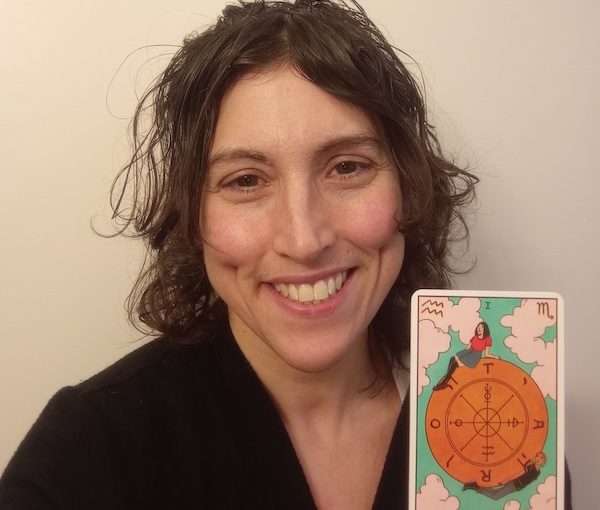
Building Bridges, Kolot Mayim Reform Temple’s annual six-part free lecture series, returns this year, beginning Nov. 2, 11 a.m., on Zoom. The theme for this season is Kolot Zemirot: The Many Voices of Jewish Music, exploring the role of music in shaping and sustaining Jewish identity across generations worldwide.
The series opens with Dr. Lori Şen presenting Classical Echoes in Ladino: Sephardic Songs Reimagined. Rooted in the folk melodies of Sephardi Jews and shaped by centuries of migration, Sephardi art song brings a distinctive voice to the Western classical stage. Şen explores the transformation of Ladino folk songs – an expressive Judeo-Spanish language enriched with influences from Turkish, Arabic, Greek and other cultures encountered throughout the Sephardi diaspora – into Western classical art song.
Through musical examples, historical context and stories from her research, Şen reveals a genre that not only preserves Jewish memory but also expands understanding of what Jewish classical music can be. Her presentation offers listeners a rare sound world that bridges history, culture and art.
Şen is a Turkish mezzo-soprano and Fulbright alumna known for her versatility across opera, art song, musical theatre and jazz, with an international performing and teaching career. She uniquely bridges the worlds of art and science with a background in physics coupled with vocal pedagogy and voice science. As a dual citizen of Turkey and Spain, her multicultural perspective drives her pioneering research in Sephardi art song. She is recognized as the first to catalogue Western classical settings of traditional Sephardi folk songs and to create a Ladino diction guide specifically for singers.
Currently assistant professor of vocal pedagogy at Shenandoah University and part of the voice faculty at the Peabody Institute of the Johns Hopkins University, Şen has shared her work worldwide.
For more information about the Building Bridges series, visit kolotmayimreformtemple.com. The series is partially supported by the Jewish Federation of Victoria and Vancouver Island. Donations are gratefully accepted, with tax receipts for gifts over $25.
Though North American stock indexes have risen to new heights in recent months, anyone who regularly checks financial news these days is unlikely to encounter the words “calm” and “steady” indescriptions of present-day markets. Rather, financial media are inclined to employ adjectives such as “turbulent” and “rocky.” Some headlines are saying the market (or sectors within it) is in bubble territory. Meanwhile, gold, often a refuge for those looking for stability, has also climbed to all-time highs.
David Heyman, a financial adviser for Edward Jones in Victoria, said it’s hard to decide whether we are in a bubble or not. COVID, he argues, exposed the vulnerabilities of the world’s supply chains, and many governments, especially in the United States, focused on domestic industries as a means not to be dependent on suppliers in other parts of the world.
“This is inflationary and costly, but it partly explains the strength in stock markets. Trump, in particular, is determined to bring industrial production back to the US. This trend is expected to continue for many years,” Heyman said.
To avoid risk in the event of a precipitous market decline, Heyman advises those close to retirement to have portfolios heavier in bonds and GICs (guaranteed investment certificates). For those in the earlier stages of their careers, he thinks equities, in the long run, are the way to go.
“History shows you can make a lot more in the stock market than you can in the bond market, but you’ll have to be able to withstand the volatility and endure the next recession, which will come one day,” he said.
In Canada, Heyman said, high prices in the housing market and the fact that interest rates may not fall as low as hoped have put the domestic housing market under pressure. Further, unemployment in Canada is heading upwards, while tariffs are in place and a trade deal remains elusive. There is a similar situation in the United States, he added, with inflation expected to remain high.
“The impact of tariffs in Canada has not been fully felt, as the Canadian dollar has declined to compensate, but Canada is more exposed to US tariffs than most countries. Sharply lower immigration in Canada will also have a dampening effect on the economy,” Heyman said.
Shay (Shy) Keil, senior wealth advisor at ScotiaMcLeod, said many people are worried that a market correction is imminent but that each investor would be impacted differently.
“Be mindful of what you own and make sure you are not overly concentrated in any one area,” Keil said. “When you are young, you have the time to weather 10-15% declines in the stock market. When you are retired or nearing retirement, your ability to withstand a market decline is absolutely a function of how you are invested, and the reality is that many people do not know what risks are in their portfolios.
“The challenge is that, when markets are volatile, investors often shift to much lower rate GICs/bonds without considering the significant impact it will have on their monthly income,” said Keil. “We would recommend to consider investing more into blue chip investments that will potentially maintain strong income and historically may not be as impacted by market volatility.”
Keil specializes in guiding clients with tax-smart strategies and cash flow solutions. “Earning predictable and consistent income is valuable in all market and economic cycles,” he said. “Our clients sleep better knowing they can draw from this income without touching their original capital, even when markets are volatile.”
This year has been a stellar one for technology stocks. As of Oct. 16, the sector on the S&P 500 index, where many mutual funds are invested, has risen more than 19%, with some companies climbing nearly 35% year-to-date. Consumer and energy stocks have shown much more modest increases and have declined in some cases.
On the Toronto Stock Exchange, most sectors have done well in 2025, with IT and materials leading the way during the current bull market. Consumer staples, utilities and health care are often considered stocks that perform well in bear markets.
In general, bonds, while offering a lower return, tend to be more stable than stocks. GICs are investments with set rates of return that are guaranteed up to $100,000 by the Canada Deposit Insurance Corporation (CDIC).
When investing, one should understand that there is a risk of losing money. While financial institutions may present packages that draw attention to positive returns over the course of several years, they will also include words to the effect that funds are not guaranteed to go up, values fluctuate and future results may not mirror past performance.
Sam Margolishas written for the Globe and Mail, the National Post, UPI and MSNBC. This article is for general informational purposes only and does not constitute financial, investment or other advice.
אנו עדים לעליה משמעותית באנטישמיות ברחבי העולם אחרי השבעה באוקטובר. על כך אין מחלוקת
אך נשאלת השאלה מה הביא לעלייה הכל כך משמעותית באנטישמיות כולל פגיעה פיזית ביהודים וישראלים בעולם? למרבה הצער בישראל מעדיפים שלא להתעסק בסיבות אלה רק בתוצאות שכידוע הן קשות מאוד ולא מוצדקות בשום מקרה
קודם כל: הגל האנטישמי הנוכחי לא החל מהשבעה באוקטובר אלא לאחריו. זאת, לאחר שבעולם החלו לראות את התמונות הקשות מרצועת עזה. גם הפעולות המזויעות של החמאס ושותפיו בשבעה באוקטובר שכללו רצח, אונס ועוד מעשים בלתי אנושיים – לא יכולים לשמש כתירוץ לפגיעה והריגת אלפי ילדים, נשים ואחרים שגרו ברצועת עזה. אי אפשר לטעון שכל תושבי הרצועה הם אנשי חמאס ושאר הארגונים, למרות שקל לעשות זאת. המראות הקשים האלה מהרצועה הם שהדליקו את מדורת השנאה הנוכחית כנגד הישראלים והיהודים בעולם. בישראל לא רוצים להבין זאת וממשיכים להתעלם מהמציאות הקשה של תושבי רצועת עזה, שחלקם הגדול אף מורעבים. לא פלא שישראל הפכה כיום לאחת המדינות השנואות בעולם. כצפוי ראש הממשלה, בנימין נתניהו, הוא אחד האנשים השנואים ביותר בישראל וכן ברחבי העולם כולו
הדיבורים של שרי הממשלה בדבר החלת הריבונות הישראלית על השטחים הכבושים, תוך כדי עיבוי ההתנחליות שהן דבר ביומו, וכן הגליית כל תושבי הרצועה בהתאם למשנתו הגרועה של נשיא ארה”ב המטורף, דונלד טראמפ, רק מגבירה את השנאה כלפי הישראלים והיהודים בעולם. החלת הריבונות והגליית הפלסטינים מהרצועה עשויות גם להרחיק מדינות ערביות מהסכמי השלום עם ישראל
ולאור זאת ולמרות הכל, ממשלת נתניהו מאלצת את צה”ל להמשיך ולהילחם בעזה כאשר מחיר הדמים הוא גבוה ביותר. כשש מאות חיילים נהרגו מאז כניסת צה”ל לעזה לאחר השבעה באוקטובר
מרבית החטופים שחזרו לישראל שוחררו באמצעות משא ומתן וצה”ל הצליח לשחרר בעצמו מספר בודד של חטופים. ומהצד השני נהרגו אלפי אזרחים מקומיים ברצועת עזה כתוצאה מפעילות צה”ל
לאור זאת אני שואל בקול גדול: כמה עוד חפים מפשע משני הצדדים צריכים להיהרג בעזה כדי שממשלת הדמים של נתניהו תואיל להוציא את הצבא משם? האם המספרים הגבוהים האלה שהשאירו אלפי משפחות יתומות מתאבלות על אובדן יקיריהם – לא מספיקים לכם? האם אתם רוצים וצריכים בעוד נהרות של דם באזור
בישראל בדרך כלל לא חושבים על רק על היום ולא על מחר ובוודאי ובוודאי שזה לא מטריד את ממשלת נתניהו: לא העליה הקשה באנטישמיות ברחבי העולם, לא העמקת הפילוג בתוך ישראל ולא המשך אבדן חיים משני הצדדים. בישראל בעידן של נתניהו שכחו כנראה שהאירועים הקשים האלה ברצועת עזה ישליכו גם על עתידה של ישראל ושכנותיה
יש לזכור שרבים בקרב הטרוריסטים הפלסטינים שאחראים על פעולות טרור רצחניות בישראל לאורך השנים, שייכים למשפחות שאיבדו את יקיריהן בפעולות שונות של צה”ל. ולכן לא מן הנמנע שתמונה זו תחזור על עצמה בעתיד הנראה לעין, וחלק מהטרוריסטים העתידים לפגוע בישראלים ימנו על משפחות פלסטיניות שאיבדו את יקיריהן ברצועת עזה. אני חושש שהתוצאה של הנזק העצום בעזה תעלה לישראל במחיר כבד בעתיד. וכמו שציינתי היינו כבר בסרט הזה בעבר
ארה”ב השאירה נזק רב במקומות בהן צבאה פעל בהם אפגניסטן, עיראק ווייטנאם. אך מדינות אלו רחוקות מאוד מארה”ב, לעומת רצועת עזה הסמוכה לישראל. מוטב היה אם ממשלת נתניהו הייתה חושבת גם על המחר, ועל כך שישראל מוקפת בשכנות שצריך להמשיך לחיות עימן גם בעתיד
Following 12 years as president of the Jewish Community Centre of Victoria (JCCV), with many accomplishments to his credit, Larry Gontovnick will hand over the reins of the organization to Deborah Bricks at the JCCV’s annual general meeting in December.
A charitable nonprofit, the JCCV houses a deli, gift shop and library. It is also home to the Jewish Federation of Victoria and Vancouver Island, PJ Library, Jewish Family Services and Kolot Mayim Reform Temple. Additionally, it provides a location for Bema Productions, the Victoria Jewish theatre, to hold its auditions and rehearsals, and it hosts other Jewish organizations, such as Hadassah-WIZO and Camp Miriam, for meetings and events. Among the activities the JCCV organizes are webinars with guest speakers, a virtual Jewish conversation café, drop-in mahjong, a book club and Israeli dance.
After 12 years at the helm of the Victoria Jewish Community Centre, Larry Gontovnick is handing over the reins to Deborah Bricks. (photo from Larry Gontovnick)
Gontovnick, by far the longest-serving president of the JCCV since its founding in 1989, oversaw the raising of grant monies to renovate the centre’s kitchen, revitalize the interior and exterior of the building, enhance its security system and improve its audio-visual system.
The technical side of operations witnessed the redesign of the JCCV website, which now offers an online calendar and a PayPal option for donations and membership dues. A newsletter was implemented for communications with members and friends, and a payment device was installed at the centre for purchases.
“I am most proud of maintaining the warm, friendly and welcoming environment of the deli and centre, and maintaining this important facility for the Jewish community in Victoria,” Gontovnick told the Independent about his time running the JCCV. “I am very thankful for the wonderful staff and volunteers at the centre and the board members, who have all been a great pleasure to work with.
“I will now turn my attention to three beautiful grandchildren and being the best zayde I can be. My wife and I will continue our travels, as well as thoroughly enjoy living in one of the most beautiful places on earth.”
A notable and ongoing program started under Gontovnick’s leadership is the Victoria International Jewish Film Festival (VIJFF), now in its 11th year.Bricks is the current director of the VIJFF.
“I am so pleased that Deborah, a current board member and director of the VIJFF, will be standing for president at the upcoming AGM,” said Gontovnick, who believes the energy and enthusiasm he brought to the centre will be furthered by his successor.
An event planner with deep roots in Jewish culture and community, Bricks has been designing and orchestrating arts and culture events – music, cinema and literature – through Deborah B Event Management, both in Toronto and, for the past 10 years, in Victoria. She holds a bachelor’s degree from the University of Toronto in religious and cinema studies and a master’s in media and communications from the New School for Social Research in New York.
“The JCCV president role – a combination of strategic direction, community building and operational oversight – is especially important now,” Bricks said. “JCCV provides a home, a makom [place], for programs, services and events important to communities of Canadian Jews and our culture, such as the Lox, Stock & Bagel Deli, loved by community.
“And there are untapped directions for new, meaningful programs, services and events that build community among Jews in Victoria, seniors and families alike, and with our neighbours in Canada.”
As part of her community-building goals, Bricks is already engaging younger Victoria-area Jews from her own network to join the JCCV and its board, as well as older community members, who may enjoy the experience of Jewish community via the JCCV.
Part of her vision as president, Bricks said, is to direct a new strategic plan for the JCCV that eventually transforms it (i.e., its constitution) into a Jewish community arts and culture centre. As a formal arts organization, the centre could access more local, provincial, federal and other grants.
Deborah Bricks will be both president of the JCCV and director of the Victoria International Jewish Film Festival. (photo from Deborah Bricks)
Bricks told the Independent that she sees the JCCV “serving up something Jewish-ish for everyone.”
While president, Bricks will continue as director of VIJFF, leading its planning, film curation and event strategy.
“As Victoria’s only Jewish cultural festival, we try to spotlight Canadian-Jewish filmmaking and filmmakers,” Bricks said. “This year, we have three films by Canadians, ranging from stories about a Franco-Moroccan mother and son, about Yiddish in Sweden, and about the early Jewish immigrant experience in Montreal.”
Also playing will be Sabbath Queen, which follows the story of Rabbi Amichai Lau-Lavie, the heir of 38 generations of Orthodox rabbis who became a drag queen and the founder of Lab/Shul, an experimental “God-optional” congregation based in New York. It will be followed by a discussion with filmmaker Sandi DuBowski (via Zoom) and Victoria drag king Dublin Tendre.
This year’s festival runs Oct. 18-23 and features seven film events at the Vic Theatre. For more information, visit vijff.ca.
Sam Margolis has written for the Globe and Mail, the National Post, UPI and MSNBC.
The seventh annual Simces & Rabkin Family Dialogue on Human Rights, organized by the Canadian Museum for Human Rights, Vancouverites Zena Simces and Dr. Simon Rabkin, and Equitas-International Centre for Human Rights Education, takes place Oct. 23, at noon, via Zoom. It tackles the topic of The Match-up Between Human Rights and Sports: How Both Can Win Well in Today’s Landscape.
According to the Office of the High Commissioner for Human Rights, “sport is anchored in human rights values. It promotes fairness, non-discrimination, respect and equal opportunities for all. As it reaches billions, including young people, it is a conduit for societal change through empowerment and inclusion.” Despite being anchored in human rights values, sport also faces human rights-related challenges through various forms of discrimination be it sexism, racism, ableism, classism or others. The Oct. 23 dialogue will explore the benefits of sport as a force for good in upholding human rights, the challenges currently faced by the Canadian sport system, and pathways to strengthen the balance between sports and human rights so that both win by promoting well-being for all.
The expert panelists featured will be Bryan Heal, Jeff Adams and Armeen Kadwa. Attendees will have the opportunity to ask questions and share comments.
Heal is social impact research lead with Maple Leaf Sports & Entertainment (MLSE), heading such initiatives as the MLSE Foundation’s Change the Game research program for youth in Ontario.
Adams, a labour, employment and human rights lawyer, is a Canada’s Sports Hall of Fame inductee. He won three gold medals in the Paralympics: twice in the 800-metre (1996 and 2000) and once in the 1,500-metre (2000) wheelchair racing events.
Kadwa is founder and executive director of the nonprofit Hijabi Ballers, which is dedicated to creating positive sport experiences for Muslim girls and women.
The panel will be moderated by Wendy MacGregor, a consultant, educator and lawyer, and founder and executive director of Athlete Zone. She has a master’s in law on abuse and maltreatment of athletes. Her published work focuses on the root causes of sport violence, maltreatment prevention, power imbalance and wellness in sport.
The inaugural Solidarity Cycle, in 2017. (photo by P. Simson)
We didn’t ride 100 kilometres, or even quite 50. It was a glorious symbolic ride in celebration of the many years of Solidarity Cycle, a much-beloved event that has seen dozens of cyclists and hundreds of supporters unite bike and heart to raise more than $400,000 for the Stephen Lewis Foundation Grandmothers to Grandmothers Campaign.
Even though Solidarity Cycle has pushed its last pedal – the event having been canceled this year – three members of Tikun Olam Gogos, who rode in the inaugural event back in 2017 and have served in numerous capacities every year since, just couldn’t let go.
Monday, Sept. 8 was a perfect day as Marie Henry, Darcy Billinkoff and I set out: not a drop of rain, not a wisp of smoke, just sunny skies with occasional clouds and a light breeze.
Nothing could keep us down, not Darcy’s fractured ribs, Marie’s stress injuries or my right hip, waitlisted for replacement. Could this “Wride of the Wrecked” be a clue to Solidarity Cycle’s demise?
There were more portents to come, but first it was time to ride.
Many features of our route to Westham Island came with joyful reminders of the previous cycles: cornfields reminiscent of the years of Chilliwack corn and chili celebration dinners, acres of sunflowers like those popping the Pemberton Valley ride the year of pandemic and big smoke, and kilometres of dike trails like those we traveled in Pitt Meadows. The one-lane, wood-deck river crossing onto the island was a refreshing antidote to that !@#$%!!! (oops, I mean challenging-but-fun) Golden Ears Bridge.
We reached our designated turn-around point, the Reifel Bird Sanctuary, to find the birds behind locked gates.
Even more dismaying, Emma Lea’s dairy bar was shut tight. NO ICE CREAM?! Clearly, the closed signs said it was time to wave a regretful goodbye to the ride that has fueled our summers and our love for the grannies these past eight years.
But, still, we weren’t quite done.
We topped off our ride with Heineken and lunch on the deck of the Riverhouse Restaurant and Pub, an indulgent reminder of many post-cycle beer and burger banquets. We always suspected we consumed more calories than we burned.
In the absence of a formal event this year, I did not solicit sponsorships. However, I set up a fundraising page to show my appreciation for the many people who have supported Solidarity Cycle over the years. Please do visit the page because there is a message there for you: slf.akaraisin.com/ui/grandmotherscampaign2025/p/BarbaraHalparin.
Without the yearly opportunity Solidarity Cycle has afforded you, I urge you not to forget the grandmothers and grand-others aiming to alleviate the scourge of HIV/AIDS that continues to significantly impact Africa. Here are some other ways you can continue your steadfast support for them, now that crucial international aid has been withdrawn.
First, attend Tikun Olam Gogos’ other fundraising events. Second, be on the lookout for another in our fabulous concert series in the near future. Third, buy our merch! We sell our signature tote bags, pouches and other items, including our special edition O Canada line, at Fancy This Gifts (5044 48 Ave., in Ladner), by appointment at Joyce Cherry’s home boutique (604-261-5454) and on our website, tikunolamgogos.org.
You can also find our goods at several upcoming craft fairs: St. Thomas Aquinas Secondary School (Nov. 2); Dunbar Community Centre, St. Faith’s Church and St. Thomas More Collegiate (all Nov. 22); St. James Community Square (Nov. 30); and Kensington Community Centre (Nov. 30).
And, please – share your fundraising brainwaves with us because, of course, we are looking for a successor to Solidarity Cycle!
On Sunday, Prime Minister Mark Carney issued a statement on Canada’s recognition of Palestine as a state.
“Recognizing the state of Palestine, led by the Palestinian Authority, empowers those who seek peaceful coexistence and the end of Hamas,” said Carney. “This in no way legitimizes terrorism, nor is it any reward for it. Furthermore, it in no way compromises Canada’s steadfast support for the state of Israel, its people and their security – security that can only ultimately be guaranteed through the achievement of a comprehensive two-state solution.”
Prime Minister Mark Carney announced on Sunday that Canada would recognize Palestine as a state. (photo from Office of the Prime Minister)
Carney noted: “Since 1947, it has been the policy of every Canadian government to support a two-state solution for lasting peace in the Middle East.” He said there was an “expectation that this outcome would be eventually achieved as part of a negotiated settlement,” but “this possibility has been steadily and gravely eroded” by several factors.
In addition to other criticisms of both Hamas and Israel, Carney lists the “pervasive threat of Hamas terrorism to Israel and its people, culminating in the heinous terrorist attack of Oct. 7, 2023,” and Hamas’s rejection of Israel’s right to exist; “accelerated settlement building across the West Bank and East Jerusalem, while settler violence against Palestinians has soared”; “the E1 Settlement Plan and this year’s vote by the Knesset calling for the annexation of the West Bank”; and the “Israeli government’s contribution to the humanitarian disaster in Gaza, including by impeding access to food and other essential humanitarian supplies.”
Carney said the Palestinian Authority “has provided direct commitments to Canada and the international community on much-needed reforms, including to fundamentally reform its governance, to hold general elections in 2026 in which Hamas can play no part, and to demilitarize the Palestinian state.”
In reaction to the prime minister’s Sept. 21 statement, Noah Shack, chief executive officer of the Centre for Israel and Jewish Affairs, said, “Hamas is not an isolated phenomenon. It is a violent manifestation of the rejection of the right of the Jewish people to a state in our ancestral home – a rejection that runs deep within Palestinian society.
“As Prime Minister Carney himself has noted, a Palestinian state must be a Zionist state. Today’s announcement undermines that objective and gives Hamas and other Palestinian rejectionists a sense of victory. This will only make it harder to secure the release of hostages and build a better future for Israelis and Palestinians.”
Shack acknowledged that, while the “announcement does not come as a surprise, the details are important. The government has stated that, while it is extending recognition, normalization of relations with a ‘state of Palestine’ is an ongoing, long-term process…. We will argue that this must not proceed so long as hostages are in tunnels, Hamas remains in power and the Palestinian leadership rejects Israel’s existence as a Jewish state.
“And we will continue,” said Shack, “to make it clear that, with anti-Jewish hate escalating, our government must recognize the unintended effect foreign policy has on the climate in our own country.”
B’nai Brith Canada also issued a response to Carney’s statement.
“The PA has shown, time and again, that it cannot be trusted,” said Richard Robertson, director of research and advocacy for B’nai Brith Canada. “It is unable to govern the Palestinian Territories and has repeatedly demonstrated it is unwilling to deliver on the very commitments upon which Canada’s recognition is supposed to be predicated.
“The commitments include democratic reform, free and fair elections in 2026 without Hamas, and the full demilitarization of the Palestinian Territories.
“None of these conditions have been met. Hamas continues to arm itself, hold hostages and carry out terror attacks. Recognition under these circumstances does not bring us any closer to lasting peace, it only further compromises the prospect of a two-state solution.”
Robertson said the “government has chosen appeasement over principle.”
On Sunday, the United Kingdom, Australia and Portugal made similar announcements to that of Canada. Reaction from Israel was critical.
“After the atrocities of Oct. 7, while Hamas continues its campaign of terror, and while it continues to cruelly hold 48 hostages in the tunnels and dungeons of Gaza, the recognition of a Palestinian state by some nations today is, not surprisingly, cheered by Hamas,” wrote Israel’s President Isaac Herzog in an X post.
“It will not help one Palestinian, it won’t help free one hostage, and it will not help us reach any settlement between Israelis and Palestinians. It will only embolden the forces of darkness.
“This is a sad day for those who seek true peace,” he concluded.
Israel’s Prime Minister Binyamin Netanyahu said he will release a formal response after he returns from the United States. However, in a widely reported Hebrew-language video statement, he said, “I have a clear message to those leaders who recognize a Palestinian state after the horrific massacre on Oct. 7 – you are handing a huge reward to terror.
“It will not happen,” he added. “A Palestinian state will not be established west of the Jordan.”
According to various news reports, Hamas did indeed applaud the recognition announcements, as did the Palestinian Authority.
At the Canadian Shaare Zedek Hospital Foundation (CSZHF) event on Sept. 7, which marked the foundation’s 50th anniversary: left to right, Col. Ilan Or, Israeli defence attaché to Canada; Rafi Yablonsky, CSZHF national director; Dr. Marla Gordon, CSZHF Western region board member; Dr. Arthur Dodek, CSZHF Western region board member; former prime minister Stephen Harper; Dr. Robert Krell, 2025 Western Region recipient of the Kurt and Edith Rothschild Humanitarian Award; Rabbi Andrew Rosenblatt of Schara Tzedeck Synagogue; Ilan Pilo, CSZHF Western Canada director; and Sam Sapera, CSZHF board chair. (photo by Alina Ilyasova)
Former prime minister Stephen Harper was on friendly ground when he addressed a packed sanctuary at Congregation Schara Tzedeck earlier this month. The former Conservative leader, who led the country from 2006 to 2015, is known as a stalwart ally of Israel and the audience of mostly Jewish Vancouverites welcomed him heartily.
The Sept. 7 event was the first fundraising gala for the newly formed Western region of the Canadian Shaare Zedek Hospital Foundation. The event and the surrounding campaign succeeded in funding nine incubators for the hospital’s pediatric department.
The event featured Harper in conversation with former BC premier Gordon Campbell, who told the audience that, of the prime ministers he served with concurrently when he was premier from 2001 to 2011, Harper was his favourite.
Harper said people ask him why he supports Israel so strongly.
“Has it got to do with religion or your view of the Jewish community?” he asked rhetorically. “I mean, there are a million reasons, but, as prime minister of Canada, the reasons were really simple. Here is this one country in the Middle East that shares our values and that is a friend of this country – and the people who are the enemies of that country are enemies of this country.”
Harper told the audience that there are a lot of loud voices condemning Israel and threatening Jewish Canadians, but, he said, they are not unanimous. “There are still a lot of people in this country that understand the value of our Jewish community, that are friends of the state of Israel, and that thank you for everything you do,” he said.
Harper lauded Israel for its actions to set back Iran’s nuclear program, arguing that the brief Israel-Iran conflict has positively realigned the region. People had warned that Israel’s attack on Iran’s nuclear capability was a dangerous escalation that could “lead to World War Three,” he said.
“We know that not only was [the nuclear program] set back considerably, but the United States and Israel sent a real message that, if we see it again, we’re going to do the same thing again.”
The results of the Israeli actions were overwhelmingly positive, Harper said. There was a very limited Iranian response – and, notably, no other nations coming to Iran’s aid, he said.
There were broader repercussions around Israel’s action against Iran and in the larger regional conflict, he added. Hezbollah was decapitated and the Lebanese government is now trying to push Hezbollah out. Hezbollah’s allies in Syria lost power. Hamas is massively degraded.
Campbell expressed dismay at Prime Minister Mark Carney’s statement that Canada would recognize Palestinian statehood at the United Nations if the Palestinians meet a number of conditions.
“My problem with that … the Palestinian Authority has never done one of the things that the prime minister said,” Campbell said.
“I’m trying to give the new government a chance,” Harper replied, calling the Carney government a “kind of improvement” on the previous administration. “The only interpretation you can put on it is in fact rewarding the events of Oct. 7th.”
Harper said he cannot recall any precedent for Canada, or any other country, recognizing a state that does not exist.
“But, on top of that,” he said, “Who exactly are you? … There is no leadership among the Palestinian populations, including the [Palestinian Authority], that actually unequivocally recognizes the right of a Jewish state to exist. It’s great to say, ‘I favour theoretically a two-state solution,’ but the problem is this other state would be a state that does not support a two-state solution. You’d actually be moving further away from that objective.”
While Israel’s military actions have improved the geopolitical situation in the Middle East, Harper acknowledged there has been a concurrent spike in antisemitism in Canada.
“I really feel a lot of sympathy for ordinary Jewish people who face this in their private [and] professional lives and feel intimidated,” he said. “I guess that the only advice I can give you is to be resolute.… You can’t let those occasions slip. You can’t let them go by.”
Harper said he has been accused of dismissing criticism of Israel as antisemitic, an assertion he rejects.
“Being opposed to policy of the government of Israel is not antisemitic,” he said. “But being opposed to Israel because it is the only Jewish state in the world is the definition of antisemitism.”
Harper spoke, as he has previously to Jewish audiences, of his father, Joseph, who came of age during the Second World War, when the world was existentially threatened by fascism.
“One of the consequences of that is he grew up just as a very determined opponent of antisemitism in a period – we’re talking the ’40s, ’50s – where some of these things were expressed openly. He was very vocal in opposing that. And, frankly, he is just turning over in his grave watching some of what is happening today.”
Despite almost a decade out of office, the former Conservative prime minister did not shy away from politics, crediting the Liberal party with running an excellent campaign earlier this year and identifying shortcomings in the Conservative party’s approach.
Harper cited Donald Trump’s intervention in the campaign as a factor and anxieties around the Canada-US relationship for upending conventional wisdom, including polls that had predicted a Conservative landslide before former prime minister Justin Trudeau resigned.
“I do think the [Conservative] party has to take a hard look at what went right and what went wrong,” said Harper. “The Liberals displayed incredible tactical flexibility, and we did not show the same level of flexibility.”
Of the Conservatives, he said: “We ran a very principled campaign, but we need to show a lot more adaptability when circumstances change.”
Harper and Campbell also addressed economic issues. The former prime minister said the challenges presented by the current American administration are a chance to diversify Canada’s trade relationships.
“If we have an opportunity to be a genuine globally connected economy, instead of just kind of an economic appendage to the United States, which in some ways we have become, I [see] opportunity,” he said.
Both Harper and Campbell, in their time, were advocates for the economic benefits of resource extraction.
“Resources are not the only thing we have, but it’s a big, big comparative advantage,” Harper said. “We’re the country that has an unlimited range of natural resources in a rule-of-law environment, far removed from conflict zones. Do you know how rare that is in the world when it comes to vital resources? And that’s what we have. And we’re not getting them out of the ground, and we’re not getting them around the world.… We’ve got to get our energy to Asia. We’ve got to get our energy to Europe.… It will bring billions of dollars into Canada, create thousands and thousands of jobs in Canada. We are up against the clock, and the clock doesn’t care much about us.”
The Sept. 7 program began with a video showcasing Shaare Zedek Hospital’s achievements in maternal and neonatal care, as well as the range of advanced medical procedures for which the hospital is known. The religious and ethnic diversity of the hospital’s staff and patients is a particular source of pride for the facility’s leadership and their Canadian supporters.
Harper spoke highly of the hospital, which treats more than a million patients a year.
“The Shaare Zedek Hospital is, to me, emblematic of just so much of what has made Israel a remarkable country,” he said. “[It has] become a world-leading institution that services people beyond politics, race, religion, ethnicity … just a tremendous institution.”
The event was presented by the Canadian Shaare Zedek Hospital Foundation in partnership with the Jewish Federation of Greater Vancouver, Congregation Schara Tzedeck, the Jewish Independent and the Jewish Medical Association of British Columbia. Organizers expressed special thanks to CJPAC, the Canadian Jewish Political Affairs Committee, for their community support.
Ilan Pilo, Western Canada executive for Canadian Shaare Zedek Hospital Foundation, announced the success of the event, which resulted in funding for nine “Giraffe” incubators – each one costing $50,000 – for the hospital where 22,000 Israeli babies are born annually.
Dr. Robert Krell was awarded the Kurt and Edith Rothschild Humanitarian Award. (See jewishindependent.ca/harper-speaks-at-gala.) The award was presented by Dr. Arthur Dodek, a member of the board of the Jewish Medical Association and of the CSZHF, and Sam Sapera, chair of the board of the CSZHF, which marks its 50th anniversary this year.
The event was co-emceed by the Jewish Medical Association’s Dr. Marla Gordon and Zach Segal, who was a Conservative candidate in this year’s federal election.
In the Gaza Youth Committee campaign We Live Together, We Die Together, young Gazans hold, in a show of solidarity with Israelis, photographs of Israeli children who were killed on Oct. 7, 2023. (photo from Rami Aman)
“People must understand that the people of Gaza are not victims and they are not superheroes. We are human beings, a group of people like any other society. We love life and hate death, we love singing and we hate violence. We are not terrorists. Parents pay to educate their sons and daughters in medicine, engineering, pharmacy, art, business, English and other languages. Gaza is not Hamas, and Hamas is not Gaza – Hamas is part of the Muslim Brotherhood,” Palestinian journalist Rami Aman, founder of the Gaza Youth Committee, told the Independent in a recent interview.
JI readers may have seen on social media one of the latest Gaza Youth Committee (GYC) campaigns, called We Live Together, We Die Together. Its images feature young Gazans holding, in a show of solidarity with Israelis, photographs of Israeli children who were killed on Oct. 7, 2023. The Gazans stand amid buildings and neighbourhoods destroyed in the Israel-Hamas war. The Independent was connected with Aman by Vancouver Friends of Standing Together.
“As the months of war passed, many voices increased within Israeli society opposing the killing of Gaza’s children, expressing solidarity with their families, and calling for an end to the war,” he explained about the social media campaign. “In Gaza, we saw tens of thousands of Israeli demonstrators carrying pictures of child victims in the Gaza war. Therefore, despite the killing, hunger, siege and shortages in Gaza, it was important for us to prove that, in Gaza, there are Palestinians who object to the killing of any child, and to show their solidarity with all the child victims who have fallen in the war, Israeli or Palestinian.
“We have lost a large number of Muslim, Christian and Jewish children because of this war between Hamas and the Israeli army,” he said. “This campaign emerged from Gaza to emphasize the people’s rejection of the war and the killing of children, and the need to release the Israeli hostages, end the war and provide medical treatment for the children of Gaza.”
Palestinian journalist Rami Aman, founder of the Gaza Youth Committee, speaking at an event. One of his goals is to hold meetings between Palestinians and Israelis to help them respect one another and determine their own fate. (photo from Rami Aman)
Aman started the GYC after the first Israel-Hamas war, which he described as “a turning point” in his life.
“I began thinking about trying to do something two months after the end of the war in 2009. I decided to look for a place to establish an FM radio station in Gaza that would emphasize the voice of the peaceful people of Gaza,” said Aman, who has a bachelor’s degree in electronics and communication engineering. “At the beginning of August 2009, I received my first request from Hamas security. They interrogated me for long hours, and I was subjected to repeated assaults by Hamas members in the following days. They warned me against broadcasting any radio station or publishing any media content about Gaza without their permission.”
Realizing that Hamas wanted no other voice from Gaza than their own, Aman said, “At the beginning of 2010, I decided to form an independent youth group whose goal was to spread awareness internally and to strengthen our relations externally. Our first meeting included 30 young men and women from Gaza, and we agreed on the need to form an independent youth body that would advocate for Palestinian reconciliation and spread the voice of peace from Gaza to the entire world.”
The Gaza Youth Committee currently has more than 300 members inside and outside Gaza, said Aman, “and we are still trying to reach our goals.”
“We are all working to convey the true image of the people of Gaza and to build genuine partnerships with Israelis to help Palestinians and Israelis understand and respect each other,” he said.
Over the past 15 years of activities and meetings, Aman said he has learned a lot, “including how to influence public opinion within Gaza and how to build pressure and advocacy campaigns.
“Over these years,” he said, “I’ve realized the importance of inviting enemies to dialogue, instead of fighting, and trying to shape a different image of the other. These years have helped me differentiate between the Palestinian who wants to build their society for the better and the Palestinian who seeks to achieve their own interests from the Israelis or Palestinians at the expense of others.
“After many different activities between the Gaza Youth Committee and several Israeli movements and organizations, we have built many bridges and created a lot of connections and relations.”
GYC initiatives have included the release of 200 doves from Gaza with messages of peace, Skype calls between Gazans and Americans, and Gazans and Israelis, and a cycling marathon along the border in which both Israelis and Gazans participated.
This work has not been without risk. Aman has been arrested and tortured by Hamas more than once for his peace initiatives with Israelis, as have people with whom he has worked. After a GYC Zoom call in April 2020, he was arrested, Hamas apparently being alerted by the social media post of journalist Hind Khoudary, who was consulting for Amnesty International at the time.
According to a 2020 Jerusalem Post article, “she did not tag Hamas officials in her Facebook posts against Rami Aman to get him arrested but as a protest against normalization activities.
“‘I want all the normalization activities he is doing with Israel from Gaza to stop immediately because any joint activities, cooperation or dialogue with Israelis is unacceptable, even engaging with Israeli ‘peace activists,’” she said in an interview with the Post.
To secure his release, Aman was told he’d have to divorce his then-wife, the daughter of a Hamas official, who was also among those arrested. He eventually signed the papers in August of that year. His wife had already been released at that point, but Aman remained in prison, despite what he’d been told. He was prosecuted in September 2020 for “weakening revolutionary spirit,” and ultimately convicted. After international pressure, he was released in late October, with a suspended sentence, according to a 2021 article in the Times of Israel.
His former wife traveled with a Hamas escort to Cairo while Hamas released Aman from prison one day later. The couple kept in touch after Aman’s release from prison and subsequent move to Cairo in 2021, but have drifted apart for various reasons. Intending to return to Gaza in late 2023, the war caused Aman to change his plans.
“When I first started working for Gaza from abroad, I felt strong and free, and I regained my energy,” he said. “With the outbreak of the war, I began to feel stuck. I couldn’t call on people to demonstrate to end the war while I was on Facebook. People in Gaza trusted me because I was always the first to demonstrate against Hamas, from 2011 until before I left Gaza. If I were in Gaza, I would certainly demonstrate, even for an hour every day, to end the war. Then I would call on people to demonstrate while I was on the street.”
While he would prefer to be in Gaza, Aman said technology has helped GYC’s activism greatly, even before he had to leave his homeland.
“From 2007 until now, Israel has consistently imposed blockades on the residents of the Gaza Strip,” he explained, “while Hamas remained unaffected by any crises and received hundreds of millions of dollars with the help of the Qataris and [Israeli Prime Minister Binyamin] Netanyahu, in addition to Hamas’s control over travel through the Rafah crossing.
“The real blockade was imposed on us in the Gaza Youth Committee and the majority of Palestinians, so we used Skype and Zoom to communicate with our friends and partners outside Gaza, the most famous of which was the Skype with Your Enemy initiative in 2014.
“We also organized hundreds of meetings that helped introduce me to the world and led several organizations to extend invitations to visit them abroad. I traveled to India because of these meetings, which led to me meeting with the Dalai Lama. A few months ago, I was in Europe to speak about Gaza in several European cities.
“Most of the news coming from media outlets and news agencies will not present the truth to anyone, and it is better to communicate directly with the people in Gaza,” said Aman. “Israel has not provided us with permits to enter the West Bank and Jerusalem. Since 2010, the Israeli authorities have only granted me a 12-hour permit to attend a workshop in 2014 and permits to transit to Jordan when traveling from Gaza. For me and others, these applications have resulted in the building of a large number of personal friendships that continue to this day because they have been created between people, both Palestinians and Israelis.”
Aman has strong criticisms of the media in general, and Al Jazeera in particular, as well as UNRWA (the United Nations Relief and Works Agency for Palestine Refugees in the Near East).
“No Palestinian in Gaza watches Al Jazeera. No Palestinian in Gaza trusts in UNRWA. No Palestinian in Gaza trusts in all of these media,” Aman told UN Watch in an interview earlier this month.
In this atmosphere, the GYC continues its efforts.
“We at the Gaza Youth Committee work to strengthen the capacities of Palestinian youth, develop their skills and create a Palestinian movement from Gaza, the West Bank and the diaspora that expresses the aspirations of the independent Palestinian people,” said Aman. “At the Gaza Youth Committee, we always strive to hold meetings between Palestinians in Gaza and Israelis, helping them respect each other and determine their own fate by implementing joint initiatives and conveying their voices to the Americans and Europeans.
“Before the war,” he said, “we always tried to organize demonstrations to demand that Hamas hold elections, resolve the unemployment and electricity crises, and step back from governing Gaza. Even now, during the war, we are working to direct the people of Gaza to demand an end to the war.”
Aman contends that most Gazans want peace, despite polls that indicate the opposite.
“I don’t believe that much in polls,” he said, “but I understand Palestinian and Israeli public opinion. The two societies have been at war for years and have seen nothing but bloodshed and destruction, and wars only create enemies. Trust was lost before Oct. 7 and the distrust increased after the war.
“I have always believed in the importance of talking to enemies and engaging in dialogue instead of fighting. This is what I do through Zoom and Skype meetings. If there is one Palestinian and one Israeli who believe in a peaceful solution, then there is hope. We need courageous decision-makers who can lead their societies toward peace, not lead them toward fighting, hostage-taking and spreading hatred.”
Given his years of organizing video conferences, Aman said, “I have considerable experience, gained from speaking with thousands of Palestinians and thousands of Israelis. Their beliefs and opinions differ, but the common humanity that unites them always remains. They don’t know each other because of the media, and I believe in what I do and in every person’s right to life and safety, regardless of their religious or political beliefs.”
Working with “the enemy” has become Aman’s life mission. This, despite having been imprisoned and tortured by Hamas, having had loved ones killed or taken away from him by both Israeli forces and Hamas, and his neighbourhood in Gaza being destroyed by Israeli bombs.
“It’s true that, as a person, I suffer every day from this news and all the memories,” he admitted. “In addition to what Hamas did to me, it was horrific and psychologically and physically painful. However, there are people around me from whom I get this energy, and I always feel that I must be their partner in promoting dialogue and respect between Palestinians and Israelis.
“With every loss of a person, I always feel that they are advising me to continue my path and take care of their children,” he said. “Therefore, in my activities, I always aim to help families and individuals I know well, and I don’t want them to feel that I am far away from them. That is why I do my best to make their voices heard and that is from where my sense of responsibility for this matter comes.”
Aman is certain there are partners for peace on both sides.
“I consider myself a partner to any Israeli who seeks peace and an end to the war,” he said. “I know that there are Israelis who consider themselves peace partners with the Palestinians. I know Palestinians and Israelis who have lost their children and parents and still believe in peace, so that no more victims fall.”
He stressed the need to stand together.
“Our voices must unite to stop the war, free the Israeli hostages, protect the Palestinians in Gaza and help them rebuild their society,” he said. “We must find 50 Palestinian and Israeli leaders who will work to bring Palestinians and Israelis together.”
As Aman responded to the Independent’s questions, he said Israel Defence Forces tanks were “stationed hundreds of metres away from where my family and friends are. But I always know,” he said, “that life exists and so does death. Anyone can be the next hope and anyone can be the next victim.”
Israeli journalist Rolene Marks, chair of WIZO’s Hasbara Division, was the keynote speaker at CHW Vancouver Centre’s Opening Lunch and Fashion Show on Sept. 14. (photo by Cynthia Ramsay)
“I know that, as a community, you are feeling vulnerable and you are feeling that you have to be the mouthpiece or, as I call it, the litmus test, for however Israel is prosecuting a war so many miles, so far away, from you,” Israeli journalist and advocate Rolene Marks told those gathered at CHW Vancouver Centre’s Opening Lunch and Fashion Show on Sept. 14. “And I want to tell you that, although Israel’s not perfect – even though we are the only country in the world expected to prosecute a perfect war – you can be proud of the state of Israel.”
Left to right: Claudia Goldman, Rolene Marks and Toby Rubin at the Sept. 14 event. (photo from CHW)
Marks, who, among other things, chairs WIZO’s Hasbara Division, was the event’s keynote speaker. Toby Rubin, president of CHW Vancouver Centre, welcomed the 150-plus guests at the Richmond Country Club Sept. 14, acknowledging the presence of Judy Mandleman, Rochelle Levinson and Claudia Goldman – three local Jewish community members who have been presidents of national CHW. She noted that the current national president, Tova Train, would be speaking, as would Lisa Colt-Kotler, chief executive officer of CHW, and Marks.
“This luncheon today is raising funds for two very important projects that we have here locally,” said Rubin. “One is JOLT, and the other is Franny’s Fund [which supports six youth advocacy centres across Canada, including the Treehouse Vancouver Child and Youth Advocacy Centre]. JOLT is the Jewish Outreach Leadership Training program at Canadian Young Judaea, and provides camperships to seven camps across Canada, including our very own Camp Hatikvah. Today, we are honoured to have with us the president of Camp Hatikvah, Joanna Wasel, who, along with the camp director and staff has worked with CHW these past two summers with the campers.”
Last year, Wasel and staff spearheaded making keychains and bracelets for Israeli soldiers, which Colt-Kotler and Train hand-delivered on a visit last January to patients at the Gandel Rehabilitation Centre at Hadassah Hospital, said Tobin.
This year, campers in Hatikvah’s first session created their own version of the Maccabi Games, as a fundraiser for HaGal Sheli (My Wave), “a surfing program that is used to help people combat stress, anxiety and PTSD,” said Rubin. “And you can only imagine, since Oct. 7, how important that program is.”
The initiative raised more than $7,000 for HaGal Sheli, said Rubin, who also noted that the brunch’s table decorations of books, toy cars and pens would be given to Treehouse Vancouver. Many of the books were donated by Vancouver Talmud Torah, she said.
Train, who came to the event from Toronto, spoke about being from Edmonton, calling herself “a Westerner at heart.”
“I never imagined myself taking on the role of national president,” she said, “but I’ve always believed with my whole heart that, if I cannot serve Israel by wearing a uniform, then my obligation is to serve in every other way I can. That’s why CHW speaks so deeply to me. For more than a century, this organization has invested in education, health care and social services. And, today, especially after Oct. 7, those needs have never been greater – Rolene shared with me a statistic this morning that more than 10,000 IDF soldiers have been treated for mental health issues across the country since Oct. 7.”
After a video about CHW’s various impacts, Colt-Kotler presented a plaque to Bernard Pinsky, in his role as chair of the Ronald S. Roadburg Foundation.
“CHW, at our core, is philanthropy, and we were founded, as you know, in 1917, by a very dedicated, special woman named Lillian Freiman,” said Colt-Kotler, describing Freiman as “an example of philanthropy” and “of dedication to the Jewish community,” and as “the essence of what a CHW woman is … an empowered woman.”
Lisa Colt-Kotler, chief executive officer of CHW, presents a plaque to Bernard Pinsky, chair of the Ronald S. Roadburg Foundation. (photo from CHW)
She continued, “We created the Lillian Freiman Society to recognize individual donors for their generous philanthropy, starting at $100,000, and the Ronald S. Roadburg Foundation generously donated to Michal Sela Forum …to combat domestic violence, to provide innovative solutions for the protection from and prevention of intimate partner violence,” said Colt-Kotler.
Pinsky said he pushed the foundation to have women’s empowerment as one of its focuses because, from the time he was a teenager, he has been influenced by his sister, Helen Pinsky, who attended the brunch.
“She’s a real feminist,” he said. “And somebody who taught me that women’s empowerment and women’s protection is very, very important in life, and I think it’s no less important today than it was over 50 years ago, when she talked to me about it.”
When Marks took to the podium, she acknowledged the Israel Defence Forces soldiers, who are “fighting 24/7 to protect the state of Israel.”
“I also want to take a moment to acknowledge the over 900 soldiers who have fallen in defence of the state of Israel and the many who are wounded, both physically and who carry those invisible wounds,” said Marks.
“It is an absolute imperative that I mention that we still have 48 hostages languishing in the hell of Gaza,” she added. “Every second counts…. We want them home now.”
Marks specializes in media, public relations and training on Jewish- and Israel-related issues. She hosts a radio program called Modiin and Beyond and is a contributor on Johannesburg’s Chai FM. She co-founded Lay of the Land, hosts The Israel Brief on YouTube and serves as a national spokesperson for the South African Zionist Federation. She is currently doing a doctorate at Middlesex University London, in media, politics and antisemitism.
“I’m the W in the CHW [Canadian Hadassah-WIZO] – I represent World WIZO, Israel’s foremost women’s organization in terms of working for empowerment,” said Marks. “And we have seen, certainly in the last two years, the voices of Jewish women and the experience of Israeli women on the 7th of October completely erased from the feminist landscape.”
Israel is fighting a war on multiple fronts, she said, acknowledging how vulnerable the diaspora community feels because of what is put out in the media, which filters onto the streets and makes it into government policy.
“I know that every day you hear the accusations: genocide, mass starvation, bombing of civilian infrastructure, like hospitals. And I can tell you that, as somebody who is living through the war and covering the war, the situation is not what you are being painted out to answer for.”
Marks was in Gaza a few weeks before the CHW brunch.
“I saw mountains – mountains and mountains – of humanitarian aid marked United Nations, UNICEF, World Food Program, and more. Things like medical kits, baby formula, flour, oil, pasta, hygiene kits, all languishing in the sun. Now, accompanying the few of us that went in, apart from our incredible soldiers, were two journalists from Australia’s ABC [network]…. The IDF said to us, we’re here to answer questions, but, guys, go off, find your stories; there was no interference. And these two journalists stood in front of a big mountain of aid marked United Nations and, in his piece to camera, the correspondent said, ‘This is the image that Israel wants you to see with regards to humanitarian aid.’ And you could hear the collective jaw drop from the rest of us, including colleagues from the Arab media, because we know what we saw. But my point is this: the bias and the narrative-building start in the field.
“I’ve had several instances where I’ve gone into the field with the foreign media,” she said. “And, despite what they have seen, they have turned it into an agenda that they can push to put the pressure on Israel, and to put the pressure on you as a community.”
Marks stressed that “we can hold our heads up high as a community and as a people. There is nothing dirty about the Z word.”
Zionist, she said, “just means a belief in the existence of the nation-state of the Jewish people in our ancient homeland.”
In the fight against antisemitism, everyone must play a role, said Marks, whether “sharing on your social media or writing letters to the press or getting involved in your community organizations. We are a people that have survived millennia of blood libels, persecution, and attempts to erase our history and our narrative.”
This can include something like wearing a Magen David, she said: “When you show your pride and you show your strength, you stand up to the hate, you stand up to the misinformation.”
She added, “The truth always comes, but we need your help to make that happen. When people accuse us of genocide, I can tell you, as somebody who has been working on the ground, the complete opposite is true.… Our army inoculates children against polio in the Gaza Strip, and drops leaflets, and moves civilians out of harm’s way.”
She recommended people follow Israel’s COGAT (Coordinator of Government Activities in the Territories) website, where you can track the humanitarian aid going to the Gaza Strip and related news.
Referring to the murder of American activist Charlie Kirk, she said “it was symptomatic of something very, very frightening that is spreading around the world, and that is a move to disengage in discourse, a move to shut down conversation. And it is so important that we have these conversations. It is so important that we interrogate the truth and the facts.”
In the question-and-answer period, Marks suggested the lack of support from allies like Canada, France, the United Kingdom, Australia and others, is “a big campaign to deflect from problems that are domestic.”
“It’s very, very distressing for us in Israel to see our allies taking the side of Hamas, and also treating us like the naughty child of the world,” she said. “And part of that is, we believe, that many countries have forgotten or don’t know what it’s like to live under constant threat. We live under constant threat … wars within wars.”
Marks recalled what Israeli President Isaac Herzog told British Prime Minister Keir Starmer in a recent meeting: “Friends can sometimes disagree – but don’t reward terror.”
While in Vancouver, Marks also spoke at a CHW-Community Kollel event on Sept. 12.
The fashion show part of CHW Vancouver Centre’s opening event featured local community members sporting clothes from Maison Labelle Boutique and After Five. (photo from CHW)
The Sept. 14 speeches and brunch were followed by an intergenerational fashion show, with models sporting clothes from MaisonLabelle Boutique and After Five. Walking down the runway were grandmothers, mothers, daughters, granddaughters and friends.