Danger in remaining silent

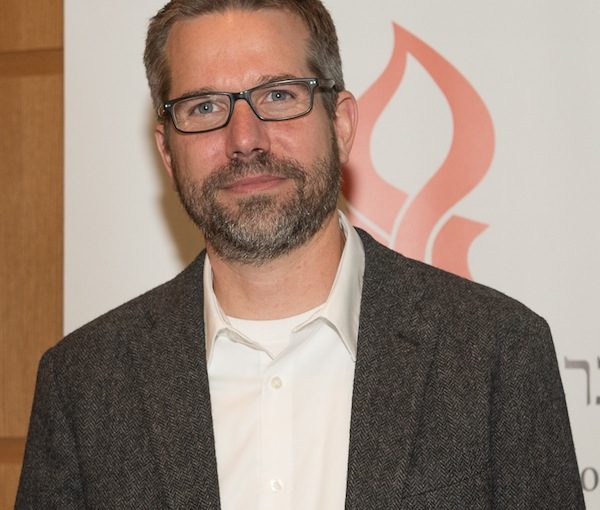
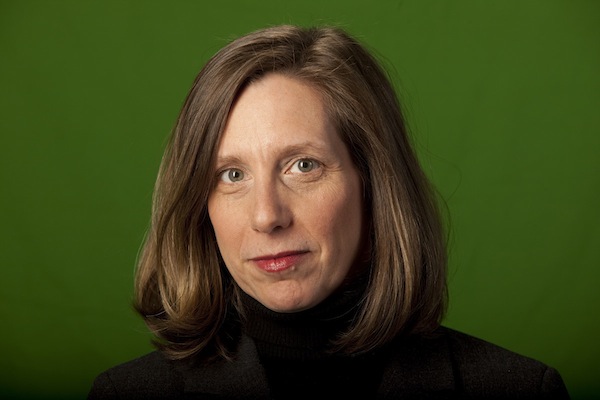
Marsha Lederman (photo by John Lehmann/Globe and Mail)

A few years ago, Marsha Lederman went with her mother, two sisters and a cousin on the adult portion of the March of the Living, which included a walk between the two main camps of the Auschwitz-Birkenau complex.

“The march from Auschwitz to Birkenau was somber and sorrowful, but it was also so empowering,” she recalled at the annual High Holidays Cemetery Service at Schara Tzedeck Cemetery in New Westminster Oct. 6. “We were marching with a statement to the world and a comforting message to the souls whose lives had ended so brutally on those grounds: ‘We are here, we are still living, we are multiplying, we remember you.’”

The family group proceeded to Radom, the town outside Warsaw where Lederman’s mother had grown up. The man who lived in the apartment where she had lived allowed them in and Lederman’s mother recounted her family’s years there.

“It was joyous,” Lederman said. “We were still on a high when we visited the memorial for the Radom Jews killed in the Holocaust. As I recall, it was in a fairly large square and seemed a little neglected. We were looking at this lonely memorial, the five of us women, when a group of, I would say, teenage boys began chanting something nearby. I don’t speak Polish, so I couldn’t understand what they were saying. But I did understand one thing: ‘Auschwitz-Birkenau.’ I don’t think they were offering their condolences.”

She reflected on the way she responded in that moment.

“We hurried away and said nothing. It was a safe thing to do, for sure. But, if that happened to me today, I would not walk away. I am done with walking away. Would I have put us in danger if I had turned around and confronted those boys? Maybe. But I know now that the real danger is in remaining silent.”

Lederman is the Vancouver-based Western arts correspondent for the Globe and Mail. Her father was born in Lodz, Poland, on erev Yom Kippur 1919. Her mother was born in Radom, Poland, in 1925. All four of their parents were killed in gas chambers at Auschwitz and Treblinka, as was Lederman’s father’s sister and little brother, and her mother’s little brother.

Lederman’s parents met in Germany after liberation and had one daughter there before moving to Canada, where they had two more daughters.

Lederman reflected on recent antisemitic incidents in North America and Europe, as well as her own encounters with antisemitism and racism, including a harrowing verbal attack on an Asian woman on the Skytrain at rush-hour, an incident in which Lederman was the only person to intervene.

“We have a duty to speak up,” she said. “We have a responsibility. This is our inheritance. I never had a bubbe or zadie to hug me or spoil me on my birthday or cook chicken soup for me. There’s nothing in my home that was theirs. I did not receive a single heirloom. But I did receive an inheritance – a duty to protect others from hate…. That is my inheritance and that is their legacy. Enough. Never again.”

She recalled being stunned during an interview with famed Vancouver photographer Fred Herzog, who died last month. Chatting after the main interview, Lederman asked the German-Canadian if he had experienced anti-German sentiment when he arrived here after the war. He launched into a discourse on the “so-called Holocaust” and said Jews died in the camps mostly because of lice and because Allied bombings prevented food from getting to them. Lederman agonized over whether to expose the admired photographer, eventually writing the story, for which she has been subjected to a range of criticism.

“Well, I have had enough,” she said. “And I’m going to fight to tell those stories and expose antisemitism and Holocaust denial and racism. I am not going to be quiet anymore. I think of all that was lost in the gas chambers; all the lives, of course, but also all the potential. With those millions of lives extinguished, what was lost with them? Poems were never written, beautiful artworks that were never painted, the cure for cancer, for Parkinson’s, the answer to the climate crisis?

“It was not just the people who were murdered that the world lost. It was all of their descendants and all of their descendants and all of that potential.… I talk about this because of what this leaves on our shoulders. I interviewed a Nisga’a poet, Jordan Abel, and he used a term to describe himself that I have adopted. He calls himself an intergenerational survivor of residential schools, which makes me an intergenerational survivor of Auschwitz. I do not take this lightly. With my parents’ survival came a hefty responsibility on me and on all of us who are descendants.”

At the service, Jack Micner, who led the ceremony and is also a member of the second generation, outlined a litany of antisemitic incidents and comments in Europe and North America in recent weeks.

“I suspect that those of our parents resting here in this cemetery would be furious to see what’s going on across the world,” he said. “We have to continue doing the type of work that VHEC [Vancouver Holocaust Education Centre] is doing in as many ways as we can think … it falls on us, because nobody’s going to do it for us.”

Rabbi Shlomo Estrin reflected on the loss of Chassidic communities during the Holocaust. Cantor Yaacov Orzech chanted El Maleh Rachamim.

Names were read of community members who have passed since the last High Holidays and a moment of silence was observed for the six million.

The Mourner’s Kaddish was recited by Jeremy Berger, a grandson of a Holocaust survivor. After the service ended, the Mourner’s Kaddish was also recited at the Holocaust Memorial in the cemetery.

The annual event is presented by the Vancouver Holocaust Education Centre with Congregation Schara Tzedeck and the Jewish War Veterans, and with support from the Jewish Community Foundation of Greater Vancouver.
Scammer awareness

On Nov. 3, the Jewish Seniors Alliance, with COSCO Health and Wellness Institute, presents Privacy and Security in the Internet Age. The JSA annual fall symposium has a different topic of particular relevance to seniors every year and this year’s topic aims to educate seniors on using the internet safely and securely.

There are numerous phone and internet scams that target seniors and separate them from their hard-earned dollars. The scammers often impersonate long-lost relatives or offer excellent returns on investment. One must also be wary of viruses and people trying to overtake emails.

COSCO provides workshops led by trained facilitators to seniors groups throughout British Columbia. In the case of the symposium, the presenter will be Floyd Smith. He will focus on personal privacy and the benefits and risks of technology. He will also explore mobile technology versus a desktop environment and provide an overview of home device systems.

The JSA motto is “Seniors Stronger Together,” while that of COSCO is “Seniors Helping Seniors.” Combining forces, it is hoped that the two organizations can both help and give strength to seniors in the Jewish community.

The symposium workshop takes place Nov. 3 at the Peretz Centre, with registration at 1:30 p.m. and the event beginning 2 p.m,; the cost to attend is $5. Refreshments will be served. Because of construction in the area, access to the Peretz’s underground parking is through the lane from 49th Avenue, the first alley west of Cambie Street. A parking attendant will be at the entrance of the lane at 49th Avenue to direct traffic to the lot, to which there is no access from 45th Avenue.

For more information or to register, contact the JSA office at 604-732-1555 or office@jsalliance.org.

Community milestones … VHEC, JMABC, JI and the Bayit

Michael Schwartz of the Jewish Museum and Archives of British Columbia accepts the Award of Merit: Excellence in Community Engagement on behalf of all the partner organizations in the Cross Cultural Strathcona Walking Tour. (photo from JMABC)

The 2019 B.C. Museums Association Awards for Outstanding Achievement were handed out on Oct. 2 at the BCMA conference gala at Courtyard by Marriott in Prince George. The awards recognize institutions and individuals who have exemplified excellence in exhibitions, community engagement and innovation within the province’s museums, galleries and cultural heritage community. This year, three Jewish community groups were honoured for their work.

The Vancouver Holocaust Education Centre received the Award of Merit: Excellence in Collections for its collections management system, which provides access to Western Canada’s largest collection of Holocaust-related artifacts, survivor testimonies, archival materials and publications (collections.vhec.org). The award recognizes recent excellence in collections best practices, which may include innovative approaches to collecting, collections management, preservation, repatriation, collections-based research, dissemination and accessibility.

The Jewish Museum and Archives of British Columbia (JMABC), along with 16 partner organizations, including the Jewish Independent, received the Award of Merit: Excellence in Community Engagement for the Cross Cultural Strathcona Walking Tour. The award recognizes a recent outstanding success in community engagement, as demonstrated by ongoing participation of new audiences, new partnerships with community organizations, and supporting needs of the community through innovative programming.

Co-led by Carmel Tanaka and Michael Schwartz (director of community engagement at the JMABC), the walking tour celebrates the history of Vancouver Downtown Eastside neighbourhoods Hogan’s Alley, Jewish Strathcona, Japantown (Powell Street) and Chinatown. The guided walking tour builds awareness of the contributions of early immigrant communities then and now. Originally conceived in celebration of Vancouver Asian Heritage Month and Canada’s Jewish Heritage Month, the first series of tours debuted in May 2019.

With the theme of education, the route began at the oldest elementary school in Vancouver, Lord Strathcona Elementary School, referred to as the “League of Nations” for its multicultural makeup. When the triangle rang at the end of the day, school continued for many children in the form of nearby programs where students learned language and cultural traditions. Tour participants learned how these diverse communities interacted with one another in their common struggles, and how they were impacted by the urban renewal of the area.

The Cross Cultural Strathcona Walking Tour Working Group comprises Association of United Ukrainian Canadians; Benny Foods Italian Market; Dr. Sun Yat-Sen Classical Chinese Garden; Musqueam Elder Larry Grant (honourary advisor to PCHC-MoM and VAHMS); Greater Vancouver Japanese Canadian Citizens Association; Heritage Vancouver Society; Hogan’s Alley Society; Jewish Independent; JMABC; Nikkei National Museum and Cultural Centre; Pacific Canada Heritage Centre Museum of Migration; Vancouver Asian Heritage Month Society’s explorASIAN; Vancouver Heritage Foundation; Vancouver Japanese Language School and Japanese Hall; Vancouver School Board; Vancouver School Board Archives and Heritage Committee; Wongs’ Benevolent Association; and Youth Collaborative for Chinatown.

Work is underway to reprise the program in spring 2020. For more information, visit youtube.com/watch?v=nJB3cdkh5yc.

***

After leading the Bayit in Richmond for the last five years, Michael Sachs has stepped down as board president, to spend more time with his young family.

photo - Michael Sachs
Michael Sachs (photo by Lianne Cohen)

Michael’s efforts and dedication have given members of the Bayit much for which to be grateful. During his tenure, Michael had a vision for how he saw the community and, as a man of action, he followed through. With a philosophy of engaging with everyone, he worked together with all of the Jewish organizations in Richmond and beyond, without ever losing focus that he was building a Bayit community.

Michael’s stepping down from the position of president doesn’t mean he won’t continue to be involved in the Bayit. As past president, he will remain on the board of directors and continue to be a part of the Bayit’s future.

Current Bayit board member Keith Liedtke will take over as the Bayit’s interim president. He shares Michael’s vision and sees the need for a strategic plan that will allow the Bayit to continue growing and filling the community’s needs.

The Bayit thanks Michael for his contributions as president and for his decision to stay on as a member of the board.

Near tragedy on guard

Patroling the kibbutz perimeter. (photo from Victor Neuman)

In this eight-part series, the author recounts his life in Israel around the time of the 1973 Yom Kippur War. The events and people described are real but, for reasons of privacy, the names are fictitious.

Part 5: Night Guard Duty on the Kibbutz

Lev, the banana boss, was in his early 30s and a miracle worker. He was back on the kibbutz and strolling toward me. He had talked the army into releasing him so he could save his banana fields. I was not surprised he had pulled it off. Lev was originally from the United States and a dedicated Zionist. He had long ago concluded that the only proper place for a Jew was in Israel and so he immigrated. Always determined in what he wanted, he bulldozed his way through kibbutz apprehensions to single-handedly create the banana crop as a major branch of our agricultural sector. And he was fearless to a fault.

“Fearless to a fault” may sound like a contradiction. It’s not. The right amount of fearlessness is courage. The wrong amount is stupidity. In my opinion, Lev was sometimes at the wrong end of that equation. Here’s an example.

Before the war, Lev was fed up with the theft from our banana fields and had no confidence that the village police from the nearby Arab town would take any action. The culprits were likely from the town and might even have been relatives of the cops. I had to agree with Lev – the only time I had seen any action from these police was when they drove up to the kibbutz to extort chickens for their next village wedding.

One day, Lev had six of us arm ourselves with clubs and do a stakeout in the banana fields. We had a German Shepherd named Ledie to help take down anyone we caught. Before long, two Arab teenagers appeared, checking for ripe bananas. They came toward where I was hiding. I jumped up but I had moved too early and they raced for their village. Only Lev, the dog and I were near enough to give chase. It was a farce. The teens were lean and fast. Lev smoked two packs a day. Our dog was never trained to be aggressive and was an older dog as well. So, it was the two teenagers way in front, me next, Lev a distant fourth and the dog in last place – tail wagging madly the whole time. I gave up and stopped, but Lev ran past me and yelled, “Come on!”

By the time we arrived at the village, the two thieves had vanished and our dog also had disappeared, likely returning to the kibbutz. I wanted to go back, too, but Lev wasn’t done and I couldn’t leave him on his own. Like a gunslinger minus the gun, he walked us right into the first building we came to. It was some kind of coffee house, full of locals sitting at tables sipping their drinks. All conversation and sipping ceased when we barged in. They all stared at us. I felt like I was in a bad Spaghetti Western. I was convinced Lev was going to get us killed.

Lev stomped around, demanding to know if anybody had seen the two boys. Heads were shaking. Not satisfied, he gave a description of what they looked like and the clothes they were wearing. Heads kept shaking. He then demanded that everybody keep an eye out for these banana thieves and report them to our kibbutz. To my astonishment, heads nodded. I think we had caught them by surprise and then Lev’s pure chutzpah had won the day. Walking out in one piece was a win for me, while Lev was angry at not catching anybody; surviving was not one of his concerns.

Now you know what I mean by “fearless to a fault.” And now, here was fearless-to-a-fault Lev walking up to me.

“Shalom, Victor. I’m back so I’ll be taking over the irrigation. I wanted to keep you on it, but Gidon says he needs you for guard duty. You better see him. And thanks for looking after the bananas. I expected half of them to be dead but they are all good. Nice job.”

High praise from Lev, who rarely expressed gratitude to anybody. The bananas were like children to him and I was the babysitter who, surprisingly, hadn’t murdered any.

Gidon told me I was to patrol the kibbutz from dusk to dawn for the next week at least. He gave me an ammunition belt, a flashlight and a first-aid kit with pressure bandages to patch up anybody I shot inappropriately. He also gave me Chauncy, the English guy. Chauncy was one of those hapless tourist volunteers who came to experience kibbutz life and was experiencing more than he bargained for. Though he wasn’t Jewish, he gamely agreed to be my assistant on patrol.

Our first patrol had a slow start. Chauncy begged me to let him hold the Uzi long enough to get his picture taken. I didn’t want to, but figured it would be better to get it out of his system. I removed the ammunition clip and handed him the Uzi. He gave me his camera and I took a half-dozen pictures of him, empty gun at the ready, looking steely-eyed and staring into the dark. I was thinking he was an idiot but then remembered the photos I had made Tamar take when I first got my weapon. She thought I was an idiot. Israelis would never think of getting this kind of snapshot, as Canadians wouldn’t think of getting their picture taken in their kitchen holding a spatula. Why record it? In this country, everybody has a spatula.

We walked the perimeter for about a week. Early evening was the best, as kibbutz members stopped to chat and the time went quickly. Adding to our duties was the requirement that we join others in checking cars that were coming up the driveway and searching them for bombs. I was particularly happy to intercept the village police who had come on another of their chicken runs. We made them get out of their car and stand around while we did a thorough, very slow check of their vehicle. The chicken-stealing cops were not nearly as annoyed as I had hoped. I was thinking we’d need to do a strip search next time.

As the night wore on, everybody went to sleep and it was just Chauncy and I walking the perimeter. As per Gidon’s instructions, we didn’t go to the dining hall to scrounge for food and thus take ourselves away from our rounds. We carried our lunches and ate under the security lights. I was always conscious of how dark it was beyond the reach of those lights and how impossible it would be to see anyone coming. On the other hand, Chauncy and I, walking directly under the lights, were highly visible from far away.

It became a nagging question in my mind as to how effective night guard duty was when Chauncy and I were always in plain view while the bad guys were always hidden. I confronted Gidon about it one day and his reply was, “When you are shot, it will alert the rest of the kibbutz.” I wished he had had a grin on his face, but he didn’t. I was just thankful he hadn’t ended with “Are we understanding?” We were not.

I never told Chauncy about that conversation but I think he detected my increased wariness. A certain morbidity came over me. In trying to come to terms with the possibility of death, I tried to control the fear by embracing the notion. I decided one night we would have our meal in the kibbutz cemetery. Chauncy was freaked but I put it to him that the dead were dead and gone. Also, I argued, the headstones made good back rests for eating in comfort. To pass the time, I read the Hebrew on some of the stones; the easiest part to grasp being the date of death and age of the departed. Many were in their 20s and had died in 1948, likely in the War of Independence. They were close to my age and Chauncy’s. It made me think of how endless the fighting was in this land. The dead of one war pondered by participants in another, with two other conflicts in between. We only had lunch in the cemetery that one time.

I never had to shoot anybody during my stint as night guard but I did come close once. Chauncy and I were in the area of the mechanical shop at around two in the morning when we heard noises coming from the shop and saw the lights were on. The kibbutz was generally very quiet at night. There was no shift work besides guard duty so everyone should have been in bed.

I told Chauncy to stay behind me as we entered the shop to investigate. For the first time in all my guard duty, I slid the thumb switch of my Uzi from safety to automatic.

Chauncy whispered, “Jesus!”

We got as close to the noise as we could and then I stepped around a corner with my Uzi leveled.

It was a kibbutz teenager named Uri. Apparently, Uri had a bout of insomnia and decided he might as well go to the shop and keep working on his project. He was trying to make a go-kart out of discarded tractor parts. Uri had almost gotten a permanent cure for his sleeplessness. I had almost shot a 15-year-old kid.

(Next Time: The War Comes Home)

(Previously: “Learning the lay of the land”; “When Afula road went quiet”; “Tending the banana fields in war”; “Weapon training begins”)

Victor Neuman was born in the former Soviet Union, where his family sought refuge after fleeing Poland during the Second World War. The family immigrated to Canada in 1948 and Neuman grew up in the Greater Vancouver area. He attended the University of British Columbia and obtained a BA and MA with majors in English literature and creative writing. Between 1968 and 1974, he made two trips to Israel, one of which landed him on a kibbutz at the time of the 1973 Yom Kippur war. Upon his return to Canada, he studied Survey Technology at BCIT and went on to a career of designing highways for the Province of British Columbia and the firm of Binnie Civil Engineering Consultants. When he retired, he reconnected with his roots in creative writing and began writing scripts for Vancouver Jewish Folk Choir concerts and articles for the Jewish Independent. Neuman and his wife, Tammy, live in southeast Vancouver and enjoy the company of friends, their extensive extended family and their four sons.

צי’זקייק חוגג ארבעים שנות

צי’זקייק חוגג ארבעים שנות פעילות ומציין שנתיים למותם של הבעלים (רוני רחמני)

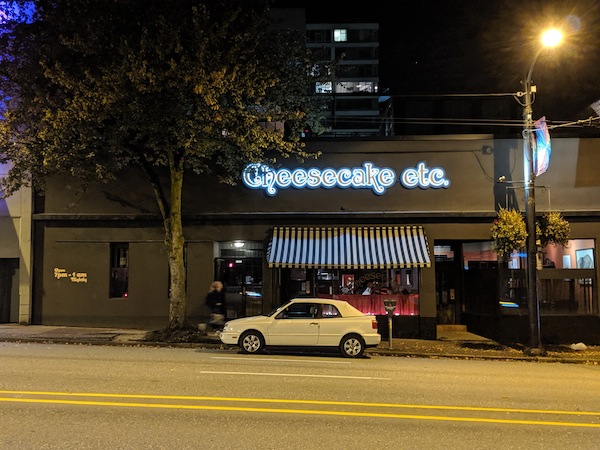
הקפה המיתולגי צ’יזקייק אצטרה יחגוג בקרוב ארבעים שנות פעילות. הקפה נמצא ברחוב גראנוויל מייד לאחר הגשר (שמחבר את העיר עם הדאון טאון), בסמוך לשדרה הרביעית.

ביום ראשון האחרון (העשרים בחודש) נערך טקס אזכרה לבעלי צי’זקייק, אדית ומייקל סימס, בבית העלמין שבפוינט רוברטס ארה”ב (שסמוכה לדלתה שבמחוז בריטיש קולומביה). באירוע שאורגן על ידי בנם יחידם של הזוג, דניאל סימס ואשתו פטרישיה, כלל חשיפת המצבה מעל הקבר. השתתפו בו בני משפחה וחברים קרובים.

אדית ומייקל סימס שמו קץ לחייהם ביחד (אדית הייתה בת 77 ומייקל היה בן 79), ב-27 בנובמבר לפני שנתיים. בחיים כמו במותם השניים תמיד היו ביחד: הם גרו ביחד מרגע שהתחתנו בשנות העשרים המוקדמות של חייהם, הם עבדו ביחד בקפה, טיילו ברחבי העולם ביחד, נפשו ביחד, נפגשו ביחד עם החוג הנרחב של החבריהם מכל קצוות עולם, שהו יחדיו באירועי משפחה שונים, הופיעו כמעט לכל אירוע ביחד, החזיקו במחשב אחד, באימייל אחד ובמכשיר סלולר אחד.

מייקל חלה בנסיעתם האחרונה של הזוג לצרפת ודרום אפריקה ולקה בשיתוק חלקי. המחלה הפריעה לו למהמשיך ולתפקיד כרגיל, הוא התקשה בהליכה ובעיקר בנגינה על פסנתר – הדבר שהכי אהב לעשות. גם אדית כבר לא הייתה בקו הבריאות ולכן הם החליטו יחדיו להיפרד מהחיים. לא במקרה הם עשו זאת בסטודיו שלהם שממוקם מאחורי בית הקפה.

דן לקח את מושכות ניהול בית הקפה לידיו והמקום ממשיך להיות מלא מדי ערב, שבעה בימים בשבוע, מזה קרוב לארבעים שנה.

רבים רבים בוונקובר ובמקומות אחרים בעולם הצטערו לשמוע על מותם הפתאמי של אדית ומקייל סימס. לא נמצא אף אחד שאמר משהו רע עליהם. רבים הגיבו על פרסום הידיעה בעיתון “הוונקובר סאן” על מותם. נכתבו דברים טובים מאוד והובע צער עמוק על הפרידה מהזוג האהוב. להלן חלק מתגובות: “אדית ומייקל היו זוג נפלא ותמיד קיבלו בברכה, באהבה ובנוחות את הלקוחות”. “כמה היו נחמדים ונדיבים”. “איזה זוג מדהים. אבידה גדולה”. “זוג כל כך נחמד, אני שבור לשמוע את החדשות הרעות”. “צ’יזקייק היה מקום נפלא לעבוד בו בגלל אדית ומייקל”. “אהבתי את האווירה והמוסיקה. מאוד מאוד עצוב”. “אני בהלם לשמוע את החדשות הנוראיות. אדית ומייקל היו זוג כל כך נחמד, נעים וחם”. “הם היו נשמות יפות, נדיבים, מתוקים וטהורים. חיו בדרכם והיו מאוד מיוחדים”.

צ’יזקייק הזכיר בית קפה בפאריז בשל האווירה הרומנטית, האורות הנמוכים, התמונות בשחור לבן, הקירות באדום והנעימות ששררה במקום. מייקל ניגן נפלא ואהב לאלתר ג’אז. אדית אהבה לשיר וקול זהב שלה הזכיר מאוד את קולה של הזמרת הצרפתית הידועה אדית פיאף.

השניים היו יהודים: אדית ילידת סקוטלנד שגדלה בטורונטו ומייקל אמריקני יליד בוסטון. הם הכירו בישראל בשנת 1961 והתאהבו במבט ראשון. לאחר שנה החליטו השניים להינשא בטורונטו. ולאחר מכן הזוג עבר לבוסטון. אחרי שנולד בנם דן הם החליטו לעבור לוונקובר, שהפכה לביתם החם במשך כארבעים השנים האחרונות.

יום אחד בשנת 1979 אדית ומייקל מצאו חנות להשכרה ברחוב גראנוויל ובמקום נפתח קפה צ’יזקייק אצטרה. לאט לאט הקפה החל להתמלא ורבים באו לשמוע את מייקל מנגן ושר עם אשתו, ונהנו לאכול עוגת גבינה ברוטב תות שדה או שוקולד. תוך תקופה קצרה צ’יזקייק הפך לשם דבר והמקום שימש לעלייה במשך שנים וגם כיום – כאמור זה קרוב לארבעים שנה.

ניסויים מוצלחים באמצעות מזל”טים

נסיעה טובה: ניסויים מוצלחים להעברת משלוחים באמצעות מזל”טים בארה”ב וקנדה (Webagentur Meerbusch via Pixabay)

בחודשים האחרונים בוצעו ניסויים מוצלחים להעברת משלוחים באמצעות מזל”טים ברחבי ארצות הברית וקנדה. זאת על ידי גורמים מסחריים וממשלתיים שונים. הניסויים מתבצעים כחלק מפעילות להפוך בקרוב את השירות של השימוש במזל”טים למסחרי ורווחי. כפי שפירסמנו בעבר הרגולציה בקנדה לביצוע ניסוים באמצעות מזל”טים הרבה יותר קלה, מאשר זו שבארה”ב. זו הסיבה למשל שאמזון החליטה לבצע את הניסויים במזל”טים בצד הקנדי של הגבול, לא רחוק ממטה החברה שבעיר סיאטל שנמצאת בצד האמריקני.

בקנדה בוצע בתקופה האחרונה ניסוי מסחרי ראשון ומוצלח על ידי רשות הדואר הקנדית (קנדה פוסט), בשילוב רשת בתי המרקחת לונדון דראגס ויצרנית מקומית של רובוטים אינדרו רובוטריקס (ממחוז בריטיש קולומביה). אינדרו רובוטריקס משתפת כבר פעולה עם רשות החלל האמריקנית (נס”א), רשות החלל הקנדית ורשות התחבורה הקנדית. באמצעות מזל”ט קטן הועברו תרופות חיוניות מוונקובר איילנד לביתו של חולה בשגר באחד האייים הסמוכים – סולט ספרינג איילנד שבבריטיש קולומביה. כלי הטיס הבלתי מאוייש עבר את ששת הק”מ מעל הים באחת עשרה דקות בלבד. השותפים לפרוייקט מאמינים כי כאשר השימוש במזל”טים להעברת משלוחים יהפוך למסחרי, אחת הדרישות המיידיות מהשוק תהיה העברת תרופות וציוד רפואי חיוני, למקומות שנמצאים במרחק ממרכזי הערים.

ניסוי דומה בוצע בחודש לאחרונה בארה”ב על ידי הצבא האמריקני, בשיתוף פעולה עם המכון לטכנולוגיה של מדינת ניו ז’רזי. שני הגופים ביצעו שני ניסויים עם מזל”טים שטסו למרחק של עד קרוב לק”מ, מעל הים ליד ניו ז’רזי. כלי הטיס העבירו מנות חירום ומארזי מים לצבא האמריקני. זאת כדי לבדוק את האופציה של העברת אספקת חירום לאזורי לחימה בלתי נגישים, וכן לאזורי מוכי אסון בארה”ב.

מספר ניסויים נוספים בוצעו בארה”ב בתקופה האחרונה להטסת מזל”טים ללא ציוד בשלב זה. בקייפ רובטרס שבמדינת קליפורניה בוצעה טיסת ניסוי למשך כדקה של מטוס ללא טייס, הנחשב הגדול ביותר מסוגו כיום, בארה”ב ואולי אף בעולם כולו. משקל כלי הטייס נאמד בכחצי טון. הפרוייקט שייך לחברת הסטרט-אפ אלראוי אייר מסאן פרנסיסקו. החברה בודקת אפשרות להעביר מטענים כבדי משקל של למעלה ממאתיים ק”ג. אלראוי אייר נערכת לשתף פעולה עם חברות המישלוחים האמריקניות הגדולות בעולם: פדקס, די.אייץ’.אל ויו.פי.אס.

בניסוי בפורט וורט שבמדינת טקסס מזל”ט קטן עלה לאוויר למשך מספר דקות ונחת. פרוייקט זה של חברת בל הליקופטר טקסטרטון האמריקנית בשיתוף פעולה עם חברת המשלוחים הגדולה של יפאן – ימאטו.

ואילו אוניברסיטת פיירבנקס שבמדינת אלסקה בשיתוף פעולה עם חברת שירותי צינורות, ביצעו ניסוי ראשון באזור פוקס. הניסוי הכלל הטסת מזל”ט למרחק של למעלה משישה ק”מ. שני הגופים מעוניינים לאפשר לספק ציוד רפואי לאזור צינור הנפט טרנס אלסקה. ובמקביל לבצע מעקבים אווירים על מה שמתרחש באזור.

מזל”ט הוא כלי טיס בלתי מאויש שלא נושא עליו טייסים. הכוונה והבקרה על כלי הטיס נעשית על ידי הפעלה מרחוק. רוב המזל”טים מיועדים לשימושים צבאיים, אך יותר ויותר נעשה בהם שימוש גם ליישומים אזרחיים. כמו למשל: משטרה, אבטחה, בקרת תנועה, מחקר מדעי וצילום.

בשימושים הצבאיים מזל”טים משמשים לאיסוף מודיעין, יצירת הטעיה וכן לירות חימוש מדוייק במטרות קרקעיות. בין המדינות המחזיקות במזל”טים לתקיפות צבאיות: ארה”ב, ישראל, סין, הודו, מדינות אירופה וקנדה. האיראנים אגב הואשמו לאחרונה בכך שהם השתמשו במזל”טים להתקיף את מתקני הנפט של ערב הסעודית. המזל”טים הגיעו מאזור תימן והפציצו שני מתקני נפט סעודיים.

Affordability, inclusion focus

CIJA and SUCCESS held a candidates forum Sept. 22. (photo from SUCCESS)

Pocketbook issues and cultural concerns topped the agenda at an election forum put together by the Centre for Israel and Jewish Affairs and the multicultural service organization SUCCESS.

Representatives of four federal parties convened on Sept. 22 in Chinatown to address issues ranging from housing affordability and employment to community security, immigration and inclusion.

“Affordability is the key question every party is facing right now,” said Zach Segal, Conservative candidate in Vancouver Granville. He said his party’s plan to give tax cuts to the lowest income bracket would put more money in pockets.

Don Davies, New Democratic Party incumbent in Vancouver Kingsway, noted that about half of Canadians are $200 away from insolvency and that, for every dollar an average Canadian earns, they owe $1.77. Davies said the former Conservative government eliminated funding for social housing while the Liberals promised to return it and didn’t.

“If Liberal and Conservative policies have been so beneficial to low-income Canadians, why has income inequality only grown every year for the last 30 years?” asked Davies.

Harjit Sajjan, Liberal incumbent in Vancouver South and minister of national defence in the last government, said the Liberal promise to raise the first-time homebuyers’ incentive to apply to homes priced as high as $789,000 reflects the reality of markets in high-priced cities.

The Green party’s representative, Lawrence Taylor, who is running against Davies in the Kingsway riding, said Canada’s immigration policy needs to address changes in the economy. “We will probably need more people with different skills as our economy develops into a knowledge economy,” he said.

All major federal parties are in general agreement about the number of immigrants Canada should accept, and Liberal and Conservative governments have each raised the base annual immigration numbers. Only the People’s Party of Canada, which was not included in the forum, is arguing for lower immigration.

Davies said NDP policy is that immigration should be set at one percent of population and that reuniting families should be a priority for Canada’s immigration system. Family class immigrants, who represented 40% of all new Canadians in the 1990s, have fallen to about 20%, he said.

“Family class is the single most important class of immigrants because they are coming into a supported structure,” said Davies.

Davies also criticized Canada for continuing to treat “Donald Trump’s United States” as a safe third country for refugees, “even though he’s caging children and separating parents from their kids. Yet we still regard that country as a safe third country for refugees and asylum-seekers? I don’t think so.”

The New Democrat also called for more clarity and sensitivity of language from leaders, especially those who use terms like “illegal refugees.”

“Jews that were fleeing from Germany and making their way out of there, they were not jumping any queue. They were fleeing for their lives,” said Davies. “To even use terminology that suggests that refugees that are seeking safety are, in some way, illegal or are breaking the rules is wrong and we need to change that language because language matters.”

Sajjan, who came to Canada at the age of 5, said it is crucial to ensure that new Canadians are well-supported, so that they can quickly become successful in society. He linked immigration to the economy, saying that representatives of Microsoft had told him that they invested in Vancouver operations in part because Canada’s immigration policies make skilled labour accessible.

Segal called for better credential recognition, improved language training and more private sponsorships of refugees.

On the issue of credential recognition, Davies quipped that the back seat of a taxi is the best place in Canada to have a heart attack because of the number of foreign-trained doctors driving cabs in this country.

On community security, an issue of heightened concern to Jews after recent acts of violence around the world, Sajjan called it “ridiculous” that congregants at a synagogue need security to feel safe and said that leadership is needed to stand against hatred and intolerance.

Green candidate Taylor said his party does not have a policy on the subject.

Asked about Justin Trudeau’s brownface and blackface incidents, Sajjan said it has opened a discussion Canadians should have had a long time ago. He said his father told him they didn’t address issues like this in years past because they were confronting much greater racism, including violence. In one of the few flashpoints in the forum, Sajjan then turned the issue to comments made years ago by Conservative leader Andrew Scheer condemning same-sex marriage.

Segal called Trudeau’s blackface incidents “open mockery” and dubbed attacks on Scheer and other Conservatives “character assassinations.” Response to the incidents represent “rank hypocrisy,” said Segal. “Can you imagine if Andrew Scheer was caught wearing this type of costume three times?” he asked.

Taylor, the Green candidate, said of Trudeau: “Trust has been broken and that will be difficult to mend.”

Election views diverge

The Independent spoke with people in the Jewish community to gauge attitudes as the federal election approaches. What we found was a diversity of views and a lack of consensus.

An informal focus group of residents at the Weinberg Residence raised issues of out-of-pocket expenses for medical treatments and a lack of available doctors.

“You lose your doctor, you can’t get another one,” said one senior voter.

There was not great enthusiasm for any of the party leaders. One participant said she had lost respect for Liberal leader Justin Trudeau long before the recent brownface and blackface issue emerged.

“I was disappointed in him way back when he went to India and there was this whole thing of dressing up in Indian costumes. I felt it wasn’t very statesmanlike.”

“I feel that he’s had his chance and I don’t want to vote for him because he showed us what he can do. I don’t think he’s got what it takes,” said another voter.

“I expected nothing from Trudeau and I got it,” said another.

But there was no groundswell of support for Conservative leader Andrew Scheer.

“I’m disappointed,” said one. “I haven’t heard anything that’s promising.”

Some voters said NDP leader Jagmeet Singh comes across as sincere, but one said he has a lot of repair work to do with the Jewish community after his party’s positions against Israel in the past.

Elizabeth May, the Green leader, was viewed positively, but not seen as prime minister material.

“She’s very good at her subject, but I can’t envisage her really understanding what’s going on in the economy, in foreign affairs,” one resident said.

Among more than a dozen participants, the vast majority had a positive view of their incumbent MP, Jody Wilson-Raybould.

“I think she deserves better than she’s had,” said one person, while a Conservative supporter said she wishes Wilson-Raybould was running for her party, because she’d like to vote for her.

A show of hands indicated well more than half are undecided about who to vote for.

“Everybody’s confused,” said one, to laughter all around.

* * *

Alice Sundberg, director of operations and housing development for Tikva Housing Society, would like to see the federal government get back into funding nonprofit housing.

“We think that there is a really significant role for the federal government in making rental housing more affordable,” she said. Rather than subsidies to renters, which go into the pockets of landlords and don’t create new housing, she would like to see either capital grants to reduce mortgages for nonprofit or co-op housing, thus reducing the rental costs, or ongoing operating subsidies to organizations like hers that develop new housing.

“We don’t have enough supply,” said Sundberg. “Back in the ’90s, when the federal government withdrew from funding new affordable housing, it was really the beginning of our homelessness crisis.”

Housing is also a topic for Eldad Goldfarb, executive director of the Jewish Community Centre of Greater Vancouver. The centre’s redevelopment will include at least 300 units of affordable rental housing. His team has spoken to many federal officials, including MPs, but, so far, he said, “No commitments, no confirmations, lots of good feedback and great understanding of the project, support for it, but nothing has translated into actual commitments, funding, promises, nothing of that sort.”

Support for the housing component might include financing from the Canada Mortgage and Housing Corporation, rather than grants, though he hopes for federal cash for the new JCC building. He credited the federal government for stepping up with funding for security infrastructure for communities at risk, but added there is always need for more.

* * *

The rise of hate-motivated rhetoric and violence leads some community leaders to call for more federal action and leadership.

“With the rise of antisemitism, racism and far-right extremism, particularly in the online space, the Vancouver Holocaust Education Centre would welcome a comprehensive strategy to tackle hate in all its forms,” said Nina Krieger, executive director of the VHEC.

Russ Klein, principal of King David High School, would like to hear party leaders and candidates address how they are demonstrating moral and ethical leadership that creates trust and inspires Canadians, especially young people.

“How will they work to ease a society which seems quick to feel fear and seems overly stressed and anxious?” asked Klein. “I want to know how they will support a kinder, more inclusive society that offers hope and opportunity for all but especially to young people and to the most vulnerable in our society. How will they work to maintain affordable housing, livable wages and allow people to manage a balanced lifestyle in cities like Vancouver, where young families cannot afford to live in their current community? We live in extremely concerning times globally and I want Canada to lead in decreasing world tensions – how will they do that?”

* * *

Similar broad topics arose among a handful of University of British Columbia students who met at Hillel House to discuss issues that are important to them. All agreed that there has not been enough discussion of foreign affairs and there is a lack of substantive difference between the parties on issues like immigration.

“I don’t see any candidate that has a clear foreign policy vision, even though I think Chrystia Freeland is, personally, a great minister of foreign affairs,” said Adam Yosef Dobrer, a third-year political science student who is volunteering on Zach Segal’s Conservative campaign in Vancouver Granville.

Dobrer also wants Canada to return to the Conservative policy of defunding the United Nations Relief and Works Agency for Palestine Refugees in the Near East (UNRWA), which he called the greatest obstacle to peace between Israelis and Palestinians.

“In the last four years, I found it very difficult to understand where Canada as a nation lies in foreign affairs,” said Nika Perel, a fourth-year psychology student from Ontario who plans to vote Conservative. She credited the previous Conservative government with more clarity on Israel and Palestine and on Russia and Ukraine. “Stephen Harper made it very clear that he took a position supporting Ukraine.”

Jake Reznik, a nursing student with an undergraduate degree in kinesiology who remains an undecided voter, said Canada is not adequately standing up to China over its treatment of the Muslim-minority Uygher population or its other human rights violations. He added: “There is a lot of influence that the Chinese government does have in Canada that goes under-recognized.”

Matt Perzow, an NDP supporter who plans to vote strategically for Joyce Murray, the Liberal candidate in Vancouver Quadra, to prevent a Conservative government, emphasized health care, including mental health services. Defending Canadian values like multiculturalism and care for the most vulnerable are also things he wants to see party leaders prioritize.

All the students agreed that supporting Israel is an important consideration in their vote, but also said it will not be the deciding factor.

“I wouldn’t vote for any party that I thought would jeopardize the future of the Jewish people, whether it’s in Canada, in Israel or in another place,” said Perzow. “I’m not voting for somebody because of that issue, but, if I thought that something compromised the well-being of the Jewish people, I wouldn’t support them.”

Dobrer, whose family migrated to Canada from Israel when he was an infant because of the Second Intifada, said he has a “very resonant emotional connection” to Israel “but I am a Canadian first.” He is concerned about some election candidates, including Green party MP Paul Manly, who Dobrer says has a “long and sordid history of antisemitism and 9/11 ‘trutherism’ and delving into conspiracy theories.” (After being elected in a by-election this year, Manly denied he supports 9/11 conspiracies after the CBC reported on statements he had made in 2007 and 2011.)

The students all agreed that the environment and climate change are top issues for them and their peers, but expressed nearly universal hopelessness that anything substantive would change.

“I have no doubt that it will not be addressed,” said Reznik. “I know personally I’m not going to be willing to sacrifice my own standard of living and, at the same time, I think it is tremendously insulting on my part to tell someone else that they can’t attain my standard of living that we have here.”

“A lot of people are standing up and screaming about things, but they’re not going to do anything about it,” said Perel.

A hint of hope came from Dobrer: “From the government, I’m very skeptical. But from young intellectual minds, from the not-for-profit sector, from the private sector, every day there is more and more innovation, technological advances and more intellectual capital devoted to dealing with climate change.”

Complexities of autism

Israeli neuroscientist Dr. Ilan Dinstein was in Vancouver last month to talk about autism research. (photo by Adele Lewin)

Neuroscientist Dr. Ilan Dinstein was in Vancouver last month to share research and expand knowledge on best practices internationally. An associate professor of psychology and cognitive and brain sciences at Ben-Gurion University of the Negev (BGU), Dinstein is the director of the new National Autism Research Centre (NAC) in Israel.

David Berson, executive director of the Canadian Associates of BGU for British Columbia and Alberta, told the Independent: “CABGU was delighted to be a part of hosting Dr Ilan Dinstein in Metro Vancouver. This visit was spearheaded by Dr. Grace Iarocci, Dr. Elina Birmingham and Dr. Sam Doesburg from SFU [Simon Fraser University] and Dr. Tim Oberlander from B.C. Children’s Hospital.

“Ilan Dinstein is a true reflection of the pioneering spirit that is unique to the Negev region of Israel, where, over the past five years, clinicians from Soroka University Medical Centre and researchers from Ben-Gurion University of the Negev have organically come together to collaborate for the betterment of all of the residents with ASD [autism spectrum disorder] in the region.”

Dinstein spoke with the Independent about the new centre and the purpose of his visit to Canada.

“We started the centre five years ago, to try to understand different causes of autism,” he said. “Autism is not one disorder. There are different sub-types of autism, with different possible roots and risk factors. Some of those factors are biological or genetic; others might be environmental. For example, a premature birth might be a risk factor in the child developing autism. Or the age of the parents – a child of older parents might have a higher risk of autism diagnosis than if the same parents were younger. We at the centre are trying to discover how the combination of genetic and environmental issues affects autism development.”

According to Dinstein, one of the reasons for the creation of the centre was the way science is funded in Israel. “The funding usually comes for one specific question,” he explained, “but autism is a complex, systematic disorder and it needs many facets of study, measurement and research; it needs collaboration and sharing of information. At the centre, we are able to combine different fields of study with the clinical applications, as we work together with the Soroka medical centre.”

The scientists of the NAC study autistic patients from different multidisciplinary angles: neuroscience and cellular biology, language pathology and motor tracking, even facial features.

“The truly unique thing is that we do all our studies inside the hospital,” Dinstein said. “Parents come in with their children, usually when the children are about 3 years old and the parents and the children’s teachers notice the kids’ uncommon behavioural patterns. The diagnosis of autism usually takes four visits. During those visits, we work in collaboration with the doctors, measuring various characteristics of the child’s development to arrive at the right diagnosis.

“We also started a database of all our patients, so we have a centralized well of knowledge about how various biological, cultural and social factors might contribute to autism development.”

Of course, not all of the parents agree to have their child added to the database, but Dinstein said that their recruitment rate is about 80%.

After the diagnosis, the scientists participate in determining a personalized treatment program, based on their research. “Such a program might include teaching the children useful behavioural habits, helping them with language acquisition or providing occupational therapy,” explained Dinstein. “Some autistic kids are very agitated and certain motions, like spinning, might calm them down. Sometimes, autistic children need to learn basic skills: how to dress themselves or brush their teeth.”

Pharmaceuticals can also help children cope with autism, but Dinstein said that only about 10% of patients use medications.

At the NAC, the scientists don’t treat patients, but rather study and make recommendations, develop new technologies and new methods of dealing with the disorder. Working together with clinical professionals, they hope to contribute to a higher rate of success in treatment.

One of the most important aspects of Dinstein’s and his colleagues’ work is an annual follow-up on the patients in the database. Families are required to come back once a year after the initial diagnosis, so the service providers can see their progress, determine what worked and what didn’t, and adjust their recommendations accordingly.

“We are still in the process of enlarging this project,” said Dinstein. “We want to open other locations in Israel, make our database to cover the entire state of Israel.”

The centre’s autism research, in particular its database of patients with autism, inspired interest locally, from scientists and clinicians to families and service providers. The invitation for Dinstein to visit Vancouver came from a range of people.

“Your researchers want to create a similar database to ours, Canada-wide,” said Dinstein about his presentation at the Children’s Hospital. “I met with scientists from UBC [University of British Columbia] and SFU, even some from Victoria. I also met medical professionals, parents, some service providers and stakeholders. I see these meetings as the beginning of a close relationship between autism research in Israel and in Canada. There are similarities there, but there are differences, too. Both countries have different ethnic maps, cultural traditions and genetic variations. We all want to know how such diversity affects autism.”

Olga Livshin is a Vancouver freelance writer. She can be reached at olgagodim@gmail.com.

Compassion over hate

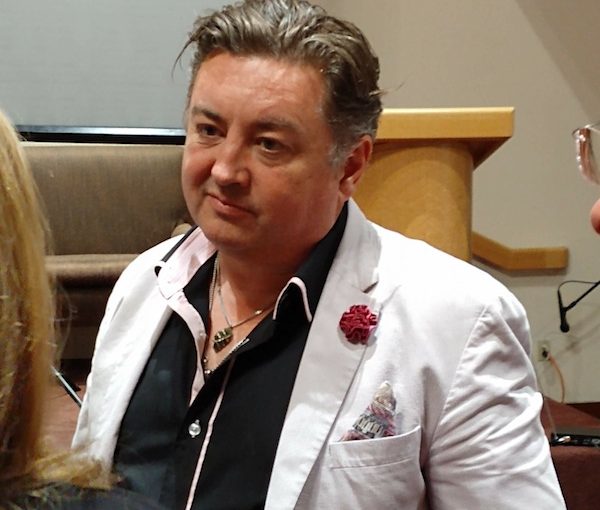
Tony McAleer, who helped found the organization Life After Hate, spoke at Congregation Beth Tikvah last month, along with fellow Life After Hate member Brad Galloway. (photo by Pat Johnson)

A former leader in Canada’s far-right white nationalist movements says targets of white supremacist extremism should not be expected to “hug a Nazi.” But, as difficult as it may be, seeing the humanity in everyone and finding compassion for people who lack compassion may be key to reducing the problem of racist extremism.

Tony McAleer was a member of the so-called White Aryan Resistance and his early embrace of technology and the internet helped propel that movement into the digital age. He later helped found the organization Life After Hate and now works with others who want to leave the neo-Nazi movement. He shared his personal history at Beth Tikvah synagogue, in Richmond, on Sept. 8. He has also spoken at other synagogues and venues in recent weeks.

“While we condemn the activities, while we condemn the ideology, we don’t condemn the human being,” McAleer said of his organization’s strategy. “It’s coming from that place of compassion.… The hardest thing to do in the world is to have compassion for people who don’t have compassion. We do that as harm reduction – hurt people hurt people, and we can bring them back from that place of hurt so they don’t do it anymore.”

McAleer grew up in a stable, comfortable Dunbar home, which contradicts some stereotypes, he said. He attended private Catholic school but lost respect for authority figures when he caught his father with a woman who was not McAleer’s mother.

“Can anyone remember the day when God fell off the pedestal?” he asked. His grades fell, his behaviour deteriorated and he was regularly sent to the principal’s office for canings.

“When I look back on it, I don’t think that I’ve ever felt more powerless than I did in that office time after time after time after time,” he said. “It didn’t make my grades go up. I continued to tune out.… I went from listening to Elton John and Queen to the Clash and the Sex Pistols. I was angry and the music I listened to was angry. It eventually led me down the road into the punk scene and later into the skinhead scene. And, in the skinhead scene, I found an outlet for my anger.”

Ideology is secondary, at best, as an attractant to racist groups, he said.

“What we find in the young men and women who are drawn to these movements is there’s an underlying rage, underlying vulnerability that makes the ideology so seductive,” he said. “I want to be very clear here. I’m not for a minute blaming anything I did on my childhood. Everything I did I chose to do and I take accountability for that and I always will. I work for Life After Hate, do things like this to pay back for that.”

He shares the story of his early life as an explanation, not as a justification, he said.

“What I found in the movement, what I found from being a skinhead – I found a sense of power, a sense of purpose, a sense of meaning,” McAleer said. “I got power when I felt powerless. I got attention when I felt invisible and I got brotherhood, camaraderie and acceptance when I felt unlovable.… Those are the vulnerabilities that make the ideologies so seductive. If you have those in a healthy way, the ideology doesn’t make sense to you. But, for somebody craving those things, the ideology becomes something powerful, a false seduction.”

When he was 21 years old, McAleer’s girlfriend gave birth to a baby girl.

“For the first time, I connected to another human being. Up until that point, I was completely cut off from my heart, I was completely dehumanized,” he said. “I believe that the level to which we dehumanize other human beings is a mirror reflection of how internally disconnected and dehumanized that we are.”

That began the transformation. He had a son months later and was soon a single father being assisted by his mother who, he said, “never gave up on me.”

“It’s safe to love a child,” he said. “They see the magnificence in us when we can’t see it ourselves when we look in the mirror…. The more I can connect to my humanity, the more I can connect to the rest of humanity. I couldn’t connect to the rest of humanity because I couldn’t connect to myself.”

Though he was heavily involved in antisemitism, it wasn’t about Jews, he said.

“I was projecting my crap and I had a vehicle to project it onto – the Jewish people – and that’s what I did.”

The compassion Life After Hate promotes must be accompanied by healthy boundaries and consequences, he said.

“It doesn’t mean we let people off the hook. It doesn’t mean we don’t hold people accountable,” he said. “We do hold them accountable. It’s like tough love. But we need to see the humanity, even in someone whose heart is filled with hate. I don’t think we can afford to dehumanize anybody regardless of how inhuman their behaviour. I believe that nobody is irredeemable. It’s tough work.”

Brad Galloway, who is also a member of Life After Hate, joined McAleer at the event. Also a former white supremacist, Galloway is now completing a degree in the school of criminology and criminal justice at the University of the Fraser Valley. He researches extremism and participates in interventions with members of hate groups to help them leave the movements.

Galloway too came from a middle- to upper-class home. After a fairly typical adolescence and a period of struggling to find his identity, he ran into a childhood friend who was involved in the white power movement.

“I was looking for an identity,” said Galloway. “I was looking for something to belong to, something that I can call my own. He gave me the chance. We’ll give you brotherhood, we’ll back you up, we’ll be there for you … some sort of pseudo-support network which never, never came to fruition. They never provided any of those things for me.”

photo - Brad Galloway
Brad Galloway (photo by Pat Johnson)

Like McAleer, it was fatherhood that made Galloway realize his extremism was putting his family at risk.

He also reflects on compassion he received from police and others during his time in the far-right.

“Why do these people care about me?” he wondered, adding that he began to recognize that individuals who were kindest to him were often members of the very cultural groups he demonized. After a gang brawl where Galloway was nearly killed, he saw compassion in action.

“I ended up in a hospital and I’m lying on the table and a doctor walks in and he’s an Orthodox Jew. I’m lying there with a swastika shirt on, blood all over me, thinking this guy should not help me. I do not deserve to be helped at all right now…. I felt like I was a terrible person and I didn’t feel I deserved this person’s time,” said Galloway. “He did not mention anything about me. He just did his job as a doctor and provided me exactly what I needed. That moment made me start to think about all these different times when minority communities had been good to me.”

Since the racist rally in Charlottesville, Va., in 2017, Life After Hate has been inundated with requests for help. About 300 new cases have opened, about half of which are people trying to leave the movement, the other half family seeking help to extricate their loved ones.

Cpl. Anthony Statham, one of two members of the RCMP’s B.C. Hate Crimes Unit also spoke, outlining the legal strategies employed to fight extremism.

McAleer’s book, The Cure for Hate: A Former White Supremacist’s Journey from Violent Extremism to Radical Compassion has just been released by Arsenal Pulp Press.