On return to Canada, life changes

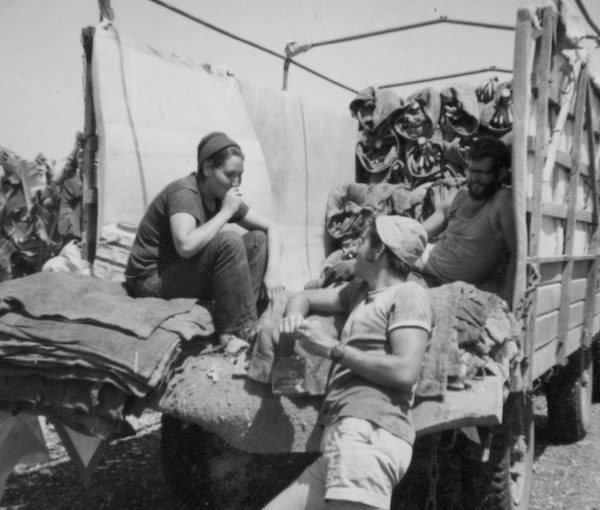
Victor Neuman (photo from Victor Neuman)

In this eight-part series, the author recounts his life in Israel around the time of the 1973 Yom Kippur War. The events and people described are real but, for reasons of privacy, the names are fictitious.

Part 8: Epilogue

In a backhanded, minor way, I was a casualty of the war, too. The lack of help during the conflict meant I had to work alone trying to preserve the banana crop. One day, on my tractor, I was in a hurry, carrying several sacks of fertilizer to the fields. They had to go into the distribution tank before the irrigation timers flipped a switch and began irrigating another field. Someone at the kibbutz had helped me load them onto the hood of the tractor, with the idea that, at that height, I could drop them easily into the tank at the other end.

It didn’t work out that way. I hit a rut in the road and all the sacks slid to the ground. As fast as I could, I reloaded all the bags – which were 50 kilos each – lifting them from the ground to the tractor hood, and carried on. I felt OK at the time but I had herniated a disc in my back. The pain started later that day and got worse over the next few days. I saw a doctor in Hedera and got a daunting prognosis. My back might need surgery but no surgery would be possible in the near future. Wounded soldiers had priority, so only life-saving procedures were available to civilians. Had I been lucky enough to have been shot as well, they could have done something for my back.

I had to return to Canada to get the operation and, although I didn’t realize it at the time, my time in Israel was coming to an end. My plan was clear in my head. I would go home, get the surgery, return to Israel cured, become a kibbutz member, marry Tamar and live happily ever after. As the saying goes: “Man plans and God laughs.”

Away from Tamar in Canada, I had the growing realization that I wasn’t going back to Israel. The best explanation I can give is to repeat what a friend once told me.

He was a rude bugger but he had the right of it when he said, “Millions of years of evolution have turned men into slobbering idiots around women. Our problem is that we’re always thinking with the wrong head.”

Whatever Tamar and I had going on, it wasn’t happening between my ears. As beautiful as she was, I couldn’t imagine spending my life with her and I had to end things. And, if I ended things, I could never return to the kibbutz after jilting their darling firstborn-on-kibbutz child. And that particular kibbutz was the only place in Israel where I could imagine a life for myself.

It was over in every sense and way. I wrote a painful letter to Tamar. She wrote an even more painful letter back to me, using English expressions I didn’t know she had. She hated me. That made two of us. Lost another woman. Lost a country. Lost my purpose in life. How careless can you get?

Ironically, my back injury, which had started the whole process of turning my life on its head, simply healed itself. No surgery and no pain after just a few months. My life had completely changed direction because a few sacks of fertilizer fell off a tractor. Once again, life turning on a dime.

As much as I loved English literature, I still had no notion of how to use my master’s degree. Teaching wasn’t my thing and, with that degree, there wasn’t much else. I had to change gears – drastically. Then I recalled something from my time doing archeology.

While we tourist-volunteers struggled in the heat and dust, digging endlessly to uncover the ruins of Tel Beersheva, a surveyor stood over us and used his instrument to map out the location of walls as they were discovered. To do it, he spent most of his time staring through his instrument at his survey assistant – a woman in a two-piece bathing suit who was holding the survey rod. I started thinking an archeological surveyor was the job for me. You may think of me as a shallow person. In my defence, I am.

To make a long story short, I began studying survey technology at the British Columbia Institute of Technology. That morphed into surveying fish hatcheries, which morphed into surveying logging roads, which morphed into designing logging roads, which morphed into a lifelong career designing highways for the Province of British Columbia and an engineering firm called Binnie Engineering Consultants. Nowhere along the line did I ever do archeological surveying, and the only survey assistants I ever had wore flannel shirts, jeans and hiking boots.

In time, my road design work left me feeling a little parched, culturally. I decided to join the Vancouver Jewish Folk Choir. There, I met the gal who has been the love of my life for the past 31 years and counting. After meandering through life for what seemed like an eternity, what I wanted was crystal clear to me. I wanted her. And I learned something about finding my purpose in life. The main deal is to find the right person. The rest is just commentary.

We had our first date on New Year’s Eve. We were engaged by February and planning to be married by May. Her family was apoplectic about the timeline so we pushed the marriage date to September. I’ve stuck by her and she is stuck with me. And so, more than 30 years after puberty, I was finally all grown up. And you know what? By all I hold dear, she is the most beautiful creature I’ve ever laid eyes on.

Time is a river, they say, and this river may have almost run its course to the sea. But I remember the stream that became that river. I can never get Israel out of my mind, after all this time. And my leaving that country to lead the easy, secure life in Canada will always haunt me. It was 1974 and I still remember, clear as a bell, the sign I passed in Lod airport on the way to my plane home. In Hebrew and English, it said: “Will the last one to leave the country please turn off the lights.” Even believing I was soon coming back, I felt like a traitor.

A long time ago, when I was courting the dear lady I married, I did something very old-fashioned. I wrote her love poems. She may have married me because of them or in spite of them, I’m not sure which. I reread one of them recently and something dawned on me. It wasn’t a poem just for my beloved. It was also a poem for everybody in that land; everybody trying to hold onto their place in the sun or everybody trying to find it. It’s called “Magic”:

On this shattered summit / Over plains flooded red by sunfall / Where insect armies sullen, blooded / Crawl craters in search of victim’s missed / We perch uneasily / And wonder at a lethal world

But then, conjured by you / I felt for one bedazzled, high moment / We were magicians such as none before / And with our silk top hats / And our crimson capes, love-woven / We could pluck rabbits out of a hat / Launch birds out of a box / Or trick the world into decency.

(Previously: “Learning the lay of the land”; “When Afula road went quiet”; “Tending the banana fields in war”; “Weapon training begins”; “Near tragedy on guard”; “Fighters return to kibbutz”; “The fire-like impacts of war”)

Victor Neuman was born in the former Soviet Union, where his family sought refuge after fleeing Poland during the Second World War. The family immigrated to Canada in 1948 and Neuman grew up in the Greater Vancouver area. He attended the University of British Columbia and obtained a BA and MA with majors in English literature and creative writing. Between 1968 and 1974, he made two trips to Israel, one of which landed him on a kibbutz at the time of the 1973 Yom Kippur war. Upon his return to Canada, he studied Survey Technology at BCIT and went on to a career of designing highways for the Province of British Columbia and the firm of Binnie Civil Engineering Consultants. When he retired, he reconnected with his roots in creative writing and began writing scripts for Vancouver Jewish Folk Choir concerts and articles for the Jewish Independent. Neuman and his wife, Tammy, live in southeast Vancouver and enjoy the company of friends, their extensive extended family and their four sons.


אז מה אם הוא ראש הממשלה?

בנימין נתניהו (en.kremlin.ru)

אינכם מבינים עד כמה אני עסוק? יש לי עניינים מעניינים שונים לעסוק בהם. מכאן ועד שם. אז מה אם הוא ראש הממשלה? מה אתם חושבים שיש לי זמן להתפנות ולשמוע אותו נואם בחדשות המרכזיות של הערוץ המרכזי בשעה המרכזית?

אני חייב להתקדם בענייני הדחופים – הרי אני מייצר עניינים כדי להיות עסוק. נא להבין ולהתחשב בי. אמנם אינני שותה שמפניות ורודות או כל משקה אחר למכובדים ואף לא מוזמן לאירועים רבי מעלה, אך באמת ובתמים עסוק כל יום מהבוקר עד הלילה. לישון מוקדם כי בוונקובר כולם ישנים מוקדם? מה השתגעתם? אפילו ראש הממשלה לא ישן מוקדם – אז למה אני?

נכון בצעירותי נהגתי לעשן סיגרים מדי פעם לפעם בעיקר לאחר שחברי משפחה שונים ומשונים בחתונות, דחפו לי אותם לכיס החולצה הלבנה המגוהצת שלי. כן נכון! זה לא באשמתי. הרגשתי לרגעים חבר במועדון המכובדים בזמן העישון המרגיע ועם סיום הסיגר גם התחושה הזו הסתיימה. בוונקובר אגב לא עישנתי אפילו חצי סיגר.

אחד מיריביו של ראש הממשלה הושמץ בעבר הרחוק כל פעם. אמרו עליו שאמו ערביה ושיש לו מניות בתדיראן. כמובן מדי יום הזכירו בחדשות שהוא חתרן בלתי נלאה. ואני לעומתו: אף לא חושד שאימי ערביה, שאולי בטעות יש לי מניות בתדיראן או שאני חותר נגד מישהו או משהו – אני בכלל לא יודע לחתור. אבל למרות זאת מספיק שונאים גידלתי לעצמי. אבל למה זה מגיע לי? כיוון שאני עסוק כל כך?

אז מה אם הוא ראש הממשלה שמסרב להיפרד מהכיסא? אני מבין שהוא עשה לכם הרבה נזק ועשה הרבה לעצמו. אז זה אומר גם שאני צריך להיפרד מהרגלי להיות עסוק כל הזמן או ללכת הביתה? תרכשו לו כרטיס לכיוון אחד ותעזבו אותי בשקט. אנא רבותי לא לשכוח: אני הרי עובד מהבית בוונקובר אז לאן אתם רוצים שאלך בדיוק לעזאזל? מה אני הומלס? אנא קצת רחמו עלי לשם שינוי.

אני יושב כאן במשרדי שבביתי בדאון טאון וחושב על ראש הממשלה. חושב כיצד הוא ממשיך לשבת על הכיסא ולא משנה מה היו או יהיו תוצאות הבחירות האלה והקודמות, ומה קורה למדינה שלנו-שלכם. ולא דיברנו עוד על כתבי האישום העומדים נגדו למרות שלדבריו “לא היה כלום ואין כלום”.

כמוהו כמוני גם אני לא עוזב את הכיסא ונצמד אליו חזק חזק. אם הוא יכול אז גם אני יכול, למרות שאין נגדי שום כתבי אישום ושוב כתב בכלל עד לרגע זה. רק אני ועצמי לי. אז מה אם הוא ראש הממשלה? האם זה אומר שאני צריך לתמוך בו? בדרכו הקלוקלת? לא ולא.

מוונקובר שבמערב קנדה הכל נראה רחוק וטוב שכך אם כי גם לנו ביבשת הצפונית יש מנהיג שמתנהג בדומה לראש הממשלה. כן הנשיא של המדינה השכנה מדרום ממש כמוהו מצפצף על כולם. מופרע לחלוטין. אז מה אם הוא הנשיא? האם זה אומר שאני צריך לשבת מול המסך ולראות אותו מדבר במהדורה המרכזית, בשעה המרכזית של הערוץ המרכזי? או לקרוא את השטויות שלו בטוויטר?

אולי בכלל כדאי לרכוש מניות של טוויטר? כל עוד שהנשיא האמריקני המופרע ממשיך להשתלח בכל העולם ואשתו באמצעות טוויטר – המיזם המדיומי הזה צובר מבקרים רבים יותר וערכו עולה. אז מה אם הנשיא מצייץ בטוויטר? האם זה אומר שגם אני צריך לצייץ?

Historic JCC-Fed agreement

A rendering of the development that is planned to replace the current Jewish Community Centre of Greater Vancouver. (image from JCCGV)

A recently signed agreement is a significant next step in the largest infrastructure project in the history of British Columbia’s Jewish community. The deal is expected to create a new Jewish community centre, as well as at least 300 rental housing units and larger, renewed facilities for many communal institutions, replacing the existing, almost 60-year-old community centre.

A memorandum of understanding between the Jewish Community Centre of Greater Vancouver (JCC) and the Jewish Federation of Greater Vancouver was signed last month. The agreement will likely see the land owned by the JCC transferred to a new community-wide agency. According to a joint statement by the two organizations, the proposed new 200,000-square-foot “recreational, cultural and community centre [will include] new childcare spaces, more services for seniors, an expanded space for the Vancouver Holocaust Education Centre, a new theatre and more.” At least 15 not-for-profit community organizations are anticipated to be housed there, as well as updated and enlarged facilities for arts and culture, aquatics, and fitness programs. Mixed-use rental housing units included in the plan are expected to be offered at or below market value and be open to everyone.

The project will advance based on a collaborative fundraising initiative. A campaign goal has not been announced.

“This agreement is an important initial step toward acting upon the community’s vision for a revitalized JCC that would become a legacy for the Jewish community and the city,” Salomon Casseres, president of the JCC board, said in the statement. “Our board is excited to partner with Jewish Federation. We believe that this collaboration puts the project on a strong foundation for success, from a community, financial and governance perspective.”

“An opportunity like this comes along perhaps once in a generation, so we are very proud to be working closely with the JCC on this historic project,” Alex Cristall, Jewish Federation’s board chair, said in the statement. “Jewish Federation takes a broad, long-term view of the sustainability, growth and evolution of the local Jewish community, and we believe that this project will create a strong core that will ultimately allow us to increase our reach and our impact.”

Ezra Shanken, chief executive officer of the Jewish Federation, told the Independent that the collaboration is a “big win” for the community.

“Federation has always been a proponent for the concept of working together on projects that have an impact that’s beyond the reach of one agency and we are thrilled that the JCC agrees with us that this is one of those projects,” he said. “It absolutely should be common in all cities.… For me, it’s best practice.”

The new JCC will strengthen the entire community, he said, adding that the impacts will reach far beyond the Oakridge neighbourhood.

“We are not just creating a strong future for that 41st and Oak corridor, the Vancouver Jewish community, but I believe we’re creating a strong future for the community across the Lower Mainland as a whole,” Shanken said, expressing his gratitude to the JCC and its leadership.

“I think the JCC has shown immense foresight and courage in coming together with us, to have the openness to work through the challenges and opportunities that exist in partnership, and I believe that this partnership will glean really great results for the Jewish community as a whole,” he said.

Eldad Goldfarb, executive director of the JCC, said working together hand in hand is the best way forward and the partnership is a natural one. The collaboration between the JCC and Federation is the largest partnership, but is part of a broader engagement process, he added.

“The master planning process of this legacy community project has involved an extensive engagement effort by the JCC, reaching out and having conversations with more than 30 Jewish community organizations, many stakeholders, donors and community members,” said Goldfarb. “The JCC, as we know it today, is home to 15 different Jewish community organizations and the new redevelopment might increase these collaborations opportunities.”

Discussions about the partnership between the two organizations have always been very collaborative, open and in good faith, Goldfarb said.

“This project is about creating a JCC for the future of the community, with more and better childcare, seniors, wellness, arts, culture and education state-of-the-art spaces, but is not limited to only that,” he said. “Our vision is to create an innovative community site which will include a brand new J, as well as a welcoming and collaborative home for many other community organizations and, of course, the much-needed large rental affordable housing towers.”

Vancouver City Council unanimously approved the JCC site redevelopment plan in September 2018. Several major steps remain in the design and planning process, as well as the raising of the millions of dollars required to complete it.

Justice visits Richmond

Justice Richard H. Bernstein, of the Michigan Supreme Court, speaks in Richmond on Nov. 17. (photo from Chabad Richmond)

Michigan Supreme Court Justice Richard H. Bernstein will speak at the Hilton Vancouver Airport Hotel in Richmond on Nov. 17. The event, co-hosted by Chabad Richmond and the Jewish Learning Institute, is called Blind Justice.

“It will feature the inspiring life story and remarkable achievements of this brilliant, blind justice who has overcome countless challenges,” said Rabbi Yechiel Baitelman, director of Chabad Richmond. “Aside from his many legal accomplishments, Justice Bernstein has run 23 marathons and completed an Ironman triathlon, the Israman triathlon’s half Ironman in Eilat.”

Blind since birth, Bernstein became the first blind justice elected to the Michigan Supreme Court in 2014. A Phi Beta Kappa graduate of the University of Michigan, he earned his juris doctorate from Northwestern University School of Law. Even prior to becoming a justice, while working as an attorney for the Sam Bernstein Law Firm, he was known for being an advocate for the rights of people with disabilities.

Bernstein’s cases often set national standards protecting people’s rights and safety. He successfully partnered with the United States Department of Justice to force the City of Detroit to instal wheelchair lifts in city buses, establishing a precedent for accessibility in public transportation. In a landmark settlement against Delta Airlines and Detroit Metro Airport, Bernstein gained accessibility for travelers with disabilities, helping set the standard by which airlines and airports are to be covered under the Americans with Disabilities Act of 1990.

Bernstein also challenged the City of New York to make Central Park and all parks safer for visitors and accessible for individuals with disabilities, including those with visual impairments. This came after he sustained a serious injury in 2012, when he was struck by a speeding cyclist while walking in Central Park.

The justice’s honours include Michiganian of the Year from the Detroit News; one of Crain’s Detroit Business 40 Under 40; and recognition by CNN as a leader in keeping government honest. He was selected by the Young Lawyers Section of the State Bar of Michigan as the 2003-2004 Regeana Myrick Outstanding Young Lawyer Award recipient for exceptional commitment to public service, and is the recipient of the 2008 John W. Cummiskey Pro Bono Award from the State Bar of Michigan, in recognition of his leadership as an advocate and activist.

Michigan Lawyers Weekly named Bernstein a 2009 Leader in the Law and the University of Michigan presented him with the James T. Neubacher Award in 2011, for his commitment to equal rights and opportunities for people with disabilities. Also in 2011, L. Brooks Patterson, Michigan’s Oakland county executive, selected Bernstein as one of the region’s Elite 40 Under 40. In 2013, Bernstein was inducted into the National Jewish Sports Hall of Fame.

On Nov. 17, Blind Justice starts at 7:30 p.m. Tickets are $25 in advance, $35 at the door, and $15 for students; the cost for preferred seating is $40 and the VIP meet-and-greet is $180 per couple. To register or for information, call 604-277-6427 or email admin@chabadrichmond.com.

Coping with life’s challenges

Starting Nov. 20, Rabbi Yechiel Baitelman of Chabad Richmond will be leading Worrier to Warrior, a new six-session course offered by the Rohr Jewish Learning Institute (JLI), to help people deal with life’s challenges by accepting themselves and finding meaning in adversity.

Participants will examine factors that prevent us from achieving a more positive outlook – guilt, shame and fear of inauthenticity – in light of the notion that a purposeful life provides the key to well-being. Like all JLI programs, this course is designed for people at all levels of knowledge, including those without any prior experience or background in Jewish learning. All JLI courses are open to the public.

“Everyone faces personal challenges in life, whether physical, emotional, professional, familial, social or otherwise,” said Baitelman. “How we deal with these issues is crucial for our ability to achieve lasting satisfaction in life. By finding meaning in personal challenges – that is, seeing them as opportunities – we come to accept ourselves and are emboldened to move forward.”

Worrier to Warrior combines positive psychology with Jewish wisdom to explore questions such as, Is there a meaning to life that makes even our difficulties purposeful? Am I just what happens to me or do I have a deeper core? How can I get off the “hedonism treadmill” and the sense that even life’s successes ring hollow?

“All too often people are thrown off their path in life by hardships that sink them into negative emotions or anxiety,” explained Rabbi Naftali Silberberg of JLI’s Brooklyn headquarters. “In this course, we learn to face our challenges by understanding our lives in a deeper context.”

Prof. Steven M. Southwick, MD, of the department of psychiatry at the Yale University School of Medicine has endorsed this course, saying, “It is well known that positive emotions rest at the heart of overall well-being and happiness, but how to effectively enhance positive emotion remains challenging. Worrier to Warrior approaches this challenge from an insightful perspective grounded in contemporary psychology and Jewish literature.” Worrier to Warrior is accredited in British Columbia for mental health professionals seeking to fulfil their continuing education requirements.

The course starts Wednesday, Nov. 20, 7:30 p.m., at Chabad Richmond. To register and for more information, call 604-277-6427. The cost is $95/person or $160/couple and includes textbook. Classes are 1.5 hours long.

Worrier to Warrior course is also being offered at the Lubavitch Centre (604-266-1313) in Vancouver, beginning Nov. 13, 7:30 p.m., and at Chabad of Nanaimo (250-797-7877), starting Nov. 12, 7 p.m.

Registration for all of these courses is possible at myjli.com.


The fire-like impacts of war

Life for many kibbutz members changed after they served in the war. (photo by Victor Neuman)

In this eight-part series, the author recounts his life in Israel around the time of the 1973 Yom Kippur War. The events and people described are real but, for reasons of privacy, the names are fictitious.

Part 7: The Ceasefire

The ceasefire came on Oct. 25, 19 days after the war had begun. It was a short war, if you look at it one way. In another way, it was a short episode in a long war going back to 1948 and stretching forward to a distant and indiscernible point. With the Yom Kippur War, we came to realize that Israel’s enemies could fight and lose many wars and still exist, while Israel could not afford to lose even one.

Still, we were grateful for the end of hostilities and longed for the return of all of those who had gone to fight from the kibbutz. Remarkably, they all survived to return. Remarkable because kibbutz soldiers had a reputation for aggressive leadership and devotion to duty. At that time, the statistic most often referenced was that only five percent of the population of Israel lived on kibbutzim but 20% of the officers in the Israeli military were kibbutz members. Correspondingly, they routinely made up a high percentage of war casualties.

But, just because no one was dead did not mean that nothing had died.

Tzvie and Ari seemed unfazed by the experience. They were back in the bananas with me and back to their joking ways. We were all sitting around having lunch, heads down in our plates when Tzvie popped up, threw a banana peel at Ari and then pretended to be eating like everybody else. Ari first faked a return throw and then threw it in earnest, hitting Tzvie on the side of the head.

“Hey! Why do you think it was me?” said Tzvie.

“I didn’t know at first so I just pretended to throw back. Only you ducked. The one who ducks is the guilty party.”

When they weren’t pranking each other, they were happily preparing for their return to Europe. The kibbutz had voted to give them another vacation to replace the one they had cut short to help in the war.

Others who returned were not the same. Yossi, a quiet youth, was a medic in the war. I had never worked with him nor had a close friendship with him, though, as I did everybody on the kibbutz, I saw him around a lot. Now, I was not seeing him around much. Not in the dining hall, not in the recreation room, not in any of the places kibbutzniks normally gathered. I passed by his flat and noticed a tray of food outside his door. When I asked a friend of his what was going on, he told me that Yossi hadn’t come out of his room since coming back. His friends decided that, if they couldn’t coax him out, at least they could make sure he didn’t starve to death. They would leave a food tray and he’d retrieve it when no one was around, and then put the empty tray out to be picked up. This went on for two weeks before Yossi finally began to appear and made the attempt to begin living again.

Yossi on the one hand, Tzvie and Ari on the other. I suppose war is a fire that can melt some metals and harden others.

Then there was Aryeh, one of our youngest who went to fight. He was still undergoing the three-year service requirement when the war broke out.

Aryeh drove an armoured personnel carrier and had been patroling in his vehicle near the ceasefire lines in the Golan. Night-driving conditions on the border required that headlights be cut or suppressed to reduce the vehicle’s visibility to the enemy. A member of Aryeh’s crew pestered him to let him drive the vehicle. The man was not an experienced driver but Aryeh let him take over the wheel. In a short time, the new driver lost control of the carrier and rolled it off the side of the road – Aryeh’s neck was broken and he was rendered a quadriplegic.

Aryeh was released from the hospital when they had done all they could for him. He required ongoing care but his doctors felt he needed to be home, where his family and friends were. They equipped his bed and room with every gizmo known to mankind and left him to make what he could of his life.

We all were horrified by what had happened to him and it became a kind of required pilgrimage to visit Aryeh and pass some time with him. Tamar was particularly determined to be at his side as much as she could. When we visited him, we were all so damned cheerful.

“Try to keep his spirits up,” we told ourselves. So, we joked, we gossiped, we kibbitzed, we pretended. Tamar was better at it than I was. She was naturally talkative, inherently upbeat and she carried on beautifully.

Aryeh was like Tamar – relentlessly cheerful. He never complained about his condition, never even talked about it. Those were conversations that were kept in his own head and I could only imagine the price he paid for what he couldn’t say.

Thinking about it later, I came to realize I’d do the same in Aryeh’s situation. Here you are, 20 years old, with no working arms or legs, no future to speak of. Perhaps no wedding or kids or life. All you have are your friends. Do you really want to drag them into your abyss to the point where they start avoiding you? Lose the last thing that gives you any semblance of contentment? And so, you let the tears flow when you are alone and the jokes flow when you have company. As I said, relentlessly cheerful.

Our next door neighbour, Shmuel, came home to his wife and two kids. I was incredibly glad to see him. When Shmuel was called up, he was in the middle of a birthday party for one of his two daughters, the 9-year-old. He finished the party, got into his uniform, grabbed his gun and then stopped in to see me before he headed north.

“I have a favour to ask, Kanadi.”

I knew that, in two hours, he would be on the front lines in the Golan. And that, three hours after his daughter’s birthday party, he could be dead. I was ready to give him any damn thing he wanted.

“I understand your parents in Canada shipped you a crate with a stereo system – the one you have on Tamar’s bookshelf. I was wondering if I could get the wood crate from you. I want to make a wagon for my kids.”

“Yes, take it,” I said. “And take the stereo, too.”

He treated it as a joke but I was only half-kidding. In that moment, there wasn’t enough I could do.

But Shmuel came back. I wanted to give him a bear hug when I spotted him walking up the path but his family called dibs.

The war was over. Or, to put it more accurately, this war was over.

(Next Time: Epilogue)

(Previously: “Learning the lay of the land”; “When Afula road went quiet”; “Tending the banana fields in war”; “Weapon training begins”; “Near tragedy on guard”; “Fighters return to kibbutz”)

Victor Neuman was born in the former Soviet Union, where his family sought refuge after fleeing Poland during the Second World War. The family immigrated to Canada in 1948 and Neuman grew up in the Greater Vancouver area. He attended the University of British Columbia and obtained a BA and MA with majors in English literature and creative writing. Between 1968 and 1974, he made two trips to Israel, one of which landed him on a kibbutz at the time of the 1973 Yom Kippur war. Upon his return to Canada, he studied Survey Technology at BCIT and went on to a career of designing highways for the Province of British Columbia and the firm of Binnie Civil Engineering Consultants. When he retired, he reconnected with his roots in creative writing and began writing scripts for Vancouver Jewish Folk Choir concerts and articles for the Jewish Independent. Neuman and his wife, Tammy, live in southeast Vancouver and enjoy the company of friends, their extensive extended family and their four sons.
Important finds in Usha

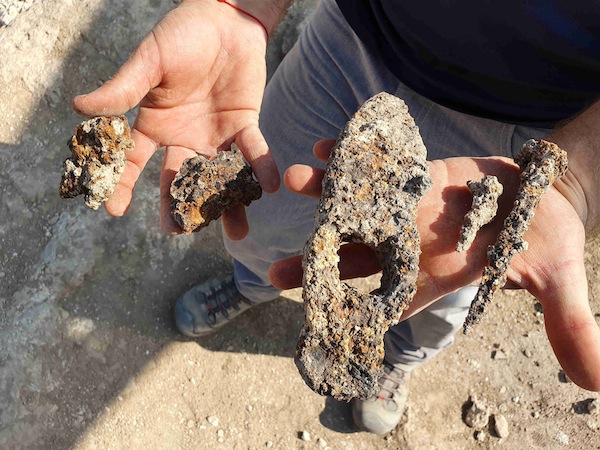
A 1,400-year-old hammer and nails, found at the ancient city of Usha. (photo by Yoli Schwartz/IAA via Ashernet)

An Israel Antiquities Authority (IAA) excavation some 15 kilometres east of Haifa at the ancient city of Usha revealed a 1,400-year-old hammer and nails, confirming that the ancient inhabitants of Usha manufactured iron tools.

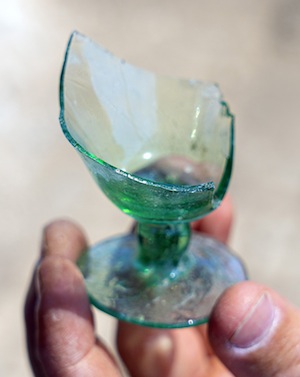
photo - One of the broken wine glasses found in Usha
One of the broken wine glasses found in Usha. (photo by Yoli Schwartz/IAA via Ashernet)

The IAA’s community excavation, carried out predominantly by youth and volunteers, has exposed part of a Jewish settlement with ritual baths, oil presses and winepresses. Indications are that the primary occupation of the Usha inhabitants was the large-scale processing of the olive trees and vines they cultivated on the surrounding hills. The discovery of the ritual baths indicates that the Jewish press workers took care to purify themselves in the ritual baths in order to manufacture ritually pure oil and wine.

According to Yair Amitzur, director of the excavation and of the Sanhedrin Trail Project for the IAA, “the settlement of Usha is mentioned in the Jewish sources many times in the Roman and Byzantine periods, as the village where the institution of the Sanhedrin was renewed, after the destruction of the Temple in Jerusalem, and after the failure of the Bar Kochba Revolt in 135 CE. The Sanhedrin was the central Jewish council and law court, and it was headed by the president, Rabban Shimon ben Gamliel the Second, who presided in Usha, and then his son, Rabbi Yehudah Hanasi. Here, in Usha, the rabbis of the Sanhedrin made decrees to enable the Jewish people to recover after the war against the Romans, and to reconstruct Jewish life in the Galilee.”


לא מכונה ולא כביסה

סטנלי פארק (Jester7777 at English Wikipedia)

התמקמתי סוף סוף בדירה החדשה בסמוך לסטנלי פארק הגדול, היפה והירוק (בניגוד למה שאנו רגילים לו בישראל). אמרתי לעצמי בשקט: “ברוך הבא למשכנך החדש והיפה. סוף סוף תוכל לכתוב בשקט כך שרק נשימותי ישמעו להן ברחבי חדר העבודה או בסלון שלך”.

מעבר מדירה לדירה נחשב אצלי לפרויקט חיים גדול ממש כמו ההליכה של עם ישראל ארבעים שנה במדבר ואולי יותר מכך.

השינויים האלה דורשים ממני מאמץ פיזי ונפשי אדיר! ומתישים אותי לחלוטין. ההחלמה פרויקטים נוראים שכאלה נמשכת אצלי לפעמים אפילו שנים.

התמקמתי סוף סוף בדירה החדשה בסמוך לסנטלי פארק הגדול, היפה והירוק (בניגוד למה שאנו רגילים לו בישראל). אמרתי לעצמי בשקט: “ברוך הבא למשכנך החדש והיפה. סוף סוף תוכל לכתוב בשקט כך שרק נשימותי ישמעו להן ברחבי חדר העבודה או בסלון שלך”.

כמעט והתקנתי מזוזה בכניסה לבית מרוב שמחה וסיפוק על ההישג הגדול שלי: הצלחתי לעבור דירה ונשארתי בחיים. האם מישהו שומר עלי מלמעלה? או שמה מלמטה? או מכל מקום אחר?

התעוררתי בבוקר בבהלה לאור רעש ממספר שכנים שגרים בדירה למטה. ניחמתי את עצמי במחשבה כי זה בוודאי רעש זמני שיחלוף מן העולם מחר.

התה הרותח ליווה אותי לשולחן הנוח בסלון הענק שלי שמזכיר מגרש כדורסל של הפועל ירושלים ללא יציעים. “למה זקוק עוד בנאדם” מילמלתי לעצמי בשימחה מול התה המהביל. “יש לי את כל התנאים הדרושים לעצמי לשבת ולכתוב. אין תירוצים ושלא יהיו תירוצים – ברור?” הוספתי לדבר אל עצמי בשקט.

פתחתי את המחשב הנייד שלי שרק לאחרונה השקעתי סוף סוף מצלצלים בשיפור התוכנה שלו. הצצתי ברשימת הרעיונות הארוכה שהכנתי לעצמי עוד מוקדם בבוקר, אחרי שהרעש בחוץ נרגע קמעה. כך נראה שיש תשתית לא מבוטלת לתחילת כתיבת סיפור חדש. “הגיע הזמן, הגיע הזמן” אמרתי לעצמי מספר פעמים.

ממש ברגע הקלדת המשפט הראשון שמעתי את הדלת הבית נפתחת בזעם שכמעט מוטט את הצירים, הקירות והרצפה כאחת. “מה קרה?” שאלתי בפחד תוך שאני רועד מההמולה הנוראית, את בת זוגתי אהובתי שתחייה. היא שהזיעה כל כולה כנראה מאמץ ההליכה הביתה ובטח גם מפתיחת הדלת בצורה הדרמטית הזו כמו בסרט אימים, אמרה לי חלושות: “אהובי היקר. מכונת הכביסה האהובה שלנו התקלקלה לה. אני כל כך עצובה וממש נואשת. הנה הנה מגיע הטכנאי שיטפל בה כראוי ויחזיר אותה למוטב”.

נדהמתי מהצרה החדשה שנפלה עלי ורציתי מייד להחזיר את בת הזוג היקרה שלי למוטב, ולהעיף אותה ואת המכונה שלה לקיביני מט. “שילכו שתיהן כמה שיותר רחוק ממני. רק שילכו. ומה ביקש בן האדם? רק קצת שקט ולכתוב כמו שאני אוהב. האם זה מוגזם?”, שוב מילמלתי לעצמי. אז משום מקום חטפתי קריזה ופני האדימו כמו שמיים סוערים לפני סערה קשה. נעמדתי ליד שולחני וצעקתי על הגברת שלי תוך שאני מנפנף את הידיים למעלה, כך שאולי אלוהים ישמע ויצילני מצרותי החדשות: “האם את מבינה שאני צריך לכתוב! לא אתן לך ולמכונה המזויינת שלך להפריע לי. עברתי לכאן בשארית הכוחות שלי ואני מרגיש ממש כמו לימון שנסחט עד תומו. לא מכונה ולא כביסה -מבינה?”

בת זוגתי צנחה על הכיסא ליד החלון ונראתה כמו גופה לפני קבורתה. חששתי שמה הגזמתי בתגובתי והשפעתי על בריאותה שמימילא לא הייתה כל כך טובה. לשמחתי ראיתי שהיא מתאוששת די במהירות וצופה ארוכות בנוף היפה שנראה מהחלון. כן אלו העצים העתיקים של סטנלי פארק שגילם נאמד במאות שנים, בדיוק כפו שאני הרגשתי.

Fighters return to kibbutz

Stacking the banana bunches in the wagon required a type of superpower. (photo from Victor Neuman)

In this eight-part series, the author recounts his life in Israel around the time of the 1973 Yom Kippur War. The events and people described are real but, for reasons of privacy, the names are fictitious.

Part 6: War Comes Home

My first inkling of how fighting is done in this region of the world came in 1969, when I was working on the pipeline near Arad. Our crew was encamped at a motel and so were some Israeli soldiers. At that time, there were infiltrators crossing from Jordan into Israel and planting bombs wherever vehicles were likely to pass. Tourists like myself were warned to hitch rides while standing on the paved part of the road – never the soft shoulder. Similarly, the cars picking you up never pulled over; they simply stopped in the travel lane and waited.

The Israeli patrols were setting up ambushes in wadis in the area. When they came back to the motel to warm up, I talked with them about what they were doing.

As darkness came, the soldiers drove out to a wadi that showed signs of human activity, positioned themselves and waited. It was damn cold, they told me, especially when you had to remain still for a long time. Their jackets and leggings kept most of their bodies warm but their hands became very cold. You can’t properly operate a weapon with gloves on.

“So, what did you do to keep your hands warm?” My question got laughter in response.

“Shall we tell him?”

“Yes, who cares? Tell him.”

“Well, if you must know, we all sit around with our hands in our crotch. That’s the only way to keep them warm.”

Still the greenhorn, I asked them if they had any luck or taken any prisoners. Again, they looked at each other – in more seriousness this time.

“It’s dark and you can’t see what they have in their hands even when their hands are in the air. We just kill them all.”

I had no more questions.

Now, it was 1973 and the war had been going on for two weeks. The tide had turned. Syria had been pushed back from the Golan and Egypt had been cut off in the Sinai. To the relief of all of us on the kibbutz, Jordan’s only contribution to the war had been to send some soldiers to fight alongside the Syrians. There was no Jordanian third front in the war.

A trickle of kibbutz members – mainly the older reservists – began returning from the front lines. One of them was a good friend and a fellow banana worker named Moti.

Moti’s talent in the fields showed itself during our time of kateef (cutting, or harvesting). Moti received the bunches and quickly stacked them in the wagon, usually about eight rows high. His superpower was being able to do this in a way that the row would not collapse before the next row shored it up. I tried it once and produced a banana avalanche. It was one of those things that is funny in hindsight – at the time, we had to empty the whole wagon and start over. Time was wasted, bananas were bruised, Lev was pissed.

Moti told me he hadn’t been on the front but had heard stories from those who were. They told him that they had retaken outposts that were overrun in the first days of the war. They found Israeli soldiers tied to the four corners of their bunk with their bellies cut open. I asked him if he had seen any of this; he told me he hadn’t. They were just stories he had heard, but he believed them.

Having Moti back was like old times. Moti, Lev and I were all back in the bananas, along with a number of tourist-volunteers. We were able to properly tend the fields again and we wished to think that life was returning to normal.

Still, the war came home whenever someone else came back on furlough and brought their stories. Next to return were Tzvie and Ari – good friends who, in peacetime, worked the fields together and, in wartime, shared a tank. Just before the war, they had completed their three years of military service and were off on a tour of Europe. No one on the kibbutz could afford to do such things, so the kibbutz rewarded everyone who completed their army stint with an all-expenses paid trip to Europe. It was a once-in-a-lifetime chance to see the world before settling down and all the kibbutz kids dreamed of their time abroad.

Tzvie and Ari were two weeks into their trip when the news reached them that Israel was under attack. Ari wanted to carry on with the tour, arguing that the war would be over before they got home, but Tzvie would have none of it. He told Ari that he would go insane if he were walking around Europe while his country was at war and he became so agitated that Ari agreed to return.

One of the war stories they shared was that, on one of their forays, their tank was hit by a wire-guided missile – a portable device enabled the operator to fire the missile and control it in flight by means of a wire that played out as the missile flew on its path. The Egyptian army had many of these missiles and they took a deadly toll on Israeli tanks in the opening days of the war.

When Tzvie and Ari’s tank was hit, it was immediately disabled and the entire crew had to abandon it quickly. With the enemy nearby, they couldn’t exit from the top of the tank so they dropped the hatch at the bottom and escaped using their tank’s track-and-wheel assembly as cover. They were tripping and stumbling over anti-tank wires from an earlier battle but managed to haul their guns and a box of ammunition to a nearby hill. They were grateful to be alive but less so when they realized they had brought the wrong ammunition; it was compatible with one of the tank’s machine guns but none of the weapons they were carrying. In despair, they hunkered down and waited to be attacked. Then they began to notice how quiet it was. In fact, there was no one around but them. They came down from the hill to investigate and found that their tank had actually hit a land mine.

Ari said of the experience, “Yes, it was scary, but at least our job is driving a tank. It’s worse to be a paratrooper. There they tell you that, if your chute doesn’t open, point yourself head down toward the ground. That way they can reuse your boots.”

At this point, Ari and Tzvie smacked each other on the back and laughed their heads off. Seeing our cue, we all laughed as well.

Now I had the whole range of it. War, murderous and savage. War as slapstick.

(Next Time: The Ceasefire)

(Previously: “Learning the lay of the land”; “When Afula road went quiet”; “Tending the banana fields in war”; “Weapon training begins”; “Near tragedy on guard”)

Victor Neuman was born in the former Soviet Union, where his family sought refuge after fleeing Poland during the Second World War. The family immigrated to Canada in 1948 and Neuman grew up in the Greater Vancouver area. He attended the University of British Columbia and obtained a BA and MA with majors in English literature and creative writing. Between 1968 and 1974, he made two trips to Israel, one of which landed him on a kibbutz at the time of the 1973 Yom Kippur war. Upon his return to Canada, he studied Survey Technology at BCIT and went on to a career of designing highways for the Province of British Columbia and the firm of Binnie Civil Engineering Consultants. When he retired, he reconnected with his roots in creative writing and began writing scripts for Vancouver Jewish Folk Choir concerts and articles for the Jewish Independent. Neuman and his wife, Tammy, live in southeast Vancouver and enjoy the company of friends, their extensive extended family and their four sons.
טרודו ניצח שוב את השמרנים בבחירות

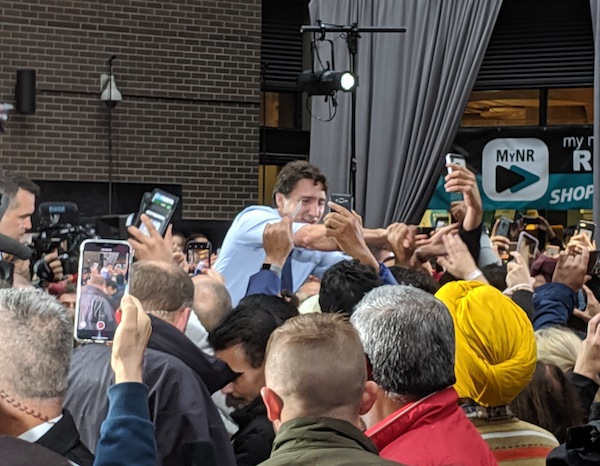
כיוון שהמפלגה של ג’סטין טרודו זכתה במרבית המושבים ברפלמנט, הוא זה שיקבל ראשון את המנדט להרכיב שוב את הממשלה החדשה. (רוני רחמני)

האם הוא עשוי בטפלון? שאלו הפרשנים באולפני החדשות לאור ניצחונו של ג’סטין טרודו – ראש הממשלה היוצא מטעם המפלגה הלברלית, בבחירות הכלליות בקנדה, שנערכו ביום שני בשבוע שעבר. זאת לאור מספר פרשות בהן נקשר שמו בשנה האחרונה. בהן: טרודו הואשם בכך שניסה להסדיר תביעה נגד חברת תשתיות הגדולה ממחוז קוויבק אס.אן.סי לוולין. להגנתו אמר ראש הממשלה כי ניסה בסך הכל למנוע פיטורי אלפי עובדים של החברה באם היא תעקור לחו”ל. כן פורסמה תמונה בה נראה טרודו מחופש לשחור עת היה מורה בבית ספר. טרודו התנצל על כך מספר פעמים. לכן העלו מספר פרשנים את הסברה שהוא יובס בבחירות הארבעים ושלושה במספר. אך לא כך אצל טרודו. אמנם המפלגה הליברלית הפסידה את הרוב בפרלמנט בבחירות, והיא ירדה ממאה שבעים ושבעה מושבים למאה חמישים ושבעה, מתוך שלוש מאות שלושים ושמונה מושבים. אך כיוון שהמפלגה של טרודו זכתה במרבית המושבים ברפלמנט, הוא זה שיקבל ראשון את המנדט להרכיב שוב את הממשלה החדשה. מדובר הפעם בממשלת מיעוט כי דרושים מאה ושבעים מושבים לממשלה הנשענת על רוב. אם יצליח טרודו לצרף לממשלתו את המפלגה הדמוקרטית החדשה מהשמאל, שנפגעה קשות בבחירות וירדה משלושים ותשעה מושבים לעשרים וארבעה, הוא יבטיח לעצמו ממשלה יציבה הנשענת על רוב ברור בן מאה ושמונים ואחד מושבים.

מפלגת השמרנים בראשות אנדרו שיר, ניהלה קמפיין מלוכלך ואישי נגד טרודו בארבעים ימי מערכת הבחירות. שיר לא התבייש להמציא סיפורים על טרודו ולטעון דברים כנגדו שלא היו ולא נבראו. ומה לא יעשו השמרנים כדי לנצח. שיר אף הגדיל לעשות וטען באחת מעצרות הבחירות האחרונות כי אם הוא ינצח בבחירות, יפעל לקיים חקירה נגד טרודו בפרשת אס.אן. סי לוולין. ציבור מאזיניו הנאמן צעק לעבר שיר:”נעל אותו”, “נעל אותו”, “נעל אותו”. זאת בדיוק כפי שצעקו תומכי המועמד לנשיאות בארה”ב דונלד טראמפ, כאשר הציע לבצע חקירה נגד הילרי קלינטון בפרשת האימיילים שנעלמו. הדימיון לא מפתיע אפוא כאשר מדובר בשמרנים. המפלגה של שיר הגדילה אמנם את כוחה משמעותית בפרלמנט לעומת הבחירות הקודמות, מתשעים וחמישה מושבים למאה עשרים ואחד מושבים, אך נכשלה נמרצות בכוונתה להרכיב את הממשלה הבאה.

המנצחת הגדולה בבחירות האחרונות היא המפלגת הבדלנים ממחוז קוויבק שהגדילה את כוחה משמעותית לעומת הבחירות הקודמות. מעשרה מושבים לשלושים ושניים מושבים. המפלגה הבדלנית הודיעה כי הורידה מסדר היום שלה את הרצון להגשים את החלום ההיסטורי ולהיפרד מקנדה. כל שהמפלגה מבקשת עתה זה הוא לדאוג לאינטרסים של המקומיים בקוויבק. ובין היתר למנוע את בניית צינור נפט במחוז להעברת נפט ממחוז אלבטרה.

לאור תוצאות הבחירות להערכת מספר פרשנים: קנדה כיום מפוצלת הרבה יותר מבעבר. לדעת חלק מהם זה מה שקורה בהרבה מדינות במערב כיום, אך בקנדה הפיצול נחשב עדיין למתון יותר. במחוז קוויבק שולטת המפלגה הבדלנית, במרכז המדינה שולטת המפלגה הליברלית ובמערב קנדה (במחוזות סיסקצ’ואן ואלבטרה) מפלגת השמרנים. הפרשנים חושבים שטרודו יהיה חייב לגלות מנהיגות אמיתית כדי לאחד את כל הכוחות תחתיו. יש המאמינים שהוא המנהיג הנכון במקום הנכון והוא יצליח לעשות זאת. מכל מקום בנאום הניצחון שלו אמר טרודו כי הוא ראש הממשלה של כל קנדה, והוא יפעל לטובת כל האזרחים בין אם בחרו בו או לא. וטוב שכך.