Operation Black Belt diaries

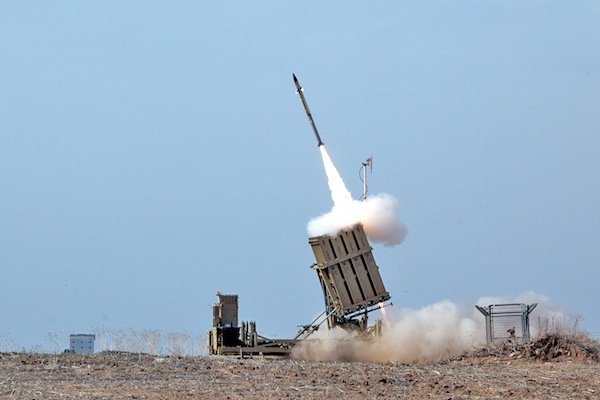
A missile from Israel’s Iron Dome is fired to intercept a missile coming from the Gaza Strip, in November 2012. (photo by Nehemiya Gershuni-Aylho/IDF)

Interesting. Sad. Frustrating. Predictable. Some five years after Operation Protective Edge, there are the same tensions and military conflagrations between Gaza and Israel. As my three-part homefront diaries from 2014 is being printed as a retrospective in the Jewish Independent (see other article on this page), Israel continues to defend itself from indiscriminate missile fire from Gaza. With this diary, I hope to capture the same sense of homefront resilience. From the mundane to the philosophical, this is how I experienced it.

Tuesday, Nov. 12, 2019: Again. A little bit tedious. This business of war. Woke up just after 6 a.m. to a siren. Incoming. Oh well. Time to get up anyway. Just a few hours earlier, Baha Abu al-Ata (try say that while standing on your head) was assassinated in a targeted killing by the Israel Defence Forces. He was a top Palestinian Islamic Jihad (PIJ) commander in Gaza.

Not much later, a text message from the school district. School canceled. My daughter happy. Twenty minutes later, several of her friends show up for breakfast. Their conversation: missiles, sirens, stress levels, locations hit. Where is the giggling? The talk of boys? Of parties? OK, there was also that. Teenagers in the homefront.

Missiles hitting as far north as Tel Aviv. Several months ago, this was a red line. An exception. Now, the norm.

My wife called her mom, who lives just outside Tel Aviv. We’re bringing her here until the missiles stop.

Wednesday, Nov. 13: Two hundred missiles slammed into Israel. Remarkably, very little damage. Did the PIJ ever hear of GPS? Shhh. Don’t tell them.

The enemy is the Palestinian Islamic Jihad. Not Hamas. Not sure the difference. Or how important it is. Both radical Islamic parties. Both fire missiles at Israel. Both want to destroy Israel. Both want to kill Israelis.

Thursday, Nov. 14: A very quiet night. And then, around 6 a.m., the missiles started again. Raining on the south. By late afternoon, another 100 missiles fired on us. Yikes.

Told to brace for several days of fighting. Most of the missiles fired today fell around the Gaza periphery. PIJ not ready for a ceasefire. Acting as if they own this game. Maybe they do. Where is our might? Our deterrence? Our “make my day” attitude? Must put an end to this constant threat. To the PIJ. To Hamas. To their ability to fire indiscriminately and nonstop at Israel. It’s not fair. “Fair.” Like that’s a concept in war.

My big question, somewhat rhetorically, but also looking for answers: how did Gaza develop so many darn missiles? Shouldn’t we have stopped this stockpiling before it got out of hand? Same mistake in Lebanon, where Hezbollah has 150,000 missiles aimed at my home. Double yikes!

Regarding the current threat – 42 missiles fired at us in last 15 minutes. Triple yikes!

And, as I was sleeping in our apartment up north, where I stay occasionally during the week because of work, a missile was shot down over Rehovot. My daughter was woken at 11:30 p.m., alone at home. She excitedly recounted the difficulty she had shutting the fortified window in our protective room. The recently replaced screen is the culprit. By the time she finally got it shut, boom! The missile was shot from the sky by our trusty Iron Dome interceptor.

I need to fix that screen for next time.

Friday, Nov. 15: The fighting has been called Operation Black Belt. A ceasefire agreement reached. Not surprisingly, the ink not yet dry, more missiles fired into Israel.

Just wondering. When ceasefires agreements signed, does the PIJ – not Hamas, I remind you – and Israel sit around a table, sign a document, exchange pens, take a few selfies? OK, silly thought. But, if they did, might be a way to reduce animosity. They could even share a drink at an “after event.” Ha.

How does Operation Black Belt impact Israel’s political woes? Still a country without a functioning government.

And Gaza has a functioning government? A rhetorical question I couldn’t refuse to ask.

More than 400 missiles fired into Israel since Tuesday. Fifty-eight Israeli civilians injured, but none seriously (I think, I hope). Not sure our number of retaliatory attacks but reportedly significant.

Our ability to pinpoint attacks is just amazing. Baha Abu al-Ata (and his wife) were taken out while sleeping in his apartment. No other deaths or damage.

Saturday, Nov. 16: My morning news feed: “Intermittent Rockets Continue to be Launched by Palestinian Islamic Jihad.” Now, isn’t that lovely. Actually, it’s difficult to distinguish the morning thunderstorm – finally raining – from the sounds of missiles and anti-missiles clashing overhead. A boom is boom is a boom.

This is a ceasefire? Middle East-style, anyway. The proverbial beat goes on.

Bruce Brown, a Canadian-Israeli, made aliyah 25 years ago. He works in high-tech and is happily married, with two kids. He is the winner of a 2019 American Jewish Press Association Simon Rockower Award for excellence in Jewish writing. This article originally appeared in the CJN.
Protective Edge retrospective

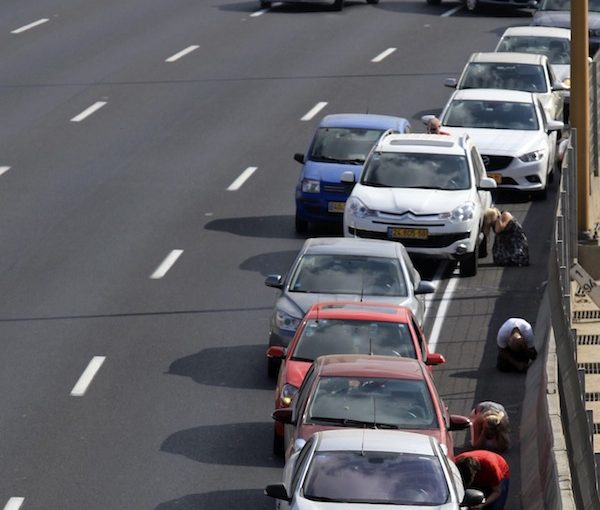
Drivers take refuge from rockets in Tel Aviv, July 9, 2014. (photo from flickr.com/photos/idfonline)

Part 1 of a three-part series, in which the author shares his diaries from the homefront, providing a glimpse of daily life under missile threat during Operation Protective Edge in 2014. For Part 2, click here; for Part 3, click here.

July 8

Operation Cast Lead, 2008. Operation Pillar of Defence, 2012. Now, Operation Protective Edge, 2014.

Naïvely, I disassociate the unraveling events from the grisly murders of teenagers Gilad Sha’er, Eyal Yifrach, Naftali Fraenkel. Then the murder of teen Muhammad Abu Khdeir. Gripping the country in horror, fear and dismay. I hope a sense of normalcy will prevail.

It doesn’t. Last evening was disrupted by 15 rockets fired over Rehovot, my little shtetl. Our Iron Dome intercepted several of them. The rest missed their targets, falling into open land. Two hundred missiles fired at Israel over the past week.

The attack took us by surprise. Pizza ordered, my son just finished his shower, my daughter hanging in her room, which doubles as our reinforced shelter. The siren sounded. Together with our dog, we ran to join my daughter in her room. A bit invasive to a teen. But she forgave us.

I took a few extra seconds. I had 30, after all. Grabbed a large bottle of water, some chocolate, a few asthma inhalers. “Dad! Get your ass in here!” my son shouted as I was scouring the kitchen for more goodies.

Then. All clear. We left my daughter’s room. I mean, the protective room. The doorbell rang. Pizzas here.

Amazed the delivery boy was still doing his rounds. I admonished him for not seeking shelter. He says he waited out the attack in our stairwell (also a reinforced area). Quite impressed with his delivery skills, gave him a large tip. The pizza arrived in less than 30 minutes, as advertised. Great job.

Went to bed a few hours later. My daughter had a difficult night. Couldn’t fall asleep and came into our room a couple times. Did our best to comfort her. But what can we say? We were attacked with missiles.

We promised our daughter she wouldn’t have to stay home alone, that she could join me at work. Not sure this was a wise promise. My office is located more south. My big worry – the drive to work. Driving there, I imagine myself in an episode of Wagon Train.

Looks like we are moving into a major ground offensive. A pending call of up to 40,000 reservists. Imagine the impact this will have on our economy, on our society. Fortunately, my son’s army duty is two years away. Somewhat reassuring, but not much, as these operations tend to repeat themselves every couple of years.

July 9

Visited our safe room twice last night. Hamas fired missiles as far north as Tel Aviv. Even targeted our capital. Didn’t expect such a quick escalation. We responded. Pounded 150 targets inside Gaza. I pity the poor Gazans suffering the slings and arrows of their leaders.

Heard another siren while walking my dog this morning. Poncho and I ran to the nearest shelter, the stairwell of a neighbouring building. Waited the mandatory 10 minutes with a mother and her child. Adding to an already complicated situation the child had cynophobia – started panicking at the site of my dog. Poncho and I chivalrously moved one floor up.

Poncho also feels the stress. Waiting in the stairwell, amid the booms and sirens, he started crying, pawing me.

I think about my son and his friends, who have a trip to Eilat planned for tomorrow. They are debating whether to go. Tough call. My wife and I also are struggling with this. That dang security factor! But there is also the heroic, stoic pizza delivery guy message. Life in Israel.

July 10

Operation Cast Lead cost $50 million a day; total cost, one billion bucks. Pillar of Defence cost $2 billion. Where is this money coming from?

We’ve destroyed more targets in the last 36 hours than in all of Operation Pillar of Defence.

More than 90 missiles were fired at Israel yesterday. Thirty were struck down by the Iron Dome. Rehovot was pretty quiet, with only one evening siren. I was home alone while my wife and kids were at the mall, which they said was totally empty. So, why were they there? Great question. One I ask every time they’re at the mall. Missiles or not.

Yesterday, we received an automated call from our mayor. Rehovot, along with other southern municipalities, has declared a state of emergency. Not sure what this means. Think we need to stay within 90 seconds of a protected space. Try factoring that into your busy day!

Morning papers filled with instructions on how to stay safe. Definitely a well-prepared country with this sort of thing. Facts speak for themselves. No casualties, despite more than 300 missiles fired at us since hostilities broke out.

My gym routine at work was disrupted by a double siren (one after the other). While waiting in the protected area, I positioned myself for a dash to the bench press once the all clear was sounded. Priorities!

The situation was becoming routine. How quickly we adapt. Calling home, I asked the standard questions. What’s up? What are you doing? What’s for lunch? Any missiles? Reading your book? A totally ordinary conversation.

My son and his friends went to Eilat, which is outside the battle zone. So, in the meantime, just the regular parental worries for a vacationing teen.

On a patriotic note, I hung a flag on our balcony today. Nothing like a good war to bring out the blue and white in me.

That night, the 1970s comic strip Love Is came to mind. Discovered a new one – love is … being alone with your wife in a bomb shelter.

July 11

A siren went off this morning while I was driving to the supermarket. Always dreaded being in a car during a siren. Seems the least safe place. There I was at an intersection, a little jittery, looking for a place to pull over and exit the car – then run for fortified cover … or lie down with my hands over my head. Spotted a place just down the road. Reminded myself I had 90 seconds to get to relative safety.

The red light took forever to change. Waiting. Waiting. Waiting. Green! A car zoomed out from behind. Cut me off. Took my coveted spot. Dang! Most drivers stopped on the spot, like when the sirens sound on Remembrance Day, so I did the same. Then bolted from my car. Crouched down. Put my hands over my head and hoped for the best.

Crouching next to me was the guy who cut me off. He also didn’t get to “the spot” in time. He apologized. We exchanged pleasantries about the unpleasant situation. And then, moved on.

What’s with the covering our heads with our hands stuff? Will that protect us from burning debris falling from the sky? I told my daughter I’m going to start driving around with her bike helmet. Though not a bad idea, it was quickly nixed. If I did that, she warned, she’d never drive with me again. Too embarrassed I guess. Teens. Even during war. Go figure.

Yesterday afternoon, the Iron Dome intercepted several missiles over Rehovot. Parts of the Weizmann Institute of Science were covered with bomb fragments. Especially by the pool. The lifeguard had ensured the kids were out of the water and ushered to safety. A miracle no one was hurt. One panicked child ran back to reclaim his sandals. The lifeguard ran after him. Unable to drag him back in time, he covered the child with his body. Bomb fragments littered the ground around them. Another Israeli hero. Like the pizza delivery guy.

A missile was fired towards the Upper Galilee from Lebanon this morning. We fired back. Hope our Lebanese friends are deterred. Certainly prefer not to open another front.

The Israel Defence Forces also has struck 1,100 Hamas targets in Gaza: 210 targets over the last day, including 81 underground rocket launchers, 21 command and control centres, 15 attack tunnels, 10 training centres, seven administrative buildings. And a partridge in a pear tree.

July 12

Woke up this morning to find my daughter watching the news. Instead of her usual Saturday morning teen programs, she was actually watching the news. One of the first tragedies of war is innocence. On the positive side, we finally got our daughter interested in the news.

Another casualty of war? Certainty. We are no longer certain about so many things. Things that affect today, things that affect tomorrow, things that affect next year. Small things, large things. Lots of things. Not certain.

Two missile attacks on Rehovot today. Surreal. Scary.

Trying to keep a normal routine. Went to a matinée today. Still planning our summer vacation. Busy with work. Busy at home. Baking chocolate chip cookies. Watching Friends reruns. Doing everything with this horrendous situation in the background. Or the foreground.

A bit despondent today. Want this to end. But what’s the end? What about the economic fallout of a $2 billion bill? What about the political and diplomatic fallout? Waiting for some good news.

Bruce Brown, a Canadian-Israeli, made aliyah 25 years ago. He works in high-tech and is happily married, with two kids. He is the winner of a 2019 American Jewish Press Association Simon Rockower Award for excellence in Jewish writing.

Iron Dome inspection

Prime Minister Binyamin Netanyahu, right, visiting an Iron Dome missile intercept control centre Nov. 14, accompanied by Israel Defence Forces Brig.-Gen. Ran Kochav. (photo from IGPO via Ashernet)

Iron Dome has a success rate of around 90%. Each Israeli missile costs some $50,000 and the cost of each battery has been put at some $100 million, but the number of lives saved and buildings protected makes Iron Dome one of the most significant military developments.

פרידה מחבר יקר

.שכונת הווסט אנד בוונקובר (Francisco Anzola)

ביום רביעי בבוקר אחרי ארוחת הבוקר ישבתי למספר דקות על הספה בסלון הגדול שלי בוונקובר, כדי לתכנן בקפידות את יום העבודה שלי. צריך להכניס תיקונים בסיפור על דני וילדותו מירושלים, להמשיך בהכנות ליריד הספרים הקרב וממשמש וכמובן בעיקר – לכתוב סוף סוף את הסיפור הזוי על ישראלי שהכיר לטינית בת”א, שכעובדת זרה טיפלה בקשישים. השניים התאהבו, עקרו ליבשת הצפון אמריקנית ומאז הם חיים באושר ואושר.

הסתכלתי על כתמי הרטיבות בסלוני כתוצאה מהדליפות הבלתי פוסקות. כידוע יורד הרבה גם בוונקובר וזה המחיר של החיים הרטובים כאן. אני עוד אתן בראש לבעל הבית שעד לרגע זה לא תיקן את הדרוש. מתי אוכל להינות מדירתי החדשה ללא מפריע שאלתי את עצמי ביאוש מה? לא רוצה ביורוקרטיות, לא רוצה רעש מהשכנים, לא רוצה מים בסלון. לא רוצה ולא רוצה.

בעודי מסיים את פרק המחשבות המייאש על צרותי, נכנסת פתאם לסלון במהירות של פרארי חדישה בת זוגתי שתחייה. בוודאי תבקש משהו ממני לשם שינוי מילמתי לעצמי. “רונימו יקירי”, אמרה בקול החיבתי שלה. “האם תוכל ללת לי כסף לרכישת פירות בשוק? אתה הרי כל כך אוהב לאכול את הפירות העסיסיים כאן. זה עושה לך כל כך טוב בבטן החמודה והרגישה שלך. ואני כל כך אוהבת לראות אותך מאושר כל כך יקירי אהובי”. הבנתי שלא אוכל להימלט שוב מהדרישה לתת לה כסף. זהו! הפעם שום תירוץ לא יעבוד כאשר מדובר בפירות שאני אוכל כל היום, כל יום. היא נגעה בנקודה מאוד רגישה בחיי – פירות חיי. הכנסתי את ידי לכיס שזו הפעולה הכי שנואה עלי בחיים. חשבתי לא פעם לתפור את הכיס ולסגור אותו לתמיד, כך שארנקי שהוא קודש הקודשים שלי, ינוח לו לעולמים ללא מטרד. הוצאתי את הארנק המקופל שהרהרתי שעתה הגיע הזמן להכניס בו קיפולים נוספים. שלפתי ממנו באיטיות ובעצבות שטר של חמישה דולר כחולים חדשים. הסתכלתי בצער רב על הפרידה הבלתי נמענת מחברי היקר והרגשתי שכל עולמי קורס בבת אחת. הפרידות האלה גומרות אותי והורסות את בריאותי. ביקשתי עוד דקה להחזיק בשטרי היקר וקירבתי אותו לליבי שפעם כתחנת כוח שעומדת לקרוס מהעומס. מהלב שלי החלש משהו העברתי את השטר לפי כדי שאוכל להעניק לו נשיקת פרידה אחרונה. פתאם אני שומע את בת זוגתי צווחת ליד הדלת הפתוחה: “יקירי! אינני יכולה להמתין כל היום בשביל הפירות שלך. בניגוד אליך יש לי גם עסק לנהל. מדוע שלא תקנה את הפירות בעצמך?” הבנתי שהפרידה זו היא סופית ומוחלטת והעברתי לה בצער רב את שטר חמשת הדולרים המסכן שלי. זו ממש התעללות חסרת רחמים בי ובו. עם סיום טקס העברת השטר מיד ליד שדאגתי שיהיה איטי ככל הניתן, אמרתי לה בתקיפות מהולה בכעס ותסכול: “אני מצפה לקבל בחזרה עודף והרבה. את קולטת?!” בעוד היא סוגרת את הדלת ואני שומע את צעדיה המהירים במדרגות התלולות מטה, מילמתי לעצמי “שעדיף שתחזיר לי מספר מטבעות מצלצלים זכר לשטר האבוד שלי”.

הרמתי ידיים: אאלץ להתמודד עם הרטיבות כיאה לוונקובר ועם אובדן חמשת הדולרים שלי, כיאה לדן פזרן. התיישבתי מול המחשב וניסיתי להירגע ולארגן את מחשבותי מחדש. כיצד אתחיל את הסיפור על העובדת הזרה שהכירה בישראל גבר והשניים במסגרת אהבתם עקרו לוונקובר הקרה והרחוקה? אולי אתחיל דווקא בדירה עם הסלון הגדול שהם שכרו בשכונת הווסט אנד?

Inaugural study project

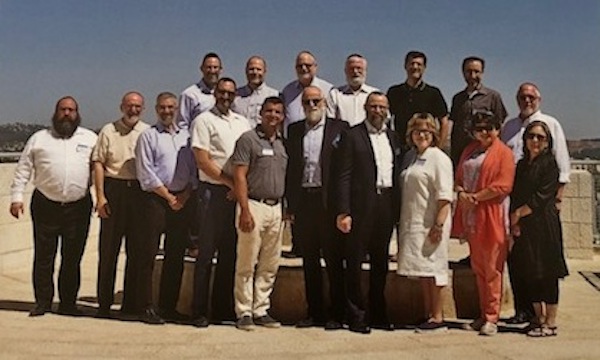
Chabad Richmond’s Rabbi Yechiel Baitelman, far left, was the only Canadian spiritual leader to participate in first-ever rabbinic seminar on Holocaust studies at Yad Vashem, the World Holocaust Remembrance Centre, this past July. (photo from Chabad Richmond)

For one week this past July, 15 pulpit rabbis gathered together to take part in the first-ever rabbinic seminar on Holocaust studies at Yad Vashem, the World Holocaust Remembrance Centre, in Jerusalem.

Yad Vashem is the foremost resource for Shoah educators, both Jewish and non-Jewish. Fourteen rabbis and rebbetzins from North America and one rabbi from Israel, all of whom are engaged in adult education, were invited to participate in the week-long pilot immersion program, which was sponsored by David and Ellie Werber and Martin and Bracha Werber. The diverse group of spiritual leaders spanned the religious spectrum.

Rabbi Yechiel Baitelman, director of Chabad Richmond, was the only Canadian rabbi to participate in the seminar, with the Jewish Federation of Greater Vancouver being a partial sponsor of his travels. He described the week of learning at Yad Vashem as “transformational, uncomfortable, overwhelming, extremely challenging, very enlightening and at times very inspiring. It’s going to take awhile to unpack all this information.”

Entitled Teaching the Shoah and Antisemitism: Opportunities, Challenges and Techniques, the seminar consisted of 65 hours of lectures by scholars and experts, plus testimonials from Holocaust survivors. Covering an array of topics, the point of the program was to help rabbis cultivate the skills necessary to create an educational curriculum and content for Holocaust studies in their schools, adult education classes and congregations at home. Yad Vashem’s challenge was to find unique approaches to teaching people about history, theology, antisemitism and Jewish values relating to the Holocaust, as well as to expand the breadth and scope of emissaries who will ensure the continuity of the stories and pass along the lessons learned from the Shoah.

The Yad Vashem seminar incorporated a multidisciplinary approach to Holocaust education and used various methodologies to help participants comprehend the complexity of the Shoah as a whole, never forgetting the personal stories of individuals. The curriculum included studying prewar Jewish life in Europe; the rise of Nazism; life in the ghettos; concentration camps and the attempted “Final Solution”; liberation from concentration camps; survivors returning to life in the “new world”; the ongoing pursuit of Nazi war criminals; the new antisemitism and anti-Israel rhetoric; physical and spiritual resistance; the role rabbis played during the Shoah; survivor testimony; and theological responses to the Holocaust.

Speakers included international researchers, professors and historians; a world expert on antisemitism; the head of Holocaust studies at Yad Vashem; a Nazi hunter; and several Holocaust survivors, including former chief rabbi of Israel, Rabbi Yisrael Meir Lau, and Rabbi Judge David Frenkel.

As the survivor population gets smaller, others need to ensure that the lessons of the Holocaust are never forgotten. Yad Vashem understands that rabbis have a special role to play in teaching about the rabbinic, theological and spiritual meanings and implications of the Holocaust. For his part, Baitelman will be looking for ways to collaborate with the Vancouver Holocaust Education Centre to create a curriculum for Jews and non-Jews alike.

“The challenge is how to talk to teens, 20-somethings, 30-somethings and 40-somethings about the Holocaust,” said Baitelman. “What should the message be?… We’re a people who have always told stories. Even though we are so many generations removed, in a sense, it is still my story, our story. The message is not only about where we come from, but also about where we are going.” He stressed that, with growing global antisemitism, we need to strengthen the Jewish people worldwide – Jewish education, Jewish values and Torah observance.

“Although we might struggle with faith,” said Baitelman, “we still need to look for G-d amidst the rubble and the hatred. It’s imperative that we find inspiration from those who survived the Holocaust, and find ways to teach tolerance, empathy and understanding.”

Baitelman believes it’s essential to address not only the theological question of “Where was G-d?” during the Holocaust, but also, “Where was man in all of this?”

“If, as a result of the Holocaust, one does not believe in G-d, then we have to believe in humanity,” he said. “The question is: ‘Where was the humanity of the people that perpetrated these crimes?’”

For the rabbi, a meaningful Jewish education involves people living Jewishly. “We need highly educated, well-informed Jewish kids living fully engaged Jewish lives,” he said. “We need children who are living proudly Jewish.”

Baitelman has taught several courses on the Holocaust through the Jewish Learning Institute, and has talked to teachers, school classes and new immigrants about antisemitism and the Holocaust. He said education needs also to address the important question of “Now what? What are we here for?”

Shelley Civkin is a happily retired librarian and communications officer. For 17 years, she wrote a weekly book review column for the Richmond Review, and currently writes a bi-weekly column about retirement for the Richmond News. She is a volunteer with Chabad Richmond.

טורונטו למטיילים

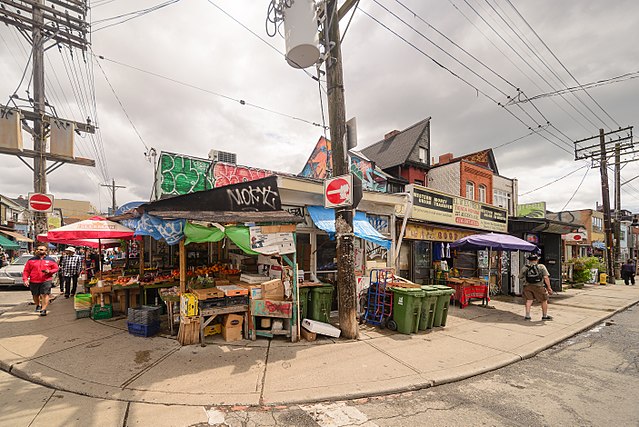
שכונת קנסינגטון מרקט. (Arild Vågen)

טיול בטורונטו הוא חוויה מיוחדת, והעיר מתאימה לכל סוג טיול. לטיול עם הילדים, וגם בלי, למי שרוצה טיול שלו וגם כטיול עירוני. העיר מומלצת לכל מי שמגיע לקנדה והסביבה. טורונטו היא העיר הגדולה ביותר בקנדה וגרים בה למעלה מארבע וחצי מיליון תושבים. במטרו טורונטו גרים כשישה וחצי מיליון איש. כשישית מכל מקומות העבודה בקנדה מתרכזים בטורונטו שהוכרזה מדינה שהכי טוב לגור בה על פי האקונומיסט.

טורונטו הוקמה בשנת אלף שבע מאות תשעים ולשלוש לחופי אגם אונטריו, ונקראה בשם יורק. ארבעים ואחת שנה לאחר מכן הוכרזה כעיר ומאז היא נקראת טורונטו, שפירושו הוא: מקום מפגש בשפת המקומיים. מהמאה התשע עשרה החלה הגירה לעיר בעיקר מבריטניה, אירלנד. ולאחר מלחמת העולם השנייה גם ממזרח אירופה. בשנות השבעים החלה הגירה לעיר ממדינות אסיה.

מכל מקום בעיר תוכלו לראות את המגדל תקשורת הגבוה הסי.אן שמתנשא לגובה של חמש מאות חמישים ושלושה מטרים. הוא נחשב כאטרקציה המרכזית של העיר. מומלץ מאוד לעלות לתצפית שמגדל ולהסתכל על הנופים המדהימים שנשקפים ממנו. אם אתם חובבי ספורט אקסטרים ואם אין לכם פחד גבהים, תוכלו ללכת לנקודת התצפית הנמוכה יותר שרצפתה שקופה, ומי שזה לא מספיק לו יוכל להשתתף בפעילות שבה הולכים בגובה של שלוש מאות חמישים ושישה מטרים על המעקה החיצוני שמחוץ לבניין, קשורים ברתמה. כמו כן למגדל עצמו מגיעים במעלית שקופה שאפשר לראות ממנה את כל העיר, יש בו מרכז קניות נעים, ולמי שרוצה יש גם מסעדה במקום.

כמו בערים נוספות בקנדה גם בטורונטו החורף הוא קר מאוד, וגם כאן הקימו עיר תחתית מיוחדת שתוכל לשרת התושבים בימי החורף. העיר משתרעת על פני עשרים ושבעה ק”מ, ויש בה מגוון חנויות, מרכזי בידור, יציאות לבניינים חשובים, מרכזי קניות ועוד.

אם אתם רוצים להרגיש קצת אירופה לכו אל טירת לומה, בה תוכלו לטייל בחדרים מפוארים, במסדרונות מסתוריים, ואפילו במנהרה עתיקה באורך שמונה מאות מטרים. אחר כך תוכלו לעשות פיקניק בגנים שמחוץ לטירה וליהנות מהשלווה במקום. הטירה נבנתה במשך שלוש שנים והיא אתר חובה לכל אחד.

אם אתם אוהבים הופעות לכו אל גן המוזיקה. ההופעות בו מתקיימות בדרך כלל בקיץ (בין החודשים יוני לספטמבר) ואם אתם נמצאים בחודשים האלה בטורונטו אל תפספסו אותן. הגנים הוקמו על ידי הצ’לן הצרפתי-סיני-אמריקאי יו-יו מה. ההופעות הן בחינם ומתקיימות מתחת לכיפת השמיים כמובן.

אם אתם אוהבים את הסיקסטיז לכו לטייל בשכונת קנסינגטון מרקט. מדובר בשכונה היפית, צבעונית, עם אווירה שמזכירה את מסן פרנסיסקו של שנות השישים. יש כאן את החנויות עם הבגדים הכי מיוחדים, אנשים שאפשר לראות רק בשכונה הזו, אוכל אורגני וואווירה מיוחדת.

אחרי שחוויתם את האווירה המיוחדת בשכונת קנסינגטון לכו אל השכונה הקרובה והלא פחות מיוחדת – צ’יינה טאון. יש בה מסעדות סיניות מעולות, חנויות עם מוצרים מהמזרח, חנויות רהיטים, סופרמרקטים ייחודים ועוד. עדיף להגיע לצ’יינה טאון באמצע השבוע.

מדי שנה בחודש ספטמבר נערך פסטיבל הקולנוע המפורסם של טורונטו. הוא נמשך עשרה ימים, פתוח גם לקהל הרחב ומגיעים אליו למעלה משלוש מאות אלף איש. בהם אנשים מתעשיית הקולנוע מרחבי העולם. הפסטיבל החל בשנת אלף תשע מאות שבעים ושש, והוא נחשב לאחד מפסטיבלי הקולנוע החשובים בעולם, לצד פסטיבל קאן והפסטיבל בברלין. הפסטיבל מסמל את תחילת המרוץ לקראת האוסקר. האירוע מדגיש את הקולנוע עצמאי ואיכותי, בנוסף לקולנוע מיינסטרימי הוליוודי.

Child survivors gather

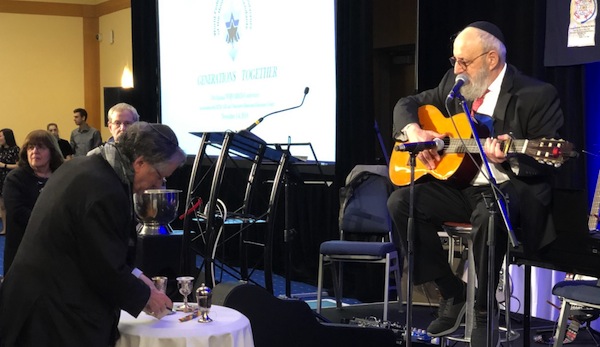
Child survivors Rabbi Joseph Polak, right, and Robert Krell at the Havdalah service Nov. 2, part of the annual conference of the World Federation of Jewish Child Survivors of the Holocaust and Descendants. (photo from Robert Krell)

When Halina Levitt was 2 years old in a part of Poland that is now in Ukraine, her mother left her with a Polish farm family to hide through the Holocaust.

“My mother luckily survived and came back to retrieve me,” Levitt told the Independent. “Of course, at that point, I was 5 years old and she was a total stranger to me. I didn’t want to go with her.”

The family who saved her didn’t want to relinquish her, either, and, as the conflict between the birth mother and the Polish family escalated, neighbours gathered and tried to intervene on behalf of the family as the mother tried to reclaim her child.

“She was quite scared for her life until we boarded the bus and got away from there,” Levitt said.

Rose Raport, a retired doctor from New Jersey, was also left with another family.

“I was given away to a Polish farmer at age 4,” she said. But her parents never returned. “I spent six years and, by the end of my stay with the Polish family, I found out that I’m left alone. There were no parents, there was no sibling, no family and that’s it.” She was turned over to the Jewish community and continued her life in a Jewish orphanage.

Karen Komar, a Massachusetts woman, managed to remain with her family in their home in Hamburg, Germany, until 1941. Then, an intervention by a distant American relative – Arthur Bulova, head of the Bulova watch company – succeeded in getting the family a visa to the United States.

These were just three of the experiences of people who convened in Vancouver Nov. 1-4 for the 31st annual conference of the World Federation of Jewish Child Survivors of the Holocaust and Descendants.

About 400 people attended the gathering – about 110 survivors, joined by members of the second, third and fourth generations, as well as spouses. Each has a unique experience, yet all who spoke with the Independent said such meetings are an opportunity to share time with those most likely to comprehend what they have endured and the lives they have led.

The conference was co-chaired by Vancouverites Marie Doduck and Dr. Robert Krell, both child survivors of the Holocaust.

The conferences create a feeling of belonging, said Doduck.

“Our survivors feel safe, they talk about their lives, their grandchildren, their past, their future, their thoughts in a safe place,” she said. “And the children felt a safe place to speak about their feelings, that they may not be able to do with their parents or grandparents.”

Child survivors – almost all of whom were hidden children during the war because almost none of the children who were sent to concentration camps survived – were not recognized, by themselves or others, as Holocaust survivors or as a distinct group until the 1980s. Because they were so young during the war, or because they were not in the camps, their experiences were dismissed by adults. A 1988 book by Helen Epstein, Children of the Holocaust: Conversations with Sons and Daughters of Survivors began a reconsideration of the individual and collective experiences of the second generation, but also of those who survived as hidden children and who were not, until then, considered “survivors.”

“We still are the children inside of us,” said Doduck. “When I speak in schools, I speak of the child inside of me, not this mother, grandmother, now great-grandmother that they’re looking at, this old lady. This old lady is really Mariette the child, who is starting, after 70 years growing up … who had no childhood, who lived with bombs and death and starvation and disease. I knew that, if I was sick, I would die, and most of us have these kinds of stories.”

Categories can be fluid, Krell explained. As a hidden child who survived in Holland thanks to a Christian family, he is a child survivor. But he is also a second generation, because his parents survived the camps and came back to claim him. This was statistically extraordinary, as the Netherlands had one of the highest Jewish death rates by country in the Holocaust.

Krell feels a special kinship with Abe Foxman, longtime head of the Anti-Defamation League, with whom he organized one of the first child survivor conferences, in 1991. Foxman was hidden from ages 2 to 5, just like Krell. His parents also returned to claim him, an even more statistically anomalous outcome, given that he was in Poland, which had the most catastrophic statistics of annihilation. Krell tried to get Foxman to attend this month’s conference, but the distance was too great to travel.

Location is an important part of the conferences, said Krell, and accessibility is one of the reasons they move annually in Europe, all over North America and to Israel, depending on the year. This year, almost half the attendees were British Columbians.

More than three dozen workshops, panel discussions and plenaries offered a range of topics for attendees, with some exclusive to survivors or successive generations. An art installation and a musical concluding evening added to the weekend experience.

Guest presenters included Rabbi Joseph Polak, a child survivor of Bergen-Belsen and author of After the Holocaust the Bells Still Ring; Dr. Catherine Chatterley, founding director of the Canadian Institute for the Study of Antisemitism; Prof. Chris Friedrichs, professor emeritus of history at the University of British Columbia; and Vancouverite Robbie Waisman, a survivor of Buchenwald, who spoke together with Éloge Butera, a survivor of the genocide against the Tutsis in Rwanda, about human rights activism. Krell’s plenary address opened the conference on the Saturday morning with a keynote titled The Future of Our Past: Informing and Inspiring Next Generations.

A story of two of six million

Dr. Michael Hayden delivers the keynote address at the annual Kristallnacht commemorative program Nov. 7. (photo by Al Szajman)

In the 1930s, German Jews were required to register all precious metals in their possession, a prelude to having them confiscated. In Hamburg alone, the Nazis collected 20 tons of silver, much of it Judaica. Of this, they melted down 18 tons. Two tons was deemed by the Nazi curator Carl Schellenberg to be of artistic or other value in its existing form.

After the war, Schellenberg was kept on by the British because his scrupulous indexing of artifacts made him valuable. His love of the city of Hamburg meant he ensured that some of the most precious pieces of stolen art and artifacts made their way to that city’s museum.

That is where Dr. Michael Hayden, a Vancouver researcher in molecular medicine and human genetics, and one of the world’s leading researchers in Huntington disease, was able to trace one of the few remaining pieces of his grandparents’ once-extensive collection of Judaica.

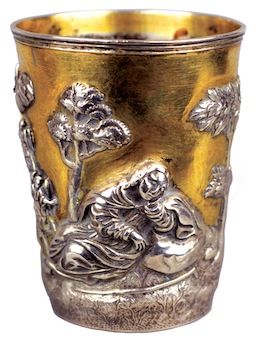
A silver Kiddush cup, crafted in 1757 and embossed with a vivid three-dimensional depiction of the story of Jacob’s vision of a ladder to heaven, which belonged to his grandparents, Gertrud and Max Raphael Hahn, has been restituted to the family. It is now on loan, a small artifact in size but one of the most stunning pieces in a just-opened exhibition at the Vancouver Holocaust Education Centre, titled Treasured Belongings: The Hahn Family & the Search for a Stolen Legacy.

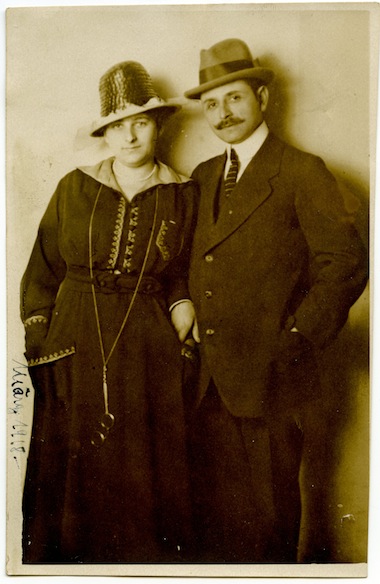
photo - Max and Gertrud Hahn, the patriarch and matriarch of the German-Jewish Hahn family of Göttingen. Photo taken in Berlin, Germany, 1918. While their children, Rudolf and Hanni, emigrated to England, the couple did not survive the Holocaust
Max and Gertrud Hahn, the patriarch and matriarch of the German-Jewish Hahn family of Göttingen. Photo taken in Berlin, Germany, 1918. While their children, Rudolf and Hanni, emigrated to England, the couple did not survive the Holocaust. (photo from Hahn family)

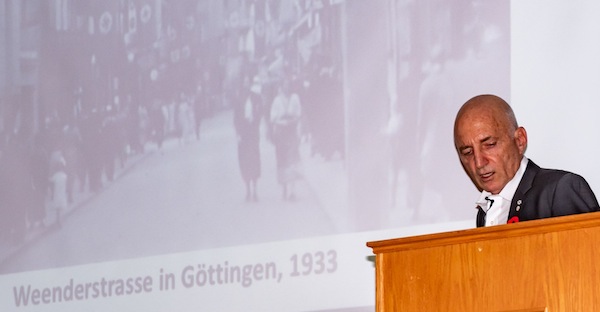
Hayden delivered the keynote address at the annual Kristallnacht commemorative program Nov. 7, before the opening of the exhibition to the public. The exhibit runs to Nov. 27, 2020.

“It’s a story that it’s taken me a long time to confront,” Hayden told the Independent.

Hayden’s grandparents were transported to Riga, Latvia, in 1941, where they were murdered by Latvian collaborators of the Nazis. Max Hahn had been arrested for the first time on Kristallnacht, three years earlier, but, with Gertrud, had managed to secure the passage of many possessions to safe locations in the neutral countries of Sweden and Switzerland. More importantly, they had sent their two children, daughter Hanni and son Rudolf – Hayden’s father – to safety in London.

After the war, the orphaned pair retrieved the remnants of their family’s material possessions. Rudolf, who joined the British army in 1943 and adopted the less Germanic-sounding name Roger Hayden, moved to South Africa. There, more than a dozen boxes sat undiscussed in the family home. When Roger passed away, Michael Hayden shipped the boxes to his Vancouver home, where they sat, unopened, for another two decades.

When he finally confronted the parcels from his family’s past, he discovered a stamp collection, maps, artworks – and 9,000 original documents relating to his family’s history from the 1850s until 1941. These included heart-wrenching letters between Rudolf in England and his parents still in Germany.

While Michael Hayden was growing up, there were some items that his father had not kept stored away. One was a Paul Ritter violin that Rudolf had received on his bar mitzvah. Michael’s daughter, Anna, now a Vancouver hematology oncologist, played on it as a young person and Hayden hopes to one day hear grandchildren also play it. It is part of the exhibit. It is also a hint of how the family got its name. It was not a coincidence that, in anglicizing his name, Rudolf/Roger chose a variation on the surname of a legendary classical composer.

“There were piano recitals and all kinds of concerts in the Hahn family every Sunday,” said Hayden. “They used to have a little chamber orchestra, it was a totally different world. So, he chose the name Roger Hayden from Rudolf Hahn and I’m sure Hayden had some comfort for him because Haydn was so important in his life.”

photo - The silver gilt kiddush cup adorned with the story of Jacob (Germany, 1757), acquired by Max Hahn in the early 1900s and confiscated by the Nazis in 1939, is the only piece of Hahn’s looted Judaica collection that has been restituted to date
The silver gilt kiddush cup adorned with the story of Jacob (Germany, 1757), acquired by Max Hahn in the early 1900s and confiscated by the Nazis in 1939, is the only piece of Hahn’s looted Judaica collection that has been restituted to date. (photo © Vancouver Holocaust Education Centre)

Hayden credits the German government and museums for supporting restitution efforts. His family recently received a grant from the German federal government to hire a researcher to continue the search. Understandably, the challenges are great. The Hahn family’s collection of Judaica was considered one of the finest and most extensive in Germany, rivaling those of the Sassoon and Rothschild families. Because they had lent some objects to museums, and because of Max and Gertrud’s careful recordkeeping, the family has both photographs and detailed inventories of what the collection included before it was looted. Most families do not have such tangible proof.

Hayden emphasizes that any material value of restituted artifacts is irrelevant and the importance is because of personal significance, and that the process represents steps toward reconciliation and restoring dignity of Nazism’s victims.

“For me, personally, it’s been a process of coming to terms with the unimaginable horror and confronting it,” he said.

He has had very positive and some negative experiences during this work. He is impressed with the German government’s efforts to seek forgiveness for their country’s past, including memorializations like the 70,000 Stolpersteine, stumbling stones, that have been installed outside the last homes of victims of the Nazis, and the fact that the vast Holocaust memorial in Berlin is located between the embassies of major countries in the heart of the city.

“When I see Germany and I see what they’re doing, it’s been very instructive for me about confronting your history and confronting it unabashedly,” he said, making parallels with Canada’s reconciliation process with First Nations.

Germany’s response is especially admirable in comparison to other European countries that experienced collaboration and, rather than confronting their past, are actively denying it.

But, Hayden has had negative experiences, including the discovery that the school his father had attended in Hamburg had, as recently as a few years ago, what amounted to a museum to those students who had fought for the Nazis, with not a trace of the fate of the Jewish students who had attended. The Nazi display is now gone and a marker lists the names of Jewish students who were murdered. But he also discovered that the school’s long-held assurance that they had never participated in Nazi activities was fabricated, when photos emerged of the school festooned in Nazi flags and students and faculty making Heil Hitler salutes.

“At a personal level, for me, it’s trying to give up the stowaway of sorrow and pain on my shoulders that I’ve never confronted and to move forward,” Hayden said. “It’s not that I’m at forgiveness, but I recognize that forgiveness is not so much for those you are forgiving, but for the forgiver. You can give up your own toxic anger and move forward. For me, it’s also been a journey to acknowledge my own German ancestry and come to terms with it.”

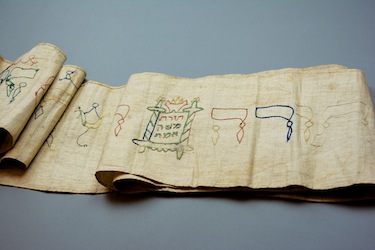
photo - Dr. Michael Hayden, the grandson of Max and Gertrud Hahn, discovered in the 1980s that this Torah binder was in the possession of the City Museum in Göttingen. The piece of cloth was used to swaddle his great-grandfather Raphael Hahn for his brit milah (circumcision ceremony) in 1831. With the help of Göttingen’s mayor, Hayden organized for the Torah binder to be returned to his family
Dr. Michael Hayden, the grandson of Max and Gertrud Hahn, discovered in the 1980s that this Torah binder was in the possession of the City Museum in Göttingen. The piece of cloth was used to swaddle his great-grandfather Raphael Hahn for his brit milah (circumcision ceremony) in 1831. With the help of Göttingen’s mayor, Hayden organized for the Torah binder to be returned to his family. (photo © Vancouver Holocaust Education Centre)

He hopes that the exhibit, his family’s story and the larger facts of the Holocaust resonate in today’s world.

“We’ve got to be aware of ourselves as Jews of condemning other populations, we have to be aware of stereotyping, we have to be even more acutely aware from our own history about the struggles and making sure that we learn from that in the way that we conduct ourselves, so recognizing, as we look at children on television separated from their parents, that we too can be horrified by that and do whatever we can to make sure that we are not complicit or even silent in the face of all of this,” he said. “In certain circumstances, unless we really hold onto some deep principles of democratic culture and value of life, your neighbours can become your killers.”

As the search for additional family heirlooms continues, Hayden acknowledges the challenges. “I think it is a needle in a haystack to be honest, but it’s worth pursuing.”

Of the entire experience, he said: “It’s been an opportunity to give individuality and identity for two of six million people who were murdered, to rescue them from generalizations and understand who they were and understand their distinctiveness and to bring my grandparents out of obscurity and give them the warmth and respect they deserve.”

The Kristallnacht commemoration where Hayden spoke began with a candlelight procession of survivors. Cantor Yaacov Orzech chanted El Maleh Rachamim. Philip Levinson, president of the Vancouver Holocaust Education Centre (VHEC), introduced the event and Nina Krieger, the VHEC’s executive director, introduced the keynote speaker. Rabbi Jonathan Infeld offered reflections after Hayden’s address. Jody Wilson-Raybould, member of Parliament for Vancouver Granville, offered greetings, and Councilor Sarah Kirby-Yung read a proclamation from the City of Vancouver. The event was presented by the VHEC, in partnership with Congregation Beth Israel, the Jewish Federation of Greater Vancouver, the Jewish Community Centre of Greater Vancouver and the Robert and Marilyn Krell Endowment Fund of the VHEC.

Jewish war brides talk

At the University of British Columbia on Nov. 21, Prof. Robin Judd will speak on What’s Love Got to Do With It? Jewish War Brides and North American Soldier Husbands after the Second World War. (photo from Robin Judd)

Prof. Robin Judd noticed that a significant number of the earliest Holocaust memoirs written by women were penned by “war brides” who had married American, Canadian or British soldiers.

In the course of teaching about the Holocaust at Ohio State University, the coincidence struck her and, as happens in research, led her onto a new topic. She is nearing completion on a book about the experiences of Jewish women – and a few men – in Europe and North Africa who married Allied service personnel and moved to Canada, the United States or Britain. She will give a guest lecture on the subject at the University of British Columbia next week and the public is welcome to attend.

The lecture is titled What’s Love Got to Do With It? Jewish War Brides and North American Soldier Husbands after the Second World War, and Judd told the Independent that love certainly played a key role, but some of the other factors at play also interest her.

“What prompts individuals from radically different cultures, who may not necessarily speak the same language, what prompts them to create relationships with one another and long-lasting relationships, relationships that are going to result in marriage and then bring the civilians to Canada, Britain or the United States?” she asked.

Most of the soldiers that Judd is studying were Jewish themselves, though there are exceptions to the rule.

In some cases, the wives would arrive in the new country before or otherwise apart from their new husbands or fiancés. An entire infrastructure was in place to accommodate and integrate them.

“The war brides, particularly if you come to the United States or to Canada as a war bride, first you live with other war brides at least temporarily in a kind of war bride home or war bride camp and you travel on a war bride ship and there are particular Red Cross workers who teach English and show films and cooking classes,” she said.

If the fiancés or husbands were not yet decommissioned or were traveling with their units, the brides may have found themselves in the position of living with their new in-laws.

“These were not the spouses they were planning for their sons,” Judd comments. “And all of a sudden here you have this woman show up. You are processing stories that you are hearing about the war and all of a sudden here comes this person and you might not be able to communicate, you might not have a shared language, you might not know how to even ask questions about what this person had experienced.”

Feeling isolated and foreign, some of these women used the opportunity to express their experiences privately, to themselves, in writing.

“Some of the women that I’ve spoken to have told me that they used that time to write out their story, to put it to paper, because they needed to kind of get it out and there was no one with whom they could talk, literally,” she said. “But then, as they began to create networks, make new connections, maybe by that point their now-husbands have returned to Canada, Britain or the U.S., a number of them tell me that they then destroyed them.”

By an apparent coincidence, though, Judd concluded that it was disproportionately the women who had married soldiers who were among the first to publish English-language Holocaust memoir narratives for general readers in the 1970s and ’80s. She has a theory about this, but admits she could be wrong: these may have been some of the first women who were asked to speak about their early life and Holocaust experiences to Jewish women’s groups, federations and other community audiences, acclimating them to become among the first to put them on paper for general readers.

“But, again, I could be completely wrong,” she said.

Judd’s lecture is supported by a Holocaust education fund in UBC’s department of history to support undergraduate education on the Holocaust. The fund supports a biannual lecture, alternating years with the Rudolf Vrba Memorial Lecture, and is incorporated into an undergraduate course, History of the Holocaust, taught by Prof. Richard Menkis, who is also chair of the committee that manages the fund. The public is welcome to attend on Thursday, Nov. 21, 5-6:15 p.m., at Buchanan D217 at UBC.

Harpers at Lake Hula opening

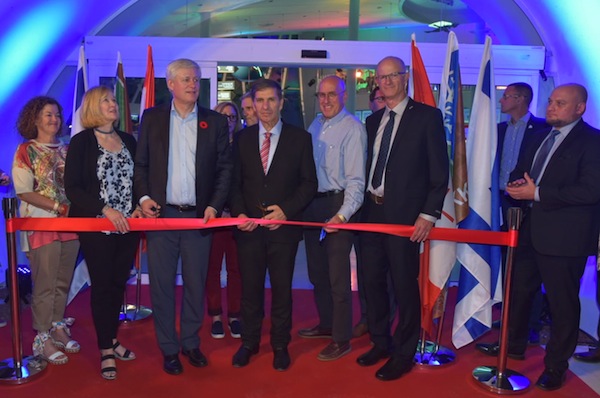
Laureen and Stephen Harper, centre left, and Daniel Atar, KKL-JNF world chair, centre, were among those who cut the ribbon at the Nov. 6 official opening of the Stephen J. Harper Hula Valley Bird Sanctuary Visitor and Education Centre. (photo by Michael Huri)

Former Canadian prime minister Stephen Harper was in Israel earlier this month for a four-day visit with a delegation from the Jewish National Fund of Canada, where he took part in the dedication of the new visitors centre at JNF Lake Hula Park in northern Israel, which is named in his honour.

Budgeted at $25 million Cdn, one-fifth of which was raised by the JNF of Canada, the Stephen J. Harper Hula Valley Bird Sanctuary Visitor and Education Centre south of Qiryat Shmona is seen as “the flagship project of Keren-Kayemet L’Yisrael (KKL),” the JNF’s Israel-based sister organization. Harper contributed to the cost of the project, and the auditorium is named for his wife, Laureen, in recognition of her service to Canada, friendship to Israel and dedication to the preservation of nature and wildlife.

Stephen Harper was honoured at the JNF of Canada’s 2013 Negev Dinner in Toronto. At the time, then-JNF chief executive officer Josh Cooper said: “Given his well-documented love of animals, we felt this would be an appropriate project to present to him.”

Now completed, six years after fundraising began, the facility promises to transform the experience of ornithologists and bird watchers who come to the Hula Valley. There, they can watch the twice-a-year seasonal migration of 500 million birds from more than 500 species, from Europe and Central Asia to Africa, and back.

The Hula Valley, located in the shadow of Mount Hermon, is considered the crown jewel of Israeli conservation efforts. Known in the Bible as Merom, up until the 1950s, it was full of swampland that was notorious for breeding malaria-carrying anopheles mosquitoes. In the 1950s, the wetlands were drained, with the hope that fertile farmland would result; instead, environmental devastation and the extinction of some indigenous species followed. Farming in the area was never successful and JNF ultimately decided to reflood part of the former lake.

Known in Hebrew as Agamon Hula (Little Lake Hula), the flat valley is filled with an array of birds, including cranes, pelicans and eagles. Visitors can observe the birds and also cycle around the site.

***

At the gala dinner Nov. 5 in honour of Harper, which took place at the Waldorf Astoria Hotel in Jerusalem, Israeli Prime Minister Binyamin Netanyahu spoke about the danger Iran’s nuclear ambitions poses for Israel, the Middle East and the West.

“Iran expands its aggression everywhere. It seeks to envelop Israel. It seeks to threaten Israel. It seeks to destroy Israel. We fight back,” Netanyahu said. “I also want to say, given Iran’s efforts to expand its nuclear weapons program, expand its enrichment of uranium for making atomic bombs, I repeat here once again – we will never let Iran develop nuclear weapons. This is not only for our security and our future; it’s for the future of the Middle East and the world.”

Netanyahu was particularly concerned about Tehran’s plans to start injecting UF6 (uranium hexafluoride) gas into the centrifuges to enrich uranium to five percent at the heavily fortified underground Fordow Fuel Enrichment Plant, located inside a mountain 32 kilometres northeast of the Shi’ite holy city of Qom.

Earlier in the day, Iran’s nuclear chief Ali Akbar Salehi promised that his country would violate the element of the 2015 nuclear deal known as the Joint Comprehensive Plan of Action, which Tehran had worked out with the P5+1 (China, France, Germany, Russia, the United Kingdom and the United States). The United States left the deal last year and has imposed sanctions on Iran in an attempt to force it to renegotiate the document. Tehran, in turn, has begun violating the deal in an attempt to pressure the United States to recall the sanctions.

Under the 2015 agreement between Iran and world powers, Iran agreed to turn Fordow into a “nuclear, physics and technology centre,” where 1,044 centrifuges would be used for purposes other than enrichment, such as producing stable isotopes, which have a variety of civil uses. The deal bans nuclear material from Fordow and, by injecting UF6 into centrifuges, the facility will become an active nuclear site rather than a research plant as permitted under the pact.

***

Since leaving Parliament after the Conservative party was defeated in the 2015 federal election by the Liberals, Harper has become president of the Awz venture capital fund advisory committee. The fund, founded by managing partner Yaron Ashkenazi, specializes in investments in Israeli security and intelligence startups, and manages $100 million in assets. The fund has invested in 12 companies to date, according to the Israeli financial website Globes.

Harper, an enthusiastic supporter of Israel, has visited many times. On Jan. 20, 2014, he addressed the Knesset plenum, saying: “It is, thus, a Canadian tradition to stand for what is principled and just, regardless of whether it is convenient or popular. But, I would argue, support today for the Jewish state of Israel is more than a moral imperative, it is also of strategic importance, also a matter of our own, long-term interests…. For too many nations, it is still easier to scapegoat Israel than to emulate your success.”

About the education centre, he said in a statement, “This park is one of the greatest restoration stories, just like this country is to the Jewish people. It is a magnificent honour to have this centre named after my name, and I am grateful for this beautiful occasion.”

Gil Zohar is a writer and tour guide in Jerusalem, Israel.