Skip to content
  • Home
  • Subscribe / donate
  • Events calendar
  • Business Directory
  • FAQ
  • News
    • Local
    • National
    • Israel
    • World
    • עניין בחדשות
      A roundup of news in Canada and further afield, in Hebrew.
  • Opinion
    • From the JI
    • Op-Ed
  • Arts & Culture
    • Performing Arts
    • Music
    • Books
    • Visual Arts
    • TV & Film
  • Life
    • Celebrating the Holidays
    • Travel
    • The Daily Snooze
      Cartoons by Jacob Samuel
    • Mystery Photo
      Help the JI and JMABC fill in the gaps in our archives.
  • Community Links
    • Organizations, Etc.
    • Other News Sources & Blogs
  • JI Chai Celebration
  • JI@88! video

Recent Posts

  • SFU honours Gloria Gutman
  • Lifting people’s spirits
  • Wedding a ray of light
  • Indigeneity and Zionism
  • Rule of law broken: councilor
  • Football and its roles
  • The burden of defence
  • Fish Café returns after fire
  • All right in what goes wrong
  • Nuns & mermaids at TUTS
  • Camp offers holiday retreat
  • Students and mentors inspire
  • Once-in-a-lifetime trip
  • 100 dancers, one heart
  • Money for the sciences
  • What “Jewish food” means
  • Have a cookie, schnitzel too
  • Federation now across BC
  • Israel fighting for its existence
  • Deal strengthens Iran
  • Patriotic belonging diminishes
  • A campaign to engage
  • Upstanders’ first live event
  • Responding to Carney
  • Having your own home
  • Music a family tradition
  • Musical to warm heart
  • Community milestones … June 2026
  • Sharing her passion for Israel
  • Or Shalom reopens its doors
  • JFS from past to future
  • Need holistic approach
  • Sharing stories, advice
  • Journalist shares fears
  • Skills to live together
  • Road to independence

Archives

Follow @JewishIndie
image - CJN box ad Rockowers 2026

Byline: Rebeca Kuropatwa

Abuse comes in many forms

In the second of a series of articles on sexual harassment and violence in the Jewish community, the Jewish Independent speaks with Dr. Alan Stamp, clinical director at Vancouver’s Jewish Family Services.

The #MeToo movement, founded by Tarana Burke in 2006, is based on the concept that empowerment for scores of survivors is possible through empathy – from survivors knowing they are not alone. The movement aims to achieve radical community healing and disruption of all systems that have allowed sexual violence to flourish.

Dr. Alan Stamp, clinical director at Vancouver’s Jewish Family Services, stressed the particular need to protect children. From a psychological standpoint, around the age of 9, there is nothing worse than what is called a “boundary violation” of a young person inflicted upon him or her by an adult.

“Adults, parents, caregivers … are meant to keep kids safe,” Stamp told the Independent. “And when a child is abused by an adult figure, it breaks the trust that the child has – not only in that person, but it breaks their trust in the world. The world becomes an unsafe place to be.”

Stamp went on to explain that children have simple intellectual lives, in that they expect to be cared for in a way that is warm, nurturing and attentive. “When abuse happens, this is stripped away,” he said. “The impact on the developing psyche is that … I have to be vigilant, watchful, that there could be danger all around me…. And, it could be a teacher, an adult and/or a family member.

“The child puts a lot of focus on being vigilant rather than what they are meant to do, which is to learn through play, through relationships. So this is a very injurious act, probably the most injurious act a child can experience.”

Young people who have had this kind of experience develop all kinds of coping strategies – from withdrawing, to acting out, being aggressive and developing learning problems. These coping mechanisms can last a lifetime.
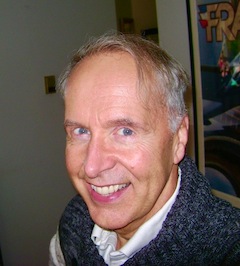
photo - Dr. Alan Stamp
Dr. Alan Stamp (photo from JFS)

“I’ve had many clients over my life who, when they are in their 60s, 70s or 80s, they tell me they’ve never told anyone this story before … and they launch into a story about being harmed … and that it has had an effect on all the relationships they’ve gone on to have in their lives,” said Stamp. “This is why it’s so injurious to a child. If you’re an adult and you have the horrible misfortune of being assaulted or abused, you have had more life experience to be able to manage it. If abuse happens to a youth, while not a child any more, they’re still at a tremendous disadvantage. For young people, getting help, intervening as soon as possible for an extended period of time, really increases the potential for people to do better later in life.”

Outside of explicit sexual abuse, other forms of abuse include emotional abuse, which can involve behaviour that is berating, condescending, hostile or threatening.

“This can be telling a young person that, if you don’t get a top mark in your class, you’re going to ‘suffer these consequences’ – like withdrawing food, be sent to the basement as punishment, neglect, or any manner of things,” said Stamp.

Another form of abuse is physical. “I’ve seen kids who’ve been hit by cast-iron frying pans on their head,” said Stamp.

“I can tell you what parents are meant to do,” said Stamp. A parent “is meant to provide their child with guidance, affection, warmth, food, shelter and education. And, when a parent or caregiver is withholding things, punishing without a clear reason, disciplining inappropriately for the offence – all of these things are felt as abuse to a child.

“This is different than simply being a strict parent by sticking to boundaries, having guidelines, curfews and insisting that homework or chores are done,” he clarified. “This may be strict, but it’s not abusive. It’s abuse when an act or reaction is an inappropriate response to behaviour. A child may think she or he is being treated unfairly, but it is not necessarily abuse. Abuse is something that will shake up the developmental life of the child and will cause them to look at the world through a different lens. Being a strict or controlling parent isn’t necessarily abuse, but the line can be crossed.”

Financial abuse is more often seen among adults, when someone is in a relationship – a spouse, significant other or adult child, for example – takes control of the other’s bank account. Stalking is a form of psychological abuse, making a person feel threatened and unsafe in their own home, neighbourhood or community. And there is sexual harassment. Violence can be two-sided, where both parties are abusive toward each other, or one-sided.

“Elder abuse is now happening with tremendous frequency, where adult children are abusing their elderly parents,” said Stamp. “This is something that’s almost a pandemic, I think, in many – even North American – societies.”

For people who are in an abusive relationship, it is often difficult to leave an abuser. Violence against women is a form of very fierce oppression, according to Stamp. “It oppresses their spirit. They often will say that they should have left and that they knew they had to, but that they couldn’t – that they felt paralyzed with fear for themselves or of harm coming to them, their child or to other family members … or that they didn’t have the confidence to leave,” he said.

“The psychological or physical abuse of a spouse or partner is very systemic,” he explained. “It affects them in many ways. Often, women will take up to eight years to leave an abusive relationship – that’s a very telling stat. When they do leave, they can look back on it and say that they should have left earlier. What I advise is, ensure that you are safe, that you have a safety plan … that you can get up and out of the house with your child within minutes.”

Stamp advises people in abusive relationships to always include in their escape plan talking to family and friends about the situation, as well as to identify resources in their community, just in case. “There are many resources in the community for women fleeing domestic violence,” he said. “It’s a very scary proposition, but, to get what you want, you have to give something up. You have to fight for yourself and become your own hero in many ways, your own best friend. There is help, there are resources…. Life is not meant to be lived being oppressed, threatened or being fearful for your safety.”

Stamp said it is important to remember that abuse is often passed down in families. If you were raised in a home where your parents yelled at each other, hurt each other, used foul language or were otherwise disrespectful, you have a much greater chance of being abusive yourself.

“Using one’s anger is a way of trying to gain control and to oppress others,” said Stamp. “Abuse is something that tends to be systemic, so it can be familial…. It can go back in time and come back to haunt us in the present.

“I’ve seen and worked with many men who were abusive and I’d say that 85% of those men came from homes where they were abused. So, unless we’re addressing that kind of family situation and the people who use abuse as a way to control or manage themselves and others, we’re going to continue to see this pattern throughout time.”

Stamp said the only way to create change is by means of awareness and education – through campaigns, schools, reporting, and by having community services that can positively intervene.

For more information about the counseling services offered by JFS, visit jfsvancouver.ca or call Stamp at 604-637-3309.

Rebeca Kuropatwa is a Winnipeg freelance writer.

Posted on May 4, 2018May 2, 2018Author Rebeca KuropatwaCategories NationalTags abuse, Alan Stamp, children, harassment, Jewish Family Services, JFS, seniors
Brier biannual campaign

Brier biannual campaign

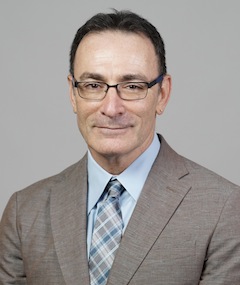
“Louis Brier is in a pivotal point in planning for the future through its redevelopment activities,” said David Keselman, chief executive officer of the home and hospital. (photo from Louis Brier)

The Louis Brier Home and Hospital was started in 1945 by what was then the Hebrew Men’s Cultural Club. The club dreamed of creating a home for Jewish seniors in Vancouver and, in 1946, opened its doors to accommodate 13 residents. Since that time, the facility has grown, changed locations and expanded its services. The Louis Brier is now home to 215 residents, is in contract with Vancouver Coastal Health and is part of a continuum of care known as the Snider Campus, which includes the Weinberg Residence next door.

“Louis Brier is in a pivotal point in planning for the future through its redevelopment activities,” said David Keselman, chief executive officer of the home and hospital. “We are forging relationships with major funders, politicians and academic organizations to facilitate research and best practices.”

Keselman, a registered nurse by training, has been working in the healthcare industry for almost 30 years. He has held a range of progressively more complex and complicated roles, and has worked across the entire spectrum of care – from academia, to acute care, home and community care, public health, and long-term care.

Over the last couple of years, Keselman has been leading the Louis Brier’s efforts to become a leading force in elder care in British Columbia. To help achieve this goal, the Louis Brier Jewish Aged Foundation runs a biannual campaign to raise funds to support the Louis Brier’s work and activities.

“Louis Brier offers a range of services across a continuum of care and provides assisted living services as part of the Weinberg Residence,” explained Keselman. “With the exceptional and generous help of the foundation and with the auspice of a resident- and family-centred care philosophy, Louis Brier Home and Hospital offers a range of unique and significant culturally relevant programming … as well as recreational and rehabilitation activities that are available in very few, if any, other long-term care facilities, custom-tailored to the needs of the residents, their health goals and wishes.”

Regarding this year’s campaign, which started April 16 and runs to June 4, Keselman said, “Of course, we’d like to raise as much as possible. However, as this is a biannual campaign, the goal is to raise at least $1 million.”

He said that, “with the support of the Louis Brier board and the foundation board,” the home has been able to launch “unique and essential programs aimed at supporting the delivery of high-quality care, ensuring that we follow best practices and evidence-informed practice for the best outcomes. Examples of these programs are the quality and risk and resident experience portfolio, and the infection prevention and control practitioner…. We established both of these, signalling a significant change in focusing on the delivery of quality care.”

photo - David Keselman, Louis Brier Home and Hospital CEO
David Keselman, Louis Brier Home and Hospital CEO. (photo from Louis Brier)

The Louis Brier has also continued to develop their recreational, rehabilitation and chaplaincy services. It has purchased a range of equipment to ensure its residents are safe, including wander guard alarms, and it has improved the library and updated the furniture in its lobby and lounge.

“We continue looking for opportunities to enhance the resident experience at the Louis Brier, and are planning to renovate the clinical space, with specialty services provided, such as, dental, ophthalmology and podiatry,” said Keselman.

“There was also a significant investment in staff education and resident programming to ensure we deliver the best care possible and expose our residents to the best available resources, programs and activities,” he added.

Although the Louis Brier does not currently have any vacancies, it also does not have a waiting list.

Access to the home’s publicly funded beds is managed by Vancouver Coastal Health and, although Jewish residents do have priority for cultural and religious reasons, the beds are open to all elderly individuals who require the services and environment of a long-term care facility within Vancouver Coastal Health’s catchment area.

The Louis Brier “is an organization that lives its vision and mission daily and without any hesitations,” said Keselman. “And, despite limited resources, the Louis Brier can proudly say that its services, resources and activities are second to none while, through its foundation, board of directors, physicians, staff and leadership, it continues to search for ways to constantly improve and be a leader in elder care. I’m extremely proud of being the CEO and part of this organization.”

For more information, visit louisbrier.com and, if you go to the bottom right-hand corner of the screen, you can submit a request for a tour.

Rebeca Kuropatwa is a Winnipeg freelance writer.
Format ImagePosted on April 27, 2018May 2, 2018Author Rebeca KuropatwaCategories LocalTags fundraising, health, Keselman, Louis Brier, seniors
Try to reduce screen time

Try to reduce screen time

In her latest book, Be the Parent, Please (Templeton Press, 2018), author Naomi Schaefer Riley reminds parents to take back control and help their kids find healthier means of entertainment.

Originally from Massachusetts, this New York mom of three kids (ages 11, 9 and 5) is no stranger to society’s pressure to give children whatever they want, including the latest technology.

“Over the last few years, I myself struggled with the issues of how to handle screen time, and I’ve watched a lot of other parents struggle with it,” Schaefer Riley told the Independent. “As a journalist, I wanted to talk to experts and do reading, and find out what the research says … and talk to parents about strategies they were using to deal with this.

“The pressure to hand over screens to kids starts almost immediately these days,” she said, “The iPhone came out a little more than 10 years ago, coinciding with the birth of my oldest daughter. It took a couple years but, by the time she was in preschool, a lot of parents, even to have a basic conversation with another person, would hand over their phone just in order to distract the child.”

Today, tablets and cellphones have become a source of all things entertainment for kids (let alone adults), whether that involves looking at pictures of themselves, creating videos or playing games.

“When my kids were younger, we let them watch one show every night, some half-an-hour cartoon,” said Schaefer Riley. “Then, my son was born and the fight began over what they were watching and who gets to pick each night. And it became more of a struggle to tell them you’re going to turn off the TV…. A book I read enlightened me, called The Plug-In Drug. It came out a little more than 40 years ago and was mostly about TV and videogames.

“The author noted that, when you turn off a screen, it’s almost like waking a child up from a nap. It’s a trance-like state and they’re so into it that it’s almost like a change from sleep to wakefulness when you turn it off. And they become cranky. It can be as long as a half hour before they adjust back to reality. I think I was tired of the crankiness, too, of every time I turned it off, to have this fight ensue.”

At the Schaefer Riley house, there are a lot of toys and the kids are expected to entertain themselves without the TV. “But, a lot of parents don’t make that expectation,” she said. “They assume that, unless the child has a screen, the parent has to be entertaining them at all times, that the child can never be restless or irritated.”

She went on to explain that it’s not a parent’s job to ensure that their child is 100% engaged in something at all times. Instead of screens, she suggested, “Why not give your kids some pots and pans to bang together or some cardboard boxes? These are things we know are good for building fine and gross motor skills, and [that] encourage kids to explore things.

image - Be the Parent, Please book cover“I think what the screens have allowed is for us to exercise more control over our kids and keep them on a tighter leash. You don’t need to go all the way to the park. You can just sit in the living room and give your kid an iPad. That way, I don’t need to worry about whether you know enough about crossing the street or whether you’ve achieved that level of independence. The phone will allow me to have this tether on you. This is not very beneficial to kids in the long run.”

Children are now finding tasks difficult to handle if they cannot immediately text their parents for advice or counsel about their lives, argued Schaefer Riley. There is constant communication, with technology serving as a crutch for helicopter parenting.

“A lot of parents have confessed to me … they know, deep down … that they don’t need studies to tell them that their kids are on screens too much,” said Schaefer Riley. “Parents know this.”

It’s time to apply basic parenting strategies to technology, she said. “I know it sounds simplistic to say, but your kid doesn’t generally ask for chocolate cake for breakfast in the morning; they know there’s none for breakfast. If you talk about screen-time limits and stick to them, your kid will not be on you constantly…. If you stick with the rules you set for a few weeks or months, your child will learn that there is no point in asking again; they already know what the answer is and will stop asking for things you consistently say ‘no’ to. The idea is to bring parents back to reality and back to a sense of where they do have control.”

According to Schaefer Riley, the life skill of asking for assistance from an adult is one that many children are missing out on, due to the reliance on tablets and phones.

“I see the kids … my daughter is on the swim team … and they all walk out of practice and everyone is texting their parents – pick me up in five or 10 minutes outside,” said Schaefer Riley. “I’m like, ‘who are you?’ These are not your chauffeurs. I think that’s how we’ve come to think of ourselves.”

Schaefer Riley said observant families, who turn off their phones on Shabbat, have an advantage, as the children come to appreciate that there is something to be gained from family time. “I think,” she said, “that more and more people, whether they are religious or not, are trying to find that ‘technology Sabbath,’ as they like to call it, to give themselves a break … either at meal times, or one day a week, or on vacation. It’s considered a luxury now, to be able to get away from your phone.”

Schaefer Riley emphasized that her book is not meant to scold anyone. She herself faces these challenges.

“There’s a lot of pressure coming from technology companies and schools, and from the culture generally, that are really pushing you to hand over these devices to your kids,” she said. “It takes some willpower to say no, that’s not for my child, or this much time is not for my child.

“There’s a point at which you need to go into your community and find allies,” she added. “Everywhere I went, every community of people I’ve spoken with, there wasn’t just one family trying to hold the line. There were several and, sometimes, they weren’t connected with each other. But, if you do a little searching, you can find people trying to take a similar tactic, and it helps to have allies.”

Rebeca Kuropatwa is a Winnipeg freelance writer.
Format ImagePosted on April 27, 2018April 25, 2018Author Rebeca KuropatwaCategories BooksTags children, Naomi Schaefer Riley, parenting, technology
S Word changes perceptions

S Word changes perceptions

Craig Miller in a shot from the documentary The S Word, which screened for the first time in Western Canada on March 22 in Winnipeg. (photo from MadPix, Inc.)

Jewish Child and Family Service of Winnipeg (JCFS) partnered with the Suicide Prevention Network and the Jewish Federation of Winnipeg’s Young Adult Division to show the documentary The S Word for the first time in Western Canada. The screening took place March 22 at the JCC Berney Theatre, and the event’s aim was to help put a stop to the silence surrounding the subject of suicide.

“Suicide is widespread and affects all age groups and communities,” said Carli Rossall, JCFS addictions and mental health caseworker. “There are many ‘S words’ that reinforce the behaviour around suicide, such as silence, stigma, shame and struggle. The hope is to turn this around into S words such as support, survival, sharing and solutions.”

Rossall has taken the lead in organizing this project, along with Cheryl Hirsh Katz, JCFS manager of adult services, and Shana Menkis, JCFS director of operations.

JCFS is a member of the Suicide Prevention Network, which is a group of agencies and individuals committed to enhancing the mental wellness and quality of life of people in Winnipeg, preventing suicides and supporting those bereaved by suicide.

“I think our goal with this [event] was to begin to create a safe space within the community where topics like suicide can be freely and openly discussed,” said Rossall. “Staying silent doesn’t make an issue cease to exist. Suicide is a reality in our community as it is in all communities. Healing requires openness, acceptance and dialogue. The more we talk about these things, the more fluency we develop when it comes to hard conversations, [and] the better equipped we all are to support one another.”

“Bringing this film to our city and specifically to this community,” Hirsh Katz added, “will hopefully give a voice to this problem and put a face to the solution.”

The S Word aims to open the conversation surrounding suicide. Its director, Lisa Klein, is a survivor of both her father’s and her brother’s suicides. In the film, she wanted to show the voices of those who survived suicide attempts, as well as others, to provide an honest portrayal of the thoughts and feelings surrounding suicide. She further wanted to provide positive messaging.

“It’s an outstanding collection of stories that, unlike other films on the same subject, shines a light on hope,” said Klein. “It talks about language, relationships, relapses in mental health, and about how recovery is rarely a straight trajectory. It’s very real and raw. I consider it to be one of the best mental health documentaries I’ve ever seen … unique in its approach to an otherwise familiar topic.

“We hear about suicide epidemics, about over- and under-medicating, about the bereaved when it comes to suicide in the community, but, rarely do we hear from survivors. Frankly, I don’t know if ‘survivor of suicide’ is a concept most people even know exists.”

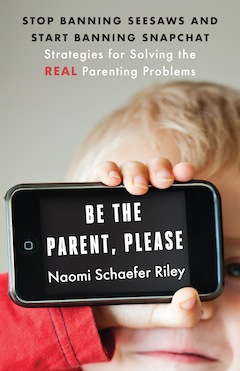
photo - Carli Rossall, Jewish Child and Family Service of Winnipeg addictions and mental health caseworker, at the information table on March 22
Carli Rossall, Jewish Child and Family Service of Winnipeg addictions and mental health caseworker, at the information table on March 22. (photo from JCFS)

“Loss is never easy to talk about,” said Rossall. “But, when loss gets tied together with morality, as suicide often does, an added layer of stigma exists. Anything that challenges our definition of ‘right,’ ‘moral’ or ‘normal’ tends to make us uncomfortable – and it often makes people look to blame.

“Generally,” she said, “people who have thoughts of suicide suffer from intense psychological pain, where there is a feeling of hopelessness, isolation, and no alternative. The reasons for this can vary, from those experiencing mental health challenges or physical illness, to those who have experienced trauma, are struggling financially or have addictions. The rise in suicide rates may be due to life’s increasing pressures and complex circumstances.”

It was in her late teens that Klein lost her father and then, three months later, her brother, to suicide.

“It’s something that obviously is a huge part of my life, my existence, and it wasn’t something that right away I knew what I’d do with,” said Klein. “It affected me greatly. I really didn’t know who to talk to. That was a big part of why I did this film, because it’s so difficult to talk to people when you’ve lost people. They don’t know what to say to you.

“When I came out to L.A. and went to graduate school, I did a film prior to this one…. We started to do documentaries. We did one on bipolar personalities and, when we did that one, we had someone who was in the film who had lost their daughter to suicide. I thought, OK, I’ve dealt with this. And then, almost immediately, I realized that I actually hadn’t. I thought it was time to do something, because people weren’t, and aren’t, talking about it enough, not talking about it responsibly.”

As Klein began researching the topic, she found a large community of people dealing with suicide – so great a number that they were holding conventions in the United States about it. Klein found this resource helpful when it came to finding specific stories to include in her film.

While The S Word is not yet widely available, Klein has worked to get the message across through teachers, mental health professionals and survivors. And she created a toolkit that is on the movie’s website that anyone can access to find ways to bring the message to their communities.

“We’ve signed with an educational distributor and eventually it will be available – probably in the late fall…. We want to help open the conversation, for sure,” said Klein. “We want people to feel less alone, like they’re not the only ones going through this. And we want people to know that they can be there for somebody else, too. Also, to know that, if you, yourself, are struggling, there are people to talk to.

“A lot of times, what can really kill people, what can drive people to this is the silence or the hopeless feeling of being alone – feeling that they have nobody to talk to, and the stigma and shame keep people from talking about it.

“We see this also in the rape culture and the whole #MeToo movement,” she added. “People who were so afraid to talk are now coming forward. And it’s so important to be able to do this. We want to be part of that conversation.”

Klein invited everyone to visit the film’s website – theswordmovie.com – for more information and to watch the many interviews conducted with suicide survivors that did not make it into the film (click on the “#SWordStories” link). She further encouraged people to send in written stories about their own experiences to the website.

In Winnipeg, JCFS is ready to help anyone in need, via their active mental health services program for the Jewish community and counseling services that are open to the general public. In Vancouver, Jewish Family Services is also ready to help.

“Through these supports, there are opportunities for individuals and families to address their concerns, feelings related to suicide, and other issues on a proactive basis,” said JCFS’s Hirsh Katz. “There are also several other community-based agencies in Winnipeg that provide both crisis and non-crisis work with suicide. The Canadian Association for Suicide Prevention is a nationwide organization dedicated to offering support. Livingworks Education Inc. is a leading provider of suicide intervention training through various workshops – the training is focused on identifying, speaking and intervening with people who have thoughts of suicide, and it is invaluable for individuals ages 15 and over who want to help people be safer from suicide.”

Rebeca Kuropatwa is a Winnipeg freelance writer.
Format ImagePosted on April 20, 2018April 18, 2018Author Rebeca KuropatwaCategories TV & FilmTags #SWordStories, Carli Rossall, health, JCFS, Lisa Klein, suicide, survivors, Winnipeg
#MeToo waves reverberate

#MeToo waves reverberate

Rabbi Mark Dratch (photo from Mark Dratch)

In the first of a series of articles on sexual harassment and violence in the Jewish community, the Jewish Independent speaks with Rabbi Mark Dratch, executive vice-president of the Rabbinical Council of America and founder of JSafe, the Jewish Institute Supporting an Abuse Free Environment, about child abuse.

The “Me Too” movement was started more than 10 years ago to help survivors of sexual violence. Propelled by the hashtag #MeToo, the long-overdue public discussion about sexual harassment and violence against women has revealed that most women have at one point or other in their lives – and usually on more than one occasion – been belittled or threatened, harassed and/or assaulted.

It also has become clear that much abuse occurs – or first occurs – in childhood, and that such abuse is often perpetrated by individuals considered trustworthy, such as a family member, a family friend or someone in an authoritative role, like a teacher, coach or spiritual leader.

Rabbi Mark Dratch, executive vice-president of the Rabbinical Council of America (RCA) and founder of JSafe, the Jewish Institute Supporting an Abuse Free Environment, first became acquainted with the issue when he was working as a pulpit rabbi.

“It was probably about 30 years ago,” he told the Independent. “When I was a young rabbi, I became aware of instances of child abuse in the Jewish community and I was very displeased – by the way the situations were being handled, by the way victims were being treated, by the way communities were in a state of denial … and that many of our institutions were not responding appropriately to the allegations. Victims were becoming re-victimized and we weren’t protecting the safety of victims in our community.”

In a paper on child abuse within the Orthodox community, Dratch argued that the then-status quo way of handling these cases was, in fact, based on misinterpretations of the spirit and letter of Jewish law. He addressed, for example, the notion that one must not speak ill of others and their actions, using the Torah to explain that, in instances of child abuse, this sanction does not apply. Taking it a step further, he showed that, in situations such as child abuse, people have an obligation to speak up. His paper was distributed to members of the RCA, and also to many Jewish child and family services agencies in the United States.

“People objected to calling the child protective agencies or civil authorities because of what was perceived to be a religious ban against reporting a fellow Jew to the civil authorities,” said Dratch. “So, I advocated very strongly and proved that it’s not the case – that there’s an obligation to call and work hard to share that information, and to establish community policies that advocate the importance of reporting. There is a whole host of other Jewish values that are good and appropriate but, when they’re misapplied, they can be very harmful.

“I started to get more and more involved in the issue and became aware of more issues. I became involved in organizations in the Jewish community, the general community and the interfaith community that dealt with issues of child abuse.

“This was a period of education for me in terms of the nature of the incidents, but also various responses, and I have been involved ever since,” he said. “Also, for a number of years, I’ve been involved in trying to educate the community and address the objections people have … trying to advocate for policy and to change attitudes. Over the 30 years or so, we see that the community is in a very different place than it was then.”

Thanks to movements like #MeToo, many survivors have become less fearful of speaking out. “Many of them had felt that, somehow, the stereotype that this doesn’t happen in the Jewish community further alienated them and made it difficult for them to acknowledge the abuse,” said Dratch.

Although he admitted we still have a long way to go, Dratch said he feels that the topic is now more common in community discussions. He also said there are now more supports in place for survivors to come forward and get the help they need from the community. As well, more institutions are developing policies of prevention and response in regards to child abuse.

“I think we are now way beyond the situation where there was denial that this was happening,” said Dratch. “We’re way beyond a situation where the community denies that it has any responsibility in prevention and such.”

According to Dratch, the RCA has been a leader in this field, giving rabbis the tools to respond appropriately if complaints of child abuse come up.

“We serve as a resource to our rabbis looking for guidance on how to handle specific situations that may arise in their communities,” said Dratch. “And, we’ve also evolved our mechanisms for holding our rabbis accountable if there are complaints against them for boundary violations or abuse.”

With respect to the Orthodox community, Dratch has found that the number of females victimized is generally lower than that of males, while numbers in the general community indicate that females are more likely targets of child abuse than males. He attributes the difference as likely being due to the increased segregation of the sexes in Orthodox communities.

“The larger culture, in the Jewish and Orthodox community, has enabled and empowered people to come forward and share their complaints and seek justice,” said Dratch. “We will continue to look for ways to educate our rabbis and our communities, and to make our communities and institutions safer.”

While Dratch deals mostly with the Orthodox community, in previous years, he has been involved with the entire spectrum of the Jewish community. In his view, the phenomenon of abuse does not discriminate between observant and non-observant.

“It doesn’t discriminate at all,” he said. “And we have an obligation, as individuals and as a community, to be there for every member of our larger community. Many people who are involved in these things think that we are no different than the general community. It’s really hard to know what our numbers are. My position is that even one is too many. And we certainly have many more than one victim.”

According to Dratch, in the general community – Jewish and non-Jewish together – one out of seven boys and one out of three or four girls become victims of child abuse.

Rebeca Kuropatwa is a Winnipeg freelance writer.

Format ImagePosted on April 20, 2018April 18, 2018Author Rebeca KuropatwaCategories WorldTags #MeToo, child abuse, harassment, Judaism, Mark Dratch
Olympian’s North Shore ties

Olympian’s North Shore ties

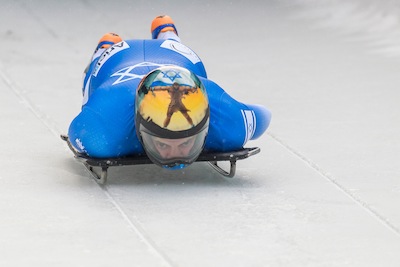
When A.J. Edelman was training in Whistler, he was the guest cantor for Chabad of the North Shore’s Yom Kippur services. (photo from A.J. Edelman)

Chabad of the North Shore community members had a more personal reason to cheer on A.J. Edelman at the 2018 Winter Olympics in PyeongChang, South Korea. Israel’s only skeleton athlete to have made it to the Games, Edelman was training in Whistler around the High Holidays last year. While there, he participated in community life, stepping in as guest cantor on Yom Kippur.

“Although he [Edelman] could have attended services at a larger synagogue in Vancouver, he was committed to spending Yom Kippur where he could be useful and have an impact,” said Rabbi Mendy Mochkin, spiritual leader of Chabad of the North Shore. “We had a cantor during Rosh Hashanah, but not for Yom Kippur.

“It worked out great. Our community was very excited to learn that a skeleton athlete representing Israel was training locally and was very touched that he chose to join us. They were very moved by his … melodies and heartfelt prayers. We all prayed together with him that he should attain his dream to be an ambassador for Am Yisrael. Our prayers were answered!”

Edelman was born and raised in Boston, in a Modern Orthodox, Zionist family, and he attended an Orthodox Jewish day school. When he was 2, his parents strapped a pair of skates onto his feet. By 22, he was a good hockey player, but not good enough to become a professional.

“I decided that, if I wanted to continue doing sports, it had to be on a high, elite level that could really give a platform to whatever I would choose to do afterward,” Edelman told the Independent. “So, I decided to represent Israel, because it was going to be the only way I was going to do it. As it happened, as I was thinking about this, skeleton appeared on the TV for the team trials for the United States for Sochi. And I thought it looked like a terrific sport – eye-catching.”

For some athletes, they become good at a sport and then look for a country that will let them compete under its flag. In Edelman’s case, he was mainly spurred by the idea of representing Israel. Then, he began searching for a sport.

“It could certainly help me achieve my goal of inspiriting people,” said Edelman. “I didn’t know how difficult it was or how painful it was. I didn’t know how bad, at first, I would be at it. But, I did dive full on into it.”

Edelman had to go from zero to 100, so to speak, in less than four years. While many along the way tried to tell him his goal was unattainable, the naysayers only fueled his resolve to succeed.

“It’s not like swimming or other sports where you have to hit a time relative to previous Olympics times, you have to hit an absolute performance standard of world ranking in that specific year. It’s a quota system,” explained Edelman of skeleton.

Edelman had to become one of the top 30 skeleton athletes in the world in about 48 months. His last year of training was focused – with help from the other athletes on the Israeli skeleton team – on maximizing his point collection at competitions.

“Positioning Israel to be the beneficiary of one of 10 single-sled nations through points I accumulated through specifics results and races was important – and it involved a lot of mathematical calculation,” said Edelman.

Edelman finished 28 out of 30 at the Winter Olympics.

photo - A.J. Edelman was Israel’s only skeleton athlete to make it to the 2018 Winter Olympics in PyeongChang, South Korea
A.J. Edelman was Israel’s only skeleton athlete to make it to the 2018 Winter Olympics in PyeongChang, South Korea. (photo by Joern Rohde)

“Making the Games was an insane accomplishment in that we were the only ones who did it without any coaching,” said Edelman. “We had absolute zero coaching for the first two years of my journey…. It took a huge physical toll and mental toll, and a massive financial toll. So, yes, 28 out of 30, I was very pleased.”

Edelman learned the sport from YouTube videos, and fundraised the money he needed to participate in competitions, buy equipment, and cover hotel stays and training facility fees. As far as trying to compete at the next Olympics, Edelman said, while he’d like to do that, it’s just not feasible.

“The financial strain is insane – $40,000 a year,” he said. “And only about 40% of it was covered from over the last four years by sponsors, family, friends – and complete random strangers. Doing it for another cycle would be too much of a financial strain. And I think I’ve accomplished what I was looking to accomplish, and am able to remain involved in Israel’s sports and help the next generation achieve their goals. I now have that platform.”

Although Edelman was at the Games – or maybe because he was at the Games – he said he felt disconnected from the Olympics as a whole.

“I only saw my own thing,” he said. “Otherwise, the experience at the end, or during the competition, of representing Israel, it was an honour unparalleled to anything in my life. There were a few moments I felt like I could cherish forever – the thoughts and feeling that this is what it’s like to represent a country and how it feels to be that individual. It was absolutely terrific.”

Edelman said he is not sure about what might come next for him, but that he is aiming big. For now, he is focused on transitioning from being a full-time athlete back into normal life. But life will never be the same for him, now that he has proven his potential to himself.

“If you apply yourself so completely and fully, and you just dedicate yourself the most you can, a lot can be accomplished,” he said. “But, not everything … I am never going to be able to make the NBA.

“I don’t usually tell people anything is possible. I tell them what I learned in the streets – that no one can tell you what you can’t do, and that you shouldn’t let others’ opinions dictate what you can do.”

As far as his experience with the Jewish community while training in Whistler, Edelman said, “My Jewish heritage is everything to me. It’s the entire reason why I did this. This journey was terribly difficult – it was the Jewish heritage aspect of it that kept me going.

“I cannot tell you how many times I wanted to give up, quit or just take days off,” he admitted. “But, then I’d remember I was representing the entire Jewish and Israeli community. Every night before I went to bed, I’d thank God for allowing me to be what’s called a Kiddush Hashem [sanctifying God’s name by living by example, in a holy way]. This means being a positive role model for my community and that means everything to me.”

Edelman connects with Jewish communities wherever he goes, seeing himself as an ambassador of the Jewish state. So, for him, joining the North Shore Jewish community when he was training in Whistler was a foregone conclusion.

The 2019 World Championship will be held in Whistler and, although Edelman has retired from athletic life, he wants to attend.

“When I tried out,” recalled Edelman of his first skeleton trial, “the Israel scouting report said that if I could just get down the track, that would be it … that I wouldn’t make it to the Games no matter how hard I tried. I think everybody can have that kind of moment … when they think they can’t do something or are told they can’t do something – but they should absolutely try and expect success.”

Rebeca Kuropatwa is a Winnipeg freelance writer.
Format ImagePosted on April 13, 2018April 11, 2018Author Rebeca KuropatwaCategories LocalTags A.J. Edelman, Chabad, Israel, Judaism, North Shore, Olympics, skeleton, sports
Bridging communities

Bridging communities

Ariella Kimmel, left, and Sophie Hershfield at last summer’s Winnipeg Pride Parade. Hershfield has been on CIJA’s LGBTQ+ Advisory Council since its inception. In that capacity, she is trying to break down barriers and clear up misconceptions about Israel within the LGBTQ community. (photo from Sophie Hershfield)

As part of the Limmud festival that took place in Winnipeg March 18-19, LGBTQ activist Sophie Hershfield gave a presentation.

A student at the University of Winnipeg, studying English and philosophy, Hershfield became active in the LGBTQ community when she was at Gray Academy of Jewish Education. She has been on the Centre for Israel and Jewish Affairs’ LGBTQ+ national advisory council since its inception last year.

“The talk I gave at Limmud was largely on advocacy within LGBTQ communities, because a lot of them are hostile towards Israel,” Hershfield told the Independent. “Last year, for example, at the Chicago Dyke March and the fallout from that … it was apparent that the LGBTQ community was hostile toward Israel and often to Jewish Zionists within their organizations. At the Chicago Dyke March, people who were on the Pride side were actually told to put their flags away, because of their connection to Israel.”

Hershfield is trying to break down barriers and clear up misconceptions about Israel within the LGBTQ community.

“One of the most successful things I think we did last year was we had an Israel-themed float in the Pride Parade,” said Hershfield. “And we had Jewish people and Israeli people on this float. We actually won best float in the entire parade. People were associating Israel with fun and happiness and being inclusive, those positive connections. There were definitely some positive responses. There were people saying, it was so cool, that Israel is so fun. I didn’t see any negative pushback, just positivity.”

Hershfield is already working with a planning committee on next year’s parade in Winnipeg.

Through CIJA, Hershfield plans to continue her efforts to improve inclusiveness within Jewish communities across Canada and to do Israel advocacy in LGBTQ communities.

“Halifax’s Pride board was incredibly hostile toward Jewish people and toward pro-Israel people – to the point where there were death threats to people who were involved,” said Hershfield. “I wanted to be more preventative, by building positive connections instead of negative ones.”

Jonathan Lerner favours a similar approach. He is assistant director of the Vancouver Holocaust Education Centre, and is also on CIJA’s LGBTQ+ Advisory Council.

photo - Vancouver’s Jonathan Lerner, a member of CIJA’s LGBTQ+ Advisory Council, finds that many LGBTQ Jews “choose one or the other – either they’re involved in the Jewish community or the LGBTQ community, but not necessarily both”
Vancouver’s Jonathan Lerner, a member of CIJA’s LGBTQ+ Advisory Council, finds that many LGBTQ Jews “choose one or the other – either they’re involved in the Jewish community or the LGBTQ community, but not necessarily both.” (photo from Jonathan Lerner)

“Vancouver is a very welcoming place for LGBTQ people, with a society that is very diverse and welcoming,” he said. “The annual Pride Parade draws 600,000 people or more, and there is a month-long celebration. The municipal government is very supportive of these events and, while discrimination still exists, Vancouver as a whole is very welcoming.

“I’ve had great experiences with Vancouver synagogues, including the Reform and Reconstructionist movements,” he added. “I can say that even the Conservative synagogue in Vancouver has sponsored our booth at the Pride festival.”

Still, Lerner feels there remains a disconnect between the Jewish and LGBTQ communities.

“There are plenty of LGBTQ Jews and they’re often involved in Jewish or LGBTQ communities,” he said. “However, I find that most choose one or the other – either they’re involved in the Jewish community or the LGBTQ community, but not necessarily both. Sometimes, one may feel a necessity to choose an identity. For example, if one is associated with LGBTQ organizations, they may be anti-Israel … and so, one may choose to hide one’s Zionism or even Judaism.”

Lerner said that, while CIJA and the Jewish Federation of Greater Vancouver have worked hard at increasing collaboration and sharing between the communities – with recent workshops, training and outreach – more is always welcome.

“It has been challenging at times for LGBTQ people to be out in the Jewish community, and also for Jews to be open about their religion and Zionism in the LGBTQ community,” he said. “I’d like to see that change.”

Meanwhile, in Winnipeg, there have been other initiatives to increase awareness and inclusivity. On Feb. 21, Shaarey Zedek Synagogue hosted at the Jewish deli Desserts Plus an event called LGBTQ Jews: Sexuality, Gender Identity and Judaism, with some 20 attendees. It was led by the synagogue’s Rabbi Anibal Mass.

“Our vision is an inclusive space, a nonjudgmental environment, where you can express your Judaism pretty much your way,” Mass told the Independent.

photo - Spiritual leaders of Winnipeg’s Shaarey Zedek Synagogue, Rabbi Alan Green, left, and Rabbi Anibal Mass. The synagogue is working to become more inclusive
Spiritual leaders of Winnipeg’s Shaarey Zedek Synagogue, Rabbi Alan Green, left, and Rabbi Anibal Mass. The synagogue is working to become more inclusive. (photo from Shaarey Zedek Synagogue)

An LGBTQ group had approached the synagogue, said Mass. Some people from the group attend Shaarey Zedek and were concerned about the level of acceptance at the shul.

“I don’t blame them,” said Mass. “We’ve been changing … the last few years, and some people are unaware of all the changes we went through. We thought that it would be a good time to share with this specific group of people our vision and our values, for them to have it clear. If they have any doubts or questions, they can ask a member of our clergy – what we stand for, what we’re willing to do or not do, etc.”

Mass sees rabbis of the Talmud as examples to follow in regards to being nonjudgmental and inclusive. “They speak about compassion, about loving your fellow human beings,” said the rabbi. “We feel empowered by the works of the rabbis to embrace all these people in our synagogue and make Shaarey Zedek their home.

“I was expecting to have lots of questions [at the event]. I didn’t have too many. I guess maybe they weren’t expecting me to say how open we are. Maybe people thought I would come there and preach … and to say, ‘Yeah, we accept you, but….’ But there was never a ‘but.’ We do accept you, period. So it was a great event.”

At that information event, a gay male couple from the synagogue shared their story with the group, about how they were turned down for a wedding from pretty much every synagogue in town – until they arrived at Shaarey Zedek. The couple said they could not believe how welcoming the congregation was.

“We ended up celebrating their wedding,” said Mass. “Many times, people complain that synagogues don’t offer the answers. The problem is, sometimes we don’t have the questions. We want to know what people in the LGBTQ group actually want, and to make that part of our vision.

“We also detect there will be some challenges for the future that we don’t know how to handle,” he admitted. “For example, how do you serve people who define themselves as non-binary? Do they have a bar or bat mitzvah? Both terms are appropriate.”

To keep things moving forward, Mass plans to start by hosting a group at his house. He understands that it might take awhile for some people to feel comfortable coming to a synagogue. “But, that’s OK,” he said. “If they don’t come to the synagogue, the synagogue will come to them. That’s my philosophy.”

Rebeca Kuropatwa is a Winnipeg freelance writer.
Format ImagePosted on April 13, 2018April 11, 2018Author Rebeca KuropatwaCategories NationalTags advocacy, Anibal Mass, CIJA, inclusion, Israel, Jonathan Lerner, LGBTQ, Shaarey Zedek, Sophie Hershfield, Vancouver, Winnipeg
Whole new Israel experience

Whole new Israel experience

Itay Asaf, far left, with a group he led on a tour of Jaffa, where they visited the areas in which his dad grew up. This particular group was in Israel for eight days. (photo from Itay Asaf)

Esperanso is a recently established, socially responsible tourism company based in the United States that offers private tours to Israel. Created by Itay Asaf and his brother, Eyal, who are both are former kibbutzniks, the tours include a volunteering component.

“I led Birthright trips to Israel,” Itay Asaf told the Independent. “And I realized the trips are really nice and very fun for the students, but there was something missing for me, as an educator. I felt like the students are not really getting the true face of Israel, and they’re not really given the chance to give back.

“I wanted them to be very involved socially and to see sites they don’t usually get to see on trips. I found a social justice extension trip where I took the students, and I used tourism as a tool to empower local communities in south Tel Aviv, refugees and LGBTQ [for example]. And then I saw the impact and what it does for the students. Some even came back to Israel, and some are considering making aliyah.”

At that point, Eyal had a tourism company in Israel, so, together, the brothers built the concept for Esperanso. The name of the company reflects their family heritage – coming from Turkey and having a Spanish name – and it is a play on the word esperanza, meaning hope.

“One of the reasons I wanted to combine social work and social justice in everything I did, is my aunt,” said Itay. “She grew up in a village for people with special needs, Kfar Tikva. My brother and I wanted to take the experience we had with tourism and growing up with my aunt, and I saw the potential of the tourists that already come to Israel. We approach [them] and we say, ‘We welcome everyone. We accept groups. We accept youth. We invite people to celebrate bar mitzvahs.’ But, what we add is, ‘When you travel with us, you are actually empowering communities.’

“We took social organizations that we were personally connected to and we combined them into the itineraries with each of our trips,” he explained. “Not only do you support them by the activities during your trip, we also promise the organizations that five percent of the cost of your trip will go to one of them; that we will donate, based on your choice. This way, we ensure those organizations are empowered, socially and economically. We can take any trip you desire to do in Israel and make it into a socially responsible one.”

Esperanso connects with the various organizations ahead of time, with the goal of having participants get an inside view. The Asafs’ hope is that some visitors will make a deeper connection with the organizations and create partnerships, or set up longer-term volunteering with them.

“There are a variety of organizations just waiting for tourists to come and see what they do and support them,” said Itay. “That’s our pleasure – connecting and introducing you to those organizations.

“When I started,” he said, “I had a student who, two months after the trip, came to me and said she is going back to Israel to volunteer for a year. I almost cried I was so happy. This is what I wanted. It’s amazing to see. She was attached to it and she saw what she could do.”

The groups Esperanso leads vary in size, but, most important for Itay is connecting with interesting people and finding ways to create the trip they want together. So far, he has been on all the trips as the guide, but that might change. Depending on volume and availability, his brother might step in and guide some tours. As his brother lives in Israel, Eyal is the one taking care of everything on the ground until Itay lands with the group.

“We are very competitive cost-wise in the market,” said Itay. “We are aware that part of what we are making is going to these organizations, and we are completely, honestly, OK with that, happy with that.

“I’d say, if someone wants to go to Israel and do the journey with the hotels, the bus and everything, I think we are offering a very competitive package. They can just contact us, come to Israel and have everything ready for them in a socially responsible approach.”

The Asafs see Esperanso as something more than just a tourism company. For them, it is part of the future, of the new economy.

“I think we should support companies and organizations that care about the surroundings,” said Itay. “I think that, if everyone would care a little bit more, we could find ways to also profit the communities around us. If we make the right connections, we can change the world…. I urge everyone to look for ways to direct your money just a little bit to help people in need.”

For more information, visit esperanso.com.

Rebeca Kuropatwa is a Winnipeg freelance writer.

Format ImagePosted on April 13, 2018April 11, 2018Author Rebeca KuropatwaCategories IsraelTags Esperanso, Israel, Itay Asaf, social enterprise, tikkun olam, tourism
What is it to become Israeli?

What is it to become Israeli?

Akiva Gersh teaching a group in Israel. Gersh is the editor of, and a contributing writer to, the book Becoming Israeli: The Hysterical, Inspiring and Challenging Sides of Making Aliyah. (photo from Akiva Gersh)

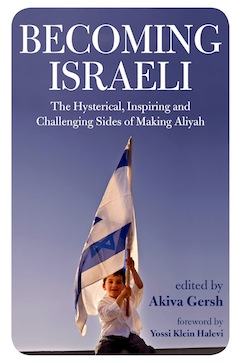
If you or someone you know is considering making aliyah, there is a book that offers a glimpse of the experience. Becoming Israeli: The Hysterical, Inspiring and Challenging Sides of Making Aliyah (Rimonim Press) is a compilation of blogs and essays written by 40 olim (immigrants), including the editor, Akiva Gersh.

“The book speaks about the various sides of aliyah, from the hysterical, to the challenging, to the frustrating, to the emotional,” Gersh told the Independent.

Gersh grew up in the New York area. He and his Philadelphia-born wife, Tamar, made aliyah about 13 years ago. As they were going through the process, Gersh wrote about it in a blog. When he realized others were doing the same thing, he was spurred to collect as much information as he could for publication in book form.

“I kept thinking, someone must have done this,” said Gersh. “People had written about their own aliyah experiences, but not a broad compilation of experiences … and that is what I wanted to do, what I wanted to share. I worked on it for about two years – finding the blogs, talking to the bloggers, telling them what I’m doing, and getting permission to use their posts in the book. And, after about two years doing all this compiling and editing, the book was born.”

In Becoming Israeli, said Gersh, there are the insights of (English-speaking) Jews who have made aliyah, as well as those who have been to Israel, but haven’t yet made the move. “In the book,” he said, “you can really sense the things they love about Israel. Above and beyond that, there is the general world … and much of that includes the Christian world who loves coming to Israel.”

image - Becoming Israeli book coverThe feedback has been good, especially from olim who have read the book and can relate to their fellow travelers. “They went, ‘Wow! Amazing!’” said Gersh. “Every page, they’re like, ‘This is my story!’ They’re laughing, they’re crying.

“I’ve read the book multiple times and I still laugh at the jokes and cry at the same emotional places,” he added. “It’s a really powerful book and I’ve had really positive feedback from olim who say ‘thank you’ and feel it is awesome … [and] exactly what they’ve been going through and experiencing.”

Gersh is a teacher by training and works in a private English-language school in Israel. He also connects with people using music, through a program he started in 2007 called The Holy Land Spirit.

As a musician and teacher, Gersh offers groups – mainly Christians – who visit Israel an evening program of music, prayer and spirituality from a Jewish perspective. “They love it,” he said. “We pray together, dance together, speak together.”

Gersh teaches at Alexander Muss High School, a study-abroad institution near Tel Aviv. There, kids from 45 different countries come to learn for a few weeks or up to a few months at a time, about Jewish history and Israel. They spend half their time in the classroom and half their time traveling around the country.

“So, it’s academic and hands on,” said Gersh. “It’s awesome. I’ve been there about 10 years now. The language of instruction is English and, for those who want to improve their Hebrew, there are opportunities.

“We have young Israelis who are fresh out of the army. And, for those who want the Hebrew experience, they can get it from them and also from being out and about in Israel.

“The kids are inspired, enlightened, pumped up about Israel,” he continued. “We’re not a religious program. We’re not a church denomination. We’re pluralistic. We have Jews on staff, but we don’t push Judaism. We just open up a space for kids to explore connections to Judaism.”

According to Gersh, many of the students are experiencing certain aspects of Judaism for the first time. This is something especially meaningful for him, he said, noting, “I had no connection to Israel growing up at all. I never thought about it, nor talked about it. It just wasn’t a thing in my community. I heard about it a couple times in Hebrew school, but it wasn’t on the radar at all. By the time I was done with high school, going into college, I was really done with anything Jewish…. In college, I began searching for something more cultural, meaningful, spiritual in my life.

“That journey, which was a three-year journey, took me to many different places, meeting different people, reading different books. At the end of the journey,” he said, “it brought me full circle to Judaism. But, I found a new side and a new expression of Judaism that I hadn’t seen before.”

Among the places Gersh traveled after college was West Africa, where he spent two months learning more about the drumming he studied in school.

“After traveling around there,” he said, “I went to Israel for the first time. I was about 22 years old at that point. I traveled around Israel for two months, backpacking and enjoying, taking a class here, a class there, doing a Shabbat and just really getting into it. After those two months, I realized I wanted to really explore my roots and see what Judaism was about. Still, at that point, I did not want to become religious.”

Eventually, Gersh did become religious. He spent some time in a yeshivah, both in Israel and in the United States, before making aliyah with his wife in 2004.

The foreword of Becoming Israeli was written by Yossi Klein Halevi, an Israeli author Gersh looks up to as a Jew, as someone who made aliyah and as a writer.

“We had a book launch at the beginning of the summer and we had a panel of me and a bunch of other bloggers from the book, and he was one of the panelists,” said Gersh. “It was amazing to have his voice and his perspective.”

Becoming Israeli is available on Amazon, and Gersh also has a website, becomingisraeli.com.

Rebeca Kuropatwa is a Winnipeg freelance writer.
Format ImagePosted on April 13, 2018April 11, 2018Author Rebeca KuropatwaCategories Books, IsraelTags Akiva Gersh, aliyah, Diaspora, immigration, Israel
Juvenile arthritis awareness

Juvenile arthritis awareness

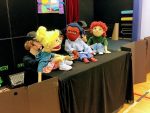
Kids on the Block uses a puppet show to teach kids about juvenile arthritis. (photo from Cassie and Friends)

Juvenile arthritis (JA) affects three in 1,000 kids in Canada, making it one of the most common chronic conditions affecting children today. Yet, JA is still relatively unknown and often misunderstood.

According to Jennifer Wilson, executive director of Cassie and Friends Society for Children with Juvenile Arthritis and other Rheumatic Diseases, “Arthritis has been mislabeled as ‘an old person’s disease,’ leaving kids who suffer from JA misunderstood for their differences and the disease’s complications.”

In 2006, David Porte and Debbie Setton discovered that their then-20-month-old daughter Cassie had JA.

“When Cassie was not quite 2 years old, she woke up one morning and couldn’t walk,” recalled her mom, Debbie. “I took her to the children’s hospital and, after X-rays, blood work and several visits by specialists over the next few weeks, we received the diagnosis of JA, a painful, lifelong autoimmune condition.

“Despite being a physician, I remember feeling very scared and alone, especially as Cassie’s disease progressed to involve more and more joints. Both David and I struggled to find information and support to cope with Cassie’s condition.

“About six months after Cassie was diagnosed,” she said, “David entered the Scotiabank Charity Challenge Run. We were overwhelmed with the support we received from family and friends, raising over $18,000 in a few weeks. We decided to do something long-lasting and create a charity that would help other kids and families like us.”

Debbie and David named the Vancouver-based charity Cassie and Friends, and it has been working to transform the lives of kids and families affected by JA and other rheumatic diseases locally and across Canada.

“Cassie’s disease has followed a pretty typical course of flares and remissions,” said Debbie. “At her worst, she had 16 joints affected (knee, ankles, toes, wrists, fingers). During the flares, she was unable to do the things she loves, like dance. In fact, at times, she found it hard just to walk or hold a pen. Thankfully, she is in a remission phase right now, on two different injectable medications to control the inflammation.”

According to Debbie, Cassie sometimes gets sad or frustrated because of her arthritis or its treatment. But, for the most part, Cassie is exceptionally positive and does not let her arthritis stop her. Further, Cassie’s condition has had an impact on her older brother, Ben, making him a more empathetic person after observing his sister’s struggles, said his mom.

“In the beginning, it was difficult for David and me, not knowing anyone else with a child with JA,” said Debbie. “But, now we feel like we have a whole community around us to share in the ups and downs of Cassie’s disease.”

To help kids learn about JA and other rheumatic diseases, David and Debbie created Kids on the Block (KOB) in 2009. And the KOB puppet show has been traveling, mainly around Metro Vancouver, to raise awareness about childhood arthritis, and to educate students and teachers about the issues these children face.

“The life-sized puppets – decked out in Cassie’s toddler clothes – act like real children,” said Debbie. “They help students understand what it’s like to live with JA and their skits illustrate some of the challenges a classmate with JA (or really any disease or challenge) might be facing: pain, isolation, depression and mobility challenges. Students have the chance to ask the puppets questions at the end of the performance. The puppets also help children feel positive about themselves, accepting individual differences and learning valuable personal skills.”

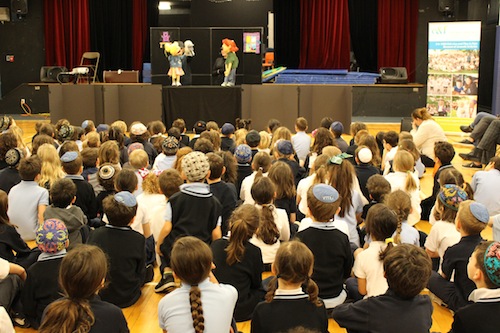
photo - Kids on the Block was at Vancouver Talmud Torah on Jan. 24
Kids on the Block was at Vancouver Talmud Torah on Jan. 24. (photo from Cassie and Friends)

The first-ever performance of KOB was at Vancouver Talmud Torah, when Cassie was in kindergarten. With Cassie about to graduate from the school, the show was brought back for another performance earlier this year. Cassie suggested it would be more special and have a greater impact if she were to introduce the program with her own story. At the show, there were two other children in the audience with either JA or another rheumatic condition.

“It was my suggestion to bring Kids on the Block back to VTT on Jan. 24, 2018, for the younger kids, including my Grade 1 buddy,” said Cassie. “It was fun to introduce the puppet show to the kids. They all know me and I could explain it to them in an easier way, because I am a kid and they are, too.

“I also really enjoyed watching the show again, because I didn’t remember it from kindergarten. After I had done the introduction, I also got many compliments on it because it was in the weekly email.” (Cassie’s presentation can be seen on YouTube.)

“Arthritis in kids is much more than aches and pains,” said Wilson. “JA is a chronic autoimmune disease characterized by uncontrolled inflammation and pain that can occur in any and often several parts of a child’s body. Children with JA will spend countless hours treating their condition and are often confined to the sidelines in sports, school and even life – especially during painful flares.

“For many children,” she said, “JA will also involve complex medical interventions, such as joint replacements, surgeries and aggressive, immune-suppressing medications, like chemotherapy and biologics. There is no cure and there are few treatments that are safe and specific for a growing child. Sadly, that can lead to feelings of embarrassment, social exclusion and even bullying … for a child who is already dealing with a painful, chronic and sometimes invisible disease.”

KOB is 100% free to schools and is intended for students in kindergarten through Grade 4. The show travels to 40 to 50 schools in British Columbia every year. It is supported in part by the sponsorship of Mardon Insurance and Gore Mutual Insurance Foundation.

According to Wilson, Cassie and Friends is the only charity completely dedicated to kids and families affected by juvenile arthritis and other rheumatic diseases. For more information, visit cassieandfriends.ca or email [email protected].

Rebeca Kuropatwa is a Winnipeg freelance writer.

Format ImagePosted on March 23, 2018March 22, 2018Author Rebeca KuropatwaCategories LocalTags Cassie and Friends, charity, education, health, juvenile arthritis, Kids on the Block, performing arts, Vancouver Talmud Torah, VTT, youth

Posts pagination

Previous page Page 1 … Page 10 Page 11 Page 12 … Page 31 Next page
Proudly powered by WordPress