Skip to content
  • Home
  • Subscribe / donate
  • Events calendar
  • News
    • Local
    • National
    • Israel
    • World
    • עניין בחדשות
      A roundup of news in Canada and further afield, in Hebrew.
  • Opinion
    • From the JI
    • Op-Ed
  • Arts & Culture
    • Performing Arts
    • Music
    • Books
    • Visual Arts
    • TV & Film
  • Life
    • Celebrating the Holidays
    • Travel
    • The Daily Snooze
      Cartoons by Jacob Samuel
    • Mystery Photo
      Help the JI and JMABC fill in the gaps in our archives.
  • Community Links
    • Organizations, Etc.
    • Other News Sources & Blogs
    • Business Directory
  • FAQ
  • JI Chai Celebration
  • JI@88! video

Recent Posts

  • Hateful messages intensify
  • Creating entrepreneurs
  • Wrong choice to host Piker
  • Attack on Jewish kids
  • Multiple benefits of a break
  • Dialing up the perfect thriller
  • Empowerment & more
  • Songs in war of peace
  • Successful trip to Cuba 
  • Tackling antizionism head on
  • Thinking of leaving Canada?
  • Kindness as a matter of fact
  • Personal stories, vital lessons
  • Connecting generations
  • Vancouver to Vienna
  • Recipes a form of resistance
  • Community milestones … February 2026
  • Generations … It’s all yours!
  • נתניהו לא מתבייש להאשים את ביידן באחריות להרג חיילים ברצועת עזה
  • Last hostage home
  • New bill targets hate crimes
  • Concerning actions
  • Recipes not always required
  • Survivor urges vigilance
  • Seniors profoundly affected
  • Farm transforms lives
  • Musical legacy re-found
  • A range of Jewish literature
  • A concert of premieres
  • Variety telethon on Feb. 22
  • Victoria club’s many benefits
  • Avodah dedicated to helping
  • Artists explore, soar, create
  • Life’s full range of emotions
  • Community needs survey closes March 29
  • Jerusalem marathon soon

Archives

Follow @JewishIndie
image - The CJN - Visit Us Banner - 300x600 - 101625

Tag: Shaarey Zedek

Preparing for High Holidays

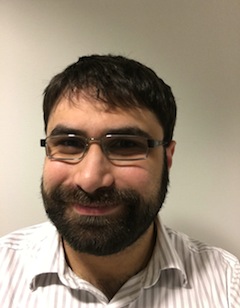
We have a new rabbi at Shaarey Zedek, our Winnipeg congregation. This is exciting as well as reassuring for many people. Why? Well, Rabbi Carnie Rose is the son of a rabbi and professor who lived in Winnipeg for many years, Dr. Neal Rose. His brother, Kliel, is a rabbi at Congregation Etz Chayim, another nearby congregation in Winnipeg. So, while Rabbi Carnie is new as a rabbi in Winnipeg, he is also a deeply familiar entity. He became a bar mitzvah at Shaarey Zedek. He went to kindergarten with the synagogue’s current executive director. 

This addition to our congregation is welcome, as Rabbi Anibal Mass and our chazzan, Leslie Emery, carry a heavy workload. They are still working hard, don’t get me wrong, but sometimes a new hire can offer support and everybody gets more breaks. I’m only observing this as a congregant and as the child of a Jewish professional. Sure, I serve on a committee, I show up to services, but I can tell there’s been a lot of work lately.

On a practical level, moving from the United States to Winnipeg is a big change. My family wanted to be supportive – after all, we too moved from the United States, in 2009 – so we’ve been helping Rabbi Carnie get his library in order. He’s got, as you might imagine, lots of books. These all got miserably jumbled in the move. While this has got to be stressful, he’s handling it all with good humour. We’ve taken pleasure at getting to look at and learn about all sorts of resources in Hebrew and English that we hadn’t seen before. Some books are like old friends, as I studied them as an undergraduate or in graduate school, but, to be honest, my books aren’t in nearly such good condition.

This experience mirrors many Jewish volunteer activities I did as a kid. As the child of a Jewish education director, who then went on to be the administrator (executive director) of my childhood congregation, Temple Rodef Shalom in Falls Church, Va., I spent many afterschool hours folding the weekly paper bulletin handed out on Shabbat, moving books or setting up chairs. While attending services or religious school were important activities, for me, the relationships I made with the rabbi and the staff and other congregants as we did these small jobs were the most meaningful ones. Along the way, I met many important guests, though it’s all a bit blurry now. For instance, I sat next to Elie Wiesel once after he spoke at our congregation. What I remember particularly is how formal and dressed up we were. Also, the dessert was good! I was allowed to stay up way past my bedtime.

Now, I’m proud that my kids are finding their way towards making their own community connections. One of my twins has gone to morning minyan many times this summer. He’s the only teen there and gets a lot of positive attention this way, including exchanging ideas with a retired provincial court judge. This judge also happens to be the father of my son’s elementary school principal, so we’re always on good behaviour with him!

My other twin isn’t getting to morning minyan much, but instead he volunteered for full weeks at a summer camp and daycare, helping little kids. He also helps on the synagogue tech team, doing accessible subtitles for prayers that are projected on screens as part of our service. This job is an important one, as it enables people to keep up with the service even if they are having a hard time hearing what’s going on or cannot read Hebrew. He’s been asked to help during the High Holidays. It’s a big honour and responsibility for a 14-year-old.

These commitments are important because they embody both the Canadian emphasis on volunteering and the Jewish one. When I was a teen, I lived for a year on a kibbutz. Volunteering was considered deeply valuable and important. Being the first to volunteer was a moral virtue. Yet, when I hear Winnipeg kids discuss accruing volunteer hours for school credits, it’s seen as an onerous requirement. Perhaps, for some, this requirement doesn’t have great value. On the contrary, in our household, we see these experiences as offering so many learning and growth opportunities.

While we moved books, searched for lost volumes and organized sets of Talmud and commentaries, we also saw the bustle behind the scenes as the congregation gets ready for Rosh Hashanah. There’s so much pageantry to the High Holidays. It’s a big deal. Some members jockey for important honours or specific seats and we listened with interest. We just wanted seats near the back, near where our kid would be in the tech booth. When I mentioned this to the new rabbi, I suggested that maybe different things matter to us. After all, I joked, I didn’t need to show off a new hat. (My mom always said this was an important part of High Holiday services when she was a kid in the 1950s!)

As for honours, we love a quiet summer Shabbat, when sometimes our kids get asked to read or are called up for an aliyah because no one reserved them in advance. These spur-of-the-moment experiences, where we might help out and take part in services, feel like the right spot for us. It may take months of practice to chant one part of the Torah portion, but we try to aim for a week when not much is happening.

A strong community is one where we can all contribute and help. Yes, big donors and fancy new hats are often part of the High Holidays. Big monetary donations keep the heat on, and status matters to many. However, a synagogue, and the Jewish community, must function throughout the year.

There’s a lot to think about when it comes to evaluating how we’ve behaved in the past year, and how we’ll make amends. To me, the most important reflections aren’t about where we are or how we behave specifically on Rosh Hashanah and Yom Kippur. In every regular weekday morning minyan, we also say “ashamu” – we are guilty. We work on ourselves all the time. Perhaps, while it’s important to have good intentions when it comes to the High Holidays, it’s also key to think about each day beforehand, and afterwards, too. Elul’s a whole month of reflection. Valuing one another and our community means making every day count. 

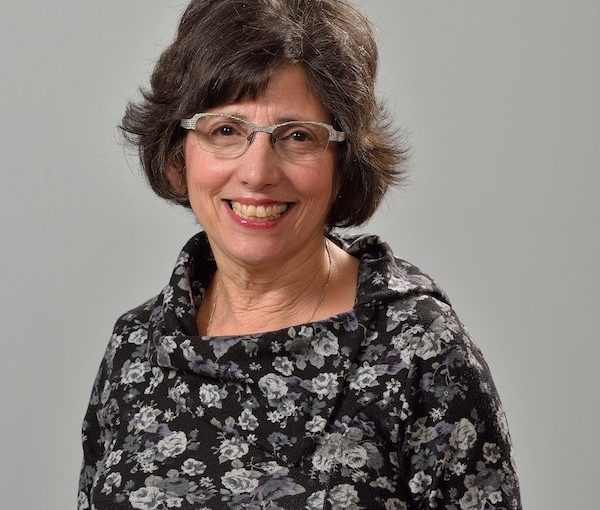
Joanne Seiff has written regularly for the Winnipeg Free Press and various Jewish publications. She is the author of three books, including From the Outside In: Jewish Post Columns 2015-2016, a collection of essays available for digital download or as a paperback from Amazon. Check her out on Instagram @yrnspinner or at joanneseiff.blogspot.com.

Posted on August 29, 2025August 27, 2025Author Joanne SeiffCategories Op-EdTags clergy, Elul, High Holidays, Judaism, lifestyle, Shaarey Zedek, Winnipeg
Trying to make access equal

Trying to make access equal

Dr. Cheryl Rockman-Greenberg (photo from Rockman-Greenberg)

In the 1970s, when Dr. Cheryl Rockman-Greenberg was eyeing the budding field of genetics as a career, she had to become a pediatric doctor first. Now, Rockman-Greenberg counts her clinical background as a blessing, one that, today, geneticists no longer require.

“Having a strong background in clinical medicine certainly always helped me in my career, because the kind of genetics I was always interested in was in rare metabolic diseases,” said Rockman-Greenberg. “These are diseases often caused by enzyme deficiencies that go by very elaborate names. Having a good foundation in clinical medicine through pediatrics certainly helped me.”

Rockman-Greenberg, who lives in Winnipeg, was invited to speak at the city’s Congregation Shaarey Zedek Sisterhood Interfaith Luncheon on April 30.

“I learned that the luncheon was spearheaded through the sisterhood in many ways to promote information sharing between the faiths,” she said, noting that a purpose of the event is education and “to look at how we can build bridges between people of different faiths and not build walls.”

“From a global perspective,” she said, “I think it fits the themes of the interfaith luncheon. And, from a Jewish perspective, I’ve certainly been involved over the years, particularly with the National Council of Jewish Women, of increasing awareness of the importance of genes for health, and bringing together some of the advocacy groups in rare genetic disorders.

“I helped the National Council put out a brochure on carrier testing on new genetic disorders in the Ashkenazi Jewish population that has been extremely well-received worldwide. This information is always evolving.”

At the luncheon, Rockman-Greenberg was planning to discuss, among other things, Bill S-201, also known as the Genetic Non-Discrimination Act, which passed into law in Canada in 2017, though it is still being challenged by insurance companies in Quebec.

“This is a remarkable act in the sense that it does protect Canadians from the use of genetic test results outside of medical care and medical research,” Rockman-Greenberg told the Independent. “In other words, genetic test results do not have to be disclosed to insurance companies or employers. We’re one of many countries who have such legislation in place, and many people here have worked for years and years lobbying for similar legislation for Canada.”

Methods of genetic testing continue to advance, said Rockman-Greenberg. Tests that were nonexistent or very complicated to administer as recently as two decades ago can now be done quickly and inexpensively.

“The evolution has dramatically changed over the past 10 years, particularly in the sense that the techniques we use to diagnose genetic disease have dramatically changed – from studying one gene at a time, to being able to sequence the entire genome of an individual,” she explained.

When Rockman-Greenberg refers to “new genetics,” she is referring to the ability to offer state-of-the-art, revolutionary genetic testing that was not possible just 10 years ago. It is this access that Rockman-Greenberg is lobbying for now.

“Everybody doesn’t have the same access to the testing in Canada,” she said. “It’s certainly not uniform from province to province or within provinces. So, many people are very committed to ensuring there are strategies in place to promote fairness.

“Notwithstanding that, the legislation is going to protect people against disclosing information that is already in place. I think we are ahead of the game because we have this in place. But, we are not ahead of the game in making sure people are going to have access to new diagnostic testing and new therapeutics in a way that’s going to be equal across the board.”

Rockman-Greenberg’s focus on rare metabolic diseases means that she has witnessed firsthand the struggles to get specialty drugs approved through a system focused on the big diseases, such as diabetes and cancer.

“You may get a new drug for diabetes that will be approved and available for patients very quickly, whereas some of the new drugs for other diseases I treat can take years and years before they go through the approval process,” she said.

Rockman-Greenberg thought that the topic was an appropriate one for an interfaith gathering, “as everybody having the same chance to be successful is very important to me. I work with families and patient support groups to help remove barriers and help people feel empowered.”

She said, “There are many challenges in dealing with rare diseases and I try to work both sides: the patient side, as well as advocate for changes at the government level, to make sure there is fairness in access to new therapies.”

Rebeca Kuropatwa is a Winnipeg freelance writer.

Format ImagePosted on April 19, 2019April 17, 2019Author Rebeca KuropatwaCategories NationalTags Cheryl Rockman-Greenberg, equality, genetics, health, human rights, interfaith, law, NCJW, Shaarey Zedek, Winnipeg
Bridging communities

Bridging communities

Ariella Kimmel, left, and Sophie Hershfield at last summer’s Winnipeg Pride Parade. Hershfield has been on CIJA’s LGBTQ+ Advisory Council since its inception. In that capacity, she is trying to break down barriers and clear up misconceptions about Israel within the LGBTQ community. (photo from Sophie Hershfield)

As part of the Limmud festival that took place in Winnipeg March 18-19, LGBTQ activist Sophie Hershfield gave a presentation.

A student at the University of Winnipeg, studying English and philosophy, Hershfield became active in the LGBTQ community when she was at Gray Academy of Jewish Education. She has been on the Centre for Israel and Jewish Affairs’ LGBTQ+ national advisory council since its inception last year.

“The talk I gave at Limmud was largely on advocacy within LGBTQ communities, because a lot of them are hostile towards Israel,” Hershfield told the Independent. “Last year, for example, at the Chicago Dyke March and the fallout from that … it was apparent that the LGBTQ community was hostile toward Israel and often to Jewish Zionists within their organizations. At the Chicago Dyke March, people who were on the Pride side were actually told to put their flags away, because of their connection to Israel.”

Hershfield is trying to break down barriers and clear up misconceptions about Israel within the LGBTQ community.

“One of the most successful things I think we did last year was we had an Israel-themed float in the Pride Parade,” said Hershfield. “And we had Jewish people and Israeli people on this float. We actually won best float in the entire parade. People were associating Israel with fun and happiness and being inclusive, those positive connections. There were definitely some positive responses. There were people saying, it was so cool, that Israel is so fun. I didn’t see any negative pushback, just positivity.”

Hershfield is already working with a planning committee on next year’s parade in Winnipeg.

Through CIJA, Hershfield plans to continue her efforts to improve inclusiveness within Jewish communities across Canada and to do Israel advocacy in LGBTQ communities.

“Halifax’s Pride board was incredibly hostile toward Jewish people and toward pro-Israel people – to the point where there were death threats to people who were involved,” said Hershfield. “I wanted to be more preventative, by building positive connections instead of negative ones.”

Jonathan Lerner favours a similar approach. He is assistant director of the Vancouver Holocaust Education Centre, and is also on CIJA’s LGBTQ+ Advisory Council.

photo - Vancouver’s Jonathan Lerner, a member of CIJA’s LGBTQ+ Advisory Council, finds that many LGBTQ Jews “choose one or the other – either they’re involved in the Jewish community or the LGBTQ community, but not necessarily both”
Vancouver’s Jonathan Lerner, a member of CIJA’s LGBTQ+ Advisory Council, finds that many LGBTQ Jews “choose one or the other – either they’re involved in the Jewish community or the LGBTQ community, but not necessarily both.” (photo from Jonathan Lerner)

“Vancouver is a very welcoming place for LGBTQ people, with a society that is very diverse and welcoming,” he said. “The annual Pride Parade draws 600,000 people or more, and there is a month-long celebration. The municipal government is very supportive of these events and, while discrimination still exists, Vancouver as a whole is very welcoming.

“I’ve had great experiences with Vancouver synagogues, including the Reform and Reconstructionist movements,” he added. “I can say that even the Conservative synagogue in Vancouver has sponsored our booth at the Pride festival.”

Still, Lerner feels there remains a disconnect between the Jewish and LGBTQ communities.

“There are plenty of LGBTQ Jews and they’re often involved in Jewish or LGBTQ communities,” he said. “However, I find that most choose one or the other – either they’re involved in the Jewish community or the LGBTQ community, but not necessarily both. Sometimes, one may feel a necessity to choose an identity. For example, if one is associated with LGBTQ organizations, they may be anti-Israel … and so, one may choose to hide one’s Zionism or even Judaism.”

Lerner said that, while CIJA and the Jewish Federation of Greater Vancouver have worked hard at increasing collaboration and sharing between the communities – with recent workshops, training and outreach – more is always welcome.

“It has been challenging at times for LGBTQ people to be out in the Jewish community, and also for Jews to be open about their religion and Zionism in the LGBTQ community,” he said. “I’d like to see that change.”

Meanwhile, in Winnipeg, there have been other initiatives to increase awareness and inclusivity. On Feb. 21, Shaarey Zedek Synagogue hosted at the Jewish deli Desserts Plus an event called LGBTQ Jews: Sexuality, Gender Identity and Judaism, with some 20 attendees. It was led by the synagogue’s Rabbi Anibal Mass.

“Our vision is an inclusive space, a nonjudgmental environment, where you can express your Judaism pretty much your way,” Mass told the Independent.

photo - Spiritual leaders of Winnipeg’s Shaarey Zedek Synagogue, Rabbi Alan Green, left, and Rabbi Anibal Mass. The synagogue is working to become more inclusive
Spiritual leaders of Winnipeg’s Shaarey Zedek Synagogue, Rabbi Alan Green, left, and Rabbi Anibal Mass. The synagogue is working to become more inclusive. (photo from Shaarey Zedek Synagogue)

An LGBTQ group had approached the synagogue, said Mass. Some people from the group attend Shaarey Zedek and were concerned about the level of acceptance at the shul.

“I don’t blame them,” said Mass. “We’ve been changing … the last few years, and some people are unaware of all the changes we went through. We thought that it would be a good time to share with this specific group of people our vision and our values, for them to have it clear. If they have any doubts or questions, they can ask a member of our clergy – what we stand for, what we’re willing to do or not do, etc.”

Mass sees rabbis of the Talmud as examples to follow in regards to being nonjudgmental and inclusive. “They speak about compassion, about loving your fellow human beings,” said the rabbi. “We feel empowered by the works of the rabbis to embrace all these people in our synagogue and make Shaarey Zedek their home.

“I was expecting to have lots of questions [at the event]. I didn’t have too many. I guess maybe they weren’t expecting me to say how open we are. Maybe people thought I would come there and preach … and to say, ‘Yeah, we accept you, but….’ But there was never a ‘but.’ We do accept you, period. So it was a great event.”

At that information event, a gay male couple from the synagogue shared their story with the group, about how they were turned down for a wedding from pretty much every synagogue in town – until they arrived at Shaarey Zedek. The couple said they could not believe how welcoming the congregation was.

“We ended up celebrating their wedding,” said Mass. “Many times, people complain that synagogues don’t offer the answers. The problem is, sometimes we don’t have the questions. We want to know what people in the LGBTQ group actually want, and to make that part of our vision.

“We also detect there will be some challenges for the future that we don’t know how to handle,” he admitted. “For example, how do you serve people who define themselves as non-binary? Do they have a bar or bat mitzvah? Both terms are appropriate.”

To keep things moving forward, Mass plans to start by hosting a group at his house. He understands that it might take awhile for some people to feel comfortable coming to a synagogue. “But, that’s OK,” he said. “If they don’t come to the synagogue, the synagogue will come to them. That’s my philosophy.”

Rebeca Kuropatwa is a Winnipeg freelance writer.

Format ImagePosted on April 13, 2018April 11, 2018Author Rebeca KuropatwaCategories NationalTags advocacy, Anibal Mass, CIJA, inclusion, Israel, Jonathan Lerner, LGBTQ, Shaarey Zedek, Sophie Hershfield, Vancouver, Winnipeg
Proudly powered by WordPress