Skip to content
  • Home
  • Subscribe / donate
  • Events calendar
  • Business Directory
  • FAQ
  • News
    • Local
    • National
    • Israel
    • World
    • עניין בחדשות
      A roundup of news in Canada and further afield, in Hebrew.
  • Opinion
    • From the JI
    • Op-Ed
  • Arts & Culture
    • Performing Arts
    • Music
    • Books
    • Visual Arts
    • TV & Film
  • Life
    • Celebrating the Holidays
    • Travel
    • The Daily Snooze
      Cartoons by Jacob Samuel
    • Mystery Photo
      Help the JI and JMABC fill in the gaps in our archives.
  • Community Links
    • Organizations, Etc.
    • Other News Sources & Blogs
  • JI Chai Celebration
  • JI@88! video

Recent Posts

  • SFU honours Gloria Gutman
  • Lifting people’s spirits
  • Wedding a ray of light
  • Indigeneity and Zionism
  • Rule of law broken: councilor
  • Football and its roles
  • The burden of defence
  • Fish Café returns after fire
  • All right in what goes wrong
  • Nuns & mermaids at TUTS
  • Camp offers holiday retreat
  • Students and mentors inspire
  • Once-in-a-lifetime trip
  • 100 dancers, one heart
  • Money for the sciences
  • What “Jewish food” means
  • Have a cookie, schnitzel too
  • Federation now across BC
  • Israel fighting for its existence
  • Deal strengthens Iran
  • Patriotic belonging diminishes
  • A campaign to engage
  • Upstanders’ first live event
  • Responding to Carney
  • Having your own home
  • Music a family tradition
  • Musical to warm heart
  • Community milestones … June 2026
  • Sharing her passion for Israel
  • Or Shalom reopens its doors
  • JFS from past to future
  • Need holistic approach
  • Sharing stories, advice
  • Journalist shares fears
  • Skills to live together
  • Road to independence

Archives

Follow @JewishIndie
image - CJN box ad Rockowers 2026

Byline: Rebeca Kuropatwa

Understanding a teen’s brain

Understanding a teen’s brain

Dr. Mike Teschuk created this image to illustrate how a teen brain prioritizes.

“First thing you’ll notice is the largest lobe is the love lobe,” said Dr. Mike Teschuk, showing an image of how a teen brain prioritizes. “For teenagers, this is the capital lobe. ‘I love my new outfit. I love my girlfriend of two weeks, the latest YouTube video … but not necessarily my parents. Maybe they still do love their parents, but they don’t show it, for sure. You’ll notice, in the smallest corner, is the memory for chores and homework. That’s the smallest part of the teenage brain.”

Teschuk was speaking at a National Council of Jewish Women of Canada event on Feb. 6, held at the Rady JCC’s Berney Theatre in Winnipeg. It offered parents insights and suggestions as to how to best work with their (and other) teens.

Teschuk is a clinical psychologist at the University of Manitoba and with the Winnipeg Regional Health Authority. Besides having parented three adolescents who are now young adults, he has provided clinical services to children, adolescents and parents at the Health Sciences Centre in the department of clinical health psychology for the past 20 years.

According to Teschuk, while addiction to cellphones might be somewhat new, the way a teen brain is drawn to new and different things, and their contempt for authority, has always been present. Knowing this, he said, can help put teens’ odd and/or inconsistent behaviours into perspective for parents, and help them become more effective and empathetic caregivers. Changes that the teen brain goes through can be very intense and overwhelming.

“There is a great little analogy in Ron Clavier’s book Teen Brain, Teen Mind,” said Teschuk. He likens this new, more efficient brain that is emerging to getting a new computer. You get a new computer, it can do so much more than the old one. It takes awhile to get the hang of it, a new operating system. If you’re like me, it can be an intense learning process, sometimes frustrating. Sometimes, you’re overwhelmed. You long for the old computer, because it was more simple. Right? It was more predictable. I think we can feel more empathy for teenagers if we realize that this kind of stuff is happening in the brain.

“These changes create a sense of anxiety and stress. And, though they vacillate, they show signs of more maturity than regression backwards. They don’t want to be treated like a little kid anymore. You get this ambivalence.

“There are interesting studies that show that early to mid teens, when they have to process information and emotional tasks – when you look at the brain with more function and see what’s happening – you see they are using those temporal lobes, the middle of the brain, to process those emotions,” he said. “Eventually, what happens with age is they move into that later stage of adolescence [and] the frontal lobes take over.

“It’s what all parents are waiting for. As the frontal lobes develop, the individual can see into the future more, inhibit their impulsive behaviours, better plan, socialize and make decisions. But remember, this is a work in process,” he cautioned.

Teens become more able to consider hypothetical ideas and are more flexible in their thinking, he said. “You begin to see it by 12, 13, 14 years old – they can consider alternative possibilities. What if there is no God? What if I decide not to continue dance class or hockey … these activities my parents signed me up for when I was 5 years old?”
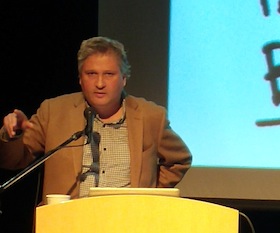
photo - Dr. Mike Teschuk spoke at a National Council of Jewish Women of Canada event on Feb. 6, held at the Rady JCC’s Berney Theatre in Winnipeg
Dr. Mike Teschuk spoke at a National Council of Jewish Women of Canada event on Feb. 6, held at the Rady JCC’s Berney Theatre in Winnipeg. (photo by Rebeca Kuropatwa)

Teschuk is a big proponent of looking at situations from the other person’s perspective. He said laying down the law and being confrontational does not work well with teens. He suggested instead to take the time to understand why they do things a certain way, and to find a way to work together to create a better outcome. This can be done by asking questions and listening, by dialogue.

“So, how do all these changes impact self-esteem?” he asked. “We know it has a big impact. Research says self-esteem often declines during early adolescence, and then improves again as they get a bit older. The idea is there can be discrepancies between who you are and who you think you should be. [Teens] start to reflect on how they are not the ideal person they want to be. At this stage, teens need a lot of reassurance from us. There is a symbolic kind of transition that has to happen. Like, in our family, the transition from the kids’ table to the grown-ups’ table. Going to the grown-up table is about also having your own views to express.”

According to Teschuk, at around 14 years of age, teens go through a “rejecting stage,” they don’t want to be with their parents at all. They want to pretend they don’t even have parents. But, Teschuk reassured the 100-person audience by way of personal example, his 23-year-old daughter, who went through this stage, now likes to go out for coffee with him – so, these things, too, shall pass. Your kids will not feel the same way at 23 as they did at 14, he said.

As parents, he said, we need to recognize that this is a normal stage of development. You don’t have to argue about it or be upset about it. Your teens will feel the need to reject a lot of the things they had until then taken for granted. They want to be independent, but it’s daunting for them.”

According to Teschuk, parent-to-adolescent connectedness is very important, especially when things are rough. Simply by hanging in there as a parent and showing how much you care has a large impact, he said, acknowledging that this is the most fundamental, yet hardest, thing to do when teens push back. “It’s easy to want to reject them, when someone is making your life very difficult,” said Teschuk. “It’s natural to feel that way, but, being able to hang in there is huge.

“Relationships with adults outside the family are important, too – with teachers, coaches, people in church or synagogue, extended family members – having other trusted adults. School connectedness is super-important, too. Schools offer so much more than academics,” he said. “If teens want to go to school because they’re on sports teams, in a play, or some other engaging activities … follow their lead and support them in those interests. Positive peer environments are important … but, of course, parents can have a role in creating those peer environments. Knowing your teenagers’ friends … and making your house a place where they want to hang out is a great strategy.”

Teschuk offered a couple of other tips. He suggested that parents, when driving their kids around, take the time to talk with their children and to connect with them. Also, he said, talking with them in this way gives the teens the chance to talk without being face-to-face, which can be uncomfortable and stress-inducing. Last but not least, Teschuk said family meals are also a great time to connect.

Rebeca Kuropatwa is a Winnipeg freelance writer.

Format ImagePosted on March 23, 2018March 23, 2018Author Rebeca KuropatwaCategories NationalTags family life, health, Mike Teschuk, science, teenagers
Demystifying nutrition

Demystifying nutrition

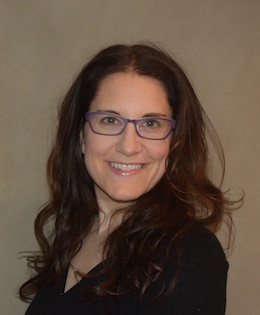
Cara Rosenbloom is trying to educate people about nutrition. In 2016, she co-authored the cookbook Nourish. (photo from Cara Rosenbloom)

When grocery shopping, how do you decide what to get when you are looking at items not familiar to you? Do you look at the ingredients? Are you drawn to packages that claim to be natural, whole food, organic?

Marketing and manipulation often go hand in hand. And it can be challenging to differentiate between products that actually offer added value and those that just say they do.

For the past 10 years, dietician Cara Rosenbloom has been running Words to Eat By, which provides nutrition education. For example, what does organic really mean in terms of food and nutrition?

When it comes to a product’s organic claims, Rosenbloom said, “I think the most important thing that people need to know about organic is that the word has nothing to do with health. An organic claim on a food does not mean it’s healthier for you. Organic is a method of farming.

“The use of the term ‘organic’ is regulated in Canada and has very clear guidelines about which foods can have that term stamped on it. It has to do with how that product – if it’s an animal, how it was raised … or, if a plant, how it was grown. But, once that organic product is used in a food product, the resulting food may not be a health food. Perfect examples are Kraft Dinner and Doritos. They now have organic versions. Those are not health foods.”

photo - Cara Rosenbloom
Cara Rosenbloom (photo courtesy)

Rosenbloom said claims that organically grown foods contain fewer chemicals are misleading. “Even foods that are grown organically still use pesticides and fertilizers. They’re just organic versions of it,” she said. “The word ‘chemical’ is not used appropriately in nutrition literature, in the way the media describes food. Many things are chemicals and aren’t bad for you. Water is a chemical! You need a degree in chemistry almost to understand how molecules are put together…. If you think organic food is just grown naturally in the sunshine, you’re wrong. Organic farmers use natural pesticides and herbicides. If you want to call those chemicals, too, then that’s fine.”

Rosenbloom writes a monthly column in the Washington Post, where she focuses on debunking myths and educating the readers about wellness, so people can make informed decisions about their nutrition.

In her interview with the Independent, she touched on how people get scared off by the “dirty dozen,” a list of fruits and vegetables believed to contain the highest amount of pesticides. In 2017, the Environmental Working Group’s dirty dozen were strawberries, spinach, nectarines, apples, peaches, celery, grapes, pears, cherries, tomatoes, sweet bell peppers and potatoes.

Rosenbloom explained that, too often, consumers avoid buying produce altogether if they can’t find organic versions. “That’s obviously the wrong message, and not what any dietician would recommend,” she said. “I wrote an article about how the dirty dozen list doesn’t hold weight in terms of pesticides. It’s a flawed list and has no scientific credibility. I educate people that organic is fine if you choose that, but not to fear fruits and veggies that are conventionally grown. The bottom line is that you need to eat fruits and veggies, whether you choose to eat organic or not, because they’re just a healthy thing in the diet.”

In that Jan. 18, 2017, Post article, Rosenbloom interviewed food toxicologist Carl K. Winter about the dirty dozen list, which, he said, “failed to consider the three most important factors used in authentic risk assessments – the amounts of pesticides found, the amounts of the foods consumed and the toxicity of the pesticides.” And, she notes, “Even the Environmental Working Group doesn’t recommend avoiding the items on its own dirty dozen list. Their website says ‘the health benefits of a diet rich in fruits and vegetables outweigh the risks of pesticide exposure. Eating conventionally grown produce is far better than skipping fruits and vegetables.’”

As for the claim that a product is natural, Rosenbloom explained that, while the organic label is closely regulated, the natural label is not. “Anything can be deemed natural,” she said. “So, it’s not something you want to count on. A lot of foods that are high in sugar, let’s say, can still say they are natural, because sugar comes from plants and that’s natural.

“The word natural doesn’t have a base definition that companies must satisfy in order to use that term on their foods,” she continued. “So, if you look at a product that says it’s natural, it doesn’t really tell you what that means. It lets you figure it out.

“We’re seeing more big companies that make processed food use the word natural – and misuse it. And this is leading to fewer consumers having any trust in the label natural.”

When it comes to vitamin supplements, Rosenbloom said more is not better. “There are certainly times when your body does need certain vitamins, but a lot of people are spending a lot of money on vitamins they just don’t need,” she said. “Then there are false promises made with things like vitamin IV drips and other popular myths.”

Rosenbloom has written about how to tell the difference between processed, ultra-processed and whole foods, as well as how to buy seafood that is produced in a safe, sustainable way, and much more. In 2016, she co-authored a cookbook with Chef Nettie Cronish, called Nourish: Whole Food Recipes Featuring Seeds, Nuts and Beans. It features 100 recipes, all of which are original and co-developed by the authors.

“We focused on beans, nuts and seeds in the book because these are nice sources of protein,” said Rosenbloom. “And nuts and seeds are healthy fats that are underutilized by most people in the diet, with most people relying mainly on animal-based foods for their protein. We wanted to explain that you can include seeds, nuts and beans in everyday recipes, and these 100 recipes show them how.

“It’s not solely a vegetarian cookbook,” she added. “It encourages people – wherever they are at, vegetarian or not, whoever wants to buy the book – to try out the recipes, which include meat, chicken, fish, seafood and vegetarian.

“The idea was to say, ‘Whatever you’re eating, here’s a way to add seeds, nuts and beans, to get more of those healthy ingredients into your diet.’ Take salmon, for example. It might be crusted with sesame seeds, or oatmeal might have some hemp seeds or flax seeds in it. So, we just enrich foods you eat anyway with the goodness of seeds, nuts and beans.”

Rosenbloom is on Facebook and Instagram (Words to Eat By) and her website is wordstoeatby.ca. For her latest Post articles, visit washingtonpost.com/lifestyle/wellness.

Rebeca Kuropatwa is a Winnipeg freelance writer.
Format ImagePosted on March 23, 2018March 23, 2018Author Rebeca KuropatwaCategories WorldTags Cara Rosenbloom, food, health, organic farming
Winnipeggers reach to Israel

Winnipeggers reach to Israel

Samara Carroll, second from the left, with Dawit Demoz, right, and members of his host family – Sunita and her daughter Persia. (photo from Samara Carroll)

Soon after Samara Carroll returned from a yearlong program in Israel, she took action to help African asylum seekers in Israel come to Canada.

Carroll grew up in Winnipeg, went to Talmud Torah and then to Gray Academy. She was involved in many aspects of the Jewish community growing up, including with B’nai B’rith Youth Organization, leading trips to Israel, and attending Camp Massad for 17 years (for two of which she was the camp director).

In 2012, Carroll was accepted to be the first Canadian participant of the New Israel Fund Social Justice Fellowship. “This fellowship gives you the opportunity to choose an Israeli nonprofit and work there for a year,” Carroll told the Independent.

“I chose ASSAF – Aid Organization for Asylum Seekers and Refugees – located in south Tel Aviv. I worked as a community organizer, activist and counselor, supporting families who had fled, mostly from Eritrea and Sudan, and were dealing with the trauma related to their past experiences and the ongoing challenges of being in Israeli society.”

During her time at ASSAF, Carroll heard hundreds of gut-wrenching stories, but also learned many things from the asylum seekers with whom she worked.

“The Israeli government does not have a proper process to assess whether or not someone is an asylum seeker,” said Carroll. “So, instead of creating a system, they have created policies that make life extremely difficult for asylum seekers…. They do not have basic access to healthcare, proper housing, employment or education. And, they face significant racism, directly from the Israeli government. They have been referred to as a ‘cancer.’

“The Netanyahu government claims that the asylum seekers have come to Israel for employment opportunities, but you only have to hear one story from an asylum seeker about their experience facing genocide and dictatorship in their country of origin – leaving behind everything they knew, being smuggled, human trafficked and tortured by smugglers in Sinai and then arriving in a foreign country – to understand that they are fleeing desperate situations.

“When you ask many asylum seekers where they’d want to be, they say ‘back home,’ but they cannot go back home,” Carroll said, summing up her belief using a quote from writer Warsan Shire: “You have to understand no one puts their children in a boat unless the water is safer than the land.”

After her year in Israel, Carroll decided to pursue a master of social work degree at the University of Toronto. About six months after she had arrived in Toronto, she was approached by Dawit Demoz, an Eritrean asylum-seeking man who was an activist in Israel, about giving asylum seekers more rights in Israel.

“He approached me, asking if I would sponsor him to Canada,” explained Carroll. “He felt that, although he loved the community he had established in Israel – his Israeli friends, the food and the culture – the policies of the Israeli government were just getting worse and he knew he had to try to leave the country if he ever wanted freedom.

“I agreed to sponsor him and did so through a SAH (Sponsorship Agreement Holder). The sponsorship process is detailed, but is very manageable and I believe more people would be open to sponsoring asylum seekers if they understood this.”

photo - Samara Carroll and Dawit Demoz
Samara Carroll and Dawit Demoz. (photo from Samara Carroll)

Demoz arrived in Toronto in March 2016. “He says this is the first time in his life he has felt free,” said Carroll. “He studies psychology at York University, works as an interpreter for a refugee organization, led canoe trips through Algonquin Park as a counselor last summer, and worked as a counselor at the Heart to Heart Program through Camp Shomria. He also plays soccer on a team, hosts Eritrean dinners for his many Jewish friends, and enjoys life.

“Five of our friends have submitted a Group of Five sponsorship to bring his mother [who he hasn’t seen in 10 years] to join him in Toronto,” said Carroll.

Following her example, Carroll’s parents, Sharon Chisvin and Marshall Carroll, have sponsored an Eritrean couple with the support of a local church-based sponsorship agreement agency, Jewish Child and Family Service Winnipeg and donations from friends, family and community members. The couple – Tsege and Kidane – arrived in Winnipeg in May 2016.

“They are generous, wonderful people and have created a strong community for themselves in Winnipeg, and they also support other newly arrived asylum seekers,” said Carroll. “While it is clear that you can positively shape someone’s life who has never experienced freedom before, you do not know how much they will positively impact your life.”

According to Carroll, the situation for asylum seekers in Israel has worsened since 2016. Prime Minister Binyamin Netanyahu has signed an order to deport asylum seekers from Israel to third-party countries, such as Uganda and Rwanda, she said. “This is a human rights violation, as we do not know what is waiting for them in these new countries – countries they have no connection to. Men who have already been deported there have been given no status or rights.”

For her part, Chisvin has started working with Canadians Helping Asylum Seekers in Israel (CHAI), which she described as “a grassroots group formed in Toronto in response to Netanyahu’s deportation order. It is primarily made up of Toronto Jewish activists who feel deeply that Israel’s intent to deport 38,000 African asylum seekers to third countries – and to certain suffering – is a strict violation of Jewish values, history and memory. This sentiment has been shared by 20,000 Israelis who protested against the deportation in Tel Aviv [recently], myriad Israeli rabbis, teachers, psychiatrists, El Al pilots and authors, as well as Irwin Cotler, Alan Dershowitz, the ADL [Anti-Defamation League], HIAS [Hebrew Immigrant Aid Society] and many other individuals and agencies.”

In Toronto, there is growing group of support for CHAI, and Chisvin is working to create a similar group in Winnipeg and beyond. Its goals, she explained, include raising awareness within the Jewish community about the deportation; encouraging people to ask the Israeli government to rescind its deportation order and implement a humane strategy for refugees and asylum seekers; appealing to the Canadian government to pressure the Israeli government to rescind the deportation order and work together on a solution; and encouraging people to commit to private refugee sponsorships.

“I have been assisted in my efforts, helped by a handful of people here in Winnipeg, who are helping me raise awareness in the community about the issue – urging others to speak up and fundraise for the refugees I have, and am in the process of sponsoring,” said Chisvin.

Further to that, Chisvin is in the early stages of organizing a community event to raise awareness about the issue and to explain how and why Canadian Jews should be moved by the plight of African asylum seekers who are at risk of being deported or indefinitely detained, and how and why they should commit to help sponsor some of them to Canada as refugees.

“The best solution, of course, is for Israel to rescind its deportation order, properly process the refugee claims of the asylum seekers, grant them refugee status, and all the rights inherent in that status,” said Chisvin. “But, if Israel doesn’t rescind the order, it is incumbent on Canadian Jews to lobby their government to increase the number of African asylum seekers it brings to Canada and to commit to privately sponsor African asylum seekers to Canada.”

There are many other ways to become involved, including supporting sponsors with money to help settle asylum seekers, provide housing and employment opportunities – as well as just being open and generous with newcomers. For more information, email [email protected] or visit facebook.com/canadianshelpingasylumseekersinisrael or letushelpil.org/canada.html.

“Israel needs to deal with the asylum seeker situation in their country and not force out people who have already experienced unspeakable trauma to a third country that will again violate their human rights,” said Carroll. “Our message and the message of many Jewish communities now is, ‘Do not deport. Let us help.’”

Rebeca Kuropatwa is a Winnipeg freelance writer.

Format ImagePosted on March 16, 2018March 15, 2018Author Rebeca KuropatwaCategories WorldTags asylum seekers, Canada, human rights, immigration, Israel, Samara Carroll, Sharon Chisvin
Alberta’s Jewish home

Alberta’s Jewish home

On the 14th floor of Edmonton’s Our Parents’ Home, one can enjoy panoramic views. (photo from OPH)

In 2015, Edmonton opened Our Parents’ Home (OPH), still the only kosher seniors home between Winnipeg and Vancouver. OPH offers 80 independent living suites and 50 Alberta Health Services supportive-living units.

Lesley Jacobson assisted Irving Kipnes on the project for more than a decade, until recently retiring.

Jacobson grew up in Sydney, Australia. She made her way to Calgary in the early 1970s, a place she called home for 27 years, before moving to Edmonton some 20 years ago. “I was always involved in [Jewish] federations in some way or the other,” she told the Independent.

About 12 years ago, Jacobson began working for Delcon Development, which was founded by Kipnes.

“Irv is one of the major proponents of this [OPH] project, and has been on the committee working to develop this facility for over 20 years,” said Jacobson.

The project was incorporated as a nonprofit organization under the Society Act of Canada in 1996, and obtained a charitable number from Revenue Canada that same year.

“It wasn’t until about a dozen years ago, after fundraising and much discussion about what the project should entail that the committee determined to move ahead,” said Jacobson. “Irv took the lead in that, and started investigating sites and plans seriously.”

The committee included Jewish community members who felt it was important that Edmonton have a facility that caters to the needs of Jewish seniors.

It took several false starts before a site was secured, detailed drawings were developed and a $6 million grant was secured under the Affordable Supportive Living Initiative of the Alberta government at the time. Construction began in 2012 in a prime location on Jasper Avenue, at the corner of 119th Street, next door to Beth Shalom Synagogue.

photo - Our Parents’ Home in Edmonton opened in 2015
Our Parents’ Home in Edmonton opened in 2015. (photo from OPH)

The original name chosen was the Hebrew, Beit Horim, which means Our Parents’ Home. “Once we started building and dealing with contractors, banks, etc. … many of the non-Jewish professionals who we were working with had trouble with the pronunciation…. So, we dropped the Beit Horim and just became Our Parents’ Home,” said Jacobson.

While the residence caters to Jewish seniors wanting a place to live where they can keep kosher, the home does offer menu options for people of all religions and has a non-kosher kitchen as well.

At press time, there were 17 independent living suites available (one- and two-bedroom apartments), while the supportive-living space – the units overseen by Alberta Health Services – was running at full capacity.

“They have a two-year waiting list of people trying to get into the supportive-living space,” said Jacobson. “If someone needs to be in assisted living, wants to be at OPH and they are Jewish, we try to get them to the top of the list. But, we have no control over that, because it’s mandated and controlled by Alberta Health Services…. On the independent living side of things, people are self-sufficient. The rent includes 20 meals per month, so people have that option … while those living in supportive care are provided with all meals and snacks.”

The home’s 50 supportive-living units cover three floors, which are staffed by care personnel 24/7. The two memory care floors are secured, so residents cannot leave those levels unless accompanied by someone with a fob. A third floor is for residents in need of care but with no memory issues.

Since the facility is open to the general public, regardless of religion, there are varied faith-based offerings. While there is a rabbi-led Shabbat service offered on the third Friday of each month, there is also hymn singing once a month led by a non-Jewish chaplain and a variety of other programs.

“We had beautiful seder [last] year and several non-Jewish residents of our community came, because they were interested,” said Jacobson. “People can come to whatever program they wish.”

Jacobson, while not on staff at OPH, worked with the staff to ensure the place became all that it was intended to be by the other committee members.

“It was exciting to be on the committee designing the building, to sit with the architects and interior designers,” said Jacobson. “We chose designs and fabric for the furniture, picked colours and selected the china and silverware. It was a pleasure to facilitate meetings with such dedicated and enthusiastic board members.”

According to Jacobson, when you walk into the OPH building, “it’s like walking into a boutique hotel. It doesn’t look like an old folks’ building. We have modern art on all the walls and, from the common rooms on the 14th floor, one can enjoy panoramic views of downtown Edmonton and the beautiful river valley. You walk into the dining room and it’s like walking into a first-class restaurant … linens on the tables to complement the china – no paper napkins.

“Seniors come here to live, not to die,” she stressed. “During the summertime, we take people from the memory care floors to walk in the neighbourhood, through the green streets. There are many activities designed to physically, socially and intellectually stimulate our memory care residents.

“Our independent residents live the lives they’ve always lived – they go to the opera or ballet, the gym, to their friends and to family. If they need a ride, we have a car that will take them. They live independent lives and, as a plus, enjoy all the extra activities provided – the book club, bridge club, fitness room, movies, social programs, etc.

“The people who have been involved are to be commended for their vision and enthusiasm,” said Jacobson. “Special credit needs to go to Tulane Rollingher, who conceived the idea in the very beginning, way back in the 1990s, of having a Jewish home. She was the very first person to start getting this group together.”

Rebeca Kuropatwa is a Winnipeg freelance writer.

Format ImagePosted on March 9, 2018March 7, 2018Author Rebeca KuropatwaCategories NationalTags Alberta, assisted living, Beit Horim, healthcare, Lesley Jacobson, Our Parents’ Home, seniors
Business of building peace

Business of building peace

Barbara Stegemann’s 7 Virtues perfumes help farmers in war- or weather-torn countries rebuild. (photo from Barbara Stegemann)

Barbara Stegemann (née Rabinovitch) was born and raised in an Anglophone neighbourhood in Montreal. While her Catholic mother disallowed any practise of Judaism, Stegemann recalled having begged her zaida to take her to synagogue to meet the rabbi.

“My soul felt very Jewish,” Stegemann told the Independent. “As Ben Stiller says, ‘When I look in the mirror, I see a Jew.’ That’s how I feel. My 23andME report came back and said I am 47.7% Ashkenazi Jew – so, science even accepts it.

“Interestingly, this genetic DNA test does not tell you if you’re Christian, Catholic or Muslim, but your DNA tells you that you are Jewish. For me, that is how powerful the connection is to being Jewish. It’s undeniably in our DNA.”

After earning a degree in journalism in 2006, Stegemann moved to British Columbia and settled in Port Moody, where she started a boutique PR firm, providing community economic development and strategy to clients from the City of Coquitlam to Mitacs, which designs and delivers research and training programs.

Then, something happened that shook Stegemann to the core. Her best friend from university and mentor, Capt. Trevor Greene, took off his helmet in a village in Afghanistan during a discussion about the need for clean drinking water and healthcare for the residents. A man attacked Greene, taking an axe to his head.

“We didn’t think he would make it through the night,” said Stegemann. “I prayed harder that night than I have ever prayed in my life. He made it through the night and, together with his fiancée, Debbie, and family, we all went on a healing journey. Since then, he married Debbie and they now have two children, Grace and Noah.

“I was blessed that I had my own company, so I could visit him in the Vancouver General three times a week. I lived in Port Moody, so it was not far. And, in the hospital, I promised him I would take on his mission of peace while he healed. Then, I realized, as a female in this patriarchy, I didn’t have a way to touch peace.”

Stegemann knew that, if women could find a way to harness their power – their buying and voting power – they had a chance to end war and corruption, two roots of poverty and suffering. With this in mind, she wrote the book The 7 Virtues of a Philosopher Queen: A Woman’s Guide to Living & Leading in an Illogical World, which was published on International Women’s Day (March 8) in 2008. A bestseller, it will see its seventh edition this year.

“I took all of the stoic wisdom of Socrates and Aurelius, the great leaders who guided [Winston] Churchill and the leaders who had to guide us out of hell,” said Stegemann. “I realized that our mothers didn’t talk to us about Adam Smith, capitalism, Plato and the polis … and that, if we, as women, were to take our rightful places changing policy and leading to an end of the cycles of war and poverty … we needed to have that same wisdom men have been given for 2,400 years.

“I used to walk around as a child with my Bible story records and play them for anyone who’d listen. My favourite story was The Wisdom of Solomon. I became entranced by the virtues and how they could change your life through their daily practice – wonder instead of judgment (which gives you all the resources you need on this earth), balance, truth, courage, justice, wisdom and beauty.”

One day, while Stegemann was studying about Afghanistan, she read about Abdullah Arsala in Afghanistan and about how Arsala was growing legal rose and orange blossom crops to liberate the farmers from growing illegal poppy crops.

She learned that the same people who had attacked her friend, Greene, were knocking over Arsala’s distillery, which made his flowers into essential oils for use in perfumes.

“I decided, that is it! I am going,” said Stegemann. “I flew to Ottawa and met with CIDA (Canadian International Development Agency) and told them to help me find Abdullah. I bought what little orange blossom oil he had on my Visa and launched The 7 Virtues [perfumes] in 2010, on International Women’s Day.

“Two weeks later, we were on the front page of the Globe and Mail. And, eight weeks later, I was on Dragons’ Den, pitching to venture capitalists. By then, I’d moved back home to my province of Nova Scotia and became the first woman from Atlantic Canada to land a venture capital deal on the popular CBC show.”

Stegemann helps farmers transition into growing legal crops, and make twice as much profit as they did growing poppies. According to Stegemann, when a farmer in Afghanistan grows legal crops for her perfumes, “His daughters are safe from being taken by the Taliban opium traders if the poppy crop fails. There is less heroin that ends up on the streets, destroying lives. And, when a farmer grows legal crops, he is honouring his faith. It goes against Islamic law to grow the illegal poppy crop.”

By helping the farmers, Stegemann believes she is helping bring peace. “It may not be my faith, but the truest way to peace is to honour one another and our beliefs,” said Stegemann. “The Taliban are completely going against their faith, forcing their neighbours to grow the illegal poppy crop. So, we must help one another.

“Our legal essential oil purchases in Afghanistan began this peace journey by liberating farmers from the illegal poppy trade and all of the abuses they and their families endure at the hands of the Taliban.

“Then, countries rebuilding after war or strife began coming to us, asking us to purchase from their distilleries to further build peace in nations rebuilding. The next country was Haiti. We began sourcing their vetiver oil.”

Stegemann travels often to Haiti to volunteer. On a trip after Hurricane Matthew hit, she was devastated to learn of a boatload of aid being turned away from the south, where not a mango stick stood and people had no shelter, as a result of the hurricane. The local official had asked for a bribe so large that the aid workers on the ship could not pay it.

“Haiti is the 10th most corrupt country in the world,” said Stegemann. “We have to engage our world leaders to end the culture of corruption in Haiti, in Afghanistan, and other nations that can’t take care of their people because their leaders are corrupt and don’t pay their police fair wages.

“There are many steps that have to be taken, but sourcing from a nation, spending time there and getting to know the issues, allows us to not only purchase fair trade products that give people dignity and jobs … but I can then write articles and be a voice as a trained journalist and activist to push our government to expect more from these countries.”

Stegemann believes social enterprise is a key way to build peace. She also believes that these cycles of war and poverty will remain if we expect our military and government to do the heavy lifting. According to Stegemann, we need a cavalry of businesses to come and buy saffron, pomegranates, essential oils or any other ethically sourced product, and this will help build peace.

It wasn’t until Stegemann moderated a panel discussion on the Middle East at a German Marshall Fund of the United States-hosted forum in Halifax that she realized the potential. On the panel were then-deputy minister of defence for Israel Matan Vilna’i and the minister of housing for the Palestinian Authority Dr. Mohammad Shtayyeh – and everyone got along.

“I feel strongly that destruction takes no imagination, no creativity, no intelligence, and it is actually boring,” said Stegemann. “I am not going to give my energy to it. Now, rebuilding, that is exciting! My real job is to make building more exciting than destruction.

“I do this through perfume. I decided to make a perfume of harmony from the Middle East. I sourced sweetie grapefruit from the Sharon region of Israel, with the help of ambassador [Miriam] Ziv. And we tried to get oils from the Palestinian region but could not.

“When I learned of Israeli Ronny Edry’s ‘We Love you Iran’ campaign, I decided to put Israel and Iran together with lime and basil essential oils from the Shiraz region of Iran. In our classic collection at the Hudson’s Bay stores, it is called Middle East Peace. It’s our bestselling fragrance and sells out quite often.”

In their new contemporary collection, launching at Sephora this month, they have a fragrance with the same oils, named after the oils – Grapefruit Lime – and the story is on the packaging, as is information about the oils’ healing properties.

On Stegemann’s most recent volunteering trip to Haiti (after Hurricane Matthew), she learned of the Sephora Accelerate program for female founders in the beauty business. As fewer than four percent of beauty company chief executive officers are women, Sephora decided to mentor, empower and create a network for these women.

“I felt so alone before,” said Stegemann. “I never had other female social entrepreneurs to share knowledge and suppliers with, and to bounce ideas off of. I wanted the program so badly that, when I first met with my Sephora buyers, I asked about this program. They immediately connected me with the women in San Francisco who run the program. They wanted the trailer to our doc film, Perfume War (perfumewar.com), and said they loved it. So, I got in. I was mentored by the director of Sephora Canada, Will Chung. They gave me the confidence to stretch out of my comfort zone and hire a branding agency.”

Going with Sephora was a hard decision for Stegemann, as that meant she had to leave the small boutiques she had built. But she was determined to stick with her mission of helping as many farmers as she could, and going big was the only way to do that.

The 7 Virtues perfumes can be found at Sephora online (sephora.com) and in stores, including the Robson, Park Royal and Richmond stores in Metro Vancouver.

Rebeca Kuropatwa is a Winnipeg freelance writer.

Format ImagePosted on March 2, 2018March 1, 2018Author Rebeca KuropatwaCategories WorldTags Afghanistan, Barbara Stegemann, business, farming, Haiti, peace, perfume, Sephora, tikkun olam
Dealing with asylum seekers

Dealing with asylum seekers

A celebration of Sigd at Ruppin College. (photo from Ruppin College)

From 1967 until the First Intifada, Palestinians filled a similar role in Israel to that of foreign labourers in many Western countries, often working in construction, agriculture and other occupations in which Israeli citizens weren’t interested. But, once the Intifada began in the late 1980s and Israel started restricting the passage of Palestinians to and from Israel, there were acute labour shortages.

According to Prof. Galia Sabar, president of Israel’s Ruppin Academic Centre (or Ruppin College), a few other factors contributed to this situation. Specifically, there was the migration of Jews from the former Soviet Union, she said. “So, you have these two mega historical events – the closure of the entrance of Palestinian workers … at the time, there were about 120,000 Palestinian workers coming in and out every day to Israel…. And, on the other side, you had about a million Jews coming within a period of less than two years.

“The Israeli government had several options. One was to have Israeli citizens work in these fields. Another was to have the new migrants [do the] work. The third one was to bring back the Palestinians. And, the fourth option was to bring in international migrant workers to do the job.”

The Israeli government chose the fourth option. However, said Sabar, “The Israeli government opted to ignore the experience in other Western countries. Now, we’re not talking about the 1960s; this is the 1990s. If the Israeli government or decision-makers would have just looked west to Germany and France, they would have noticed what the long-term consequences would be. But, you don’t bring them for a short period of time and, when the work is done, kick them out. It just doesn’t work. That is exactly what happened in Israel.

“With the Palestinians, they came to work in the morning and went back to their homes in the West Bank and Gaza at night. Israelis benefited from cheap labour and didn’t pay the price that most countries did with conventional migrant workers. Once you bring in international migrant workers, they establish families and demand rights.

“Once the borders were open and visas were issued for international migrant workers – and the price Israelis paid for their labour was much lower than paying for Israelis – then all hell broke loose. By 1996, there were already 180,000 visas issued to international migrant workers.

“Once the Israeli economy and borders were open to international labour migrants from specific countries with work visas, others without working visas started coming, too – from Latin America and the African continent. They came in on tourist or pilgrim visas and overstayed their visas … becoming illegal or undocumented migrant workers.”

photo - Galia Sabar
Galia Sabar (photo from Ruppin College)

Sabar started her research in the mid-1990s on communities of Guineans, Nigerians, and Kenyans. She recalled, “We had, at one point, representatives from about 25 different African countries in Tel Aviv alone – my first research was on African churches in Tel Aviv. The Jewish, predominantly white, city had about 55 to 60 different independent African churches just near the central bus station in southern Tel Aviv.

“A Guinean man or woman came and brought other relatives. Kids were born and whole new ecosystems of foreign migrant communities developed in Israel … around construction sites and agricultural places, and in and around the big city where people found work.

“I think most Israelis, until the early 2000s, preferred to ignore what was going on and enjoyed the cheap labour. If, before, a normal family had to take care of an elder person or sick person, they had to pay thousands and thousands of dollars to get 24/7 care. But, here you’d bring a Thai or Philippine caregiver and pay her $800 to $900 … so why worry about the long-term consequences?”

Eventually, in early 2000, the government began deporting undocumented migrant workers. Within a very short period of time, about half of the 250,000 undocumented workers were deported.

“I followed them after they were deported back to Africa, mainly West African countries,” said Sabar. “Since the beginning of the 2000s, I’ve been studying African asylum seekers, mainly Sudanese, who came via the border between Israel and Egypt, to Israel. I followed them after they returned to South Sudan in 2012. “Some who were in Israel for 10 or 12 years had savings and gained new skills, ideas, and resettled back home successfully. The other group was not as well off when they went back home. Their savings were slowly eaten away by their families. They were really wandering around. There were some who were devastated and had no future back home.”

Sabar’s focus now is on what she calls “the second wave,” with which Israel has been grappling since late 2006 – asylum seekers, mostly from Darfur and South Sudan, who came to Israel via Egypt claiming asylum. By 2012, the total number of asylum seekers had reached 60,000.

“Israel never had an office that deals with asylum requests, because we didn’t have asylum seekers coming in or refugees,” said Sabar. “It was only one or two, here or there. We’d get a boat with several dozen Vietnamese … but that was nothing. Then, suddenly, from 2006 on, we have thousands of people coming into Israel seeking asylum.

“In the beginning, it was Darfurians who were considered to be genocide survivors, and South Sudanese, which Israel has special relation with. So, Israel came up with this new idea, like an umbrella protection visa, [and] between 2006 and 2017, the 60,000 Sudanese and Eritreans built their lives in Israel. They worked, earned salaries, rented rooms, had kids, created families, lived full lives. Most of them lived in and around big cities where they could find work.”

Some Israeli ministers and other politicians started calling African asylum seekers a cancer in the heart of the Jewish nation and a “hygienic danger,” said Sabar – statements that, not so long ago, were directed at European Jews.

“I think that, owing to our own history and supposedly Jewish values, we can’t adopt this attitude,” she said. “A few thousand African asylum seekers are not a threat to the state of Israel, to the Jewish character. They are not. There have been no more asylum seekers coming into Israel since the erection of the border (between Israel and Egypt).

“We have now, in 2018, 37,000 African asylum seekers. Now, the state of Israel either puts them in jail or forces them to go to Uganda and Rwanda. But, they don’t come from there…. Where did they get this idea? Why? Because they’re both from Africa? They’re black, so that’s why we can deport them? The idea that the Israeli government is going to take thousands of Sudanese – some of them survivors of genocide – and throw them into Rwanda is terrible.”

Sabar went to Rwanda and Uganda on research missions in 2012, 2013 and 2014. She interviewed asylum seekers who were pushed out of Israel, back into refugee life, but in countries with far less than Israel’s gross domestic product and economic growth. Sabar said Israel should share the burden with the rest of the world and give asylum seekers a temporary home.

Although her efforts have mostly fallen upon deaf ears, the Dalai Lama has taken notice and has bestowed upon her the Unsung Heroes of Compassion award. “I thought it was one of these online scams, but then I communicated with them and realized it was real,” said Sabar. “I feel truly honoured, excited, and very, very surprised that the Dalai Lama acknowledges the fact that academics who do research can bring about real change. That is truly inspiring and gives me, up until today, energy to continue training my students to be critical thinkers and develop empathy for others while doing their research.

“All our students at Ruppin are encouraged to do some kind of activism as part of their academic training. A very high percentage of our students are socially engaged and active.”

While Sabar acknowledged that all sovereign states have the right and the duty to protect, first and foremost, their own citizens and territory, she is adamant that countries “should all have big doors, windows and avenues for those less fortunate seeking asylum, letting them in for temporary shelter and protection.”

Rebeca Kuropatwa is a Winnipeg freelance writer.

Format ImagePosted on February 9, 2018February 7, 2018Author Rebeca KuropatwaCategories IsraelTags Galia Sabar, immigration, migrants, Ruppin College
Farming as social enterprise

Farming as social enterprise

In the book Street Farm: Growing Food, Jobs and Hope on the Urban Frontier, Michael Ableman shares the story of how Downtown Eastside residents helped create Sole Food Street Farms. (photo by Michael Ableman; Street Farm [Chelsea Green, 2016])

In his book Street Farm: Growing Food, Jobs and Hope on the Urban Frontier (Chelsea Green, 2016), Michael Ableman shares the inspirational story of how residents in one of the poorest urban areas in North America – Vancouver’s Downtown Eastside – helped create Sole Food Street Farms.

Ableman has been a leading voice in the organic sector for 45 years and is the owner of Foxglove Farm (an organic 120-acre plot of land on Salt Spring Island), an author and a public speaker.

“I became incredibly impassioned by the power of food and farming to heal the world, to change people’s lives, to reconnect them,” Ableman told the Independent. “I came to see farming, not as the industrial activity that it had become since World War Two, but as a community venture to be shared by everyone participating.

“I think that has formed all my endeavours, all the projects I’ve done, all the work I’ve done – not all successfully … but it’s a function of being 63 years old … that you begin to recognize the importance of talking about those areas where you fall short … because, it’s a lot more informative than patting yourself on the back.”

Ableman responded to a call for strategies to help transform the Downtown Eastside, which is the lowest-income community in Canada, “with the highest rates of intravenous drug use perhaps in North America … mental illness, open prostitution,” he said.

“I agreed to come to a meeting with a number of social service agencies on the Downtown Eastside who wanted to come up with some creative ideas. They had access to a half-acre parking lot next to one of the dive hotels. And, you know, one meeting led to the next and, before you know it, I was directing and envisioning the birth of this amazing social enterprise that we started … which became Sole Food Street Farms.”

Now, after seven years in operation, the farm’s four-plus acres on pavement is producing 25 tons of food annually, employing up to 30 people, and is having a profound impact on people’s lives, as well as on how urban agriculture is perceived.

In his book, Ableman tells the story of the people he is working with, how their lives are being affected, and how they work with municipal governments to do what had never been done before on this scale.

“It is my belief that the smaller production units, whether front or back yards, are actually incredibly important for our future,” said Ableman. “And, probably, in the end, my goal has always been to see individuals and families put farmers out of business, by growing for themselves. But, we have a long way to go. My goal is still very much focused on jobs and producing quantities of food.”

Every city has two main challenges if you’re going to attempt to do gardening or agriculture, he said. “Number one, the soils are either too contaminated to grow in or are paved over. And, number two, the value of the land is too high for landowners or municipalities to give up.

“We felt it was incredibly important in the enterprise we created in Vancouver to address those issues. So, we designed a very innovative box system and we had these boxes manufactured. The boxes are isolated from contamination or pavement. They have interconnected drains. They are stackable, nestable, have pockets for hoops, and are indestructible.”

book cover - Street Farm: Growing Food, Jobs and Hope on the Urban FrontierAbleman said Street Farm is a “why-to” book, though they are “producing an actual tool kit, a companion to this book, the nuts and bolts of how we did it.” But, Street Farm, he said, “is a book that says, ‘Look, even under the worst circumstances, the poorest neighbourhoods, here is what individuals in a community can do to improve their lives and here’s how they did it.’ So, if we could do it here, you can do it elsewhere. We’re there to inspire people and make them understand that you have to do it in a way that addresses the particular needs of your community – the culture, economics, ethnicity. All those things have to be considered when setting something like this up – knowing who you are serving and why.”

Since the book came out, the project itself has evolved. In fact, Sole Food had to move their largest farm location a few months ago, which was a huge undertaking.

“When you write a book, the story is the story that existed at the time the manuscript was submitted and accepted by the publisher,” said Ableman. “But, nothing stays the same, especially in the work we do. Certainly, the individuals I write about, their lives have changed. We’ve learned more things … and we shift our systems accordingly. It’s really the wonder and beauty of agriculture, that it requires that each of us approach it with what I call a ‘beginner’s mind’ – never having a preconception, always being open to the moment. It’s a biological system, and requires a day-to-day, moment-to-moment response to that system. That’s the beauty, what we love about it – it always changes.”

He recalled, “For my bar mitzvah, the section of the Torah I read from was about the land of milk and honey. It was essentially about creating a fertile environment, abundance and nutrition from the land. At 13, the last thing I ever thought I’d be involved with was agriculture.

“If you really go back to the roots of our tradition – Judaism – we have strong roots in the land, strong agrarian roots. That doesn’t mean each of us has to be a farmer. What it means though is that we have a responsibility to create relationships and connections with those who are, and trying to do it well.”

It’s so much more than agriculture.

“While we generate $300,000 every year in products grown and sold,” said Ableman, “we still have to raise another $300,000 to support the social component of what we do – the trainings, taking people to the hospital, rain gear, literacy programs, meals. We are recognized as a world-class model. Participate in whatever way you can in your own tradition by supporting local enterprises trying to do the right thing.”

More about Ableman and Sole Food Farms can be found at solefoodfarms.com.

Rebeca Kuropatwa is a Winnipeg freelance writer.

Format ImagePosted on February 9, 2018February 7, 2018Author Rebeca KuropatwaCategories LocalTags economy, farming, Michael Ableman, social enterprise, Sole Food Farms
Ever-changing job landscape

Ever-changing job landscape

Prof. Ilana Gershon’s latest book is Down and Out in the New Economy. (photo from Ilana Gershon)

An increasing number of people in their 50s and 60s are needing or wanting to find work – and are finding that next job elusive.

Indiana University anthropology professor Ilana Gershon has been researching the (often unsuccessful) ways in which job seekers look for work. One result of this research is her latest book: Down and Out in the New Economy: How People Find (or Don’t Find) Work Today (University of Chicago Press, 2017).

Long gone are the days that employers just want an extra pair of hands to do a job, said Gershon.

“We used to have an idea of ourselves as workers, in which we imagined we owned ourselves, as if we were property,” she explained. “This was the metaphor – that we were renting ourselves to an employer for a certain period of time and, when the time was over, we’d get ourselves back. The idea of renting ourselves as though we were property really affected the ways you could have particular ideas, of what was a just work relationship.

“So, you thought you could have arguments about whether you should have a 40-hour work week or not, about how much time you should be able to rent yourself to an employer … and people would have legal cases and legislation around the boundaries of work. Should people be paid for putting on a uniform that would make them be work ready or should they put on a uniform in their own time, and should employers only pay for them once they put on the uniform?”

Gershon said this metaphor very much shaped how people thought about what was appropriate and what was not.

“One of the other consequences of that is that unions were able to argue that, in fact, people were not just renting a portion of their day,” she said. “Unions argued that they were renting a portion of their lives and, as a result, the companies owed them health insurance or a pension … that they should be reimbursed for giving over a portion of their lives to the company.”

On the other side of the equation were the companies, which were very interested in ensuring there was some form of company loyalty.

According to Gershon, in the United States and the United Kingdom, after Ronald Reagan and Margaret Thatcher took power, respectively, things began to change. People began to imagine themselves as though they were a business – as a bundle of skills, assets, qualities, experiences and relationships that had to be consciously managed like a business. And, as a business, continual enhancement was required.

“When people are entering into an employment contract, that now means they are entering into a business-to-business contract, in which they are offering temporary solutions for market-specific problems a company experiences,” explained Gershon. “So, now you have all these self-help articles that talk about being the CEO of Me Incorporated.

“One of the other consequences of this is people now talk a lot about having a personal brand. Because, if you imagine yourself as a business, then you should have a personal brand, as businesses have brands. So, a lot of the ways in which people understand what the employment contract can now offer them is being shaped by this change in metaphor.”

book cover - Down and Out in the New EconomyGershon’s research on the topic began in 2012, with the interviewing of people around Indiana University and her attending one or two job search workshops available to undergrad students. In 2013/2014, while being a fellow at Stanford’s Centre for Advanced Study in the Behavioural Sciences, she did field work in the Bay Area in California.

Not everything regarding the job market is new, she said. “People already know a lot about hiring, because they participated in hiring in their previous workplaces … and they shouldn’t ignore everything that they already know.

“I was trying very hard not to make it a Silicon Valley project,” she said of her research. “I was very concerned about that, because, what I wanted to do was think about the hiring ritual in general. I interviewed people in the Midwest and East Coast about this – not as many people as I interviewed in the Bay Area, but I wanted to check if I saw any difference.

“The major difference I saw was that the people had a very different idea of how much time you should spend at a job. People in the Bay Area thought the ideal time you spend at a job was two to three years. And, in the Midwest, it was something more like seven to 10. On the East Coast, it was more like five to eight.”

According to Gershon, she worked hard to produce an “anti-advice book.” Her aim was to focus the book on the implications of thinking of yourself as a business and how that has changed hiring and affected what employment contracts have become. Further, she wanted to explore how one should present themselves as an employee, and what employers feel are desirable traits in candidates.

One of Gershon’s findings is that the new concepts are now standard fare in all job search workshops.

“People are being told to do this, but people in the trades and blue collar workers don’t seem to find this way of thinking terribly useful yet,” she said. “So, the people for whom it fits their situation best are going to be white collar workers for the most part.”

But, whether or not everyone finds the ideas useful, they are being encouraged.

“People working retail are constantly being told they have to brand themselves,” said Gershon by way of example. “I don’t think this particular way of trying to brand yourself constantly or imagine yourself as a business is making all that many people happy.

“If you haven’t been in the workforce for 15 to 20 years and you’re suddenly going to these job search places where they’re telling you everything is new and the ways you used to look for jobs no longer make sense … it’s all very confusing. I’m offering the context for that, explaining why things might seem new, and what’s genuinely new and what isn’t.

“I think figuring out how to get a job is actually something you have to do specifically for your particular industry,” she added. “People offer a lot of standardized advice, as though there’s a magic bullet that works in every context. What I’m talking about is how not to engage with that kind of standardized advice. Instead, figure out how to do the research so that you can understand those communities on your own.”

Rebeca Kuropatwa is a Winnipeg freelance writer.

Format ImagePosted on January 19, 2018January 17, 2018Author Rebeca KuropatwaCategories BooksTags economics, employment, Ilana Gershon
Beit Ruth supports at-risk girls

Beit Ruth supports at-risk girls

Beit Ruth Village (photo by Poole)

When boys are hurting, are at-risk or are vulnerable and abused, they act out. They join gangs, skip school and get into fights,” Danielle Burenstein, executive director of Beit Ruth, told the Independent. “But, when girls are hurt or abused, they disappear and become transparent; they hurt themselves. When the system identifies a girl who is at risk, it’s normally because she has disappeared from the school system, is living on the streets or tries to commit suicide.”

Beit Ruth, in the northern part of Israel, was founded by Susan and Michael Ashner, a philanthropic couple from New York who, in 2003, were in Israel to visit a project they were supporting – a program that was educating vulnerable boys. During this visit, Burenstein said, “Susan asked something that would change both of their lives forever: ‘What happens to their [the boys’] sisters? Where are the programs for the sisters?’ The answer, pretty much, was there is really no need for those programs for the girls, because we don’t have those issues with the girls.”

Nevertheless, said Burenstein, Susan Ashner researched more about the status of at-risk and vulnerable girls in Israel, and determined “that there was a need for programs and services in Israel for those girls.” Beit Ruth began as a hostel in Rishon LeZion in 2006, which housed 13 at-risk girls between the ages of 13 and 18. By 2014, a new location had started operating on the outskirts of Afula, in a gated village setting. Today, Beit Ruth Village in Afula houses 45 girls in three houses.

Recently, a new school building was completed. Next on the list of capital projects are two more homes that will allow the village to take in 30 more girls. Following this, the plan is to add five more homes, giving the village and school the capacity to help 150 girls.

“Beit Ruth is a long-term residential village for at-risk and vulnerable girls,” said Burenstein. “It is a learning, healing and caring community that embraces the whole child, emotionally, socially and academically. It gives girls who have been removed from their homes by the Ministry of Welfare – due to incidents of severe neglect or abuse … and, when I say abuse, I mean emotional, physical or sexual; in many cases, it is incest – it gives these girls a chance…. Most, for the first time in their lives, have the chance to receive therapy for this abuse.”

Beit Ruth also “gives them the chance to get a high school education and life skills, so they can be prepared for life outside the village.”

Walking into the village, she said, is “like walking into a gated community in Vancouver. There are homes, with between 12 to 15 girls living in each home. They are not dormitories. They are decorated like homes.”

photo - Lunchtime in one of the residential houses at Beit Ruth Village
Lunchtime in one of the residential houses at Beit Ruth Village. (photo by Meir Azoulay)

Each house has a kitchen with a dining room, where the girls cook together, eat together, and have chores and responsibilities, and a living room. They have a bedroom they share with three other girls, and they can decorate it however they wish.

“We’re recreating that security and foundation that any child needs to have in order to be a successful human being,” said Burenstein. “I mean, to be able to have trust and respect, communication skills and a desire to learn, like most kids have.

“When our girls come to us in the village, I can tell you that, if you were to visit as an outsider, you’d probably be able to point out which girls have just come to us … because they are a shell of what a child should look like at that age – withdrawn, many sitting in a corner. You can tell that they are scared. They won’t make eye contact with you. They speak in a low voice.

“In a matter of weeks or few short months, you’ll see them start to smile, hang out with the other girls, talk with staff, engage, listen … some will laugh out loud.”

The girls who come to Beit Ruth have to choose to do so themselves, and they can choose to leave at any time. The purpose of the village gate is to keep out unwanted visitors, not to lock the girls in.

“The girls need to commit to the hard work it takes to overcome their trauma, to face their trauma through therapy, to listen to the values we instil in the village, which are all about teamwork, respect and trust,” said Burenstein.

Something that makes Beit Ruth unique are its guiding principles, one of which is creating the atmosphere of a home life – the kind of support a family should give a young child. Another guiding principle is therapy, which helps each girl face her own personal trauma, with the goal of overcoming it.

There are also enrichment programs, such as therapeutic art or music, sports and physical activities, all of which are mindfully selected and designed to help a young girl find her voice, passions and skills, to forge communication skills, trust and respect.

Many girls come to Beit Ruth with big gaps in their education. Some don’t know how to read or write at 13 or 15 years of age.

“When you’re hungry, when you’re scared, or when you’re in an abusive situation, school is not what you’re focusing on,” said Burenstein. “So, our girls are given the opportunity to have a high school education and we help instil a love of learning and curiosity that most kids have.”

Once at the village, each girl gets the support she uniquely needs. Beit Ruth does not go with one-size-fits-all programs, as each child comes with her own trauma, past and capabilities.

Beit Ruth’s educational programs, which were developed for the village, are trickling down into use by Israel’s Ministry of Education, to other schools around the country, and into hospitals.

“Each girl has her own journey to take,” said Burenstein. “It’s really hands-on for each one of the girls. They know it’s a place they can call home. They know this is a place where they are safe. They know this is a place that, no matter what … and, trust me, they try to test us … they know that we’re here for them and that we’re not giving up on them. That comes across loud and clear.”

Rebeca Kuropatwa is a Winnipeg freelance writer.
Format ImagePosted on January 12, 2018January 10, 2018Author Rebeca KuropatwaCategories IsraelTags Beit Ruth, Danielle Burenstein, health, Israel
Camp fosters independence

Camp fosters independence

At Camp Shomria, it’s all “about equality and giving the power to the youth,” says one parent. (photo from Camp Shomria)

In Ontario, Camp Shomria was established based on the principals of Hashomer Hatzair (The Young Guard), with its Zionist and socialist principles, including that building a strong community is just as important as building strong individuals.

Camp director Uri Ron Amit is an Israeli who runs the only chapter of Hashomer Hatzair in Canada, which is based in Toronto. He comes from a background of working as an educator in international development and community management.

“The kids are from Grade 2 (7-year-olds) all the way up to Grade 11 (17-year-olds),” said Amit. “By Grade 12, they become first-year youth counselors in the movement. And then, later on, they can continue working to make an impact in the camp, either as youth counselors, as head of camping or as head of programs.”

Most families involved at the camp are from the Toronto area but some campers also come from the United States and a fairly large number come all the way from Israel. The camp is situated an approximately four-hour drive northeast of Toronto, and about an hour and a half southwest of Ottawa.

“Starting in Grade 2, the kids spend a week away from home at camp,” said Amit. “Grades 3 and higher stay at the camp for at least two weeks at a time, and sometimes for five weeks. Having young kids sent by their parents to be away from home … brings both opportunities and challenges. The further away you are, the more remote [it is, and] it can create a sense of independence and a different world for the kids and youth counselors.”

Hashomer Hatzair was established more than 100 years ago, he explained, “with the idea of having youth of different ages develop an independent youth community that stands for the ideals of humanistic Judaism and Zionism. The main difference in sending your kid to experience camp away from home is the added layer of independence – a level of ownership over the community … self-reflection and personality development.

“I think the main reason parents send their kids away from home for a couple of weeks with minimal communication with them is because they want them to go through a meaningful learning process that can help them pick up a strong group dynamic in the youth community.”

Amit described one particular child who came to the camp. This child had never been to a sleepaway camp before, and was dependent on his parents for almost everything. “After a couple days, this child became a star,” said Amit. “He became independent and took to different stages of sharing feelings and emotions…. We gave him the opportunity to lead discussions … with group members. His parents said it was a life-changing experience.”

Camper Zoe Friedman, 13, who lives in Toronto, started attending the camp last summer, choosing to do so after she learned that some of her friends from Israel go there.

“It’s a camp that really builds character,” she said. “And it gives you time to expand on things … expands character, responsibility and social skills. Every morning, we have something called toranuyot (chores), where we get split into groups and go clean up the camp…. So, we might clean the washroom, pick up trash, or something else that helps everybody. The theme of Shomria is socialism. We all do everything together and support each other. It’s a really good vibe.”

As for being away from her parents and home, Zoe said she felt it was sometimes very difficult, as, at night, it is extremely dark and you feel very far away from it all. But, at other times, she said, it is tremendously fun.

“It was really fun to disconnect from the outside world and focus on what’s in front of you,” she explained. “It’s just interesting to see how such a big group of kids can just disconnect from technology and focus more on social skills, responsibilities, and just on having a good time, without focusing on technology.”

Zoe and her family – mom Eilat Bakerman, dad David Friedman and younger sister Gaia, 9 – have been living in Toronto for the past 12 years, and are very involved in the local Jewish community. Bakerman heard about Shomria from friends and decided to send both Zoe and Gaia there.

“They thought it really helped to build kids’ character, and they support the values of what the camp aims for … about giving the power to the youth,” said Bakerman. “The camp is run by youth and they are leading other youth, a bit younger kids, in whatever they do. The only adults they have there are the operational staff – cooks, doctors, nurse, drivers, and so on. It highlights what you’d imagine a kibbutz life was like when it first started.”

According to Bakerman, one example of the unusual way in which the camp is run is how, when the kids first arrive at the camp, any money parents send with the kids is pooled together and everyone is given back an equal share. “Nobody feels they have more than others,” she said.

“When they go to Perth, which is the closest city,” said Bakerman, “everybody gets the same share of money – no matter how much they each may have brought into the camp – and that’s what they have for spending money.

“No matter if you came from a wealthy home, where you don’t need to do any chores, or not, at camp, in the morning, the kids decide what kind of chores they’ll do and everybody in the group does it,” she added. “Everybody is eating the same food. It’s about equality and giving the power to the youth.”

Bakerman also regularly sends her daughters to stay with family in Israel while she stays to work in Canada. The location of the sleepaway camp was not a deterrent.

“I think the kids are so engaged, it really doesn’t matter – the distance,” said Bakerman. “The distance is neither a barrier nor an excuse to come home or to call home. To me, it was about character and values…. The camp gave them independence and they have something to aspire to become. They’re really looking forward to next year.”

Rebeca Kuropatwa is a Winnipeg freelance writer.

Format ImagePosted on January 12, 2018January 10, 2018Author Rebeca KuropatwaCategories LifeTags Camp Shomria, education, family, Hashomer Hatzair, socialism, summer camp, teenagers, Zionism

Posts pagination

Previous page Page 1 … Page 11 Page 12 Page 13 … Page 31 Next page
Proudly powered by WordPress