Skip to content
  • Home
  • Subscribe / donate
  • Events calendar
  • News
    • Local
    • National
    • Israel
    • World
    • עניין בחדשות
      A roundup of news in Canada and further afield, in Hebrew.
  • Opinion
    • From the JI
    • Op-Ed
  • Arts & Culture
    • Performing Arts
    • Music
    • Books
    • Visual Arts
    • TV & Film
  • Life
    • Celebrating the Holidays
    • Travel
    • The Daily Snooze
      Cartoons by Jacob Samuel
    • Mystery Photo
      Help the JI and JMABC fill in the gaps in our archives.
  • Community Links
    • Organizations, Etc.
    • Other News Sources & Blogs
    • Business Directory
  • FAQ
  • JI Chai Celebration
  • JI@88! video

Recent Posts

  • האלימות בישראל מורגשת בהרבה מגזרים
  • טראמפ עוזר דווקא לנושא הפלסטיני
  • New rabbi settles into post
  • A light for the nations
  • Killed for being Jewish 
  • The complexities of identity
  • Jews in time of trauma
  • What should governments do?
  • Annie will warm your heart
  • Best of the film fest online
  • Guitar Night at Massey
  • Partners in the telling of stories
  • Four Peretz pillars honoured
  • History as a foundation
  • Music can comfort us
  • New chapter for JFS
  • The value(s) of Jewish camp
  • Chance led to great decision
  • From the JI archives … camp
  • עשרים ואחת שנים להגעתי לונקובר
  • Eby touts government record
  • Keep lighting candles
  • Facing a complex situation
  • Unique interview show a hit
  • See Annie at Gateway
  • Explorations of light
  • Help with the legal aspects
  • Stories create impact
  • Different faiths gather
  • Advocating for girls’ rights
  • An oral song tradition
  • Genealogy tools and tips
  • Jew-hatred is centuries old
  • Aiding medical research
  • Connecting Jews to Judaism
  • Beacon of light in heart of city

Archives

Follow @JewishIndie
image - The CJN - Visit Us Banner - 300x600 - 101625

Tag: organic farming

Demystifying nutrition

Demystifying nutrition

Cara Rosenbloom is trying to educate people about nutrition. In 2016, she co-authored the cookbook Nourish. (photo from Cara Rosenbloom)

When grocery shopping, how do you decide what to get when you are looking at items not familiar to you? Do you look at the ingredients? Are you drawn to packages that claim to be natural, whole food, organic?

Marketing and manipulation often go hand in hand. And it can be challenging to differentiate between products that actually offer added value and those that just say they do.

For the past 10 years, dietician Cara Rosenbloom has been running Words to Eat By, which provides nutrition education. For example, what does organic really mean in terms of food and nutrition?

When it comes to a product’s organic claims, Rosenbloom said, “I think the most important thing that people need to know about organic is that the word has nothing to do with health. An organic claim on a food does not mean it’s healthier for you. Organic is a method of farming.

“The use of the term ‘organic’ is regulated in Canada and has very clear guidelines about which foods can have that term stamped on it. It has to do with how that product – if it’s an animal, how it was raised … or, if a plant, how it was grown. But, once that organic product is used in a food product, the resulting food may not be a health food. Perfect examples are Kraft Dinner and Doritos. They now have organic versions. Those are not health foods.”
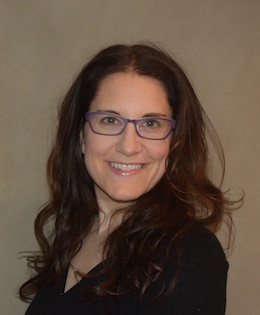
photo - Cara Rosenbloom
Cara Rosenbloom (photo courtesy)

Rosenbloom said claims that organically grown foods contain fewer chemicals are misleading. “Even foods that are grown organically still use pesticides and fertilizers. They’re just organic versions of it,” she said. “The word ‘chemical’ is not used appropriately in nutrition literature, in the way the media describes food. Many things are chemicals and aren’t bad for you. Water is a chemical! You need a degree in chemistry almost to understand how molecules are put together…. If you think organic food is just grown naturally in the sunshine, you’re wrong. Organic farmers use natural pesticides and herbicides. If you want to call those chemicals, too, then that’s fine.”

Rosenbloom writes a monthly column in the Washington Post, where she focuses on debunking myths and educating the readers about wellness, so people can make informed decisions about their nutrition.

In her interview with the Independent, she touched on how people get scared off by the “dirty dozen,” a list of fruits and vegetables believed to contain the highest amount of pesticides. In 2017, the Environmental Working Group’s dirty dozen were strawberries, spinach, nectarines, apples, peaches, celery, grapes, pears, cherries, tomatoes, sweet bell peppers and potatoes.

Rosenbloom explained that, too often, consumers avoid buying produce altogether if they can’t find organic versions. “That’s obviously the wrong message, and not what any dietician would recommend,” she said. “I wrote an article about how the dirty dozen list doesn’t hold weight in terms of pesticides. It’s a flawed list and has no scientific credibility. I educate people that organic is fine if you choose that, but not to fear fruits and veggies that are conventionally grown. The bottom line is that you need to eat fruits and veggies, whether you choose to eat organic or not, because they’re just a healthy thing in the diet.”

In that Jan. 18, 2017, Post article, Rosenbloom interviewed food toxicologist Carl K. Winter about the dirty dozen list, which, he said, “failed to consider the three most important factors used in authentic risk assessments – the amounts of pesticides found, the amounts of the foods consumed and the toxicity of the pesticides.” And, she notes, “Even the Environmental Working Group doesn’t recommend avoiding the items on its own dirty dozen list. Their website says ‘the health benefits of a diet rich in fruits and vegetables outweigh the risks of pesticide exposure. Eating conventionally grown produce is far better than skipping fruits and vegetables.’”

As for the claim that a product is natural, Rosenbloom explained that, while the organic label is closely regulated, the natural label is not. “Anything can be deemed natural,” she said. “So, it’s not something you want to count on. A lot of foods that are high in sugar, let’s say, can still say they are natural, because sugar comes from plants and that’s natural.

“The word natural doesn’t have a base definition that companies must satisfy in order to use that term on their foods,” she continued. “So, if you look at a product that says it’s natural, it doesn’t really tell you what that means. It lets you figure it out.

“We’re seeing more big companies that make processed food use the word natural – and misuse it. And this is leading to fewer consumers having any trust in the label natural.”

When it comes to vitamin supplements, Rosenbloom said more is not better. “There are certainly times when your body does need certain vitamins, but a lot of people are spending a lot of money on vitamins they just don’t need,” she said. “Then there are false promises made with things like vitamin IV drips and other popular myths.”

Rosenbloom has written about how to tell the difference between processed, ultra-processed and whole foods, as well as how to buy seafood that is produced in a safe, sustainable way, and much more. In 2016, she co-authored a cookbook with Chef Nettie Cronish, called Nourish: Whole Food Recipes Featuring Seeds, Nuts and Beans. It features 100 recipes, all of which are original and co-developed by the authors.

“We focused on beans, nuts and seeds in the book because these are nice sources of protein,” said Rosenbloom. “And nuts and seeds are healthy fats that are underutilized by most people in the diet, with most people relying mainly on animal-based foods for their protein. We wanted to explain that you can include seeds, nuts and beans in everyday recipes, and these 100 recipes show them how.

“It’s not solely a vegetarian cookbook,” she added. “It encourages people – wherever they are at, vegetarian or not, whoever wants to buy the book – to try out the recipes, which include meat, chicken, fish, seafood and vegetarian.

“The idea was to say, ‘Whatever you’re eating, here’s a way to add seeds, nuts and beans, to get more of those healthy ingredients into your diet.’ Take salmon, for example. It might be crusted with sesame seeds, or oatmeal might have some hemp seeds or flax seeds in it. So, we just enrich foods you eat anyway with the goodness of seeds, nuts and beans.”

Rosenbloom is on Facebook and Instagram (Words to Eat By) and her website is wordstoeatby.ca. For her latest Post articles, visit washingtonpost.com/lifestyle/wellness.

Rebeca Kuropatwa is a Winnipeg freelance writer.

Format ImagePosted on March 23, 2018March 23, 2018Author Rebeca KuropatwaCategories WorldTags Cara Rosenbloom, food, health, organic farming
Tranquility and restoration

Tranquility and restoration

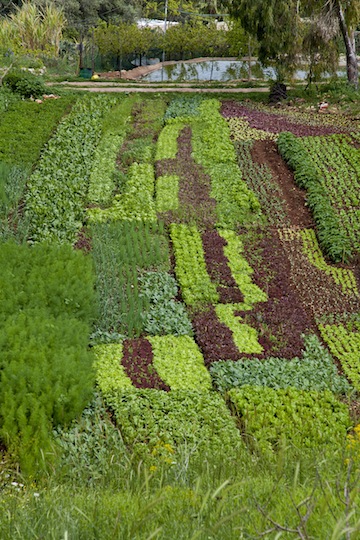
The Upper Galilee’s Mizpe Hayamim is a beautiful place. (photo by Karen Ginsberg)

Unless you are one of the lucky Canadians who lives in the Okanagan Valley or the Niagara Peninsula, chances are that most of the “fresh food” that you buy – particularly fruits and vegetables – travels some distance before it reaches your table. On a recent trip to Israel, my husband and I experienced how very splendid it would be to live adjacent to a 35-acre organic farm that produces everything from its own olive oil and soaps to bountiful dairy products, as well as every fruit, vegetable, grain and herb one could imagine. We enjoyed all of this at Mizpe Hayamim Spa Hotel, located on Mount Canaan, near the town of Rosh Pina, in Israel’s Upper Galilee.

photo - Mizpe Hayamim Spa Hotel, located on Mount Canaan, near the town of Rosh Pina, is adjacent to a 35-acre organic farm
Mizpe Hayamim Spa Hotel, located on Mount Canaan, near the town of Rosh Pina, is adjacent to a 35-acre organic farm. (photo from Isrotel)

The history of the 96-room hotel dates back to 1921, when a German internist, Dr. Erich Yaroslovsky (later shortened to Yaros), bought the acreage now known as Mizpe Hayamim. Yaros’ vision was to build a convalescent home based on a vegetarian diet and natural treatment methods, which he felt would best serve the rehabilitation needs of his patients. The doctor was particularly drawn to the quality of the air and the tranquility of the setting. The land was originally owned by Baron de Rothschild, who had also been captivated by the beauty and tranquility of the area.

Before realizing his dream, Yaros encountered a series of setbacks, including receiving only a modest water allotment from the town of Rosh Pina, which was developing rapidly; the need to return to Germany for several years to support aging parents; the failure of promised positions as a physician in nearby communities to materialize; and a stint in Tel Aviv serving as its only homeopathic doctor. There was also a construction prohibition order from the British army, which was then planning fortifications in the area to protect against possible Nazi invasion through Lebanon.

Notwithstanding the long series of delays, by 1968, Yaros had the building authorities, financing and his personal determination to develop Mizpe Hayamim, albeit on a more limited scale. He built his first home at the location where the current Mizpe Hayamim now stands. It included a dining room, kitchen, bedrooms for his family and 12 guest rooms for the first of his patients. In later years, he was able to expand.

photo - view from a room at Mizpe Hayamim
(photo from Isrotel)

In English, mizpe hayamim means a view between two bodies of water, in this case, the Sea of Galilee and the lakes of the Hula Valley. The view from the highest and most expansive terrace at the hotel includes the town of Rosh Pina just below and to the left, an Israeli military base in the middle and the tip of the Sea of Galilee to the right. Small Jordanian villages dot the horizon and were barely visible in the mist of an October morning. At the time of our visit, the “mizpe” was only partially green. We were told that, with each teef, toof (bit of winter rain), the surrounding lands would become greener and that, before long, the whole of the Upper Galilee would be lush and vibrant.

A year before he died, in 1984, Yaros sold Mizpe Hayamim to Sammy Chazzan, an Israeli who shared Yaros’s commitment to the healing powers of organic food and tranquil surroundings. For more than 35 years, Chazzan led every dimension of the development of Mizpe Hayamim – hotel and farm – until 2016, when he sold the hotel portion to the Israeli chain Isrotel. He retained stewardship of the farm.

The organic farm was the first-of-its-kind in Israel and employs nine workers. From the time he was 14, Chazzan has had an interest in organic farming – a rather unusual passion for a young man but a passion he has sustained. Until the recent sale to Isrotel, Chazzan’s daily schedule started at 4 a.m., when he would draft the day’s orders for the hotel staff and then walk over to the adjacent farm to work at whatever needed to be done there. At 8 a.m., he would return to manage the hotel and then finish the day with a few more hours spent on the farm.

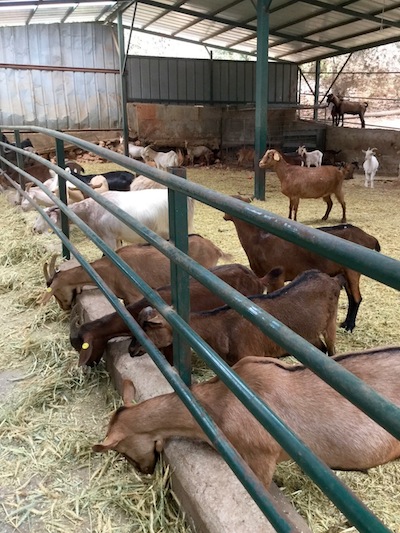
The achievements of his 35 years of agricultural experimentation are truly remarkable. The farm now includes nine large vegetable, herb and flower gardens, a herd of dairy cows and goats whose milk helps create about 40 individual dairy products – milk, yogurts, ice cream and cheeses. The animals are cared for in the most pristine of settings, feeding on grasses and able to roam about freely. Should they fall ill, they are cared for by a holistic veterinarian practitioner.

photo - Mizpe Hayamim goats
(photo by Karen Ginsberg)

Manure is recycled to fertilize the gardens, and the fruit and nut trees and flowers grow in abundance. Years of trial and error have helped establish which flowers or herbs planted alongside which vegetables reduce insect infestations, eliminating the need for pesticides of any kind. Several times a day, ripened produce is brought to the Mizpe Hayamim kitchen and finds its way to the dinner or breakfast buffets with the sort of haste that most Canadians can hardly fathom. Natural soaps are made on the farm for sale and for use in the hotel. In addition, there is a bakery and small retail outlet that sells some of the produce to guests and members of the public.

At the hotel, there is a full range of spa services for guests. Our casual conversations with other guests suggest that many Israelis come here, seeking a reprieve – nourishment and rest – from the tensions and high activity levels of city life. Guests can enjoy a coffee and tea bar all day long, with many of the farm’s fresh herbs – lemongrass, hyssop, chamomile, spearmint – available to enrich their beverages. Daily exercise classes, an art studio and evening entertainment are optional for guests and help sustain the goal of total relaxation and rejuvenation.

Isrotel plans to refurbish and update some of the hotel rooms but the essential philosophy underpinning this unique endeavour will remain the same. And Chazzan intends to continue his life’s work of building a knowledge base about organic farming and its impacts, through small-scale experimentation.

Long after their visit, guests fortunate enough to enjoy some time at Mizpe Hayamim will continue to benefit from the tranquility and beauty of the area, the organic vegetarian diet, as well as the various spa treatments on offer. For more information, contact Liad Nudelman, reception manager at Mizpe Hayamim, at [email protected], or visit isrotel.com.

Karen Ginsberg is an Ottawa based travel writer.

Format ImagePosted on March 23, 2018March 23, 2018Author Karen GinsbergCategories TravelTags health, history, Israel, Isrotel, Mizpe Hayamim, organic farming, tourism
Proudly powered by WordPress