Skip to content
  • Home
  • Subscribe / donate
  • Events calendar
  • News
    • Local
    • National
    • Israel
    • World
    • עניין בחדשות
      A roundup of news in Canada and further afield, in Hebrew.
  • Opinion
    • From the JI
    • Op-Ed
  • Arts & Culture
    • Performing Arts
    • Music
    • Books
    • Visual Arts
    • TV & Film
  • Life
    • Celebrating the Holidays
    • Travel
    • The Daily Snooze
      Cartoons by Jacob Samuel
    • Mystery Photo
      Help the JI and JMABC fill in the gaps in our archives.
  • Community Links
    • Organizations, Etc.
    • Other News Sources & Blogs
    • Business Directory
  • FAQ
  • JI Chai Celebration
  • JI@88! video

Recent Posts

  • Sharing her testimony
  • Fall fight takes leap forward
  • The balancing of rights
  • Multiple Tony n’ Tina roles
  • Stories of trauma, resilience
  • Celebrate our culture
  • A responsibility to help
  • What wellness means at JCC
  • Together in mourning
  • Downhill after Trump?
  • Birth control even easier now
  • Eco-Sisters mentorship
  • Unexpected discoveries
  • Study’s results hopeful
  • Bad behaviour affects us all
  • Thankful for the police
  • UBC needs a wake-up call
  • Recalling a shining star
  • Sleep well …
  • BGU fosters startup culture
  • Photography and glass
  • Is it the end of an era?
  • Taking life a step at a time
  • Nakba exhibit biased
  • Film festival starts next week
  • Musical with heart and soul
  • Rabbi marks 13 years
  • Keeper of VTT’s history
  • Gala fêtes Infeld’s 20th
  • Building JWest together
  • Challah Mom comes to Vancouver
  • What to do about media bias
  • Education offers hope
  • Remembrance – a moral act
  • What makes us human
  • המלחמות של נתניהו וטראמפ

Archives

Follow @JewishIndie
image - The CJN - Visit Us Banner - 300x600 - 101625

Author: Joanne Seiff

Allowing for joyful holidays

My house smells like chicken soup. That is one of the surefire ways to tell that holidays are on the horizon. It’s a cooler summer day. I have two slow cookers “working” to make that all important broth for autumn days to come. Chicken soup is a little thing but it’s one of those small details that I do in advance to make our family holidays special.

I recently read an introduction to a page of Talmud on My Jewish Learning by Dr. Sara Ronis. It examines Bava Batra 60. This page of the Babylonian Talmud resonates with what many of us are wrestling with during this past year of war. To summarize, Rabbi Yehoshua comes upon Jewish people, who, after the destruction of the Second Temple, in 70 CE, chose to become ascetics. They give up eating meat and drinking wine, because these things could no longer be offered in sacrifice at the Temple in Jerusalem. The ascetics suggested that, given the loss of the Temple, life could no longer be as spiritually rich or as physically nourishing.

Rabbi Yehoshua tries to reason with them, asking if they should stop eating bread, since the meal offerings at the Temple have also stopped. The ascetics suggested they could subsist on produce.

Rabbi Yehoshua asked if they would give up eating the seven species of produce offered at the Temple. They said they could eat other produce.

So, Rabbi Yehoshua says, I’m paraphrasing here: “We’ll give up drinking water, since the water libation has ceased.” To that, the ascetics responded with silence – of course. You can’t give up drinking water and stay alive.

Rabbi Yehoshua encourages the people to make space for mourning but to avoid extremes; he suggests that choosing to be an extremist is dangerous. Making space in our life for other things like daily pleasures and regular foods is important. Devoting all our energies to mourning will rob us of life, too.

This story came to mind when I saw the celebratory photos of Noa Argamani, a rescued hostage. She wore a yellow bikini and danced with her father atop others’ shoulders at a party. In addition to having been a hostage, her mother had passed away from brain cancer, only three weeks after Noa’s rescue on June 8. The pure, almost ecstatic joy of the images clashed in a difficult way with the ongoing war, the hostages still in Gaza, and all those suffering in the conflict. Some immediately sought to criticize this behaviour. There are those who said, “if only Jewish women were more modest, the hostages would be returned.” On the other side, some said, “Look at these Israelis celebrating even while Gazans suffer.”

I remember being told at a long ago Simchat Torah celebration that mourners, after a death of a family, shouldn’t dance or sing. Yet, maybe 10 years ago, when my twin preschoolers asked a Moroccan Jewish family in mourning for their mother, to sing with them Mipi El (a Jewish acrostic song, a piyyot, with a traditional Sephardi tune loved by my sons), these older men held up my kids, danced and sang with the Torah. It was a meaningful moment. It was full of emotion. Maybe one can dance with the Torah and celebrate a little – even while mourning. I almost felt their mother, who I never knew, who raised them to be committed and involved Jewish adults, would approve.

Rabbi Yehoshua’s logical argument and suggestion that we hold onto joy even while mourning is important. Making space for all these feelings in our lives is both powerful and hard. Smelling the chicken broth aroma filling my house makes me anticipate the New Year and holidays to come. Also, like many others, I will never be able to celebrate Simchat Torah the same way again. Yet, nothing made me happier than seeing Noa Argamani and her father make the most of every moment they have together. They deserve every happiness.

In this past year, finding ways to be grateful, to anticipate rituals, holidays and joy has felt really heavy at times. Twice in recent weeks, my family has returned home from a fun summer outing to see antisemitic graffiti in our neighbourhood. There is nothing like having to take photographs of a hate crime, call the police to make a report, and send off the photos to B’nai Brith and CIJA as well to turn a sunny family adventure into a downer. I struggle with processing all this and going on with daily life.

So, when someone I follow on Instagram showed off her Instant Pot chicken soup process, I started up my serious chicken broth production. Here’s to getting new batches of chicken soup, that liquid gold, into the freezer, ready to make new positive memories and associations for the fall holidays to come. 

Joanne Seiff has written regularly for the Winnipeg Free Press and various Jewish publications. She is the author of three books, including From the Outside In: Jewish Post Columns 2015-2016, a collection of essays available for digital download or as a paperback from Amazon. Check her out on Instagram @yrnspinner or at joanneseiff.blogspot.com.
Posted on September 13, 2024September 11, 2024Author Joanne SeiffCategories Op-EdTags choosing life, cooking, Judaism, lifestyle, living, mourning, Oct. 7, Rosh Hashanah, Talmud
An alternative to honey cake

An alternative to honey cake

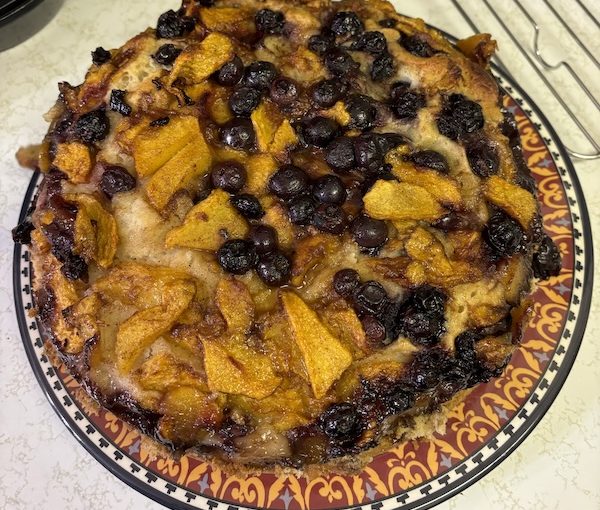
Peach-blueberry cake à la Ina Garten, made by the Accidental Balabusta. (photo by Shelley Civkin)

With Rosh Hashanah right around the corner, I’m already thinking of honey cake … but not honey cake. Wanting to ring in the new year with something sweet but not traditional, I found a recipe that might just fit the bill perfectly. Looking around the stores, there is still lots of fresh fruit to be had and, in a final hurray to summer, I decided to indulge in the juicy sweetness of peaches and local blueberries. Add in a few dozen other ingredients and, voila, I produced a cake that my husband declared worthy of a Balabusta column. 

Reading the recipe I found online at sweetandsavourypursuits.com, I was initially apprehensive, since the ingredients list reads like a Tolstoy novel. Then I thought, heck, stop being a kitchen-weeny and get the job done. If the internet is to be believed (ha!), this recipe is “adapted from Ina Garten,” the “Barefoot Contessa,” so it was all but guaranteed to be good. And it was. However, I have one caveat: the baking temperature and cooking time are way off. But that’s an easy fix.

Made in a nine-and-a-half-inch springform pan, this cake has got legs. It’s gooey and sticky and holds its own. It’s the opposite of light and fluffy, but you don’t necessarily expect light and fluffy from a fruit-filled cake. Anyway, no more excuses. Just try it. But keep in mind that you will probably need to adjust your temperature up from the stated 350˚˚ F to about 365˚ F or even higher, depending on your oven. The recipe calls for a cooking time of 45 to 55 minutes at 350˚F, but the batter was still wet and jiggly after 55 minutes, so I upped the temperature and just kept adding time until the cake set, which ended up being more like an hour and 15 minutes or so. Flexibility is a must for this recipe. Don’t expect to make it when you’re in a rush. Won’t happen. But darn, it’s worth the time.

PEACH-BLUEBERRY CAKE

1/2 cup unsalted butter at room temperature
2 cups white sugar
2 large eggs at room temperature
1 cup sour cream at room temperature
1 tsp vanilla extract
2 cups all-purpose flour
1 tsp baking powder
1 tsp baking soda
1/2 tsp ground cinnamon
1/2 tsp ground cardamom (optional, and I didn’t use it)
2 large fresh ripe peaches, peeled, pitted and sliced
3/4 cup fresh blueberries rinsed and dried
1/3 cup light brown sugar packed
1/2 tsp ground cinnamon
1/4 tsp ground cardamom (optional)

1. Place rack in the middle of the oven and heat oven to 350˚ F (as I said above, I would recommend more like 365˚ F or higher – your call). Line the bottom of a 9 1/2” springform pan with parchment paper or lightly grease it. Set aside.

2. In a large bowl, sift the flour, baking powder, baking soda, salt, cinnamon and cardamom (if using). Set aside.

3. In the bowl of your mixer, add the butter and white sugar and beat on medium-high for 3 to 5 minutes, until mixture is fluffy.

4. Add eggs, one at a time, mixing after each addition.

5. Add the sour cream and vanilla extract and beat until smooth.

6. Scrape the side and bottom of the bowl before gradually adding the flour mixture on low speed.

7. Once the flour has been added, increase the speed and beat until the batter is smooth. Don’t over-beat the batter. 

8. In a medium bowl, mix the peaches and blueberries with the brown sugar, cinnamon and cardamom (if using).

9. Spread the batter evenly into the springform pan.

10. Add the fruit to the top of the batter by arranging the peaches in a circular pattern and scattering the blueberries in the gaps. (At this point, I was so tired, I just threw the whole fruit mixture on top of the batter.)

11. Bake for 45 to 55 minutes or until a toothpick inserted in the centre of the cake comes out clean or with a few crumbs clinging to it.

12. Cool the cake on a wire rack for 10 minutes before running a knife along the edge and releasing the cake from the pan.

The recipe says to serve the cake at room temperature, but who are we kidding? As soon as I could touch the cake without burning my fingers, I was stuffing it into my mouth. The recipe also suggested serving it with sweetened whipped cream or vanilla ice cream, neither of which I had, so we ate it au naturel.

The cake can be stored at room temperature for up to two days and, after that, it should be refrigerated. But, once again, who are they kidding? As if a cake would last two days in our home. Maybe we’re gluttons. Or maybe we just wanted the cake while it was fresh. My money is on freshness. And expediency.

However you parse it, this cake is summer-yummy. And, since I can already feel fall in the air, if I were you, I’d hightail it to your local grocer, buy some peaches and blueberries and get baking. The cake was delicious right from the oven. It was delicious the next morning for breakfast. And it was still delicious that afternoon. Now, it is no longer. I have no idea if it would freeze well or not, but, if so, it would make a refreshing alternative to honey cake for Rosh Hashanah. You could probably substitute berries of any kind in this cake, but I hear that blueberries are a particularly good antioxidant food. If, however, you happen to be pro-oxidant, then skip the blueberries and opt for something less controversial. Whatever. Just try this. Then thank me. 

Shelley Civkin, aka the Accidental Balabusta, is a happily retired librarian and communications officer. For 17 years, she wrote a weekly book review column for the Richmond Review. She’s currently a freelance writer and volunteer.

Format ImagePosted on September 13, 2024September 11, 2024Author Shelley CivkinCategories Celebrating the HolidaysTags Accidental Balabusta, baking, cake, Rosh Hashanah

האנטישמיות שוברת שיאים בקנדה ובישראל לא מבינים למה

לפי נתונים אחרונים של ההסתדרות הציונית העולמית מאז השבעה באוקטובר האנטישמיות בקנדה גדלה בקרוב לשבע מאות אחוזים, לעומת התקופה המקבילה אשתקד. כשבעים אחוז מפשעי שנאה בקנדה מכוונים כנגד הקהילה היהודית המקומית. זאת בזמן שאוכלוסיית היהודים בקנדה מהווה קרוב לאחוז וחצי מאוכלוסיית המדינה

האנטישמיות שוברת שיאים בלתי נתפסים בקנדה ובעצם בכל מדינות המערב והם מדאיגים ביותר. ולמרות זאת בישראל לא מבינים בכלל מה הסיבה העיקרית לעלייה באנטישמיות נגד יהודים ואזרחי ישראל כאחד. וישראל לא מנסה להפעיל אפוא מדיניות הסברה ולימוד ברחבי העולם כדי לנסות ולהתמודד עם האתגר הקשה הזה

רובם של הישראלים מדגישים בהרחבה את העלייה באנטישמיות ברחבי העולם. זאת כדי להצדיק שהרבה יותר בטוח לחיות בישראל מאשר מחוצה לה. את הישראלים זה בכלל לא מעניין כי הסיבה לגידול המשמעותי באנטישמיות נגד יהודים וישראלים בעולם, נעוצה בתוצאות ההרסניות של פעילות צה”ל בעזה. רבים ברחבי העולם צופים ושומעים על כמות גדולה של אזרחים פלסטינים ובהם נשים וילדים שנהרגים עקב התקפות בלתי פוסקות של צה”ל. הצבא הישראלי מחפש לחסל את אנשי החמאס, הג’יהאד האיסלאמי וחברי ארגוני טרור נוספים. אך באותה עת תושבי עזה משלמים מחיר כבד מנשוא. רבים מקפחים את חייהם ומאות אלפים נותרו חסרי בית, והם נעים אנא ואנא בין איים של חורבות

לאור האובדן הגדול של חיים אדם בעזה חל כאמור הגידול המשמעותי באנטישמיות והשינאה כנגד יהודים וישראלים בכל רחבי העולם. ונראה כי לפי מדיניות ממשלת ישראל הנוכחית והעומד בראשה, בנימין נתניהו, לא יחול שום שינוי לטובה בעת הקרובה. כך שאלו שבחרו לגור מחוץ לישראל משלמים מחיר כבד שלא באשמתם

אומר יעקב חגואל, יו”ר ההסתדרות הציונית העולמית: מדובר בעלייה חסרת תקדים. בשבעה באוקטובר לא פרצה מלחמה רק נגד מדינת ישראל, אלא נגד העם היהודי כולו, עם קמפיין מתוזמן וממומן שמעורר אנטישמיות. זו תופעה שלא נראתה מאז השואה, ואנחנו יחד עם ממשלות ומדינות נוספות צריכים להילחם בתופעה הזו ולעקור אותה מהשורש. אנחנו לא ניתן לעולם לחזור לימי מלחמת העולם השנייה. כאמור חגואל לא מתייחס כלל לסוגיה מה הסיבה הישירה לעלייה באנטישמיות והיא מותם של אלפי פלסטינים בעזה בעקבות פעולת צה”ל. אי הכירה בסיבה לא תאפשר להילחם משמעותית באנטישמיות

ואילו ד”ר רחלי ברץ, ראש המחלקה למאבק באנטישמיות בהסתדרות הציונית העולמית מוסיפה: הנתונים בלתי ניתנים להכחשה. בחודשים האחרונים חל שינוי גדול לרעה ביחס אל יהודי קנדה. הדבר ניכר מאוד ברחובות ובריבוי האירועים האלימים, אבל לא פחות מכך בקרב סטודנטים, מרצים וחברי סגל בקמפוסים השונים. הרעות החולות שהפכו פופולריות במערב אירופה ובארה”ב הגיעו גם למדינה שבה מהווים היהודים פחות מאחוז וחצי מהאוכלוסייה. עם זאת, בקנדה חיים למעלה מארבע מאות אלף יהודים. מדובר בתפוצה היהודית השלישית בגודלה בעולם, וראוי שכל הגורמים הרלוונטיים יתנו את דעתם ויטפלו בתופעה חמורה זאת

לעומתם ראש ישיבת סלבודקה בבני ברק, הרב משה הלל הירש (שהוא גם חברת מועצת גדולי התורה של דגל תורה), טוען כי הניסיון לצמצם את עולם התורה, הוא זה שמביא להעצמת תופעת האנטישמיות בעולם. הרב הירש מוסיף כי עלינו שהכל מתנהל לפי פעילותו של אלוהים והכל בעצם לטובתנו. הרב מציין עוד כי אנו חיים כיום בתקופה שאינה חסרת תקדים וכלל ישראל חיות במשך מאות שנים לפני בית המקדש ולאחריו, עם אתגרים מאותם סוג של היום

Posted on September 4, 2024September 4, 2024Author Roni RachmaniCategories עניין בחדשותTags antisemitism, Canada, Gaza, Israel, Moshe Hillel Hirsch, Netanyahu, Oct. 7, Racheli Bartz-Rix, World Zionist Organization, Yaakov Hagoel, אנטישמיות, בנימין נתניהו, ההסתדרות הציונית העולמית, יעקב חגואל, ישראל, משה הלל הירש, עזה, קנדה, רחלי ברץ
Argentina, 30 years later

Argentina, 30 years later

Jewish Federation of Greater Vancouver executive director Ezra Shanken, left, and Centre for Israel and Jewish Affairs Pacific region vice-president Nico Slobinsky were in Buenos Aires last month. (photo from Jewish Federation)

Nico Slobinsky was a 15-year-old high school student in Buenos Aires when, on July 18, 1994, the principal announced that their Jewish community centre and administrative hub had been blown up in an apparent terror attack.

The Asociación Mutual Israelita Argentina (Argentine Israelite Mutual Association, or AMIA) building was attacked by a car laden with 275 kilograms of explosive ammonium nitrate fertilizer and fuel oil. The building collapsed, killing 85 and injuring more than 300. 

The AMIA attack remains the most significant terrorist attack in Argentina’s history. Two years earlier, though, the Israeli embassy in Buenos Aires was the target of a suicide bombing, on March 17, 1992, in which 29 were killed and 242 wounded.

“I remember vividly the morning that the building was targeted and blown to pieces,” said Slobinsky, now the Pacific region vice-president of the Centre for Israel and Jewish Affairs (CIJA). “I remember the pervasive feeling [that] we are no longer safe and what’s going to become of us. I remember the dinner that night at my family’s home, where the bombing, the targeting of the AMIA, was all that my parents were talking about and what was going to happen next. There was a lot of uncertainty at the time and, 30 years later, I can tell you that the same feeling of lack of justice and lack of safety persists.”

The perpetrators of the AMIA bombing have never been brought to justice, nor have the perpetrators of the earlier embassy attack. Hezbollah claimed responsibility for the 1992 embassy bombing but it was only this year that an Argentine court ruled that Iran was behind the 1994 bombing, through their international terror subsidiary Hezbollah.

Two of Slobinsky’s friends were murdered in the attack and many in his circles of acquaintances were killed or injured. He attended and helped organize memorial events on the anniversaries of the AMIA bombing when he lived in Argentina, until 2000, and then joined with the Argentine community in Israel when he lived there. 

Last month, Slobinsky traveled to Buenos Aires for ceremonies marking the 30th anniversary of the atrocities. He was joined by a small delegation of other Vancouver Jewish community leaders, including Ezra Shanken, chief executive officer of the Jewish Federation of Greater Vancouver, and his wife, Rachel Shanken, director of operations at Jewish Family Services Vancouver; Karen James, who is on the national board of CIJA and also on the board of the Jewish Agency for Israel (JAFI); and Candace Kwinter, who is on the board of  JAFI, as well as the board of Jewish Federations of Canada-UIA, and her husband, Alan Kwinter, who is on the board of Congregation Beth Israel.

The anniversary of the terror attack coincided with a meeting of the World Jewish Congress in Buenos Aires, which the Vancouverites attended.

It is widely believed that there was government complicity in the AMIA attack. Police who were routinely stationed in front of the building departed before the bombing. Rubble from the building, which should have been preserved for investigation, was dumped in a river. In 2015, Alberto Nisman, a prosecutor leading the AMIA investigation released a 300-page report accusing then-president Cristina Fernández de Kirchner and other political leaders of covering up Iranian involvement. Hours before Nisman was to present his findings to parliament, he was found dead in his apartment. The government declared it a suicide.

James was impressed with the panoply of world leaders who attended the AMIA commemoration and the WZO conference, particularly Javier Milei, the new president of Argentina, who has made justice for the AMIA terrorists a belated priority. The presidents of Uruguay and Paraguay were also in attendance, as were Jewish parliamentarians from around the world, including Liberal Member of Parliament Anthony Housefather, and special envoys for antisemitism from scores of countries, including Canada’s Deborah Lyons, Deborah Lipstadt of the United States and Michal Cotler-Wunsh of Israel.

Family members of the bombing victims spoke and time has not lessened the agony of the attack, said James. 

“They were sobbing and some couldn’t finish speaking,” she said. “There’s never been closure for them. It was so emotional. I was in tears.”

Candace Kwinter said that standing shoulder to shoulder with the families affected 30 years ago was an act of bearing witness. 

“We’ve all been to Israel since 10/7 and it just feels like another deep, dark, awful part of our history,” she said.

Supporting Slobinsky in the return to the time and place of the bombing was a motivator for those who joined the trip, according to Alan Kwinter.

“It was important certainly to support Nico and also, in this time when there is rising antisemitism and there are so many people that are turning their backs on the Jewish people, I feel that it’s important for us to come together as a community, a global community as well as the local community, and for us to be there with those families that lost their loved ones and have never had justice,” he said. “It was important for me that we show solidarity with them, that they feel that they’re not alone.”

Slobinsky acknowledged the emotional impacts of the commemoration and drew contemporary connections from lessons of the past.

“It was difficult to be there with thousands of Argentinians on the streets still asking for justice 30 years later,” he said, noting that this early life experience reinforced his commitment to taking a leadership role in Jewish life. 

“For those who argue that Canada should embrace the Iranian regime by reestablishing diplomatic ties, the 30th anniversary of the AMIA bombing that we just attended is just another painful reminder that Iran and its proxies like Hezbollah must be held accountable not only for the horrific attack on the AMIA [but] for their export of terrorism around the world,” said Slobinsky. “In memory of my friends Viviana and Christian and to the victims, the survivors and their families – I will never forget.” 

Format ImagePosted on August 23, 2024September 4, 2024Author Pat JohnsonCategories Local, WorldTags Alan Kwinter, AMIA, Argentina, Argentine Israelite Mutual Association, Asociación Mutual Israelita Argentina, Candace Kwinter, history, Karen James, memorial, Nico Slobinsky, terrorism
Positive about future   

Positive about future   

Left to right are Rachel and Ezra Shanken with their children, Vancouver city councilors Sarah Kirby-Yung and Mike Klassen, and Jewish Federation of Greater Vancouver board chair Lana Marks Pulver. The City of Vancouver proclamation designated June 25, 2024, as Ezra Shanken Day, in honour of Shanken’s 10th anniversary as head of Federation. (photo from Jewish Federation)

On June 25, Ezra Shanken, chief executive officer of the Jewish Federation of Greater Vancouver, celebrated his 10th anniversary at the job and was presented with a proclamation from the City of Vancouver by councilors Sarah Kirby-Yung and Mike Klassen declaring that day “Ezra Shanken Day.” The event took place at Federation’s annual general meeting.

Earlier this month, Shanken spoke with the Independent about the past decade, and his enthusiasm looking ahead.

The Teaneck, NJ, native, who arrived in Vancouver in his early 30s, remains one of the youngest CEOs within the 140-strong network of Jewish federations. He is quick to credit those who have helped him get to where he is today. 

“A lot of it has to do with fantastic people who were around, who believed and supported me,” Shanken said. “It helped me bring my unique self to the work and the journey. They took a chance on me 10 years ago, and I have felt incredibly privileged and thankful for the confidence that people put in me at a young age.” 

Shanken is equally thankful to have tremendous people around him at the Jewish Federation of Greater Vancouver and feels “lucky to have incredibly talented staff at a senior level who allow for a two-speed operation. We have levels in which people are able to dig deeper into issues in a substantive way,” he said.

Shanken represents the third generation in his family to have a career in the Jewish community: his father worked for Jewish organizations and his grandfather was a Conservative rabbi. Before arriving in Vancouver, Shanken spent several years at the federation in Denver, Colo., and the UJA Federation of New York. 

He likens the job of Federation CEO to that of a mayor of a small town, one that requires dealing with diverse opportunities and crises, which are presented or emerge at different times. Not to mention the myriad daily tasks he performs in his position. His work stretches through many different organizations and extends across several time zones.

A day might see him connecting with partners in Israel and others overseas in the morning, then with national colleagues. He’ll spend a portion of the day building up the community’s organizational culture, delivering what, he hopes, is a collective vision for vibrancy and care to more than two dozen partner agencies throughout Greater Vancouver and the province. He meets with community members who contribute to this vision and he engages, on behalf of the community, with allies in the public and private sectors, individuals, institutions and organizations, who work with Federation.

Looking back, he said some of his favourite memories come from Shabbat dinners over the past 10 years in which he has met with everyone from law enforcement to premiers, and countless others from various backgrounds, who have had a chance to experience and understand “who we are and, more importantly, who we are not.

“That for me has been a real blessing, now more than ever,” he said.

As it has with so many people, the post-Oct. 7 period has been a pivotal time in Shanken’s tenure at the helm of Federation. Since that tragic day, he has made three trips to Israel with public officials, parliamentarians and leaders of the local community. He plans to make a fourth trip in November.

“This has been a deeply personal journey for me and so many in my office,” he said. “I think that Oct. 7 has fundamentally changed every one of us, me included, on the soul-based level. It is part of my core responsibility to keep Ben Mizrachi’s name on the community [mind] for time immemorial. His heroic loss is one we will never forget,” he said.

Mizrachi was killed while trying to save others during the Nova music festival.

In his 20 years of working in the federation system, Shanken has been through a hurricane that knocked out power in New York and had people climbing the stairs of 40-floor apartment buildings to save the lives of elderly Jews by getting water and other supplies to them. He helped close the campaign in Seattle after the federation there was attacked in 2006. And, in the two decades, there have been multiple attacks on Israel and, of course, the pandemic.

Yet, none of his previous experiences prepared him for Oct. 7, he said.

“The sheer brutality of it and the images of it, which I have had the unenviable task of bearing witness to, has changed me fundamentally as a human being and has reinforced the need of centrality in community,” he said. 

“It also reinforced for me why I am here and what we are doing,” he added. “It could not be more clear as to why Jewish community is not just important but precious. We are going to show strength, continue to do good and put light out into the world.”

Shanken believes the next decade, in many ways, will be defined by more opportunities for engagement in Jewish community, regardless of where someone might live in the province.

“I am hoping that, as we move through the next 10 years, we will be able to look back and see a much more vibrant provincial Jewish community, as opposed to a Jewish community that is set in Victoria, Richmond and Vancouver,” he said.

Among the key things he envisages in the coming years, as Federation enters a campaign season, are coming together to push back against those who would cause harm, and creating a stronger foundation for the Jewish community.

“This is going to be about how we can be positively proud Jews,” Shanken said.

Tied to this vision, he explained, is ensuring, among other goals, that people in the community have different ways to connect, that vibrancy is built into the community, that schools are as accessible as they can be and that new people feel welcomed into the community.

The JWest project is a major part of the future. The planned 200,000-square-foot, state-of-the-art community centre, the largest infrastructure project in Vancouver’s Jewish history, will serve as a hub for more than 20 organizations, including the Vancouver Holocaust Education Centre and King David High School, as well as provide housing and child-care spaces.

As Shanken describes it, JWest will be “the physical manifestation of our community’s vibrancy in the core of Vancouver’s second town centre. It is a monument of who we are projecting onto the street.”

More broadly, he added, the growth the community will see in the next decade will be game-changing. “The next 10 years will make the last 10 years seem as though were standing still,” he predicted. 

Kicking off the next decade is Federation’s annual campaign launch Sept. 12. For more information and tickets ($36), visit jewishvancouver.com. 

Sam Margolis has written for the Globe and Mail, the National Post, UPI and MSNBC.

Format ImagePosted on August 23, 2024August 22, 2024Author Sam MargolisCategories LocalTags Ezra Shanken, Jewish Federation of Greater Vancouver, milestone, Oct. 7, reflections

No slow news days here

In the journalism biz, summer is generally considered slow news season. That’s why our publishing schedule takes a bit of a hiatus. Then there are years like this one.

Rarely in political history has anything so upended American politics than the debate by President Joe Biden against former president Donald Trump June 27. Biden’s performance was deemed so portentous of defeat that a groundswell of Democratic party operatives mobilized to replace him on the ticket mere weeks before the election.

Avoiding potentially divisive competition, the party instantaneously rallied around Vice-President Kamala Harris, who then selected Minnesota Governor Tim Walz as her running mate and, according to early opinion polls, the race has been completely shaken up. This week’s Democratic National Convention was the Harris-Walz ticket’s effort at solidifying the momentum that began with her selection a month ago.

Practically the only bad news the Democrats have had during this honeymoon period has been the disruptions at Harris rallies and at the convention by anti-Israel campaigners and those pushing for an end to the Gaza war. As the vice-president said to one group of hecklers, “If you want Donald Trump to win, say that.” 

Israel’s opponents are not the only ones agitated by the Democrats position on the Gaza war. At the fringes of the pro-Israel movement are those who believe a President Harris would undermine the US-Israel relationship and those who have particular concerns about Walz. In fact, both candidates are effectively in line with the mainstream Democratic party and larger American consensus, which recognizes the invaluable and special relationship between the two countries.

On the other hand, pro-Trump Zionists, who insist that the former president’s rhetoric and family connections guarantee a degree of loyalty to Israel, premise these assumptions on the flawed idea that Trump has loyalty to anything beyond his own self-interest or that he subscribes to any coherent position on anything. And they ignore his connections to and endorsements of far-right and antisemitic figures and movements. As we saw on Trump’s 180-flipflop on electric vehicles after he was endorsed by Tesla-founder Elon Musk, or on bitcoin or on TikTok after donations and endorsements from other billionaires, Trump has no core principles. It would not be in the interest of Israel, American Jews, Jews around the world, or the rest of the world to trust the future to a person who is demonstrating increasingly erratic behaviour and policies.

The Democratic party’s comparatively speedy defenestration of their incumbent president has inspired some members of Canada’s Liberal party to wonder if such a political decapitation might happen here.

The incumbent government is stuck in opinion polls far behind the opposition Conservatives, led by Pierre Poilievre. The loss of an erstwhile safe Liberal seat in a Toronto by-election in June has a number of Liberals wondering if self-preservation demands the replacement of Prime Minister Justin Trudeau as leader. This fall’s return to Parliament – and probably the outcome of two upcoming by-elections, especially one in a relatively safe Liberal seat in a Montreal suburb – will almost certainly determine whether the Liberals stand by their man or take a lesson from their cousins to the south. 

Still closer to home, British Columbia politics has been heating up over the summer. The BC Conservative party under leader John Rustad is polling higher than that party has dreamed in about a century. Since being thrown out of the BC Liberal caucus two years ago, Rustad has taken the failing provincial Tories – a party that last won an election in 1928 – to opinion poll heights of a few points off top spot.

Kevin Falcon, whose disastrous rebranding of the BC Liberals to BC United seems to have left millions of voters unclear on what party he leads, is now in the single digits and faces complete obliteration, if polls are to be believed. Fears of a split centre-right vote (a perennial driver in BC politics for a century or so) seems to have been obviated by an overwhelming consensus by non-NDP voters to rally around the BC Conservatives.

Of course, campaigns matter. When voters realize that Falcon’s party is the one they used to know as the BC Liberals, some may return to familiar patterns, especially since BC United has frantically prevailed on Elections BC to allow them to include both their new and old names on this fall’s ballots.

It all just goes to show that you should take nothing for granted. With the BC election on Oct. 19, the US election on Nov. 5 and a minority Liberal government with increasingly uneasy backbenchers (and frontbenchers), the slow news season of the summer seems likely to usher in a rather exciting autumn. It’s going to be a bumpy ride. 

Posted on August 23, 2024August 22, 2024Author The Editorial BoardCategories From the JITags American election, BC Conservatives, BC election, BC United, democracy, Democratic convention, elections, Harris-Walz, John Rustad, Kevin Falcon, voting

Resolving Gaza dilemma

Israel needs to adopt a long-term objective in its response to Hamas’s attack of Oct. 7. Israel’s immediate objective is the defeat of Hamas. The question becomes what is to happen not only to Gaza but also to the West Bank when that happens.

For Israel simply to withdraw from Gaza would lead to a resuscitation of Hamas. For Israel to stay in Gaza would revive the problems which led to its withdrawal in 2005.

The recent negotiations around a ceasefire, release of the hostages, an Arab peacekeeping force and Israeli recognition of a Palestinian state, if accepted, would keep Hamas in power. The May 31 proposal of US President Joe Biden, which would keep Hamas in power in Gaza, is a non-starter. A ceasefire was already in place on Oct. 6, before the Hamas attack of Oct. 7. For Hamas, a new ceasefire would be a rearmament pause before its next attack on Israel. The Hamas leadership has said as much.

Simply putting the Palestinian Authority nominally in charge of Gaza leads to the same dead end. In the 2006 Palestinian elections, Hamas won. There have been no elections since then. With a new election, the result would likely be the same.

For peace negotiations to reach a plausible agreement, both an ideal result in mind and a strategy to reach that result must be in place. The ideal solution is well known – two states living side by side in peace with each other. The strategy should be directed to overcoming the widespread animosity among Palestinians to the existence of Israel and the resignation of Israelis to the reality of that animosity.

To want to live side by side in peace with each other, both populations must want peace. The continued terrorism against Israel and Israelis emanating not only from Gaza but also from the West Bank, as well as the Palestinian Authority’s failure to accept one Israeli peace plan after another, has made the Palestinian Authority not a credible peace plan partner and has generated radicalism within Israel opposing peace.

Among the Israeli residents of the West Bank, there are groups who engage in terrorism against Palestinians in pursuit of the integration of the West Bank into Israel. The government of Israel has been remiss in preventing this terrorism and remedying the consequences.

Current negotiations with Arab states may give the Palestinian Authority again a peace plan offer, this time, one they may accept. The suggestion that they would or even could implement a peace plan effectively is a lot harder to credit.

Instead, those Arab states currently proposed as contributors to a possible peacekeeping force after a ceasefire should agree, along with the Palestinian Authority, on something different. They should agree to deny Hamas’s propaganda, counter Hamas’s allies, and stand against Hamas’s physical and military survival. In areas of Gaza where Hamas has been defeated, the Israel Defence Forces would withdraw, to be replaced by Arab coalition forces, led by Egypt, as governing trustees. The same coalition, led by Jordan, would advise and assist the Palestinian Authority to act consistently in the West Bank with what the coalition is doing in Gaza. The United Nations General Assembly, if the proposed Arab coalition and the Palestinian Authority took the initiative, could authorize the UN Trusteeship Council to supervise the trusteeship over Gaza.

The proposed trusteeship would step into the shoes of the Palestinian Authority, with sole control over Area A outlined in the Oslo Accord, joint control with Israel in Area B and no control over Area C. The boundaries of the West Bank trusteeship, under this arrangement, could be shifted to take into account territorial swaps proposed in various peace negotiations.

To Israel, that sort of agreement would signal commitment by the Arab coalition to the defeat of Hamas and a lasting peace. From an Arab coalition perspective, Hamas’s defeat would mean victory over a common enemy, reining in terrorism based on distortions of Islam, a form of terrorism that has plagued the Arab world. From a Palestinian perspective, such an agreement could provide security for distribution of aid and medical supplies, which, despite the abundance of deliveries, has been to date difficult and dangerous.

Eradicating the terrorist threat completely is unrealistic even in the most peaceful of states. An Arab coalition Gaza trusteeship and a West Bank advice and assistance role would remain in effect until such time as Gaza and West Bank can form a functioning state; until the terrorism threat emanating from these territories is marginalized; and until Palestinians generally are ready to accept Israelis as their neighbours.

This Arab coalition trusteeship for Gaza and advice and assistance role for the West Bank may be lengthy, lasting even a generation. The education of children in Gaza and the West Bank has motivated many Palestinians to seek death through killing or trying to kill Jews in order to become religious martyrs who have earned afterlife redemption. That education must be undone.

Peace between Israel and a Palestinian state is an ideal. Realizing that ideal requires taking steps which address directly the causes of failure of all peace efforts to date. 

David Matas is an international human rights lawyer based in Winnipeg and senior honorary counsel to B’nai Brith Canada. Noemi Gal-Or is a retired professor of international relations and an international law lawyer based in Vancouver.

Posted on August 23, 2024August 22, 2024Author David Matas and Noemi Gal-OrCategories Op-EdTags Arab coalition, Gaza, Israel-Hamas war, peace, postwar, two-state solution

Haiku signs in the bathroom

This summer, our main event was a road trip. My husband had a conference at Cornell University in Ithaca, NY. Since we met at Cornell as undergrads 30 years ago, we thought it might be worthwhile to make this a family trip. We hadn’t been back in 20 years. 

When you go back to old haunts, they might not be what you expect. There were so many new campus buildings. I took our twins on a campus tour where a 19-year-old guide talked about economics (her major), business and start-ups. When she asked the alumni in the group about their majors, I told her I was a double major: comparative literature and Near Eastern studies. She said, “So interesting!” in a tone that made it clear she thought I was ancient and bizarre.

I didn’t feel at home in Ithaca, which I used to feel was “my place.” My kids found holes in Cornell’s sustainability mantras that I used to deeply respect. While trying to dry clothing by draping it in the back of the car, for example, they pointed out there were no clothes lines in the dorms where we stayed or outdoors. When we went to buy the obligatory university sweatshirts, they couldn’t believe the campus store stocked tons of branded items made entirely of synthetics – manufactured from petroleum and likely made in poor working conditions. 

When we visited a renovated cafeteria, where I had eaten with my husband when we first met, we had to go to the washroom. Each stall had a short message posted. It explained what not to throw down the toilet. It also explained what had happened to require the message to be posted. It was the soul of brevity, a haiku of sorts, but it answered every question that a smart-mouthed adolescent student might ask.

With a smirk, I commented that this was still my kind of place – it offers the full explanation. As an adult, I’ve lived in places without the full explanation. Here’s an example: when an event is announced in Winnipeg, there is a start time, usually with a vague location, and the announcement just assumes everyone knows where it is. There’s also an assumption that you’ll know that, if food will be served, what kind of food, and what else is likely to happen. If there is a contact number at the end, it’s a postscript that reads, “If you are dumb enough to not understand this, call this person – but, guess what, they won’t know either.” Admittedly, I’m paraphrasing a little here, but, inevitably, if I call that number, the person is completely stymied by my questions. They wonder about why anyone would need to know what I am asking. They aren’t used to newcomers who might not know what to expect or who need all the details.

Maybe I’m just that annoying person who likes to know what I’m getting into, but when I hang out with relatives from bigger cities, their event schedule is full of the pertinent details. When I look at my sister-in-law’s fridge, in the DC suburbs, every single school event flyer or invitation has all the information. Maybe it’s a Type A thing? Even if they’re uptight, those are my people.

Recently, we had a visit with a local teacher here in Winnipeg and she mentioned a place run by two nice Jewish guys, called Friend Bakery and Pizzeria, which has delicious cinnamon buns. The bakery’s not near our usual activities. Out on an errand, we stopped in. We were greeted by the owners. They were welcoming, and open to our family deliberations. While we eyed the big $11 challahs, I said it was too bad that we’d already started ours in the bread machine – because it’s summer and I’m so not turning on the oven. The man nodded with understanding. We wished each other Shabbat Shalom. I got a little teary driving home. I had found more of my people.

Finding one’s “people” isn’t easy or without contention. Wandering around Ithaca on our trip, I encountered a Gaza war propaganda sticker with real venom to it. I was upset. For the first time ever, I unpeeled that sticker and threw it away. They might be free to spread misinformation, but I was just as free to see its harmful hate and throw it out.

Summer is for rest, reflection and productivity. I felt physically rested after spending many days in the car. Yet summer is also a time for growing things, embracing learning out of school and in the world. My kids saw lakes, gorges and waterfalls, ate lots of ice cream and watched Ferris Bueller’s Day Off for the first time. (The movie is still funny.) The grandeur of steep craggy landscapes and huge lakes is still awe-inspiring. 

My world has narrowed some since Oct. 7. I actively avoid encounters where I suspect my household might face hate or harassment. A friend and ally suggested that it must be even more upsetting when it happens in a place where I’m relaxed and least suspect it. The places where I used to feel safe are painful to be in.

Even so, I’ve felt love, support and outreach from unexpected places. Two close non-Jewish mom friends, who consistently wish me Shabbat Shalom, encourage me to vent and they listen with love. A few of my husband’s colleagues and friends’ parents just contacted us out of the blue to say they care and are thinking of us.

I don’t know “where we go from here” in the middle of a war, and the hate it’s stirred up. I think about the bathroom sign haiku with a weird fondness. It said everything that needed saying. I wish bigger, scarier times allowed for that kind of precise explanation and brevity, but I know it isn’t possible. Smart people disagree, struggle and work to find meaning. This is what Torah and Jewish rabbinic tradition models for us. The key is to keep it up, not lose hope, and to avoid the paralysis that comes with irrational fear.

When we find “our people,” they don’t always agree with us, and things are always changing. A long road trip can remind us that we’ve been stuck in ruts. But, sometimes, the GPS directions are wrong. We need our brains, a hard copy map and common sense to get out of tricky situations; autopilot doesn’t always suffice. However, our personal and historic experiences offer a roadmap of what has gone before and what might lie ahead. With that context, we can go forward: towards a new school year, a new Jewish year, new learning and better times. 

Joanne Seiff has written regularly for the Winnipeg Free Press and various Jewish publications. She is the author of three books, including From the Outside In: Jewish Post Columns 2015-2016, a collection of essays available for digital download or as a paperback from Amazon. Check her out on Instagram @yrnspinner or at joanneseiff.blogspot.com.

Posted on August 23, 2024August 22, 2024Author Joanne SeiffCategories Op-EdTags family, poetry, reflections, road trip
Holding faith at rallies

Holding faith at rallies

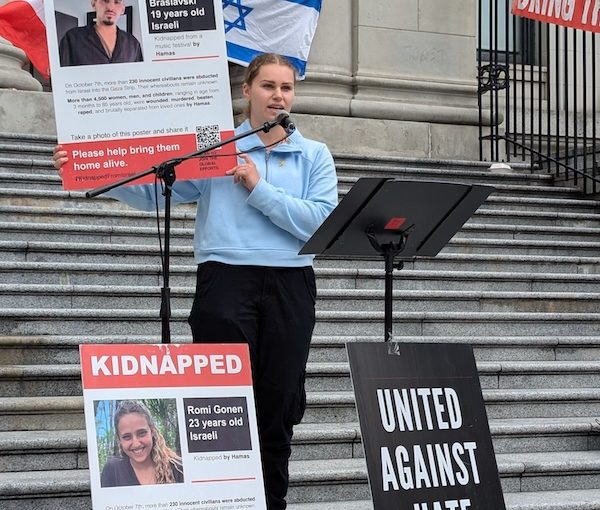
UBC student Zara Nybo, a non-Jewish ally, holds a poster of Rom Braslavski, as she speaks of his heroism before he was taken hostage to Gaza on Oct. 7. (photo by Pat Johnson)

As negotiations continued in Doha, Qatar, for the release of Israeli hostages, the weekly rallies in support of those held, their families and all Israelis continued Sunday, Aug. 18, at the Vancouver Art Gallery.

“As a university professor and as a Jew, I have been forced to witness the frontlines of a propaganda war to dehumanize and demonize Jews and to delegitimize the nation of Israel,” said Prof. Steven Plotkin, a University of British Columbia physicist.

The Hamas strategy is one of “asymmetric warfare,” he said, in which they bait Israel Defence Forces with attacks and hostage-takings, then use their own Palestinian civilians as human shields, knowing that the casualty numbers and horrible images will evoke sympathy in the West.

“And we’ve seen it,” he said. “The encampment and the protests at UBC quickly turned from advocating for the human rights of Palestinians to a call for the end of Israel.”

On campus, the messages he saw included the now familiar “From the river to the sea, Palestine will be free,” but others on the same theme, including “We don’t want your two states! Take us back to ’48” and “Resistance is justified when you are occupied.” Another common refrain, he said, is “‘Globalize the intifada.’ That means bring terrorism everywhere, including here in Canada.”

“Long live Oct. 7” was yet another slogan the professor saw on his campus. 

“Let that sink in,” he said. 

When reports of extensive sexual abuse by Hamas and other Palestinians who broke through the border on Oct. 7 became known, he said, “I saw posters at UBC that announced a discussion group for ‘the lies that Zionists spread about the sexual abuse that didn’t occur on Oct. 7.’”

Plotkin reflected back to the days after the 9/11 terror attacks in New York City, when people put up posters of their lost loved ones.

“Could you imagine what kind of person would think to tear one of those down? No one would have dreamed of it,” he said. “And now we’re seeing a world whose moral compass has completely lost its direction.”

Posters of Israeli hostages are routinely torn down at UBC, elsewhere in Vancouver and around the world. Plotkin shared a psychological hypothesis for why this desecration is so rampant.

In the identity-centred worldview of many activists, Plotkin said, morality is determined by one’s position in the hierarchy of oppression.

“The less powerful are pardoned, the more powerful must be guilty,” he said. Because Hamas is less powerful than Israel, Israel must be guilty, despite the evidence of Hamas murdering, raping and abducting Israeli civilians. 

“A hostage poster, however, throws a wrench into that framework because it forces them to cope with the idea that the people that they thought were oppressed could actually be in the wrong,” Plotkin said. “Their whole simplistic worldview of the blameless oppressed and the evil oppressor is undermined by the ugly facts contained in the posters. A hostage poster induces a cognitive dissonance and, rather than question their own worldview, it’s easier for them to see it as pro-Israel propaganda designed to elicit their sympathy for the Jews in Israel, the bad guys, and so they feel compelled to tear the poster down.”

Eyal Daniel, a Burnaby high school teacher who specializes in Holocaust and genocide studies and who is president of the Holocaust and Antisemitism Educators’ Association, spoke about how his group was denied recognition by the BC Teachers’ Federation. 

Representing close to 150 educators, the group applied to become one of the BCTF’s provincial specialist associations.

“Our application was rejected without any given reason,” he said. “Currently, there are no educational resources about the Holocaust and antisemitism for teachers in the province.”

Conversely, Daniel said, the province’s 50,000 teachers are bombarded by their union with materials promoting the elimination of the state of Israel.

The provincial government has mandated that Grade 10 students must receive Holocaust education beginning in 2025 and it is said to be working on curriculum materials. 

Despite the lack of recognition from the BCTF, Daniel’s group will continue to work “as if we had been approved,” he said.

“Therefore, these days, we are in the process of constructing a new website, developing useful, meaningful professional development opportunities for teachers, assessing and developing appropriate educational materials and working with the minister of education on the upcoming Grade 10 Holocaust education curriculum framework,” he said.

Daniel spoke of his family’s recent visit to Israel, where they visited the site of the Nova music festival.

“Stepping out of the car into the desert heat, we were immediately surrounded by the haunting silence,” he said, “but, yet, 364 voices called out from the ground: Where is the humanity? The Nova memorial site is a barren killing field where humanity ceased to exist.”

Rabbi Susan Tendler of Congregation Beth Tikvah, in Richmond, spoke of the need for dialogue.

“In civic discourse … we’re yelling more than we’re listening,” she said. “So many of us will talk about the need to listen to one another but instead we’re just angry and have an inability to actually talk to one another.”

She asked people to see the humanity of others as a starting point to dialogue.

“To be a Jew means to respect and understand that every single human being was created in the image of God,” she said. “Let us continue to work for peace in the region that so, so sorely needs healing.”

Zara Nybo, a fourth-year student at UBC, is an ally to the Jewish community, president of the Israel on Campus club, and an Emerson Fellow with the international advocacy group StandWithUs. She shared recollections of a training conference in Los Angeles from which she and scores of other campus activists recently returned. At an LA rally for the hostages, she heard profoundly moving testimonies from family members of those still held in Gaza.

“Most people around me, men, women, had tears streaming down their face,” said Nybo. “We were all holding each other in collective grief.”

The mother of Rom Braslavski spoke of how her son had been a security guard at the Nova music festival and took it upon himself to hide the bodies of murdered women, both so they would not be taken to Gaza and so that they would not be posthumously raped or mutilated, as he had seen other female bodies desecrated. Braslavski was taken hostage in Gaza.

As Nybo and her fellow students prepare for the new academic year, she emphasized the training they have undergone and the determination with which they will return to campus.

“I will tell you we are committed to this fight,” she said. 

Richard Lowy, who has provided vocal and guitar inspiration at almost every rally for months, spoke of the hope that a resolution will come through negotiation.

Event organizer Daphna Kedem recounted the rally in Tel Aviv the evening before and expressed hope that the hostages will be released soon and that the weekly rallies she has organized for 10 months will cease to be necessary.

Format ImagePosted on August 23, 2024August 22, 2024Author Pat JohnsonCategories LocalTags antisemitism, BCTF, Bring Them Home, Daphna Kedem, Eyal Daniel, Hamas terror attacks, Holocaust education, hostages, Oct. 7, rally, Richard Lowy, Steven Plotkin, Susan Tendler, terrorism, Zara Nybo
Volunteers help rebuild Israel

Volunteers help rebuild Israel

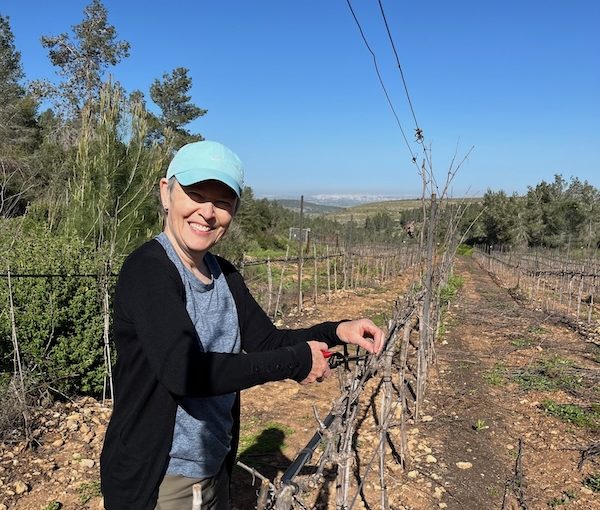
Vancouverite Gail Mattuck volunteering in Israel after Oct. 7. She found her placements with the help of the Sword of Iron – Israel Volunteer Opportunities Facebook group. (photo from Gail Mattuck)

They’re coming from around the world, taking a leave from their jobs to help rebuild Israel with their own hands. These are volunteers who have filled the labour gaps in the aftermath of Oct. 7, visiting farms or soldiers or hostage families; attending shivas, packing food for reservists and more.

Vancouverite Gail Mattuck is one of tens of thousands of people who have volunteered. But, if it weren’t for the Sword of Iron – Israel Volunteer Opportunities Facebook group that guided her to where she could help, she likely would not have lent a hand. 

Led by Hagit Greenberg Amar and Yocheved Kim Ruttenberg in Israel, the group provides a running list to its 35,000 followers of where people can volunteer.

Mattuck chose a Chabad centre that assisted with food security, packing food for evacuees and making sandwiches for children of reservists. She also volunteered at Castel Winery, in the Jerusalem hills, to cut wires for the grape vines to grow on. 

“For my friends in Israel, they were really happy to see me, of course, but they appreciated I was there to be there during that time. Lots of people just thanked me for being there. Without that Facebook group, I couldn’t have done it,” said Mattuck.

“One of my friends lives up north,” she said. “There are missiles coming over there all the time. Her sons were in Gaza fighting. It’s very personal for them. For me to be there, they appreciated it. My sense was of a country that was incredibly hurt but not broken.” 

Mattuck has a close connection to one of the people killed at the Nova music festival, and made her trip in his memory.

Born and raised in Baltimore, Ruttenberg attended university in South Florida, then moved to Dallas, where she worked in construction sales. She and her brother had plans to go into real estate together after he completed his Israel Defence Forces service. He was scheduled to be released on Nov. 12, 2023.

Her brother was stationed in the south on Oct. 7, and she woke up to a text message alerting her to the attack, and his arrival in battle a few hours later. It was then and there, she felt the need to help. She intended to stay in Israel for a couple of weeks.

“I couldn’t not be here during that time,” she said. Within three days, she was on a plane, carrying 23 duffle bags of donations for soldiers, worth $17,000. Three days before her return flight, she quit her job. “I can’t go home. I need to be here,” she told her boss. 

“When the war started here in Israel, we didn’t know what to do,” said Amar. “So, we started to think about what we already know how to do. We started to import. We started with battery power banks, then medical equipment, things the Marines used in emergencies. A lot of special units came to our place. Then, we met [Ruttenberg’s] brother.”

It was Ruttenberg’s brother who introduced Amar to Ruttenberg.

In the beginning, Ruttenberg corralled volunteer information from various WhatsApp groups, Google Translated them and posted them. In late November 2023, the Facebook group formally launched.

Yael Yom Tov Emmanuel joined the page on day one, and matched thousands of volunteers to different opportunities. Since then, two other team members have joined – Ariel Boverman and Sarah Emerson Halford. They have since created a Google Docs document for members, so that prospective volunteers can search by area and specialty. 

The initiatives have impacted numerous lives by coordinating farm volunteers, aiding soldiers, assisting at food banks, and participating in reconstruction efforts in the south. The group has emerged as an essential resource for both residents and visitors, linking individuals with opportunities to make a difference.

“It blows me away to see how many people have done something outside their comfort zone in such a big way. People come to Israel for the first time in their lives, alone, in the middle of a war,” said Ruttenberg.

Group members are vetted carefully, something Amar says is one of the challenges in dealing with a hundred requests per hour. They have had to turf some infiltrators.

“It’s a 24/7 operation because we have people all over the world,” said Ruttenberg. “We all have our different roles. Some are more on the Facebook page interacting. A lot of my time is going into the field and meeting volunteers and interacting. But it’s a full-time job – beyond a full-time job.” No one is financially compensated for their time.

When Ruttenberg is not dedicating her time to the volunteers, she works part-time in marketing and sales consulting. She recently finished a US speaking tour and said that, while in Texas, half the room were Christians, they wept at her stories and couldn’t wait to get involved.

“People are sitting at home and feel helpless,” she said. “When your country is at war, when there’s antisemitism through the roof and you are not in the military and are not medically trained, you feel like there is no way to give back. It makes me incredibly proud to see, and incredibly proud to meet, the volunteers who are helping rebuild Israel with their bare hands.”

Amar, who lives in Ramat Gan with her three children, was previously chief executive officer of a brand and strategy company. She is now pursuing a second degree, in social work, at Haifa University, with an aim to offer therapy and mental health services.

“I think this group created a place where you could feel safe and be part of a community. There are real friendships in real life that occurred from the group. If somebody needs something, we always find someone to be with and support them,” Amar said.

“I think part of what we are doing is creating ambassadors, and changing the narrative about how people see Israel, showing Israel as a beautiful place,” added Ruttenberg. “Everyone who comes here meets soldiers and other people who are grateful. Israelis see people come from LA, just to pick tomatoes – we really appreciate that.” 

Dave Gordon is a Toronto-based freelance writer whose work has appeared in more than 100 publications around the world. His website is davegordonwrites.com.

Format ImagePosted on August 23, 2024August 22, 2024Author Dave GordonCategories Israel, LocalTags Facebook, Gail Mattuck, Hagit Greenberg Amar, Israel, labour gaps, Sword of Iron, Vancouver, volunteering, Yocheved Kim Ruttenberg

Posts pagination

Previous page Page 1 … Page 76 Page 77 Page 78 … Page 667 Next page
Proudly powered by WordPress