Skip to content
  • Home
  • Subscribe / donate
  • Events calendar
  • News
    • Local
    • National
    • Israel
    • World
    • עניין בחדשות
      A roundup of news in Canada and further afield, in Hebrew.
  • Opinion
    • From the JI
    • Op-Ed
  • Arts & Culture
    • Performing Arts
    • Music
    • Books
    • Visual Arts
    • TV & Film
  • Life
    • Celebrating the Holidays
    • Travel
    • The Daily Snooze
      Cartoons by Jacob Samuel
    • Mystery Photo
      Help the JI and JMABC fill in the gaps in our archives.
  • Community Links
    • Organizations, Etc.
    • Other News Sources & Blogs
    • Business Directory
  • FAQ
  • JI Chai Celebration
  • JI@88! video

Recent Posts

  • Eby touts government record
  • Keep lighting candles
  • Facing a complex situation
  • Unique interview show a hit
  • See Annie at Gateway
  • Explorations of light
  • Help with the legal aspects
  • Stories create impact
  • Different faiths gather
  • Advocating for girls’ rights
  • An oral song tradition
  • Genealogy tools and tips
  • Jew-hatred is centuries old
  • Aiding medical research
  • Connecting Jews to Judaism
  • Beacon of light in heart of city
  • Drag & Dreidel: A Queer Jewish Hanukkah Celebration
  • An emotional reunion
  • Post-tumble, lights still shine
  • Visit to cradle of Ashkenaz
  • Unique, memorable travels
  • Family memoir a work of art
  • A little holiday romance
  • The Maccabees, old and new
  • My Hanukkah miracle
  • After the rededication … a Hanukkah cartoon
  • Improving the holiday table
  • Vive la différence!
  • Fresh, healthy comfort foods
  • From the archives … Hanukkah
  • תגובתי לכתבה על ישראלים שרצו להגר לקנדה ולא קיבלו אותם עם שטיח אדום
  • Lessons in Mamdani’s win
  • West Van Story at the York
  • Words hold much power
  • Plenty of hopefulness
  • Lessons from past for today

Archives

Follow @JewishIndie
image - The CJN - Visit Us Banner - 300x600 - 101625

Author: Shanie Levin

The effects of isolation

The effects of isolation

How technology can connect people and reduce social isolation was the topic of the Jewish Seniors Alliance’s fall symposium. (photo from pixnio.com)

At the fall symposium of the Jewish Seniors Alliance, which took place on Zoom Nov. 21, attendees heard from experts on the topic Triumphs and Trials Using Technology: Social Isolation Among Older Adults.

Dr. Kristen Haase, assistant professor of applied science at the University of British Columbia School of Nursing, and Dr. Megan O’Connell, professor of geriatric psychology at the University of Saskatchewan, were welcomed by Gyda Chud, co-president of Jewish Seniors Alliance. Chud pointed out that this session related to the key pillars of JSA:

  1. Outreach: to seniors in the community.
  2. Education: we can learn from the professors’ study results.
  3. Peer support: JSA has projects that help combat loneliness and isolation.

Of their study on social isolation among older adults during the pandemic, Haase said they wanted to explore how the inability to interact in person during the pandemic has impacted seniors. She mentioned that two scientific publications – The Lancet and The Journal of the American Medical Association – had commented on the detrimental effect of isolation on seniors. Haase and O’Connell wanted to look at the effects and what could be done to alleviate them.

There is empirical evidence that social isolation impacts mental, physical and cognitive health. Since technology can facilitate social connection, the idea was to train older adults to use these facilities to lessen their isolation. Use of both the telephone and Zoom was embraced by many older adults, and even those people with some cognitive impairment could be trained to use Zoom and other such tools.

Haase and O’Connell reached out to groups and individuals in British Columbia and Saskatchewan for participants. Four hundred individuals and 41 seniors groups were involved in the study, including JSA. Two of the questions were: How did they change their programs? and How did they maintain social connections?

Some groups opted to meet outdoors. The advent of a vaccine helped alleviate some fears. One of the findings was that introverted people, as well as those who lived in rural areas and those who had family nearby, fared better than more extroverted people.

Many community groups rose to the challenge and introduced new technology to their members. In addition to providing training, they also kept in touch with frail members. In rural areas, where broadband access was problematic, groups had to make major use of the telephone. A 1-800 line was purchased to facilitate contact in these areas. These types of disparities in access were highlighted by the pandemic.

A few community groups closed during COVID, but many rose to the occasion by staying in regular contact, providing iPads to clients and helping them learn how to use them.

Haase and O’Connell then turned to the audience for any questions or other information that would help with their research.

One question was how do we find the truly isolated, as we usually rely on people to self-identify if they are in need. The poser of that question, Larry Shapiro, pointed out that, in the United Kingdom, they use the postal service to check on isolated individuals.

Another issue raised was whether groups should continue with a hybrid model of services – this would involve in-person events plus a Zoom possibility. Hybrid models make programming more accessible for those who are ill or who have a disability that impedes mobility. As well, many older adults are still fearful and need help to re-enter society. Funding would be needed to facilitate such programs.

Tammi Belfer thanked the speakers for their research, which was helping improve the lives of older adults.

Shanie Levin is program coordinator for Jewish Seniors Alliance and on the editorial board of Senior Line magazine.

Format ImagePosted on December 10, 2021December 8, 2021Author Shanie LevinCategories LocalTags health, healthcare, isolation, Jewish Seniors Alliance, JSA, Kristen Haase, Megan O’Connell, research, seniors, UBC, University of British Columbia, University of Saskatchewan
Finding the goddess in the Torah

Finding the goddess in the Torah

(photo by Yochi Rappeport)

Rabbi Gila Caine of Edmonton’s Temple Beth Ora was the lead-off speaker in November for Kolot Mayim’s six-part 2021/22 series Building Bridges: Celebrating Diversity in Jewish Life. Her talk, Toratah / Her Torah: Women Rabbis Revealing the Goddess in Torah, looked at the Tanakh (Hebrew Bible) from a less patriarchal perspective.

“It’s not new to have women involved in Jewish life. Women have always been involved in Jewish life in the home and in the family,” Caine began. “The new thing about recent generations is that women are publicly active. That’s a big difference.”

For the last few decades, she said, scholars have gone back into the text and started digging to find hints and remains of ancient goddesses. By goddess, Caine means the “sacred feminine.” The scholars search the texts to see if they can unveil clues, much like archeology, which will allow them to tell different stories than the ones that have already been told.

“It’s not that the researchers find the old stories useless; rather, they see it as just one part of the whole. To expand the story, the researchers pose questions, such as what did women believe in, how did they worship, and what were their lives like and what did God look like to them at that time?” Caine explained. The text is reinterpreted, and turned into commentaries and midrashim. As an example, she introduced the audience to two recent books: Dabri Torah: Israeli Women Interpret the Torah (published this year, in Hebrew) and Torah: A Women’s Commentary (WRJ Press, 2008).

Throughout her talk, Caine wove connections of Asherah, the mother goddess in ancient Semitic religions, to the heroines of the Torah, such as Sarah and Eve (Chava). Asherah is perceived as hiding within the texts. (Asherah, too, was connected to the Tree of Life, which, in images shown during Caine’s presentation, resembled a menorah.)

One midrash highlighted in the talk related to the Binding of Isaac. In it, Sarah goes and spends the night with King Abimelech. She does not sleep with him but still comes back pregnant, leaving Abraham furious. He hears voices telling him he must kill his son. As he raises his hand to slaughter Isaac, suddenly he sees a deer in the bushes.

This is interpreted as the moment of transition into patriarchy. The deer represents the mother goddess who wants to save her son. “As Sarah dies right after the Akedah, she perhaps does so to save her son,” Caine said.

On the subject of Eve, Caine quoted Rabbi Rachel Adler: “the world of patriarchy cries out for mending. A mending world would commit itself to equality and power sharing, to working collectively to fulfil needs and solve problems. Reunited again with the rest of Creation, men and women could learn again to be loving friends as the traditional rabbinic wedding blessing portrays them.”

Caine pointed out that Adler – through her rereading of the text and reinterpreting what a Jewish relationship is about – restructured the Jewish wedding ceremony. She took the Jewish language of covenant into the ceremony and not kinyan, which implies taking ownership, and created a brit avuhim, or lovers’ covenant. (See ritualwell.org/ritual/brit-ahuvim-lovers-covenant.)

Lastly, Caine spoke about a project, led by Israeli-American artist Yael Kanarek, to rewrite and regender the Torah, i.e., a male in the traditional text is now referred to as female and vice versa. Though the story remains the same, there would now be, for example, a female Jacob with 12 daughters and four husbands. “Suddenly, we have a mirror image of Torah,” said Caine. “It’s very interesting to read it and the immense midrash that it creates for Torah, as well as for our own understanding of who is telling the story and who is part of the story.”

When looked at this way, Caine said, new things come up and are discovered in Torah. By finding the sacred feminine in the texts, she said she is able to understand how she relates and could be part of the process of studying Torah.

“It’s part of a larger question of how do we heal our tradition and take a Judaism that seems at times very disconnected from the earth. By being able to access the language of goddess, it has enabled me to reimagine and to rethink how I do ritual and Judaism, and how I do everyday life – that aims not at the goddess at all – and create a Judaism that speaks to us now in our lives today.”

Born and raised in Jerusalem, Caine graduated the Hebrew University with a master’s in contemporary Judaism and received her rabbinic ordination at the Hebrew Union College-Jewish Institute of Religion’s Israeli program in 2011. Her rabbinic thesis explored liturgical, spiritual and ceremonial aspects of birth in Jewish tradition and contemporary practice. Stemming from that, as well as her years as volunteer at a rape crisis centre, she is one of the founders of the Israeli rabbinic women’s group B’not Dinah, creating a female and feminist rabbinic tradition of healing after sexual trauma.

For more information about Beit Toratah visit beittoratah.org. To register for the next Building Bridges lecture, go to kolotmayimreformtemple.com.

Sam Margolis has written for the Globe and Mail, the National Post, UPI and MSNBC.

Format ImagePosted on December 10, 2021December 8, 2021Author Sam MargolisCategories LocalTags Beit Toratah, Gila Caine, healing, Judaism, Kolot Mayim, Rachel Adler, Torah, tradition, women
Community support valued

Community support valued

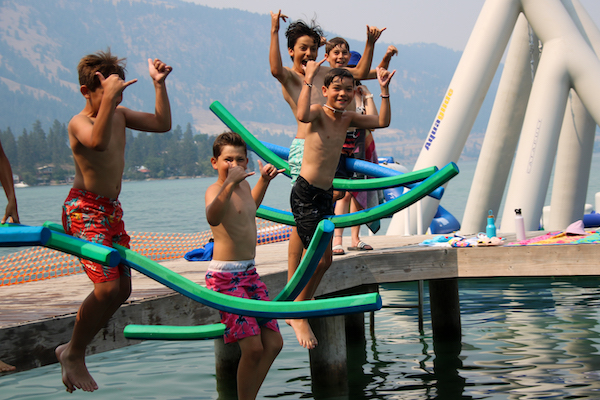
Camp Hatikvah donors are not only helping ensure the quality of the camp but its inclusivity. (photo from Camp Hatikvah)

Camp Hatikvah is well known for its program offerings, as well as its facilities and its spectacular natural setting in the Okanagan Valley. What many people may not know, however, is that the camp is only the place that it is because of community backing. Camper fees cover things like counseling staff, food, insurance and site maintenance. Everything else – including every building and almost every piece of equipment – has been donated by supporters who want to ensure that Camp Hatikvah can continuously improve without passing on the cost of doing so to the young families whose children attend.

Camp Hatikvah was established in 1937. Its donor base understands the unparalleled value and impact of a Jewish camping experience. They know that today’s campers are tomorrow’s Jewish leaders and that a donation is not a gift to just the organization but an investment in the future of the Jewish community.

More than 20% of campers attend Hatikvah’s program with the help of financial assistance and it is estimated that another 25% are on the cusp of needing to do so as well. Donors appreciate that many camp families are struggling with the affordability of Jewish life in Metro Vancouver and want to help control fee increases without the camp having to compromise program growth or site improvements. By funding program enhancements, equipment upgrades or capital improvements, donors are not only helping ensure the quality of the camp but its inclusivity. While summer camps are expensive – and Camp Hatikvah is no exception – it is because of donors that, on a per-day basis, Camp Hatikvah is one of the least expensive Jewish camps in North America.

Donors have also played an instrumental role in getting Camp Hatikvah through the pandemic. Not able to operate in 2020, the camp was facing a financial crisis. Similarly, in 2021, while the camp was allowed to open, it had to dramatically reduce its capacity in order to manage the COVID protocols. The financial toll of both these summers had the potential to financially devastate the organization for years to come. Yet, as they always have, donors stepped in and stepped up immediately – they covered all the financial losses the camp was facing. The level of generosity and support not only got the camp through the financial challenges caused by the pandemic, but also gave the camp a renewed sense of purpose, determination and passion for serving the community.

The board and staff of Camp Hatikvah thank each and every donor who has played a role in helping the camp become – and remain – one of the best Jewish camps. To learn more about the camp’s programs and the donors who make them possible, visit camphatikvah.com. 

– Courtesy Camp Hatikvah

Format ImagePosted on December 10, 2021December 8, 2021Author Camp HatikvahCategories LocalTags Camp Hatikvah, COVID, finances, kids, philanthropy, summer camp
COVID-free camp summers

COVID-free camp summers

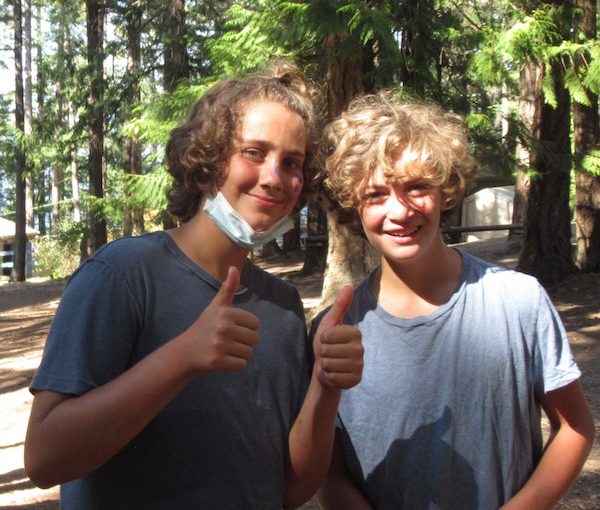
Camp Miriam offered both day and overnight camping experiences this past summer. (photo from Camp Miriam)

Camp Miriam is celebrating that, for the past two summers, its youth leadership has pulled out all the stops to provide programming for hundreds of campers despite the challenges of the pandemic.

“Coming into June of this year, we were all set to hold Kaytana [day camp] again in Vancouver and Victoria because at that time the provincial health restrictions did not allow overnight camp,” said Leah Levi, the camp’s registrar. “Then, in early June, the health orders changed and we learned that there was the potential to go back to our site on Gabriola Island.”

At that point, the camp – and especially its youth leaders who are responsible for everything from programming to logistics – had a decision to make. Would they continue with the plan they had been working on for months and hold six weeks of day camp, or would they try to quickly pivot and add overnight camp to the program?

“Honestly, if it had been up to the adults on the camp committee, I think we would have stuck with our original plan. The logistics of organizing overnight camp on Gabriola, with only a few weeks’ notice and at a campsite that had been empty for over a year was really overwhelming,” said committee chair Trilby Smith. “Camp needed to be cleaned from top to bottom, there were ferries to book, cooks, medics and lifeguards to hire, food to order and so, so many more details.”

But the young leaders knew that, as great as day camp is, overnight camp was what their campers needed after 18 months of pandemic living. However, they didn’t want to disappoint parents who had already planned for day camp. In the end, they voted to host two weeks of day camp in both Vancouver and Victoria – and three weeks of overnight camp on Gabriola.

The camp committee and many Miriam alumni supported the decision and volunteered hundreds of hours to help get the campsite in shape and assist in all kinds of other ways. In addition, Miriam’s donor community also rushed to help support Jewish camping in 2021.

In the end, 271 kids and 70 youth staff got to experience a COVID-free 73rd summer of “Miriam magic,” in a summer when the magic was needed possibly more than ever.

The effects of the pandemic on youth mental health have been well documented. The Canadian Mental Health Association notes, “Social isolation, removal from school and daily routines, as well as isolation and loss associated with illness are some of the top stressors children are facing.”

This fact was not lost on Miriam’s youth leaders, who reported that both campers and staff arrived at camp this past summer with greater mental health challenges than they had seen in previous years. However, they also saw that, after just 10 days of unplugged, in-person experiences in an inclusive environment, there was a noticeable change for the better in the mood of many campers.

“It was like someone released a pressure valve,” said camp director Marina Levy. “As the campers made friends, processed events going on in the world through our educational programming, and got to just be kids without the constant distraction from their phones and screens, we saw many of them settle and become less anxious.”

Parents noticed a change in their kids, too. One parent who responded to Miriam’s post-summer survey said, “My kid was soooooo excited that there was a sleepover camp this year. It felt like an oasis of near normality in an otherwise dystopian year. She came back so much more relaxed, with strong connections to the kids in their kvutzah [group].”

According to Project L’Chaim’s fall edition of Self-Care for Caregivers, it’s not surprising that camp would provide a balm to its campers and staff. Many of the suggestions offered by mental health experts in the booklet are embedded into Camp Miriam’s programming. For example, Miriam campers are immersed in nature and enjoy daily “forest showers” under the fir and cedar trees on the Gabriola site. They also receive a healthy dose of spirituality and mindfulness, especially through Shabbat and Havdalah traditions.

Finally, the experts say that feeling like you’re a part of something larger than yourself and forming meaningful social connections are keys to good mental health. Above all else, Camp Miriam prides itself on its focus on inclusion, community and tikkun olam – all of which contribute to many campers reporting that they have made lifelong friends at camp and that they feel more comfortable being themselves at Miriam than they do anywhere else in their lives.

Levy knows the respite of camp will not solve all the pandemic-related mental health challenges facing youth, but she believes it’s a start. “And, hopefully, next summer will be even more normal,” she said.

Apparently, many families are hoping the same. Miriam’s registration, which just opened last month, is already almost full. Anyone hoping to register their children for Camp Miriam’s 2022 session can get more details at campmiriam.org. To learn more about Miriam’s 2021 summer, the camp’s newly released annual report is also available on the website.

Vancouver-based writer Kelley Korbin is a Camp Miriam alum and Camp Committee member.

Format ImagePosted on December 10, 2021December 8, 2021Author Kelley KorbinCategories LocalTags Camp Miriam, COVID, kids, Leah Levi, Marina Levy, mental health, summer camp, Trilby Smith, youth
Seven summer camp benefits

Seven summer camp benefits

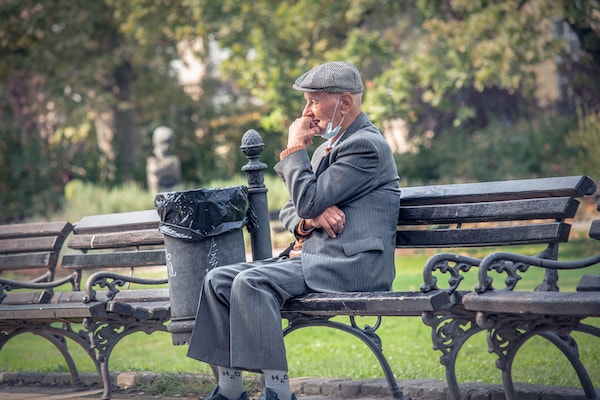
(photo from flickr)

There’s a single destination that gets kids outside having fun, experts say, while teaching them lifelong skills. It’s called camp.

The benefits of camp are plenty, from life lessons beyond the classroom and the value of playtime to appreciating nature and building confidence and leadership skills.

“The major changes in [campers’] growth speaks tremendously of the summer camp experience,” said Troy Glover, the director of the University of Waterloo’s Healthy Communities Research Network.

Glover spearheaded the Canadian Summer Camp Research Project, a nationwide study on the effects of camp on kids. The results demonstrated that for “bubble-wrapped” youth who have been over-programmed and overprotected, camp provides a safe environment to freely learn, grow and develop their capabilities. Summer camp, according to the study, fosters emotional intelligence (or EQ), self-confidence, independence, healthy living, environmental awareness, learning, leadership and other skills that prove beneficial long into adulthood.

The core benefits of camp include building friendships and social skills; developing resiliency and confidence; becoming and staying physical; overcoming nature deficit disorder; learning the values of leadership; continuing education in the summer; and carving time for “active play.”

 Friendships & social skills

It may seem scary at first to enter a whole new social world at camp. However, camp offers a crash course on meeting new people – helping children build social skills, explore their independence and improve their self-esteem, said Stephen Fine, research chair for the Ontario Camps Association. “Teamwork, cooperation and negotiation are inherent to the camp experience,” Fine explained. “Kids’ confidence levels and their ability to be in social situations increase.”

At camp, children boost their self-esteem and develop risk-taking and conflict-resolution skills as they learn to make their own decisions without their parents’ help.

Camp provides children with a “blank slate,” allowing them to try on different behaviours and identities. And the relatively short duration of a camp session decreases the cost of making mistakes.

One of the Canadian Summer Camp Research Project’s most significant findings was in the area of emotional intelligence, often referred to as EQ (emotional quotient). With EQ, which involves recognizing, understanding and managing emotions, children learn how to work, play, relate, get along, empathize and connect with others.

“It’s not just about IQ in children,” Glover said. “Research supports how EQ is more important in terms of future success…. This is an essential component of the maturation process and a skill that camp is successfully developing.”

Resiliency & confidence

Saturated with 24-hour news highlighting crimes in their communities, many parents today are overprotective of their children, “bubble-wrapping” them in order to keep them safe and sheltered. While Glover said it’s safer now, statistically, than it was when he was a child, parents are not as willing to let their kids out of their sight.

At camp, children are encouraged to go outside their comfort zone through activities such as high ropes courses, dramatic and musical performances, or wilderness camping. By allowing children to take risks and face challenges, camp helps children build their independence, resiliency, and self-esteem in a safe, supervised and supportive environment, the study found.

These invaluable life skills often translate into improvements at home and at school, said Mike Pearse, director of Camp Tawingo, a traditional overnight camp in Muskoka, Ont.

Pearse said the camp experience can be divided into the hard skills – for example, learning how to paddle a canoe, tie a knot, identify an edible plant and play a team sport – and accompanying soft skills, such as perseverance, creativity, responsibility and courage.

“At camp, every child has an opportunity to succeed,” he said.

This translates into increased self-confidence and, in many cases, an improved school experience. “I’ve had parents come to me and say, ‘My child is doing so much better in math class this year because of the confidence boost he got from camp,’” Pearse said.

Becoming & staying physical

With video games, Facebook and smartphones all vying for a young person’s attention, the national epidemic of obesity and inactivity won’t be easy to overcome. One Statistics Canada study found that only seven percent of youth aged 6 to 19 got the recommended hour a day of exercise they need.

Enter summer camp, where physical activity is well disguised in the form of fun and games, allowing youth to adopt a healthy lifestyle, often without even realizing it.

“Our study found that campers’ attitudes toward physical activity really improved toward the end of the camping session,” Glover said. “When given a choice, these campers will now choose physical activity because they realize it makes them feel good and contributes to their well-being.”

Along with banning the use of electronics, many camps provide a daily routine that involves waking up early, getting lots of physical activity, eating regular meals and spending extended periods of time outdoors.

“At camp, you’re always on your feet, always on the move, even if you’re just walking to a meal,” Glover said. “So, it’s not about forcing kids to spend 20 minutes on a treadmill, but rather easing them into an active lifestyle that includes lots of walking, engaging in team sports and playing outside with other kids.”

Nature deficit disorder

A bond with nature is sorely missing in the lives of many children today unlike a generation ago, Richard Louv writes in his book Last Child in the Woods: Saving Our Children from Nature-Deficit Disorder. It’s a world where kids may be all too aware of environmental problems, yet rarely venture out to experience the natural world, he writes.

“Camps have their own pressures, but the healing quality of nature is always there, just beyond the screen door,” Louv said.

At camp, kids are given the opportunity to see what they’re missing, and form lifelong bonds and connections with the natural world they may have never experienced before. “Even camps in the city usually have an outdoor dimension to them,” said Glover.

“Children need nature for the healthy development of their senses and, therefore, for learning and creativity,” Louv added.

Values of leadership

A leader isn’t always the loudest person in a group, or the most active. Many leaders share a range of skills and qualities that help him or her take charge: confidence, creativity in their decision-making and an understanding of teamwork, to name a few. It takes practise to become a good leader, too.

That’s where camp comes in, said Moira MacDougall, who heads teen and young adult strategies for the YMCA of Greater Toronto, a charity providing community support programs. Camp helps gradually build leadership skills, MacDougall said.

“You’re often having to rely on your teammates or cabinmates to complete an activity,” said MacDougall. “That builds in-group bonding and, in that process, what you hope the young person’s learning is either to have some voice within that group … or how to be persuasive.”

According to the Canadian Summer Camp Research Project, most campers demonstrated an increase in emotional intelligence and self-confidence, both characteristics attributed to good leaders.

As campers enter their teenage years, there are more opportunities to obtain explicit leadership skills. Most camps offer an LIT (leader-in-training) or CIT (counselor-in-training) program that walks young people through the skills they need to plan activities and programs, care for younger campers and communicate effectively.

Whether it’s by cleaning their cabins without being asked, helping younger campers find their way to the dining hall, or contributing their talents to a play or talent show, youth of all ages learn to take initiative at camp.

Learning how to take the lead essentially teaches youth how to be good citizens. “They learn that we all have a role to play to contribute to a better society, and nothing happens if you sit back and wait for someone else to act,” said Glover.

Continuing education

“It’s not only cognitive learning, it’s emotional learning,” said Tom Potter, associate professor at Lakehead University in Thunder Bay, Ont. Potter has been involved in outdoor adventure education for more than 30 years.

Camp is the kind of place where children can learn canoeing, archery, life skills such as teamwork, and apply the lessons they learned during the school year in many enjoyable activities. Geocaching lessons offered at some camps, for example, teach kids scientific and math skills.

“They’re getting instant and immediate feedback, so if they do something well, they’ll get feedback; if they’re sailing a sailboat and it’s going in the right direction, they’ll get feedback on that,” Potter said. “But if the boat turns upside down, that’s OK … it’s all part of it.”

Time for “active play”

Many children today simply don’t get enough of unstructured playtime. “If you look at time in school, time at home, time watching TV, those things have either stayed consistent or gone up,” said Michelle Brownrigg, chief executive of Active Healthy Kids Canada. “But active playtime has decreased.”

Canadian children are reportedly spending an average of four to six hours a day with TVs, computers and cellphones.

Camp gives children the playtime they need while encouraging creativity and social engagement. Play not only offers children the tools to entertain themselves, it also builds their imagination.

“Kids learn to set their own boundaries, to develop in an environment that’s not necessarily focused on a competitive end, to interact with one another, to determine how to win and lose, and to trade roles and be involved in an active way with their peers,” she said.

This article is a shortened version of the original, which is ourkids.net/camp/benefits-of-summer-camp.php.

Format ImagePosted on December 10, 2021December 8, 2021Author ourkids.netCategories NationalTags Canadian Summer Camp Research Project, health, kids, research, summer camp, Troy Glover, University of Waterloo, youth
נסיעה לישראל בעידן הקוביד

נסיעה לישראל בעידן הקוביד

אבי, משה רחמני, נפטר בראשית פברואר השנה מסיבוכים רפואיים לאחר שנדבק בקוביד, בבית החולים בתל אביב. בן תשעים ואחת היה במותו וזה לא היה פשוט עבורי לצפות בטקס הלווייתו באמצעות ‘זום’ מוונקובר. כמה עשרות בני משפחה וחברים הורשו להגיע לבית הקברות האזרחי של קיבוץ מעלה החמישה. ואני שלא יכולתי לטוס אז לישראל – עמדתי כל זמן הטקס (שנערך בשעתיים לפנות בוקר לפי שעון ונקובר) וצפיתי בו באמצעות מסך המחשב – כמעט בחוסר אונים מוחלט.

מאז אני מנסה לתכנן נסיעה לישראל ולבקר את אימי, לוצי רחמני, בת התשעים ושתיים, כדי לשהות במחיצתה לאחר חודשים ארוכים וקשים כל כך לה ולכולנו. כל פעם אני מתכנן את הנסיעה ואז נאלץ לדחותה בגלל המגבלות השונות. הפעם אני מקווה שהתכנון יצא אל הפועל ואנחת בישראל בראשית דצמבר. כך אוכל סוף סוף להיות עם אמא, לדאוג לה, לדבר עימה ולחזק את ידה, לאחר אולי השנה הקשה ביותר בחיים הארוכים שלה.

הפעם בניגוד לביקורים קודמים שלי בתל אביב, אני מתכנן להקצות את מרבית זמני להיום עם אמא. בעיקר בשעות אחר הצהרים והערב, כדי שלא תרגיש שהיא לבד, שהבדידות מקננת בה. רוצה אני קצת לשמח אותה, קצת להקל עליה וקצת לשמוע אותה.

הביקורים שלי בישראל בדרך כלל נערכים אחת לשנה או שנתיים, מאז הגרתי לוונקובר לפני כשבעה עשרה שנים. טיסה מוונקובר לתל אביב היא משימה לא פשוטה כלל ועיקר ועוד בעידן הקוביד, הקשיים רבים הרבה יותר.

אין טיסות ישרות מכאן לשם ועומדות בפני מספר אפשרויות: לטוס ללוס אנג’לס ומשם ישירות לתל אביב. לטוס לטורונטו ומשם ישירות לתל אביב. או לטוס לאירופה (למדינות כמו הולנד, בריטניה, צרפת או גרמניה) ומשם להמשיך לתל אביב. אני בדרך כלל מעדיף לטוס דרך אירופה ולעשות חניית ביניים אחרי הביקור בישראל, כך שאוכל באמת לנוח למספר ימים ולהנות ממה שאירופה המקסימה עבורי יכולה להציע, ובעיקר בנושאי תרבות.

לכן כמו כל נסיעה בשנים האחרונות החלטתי לטוס תחילה לתל אביב, תוך החלפת מטוס באמסטרדם. ובחזרה להתעכב למספר ימים באמסטרדם ואף לקפוץ לביקור קצר להמבורג, כדי לפגוש את חברי הוותיק, נתן יריב, בן התשעים ושלוש. אנו הכרנו לפני כעשרים וחמש שנים עת גר עם אשתו באמסטרדם. יריב היה בעברו מפיק של סרטים תיעודיים וכך הכרנו. הוא עשה סרט בישראל על יהודים שרצחו יהודים, בעקבות רצח רבין. שני עיתונאים בישראל שידעו על כך הכירו בינו וביני. מאז אנו חברים ולכן אני מתכנן לבקר אותו ואת אשתו שוב בהמבורג לאחר הביקור בתל אביב.

לסיום הנסיעה הנוכחית אשהה מספר ימים באמסטרדם כדי לנוח מכל מה שמתוכנן לי בנסיעה מסובכת זו, ולפני שאני חוזר לעבודה במלוא המרץ לקראת סיום השנה. אני משמש מבקר בחברה פיננסית ולא חסרה לי עבודה בעיקר לקראות סוף השנה.

את הכרטיס לטיול הנוכחי רכשתי כבר בחודש יולי כיוון שהמחירים לא מפסיקים לעלות. מצאתי אז שהמחירים הזולים ביותר לטיסות שהן בראשית דצמבר ועוד לפני חג המולד, המשמש אחד מהחגים העמוסים ביותר בתחום התיירות העולמית.

ידעתי אז שמצפים לי קשיים רבים בהכנות לנסיעה בגלל מגבלות ותקנות הקוביד, שהן שונות ממדינה למדינה. בקיצור לא פשוט לטוס בימים אלה. אין ספק שאם לא היה מדובר באמי לא הייתי נוסע. הצעתי לכל מי שמעונין לשמוע שלא לטוס בימים אלה אם הוא לא חייב.

Format ImagePosted on December 8, 2021December 1, 2021Author Roni RachmaniCategories עניין בחדשותTags COVID, family, flights, Israel, travel, טיסות, ישראל, לִנְסוֹעַ, משפחה, קוביד
מבול של גשם שלא היה כדוגמתו

מבול של גשם שלא היה כדוגמתו

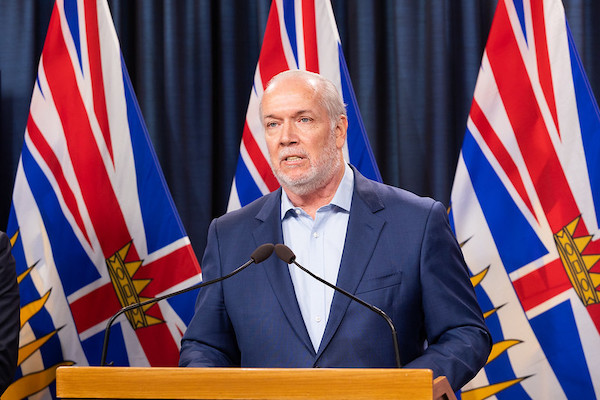
ראש ממשלת בריטיש קולומביה, ג’ון הורגן, ציין כי עלינו להסביר לשבעת מיליארדי תושבי כדור הארץ כי מוטל עלינו לפעול עכשיו, למנוע מאירועים כאלה לקרות בעתיד 

(flickr.com/photos/bcgovphotos)

מצב חירום הוכרז ביום רביעי האחרון שעבר במחוז בריטיש קולומביה שבמערב המדינה עקב גשמי זעף שירדו כאן במשך חמישה ימים ברציפות (מסוף שבוע שעבר ועד יום שני), וגרמו לנזקים אדירים, מספר קורבנות בנפש ולמותם של אלפי בהמות בחוות שהפכו לבריכות מים עמוקות. כמות הגשם הענקית באותם חמשת ימים שווה בעצם לכמות גשם בחודש רגיל בבריטיש קולומביה. באזורים נוספים בצפון מערב אמריקה – בצדו השני של הגבול – בארה”ב כמות המשקעים הגדולה, גרמה לנזקים קשים בדומה למה שקרה בקנדה.

ממשלת בריטיש קולומביה ביקשה את עזרת הצבא הפדרלי ופנתה אף לקבל עזרה ממחוז אלברטה הסמוך. זאת בנוסף להגעת כוחות רבים ממערכי הביטחון וההנדסה של המחוז, בתוספת עזרה של מאות מתנדבים. כל אלה עובדים יום ולילה, מנסים להעביר למקלטי חירום אלפי אזרחים שנתקעו באזורי השיטפונות הקשים, ומנסים להציל בהמות רבות שנתקעו באזורים חקלאים מלאי מים.

כבישים וגשרים רבים נעלמו מתחת למים הגועשים, נהרות עלו על גדותיהם והציפו אזורים נרחבים, סחף בלתי פוסק הרס בתים ותשתיות. תמונות קשות אלה הן רק חלק ממה שמוטל על עובדי ההנדסה לטפל בו בשבועות ואף בחודשים הקרובים. עבודות ייבוש שטחים מוכי השיטפונות כבר החלו בעזרת משאבות שעובדות יומם ולילה, במקביל לפינוי וניקוי של אזורים אלה שנראים כמו אחרי מלחמה קשה בה ניצח כרגיל הטבע.

התחממות כדור הארץ מורגשת היטב בבריטיש קולומביה שנחשבה למקום בעל מזג אוויר נוח, בחורף ובקיץ. אך לא כך עוד בשנה האחרונה: בקיץ האחרון הגיעו הטמפרטורות לשיא של כל הזמנים – קרוב לחמישים מעלות צלזיוס. לאור כך כשבע מאות קשישים, חולים והומלסים מצאו את מותם, ומערך האמבולנסים קרס תחת עומס פינוי נפגעי החום לבתי החולים. במקביל כמות השריפות בקיץ עברה כל שיא וגמרה לנזקים כבדים ביותר לטבע ולרכוש. יש מומחים שטוענים ששריפת עצים וצומחים אחרים, סייעו לתופעות הסחף הקשות לאור הגשמים בימים האחרונים. השריפות גורמות כנראה גם להגבלה של יכולות הקרקע לספוג כמויות גדולות של מים. לאור כמות גשם אדירה שירדה במשך חמישה ימים ללא הספק, תופעה שלא מוכרת במחוז, נגרם נזק קשה ביותר שייקח אולי שנים לתקנו. בשלב זה ידוע כבר על אישה אחת שנהרגה מסחף של בוץ ועל שלושה נעדרים שנעלמו בכביש שהפך לאגם. במחוז חוששים שמספר הקורבנות יעלה בימים הקרובים.

בלבד לפגיעה בנפש, בבעלי החיים ולרכוש, נגרם גם נזק גדול למערכי ההסעה של סחורות ומזון בכל חלקי בריטיש קולומביה. וכן נחסמה הכניסה לנמל הימי של ונקובר שהוא הגדול בקנדה ובמערב צפון אמריקה. לכן צפוי מחסור במוצרים שונים בימים הקרובים והממשלה מנסה למצוא פתרונות גם בנושא זה. זאת בנוסף לבעיית שינוע הסחורות ובעיות במערך האספקה העולמי לאור מגפת הקוביד. מחירי סחורות שונות לא מפסיקים לעלות והמחסור צפוי שיגרום לעליות נוספות במחירים.

ראש ממשלת בריטיש קולומביה, ג’ון הורגן, ציין כי עלינו להסביר לשבעת מיליארדי תושבי  כדור הארץ כי מוטל עלינו לפעול עכשיו, למנוע מאירועים כאלה לקרות בעתיד. הורגן ביקש להדגיש כי אין ספק שהתחממות כדור הארץ גורמת לתופעות מזג אוויר קשות שמורגשות כבר היטב במערב קנדה, בקיץ האחרון שהיה חם ביותר ובסוף ימי הסתיו עת ירד מבול נוראי של גשם. מכת הגשם הזו לדבריו היא אירוע של פעם בחמש מאות שנה. האם בעולם מקשיבים? לא בטוח.

Format ImagePosted on November 24, 2021November 22, 2021Author Roni RachmaniCategories עניין בחדשותTags British Columbia, climate change, flood, global warming, state of emergency, בריטיש קולומביה, התחממות כדור הארץ, מבול, מצב חירום
Supporting Jews worldwide

Supporting Jews worldwide

Michelle Pollock, chair of Jewish Federation of Greater Vancouver’s Israel and global engagement committee. (photo from JFGV)

For Montreal native Michelle Pollock, chair of Jewish Federation of Greater Vancouver’s Israel and global engagement committee (IGEC), love and loyalty to world Jewry were firmly established early in life – at home, school and in the community at large.

That deep affinity was further solidified after a two-month trip to Israel with her ninth-grade class. More recently, while serving as president of the Jewish Community Centre of Greater Vancouver in 2016, Pollock took a trip with her husband Neil to visit the Krakow and Moscow JCCs.

“These visits were incredibly powerful,” Pollock told the Independent. “Witnessing the young adults of these communities, discovering and exploring their Jewish heritage was beautiful. Even more inspiring was the hard work and dedication of the Polish and Russian volunteers and staff in creating welcoming spaces to facilitate this Jewish self-discovery.”

In November 2017, Pollock traveled to northern Israel as a participant on a Centre for Israel and Jewish Affairs mission. “Many of the participants on the trip were IGEC members or staff and their passion for our partnership region was infectious. I joined the IGEC soon thereafter,” she said.

A visit to Federation’s partnership region, Etzba HaGalil (the Galilee Panhandle), followed, in November 2019. That experience was multifaceted. The area is known for its physical beauty and the warmth of its residents, said Pollock, but the harsh reality of security issues and the regional challenges of jobs, infrastructure and opportunity also prevail, she noted.

“Seeing this firsthand infused me with gratitude to our Federation, which has worked so closely with the region since the mid-1990s to bring desperately needed aid and programming in a continuing effort to address the challenges faced by its residents,” Pollock said. “Jewish Federation has strategically invested funds to strengthen this region through education and social welfare programs, capital projects and regional development, and building enduring relationships between members of our community and residents of Etzba HaGalil.”

Similar to efforts locally, some of the funds to Israel have been allocated to new programs addressing youth mental health issues, violence and abuse at home, educational gaps and food security – all problems that have been compounded by the pandemic.

As for the challenges in another region in need, Far East Russia, where many Jews live in remote locations, Federation partners with the Joint Distribution Committee. The JDC is a global organization that addresses critical rescue and relief needs in more than 60 countries, including in the former Soviet Union (FSU).

“Working together with the JDC, life-saving aid is provided to over 80,000 elderly Jewish people in the former Soviet Union who struggle to survive on meagre pensions of $2 per day. They are the poorest Jews in the world, most without family or government support. Their distress and vulnerability are exacerbated by the region’s remoteness and freezing winters,” Pollock explained.

Many of these elderly Jews are well-educated and trained as doctors, lawyers, scientists and educators, she said. Having spent most of their working lives under communism, however, they were unable to accumulate savings. When the Soviet Union collapsed, along with the region’s pension and social assistance infrastructure, they were left poverty-stricken.

“Vancouver is geographically the nearest Jewish community to the Jewish communities in the easternmost part of Russia, adjacent to Siberia. As a strategic priority to strengthen Jewish life around the world, Jewish Federation (as the closest Federation) plays a very active role in supporting this region,” Pollock said. “We ensure long-term economic and social stability for Jews living overseas and in Israel by funding much-needed programs that provide a safety net for our most vulnerable people.”

These specialized programs, funded in part by the Jewish Federation of Greater Vancouver through the annual campaign, impact the lives of at-risk youth, low-income seniors and those living in economically fragile areas.

This year, Federation is funding a program directed at youth in the FSU called Active Jewish Teen (AJT). Engagement in the Jewish community, it believes, is an essential first step in making communal responsibility an inseparable part of one’s Jewish identity. Though still building momentum, AJT already has more than 3,200 members in 63 locations across seven countries.

Besides investing strategically, Federation’s IGEC has made solid connections with the groups it is serving in the FSU, said Pollock. It is also attentive to urgent needs arising in other Jewish communities around the world, helping fund operations and campaigns in South America, Ethiopia, the United States and elsewhere, she said.

Closer to home, throughout the year, Jewish Federation’s Israel and global engagement department brings opportunities for the Vancouver community to experience Israeli culture. Next year’s Yom Hazikaron (Israel’s Memorial Day) and Yom Ha’atzmaut will present opportunities for the community to come together in person.

“Building off the success of last year’s virtual Israeli Independence Day celebration, we will include more local talents and have community fun projects such as the community song and more surprises,” said Pollock, adding that there is a contingency plan in place should the COVID situation change.

Further, shinshinim, teenage emissaries from Israel, will be in town in the coming year. The shinshinim engage local young people in various activities and help foster meaningful ties between Disapora Jews and Israel.

Members of the Vancouver community have a chance to travel to Israel next summer, as well. Federation is facilitating a community mission from July 24 to Aug. 5, 2022.

“I know many of us are keen to travel and get back to Israel and this is going to be an amazing experience,” said Pollock. “At this point, we are looking for people to register their interest and there are a number of information sessions coming up.”

To learn more about the trip to Israel and to donate to the annual campaign, visit jewishvancouver.com.

Sam Margolis has written for the Globe and Mail, the National Post, UPI and MSNBC.

Format ImagePosted on November 19, 2021November 18, 2021Author Sam MargolisCategories LocalTags education, Etzbah HaGalil, fundraising, Galilee Panhandle, health, Israel, Jewish Federation, JFGV, Michelle Pollock, philanthropy, poverty, Russia, seniors, survivors, tikkun olam, volunteering, youth
Lively driftwood sculptures

Lively driftwood sculptures

Victoria artist Tanya Bub’s current exhibit at the Art @ Bentall Gallery features life-size works of animals that occupy land, sea and air. (photo from Tanya Bub)

“Working with driftwood has given me a great appreciation of the power and beauty of nature. The shape and colour of every stick of driftwood hints at its history. Maybe a root had to bend around a rock while it was growing, maybe sand and water smoothed its edges over a period of many years. Then,” said artist Tanya Bub, “I combine all of these diverse natural sculptures to create an animal or person that looks alive because it borrows from the evident life forces that shaped the wood. There is something almost magical about extending the life of once-living wood by turning it into art. I’ll keep making driftwood sculptures as long as I am able.”

Victoria-based Bub currently has a solo exhibition on display at the Art @ Bentall Gallery. Called Mind Games, Defying the Art Space, the exhibit – which runs to the end of the month – features life-size works of animals that occupy air, land and sea.

In addition to the Art @ Bentall show, Bub has two separate outdoor installations of her sculptures. A large driftwood cat can be found at Kits beach (at the corner of Whyte and Arbutus) and a driftwood “giant” lives between Wreck and Oasis beaches (at the corner of N.W. Marine and Agronomy).

photo - Tanya Bub's solo exhibit - Mind Games, Defying the Art Space - the runs to the end of the month
Tanya Bub’s solo exhibit – Mind Games, Defying the Art Space – the runs to the end of the month. (photo from Tanya Bub)

Bub studied oil painting and ceramics at Emily Carr University of Art + Design, and did figurative work based on life drawings. She has a degree in fine arts from Emily Carr, as well as a degree in the philosophy of science from McGill University in Montreal. She worked as a computer programmer for a couple of decades and had her own website development company. The finding of a piece of driftwood during a walk on the beach was a game changer. Since 2019, she has been making her sculptures depicting various creatures, including the occasional human.

“I came to Victoria in 2003 with my husband and daughter to be near my mom,” Bub told the Independent. “I wanted a second child and realized I needed family and community nearby to raise a family with grace. I passionately loved art as a kid but shelved it as a young adult to pursue a more practical career in programming. Now that my kids are all grown up, I’m allowing myself a second childhood and spend about 12 hours a day creating art with absolute abandon!”

photo - One of the many creatures sculpted by Tanya Bub, whose works on on display display at the Art @ Bentall Gallery
One of the many creatures sculpted by Tanya Bub, whose works on on display display at the Art @ Bentall Gallery. (photo from Tanya Bub)

Also on Bub’s CV are two physics books that she co-authored with her father. While perhaps not immediately evoking any connection with her artwork, Bub explained, “Both the relativity and quantum mechanics books begin with a simple premise and extend from there with small logical steps, building complexity bit by bit, to tell the tale of the universe. My sculptures also all begin simply, by combining one piece of wood with a second. Then another is added and another, eventually resulting in a complex unified form made up of a thousand different pieces, that tell a unified story.”

And part of Bub’s story is her Jewish heritage.

“I’ve always identified strongly with Judaism, which for me is more of an approach to life rather than strictly religious beliefs,” she said. “My grandfather, Percy, was the embodiment of Jewishness. He had an irrepressible curiosity and an almost childlike joyfulness, which allowed him to marvel at and appreciate the simplest things. That, combined with a deep respect for intellectual pursuits and, above all, the high value placed on family, was at the core of hisJudaism. These ideals inform my approach to art, physics, family and life in general.”

To see more of Bub’s artwork, follow her on Instagram @victoriadrifter or visit her website, tanyabub.myportfolio.com.

Format ImagePosted on November 19, 2021November 18, 2021Author Cynthia RamsayCategories Visual ArtsTags art, Bentall Gallery, driftwood, Netanyahu, sculpture

Ideas worth the fight

During Chanukah, we celebrate the victory of light over darkness, of the triumph of our values over the hegemonizing ideals and practices of the oppressor.

A crucial part of Jewish tradition is applying the wisdom of the past to the challenges of today. And the world is full of challenges today. One of those closest to home for some of us is the culture and climate at universities. Over the past two decades, we have witnessed growing anti-Israel activity and antisemitism on campus.

Concurrently, a new orthodoxy has emerged, which is viewed by many as an overdue reckoning and by some as ideological overreach. This shift is typified by an intolerance or rejection of ideas that are deemed intolerant or worse. Racism, sexism, homophobia, transphobia and ideological extremism have been targeted by growing numbers of students and faculty, which, on its face, is progress. Even so, issues with this evolution include who is doing the judging, as well as where intolerance of intolerance intrudes on academic growth and ideological diversity, which is the lifeblood of the institutions.

A confounding aspect of campus culture today is that, in an ideal world, anti-Jewish sentiments would be included in the panoply of censured ideas. Instead, too often, the people who are denouncing racism are carving out exceptions in this one instance, as many voices have observed. (David Baddiel’s book Jews Don’t Count was reviewed in these pages recently.)

In a curious development, it has recently been announced that a group of academics, activists and entrepreneurs are set to open a whole new university. The University of Austin, to be soft-launched in Texas next year, intends to be a petri dish for unfettered “academic freedom.”

The historian Niall Ferguson, who is one of the proponents of the new school, has written of the problem they intend to address, using some of the reductive shorthand now deployed in this larger “culture war”: “Trigger warnings. Safe spaces. Preferred pronouns. Checked privileges. Microaggressions. Antiracism. All these terms are routinely deployed on campuses throughout the English-speaking world as part of a sustained campaign to impose ideological conformity in the name of diversity. As a result, it often feels as if there is less free speech and free thought in the American university today than in almost any other institution in the U.S.”

The University of Austin appears to be a product of frustration. The state of campus discourse today is problematic in many ways. But there is a larger principle at stake. If there is a problem in the academy at large, is the solution to pack up one’s books and ghettoize into a whole new school? Around the globe, liberal values are under threat by totalitarianism on both extremes of the political spectrum from left to right. The campus environment reflects and is a contributor to the trends in society, how we relate to one another and ourselves, as well as organize our politics and affiliations. We do not have the ability (yet) to decamp to another planet because of rampant illiberalism on this one. Similarly, while we do have the capacity to segregate ourselves into alternative institutions, is that in any way going to improve the broader issue?

Ironically, the purpose of the University of Austin appears to be to create a space for uncomfortable ideas. But isn’t that precisely what they are running away from? As in so many things in life, we have a choice: flee or stay and fight.

Academia is one of the places where we address, however awkwardly and inconclusively, concerns like power, class, race, gender, legacies of colonialism and many, many more. If the voices of intellectual homogeneity on campus are determined to shelter students from disturbing topics, or to instil in them a uniform, facile response, is it the proper reaction to give them what they want?

It is understandable and tempting to abandon the institutions that betray our values or challenge our identities. It is also understandable and tempting to want to have a whole institution that reflects back our values and reinforces our identities. Neither scenario sits well within Judaism’s long tradition of debate and critical thinking. And neither scenario makes for a healthy society.

Our only reasonable response in life – and especially at supposed institutions of higher learning – is to continue engaging in the battle of ideas, however daunting and hopeless the fight might appear.

Chanukah is but one of the Jewish holidays that teach us miracles can happen – but that they don’t happen on their own. We have an active role to play in this world, and should always be looking for ways to bring light into it.

Posted on November 19, 2021November 18, 2021Author The Editorial BoardCategories From the JITags academic freedom, antisemitism, Chanukah, culture, debate, education, Judaism, Niall Ferguson, politics, University of Austin

Posts pagination

Previous page Page 1 … Page 178 Page 179 Page 180 … Page 649 Next page
Proudly powered by WordPress