Skip to content
  • Home
  • Subscribe / donate
  • Events calendar
  • News
    • Local
    • National
    • Israel
    • World
    • עניין בחדשות
      A roundup of news in Canada and further afield, in Hebrew.
  • Opinion
    • From the JI
    • Op-Ed
  • Arts & Culture
    • Performing Arts
    • Music
    • Books
    • Visual Arts
    • TV & Film
  • Life
    • Celebrating the Holidays
    • Travel
    • The Daily Snooze
      Cartoons by Jacob Samuel
    • Mystery Photo
      Help the JI and JMABC fill in the gaps in our archives.
  • Community Links
    • Organizations, Etc.
    • Other News Sources & Blogs
    • Business Directory
  • FAQ
  • JI Chai Celebration
  • JI@88! video

Recent Posts

  • BGU fosters startup culture
  • Photography and glass
  • Is it the end of an era?
  • Taking life a step at a time
  • Nakba exhibit biased
  • Film festival starts next week
  • Musical with heart and soul
  • Rabbi marks 13 years
  • Keeper of VTT’s history
  • Gala fêtes Infeld’s 20th
  • Building JWest together
  • Challah Mom comes to Vancouver
  • What to do about media bias
  • Education offers hope
  • Remembrance – a moral act
  • What makes us human
  • המלחמות של נתניהו וטראמפ
  • Zionism wins big in Vegas
  • Different but connected
  • Survival not passive
  • Musical celebration of Israel
  • Shoppe celebrates 25 years
  • Human “book” event
  • Reclaiming Jewish stories
  • Bema presents Perseverance
  • CSS honours Bellas z”l
  • Sheba Promise here May 7
  • Reflections from Be’eri
  • New law a desecration
  • Resilient joy in tough times
  • Rescue dog brings joy
  • Art chosen for new museum
  • Reminder of hope, resilience
  • The national food of Israel?
  • Story of Israel’s north
  • Sheltering in train stations

Archives

Follow @JewishIndie
image - The CJN - Visit Us Banner - 300x600 - 101625

Month: November 2018

Whisper Across Time

Whisper Across Time

Olga Campbell (seated) takes a break from signing books at the opening of her exhibit A Whisper Across Time, which also served as a launch of her book by the same name. (photo by Gordon E. McCaw)

The impacts of the Holocaust continue to reverberate. Even though most of the first-generation survivors have passed away, the next generations, the survivors’ children and grandchildren, remember.

Local artist Olga Campbell belongs to the second generation. Her parents survived the Holocaust, but her mother’s entire family was murdered by the Nazis. The need to give those family members a voice was Campbell’s driving force in writing her new book, A Whisper Across Time: My Family’s Story of the Holocaust Told Through Art and Poetry. Her solo exhibit with the same name, co-presented with the Cherie Smith JCC Jewish Book Festival, opened at the Zack Gallery on Nov. 15. The night also served as a book launch.

“The art in this show are mostly prints from the book,” she said in an interview with the Independent. “There are also some pieces that are offshoots on the same theme, even though they aren’t in the book.”

Campbell has always known that her mother’s family didn’t survive the war, but the emotional impact of their deaths built slowly over the years. It took decades for this book to emerge.

“In 1997,” she said, “I heard a program on the radio about the second-generation survivors. Their words about the trauma being passed between generations resonated with me.”

She embarked on an artistic journey, and she is still following a path of exploration. Her art reflects her emotional upheaval. Her paintings and statues are fragmented, with broken lines and distorted figures, evoking feelings of loss and anguish. One look at her paintings and a disquiet tension washes over the viewer. It is apparent that a huge tragedy inspired her work.

In 2005, Campbell had a show at the Zack, called Whispers Across Time. “Even then,” she said, “I knew I had to write about my family. The art show was not enough. I had to say more, but, at that time, I couldn’t. I was too raw, too emotional. But my family kept tugging at me. I needed to tell their story. I was compelled to write this book.”

Unfortunately, she knew only the bare bones of her mother’s life. So she plunged into a deep and long research period, surfed the internet, contacted Yad Vashem and other sources. After several years, the book crystallized.

“My book is a tribute to my family, the family I never knew,” she said.

“Of course, it is only one family of the millions of families killed during the Holocaust.”

Campbell spoke of the relevance of her book in today’s political climate. “Our world is a chaotic place right now, somewhat reminiscent of the period before the war,” she said. “There are over 68 million people around the world that are refugees or displaced. My book is not only about my family. It is a cautionary tale. It is about intergenerational trauma and its repercussions across time.”
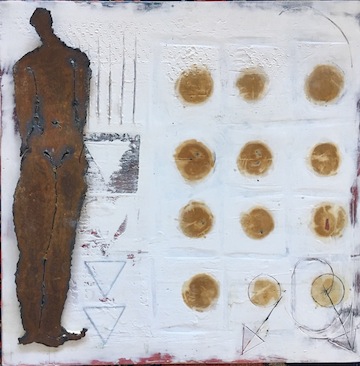
image - artwork by Olga Campbell
(artwork by Olga Campbell)

She created new art for the book, wrote poetry to supplement the imagery, and also included an essay on her family members and their lives, destroyed by the war. The paintings in the book and on the gallery walls are powerful but melancholy, even distressing.

“My work always had this darkness, the sadness, but also a bit of hope,” she said. “I never know what will happen when I start a piece. I’m very intuitive. I would throw some paint on an empty canvas and let my emotions and the art itself guide me through the process. I use photos in my works and digital collages. My finished pieces always surprise me.”

When the book was ready, Campbell applied for another show at the Zack, to coincide with the book launch.

“I wanted to give it the same name as the previous show, Whispers Across Time,” she said, “but I checked the internet, and there are a couple other books already published with the same title. I decided to change it.” The book and the show are called A Whisper Across Time. “I feel a lot lighter now, after the book is finished and published,” she said.

A Whisper Across Time is Campbell’s second publication. In 2009, she published Graffiti Alphabet. She has been doing art for more than 30 years, but that is not how she started her professional career. She was a social worker until, in 1986, she took her first art class. That year changed her life.

“It was such fun. I loved it,” she said. “I went back to work afterwards but it didn’t feel as much fun. I decided to get an art education. I enrolled in Emily Carr when I was 44.”

Campbell finished the art program, continued working part-time as a social worker, and dedicated the rest of her time to painting, sculpture and photography.

“I’ve been a member of the Eastside Culture Crawl for 22 years, since its beginning,” she said. “I participated in the Artists in Our Midst for many years, too. At first, when people asked me, I would say I do art. Now, I say, I’m an artist. I must be. That’s what I do. I’m retired now, but I did art when I was working, too, and it was always very healing and rewarding – still is…. If, for some reason, I don’t paint for awhile, I feel as if something is missing.”

The A Whisper Across Time exhibit continues until Dec. 9. For more about her work and books, visit olgacampbell.com.

Olga Livshin is a Vancouver freelance writer. She can be reached at [email protected].


Format ImagePosted on November 23, 2018November 20, 2018Author Olga LivshinCategories Visual ArtsTags art, Holocaust, memorial, Olga Campbell, painting, Zack Gallery

Boring politics is good

When Prime Minister Justin Trudeau stood in the House of Commons this month and apologized for his predecessors’ decision to turn away more than 900 Jewish refugees on the ship MS St. Louis in 1939, he also made a plea for a better, more tolerant world.

Almost all Jewish Canadians – and probably most Canadians in general – thought this was the right thing to do.

The most recent public opinion polls indicate that most Canadians think that, on balance, what Trudeau has been doing since he became prime minister three years ago is generally OK. With the collapse in public support of the New Democratic Party and the Bloc Québecois, Trudeau seems to have an edge in a two-way race against the Conservative party of Andrew Scheer.

It is hard not to imagine that the leaders of most of our allied countries aren’t a bit jealous of Trudeau’s position right now.

In the United States, the mixed messages of this month’s midterm elections – which strengthened Republican control in the Senate and saw the Democrats retake control of the House of Representatives – leaves President Donald Trump with less power than he had a few weeks ago, although it does give him a scapegoat, in the shape of a Democratic House of Representatives, which will doubtlessly invigorate his 3 a.m. tweetstorms.

German Chancellor Angela Merkel is stepping down as leader after a remarkable 13 years at the country’s helm. At times, she has seemed the adult at an international kids’ table, holding Europe together while bailing out failing economies and managing influxes of refugees, among other things. But apparently she’s had enough of the excitement.

One-time wunderkind French President Emmanuel Macron is learning that coming out of nowhere to take the top job can leave one ill-equipped for the demands it entails. His popularity, according to polls, is spiraling downward.

In far worse shape are the governments to the west and east of these European powers. In both Israel and the United Kingdom, the leaders are unsure when they go to bed what their status will be when they wake. Between the time of writing and the time of reading this page, either or both of these governments may have fallen and new elections called – or some Band-Aid solution found for propping up or rejigging the existing coalitions.

In Britain, division at the top over the conditions of British withdrawal from the European Union has led to resignations of top cabinet officials (as well as lesser cabinet officials). Dissidents are penning letters that could lead to a leadership review for Theresa May, the Conservative prime minister, by her own caucus. Even if she survives that, the inevitable vote on the Brexit plan could see her government defeated just a few weeks hence.

For Jewish Britons, this situation is particularly serious. May’s Conservative government has been struggling in popularity almost since she took the helm. The Tories faced a surprisingly strong challenge from Jeremy Corbyn’s Labour party in last year’s general election, in which the Conservatives expected to glide to an easy majority and ended up having to cobble together a coalition with sectarian parties from Northern Ireland. A new Conservative leader might revive the party’s chances, though it seems impossible to see how anyone could paper over the seemingly irreparable divisions in that party between pro- and anti-Brexiteers.

The potential for a Corbyn-led Labour government is anathema to the vast majority of Jewish voters in that country. Corbyn himself has been a leading voice against Israel and in support of those who seek its destruction, including Hamas and Hezbollah, whom he has referred to as “friends.”

While extremists on the continent, like French far-right leader Marine Le Pen, do everything in their power to convince Jewish and other voters that they are not antisemitic, Corbyn seems to relish poking Jewish voters figuratively in the eye. And he is the proverbial tip of an iceberg. Websites are devoted to chronicling the extraordinary outpouring of overt antisemitism in the party he leads. One local chapter recently demurred on condemning the mass murder at the Pittsburgh synagogue, with one member complaining that there is too much focus on “antisemitism this, antisemitism that.”

In Israel, division among top cabinet officials over the response to the most recent violence from Gaza has led to the resignation of Avigdor Lieberman as defence minister, and extremely unfriendly musings from Education Minister Naftali Bennett. Prime Minister Binyamin Netanyahu’s coalition government is hanging by a thread, though public opinion polls indicate that support for his Likud bloc may actually give him reason to look favourably on early elections.

An ancient Chinese curse speaks of living in “interesting times.” For the leaders of many of our closest allies, these are interesting times indeed. But they probably look enviously to Canada and realize what Jews have known for many generations: when it comes to politics, boring is good.

Posted on November 23, 2018November 20, 2018Author The Editorial BoardCategories From the JITags antisemitism, Canada, politics

Sorting out playground fights

If you’ve got grade school-aged children, chances are they come home recounting fights on the playground and in their classrooms. Sometimes, it involves them, and other times, they are bystanders. There are kids who are hitting, name calling, mimicking and punching each other. The chasing and hurting seems to come out of the blue, or sometimes it has been expected and dreaded for way too long. People can be cruel to one another.

It might not come as a surprise that moms talk to each other about their children but, in the last couple of weeks, I’ve probably talked to four parents who have mentioned their worry or concerns. While it’s possible for some to pile on stereotypes about Jewish mothers, if you ignore all the nonsense, the underlying theme is simple for all parents. We’re trying to raise good, kind people and that’s why we devote so much effort and concern to it. We want healthy, happy children, and wonder how to keep them from killing each other.

Unfortunately, turning to traditional texts doesn’t always offer us solace. We’re not reading about happy families all the time when we read the weekly Torah portion – and, often, the rabbis’ commentary doesn’t soften the harsh responses in Genesis. For instance, when you read the stories about Joseph and his brothers, well, they were brutal to one another.

Joseph is his father’s favourite, and it’s no secret. Joseph doesn’t help matters – he tattles on his older brothers (Genesis 27:2). His dad makes him fancy clothing, too, so it is obvious he is getting preferential treatment.

Joseph’s brothers strip him of his clothes and throw him in a pit and, if that’s not bad enough, they sell him as a slave. Even Reuben, who hopes to fix things, cannot stop his brothers when they are dead-set on doing harm.

Of course, many commentators rush to point out how forgiving Joseph is and that, later, as a powerful man in Egypt, he saves his whole family in a time of famine. Yet Joseph misleads his brothers about who he is; he kidnaps his brothers. Well, the summary is that this is a complex story with difficult characters. It can be hard to figure out who is in the right here, and if anyone behaves well, after all.

Zooming back to the playground, there are some startling comparisons. When the kids race up and start telling the parents that this kid hit that one, this kid is bad, etc., it can be hard to untangle the story. Often, too, the kid who throws the first punch didn’t do it out of the blue. If you provoke someone enough, particularly a kid who hasn’t quite mastered self-control, someone’s probably going to fight back.

There are a few conclusions I can make in comparing this important biblical narrative with a parent’s everyday one. First, it’s complicated. It is way too simplistic to think that one child is a perfect blameless angel and the other the nasty bad person. This isn’t how relationships and people work.

Second, untangling the story can take awhile. It’s important to learn everybody’s point of view before deciding what actually happened. Sometimes, it’s crucial not to just trust those in authority to be omnipotent and sort things out. An example? I got an official report home one day that one of my kids punched another kid. (We were really upset with him.) Days later, I found out from another child that the reason why mine acted out was because other kids were copying my kid, making fun of him and pretending to be him in an unkind way, behind his back. While I might not condone punching somebody in the nose, I sometimes can understand how it might happen if I hear the details of what exactly transpired.

Third, making peace is a multi-step process. The wronged party may need to work through a few things before the situation can be resolved. This takes time and fair judgments like Solomon’s. It can feel beyond a parent’s capabilities!

Finally, when following the story of Joseph and his brothers, we learn that they worked it out. Joseph helps feed his family and saves them – but it’s not a narrative of instant forgiveness and affection. Jealousy, unequal treatment and violence? It’s all in there.

Sometimes the complicated family dramas of Genesis demonstrate that even tangled and dangerous altercations can be resolved. It’s a reminder that everyone – kids, too – can get over their intrigue, fights and disagreements and forgive one another. Forgiveness doesn’t mean we forget everything about the complicated characters who are our friends, relatives and classmates. It might mean that, while we can’t change the past, we can get beyond it to build better future experiences together.

While I mulled this over, my husband pointed out something further. When we must rely on our families or our (smaller) Jewish communities, we must work together on many crucial issues of survival. We can’t change the past interactions or bad behaviours that may have taken place in a family or congregation. We can’t go back in time to repair or undo those wrongs, but we can drop the rancour to work together towards shared future goals. Joseph – and those playground reconciliations – show us that history is just history, not destiny.

Joanne Seiff writes regularly for CBC Manitoba and various Jewish publications. She is the author of three books, including From the Outside In: Jewish Post Columns 2015-2016, a collection of essays available for digital download or as a paperback from Amazon. See more about her at joanneseiff.blogspot.com.

Posted on November 23, 2018November 20, 2018Author Joanne SeiffCategories Op-EdTags bullying, education, Judaism, parenting, Torah
Win two tickets to Bronfman!

Win two tickets to Bronfman!

Anyone who buys a first-time subscription to the Jewish Independent as a gift for themselves or for a friend, family member or colleague by Nov. 28 will be entered into a draw to win two free tickets to hear Yefim Bronfman, one of the greatest pianists of our time, at the Orpheum Theatre on Dec. 6, 8 p.m.

With the Vancouver Symphony Orchestra, Bronfman will play Johannes Brahms’s Piano Concerto No. 2 in a concert that also features one of Richard Strauss’s great tone poems, Don Juan, and Franz Liszt’s Les preludes.

Not only will new subscribers be entered in the draw, but they will be able to purchase their subscription at a discount: only $20 for a one-year e-sub (40% off) and only $70 for a mailed sub (10% off).

The deadline to enter the draw is Wednesday, Nov. 28, 5 p.m. Email [email protected] or call 604-689-1520 for your chance to win.

Happy Chanukah!

Format ImagePosted on November 23, 2018November 20, 2018Author The Editorial BoardCategories MusicTags contest, symphony, VSO, Yefim Bronfman
Everyone can say yes to life

Everyone can say yes to life

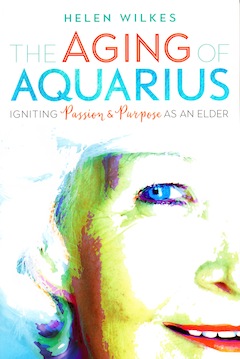
At risk of universalizing a book with a particular theme, The Aging of Aquarius: Igniting Passion and Purpose as an Elder is valuable not just for those who are retired or pondering it – though it has plenty of age-specific content for that demographic. At root, it is a book about living well, and that makes it a valuable volume for people of any age.

Author Helen Wilkes, a Vancouverite and member of the Or Shalom community, has penned an optimistic, uplifting book. But let that not deceive the reader, she warns early on, into misjudging who she is.

“Lest you think I was born with a silver spoon in my mouth or that I am one of those insufferably cheerful people,” she writes in the preface, “permit me to introduce myself.”

She talks about being born to Jewish shopkeepers in a village in the Sudetenland, part of Czechoslovakia that was among the first places occupied by the Nazis in advance of the Second World War.

“Our village fell to Hitler when I was still in diapers and, as a consequence, I have spent a lifetime with fear and negativity as my constant companions,” she writes.

Her childhood was lonely and her parents uncommunicative. Her marriage ended when her daughters were 3 and 4 years old.

“Divorce at the time was still so shameful that it took my mother several years to accept what she and her friends labeled as my ‘failure as a woman.’”

Yet Wilkes pivots to optimism.

“If, despite a childhood in the shadow of the Holocaust, and if, despite a lifetime of experiencing myself as an outsider with little sense of self-worth, I have found cause to hold my head high and to face the future with optimism in my retirement years, there is reason for others to hope,” she writes.

This is not a handbook on aging so much as an illustration by example of how to do it right. She does acknowledge, though, that a person has to make the effort to age well. Each section of her book ends with ideas and actions that might help on the path to success.

“Everywhere, there are opportunities to meet new people, yet surveys indicate that social isolation is a major problem despite the fact that simply joining a club is as good for your health as quitting smoking, exercising or losing weight,” writes Wilkes, who has a PhD in French literature. “The Vancouver Foundation reports ‘a precipitous decline’ in how many people made use of libraries, community or recreation centres in 2017, that only about one in four people took part in any kind of community or neighbourhood project.… And that, in a city as diverse as ours, only about one in four people attended an ethnic or cultural event put on by an ethnic or cultural group different than their own.”

image - The Aging of Aquarius book coverFinding joy in the simple things – again, good advice for people of any age – is one of her key findings.

“Aging has made me a connoisseur of life,” she writes. “It has taught me to savour not what is rare or high-priced, but what is ordinary. The small moments that sometimes overwhelm me with heart-stopping joy. An incredible blue-sky day. The first sip of my morning coffee. The laughter of family and friends. Whenever I am walking in the woods with a boisterous dog, whenever I sit on a log at the beach while the sun dips slowly below the horizon and paints the sky with hues no artist could capture, whenever I stroll through a harvest market where farm-fresh produce overwhelms with its rich ripeness, whenever my grandchildren burst through the doorway to give me a hug, or whenever I am engaged in any number of absorbing activities, I so often have an overwhelming sense of not wanting to be anywhere in the world except exactly where I am at this moment.”

While she challenges the conceptions some people have of retirement as a time to sit in a hammock with a fancy drink, she does also acknowledge that, as Danny Kaye said, “to travel is to take a journey into yourself.”

She talks about an eye-opening trip to China, where she went as a chaperone to her 10-year-old twin grandsons. Having heard of the panoply of human rights abuses in China, she was shocked to see an English-language newspaper with a headline asking “How dare they?” above an article cataloguing racism and human rights abuses in the United States and other “free world” countries. Having heard about China’s reputation as a major contributor to global warming, she was pleased to see solar panels and wind turbines throughout the country. The rapid transit system they used to get everywhere contrasted with what she is familiar with in Vancouver.

“China held up a mirror that led me to reexamine the history I had been taught in high school and university,” she writes. “Day by day, it became more difficult to view the West as having brought enlightenment to backward Asians.”

Wilkes acknowledges that not everyone can travel to foreign countries and says there are ways to experience some of that diversity without getting on a plane.

“Next week, I anticipate attending a Hindu baby-naming ceremony to which I’ve been invited. Last week, I was invited for dinner at the home of a Muslim family from Pakistan. Being at their table, sharing our limited knowledge of one another’s culture, these to me are opportunities for much more than just personal enjoyment or emotional enrichment. They are occasions where it is possible to create a gram of kindness in a world where political and regional and religious differences tend to divide rather than link. I never fail to feel uplifted by experiencing our common humanity writ large. When I can no longer travel, I hope I will still reach out to people from other lands as graciously as people elsewhere have reached out to me,” she writes.

She speaks about another trip – this one to Berlin, for the launch of the German translation of her previous book, Letters from the Lost: A Memoir of Discovery, which explored her survivor’s guilt as she discovered, in adulthood, a cache of letters from family left behind in Czechoslovakia after she and her parents fled just after Nazi occupation of the Sudetenland.

“In Berlin, forgetting is impossible,” she reflects. “Over the years, Germany has made remembering an art as well as an official policy. Germany tells the world that it is only by remembering the past that we have any likelihood of avoiding similar mistakes in the future. The reminders are unavoidable. In Berlin, history is omnipresent. Even the sidewalks are studded with Stolpersteine, raised stumbling blocks inscribed with the names of Jews who once lived in the adjacent buildings.”

Since so many people’s identities are entwined with their profession, she writes, moving into retirement, for many people, can demand a complete reinvention of self. She proceeds to ask a litany of questions about what identity means, and even, as a member of a particular culture, what culture means.

“Such questions and many more continue to haunt me as I age,” she writes.

And, while she turns to books for answers, the process of asking questions may be an end in itself when addressing the existential issues the book confronts.

Among everything else it is, The Aging of Aquarius is also a very Jewish memoir. Both in her personal history and in the theological exploration she discusses near the end of it, her Jewish identity and experiences play central roles in the story.

At a book launch at Or Shalom on Nov. 4, Wilkes said she approaches the later years of life with many unanswered questions. But, as difficult as finding answers may be, she suggested responding affirmatively.

“I know it’s not easy, but if the answer to how is yes,” she said in conclusion, “let us all say yes to life. Yes to aging. L’chaim.”

Format ImagePosted on November 23, 2018November 20, 2018Author Pat JohnsonCategories BooksTags aging, Helen Wilkes, Holocaust, lifestyle, retirement
Teaching about death

Teaching about death

Dr. Jessica Zitter has both written a book and a movie about death and dying. (photo by Rikki Ward Photography)

Dr. Jessica Zitter, who works as an attending physician at a public hospital in Oakland, Calif., struggled with her job’s protocols for years. Until the day a nurse opened her eyes to the possibility that there was a better way, one that involved more compassion in the treatment of patients.

Zitter comes from a long line of doctors.

“They were into the art of medicine,” she said of the mentors she had when she first began her studies. “By that, I mean the art of surgery and intervening, and of doing things in a very precise way. There was something about that that I found heroic, and I wanted to be part of that world.

“So, I went to medical school – pulmonary and critical medicine – which I thought of as the most heroic of the specialties. I went on to start to focus on the machines, technologies, protocols and things that were part of the trade of being a pulmonary critical care physician. I tried to really perfect them … [thinking that,] if I use these perfectly, I’ll be able to help a lot of people.”

But, as she went along, she started to think differently. At first, she suppressed the feeling. “It was truly uncomfortable,” she said. “It caused me a lot of suffering.”

Zitter was using techniques and protocols on people who were not going to benefit from them, knowing full well that they would not benefit from them. Not only was she following her training, but she also wanted to please her patients – give them mainly good news and information about various procedures, instead of telling them the whole truth about their condition.

“I didn’t want to tell them, ‘Hey, I don’t think you’ll survive,’” said Zitter. “I didn’t want to say that because it’s too sad. I would communicate about things that were more practical like, if this happens, we will try this.”

A pivotal moment

Zitter’s approach changed after an encounter in the intensive care unit with a nurse from the family support team, called Power to Care.

“One day, I was about to put in a line [catheter] into someone who was really, really sick and likely dying, and the woman who headed that family support team was standing in the doorway watching…. I was about to put the needle in and she put her hand up to her face and she said, ‘Call the police,’ on a pretend telephone…. She said, ‘Call the police. They’re torturing a patient in the ICU,’” said Zitter. “And that was my epiphany moment. All these moments, I had this doubt. This was like a relief – you’re right, I am torturing the patient. What the heck? There was a clarity there that was really powerful.

“But, the sad truth is that I still put that needle in. I still put that catheter in that woman. The force of what I call the end-of-life conveyor belt is so powerful … not only the conveyor belt itself, but the drive to ‘protocolize,’ heaping on treatments … the culture in the hospital. It’s hard to break out. It’s hard to stop and take a pause, and say, ‘Wait a minute. What the heck?’”

The intervening nurse, Pat Murphy, in some ways became Zitter’s mentor on what it meant to be a doctor.

“I came to it late and from a place of profound dissatisfaction and moral distress, and I was just extremely lucky that I happened to be in one of four hospitals where this movement was starting to take hold,” Zitter told the Independent.

“And, I happened to have been open to it,” she added. She was able to get over her “human defence of not wanting to look stupid or like I didn’t understand … and to be able to say, ‘OK. Teach me.’

“I feel lucky that those two things were in check at that time,” said Zitter. “Not to say that I wasn’t filled with shame and embarrassment about what I’d been doing all that time, but the psychology…. Once you admit there’s a problem, then find a way to fix it.”

After years of immersing herself in this new paradigm, Zitter felt ready to share what she had learned. She published a book about it, called Extreme Measures: Finding a Better Path to the End of Life, in 2017.

As she was writing it, Zitter realized that, if a picture can impart a thousand words, maybe a movie would be able to convey even more. So, she put together a 24-minute documentary, Extremis.

Of the award-winning film, Zitter said, “It really shows the issues that come up in an ICU…. There is also a discussion guide that goes with it, so people can watch it and then come away from it with some lessons learned.

“This movie reaches a wide audience about really advanced care planning,” she said. “A lot of synagogues are using it, medical schools and nursing schools.”

Death education

Zitter was asked to teach sex education at both of her daughters’ schools.

“I want them to be able to make the best decisions they can make about their bodies and their health, and to be empowered to live the best they can,” she said.

But what about death education?

Extremis came out in late 2016. “It was nominated for the Oscars and a lot of my kids’ friends were watching it. And all these kids were really blown away by the movie and they were having a positive response to it,” said Zitter. “It made me think, ‘Why the heck aren’t we teaching kids about death? Why aren’t we having a conversation in high school, just like with sex ed?’ So, a friend of mine designed ‘death ed.’ We did it in her kids’ and my kids’ schools. It was really impactful.”

Zitter would love to see such a class in every school in the United States and Canada, along with other heath education classes, so everyone can have the opportunity to learn about a range of issues and discuss them.

Both the teachers and the students appreciated the lesson on death education, said Zitter. “There were no negative responses. Although some kids cried, and it was terrifying at first, they would then say, ‘That was sad, but I’m OK.’

“I was like, ‘It is sad that we are all going to die.’ But, you know what? It’s really good for these kids too, [because] it’s part of life. If we pretend no one’s going to die and don’t let our kids go to funerals, etc., we aren’t doing anyone a service.”

So far, Extremis has been translated into 90 languages and has been shown in 160 countries.

“We’ve got to tell people what’s actually happening and try to understand,” said Zitter. “I use myself as a prime example…. Why was I putting that catheter into a woman I knew was dying? What are these factors that are propelling me to do things that don’t make sense to me? The idea is to be more conscious of it, aware of it, and change it.”

For more information about the movie and the book, visit jessicazitter.com. The film trailer can be found on YouTube.

Rebeca Kuropatwa is a Winnipeg freelance writer.

Format ImagePosted on November 23, 2018November 20, 2018Author Rebeca KuropatwaCategories Books, TV & FilmTags death, dying, education, Extremis, healthcare, Jessica Zitter, medicine
Courage ride sells out

Courage ride sells out

Courage in Motion 2018. (photo from Beit Halochem Canada)

More than 100 Canadian cyclists participated in the recent Courage in Motion (CIM). The fundraising ride, now in its 11th year, has grown steadily in popularity over its first decade and, this year, like many before, was sold out.

The CIM initiative of Beit Halochem Canada, Aid to Disabled Veterans of Israel, welcomed cyclists from across Canada, joined by some Americans and Israelis. From Oct. 22-26, the visiting cyclists rode alongside Israeli veterans with disabilities on four fully supported routes, taking them through southern Israel’s archeological landmarks and its landscapes.

With the fundraising drive open until Dec. 31, it is expected that Courage in Motion 2018 will raise approximately $850,000. Cyclists’ efforts enabled members of Zahal Disabled Veterans Organization/Beit Halochem to participate in the ride and will also fund programming at Beit Halochem Centres in Beer Sheva, Haifa, Jerusalem and Tel Aviv, which provide individualized therapies, specialized sports rehabilitation training and cultural arts and family-oriented programming.

Lisa Levy, an avid cyclist and national executive director of Beit Halochem Canada, is the founder of Courage in Motion. “I’m pleased that the ride was, once again, sold out,” she said. “It’s evident that our cyclists embrace the aspect of riding alongside those who are directly helped by their efforts. This year, we’re incredibly proud that more than 120 wounded Israeli veterans participated due to the fundraising by our 110 Canadian riders. We are also gratified that many of our Canadian participants feel that they get more out of the experience than the disabled veterans.”

While many cyclists return year after year, several others were new to Courage in Motion 2018. Two of these first-time participants are internationally renowned sports figures.

Toronto-born Keith Primeau was a National Hockey League centre, playing 15 seasons (1990–2005) with various teams. He co-wrote Concussed! Sports-Related Head Injuries: Prevention, Coping and Real Stories (2012) and is now based in New Jersey.

CIM also welcomed cycling champion Eon D’Ornellas. Born in Guyana and having immigrated to Canada, D’Ornellas represented both countries during his career, winning numerous medals. He has owned D’Ornellas Bike Shop in Scarborough, Ont., for 30 years and, in 2011, he suffered a stroke during a club training ride. Like Beit Halochem members, he knows the challenges in reclaiming his life after serious medical trauma.

All Courage in Motion participants enjoyed group activities following each day’s ride, including a night walking tour of Jerusalem and an evening with members of Beit Halochem, who shared their personal stories of tragedy and triumph. Next year’s CIM takes place in Israel Oct. 27–31. Registration is expected to open in March.

Format ImagePosted on November 23, 2018November 28, 2018Author Beit Halochem CanadaCategories IsraelTags Beit Halochem Canada, cycling, disabilities, tikkun olam, travel, veterans
Museum marks its first

Museum marks its first

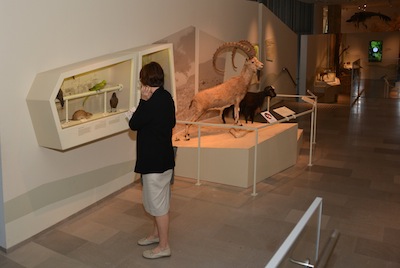
The displays at the Steinhardt Museum of Natural History educate visitors on natural history, as well as current-day environmental issues. (photos by Ashernet)

Just over a year ago, the Steinhardt Museum of Natural History opened the doors of its purpose-built structure on the campus of Tel Aviv University. The 100,000-square-foot building contains more than five-and-a-half million specimens from every corner of the world, educating visitors in every aspect of natural history.

At the same time as the museum serves to educate visitors about specific specimens, the various exhibits and presentations are a reminder of the frailty of the planet and the responsibilities of all humankind to act responsibly to preserve all the species above and below the waves. It also calls on us to try and decrease the pollution that is degrading natural life and depleting the world’s oceans and natural habitats, such as its rain forests and rivers. Israel is not free from such degradation.

photo - It is not just the quantity of exhibits and specimens at the museum that makes it special, it is also the presentation of the material
It is not just the quantity of exhibits and specimens at the museum that makes it special, it is also the presentation of the material. (photo by Ashernet)

It is not just the quantity of exhibits and specimens at the museum that makes it special, it is also the presentation of the material. As well, there are dozens of friendly, informed museum staff who are only too happy to talk with visitors.

In one sense, the museum has depressing overtones. Many of the species of wildlife that once were found in the region can no longer be seen in their natural surroundings. Visitors are also reminded that fish stocks in the Mediterranean have been depleted over the past 20 years by some 50% due to pollution. In addition, the opening of the Suez Canal has meant that many species of marine life from the Red Sea have ventured into the Mediterranean, via the canal, and wreaked havoc on the Mediterranean’s natural balance.

The museum also shows the harm being caused to the environment by other human actions. For example, it highlights in various ways, including specially prepared film presentations, the danger posed by plastic waste.

The museum presents the history of a world that is unquestionably millions of years old. There are no huge prehistoric animal models exhibited, but there are clear references to the age of dinosaurs. Also, life-size models show the development of humans through the ages. Presumably not wanting to offend anyone’s religious sensibilities, the museum would nevertheless be remiss not to give some scientific explanation for the skeletal remains of both the people and animals that lived on these shores many millennia ago. It is also a sad fact that many animal species of more recent times have been eliminated – because of over-hunting or, in some cases, like the Golan vultures, being almost completely eliminated by farmers poisoning them to protect their flocks.

Throughout the museum there are many opportunities to interact with exhibits that demonstrate or define a particular aspect of nature; for example, comparing a monkey’s hand and its mobility with that of a human. All of the exhibits are clearly explained in Hebrew, Arabic and English.

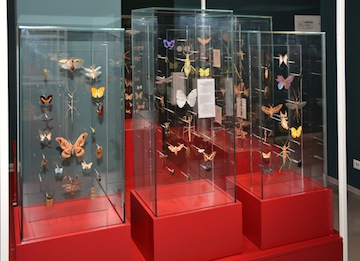
photo - the museum has a definitive collection of live insects, which are featured in 17 terrariums, as well as almost three million insect samples
the museum has a definitive collection of live insects, which are featured in 17 terrariums, as well as almost three million insect samples. (photo by Ashernet)

In addition to the models of creatures and the animals that have been prepared by taxidermists, the museum has a definitive collection of live insects, which are featured in 17 terrariums, as well as almost three million insect samples. This is the largest collection in the museum and includes several types of insects new to science. This provides an interesting opportunity to learn about worlds to which most of us don’t have access.

Among the myriad items in the museum’s collection are those of a 19th-century German zoologist and Catholic priest, Ernst Johann Schmitz, who lived in what is now Israel. Included in the Schmitz collection is the last known bear in the region, from 1916; an Asiatic cheetah from 1911; and the last crocodile from the Taninim River in central Israel. All the species have become extinct in the country.

Nowadays, there is no active hunting of local mammals or birds – the local animals on display are animals that died in nature and have been collected by the Israel Nature and Parks Authority.

Dioramas and interactive displays are located across five floors that are connected by sloped ramps. The curators hope that the museum will increase understanding and knowledge of the natural world. Just as Israel displays its unique archeological treasures, the curators in this museum want to draw attention to Israel’s unique natural history. Despite its small area, Israel has both forests and deserts. The Dead Sea – the lowest point on earth – is within an hour-and-a-half’s drive from the Hula Valley and its collection of migrating birds.

The building of the Steinhardt Museum of Natural History, the National Centre for Biodiversity Studies at Tel Aviv University – to use its full name – was possible mainly because of a donation of some $40 million by American philanthropists Judy and Michael Steinhardt.

For more information, visit smnh.tau.ac.il/en or the Hebrew site, smnh.tau.ac.il.

Format ImagePosted on November 23, 2018November 20, 2018Author Edgar AsherCategories IsraelTags environment, history, science, Steinhardt, Tel Aviv
Connect gifts to holiday

Connect gifts to holiday

Gifts can range from superhero socks to a journal to time with family and friends.

“When you consider the meaning of Chanukah, it’s about the Jewish struggle to maintain observance within a non-Jewish world,” writes Deena Yellin in the article “To gift or not to gift” on chabad.org. “The Maccabees’ victory was not just a military triumph but a win over assimilation as they succeeded in preserving the Jewish tradition. Chanukah presents a wonderful opportunity to convey the message of maintaining a strong identity despite outside pressures.”

In Yellin’s household, they “get out the Chanukah box filled with homemade decorations featuring menorahs and Maccabees that the children made in previous years…. We hang them up in our windows and around the candlelighting area. After all, publicizing the miracle is a big part of celebrating Chanukah.”

As well, every child lights their own chanukiyah, often one they’ve made themselves, and they invite people over. “One of the best ways to show children the beauty of the holiday is by sharing it with friends and relatives.”

Of course, food – latkes, sufganiyot and other deep-fried treats – is part of the celebration, as are games and crafts. Even gift-giving games. “One of my friends,” writes Yellin, “holds a ‘Mystery Maccabee’ project in which everyone picks the name of a family member from a hat so that they only need to buy a gift for that person. At their annual Chanukah party, everyone has fun guessing who got whose gift.”

Finally, many people use “Chanukah as an opportunity to teach their children to think of others who are less fortunate. One way to do this is by encouraging them to donate one of their gifts or some of their gelt to sick or needy children. Other philanthropic options are donating non-perishable items to a local food pantry or volunteering in a soup kitchen.”

***

Sarah Zadok, also in an article published on chabad.org (“Is giving Chanukah presents a non-Jewish custom?”), notes, “The word Chanukah shares a root with the word l’chanech or chinuch, which means ‘to mold’ or ‘to educate.’ Education, especially the education of children, is the foundation of what we celebrate on Chanukah.”

She allows that it is possible to educate and “to highlight the meaning of Chanukah through gift-giving. For example, giving your kids books or tapes or videos about the story of Chanukah…. Or, by drawing attention to the concept of the triumph of light over darkness – another powerful theme of the Chanukah story – you could invite your kids to bring ‘light’ where it is dark. You could, for example, make a project and bring it to a retirement home and brighten up someone’s day, or hand out cookies or latkes or winter coats to homeless people, or teach another Jew about our Chanukah traditions and invite them in to make a blessing over the candles with you.”

***

In the forward.com article “8 days of meaningful Hanukkah giving,” Shanee Markovitz writes, “it’s not about what we give as much as why we are giving it.” She offers night-by-night suggestions based on different themes.

Night 1 (Jewish values and roots): gifts like Chanukah Mad Libs for kids or a gift card to a Judaica store for adults.

image - Wonder Woman socksNight 2 (self-care): for kids, tablets that change the colour of bath water; for adults, essential oils for the bath or a massage.

Night 3 (dream big): for all ages, a journal or a pillow and/or pillowcase.

Night 4 (family and friends): again, for all ages, a picture frame for photos of/with family and friends.

Night 5 (hope): for kids, a night-night projector; for adults, scented candles.

Night 6 (gratitude): write someone “a letter of why you are grateful for them and leave them an empty card for them to write a letter and pass on the favour to someone else.”

Night 7 (surround yourself with warmth): for kids and adults, a sweater.

Night 8 (resilience): superhero socks for the kids and, for the adults, a goal planner or household tool kit (Maccabees means “Hammer,” after all).

***

Rabbi Rona Shapiro writes on ritualwell.org, in the article called “Chanukah gifts,” about using theme nights in an effort to practise moderation. Her family has had Big Gift Night (when each child gets one big gift from their parents); Grandparent Night (gifts from the grandparents); Book Night; Music Night (a night of songs); Cooking Night (make latkes and enjoy them with friends); Tzedakah Night (wrap presents to deliver to a children’s hospital or other charity); and Homemade Gift Night (such as a family photo album or scrapbook).

Shapiro suggests incorporating some new rituals into your celebration. For example, “Chag Habanot, the seventh night of Chanukah, is traditionally a women’s holiday (it falls out on Rosh Chodesh) when it was customary for women to give gifts and tell the stories of valiant Jewish women.”

For adults, she suggests presents ranging from personal blessings to wine, food and candles.

Format ImagePosted on November 23, 2018November 20, 2018Author The Editorial BoardCategories Celebrating the HolidaysTags Chanukah, children, gifts
סומדייה זכה בערעור בבית המשפט

סומדייה זכה בערעור בבית המשפט

חוסיין עלי סומדייה :סוכן המוסד לשעבר זכה בערעור בבית המשפט – בקשתו לקבל אזרחות קנדית תידון שוב. (צילום מחוסיין עלי סומדייה)

הסוכן הכפול לשעבר של עיראק, ולאחר מכן של המוסד, חוסיין עלי סומדייה (53), שגר בהמילטון שבמחוז אונטריו ומנסה למנוע את גירושו בשנית לתוניסיה, ניצח בבית המשפט הפדרלי. בהתאם להחלטת השופט (בפסק דין שפורסם בשבוע עבר) רשויות ההגירה ידנו שוב בבקשתו לקבל אזרחות קנדית. כך שיוכל להמשיך ולגור כאן לבקשתו.

בשנת 2005 גורש סומדייה לראשונה לתוניסיה שם הוא עונה לטענתו ולבסוף הצליח לברוח שוב לקנדה. לכן הוא לא מבין כיצד השלטונות ההגירה הקנדיים כל כך נאיבים ולא מבינים מה יעלה בגורלו אם יגיע למדינה ערבית כשלהי, לאחר ששימש מרגל של המוסד הישראלי.

בשנות ה-80 סומדייה גר באנגליה ושימש סוכן כפול של מנגנון הביטחון הסודי העיראקי לשעבר (המחובראת) ולאחר מכן סוכן של המוסד. הוא יליד עיראק ומחזיק גם באזרחות של תוניס כיון שאביו נולד אביו שם. האב חוסיין סומדייה ששימש שגריר עיראק בבלגיה תחת שלטונו של העריץ סאדם חוסיין.

סומדייה שמנסה כאמור בכל כוחו למנוע מהשלטונות הקנדיים את גירושו בשנית לתוניסיה, הגיש ערעור לבית המשפט הפדרלי של קנדה. זאת, לאחר ששרותי ההגירה הפקיעו כבר את תושבות הקבע הקנדית שלו. כשהכוונה בשלב השני בעצם היא לגרשו שוב לתוניסיה. עתה כאמור התקבל הערעור שלו ורשויות ההגירה יאלצו לדון שוב בעיינו. השופט איוון רועי מציין בפסק דינו כי הליך בדיקת המקרה של סומדייה על ידי רשויות ההגירה, היה לא הוגן כלפיו ולא נתאפשר לו לטעון את כל הטענות שבידו לפני קבלת ההחלטה. ולכן התיק חוזר לדיון בפני רשויות ההגירה.

“הסוכן הכפול” סומדייה הגיע לקנדה לראשונה בשנת 1990 לאחר שברח מהשלטון העיראקי וביקש כאן מקלט מדיני. שלטונות ההגירה לא הסכימו שהוא ישאר בקנדה בטענה שיש סבירות גבוהה שבעבודתו כסוכן, חשף לא מעט אנשים למעשי עינויים ואולי אף להוצאה להורג. ובעצם מדובר לכן בפשעים שהוא ביצע נגד האנושות. לאחר שנים של הליך משפט ארוך שכלל ערעורים רבים מצדו שנדחו אחד אחרי השני, סומדייה גורש לתוניסיה בשנת 2005. לאחר כשנה הוא הצליח לברוח מתוניסיה לאלג’יריה עבר להולנד והציג לשגרירות הקנדית בהאג מסמכים מזוייפים, לבקשת מקלט מדיני בקנדה. הוענק לו דרכון חרום וכך טס הוא בחזרה לקנדה בשנת 2006. מאז ועד היום בעצם שוב עניינו נדון בבית המשפט, בזמן שרשויות ההגירה מסרבות להעניק לו תושבות קבע, לאחר שעשה שימוש במסמכים מזוייפים לחזור לקנדה.

פני כשנתיים (ב-2016) רשויות ההגירה החליטו לבדוק שוב את תיק של סומיידה, בין היתר בטענה שלא כל המידע שנמסר להם היה מדוייק. הרשויות הגיעו למסקנה שבאקלים הפולטי הנוכחי לא יעונה לו כל רע בתוניסיה, ואף אחד לא יזכור את עברו. זאת בין היתר, לאור העבודה שתוניסיה לא משמשת עוד הבסיס של הארגון לשחרור פלסטין. סומדייה לא וויתר והגיש כאמור ערעור על עמדת רשויות ההגירה. הוא ממשיך לטעון כל הזמן כי כאחד ששיתף פעולה עם ישראל נשקפת לו סכנת חיים ממשית, אם יחזור למדינה ערבית כלשהי. הוא מוסיף: “המילה המוסד היא המילה מפחידה ביותר והשנואה ביותר בעולם. כל אחד יודע שמי שקשור למדינה היהודית, יעשה לו לינץ’ על ידי ההמון ברחובות של כל עיר ערבית אליה יגיע”.

במשך כשלושים השנים האחרונות הספיק סומדייה להתחתן כבר שלוש פעמים ויש לו שלושה ילדים. הוא גם מחזיק בעסק עצמאי לשיפוצים באזור המילטון והסביבה.

Format ImagePosted on November 21, 2018November 18, 2018Author Roni RachmaniCategories עניין בחדשותTags "המוסד", Hussein Ali Sumaida, Israel, Mossad, spy, חוסיין עלי סומדייה, ישראל, סוכן הכפול

Posts pagination

Previous page Page 1 … Page 3 Page 4 Page 5 … Page 8 Next page
Proudly powered by WordPress