Skip to content
  • Home
  • Subscribe / donate
  • Events calendar
  • News
    • Local
    • National
    • Israel
    • World
    • עניין בחדשות
      A roundup of news in Canada and further afield, in Hebrew.
  • Opinion
    • From the JI
    • Op-Ed
  • Arts & Culture
    • Performing Arts
    • Music
    • Books
    • Visual Arts
    • TV & Film
  • Life
    • Celebrating the Holidays
    • Travel
    • The Daily Snooze
      Cartoons by Jacob Samuel
    • Mystery Photo
      Help the JI and JMABC fill in the gaps in our archives.
  • Community Links
    • Organizations, Etc.
    • Other News Sources & Blogs
    • Business Directory
  • FAQ
  • JI Chai Celebration
  • JI@88! video

Recent Posts

  • BGU fosters startup culture
  • Photography and glass
  • Is it the end of an era?
  • Taking life a step at a time
  • Nakba exhibit biased
  • Film festival starts next week
  • Musical with heart and soul
  • Rabbi marks 13 years
  • Keeper of VTT’s history
  • Gala fêtes Infeld’s 20th
  • Building JWest together
  • Challah Mom comes to Vancouver
  • What to do about media bias
  • Education offers hope
  • Remembrance – a moral act
  • What makes us human
  • המלחמות של נתניהו וטראמפ
  • Zionism wins big in Vegas
  • Different but connected
  • Survival not passive
  • Musical celebration of Israel
  • Shoppe celebrates 25 years
  • Human “book” event
  • Reclaiming Jewish stories
  • Bema presents Perseverance
  • CSS honours Bellas z”l
  • Sheba Promise here May 7
  • Reflections from Be’eri
  • New law a desecration
  • Resilient joy in tough times
  • Rescue dog brings joy
  • Art chosen for new museum
  • Reminder of hope, resilience
  • The national food of Israel?
  • Story of Israel’s north
  • Sheltering in train stations

Archives

Follow @JewishIndie
image - The CJN - Visit Us Banner - 300x600 - 101625

Month: November 2018

Keeping clean then and now

Keeping clean then and now

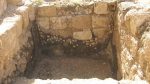
The mikvah at Herodian, which was apparently built during the Second Temple period (530 BCE and 70 CE). (photo by Deborah Rubin Fields)

The Dark Ages weren’t given their name for nothing. After the collapse of the Roman Empire, sanitation virtually disappeared. During the Dark Ages – also referred to as the Middle Ages or the medieval period – few people bathed regularly. What did they do? Those who could, or were so inclined, covered up body odour with perfume.

Progress does not always move in a forward direction – the older, classical civilizations bathed far more than did medieval Europe. In the non-Jewish ancient world, the earliest unearthed bathing and plumbing systems date back nearly 6,000 years to the Indus River Valley, in today’s Pakistan. There, archeologists excavated copper water pipes from the ruins of a palace, as well as the remains of what appears to be a superbly constructed ritual bathing pool at Mohenjo-daro. And, in a find dating 3,000 years later, archeologists found a pottery pedestal tub on the island of Crete that measured five feet long.

By instituting a practice of daily bathing, the Romans improved the general level of sanitation. Baths, moreover, functioned not just to raise the level of hygiene, but also provided opportunities to socialize, to exercise, to read and, importantly, to conduct business. From 500 BCE until 455 CE, Roman public baths were common. Moreover, privately owned Roman baths were quite luxurious, often taking up a whole room. The comprehensive sewage system of the baths consisted of lead and bronze pipes and marble fixtures.

Now, note this contrast: until the 1800s, most water pipes in the United States consisted of no more than hollowed-out trees, and the first cast-iron pipes in the United States were imported from England. Only in 1848 was a U.S. plumbing code enacted, with the passage of the National Public Health Act. In 1883, both the Standard Sanitary Manufacturing Co. (now the American Standard Co.) and the Kohler Co. began adding enamel to cast-iron bathtubs to create a smooth interior surface. Kohler advertised its first claw foot tub as a “horse trough/hog scalder [which] when furnished with four legs will serve as a bathtub.” Kohler began mass-producing these tubs, as they were recognized as having a surface that was easy to clean, thus preventing the spread of bacteria and disease.

To give additional perspective, consider this finding: after the First World War, the United States experienced a construction boom, and bathrooms were fitted with a toilet, sink and bathtub – but, even in 1921, only one percent of American homes had indoor plumbing.

Since antiquity, Jews have maintained a relatively high level of sanitation, due in part to the prescribed hand-washing ritual before eating and to the religious practice surrounding the mikvah, or ritual bath. In Israel, the oldest discovered mikvah dates back to the Second Temple period, more than 2,000 years ago. In recent years, archeologists discovered Europe’s oldest mikvah – in Sicily’s ancient Syracuse, it goes back to the Byzantine period, or the fifth-century CE.

But two important questions need answering: how do we know bathing was so important and what is a mikvah? The Babylonian Talmud, Tractate Berakhot 57b, provides this insight: though anointing (oil) and bath (water) do not enter the body, the body benefits from them. Moreover, in Tractate Sanhedrin 17b, we learn that scholars were forbidden from residing in cities that did not have public baths.

Historically, municipalities often barred Jews from bathing in their rivers, and Christians blocked Jews from using public baths. Moreover, there was a fear that Jewish women might be molested in a general public bath. So, there was a need to construct separate facilities, and Jews built bathhouses, many with mikvot close by. Thus, Jews began to link the concept of the mikvah with physical hygiene.

Significantly, the mikvah was never a monthly substitute for a bath or shower. In fact, Jewish law calls for immersion only after one has bathed or showered. Oceans, rivers, wells and lakes, which get their water from springs, can usually serve as a mikvah. The common thread between these bodies of water is that they are natural sources. To traditional Jews, they are derived from G-d. As such, they have the ability to ritually purify.

A human-made mikvah must be built into the ground or built as an essential part of a building. There are two pools: one that contains collected rainwater and the other, the actual immersion pool, is drained and refilled regularly with tap water. The pools, however, share a common wall with a hole that permits the free flow of the water, so the immersion pool also receives rainwater.

When the Temples stood, the high priest immersed in the mikvah at prescribed times. But, today, when there is no Temple, for the Orthodox, the mikvah serves the following four functions: a woman uses the mikvah after menstruating and after giving birth; immersion in a mikvah marks the final step in converting to Judaism; before beginning to cook and eat from them, Jews use the mikvah to immerse new pots, dishes and utensils; and the mikvah is also used to prepare a Jew’s body before his or her burial. Men go to the mikvah before their wedding and before Yom Kippur, and many Chassidic men use the mikvah before each Shabbat and holiday.
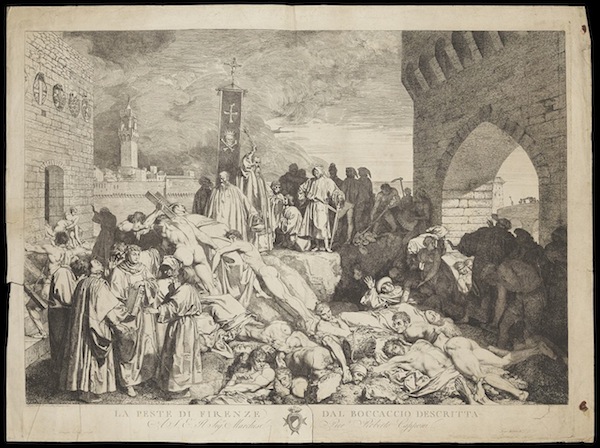
photo - Giovanni Boccaccio’s “The plague of Florence in 1348”
Giovanni Boccaccio’s “The plague of Florence in 1348.” (photo from wellcomecollection.org)

It is speculated that up to 60% of the general European population died of the Black Death. There are no statistics as to how many Jews died of the plague, so it is hard to actually say that Jewish bathhouses or the Jewish practice of hand washing or other sanitation prescribed by Jewish law kept Jews safer than the general medieval public. Two points, however, may be stated with certainty:

  1. In a number of instances, European Jews were blamed for the Black Death. As a consequence, beginning in November 1348 in Germany, Jews were massacred and expelled from their homes. In February 1349, 2,000 Strasbourg Jews were murdered. Six months later, Christians wiped out the Jews of Mainz and Cologne. By 1351, 60 major and 150 smaller Jewish communities had been eliminated.
  2. Even today, comments on the subject need to be scrutinized for possible antisemitic motives.

As for today, in the Western world, there seems to be an obsessive amount of soap bars, soap liquids, no-soap cleaners, hand wipes and wet wipes. Can one over-clean? Yes.

In an interview with Global News earlier this year, Dr. Anatoli Freiman of the Toronto Dermatology Centre explained the negative consequences of excessive showering or bathing. “The skin can dry out,” he said. “But the message is, after the shower or bath, you need to pat yourself dry and moisturize to seal it.”

Prof. David Leffell, chief of dermatological surgery at Yale School of Medicine, gives these guidelines about keeping clean. “You don’t want to do the Lady Macbeth thing, where you’re scrubbing and scrubbing,” he told businessinsider.com. “The purpose of showering is to eliminate dirt.” This can be done, he explained, in less than a few minutes by focusing on the grimier parts of the body (armpits and groin) and not overdoing it with soap elsewhere. He advised using warm, not hot, water; aiming for a three-minute shower; and moisturizing while the skin is still damp.

Deborah Rubin Fields is an Israel-based features writer. She is also the author of Take a Peek Inside: A Child’s Guide to Radiology Exams, published in English, Hebrew and Arabic.

Format ImagePosted on November 30, 2018November 30, 2018Author Deborah Rubin FieldsCategories WorldTags bathing, health, history, Israel, Judaism, mikvah
I know who I am … or do I?

I know who I am … or do I?

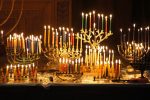
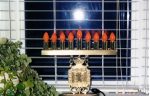
Moving into a condominium forced the writer to modify how she approached the holiday season, including the purchase of an electric chanukiyah. (photo by Libby Simon)

For Jews, the celebrations of Chanukah arrive on Sunday evening, Dec.2, and close on Monday evening, Dec.10. It is also a time when many people struggle with dissonance between religion and Western values. I know who I am, so it was not a problem – except, an epiphany struck.

I had a dream some time ago. I dreamed I was in the lobby of a hotel filled with a patchwork of people of different colours and garbs reflecting differences in religious, cultural and ethnic backgrounds. My eyes scanned the room searching for someone, or something, the object of my search unclear. No one took notice as I wound my way through the crowd and exited the area into a corridor. Turning to the right, I entered a room through an open door. My eyes were drawn to a box gift-wrapped with blue-and-white Chanukah paper sitting on a table. As I picked it up, a feeling of warmth wrapped around me. Suddenly, a non-descript, dark, threatening shadow loomed overhead, momentarily startling me. With outstretched arms, I handed my gift over to this strange apparition as if to appease it, and was immediately filled with a deep sense of inner peace and contentment.

This dream was so close to the surface, its meaning became readily clear. I was fully aware of a recent inner struggle triggered by the Christmas/Chanukah season in which I felt the very soul of my Jewishness being challenged from an external source. It was a strange and surprising experience because, as an adult, I have never been particularly observant. Although raised in an Orthodox Jewish family, my personal beliefs led me to a secular lifestyle. Following dietary laws, for example, was irrelevant in determining the quality of good character. Traditions were important more for benefit of family than in any religious sense. Rituals, such as lighting the chanukiyah candles on Chanukah did not seem necessary. After all, I know who I am. I define myself first as a human being, who happens to be of Jewish descent. But, after a lifetime of working and living in a dominant, multi-religious society, why now had it become an issue? As an empty nester, for whom do I practise it?

The answer was surprising but simple: the condominium lifestyle. Who would have anticipated that this popular and accepted way of life would create such a fall-out? I had long questioned this concept in which total strangers of diverse backgrounds would make a large monetary investment and enter into a common living arrangement – an arrangement in which they become inextricably bound to one another in some very basic ways. They accept the premise and agree to give up certain freedoms in exchange for reducing personal responsibilities. In doing so, they turn their decision-making powers and independence over to others who may have different opinions, qualifications, priorities, intelligences and abilities. Nonetheless, this is what I bought into without realizing that, as important as these issues are, others would run even deeper – such as ethnicity, culture and religion.

I have grown up with the symbols and celebrations of Christmas. As a child, I participated in school plays and choirs and Santa never asked your religion when he warmly handed you a candy cane. Feelings of deprivation or envy never entered my psyche because the love of family filled my needs. As an adult, I have continued to take in the festivities, in sharing the spirit of peace and goodwill with non-Jewish friends, neighbours and colleagues.

But something changed. Tolerance, appreciation and participation were all possible when “The Season” did not infringe on my personal turf. In the spirit of goodwill, it is important to accommodate and respect these symbolic religious expressions. However, some individuals threatened to extend these decorations over my personal unit and warned that any resistance on my part could be crushed by a simple vote of the majority. Canada is a multicultural country supporting the values and rights of freedom of religion, thus protecting minorities. Such intimidation threatens to swallow who I am.

As neighbours on a street, such a thought would never even materialize. Yet, in a condominium arrangement, boundaries become blurred. Such actions deny my very existence. They render me invisible and impose a choice – assimilation or alienation. Neither is acceptable and therein lies the conflict.

However, the dream did offer a resolution. It led me on a personal journey through the chaos of diversity. I turned towards what was right for me – the box, wrapped in blue-and-white Chanukah paper, that confirmed who I am. By walking through the open door in my dream, I received the reward of self-discovery. I realized that knowing who I am was not enough. It was only in giving my gift to the “faceless figure” of others did I feel a sense of inner peace and contentment. The dream revealed not only who I am, but who I am in relation to others. Until now, my identity had been like a one-way mirror. I could see through the glass while the other side only reflected the viewer’s own image. If others do not see me, I will disappear like a ghost in the morning light. Still, I cannot ask anyone to extinguish their light, for that is who they are, only not to impose it on mine.

What was the solution? Instead of the customary, small, coloured licorice-like wax Chanukah candles whose symbolic message of freedom dies quickly in a muted puff of smoke, I purchased and placed an electric chanukiyah in my window. Through the sustained bright light, the “mirror” becomes translucent, revealing the beautiful cultural mosaic that is Canada’s proud tradition, one that allows each of us to be who we are.

And, perhaps along with the glittering Christmas lights, we will all be enriched, as, together, they cast a far greater illumination in recognizing, respecting, accepting and even appreciating our differences: Just like the mirror on the wall / Silvered coats reflect us all / Strip bare the veneer of hypocrisy / A window reveals you are just like me.

Libby Simon, MSW, worked in child welfare services prior to joining the Child Guidance Clinic in Winnipeg as a school social worker and parent educator for 20 years. Also a freelance writer, her writing has appeared in Canada, the United States, and internationally, in such outlets as Canadian Living, CBC, Winnipeg Free Press, PsychCentral and Cardus, a Canadian research and educational public policy think tank.

Format ImagePosted on November 30, 2018November 30, 2018Author Libby SimonCategories Celebrating the HolidaysTags Chanukah, identity, memoir
The last candle for the rabbi

The last candle for the rabbi

(photo by Jon Sullivan)

In the village of Chelm, just before every Chanukah, the ancient debate begun by the two great rabbis Hillel and Shammai resumed. Do you start the festival by lighting one candle and counting up, or with eight and counting down?

Every year, Rabbi Kibbitz issued the same ruling – do whatever makes you happy.

This year, although the argument was heated, rumour was that Rabbi Kibbitz was bedridden. He was old. Was he sick? He was tired.

It was worrisome that his wife, Mrs. Chaipul (she kept her name, which is another story), who owned the only kosher restaurant in Chelm, hadn’t been to work in three days.

Filling in behind the restaurant’s counter, Rabbi Yohon Abrahms, the schoolteacher and mashgiach, was cooking, cleaning and taking orders.

“So, about the Chanukah candles,” Reb Cantor the merchant asked the young rabbi, who was busy refilling cups of tea, “how many on the first night and how many on the last?”

Rabbi Abrahms answered with a shrug. “Rabbi Kibbitz always says, do whatever makes you happy.”

“But you’re a rabbi, too,” Reb Cantor said. “What do you think?”

“Do you want food or a theological dissertation?” Rabbi Abrahms shot back. “Because I can’t do both at the same time!”

The room fell quiet.

“Food, of course!”

In Chelm, food was always more important than discussion – until it was gone, then discussion.

* * *

“Channah, you should go to your restaurant,” Rabbi Kibbitz said. His voice was soft.

“No, my love,” Mrs. Chaipul said. “I’ve left it in good hands. I will stay here with you.”

“It’s OK,” he said. “I’m not going to die until after Chanukah.”

“Don’t say such things.” She made the sign against the evil eye.

“Will you cry when I go?”

“For you? Probably.” She was barely holding back the tears. “But enough. We have years ahead.”

“No.” He sighed. “We’ve had years. Good years. Many, but not enough. Never enough. Now we have only days.”

He began coughing, and she fed him spoonfuls of warm chicken soup.

“Channah?”

“I’m here.”

Do you know what the problem with sitting shivah is?”

“Too much noodle pudding?”

“True.” The rabbi laughed, then he coughed. “Shivah is meant to comfort the living, but I’ve noticed that most bereaved are very uncomfortable. Mourning is overrated. For a week, everyone visits and talks about the recently deceased. And the family has to sit and listen, no matter how tired or sad…. All they really want is their loved one back.”

“Shaa, shaa,” his wife said. “Your shivah is a long way off.”

“No. But I have a request.”

“What is it?”

“During Chanukah,” the old rabbi said, “let me sit shivah with you, before I’m dead. Then you won’t be so alone.”

She covered her mouth to stifle a sob. What a foolish request!

Then she nodded. “Yes. Yes. Of course.”

* * *

It caused quite a stir in the village.

“If he’s not dead, how is it shivah?”

“We’re going to talk about him while he’s lying there in the house?”

“After he dies for real, are we going to have to do another shivah?”

“And what if he doesn’t die?”

This last question was interesting, because no one really believed that Rabbi Kibbitz would ever die. He was a bear of a man, who had been old forever. How could one such as that pass on?

Still, Chelm was a village that embraced the unconventional.

A schedule was made and, on each night of Chanukah, a different group trudged through the snow to light the candles and sit shivah.

The two-room house was small. The table was moved to the side of the kitchen, and extra chairs brought in for visitors. The rabbi’s bed was set in the doorway of the bedroom, so he could sit up or lie down as needed. Mrs. Chaipul’s sewing chair was next to the doorway, so she could sit beside him.

This living shivah turned out to be quite a success, mostly because the rabbi kept his mouth shut and said nothing. Everyone forgot that he was there.

Each night, blessings were sung and candles were lit. Most of the villagers were counting up with Hillel, but some were counting down with Shammai. No matter how many or how few, the light was warm and bright.

Yes, there was noodle kugel, but there were also latkes, so many different kinds, including potato, sweet potato and even zucchini.

Every villager stopped by and shared stories of how Rabbi Kibbitz had listen, talked, helped, advised or officiated. There had been weddings and brises, funerals and so many sermons.

Mrs. Chaipul listened to all the praise, and the occasional complaint. She accepted comfort and hugs, and wondered at the frequent comment, “What will we do now that he is gone?”

Strangely, hearing these words while her husband was still breathing didn’t leave her as sad as she’d expected. She found herself reliving their life together.

“He never had children with his first wife,” she told everyone. “And we, of course, were too old. But he always told me that he didn’t need any kinder because the whole village was his family.”

At last, on the eighth night of Chanukah, by some silent agreement, only the younger villagers came to visit. They all had chosen, with Shammai, to light just one candle.

There was wine and laughter and spirited discussion about the many texts that they had read with the rabbi.

Rachel Cohen said that she was proud to have been the rabbi’s first female student.

Her husband, Doodle, agreed that, without Rabbi Kibbitz, none of his many questions about life and death would have been answered so well.

A hush fell over the room as Doodle mentioned death.

The last few Chanukah candles sputtered and one by one extinguished.

All eyes turned to Mrs. Chaipul, who began to cry softly.

Except for the coals from the stove, the room was black.

“Is he?” someone whispered.

“We should go,” whispered another.

“Why is it so dark and quiet?” came a booming voice. “Am I dead?”

“He’s very noisy if he is dead,” said Doodle.

Rachel Cohen quickly snatched up a spare candle and lit it from the stove.

In the dim light, everyone looked and saw Rabbi Kibbitz was sitting up in his bed.

“Hello,” he said. His eyes glinted brightly. “I’m sorry to interrupt. You all said such nice things about me. Thank you. But I don’t think I’m done yet. I’m feeling much better. Channah, maybe you and I could leave Chelm together and do some traveling?”

“You old fool!” His wife threw her arms around his neck.

Rabbi Kibbitz hugged her close, and thought about the days to come; each of them an adventure to be shared.

One by one, but all at once, the students sneaked out of the house to spread word of the miraculous recovery.

The next morning, when a delegation of elders went to the rabbi’s house, they found it empty.

A note on the kitchen table read, “No, we’re not dead. Yes, we’ve gone. Shalom.”

Mark Binder is an author and storyteller. The former editor of the Rhode Island Jewish Herald – back when there was such a thing as a for-profit Jewish newspaper – writes the “Life in Chelm” series of books and stories. The first volume, A Hanukkah Present, was the runner-up for the National Jewish Book Award for family literature. The Brothers Schlemiel was serialized for two years in the Houston Jewish Voice. Binder’s a graduate of the Trinity Rep Theatre Conservatory, studied storytelling with Spalding Gray, and has taught the course Telling Lies: How To at the Rhode Island School of Design. He’s toured the world telling stories to listeners of all ages and backgrounds with the secret mission of transmitting joy with story. Readers can listen to the audio version of “The last candle” story at transmitjoy.com/spotify.

Format ImagePosted on November 30, 2018November 30, 2018Author Mark BinderCategories Celebrating the HolidaysTags Chanukah, Chelm, storytelling
Jewish identity and Chanukah

Jewish identity and Chanukah

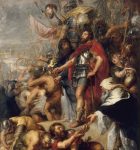
“The Triumph of Judas Maccabeus” by Peter Paul Rubens, between 1634 and 1636. (photo from Wikimedia Commons)

One of the richest statements found in the Talmud about the meaning of Jewish identity is the following: “He who does not feel shame and humility before others, does not show love and compassion or abundant kindness to others, such a person is not from the seed of Abraham.” According to this statement, Jewish “genes” are as nothing without Jewish ethics. To be counted among the seed of Abraham, one’s character structure must reflect the values by which Abraham lived.

Maimonides was fully in accord with the talmudic concern with action rather than descent, with purpose and commitment rather than race. He expressed it as follows: “The distinguishing sign of a child of the covenant is his disposition to do tzedakah.” Placing action at the centre of Jewish identity mirrors a fundamental characteristic of the Judaic tradition.

For Aristotle, the peak of human perfection was to be found in thought. Man perfected himself to the degree that the objects of his thought were perfect. God – the most perfect being – was engaged in thought upon His own perfect self. In the biblical tradition, human perfection was realized in moral behaviour. Not thought but action; not knowledge of the cosmos, but involvement in history. The prophets condemned the community not because of their failure to become intellectuals, but because of their failure to feed the hungry, clothe the naked, care for the lonely and protect the socially vulnerable.

In the Torah, God is an active being. He creates the world, He feeds the hungry, He is involved in the drama of history. Typical of the Judaic worldview is the midrashic “question: “What does God do now that he has created the world?” (Such a question could never have been asked by Aristotle.) The midrash answers: “He arranges marriages!”

In the Jewish tradition, God is the creator of life, and His message to humanity is expressed in the language of mitzvah (commandment). His presence in the world entails human responsibility to improve the conditions of society and history. In the Jewish tradition, we live in the presence of God when we hear a mitzvah that obliges us to act in a particular way. Maimonides wrote that God gave the 613 commandments so that a Jew can find one mitzvah that they can perform with love and complete devotion.

One of the distortions of modern existentialism is the exaltation of the virtues of sincerity, devotion, authenticity, etc., irrespective of their specific content. The sincerity of the Nazis in no way mitigates their barbarity and depravity. Subjective attitudes are important aspects of human behaviour, only if their content is worthwhile and significant. It is ludicrous to celebrate Maccabean courage without appreciating their commitment to monotheism, mitzvah and the dignity of Jewish particularity.

In celebrating Chanukah, therefore, we should direct our attention to the problematic issues involved in the spiritual survival of the Jewish community within the modern world. Many traditional Jews believe that Jewish particularity is incompatible with modern mass culture and that Judaic bonds holding together the community cannot bear the stress caused by exposure to the cultural rhythms of the larger non-Jewish society.

Those who accept this assessment of Judaism in the modern world turn to social and cultural separation in order to secure Judaism’s survival. There are others who are skeptical as to whether this ghettoization can succeed. Modern communication makes it impossible to escape acculturation to modern “Hellenism.” It is, in their opinion, futile to resist. We should accept our fate and accommodate ourselves to the inevitability of our eventual assimilation.

A third option, which defines the philosophy of the Shalom Hartman Institute, rejects the defeatism of the latter point of view and also the separatism of the former. We question the belief that Judaism has always survived because of its radical separation from the surrounding culture. Chanukah does not commemorate a total rejection of Hellenism but, as Elias Bickerman shows in From Ezra to the Last of the Maccabees, the revolt focused specifically on those aspects of foreign rule that expressly aimed at weakening loyalty to the God of Israel.

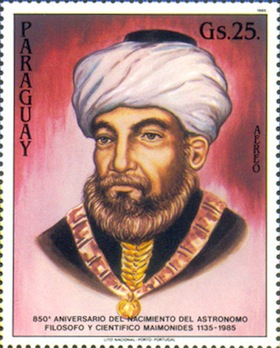
photo - A Maimonides stamp from Paraguay, 1985
A Maimonides stamp from Paraguay, 1985. (photo from Wikimedia Commons)

Maimonides’ thought was clearly enriched by his exposure to the writings of Aristotle and Plato and Islamic scholars such as al-Farazi and Ibn Baja. Rabbi Joseph B. Soloveitchik was enriched by Kant and Kierkegaard. These two great halachic teachers are living examples of the intellectual and spiritual enrichment that results from exposure to non-Jewish intellectual and spiritual frameworks.

The major question that we must ponder on Chanukah is whether the Jewish people can develop an identity that will enable it to meet the outside world without feeling threatened or intimidated.

Can we absorb from others without being smothered? Can we appreciate and assimilate that which derives from “foreign” sources, while at the same time feel firmly anchored to our particular frame of reference?

In order to determine what we can or cannot select, it is essential that the modern Jew gains an intelligent appreciation of the basic values of their tradition. Learning was not essential for our ancestors, because they were insulated by the cultural and physical Jewish ghetto. For the Jew to leave the protective framework of that ghetto, it is necessary for them to have a personal sense of self-worth and dignity.

In celebrating Chanukah, we remind ourselves that our Jewish identity must not be grounded in biological descent but in a heroic commitment to a way of life. Our past, the memories we bring from the home we came from, are only the beginning stages of our spiritual self-understanding as Jews. How we live in the present and what we aspire for in the future must be the major sources nurturing our identity as Jews.

On the holiday of Shavuot, we remember how our people pledged to live by the Ten Commandments. On Chanukah, we remember how that commitment inspired a nation to engage in a heroic battle against religious tyranny. Today, the battle for cultural and spiritual survival continues.

In the Western, free world, the battle is against indifference, anomie and cultural assimilation. In Israel, the challenge is to do battle against making nationalism a substitute for covenantal Judaism. For Jews who live in the different areas of the globe, the memory of the Maccabees can be an inspiration to persevere and believe that, ultimately, they will be victorious in their struggle.

Rabbi Prof. David Hartman (1931-2013) was founder of the Shalom Hartman Institute. This essay on Chanukah, one of several on the holiday, dates to 1984. This and other writings have been brought to light by SHI library director Daniel Price. Articles by Hartman, z”l, and other institute scholars can be found at shalomhartman.org.

Format ImagePosted on November 30, 2018November 30, 2018Author Rabbi Prof. David Hartman SHICategories Celebrating the HolidaysTags Chanukah, identity, Judaism, Shalom Hartman Institute
What does Chanukah mean?

What does Chanukah mean?

The light of our chanukiyot must shine as a commitment to discovering a Judaism of ideas and values as an integral part of our journey. (photo by David Williss/flickr.com)

Chanukah is a holiday with an identity crisis. From the beginning, the rabbis had difficulty pinpointing what it was that we were celebrating. Was it the Maccabees’ or God’s military victory over the Assyrians? Was it a spiritual victory of Judaism over Hellenism? Was it the miracle in which one small jar gave light in the Temple for eight days? Or is it a holiday celebrating a victory of the Jewish people against religious oppression?

What we often do when we have many options is that we pick all of them. Instead of clarifying, however, this creates confusion and a lack of focus and a relegating of the holiday away from values to the realm of ritual observance alone. We light candles without really knowing why and celebrate without a clear understanding of the cause of our joy.

The identity crisis of Chanukah, however, comes from an even deeper source. Many of the above potential meanings for celebration are no longer compelling or meaningful. Military victories are wonderful, especially when one takes into account the alternative, but in a world in which Jewish power is integral to the Jewish experience, the celebration of a victory more than 2,000 years ago is not particularly compelling or meaningful. For a military victory to be memorable, its outcome needs to have produced a tipping point. The Maccabean victory was no such tipping point in Jewish history.

Today, however, we face an even more substantive issue. When Chanukah became a holiday, we lived in a world of dichotomies between Judaism and Hellenism, in which the lights of Chanukah symbolized a purity of faith and commitment to Torah free from Hellenistic influence and corruption. We spoke of Athens and Jerusalem as two alternative and mutually exclusive paths. One’s identity was either grounded in and nurtured by Jerusalem or was rooted and guided by Athens. Each creates a distinct and mutually exclusive identity. The victory of one is the defeat of the other.

The essence of the modern era, however, may be encapsulated as the period in which such dichotomies have come to an end. A modern Jew is one who has multiple identities and multiple loyalties. He or she is a traveler in an open marketplace of ideas in search of new synergies and meanings. What a previous generation would call assimilation – that is, the penetration of “outside” ideas and cultures within a Jewish one – the modern Jew sees as essential to building a life of meaning and a Judaism of excellence.

Whatever Athens or Jerusalem might have signified in the past, today they represent the notion that to be a Jew is to live in the larger world and aspire to create a new dialogue with that world in which both sides learn from and impact each other. As a result, Jewish identity has changed. We no longer see our identity as singular and unique, but as integrated and complex. Jews today see themselves as citizens of both Athens and Jerusalem.

What then does Chanukah mean? For many, it acquires special significance as a buttress to Jewish identity during Christmas season, when Christian identity shines. The chanukiyah is the antidote to the Christmas tree, and we can give our children presents for eight days and not merely one.

Far from ridiculing the above, I actually believe that therein may lay the beginning of a new meaning for Chanukah. Not, however, in its commercial sense or as an antidote to anything, but in its aspirations to create a space for Jews and Judaism within a larger world. We do not yearn to reject Athens or to go back to a singular identity. We celebrate the possibilities of engaging one of our identities with the other, one idea with another, to the mutual growth and benefit of each. The challenge, however, in a multicultural, multi-identity world is how not to descend into mediocre notions of common denominators and superficial syntheses.

If the real gift of modernity is the moral and spiritual consequences of having a complex identity and living in both the metaphorical Jerusalem and Athens, the challenge is how to sustain all the various features of one’s identity. Assimilation today is no longer the removal of dichotomies, but the abandonment of difference.

Our enemy is not outside but within. The purpose of lighting a candle is not to celebrate a miracle of yesteryear but to declare a commitment to ensuring that to maintain a Jewish identity is a part of my being. One is obligated to place the chanukiyah in a window where passers-by can see it and, in so doing, make space within one’s public persona for Judaism to shine forth.

A “good Jew” is no longer one who fights Hellenism but one who maintains a Jewish core within the multiple facets of his or her life. It was often much easier to be a Jew when we were fighting “them,” whoever “them” may have been. To maintain a Jewish commitment within a world in which dichotomies are gone requires a level of Jewish education and knowledge unparalleled in Jewish history. A dialogue between Jerusalem and Athens in which the value of each is maintained will only be possible if one knows what Jerusalem means and what values and ideas Judaism can contribute to living a meaningful life.

We are free today to light our chanukiyot, but the light must not only shine outside as a wall between us and them, it must shine within as a commitment to discovering a Judaism of ideas and values as an integral part of our journey.

Rabbi Dr. Donniel Hartman is president of the Shalom Hartman Institute and author of the 2016 book Putting God Second: How to Save Religion from Itself. This article was initially published in 2010, and updated and syndicated by Religion News Service in 2017. Articles by Hartman and other institute scholars can be found at shalomhartman.org.

Format ImagePosted on November 30, 2018November 30, 2018Author Rabbi Dr. Donniel Hartman SHICategories Celebrating the HolidaysTags Chanukah, identity, Judaism, Shalom Hartman Institute
Israel-Diaspora divide

Israel-Diaspora divide

Mattathias and the Apostate (1 Maccabees 2:1-25) in Gustave Doré’s English Bible 1866. The time has not yet come when we no longer need the warrior Maccabee. (photo from Wikimedia Commons)

Before the rebirth of the modern state of Israel and the unprecedented success of Jews in North America, Jews had very little to celebrate. After our triumphant Exodus from Egypt, it was more or less downhill and, in the competition between monotheistic faiths, we were always on the losing side. The God who chose us, to quote Woody Allen, was a consistent “underachiever,” at least when it came to looking after our interests.

One of the few exceptions in this tragic tale was Chanukah. For a moment, we won. Who we defeated and what we achieved are debated though. Were the Maccabees fighting a foreign, occupying force that wanted to deny the Jewish people their freedom and liberty, or was the war essentially a battle against Hellenization and assimilation? Was the miracle the military victory or a spiritual one? Before the 20th century, it didn’t really matter. We had won at something. Dayenu. The light of Chanukah illuminated the darkness that engulfed much of Jewish history, and gave hope that, one day, we would again prevail.

That hope came true in the 20th century, and both Israel and North American Judaism embraced Chanukah as the paradigm for their success. Each, however, tells a very different Chanukah tale and sees itself as combating a very different darkness.

Now, differences alone are not a problem, as long as they complement each other. In the case of Chanukah, however, these differences express a deep schism between Israel and North American Jewry. It is not hyperbolic to argue that, unless we learn how to share a Chanukah story, our shared enterprise and common identity are at risk.

In Israel, Chanukah is primarily a story of our military victory over an oppressive enemy that sought to destroy us. Zionists who wanted to re-form the Jewish psyche and heal it from its diasporic defeatism and powerlessness saw the foundation for the new Jew in the Maccabees of old – a Jew who was brave, a Jew who was willing to bear arms and, most significantly, a Jew who was victorious.

The Maccabean victory of the few over the many continues to serve as a dominant theme in Israeli discourse. In our experience, we continue to encounter forces of darkness who seek to destroy us. We are the light that they yearn to extinguish and, as we celebrate Chanukah, we recommit ourselves to the heroism and sacrifice that our survival requires and demands. If, in the past, our tradition commanded every Jew to see themselves as coming out of Egypt, in modern Israeli society, the demand is that every Jew commits himself or herself to being a modern Maccabee.

In North America, a very different Chanukah story is told. As paragons of religious tolerance, the United States and Canada have created an unprecedented environment for Jews to live and thrive as a powerful and beloved minority. There is no war of survival. Consequently, North American Jews have little personal use for the warrior Maccabee.

Through the North American lens, Chanukah celebrates the constitutional rights of all to religious freedom and to the fostering of religious tolerance. The war of the Maccabees was a battle against religious oppression, and the Maccabees were liberal warriors against the darkness of religious oppression and fundamentalism. Through the chanukiyah, which stands proudly side-by-side with the Christmas tree, Jews pledge to lead the fight to preserve the religious freedoms of liberal democratic life. The Chanukah light is the torch leading their way.

The beauty of religious symbols is that they have no inherent meaning, and the history on which they stand is but raw material to be molded by each generation and community in search of meaning and relevance. People in different times and circumstances will inevitably develop diverse understandings. The problem arises when these differences become expressions of value systems that are positioned as mutually exclusive.

A community is a collection of individuals who do not merely share common symbols. A strong and vibrant worldwide Jewish community is only possible if we share as well a set of common values. For North American and Israeli Jews to walk hand-in-hand, we cannot be alienated from each other’s values, but, quite to the contrary, we must respect and seek to embody them. In short, we must not only light the same candles, but strive to illuminate and overcome the same darkness.

Israelis must begin to fight against the darkness of religious intolerance. Religious freedom must be the foundation of Israel’s democracy, and Israelis must cease to vote primarily for the Maccabean leader who will lead us to victory against external foes, and instead seek a Maccabee who is devoted to creating a Jewish society where all forms of Judaism and all religions are supported and treated with equal respect. No North American Jew will in the long run have a relationship with Israel that does not strive to embody these values.

At the same time, the generation of North American Jews for whom the survival and power of Israel are a given, must learn to recognize and respect the real threats and dangers that their people in Israel experience every day. The time has not yet come when we no longer need the warrior Maccabee. While we share the same values of justice and peace, in the realities of the Middle East, their implementation is challenging at best. Israelis will not feel connected to a North American Jewry that does not appreciate the complexity of this reality.

As a people, we share the same Chanukah. To be a united people, we must learn how to share each other’s stories, share each other’s needs and values, and together fight to embody them in our lives.

Rabbi Dr. Donniel Hartman is president of the Shalom Hartman Institute and author of the 2016 book Putting God Second: How to Save Religion from Itself. This article was initially posted on the Times of Israel in 2015. Articles by Hartman and other institute scholars can be found at shalomhartman.org.

Format ImagePosted on November 30, 2018November 30, 2018Author Rabbi Dr. Donniel Hartman SHICategories Celebrating the HolidaysTags Chanukah, Diaspora, Israel, Shalom Hartman Institute
Matana expands its services

Matana expands its services

Each Matana gift box focuses on a different vendor. (photo from thematanashop.com)

Matana, a subscription box company from Israel, has a new mission-driven brand and vision. Formerly called Blue Box, Matana, the Hebrew word for gift, signifies the mutually beneficial exchange between the artisans, whose products are included in each box, and the recipients. Since its launch, the company has delivered more than 2,000 boxes with products from dozens of Israeli small businesses.

With a mission to highlight the unique flavours and textures of Israel while giving Israeli artisans a global platform to showcase their products, Matana features a selection of one Israeli vendor’s products in each box, along with a postcard that shares the vendor’s story. Israeli vendors include small enterprises, family-run farms, kibbutzim, social initiatives and young entrepreneurs. Boxes include products that range from Shalva Tea, locally foraged teas packaged by adults with special needs; to Kuchinate baskets, which are woven by African refugee women; to Sindyanna olive oil, which is created by Jewish and Arab women working side-by-side; to Rusty’s Nut Butters and Treats, a woman-led business.

photo - Israeli vendors include small enterprises, family-run farms, kibbutzim, social initiatives and young entrepreneurs
Israeli vendors include small enterprises, family-run farms, kibbutzim, social initiatives and young entrepreneurs. (photo from thematanashop.com)

“Every day, I am inspired by the ingenuity of Israel’s artisans working in nature and blending traditional with modern techniques on an ancient land,” said Matana chief executive officer Emily Berg. “Their products are handcrafted with purpose and passion, and tell the rich and multi-faceted story of Israel. We are thrilled to support Israeli artisans and, through them, to share Israel’s diverse fabric with the world.”

A Toronto native who moved to Israel in 2012, Berg developed the idea for Matana when her then-boyfriend, now husband, was called to serve in reserve duty in Gaza in Operation Protective Edge in 2014. During the tense time, Berg wanted to find a way to showcase Israel’s many sides to a global audience while supporting Israel’s artisans, whose businesses suffered during the conflict.

“My fiancé was called to reserve duty and was basically gone from the first until the 40th and final day,” Berg told the Independent in an interview in 2016. “It was a very quiet period. People were not going out much. And, it was the first time I was able to really reflect on my life, purpose and future here.”

The company was initially called Blue Box as a tribute to the Jewish National Fund’s blue-and-white tzedakah box that she’s known since childhood. (See jewishindependent.ca/jnf-inspires-entrepreneur.)

Due to the business’s success and the high demand for the boxes, the company has transformed from a one-woman show operated out of Berg’s own Tel Aviv-Jaffa living room to include new partners Elad and Maya Borkow, who run the logistics department from a warehouse in Ramat HaSharon.

Matana (thematanashop.com) offers several subscription options, including a new seasonal quarterly box that features products from several different vendors. The next shipment is scheduled for Dec. 12.

Format ImagePosted on November 30, 2018November 30, 2018Author MatanaCategories IsraelTags Chanukah, Emily Berg, gifts, Matana
Give a gift of language

Give a gift of language

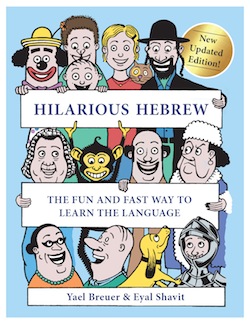
Tina Turner, the late Leonard Cohen, TV presenter and comedian Bill Maher, the bands Madness and Led Zeppelin, actor Richard Gere and others have recently been added to the list of celebrities like actors Tom Selleck and Ben Stiller, musician Mick Jagger and former president Barack Obama who, perhaps unknown to them, have helped learners of Hebrew around the world acquire new vocabulary. Two years after the publication of the book Hilarious Hebrew: The Fun and Fast Way to Learn the Language, a fifth print run – which is also an extended edition – has recently been published.

image - Hilarious Hebrew book coverCo-creator and Hebrew teacher Yael Breuer is convinced that, once readers find out that singer “Tina Turner does not hold a grudge,” for example, they are not likely to forget that the Hebrew word for grudge is tina.

“The method is a great way to memorize Hebrew vocabulary but, in fact, could be adapted as a teaching aid for any vocabulary in any language, and we have been asked about producing versions of the book for French, German and even Chinese speakers,” said Yael Breuer.

The book has been popular with Jews and Christians, tourists and students, and is sold in shops, Jewish museums and online. “The book was placed on the recommended book list by famous London-based Foyles bookstore and someone recently told me, half-jokingly, that our method could help lift the biblical curse of the Tower of Babel, which caused communication problems by separating people into speaking different languages,” she added.

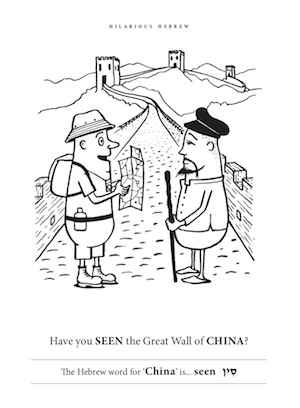
image - Hilarious Hebrew page - ChinaHilarious Hebrew is divided into sections, which helps users identify words according to their need or interest, including vocabulary for vacationers, shoppers and restaurant-goers. It has been used as an aliyah gift to new immigrants to Israel by the Jewish Agency and has also been adopted as a language teaching tool by Edinburgh Hebrew congregation, who have started converting some of the book’s illustrations into animations. Hebrew tutorials, based on the method, are now available on the internet and co-writer Eyal Shavit, who is a musician, is in the process of composing a song using the Hilarious Hebrew method. “Just like the book, the song will teach Hebrew words in an entertaining way that will stick in the listeners’ minds,” he said.

For more information, see jewishindependent.ca/from-nonsense-knowledge. And event information about the book is available on hilarioushebrew.com; it is sold by Amazon.

Format ImagePosted on November 30, 2018November 30, 2018Author Pitango PublishingCategories BooksTags Chanukah, education, gifts, Hebrew, Hilarious Hebrew, language
מלגות לסטודנטים חרדים

מלגות לסטודנטים חרדים

עמותת ידידות טורונטו עוזרת במלגות לסטודנטים חרדים כדי “ליצור אליטה אקדמית מקצועית רחבה באיכות ובכמות, התורמת רווחתה הכלכלית של החברה החרדית ולפיתוחה של הכלכלה הישראלית“. (צילום: Wikimedia Commons)

עמותת ידידות טורונטו תומכת בסטודנטים מהמגזר החרדי בישראל ומעניקה להם מלגות בשווי של עד שלושה עשר אלף ש”ח. המלגות מיועדות לסטודנטים חרדים בגילאי 20-40 שנמצאים בשנה הראשונה של התואר הראשון. תאריך הגשת הבקשות יסתיים ב-5 בחודש דצמבר, מספר המקומות מוגבל ואין צורך בשום פעילות חברתית התנדבותית לקבלת המלגה. התשובות יוענקו לסטודנטים שהגישו את הבקשות למלגות לפי מצבם  הסוציו- אקונומי.

עמותת ידידות טורונטו עוזרת במלגות לסטודנטים חרדים כדי “ליצור אליטה אקדמית מקצועית רחבה באיכות ובכמות, התורמת רווחתה הכלכלית של החברה החרדית ולפיתוחה של הכלכלה הישראלית”. המלגות מיועדות לגברים ונשים המעוניינים לרכוש תואר אקדמי במוסדות המובילים להשכלה גבוהה בישראל. זאת כדי להעניק “מעטפת תמיכה וליווי במסלול הלימודים האקדמי, החל בשלבי ההכוונה ובחירת תחום הלימודים, ועד להשתלבות מיטבית בשוק התעסוקה”. תכנית החרדים באקדמיה פועלת ליצירת מסלולי לימודים ייחודיים ובעלי ישימות תעסוקתית גבוהה לחרדים.

תוכנית חרדים באקדמיה פועלת מזה שש שנים ובוגריה השתלבו בהצלחה בשוק התעסוקה המקומי. המלגות מיועדות לסטודנטים הלומדים בכל אחד מהמוסדות האקדמיים המוכרים בישראל (ומתוקצבים על ידי המוסדות להשכלה גבוהה). היקף המלגות נע בין ששת אלפים ש”ח ועד שלושה עשר אלף ש”ח. בין התנאים המקדימים להגשת הבקשות למלגות: על המועמדים להיות בגילאים המתאימים, להציג תחום הלימודים הנחשב לפורץ דרך (כמו חרדים לרפואה וחרדים לפסכולוגיה), עליהם להיות בעלי רצון ומוטיבציה גבוהה לקבל ליווי בתחום פיתוח הקריירה.

לפרוייקט תוכנית חרדים באקדמיה שותפים בין היתר: המשרד לפיתוח הפריפריה הנגב והגליל, אינטל, מבחר (מכללת בני ברק האקדמית), עמותת מרפא לנפש (מרכז סיוע ושיקום), אוניברסיטת בר-אילן, הלשכה המרכזית לסטטיסטיקה, המרכז האקדמי לב, האוניברסיטה הפתוחה, האוניברסיטה העברית וחברת מלאנוקס טכנולוגיות הישראלית (המתמחה בפיתוח ייצור של מוצרים ורכיבים למערכות תקשורת).

עמותת ידידות טורונטו (מיסודה של קרן פרידברג הקנדית) פועלת להעצמת אוכלוסיות מהפריפריה החברתית בישראל. תחומי העניין העיקריים של העמותה הם: ילדים, נוער וצעירים בסיכון, חילוץ מעוני של אוכלוסיות חלשות וטיפול רגשי, זהות יהודית, שיפור תדמית ישראל בעולם, חינוך, רווחה, בריאות ורפואה. העמותה מפקחת כיום על יותר ממאה ועשרים פרויקטים שונים.

קרן פרידברג עוסקת ברווחה ובצדקה ועזרה למי שנפגעו בעימותם צבאיים בישראל. ממשרדי הקרן ממוקמים ברחוב הביי שטורונטו – שם פועלת קבוצת פרידברג המתעסקת בתחום הפיננסי. את הקרן מפעילים ומנהלים אלברט פרידברג, ננסי פרידברג ויעקב פרידברג. הקרן תורמת ועוזרת לעשרות ארגונים ופרוייקטים שונים בקנדה ובישראל. סך הכל התרומות שלה נאמד ביותר מארבעים וארבעה מיליון דולר בשנה. כ-52 אחוז מהתמיכות מיועד פרוייקטים לרווחה, כ-41 אחוז לפרויקטים לחולים ונזקקים וכ-2 אחוזים לאזורי אסון.

חברת כריית המטבעות הדיגיטליים ביטפארמס מבקשת להיסחר בבורסת טורונטו

חברת כריית המטבעות הדיגיטליים הישראלית ביטפארמס הנסחרת בבורסת ת”א, מבקשת להיסחר גם בבורסה של טורונטו. בימים אלה הוגשה טיוטת תשקיף לנציבות ניירות הערך של מחוז אונטריו – במסגרת רישום מניית החברה למסחר בבורסה של טורונטו. ביטפארמס מעוניית לחשוף את פעילותה למשקיעים נוספים מחוץ לישראל, ובשלב זה טורונטו על הקו, לאחר שרישום מניית החברה למסחר בנסד”ק של ניו יורק לא צלח.

מנכ”ל ביטפארמס אומר: “קנדה נחשבת למובילה בתחום טכנולוגיית בלוקצ’יין וכן בנושא מטבעות דיגיטליים. אנו פועלים ומנוהלים מקנדה ולכן יש לנו יתרונות פוטנציאליים להיסחר בבורסה של טורונטו. הרישום בשתי הבורסות ת”א וטורונטו יכול להביא גם להפתחת דמי הניהול ושכר הטרחה, הנובעים מתפעול ודיווח בתחומי שיפוט שונים”.

Format ImagePosted on November 28, 2018November 24, 2018Author Roni RachmaniCategories עניין בחדשותTags BitPharma, Charedim, education, Israel, scholarships, stock exchange, students, ultra-Orthodox, Yedidut Toronto, בורסת, ביטפארמס, חינוך, חרדים, ידידות טורונטו, ישראל, מלגות, סטודנטים
Revealing truth elicits threats

Revealing truth elicits threats

University of Ottawa’s Prof. Jan Grabowski delivered the Rudolf Vrba Memorial Lecture at the University of British Columbia Nov. 15. (photo by Pat Johnson)

Jan Grabowski, a University of Ottawa professor who is a leading scholar of the Holocaust, delivered the annual Rudolf Vrba Memorial Lecture at the University of British Columbia Nov. 15 – the same day he filed a libel suit against an organization aligned with Poland’s far-right government.

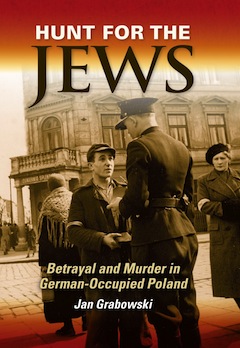
The Polish League Against Defamation, which is allied with the country’s governing Law and Justice Party, initiated a campaign against Grabowski last year, accusing him of ignoring the number of Poles who saved Jews and exaggerating the number of Jews killed by their Polish compatriots. Grabowski’s book, Hunt for the Jews: Betrayal and Murder in German-Occupied Poland, won the 2014 Yad Vashem International Book Prize for Holocaust Research. An English translation of an even more compendious multi-year analysis undertaken by a team of researchers under Grabowski’s leadership will be published next year. His Vrba lecture provided an overview of some of the findings in the new work. It is a harrowing survey that brought condemnation from Polish-Canadians in the Vancouver audience.

The new book, which does not yet have an English title, is a work of “microhistory,” Grabowski said. Holocaust studies is one of the fastest-growing fields of historical research, he said, partly because it got off to a slow start and really only picked up in the 1980s. Much of the written work being completed today is in the area of survivor memoirs, second- and third-generation experiences, including inherited trauma, and “meta-history,” the study of the study of the Holocaust.

“This assumes that we actually know what has happened,” he said. Grabowski maintains there is still much primary research to be done. “We are still far away from knowing as much as we should about this, one of the greatest tragedies in human history.”

There are millions of pages of relevant historical documentation almost completely untapped – primarily in provincial Polish archives, police records and town halls – that spell out in detail the often-enthusiastic complicity of Poles in turning on their

Jewish neighbours. By combing through these previously ignored records, Grabowski and his co-authors have amassed evidence of widespread – and eager – involvement of Polish police and other Poles in assisting Germans to identify, hunt down and murder Polish Jews.

The work has been met with official condemnation. Earlier this year, the Polish government adopted a law that would expose scholars involved in the study of the Holocaust to fines and prison terms of up to three years. The criminal component of the law, including imprisonment, was rescinded after international backlash, but the atmosphere around Holocaust inquiry in Poland remains repressive.

Grabowski said that the “explosion of right-wing extremists, xenophobia and blatant antisemitism” in Poland is related to the “undigested, unlearned and/or rejected legacy of the Holocaust” – the fact that Polish society has, by and large, refused to acknowledge the wounds of the past or to deal with its own role in the extermination of three million of its Jewish citizens between 1939 to 1945.

The concept of microhistory, which is the approach Grabowski’s team uses, is not local history, he said, “it is an attempt to follow trajectories of people.” He instructed his researchers to focus on the exact day, often hour by hour, when liquidation actions took place in hundreds of Polish shtetls and ghettoes. To do so upends a conspiracy of silence that has existed for decades.

“Why the silence?” he asked the audience. “There were three parts to the silence. One was the Jews. They were dead. They had no voice … 98.5% of Polish Jews who remained under German occupation, who never fled, died. You have a 1.5% survival rate for the Polish Jews. So, the Jews couldn’t really, after the war, ask for justice, because they were gone.”

The communist regime that dominated Poland for a half-century after the war was viewed not only as a foreign power inflicted on Poles from the Soviet Union, Grabowski said, “but, more importantly, as Jewish lackeys – that was a term that was used.

“So, it wouldn’t really stand to have trials of those accused of complicity with the Germans for murdering the Jews,” he said. “That would only confirm the widespread accusations that the communists were here doing the Jewish bidding.”

The third factor in the silence were the interests of Polish nationalists, whose ideology is inherently antisemitic, and who are the dominant political force in the country today.

image - Hunt for the Jews book cover
Hunt for the Jews won the 2014 Yad Vashem International Book Prize for Holocaust Research.

While clearly not all Poles were collaborators, it would have been impossible for almost anyone in the country to claim ignorance of what was happening.

“Mass killing was taking place in the streets,” the professor said. Researchers found bills of sale charging city officials for the sand municipal workers needed to cover the blood on sidewalks.

“When you say that blood was running in the streets, it’s not a metaphor, it’s just a description of what really happened,” he said.

In some ghettos, as many as half the Jewish population was killed on the day of the action, with massive participation from Polish society.

“One area more, one area less,” he said. “Usually between 10 and 20% of Jews were slaughtered simply in order to frighten the remaining 80% to go to the trains, to be herded to the trains,” said Grabowski.

In Poland’s smaller communities, centuries of Jewish and Polish social, commercial and civic interactions did not result in camaraderie – on the contrary.

“The deadliest places of all [were] small shtetls, small towns, where anonymity was not available when the authorities were not far away,” he said. In one instance, a Jew in hiding heard his neighbour assure the Nazis he would return with a hatchet to help them break into the hiding place seconds before the door was axed down.

In another example, Grabowski described in minute detail the atrocities committed by Germans, Poles and Ukrainian recruits in Węgrów, a town in eastern central Poland with a Jewish population of about “10,000 starving Jews who have been terrorized for nearly three years and now the final moment has come.”

Rumours of liquidation swirled for months, as Jews fleeing neighbouring communities brought narratives of destruction. In the day or two before the liquidation, wives of Polish military and other officials rushed to their Jewish tailors, shoemakers and others craftspeople to obtain the items they knew would soon become unavailable.

“With mounting panic, people started to prepare themselves for a siege,” said Grabowski. “They built hideouts to survive the initial German fury, they started to seek out contacts on the Aryan side of the city, looking for help from former neighbours, sometimes friends and former business partners.”

On the eve of Yom Kippur in 1942, Polish officials in the town were instructed to assemble horses, wagons and volunteers. A cordon of Nazis and collaborators surrounded the city at intervals of no more than 100 metres.

The mayor of the town wrote: “Jews who woke up to the terrible news ran like mad around the city, half-naked, looking for shelter.” The same leader noted that, when the Germans demanded he produce volunteers to help with the task of rounding up their Jewish neighbours, he feared he would not be able to meet their needs.

“Before I was able to leave my office, in order to assess the situation and issue orders for the removal of the bodies,” the mayor testified, “removal of the bodies had already started. There were carts and people ready. They volunteered for the job without any pressure.”

For Jews, the Germans were to be feared, but their Polish neighbours were also a threat.

“The greatest danger was not associated with the Germans, but with the Poles,” said Grabowski. “Unlike the former, the latter could easily tell a Jew from a non-Jew by their accent, customs and physical appearance.”

Poles were rewarded with a quarter-kilo of sugar for every Jew they turned in.

“The searches were conducted with extreme brutality and violence … the streets were soon filled with crowds of Jews being driven toward the market square, which the Germans had transformed into a holding pen for thousands of ghetto inmates,” he said.

On the streets, “the cries of Jews mixed with the shouts of the Germans and the laughter of the Poles,” according to an eyewitness.

“All of this was done in a small town where everybody knows each other,” said Grabowski. “It’s not only the question of geographic proximity, it’s social proximity. These people knew each other.”

People were taking clothes, jewelry and other possessions from the dead bodies. A husband would toss a body in the air while the wife pulled off articles of clothing until what was left was a pile of naked cadavers.

“They even pulled out golden teeth with pliers,” said Grabowski. A court clerk responded defensively to accusations that the gold he was trying to sell was soaked in human blood. “I personally washed the stuff,” he protested.

The prevalence in the Polish imagination of a Jewish association with gold partly accounted for the actions.

“This betrayal, due to widespread antisemitism and hatred of the Jews, was combined with the seemingly universal conviction that Jewish gold was just waiting to be transferred to new owners,” Grabowski said. “The myth of Jewish gold was so popular and so deeply rooted among Poles that it sealed the fate of [many Jews].”

The historical records indicate many Poles saw no need to cover their collaborationist tracks. Police and others who took it upon themselves to aid the Nazis without pressure defended their actions.

One policeman, after the war, depicted the killing of Jews as a patriotic act, one that saved Polish villagers from the wrath of the Nazis, who would have learned sooner or later about Jews in hiding and who then, he claimed, would have burned down the entire village.

As efficient as the Nazi killing machine was, Grabowski contends it could not have been as effective without the enthusiastic complicity of so many in Poland and other occupied countries.

“It was their participation that, in a variety of ways, made the German system of murder as efficient as it was,” he said.

With trepidation, Grabowski and his fellow researchers followed the documents and met with people in the towns. They would review documents from a 1947 trial, for instance, then go to the village in question.

The entire village would be conscious of its war-era history, he said. And the people who are, decades later, ostracized by their neighbours are not those who collaborated in the murder of Jews.

“The person that is ostracized is the family who tried to rescue the Jews, because they broke a certain social taboo and it still visible 75 or 76 years after the fact,” he said.

“Every time I present a speech to a Polish audience, the question of Polish righteous is presented as if it is a fig leaf behind which everyone else can hide.”

In the question-and-answer session, Grabowski shut down a persistent audience member who identified as Polish and who took exception with Grabowski’s research, arguing that Poland has more Righteous Among the Nations at Yad Vashem than any other country.

“Every time I present a speech to a Polish audience, the question of Polish righteous is presented as if it is a fig leaf behind which everyone else can hide,” said Grabowski, who was born and educated in Warsaw. “The thing is, do you know how many Jews needed to be rescued? Poland had the largest Jewish community and using today Polish righteous as a universal and, let’s say, fig leaf behind which situations like I described here can be hidden is absolutely unconscionable. I protest against any attempt to overshadow the tragedy of Jewish people [with] the sacrifice of very, very few Poles.”

While Poland’s far-right government removed the mandated jail sentence for anyone found guilty of “slandering” Poland or Poles with complicity in Nazi war crimes, acknowledging the participation of Polish collaborators in the Holocaust remains a civil offence and Holocaust scholars in the country – and in Canada – face death threats and intimidation.

In introducing Grabowski, Richard Menkis, associate professor in the department of history at UBC, paid tribute to Rudolf Vrba, a Slovakian Jew who escaped Auschwitz and brought to the world inside information about the death camp, its operations and physical layout. Vrba, with fellow escapee Albert Wetzler, warned in 1944 that Hungarian Jews were about to face mass transport to the death camps. The news is credited with saving as many as 200,000 lives.

Vrba migrated to Canada and became a professor of pharmacology at UBC. He died in 2006.

The Vrba lecture alternates annually between an issue relevant to the Holocaust and an issue chosen by the pharmacology department in the faculty of medicine.

Format ImagePosted on November 23, 2018November 20, 2018Author Pat JohnsonCategories LocalTags history, Holocaust, Jan Grabowski, memorial, Nazis, Poland, politics, Rudolf Vrba, UBC

Posts pagination

Previous page Page 1 Page 2 Page 3 Page 4 … Page 8 Next page
Proudly powered by WordPress