Skip to content
  • Home
  • Subscribe / donate
  • Events calendar
  • News
    • Local
    • National
    • Israel
    • World
    • עניין בחדשות
      A roundup of news in Canada and further afield, in Hebrew.
  • Opinion
    • From the JI
    • Op-Ed
  • Arts & Culture
    • Performing Arts
    • Music
    • Books
    • Visual Arts
    • TV & Film
  • Life
    • Celebrating the Holidays
    • Travel
    • The Daily Snooze
      Cartoons by Jacob Samuel
    • Mystery Photo
      Help the JI and JMABC fill in the gaps in our archives.
  • Community Links
    • Organizations, Etc.
    • Other News Sources & Blogs
    • Business Directory
  • FAQ
  • JI Chai Celebration
  • JI@88! video

Recent Posts

  • Sharing her testimony
  • Fall fight takes leap forward
  • The balancing of rights
  • Multiple Tony n’ Tina roles
  • Stories of trauma, resilience
  • Celebrate our culture
  • A responsibility to help
  • What wellness means at JCC
  • Together in mourning
  • Downhill after Trump?
  • Birth control even easier now
  • Eco-Sisters mentorship
  • Unexpected discoveries
  • Study’s results hopeful
  • Bad behaviour affects us all
  • Thankful for the police
  • UBC needs a wake-up call
  • Recalling a shining star
  • Sleep well …
  • BGU fosters startup culture
  • Photography and glass
  • Is it the end of an era?
  • Taking life a step at a time
  • Nakba exhibit biased
  • Film festival starts next week
  • Musical with heart and soul
  • Rabbi marks 13 years
  • Keeper of VTT’s history
  • Gala fêtes Infeld’s 20th
  • Building JWest together
  • Challah Mom comes to Vancouver
  • What to do about media bias
  • Education offers hope
  • Remembrance – a moral act
  • What makes us human
  • המלחמות של נתניהו וטראמפ

Archives

Follow @JewishIndie
image - The CJN - Visit Us Banner - 300x600 - 101625

Images

Israel’s new Ethiopian airlift

Israel’s new Ethiopian airlift

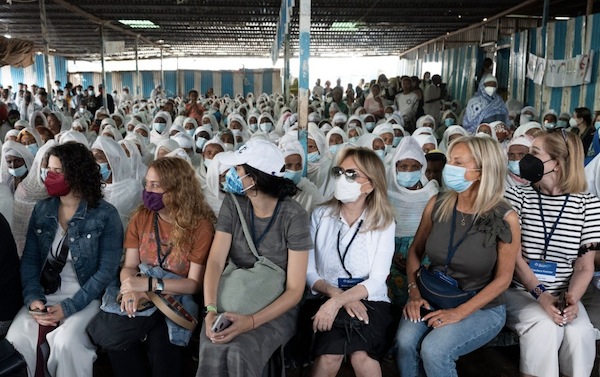
Candance Kwinter, far right, and other members of a foreign delegation to Ethiopia, take in a synagogue service in Gondar. (photo from Candace Kwinter)

The latest airlift from the Horn of Africa is underway – and a Vancouver community leader was on the plane from Addis Ababa recently with 179 Ethiopian Jews making aliyah.

Candace Kwinter flew to Ethiopia at the end of May, where she met up with three other Canadians, a group from North and South America and a team of Israelis. In addition to being chair of the Jewish Federation of Greater Vancouver, Kwinter is on the board of the Jewish Agency for Israel and sits on numerous JAFI committees.

Pnina Tamano-Shata, Israel’s minister of immigrant absorption, who was born in Ethiopia in 1981 and is the first Ethiopian-Israeli cabinet minister, was also on the trip. So was Micah Feldman, author of the book On Wings of Eagles: The Secret Operation of the Ethiopian Exodus, who was able to contextualize what first-timers were witnessing.

A trickle of Jewish refugees has traveled from eastern Africa to Israel (and pre-state Palestine) since the 1930s, at least. From the beginning of the Ethiopian civil war, in 1974, through the catastrophic famine on the Horn of Africa in the early 1980s, rescue missions ramped up. Operation Moses, in 1984/85, brought about 8,000 Ethiopian Jews to Israel, primarily from refugee camps in Sudan. Operation Solomon, in 1991, brought more than 14,000 Ethiopians.

The current airlift, called Operation Tzur Israel (Rock of Israel), is expected to bring more than 2,000 olim over six months. The Ethiopian Airlines flight that Kwinter was on was the first of several. When this mission is complete, there will be an estimated 10,000 Jews left in Ethiopia.

The Jewish identity of the olim is, in some cases, contested. The Ethiopians have included Beta Israel, people who follow Jewish traditions that would be recognizable to most observant Jews worldwide. They also include Falash Mura, members of Beta Israel communities who, since the advent of Christian missionizing in the area, have been converted, sometimes forcibly.
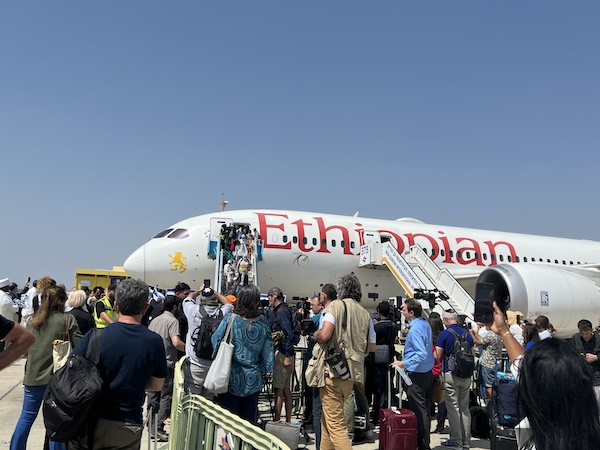
photo - The first plane of Operation Tzur Israel to land in Israel was met with fanfare. It brought 179 Ethiopian Jews to their new home
The first plane of Operation Tzur Israel to land in Israel was met with fanfare. It brought 179 Ethiopian Jews to their new home. (photo from Candace Kwinter)

The current project is entirely based on family reunification. Kwinter noted that, since the airlifts began 40 years ago, Ethiopian Jews have migrated primarily from the more rural Gondar area to cities, mostly the capital Addis Ababa. This migration has several corollaries, said Kwinter. Unlike the first olim of decades ago, these new Israelis are familiar with electricity and plumbing, although they may not have access to them at home. They may also have intermarried. So, while siblings who have been separated for decades are reunited, in some cases the nieces and nephews (and the Ethiopian spouses) may not be halachically Jewish. In these cases, they will undergo conversions.

Kwinter and the other foreign representatives flew to Gondar to see how Jews had lived for centuries and where some still reside.

“We went to an ancient synagogue, then we went to an ancient Jewish cemetery,” she said. “It’s very primitive, it’s nothing like we can imagine. It’s like they’re still living the way people did three, four or five hundred years ago.”

The villages, which have typically 100 or 200 Jews, were always located on rivers or streams, Kwinter said, “because they still believed in the mikvah. Women had menstrual tents, like from ancient days. In their time, they had to be put in their tents and they needed the freshwater to provide for these old rituals.”

The synagogue services were, at once, unlike anything Kwinter had seen before and yet entirely familiar. The dirt-floor synagogue was filled with several hundred men and women, sitting separately, the women all in white shawls, men wearing tallit and many laying tefillin.

Kwinter was saying Kaddish for her mother, who passed away just weeks before the trip, and she had no problem following the service.

Next door, a 10-foot-by-10-foot tin shack made up the Talmud Torah, with an open fire pit that served hundreds of meals to children and pregnant women in the community.

Although the transition facing these migrants will certainly not be easy, the latest newcomers have it smoother than some of the earlier ones, who fled during times of war and famine, many losing family members and being terrorized by thugs while walking across mountains to Sudanese refugee camps.

The delegation also met with Israel’s ambassador to Ethiopia, Aleligne Admasu, who was born in Ethiopia and made aliyah in 1983.

The operation will cost about $10 million US and is funded by Jewish federations and JAFI. Once the olim arrive in Israel, they will receive the services offered to immigrants, including Hebrew-language ulpan. Unlike native-born Israelis, most of whom do their military service before university, Ethiopian-Israelis generally complete their schooling first to ensure language proficiency, Kwinter said.

There were 179 Ethiopians on Kwinter’s flight – one was held back after testing positive for COVID. Few Ethiopians have received the COVID vaccine and most of the olim will receive them on arrival, along with the sort of routine vaccines that Israelis and Canadians receive in childhood.

Time flew on the five-hour flight, Kwinter said.

“We had lots of things for the kids to do, like sticker books, candies and all that kind of thing,” she said. “We got to know them all, even though we didn’t speak the same language.”

Ethiopian-born Jewish Agency officials were on board to translate, if necessary, but it wasn’t necessary, Kwinter said.

“You didn’t need to translate,” she said. “The kids were crawling all over us. It was the best plane ride ever. For five hours, it felt like five minutes. I wouldn’t have wanted to be a flight attendant because I don’t know how they got up and down the aisles because it was chaotic. It wasn’t like a regular plane ride.”

When the plane landed, there was a major ceremony marking the beginning of the new operation, with plenty of media coverage. Then the Ethiopians were transported to another part of the airport, where their family members were waiting to be reunited, some of them having not seen one another in decades.

“The very elderly would kiss the ground,” said Kwinter. “Everybody got an Israeli flag, and there was lots of singing and dancing and music.… It was really quite remarkable.”

While the Ethiopians were on a life-altering journey, Kwinter’s travels were hectic in a different way. She was on a plane every day for seven days and, a couple of days after returning home, she tested positive for COVID, as did many of the Americans.

Reflecting on the experience, Kwinter is filled with gratitude.

“Thank God for Israel that we can do this,” she said. “Thank God for world Jewry. Thank God for federations that collect money, and we can save all these lives. I come from a family of survivors and my husband as well. If we didn’t have Israel, we wouldn’t be able to do this and we’d be living another Holocaust again, I believe, all over the world.”
Format ImagePosted on July 22, 2022July 20, 2022Author Pat JohnsonCategories IsraelTags aliyah, Candace Kwinter, Disapora, Ethiopia, federations, Israel, JAFI, Jewish Agency, olim, Operation Tzur Israel
Remembering the Great Roundup

Remembering the Great Roundup

Entire Jewish families were rounded up and interned in the Vel d’Hiv and other places in France, when La Grande Rafle began on July 16, 1942. (unattributed image)

It is 80 years this summer since La Grande Rafle (the Great Roundup) took place in France. It is not only a significant, tragic anniversary for the Jewish people, but one that impacted me directly.

“Happy like God in France” was a saying sometimes heard among Yiddish-speaking Jews of Eastern Europe a century ago, even though antisemitism was fairly widespread in France and few years had passed since the Dreyfus Affair. Falsely accused of selling military secrets to Germany, Capt. Alfred Dreyfus was publicly humiliated and sentenced to Devil’s Island in French Guiana. However, in the end, justice prevailed: Dreyfus was proven innocent and restored to his rank. Jewish loyalty to France remained unshaken. In 1939, as in 1914, Jewish men, citizens and immigrants alike, volunteered to fight in the defence of France, but the country for which they spilled blood betrayed their trust.

The humiliating defeat of 1940 led to the division of the country into two main zones, a Germany-occupied zone in the north and a so-called “free zone” in the south. It also led to the collapse of democracy and a replacement of the republic with a fascist regime, called Etat Français, in Vichy, headed by Marshall Philippe Petain. That regime enacted the sweeping antisemitic Statute des Juifs, the most racist legislation in occupied Europe. Its application was entrusted to a special commissariat for Jewish affairs, of which the first incumbent was Xavier Vallat, who declared to the younger hauptsturmführer (captain) in the SS, Theodor Dannecker, in Paris, “ I am an older antisemite than you are: I could be your father in these matters.”

Vallat was soon replaced by the more vicious Louis Darquier de Pellepoix, a gutter journalist, who, as early as 1937, proposed in one of his screeds to “solve the Jewish problem in France” by wholesale extermination.

At the time, there were 300,000 Jews living in France, who represented less than one percent of the population. Their origins were diverse; Ashkenazim, Sephardim, immigrants from a variety of European and Mediterranean countries, religious and non-practising, etc. That population was composed of native and naturalized citizens. The Census of 1940 placed French Jews under the protection of the Vichy government, while at the same time expelling them from the professions, civil and military. Non-naturalized Jews were liable to internment at the discretion of regional police prefects. Instinctively respectful of the laws of France, even Jews who bore French surnames and spoke fluent French obeyed the order to register.

The regime created a Gulag-type network of internment camps that covered both major zones of the country. Beginning in 1941, Jewish men were summoned by groups, depending on their nationality, to present themselves at the police commissariat nearest to their places of residence (there were no ghettos in France). They were sent to hard labour in camps, of which the most notorious were Pithiviers and Beaune-la-Rolande, northeast of Orléans, and Drancy, a transit camp in a suburb of Paris, from where departed the deportation cattle car trains bound for Auschwitz. Naturalizations granted after 1927 were ordered rolled back.

Beginning on July 16, 1942, a dramatic change in the deportation policy was initiated: La Grande Rafle. Entire families were now targeted, regardless of age or sex. Beginning at 4 a.m., police squads bearing lists of the names and addresses of about 27,000 Jewish immigrants fanned across Paris in vans and requisitioned urban buses, knocking at countless apartment doors. About half of the targeted victims, warned by the Jewish communist underground, were able to escape arrest and find shelter among gentiles, mainly in rural areas. Arrested during that roundup were 3,118 men, 5,019 women and 4,115 children (3,000 of them born in France and, therefore, French citizens).

The Grande Rafle, codenamed by the police Vent Printanier (Spring Wind), was the greatest mass persecution in the city of Paris since 1572, when thousands of Protestants were murdered on the night of St. Bartholomew by Catholic mobs unleashed by Queen Catherine of Medici.

The 1942 military-style operation against the Jews in Paris was carried out from start to finish by French policemen, with no German participation, as they did not have sufficient resources. In fact, the Germans had ordered the French not to arrest children below the age of 16 for the time being, since, as stated, 3,000 of them were born in France. However, then-prime minister of France Pierre Laval averred that it would be “inhuman” to separate children from their parents. On his own initiative, he declared that he assumed the burden of “ridding France of its Jews.”

Laval ordered that entire families be rounded up and, pending deportation to the east, interned in the Winter Circus (Vel d’Hiv), Drancy, Pithiviers and Beaune-la-Rolande. Conditions of interment in the Vel d’Hiv were hellish: suffocating heat, the stench of public latrines, next to no medical attention, and scant distribution of food and drink. Many people went mad, some died. In the end, families were split all the same: adults were transported from Drancy to Auschwitz, while children initially sent to Pithiviers were next carried in the cattle car trains, along the same harrowing itinerary of death, with almost no adult supervision. Many of those children were brutalized by French policeman, who even robbed them of what their parents gave them.

One month after the Grande Rafle, similar atrocities were perpetrated in the free zone of the south, where there was no German occupation and the French government retained complete sovereignty over internal affairs, bearing no obligation other than supplying the Nazis with the products and produce that they demanded.

Caught when we illegally crossed the demarcation line, which divided France’s two major zones, my parents and I were among those “assigned to residence” in a requisitioned hotel of the small town of Lons-le-Saunier, near the Swiss border.

On the morning of Aug. 26, a rafle collected hundreds of Jews across the city, including my mother and me; happening to be on an errand, my father escaped. A pitiful column, we were marched across the city – hurried along by policeman who brutalized and insulted us, calling us “dirty Jews” – to the railway station, where a train awaited to transport us to the gruesome concentration camp of Rivesaltes, near the Spanish border.

The railway station became a scene of unrestrained police brutality, which spared neither adults nor children. I was seized by the hair and the seat of my pants by a brute who was about to throw me on the train, when I was saved by my maternal aunt, a French citizen, who, through personal contacts, obtained my release thanks to the timely intervention of a gendarmerie officer. I last saw my mother as she was being violently dragged along the floor of the station, then waved to me from a window, as the train departed for Rivesaltes. From there, with fellow victims of the rafle, she was transported several days later in a train that traveled north, this time to Drancy. And, there, she was squeezed into a cattle car train bound for Auschwitz. At least two-thirds of the women who left in that convoy either perished along the way, or were gassed following the selection on arrival.

Few of the Vichy regime organizers, policemen and other perpetrators of the summer 1942 and subsequent rafles paid for their crimes. Laval was tried and sentenced to death by firing squad in 1946; Petain was sentenced to life exile on a small island in the Atlantic Ocean; René Bousquet, chief of the national police, was briefly deprived of citizenship rights by General Charles de Gaulle and then resumed his functions, until he was mysteriously assassinated in his Paris apartment shortly before he was to be tried for crimes against humanity in 1980.

Obsessed by his wish for national reconciliation of the French, de Gaulle put a stop to any prosecution of persons who had collaborated with the Nazis. Throughout the postwar decades, the French deluded themselves with the myth that most of them supported or joined the resistance.

It was not until 1995 that then-president Jacques Chirac publicly declared that the opposite was the case – that “France had committed the irreparable,” that at least some financial compensation should be awarded to the survivors of the Holocaust, who had suffered or lost relatives to French collaboration with the Nazi action.

It should be noted, however, that nearly 75% of the Jewish population of France survived the Holocaust, thanks to the assistance offered by French citizens, both urban and rural, who sympathized with the Jewish people. Also, unlike Holland or Belgium, small, crowded countries, the French countryside offered vast areas of wilderness in which many Jews found shelter or joined the resistance.

René Goldman is professor emeritus at the University of British Columbia.

Format ImagePosted on July 22, 2022July 20, 2022Author René GoldmanCategories Op-EdTags France, Grande Rafle, history, Holocaust, memoir, Shoah
Walking tours celebrate Pride

Walking tours celebrate Pride

Carmel Tanaka in front of the house on Jackson Street from which National Council of Jewish Women once offered social services. (photo by Ari Fremder)

A series of Vancouver walking tours with a Jewish connection took a queer twist recently. Cross Cultural Walking Tours, which held its first tours in 2019, recently invited participants to explore the multicultural history of the city through an LGBTQ+ lens.

Two Sunday tours took place during June, international Pride Month. These included the exploration of aspects of the city’s ethnic heritages with an added layer of queer and trans history.

Carmel Tanaka is the founder and program coordinator of Cross Cultural Walking Tours (CCWT), as well as founder and executive director of JQT Vancouver, a volunteer-run Jewish queer and trans nonprofit. She is the prime mover behind the walking tours, though she has mobilized more than 40 individuals and organizations to make the series happen, including the Vancouver Heritage Foundation and the Canadian Race Relations Foundation.

“Sharing our history and stories together in one tour in Vancouver’s Downtown Eastside offers participants a tangible understanding of the importance of neighbourhood, of diversity, of our similarities and our differences, and how we live together,” Tanaka said. “The tours celebrate our cultures, but do not shy away from difficult social justice issues, and the impact of discriminatory laws at city, provincial and federal levels on our communities.”

For instance, she said, the tours address the ongoing genocide of Indigenous communities by noting the collaboration between government and churches in the residential school system, specifically the eradication of culture and language, which is one of the historical factors affecting the housing crisis in the DTES today and the opioid crisis.

At the beginning of the tour, Tanaka discussed how the Second World War brought more women into the workforce, including as cab drivers, shipbuilders and fireboat workers. A lesbian bar, called the Vanport, popped up at Main and Prior streets and lasted until 1979.

Nearby was Hogan’s Alley, Vancouver’s traditionally Black neighbourhood, which was destroyed to create the Georgia Viaduct in the 1970s. Many of the Black residents were farm labourers who came from Oklahoma via Alberta, while others were railroad porters whose jobs were tied to the nearby railway stations. The community was vibrant for six decades, producing world-class athletes, musicians, entertainers, restaurant and nightclub owners, entrepreneurs, community builders and political activists, Tanaka said.

The tour continued through the Strathcona neighbourhood, the traditional immigrant reception area for the city, and where Black, Jewish and almost every other cultural group at one point was centred. The legendary musician Jimmy Hendrix lived with his grandmother here. In the same area, the National Council of Jewish Women had a house, where they provided English literacy courses and the Well-Baby Clinic.

In the 1920s, Tanaka said, a Jewish gay man known as Uncle Max opened a shoe store on Main at Broadway before moving to South Granville. This was one of the only places in town for drag queens to purchase large-fitting shoes.

Harmony Bongat, a Filipino-Canadian, spoke of a building that housed a group of Filipino women in the early 2000s.

“It was a safe haven, a place where Filipino migrant workers (mostly working as nannies) could come if they were mistreated by their employers,” she said. “It was also a place where us Filipino queers could gather, share stories and enjoy each other’s company. Some of the people I met here would go on to create Pinoy Pride Vancouver.” Pinoy is slang for Filipino. She also discussed the history of LGBTQ+ organizing in the broader Asian-Canadian communities.

The tour included the Vancouver Japanese Language School and Japanese Hall, on Alexander Street.

“The school first opened in 1906 in a wooden building to the left of what is here now,” Tanaka explained. “Initially, the schoolchildren attended school fulltime here, in a Japanese immersion environment. After 1919, this school became an afterschool learning program for Japanese children after they came back from a day at Lord Strathcona elementary. In 1928, funds were raised from Japanese-Canadians from all over British Columbia to build the Japanese Hall, a place for the community and to celebrate Japanese culture.”

In the spring of 1942, the Canadian government forcibly relocated Japanese Canadians at least 100 miles from the coast by enacting the War Measures Act.

“This act uprooted, displaced and dispossessed approximately 22,000 Japanese-Canadians,” said Tanaka. “My great-grandmother and her two sons were interned in Minto, and my great-grandfather, grandmother and grandfather were interned at New Denver, in the Slocan Valley. They all lived in Port Essington, near Prince Rupert, across from Haida Gwaii. Before going to the camps, they were detained in the animal livestock building of Hastings Park, aka the PNE/Playland.”

The Japanese community was able to keep the Powell Street building because it was owned by the Japanese-Canadian community, rather than an individual. The building was leased during the war and the school reopened in 1952. It has been designated heritage status, said Tanaka. “Today, the school operates a childcare centre, continues with language courses, offers rental spaces, and holds Japanese-related programs and events.”

The tour moved on to the Aoki Rooms, which was a tenement house for Japanese workers and is now known as Ross House, a residence for trans and gender-diverse people.

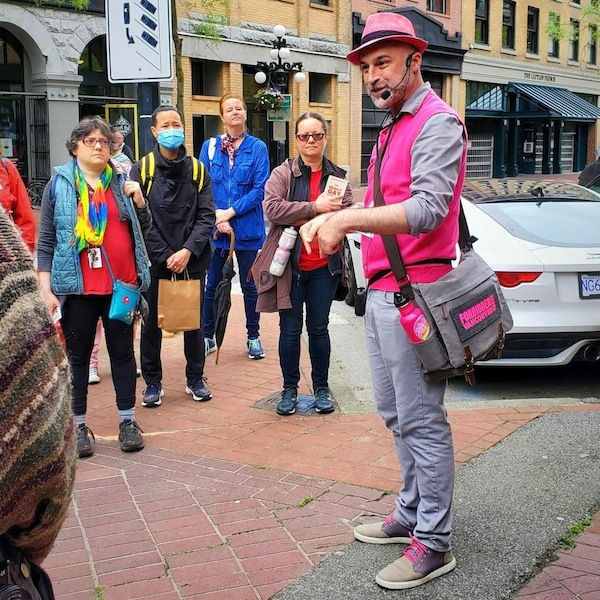
In Gastown, the tour touched upon the history of the Europe Hotel, with presenter Glenn Tkach of Forbidden Vancouver and creator of the Really Gay History Tour.

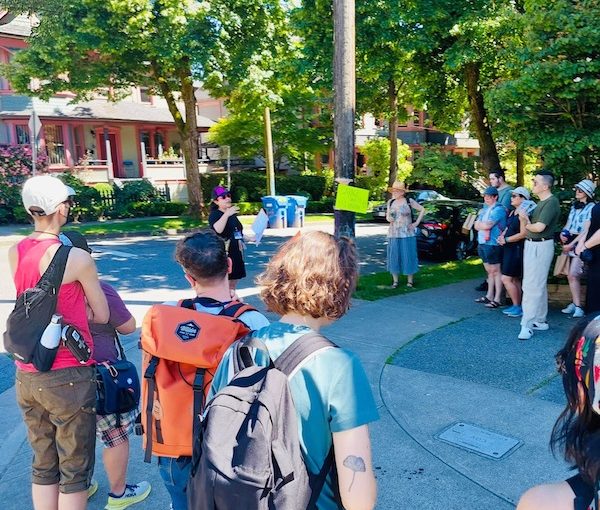
photo - Glenn Tkach explains some of Gastown’s lesser-known history to tour participants
Glenn Tkach explains some of Gastown’s lesser-known history to tour participants. (photo by Ari Fremder)

Tkach explained how the neighbourhood was a magnet for men from all over who were seeking work. But, while Gastown was the hub for employment, the actual work was often far away.

“Men moved from job to job and trade to trade, as fishermen, lumberjacks, sailors, rail workers,” he said. “Thousands of men, living on the road, following the work. Without a lady in sight.”

Men often paired up, in part for safety and in part for companionship, he said.

“Outside the limits of the city, and outside the limits of normal Canadian society, a unique subculture evolved around these pairings,” said Tkach. “It was unlike anything we would recognize as queer culture today.”

The jobs lasted from spring through fall, then places like Gastown’s Europe Hotel would fill with men returning to the city with money to spend and leisure time. A bathhouse in the hotel’s basement was popular.

“City officials did not consider it a priority to police the private habits of these working-class men,” Tkach said. “There was a huge demand for their labour. So it was best for everyone, if their activities just went unnoticed. And, for the most part, they did.”

Nearby, on the Burrard Inlet waterfront, was where a shameful part of Canadian history took place.

Karn Singh Sahota and Viplav Bhaskar from Sher Vancouver, a nonprofit society for LGBTQ+ South Asians, shared the story of the Komagata Maru. In 1914, this ship, carrying 376 passengers from India, was denied disembarkation due to racist immigration policies. After holding the passengers effectively hostage in the inlet for two months, all but 24 were forced to return to India, where 22 of them were killed.

They also shared a story of a case in which two Indo-Canadian men were entrapped by Vancouver police and beaten for alleged “sodomy,” one of many such charges of the time, especially targeting racialized working men.

The tour continued past 63 East Hastings, site of the city’s first real gay bar, the Montreal Club, which ran from the 1950s to 1969.

There is a great deal of hidden history in the city, much of which was unearthed and shared for this tour. Tanaka noted the challenges in telling the stories of marginalized communities, including Black, Indigenous and People of Colour (BIPOC).

“It’s hard enough as it is to amplify the voices of marginalized BIPOC/minority communities, let alone queer and trans voices who also belong to marginalized BIPOC/minority communities,” she said. “Due to the compounded marginalization, it’s not like there are 2SLGBTQIA+ groups for every racial/ethnic/religious minority in town. That requires resources, capacity and support from their respective communities, which not everyone has.”

As a self-described “Jewpanese” person, Tanaka has a unique perspective.

“I often see antisemitism forgotten in the discussion on racism, as it’s not considered a BIPOC issue,” she said. “Not too long ago, Jews were not considered white and, as a Jew of Colour, I’m living proof that not all Jews are white. So, whether it be on the walking tours or on panels, I weave in my family’s lived experiences of antisemitism and anti-Asian racism to raise awareness.”

CCWT is looking for energetic voices from the Jewish community to cover the Jewish portion of their tours. To discuss that or for more information, Tanaka can be reached at [email protected]. The group is on Facebook and Instagram.

Format ImagePosted on July 22, 2022July 20, 2022Author Pat JohnsonCategories LocalTags 2SLGBTQIA+, CCWT, Cross Cultural Walking Tours, Glenn Tkach, Harmony Bongat, history, Karn Singh Sahota, LGBTQ+, Viplav Bhaskar
Living their values daily

Living their values daily

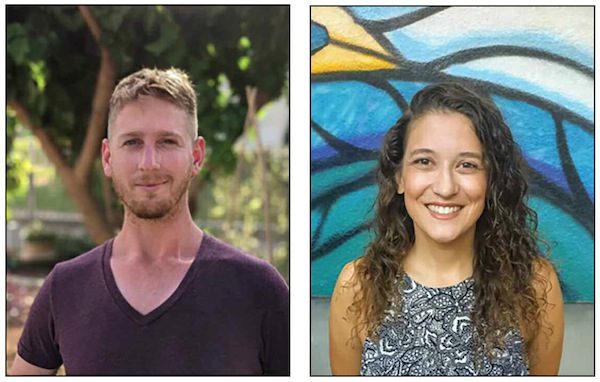
Dror Israel representatives Noam Schlanger and Joanna Zeiger-Guerra visited Seattle, Victoria and Vancouver last month. (photos from Dror Israel)

Last month, two representatives of Dror Israel, Noam Schlanger and Joanna Zeiger-Guerra, paid a visit to the region – Seattle, Victoria and Vancouver.

“We are educators at Dror Israel, a grassroots educational organization which works all through Israel,” Schlanger told the Independent. “Our 16 intentional communities of young, trained educators operate a variety of programs, including a network of innovative schools for at-risk youth and Jewish-Arab encounters, which all aim to bring together Israel’s different populations and create a more just and equal society. Our pedagogy focuses on empowerment and community building.”

Comprised of 1,300 people, Dror Israel works in a multitude of fields in Israel and has an impact on the lives of more than 150,000 people each year.

As for their specific involvement in Dror Israel, Schlanger has led a youth centre in Kafr Manda, an Arab town in Lower Galilee, and now works at the community garden in Acre (in northern Israel). Zeiger-Guerra is an educator who is familiar to many young people in southern British Columbia, having worked at Camp Miriam, the Jewish summer camp on Gabriola Island, for several summers. She is also a Habonim Dror alumna.

“I founded and operate a community garden where I work with mainly elderly Russian speakers, and Joanna mentors a cohort of our young educators taking their first steps in a variety of formal and informal educational settings,” explained Schlanger.

During their local visits, Schlanger and Zeiger-Guerra met with a variety of individuals, groups and communities to inform them of their work, specifically Dror Israel’s coexistence programs and ongoing relief efforts with Ukrainian refugee children. These gatherings included talks at Congregation Emanu-El in Victoria and with the Victoria Multifaith Society.

The pair also met with representatives from the Jewish Federation of Victoria and Vancouver Island and the Jewish Federation of Greater Vancouver. Those encounters involved “thinking about creative opportunities for programming collaboration,” said Schlanger.

For Schlanger, the message Dror brings – an inclusive vision of Zionism that strives to create a place for everyone, and the dream of a just and equal Israel – is a breath of fresh air amid the polarized discourse about the country.

Dror Israel was started in 2006 by graduates of the Israeli youth movement Hanoar Haoved Vehalomed, who served together in the Israel Defence Forces and shared a belief in the founding principles of Zionism. “Through truly innovative education based on dialogue and understanding, we teach leadership and responsibility for self and community. We promote social activism to drive positive change,” the organization states on its website.

Both Schlanger and Zeiger-Guerra live on urban kibbutzim established by Dror, a recent adaptation of the rural kibbutz. Between 30 to 100 young adults, aged 20 to 40, live on each of Dror’s 16 kibbutzim in Israel and work on the organization’s educational, cultural and social projects. With an emphasis on social justice, members of Dror Israel reside in the neighbuorhoods they serve, seeking to bridge gaps and solve local problems.

Throughout the pandemic, Dror Israel has been engaged in opening daycare centres for the children of doctors, nurses and healthcare workers; delivering groceries and medicines to home-bound seniors and those in need; volunteering on farms; and providing online programming for thousands of teens.

“Our message and the story of our work really resonated with everyone we met and sparked a variety of thoughts about future cooperation between Dror Israel and local organizations,” said Schlanger of his time here. “Our hearts were warmed by people’s decision to support our programs. It really attests to the strong, living connection between the Jewish communities here and Israel.”

After more than two years of being unable to visit or host trips to Israel due to COVID, Schlanger said Dror Israel hopes to reinvigorate connections that began many years ago in the region. Aside from delegations of educators to British Columbia, it looks forward to hosting visits in Israel.

“Joanna and Noam were very well-received,” said Sid Tafler, one of organizers of the emissaries’ stay in Victoria. “Many people were inspired by their message of peace and coexistence in Israel, principles they don’t just espouse but practise and live every day.

“We learned about their compassionate and community-building work with youth-at-risk, isolated older people, members of minority communities – including Druze and Arabs – and integrating new olim recently arrived from war-ravaged Ukraine. We have received guests from Dror before and expect we will welcome them again.”

For more information, visit drorisrael.org.

Sam Margolis has written for the Globe and Mail, the National Post, UPI and MSNBC.

Format ImagePosted on July 22, 2022July 20, 2022Author Sam MargolisCategories Israel, LocalTags Dror Israel, education, inclusion, Israel, Sid Tafler, tikkun olam, Victoria, youth, youth-at-risk, Zionism
Fighting racism, terrorism

Fighting racism, terrorism

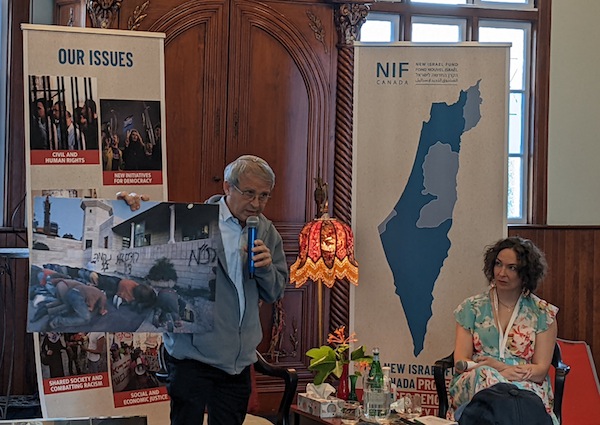
Tag Meir chair Dr. Gadi Gvaryahu speaks, as moderator Maytal Kowalski and the live and Zoom audience listen. (photo from New Israel Fund of Canada)

Dr. Gadi Gvaryahu, chair of the Israeli anti-racism organization Tag Meir, addressed live and Zoom audiences last month in a talk organized by the New Israel Fund of Canada and hosted by Or Shalom Synagogue.

At the event, titled An Israel at Peace with Itself: Solutions to Racism and Inequality, Gvaryahu described his early efforts in social activism, which began after Yitzhak Rabin was assassinated in 1995. “The fact that a religious person with a kippah on his head decided to get rid of our prime minister was a crucial point for me,” he said.

Gvaryahu established the nonprofit Yod Bet b’Heshvan (12 Heshvan, named for the date of the assassination on the Hebrew calendar) and the Yitzhak Rabin Memorial Synagogue in Rehovot, where he resides.

According to Gvaryahu, the creation of Tag Meir came about in 2009, following an escalation of racist rhetoric and acts on the part of far-right religious groups in Israel. Tag Meir is a play on words in Hebrew related to tag meicher, or “price tag.” Since the early 2010s, a small percentage of extremist settlers has carried out attacks against Arabs, meant to show the Israeli government “the price” of failing to support their cause.

“Tag Meir, on the other hand, means ‘light tag.’ We try to bring light into the world,” Gvaryahu said. “If there is a price tag attack, we want to be with the victims. We don’t distinguish if they are Jewish victims or Muslim victims. It is crucially important to be with them. We tell them they are not alone and support them.”

Gvaryahu gave several examples of Tag Meir’s work. One followed the July 2014 kidnapping and murder of Mohammed Abu Khdeir, a 16-year-old Palestinian. Immediately afterwards, Tag Meir chartered buses from Tel Aviv and Jerusalem to visit those grieving. The large Israeli contingent wished to pay its respects to the Abu Khdeir family, and they were eventually welcomed in the mourners’ tent.

“This family became our friends and every year since then we visit them – usually around Hanukkah. We bring sufganiyot [jelly doughnuts] and they bring oranges from Jericho,” Gvaryahu said, pointing out that this was a good illustration of how, even in the face of terrible tragedy, a victim’s family can be shown how the perpetrators are not representative of a whole people.

Gvaryahu stressed that Tag Meir gives no preferential treatment to Jewish or Muslim victims of terrorism or hate crimes. In instances of Muslim terrorism, Tag Meir delegations, comprised of Jews and Muslims, are also sent out to those grieving.

Tag Meir is a coalition of 48 organizations that works to build tolerance and fight racism in Israel. It is made up of groups from various religious backgrounds – Arab, secular, Reform, Masorti (Conservative), Orthodox – which Gvaryahu views as a key reason for its success. With volunteers located at several places in Israel, Tag Meir is able to dispatch help quickly, supporting victims with emotional, financial and legal assistance.

At its core, Tag Meir sees the battle against racism as a part of a campaign that supports both the democratic and traditional Jewish values of loving one’s neighbours and justice for all. Whatever their politics, the organization argues, the majority of Israelis oppose acts of violence against innocent people who “are being used as pawns in a political fight that has little or nothing to do with them.”

During the violence that erupted in Israel in May 2021, Tag Meir members worked to ease tensions between Jewish and Arab communities. They set up a human chain around the walls of Jerusalem’s Old City, visited areas that had been affected by riots, and handed out flowers in cities with large Arab populations in a gesture of peace.

Each year, Tag Meir orchestrates Flowers for Peace on Jerusalem Day, a time when activists hand out roses to residents of the Old City.

The umbrella group goes beyond responding to Jewish-Muslim attacks. In 2012, following riots against African refugees in South Tel Aviv, the home of some Eritrean refugees in Jerusalem was firebombed. Tag Meir organized a rally in the area and provided the family with material support.

Tag Meir also offers training in Israel, with programs for teachers in the national Orthodox school system and workshops in educational institutions across the country. Among the workshop topics are caring and empathy, open-mindedness and mutual understanding.

Responding to an audience question about the current political situation in Israel, Gvaryahu said, “I have no doubt in my mind that the next coalition will have Arab members and that the party of Mansour Abbas (the United Arab List) will be bigger and stronger,” citing the chance that more Arabs will vote in the next election. “This trend of governments working with Arab parties is good news and hopefully it will continue.”

Gvaryahu’s cross-country speaking tour included stops in Montreal, Ottawa and Toronto. His Vancouver talk on June 20 was moderated by Maytal Kowalski, a local board member of NIF Canada, and opening remarks were given by Ben Murane, executive director of NIFC.

For more information about Tag Meir and the New Israel Fund of Canada, visit tag-meir.org.il/en and nifcan.org.

Sam Margolis has written for the Globe and Mail, the National Post, UPI and MSNBC.

Format ImagePosted on July 22, 2022July 20, 2022Author Sam MargolisCategories Israel, LocalTags coexistence, Gadi Gvaryahu, New Israel Fund, NIF, NIFC, Tag Meir, terrorism, tikkun olam
Diverse allies critical

Diverse allies critical

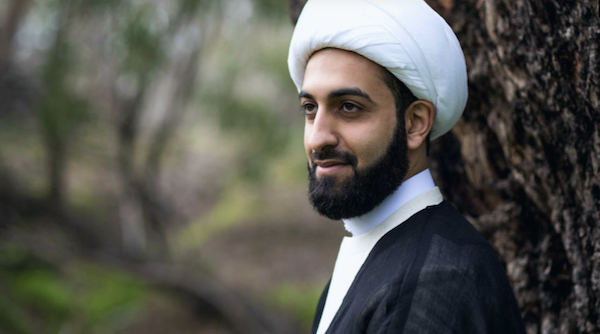
Imam Mohammed Tawhidi once preached hatred, but now is known as “the Imam of Peace.” (photo from imamtawhidi.com)

Imam Mohammad Tawhidi once preached hate towards Jews from the pulpit, and believed the very worst stereotypes about the Jewish people. He was indoctrinated by the Ayatollah’s preachers in Iran. But, today, Tawhidi is known as “the Imam of Peace” for a reason. He’s preaching coexistence and common ground for Jews and Muslims.

In late May, Tawhidi spoke at a United Grassroots Movement event at Beth Emeth Bais Yehuda, a Toronto synagogue, on how people of all backgrounds can – and should – unite against antisemitism and extremism.

An Iranian Muslim of Iraqi origin, Tawhidi sees his former peers actively engaging in hate-filled rhetoric. For example, as in years past, the politics of division and derision were widespread at the Al Quds march in Toronto earlier this year – chants included slurs against Israel and Jews.

Government officials are either incapable of preventing hatred on city streets and property, or unwilling to do so, he said. To answer problems such as these, he encouraged talk attendees to find, and bring together, as many allies as possible, to speak out and even take legal action wherever warranted.

Tawhidi’s change from preaching hatred, to becoming a friend of Israel and the Jews, did not come overnight.

First, he spoke out against ISIS war crimes in the Middle East and Africa. When he was met with condemnation from his peers, he said it opened his eyes to the radical elements that existed within his circle.

“I was still a fundamentalist, an extremist and antisemite,” he said of his views until then. “I thought I was doing this on behalf of God.”

And yet, he began thinking of how he could reconcile the slaughter of innocents in the name of Islam.

The next significant moment for the imam was when he met a Jew. Needing roadside assistance one day in England, it was a visibly Jewish man who helped him.

Later, Tawhidi was invited to a synagogue for an interfaith dialogue. Although he was skeptical, initially, of the people he was communicating with, he left the event feeling a special connection.

His decision to criticize ISIS and radical Islam and preach for peace with Israel and Jewish people was met with a severe backlash.

“I knew I would lose my community, but I also knew I would be welcomed into a new one,” he said.

If he could turn a corner, so can others, Tawhidi maintained. But if they can’t do quite that, then it’s important, he said, to at least defend the truth in public, so that the people who are on the fence or ignorant of the issues can be exposed to all sides.

It’s hopeful for us to note, he said, that the kinds of beliefs he once held are no longer normative in many parts of the Arab world. He highlighted the signatories to the Abraham Accords with Israel, which is breathing new life into modern coexistence, he said.

Further proof of the power of allies, said Tawhidi, is that he received nearly three-quarters of the vote in favour of him winning the position of vice-president of the Global Imams Council, a transnational nongovernmental body of Muslim religious leaders.

Tawhidi stresses that Islam is not a religion that hates Jews, and anything to the contrary is a perversion of the Quran.

To defend against antisemitism, he insisted that Jews and non-Jews must call it out, take legal action when merited, and bring together many communities: “Do not underestimate the power of your allies!” he said.

A staunch supporter of Israel and what he sees as Israel’s right to Judea and Samaria (the West Bank), Tawhidi said, in response to a question from the Jewish Independent, “There can be no circumstances where the Israeli government should give away any land that belongs to the Jewish people. The holy Quran has made it very clear that God, the God of Abraham, wants Jews to live in that region and for Jerusalem to be their capital. That is the teaching of my Quran, and it is clearly stated in Chapter 5, verse 20 onwards.”

As for developing allies out of those who do not support Israel, yet will speak out against antisemitism, Tawhidi said, “You can’t hate a people and you can’t hate a whole country, but I guess they have issues with certain policies of that government, so they need to provide productive and constructive criticism, so that the problems can be solved, and that solutions can be placed forward.”

However, he continued, “a blanket hate on a nation or a people does not come from a person that is worth making a friend, I don’t believe.”

Jon Wasserlauf is a freelance writer, and a political science major and law student based in Montreal.

Format ImagePosted on July 22, 2022July 20, 2022Author Jon WasserlaufCategories NationalTags antisemitism, education, hate speech, Israel, Jews, Mohammad Tawhidi, Muslims, peace, Quran, terrorism
Community milestones … awards, honours, weddings, releases

Community milestones … awards, honours, weddings, releases

Leamore Cohen (photo by Efrat Gal-Or Nucleus Photography)

The Jewish Community Centre of Greater Vancouver’s inclusion services program is one of the recipients of the Lieutenant Governor’s Arts and Music Awards, in the category of visual arts. This one-time honour, marking the Queen’s Platinum Jubilee, recognizes organizations like the JCC that have excelled in fostering wide community engagement through a robust spectrum of arts and culture programs. Most important: the award emphasizes the JCC’s commitment to diversity and inclusivity.

It all began with a passionate letter of nomination by Chaia Schneid, whose daughter, Sarah Halpern, discovered “a previously untapped creative passion” in the Art Hive and Theatre Lab classes she attended, among other programs run through the JCC’s inclusion services. Writing to the Hon. Janet Austin, lieutenant governor of British Columbia, Schneid stated: “The quality of the arts and culture programs is unlike anything we have found elsewhere. They are professionally delivered and of the highest calibre, and yet individualized to meet the special needs of the diverse participants.” In particular, Schneid praised the JCC’s annual Jewish Disability and Awareness Inclusion Month (JDAIM). Schneid also praised current program director and inclusion services coordinator Leamore Cohen, calling her a “rare individual.”

Shelley Rivkin, vice-president, local and global engagement, at the Jewish Federation of Greater Vancouver wrote a letter of support for the nomination. In it, she highlighted several inclusion services arts and social programs, and Cohen’s leadership.

“Leamore Cohen is the driving force behind these programs and her compassion, creativity and commitment to inclusion shine through in all aspects of the program,” wrote Rivkin. “She is always generating new ways and ideas for participants to engage with the arts and to create to the best of their abilities. These programs break new ground by offering meaningful educational and recreational opportunities for people with diverse needs. Having had the opportunity to attend some events, I have seen firsthand the joy that participants feel in being able to express themselves in a variety of mediums and the pride that their parents and family members experience when they see the creativity and talent of their loved ones.”

For a growing number of Vancouverites from all religious and ethnic backgrounds, and across all ages and abilities, the calibre and range of the JCC’s work is well-known. A schedule of performing and fine arts programs coincides with an array of sport, leisure and fitness options inside a facility that houses a theatre, library, gymnasium and pool. The JCC is also widely known for its annual Jewish Book and Chutzpah! festivals – both occupying a key place in the city’s cultural calendar – alongside community services including preschool and toddler daycare.

“While the arts programming is the centrepiece of what is being offered,” wrote Rivkin, “other inclusion programming for adults includes free memberships and access to all the fitness and wellness facilities at the Jewish community centre along with two virtual classes offered five days a week that are designed to be sensitive to the sensory stimulation needs of participants.”

Noting that activities continued throughout the pandemic, Rivkin concluded, “the program demonstrates its dedication to equity and inclusion daily by the range of programs embedded in the arts that have been opened up to this population and, of course, commitment, both on the part of Leamore Cohen, who dedicates so much time and thought to designing these programs, and to the participants themselves, who have remained active and involved despite their personal barriers and the COVID restrictions.”

* * *

photo - MP Joyce Murray, left, with Annette Whitehead at Trimble Park, June 18
MP Joyce Murray, left, with Annette Whitehead at Trimble Park, June 18. (photo courtesy a community member)

On June 18, Annette Whitehead was awarded a Queen’s Platinum Jubilee pin by MP Joyce Murray. Whitehead was nominated for the honour by Kitsilano Community Centre for her outstanding commitment and dedication to her community. She also received a certificate as a sign of gratitude for all the wonderful and hard work she does for her constituency.

June 2022 marked the 70th anniversary of the coronation of Queen Elizabeth II. To commemorate this milestone, Murray was issued a number of Platinum Jubilee pins, which she decided would be best used to celebrate and thank those who volunteer in Vancouver Quadra. The ceremony took place at Trimble Park.

* * *

On July 7, the National Audubon Society announced the winners of its 13th annual Audubon Photography Awards. This year, judges awarded eight prizes across five divisions from a pool of 2,416 entrants from all 50 states, Washington, D.C., and seven Canadian provinces and territories.

Local Jewish community member Liron Gertsman won three awards:

  • Professional Award Winner for his photo of a white-tailed ptarmigan,
  • Professional Honourable Mention for his photo of a sharp-tailed grouse, and
  • Video Award Winner for his sharp-tailed grouse video.

In a July 7 Facebook post, Gertsman writes about his wins: “Getting a chance to shine some light on these often under-appreciated birds brings a big smile to my face!”

He also writes about the white-tailed ptarmigan:

photo - Liron Gertsman’s Audubon Photography Award-winning photograph of a white-tailed ptarmigan, titled “Mountain Chicken”
Liron Gertsman’s Audubon Photography Award-winning photograph of a white-tailed ptarmigan, titled “Mountain Chicken.”

“Perfectly adapted to harsh alpine conditions, they spend most of their time foraging on small plant matter in the tundra, insulated from the wind and cold by their warm layers of feathers. Ptarmigan are also famous for changing their feathers to match their snowy surroundings in the winter, and their rocky surroundings in the summer. This mastery of camouflage makes them very difficult to find, and I’ve spent countless hikes searching for them, to no avail. On this particular day, after hiking in the alpine for a couple of hours, I stumbled right into my target bird! This individual was part of a small group of ptarmigan that were so well camouflaged, I didn’t notice them until some movement caught my eye just a few yards from where I was standing. Wanting to capture these remarkable birds within the context of their spectacular mountain domain, I put on a wider lens and sat down. The birds continued to forage at close range, and I captured this image as this individual walked over a rock, posing in front of the stunning mountains of Jasper National Park.”

* * *

At the Rockower Awards banquet, held in conjunction with the American Jewish Press Association’s annual conference, June 27, 2022, in Atlanta, Ga., the Jewish Independent received two Simon Rockower Awards for Excellence in Jewish Journalism. These awards honoured achievements in Jewish media published in 2021 and there was a record-breaking 1,100-plus entries from AJPA members.

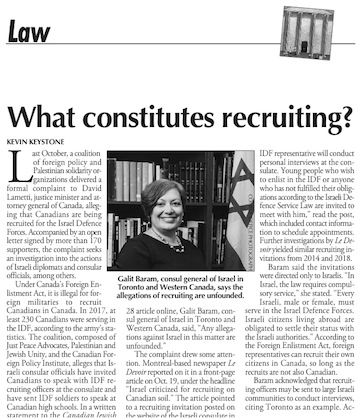
image - “What constitutes recruiting?” article topIn the news story category, in the division of weekly and biweekly newspapers, the ˆI took second place for Kevin Keystone’s article “What constitutes recruiting?” The piece explored the allegation by a coalition of foreign policy and Palestinian solidarity organizations that Canadians are being recruited for the Israel Defence Forces.

For excellence in editorial writing, in which all member papers competed, the JI editorial board of Pat Johnson, Basya Laye and Cynthia Ramsay received an honourable mention, or third place. “Strong reasoning and writing, relevant to Jewish audience,” wrote the judges about the trio of articles submitted. The submission included “Ideas worth the fight,” about university campuses and the need to keep “engaging in the battle of ideas, however daunting and hopeless the fight might appear”; “Tragedy and cruelty,” about the response to the catastrophe at Mount Meron on Lag b’Omer in 2021; and “Antisemitism unleashed,” about how the violence in Israel in May 2021 year spilled out into the world with a spike in antisemitic incidents.

To read all of these articles again, visit jewishindependent.ca. For the full list of Rockower winners, check out ajpa.org.

* * *

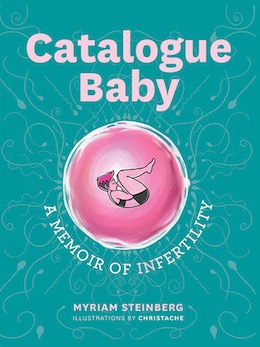
Myriam Steinberg’s Catalogue Baby: A Memoir of Infertility, with illustrations by Christache, has won two gold medals for best graphic novel. The first was the Independent Publishers (IPPY) Awards, and the second is the Foreword Indies Award. This is after having won the Vine Award for Canadian Jewish Literature last fall.

image - Catalogue Baby book cover“This book was not only a labour of love, but also a call-out to the world to recognize and acknowledge the very real experience of so many people,” wrote Steinberg in an email. “Pregnancy loss and/or infertility touch almost everyone in some way or other. It affects those who are trying to conceive the most, but it also touches (often unbeknownst to them) their children, friends, family and colleagues.”

To celebrate the honours, Steinberg is offering a 20% discount on books bought directly from her (shipping extra). To order, email [email protected].

* * *

photo - Ben Mink
Ben Mink (photo from sonicperspectives.com)

The Vancouver Symphony Orchestra (VSO) and the VSO School of Music (VSO SoM) are excited to recognize the appointment of Ben Mink, CM, as a Member of the Order of Canada. On June 29, 2022, Governor General of Canada Mary Simon announced that Ben Mink, who is a member of the board of directors for both the VSO and VSO SoM, has received the distinction “for his sustained contributions to Canadian music as a producer, multi-instrumentalist and writer.”

Mink has amassed a critically acclaimed body of work spanning decades, styles and genres as an international musical force. His influence is tangible and enduring in the widest range of musical styles and directions, and his imprint can be found in countless recordings, film scores and television programs. As a producer, songwriter, and instrumentalist, Mink has brought his signature style and approach to major musical artists and productions. He has an impressive list of recording collaborations that include k.d. lang, Rush, Daniel Lanois, Roy Orbison, Elton John, Alison Krauss, Heart, Feist, the Klezmatics, Wynona Judd, Method Man, James Hetfield (Metallica), and many more.

He has been nominated for nine Grammies, winning twice for his work with k.d. lang. The song “Constant Craving,” which he co-wrote and produced with lang, won her a Grammy for best female pop performance and has been used in several TV shows.

In 2007, he was co-nominated for his work on Feist’s Grammy-nominated “1234,” which gained global popularity in the roll out campaign for the iPod Nano. His recent collaborations with Heart were Billboard hits. Mink’s work helped set new and significant directions in Canadian popular music, and his writing and producing has been recognized with seven Juno nominations (three wins) and the SOCAN Wm. Harold Moon Award for international recognition.

To read more about Mink, including his reflections on his Jewish upbringing, visit jewishindependent.ca/ben-minks-impressive-cv.

* * *

Reesa Steele and family have the absolute pleasure to announce the upcoming marriage of Talia Magder and Weston Steele on Sunday, July 24, 2022, under the chuppah in front of family and friends in Vancouver.

Mazal tov to Nicole and Philip Magder of Montreal and Reesa Steele and David Steele of Vancouver.

Mazal tov to Talia and Weston. May this be the first of many simchas ♥

* * *

image - Insider Secrets to Hit Songwriting in the Digital Age book coverEmmy nominee Molly Leikin is the author of Insider Secrets to Hit Songwriting in the Digital Age, published by Permuted Press, a division of Simon & Schuster, in July 2022. It is Molly’s eighth book.

Format ImagePosted on July 22, 2022July 20, 2022Author Community members/organizationsCategories LocalTags AJPA, American Jewish Press Association, Annette Whitehead, Audubon Photography Awards, Basya Laye, Ben Mink, Catalogue Baby, Christache, Cynthia Ramsay, graphic novel, inclusion services, JCC, Jewish Community Centre of Greater Vancouver, journalism, Kevin Keystone, Leamore Cohen, Lieutenant Governor’s Arts and Music Awards, Liron Gertsman, Molly Leikin, music, Myriam Steinberg, Order of Canada, Pat Johnson, photography, Queen’s Platinum Jubilee, Rockower Awards, Talia Magder, Vancouver Symphony Orchestra, VSO, weddings, Weston Steele
STEAM-powered schooling

STEAM-powered schooling

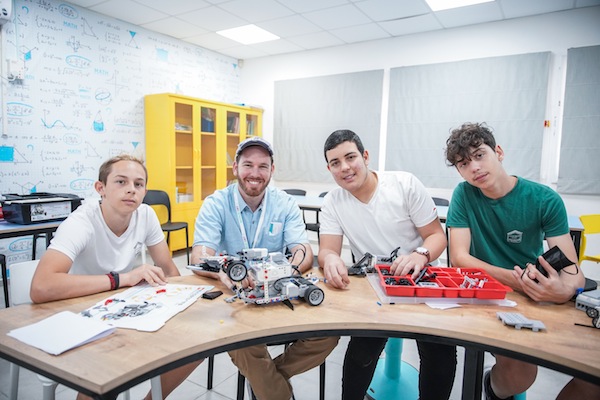
ORT delegate Nata Saslofsky with students from the D. Dan and Betty Kahn STEAM Centre at the Rodman Middle School in Kiryat Yam, Israel. (photo from ORT)

As a town with one of the highest percentages of new immigrants in Israel, Kiryat Yam is welcoming many refugees from Ukraine. One of the most important elements of helping these families process their trauma and settle is ensuring that their children’s education resumes.

Kiryat Yam’s low socioeconomic index means that local students face more academic challenges in comparison to their counterparts in the centre of Israel. But it’s here that kindergarten children are being taught how to build and even program simple robots, enabling them to gain rudimentary familiarity with technology in preparation for studying STEAM (science, tech, engineering, art, math) subjects in the future.

“Through our robotics programs in kindergartens, and continuing at the D. Dan and Betty Kahn STEAM Centre at the Rodman Middle School, we provide under-resourced children with an extra boost from the youngest age possible, so that they’ll gain the tools and the confidence to pursue higher education and fulfilling careers,” said Dan Green, chief executive officer of World ORT. Green was speaking on May 16 to World ORT delegates who, for the first time in more than two years, convened in Israel to experience firsthand the extensive work of World ORT and meet students who are directly impacted by it.

During a packed visit to Kiryat Yam, between meetings with the mayor and high-level municipal and educational representatives, delegates got an up-close view of the natural progression of World ORT’s STEAM education in action. After watching 5-year-olds playing with the robots they’d built and programmed, the group met middle-school students at the Kahn STEAM centre’s robotics lab who were delighted to show off the robots they’d built and coded from scratch.

“I was impressed by the Kadima Mada robotics demonstrations in Kiryat Yam,” said Jack Kincler of Montreal, who serves as the ORT Canada co-president. “It teaches kids from a young age about following a thought process, team effort, and step-by-step execution until the final, rewarding result is achieved.”

As an added value to the program, students who have gained a basic level of proficiency are encouraged to mentor their peers, thereby acquiring additional skills that will serve them well.

Nata Saslofsky of Atlanta, Ga., a member of ORT America’s National Leadership CohORT program, said, “Seeing firsthand the passion and excitement of ORT students for the robots they built from ideation to conception was exciting, impressive and heartwarming. It would be an amazing world if all kids had opportunities to pursue their interests by taking courses in STEAM subjects that advanced their skills and knowledge. I believe this will lead to fulfilling careers that bring them self-worth and an opportunity to give back to humanity with greater impact.”

Technion graduate Natalie Korlick, a resident of Kiryat Yam and originally from Russia, is one of the instructors at the STEAM centre. “I remember when an interest in science was considered nerdy. Today it’s become cool. Everyone wants to learn robotics.”

Korlick, who also works as a math and science tutor, said academic gaps are evident in almost all students from all grades. “It’s as if they lost an entire year,” she said, referring to the sporadic, long-distance schooling during COVID. “This year, they have to work extra hard to catch up.”

If that’s true for the students at Rodman, it’s all the more so for the Ukrainian students, who’ve seen their whole world turned upside down, and who must adapt to a new country, language and mentality. Thanks to her knowledge of Russian, Korlick is able to provide an extra level of support for the newly arrived Ukrainian students.

“Helping these kids who have been through so much and who arrived with little more than the clothes on their backs is exactly what we’re about,” said Conrad Giles, who has served as World ORT president for the last six years. “We couldn’t be happier that our programs are being used to help get them on track to a better future.” 

– Courtesy International Marketing and Promotion (IMP)

Format ImagePosted on July 22, 2022July 20, 2022Author Sharon Gelbach IMPCategories IsraelTags education, Israel, Kiryat Yam, ORT Canada, STEAM, World ORT
A composer for the Queen

A composer for the Queen

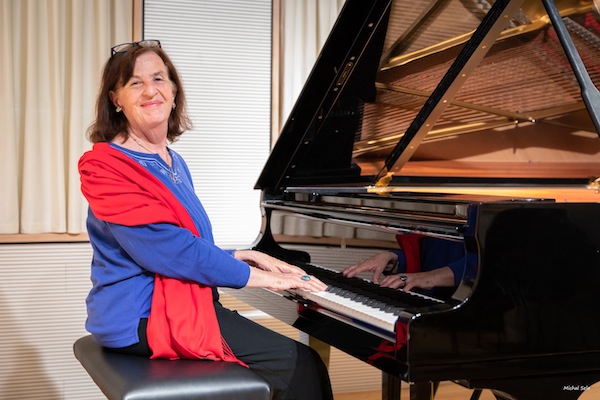
British-Israeli composer Loretta Kay Feld. (photo by Michal Sela)

Loretta Kay Feld was asked by someone close to Queen Elizabeth II to compose three tributes, which, said Kay Feld, “were gifted to Her Majesty to honour her 70 years on the throne, a life filled with grace, fortitude and dedication to her country.”

One work is a personal song, called “The Queen’s Soliloquy,” that premièred last February. The second is “A Symphonic Medley of Music for Her Majesty’s Platinum Jubilee,” which includes four instrumental segments – from “Soliloquy,” the pieces “We Never Felt So Glorious” and “The Lord Chamberlain’s Processional March and Song,” and the third tribute Kay Feld composed for the Queen, which premièred last month, called “70 Years a Queen.”

Kay Feld was born in London and trained in music composition and drama at the Royal College and Guildhall School of Music. She toured with plays and musicals in the West End of London and has published several books. She is a prolific, award-winning composer, lyricist and author, who now lives in Ra’anana, Israel. She made aliyah 11 years ago and is in her final year of a master’s at the Jerusalem Academy of Music and Dance.

“I wanted to come here [Israel] since I was a child in Hebrew school but life has a way of changing your plans,” she said. “I got married and lived in America. I gave concerts all over New York, from 1973 into the ’80s.”

Kay Feld wrote for a children’s television network and composed music in many genres. She has written about 900 songs and musical compositions. One of those is the song “Hymn for Israel.”

“I wrote it after the Yom Kippur War [in 1973] and I received letters from Moshe Dayan and Menachem Begin thanking me. The ‘Shabbat Song’ I wrote is also on YouTube and is sung in communities all over the world. ‘I’m Going to Keep America Singing,’” she said, “was performed at the inaugurations of presidents Obama and Biden, played by the Marine band.”

Making aliyah was one dream come true. Composing for the Queen was another.

When Kay Feld was 19, she performed for the royal family at the Variety Club for Great Britain at Victoria Palace and, after the show, was escorted to the box where the royals were seated. She remembers speaking with Princess Margaret and shaking hands with Queen Elizabeth II.

The opening lyrics of “The Queen’s Soliloquy” are: “You may ask me what I’m thinking on my Platinum Jubilee / And of all these celebrations, what they really mean to me / Well, my mind keeps drifting backwards, to a life yet unforeseen / Trembling at my coronation, unprepared to become a queen.”

“If we make it to threescore and 10,” said Kay Feld, “we’re considered by Judaism to be filled with wisdom, and the Queen is definitely filled with wisdom. They say the Queen learned five languages when she was young, and one of them was Hebrew.”

Kay Feld said she was offered a singer from the Royal National Opera House for “The Queen’s Soliloquy” but instead chose classical and contemporary singer Shlomit Leah Kovalski, who was born in Jerusalem to parents who made aliyah – her father from Montreal, her mother from New York.

Jamie Clarkston Collins and Eli Schurder of SoundSuiteStudio in Jerusalem do post-production of Kay Feld’s music and the videos are directed and edited by Jason Figgis.

Describing her creative process, Kay Feld said, “I compose when I’m out walking along the sea or in nature, and I think about what I’m composing and usually it just comes to me as if from the air. I write all the music in my head and the lyrics usually come at the same time and I go home and write out the manuscript.”

For her third royal tribute, “70 Years a Queen,” Kay Feld said, “I tried to write a song that I felt everybody throughout the world would be able to sing if they desired to. The melody is simple and the lyrics memorable with a tinge of humour.” Such lyrics as “… 70 years a queen / Four children in between / The Grandmama of future kings / Elizabeth, our Queen.”

The music is accompanied by the singing of renowned baritone Noah Brieger, who, Kay Feld said, “Has an outstanding voice with a great tone. He sang the lyrics with meaning and emotion.”

Brieger, like Kovalski, was born in Israel. He graduated from the Jerusalem Academy of Music and continued his training in the United States. An award-winning performer, he has sung in dozens of productions at the Israeli Opera, including lead roles in Don Pasquale (Donizetti), La Cenerentola (Rossini), La Bohème(Puccini), Romeo et Juliette (Gounod), Schitz (Rechter) and more. He also has performed in Germany, the United States, France, Italy and China.

Kay Feld is excited about a new project she has been working on for a number of years – 1897, The Musical. There are 27 original songs and the choreography is by her daughter, Dorothy Eisdorfer.

“The story is about the degrading things they did in Victorian times, but I want to tell the story with dignity,” said Kay Feld. “It expresses the desires of two women, one in the lower and one in the higher class.”

Her plan is to hire an all Israeli cast and crew, “to showcase all the wonderful talent we have here in Israel,” she said. “I’d like to find enough funding so I can pay all the performers fairly.”

She wants to film the musical and livestream it globally “for all the world to see. It will be a most splendid performance.”

For someone whose music has been performed for presidents and queens, Kay Feld remains humble. “I just believe everyone has a gift,” she said. “And if one can use the gift to make the world a better place, that’s what matters.”

Toby Klein Greenwald is an award-winning journalist, educational theatre director, teacher and the editor-in-chief of wholefamily.com. Anyone interested in supporting 1897, The Musical can write to Loretta Kay Feld at [email protected].

Format ImagePosted on July 22, 2022July 20, 2022Author Toby Klein GreenwaldCategories MusicTags aliyah, Israel, Loretta Kay Feld, Queen Elizabeth II
Never waste life’s many gifts

Never waste life’s many gifts

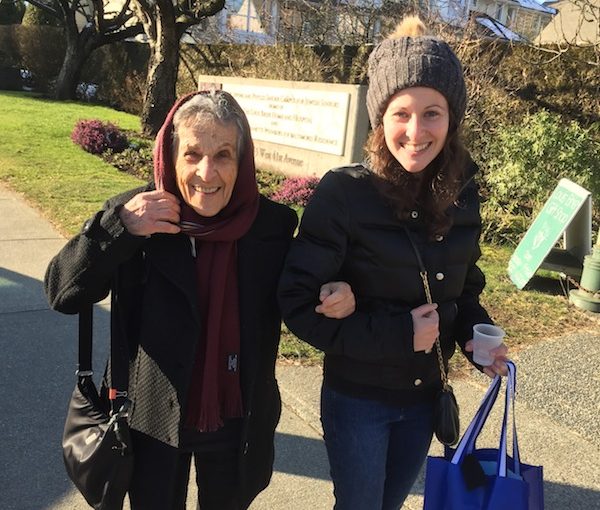
The author with her grandmother. (photo from Becca Wertman-Traub)

In the story of the Jewish people, it is not just about our patriarchs but the matriarchs, too. I grew up knowing that both my grandparents, Babi and Zaida, were Holocaust survivors. Zaida would tell me his stories – I know them backwards and forwards from how he spoke about them. But Babi, who was just 13 when the Second World War began, did not really tell hers.

She did talk about her brother – Shaike – who was taken to his death by the Nazi SS when he came out of the house to help young Frieda carry a pail of water. He was taken to a police station and killed in its basement along with numerous other Jews from the town. And she told us that her father, mother, sister and another brother all perished in the Holocaust. But not much else. She was too busy making blintzes, perogies, chicken patties, chicken soup with kreplach and more for her family.

Thankfully, though, she did have the extreme courage to tell her full story to the University of Southern California Shoah Foundation, where I learned the details of how she survived. Frieda’s childhood home in Kamionka-Strumilowa, Poland, became part of a ghetto. During the liquidation of the ghetto, Frieda and her brother, sister and mother hid in a hiding space in the wall and managed to survive, when the rest of the Jews of the town were taken to their deaths at Belzec extermination camp.

Following the liquidation, the German’s declared the town “Judenfrei,” free of Jews, but Frieda and her remaining family were still there. Since their home was located on the edge of the ghetto, they jumped off the balcony, surpassing the ghetto’s fence, and walked to Busk, a town 30 kilometres away, where they had heard that Jews were still living. They went to the Busk ghetto and lived with an aunt. Frieda’s mother died of typhoid there, and Frieda was left with her brother and sister. Unannounced, the Nazis started liquidating the ghetto, and Frieda again hid but was separated from her brother and sister – she never saw them again.

While in the Busk ghetto, Frieda worked as a gardener for a German man who said, if she returned to Kamionka-Strumilowa, he would help hide her. At the time, Frieda did not believe such a thing was possible and simply mentioned it to her cousins. However, after the liquidation, with no immediate family, she decided to give it a shot and walked back to her hometown by herself. The man took her to the village of Obydiv, where she met Mr. Svets, a Polish farmer. Frieda hid in this Polish farmer’s barn for 12 months and, today, his sister-in-law Janina Pelc is listed among Yad Vashem’s Righteous Among the Nations.

Frieda was one of just 20 from a town of 3,000 Jewish people who survived the Holocaust and lived to tell her story.

And did she live!

Babi and Zaida met after the war and moved to Vancouver in 1949. Babi was always walking, or speed-walking, usually leaving Zaida behind so she could do laps back and forth around him. She just could not sit still, whether it was cooking for her three children and, later, eight grandchildren, or cleaning the entire kitchen with a single square of paper towel – there could never be any waste. I remember sitting at Babi and Zaida’s kitchen counter as a little kid and Babi giving me milk in a tiny shot glass because “if you finish this, you get some more.”

Babi played tennis at Richmond Country Club, exercised at the Jewish Community Centre of Greater Vancouver, and dined at the finest restaurants and cafés in downtown Vancouver.

Even when Zaida passed away, she was not done living. Right up until the end, my dad took her out for coffee.

In September, just a few days before my wedding, we were out for coffee and she took my left hand, looked at me and said, “Is he Jewish? Is he from a good family?” I said yes, and reminded her that she was coming to the wedding.

At 95, she came to my wedding. And she danced at it – to none other than “Od Lo Ahavti Di,” Hebrew for “I have not loved enough.”

Babi appreciated life and everything it had to offer to its fullest, never allowing any of its gifts to go to waste. We mustn’t either.

May her memory be for a blessing.

Becca Wertman-Traub grew up in Vancouver and currently lives and works in Jerusalem.

Format ImagePosted on July 22, 2022July 20, 2022Author Becca Wertman-TraubCategories Op-EdTags Frieda Wertman, Holocaust, lifestyle, memoir, reflections, Vancouver

Posts pagination

Previous page Page 1 … Page 109 Page 110 Page 111 … Page 492 Next page
Proudly powered by WordPress