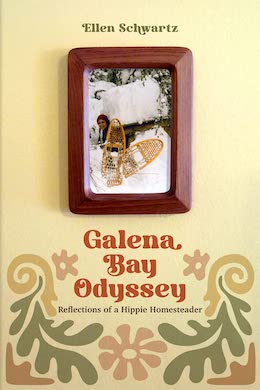
“When I came to Galena Bay, I had been afraid of many things,” writes Ellen Schwartz in Galena Bay Odyssey: Reflections on a Hippie Homesteader (Heritage House Publishing Company, 2023). “Of the physical work I would have to do. Of trying new things I have never done before, like gardening and building and raising animals. Of living in isolation. One by one, I had attempted these things, and I had survived. I had even mastered some of them. Those fears had fallen away.”
This paragraph comes as Schwartz is atop a hill, “too scared to move,” and her skis start sliding. She survives the “ungraceful and disastrous” run, even pushes through a second one. But she can’t keep her vow to never to do that again because, in the 1970s, she lived in such a far-flung place that skiing was a necessary mode of transportation, not just a leisure activity.
It is easy to see why Schwartz chose to write a memoir about this period of her life. Born into a middle-class family – her father an internist-turned-cardiologist, her mother a teacher before becoming a stay-at-home mom to Schwartz, her younger sister and brother – and raised in New Jersey, Schwartz went to university in Chicago. There, she did all you might expect a young person with the new freedom of being on their own to do. And then some, as it was the late 1960s. She writes openly about her experiences with drugs and having sex for the first time: “I figured Ned was The One. I imagined that we’d go through our four years [at school] together and eventually marry.” That didn’t happen. Nor did Schwartz go on to lead the conventional life she imagined for herself at the time.
Instead, she went to join a close friend at a farming commune in Pennsylvania, the members of which ultimately wanted to move to British Columbia. Not intending to stay longer than summer break, Schwartz fell in love with one of the commune’s founders and, well, ended up in British Columbia with Bill, who would become her husband. The group didn’t last long, but the Schwartzes are still together, though no longer in Galena Bay, which is in the West Kootenays. They now live in Burnaby.
The young urban-raised couple faced many challenges homesteading, and Schwartz has many stories of taking on the unknown, whether it be camping along the route across the continent to British Columbia, building their own cabin (including chopping down their own trees), growing their own food, raising a child in a remote area (their second would be born in Vancouver), etc., etc. Not to mention finding work that would sustain them physically (keep them housed, clothed and fed), if not spiritually. She shares the details of her hippie days matter-of-factly, with humour and with the perspective of reflection. For example, after recounting her parents’ muted reaction to her and Bill’s homemade home, she offers potential reasons for their lack of enthusiasm.
Schwartz’s unique history encapsulates the overarching idealism of many in her generation. Her grandparents were “impoverished Jewish immigrants who had fled the hardships and pogroms of Lithuania and Poland” to give their kids a better life in the United States, so their grandchildren also were well set up for material success. The grandchildren – Schwartz and her peers – had an idea but no real understanding of the sacrifices that had been made to achieve the comfortable lifestyle they rejected, because of the racial and social inequality they saw around them, the environmental degradation and the war in Vietnam.
“Bill and I, part of the first wave of baby boomers, were in the privileged position of having enough education, enough wealth and enough leisure to be able to criticize our parents’ lifestyle,” she writes late in the memoir. “We were well-off enough to be able to turn our backs on materialism. We were prosperous enough to indulge in idealism and, idealistically, to define an entire new set of values. (At the time, I didn’t appreciate the irony.)”
But her desire to make the world a better place was – and is – genuine and remains a guiding force. Schwartz, who was a teacher for many years, began her subsequent career writing educational material. We find out in her memoir that the first fiction story she sold was released in 1980. She is now a celebrated children’s author, with almost 20 books to her credit directed towards younger readers, ranging from picture books to novels for teens to a couple of non-fiction publications. She is also a freelance writer and editor.
Galena Bay Odyssey is a wonderful glimpse into an integral part of Schwartz’s life. It also offers insight into North American hippie culture and the strength and ingenuity required to live in an out-of-the-way place like Galena Bay. That the “action” takes place in British Columbia will make the memoir of even more interest to local readers.
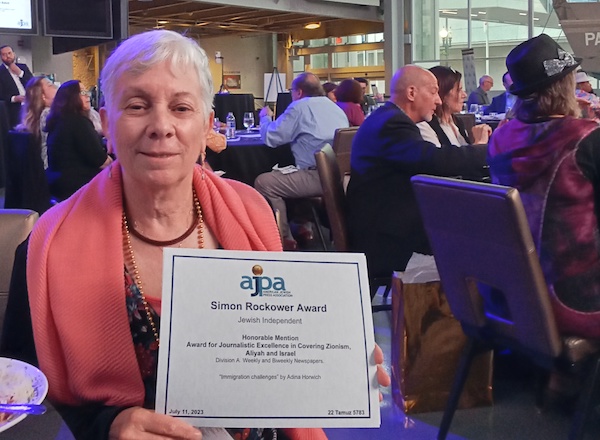
Adina Horwich at the 42nd annual Rockowers Awards. She received an honourable mention for journalistic excellence in covering Zionism, aliyah and Israel. (photo from Adina Horwich)
The Jewish Independent won four Simon Rockower Awards for Excellence in Jewish Journalism this year. The awards, which are given out by the American Jewish Press Association, were for work done in 2022. The JI has had a few Rockower hat tricks in its history, but this is the first time the paper has garnered four honours in one year.
The awards were presented on July 11 at the Higgins Hotel and Conference Centre in New Orleans, La., where the AJPA’s annual conference was held. The JI mainly competed in the division of weekly and biweekly newspapers, but there were some categories for which the competition was between all types of media (print and online); awards were given for first and second place, and sometimes honourable mention.
Writer Adina Horwich traveled from her home in Israel to New Orleans to receive her award in person. She won the JI an honourable mention for journalistic excellence in covering Zionism, aliyah and Israel for her article “Immigration challenges” (jewishindependent.ca/immigration-challenges-2). The piece both reviews Adi Barokas’s Hebrew-language graphic novel, The Journey to the Best Place on Earth (and Back), about Barokas’s experience trying to immigrate to Vancouver from Israel, and shares Horwich’s experience making aliyah from Canada. The jury commented: “Extremely readable story, that skilfully explores from a personal perspective the nitty gritty of making aliyah.”
The JI’s Pat Johnson also received an honourable mention – his article “Oasis in the Caucasus” (jewishindependent.ca/oasis-in-the-caucasus) garnered recognition for excellence in writing about Jewish heritage and Jewish peoplehood in Europe. The jury said about his piece:
“A terrific look into the Jewish community of Azerbaijan that most of us, unfortunately, don’t have on our ‘Must-Go Places to Visit.’ Pat Johnson’s very nice story strongly suggests otherwise. Johnson paints a wonderful picture of this tucked-away ‘shtetl’ where the residents say they have never faced antisemitism. If only we could feel so lucky here in the United States! And while most of us do well playing ‘Jewish geography,’ actual world geography is often more of a challenge. Having Johnson admit having to Google Azerbaijan before traveling there to report this story added a nice touch that connects with readers who may also be unfamiliar with the country – but now more knowledgeable thanks to this feature.”
Johnson was recognized for another of his articles, “Maus not too graphic” (jewishindependent.ca/maus-not-too-graphic), which placed second for excellence in education reporting. Johnson sat in on Anna-Mae Wiesenthal’s Holocaust and Genocide Studies class at King David High School, and listened as students discussed the graphic memoir Maus by Art Spiegelman.
“Lots of people laughed when a Tennessee school board pulled Maus from the curriculum because of the drawing of a naked cat. That was too much for board members and they banished the Pulitzer Prize-winning graphic novel,” wrote the Rockower jury. “Viewing the book through the eyes of five students at a Jewish high school subtly portrays the board decision’s absurdity.”
Rounding out the JI wins was a first place for excellence in editorial writing – where all entries competed in the same division. The JI editorial board of Johnson, Basya Laye and me were honoured for the set of editorials that included “Every person has a voice” (about Elon Musk, hatred and misinformation online, and how people can counter such forces), “Extremism not helpful” (about New Democratic Party leader Jagmeet Singh’s views on the Israeli-Palestinian conflict) and “New era in U.S. politics” (about the U.S. Supreme Court’s rejection of a woman’s right to reproductive self-determination, as well as the Jewish perspective on abortion).
About these editorials the Rockower jury wrote: “These pieces are good examples of what editorials should be – thoughtful examination of pressing issues, using clear reasoning in looking at both sides, then coming to a well-reasoned conclusion. Local tie-ins strengthen opinions.”
All of us at the JI appreciate the AJPA’s recognition of the hard work that goes into producing an independent Jewish newspaper, magazine or website, and we congratulate all of our colleagues on their achievements. For the full list of Rockower winners, visit ajpa.org.
The JI couldn’t do what we do without our subscribers, donors and advertisers – thank you for all your support. For readers who are thinking about subscribing, donating or advertising, please consider doing so to help us continue producing a high-quality, independent Jewish newspaper that connects community members from across the religious and political spectrums; covers lifecycle events and local, national and international news; and documents our community history as it happens. Visit jewishindependent.ca/support-the-ji, email cramsay@jewishindependent.ca or call 604-689-1520.
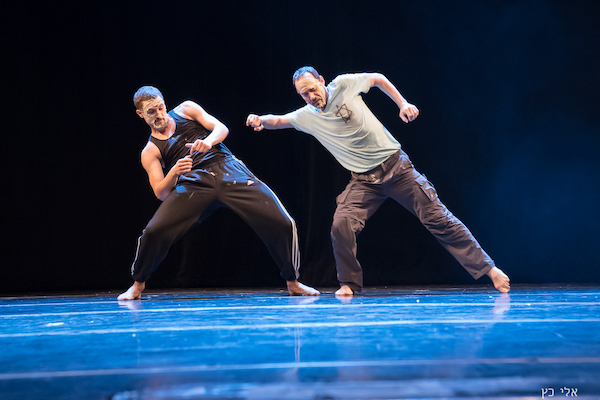
Mourad Bouayad, left, and Hillel Kogan in We Love Arabs, which is at the Dance Centre April 13-15. (photo by Eli Katz)
“I don’t have answers so I can only ask questions,” Israeli choreographer Hillel Kogan told the Jewish Independent. “If this is changing people’s political views, I doubt it, but at least what I’m trying to do is to put the questions on the table and make people, audiences, and myself see that art is not a separate sphere, that art is part of politics and social and cultural systems … and this is what I’m trying to expose in my pieces.”
The JI interviewed Kogan in advance of the Vancouver run of We Love Arabs, which is being presented at the Scotiabank Dance Centre by the Dance Centre and Théâtre la Seizième April 13-15. There will be both English- and French-language performances of this work, which also has Hebrew and Spanish versions. Kogan will dance the duet here with Mourad Bouayad.
We Love Arabs premièred at the 2013 Intimadance Festival in Tel Aviv. The brief outline for the piece, which Kogan has on his website, begins: “I address the audience, my name is Hillel Kogan. Some say that I do political art. I want to show you today how dance has the power to promote coexistence between Arabs and Jews in Israel. I invited an Arab dancer here….” The video teaser offers a glimpse of Kogan’s physicality, humour, tenderness, intelligence.
Born in Tel Aviv, Kogan has performed with and created for companies and choreographers around the world. At Batsheva Dance Company, he is director of educational programs. He is pursuing a master’s degree in cultural studies.
We Love Arabs garnered awards, and it has traveled to more than a dozen countries. The Vancouver show was postponed twice, said Mirna Zagar, executive director of the Dance Centre. First due to a scheduling conflict and then due to COVID. “However, I believe the work is just as relevant now as it was when we started,” she said. “It is an exceptional work that continues to engage audiences internationally.”
The Dance Centre often partners with other arts organizations, as a means of pooling resources and amplifying opportunities to show international artists. “This collaboration is along these lines,” she said. “I have known Esther Duquette, the now-outgoing artistic director at Théâtre la Seizième, for some years and the nature of this piece – multilingual and straddling theatre as well as dance – made it a perfect opportunity for our organizations to work together.”
The April 14 performance and talkback will be in French; the other two shows and the April 15 talkback in English. Kogan speaks six languages: Hebrew and Russian because his parents were born in the Soviet Union and he was born in Israel; he studied English in school; he learned French from working two years in Switzerland, and Portuguese and Spanish from working in Portugal for seven years. He doesn’t speak Arabic.
“This is interesting,” he said, “because this piece, We Love Arabs, is an autocritical peace that asks exactly this. Why am I facing the languages and cultures of the West and not the languages of my neighbours and of my co-citizens in Israel? Why don’t I read the books of Arabic writers? Why doesn’t Arab culture interest me, and why do I identify myself as ‘Western,’ which is a bit strange?”
It is both a geographic question, he said, living as he does in Israel, and a social, historical, cultural and political question. “And the piece deals with this question: who decides what the general culture is, and why I am – and why the Israeli art field, at least as I see it, is – so orientalist, which means looking at the Orient, at the Arab as inferior and wanting to impose on it the Western culture.”
The different versions of We Love Arabs resulted from Kogan’s wanting to perform the piece abroad, in the language the audience speaks. “I think it brings more this idea of relevance to the space,” he explained. “If I did the piece in Hebrew with subtitles, it would be more like a piece from Israel … and be framed as something local and in my perspective. The universality of the piece is one of the ideas – I want people to identify with it and, by choosing their own language, I feel there is more chance to make them sense that they are part of it as well.”
Kogan had no idea of how much impact We Love Arabs would have. “It was created for a small niche festival in Israel,” he said, and “for a specific audience who is already convinced in the political opinions that I hold. So, I didn’t imagine it ‘big.’… As I performed the piece out of Israel, I understood that the question of Jews and Arabs in Israel is just a microcosm of a more universal question: of the situation of power between minority and majority, and the way we see ‘the other’ – who is the master of the culture in any nation?”
In looking at the question, Kogan asks: “Who is invited to participate in creating a national identity, what is Israeli or what is Arab Israeli? It is not very different than the question of, I don’t know, for example, in Canada: who is invited, what is Canadian? Is it French? Is it American? Is it English? I don’t know the minority situation in Canada, but I know there is a history with Native Canadians. So, are they also invited to take part in culture? How much are they participating in mainstream dance, literature, music? How do we define what is high art and what is popular art? What is folk and folklore? And what is universal art?”
Initially dancing the duet with Kogan was Adi Boutrous, an Israeli Arab dancer who is also a choreographer and so not always available. Bouayad, who is French, danced in Israel in the Batsheva junior company. “This is how we met, so I invited him to perform with me,” said Kogan. “And, of course, it’s very different for an Israeli Arab to play the role of an Israeli Arab than for a French half-Arab person, because to be an Arab in France is different than to be an Arab in Israel.”
Not wanting to speak for Bouayad, Kogan noted that, while Bouayad may define “himself first as French, and his relationship with his Arab origins are just an extra part of his being,” for Israeli Arabs, he said, “I’m not sure that they are first Israeli and then Arab because of their own perception of themselves – but also the way the majority looks at them, the state looks at them, society looks at them, Jewish society looks at them.
“We often make the mistake even in the language, and we forget to say that Arabs are Israeli as well. We say Israelis and Arabs – even when we refer to Arabs who are citizens of Israel and who hold an Israeli passport, we call them Arabs, and we call ourselves, the Jews, Israelis…. We are both Israeli and the difference between us in definition is our religion. In a country like France, where it’s a republic and religion has at least formally not such an important role in the definition of citizenship and of nationality, then, of course, the change of cast is also changing the relationship.”
Kogan has no illusions that art can change the world. Elected politicians “are the ones who should change the world,” he said. For him, art is there to reflect, to inspire. “Art, for me, is a place for the imagination, for the possibility of not necessarily escaping reality, but giving an alternative to reality…. If art can feed the imagination and then, as an outcome of this feeding of imagination, can change the reality, OK, that’s great. But I think that … when artists try to change the world by their art – in history, at least as far as I see, it ends in political propaganda and just serves the hands of politicians.”
As many funny moments as there are in We Love Arabs, they have a profound purpose.
“I have anger towards some of the cultural systems, and the questions that I’m asking are involved with hard emotions. I feel that humour allows me to take some distance from the aggression and from being so emotionally involved,” said Kogan. “It allows me to laugh about myself as well. It allows me to invite people to laugh about a question without making it not serious. The laughing, I feel, is a tool to invite people to enter a conversation, to agree to criticize, to agree to ask questions … to see the bias, to be aware of the stereotypes, to be aware of the prejudgments that we have…. The laughter is just a means in order to speak about something very serious.”
For tickets to We Love Arabs, call 604-736-2616 or visit thedancecentre.ca.
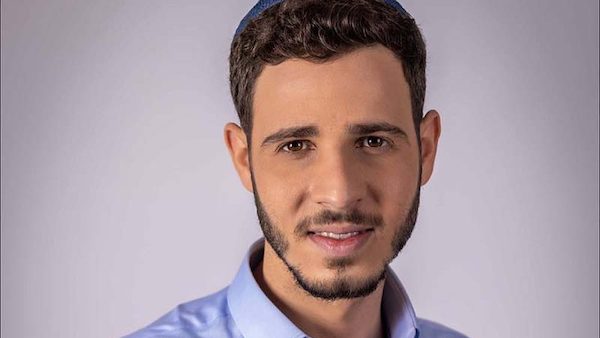
Israeli journalist Yair Cherki (photo from Facebook)
Bravo Yair Cherki, the popular, ultra-Orthodox TV news reporter. He recently came out as gay in a wonderful social media post. In part, he said: “I write these words shaking, postponing to tomorrow. For next week. For after the holidays. Maybe it’s been 10 years since I’ve been writing and erasing…. And I write not because I have the strength to write but because I have no power to stay silent. I love men. I love G-d. It is not contradictory….”
His confession continues, “I live the conflict between my secular preference and my faith all the time. Some have solved the conflict for themselves by saying that there is no G-d, while others explain that there is no homosexuality. I know both exist. And I try to reconcile this contradiction within myself in various ways. These are things between G-d and me…. This is neither a fashion nor a trend nor a political statement. It is simply me….”
An intimate and intelligent statement.
* * *
Now, if this doesn’t take “blaming the Jews” to new extremes. In my previous article in the JI (jewishindependent.ca/land-of-milk-honey) I praised the historic maritime natural gas agreement between Israel and Lebanon, enabling both countries to drill for natural gas within their own territory. I truly wished Lebanon much success in hitting a gusher and creating their own Sovereign Wealth Fund.
Hezbollah’s leader Hassan Nasrallah sees it a bit differently, warning that any delay in Lebanon’s extracting gas from its own waters will be met by a punishing attack on Israel’s adjacent gas fields. Maybe Robert Frost’s poem “Mending Wall” will assuage Nasrallah: “I let my neighbour know beyond the hill…. And set the wall between us once again…. To each the boulders that have fallen to each…. He only says, ‘Good fences make good neighbours.’”
Nasrallah went on to threaten that if the United States continues spreading chaos within Lebanon – some conspiracy theory or other – that Israel will pay. Reminiscent of the Three Stooges slapstick routine when Curly slaps Larry for Moe slapping him.
Peace and prosperity for all, on both sides of the Fatima Gate. Otherwise known as the Good Fence!
* * *
Going once. Going twice. Do I hear $50 million? According to its website, “Sotheby’s is proud to offer … the earliest, most complete Hebrew Bible during this year’s marquee New York sales auction.”
The Codex Sassoon is more than 1,000 years old. According to Sharon Mintz, Sotheby’s senior Judaica specialist, in an interview with CNN, “this is the most important document to come to auction ever.” It’s expected to generate huge interest across the world from the wealthiest of bidders, with offers expected to reach as high as $50 million.
Other treasured documents fetching such modest amounts at auction include the Codex Leicester by Leonardo da Vinci (ostensibly his science diary) sold to Bill Gates in 1994 for about $31 million. And the first printing of the U.S. Constitution, bought by American hedge fund manager Kenneth Griffin in 2021 for about $43 million.
May 16 … save the date. And your shekels!
* * *
A few weekends ago, my wife and I drove south for the day to enjoy the year’s winter festival, Darom Adom, when the bright red poppies – a protected flower in Israel – come out in full bloom along the Gaza periphery. It’s another reason to celebrate with local handicrafts, seasonal fruit, local cheeses and wine, homemade Israeli cuisine.
Taking place not too far from Sderot, within the opened gates of local kibbutzim and moshavim (agricultural communities) and less than a kilometre from another good fence delineating the border between Israel and Gaza, the festival a testament to Israeli’s resilience – and longing for a peaceful coexistence.
Somewhat poetically, we purchased a beautifully handcrafted hamsa made by a young, local artist. This hand-shaped amulet is used for protection by both Jews and Muslims. In the Jewish faith, the five fingers of the hamsa represent the Five Books of Moses, or the Torah. The Muslim faith sees a hamsa as representing the Five Pillars of Islam (declaration of faith, prayer, alms, fasting, pilgrimage). In popular culture, the charm represents the five senses (sight, sound, smell, touch, taste).
* * *
Judicial reform. Judicial reform. Judicial reform. Sounds like Jan Brady whining about her sister getting all the attention, “Marcia. Marcia. Marcia,” from the 1970s sitcom The Brady Bunch. Judicial reform certainly has been getting all the attention lately.
Issues aside, we’ve had 10 weeks and counting of protests, with several hundred thousand Israelis protesting around the country every Saturday night against judicial reform. The protests are also aimed at the extreme, right-wing – even theocratic – makeup of the current coalition that is driving headstrong into judicial reform. And yet, the primarily secular, centre-left who comprise these thousands, waving Israeli flags and ending every protest with the singing of Hatikvah, respectfully wait until after Shabbat to begin their protests. How’s that for deep-bred regard for this Jewish tradition that crosses sociopolitical lines?
* * *
Bravo again to Yair Cherki. To come out in these turbulent, sociopolitical times for the Israeli LGBTQ+ community. With our far-right, xenophobic, theocratic and anti-LGBTQ+ government, Cherki’s post and testament to himself is nothing short of brave, beautiful and brilliant.
Bruce Brownis a Canadian and an Israeli. He made aliyah … a long time ago. He works in Israel’s high-tech sector by day and, in spurts, is a somewhat inspired writer by night. Brown is the winner of the 2019 AJPA Rockower Award for excellence in writing, and wrote the 1998 satire An Israeli is…. Brown reflects on life in Israel – political, social, economic and personal.
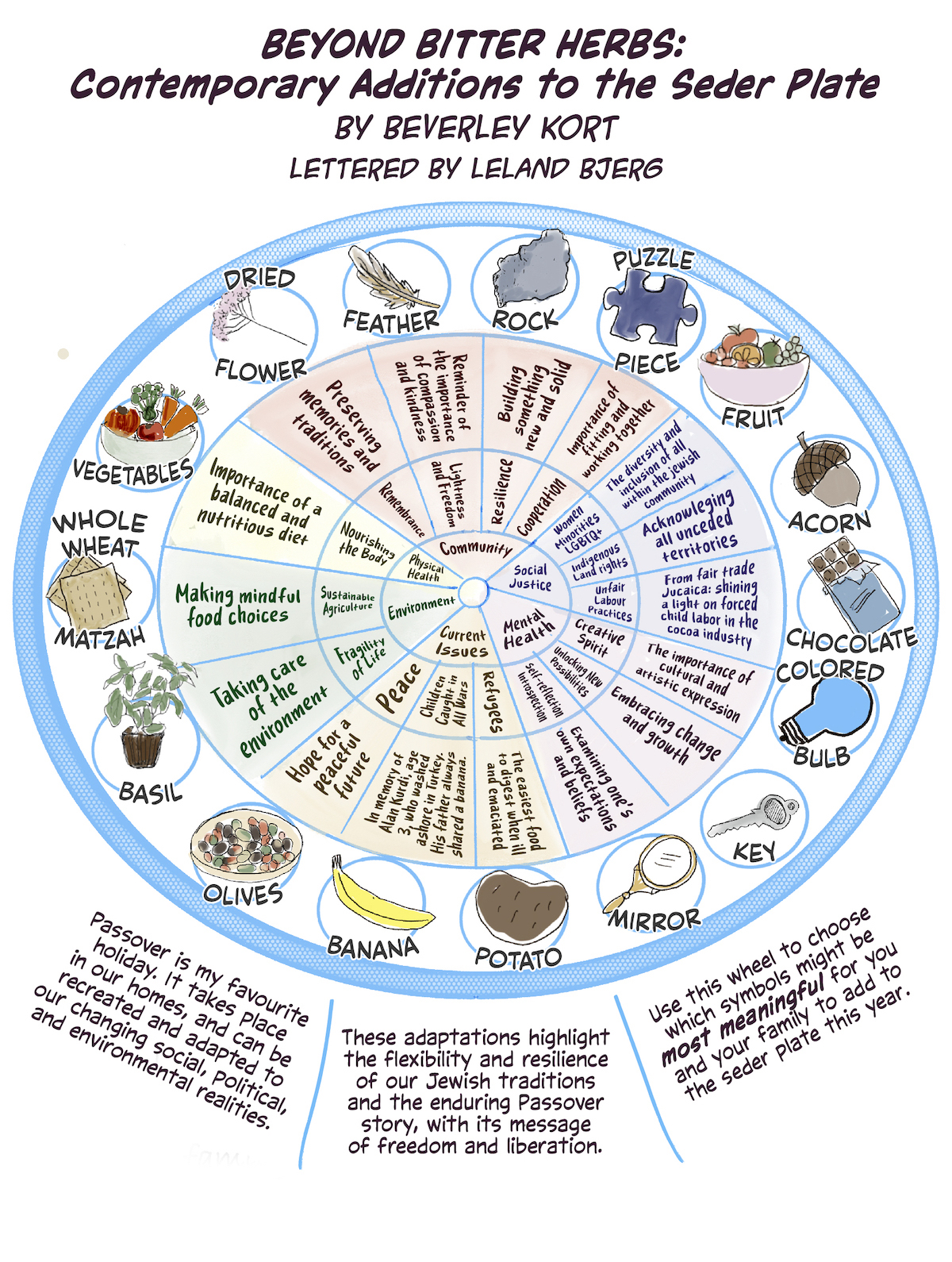
Beverley Kort is a registered psychologist by day and a cartoonist in her off hours; she has a private practice in Vancouver. Leland Bjerg is a freelance comic writer, editor and letterer; he lives in Kelowna with his wife and a swarm of dogs.
Lindsey Tyne Johnson (photo from Lindsey Tyne Johnson)
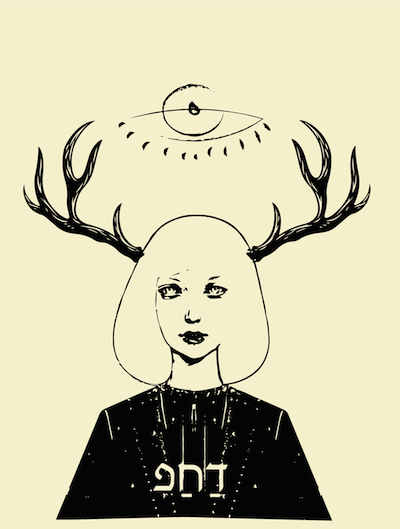
Returning from a Birthright trip to Israel in 2019, artist Lindsey Tyne Johnson was inspired. Learning the aleph-bet, she made a laser-engraved spirit board in Hebrew, but accidentally arranged the letters left to right, as they would be in English, and not right to left, as Hebrew is read. The mistake spurred her not only to create the exhibit Hebrew Spelled Backwards, which is on display at the Kamloops Art Gallery until April 1, but to explore her cultural heritage, from which she had been estranged, and learn more about Judaism.
The other, more sombre, inspiration for the Hebrew spirit board and the exhibit was, Johnson writes in a blog post, a “desire to feel closer to my brother after the events that left him homeless and his eventual passing.”
“Born with the name Liam, my brother changed his name to his chosen Hebrew name, Noah as an adult,” she writes on her website (lindseytynejohnson.com). “My mother had mentioned our Jewish ancestry to us as children, but my brother was the only person to explore it…. I can still remember it as what my mother called ‘one of his many phases’ in his late teenage years. She chalked it up to a phase, but it’s the string I use to tie memories of my brother together.”
“My brother was the first person I witnessed who explored their Jewish heritage,” Johnson told the Independent. “When he moved to Vancouver in his early 20s, he legally changed his name to his Hebrew name, Noah. He struggled a lot with his mental health, and there were times when I felt like I was losing the brother I grew up with. It was an attempt to feel closer to him that I went on Birthright and had a bat mitzvah. I wanted to remember the part of him that was happy, passionate and excited about life.
“My brother lost his life to fentanyl in 2021. It was devastating and broke my family apart,” said Johnson, who has two other siblings. “Many struggle to understand substance abuse/mental illness’s connection to generational or cyclical trauma. It’s unfair to look down upon those who might suffer from those things. I try my best to advocate for the destigmatization of mental illness where I can, though I’ve had to be careful not to let others’ ideas also negatively affect my mental health.”
While not a large exhibit, Hebrew Spelled Backwards is powerful, thought-provoking in a serious way, but also using humour. For the exhibit’s images, Johnson explains on her website, “The sandy colour palette was chosen as a tribute to the desert, a significant location in Jewish history and culture. I use digital media to blend traditional Jewish motifs with modern techniques, creating a dynamic visual experience.”
Johnson said, “Like many artists, my process is sporadic and requires a particular head space to create something I’m happy with. I often have ideas for pieces while doing mundane daily activities; if I don’t write them down, they’re lost forever. I practise a lot of sequential art, which is usually silly comics about everyday life, but they’re generally never seen by other humans. My style reflects the graphic novels I like to consume. I can’t help but be inspired by artists like Craig Thompson and Marjane Satrapi, both visually and thematically. My dream is to produce a graphic novel one day.”
The Hebrew Spelled Backwards exhibit comprises not only Johnson’s artwork, but her voice. Each picture has a QR code and viewers can hear Johnson give explanations of the Hebrew words and some context for the images, making the exhibit more accessible and inclusive. The illustrations variously include Jewish symbols and/or Hebrew text, supernatural elements, pop art iconography (a Warholesque can of Birthright’s Instant Bat-Mitzvah, for example) and current topics of concern, like rapper Ye’s antisemitic comments, poignantly drawn as a short series of cellphone text messages from a mom to her child that ends with the child asking, “mum, why is ye mad at us?” This is one of the works that, as the exhibit description reads, “examines the complexities of identifying as Jewish and the fear and uncertainty that often come with it.”
“I have a couple of fears about identifying myself as Jewish,” Johnson told the Independent. “Initially, when diving into Jewish culture and Judaism as a religion, I was afraid people might not think I was ‘Jewish enough,’ since only one of my parents has Jewish ancestry. My siblings and I were raised without Jewish traditions or education…. Having a bat mitzvah really helped with that fear, though. I’m also grateful that I’ve never really encountered anyone from the Jewish communities I’ve belonged to that has made me feel that way.
“RaeF” by Lindsey Tyne Johnson
“The other part of that fear was that people would think differently of me or assume certain tropes or ideologies about me if I publicly identified myself as Jewish. This is an unfortunate reality I’ve experienced, even if subtly. Most commonly, people think I’m OK with antisemitic jokes or jokes that involve the Holocaust. It’s an exhausting thing to experience.”
Putting together the exhibit has allowed Johnson not only to explore her fears, but also her own biases.
“Creating these pieces required me to reflect on the experiences of people like Batsheva Dueck (aka Cynical Duchess, a modest fashion content creator) or more conservative Jews, who experience more assumptions made about them based on their dress or religious beliefs,” she said. “Since working on this exhibition, I’ve been more sensitive to times when I’ve excused antisemitic values expressed by my peers or acquaintances. When I lived in Brooklyn, I lived with someone who spoke quite negatively about Hasidic communities. This has been an excellent opportunity to witness my biases and encourage others to reflect on their biases or assumptions, too.
“It’s also allowed me to tie other pieces of my identity together,” she continued. “I’ve been able to connect my Irish ancestry with my Jewish ancestry, for example. It has given me a sense of wholeness or completeness and I’ve accepted that I can be many things all at the same time and I’ve accepted that that’s OK. We all contain multitudes.”
Johnson went to Ireland this past summer to visit where her Ashkenazi family moved to in the 19th century, and “to visit the Irish Jewish Museum and Waterford treasures.”
“I was probably in the fourth grade when my mother talked to my siblings and me about it,” said Johnson of first learning about her Jewish heritage. “It was after I had come home and talked about how we were learning about World War II at school. It was surreal to hear my mother, an immigrant from England, talk about a side of our ancestry that had never really been discussed before. I didn’t understand what it meant at the time.”
Johnson herself has lived many places. She was born in Edmonton in 1993, but her family moved to Saskatchewan and then Prince George, B.C., shortly after.
“I spent most of my youth in Prince George but moved to Dawson City, Yukon, as soon as I could save up enough money to attend the Yukon School of Visual Arts,” she said. “Yukon SOVA is a one-year foundational arts program. Still, I decided to stay in the Yukon upon completion and remained in the territory for about five years before I moved to Brooklyn in 2018. I was in Brooklyn for only half a year before moving to Kamloops to be closer to my family, but it made a lasting impression. Going from a territory of 35,000 people to my neighbourhood in Williamsburg with four times that amount was dizzying.”
Johnson said she loves the Kamloops Jewish community. “I joined shortly after moving to Kamloops from Brooklyn and felt incredibly welcomed,” she said. “The [Okanagan Jewish Community Centre] president, Heidi Coleman, is a huge inspiration and comfort to me. It’s pretty relaxed in terms of how often we have gatherings. We don’t have a synagogue or a place to meet, so we usually celebrate holidays at someone’s house. The ‘younger’ (20 to 30 years old) of us have a close bond, and I often have a group of us over for various holidays, too.”
Johnson is currently in her third year at Thompson Rivers University, where she is doing a bachelor’s in criminology. “I’m most interested in victimology,” she said. “I think Canada and most of the world fail victims of crime to an astronomical degree. It’s wild to think about how much attention we give criminals without considering how we could better support the survivor or victims of their crimes.”
Artistically, she is planning a piece that more specifically honours her brother Noah. “I want to educate the general public about how the consequences of generational or cyclical trauma can lead to mental health struggles like substance abuse,” she said. “I would like to highlight that it’s not specifically someone’s ‘fault’ for struggling the way they do.”
Photographer Jason Langer’s perception of Germany and its capital, Berlin, is a complicated one, and his current exhibition at the Zack Gallery, Berlin: A Jewish Ode to the Metropolis, reflects those complexities. Organized in partnership with the Cherie Smith JCC Jewish Book Festival, the exhibit is Langer’s first show in Canada.
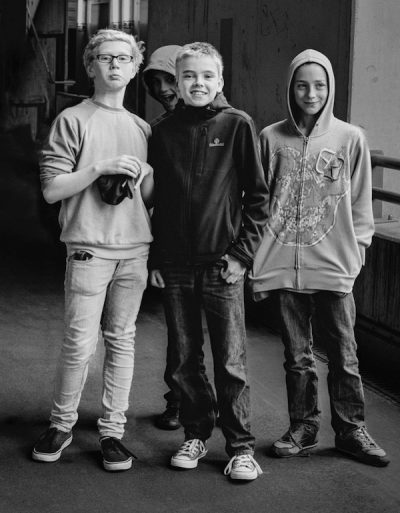
“Boys” (photo by Jason Langer)
Langer’s newly published book, Berlin, includes 135 black and white photographs. A selection of these images forms the exhibit at the Zack, which has an emotional sophistication of its own, even though the show is being promoted as a prologue for the book festival. Both the show and the book catalogue the artist’s several trips to Berlin and his explorations of the city. They also provide visually compelling commentary on Langer’s contradictory and evolving feelings for Germany.
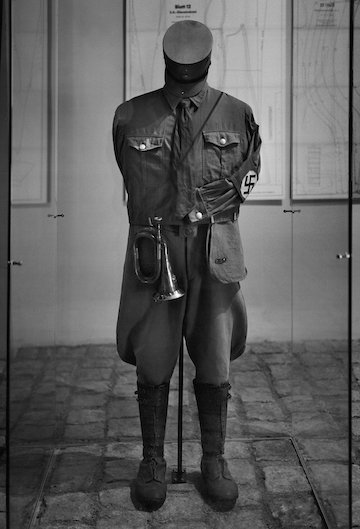
A Nazi uniform in the Sachsenhausen concentration camp museum in Berlin. (photo by Jason Langer)
As in life, the then-and-now overlap and, occasionally, the juxtaposition of the past and the present are jarring in Langer’s imagery. On the one hand, Germany is the country where the Holocaust originated, the country that erased its Jewish population almost entirely and spearheaded the destruction of the Jews of Europe. On the other hand, it is a modern country of laughing kids, hardworking people and beautiful architecture, a country that acknowledges its past actions and tries to make amends to the Jews. It is a country inspiring fear, hatred, respect and admiration in varying measures.
Langer writes in an essay about his relationship with Germany and its progression from total negativity to growing understanding. When he was 6 years old, his family moved from his native United States to Israel, where he spent his formative years, until age 11, on a kibbutz.
“Every year, each children’s house would visit the Holocaust memorial, located on the kibbutz property, during Yom Kippur…. We were asked to walk silently and led into a courtyard with one building and three short walls,” writes Langer. “I remember the walls were made of large, rectangular stones, grey in colour and a bit rough and oddly shaped. We learned about how the Jews had suffered, first as slaves in Egypt and then in the Holocaust by the Germans.”
Later, as an adult, he “vaguely remembered having heard fearful stories of German people from my mother and grandmother, though my mother also made jokes about Germans, putting on a comic fake accent. She died in 2003 and I inherited her books, among other things, including a kind of illustrated encyclopedia titled The Wonderful Story of the Jews, written by Jacob Gewirtz. It was published [in 1970], not long before our move to Israel. The text refers to the Germans’ ‘unspeakable crimes’ against the Jews, as well as the ‘unending ravages of war, persecution and tyranny’ they had faced. Some of the illustrations are quite scary, showing buildings on fire and Jewish people menaced by gun-wielding Nazis. The book presents Israel as a place of refuge, the kibbutzim as almost unique.”
After being exposed to such ideas during childhood, Langer’s predominant feeling towards Germany was aversion. But then, in 2008, when he was already an established photographer, one of his friends suggested he photograph Berlin.
“He thought the city would be a good match for my sensibilities but I met his suggestion with trepidation and fear,” Langer recalled. “I harboured many preconceived ideas about Germans and Germany. I imagined Berlin as a vast, cold, unfriendly, gritty place, but, at the same time, it seemed exciting and sexy somehow.
“I decided to see Berlin for myself, keen to challenge my existing ideas and also uncover reminders of the Jewish people who had lived there, until they fled or were hunted down and killed by the Nazis.”
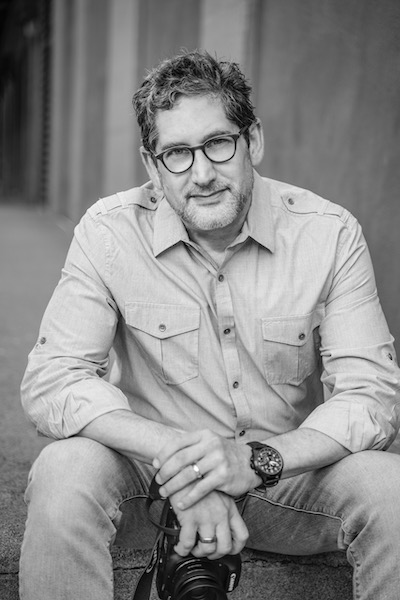
Photographer Jason Langer’s exhibit at the Zack Gallery runs to Feb. 16. (photo from Jason Langer)
In the next five years, Langer visited Berlin frequently. “From 2009 to 2013,” he said, “I made five trips for two weeks at a time. I stayed in a flat with about six people. When they were going on vacation, they would let me know, and I would fly over and occupy their rooms. They would also give me advice on where to go.”
During those visits, he took multiple photographs and strived to form a new narrative regarding his feelings and associations regarding Germany and its people.
“This work is an attempt to remember, confront and unwind my attitudes about Germans, Germany, Berlin and my Jewish inheritance; these images are part discovery, part remembrance and part fantasy,” he explained. “They’re my attempt to stand where Jewish people were rounded up and deported, to remember but also reassess. They’re an effort to confront my internal attitudes and prejudices, to look into people’s eyes and find a continuation of kindness, to be open to the happiness of contemporary life in Berlin.”
Some photographs in the gallery are full of anguish and terrible beauty, like the Holocaust Memorial, consisting of 2711 concrete slabs (stelae) of different heights, or an ornate door of the Stiftung Neue Synagogue, built in 1865, the only synagogue in Berlin to survive the war, though its interior was burnt.
The horror of the war is also reflected in the image of an old, dilapidated shed, the “goat house,” where one Jewish family, a mother and a daughter, hid for several years to survive the Nazis’ attempt to exterminate Jews. No water, no heat, no electricity, just the women’s indomitable spirits and relentless wish to live.
Every photo has a story to tell. Many a story of heroism and tragedy. But there are other pictures, too, reflecting modern Berlin, the city of now. Laughing boys, a tired-looking woman, an anti-fascist demonstration, various streets and buildings.
Langer writes: “It was a strange mix of death and life.… There was a sense of youth, freedom and joy I felt in Berlin.… Whenever I wandered, I took it as a gift of prolonged, uninterrupted time for reflection.”
The artist’s wanderings and reflections led to the creation of the photobook Berlin.
“This book is not a document,” said Langer. “It is a dream within a dream within another dream. Berlin is immense, there was no way I could cast a wide enough net to what it’s like. Instead, I have painted a picture of then and now, pain and pleasure, some people who died long ago and those who are living and young, all from my own perspective.”
Berlin: A Jewish Ode to the Metropolis opened on Jan. 6 and will continue at the Zack Gallery until Feb. 16. For more information, visit jasonlanger.com.
Olga Livshinis a Vancouver freelance writer. She can be reached at olgagodim@gmail.com.
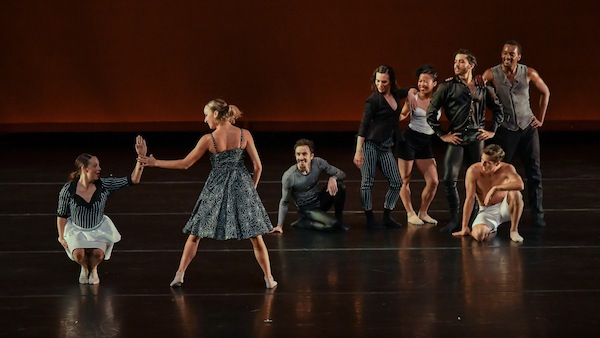
A Million Voices, choreographed by Matthew Neenan, is described as a “lighthearted and whimsical ode to Peggy Lee’s iconic jazz standards.” (photo by Rob LatourRob Latour)
Los Angeles-based BODYTRAFFIC returns to Vancouver for their DanceHouse debut, May 5-6, at the Vancouver Playhouse. The company, which is led by artistic director Tina Finkelman Berkett, will present Mixed Repertoire – A Million Voices, The One to Stay With, SNAP and PACOPEPEPLUTO.
“It is an immense privilege to present BODYTRAFFIC’s DanceHouse debut this spring, which also represents the company’s return to Vancouver since 2015,” said Jim Smith, artistic and executive director of DanceHouse, in a press release. “This is a masterful program of short works that effortlessly showcases BODYTRAFFIC’s singular ability to take on any dance genre, moving from hip hop to ballet to jazz and back again. Beautiful, virtuosic, political, and with a dash of much-needed lightness, this evening of dance will leave audiences breathless and wanting more.”
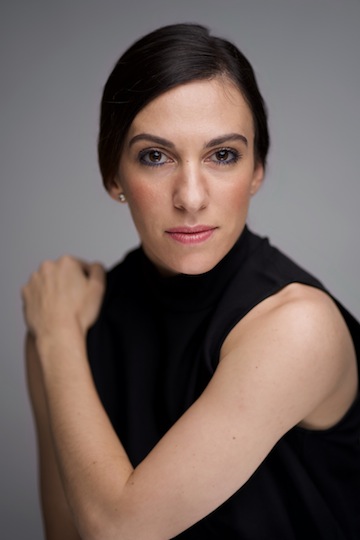
Tina Finkelman Berkett (photo by Guzman Rosado)
“We love coming to Vancouver,” Berkett told the Independent. “The audiences are always so welcoming and so curious. There always feels like a supportive energy for the work we are sharing. I loved that program that we offered back in 2015 [at the Chutzpah! Festival]. Typical to BODYTRAFFIC programming, it was packed full of works by choreographers who I believe in wholeheartedly.”
As for the May program, Berkett said, “The works the company will offer on May 5 and 6 showcase the versatility and virtuosity of our dancers. The program offers singular choreographic voices, some emerging and some established. Baye & Asa and Micaela Taylor are newer voices in our industry and are certainly taking the dance world by storm; I’m so excited to share their works. As always, the program will offer the audiences a chance to enjoy and be entertained.”
According to the press release, the 90-minute show will open with A Million Voices, from Matthew Neenan, which premièred in 2018. “A lighthearted and whimsical ode to Peggy Lee’s iconic jazz standards, this infectious piece featuring seven dancers reminds us that, even during our toughest moments, life is always worth enjoying.”
The One to Stay With by choreographers Baye & Asa was commissioned by BODYTRAFFIC and premièred only just last month. “Inspired by Patrick Radden Keefe’s 2021 book The Empire of Pain, about the Sackler family’s role in ‘Big Pharma’ and the current opioid epidemic,” The One to Stay With is a work for eight dancers. It “tackles ideas of power, greed and deceit, punctuated by a lively score of Russian waltzes and Romanian folk songs.”
SNAP, from Micaela Taylor, which BODYTRAFFIC premièred in 2019, features six dancers in a “hip hop-infused choreography [that] urges audiences to ‘snap out of’ pressures to conform, encouraging us to embrace the individuality of our own selves as well as those around us.”
The final piece, PACOPEPEPLUTO, by Alejandro Cerrudo, which premièred in 2011, features three male dancers, “who each perform an athletically charged solo set to a Dean Martin classic.”
BODYTRAFFIC was co-founded in 2007 by Berkett and Lillian Rose Barbeito. It is now under the sole artistic direction of Berkett, who started her career at Aszure Barton & Artists, with which she became a feature dancer, as well as Barton’s assistant and an instructor.
“I never dreamt of having a dance company,” Berkett told the Independent. “When I was a young dancer, I had a very different idea of what my future would be. I thought I’d join a repertory company – not start one! But life led me to Los Angeles and eventually to launching BODYTRAFFIC to fulfil my dreams as a dancer.”
Before moving to Los Angeles from New York and co-founding BODYTRAFFIC, Berkett was a founding member of Mikhail Baryshnikov’s Hell’s Kitchen Dance.
“Jewish values are a part of everything I do,” Berkett said when asked how her being Jewish influences her outlook and choices. “Family, community, charity, honour, respect, curiosity and a commitment to learning are also central to who I am and the work I do.”
BODYTRAFFIC’s May 5 and 6 shows at the Playhouse start at 8 p.m. Tickets (from $35) can be purchased at dancehouse.ca.
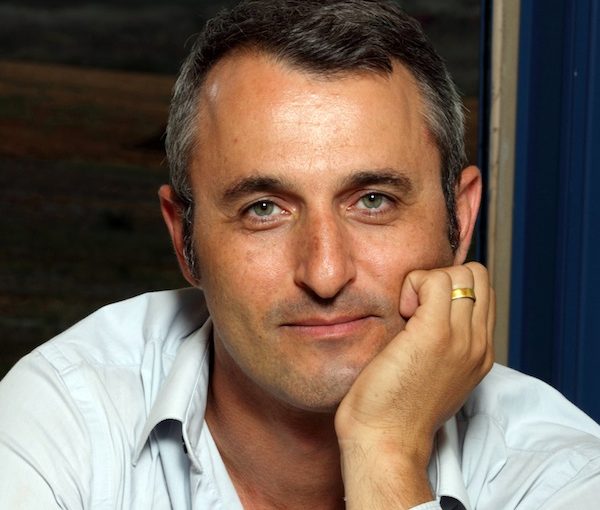
Adi Barokas and her husband Barak during their time in Vancouver. (photo from Adi Barokas)
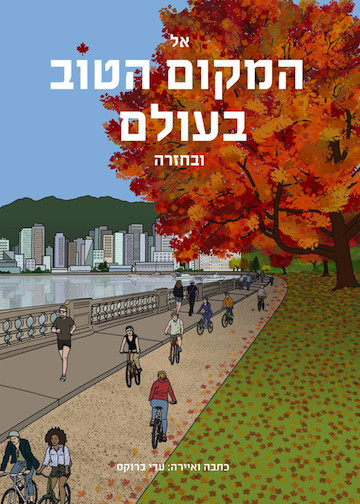
I read a review in an Israeli newspaper of Adi Barokas’ Hebrew-language graphic novel, the title of which translates as The Journey to the Best Place on Earth (and Back). I also read a scathing review of that review on the JI website, written by Roni Rachmani, an Israeli who lives in Vancouver. Disturbed by several aspects of the criticism, I decided to look into the book – and its author and illustrator – myself.
When I made aliyah from Canada in 1975, I had many difficulties acclimatizing to Israel. In reading Adi’s book, it was as though she had written the book I’d always wanted to write about Israel. Her experiences in Canada, which took place three decades after mine in Israel, were decidedly similar.
Aliyah is often thought of as a lofty, spiritual ascent, but, in a practical sense, it is effectively like immigrating to any other country. In the euphoria and joy of making the huge leap, this can be overlooked.
Decades before the internet, cellphones, Skype and WhatsApp, I left my home and family, strongly motivated by Zionist ideals, conveyed to me by my parents’ Israel experience of the 1950s. I longed to live a fuller Jewish life and take part in the developing history of Am Yisrael. Wrapped in a fuzzy cloak of enthusiasm, naïve and wholly unfamiliar with Israeli society, things turned out to be very different than the utopian image I’d envisioned. However, nearly half a century later, I am still grateful to be here.
Adi and her husband Barak met in the mid-2000s. Shortly after they married, Barak was called up to serve in the Second Lebanon War. They wanted to live in a quiet, peaceful society where they could just pursue their lives and careers, so they headed to Vancouver, which is often billed as one of the best places in the world to live. Unfortunately, they met with many unexpected challenges, mostly related to cultural differences. They tried to feel like they belonged, but never overcame feeling like foreigners.
For me, the in-your-face abrasiveness for which Israelis are known was an enormous shock to my more reserved, polite system. In Vancouver, Adi found those Canadian-associated traits off-putting and two-faced.
Adi and Barak were seeking a breather, serenity and space from the intense pace of life in densely populated Israel. With excessively high expectations that everything would be just so, they came to Vancouver. But for them, too, the culture shock was huge. They were not accustomed to so many rigid rules and regulations.
Adi had never lived in such a diverse society and was excited to interact with people of many ethnicities from around the world. It took a long time to catch on to the nuances, the nonverbal cues, of how people in Vancouver socialize – what topics are off limits, for example. Coming from Israel, a very liberal place, where most people freely express their unsolicited opinions, this was challenging.
Adi and Barak found it odd that everything was so quiet and calm in Vancouver. They were used to a lively, noisy society where people mix in close proximity. In Vancouver, everywhere they went, voices were barely audible and, so, they gradually adjusted and lowered their own tone of voice, and limited their conversations to certain topics.
The couple were eager to socialize, especially with their fellow foreign colleagues, with whom they felt more affinity than with Canadians. They initiated get-togethers, extended invitations, but they found everything so formal and stilted and rarely reciprocated. The only safe subjects of conversation were about hockey or the weather, nothing the couple felt was deep or of substance. This hampered their forming close friendships. Their sense of strangeness, that they would never fit in, grew.
On the flipside, schooled in the notion of appropriate table talk in Canada, I would often feel embarrassed at subjects discussed so frankly in Israel. It felt like an infringement on private matters, mostly with regards to money and personal relationships.
In Israel, people stand far less on ceremony, tell others to drop by any time, and mean it. But, to me, these invitations seemed an empty manner of speech. In Hebrew, the word for “to drop by” (tikfetzi) and a less polite version of “buzz off” (tikfetzi li) are the same!
I was baffled when people would ask why I’d come to Israel. It’s obvious to anyone imbued with Zionist and Jewish values that aliyah is a natural step, that Israel is the place to build a future. But, instead of words of praise or encouragement, Israeli peers, if they showed any interest at all, found it amusing that anyone would leave what they assumed was the easy life, to come to what was a troubled society. There was certainly no welcome wagon, no grace period to acclimatize. There were few invitations for holidays or Shabbat. The workplace, where I was often the only non-Israeli, was an even rougher scene – I wasn’t aware of how critical having connections really is, of how offices and organizations operated.
The Journey to the Best Place on Earth (and Back) was written and illustrated by Adi Barokas.
Across the ocean, Adi and Barak arrived with several science degrees under their belts, and had to swim the stormy seas of academic life in a B.C. university. There was some discrepancy between how they saw themselves – as conveying constructive criticism – and what some of their colleagues and acquaintances shared with them. This created awkward misunderstandings, a lack of candid communication and obstacles to their ability to settle in.
The couple had to wade through seemingly endless red tape through bureaucracy channels. They found it infuriating to jump hoops with indifferent, intransigent civil servants, who never saw them as individuals.
I can completely relate, as I have had to navigate mountains of paperwork, all in Hebrew, which, when I first arrived, was at an afternoon Hebrew school level. English was not widely spoken, and clerks lacked any service orientation – there was scarcely any eye contact. I miss even a perfunctory exchange of pleasantries, which, in Israel, is considered a waste of words. But Israel has come a long way and there is a marked improvement; as well, much can be done online. That’s not to say everyone is pleasant, but at least civil.
Barak and Adi became increasingly frustrated in Vancouver and it began to affect their mental and physical health. They became discouraged, falling into despondency, and their lives were out of their control. Under steadily increased pressure, their goals seemed to be slipping from their grasp, yet they were obligated to stick it out. They would have loved to have returned to Israel much sooner, but honoured their academic commitments, which were critical to enabling Barak to advance in his career in cancer research. Competition is fierce in academia but, eventually, Barak was offered a position at Ben-Gurion University, for which they are grateful.
Adi asked me why I stay in Israel. The answer is that, despite not knowing the ropes initially, having had to master Hebrew and the Middle Eastern mentality, the reasons for coming remain steadfast: unwavering belief in Zionist ideology and the privilege of fulfilling the mitzvah of settling in Eretz Yisrael. Still reserved and well-mannered at my core, I can and will tell someone off in Hebrew if they cut in front of me in line. And driving has forced me to become assertive.
Life in Israel has made me resilient, not automatically accepting of everything that’s dished out, and no longer complacent. My children and grandchildren have none of my social concerns and are rarely bothered by the things that irk me. They do recognize and understand that it hasn’t been a walk in the park for me. They greatly benefit from knowing English, which I spoke at home to my kids and which I also speak with my grandchildren.
Distance has impacted relationships with my relatives, who are all in Canada, and I miss them. But, in Canada, families commonly live far apart and visit only a few times a year. That’s just the norm and how I grew up, too. In Israel, we belong to a close-knit clan, with whom we celebrate holidays and other occasions; regularly helping one another is everything here.
Living in Vancouver, Adi was frustrated by the positive-thinking approach that was all the rage, but didn’t work for her. She needed to be able to share her concerns openly. She wanted practical advice, instead of being brushed off all the time, with people either trying to divert her attention or change the subject. At least the experience forced her to become more self-reliant.
Adi began to delve into other areas beyond academia, having been turned off the sciences for good. She tapped into her creative side, got her driver’s licence, went swimming, started writing. Both she and Barak took up yoga and meditation.
Adi sought therapy and finally found a therapist who was helpful, which contributed to Adi’s bouncing back from within. Time spent in nature, and developing her writing and artistic skills, offered solace.
It was during this process of self-discovery and self-care that the couple decided to start a family, and they had a son.
When an offer came for Barak to take up a post in Leicester, England, it meant once again picking up and leaving, and having to learn their way around a new place. But, it appealed to them, as Leicester was off the beaten track and the small city ambience appealed to them. As well, the move brought them closer to home. Instead of the 10-hour time difference, they were only two hours behind Israel time-wise and a five-hour flight away.
Outside Israel, Jews tend to belong to communities where they gather to share religious and cultural activities and strengthen their bond with Israel. For me, coming to Israel to live in a predominantly Jewish society was enlightening, yet it wasn’t easy to understand the many different customs. I enjoy the Jewish character and vibe of Israel in many facets of the public sphere. Life revolves largely around the Jewish calendar, especially the celebration of Shabbat and festivals. What binds us is our unique, incredible history and heritage.
Had I been better prepared, come with more defined goals, and more socialized in a Jewish environment, I might have fared better. Even when the going was rough, returning was never an option, however. I am living a meaningful life in Israel, where I have mostly resided in the Jerusalem area.
We have all witnessed Israel evolve into a modern, advanced country, making huge strides in every realm imaginable. On occasional visits to Canada, I enjoy the familiar scenery, the cold, the language and pleasantries, though a noticeably different mindset from the locals is apparent.
Immigration is a tremendous and profoundly complex undertaking. It entails much uncertainty and many twists and turns. No matter how much any immigrant plans, one never knows how things will unfold. It is an arduous process that demands full commitment with every fibre of one’s mind, body and soul. Fellow ex-pats can only offer so much support and help. The individual immigrating has to go through the process on their own terms.
Adi and Barak have since returned to Israel. Over a total of eight years away, they learned a great deal about themselves, individually and as a couple. Growing up in Israel, they naturally identified as Israelis, their Jewish identity cultural. While abroad, they realized that they were viewed by others not only as Israelis, but as Jewish, as a minority. This heightened their awareness, added a new dimension.
Time away has changed them, considerably, and they returned to a somewhat changed Israel. They have settled on a kibbutz 20 minutes from Be’er Sheva, where they and their now two children enjoy spectacular scenery in the Negev, a warm climate and a caring community. They have found their home right here, at home.
Adina Horwichwas born in Israel to Canadian parents. In 1960, the family returned to Canada, first living in Halifax, then in a Montreal suburb. In 1975, at age 17, Horwich made aliyah, and has lived mostly in the Jerusalem area.
Israeli writer Eshkol Nevo, whose latest novel is The Last Interview, opens the JCC Jewish Book Festival Feb. 20. (photo from JBF)
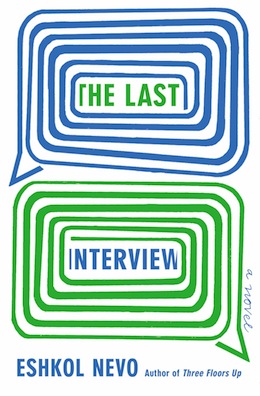
This year’s Cherie Smith JCC Jewish Book Festival opens online Feb. 20, with Israeli writer Eshkol Nevo, whose latest novel, The Last Interview, brilliantly sprinkles facts amid a lot of fiction and interjects humour into much pathos. It entertains, of course, and, as all good books do, it raises many salient points that will get readers thinking – and feeling – about, in this case, storytelling, marriage, truth, parenting, friendship, lies, family, identity, media, politics and relationships. So, life.
In The Last Interview, the protagonist, who is suffering from a chronic form of depression and writer’s block, responds to an interview sent to him “by an internet site editor who collected surfers’ questions.” He later notes, “It was supposed to be only an interview, nothing else, but slowly – it seems I can’t do it any other way – I’ve been turning it into a story. I was supposed to leave Dikla and the kids and the dysthymia out of it. And all of them are in it.” This inability to stop himself from telling stories about others in his published writing is an Achilles’ heal in his personal life, but a boon to his professional one.
His interview answers are sometimes short and direct:
“How do you manage to deal with the loneliness that’s part of writing?
“I don’t.”
But, most often, they are quite involved, going into more detail, retrospection and introspection than the questioners would ever have expected. We learn about his failing marriage, but also its sweet beginnings. We are privy to his feelings about his best friend, who is dying of cancer. We see how he struggles to be a good father to his three kids. We hear some of his travel adventures. We witness his attempts to extricate himself from an unwanted speech-writing gig. We share his discomforts with the Israeli-Palestinian situation. We find out a bit about his motivations for writing:
“If I don’t write, I have nowhere to put my memories, and that’s dangerous. I have a problem. I don’t forget anything. My forgetting mechanism is completely screwed up. All the partings, the deaths, the unexploited opportunities. They are all trapped in my body, and writing is the only way to release them … if I don’t occasionally unburden myself of the weight of some of those memories, I won’t be able to breathe. No air will enter my body. Or leave it.”
Part of his current creative block – “I was supposed to be writing a novel this year. Instead, I’m writing answers to this interview” – is that he and his wife are becoming more distant. “I can’t say that I became a writer to win Dikla’s heart, but I can assume that with another, less stimulating woman, I wouldn’t be writing.” He notes that, since his first letter to her, “In fact, everything I’ve written since then, eight books, is one very long letter addressed to her.” At the end of a lengthy response to the question, “All of your books are written in the same style. Have you ever thought of writing something completely different? Maybe science fiction? Fantasy?” he says that genre wouldn’t make any difference: “In any case, it would turn out that, once again, I wrote about an impossible love.”
While the overall mood of The Last Interview is solemn, there are many funny parts. One especially hilarious section is the writer’s response to the question, “When will they produce a film adaptation of your latest book? When I read it, I could actually imagine the movie.” As the writer shares the details of an encounter with a filmmaker of a similar opinion, the conversation cynically – but with the ring of truth – moves from flattery to the many ways in which the movie will ultimately be unrecognizable from the book, yet concluding nonetheless with the filmmaker enthusing, “The minute I finished it, I said to my wife: This is a movie!”
With a writer as intelligent, sensitive and amusing as Nevo and an interviewer as experienced as the Globe and Mail’s Marsha Lederman, the book festival’s opening event should be well worth attending. For tickets to it, and for the full lineup of events, visit jccgv.com/jewish-book-festival. The festival runs to Feb. 25.

 Schwartz’s unique history encapsulates the overarching idealism of many in her generation. Her grandparents were “impoverished Jewish immigrants who had fled the hardships and pogroms of Lithuania and Poland” to give their kids a better life in the United States, so their grandchildren also were well set up for material success. The grandchildren – Schwartz and her peers – had an idea but no real understanding of the sacrifices that had been made to achieve the comfortable lifestyle they rejected, because of the racial and social inequality they saw around them, the environmental degradation and the war in Vietnam.