Skip to content
  • Home
  • Subscribe / donate
  • Events calendar
  • News
    • Local
    • National
    • Israel
    • World
    • עניין בחדשות
      A roundup of news in Canada and further afield, in Hebrew.
  • Opinion
    • From the JI
    • Op-Ed
  • Arts & Culture
    • Performing Arts
    • Music
    • Books
    • Visual Arts
    • TV & Film
  • Life
    • Celebrating the Holidays
    • Travel
    • The Daily Snooze
      Cartoons by Jacob Samuel
    • Mystery Photo
      Help the JI and JMABC fill in the gaps in our archives.
  • Community Links
    • Organizations, Etc.
    • Other News Sources & Blogs
    • Business Directory
  • FAQ
  • JI Chai Celebration
  • JI@88! video

Recent Posts

  • Hateful messages intensify
  • Creating entrepreneurs
  • Wrong choice to host Piker
  • Attack on Jewish kids
  • Multiple benefits of a break
  • Dialing up the perfect thriller
  • Empowerment & more
  • Songs in war of peace
  • Successful trip to Cuba 
  • Tackling antizionism head on
  • Thinking of leaving Canada?
  • Kindness as a matter of fact
  • Personal stories, vital lessons
  • Connecting generations
  • Vancouver to Vienna
  • Recipes a form of resistance
  • Community milestones … February 2026
  • Generations … It’s all yours!
  • נתניהו לא מתבייש להאשים את ביידן באחריות להרג חיילים ברצועת עזה
  • Last hostage home
  • New bill targets hate crimes
  • Concerning actions
  • Recipes not always required
  • Survivor urges vigilance
  • Seniors profoundly affected
  • Farm transforms lives
  • Musical legacy re-found
  • A range of Jewish literature
  • A concert of premieres
  • Variety telethon on Feb. 22
  • Victoria club’s many benefits
  • Avodah dedicated to helping
  • Artists explore, soar, create
  • Life’s full range of emotions
  • Community needs survey closes March 29
  • Jerusalem marathon soon

Archives

Follow @JewishIndie
image - The CJN - Visit Us Banner - 300x600 - 101625

Tag: social commentary

Artistic visions of hope

Artistic visions of hope

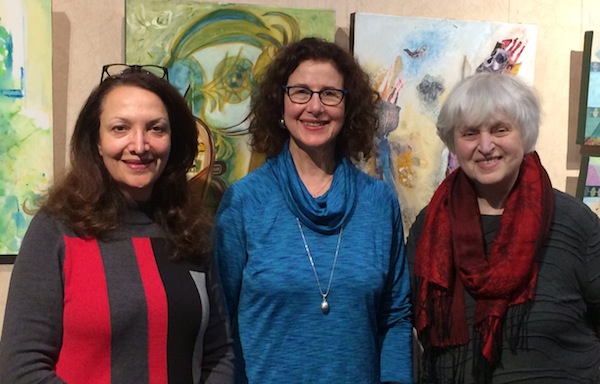
Left to right, Three Echoes artists Sorour Abdollahi, Devora and Sidi Schaffer. Their exhibit, Hope and Transformation, is at Amelia Douglas Gallery until Feb. 29. (photo from Three Echoes)

Connected by similar values and inspirations in their creative work and in their lives more generally, Sidi Schaffer, Sorour Abdollahi and Devora are longtime friends. Their fifth exhibit together – as the informal collective Three Echoes – is called Hope and Transformation. It is at the Amelia Douglas Gallery at Douglas College in New Westminster until Feb. 29.

“Art transcends the limitations of time, space, language and cultural background,” said Devora in her written remarks, prepared for the exhibit’s opening Jan. 16, which was postponed because of the snow, and given Jan. 21. “The echoes from within spill over onto the canvases,” she said. “Together, our works create a dialogue of hope and transformation.”

Devora told the Independent that the name for the exhibit came “through talk and discussion between the three of us in reflecting on our individual and collective journeys and where we found ourselves, and the world, at that moment.”

“Today, there is a lot of anxiety about globalization and migration,” Abdollahi said. “As an immigrant artist, my art deals with connections between cultures and hybridity. Therefore, my works might help serve as a bridge and tell the immigrant story.”

Abdollahi was born and raised in Iran, where she graduated with a diploma in Persian literature from Yazd University and a bachelor’s in fine arts from the University of Art in Tehran. In Vancouver, where she settled 20 years ago, she studied at Emily Carr University of Art and Design. She writes in the exhibit catalogue that her Iranian heritage and Canadian experience “have had a tremendous influence on my works’ subject matter, dealing with the mediation between the modern and the ancient, the old and the new, the West and the East.”

The artist uses collage, a multi-layering technique and mixed media. “My works show the relationship between culture and environment and migration,” Abdollahi explained to the Independent. “Our environments are changing both internally in our mind and externally, and my works illustrate this change. My works create negotiation between different cultures and societies.”

Schaffer also started her fine arts education in her birth country, Romania. In Israel, she received a degree in art education and taught in the school system for more than a decade. When she came to Canada in 1975, she studied at the University of Alberta, where she majored in printmaking and painting. Initially focused on abstraction, her work has become “more integrated, combining abstract and figurative forms,” she writes in the catalogue. “Now I am continually exploring new possibilities with mixed media, a combination of print, drawing, painting and collage. Important for me is the visual poetry, the relationship of form, space, colour and light. Some of my works in this show are a combination of collages of different things from nature and painting; others are collages of my own imagination.”

“I am an optimist and also I am amazed about the continuous transformation in nature around me,” Schaffer told the Independent. “I combined my love and respect for the beauty of flowers and leaves, surrounding them with hope, and new imaginary landscapes. In a way, I give the dry flowers a new life, bringing them out from the pages of old books.”

As for Devora, she told the JI, “What gives me hope is my relationship with the Divine – that there is no separation, that we are all connected and made of stardust, that we are all on an unfolding journey of being together. I attempt to express that emotion onto the canvas.”

For Devora, art has the power to transform the viewer when the viewer can hear her work speak to them from their own experience. “At the opening,” she said, “the Douglas College students from two classes – one poetry class and one art history class – gathered around and engaged with all three of our works, asking questions, wanting to understand the process, the intention and how they could relate from their own lives to what they were seeing.”

Normally, only the art history students attend each artist talk. However, after Devora shared that the Zack Gallery at the Jewish Community Centre of Greater Vancouver hosts Pandora’s Collective poetry nights, where members of the collective create works inspired by the art, the Amelia Douglas Gallery invited the poetry class, as well.

Growing up in Berkeley, Calif., where she earned a master’s at California School of Professional Psychology, Deborah Ross does all of her creative work under her maternal grandmother’s name, Devora, in honour of her grandmother, who was murdered in the Holocaust. “Her spirit gives me the strength and confidence to create,” said the artist in her remarks for the exhibit.

Devora, who now lives both in Vancouver and on Salt Spring Island, came to Canada in 1993. She has studied art at Emily Carr, Langara College and elsewhere. “My artwork reflects the love I have for the creative process and exploration,” she writes in the exhibit catalogue. “I am fascinated by the inner world of emotion, dream, metaphor and story and strive to illuminate both the universal and personal by bringing them onto the canvas.

“My latest works explore the interplay and continuum between abstract and representational images of landscapes and figure, and a fascination with the surreal, in mixed media combining acrylic and collage.”

In her remarks for the exhibit opening, Devora explained, “My art reflects a search for understanding and clarity about my personal and ancestral history and the world. My experiences inform my work as I go inside and bring them onto the canvas. I endeavour to transform darkness into the light of hope. I am interested in what is hidden and how it informs what is revealed.”

She noted that she, Abdollahi and Schaffer “turned to esthetics as a way to focus and navigate our journey.” And she expanded on this concept. “Through the lens of esthetics combined with the common immigrant experience and effects of war and displacement,” she said, “the three of us have managed to bridge all other divides: language, ethnicity, culture, religion and country of origin. Our childhood environments and experiences could not have been more different on the surface and yet the foundations of connection and similarity were already being laid down, established through the development of the lens of sensitivity to beauty in the world and compassion for the human experience.

“Our ideal, of different cultures living in harmony, is reflected in our own personal experiences, in which intimate exposure to the world of ‘the other,’ unearths commonalities and gives rise to a greater depth of understanding about our own lives.”

She concluded, “In closing, I would like to quote Sorour, as Sidi and I feel that her words speak for all three of us: ‘In my friendship and collaboration with Sidi and Deborah, I see an opportunity to explore and express my own culture, but also to relate these themes to other cultural experiences – recognizing the echoes of each other in our works and our lives. My works side by side those of my friends’ works create a dialogue and negotiation which hopefully provides the viewer with a different vision of the world – one which is borderless, free and peaceful.’”


Format ImagePosted on January 31, 2020January 28, 2020Author Cynthia RamsayCategories Visual ArtsTags art, Devora, immigration, Sidi Schaffer, social commentary, Sorour Abdollahi, Three Echoes
Novelist explores Trump era

Novelist explores Trump era

Gary Shteyngart opens the Cherie Smith JCC Jewish Book Festival on Feb. 8 at Rothstein Theatre. (photo by Brigitte Lacombe)

“You want to know the first rule of running a billion-dollar-plus hedge fund?” Lake Success protagonist Barry Cohen recalls telling the high school boys who invited him to speak to their Investors’ Club. “Don’t sweat the metrics. We’re not really about the numbers. Do you know what we are? We are a story. Hedge funds are a story about how we’re going to make money. They’re about being smart, gaining access, associating with someone great. You. You are someone smart enough to make others feel smart. You are bringing your investors something far more elusive than a metric. You’re bringing them the story of how great you’ll be together.”

Through the character of Barry Cohen, on his journey to what would be self-discovery if he were at all self-aware, author Gary Shteyngart explores the societal circumstances in the United States that led to the election of President Donald Trump – and could well do so again.

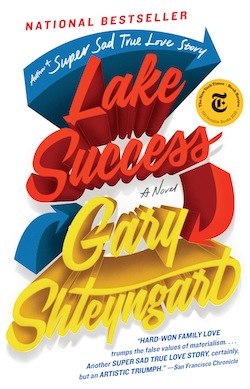
Shteyngart opens the Cherie Smith JCC Jewish Book Festival on the night of Feb. 8. In conversation with CBC’s Lisa Christiansen at Rothstein Theatre, he will no doubt talk about his latest novel, Lake Success, about a hedge-fund manager who flees his wife and young child, who has recently been diagnosed with severe autism, as well as a Securities and Exchange Commission investigation into his financial dealings.

Barry is stuck in a childlike state. He had a difficult father and his mother was killed in a car crash, a death Barry witnessed and which haunts him. Barry yearns for affection; he cannot regulate his emotions. He believes himself to be a self-made man and he is constantly coming across people he thinks would benefit from his mentorship, from fellow fund managers to a poor black youth he encounters on his travels to his first girlfriend, with whom he is trying to reconnect – hence, the bus trip. He is trying to find her, in the hopes of rekindling that relationship, and all the lost hope it encapsulated, while disregarding all the relationships – personal and business – he has left behind in New York City.

image - Lake Success book coverThe main female characters in Lake Success – Barry’s wife, Seema, and his former girlfriend, Layla – are not as well-constructed as is Barry. Despite a sympathetic portrayal, it is hard to understand what anyone would see in Barry, yet he manages to attract smart and beautiful women. The novel provides some explanation as to why Seema would marry him, including family expectations. And, after meeting him for the first time, she recalls, “she went home and Googled Barry’s net worth and found it comforting. A man that rich couldn’t be stupid. Or, Seema thought now, was that the grand fallacy of 21st-century America?” So, she thought she was connecting with an intelligent and wealthy man, but how Barry continues to be an attractive prospect to women (and men) after he cowardly runs away from his responsibilities and is nearly penniless is a bit of a mystery.

For some readers, Shteyngart might come down a little too easy on the one-percent, as exemplified by Barry, Seema and the few people we meet in their realm. When the Jewish Independent asked the author why it was important to imbue the character of Barry with humanity, Shteyngart said, “Books about inhumane characters are not fun to write. Imagine an entire novel set from Trump’s point of view. Eat burger, get angry, eat burger, get angry. It’s just not 330 pages worth of material.”

That is not to say that Shteyngart is condoning the lifestyle of the ultra-rich; in fact, quite the opposite, though he does so with seeming resignation.

“Without giving too much away for the new reader,” he said, “Barry does change. Somewhat. Slightly. But the damage that has been done to the country socially and politically by Barry-like oligarchs is not going to go away, even if the next election ends the so-called Trump Era.”

While Lake Success doesn’t offer insight into how the divisions in Trump’s United States could be repaired, Shteyngart’s acerbic wit and astute observations offer an entertaining read that will hopefully elicit readers’ introspection about our own privilege and identities, how we define and carry ourselves in the world. Both Barry and Seema have a conflicted relationship with their cultural heritage; Barry his Jewish, Seema her Tamil.

As Barry holds his three-week-old son in his arms – long before the autism has been diagnosed – “he whispered through all his agnostic lapsed-Jew bullshit, ‘Please, God, just don’t do anything to him, okay? My sins are my own.’”

Later in the novel, on the bus as it enters Louisiana, Barry overhears a conversation between two white men, one an aspiring preacher who declares hatred of “any kind of ignorance,” then goes on to explain why “they nailed Jews to the cross” and that “Muhammad was killed, because he couldn’t accept Jesus Christ as permanent.” At that moment, “Barry realized that the man was now looking at him. And also that he was a Jew. He hadn’t really thought of being Jewish since he was in grade school. But he did now.”

Even later, Barry would again look at his heritage differently, considering how it could be passed on to his son. For the most part, though, Barry is perceived as a white male throughout the novel.

“Yes, it’s very strange,” said Shteyngart about being Jewish in America. “I was being interviewed by a Jewish intellectual who was trying to convince me that we weren’t white. Which is oddly enough the talking point of the neo-fascist right. In any case, the feeling that Jews were a part of the American mainstream – think Seinfeld – has been badly shaken both by the physical attacks against Jews and by the general feeling that the country is now being run as an exclusive enclave for straight white Christian males with the occasional sprinkling of Sheldon Adelson.”

Lake Success is a provocative read with some brilliant one-liners, such as the description of neighbours in their building, whom Barry hates, as being “so featureless, they could have come with the hallway,” and, when he faces difficulty becoming a writer, Barry concludes, “He was a damaged person, but not damaged enough to make a life out of it.”

The Jewish Book Festival runs to Feb. 13 at the Jewish Community Centre of Greater Vancouver and other venues. For the full lineup, visit jewishbookfestival.ca.

Format ImagePosted on January 24, 2020January 22, 2020Author Cynthia RamsayCategories BooksTags Cherie Smith JCC Jewish Book Festival, Gary Shteyngart, humour, Lake Success, novelist, social commentary, Trump
Chutzpah! hosts Bernhard

Chutzpah! hosts Bernhard

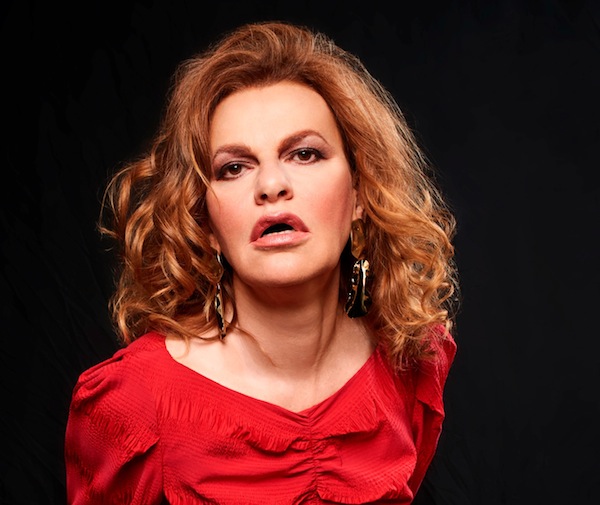
Sandra Bernhard is at the Vogue on Halloween night, as part of the Chutzpah! Festival. (photo by Brian Ziegler)

“When I was a little kid, I had three older brothers and I got a lot of attention for being cute and funny, and I’ve always had an ability to comment on situations as they unfolded in front of me,” said veteran performer Sandra Bernhard in a phone interview with the Jewish Independent. “I think that’s what kept it going all these years – I find it entirely hilarious when you’re in the middle of something and you’re able to pull it apart and bring the most humour out of it, or the most outrage, and that’s always been the most interesting part of what I do.”

Bernhard is bringing her critically acclaimed show Quick Sand to the Vogue Theatre on Oct. 31 as part of the Chutzpah! Festival, which runs Oct. 24-Nov. 24. The comedian, actor, author and radio host is known for her outspokenness. She said it’s second nature for her to say what’s on her mind. “By being funny and being a character, which I’ve always been,” she said, “that gave me the access to say things that other people wouldn’t say necessarily, or that wouldn’t be heard.”

Bernhard’s daily radio show, Sandyland, which is on SiriusXM’s Radio Andy channel (created by Andy Cohen), earned her a Gracie Award, an honour given by the Alliance for Women in Media to “recognize exemplary programming created by women, for women and about women in all facets of media and entertainment.” Bernhard also stars as Nurse Judy in the award-winning, boundary-pushing show Pose on FX Networks, about “the legends, icons and ferocious house mothers of New York’s underground ball culture, a movement that first gained notice in the 1980s.”

Bernhard has countless film and television credits, has created and performed several one-woman shows, recorded a few albums and performed with or opened for many artists. She also has written three books.

While she knew from a young age that she wanted to be a performer, it wasn’t until her late teens that the goal started to become a reality.

“I moved to L.A. in the mid-’70s, when I was 18, 19,” she said. “I became a manicurist in Beverly Hills, so I had a day gig, but I didn’t really know how I was going to jump into the waters, because I also wanted to be a singer. I really wanted to be an entertainer, the whole package.

“And then I met up with a group of friends and they thought I was hysterical and then there was this woman I met who, I did her nails and she was a cabaret singer and she would go to the open mic nights and she said, ‘You’re really funny. I know you want to sing, but put your material together and I’ll take you to these open mic nights.’ She took me to one and then I met my friend Paul Mooney and my friend Lotus Weinstock the first night I got up and they took me under their wings. And that’s how I started – I literally fell into it, because I was a natural, and then I started doing the hard work, which was getting up night after night after night to do my act, and I honed my act and the material and then, eventually, I got good at it.”

One of the reasons she remains popular and her material fresh is because she keeps working at it, “finding different ways into it. For me,” she said, “the most important thing is being as authentic as I can, year to year, day to day, because you do change, you evolve as a person, you want to peel the layers of the onion away and get deeper into your core as an artist, as a performer, and I think that’s what continues to inspire you and make you a better performer.”

Describing her style as “edgy, funny, strong, no nonsense, but funny nonsense,” she said, “I don’t feel like I have to really temper anything because you shed your skin as you go along, and certain things just don’t work anymore.”

Born in Flint, Mich., and raised in Scottsdale, Ariz., Bernhard was bat mitzvahed, but, she said, “My father, I don’t think he related to being Jewish much at all, except maybe culturally, and my grandparents – my grandfather went to shul every day but I think that was a little bit later in life. When he came over here from Russia, everybody was busy trying to make a living. And, of course, people ended up in some small towns here and there, and you didn’t always have time for your religion and your traditions.”

Nonetheless, Bernhard said, “I find a certain amount of meditative escape just going to Shabbat and hearing the music and the songs I grew up with, and I like the community. Whether it’s the High Holidays or staying for kiddush and eating a bowl of cholent, there’s something very visceral about it. It connects me with who I was as a kid and my grandparents…. There’s all that emotion, it’s vivid and visceral and it’s just a nice place to calm down and go into and have a little bit of a break from the day to day.”

Saying that she’s “thrilled to be coming back to Vancouver,” Bernhard said the Oct. 31 performance will be “a fun night.” Accompanied by the Sandyland Squad Band, she will combine music, comedy and social commentary in Quick Sand, which, she said, offers “endless amounts of room” for her to go off script.

“I’m always prepared to jump off if something happens or inspires me or the thought process, my mind, and that’s the way it’s always been for me,” she said. “But I also have very set pieces that you want to be able to fall back on and have that continuity to the show, so that you’re not standing up there just talking about a bunch of silliness. I want people to walk away having been entertained.”

For tickets to Bernhard and other Chutzpah! shows, visit chutzpahfestival.com.

Format ImagePosted on October 4, 2019October 2, 2019Author Cynthia RamsayCategories Performing ArtsTags Chutzpah!, comedy, Sandra Bernhard, social commentary
The first Shtisel book

The first Shtisel book

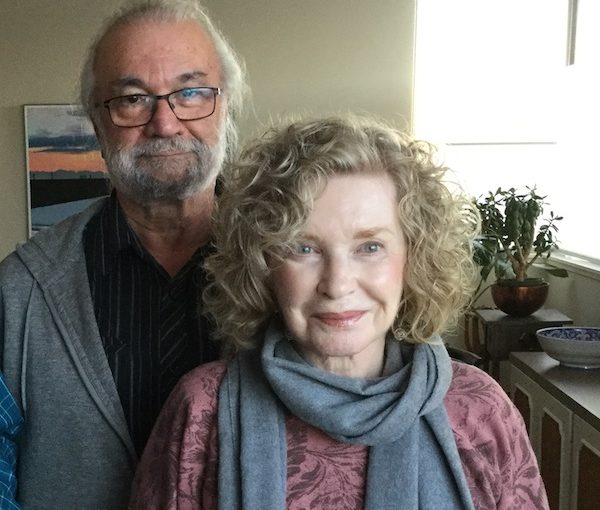
Maurice Yacowar and wife Anne Petrie. (photo from Yacowars)

Shtisel, the unlikely yet addictive hit television series about a Charedi family in Jerusalem, is now the subject of a new book, Reading Shtisel: A TV Masterpiece from Israel, an episode-by-episode analysis penned by Victoria writer and critic Maurice Yacowar, which he will share at the Jewish Community Centre of Victoria June 2.

Yacowar, a retired film professor, began his project in December 2018, as Netflix started airing the series that has become de rigueur viewing among Jews and non-Jews alike. As with many of the show’s aficionados and binge watchers, he was hooked, but his is the only book on Shtisel written thus far. The book’s first printing took place in March.

From his perspective, the show transcends what some may initially dismiss as soap-operatic tendencies. Not a character, not a scene, not an action in the two-season, 24-episode show is out of place, according to Yacowar.

“People (and animals) come and go, some questions may seem unanswered, but those elements are not relevant to the story. Nothing in the show is superfluous or unnecessary. Everything has a reason. We enter their domain, and we leave it, just at the right time,” he recently told the Jewish Independent at a Victoria restaurant.

Hence, the use of the word masterpiece in the book’s subtitle. “People from all cultures are able to relate to the drama and the compassion,” Yacowar explained.

“What’s more, no character stands for a safe idea,” he added. Shulem, the patriarch of the Shtisel family, is the most confounding of them all. At times, he is bullying to the point of being dictatorial; at other times, gentle and caring.

All involved do things that are not “in character,” said Yacowar, which takes viewers along various side streets or smaller stories within the story. There is the studious Zvi Arye, who, after watching a video taken in childhood, laments having had a shot at singing stardom thwarted; the scheming Lippe, who, for a time, abandons his family, though exhibits moments of great kindness and affection to those closest to him; and the show’s least sympathetic character, Nuchem, who doesn’t want his daughter, Libbi, to marry a deadbeat artist, aka his nephew Akiva, Shulem’s son.

Throughout the series are connections to the world outside the strict ultra-Orthodox confines of the Geula neighbourhood in Jerusalem, said Yacowar. Grandmother Malka is fixated by American daytime dramas, Giti’s need for money after her husband departs for Argentina leads her to seek work as a housekeeper for a clothing store manager, and cellphone use among this set of Charedim is ubiquitous.

It is Akiva’s desire to be an artist, though, which perhaps represents the greatest struggle between the secular and the religious in the show, not to mention the personal psychological conflict for the character himself. There are times, particularly those when he is immersed in his art, that Akiva appears to shift seamlessly from one world to another. And others, such as the scene where Akiva is presented with an award and funds for his art at an elite gallery, when the distinction between the pious Shtisel family and mainstream Israeli society could not be more pronounced.

Akiva, Yacowar pointed out, manages to rise in his battle and become his own person as the series concludes at the end of Season 2, no longer shackled by the vagaries of his father’s moods. In contrast, Shulem’s flaws – his conceit and ego, his inability to accept his son’s success in that other world – are on full display.

Yacowar doesn’t expect everyone to agree with his assessment of the series. “Other critics may well choose different points of emphasis, different connections and implications in phrase, situation or device,” he writes. “That’s the beauty, magic of connecting with a drama of such extraordinary richness and complexity.”

There is one point, however, on which he does expect readers of his book to be in agreement: “Let there be the illumination of a Season 3 – but only from the same creators and the same depth and integrity.”

Yacowar has written more than a dozen books on subjects ranging from the films of Alfred Hitchcock to the comic art of Mel Brooks and Woody Allen. He has written two books about The Sopranos and a humorous work, Mondays with Moishe.

Reading Shtisel: A TV Masterpiece from Israel is available online and at Congregation Emanu-El and the JCC of Victoria. Yacowar’s June 2 presentation at the JCC will start at 11 a.m.

Sam Margolis has written for the Globe and Mail, the National Post, UPI and MSNBC.

Format ImagePosted on May 24, 2019May 23, 2019Author Sam MargolisCategories TV & FilmTags JCCV, Maurice Yacowar, Shtisel, social commentary, television, Victoria

Posts pagination

Previous page Page 1 Page 2 Page 3
Proudly powered by WordPress