Skip to content
  • Home
  • Subscribe / donate
  • Events calendar
  • Business Directory
  • FAQ
  • News
    • Local
    • National
    • Israel
    • World
    • עניין בחדשות
      A roundup of news in Canada and further afield, in Hebrew.
  • Opinion
    • From the JI
    • Op-Ed
  • Arts & Culture
    • Performing Arts
    • Music
    • Books
    • Visual Arts
    • TV & Film
  • Life
    • Celebrating the Holidays
    • Travel
    • The Daily Snooze
      Cartoons by Jacob Samuel
    • Mystery Photo
      Help the JI and JMABC fill in the gaps in our archives.
  • Community Links
    • Organizations, Etc.
    • Other News Sources & Blogs
  • JI Chai Celebration
  • JI@88! video

Recent Posts

  • Federation now across BC
  • Israel fighting for its existence
  • Deal strengthens Iran
  • Patriotic belonging diminishes
  • A campaign to engage
  • Upstanders’ first live event
  • Responding to Carney
  • Having your own home
  • Music a family tradition
  • Musical to warm heart
  • Community milestones … June 2026
  • Sharing her passion for Israel
  • Or Shalom reopens its doors
  • JFS from past to future
  • Need holistic approach
  • Sharing stories, advice
  • Journalist shares fears
  • Skills to live together
  • Road to independence
  • Cutting grass with scissors
  • Zionism as a solution
  • Deceit, desire & the divine
  • Reclaiming sacredness
  • Creative project ideas
  • Summer squares and cobbler
  • Thou shalt … summer commandments
  • Legal help for students
  • Revisiting myth of Lilith
  • Wrong person rebuked
  • Canada’s mixed messages
  • Questions for museum
  • Symposium on antizionism
  • Making soccer political
  • CJPAC lauds Pulver’s impact
  • City recognizes Vrba’s legacy  
  • Organ donation saves lives

Archives

Follow @JewishIndie
image - The CJN - Visit Us Banner - 300x600 - 101625

Tag: science

Happiness thoughts

Summertime and the living is easy! Of all the seasons, probably summer is most closely associated with happiness. Vacation, camping, family time, celebrations, picnics: these are activities that we associate with happiness.

In Western culture, individual happiness is often considered the primary goal of life. What parent hasn’t begun a sentence with, “As long as you’re happy…”? In many other societies, happiness is subordinated to family needs, communal obligations or other less individualistic pursuits. But the pursuit of happiness has a long history in Western culture, codified most notably in the United States Declaration of Independence as an “unalienable right.”

Most of us probably enjoy our happiness without overthinking it. But an Israeli guru of happiness will be in Vancouver later this month and he has thought a great deal about the subject.

Prof. Yoram Yovell is a brain researcher, psychiatrist and psychoanalyst with a PhD in neurobiology. He is the author of bestselling books and is a regular face on Israeli TV.

The United Nations ranks countries on a scale of happiness, topped by the Scandinavian countries, Switzerland, the Netherlands, Canada, New Zealand, Australia – and then Israel.

For people who have not been to Israel or who lack an understanding of its culture, it may be a surprise to find that a country whose history has been so wrapped up in violence and conflict would produce a population that is collectively as happy as almost any society in the developed world. There is, however, an explanation.

Stability, basic freedoms and an economy that allows for individual financial comfort or success are among the baseline requirements for societal happiness, notes Yovell. Things like clean water, a social safety net and an effective, accessible healthcare system are also on the list. In many cases, it is also critical to have a sense of cohesion and shared purpose.

While Israelis may no longer be as united as they were in the days of the early chalutzim, the requirement of military or national service plays a factor in building social cohesion and making individuals feel part of a larger whole. For many, the ability to live in the world’s only Jewish state is another factor that leads to shared purpose and, indirectly, to happiness. (It is worth noting that, although Israeli Arabs report being less happy than Jewish Israelis, their happiness levels are higher than Arabs in neighbouring countries.)

Economic challenges in Israel – inflation, high cost of living and such – do not ultimately have a huge influence on happiness levels, Yovell maintains. Once the most basic needs are met, incremental differences in income or GDP have little impact.

We could all take some time this summer to reflect on the things that make us happy. In so many cases, the things that make us happy are precisely the things that make our society better – volunteerism, engagement and participation in our community, getting outside (especially if it’s sunny!), spending time with family and friends. These are things we could all do well to be more conscious of, be grateful for and try to consciously encourage in our lives.

Posted on July 12, 2019July 10, 2019Author The Editorial BoardCategories From the JITags happiness, Israel, lifestyle, science, Yoram Yovell
The making of ancient beer

The making of ancient beer

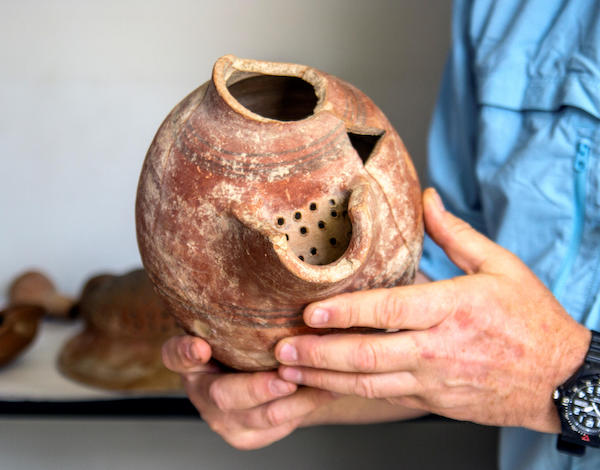
Nanopores taken from ancient pottery have allowed researchers to make beer following a 5,000-year-old recipe. (photo by Yaniv Berman IAA via Ashernet)

Research led by scholars at Hebrew University, the Israel Antiquities Authority, Tel Aviv University and Bar-Ilan University has revealed a way to isolate yeast from ancient pottery, from which beer was then produced. HU’s Dr. Ronen Hazan and IAA’s Dr. Yitzhak Paz, who are among the leaders of the research, noted that “we now know what Philistine and Egyptian beers tasted like.” The team examined the colonies of yeast that formed and settled in the pottery’s nanopores. Ultimately, they were able to use resurrected yeast to create a beer that’s approximately 5,000 years old.

“By the way, the beer isn’t bad,” said Hazan. “Aside from the gimmick of drinking beer from the time of King Pharaoh, this research is extremely important to the field of experimental archeology – a field that seeks to reconstruct the past. Our research offers new tools to examine ancient methods and enables us to taste the flavours of the past.”

Added Paz, “This is the first time we succeeded in producing ancient alcohol from ancient yeast. In other words, from the original substances from which alcohol was produced. This has never been done before.”

Format ImagePosted on May 31, 2019May 30, 2019Author Edgar AsherCategories IsraelTags archeology, beer, Israel, science
Sniffing helps us think

Sniffing helps us think

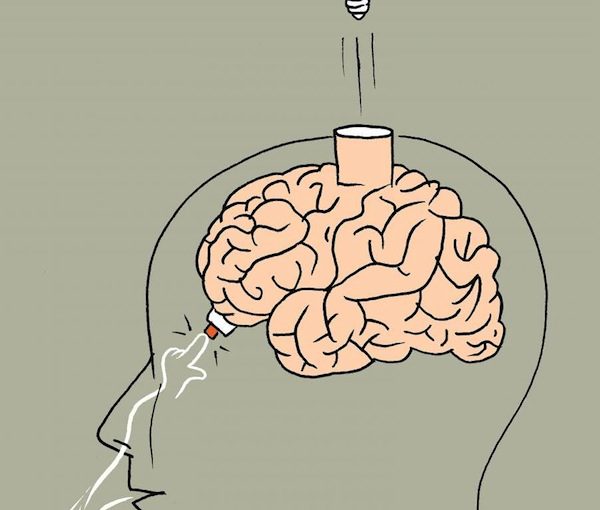
Subjects given problems to solve as they inhaled did better on tests. (image from wis-wander.weizmann.ac.il)

A shot of espresso, a piece of chocolate or a headstand – all of these have been recommended before taking a big test. The best advice, however, could be to take a deep breath. According to research conducted in the lab of Prof. Noam Sobel of the Weizmann Institute of Science’s neurobiology department, people who inhaled when presented with a visuospatial task were better at completing it than those who exhaled in the same situation. The results of the study, which were published in Nature Human Behavior, suggest that the olfactory system may have shaped the evolution of brain function far beyond the basic function of smelling.

Dr. Ofer Perl, who led the research as a graduate student in Sobel’s lab, explained that smell is the most ancient sense. “Even plants and bacteria can ‘smell’ molecules in their environment and react,” said Perl. “But all terrestrial mammals smell by taking air in through their nasal passages and passing signals through nerves into the brain.”

Some theories suggest that this ancient sense set the pattern for the development of other parts of the brain. That is, each additional sense evolved using the template that had previously been set out by the earlier ones. From there, the idea arose that inhalation, in and of itself, might prepare the brain for taking in new information – in essence, synchronizing the two processes.

Indeed, studies from the 1940s on have found that the areas of the brain that are involved in processing smell – and thus in inhalation – are connected with those that create new memories. But the new study started with the hypothesis that parts of the brain involved in higher cognitive functioning may also have evolved along the same basic template, even if these have no ties whatsoever to the sense of smell.

“In other mammals, the sense of smell, inhalation and information processing go together,” said Sobel. “Our hypothesis stated that it is not just the olfactory system, but the entire brain that gets ready for processing new information upon inhalation. We think of this as the ‘sniffing brain.’”

To test their hypothesis, the researchers designed an experiment in which they could measure the airflow through the nostrils of subjects and, at the same time, present them with test problems to solve. These included math problems, spatial visualization problems (in which they had to decide if a drawing of a three-dimensional figure could exist in reality) and verbal tests (in which they had to decide whether the words presented on the screen were real). The subjects were asked to click on a button twice – once when they had answered a question and once when they were ready for the next question. The researchers noted that, as the subjects went through the problems, they took in air just before pressing the button for the question.

The experiment was designed so the researchers could ensure the subjects were not aware that their inhalations were being monitored, and they ruled out a scenario in which the button pushing itself was reason for inhaling, rather than preparation for the task.

Next, the researchers changed the format around, giving subjects only the spatial problems to solve, but half were presented as the test-takers inhaled, half as they exhaled. Inhalation turned out to be significantly tied to successful completion of the test problems. During the experiment, the researchers measured the subjects’ electric brain activity with EEG and here, too, they found differences between inhaling and exhaling, especially in connectivity between different parts of the brain. This was true during rest periods as well as in problem-solving, with greater connectivity linked to inhaling. Moreover, the larger the gap between the two levels of connectivity, the more inhaling appeared to help the subjects solve problems.

“One might think that the brain associates inhaling with oxygenation and thus prepares itself to better focus on test questions, but the time frame does not fit,” said Sobel. “It happens within 200 milliseconds – long before oxygen gets from the lungs to the brain. Our results show that it is not only the olfactory system that is sensitive to inhalation and exhalation – it is the entire brain. We think that we could generalize, and say that the brain works better with inhalation.”

The findings could help explain, among other things, why the world seems fuzzy when our noses are stuffed. Sobel points out that the very word “inspiration” means both to breathe in and to move the intellect or emotions. And those who practise meditation know that the breath is key to controlling emotions and thoughts. This, though, is important empirical support for these intuitions, and it shows that our sense of smell, in some way, most likely provided the prototype for the evolution of the rest of our brain.

The scientists think their findings may, among other things, lead to research into methods to help children and adults with attention and learning disorders improve their skills through controlled nasal breathing.

Sobel’s research is supported by the Azrieli National Institute for Human Brain Imaging and Research; the Norman and Helen Asher Centre for Human Brain Imaging; the Nadia Jaglom Laboratory for the Research in the Neurobiology of Olfaction; the Fondation Adelis; the Rob and Cheryl McEwen Fund for Brain Research; and the European Research Council. Sobel is the incumbent of the Sara and Michael Sela Professorial Chair of Neurobiology.

For the latest Weizmann Institute news, visit wis-wander.weizmann.ac.il.

Format ImagePosted on May 3, 2019May 1, 2019Author Weizmann Institute of ScienceCategories IsraelTags brain, learning, Noam Sobel, Ofer Perl, science
Synchronizing rhythms

Synchronizing rhythms

Dr. Shimon Amir researches circadian rhythms and clock genes. (photo from Shimon Amir)

When our circadian rhythm is disrupted, it can cause a brain disorder that manifests in a series of detrimental conditions too numerous to list, but that includes insomnia, depression and Parkinson’s disease.

“Circadian rhythms are daily observations in behavioural, physiological and metabolic processes,” explained Dr. Shimon Amir, professor of psychology, Concordia University in Montreal, and director of the university’s Centre for Studies in Behavioural Neurobiology. “In fact, everything you can measure in an organism follows a daily rhythm – a 24-hour cycle generated by internal clocks present in each and every cell in our bodies. And they are synchronized with the environmental light cycle. So, there is tuning between the internal rhythms and the solar cycle. Those are the rhythms.

“Most people might think that rhythms are driven by the light-dark cycle, but that’s not the case. They are generated by a clock that is present in every cell. The clocks are made of a set of genes called ‘clock genes’ and they oscillate – form feedback logs that last each cycle, with each cycle lasting about 24 hours.”

Amir was born and raised in Israel and moved to Montreal for his PhD. He went back to Israel to work at the Weizmann Institute of Science, but later returned to Montreal to teach and do research on circadian rhythms and now, too, clock genes.

According to Amir, circadian rhythms allow organisms like flies, rats, monkeys, humans and even plants to anticipate and respond to the demands of their environment.

“Rhythms can be disrupted by various means,” he said. “Ones that are most common are traveling across time zones, working shift work and eating at the wrong times. But, the main reason for the disruption is movement across time zones. Your clock is synchronized to your location. So, if you move from, say, Vancouver to Montreal, the clock has to be advanced, as you’ll wake up in Montreal three hours earlier, right? That takes time and the mismatch between environment and internal cycles causes various metabolic, behavioural, cognitive and other problems.”

While there are clocks in every cell of the body, all these clocks report to the master clock in the brain. That clock receives input from the eyes – light information that resets the master clock daily.

When we use lights at night, the master clock gets disrupted. “The clock is very sensitive to light at night,” said Amir. “Say you’re asleep and you want to go to the bathroom in the middle of the night. You turn on the light and that causes a disruption of the clock. Another way to disrupt the clock is the time that you eat. Eating should occur during the day.

“The reason light is so disruptive at night is that one arm of the clock is a hormone called melatonin. Melatonin is exceedingly sensitive to light. It is secreted during the night and is suppressed during the day. But, if you turn on the light at night – even very brief exposure to light at night – it suppresses the melatonin rhythm.”

Amir suggested using a sleep mask to keep light away, as well as learning to use the washroom at night without turning on a light. “You can adapt to the dark very quickly and be able to see,” he said.

While Amir’s initial research interest was in circadian rhythm, over the last 10 years, he has expanded his focus to other clocks in the brain – those that control different types of behaviours and pathological conditions, such as depression, anxiety, drug addiction and diseases like Parkinson’s.

Through experiments with mice and rats, Amir has been working to configure which brain clock controls, or affects, how the rodents handle stimulation and what happens if these clocks are turned off or disrupted.

“So, the clocks are made of several particular genes called clock genes,” said Amir. “We have various molecular, genetic and viral tools to manipulate those genes directly … in different regions of the brain…. We’re seeing what happens when an animal that has a brain region that doesn’t have a clock or particular clock gene that stops the clock … how the animal behaves and what are some of the pathological consequences of this condition.”

Amir and team use various animal models of disease, looking into what happens when you take out the clock and if it correlates with enhanced depression and anxiety.

“The circadian rhythm is really a very fundamental system that you can say controls everything,” said Amir. “When the system is disrupted, it has important implications for varied disorders.”

photo - Dr. Shimon Amir
Dr. Shimon Amir (photo from Shimon Amir)

The main goal is to understand the evolutionary function of the clocks and what they do to enable adaptation of organisms to their surroundings. But, also, the hope is that, by having better understanding, it will help in identifying new avenues of therapies.

With jet lag being such a hot topic in regards to circadian rhythm, Amir suggested a few ways to keep it at bay. “There are some ways to shorten jet lag, but there’s no way to avoid it,” he said.

“When you go east, you have to be exposed to light in the morning, in order to readjust to the new time zone. When you are exposed to light early in the morning, it induces in the clock a ‘face advance,’ it advances the clock. But, if you go west, you have to be exposed to light at night, early night. The transition between the evening and night, that’s where you have to be exposed to light, and that’s where it is ‘face delay.’ It will delay the face of the clock, because you have to wake up later when you go west.

“You need to be intentionally exposed to light in the evening or have light exposure a bit longer before you go west … or wake up very early, be exposed to light early in the morning, if you go east.

“Going through jet lag is very unhealthy,” he said. “If you do it very often, it will affect you in various ways, negatively, of course. Except, you can’t avoid it … as you go see family and grandchildren, and others, in Israel.”

Rebeca Kuropatwa is a Winnipeg freelance writer.

Format ImagePosted on April 12, 2019April 10, 2019Author Rebeca KuropatwaCategories WorldTags circadian rhythm, science, sleep
Meet new or favourite writers

Meet new or favourite writers

The Cherie Smith JCC Jewish Book Festival starts this Saturday night (Feb. 9) with Joshua Cohen, author of Moving Kings and ATTENTION: Dispatches from a Land of Distraction. It continues for five literary-filled days at the Jewish Community Centre of Greater Vancouver, and here’s a sampling of books you might want to add to your reading list, and authors you might like to meet.

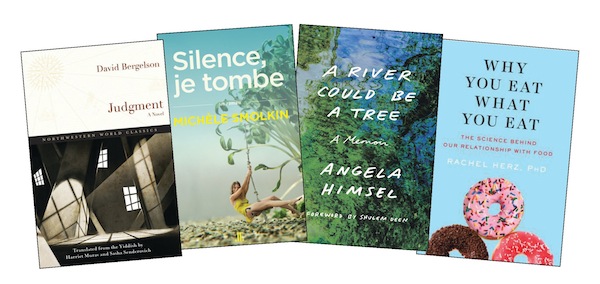
book cover - JudgmentSet in 1920, in the fictional shtetl of Golikhovke during the Russian civil war, Judgment, by David Bergelson (1884-1952), is a melancholic novel about humanity in a time of uncertainty, where different political factions are warring, each under their own ultimately meaningless banner; neighbours cannot trust one another, let alone strangers; and justice is meted out randomly by a cruel, indifferent force.

Stationed in an also fictitious abandoned monastery called Kamino-Balke, near Golikhovke, the sickly Bolshevik Filipov is in control of the area along the Ukraine-Poland border. There are smugglers who travel across the border for commercial reasons and Socialist Revolutionaries who travel across it in preparation for an uprising against the Bolsheviks. Jews and non-Jews live together in relative tolerance but political loyalties, ethnic ties and differing ideas of morality ensure a constant tension. All live in fear of being captured by one of Filipov’s agents, as guilt of a crime does not need to be proven for a person to be beaten, imprisoned and/or shot.

What makes this novel beautiful is Bergelson’s prose. Imaginative metaphors: “Large, invisible hands merrily picked up whole heaps of snow and just as merrily released them.” Animated objects: “… the coat lay there bent over, dejected, as if it had made a long, pointless, idiotic journey” and “The cannons’ muzzles – black, fat and eyeless – stared longingly in the direction of the forests around Moshne….” Humour: “Stone fences suited the inhabitants of Yanovo, for all of them were as stubborn as their stone fences: stone upon stone.” And empathy, in this case, for the undercover agent Yokhelzon, whose “eyes (which inspected everything, people said) had already taken in the horror of death – they winked joyfully, so that the horror would not show afterward.”

As should be obvious, Harriet Murav and Sasha Senderovich have done a masterful job of translating Judgment from Yiddish to English. They also provide a fascinating introduction to the novel, its historical context, the author and his other works (Bergelson was executed in 1952, on Stalin’s orders), the book’s title, form, themes and use of language.

Senderovich will be at the book festival on Feb. 10, 3:30 p.m.

***

book cover - Silence, je tombeMichèle Smolkin’s novel Silence, je tombe is a witty, philosophical novel that explores how people can become isolated from one another, including themselves. Told from the perspectives of a few protagonists, readers will likely relate to many of the feelings expressed.

The novel starts with a pregnant Tania, as she, her husband Paul and their toddler Margot are making the drive to their new home in “Manhattan, Kansas, The Little Apple,” from Vancouver. Tania’s disenchantment is obvious and she expresses her anger towards her husband – who, as a professor of philosophy, couldn’t find a job elsewhere – with vicious (and very funny) sarcasm, mostly in her thoughts, but aloud, as well. She had imagined a different life for herself – living in New York, the Big Apple, for one thing; and certainly not in the Bible Belt. As a Francophone Jew, she anticipates that fitting in might be a problem.

As the book progresses, we get to know Tania, Paul and a disturbed man named Kevin, plus a couple of other minor but important characters. Through them, we contemplate love, what attracts people to one another and what forces them apart, what happiness is, what actions might be unforgivable, how our childhoods influence our adulthoods, and, of course, the inadequacy of words for certain situations, and understanding why, sometimes, silence is the only possible response.

Smolkin’s talk – the book festival’s first-ever French-language event – will take place Feb. 10, 5 p.m. (Note: Festival program shows incorrect time.)

***

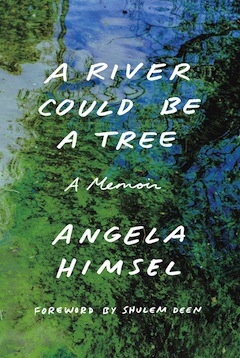
book cover - A River Could Be a TreeA River Could Be a Tree is, thankfully, not the memoir of a person who goes from believing fanatically in one religion to being swept away as unquestioningly into another, though it might seem like it would be, given some aspects of the press material. “How does a woman who grew up in rural Indiana in a fundamentalist Christian cult end up a practising Jew in New York?” asks part of the blurb on the book flap. Well, for starters, Angela Himsel seems to always have been an inquisitive person, and never an avid follower of Herbert Armstrong’s Worldwide Church of God. She was an obedient child, but is still struggling with understanding how her parents believed so much in the church doctrine that they didn’t give her sister the care that might have prevented her death at a young age.

A River Could Be a Tree is a measured, often humourous, always intelligent memoir. Himsel starts with a prologue that gives readers a very large hint as to what led her to ultimately convert to Judaism: she and her boyfriend Selig were, “just once … careless about birth control.”

But the journey to that point is long and more complicated, and Himsel takes readers through it with the benefit of hindsight, hard-won insights and a writing style that is serious, honest but unsentimental, and filled with initially unexpected levity. As but one example, a mere three paragraphs into Chapter 1, in which Himsel talks about her parents’ religious heritage, Roman Catholicism and Lutheranism, she writes about Martin Luther, that, at age 41, he “married a nun, a woman he had helped smuggle out of a convent in a herring barrel. While irrelevant to Luther’s religious beliefs, a nun in a herring barrel is always worth mentioning.”

And A River Could Be a Tree is well worth reading. Himsel will speak at the book festival on Feb. 11, 7:30 p.m.

***

book cover - Why You Eat What You EatThere is so much information in Why You Eat What You Eat: The Science Behind Our Relationship With Food by Rachel Herz. And a refreshing aspect of the book is that it’s not written from a dogmatic, all-knowing viewpoint. Herz acknowledges that sometimes studies come to different conclusions, sometimes scientific progress means that what was once thought true is disproven, and that different people will experience food, exercise and other things differently. Readers looking for certainty might be disappointed, but those wanting to learn will learn a lot. Who doesn’t want to know, for example, why tomato juice is one of the most popular drink orders on planes? Does sugar really help the medicine go down, so to speak, i.e. reduce the effects of pain? And why can buying ethically branded or organic products make us less charitable?

But Why You Eat What You Eat is more than an amalgamation of trivia. Herz has compiled a very readable and relatively comprehensive resource that will, as the title promises, help explain why we eat what we eat; how all of our senses – taste, smell, sight, touch and hearing – affect how we experience food. And knowing these things just might make us feel better about ourselves, and make choices that would serve us better.

Herz will be at the book festival on Feb. 13, 6 p.m.

Format ImagePosted on February 8, 2019February 7, 2019Author Cynthia RamsayCategories BooksTags Angela Himsel, Cherie Smith JCC Jewish Book Festival, David Bergelson, fiction, food, French, memoir, Michèle Smolkin, non-fiction, Rachel Herz, science, translation, Yiddish
Seeing with the brain

Seeing with the brain

Prof. Amir Amedi of the Hebrew University answers questions from attendees at a Jan. 16 presentation. (photo by Pat Johnson)

A white cane has been used for generations to help guide the mobility of people who are blind. Researchers at the Hebrew University of Jerusalem created the EyeCane, which added technology that indicates to the user the distance to obstructions. From there, other technological advances were added to identify the types of items in the area – a couch, chairs, table, lamp – and convey the information to the user’s ear. Still not satisfied, the scientists combined the invention with artificial intelligence and complex auditory accompaniments so that the user could identify the size, shape, colour, brightness and other attributes of the space around them to get a full “picture” of their surroundings.

Presented by the Vancouver chapter of the Canadian Friends of the Hebrew University, Prof. Amir Amedi spoke at Schara Tzedeck Synagogue Jan. 16. Amedi is a professor in Hebrew University’s department of medical neurobiology and an adjoint research professor at the Sorbonne in Paris. He is currently a visiting professor at McGill University in Montreal.

The interdisciplinary marriage of computer science, neurology, philosophy, rehabilitation, physics and other fields is leading to unprecedented advances in aids for people with disabilities. Some of the foremost innovation is taking place at Hebrew University, where Amedi works with a large team across many faculties.

The EyeCane is just one example of the sorts of tools being developed in Amedi’s lab, items that are known as sensory-substitution devices (SSDs). The most common SSD is the written word, Amedi explained. For millennia, humans communicated only verbally. Written language is a device that substitutes two senses – speaking and hearing – into a different form: writing and reading.

Amedi discussed the development of agriculture, then cities, then written language, then printing, each of which took tens of thousands of years to evolve, allowing the human brain plenty of time to accommodate the changes. Today, though, new technologies come flying at us daily and the question this raises, according to Amedi, is how our brains are able to adapt so readily to such sudden changes – an issue Amedi refers to as a “real estate problem” in the brain.

“How can the brain, in the slow evolutionary process, adapt to more and more information, more and more technologies?” he asked.

One theory posits that parts of the brain get recycled to deal with cognitive tasks it has not previously confronted.

A parallel invention of Amedi’s lab is an auditory process that allows blind people to “see” with their brain. Sight is really a function of the brain, not the eyes, he said. The eyes are the conduit, but the brain does the cognitive work of seeing. Bypassing the non-functional eyes and going through the ears directly to the part of the brain where sight is computed, Amedi and his team have been able to create a complex musical language that allows blind people to absorb immense amounts of information about the environment around them.

In a demonstration, Amedi walked the audience through the first lesson users of the technology are taught. Simple sounds – similar to Morse code – represent lines. A musical scale going up or down represents stairs. A smile is depicted by a falling then rising tone. Pitch is added to determine height. Timbre is introduced to depict different colours. In a remarkably short time, blind people are able to ascertain immense awareness of their visual environments.

Significantly, Amedi added, brain imaging indicates that the part of the brain processing the information is identical, whether a sighted person is looking at something with their eyes or a blind person is “looking” at something using the auditory sensory-substitution process.

More information about Amedi’s work is online at brain.huji.ac.il.

Format ImagePosted on January 25, 2019January 24, 2019Author Pat JohnsonCategories LocalTags Amir Amedi, EyeCane, Hebrew University, science, technology, visual aids
Children are also stressed out

Children are also stressed out

The most important thing as a parent is to be able to identify when your child is stressed. (photo from Psychology Foundation of Manitoba)

Despite the numerous technological advances we have achieved to make our lives easier, we are more stressed than ever. Even children are affected.

American psychologist Dr. Robin Alter moved to Toronto in 1980 to work at the city’s mental health centres. Her focus is on children’s health and, over her 36-year career, she has helped treat more than 10,000 families.

“If you’re just in private practice, you don’t get to do that…. You can’t see that many people,” Alter told the Independent. “So, I started thinking that I really need to start writing down what I’ve learned from this incredible experience and try to give it back.

“A lot of the things I was learning on the ground, in those face-to-face meetings, were things I couldn’t read about. It was not written in the studies I was reading. My experience, and what works for people or doesn’t, is different than what was written in books or journals.”

In addition to numerous articles, many of which can be found on her website (docrobin.com), Alter is the author of the book Anxiety and the Gift of Imagination and The Anxiety Workbook for Kids.

When she was in university, Alter’s teacher, Judy Levy, helped steer her toward working with children.

“I loved talking with them and finding ways they could express themselves so we could understand what they were feeling and why they were behaving the way they were,” said Alter. “Then, I came to Canada. I walked into these children’s mental health centres and looked around and I found all these people who shared the same mission as me…. I was ecstatic, realizing that I’m not doing this by myself. I’m doing this with an army of people who are passionate, who are inspired to dedicate their lives and energy to helping children and families.”

When the system switched to providing such care in a hospital setting, Alter opted to work from the outside, to educate people about how changes in society are affecting kids.

According to Alter, the effects of stress start at infancy for many kids, as they are thrust into a daycare environment for eight to 10 hours a day.

“That’s very hard for kids if you think about it,” she said. “When you’re with your family, you can let your hair down, right? You can be yourself, be relaxed. You’re protected, cared for, special. When you’re in a large group of other kids – even if it’s a good place – they have a number of kids to look after … there is always stress involved, some kids who want the toy you want to play with.

“You don’t have the skills yet to figure out a compromise, so you’re just fighting over the toy or feeling left out. Everybody seems to be playing with somebody and you don’t have anybody to play with. And, you know, there’s not always going to be an adult who notices that you’re under stress.

“The children leave their home early in the morning, spend all day in a competitive environment, and [are] picked up at the end of the day just to have dinner, a bath and go to bed…. Going to bed, too, is stress-inducing for all of us, but especially for kids. And we wonder why they are having trouble keeping up.

“I think there’s an epidemic of sleep deprivation,” she added. “Kids really don’t know how to unwind at night, how to take their worries and put them aside. I know most parents have a fairly good bedtime routine, where they read to their kids and turn out the lights, but I think it can be improved. Kids need to learn how to turn off their minds and put the day to rest.”

Alter has conducted nearly 6,000 psychological assessments and continues to do more. For this, there is a form that parents fill out – in 90% of these assessments, parents identify problems with sleep.

According to Alter, Vancouver’s Dr. Gabor Maté, an expert on child development, believes that many kids who are identified as ADHD (attention deficit hyperactivity disorder) are really just sleep deprived and misdiagnosed. And, if they get diagnosed as having ADHD, they will likely get medication – medication that causes sleep deprivation, further intensifying the problem.

The most important thing as a parent, said Alter, is to be able to identify when your child is stressed. The key to doing this is paying attention mainly to what is not being said. “Look for the cues,” she said. “Kids have a different response, but, usually, it’s a change in behaviour. They stop and, sometimes, their eyes get wider. We can do things to alleviate that stress, explain things to them. For example, the other night, at dinner, I drank a little bit of water, and then I was talking to Lewis [her 2-year-old grandson] and he turned to me and said, ‘Baba, you just spit at me!’

“He looked horrified at that. Why would his grandmother spit at him? Something he’s learned in daycare is that you don’t spit. He looked like I had just done this horrible thing. We explained to him that I didn’t spit at him, that it was water that came off my lips and that I’d never spit at him. Then he became unstressed.

“So, sometimes, just explaining what’s going on; giving the kid a good explanation can alleviate the stress. Those are minimal stresses. But, sometimes, there are big stressors going on.”

While stress can be overwhelming, it is important to remember that we don’t want to completely eliminate it. “Stress is our passport, or what we need to have an interesting life,” said Alter.

We have to learn that stress is a part of life and that we need to learn ways to de-stress. This is a main focus of the Psychology Foundation of Canada program Kids Have Stress Too, for kids 3 to 5 years old.

One of the strengths of the program is that it relays that stress is normal, everybody gets stressed. “And, you know, you can identify it in other kids,” said Alter. “When other kids are stressed, you can identify it in yourself and you can help yourself to feel better…. You can learn how to come back, bounce back from stress.

“I was at a session, my own personal professional session with a mother. She was very stressed by her daughter, who was 5 years old and had been diagnosed with epilepsy. The mother was very stressed by the diagnosis and the symptoms. The kids were in the room.

“The 5-year-old heard her mother talking about how stressed she was – and the kid had actually been through the Psychology Foundation program Kids Have Stress Too. Her ears perked up at the word ‘stress’ and she said, ‘Mom, I know what to do when you get stressed.’ The mother said, ‘You do?’ And the kid said, ‘You sing a song.’ She had a song she learned in the program and she sang it to her mother, and it was very cute and helpful, and the mother laughed. Laughter is a good way to alleviate stress.

“Another good way of helping kids alleviate stress is to encourage them to be helpful to others. When we are kind to others, when we reach out and give people food, and share – all those things alleviate our stress.”

The Kids Have Stress Too program teaches children to be aware of when they are stressed. Some kids feel nausea or a rush, as if an alarm system is going off in their body. Some kids feel it in their tummies. Others feel it in their heads. Once they learn what these feelings mean, it normalizes it and then it is not so scary. So, they are able to take care of themselves and sometimes take care of others.

“If you see other kids going through the program, someone stressed, they sometimes put their arm around them and say, ‘It’s OK. Everything’s alright, so let’s go play, let’s go do something fun,’” said Alter. “And that’s what it’s all about.

“There are wonderful little techniques,” she said. “The one I like most is the cloud push. You stand up and put your hands up and push the clouds away, like you’re pushing all the stress away. You’re getting rid of all the things you don’t want. Push them into the sky. Let them fly away.”

Alter shared a story about visiting a junior kindergarten class, where she read the kids a book about animals having a bad day and getting stressed. She was taken aback by the responses she got from the 4-year-olds when she asked them if they had ever had a bad day.

“I turned to them and said, ‘Well, the orangutan is having a bad day. Have you ever felt that way?’ And, I look up to see this whole sea of faces, all shaking their heads as hard as they can, saying, ‘No. No. Never!’ And, I was shocked. I realized that, even at this age, the peer pressure of how we’re not supposed to feel that way, not supposed to admit to others that we feel bad, was already instilled so early.

“Then, they went to little tables independently. We gave them crayons and paper, and each one of them drew these amazing pictures of things in their life that stress them out. One kid drew a picture of his mom having cancer and going to the hospital. Another kid drew a picture of his father leaving the family. And, I realized that they got the message, what I was reading about. They were not going to admit it in the group, but they were very eager to talk about it individually.

“We need to help kids realize that they are not alone with these problems or feelings,” said Alter. “That’s one of the biggest strengths of the program – an adult can help kids, too, by talking about their stresses.”

Parents need to be sharing their feelings with their kids, and then showing them how we move past them, she said.

“Kids don’t so much listen to what we say as much as what we do,” said Alter. “Kids are more doers. And so, for example, getting them out to the yard and doing exercise – throwing a ball around or something – is a good way to alleviate stress.

“Many kids stop talking because we use words they don’t understand, and they just don’t understand what we’re talking about. But, they understand action and behaviour. So, doing things with them and encouraging them to do things is a lot more helpful. Also, laughing is a way to alleviate stress. So, telling a joke, being silly, or just letting … stress out that way is great.

“Kids need to know that when they are out there in the ‘jungle’ of school that their parents are behind them and that they are not alone in whatever is going on,” she said. “Our daughter had a lot of trouble in grades 4 to 6 – bullying, mistreating stuff. Every night, we’d strategize what she could do, have long conversations. None of them worked. She’d say, ‘I tried that. It didn’t work.’ She knew that we were behind her, that she wasn’t alone. She had a team who understood how difficult the situation was. I think all those things help.”

For more information on the Kids Have Stress Too program and more, visit psychologyfoundation.org.

Rebeca Kuropatwa is a Winnipeg freelance writer.

Format ImagePosted on January 25, 2019January 24, 2019Author Rebeca KuropatwaCategories NationalTags healthcare, lifestyle, parenting, Robin Alter, science
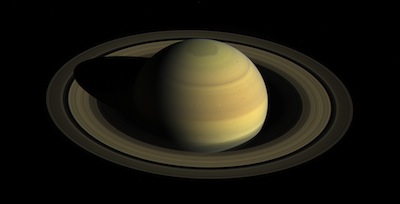
Cassini’s view of Saturn

Cassini’s view of Saturn

Saturn’s main rings, along with its moons, are much brighter than most stars. As a result, much shorter exposure times (10 milliseconds, in this case) are required to produce an image and not saturate the detectors of the imaging cameras on Cassini. A longer exposure would be required to capture the stars as well. (photo from NASA/JPL-Caltech/Space Science Institute)

Grand Finale was the official name of Cassini’s last act: a risky orbit between Saturn’s rings and atmosphere in an attempt to explore the planet up close, right before the craft went up in flames.

Prof. Yohai Kaspi and Dr. Eli Galanti of the Weizmann Institute’s earth and planetary sciences department led one of the studies on Cassini’s final mission, revealing the depth of Saturn’s jet streams – the strongest measured in the solar system, with winds of up to 1,500 kilometres per hour – and found them to reach a depth of around 9,000 kilometres. Teaming up with research partners in Italy and the United States, their study also helped reveal the age of the planet’s rings. The findings of these studies were published this month in Science.

Cassini was one of the more successful planetary missions, orbiting and returning information on Saturn and its moons for the last 20 years. As the mission was approaching its end, it was decided to end its life with a non-circular orbit swinging in very close to the planet, followed by a final plunge into the gaseous mass. Kaspi and Galanti joined the Cassini team following their work as part of NASA’s Juno science team, which had employed a similar orbit to produce the most reliable measurements yet of Jupiter’s atmospheric depth. The Cassini scientists thought it would be possible to do the same for Saturn, and the Weizmann scientists were called in to apply their methodology to the Saturn measurements.

Kaspi described the challenge: “We detect small variations in the gravity field as the craft orbits Saturn, and translate these into the atmospheric wind that produces them. There was no guarantee it would work for Saturn, as the gravity signal on Saturn is more difficult to interpret than what we had on Jupiter. We discovered that not only did it work for both planets, but that same physical processes control the depth of the flows on these two planets.”

To calculate the depth of the winds, the gravity measurements undertaken by Cassini were analyzed with the theoretical model developed by the Weizmann researchers. “We also teamed up with a second group investigating the internal structure of the planet,” said Galanti. “Together, we calculated that the depth of the atmosphere is up to around 9,000 kilometres. That is three times deeper than that of Jupiter. We also found that, just as on Jupiter, a strong internal magnetic field is what limits the depth of this layer of the atmosphere. Our theory worked twice, which provides strong support for its validity.”

In the same study, the researchers analyzed the Grand Finale data from Saturn’s rings, finding they are at most 100 million years old. That is quite recent in the 4.5-billion-year history of the solar system. The planet in the night sky at the time of the first dinosaurs was, apparently, without the rings we know today.

For more on the research being conducted at the Weizmann Institute, visit wis-wander.weizmann.ac.il.

– Weizmann Institute

Saturn losing its rings

New NASA research confirms that Saturn is losing its iconic rings at the maximum rate estimated from Voyager 1 and 2 observations made decades ago. The rings are being pulled into Saturn by gravity as a dusty rain of ice particles under the influence of Saturn’s magnetic field.

photo - Saturn’s northern hemisphere in 2016, as that part of the planet nears its northern hemisphere summer solstice in May 2017. Since NASA’s Cassini spacecraft arrived at Saturn in mid-2004, the shifting angle of sunlight as the seasons march forward has illuminated the giant hexagon-shaped jet stream around the north polar region, and the subtle bluish hues seen earlier in the mission have continued to fade
Saturn’s northern hemisphere in 2016, as that part of the planet nears its northern hemisphere summer solstice in May 2017. Since NASA’s Cassini spacecraft arrived at Saturn in mid-2004, the shifting angle of sunlight as the seasons march forward has illuminated the giant hexagon-shaped jet stream around the north polar region, and the subtle bluish hues seen earlier in the mission have continued to fade. (photo from NASA/JPL-Caltech/Space Science Institute)

“We estimate that this ‘ring rain’ drains an amount of water products that could fill an Olympic-sized swimming pool from Saturn’s rings in half an hour,” said James O’Donoghue of NASA’s Goddard Space Flight Centre in Greenbelt, Md. “From this alone, the entire ring system will be gone in 300 million years, but add to this the Cassini-spacecraft measured ring-material detected falling into Saturn’s equator, and the rings have less than 100 million years to live. This is relatively short, compared to Saturn’s age of over four billion years.” O’Donoghue is lead author of a study on Saturn’s ring rain appearing in Icarus Dec. 17.

Scientists have long wondered if Saturn was formed with the rings or if the planet acquired them later in life. The new research favours the latter scenario, indicating that they are unlikely to be older than 100 million years, as it would take that long for the C-ring to become what it is today assuming it was once as dense as the B-ring. “We are lucky to be around to see Saturn’s ring system, which appears to be in the middle of its lifetime. However, if rings are temporary, perhaps we just missed out on seeing giant ring systems of Jupiter, Uranus and Neptune, which have only thin ringlets today,” O’Donoghue added.

Various theories have been proposed for the ring’s origin. If the planet got them later in life, the rings could have formed when small, icy moons in orbit around Saturn collided, perhaps because their orbits were perturbed by a gravitational tug from a passing asteroid or comet.

– NASA Goddard Space Flight Centre

Format ImagePosted on January 25, 2019January 24, 2019Author Weizmann Institute and NASACategories WorldTags Cassini, NASA, Saturn, science, Weizmann Institute
Israelis heading to the moon

Israelis heading to the moon

Left to right: Inbal Krayes, Morris Kahn, Sylvan Adams and Dr. Ido Anteby at the Israel Aerospace Industries facility in Yehud, Israel. (photo from SpaceIL)

On Nov. 19, SpaceIL announced that Canadian billionaire and businessman Sylvan Adams, who brought the Giro d’Italia Big Start cycling race to Israel this year, joined the project to land the first Israeli spacecraft on the moon and contributed $5 million to the organization.

Adams announced his contribution as part of a special tour that took place at the Israel Aerospace Industries (IAI) MBT Space facility in Yehud, where the spacecraft is being assembled. Also attending the tour were SpaceIL’s president Morris Kahn, SpaceIL chief executive officer Dr. Ido Anteby and other senior IAI officials, including IAI vice-president of space operations Inbal Krayes.

Adams, who was celebrating his 60th birthday, said at the event that “this contribution to strengthening the Israeli space program, and encouraging education for excellence and innovation among the younger generation in Israel, is the best gift I could have asked for.”

He added: “I believe that sending the first Israeli spacecraft to the moon will inspire Israeli schoolchildren to take up STEM studies and think about space exploration, and especially to believe that everything is possible.”

Since SpaceIL’s establishment in 2011, the mission of landing an Israeli spacecraft on the moon has become a national project embodying educational values. Adams joins a group of donors who have contributed to the project, including Dr. Miriam and Sheldon Adelson, Sammy Sagol, Lynn Schusterman, Steven Grand and others.

Kahn, a businessman and philanthropist, took it upon himself to lead the project and bring it to its completion, donating $27 million and serving as the project’s president. He regards its completion as his personal mission.

“We are in the final stretch,” said Kahn, “and I believe that his [Adams] joining will help us raise the remaining money to complete our ambitious mission.”

“The teams of SpaceIL and IAI are making great progress in a series of tests and trials being carried out at IAI’s space facility,” Anteby said. “At the same time, we are stepping up activities to promote scientific and technological education in the state of Israel, ahead of launch.”

In October, SpaceIL and the Israeli Space Agency announced a collaboration with NASA that would enable SpaceIL to improve its ability to track and communicate with the spacecraft before, during and after landing on the moon.

IAI, which is the home of Israel’s space activity, has been a full partner in this project from its inception. Over the years, additional partners from Israel’s private sector, the Israeli government and from academia have joined as well. The most prominent among these are the Weizmann Institute of Science; Israel Space Agency; the Ministry of Science, Technology and Space; the Israeli telecom firm Bezeq, and others.

The same week of Adams’ donation, Ofir Akunis, Israel’s minister of science, technology and space, visited the IAI facility where the spacecraft is being built, after the ministry announced an additional NIS 7.5 million ($2.66 million Cdn) in support for the project.

“The moon mission is one of great national pride. There is a short time before the spacecraft’s launch, and I have no doubt all Israelis will feel great joy when the spacecraft blasts off,” Akunis said. “I am a great believer that the landing will be one of the highlights in the history of the state of Israel, and the educational activity we are doing around the mission sets the foundation for engineers who will work in the field of space and science in the next decade.”

SpaceIL was the only Israeli contestant in the international Google Lunar XPRIZE competition. To win the first prize of $20 million, the participants were required to land an unmanned spacecraft on the moon. The competition ended officially with no winner on March 31, when Google announced that it would no longer sponsor the competition.

After succeeding in raising the critical funds to continue its activity, SpaceIL announced that it was determined to continue on its mission and to launch its spacecraft, regardless of the competition. Concurrently, the nonprofit is continuing its efforts to raise the funds necessary to complete this mission.

SpaceIL aims to set in motion an “Apollo effect” in Israel: to encourage the next generation of Israeli children to choose to study science, technology, engineering and mathematics (STEM) and to change their perception of these subjects; to generate a sense of capability, and to allow them to dream big dreams even in a small country.

Format ImagePosted on December 7, 2018December 4, 2018Author SpaceILCategories IsraelTags astronomy, education, exploration, science, space travel, STEM, Sylvan Adams, XPRIZE
Museum marks its first

Museum marks its first

The displays at the Steinhardt Museum of Natural History educate visitors on natural history, as well as current-day environmental issues. (photos by Ashernet)

Just over a year ago, the Steinhardt Museum of Natural History opened the doors of its purpose-built structure on the campus of Tel Aviv University. The 100,000-square-foot building contains more than five-and-a-half million specimens from every corner of the world, educating visitors in every aspect of natural history.

At the same time as the museum serves to educate visitors about specific specimens, the various exhibits and presentations are a reminder of the frailty of the planet and the responsibilities of all humankind to act responsibly to preserve all the species above and below the waves. It also calls on us to try and decrease the pollution that is degrading natural life and depleting the world’s oceans and natural habitats, such as its rain forests and rivers. Israel is not free from such degradation.

photo - It is not just the quantity of exhibits and specimens at the museum that makes it special, it is also the presentation of the material
It is not just the quantity of exhibits and specimens at the museum that makes it special, it is also the presentation of the material. (photo by Ashernet)

It is not just the quantity of exhibits and specimens at the museum that makes it special, it is also the presentation of the material. As well, there are dozens of friendly, informed museum staff who are only too happy to talk with visitors.

In one sense, the museum has depressing overtones. Many of the species of wildlife that once were found in the region can no longer be seen in their natural surroundings. Visitors are also reminded that fish stocks in the Mediterranean have been depleted over the past 20 years by some 50% due to pollution. In addition, the opening of the Suez Canal has meant that many species of marine life from the Red Sea have ventured into the Mediterranean, via the canal, and wreaked havoc on the Mediterranean’s natural balance.

The museum also shows the harm being caused to the environment by other human actions. For example, it highlights in various ways, including specially prepared film presentations, the danger posed by plastic waste.

The museum presents the history of a world that is unquestionably millions of years old. There are no huge prehistoric animal models exhibited, but there are clear references to the age of dinosaurs. Also, life-size models show the development of humans through the ages. Presumably not wanting to offend anyone’s religious sensibilities, the museum would nevertheless be remiss not to give some scientific explanation for the skeletal remains of both the people and animals that lived on these shores many millennia ago. It is also a sad fact that many animal species of more recent times have been eliminated – because of over-hunting or, in some cases, like the Golan vultures, being almost completely eliminated by farmers poisoning them to protect their flocks.

Throughout the museum there are many opportunities to interact with exhibits that demonstrate or define a particular aspect of nature; for example, comparing a monkey’s hand and its mobility with that of a human. All of the exhibits are clearly explained in Hebrew, Arabic and English.

photo - the museum has a definitive collection of live insects, which are featured in 17 terrariums, as well as almost three million insect samples
the museum has a definitive collection of live insects, which are featured in 17 terrariums, as well as almost three million insect samples. (photo by Ashernet)

In addition to the models of creatures and the animals that have been prepared by taxidermists, the museum has a definitive collection of live insects, which are featured in 17 terrariums, as well as almost three million insect samples. This is the largest collection in the museum and includes several types of insects new to science. This provides an interesting opportunity to learn about worlds to which most of us don’t have access.

Among the myriad items in the museum’s collection are those of a 19th-century German zoologist and Catholic priest, Ernst Johann Schmitz, who lived in what is now Israel. Included in the Schmitz collection is the last known bear in the region, from 1916; an Asiatic cheetah from 1911; and the last crocodile from the Taninim River in central Israel. All the species have become extinct in the country.

Nowadays, there is no active hunting of local mammals or birds – the local animals on display are animals that died in nature and have been collected by the Israel Nature and Parks Authority.

Dioramas and interactive displays are located across five floors that are connected by sloped ramps. The curators hope that the museum will increase understanding and knowledge of the natural world. Just as Israel displays its unique archeological treasures, the curators in this museum want to draw attention to Israel’s unique natural history. Despite its small area, Israel has both forests and deserts. The Dead Sea – the lowest point on earth – is within an hour-and-a-half’s drive from the Hula Valley and its collection of migrating birds.

The building of the Steinhardt Museum of Natural History, the National Centre for Biodiversity Studies at Tel Aviv University – to use its full name – was possible mainly because of a donation of some $40 million by American philanthropists Judy and Michael Steinhardt.

For more information, visit smnh.tau.ac.il/en or the Hebrew site, smnh.tau.ac.il.

Format ImagePosted on November 23, 2018November 20, 2018Author Edgar AsherCategories IsraelTags environment, history, science, Steinhardt, Tel Aviv

Posts pagination

Previous page Page 1 … Page 6 Page 7 Page 8 … Page 11 Next page
Proudly powered by WordPress