Skip to content
  • Home
  • Subscribe / donate
  • Events calendar
  • Business Directory
  • FAQ
  • News
    • Local
    • National
    • Israel
    • World
    • עניין בחדשות
      A roundup of news in Canada and further afield, in Hebrew.
  • Opinion
    • From the JI
    • Op-Ed
  • Arts & Culture
    • Performing Arts
    • Music
    • Books
    • Visual Arts
    • TV & Film
  • Life
    • Celebrating the Holidays
    • Travel
    • The Daily Snooze
      Cartoons by Jacob Samuel
    • Mystery Photo
      Help the JI and JMABC fill in the gaps in our archives.
  • Community Links
    • Organizations, Etc.
    • Other News Sources & Blogs
  • JI Chai Celebration
  • JI@88! video

Recent Posts

  • Federation now across BC
  • Israel fighting for its existence
  • Deal strengthens Iran
  • Patriotic belonging diminishes
  • A campaign to engage
  • Upstanders’ first live event
  • Responding to Carney
  • Having your own home
  • Music a family tradition
  • Musical to warm heart
  • Community milestones … June 2026
  • Sharing her passion for Israel
  • Or Shalom reopens its doors
  • JFS from past to future
  • Need holistic approach
  • Sharing stories, advice
  • Journalist shares fears
  • Skills to live together
  • Road to independence
  • Cutting grass with scissors
  • Zionism as a solution
  • Deceit, desire & the divine
  • Reclaiming sacredness
  • Creative project ideas
  • Summer squares and cobbler
  • Thou shalt … summer commandments
  • Legal help for students
  • Revisiting myth of Lilith
  • Wrong person rebuked
  • Canada’s mixed messages
  • Questions for museum
  • Symposium on antizionism
  • Making soccer political
  • CJPAC lauds Pulver’s impact
  • City recognizes Vrba’s legacy  
  • Organ donation saves lives

Archives

Follow @JewishIndie
image - The CJN - Visit Us Banner - 300x600 - 101625

Tag: science

Studying the “love hormone”

Studying the “love hormone”

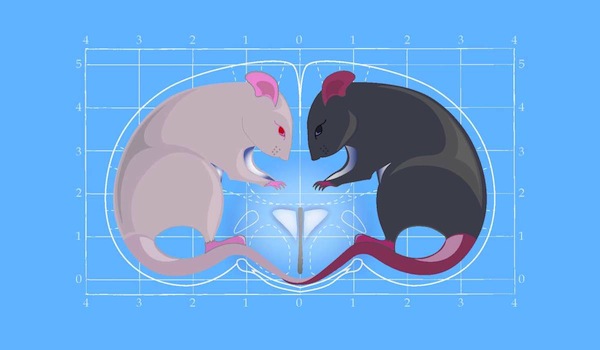
Oxytocin, a peptide produced in the brain, may bring hearts together – or it can help induce aggression. (image from Weizmann Institute)

During the pandemic lockdown, as couples have been forced to spend days and weeks in each other’s company, some have found their love renewed while others are on their way to divorce court. Oxytocin, a peptide produced in the brain, is complicated in that way: a neuromodulator, it may bring hearts together or it can help induce aggression. This conclusion arises from research led by Weizmann Institute of Science researchers in which mice living in semi-natural conditions had their oxytocin-producing brain cells manipulated in a precise manner. The findings, which were published in Neuron, could shed new light on efforts to use oxytocin to treat a variety of psychiatric conditions, from social anxiety and autism to schizophrenia.

Much of what we know about the actions of neuromodulators like oxytocin comes from behavioural studies of lab animals in standard lab conditions. These conditions are strictly controlled and artificial, in part so that researchers can limit the number of variables affecting behaviour. But a number of recent studies suggest that the actions of a mouse in a semi-natural environment can teach us much more about natural behaviour, especially when we mean to apply those findings to humans.

Prof. Alon Chen’s lab group in the institute’s neurobiology department have created an experimental setup that enables them to observe mice in something approaching their natural living conditions – an environment enriched with stimuli they can explore – and their activity is monitored day and night with cameras and analyzed computationally. The present study, which has been ongoing for the past eight years, was led by research students Sergey Anpilov and Noa Eren, and staff scientist Dr. Yair Shemesh in Chen’s lab group.

The innovation in this experiment was to incorporate optogenetics – a method that enables researchers to turn specific neurons in the brain on or off using light. To create an optogenetic setup that would enable the team to study mice that were behaving naturally, the group developed a compact, lightweight, wireless device with which the scientists could activate nerve cells by remote control. With the help of optogenetics expert Prof. Ofer Yizhar of the same department, the group introduced a protein previously developed by Yizhar into the oxytocin-producing brain cells in the mice. When light from the wireless device touched those neurons, they became more sensitized to input from the other brain cells in their network.

“Our first goal,” said Anpilov, “was to reach that ‘sweet spot’ of experimental setups in which we track behaviour in a natural environment, without relinquishing the ability to ask pointed scientific questions about brain functions.”

Shemesh added that “the classical experimental setup is not only lacking in stimuli, the measurements tend to span mere minutes, while we had the capacity to track social dynamics in a group over the course of days.”

Delving into the role of oxytocin was sort of a test drive for the experimental system. It had been believed that this hormone mediates pro-social behaviour. But findings have been conflicting, and some have proposed another hypothesis, termed “social salience,” stating that oxytocin might be involved in amplifying the perception of diverse social cues, which could then result in pro-social or antagonistic behaviours, depending on such factors as individual character and the environment.

To test the social salience hypothesis, the team used mice in which they could gently activate the oxytocin-producing cells in the hypothalamus, placing them first in the enriched, semi-natural lab environments. To compare, they repeated the experiment with mice placed in the standard, sterile lab setups.

In the semi-natural environment, the mice at first displayed heightened interest in one another, but this was soon accompanied by a rise in aggressive behaviour. In contrast, increasing oxytocin production in the mice in classical lab conditions resulted in reduced aggression.

“In an all-male, natural social setting, we would expect to see belligerent behaviour as they compete for territory or food,” said Anpilov. “That is, the social conditions are conducive to competition and aggression. In the standard lab setup, a different social situation leads to a different effect for the oxytocin.”

If the “love hormone” is more likely a “social hormone,” what does that mean for its pharmaceutical applications?

“Oxytocin is involved, as previous experiments have shown, in such social behaviours as making eye contact or feelings of closeness,” said Eren, “but our work shows it does not improve sociability across the board. Its effects depend on both context and personality.”

This implies that, if oxytocin is to be used therapeutically, a much more nuanced view is needed in research: “If we want to understand the complexities of behaviour, we need to study behaviour in a complex environment. Only then can we begin to translate our findings to human behaviour,” she said.

Participating in this research were scientists at the Max Planck Institute for Psychiatry in Munich, including research students Asaf Benjamin and Stoyo Karamihalev, staff scientist Dr. Julien Dine and postdoctoral fellow Dr. Oren Forkosh of the Chen lab; Prof. Shlomo Wagner and postdoctoral fellow Dr. Hala Harony-Nicolas of Haifa University; Prof. Inga Neumann and research student Vinicius Oliveira of Regensburg University, Germany; and electrical engineer Avi Dagan.

Format ImagePosted on June 26, 2020June 24, 2020Author Weizmann InstituteCategories IsraelTags Alon Chen, health, oxytocin, science, Weizmann Institute
Jewish microbe hunters

Jewish microbe hunters

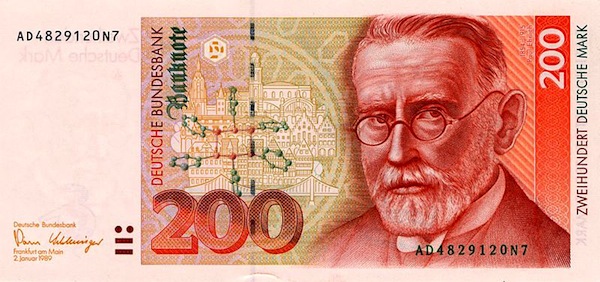
During the Nazi regime, all references to the great physician-chemist Paul Ehrlich were suppressed. In the 1990s, he was featured on the German 200-mark bill. (photo from the internet)

In the 17th century, the Netherlands was a country of great tolerance, having welcomed the Jews driven out of Spain and Portugal, including renowned physicians. Not coincidentally, this was the Dutch Golden Age, a time of breathtaking advances in the arts and sciences. It was there that the first microscopes were invented. To the eyes of Antoni van Leeuwenhoek in the town of Delft in the 1670s were revealed a veritable zoo of subvisible microorganisms previously inconceivable to even the most fevered imagination.

Throughout the 18th century and well into the 19th, there was speculation among medical men about the possible relation of microorganisms to disease. Certain varieties of these tiny beings seemed to appear in the organs or blood of patients with certain diseases. But there were endless questions: Could these creatures, so primitive, come into being by themselves (“spontaneous generation”)? Were they the cause of disease or were they the product of the diseased body? Could a pathogenic microbe of one disease transform into that of another disease? In diseases known to be infectious, were microorganisms the culprits, transmitted from a diseased body to a healthy one, there to germinate?

A breakthrough heralding the Heroic Age of the “microbe hunters” came in 1840 with the publication of Pathological Researches by the Bavarian medical doctor Jacob Henle, a descendant of rabbis. Using technologically advanced microscopes and deductive analysis of case histories, Henle declared to the medical world: “Contagion is matter endowed with individual life which reproduces itself in the manner of animals and plants, which can multiply by assimilating organic material and can exist parasitically on the sick body.”

A year later, the Polish-German Jew Dr. Robert Remak published the first of his observations that cells – of any living organism, including microbes – can arise only by division of parent cells. Thus, Remak helped put to rest the concept of “spontaneous generation.”

photo - Microbe hunter Ferdinand Cohn in the front piece of one of his books
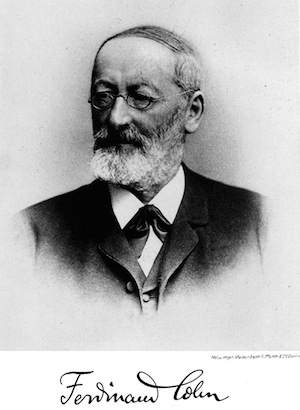
Microbe hunter Ferdinand Cohn in the front piece of one of his books. (photo from the internet)

Humankind’s war against transmittable diseases accelerated dramatically in the second half of the 19th century. In the German city of Breslau (today Wroclaw, Poland) the botanist-microscopist Dr. Ferdinand Cohn published his Bacteria, the Smallest Living Organisms in 1872. As the undisputed master of the classification of subvisible life, Cohn elucidated that, while a microorganism of one disease may undergo various transformations, it remained the microorganism of that specific disease and not of another.

Robert Koch, a student of Henle and a protégé of Cohn, of Protestant background, discovered the tuberculosis bacterium and elucidated the mysterious life cycle of the anthrax bacillus.

Such dramatic advances led to the discovery of links in the chain by which the various pathogenic microorganisms are transmitted, and then to measures to break those links: cholera by drinking water contaminated by sewage, sleeping sickness by the tsetse fly, childbed fever by the contaminated hands of doctors and midwives, malaria (literally “bad air” in Italian) by mosquitoes.

To such defensive measures were added an arsenal of aggressive weapons. In Berlin in the 1890s, the Jewish doctor Paul Ehrlich was instrumental in developing serums. The watery part of the blood (after coagulation) of an animal that has fought off a toxin-producing disease such as diphtheria contains powerful antitoxins that can be injected into a diphtheria patient. A brilliant and imaginative chemist, Ehrlich pioneered techniques for selectively staining specific microorganisms to distinguish them under the microscope. This principle inspired him to develop the world’s first chemotherapeutic agent – the arsenical compound Salvarsan, known popularly as the “magic bullet,” which homed in on and destroyed the spirochetes of syphilis. (Ehrlich’s coreligionist Albert Wassermann developed the blood test for the disease.)

A general optimism prevailed as the new century dawned that humankind would soon be free of all serious infectious disease. But there was a missing piece in the puzzle.

It had been known since ancient times that people who survived a given disease were wholly or partially immune from an attack by the same disease. In 1798, the English physician Edward Jenner showed that deliberate inoculation with the pustules of relatively benign cowpox (vaccination, from the Latin vacca, cow) protected the person from attack from the far more virulent and deadly smallpox.

Among the great triumphs in the war against transmissible disease was the development of a new kind of vaccination by the French chemist Louis Pasteur, a devout Catholic. Pasteur showed how inoculating a patient with killed or attenuated (weakened by drying or other techniques) pathogens such as rabies activated the natural immune system against a subsequent all-out attack by the fully virulent disease.

But here was the rub. Unlike the microorganisms of tuberculosis, cholera, diphtheria, syphilis and so many other diseases, no one had ever seen the agents of smallpox and rabies. Pasteur speculated that they were microorganisms beyond the range of the most powerful microscopes.

Around the turn of the 20th century, the Dutch microbiologist Martinus Beijerinck showed how the fluid of an infected plant, after being strained through the finest filter, was able to infect healthy plants. This was an important breakthrough, but Beijerinck erred in assuming the culprit wasn’t composed of solid matter. He called it virus, Latin for poison.

That no one had seen a virus made the fight more difficult. Between 1918 and 1920, as the Spanish flu claimed more lives than all the battlefields of the Great War in the preceding four years, the medical profession mistakenly attributed it to an opportunistic bacterium, visible under the microscope.

The limit of what could be seen was dramatically pushed back with the invention of the electron microscope in the early 1930s, by which viruses, hundreds of times smaller than bacteria, were exposed to the light of day. It appeared that Pasteur was right after all in postulating that the agent of rabies was a microorganism.

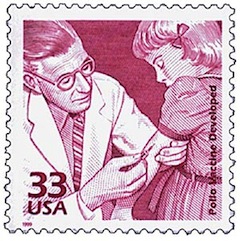
image - One of several U.S. postage stamps commemorating the polio vaccines of Jonas Salk and Albert Sabin
One of several U.S. postage stamps commemorating the polio vaccines of Jonas Salk and Albert Sabin. (image from the internet)

But not quite. Research later in the century showed that viruses – unlike living entities (organisms) – can’t multiply or reproduce on their own. Viruses turned out to be packets of genetic material – DNA or RNA – that penetrate, commandeer and destroy living cells in order to multiply.

Poliomyelitis, the dread crippler caused by an enterovirus, was checked in the 1950s (and is now virtually eradicated worldwide) thanks to two vaccines developed independently by the American Jewish medical doctors Jonas Salk and Albert Sabin. (The virus was cultured using the foreskins of circumcised babies.)

AIDS, hepatitis, SARS, Ebola and now corona – new virulent viruses keep emerging. And the weapons to fight them – vaccines, tests, serums, pharmacological “magic bullets” – are in the enduring spirit of the great Jewish microbe hunters.

Dr. Frank Heynick is the author of Jews and Medicine: An Epic Saga (KTAV Publishing House, 2002, still in print). There are some 500 publications of his in the United States and Europe, ranging from academic to popular-scientific, many on the history of medicine and allied fields, including the crucial Jewish role. He lives in New York and has taught the history of medicine at New York University.

Format ImagePosted on March 20, 2020March 17, 2020Author Dr. Frank HeynickCategories Op-EdTags coronavirus, education, health, history, medicine, microbe, microorganisms, science
Desert not a wasteland

Desert not a wasteland

Monument Valley in Utah. (photo from CBC Radio)

Having always lived in and around rainforest, CBC Vancouver’s Matthew Lazin-Ryder said the desert is a place he still struggles to fully understand.

“The desert has always seemed to be an imaginary place,” said Lazin-Ryder, contributing producer of the radio-documentary What Happens in the Desert. “My only contact with the desert has been in movies, storybooks, religious metaphors and things like that. The closest I have ever gotten to the real desert is having spent a little time in New Mexico, but, even then, I don’t think I was in true, scientific desert. My impression of what the desert was in my imagination was different than reality.

“One thing I wasn’t prepared for in my time in New Mexico was how cold it got at night, because it can get really cold. The imaginary desert in my mind was always hot – nights are sweltering, empty spaces, desolation.”

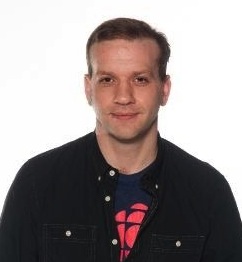
photo - Matthew Lazin-Ryder, contributing producer of the CBC radio-documentary What Happens in the Desert
Matthew Lazin-Ryder, contributing producer of the CBC radio-documentary What Happens in the Desert. (photo from CBC Radio)

In the radio documentary, which is an episode of the CBC Radio show Ideas, Lazin-Ryder explores various perceptions of the desert, stemming from culture, such as movies, novels and poetry, which often only portray one aspect of the landscape.

“An example we use in the documentary is Monument Valley in Utah, which, if you’ve seen a western film, it’s in so many movies,” Lazin-Ryder, who is a member of the Jewish community, told the Independent. “So, Monument Valley is that part of Utah, with red sand and rock, with these big towers of rock jutting out of the middle of the desert. John Ford, legendary western director, shot over 10 movies there at Monument Valley and lots of other classic western movies have used the backdrop of this valley as the setting.”

However, while it may seem that many films are shot in Monument Valley, most are actually shot in less-known locations in states like Texas, California and Arizona.

“It’s never specifically that this movie or story is taking place in Monument Valley,” said Lazin-Ryder. “It just becomes a symbol of the desert, which is a stand-in for an alien place, an exotic place, a place that you’ve never been to.”

From a religious perspective, the experts Lazin-Ryder interviews often speak of duality, where the desert is both a place where God is absent and where God is felt the strongest.

“The desert, in the Old Testament, is a place of deep spirituality and is also, for the Israelites, the place where they encounter God, where God travels with them,” he explained. “In the Christian New Testament and Christian culture later on, the desert becomes a place, not of exile and separation from God, but a place you go to escape civilization and to connect with God. Simultaneously, it’s a place where there are dangers … and the devil lives there and there are poisonous creatures, and it’s a place of death, wasteland and absence of God. But, at the same time, the desert is the place, both for the Israelites and early Christians, a place to go to connect with God.

“In a sense,” he said, “the desert, through its absence, represents God, because you can’t fully describe God – you can’t fully describe absence. The desert represents this strange relationship that we have with God, in a religious metaphor – at the same time that God is everything, God is nothing, and indescribable.”

In the documentary, Lazin-Ryder talks about the way the desert is portrayed in science-related and apocalyptic movies – movies that portray the future world as a desert; that climate change, if it continues apace, will leave the whole earth a desert.

“The seas will dry up, the forests will die and everything will be desert waste … which is not particularly an ecologically valid prediction … but, it’s a helpful metaphor for people to think about the dangers of climate change,” he said.

“The other thing is that, when talking about climate change and things like switching to less carbon-intensive energy, the desert becomes a very easy thing for people to say … ‘Hey! You know what would be great? Let’s just put a whole bunch of solar panels and windmills and stuff in the desert, because that’s empty land and it gets a lot of sun.’ You can Google it – there are all kinds of plans that people have pushed, to put acres and acres of solar panels in the Mojave Desert, the Sonoran Desert or the Sahara Desert.

“It’s this kind of a science-fiction idea that, hey, we have these empty spaces on the earth – let’s absolutely fill them with solar panels and windmills. But, the problem with that is – it comes from this thinking about deserts as though they are empty, ownerless places, absent of life. And, the problem is that that’s not true. Deserts are full of life, of plants and of animals that have adapted in interesting ways. And, we also don’t quite understand the place that deserts have in the broader ecosystem, in terms of the carbon cycle.”

While we hear in the news about desertification, in actuality only some deserts may get bigger and others drier, he said. Very few reports talk about the fact that some deserts may get wetter and, in a sense, shrink.

Desert systems are intricate and delicate and we, as humans, often only notice a change when it is already too late. Lazin-Ryder gave the example of the Joshua trees in the Mojave Desert that are dying, and the efforts to preserve them.

“Those kinds of problems are expected to increase as climate change goes on,” he said. But, talking about the desert as merely land available to fix the problems that we have created, “neglects the fact that they are not absent, marginal places. They actually have a place in the world. Deserts are a natural thing that should exist on the earth,” he said. “And there will be increasing pressures to put things in the desert, to put people in the desert, to grow food in the desert – despite the fact that they are as important and as under threat as places like the rainforests and wetlands that we’re trying to preserve. So, on one hand, we’re afraid the future might become desert, but, on the other hand, we may want to think about how to preserve the deserts we already have, as there are many threats to the desert.”

Lazin-Ryder hopes listeners of the documentary will gain a better grasp of the nuances of the desert. For most people in the West, he said, “interaction with the desert is in an imaginary sense … either in religious texts, fiction or movies.” The show tries to get people to consider “what those metaphors and symbols do to our thinking – not just about the desert, but of all the natural world; in what places are worth preserving, celebrating, and what places we think of as marginal, empty, dead or inherently bad.

“We get lots of stories told to us all the time, about what parts of the earth are good or bad,” he said. “I think, ultimately, beyond whether we’re talking about deserts, dry land or wet land, my ultimate hope is that it helps people think about the stories that we tell ourselves about the natural world, versus trying to gain an understanding about how the natural world actually works.”

To listen to What Happens in the Desert, visit cbc.ca/radio/podcasts/documentaries/the-best-of-ideas.

Rebeca Kuropatwa is a Winnipeg freelance writer.

Format ImagePosted on February 28, 2020February 26, 2020Author Rebeca KuropatwaCategories NationalTags CBC Vancouver, desert, education, environment, Matthew Lazin-Ryder, Monument Valley, radio, science

Adding colour to our lives

Life is such an adventure, but its appeal for us depends so much on our attitude. One of the amazing things about this fact – that our attitude makes all the difference – is that this appears to be a law of nature. How we “reflect off” the events in our lives is crucial to our fate.

Most of us know a little bit about the nature of sight, the mechanics of seeing. We know less about the role played by light in our world. Light travels in units called photons. We know that these photons travel really fast, even when they have to bounce around in a world full of atoms to get where they are headed, which is everywhere. Photons travel so fast, we don’t notice that random atoms are impeding their progress a bit. In spite of that, they reflect off all the objects in our world and succeed in entering our eyes.

The lenses in our eyes focus this reflected light onto the light-sensitive rods and cones on the retina at the back of our eyeballs. (The rods work in dim or dark situations and the cones in bright light.) These create variable electrical charges sent along the optic nerve to the brain. Our brains interpret these stimuli as the visions that we see before our eyes. Did you know that the curvature of our eyes results in the images we receive being upside down? Our brains turn them right-side up for us.

What we are seeing is the reflected light. Any light absorbed by the objects we are looking at, we will not see. The same is true about colour. We only see the colours that the objects we are looking at reflect. All other colours are the ones that have been absorbed by these objects and we will not see them. Colour is all about light reflecting off the things in the world around us.

In the same way, it is our reactions to the realities we face in life that determine the kinds of lives we will lead. Different reactions, different lives. What does it mean to say that our reactions can be of overwhelming importance in determining our fates? It means that, to an important extent, our fates are in our own hands. (What does that do to the blame-games we have been nursing all our lives?)

I am getting to be what some people might term “an old guy.” Others, less kind, might say, “an old fool.” One would have to be foolish to live a whole life without understanding the principle I have enunciated above. And yet, it is only at this late date that this has become so clear to me.

Of course, I always knew I had to hustle my butt if I wanted to achieve the things I desired for my family and me. Yet, I never achieved the clarity of insight that I now have. I would venture to say that there are others of my fellow travelers who might have been, who might still be, wanting in this matter.

When all is said and done, there is no substitute for having a positive attitude. There are so many good things in our lives that we have to appreciate, that we have to be grateful for. There are so many people we pass every day who are less fortunate than we are. But that does not absolve us from the need to actively present our own best case to the world, to be up and at ’em every day, meeting the challenges we all face and will face. Without that, we are beat before we start.

Being open to the positive is a necessity if we hope to take advantage of any opportunities that might come our way if we reach out. Like the photons of light in our world, we move forward in our lives toward our goals in spite of impediments we might face; or we find paths to goals we hadn’t considered before.

I am not talking merely about amassing material possessions. I am talking about spending time working out how to ensure we are adding the colour we want to see in our lives. If all of this is dependent wholly on ourselves to determine what the elements of our lives are going to be – not our parents or our partners or our bosses or the economy – then what are we going to do about it? If, in spite of our positive attitude, we are not happy, if we are not satisfied, what are we going to do about it? I must confess, I never had this moment of clarity until I was 70 years of age. That’s a whole lot of living to have gone through without thinking about such things.

At the age of 71, unheralded, I flew across half a continent to try and reconnect with a woman I had known when we were teenagers more than 50 years before. I can report that we can look back now at almost 15 years of happily married life. We are keeping each other alive.

So, what I am writing about here is seeing the reflections off the objects (subjects?) that make up the elements of our lives. We have to be aware of the reflections streaming into our eyes, and consciously translate the images making their way into our brain. What colours are being reflected? Are we absorbing what those images are telling us? Or are we seeing them without really seeing them, same old, same old? And, if we do see them, and we don’t like what we see, what are we going to do about it? It is never too late to make an effort, I can tell you that!

Max Roytenberg is a Vancouver-based poet, writer and blogger. His book Hero in My Own Eyes: Tripping a Life Fantastic is available from Amazon and other online booksellers.

Posted on February 28, 2020February 26, 2020Author Max RoytenbergCategories Op-EdTags aging, lifestyle, philosophy, science
Predicting diabetes risk

Predicting diabetes risk

A new computer algorithm can predict in the early stages of pregnancy, or even before pregnancy has occurred, which women are at a high risk of gestational diabetes. (photo from Weizmann Institute)

A new computer algorithm can predict in the early stages of pregnancy, or even before pregnancy has occurred, which women are at a high risk of gestational diabetes, according to a study by researchers at the Weizmann Institute of Science.

The study, reported recently in Nature Medicine, analyzed data on nearly 600,000 pregnancies available from Israel’s largest health organization, Clalit Health Services.

“Our ultimate goal has been to help the health system take measures so as to prevent diabetes from occurring in pregnancy,” said senior author Prof. Eran Segal of the institute’s computer science and applied mathematics, and molecular cell biology departments.

Gestational diabetes is characterized by high blood sugar levels that develop during pregnancy in women who did not previously have diabetes. It occurs in three to nine percent of all pregnancies and is fraught with risks for both mother and baby. Typically, gestational diabetes is diagnosed between the 24th and 28th weeks of pregnancy, with the help of a glucose tolerance test in which the woman drinks a glucose solution and then undergoes a blood test to see how quickly the glucose is cleared from her blood.

In the new study, Segal and colleagues started out by applying a machine learning method to Clalit’s health records on some 450,000 pregnancies in women who gave birth between 2010 and 2017. Gestational diabetes had been diagnosed by glucose tolerance testing in about four percent of these pregnancies. After processing the dataset – made up of more than 2,000 parameters for each pregnancy, including the woman’s blood test results and her and her family’s medical histories – the scientists’ algorithm revealed that nine of the parameters were sufficient to accurately identify the women who were at a high risk of developing gestational diabetes. The nine parameters included the woman’s age, body mass index, family history of diabetes and results of her glucose tests during previous pregnancies (if any).

Next, to make sure that the nine parameters could indeed accurately predict the risk of gestational diabetes, the researchers applied them to Clalit’s health records on about 140,000 additional pregnancies that had not been part of the initial analysis. The results validated the study’s findings: the nine parameters helped accurately identify the women who ultimately developed gestational diabetes.

These findings suggest that, by having a woman answer just nine questions, it should be possible to tell in advance whether she is at a high risk of developing gestational diabetes. If this information is available early on – in the early stages of pregnancy or even before the woman has gotten pregnant – it might be possible to reduce her risk of diabetes through lifestyle measures such as exercise and diet. On the other hand, women identified by the questionnaire as being at a low risk of gestational diabetes may be spared the cost and inconvenience of the glucose testing. (Visit weizmann.ac.il/sites/gd-predictor to access the self-assessment questionnaire.)

In more general terms, this study has demonstrated the usefulness of large human-based datasets, specifically electronic health records, for deriving personalized disease predictions that can lead to preventive and therapeutic measures.

The work was led by graduate students Nitzan Shalom Artzi, Dr. Smadar Shilo and Hagai Rossman from Segal’s lab at the Weizmann Institute of Science, who collaborated with Prof. Eran Hadar, Dr. Shiri Barbash-Hazan, Prof. Avi Ben-Haroush and Prof. Arnon Wiznitzer of the Rabin Medical Centre in Petach Tikvah; and Prof. Ran D. Balicer and Dr. Becca Feldman of Clalit Health Services.


Format ImagePosted on February 28, 2020February 26, 2020Author Weizmann InstituteCategories IsraelTags childbirth, diabetes, health care, pregnancy, science, women
Making hydrogen from sunlight

Making hydrogen from sunlight

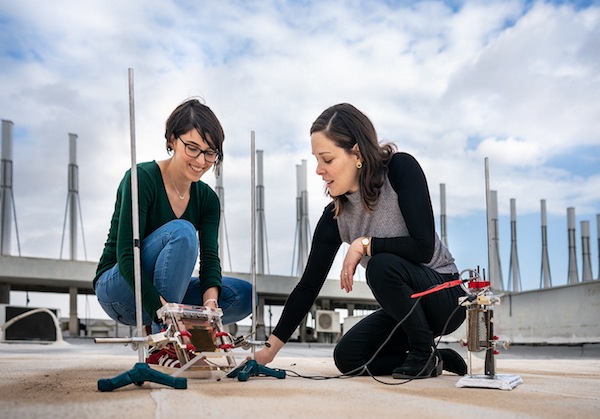
Avigail Landman, right, and Rawan Halabi with an experimental prototype device. (photo from Ashernet)

Researchers at the Technion-Israel Institute of Technology have developed a prototype system for efficient and safe production of hydrogen using only solar energy. Published in the journal Joule, the study was led by Avigail Landman, a doctoral student in the Grand Technion Energy Program, together with Rawan Halabi, a master’s student from the faculty of materials science and engineering, under the joint guidance of Technion and University of Porto (Portugal) professors. The system contains a tandem cell solar device. Some of the sun’s radiation is absorbed in the upper layer, which is made of semi-transparent iron oxide. The radiation that is not absorbed in this layer passes through it and is subsequently absorbed by a photovoltaic cell. Together, the two layers provide the energy needed to decompose the water into hydrogen and oxygen. The innovation is a continuation of the theoretical breakthrough by the Technion research team presented in a March 2017 article in Nature Materials. Hydrogen is a highly sought-after material in many areas of our lives and, today, most of the world’s hydrogen is produced from natural gas, but this process emits carbon dioxide, whose environmental damage is well known.

Format ImagePosted on January 17, 2020January 15, 2020Author Edgar AsherCategories IsraelTags high-tech, Israel, science, Technion, University of Porto
Complexities of autism

Complexities of autism

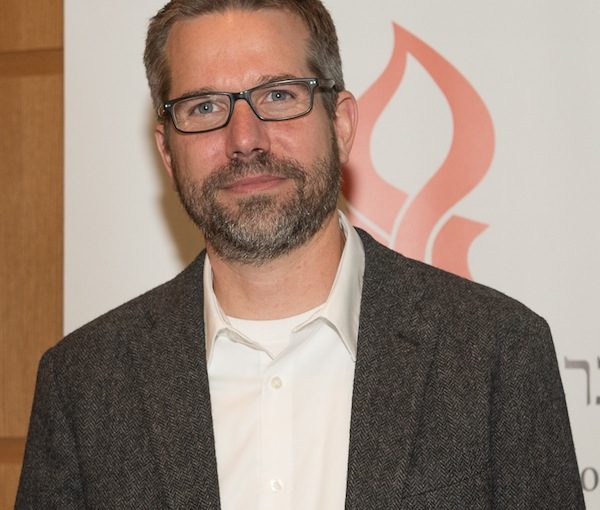
Israeli neuroscientist Dr. Ilan Dinstein was in Vancouver last month to talk about autism research. (photo by Adele Lewin)

Neuroscientist Dr. Ilan Dinstein was in Vancouver last month to share research and expand knowledge on best practices internationally. An associate professor of psychology and cognitive and brain sciences at Ben-Gurion University of the Negev (BGU), Dinstein is the director of the new National Autism Research Centre (NAC) in Israel.

David Berson, executive director of the Canadian Associates of BGU for British Columbia and Alberta, told the Independent: “CABGU was delighted to be a part of hosting Dr Ilan Dinstein in Metro Vancouver. This visit was spearheaded by Dr. Grace Iarocci, Dr. Elina Birmingham and Dr. Sam Doesburg from SFU [Simon Fraser University] and Dr. Tim Oberlander from B.C. Children’s Hospital.

“Ilan Dinstein is a true reflection of the pioneering spirit that is unique to the Negev region of Israel, where, over the past five years, clinicians from Soroka University Medical Centre and researchers from Ben-Gurion University of the Negev have organically come together to collaborate for the betterment of all of the residents with ASD [autism spectrum disorder] in the region.”

Dinstein spoke with the Independent about the new centre and the purpose of his visit to Canada.

“We started the centre five years ago, to try to understand different causes of autism,” he said. “Autism is not one disorder. There are different sub-types of autism, with different possible roots and risk factors. Some of those factors are biological or genetic; others might be environmental. For example, a premature birth might be a risk factor in the child developing autism. Or the age of the parents – a child of older parents might have a higher risk of autism diagnosis than if the same parents were younger. We at the centre are trying to discover how the combination of genetic and environmental issues affects autism development.”

According to Dinstein, one of the reasons for the creation of the centre was the way science is funded in Israel. “The funding usually comes for one specific question,” he explained, “but autism is a complex, systematic disorder and it needs many facets of study, measurement and research; it needs collaboration and sharing of information. At the centre, we are able to combine different fields of study with the clinical applications, as we work together with the Soroka medical centre.”

The scientists of the NAC study autistic patients from different multidisciplinary angles: neuroscience and cellular biology, language pathology and motor tracking, even facial features.

“The truly unique thing is that we do all our studies inside the hospital,” Dinstein said. “Parents come in with their children, usually when the children are about 3 years old and the parents and the children’s teachers notice the kids’ uncommon behavioural patterns. The diagnosis of autism usually takes four visits. During those visits, we work in collaboration with the doctors, measuring various characteristics of the child’s development to arrive at the right diagnosis.

“We also started a database of all our patients, so we have a centralized well of knowledge about how various biological, cultural and social factors might contribute to autism development.”

Of course, not all of the parents agree to have their child added to the database, but Dinstein said that their recruitment rate is about 80%.

After the diagnosis, the scientists participate in determining a personalized treatment program, based on their research. “Such a program might include teaching the children useful behavioural habits, helping them with language acquisition or providing occupational therapy,” explained Dinstein. “Some autistic kids are very agitated and certain motions, like spinning, might calm them down. Sometimes, autistic children need to learn basic skills: how to dress themselves or brush their teeth.”

Pharmaceuticals can also help children cope with autism, but Dinstein said that only about 10% of patients use medications.

At the NAC, the scientists don’t treat patients, but rather study and make recommendations, develop new technologies and new methods of dealing with the disorder. Working together with clinical professionals, they hope to contribute to a higher rate of success in treatment.

One of the most important aspects of Dinstein’s and his colleagues’ work is an annual follow-up on the patients in the database. Families are required to come back once a year after the initial diagnosis, so the service providers can see their progress, determine what worked and what didn’t, and adjust their recommendations accordingly.

“We are still in the process of enlarging this project,” said Dinstein. “We want to open other locations in Israel, make our database to cover the entire state of Israel.”

The centre’s autism research, in particular its database of patients with autism, inspired interest locally, from scientists and clinicians to families and service providers. The invitation for Dinstein to visit Vancouver came from a range of people.

“Your researchers want to create a similar database to ours, Canada-wide,” said Dinstein about his presentation at the Children’s Hospital. “I met with scientists from UBC [University of British Columbia] and SFU, even some from Victoria. I also met medical professionals, parents, some service providers and stakeholders. I see these meetings as the beginning of a close relationship between autism research in Israel and in Canada. There are similarities there, but there are differences, too. Both countries have different ethnic maps, cultural traditions and genetic variations. We all want to know how such diversity affects autism.”

Olga Livshin is a Vancouver freelance writer. She can be reached at [email protected].

Format ImagePosted on October 11, 2019October 10, 2019Author Olga LivshinCategories LocalTags autism, Ben-Gurion University, BGU, CABGU, health, Ilan Dinstein, Israel, science
How can we be happy?

How can we be happy?

Left to right are Canadian Friends of the Hebrew University Vancouver president Stav Adler, CFHU Vancouver executive director Dina Wachtel and Hebrew U’s Prof. Yoram Yovell. (photo from CFHU Vancouver)

The happiest time in the average person’s life is when the last grown child leaves home and the dog dies. That was the tip of the iceberg in happiness advice from one of world’s foremost experts and researchers on the subject.

Prof. Yoram Yovell, a psychiatrist, brain researcher, psychoanalyst, author and media phenomenon in Israel, spoke to an overflow crowd at Beth Israel Synagogue July 25. An associate professor in the division of clinical neuroscience, Hadassah Ein Kerem Medical Center, at the Hebrew University of Jerusalem, Yovell is author of two bestsellers: Brainstorm and What is Love? He hosted the award-winning primetime TV show Sihat Nefesh (Heart-to-heart Talk) for 10 years. His visit was presented by Canadian Friends of the Hebrew University of Jerusalem and made possible by the Dr. Robert Rogow and Dr. Sally Rogow Memorial Endowment Fund in Support of Academic Lectures.

Yovell speculated that the audience was so large because of a sad fact about Vancouver.

“Now I understand why all of you are here,” he said. “I didn’t know this before I came here – you are considered to be the unhappiest city in Canada.”

He supposes this status might have to do with the combination of rainy days and the proportion of new Canadians, because “immigrants, for very important reasons, happen to be less happy than people who live in the same place where they were born,” he said.

But advancing happiness (or ameliorating unhappiness) requires us to define it, he said. He asked the audience to raise their hands if they were happy – most did – but then he demanded to know how they knew they were happy.

“That question sounds silly,” he said. “Because happiness is a subjective mental state. It’s something that I feel inside.… You probably did with yourself something that you would have done had I asked you, are you hungry or not hungry? Are you hot or cold? Are you tired or awake? In all the circumstances, people look inside and try to get a certain feeling and then that’s what they report. By doing so, we are treating happiness as if it’s something we feel. I’m not saying it’s bad that happiness is something we feel, but I think we have lots to gain by really questioning whether happiness is something that we feel or something that we do.”

Aristotle, who wrote a lot about happiness, differentiated hedonia, pleasure, from eudaimonia, a much more complex concept that has more to do with achieving one’s potential in every aspect of our lives.

Instead of asking, “Are you happy?” Aristotle would ask, “Are you the best doctor you can be, the best husband, the best parent?”

Yovell said, “And, if the answer is yes, or almost yes, to most of those questions, then, for Aristotle, I’m eudaimonia and he doesn’t care how I feel.”

Tal Ben Shahar, an Israeli who wrote the book Happier about 2,400 years after Aristotle’s ponderings on happiness, developed a simple equation: happiness equals pleasure plus meaning. This dictum is, Yovell said, the only thing that every school of philosophy and every religion agrees on. Pleasure does not equal happiness. Meaning is the additional ingredient that turns fleeting pleasure into lasting happiness.

“The contribution of pleasure to happiness is there, but it’s small,” said Yovell. “And what’s even more important is it does not last, whereas the contribution of meaning to our happiness is huge and it’s stable. That makes an enormous difference to how we should conduct our lives if we want to be happier.”

One example he discussed was a study showing that most parents say, in retrospect, that child-rearing is the thing that made them happiest. But ask them when they’re changing diapers, doing laundry or settling squabbles, and they’ll tell you their happiness level is in the basement.

“It doesn’t really matter what you felt in the meantime,” he said. “What matters is what is kept in your memories. We live in our memories.”

Having children, for most people, is the most meaningful thing they’ve ever done, said Yovell.

“Pleasure is good. Have a good dinner, have a vacation abroad, upgrade your car model – all these things are going to make you happier. But not to a great degree and not for very long,” he said. “The things that are going to make us happy long-term are the things that give our lives meaning.”

Still, the road to happiness can be arduous.

“If you take a regular couple and ask, ‘When are these two people going to be at the top of their marital happiness?’ the answer is a short time after they get married and, with every child they have, their level of happiness decreases. And when their first child hits adolescence …” at this point his words were drowned out by the laughter and applause of the audience. “You know what I’m talking about, right?” he said.

“But there is light at the end of the tunnel,” he continued. “For those of us who manage to bypass this ‘Death Valley,’ there is going to come a time in our marital life where our happiness level [improves]. The vast majority of you are going to get happier … the older you become, the happier you’re going to be.”

A study of 340,000 American men and women looked at the correlation between their well-being and their age.

“At 18, they’re pretty happy – before they’ve realized what’s going to happen,” said Yovell. “Soon, they go off to college and there goes their happiness and they keep going down and down and down and it gets worse and worse and then they hit rock bottom here, in the 40s and 50s,” he said, pointing at a slide on the projection screen. “But, it gets better as they get older, sicker, less attractive, closer to death – and happier.”

Yovell’s academic work has often focused on reducing extreme unhappiness so that, for example, suicidal people are improved enough to be brought back from that brink.

He cited Sigmund Freud, a founding board member of Hebrew University, noting that “many things that Freud hypothesized were proven wrong, but many were proven right.” One example, he said, was Freud’s observation in his first book that “Much will be gained if we succeed in transforming hysterical misery into common unhappiness.”

The science of happiness has advanced dramatically in just the past two decades, Yovell said. We now know that the parts of the brain that register physical pain overlap with those that register emotional pain.

“This is something that 20 years ago we knew absolutely nothing about and now we do. In the last two decades, we’ve gradually learned that it is true that mental suffering is encoded in our brains using the same neural pathways, the same neurotransmitters that also mediate the extremes of physical pain.”

If you ask a friend about the most painful thing they’ve experienced in their life, they are unlikely to tell you about a ski accident or an operation, he said.

“They’re going to tell you about the loss of a first-degree relative. They’re going to tell you of how they felt when a father, a mother, a sibling, a spouse or, God forbid, a child has died and has left them bereaved,” said Yovell. “That, for most of us, is going to be the most painful thing in our life.”

Similarly new research indicates that emotional pain is something we can quantify, that it is more than subjective. With this knowledge, Yovell said, the follow-up question is: “Can we make it better and, if so, how?”

First, it is important to understand what we can control and what we cannot.

In 2014, a study looked at the relationship between happiness and genetics and concluded, the professor said, “that our genetics do influence our happiness but they are responsible for about 32% of our happiness, which means that 68% of our happiness – more than two-thirds of how happy or unhappy we’re going to be – has something to do with us. Part of it is the circumstance into which you were born, but the rest is how we conduct our lives – both our real lives out in the world and our inner world, our mental lives. This is what we have to work with and that ain’t bad.”

Yovell described a study of university students, in which a control group was given a placebo and another group regular-strength Tylenol and participants were then asked to journal about how they felt with their ongoing lives on campus.

“Those who got Tylenol instead of placebo actually experienced those mental pains to a lesser degree,” he said. “That’s nice, but that ain’t going to do the job when things get more difficult when someone, God forbid, loses a spouse or when someone sinks into a big depression. Tylenol will not be the answer. But what about opioids? What about narcotics? What about those drugs that mitigate the effects of endorphins. Do they make mental suffering better? And, if so, at what price?”

Opioids were used in the treatment of depression for at least 100 years, he said, between the mid-19th and mid-20th centuries.

“Drugs like morphine and codeine were the first drugs of choice in the treatment of mental depression and they actually worked,” he said. But the problems were threefold. These drugs induce tolerance, meaning a patient has to increase the dose in order to achieve the same effect. Narcotics or opioids also cause addiction and that’s a huge problem. And they are easy to overdose on.

Recently, scientists have begun investigating the use of the opioid buprenorphine.

“It’s less addictive and it’s much less dangerous in overdose because, if you give it in high doses, it actually blocks its own effect, so it’s very, very hard to overdose on,” Yovell said. “Even though it’s 40 times more potent than morphine, it’s actually a lot less dangerous to overdose and also less addictive.… We took people in Israel who are not only incredibly depressed but also suicidal. In addition to existing treatments for their depression and suicidality, the experiment added buprenorphine to their regimen.… Those who received the active drug, unbeknownst to them and to us as well, continued to improve. So there is hope, which is very nice.”

A drug-free way to marginally increase one’s happiness, he said, is simple goodness, generosity and philanthropy. Making others happy makes us happy, he said.

“People who contribute their time and money, who volunteer, will not only be happier, they will live longer,” he said. He then directed audience members to donation forms on their tables and asked them to consider contributing to scholarships for graduate students who are working with him.

“I leave it up to you,” he said, “whether you want to save your lives.”

Format ImagePosted on August 23, 2019August 22, 2019Author Pat JohnsonCategories LocalTags CFHU, happiness, Hebrew University, science, Yoram Yovell
Parrot invaders

Parrot invaders

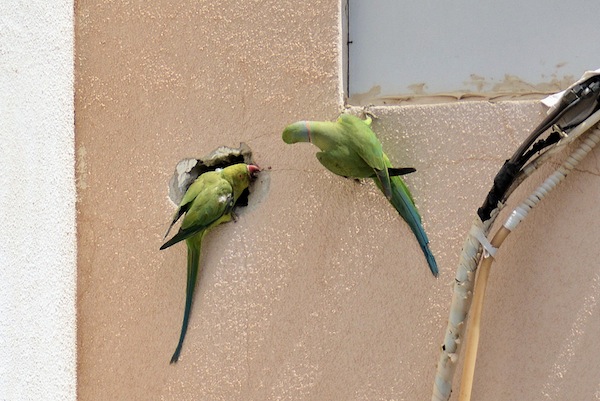
(photos from Ashernet)

A few years ago, the sight of a parrot in the Israeli sky was a rare event but invasive species have arrived, causing agricultural and other damage and threatening native biodiversity. Brought to the Middle East and Europe as pets, escaped or released parrots have established numerous wild populations across the area. ParrotNet – a European and Middle East network of scientists, photo - a monk parrotpractitioners and policymakers dedicated to research on invasive parrots, their impacts and the challenges they present – has concluded that measures to prevent parrots from invading new areas are paramount for limiting future harm. According to lead researcher Dr. Assaf Shwartz of the Technion in Haifa, “Today in Israel there are more than 200 populations of parrot species originating in South America and India…. These populations are growing every year and, today, there are more than 10,000 ring-necked parakeets and monk parakeets in Israel.”

Format ImagePosted on August 23, 2019August 22, 2019Author Edgar AsherCategories IsraelTags birds, environment, invasive species, Israel, science
שינויים ניכרים באזורים הארטקטיים

שינויים ניכרים באזורים הארטקטיים

(Mario Hoppmann/NASA)

חוקרים בכירים ארה”ב: הקרח באזורים הארקטיים של קנדה החל להפשיר שבעים שנה לפני התחזיות

משלחת מאוניברסיטת אלסקה (בפיירבנקס) מצאה שינויים ניכרים בתוואי הקרקע הקפואה באזורים הארטקטיים של קנדה, במהלך שלוש עשרה שנים: בין אלפים ושלוש לאלפיים ושש עשרה. לפי הממצאים בנוסף לנסיגת שכבת הקרח נוצרו גם גבעות נמוכות, שחסמו את הרוח ואפשרו לצמחייה להכות שורש

שכבת האדמה הקפואה באזורים הארקטיים בקנדה החלה להפשיר שבעים שנה שנה לפני הזמן הצפוי. על כך מצביעים הממצאים של משלחת חוקרים בכירה שהגיע לאזור. לדבריהם התופעה מעידה על כך שכדור הארץ מתחמם בקצב הרבה יותר מהיר מכפי שצפו בתחזיות השונות. חברי המשלחת מאוניברסיטת אלסקה שבארצות הברית, אמרו כי הופתעו מאוד מהמהירות שבה גרמו עונות הקיץ החמות במיוחד לערעור השכבות העליונות של גושי הקרח התת־קרקעיים.

זה היה מדהים אמר לסוכנות החדשות הבינלאומית רויטרס, ולדימיר רומנובסקי, גיאו־פיזיקאי חבר במשלחת של האוניברסיטה. זה סימן לכך שהאקלים כיום חם הרבה יותר מאשר היה אי פעם – במהלך חמשת אלפים השנים האחרונות. החוקרים פרסמו את ממצאיהם המעניינים והיוצאי דופן בכתב העת המדעי גיאופיזיקל רייסרץ’ לטרס.

לפני מספר שבועות פורסמו הממצאים האלה ברבים- לקראת פסגת משבר האקלים שהתקיימה בבון שבגרמניה. האירוע הבינלאומי אורגן על ידי האו”ם וגורמים נוספים. זאת במטרה להגביר את המאמצים המשותפים למצוא פתרונות בנושא הכל כך מסובך. כידוע כל מדינות המערב תומכות ברעיון כי כדור הארץ מתחמם לפי ממצאים של המדענים השונים. ורק נשיא ארה”ב הנוכחי, דונלד טראמפ, מתכחש לממצאים אלה.

המאמר התבסס על ניתוח נתונים שהחוקרים אספו בביקורם האחרון באזור לפני כשלוש שנים. ובמקביל הוא מתבסס גם על סקירות אקלימיות מאז שנת אלפיים ושלוש ועוד היום. הצוות השתמש במטוס ששודרג במיוחד כדי לבקר בנקודות מרוחקות ביותר, בהן תחנת מכ”ם מתקופת המלחמה הקרה, שנמצאת במרחק של יותר משלוש מאות ק”מ מכל יישוב אנושי. כצפוי החוקרים לקחו על עצמם סיכונים גבוהים בביקור באזורים מרוחקים אלה. לדברי החוקרים ממש בנחיתה לקרקע נגלה לעיניהם נוף שונה לחלוטין על פני הקרקע הארקטית, שאותה ראו בביקורים קודמים לפני כעשור שנים.

הנוף הפך לים גלי של גבעות, שקעים צרים ובריכות. הצמחייה שבעבר היתה מעטה החלה לצמוח בכמות גדולה בחסות המקלט שסיפק הנוף מהרוחות הבלתי פוסקות. החוקרים הרגישו מצד אחד סיפוק מקצועי על כל מה מצאו, ומצד שני הרגישו תחושה שהאסון ממשמש ובא. הם ציינו כי המראה הזכיר להם אדמה חרוכה אחרי הפצצה.

זו תופעה המזכירה לי מכרה הפחם, אמרה אחת החוקרות הבכירות במשלחת. סביר למדי שתופעה זו משפיעה על אזורים נרחבים יותר ממה שאנו מעריכים. ואת זאת החוקרים יבדקו בהמשך. החוקרים חוששים ליציבות שכבת האדמה הקפואה בשל הסכנה שהפשרה מהירה תשחרר כמות נרחבת של גזים, שיביאו להאצה משמעותית של ההתחממות הגלובלית

לפי הערכות של האו”ם גם אם המחויבויות הקיימות בהסכם פריז משנת אלפיים וחמש עשרה, להפחתת פליטות גזי החממה, ייושמו במלואן העולם עדיין רחוק מאוד ממניעת הסכנה – שתהליכים דומים של היזון חוזר יביאו להאצת ההתחממות של כדור הארץ.

נוכח אזהרות המדענים כי טמפרטורות גבוהות יותר יגרמו להרס רב בחצי הכדור הדרומי, ויהוו איום על יכולת הקיום של העולם המתועש בחצי הכדור הצפוני, ארגוני סביבה נתלים במאמר שפרסמו החוקרים כהמחשת הצורך בהפחתת פליטות גזי החממה. הפשרת האדמה הקפואה היא אחת מהנקודות המצביעות על משבר האקלים, אמרה ג’ניפר מורגן מארגון גרינפיס אינטרנשיונל.

Format ImagePosted on July 17, 2019Author Roni RachmaniCategories עניין בחדשותTags Artic, Canada, climate, environment, science, אזורים הארקטיים, האקלים שהתקיימה, הסביבה, מדע מדע, קנדה

Posts pagination

Previous page Page 1 … Page 5 Page 6 Page 7 … Page 11 Next page
Proudly powered by WordPress