Skip to content
  • Home
  • Subscribe / donate
  • Events calendar
  • News
    • Local
    • National
    • Israel
    • World
    • עניין בחדשות
      A roundup of news in Canada and further afield, in Hebrew.
  • Opinion
    • From the JI
    • Op-Ed
  • Arts & Culture
    • Performing Arts
    • Music
    • Books
    • Visual Arts
    • TV & Film
  • Life
    • Celebrating the Holidays
    • Travel
    • The Daily Snooze
      Cartoons by Jacob Samuel
    • Mystery Photo
      Help the JI and JMABC fill in the gaps in our archives.
  • Community Links
    • Organizations, Etc.
    • Other News Sources & Blogs
    • Business Directory
  • FAQ
  • JI Chai Celebration
  • JI@88! video

Recent Posts

  • Sharing her testimony
  • Fall fight takes leap forward
  • The balancing of rights
  • Multiple Tony n’ Tina roles
  • Stories of trauma, resilience
  • Celebrate our culture
  • A responsibility to help
  • What wellness means at JCC
  • Together in mourning
  • Downhill after Trump?
  • Birth control even easier now
  • Eco-Sisters mentorship
  • Unexpected discoveries
  • Study’s results hopeful
  • Bad behaviour affects us all
  • Thankful for the police
  • UBC needs a wake-up call
  • Recalling a shining star
  • Sleep well …
  • BGU fosters startup culture
  • Photography and glass
  • Is it the end of an era?
  • Taking life a step at a time
  • Nakba exhibit biased
  • Film festival starts next week
  • Musical with heart and soul
  • Rabbi marks 13 years
  • Keeper of VTT’s history
  • Gala fêtes Infeld’s 20th
  • Building JWest together
  • Challah Mom comes to Vancouver
  • What to do about media bias
  • Education offers hope
  • Remembrance – a moral act
  • What makes us human
  • המלחמות של נתניהו וטראמפ

Archives

Follow @JewishIndie
image - The CJN - Visit Us Banner - 300x600 - 101625

Tag: religion

Form forces Jews to be white

A friend of mine was recently angry and anxious about a university human resources form. The form reflected how people self-identified. In other words, how diverse was this Canadian university’s workforce?

The form’s questions asked about race. On that form, it said that Jewish people should mark on their forms “white.”

The person who told me about this wrote on the form that this was racist and wrong. In fact, Jews come in every single colour and are from all over the world. Jews aren’t defined by only the (Ashkenazim) European “white” category. If we’re identified as an ethnicity, that doesn’t define our race.

Also, Judaism isn’t solely a religion. We’re still considered Jewish even if one converts to another religion, or isn’t practising or is a descendant of a Jewish person. In Canada, First Nations, Inuit and Métis are Indigenous. Historically, Jews are also considered indigenous – to Israel.

Non-Jews have racialized us as “other” for thousands of years. This othering isn’t a new thing. It’s a core component of antisemitism. In Hitler’s Germany, categorizing Jews as a different race and subhuman made it easier for genocide to take place.

This historic narrative around antisemitism parallels that of many other oppressed people. Yet, the antisemitic misinformation campaign is powerful. Even though there are only about 14 million Jews in the world, antisemites consider us to have an outsized influence and power that somehow overpowers and dominates others. As an example: even as hate crimes against Jews have increased, they are poorly covered by mainstream news. Yet, we are also allegedly controlling the media at the same time. Huh?

These tropes aren’t logical or rational. Prejudice, discrimination and hate are often fueled by emotion. Leaders then use these strong feelings to gain power, control and wealth and to scapegoat minorities like Jews.

What are ways to counter this in a 21st-century context? There are social media activists who speak out daily, raising awareness and fighting against this misinformation. Many Jewish families open their home and Shabbat tables up to enable non-Jews, one at a time, to learn about who we are. Others write books and conduct interviews on radio and TV. Yet not all of us are public figures, or want to be.

Even as “regular” people, we can be proud owners of our Jewish identities. We can continue to learn, think and reflect on who we are, what we believe and our place in the world. We can stand together, recognizing that, as Jews, we are all responsible for one another – kol Yisrael arevim zeh le zeh. We can attempt, through pride and knowledge, to control our own narrative.

I, too, was frustrated by that human resources form. Now, I’m puzzled whenever I see a form that asks me what my identity is. Since a bit after the Second World War, light-skinned Jews in North America have been encouraged to tick off the “white” box on these “self-identity” forms. The horrors of the Holocaust were put aside by governments and non-Jews, in an effort to help European, “white” Jews integrate into society, but simply checking “white” erases us. It erases Jewish ethnicity and it erases Jews of colour. Jews from the Middle East, India, Asia, Africa and South America – Jews from anywhere we’ve lived where skin colour might not have been deemed Caucasian, white or European.

This North American erasure is so deep that Jews of colour often describe the discrimination they face when attending synagogue – there are many instances in which a member of the Ashkenazi “white” majority questions if they are full-fledged congregants. They’re asked if they are converts, or guests. Imagine the alienation Jewish people with darker skin face when asked, “Are you really Jewish?” or “Where are you really from?” every time they walk into a service.

Israel’s Jewish population is much more diverse in terms of skin tone than what one finds in the United States or Canada but, historically, it’s been hard for Mizrahi Jews to gain leadership roles in Israel, too. So many Israeli Ashkenazi Jews have bought into this whiteness identity, too.

In the United States, when Jews “became” white, they no longer were excluded from country clubs, university quotas, etc. There was an advantage to accepting this new categorization, even as it still created terrible, completely unethical inequities among people, including Jews, based on skin colour.

As a result of this “becoming white” transition, some oppressed minorities and the political left now may see Jewish people as part of an oppressive white majority. In this view, white Jews have no legitimate complaints about how we are treated, because, suddenly, we’re just part of the privileged majority. So, in addition to hate from the political right, there’s also abuse from the left if Jewish people speak out about antisemitism.

Navigating this landscape is difficult. We all have bias. No one is completely free of it. We’re raised with it and must each work to do better. Yet, in a time when Canadians are watching hate crimes rise against Jewish and Muslim communities, it’s our obligation to do more. Confronting Canada’s residential school history, the deaths of Indigenous children, and Canada’s treatment of Indigenous people overall forces us to think further about what it means to uphold certain “historic” narratives – narratives that don’t reflect what really happened.

Manitoba now wants to collect data about race, ethnicity and indigeneity on its COVID vaccine consent forms. This would allow the province to learn more about vaccination rates and virus rates in various populations.

I’ve printed out the paperwork for my second jab and I’m looking forward to celebrating this chance to be fully vaccinated. Even so, I’m wondering what box to tick off. Choosing “Other” reinforces that antisemitic tradition of negative identity politics. I’d like to avoid that. I’m proud to be Jewish – but it’s not one of the options on the form.

Joanne Seiff has written regularly for CBC Manitoba and various Jewish publications. She is the author of three books, including From the Outside In: Jewish Post Columns 2015-2016, a collection of essays available for digital download or as a paperback from Amazon. Check her out on Instagram @yrnspinner or at joanneseiff.blogspot.com.

Posted on June 25, 2021June 25, 2021Author Joanne SeiffCategories Op-EdTags discrimination, ethnicity, identity, race, religion, whiteness
Seeking siddur’s return

Seeking siddur’s return

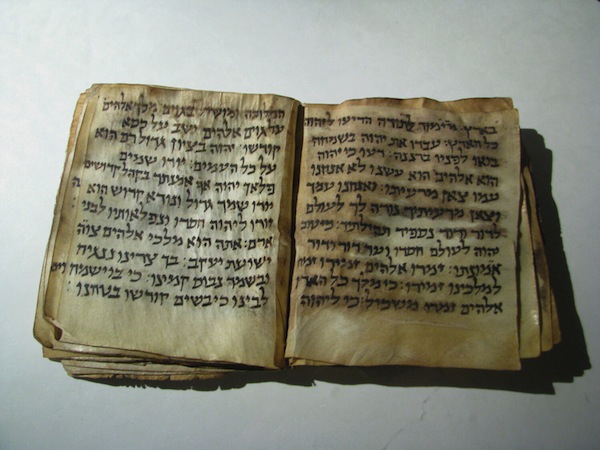
Afghanistan is seeking to repatriate a 1,200-year-old siddur, which is currently housed at the Museum of the Bible in Washington, D.C. (photo from Museum of the Bible)

The National Museum of Afghanistan, established in 1919 at the former Bagh-i-Bala royal palace overlooking Kabul, reflects both the multifaith heritage and tortured history of the Central Asian country that once dominated the Silk Road linking Europe and East Asia.

Following the outbreak of Afghanistan’s civil war in 1992, the museum was repeatedly shelled. It suffered heavy damage in a May 12, 1993, rocket strike. The combination of Taliban mortars and looters resulted in the loss of 70% of the 100,000 prehistoric, Hellenistic, Buddhist, Hindu, Zoroastrian, Islamic and Jewish objects once in its collection. Those pilfered artifacts flooded antiquities markets in London, Paris, New York and elsewhere. Now, the pro-Western regime of President Ashraf Ghani Ahmadzai – formerly an anthropology professor at Johns Hopkins University in Baltimore, Md. – wants its cultural legacy returned. Among the treasures it is seeking to repatriate is a 1,200-year-old siddur (prayer book) – the world’s oldest Hebrew manuscript after the Dead Sea Scrolls.

“It is our responsibility to get back our ancient treasures,” said Abdul Manan Shiway e-Sharq – the country’s deputy minister for information and publications in the Ministry of Information and Culture – in the first-ever on-the-record interview between an Afghani official and an Israeli journalist.

Shiway e-Sharq said photos of the ancient siddur in Kabul’s National Museum, dating from 1998, contradict the ownership documents provided by the Museum of the Bible in Washington, D.C. The MotB says it bought the siddur in 2013 from antiquities dealers in the United Kingdom who provided provenance documents showing the manuscript had been in Britain since the 1950s. The MotB paid $2.5 million for the prayer book. Though Shiway e-Sharq appraised the unique volume at $30 million for insurance purposes, it truly is priceless.

The prayer book may have belonged to the Radhanites, a little-known group of medieval merchants, some Jewish, who traded along the Silk Road linking Christian Europe, the Islamic world, China and India during the early Middle Ages. The Radhanites’ entrepôts and Afghanistan’s early Jewish community were likely destroyed in the 12th and 13th centuries, as the Mongol Empire grew from the steppes of Mongolia to extend from Europe to China.

Responding to a query, MotB’s chief curator Jeff Kloha said the museum will share results of an investigation when completed.

“As noted on the museum’s provenance research web page, museum staff continues to work with external scholars and experts to research this item’s historical and religious significance, as well the item’s history in (apparently) Afghanistan and later Israel and the United States,” Kloha said. “That research is progressing and nearing completion.”

The allegation that the MotB’s rare Afghan Hebrew prayer book is another ancient Near Eastern treasure that was smuggled out of its country of origin is the latest in a series of scandals about looted and forged antiquities that has rocked the Museum of the Bible since its 2017 opening.

The MotB recently shipped 8,000 clay tablets back to Baghdad that may have been taken from the Iraq Museum in 2003, when looters overran it during the American invasion that toppled Saddam Hussein. At the end of January 2021, the U.S. Department of Homeland Security returned 5,500 papyrus fragments from the MotB with “insufficient” provenance to Egypt’s Ministry of Tourism and Antiquities, concluding Cairo’s efforts since 2016 to regain its antiquities. And, the museum has acknowledged that all of the Dead Sea Scroll fragments it acquired are forgeries.

MotB founder Steve Green, an evangelical Christian whose family owns the Hobby Lobby craft store chain, and chief curator Kloha have worked to tighten the museum’s acquisition policies after the U.S. government reached a settlement with Hobby Lobby in 2017 requiring the chain store to pay a $3 million fine for illegally importing ancient artifacts.

Leon Hill, the in-house counsel for Transparent Business Solutions, a Dutch company that specializes in corporate integrity management, is keen to see a resolution to the dispute over the ancient siddur. He is dismissive of Green’s explanation that he and Kloha are novices in the museum business and the acquisition of artifacts. “They can’t continue to say that. They’re no longer new. They have a duty to know better. They have a duty to the history and heritage of the artifacts they purport to protect.”

He accused the MotB of “cultural imperialism.” He said, “We hope that we won’t need to be hired by the Afghan government, and that the Museum of the Bible will do the right thing in the right way quickly.”

Gil Zohar is a writer and tour guide in Jerusalem.

Format ImagePosted on April 23, 2021April 22, 2021Author Gil ZoharCategories WorldTags Abdul Manan Shiway e-Sharq, Afghanistan, history, Jeff Kloha, Kabul, law, Museum of the Bible, religion, siddur
Mussar & tikkun olam

Mussar & tikkun olam

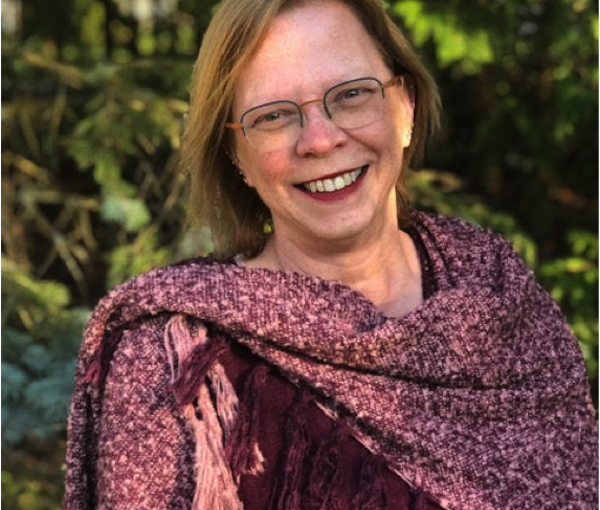
Dr. Rachael Turkienicz (photo from Kolot Mayim)

At a Jan. 3 Zoom lecture organized by Kolot Mayim Reform Temple in Victoria, Dr. Rachael Turkienicz spoke about mussar (Jewish ethics), tikkun olam (repairing the world) and whether there is a commandment to build bridges.

Turkienicz, founder and director of the Toronto-based Rachael’s Centre of Torah, Mussar and Ethics, began at the beginning, explaining why the Torah starts with creation and not with the patriarchs and matriarchs or the first commandment in Exodus.

“We start with Genesis because it is the ‘common’ that all human beings will have, and so Judaism will begin with what we all have in common,” she said. “No person can ever say to another person, ‘My father is greater than your father.’ And Father in this instance can be capitalized. One person creates the great equalizer. We should never fight with one another over this.”

She then showed how tikkun olam follows from creation, and raised the questions, When did the world break and how did it break? As man is finite and God is infinite, cracks will occur in the process of creation, and it is up to humanity to repair them, according to Turkienicz.

How do we repair? Through free will, she explained. “Free will is the most powerful thing next to God. It is so powerful that I can use my free will to deny God.”

The problem, however, is that “nowhere do we have a program that teaches us what free will is and how to use it,” she said.

In the course of daily routines, free will can take a less prominent role in our thinking, as many of us coast along “on automatic,” i.e., we function without making choices. As a result, nothing is being repaired and the world is continuing as it always does, she explained.

One example of being on automatic is when someone poses the question to an acquaintance passing by: “How are you?” The response is frequently: “I’m OK.” Neither the person asking nor the respondent delves deeply into the subject before moving on.

Being able to use free will is further compounded by the number of choices we have in an open society. Citing academic studies, Turkienicz contended that having a vast array of options available can actually hinder our ability to make use of the power of free will.

Enter mussar, a spiritual practice founded on offering a solid framework on living an ethical life. Mussar differs from kabbalah (Jewish mysticism). Whereas kabbalah is knowledge one receives, mussar moves from a person into the world, said Turkienicz.

Mussar stems from the concept that it is all well and good to know the commandments and recite Torah. However, such knowledge in itself does not make someone a mensch. “Mussar is learning to use my free will to repair the world. The commandments are the utensils, the goal is tikkun olam,” Turkienicz explained.

While mussar has been around for more than a millennium, it expanded in the 19th century to communities throughout Eastern Europe. Before the war, it was studied at the top continental yeshivot, but nearly all the leading exponents of mussar were murdered in the Holocaust. Recently, though, there has been a resurgence of the practice in both Orthodox and more liberal branches of Judaism.

Turkienicz compared mussar with other ethical philosophies, using the scenario of a person seated on a bus when an elderly person boards. Most of us are taught that we should give up our seat in such a situation. But what if the elderly person declines the offer? Ethics would say to sit back down, whereas mussar suggests that one should stay standing, because the issue is not about the elderly person but rather one’s own free will.

“Inside of me something said it is not appropriate for me to sit while an older person remains standing. Whether the elderly person sits down or not changes nothing,” she argued.

According to mussar, we are in control of the personal ingredients that comprise us, be they spirituality or patience. We all have the same ingredients, only the measurements are different, said Turkienicz. A person who does not see himself as spiritual still has a degree of spirituality. Likewise, someone who deems herself impatient has an allocation of patience within her. Our free will distributes the measurements.

“My free will chooses what is my perspective and where will I focus,” Turkienicz said.

As to whether there is a commandment to build bridges, she quoted Israel Salanter, a 19th-century rabbi and founder of the modern mussar movement, who said, “A good Jew is not one who worries about his fellow man’s soul and his own stomach, but about his fellow man’s stomach and his own soul.”

Turkienicz concluded that, while there is no commandment to build bridges, “everything else shows us we should do so, because, if we choose not to, we have lived where that leads us, and we don’t want to go there.”

To view the presentation in full, go to kolotmayimreformtemple.com and search “lectures.” Turkienicz’s talk was part of the synagogue’s Building Bridges series, the next instalment of which takes place March 7, featuring University of Calgary art professor Jennifer Eiserman on Canadian Jewish art. Click here for more information.

Sam Margolis has written for the Globe and Mail, the National Post, UPI and MSNBC.

Format ImagePosted on February 26, 2021February 24, 2021Author Sam MargolisCategories LocalTags ethics, free will, healing, Judaism, Kolot Mayim, mussar, philosophy, Rachael Turkienicz, religion
Misappropriation of Israeli flag

Misappropriation of Israeli flag

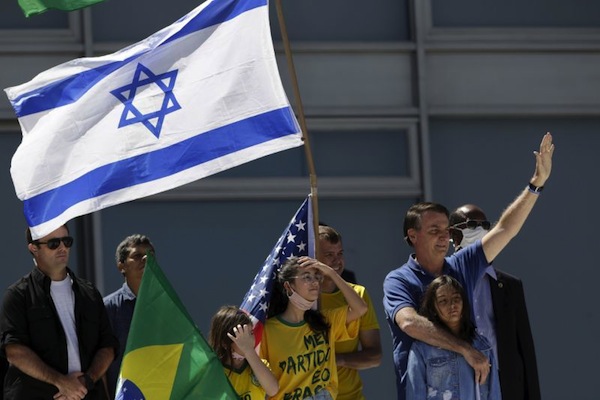
According to the Associação Scholem Aleichem, in Rio de Janeiro, right-wing religious groups are misappropriating the Israeli flag in their show of support for Brazilian President Jair Bolsonaro. (photo from ASA)

This article is a response to the continuing misappropriation of the Israeli flag by right-wing religious groups, followers of a certain Christian belief known as “progressive dispensationalism” (no political connotation), whose adherents support Brazilian President Jair Bolsonaro.

Bolsonaro and his stalwarts have consistently raised the Israeli flag while promoting their reactionary views and hate-mongering. Most recently, several Israeli flags were displayed at a public rally in support of Bolsonaro and his policies regarding COVID-19, including his stance against preventive measures such as social distancing and stay-at-home orders, and the championing of hydroxychloroquine as a sufficient means of treatment and prevention.

Within any nation, there may be contention over its symbols. Two Brazilians may wield the same flag in favour of two different ideals. Such a case is restricted to members of the same country. Likewise, as the state of Israel was created to take in and represent Jews, the only non-Israelis who may claim its flag are Jews from other countries. If non-Jews raise an Israeli flag, for whatever reason, they appropriate a symbol that is not theirs. This is all the more serious in a prejudice-filled world in which various peoples have been losing the right to tell their own story.

It is only natural – indeed, healthy – that Jews, in Israel or elsewhere, should discuss the meaning of a Jewish state. Debate has always been part of our culture, and we have never felt the need to agree on everything. But the spokesperson of another people, by seizing another nation’s symbol, makes it the hostage of their own political agenda. It is one thing to raise the Soviet flag, conceived by a party as an emblem of an international revolution. It is not so much an appropriation of a national symbol as it is an endorsement of Bolshevik ideology. The Israeli flag, by contrast, was meant to rally a people in the Diaspora. Jews outside Israel may brandish it; a non-Jew would be overrunning someone else’s realm.

Throughout history, we Jews have constantly encountered non-Jews ready to ascertain if we are a religion, a race or a nation. The consequences have always been tragic. Yet, just as it is for every people to define itself, it is a Jew’s prerogative to determine the depths of his or her Jewishness and, likewise, to determine his or her relationship with Israel. Nowadays, many Christian groups believe that the Second Coming of Jesus will be ushered in by the regrouping of all Jews in the “Holy Land.” It is no gesture of goodwill toward Jews, just another of the many ways of inserting us into a foreign narrative.

Strains of thought within dispensationalism grant Israel an importance peculiar to their religious aspirations, but the country was not established for this reason. Christian dispensationalism sees history as a series of specific stages (“dispensations”) of the “administration” of the “divine plan.” In this scheme, the prevalent trend has imputed a particular role to “the ethnic nation of Israel” – “Israel,” the people chosen for Jesus’s divine revelation. Its fulfilment entails “the end of disobedience,” namely, the embracing of Jesus as our saviour. This entails a kind of eschatological glorification of the Israeli state. Let it be said that this is no favour for Jews. Indeed, were that “dispensation” to come to pass, it would be the effective end of Judaism. Not a single architect of the state of Israel could have entertained such a notion.

But that is not all. To blur the purpose of the Jewish state with the myth of “Israel’s salvation” is to cloud public opinion and impair its perception of what Israel can – and should – represent. Far more troubling, however, is that these very same groups that preach the aforementioned Christian theory and misappropriate the Israeli flag also polarize the political climate wherever they live. In Brazil, they hold considerable sway, and their conduct is extremely controversial, to say the least. The improper use of Israeli symbols links us Jews to these controversies in a wholly detrimental fashion. And regardless of the collaboration between the current Brazilian and Israeli governments – the current Brazilian government has a strong ideological identity with the Netanyahu government, and its members seek to establish profitable commercial relations with Israeli companies – flags symbolize states, not governments.

Brazilian Jews may and should oppose “bolsonarism,” but a delusion under which Bolsonaro links his policies to a universe as complex and diverse as Israel’s will always be harmful. For starters, there is a cultural element to the issue: Bolsonaro is Brazil’s representative, and a disgraceful one at that, but he does not represent Israel in any shape or form, disgracefully or otherwise. It requires immense ignorance on his part to equate the Israeli experience with his political project.

And there is another level, of a more political note. Israelis have their own problems and, regardless of the kind of society they wish to make, it would be detrimental to link it to Bolsonaro’s administration, with all the dire misfortunes the latter casts upon Brazil.

Finally, there is a matter of principle. By parading his submissiveness towards the United States, saluting its flag and playing the lackey to its president, Bolsonaro undermines the sovereignty of his country and degrades his own authority. By juxtaposing Israel’s flag with those of Brazil and the United States, he seizes someone else’s authority and, above all, affronts the sovereignty of someone else’s country. He transgresses the complexities of Israel’s society to subject it to the same submissiveness he expects for Brazil. The United States has a long history of interference in Brazilian affairs and in those of Latin America in general. This – and the specific perversity of the current U.S. president – adds further weight to Bolsonaro’s folly.

The misappropriation of the Israeli flag effectively represents a transgression of the meaning of Israel, regardless of its government, a disdain for the liberty of the Israelis, regardless of their religious tradition and ethnic identity, and a hindrance to the personal choices of Jews, regardless of our country. As Brazilians, we assert that Bolsonaro lacks standing to uphold national sovereignty. As Jews, we maintain that he lacks legitimacy to wield the Israeli flag – and that he is both fraudulent and destructive when he does.

Esther Kuperman submitted this article, which was written by the Associação Scholem Aleichem, in Rio de Janeiro ([email protected]). ASA is a century-old institution founded in Brazil by Jews who came from Europe in search of security and survival, fleeing persecution and wars. Its main mission is the cultivation of Jewish culture, without losing sight of Brazilian cultural manifestations and the defence of human rights.

Format ImagePosted on July 10, 2020July 9, 2020Author Esther Kuperman ASACategories Op-EdTags Associação Scholem Aleichem, Brazil, culture, Israel, Jair Bolsonaro, politics, religion
Dialogue across differences

Dialogue across differences

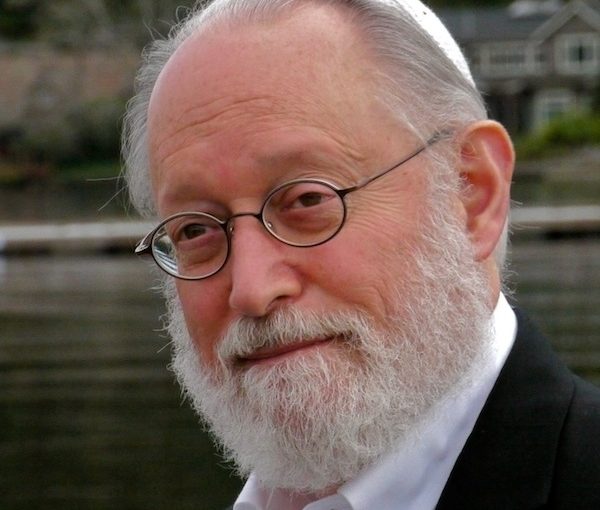
Rabbi Dr. Ted Falcon will be joined by Imam Jamal Rahman in a keynote address called Healing at a Time of Polarization, which the public can watch online by registering at vst.edu. (photo from Ted Falcon)

When beginning interfaith or intercultural dialogue, how much emphasis should be placed on similarities and how much on differences? According to a rabbi with decades of experience in the topic, the question puts the cart before the horse.

When Rabbi Dr. Ted Falcon, a Seattle spiritual guide, author, teacher and therapist, leads such interactive processes, he starts with something far more general: the basic humanity of the participants.

“We encourage people to begin a dialogue, a conversation process, not by focusing on similarities or differences in their religious views or nonreligious views, whatever they might be, but begin by creating contexts in which they can meet each other as human beings, meet each other as persons, which essentially is done through sharing stories,” said Falcon.

He uses “a series of questions that people can respond to either in dyads or around tables that elicit stories about important events in their lives, stories about concerns in their lives, stories about important relationships in their lives, so that the dialogue begins by appreciating a common shared human condition. That has made a tremendous difference because only after that do we encourage people looking at more specifically their religious or nonreligious concerns.”

Falcon will be part of a keynote address at a fifth annual multi-religious, multidisciplinary conference presented by Vancouver School of Theology, May 24 to 26. Due to the pandemic, the conference, titled Religious, Spiritual, Secular: Living in a Pluralistic Culture, will take place online. To virtually attend the entire event, registration fees apply, but the keynote and a Monday night concert are open to the public at no cost, although pre-registration is required.

Falcon is a member of the Interfaith Amigos, made up of himself, Pastor Don Mackenzie, a Christian minister, and Imam Jamal Rahman, a Muslim clergyman of the Sufi tradition. The three have published books and present together frequently. Rahman will join Falcon at the conference for the keynote, titled Healing at a Time of Polarization: Reaching Beyond Difference to What We Share.

Once the framework for constructive dialogue is in place, Falcon said in a telephone interview with the Jewish Independent from his Seattle-area home, interfaith exploration can begin to approach similarities that transcend religious differences. Among their Jewish, Muslim and Christian values, the amigos acknowledge some fundamental principles.

“We identified three basic core teachings that our traditions share,” said Falcon. “A core teaching of oneness, a core teaching of unconditional love and a core teaching of compassion. We can utilize those core teachings to then look at our texts, our traditions and our lives and evaluate how does this reflect in my life, how am I not living up to this, what do I need to do to live up to this more authentically? And it’s only after that discussion that we encourage people to engage in more difficult conversations, whether it’s conversations about Israel-Palestine, whether it’s conversations about desire to convert other people, whether it’s conversations about feeling your way is somehow better than other ways, whether it’s conversations about somehow being wary of allowing ourselves to truly appreciate the spiritual wisdom in another’s tradition.”

He admitted that interfaith dialogue is not always possible. But, even among people who acknowledge that they believe their theology to be unerring and people who may not be open to difference, there can still be dialogue, he said.

“In other words, if our conversation is based on my need to get you to change, there is no conversation.” But, he continued, if people recognize that neither they nor their interlocutor will change their minds, there is still a means and a purpose to engaging.

“We share the essential aspect of walking around in a human body with all its frailties and all its challenges and all its wonders,” said Falcon. “We have so much in common that that changes the energetic environment and allows a different kind of conversation to take place. Will you ever convince me that Jesus is the only way? No. But can I truly appreciate that that is your way and authentically support that? Yes, I can do that.”

Rabbi Dr. Laura Duhan-Kaplan, director of interreligious studies and a professor of Jewish studies at Vancouver School of Theology, is conference director. She acknowledged that the online, virtual format for the conference changes its nature, but with the drawbacks come benefits.

“We are well aware that people can experience Zoom fatigue and computer fatigue and perhaps don’t want to sit in front of the computer for two full days, no matter how much they are fascinated by the content,” Duhan-Kaplan said. As a result, all of the sessions will be recorded and participants can watch and join the conversation on message boards for 10 days after the conference weekend. This means that, unlike most in-person conferences where participants have to choose between breakout sessions, it is possible to virtually attend all of them.

While the event is an academic conference and it will naturally attract clergypeople, Duhan-Kaplan said it is appropriate for anyone who cares about the role of religion in the public sphere.

“One of the objectives, when it was an in-person conference, was, of course, to get people interested in religion and spirituality from different sectors of our community, to meet each other in person and network,” she said. “The dynamic may be very different online, so, aside from that goal, I’m really hoping that people will come away with a sense of the complexity of creating a community that has room for religious diversity.

“But I also want them to be able to see what some of the components of that complexity are, so that no one throws up their hands and says it can’t be done, but has a sense that by doing acts, whether it’s a group of multifaith chaplains supporting a prison population or whether it’s a group of people getting together to work on the Downtown Eastside or even religious communities twice a year doing outreach to someone of a different faith, I want people to get a sense of understanding that they are part of a larger project and what kind of difference what they do makes.”

For information, to register for the entire conference ($100/$50 students) or sign up to attend the keynote and concert (free), go to vst.edu by May 21.

Format ImagePosted on May 15, 2020May 14, 2020Author Pat JohnsonCategories LocalTags interfaith, Laura Duhan Kaplan, religion, Ted Falcon, Vancouver School of Theology, VST

Religion and the state

A week is a lifetime in politics, goes an adage. And so it would seem. Just one week ago, we posited that Binyamin Netanyahu’s coalition of the right was likely to form the next government in Israel. Since then, Benny Gantz, head of Israel’s Blue and White party, has been reinvigorated by Netanyahu’s challenges in pulling together a coalition, after original exit polls had the Likud-led coalition at 60 seats out of the 120 in the Knesset. This number has dropped through the actual vote count to 58, and it has changed the outlook.

As it has in the previous two elections, the result will hinge on the decision of Avigdor Liberman and his Yisrael Beitenu party, a right-wing but defiantly secular movement. Liberman has publicly released his demands for support. Among them: he will not support a government led by Netanyahu (or any other individual under indictment) and he wants to increase the number of ultra-Orthodox serving in the military, introduce civil marriage, thereby taking control of this lifecycle event from the exclusive purview of the rabbinate, and hand decision-making about commerce and transportation on Shabbat to local governments. Meanwhile, Gantz is having a rebellion in his own ranks about seeking support from the largely Arab Joint List in parliament. So, the process is largely back to where it’s been for more than a year, with no more certainty of who will form the next government.

Whatever happens, Liberman’s sweeping secularist proposals are nothing to ignore. The ally-turned-nemesis of Netanyahu, Liberman seems to have learned from the masters how to leverage minimal electoral success to enormous political advantage. In the past, it has been the religious parties that conditioned their support for desperate-to-make-a-deal leaders on getting key benefits and concessions for their respective communities. If Liberman succeeds in helping create a Blue and White government that implements some of his plans, it will represent the same tail-wagging-dog effect that religious parties used to assert Orthodox standards across much of Israeli society. Except Liberman will leverage his seven seats to repeal some or much of what those religious parties have achieved.

This Israeli moment brings to mind other rapidly changing political fortunes. Joe Biden, whose campaign was struggling to survive a few weeks ago, is suddenly (again) the undisputed front- runner for the Democratic nomination in the United States. There is another parallel between Israel and the United States that is currently evolving, this one less publicly known. While Liberman strives to diminish the connection between religion and state in his country, U.S. President Donald Trump is moving his country more in the direction of Israel’s religiously influenced society.

As in Canada, many religious organizations in the United States do an enormous amount of good, in many cases filling in gaps where government services can’t or won’t. Republican administrations have tended to expand – contract out, if you will – some social services previously delivered by governments, while the Obama administration, for example, introduced safeguards to prevent those agencies from discriminating against individuals or groups who they might deem outside their theological teachings.

Writing in the New York Times Sunday, Katherine Stewart, author of a book on religious nationalism, warned that Trump is eliminating those Obama-era safeguards and making it easier for publicly funded agencies to discriminate. For example, clients receiving services from a taxpayer-supported Christian organization could be forced to profess allegiance to Jesus in order to access services or an employee could be fired for not living a “biblical lifestyle,” the definition of which the religious organization, presumably, could define at their own whim.

A test case in Missouri seems innocent enough: a church maintains it should get federal funding to build a kids’ playground; that being refused such money represents discrimination against religion. The corollary is clear: if preventing tax money from funding religious organizations (even for something as innocuous as a playground) is discrimination, Stewart warns, “then the taxpayer has no choice but to fund religion.” This would represent an abrogation of one of the most fundamental cornerstones of the U.S. Constitution: the First Amendment, which declares, “Congress shall make no law respecting an establishment of religion, or prohibiting the free exercise thereof….” The framers of the Constitution were concerned not only that eliminating the barrier between government and religion would corrupt a government intended to serve all citizens but, perhaps equally, that it would corrupt religious institutions themselves. A number of the people on the test case’s side are also leaders among Trump’s evangelical constituency.

What was especially jarring when perusing the Sunday Times was a far more prominent story – on page A4, to be specific – about how Quebec’s secularism law is having a detrimental effect on civil servants, mostly women, from cultural minorities. The law, which precludes people who work in most roles in the public service from showing any external indications of religiosity – a kippa, a headscarf, a crucifix, a turban – is preventing individuals from beginning or advancing in their careers and, in some cases, effectively chasing them out of the province.

These disparate examples from three very different societies indicate the folly both of excessive religious interference in governmental affairs and heavy-handed efforts to have the opposite effect. Somewhere in the middle must be a commonsensical approach to these extremities. Of the three countries in the examples, Israel is perhaps the one where the challenges are most concrete and affect the most people. What, if anything, happens as result of Liberman’s gambit will be a fascinating experiment to watch.

Posted on March 13, 2020March 12, 2020Author The Editorial BoardCategories From the JITags Avigdor Liberman, Benny Gantz, Binyamin Netanyahu, democracy, Donald Trump, elections, extremism, freedom, Israel, Quebec, religion, secularism, United States

Religion and politicians

In an interview with the CBC last week, federal Green party leader Elizabeth May was asked who her personal hero is. She responded, “Jesus Christ.” Almost immediately, she apologized, saying that she had responded while failing to “self-edit.”

Canadians, by and large, are not so open to publicly discussing matters like religion, politics or other things that could be perceived as controversial. But political leaders should be prepared to discuss things in their lives that have shaped them. In fact, religion seems likely to be more central in this election than it has been in decades.

New Democratic Party leader Jagmeet Singh felt compelled to address his religion in an ad (notably aimed at Quebec voters) about how his identity as a Sikh influences his worldview.

While Quebec’s Bill 21, which bans the display of religious symbolism in the public service, means Singh would not be permitted to teach in the province or hold certain roles in the civil service, he managed to finesse the issue quite neatly. He found a sort of common ground by acknowledging that Bill 21 is an effort by Quebecers to protect and preserve their identity, the importance of which he acknowledged paralleled his own pride in his identity and the importance it holds in his life.

Over the weekend, he also managed to continue discussing the topic while having a few laughs, which rarely hurts. Singh, who has struggled to connect with voters in the pre-election period, may come out of this round a winner by making Quebec voters and other Canadians take a good look at him for the first time.

Meanwhile, Liberals are trying to portray Conservative party leader Andrew Scheer as having a hidden agenda, based on his Catholic religious beliefs, on issues like reproductive freedom and equal marriage.

Scheer and Prime Minister Justin Trudeau, both Catholics, have taken similar approaches, asserting that their religious views will not dictate party or government policies. However, there is probably a different calculation being made on each side. Trudeau’s policies are probably more liberal than the teachings of his church, so segmenting the two prevents an undesirable schism with his church. Scheer is probably calculating that his beliefs in the teachings of his church are not shared by the majority of voters; therefore, segregating his political and religious positions may have a hint of political expediency. In both cases, Trudeau and Scheer have been vague and both have attempted to move past the topic. (This is tougher for Scheer, whose grassroots supporters, in many cases, are more religiously conservative than the average voter. Working on not alienating them while courting middle-of-the-road voters places him in a bit of a bind.)

The reticence by Trudeau and Scheer to enthusiastically discuss their religious views, and May’s odd flip-flop on Jesus, may be a consequence of a root misunderstanding around the separation of church and state: the concept is that religious institutions should not unduly influence, or be influenced by, governments. It does not mean that individual elected officials should neuter their religious views as they cross the threshold into the legislature. If one’s deeply held religious beliefs and values are what make up a person’s identity, worldview and morality, these are things that should very much be on the table for people seeking the public’s trust. By example, there is plenty in biblical literature that May could have cited as motivators for her environmental priorities. That kind of openness would be refreshing. Singh tried it. We’ll see what happens.

If religious adherence is an important part of who a candidate is, it would be nice to think that they would not be embarrassed or shy to share these perspectives with us. Canadians would perhaps understand our leaders better – including when they say that they personally believe one thing but would not legislate it on the country, which is an entirely legitimate position.

What likely makes voters suspicious or skeptical is when a politician seems to be hiding something, is ambiguous about how their beliefs might guide policy positions, or is ashamed of who they are.

Posted on September 20, 2019September 17, 2019Author The Editorial BoardCategories From the JITags Andrew Scheer, Elizabeth May, federal election, Jagmeet Singh, Justin Trudeau, politics, religion
Safe spaces, diverse voices

Safe spaces, diverse voices

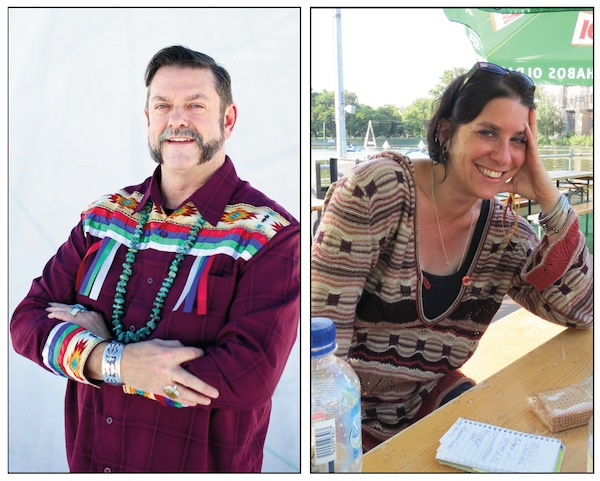
Bradley West and Shayna Plaut (photos from conference organizers)

As part of Winnipeg Pride Week in May, local organizers put on the first-ever Queer and Faithful Conference.

A grassroots event created to give voice to LGBTQ2+ people of colour and their experiences with faith and spirituality, the conference featured two panel discussions with opportunity for informal roundtable discussions. The keynote speaker at the May 25-26 conference at Robert A. Steen Community Centre was writer, facilitator and performer Jenna Tenn Yuk. She spoke about exploring identity and the intersections of race, queerness and faith through personal storytelling, spoken word poetry and facilitation; encouraging interfaith conversations around intersectionality, privilege, social location and other aspects; creating safer spaces for LGBTQ2+ people of colour in faith-based environments; and ensuring safe spaces to ask questions and explore the issues as a community.

Bradley West, who has been involved with Winnipeg’s queer community for more than 20 years, and Shayna Plaut, a former Vancouverite who now lives in Winnipeg, were part of the conference’s Jewish panel.

“I think the conference came about because there were people who had been talking about the importance of keeping their faith, while also celebrating their gender and sexual diversity, and there were some people who were finding that to be a little difficult,” West told the Independent.

Explaining that it was an uncomfortable topic for many people in the broader queer community, he said, “In fact, one of the members said, on Saturday, that, ‘because faith rejected us so soundly, we have rejected faith.’ We need to create a safe space where we can come together and have these conversations – where people from the various faith communities and also from the queer community can come together in a mutual space.”

While such conversations have been going on for some time, typically led by faith leaders and queer community organizers, the aim of the recent conference was to offer a more personal approach.

“The organizers wanted to have voices of the people who are more marginalized in our community, because of their skin tone, or religion, or spirituality, or faith,” said West. “They wanted to make sure it wasn’t just centred around white voices; white, Christian voices….. Oftentimes, when we are having conversations about faith in this Canadian landscape, we default to the dominant voice which, in our historical context, is Christian.

“So, they definitely had a lot of Christians who were there and who were involved, but, in terms of the planning and the panel speakers, and in terms of how they wanted people to think, was thinking of how we might be able to create an open dialogue with each other … to be able to, first, honour our own faith journey, but then also to understand the faith journey of others, especially when that faith journey is very different from our own.”

According to conference organizers, 70 to 80 people attended over the two-day period, with attendees coming from Winnipeg, as well as from surrounding areas, such as Morden, Selkirk, Steinbach and Portage La Prairie.

“From what I experienced, everyone … was approaching it with a spirit of reflection,” said West. “They were definitely gently challenged by the speakers to reflect on their own personal participation in terms of do you really believe your faith is the only faith or the true faith … and does that subtly reinforce this idea that those who are different are ‘less than’?”

The speakers, he continued, “were gently challenging people to think about how we interact – not only with the different denominations in our faith, but everyone of Abrahamic faiths, with different strings of denominations, and also those outside of some of the faiths … different groups practising different versions of the larger faith. Sometimes, we have a tendency to think that our journey and our view is the view that is shared by everyone in our faith … and so, there were those gentle reminders to reflect on that. Overall, as a participant, I would say there was a sense of a call to self-reflection, and there wasn’t any resistance in terms of the intent to self-reflect, for sure.”

For West, one thing that struck a chord was that, even though he was in a room full of strangers at the beginning of the event, everyone got to know one another very quickly. “I think it was very much about, yes, we have differences, but we also have commonalities and, as we move forward, we need to look at both … have a bifocal lens in honouring our differences – not minimizing or whitewashing, or asking us to abandon our differences in order to get along … just focusing on our similarities. We’re going to honour that and work together, and look at how we’ll create spaces and places within our own lives. And then maybe, by extension, our own communities will allow more of these dialogues.

“The gathering had the flavour of us coming together and having these conversations, and continuing to do so outside of this space,” he said. “That core that comes from great changers, like [Mahatma] Gandhi, talking about that idea of, if you want to change something, first, change yourself, because, wherever you go, there you are. If you change yourself, you’ll automatically change the spaces you go into, because you are no longer the same person.”

Plaut’s faith has changed over the years. Born into a Chassidic home in the United States, her family decided to follow Conservative Judaism when she was 5.

“The joke I like to say is, I’m queer, I’m Jewish, I’m a mom, I have seven tattoos, 13 earrings, and I keep a modicum of kosher,” said Plaut. “I teach at the University of Winnipeg and work in the field of human rights and journalism.”

When asked to help organize the conference, Plaut jumped at the chance. She took on the role of food coordinator and ensured all the food was vegetarian, so that everyone could eat, regardless of their religious or dietary restrictions. She also took it upon herself to make sure that not only the Abrahamic faiths were represented, but also Hindu or Sikh, by reaching out to some of her students.

“Folks would use their own experiences and explore some of the strengths that they found within their faith and also some of tensions,” said Plaut about the conference. She said that some people feel like they have to choose, in terms of their identities – religious, cultural and sexual – and that the conference encouraged an exploration of various faiths’ strengths and limitations in terms of guiding people, and what it means to find acceptance within a faith.

The conference attracted a range of attendees.

“Many of the folks who came, not all, but a good proportion, may not have identified as being queer themselves,” said Plaut. “Many of them were grandparents, actually, or parents who wanted to know how to better support their children or grandchildren. They wanted to learn.”

While organizers worked hard to share with and connect people, they left it up to the participants whether to exchange their contact information with one another. Some attendees expressed interest in continuing the conversation beyond the conference and organizers are working on determining the next steps. Many of the participants joined the nearly 50,000 marchers at the Winnipeg Pride Parade, which took place June 1.

“It was amazing, our biggest Pride ever in terms of participants in the parade,” said Plaut. “There were over 112 organizations that registered either floats or walking groups.”

Rebeca Kuropatwa is a Winnipeg freelance writer.

Format ImagePosted on July 19, 2019July 18, 2019Author Rebeca KuropatwaCategories NationalTags faith, inclusion, LGBTQ+, minorities, Pride, religion, spirituality, Winnipeg
החוק החדש בקוויבק

החוק החדש בקוויבק

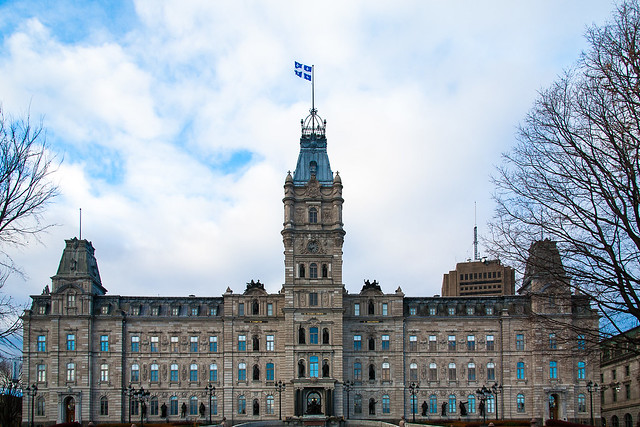
(Paul VanDerWerf)

חוק עשרים ואחד כך קוראים במחוז קוויבק לחוק החדש שעבר לאחרונה בפרלמנט של קוויבק, שישפיע משמעותית על אורח החיים של שומרי המסורת במחוז, יהודים ומוסלמים כאחד. החוק החדש אוסר על כל מי מאלה שעובדים במשרות הציבוריים ללבוש בגדים או לענוד מסמלים הקשורים בדת כלשהי, בשעה שהם מבצעים את תפקידיהם הציבוריים. יש לזכור שקוויבק היא המחוז השני בגודלו בקנדה ובעיר המרכזית והגדולה שלה – מונטריאול גרים יהודים ומוסלמים רבים

ומי יסבול בעיקר מחוק מהפכני זה: יהודים אשר הם חובשי הכיפות, מוסלמים אשר הם חובשי חיג’אב, סיקים והודים אשר הם חובשי טורבנים. האיסור עלול להשפיע קרוב לוודאי גם על נוצרים שעונדים צלבים. החוק יכול על כל העובדים הנושאים במשרות הציבוריות.ובהם בין היתר: אנשי כוחות האכיפה והשוטרים, תובעים ציבוריים, שופטים ומורים בבתי ספר ציבוריים.

הצעת החוק עברה בפרלמנט של קוויבק לאור כך שהמפלגה השלטת החדשה – מפלגת הקואליציה למען העתיד של קוויבק, הבטיחה לבוחריה בבחירות האחרונות (שנערכו בחודש אוקטובר אשתקד) ליישמו מהר ככל הניתן.

המושל של קוויבק, פרנסואה לגולט, ציין בהודעה לעיתונות כי בניגוד לביקורת הקשה נגד החוק, הוא אינו מנוגד לחופש הדת. וכן הגיע הזמן לקבוע כללים חדשים בנושא.

חשוב לדעת שחוק עשרים ואחד נקרא כך משום שהוא אינו משפיע ולא ישפיע על העובדים הנוכחיים, שעובדים במגזר הציבורי. הוא יחול על כל העובדים החדשים שיצטרפו למגזר זה. לפי ההערכות אוכלסיית קוויבק מונה כיום כשישה מיליון איש, בהם כתשעים אלף אלף מוסלמים וכשבעים וחמישה אלף יהודים.

דובר משרד ההגירה וההכללה של קוויבק, מארק-אנדרה גוסלין, הסביר את הצורך הדרוש בחוק החדש: אנחנו מאמינים כי אלה פונקציות מאד ספציפיות והן צריכות להיות ניטרליות לחלוטין. זאת על מנת להבטיח שירות ניטרלי

מהמדינה לאזרחיה. לדבריו הממשלה לא מכוונת לדת אחת בלבד וכי כל הדתות שוות ובאותה מידה.

ומי נמנה על רשימת המתנגדים לחוק זה: כארבעים אחוז מהמצביעים בקוויבק, חברי מועצת העיר מונטריאל וכן גם פקידים רשמיים של בתי הספר במונטריאל. כידוע גם ראש ממשלת קנדה הליברלי, ג’סטין טרודו, הביע ביקורת חריפה על הצעת החוק.

הצעת החוק נכתבה בצורה כזאת שהיא מוגנת לכאורה מפני אתגרים חוקתיים במשך חמש השנים הבאות. שתי הדרכים המשפטיות שעליהן ניתן להתבסס מבחינה של עתירה משפטית נגד החוק, הן של החוקה של קנדה ואמנת זכויות האדם והחופש של קוויבק. עם זאת נראה כי מנסחי החוק כיסו את עצמם מכל זווית אפשרית שתמנע מהמתנגדים לנסות ופסול אותו.

הצעת החוק אינה מגדירה בדיוק את מהו סמל דתי. ומה עם קעקוע או עגיל? האם עובד ציבור יהודי יכול ללבוש ציצית? האם הצעת החוק אוסרת על החסידים שיעבדו במשרות ציבוריות לגדל פאות?

כדי לטעון שהחוק אוסר על כל הסמלים הדתיים כאחד ואינו מפלה – הממשלה החדשה החליטה להסיר צלב קתולי שתלוי כבר שמונים ושלוש שנים בבית המחוקקים של קוויבק.

מסקר שנערך בחודש מאי האחרון בו השתתפו יותר מאלף ומאתיים מתושבי קוויבק (נערך בחסות האגודה ללימודים קנדיים), עולה כי רוב התומכים בהצעת החוק מנמקים זאת בשל רגשות שליליים כלפי מוסלמים ויהודים. על פי הסקר יותר מחמישים אחוז מהנשאלים אמרו כי מקובל על מורים בבתי הספר הציבוריים ללבוש צלב נוצרי, רק כשלושים אחוז ציינו כי מקובל על מורה בית ספר ציבורי לחבוש כיפה, ורק כשניים עשר אחוז הצביעו כי מקובל על מורה ללבוש כיסוי ראש מוסלמי.

Format ImagePosted on June 26, 2019June 20, 2019Author Roni RachmaniCategories עניין בחדשותTags law, Quebec, religion, דת, חוק, קוויבק

The will of “the people”

The deed is finally done. For years, Quebec politicians have been talking about secularism, or laïcité, proposing a range of actions to ban the presence of visible religious symbols among government employees. On Sunday, following a weekend of almost round-the-clock debate, the Coalition Avenir Québec majority in the National Assembly passed Bill 21. The law bans symbols such as the crucifix, turban, hijab and kippah for provincial employees in positions of authority, such as judges, police, prosecutors, court clerks and schoolteachers.

The bill was met with lamentations and anger from the opposition. Catherine Dorion, a member of the National Assembly representing the left-wing party Québec solidaire spoke powerfully in favour of individual liberty and the right to exhibit religious identity.

“Each person in this room who will vote for Bill 21 will bear the responsibility for this first great breach in the dike we had proudly erected to protect the fundamental rights of all Quebecers,” she said.

The vote came a day after a similarly contentious debate on another bill, which addresses the province’s agreement with the federal government over immigration to Quebec. On the one hand, the bill aims to ensure that immigration reflects the province’s labour requirements, which is justifiable. On the other hand, the bill also permits the creation of a “values test” that new Quebecers would have to pass before admission to permanent residency. A test of this nature is one thing in theory – extreme examples like female genital mutilation are raised as justifications – but it is something else in practice.

Government measures to adjudicate an individual’s beliefs is a recipe for disaster. Certainly we would like to see people with hateful or violent attitudes toward particular cultural groups prevented from entering the country, or rehabilitated if they are already here. There are programs and policies in Canada to address this problem and they should be strengthened. But applying what amounts to a form of prior restraint on the ideas and beliefs of new Canadians by a government with limited respect for civil liberties crosses a perilous line.

The religious symbols law parallels the immigration law in its flouting of civil liberties, but diverges importantly in a number of ways. It applies to people who are already Canadian (for the most part, at least), which is a more grievous affront than putting up barriers for non-citizens.

In responding to criticism, Quebec Premier François Legault declared: “Someone once said, beware of those who say they like the people but do not listen to what the people want.”

This language reflects a populism we have seen in Europe as well as North America, but which has been thankfully rare in this country. The idea that governments should do whatever “the people” want invites a tyranny of the majority that is almost destined to trample on individual rights, especially the rights of members of minority communities. It bears stating that, in Quebec, in order to deliver the will of the people, the assembly had to clip the wings of democracy not once but twice, invoking closure on debate on both bills and, in the case of Bill 21, promising to use the Canadian Constitution’s Notwithstanding Clause to override what even the government of Quebec acknowledges is a unconstitutional infringement on individual rights.

We are seeing flare-ups elsewhere in Canada of how some of “the people” would like to see public policy progress. On the same busy weekend, a rally in downtown Vancouver against transgender rights and opposing the province’s progressive sexual education agenda turned nasty (if the mission of the event wasn’t nasty enough) when counter-protesters showed up to confront them. At the rally were the Soldiers of Odin, a far-right group, people wearing yellow vests, the symbol of an amorphous movement that began in France and has attracted extremists, and at least one leading member of the People’s Party of Canada, a new populist party that seems determined to stoke a range of fears and prejudices in the lead-up to the federal election this fall.

Violence also erupted last weekend at a pride parade in Hamilton, Ont., when protesters showed up at the celebration. A local politician laid blame for the violence, which included punching and choking, on “far-right evangelicals” who he said were “just there to sucker-punch people.”

All of this is to say that Canada is not immune to extremism or even politically motivated violence. There is, of course, an important line between the violence in Hamilton and the laws that were rammed through Quebec’s legislature. Violence deserves universal condemnation while passionate disagreements over politics – even laws we see as repressive and excessive – are justifiable and welcome. Still, these incidents all reflect different approaches to “othering” – the idea that “we” are under threat from “them.”

What is encouraging is hearing the voices of those forced to defend the values of inclusion and respect for diversity. There was eloquence on the opposition side of Quebec’s National Assembly last weekend and, in response to the altercations in Hamilton and Vancouver, admirable recommitment by many to the values that we genuinely hope will represent the Canada we hope to create. This is also a reminder to speak up, so that when politicians say they are doing what “the people” want, what they mean is the will of people who pursue inclusion, acceptance and diversity.

Posted on June 21, 2019June 20, 2019Author The Editorial BoardCategories From the JITags discrimination, diversity, human rights, immigration, inclusion, law, politics, Quebec, racism, religion

Posts pagination

Previous page Page 1 Page 2 Page 3 Page 4 Next page
Proudly powered by WordPress