Skip to content
  • Home
  • Subscribe / donate
  • Events calendar
  • News
    • Local
    • National
    • Israel
    • World
    • עניין בחדשות
      A roundup of news in Canada and further afield, in Hebrew.
  • Opinion
    • From the JI
    • Op-Ed
  • Arts & Culture
    • Performing Arts
    • Music
    • Books
    • Visual Arts
    • TV & Film
  • Life
    • Celebrating the Holidays
    • Travel
    • The Daily Snooze
      Cartoons by Jacob Samuel
    • Mystery Photo
      Help the JI and JMABC fill in the gaps in our archives.
  • Community Links
    • Organizations, Etc.
    • Other News Sources & Blogs
    • Business Directory
  • FAQ
  • JI Chai Celebration
  • JI@88! video

Recent Posts

  • Sharing her testimony
  • Fall fight takes leap forward
  • The balancing of rights
  • Multiple Tony n’ Tina roles
  • Stories of trauma, resilience
  • Celebrate our culture
  • A responsibility to help
  • What wellness means at JCC
  • Together in mourning
  • Downhill after Trump?
  • Birth control even easier now
  • Eco-Sisters mentorship
  • Unexpected discoveries
  • Study’s results hopeful
  • Bad behaviour affects us all
  • Thankful for the police
  • UBC needs a wake-up call
  • Recalling a shining star
  • Sleep well …
  • BGU fosters startup culture
  • Photography and glass
  • Is it the end of an era?
  • Taking life a step at a time
  • Nakba exhibit biased
  • Film festival starts next week
  • Musical with heart and soul
  • Rabbi marks 13 years
  • Keeper of VTT’s history
  • Gala fêtes Infeld’s 20th
  • Building JWest together
  • Challah Mom comes to Vancouver
  • What to do about media bias
  • Education offers hope
  • Remembrance – a moral act
  • What makes us human
  • המלחמות של נתניהו וטראמפ

Archives

Follow @JewishIndie
image - The CJN - Visit Us Banner - 300x600 - 101625

Tag: education

Unity in tough times

Unity in tough times

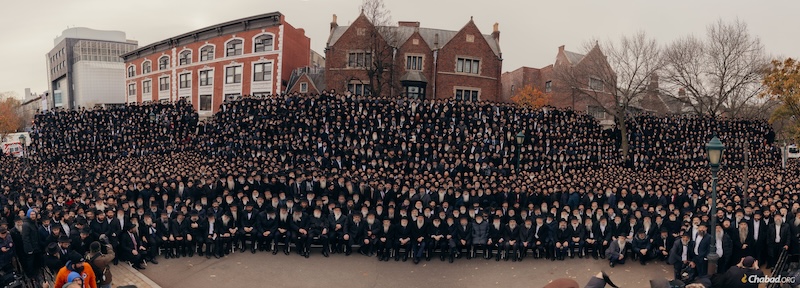
Thousands of rabbis pose for a group photo in front of Chabad-Lubavitch world headquarters in Brooklyn, NY, on Dec. 1. (photo by Shmulie Grossbaum/Chabad.org)

Some 6,500 Chabad rabbis and Jewish leaders from around the globe gathered Nov. 27-Dec. 1 in Brooklyn, NY, for the annual International Conference of Chabad-Lubavitch Emissaries, the largest rabbinic gathering in the world.

Attending from British Columbia were Rabbi Yechiel Baitelman (Chabad Richmond), Rabbi Binyomin Bitton (Chabad of Downtown Vancouver), Rabbi Mottel Gurevitz (Tri-Cities Chabad), Rabbi Shmuel Hecht (Okanagan Chabad House), Rabbi Meir Kaplan (Chabad of Vancouver Island), Rabbi Dovid Rosenfeld (BC Regional Hebrew Schools), Rabbi Bentzi Shemtov (Chabad Nanaimo and Central Vancouver Island) and Rabbi Yitzchok Wineberg (Lubavitch BC).

While the yearly conference has a celebratory feel, welcoming rabbinic leaders from Alaska to Zambia, the past year was a difficult one for the Jewish people, seeing tragedy in Israel, and elsewhere. For Jews around the globe and the family of emissaries in particular, the days just prior to the conference were especially difficult: on Nov. 25, Abu Dhabi-based Chabad Rabbi Zvi Kogan was buried in Israel, after being murdered by terrorists in Dubai at the age of 28.

Chabad-Lubavitch emissaries, known as shluchim, are husband-and-wife teams who dedicate their lives to strengthening Jewish life in communities worldwide, often in remote locations without established Jewish infrastructure. They aim to reach both affiliated and unaffiliated Jews, welcoming Jews from all walks of life.

The annual conference, also known as the Kinus Hashluchim, unites rabbis and lay leaders from all 50 US states and more than 100 countries and territories around the world for four days of workshops, networking and spiritual uplift. The conference concludes with a gala banquet, which brings all the Chabad rabbis and their guests together in a giant conference centre in New Jersey. 

The Thursday was a day of catch-ups between colleagues, as well as the first of a series of workshops on contemporary issues that ran over the weekend. Topics included disaster relief, combating hate, education, counseling and dealing with grief. Conference-goers who serve students on college campuses where Chabad has become part of Jewish life participated in a separate track, discussing issues specifically relevant to campus communities.

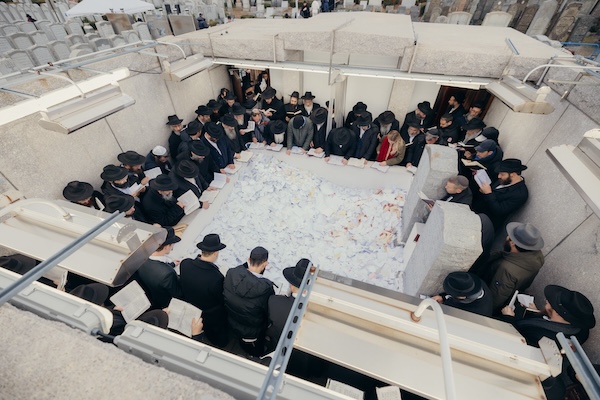
The Friday visit to the Ohel, in Queens, NY, the resting place of the Rebbe, Rabbi Menachem M. Schneerson, of righteous memory, marked the pinnacle of the conference. The emissaries came to pray for their families and communities, carrying with them countless prayer requests. Many came with handwritten letters from Jews in their hometowns and read them by the holy site. The Ohel visit culminated in the reading of the pan klali (“general letter”) that was signed by all emissaries and contained prayers for Israel, the Jewish people and humanity at large.

photo - Chabad-Lubavitch rabbis pray at the resting place of the Rebbe, Rabbi Menachem M. Schneerson, in Queens, NY, on Nov. 29
Chabad-Lubavitch rabbis pray at the resting place of the Rebbe, Rabbi Menachem M. Schneerson, in Queens, NY, on Nov. 29.  (photo by Shmulie Grossbaum/Chabad.org)

With the onset of Shabbat on Friday evening, the emissaries spent the Jewish day of rest in prayer and brotherly camaraderie, often in the company of family and friends. 

Sunday morning saw the snapping of the annual “class picture” under the iconic gables of 770 Eastern Parkway, the headquarters of the Chabad-Lubavitch movement, and perhaps the most recognizable Jewish building in the world. The photo, featuring thousands of black-hatted rabbis, represents not just an annual tradition but also the many faces of the Chabad rabbis who bring Judaism to the world, from wartorn Ukraine to the towns along Israel’s hostile borders, to anti-Israel-filled college campuses across North America, to sleepier towns in quieter places.

The capstone of the conference was the gala banquet, held at the New Jersey Convention and Expo Centre, a powerful moment of remembrance and resilience. Speakers honoured Kogan with emotional tributes that emphasized the importance of continuing their global mission. The conference linked by video with the home of Kogan’s parents in Jerusalem, where his family was sitting shiva, and all 6,500 gathered shared the traditional text of comfort with the family.

Rabbi Yehuda Krinsky, chair of Merkos L’Inyonei Chinuch – Chabad’s educational arm – greeted the audience, sharing words of consolation with Kogan’s family and the emissaries, his “extended family,” and sending prayers for the Israeli soldiers defending the Holy Land, as well as the hostages still held in Gaza.

A video tribute was made for Rabbi Moshe Kotlarksy, the vice-chair of Merkos L’Inyonei Chinuch, who passed away after a lengthy illness on June 4. Kotlarsky was well-known for his role in the annual Kinus Hashluchim, directing an army of planners, staff and volunteers to ensure every detail of the massive event was perfect.

Among the most inspiring presentations of the evening was that of Rabbi Yehoshua Soudakoff, director of Chabad for the Deaf Community in Israel, who spoke of his path to finding his Jewish self as a deaf Jew.

“The voice you hear is not mine, but the words definitely are,” he said through an interpreter. “It is hard for a deaf person to find a place within the community. Torah and mitzvah while deaf are difficult. That is why I established Chabad for the Deaf Community. There are deaf Jews and Jews with various disabilities throughout the world. Let us continue our holy work to reach out to every single one of them and inspire them, just as I was once inspired,” he said to applause.

The gathering culminated in a roll call of Chabad emissaries. The event featured multilingual welcomes from emissaries around the world, including a notable announcement that a new Chabad couple had been dispatched to Andorra, highlighting Chabad’s ongoing expansion.

The evening concluded with dancing, the assembled rabbis united in their determination to continue their mission of Jewish outreach and community building, regardless of the challenges they face. 

Format ImagePosted on December 13, 2024December 11, 2024Author Rabbi Moshe New CHABAD.ORGCategories WorldTags Chabad-Lubavitch, conference, education, Kinus Hashluchim, Lubavitcher Rebbe

Gifts, property and curses

We recently had some work done on our garage. In 2021, when we purchased our new home, which was built in 1913, the inspector marveled at the garage, which was an early, purpose-built building meant for cars as compared to the converted carriage houses nearby.

There are still outbuildings in the neighbourhood, now used for cars or workshops, which contain horse stalls, but our garage, the inspector said, was special. That said, it’s narrow and the floor’s broken. It had the remains of both an old knob and tube electric panel and a chimney. Once, we imagined, a chauffeur warmed the space with the woodstove every winter to keep the car running.

When the contractors who fixed our house so we could live in it came back to work on the garage, things became complicated quickly. It turned out it was not just a couple rotten boards. Long ago, someone had cut important structural supports to put on larger heavier garage doors, likely when cars themselves became larger. A little stabilization project became a multi-week event, complete with new concrete footings all the way around the building and new structural supports. The garage no longer sits at a dangerous tilt. Our kids can go inside without danger.

This expensive project doesn’t mean that we’re suddenly using the garage in Winnipeg this winter. The concrete floor is still broken, the doors are narrow and the whole thing needs a coat of paint. All of those renovations will have to wait, because winter’s here. I’ve just cleaned snow off the car, parking on the street again this morning. This experience was one of those reminders that, in life, unexpected things happen, and that we make the best decisions we can in the moment, and roll with it. 

This brought me to what I’ve been studying in Bava Batra, the talmudic tractate I’ve been studying as part of Daf Yomi (a page of Talmud a day). Lately, what I’ve been learning has to do with death-bed gifts and inheritance. There’s an understanding that, if someone is on their death bed, they can give their property as a gift without the legal formalities that would normally be required. Also, the rabbis rule that, if a person miraculously does not die, their promises and gifts can be retracted. In other words, if you gift everything to your brother on your death bed, but then you don’t die, you can keep your home and fields.

On page 153, there’s a woman who gives away her property as a gift as she’s dying, but, by some miracle, she recovers. She goes to Rava, a wealthy rabbi who headed a school in Babylonia, and asks for her property to be returned. After all, she is still alive and needs her belongings back. But Rava says that the “gift” cannot be returned. His ruling doesn’t align with the rest of the rabbis or the law.

Obviously, this unnamed woman is upset and protests. Rava then has his scribe, Rav Pappa, create a ruling that, on the surface, looks like it’s in this woman’s favour, but references a text that indicates that this woman should just leave, without her property. Rava assumes this woman won’t notice his trickery, but this (unnamed) woman is smart, and angrier than ever.

Left with no other options, the woman in question resorts to a curse. Given the time, roughly 1,670 years ago, curses, amulets and magic were all used, and, in this case, the curse works. The woman curses Rava, says his ship will sink. Rava, somehow trying to trick the curse, soaks all his clothes in water to avoid it. Readers: the curse works, and not the tricks. Rava’s ship goes down. Rava drowns.

Later, medieval commentators wonder why the curse worked. The woman felt angry for good reasons. Rava had robbed her of her property. Rava’s ruling also had shamed her, and it was meant to trick her into leaving. This woman was clearly wronged. Sometimes, when a curse punishes the correct target – the later rabbis conclude a curse has strong power.

Long ago, someone really wronged our property, this garage, when they cut the structural supports. Given how unstable it was, it could have killed someone. Thankfully, no one was on their death bed here and apparently there were no curses. I did wonder whether we were expecting a miracle to fix this historical structure, or whether an expensive demolition was in order. It’s sometimes hard to undo a bad decision, but we were able to afford to repair a bad situation, which was created by someone else’s bad judgment.

People often seek the easiest way out – through tricks or pulling a fast one. Finding the best way forward sometimes means enduring jackhammering, structural work and funding a costly repair. Maybe if we hadn’t asked “our guys” to check out the garage, we wouldn’t have known the danger. Once we did, though, we couldn’t ignore it. Once the garage project started, even though this huge expense wasn’t in the budget, we had to deal with it.  

Hanukkah is coming up. Although our kids will still get treats and gifts, my husband and I will celebrate getting our garage back. Unlike this powerful, smart, unnamed woman who was wronged in Bava Batra, we didn’t lose all our property. We rolled with the unexpected, and now have a safe space, instead of a precarious risk. All this worked out better for us than for that unnamed woman long ago – and we didn’t even have to curse anybody. 

Joanne Seiff has written regularly for the Winnipeg Free Press and various Jewish publications. She is the author of three books, including From the Outside In: Jewish Post Columns 2015-2016, a collection of essays available for digital download or as a paperback from Amazon. Check her out on Instagram @yrnspinner or at joanneseiff.blogspot.com.

Posted on December 13, 2024December 11, 2024Author Joanne SeiffCategories Op-EdTags curses, education, gifts, Judaism, lifestyle, property, renovations, Talmud

Inspiring with chutzpah

image - Chutzpah Girls book coverMost of us could benefit from a little more chutzpah, as defined by Julie Esther Silverstein and Tami Schlossberg Pruwer, authors of Chutzpah Girls: 100 Tales of Daring Jewish Women (The Toby Press, 2024). 

According to Silverstein and Pruwer, chutzpah is: “ A Jewish superpower: the daring to speak when silenced, to take action when others won’t, to try when they say it’s impossible, to persevere in times of doubt, to be yourself when it’s easier to conform, to stand tall when made to feel small, to believe when it all feels hopeless, to shine your light in the face of darkness.”

With Chutzpah Girls, Silverstein and Pruwer “hope to power up a generation of knowledgeable and confident Jewish kids by zooming in on Jewish women with extraordinary stories across the diverse Jewish experience.”

Chances are that many of the adults reading these stories will also be inspired, learning about several, if not a dozen or more, Jewish women they’d never heard of before: brave and action-oriented women from all over the world, from ancient Israel (1500-587 BCE) to the 21st century.

image - Prophetess Abigail,  from Ancient Israel, whose portrait was created by Rinat Hadar
Prophetess Abigail,  from Ancient Israel, whose portrait was created by Rinat Hadar.

The 100 are listed alphabetically by first name, rather than chronologically, which gives a timelessness to the feats of each woman. Whether one is a prophetess in ancient Israel, a philanthropist in the early modern era, a trade unionist in the emancipation era, a human rights activist in the 20th century or an intelligence and cybersecurity official in 2024 is mostly irrelevant to the courage one can show.

There is a timeline at the beginning of the book that outlines the eight time periods into which each of the 100 Chutzpah “girls” is placed. Near the end of the book is a map, showing their global and historic presence: Argentina, Bahrain, Ethiopia, Germany, Kurdistan, Mesopotamia, Persia, Russia, Ukraine, the United States, Yemen, and others.

There are three Canadians who made it into Chutzpah Girls: Judy Feld Carr, Lori Palatnik and Rosalie Silberman Abella. And they illustrate how people who are just like us can do impressive things and step up when need be.

Carr was a musicologist, she had a young family. Then, she read an article about Syrian Jews who, after Israel won the Six Day War against its Arab neighbours, were suffering. “Although she was far away, she wanted to help,” write Silverstein and Pruwer. “She reached a rabbi in Syria’s capital city of Damascus by telegram and began sending boxes of needed supplies, including religious books.”

Even after the sudden death of her husband left Carr a single mother, she continued to help, recruiting volunteers from her synagogue. “Using religious terms as coded messages, they started a secret communication system with the Syrian Jewish community. Judy’s home turned into the hub of an underground escape network to help the Syrian Jews flee to safety…. She negotiated ransoms, planned elaborate escapes, and even smuggled people across heavily guarded borders.”

Carr helped save more than 3,000 Jews.

Palatnik is founding director of Momentum, a global organization that connects women to Jewish values and to Israel, and encourages them to take action to promote unity that embraces difference.

“One day, Lori was asked if she’d donate her kidney to a stranger,” write Silverstein and Pruwer. “Hesitant at first, she drew on her sense of achrayut, the responsibility we have for one another. ‘For someone I don’t know?’ she wondered hesitantly. ‘But someone knows her. This is someone’s wife, mother, daughter, friend. Why would I pass up this mitzvah just because I don’t know her?’” (Years earlier, Palatnik had been willing to donate a kidney to a friend, but hadn’t been a match.)

Abella (née Silberman) was the daughter of Holocaust survivors. Born in a displaced persons camp in Germany, she was 4 years old when the family “immigrated to Canada with little more than hope for a better future.” She became “the first Jewish female judge in Canada and the youngest in the country’s history,” never trying to hide that she was Jewish to succeed, write Silverstein and Pruwer.

“In her career, Rosalie worked tirelessly to eliminate the disadvantages faced by people with disabilities, women, people of colour, and the native aboriginal community. After 25 years as a champion of human rights and equality, Justice Rosie became the first Jewish woman to sit on the Supreme Court of Canada.”

Written in a concise, clear manner, there is a lot to learn about some amazing people in Chutzpah Girls. Every entry comprises the name of the woman, her era, when she was born and in what country, her job or title, a writeup about one of her chutzpah aspects, and a quote from the woman that reflects what she did or general words of wisdom. 

image - Jewish defenders Zivia Lubetkin, who helped command the Warsaw Ghetto Uprising, and her granddaughter, Roni Zuckerman, an Israeli fighter pilot, as envisioned by Shiri Algor
Jewish defenders Zivia Lubetkin, who helped command the Warsaw Ghetto Uprising, and her granddaughter, Roni Zuckerman, an Israeli fighter pilot, as envisioned by Shiri Algor.

Alongside the text for each woman is a beautiful, colourful, expressive portrait created by one of the dozen-plus illustrators and graphic artists that Silverstein and Pruwer enlisted for this book. The styles are so varied, but all are bold and capture the essence of the woman portrayed.

The last story and portrait in the book are left blank for the young (or old) reader to add their tale of chutzpah and a drawing of themselves.

But the book isn’t the end of it. Readers are encouraged to let Silverstein and Pruwer know who you’d like people to know more about – “a favourite figure from the Torah, a changemaker in your local community, or a leading lady in your own family. It’s even possible our next Chutzpah Girl is you!” 

To send your suggestion(s), email [email protected]. To learn more about the writers and the artists, visit chutzpahgirls.com. 

Posted on December 13, 2024December 11, 2024Author Cynthia RamsayCategories BooksTags Chutzpah Girls, education, history, Jewish history, Judy Feld Carr, Julie Esther Silverstein, Lori Palatnik, Rosalie Silberman Abella, Tami Schlossberg Pruwer, women
Mobilizing against Jew-hatred

Mobilizing against Jew-hatred

Ysabella Hazan said phrases such as “the West is next” imply “exactly what the enemies of Israel accuse us of – being a Western outpost in the Middle East, a settled body, which is not true.” (photo by Dave Gordon)

Rage Against the Hate in New York on Oct. 31 had the goal to “gather Jewish organizations, and to find ways to start fighting back, to retake the streets, to retake the campuses, to retake social media, to combat antisemitism in a way that we haven’t,” said Nitsana Darshan-Leitner, president of the Israeli nonprofit Shurat HaDin Law Centre, organizers of the full-day conference. 

photo - Nitsana Darshan-Leitner, president of Israeli nonprofit Shurat HaDin Law Centre, which organized the Rage Against the Hate conference in New York Oct. 31
Nitsana Darshan-Leitner, president of Israeli nonprofit Shurat HaDin Law Centre, which organized the Rage Against the Hate conference in New York Oct. 31. (photo by Dave Gordon)

More than 30 organizations were conference partners and keynote speakers included radio host/author Dennis Prager, attorney Alan Dershowitz, actor Michael Rapaport, activist Shabbos Kestenbaum and NGO Monitor’s Gerald Steinberg.

Dershowitz, 86, said that after speaking to Jewish high school students, he was “stunned by their lack of knowledge” about Israel. To fill the void, he will be giving away a million copies of his latest book, The 10 Big Anti-Israel Lies and How to Refute Them with Truth, to 1,000 universities and high schools across the United States. He lambasted what he called the “educational malpractice” pervasive on college campuses, where professors “give disguise” to Jew-hatred through diversity, equity and inclusion policies, and oppressor-versus- oppressed beliefs.

“I offered $1,000 to anybody who could find me a single protester in any of these protests on university campuses that has ever called for a two-state solution. Nobody has taken me up on it. No protester wants to see an Israeli state,” he said to the audience of 300.

He added that “we are in a fight for our lives. We are in a fight for the future,” because these students will become politicians, corporate executives, media influencers and other types of leaders, and they will have all “been brought up with this kind of knee-jerk anti-Zionism.” 

Darshan-Leitner characterized Students for Justice in Palestine as a “propaganda arm of Hamas.” She believes their activity is “actually providing material support to a terror organization” and, in doing so, contravenes the Anti-terrorism Act in the United States.

Kestenbaum – who, last January, became the lead plaintiff in a lawsuit against Harvard University, alleging systemic antisemitism, and has testified before Congress about antisemitism on college campuses – told the Jewish Independent: “Jewish students are fighting a really remarkable fight with limited resources, with limited help and limited funding. It’s the Jewish nonprofits, who raise billions of dollars each year, who could be in a position to do a lot more. And so, I would encourage the Jewish nonprofits not to say, ‘What can the students be doing?’ but to ask themselves, ‘What can I be doing?’ to help students.”

“It is imperative that larger organizations actively support grassroots initiatives that can manoeuvre and mobilize quickly and efficiently, whereby large organizations cannot,” said Amir Epstein, director of Tafsik, a Jewish civil rights group that fights Jew-hatred in Canada and more broadly.

“Hundreds of millions of dollars are donated to large organizations, so it isn’t unreasonable for them to contribute considerable monetary aid to empower these grassroots efforts, so we can create a united front to combat the degradation of our Jewish community’s safety, and address the unprecedented antisemitism we face in universities, K-12 schools, media, politics and the arts,” said Epstein.

Montrealer Ysabella Hazan, who started the movement called Decolonized Judean, said phrases such as “the West is next” and “Israel is the only democracy in the Middle East” do not resonate with the younger generation. “They do not speak about us, convey our story or address the accusations that we are facing on the world stage,” she said. “And they indirectly prove exactly what the enemies of Israel accuse us of – being a Western outpost in the Middle East, a settled body, which is not true.”

Columbia business professor Shai Davidai, who has earned renown for calling out Jew-hatred on campuses, told the audience that antisemites have “created the new normal” by making students feel uncomfortable being visibly Jewish.” He said, “If we don’t fight back in the court of public opinion and in the court of law, we’re not going to win this war.”

photo - At the Rage Against the Hate conference Oct. 31, Dennis Prager offered an idea of how to counter the delegitimization of Israel
At the Rage Against the Hate conference Oct. 31, Dennis Prager offered an idea of how to counter the delegitimization of Israel. (photo by Dave Gordon)

Prager, who did graduate work at the Middle East and Russian institutes of Columbia’s School of International Affairs, said, “I was basically taught by moral idiots, but they were giants compared to who’s teaching in Columbia today, or at Harvard or at Princeton.”

An argument he proposed to use against the delegitimization of Israel is to draw a parallel to the creation of Pakistan, born the same year as the modern Jewish state. “There were two Israels in history,” said Prager, “but there was no Pakistan in history. When it was created, it was wrenched out of India. Nobody ever challenges the right of Pakistan to exist.” 

Rapaport, known for his social media posts about Israel, advised: “Fight with your heart, fight with your prayers, fight with your genius, brilliant, Jewish, Zionist minds. Fight ferociously and do not take a step back,” he implored, while also encouraging Jewish education: “The more that I learn about our fantastic, magical history, the prouder I become.”

Journalist Douglas Murray, who is not Jewish, and Darshan-Leitner, shared a question-and-answer session.

Murray lamented how “very senior politicians” and “a generation of Americans” have bought into the “delusion that, if you were to solve the Israeli-Palestinian dispute, peace would break out, not just in the region, but around the world.” But a state of Palestine with Hamas leadership “will be another Iranian proxy state nearer to Israel,” he said, and it’s “an obscenity that more people don’t realize that.”

He also said this is “a great opportunity for alliance-building,” and reminded the audience “not to forget the Christian communities” and others “who have been so supportive of Israel.”

Winnipeg attorney Lawrence Pinsky told the Independent that the conference was “inspiring and helpful,” and he plans to create a community “situation room,” he said, “just so that we can have a multi-directional approach to any problem. These will be individuals who may or may not be parts of organizations, who actually want to do, and can do.” 

He said the conference helped him realize that activism should involve “no ego,” and that people should jump into action, not feeling they “have to reinvent the wheel.” 

Dave Gordon is a Toronto-based freelance writer whose work has appeared in more than 100 publications around the world. His website is davegordonwrites.com.

Format ImagePosted on November 29, 2024November 28, 2024Author Dave GordonCategories WorldTags activism, antisemitism, conferences, education, Israel, Nitsana Darshan-Leitner, Rage Against the Hate, Shurat HaDin
Israel’s war is unique

Israel’s war is unique

French writer, filmmaker and human rights activist Bernard-Henri Lévy was in Vancouver at Schara Tzedeck Synagogue Nov. 6, in conversation with the National Post’s Tristin Hopper. (photo by Pat Johnson)

Bernard-Henri Lévy, a public intellectual so well-known in France that he is generally referred to simply as BHL, has thrown his energies into an “emergency” effort to defend Israel in a moment of history when the world has turned against the Jewish state.

Lévy was in Vancouver at Schara Tzedeck Synagogue Nov. 6, in conversation with Tristin Hopper, a writer for the National Post.

Throughout his career as a reporter, commentator, filmmaker and activist, Lévy has written and spoken extensively about humanitarian crises in Bangladesh, Darfur, Rwanda, Bosnia and many other flashpoints. Now, he said, “I am pleading with all my energy for Israel and for the defence of Israel.”

His latest book – his 47th or 48th, he thinks – is Israel Alone.

Israel’s war is unique, he said, because it involves enemies who are not driven by ideas but by the nihilistic aim of destroying a nation and a people. The differentiation between antisemitism and anti-Zionism is irrelevant to Hamas and Hezbollah, said Lévy, noting that many of those killed on Oct. 7 were among Israel’s leading peace activists.

“Those crimes have nothing to do with seeking a political solution to the suffering of Palestinians,” he said. “They don’t care about peace. They don’t care about a two-state solution. They don’t care about the fate of the old people. They only care about killing Jews. [The victims] could have been right-wing Jews. It happens that they were left-wing Jews, but they just don’t care. For Hamas, there is not left-wing or right-wing Jews. There is just Jews who deserve to be hated, tortured and, if possible, killed.”

Lévy urges the world not to be misled into thinking that Hamas and Hezbollah are national liberation movements. “They are the proxies, the puppets, of a very powerful country, which is Iran,” he said.

Lévy is optimistic because Israel is winning the war.

“What makes me a little less optimistic, and even pessimistic, what sometimes discourages me, is the reaction of the world,” he said. “Instead of saying bravo to Israel, instead of saying thank you to Israel, instead of standing at the side of Israel, who is waging an existential war for [itself] but also a useful war for the rest of the world – instead of that, the rest of the world, sometimes the allies of Israel, mumble, object, groan, accuse and ask, demand, beg, require from Israel ceasefire, compromise, negotiation.

“When you think about it, I don’t see any precedent of a just war, a fair war, which is treated by the allies of the country that is waging it, with such strange behaviour,” said Lévy. “It is unique.”

The West is responding like cowards to the threat of Iranian-backed Islamist terror, he argued, which has formed an alliance with Vladimir Putin’s Russian regime. Part of this refusal to stand with the victims is an ingrained tendency in Western civilization, he said.

“There are a lot of people in the West who love Jews when they are victims, who love to support them and to shed tears on their face when they are beaten, wounded and sometimes killed,” he said, “but who don’t like to see them proud and strong and behaving with heads up.”

On the positive side, Lévy believes, most people in Europe and North America are not irreversibly antisemitic or anti-Israel but are influenced by biased commentary. His new book is a tool for these people and those who engage with them, he said. “Those [people] can be addressed with reasonable arguments, with historical facts, and … can be not only addressed but convinced, I’m sure of that. That is the aim of this book.”

Canada has been a safe haven for generations of Jews, he said. But now, Canadian Jews hear fellow citizens calling for their destruction.

“What is the future of the Jewish communities in France and in Canada?” he asked. “I will tell you one thing. I know very few Jews who do not have, somewhere in the back of their mind, the precise or vague or very vague idea that they could go one day to Israel. This is the state of Jewry since 1948. To be a Jew means to be a good Canadian citizen, a good French citizen, but to have somewhere, even remotely, in the mind, the idea that Israel could be an option.”

The global condemnation of Israel is a reincarnation of a long-familiar trend, Lévy said. “The new argument of antisemitism, the new form, the new phase, the new name of the virus is anti-Zionism,” he said.

The best and “only efficient way to be antisemitic today” is to be anti-Zionist, he argued. Blaming Jews for deicide or some of the other historical justifications for antisemitism is no longer effective, he said. “If you say that today, honestly, you will not meet with great success. If one wants to hate with efficiency the Jews, there is only one way left.”

Israel has few supporters among non-Jews, he said, even among ostensible allies, whose support he described as often coming with conditions.

Lévy called the former and future president of the United States, Donald Trump, “a true ally of Israel, for sure, no doubt on that.” But he also reminded the audience of an incident in the election campaign, during which Trump warned a Jewish audience that he would blame them for his loss if he were defeated.

“And if you are responsible for my defeat, within two years, Israel will disappear,” Lévy paraphrased Trump. “It was a slip of the tongue probably. [But it meant that, in Trump’s mind], the Jews deserve to be protected, but conditionally, if they supported [Trump], if they were good guys and good ladies, if they gave him victory.”

Schara Tzedeck’s Rabbi Andrew Rosenblatt welcomed the audience and acknowledged members of the Ukrainian, French and other communities in attendance. He also credited Robert Krell and Alain Guez for Lévy’s visit to Vancouver. 

Format ImagePosted on November 29, 2024November 28, 2024Author Pat JohnsonCategories LocalTags activism, antisemitism, Bernard-Henry Lévy, books, education, Israel, Israel-Hamas war, Oct. 7, Schara Tzedeck

A teacher to be remembered

David Laugharne, who was a teacher at Maimonides Secondary School, King David High School’s predecessor, passed away in 1994. Thirty years later, his memory and his impact on the school continue to be honoured, including an award in his name given to a KDHS student each year. This year, the David Laugharne Science Award went to Hannah Karasenty Saltoun.

photo - A painting of former Maimonides/KDHS teacher David Laugharne in 1975
A painting of former Maimonides/KDHS teacher David Laugharne in 1975. (photo from Elizabeth Laugharne)

Laugharne is credited for boosting the science department at the high school. In the words of Rabbi Mordechai Feuerstein, a co-founder of Maimonides, who wrote to Laugharne in May 1994, “Your serious and sustained efforts really got the science department off the ground and recognized not only within the community, but throughout BC and, of course, in the Canada-Wide Science Fair, as well.

“It will be a long time, if ever, before another science teacher at Maimonides takes our school to the heights which you reached.”

Feuerstein added that Laugharne would be remembered at the school for, among other things, introducing it to the computer age, the artwork he contributed to many school events and his willingness to lend a helping hand whenever needed.

The rabbi also praised Laugharne for being a teacher that cared for students from both a professional standpoint and as a friend prepared to take a personal interest.

“You have always been a sensitive, caring person, David. I have always known the Almighty blessed you with ability – the ability to encourage and inspire, and the talent and sensitivity needed to work with young people,” wrote Feuerstein.

At the conclusion of his letter, Feuerstein shared that the board of governors at the school had decided to present a David Laugharne Science Award each year.

“This award will be given to the student who most exemplifies all the qualities you so caringly tried to instill in students, who you gave of yourself at Maimonides.

“It is a small token of the deep gratitude felt by all of us at Maimonides from the board level, through the administration, down to the students for whom you opened a world of learning. You have touched the lives of us all.”

Naomi Frankenburg, who was the president of Maimonides Secondary School in 1994, remembered Laugharne as an easy person to know and like and the first person on the staff with whom she developed a true friendship.

In a letter to Laugharne’s mother, Elizabeth, Frankenburg cited the work David had done as an important reason for her taking on the position to lead the school.

“My first visit to the school, before I had any formal connection to it, was a visit to the science fair and, like everybody else, I was most impressed. So much so that when I was urged to accept the presidency, the high standard of general studies and, especially, science, was a major factor in encouraging me to accept.”

Keith Thibodeau, a school administrator who worked with Laugharne at Collingwood School in West Vancouver at the time of its inception in 1984, remembered his colleague as someone who gave very generously of his time and talents to make the school ready for its opening day.

“He showed insight, organizational skills and leadership. He worked well with others and his sense of humour frequently eased times of tension and stress,” Thibodeau wrote.

Of Laugharne’s time at Maimonides, Thibodeau said, “His ability to teach competently in a number of subject areas, his willingness to be flexible, his astute skills in timetabling, general organization and finally his constant enthusiasm and devotion were crucial factors in the successful development of the school.”

On June 17, 1994, during the final assembly of the year at Maimonides, Gallit Amram spoke about Laugharne, saying that he was “an incredible teacher.”

“One never realizes what a great thing one has until it is gone, and that is very like the situation we have here,” she said. “Now that Mr. Laugharne is no longer with us, we can appreciate what a great person he was. It’s unfortunate that only when someone passes away do we realize how important he is to us.”

Laugharne’s success in bringing out the best in his students was also featured in a Feb. 27, 1992, article in the Jewish Western Bulletin (the predecessor of the Jewish Independent). Aside from science, Laugharne also taught drama and the story notes his goals of encouraging students to be creative and innovative.

The Greater Vancouver Regional Science Fair also presents a David Laugharne Award each year to a project that “incorporates new technology into the design, implementation or presentation of the work.” In 2024, the award was given to Jora SN for DeviceAble, a novel, hands-free computing app for people with disabilities. 

Sam Margolis has written for the Globe and Mail, the National Post, UPI and MSNBC.

Posted on November 29, 2024November 28, 2024Author Sam MargolisCategories LocalTags David Laugharne, education, King David High School, Maimonides Secondary School, memorial, science
Greens seek breakthrough

Greens seek breakthrough

BC Green Party leader Sonia Furstenau wants to “make sure we have a province that is centred around well-being, that is centred around everybody’s basic needs being met and is centred around creating communities where everybody can thrive.” (photo from facebook.com/SoniaBCGreens)

Sonia Furstenau is hearing from Jewish voters that they feel abandoned. The BC Green Party leader wants to rebuild trust between the Jewish community and the province’s elected officials, she said.

“Trust comes from relationships, it comes from understanding and it comes from people really being reliable,” Furstenau told the Jewish Independent. “I think we have shown that we are committed to approaching the work we do from a place of building relationships.”

The Green leader, who hopes to exponentially expand her two-member caucus in the legislature in the Oct. 19 election, reflected on what she has heard from Jewish British Columbians recently.

“I’ve had many conversations in the past month with members of the Jewish community who have expressed to me … that people feel abandoned, that people are concerned about growing incidences of antisemitism,” she said. “It’s a recognition of the need to continue conversations and stay connected.

“But, at a provincial policy level, it’s education, education, education,” Furstenau said. “I know that the premier has made a commitment to [mandatory] Holocaust education and I think that is important and necessary. I want to expand that. We need every student in BC to graduate with a very firm and reliable fact-based understanding of 20th-century history. We need people to be able to withstand the disinformation that is now becoming so dominant in discourse, political and otherwise.” 

To address the challenges, Furstenau said students need to be equipped against disinformation so that they can navigate the contemporary world with a solid grounding in history and what it means to be an engaged citizen in a democracy. That means understanding the Holocaust in the context of the 20th century, she said, but also in the context of the antisemitism that has existed for centuries.

“The key piece is that we are building an informed and inclusive community here in BC that does not tolerate hatred or discrimination or racism of any kind,” she said.

As much as she wants voters to consider policies or issues, Furstenau is urging British Columbians to think first and foremost about representation. 

“When we go into the ballot box, we’re not voting for a party or a premier,” she said. “We’re voting for the person who is going to be our voice in the legislature.”

She is asking people to take seriously “the question of who is going to be the best representative for me in my community,” she said.

“We have a first-past-the-post system,” she said. “We elect, in this case, 93 representatives to the legislature and, in the best-case scenario, we have a diversity of voices and viewpoints and ideas and we have a legislature where people can find the capacity to work together and across party lines.”

In addition to a number of independent candidates, likely including a few incumbents made politically homeless by the suspension of the BC United party’s campaign, Furstenau hopes voters will consider Green candidates and elect enough members who do not belong to either of the two largest parties to result in a minority government.

“What I think would be an ideal outcome in this election is [a scenario where] no single party has all of the power,” she said, “that we have a legislature with a diversity of voices and representation and we are seeding the conditions where we’re working collaboratively, finding common ground and focusing on solutions for people.”

Furstenau is knocking on doors and the issue she hears about most from voters are affordable housing, cost-of-living, access to reliable health care and climate change.

“When people talk about housing, of course they talk about the fact that we have a growing homelessness crisis in this province,” she said. “The vast majority of people that I talk to about this want to see solutions so that we don’t have people who are living without homes in our communities. That’s a really key piece and some of the politicization and rhetoric that we are already hearing in this election misses the mark, as far as I’m concerned. We can solve this. We can make sure that nobody in our community is living without housing, and we should. For us, the key thing is that British Columbia could be the best place on earth to live. It’s a beautiful place, it’s full of extraordinary people, it’s got an enormous amount of richness and diversity and what we want … is to ensure that everybody here has the best chance to have a good life in British Columbia.”

The coalescence of right and centre-right candidates is not a positive development for democracy, in Furstenau’s view. 

“I don’t think that having fewer choices on the ballot is a good thing,” she said. “I think, in a democracy, more choice is better. I think this was an unfortunate loss for the people of BC and I think that suggesting that we should have concentration of political parties and fewer political parties is the wrong direction. We just have to look south of the border to see where that leads us. I was disappointed by the decision that Kevin Falcon and a small number of people apparently made to fold an entire political party. That’s not the kind of leadership that we need right now and it’s not an approach to democracy that we need right now.”

Barring unforeseen developments, there are three main parties to choose from, and Furstenau hopes for a Green electoral breakthrough.

“We are determined to elect the biggest Green caucus in history,” she said. “We have six or seven key ridings where we see that possibility.” In addition to her own riding of Cowichan Valley, she cites other Vancouver Island ridings as possible pickups, including Saanich, Courtenay-Comox, Esquimault and Victoria-Beacon Hill, as well as West Vancouver-Sea to Sky, which the party narrowly lost last election, and opportunities in the Kootenays.

“We’ve built our platform around the idea of well-being, that when we have a society that is rooted in the well-being of its citizens, of its communities and its natural world, we get to a place where we don’t have the kind of conditions to create more hatred and more discrimination,” Furstenau said. “We know that political parties will scapegoat groups of people, including Jewish people. We know that, when people don’t feel safe and secure, we get into political discourse that is dangerous and so our response to that is let’s make sure we have a province that is centred around well-being, that is centred around everybody’s basic needs being met and is centred around creating communities where everybody can thrive and we have to be focused on that and that’s what we are doing.”

Format ImagePosted on September 20, 2024September 18, 2024Author Pat JohnsonCategories LocalTags antisemitism, BC election, BC Greens, climate change, democracy, education, health care, politics, Sonia Furstenau

On Holocaust education

Next year, for the first time in British Columbia, the Holocaust will be a mandated topic for Grade 10 students. Until now, the task of teaching this most important subject has fallen upon impassioned teachers and dedicated organizations like the Vancouver Holocaust Education Centre (VHEC). 

Like many Jews, however, I’m left with many questions about this new curriculum. The first is, why only Grade 10? What can be taught in a term (or even a year) that will adequately distill the story – the full story – of the Holocaust and its impact on today’s societies?

My husband, who taught grades 2-12 in British Columbia, defends the introduction of Holocaust studies so late, arguing that students are more receptive at Grade 10 to critical thinking about complex topics, like the events, attitudes and political forces that led to the Holocaust.

True, perhaps, but addressing today’s rising antisemitism, a goal cited in the province’s announcement last fall, will take more than a single year’s high school course. Linking the lessons of the Holocaust to the dangers of today’s misinformation about Jews and Israel is vital, but changing societal mindsets takes years. A 2021 survey of North American teens by the Canadian nonprofit Liberation75 provides an idea of the challenge ahead: nearly a third of respondents 13-17 years of age (most of whom were Canadian) either didn’t know what to think about the Holocaust, thought the numbers of Jews murdered had been exaggerated, or thought the Holocaust never happened. Those findings are concerning, especially when paired with similar results from an Azrieli Foundation survey of Canadian millennials two years earlier. 

As the VHEC has demonstrated in its programs, there are ways to introduce Holocaust education at a younger age – and to continue the discussions, adding more complexity and detail as children get older. British Columbia’s Grade 12 curriculum currently includes an elective on genocide studies, but even though the Holocaust is a suggested topic, there is no requirement that teachers include it. Some teachers might teach about the world’s largest genocide, some may not.

How the new curriculum addresses this topic will have other implications for how future generations interpret its lessons. As B’nai Brith Canada’s Richard Robertson points out in the article in this issue on the Rodal Report (page 32), the Holocaust was far from just a “European issue.” At home, for example, the Holocaust had profound implications for Canada’s immigration policies, both when it came to limiting entry of Jewish refugees and its quiet acceptance of Nazi war criminals. Today’s debates about Holocaust education are testament to the need for its expansion, not only on its history in Europe, but what occurred here after the war.

For all these reasons, we should be introducing Holocaust studies earlier in schools. Jewish traditions have much to contribute to the discussion of pedagogy. Jews are innovators when it comes to making sure that our youngest generations are exposed to history, including our ancestors’ many encounters with antisemitism. For thousands of years, our tradition has ensured a safeguard against collective amnesia: we teach the young. We use the tools that best apply to the age group and the subject, and recognize the value of instilling a collective memory about the discrimination our people have faced. We use anecdotes and stories to impart historical lessons. For example, our children are taught from the earliest ages, at Purim, about how Esther and Mordechai averted a national pogrom and saved their people from genocide. The story of Hanukkah reminds children not to take our faith for granted, but to stand up for our principles.

No doubt, the curriculum for Holocaust studies will go through many changes in the coming years. What is clear, though, is that we have an imperative to make sure this history is taught. 

Jan Lee is an award-winning writer. Her blog can be found at multiculturaljew.polestarpassages.com.

Posted on September 20, 2024September 18, 2024Author Jan LeeCategories Op-EdTags antisemitism, BC NDP, education, genocide, governance, Holocaust
Hillel BC’s new leader

Hillel BC’s new leader

Ohad Gavrieli (photo from Hillel BC)

Ohad Gavrieli is applying his multi-disciplinary background and extensive organizational experience as the new executive director of Hillel BC. This summer, the organization bid farewell to Rob Philipp and welcomed Gavrieli as its head.

“Hillel BC is based on the Vancouver campus of the University of British Columbia (UBC), but our outreach and programs span multiple campuses across the province,” Gavrieli told the Independent. “We are lucky to be able to work with so many Jewish students throughout BC. Our work is incredibly meaningful and touches on so many aspects of student life.”

Born in Switzerland, where his father was completing his PhD studies, Gavrieli’s family returned to Israel when he was 9 months old. He spent his early childhood on a kibbutz in northern Israel before moving to Kiryat Tivon, a small town near Haifa, at the age of 10.

During his youth, Gavrieli was a passionate musician, playing the tuba and eventually performing with the Israel Defence Forces Orchestra for part of his service. He later pursued a bachelor of arts in sociology and Middle Eastern studies at Ben-Gurion University of the Negev (BGU), which is where he first became involved with Hillel. 

“My role as a project coordinator involved engaging both the student and local communities in Be’er Sheva,” said Gavrieli. “The goal was to enhance the area’s vibrancy through initiatives like musical collaborations.” 

Gavrieli’s work at BGU proved instrumental to his future, as it was there he first forged connections with Hillel International and the Jewish Agency for Israel.

“That’s ultimately what led me to Vancouver,” he said. 

In 2010, shortly after Vancouver hosted the Winter Olympics and Winter Paralympic Games, Gavrieli moved to the city to serve as the Israeli emissary for the Vancouver Hillel Foundation. It was during this tenure that he met his future wife. 

“My first memory of the city is the Stanley Cup riots – a surprising contrast to the peaceful reputation of Canada and its laid-back culture,” said Gavrieli. “It reminded me of the intensity and vibrancy back in Israel.” 

When his role as emissary came to an end, Gavrieli was accepted into the master of business administration program at Simon Fraser University (SFU) and he worked as a project manager in the tech industry after graduating. He left tech to accept a new role with Hillel, ultimately progressing from operations and finance director to assistant director and, now, executive director.

Gavrieli’s days at Hillel BC are varied and challenging. He is primarily focused on student safety, combating antisemitism and engaging with community supporters and partners. Hillel BC supports students at UBC, SFU, University of Victoria, Langara College, Emily Carr University of Art + Design and BC Institute of Technology. Plans are underway to further expand its operations to the UBC Okanagan campus in Kelowna.

Gavrieli works closely with university administrators across all six campuses to foster a safer and more welcoming campus environment.

“I am fortunate to work with an incredibly talented and dedicated team, though we are small,” he said. “We are committed to creating a warm and welcoming space for our students, while also offering programming that aligns with our pluralistic and inclusive mandate. The challenges our Jewish community faces are significant, and these challenges are often first experienced on campus. Our focus is on supporting our students, helping them feel proud of their Jewish identity and strengthening their community connections.”

Hillel BC strives to promote Jewish life on campuses and beyond, offering an environment for students to explore their Jewish identity in a pluralistic and inclusive community. The organization also fosters dialogue on Judaism and Israel, collaborates on social action projects and celebrates Jewish holidays. It partners with various university groups, faculty and other student clubs to present relevant topics and develop programs in conjunction with other Jewish community organizations.

Sam Margolis has written for the Globe and Mail, the National Post, UPI and MSNBC.

Format ImagePosted on September 20, 2024September 18, 2024Author Sam MargolisCategories LocalTags campuses, education, Hillel BC, Ohad Gavrieli, safety, student support
Combining fun and learning

Combining fun and learning

Campers and staff of this summer’s Camp Gan Israel Kelowna. (photo from Chabad Okanagan)

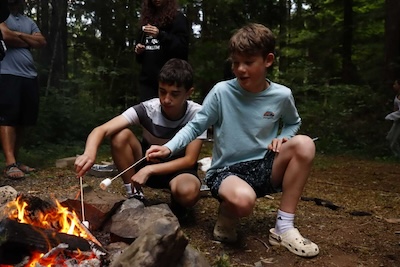
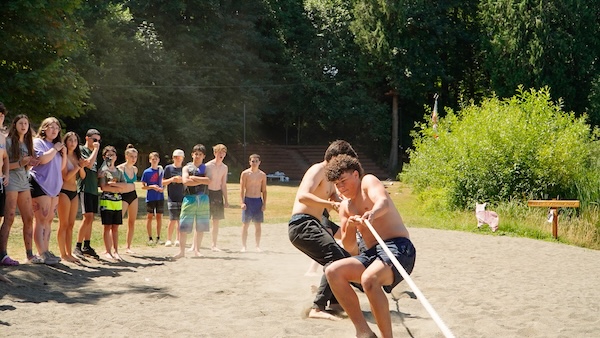
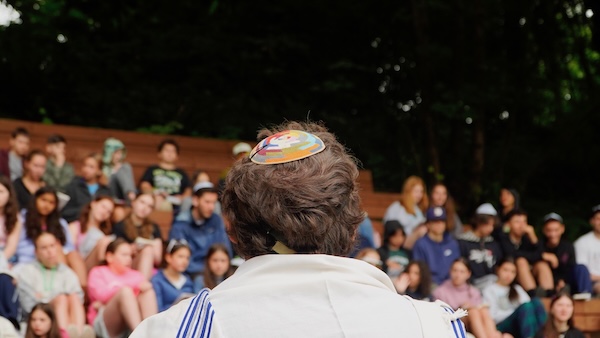
Camp Gan Israel (CGI) Kelowna campers experienced a summer packed with joy, adventure and Jewish education.

The first week of camp was filled with activities that combined fun with learning about Jewish holidays and traditions. The children baked challah for Shabbat, shaped honey jugs and played at the splash park with the shofar sound for Rosh Hashanah. They created stained glass art for Passover, made edible sukkot (huts) and enjoyed playing “Just 4 Fun” for the holiday of Sukkot. Campers also made candied apples for the High Holidays and dressed up for Purim with a photobooth and kosher hunt, all while receiving education about these special days.

In the second week, campers continued to explore and learn with a variety of activities. They went to Energyplex, enjoyed rock climbing, fruit picking, bowling, science experiments, beading, and visiting the aviation museum. Each activity was paired with lessons about Jewish heroes like Abraham, Jacob, Joseph, Esther and Moses, allowing the children to connect their experiences to the teachings of Judaism’s greats.

Campers were provided freshly made, nutritious lunches every day, helping them stay energized and ready for all the adventures. The staff did a fantastic job ensuring every child had a safe, memorable, fun and enriching experience, while making new friends along the way.

With more than 20 campers and five staff, this has been the largest Camp Gan Israel Kelowna season yet! One parent shared in a video interview that his daughter told him it was the best camp she had ever attended. Another grandparent expressed regret for not having sent her granddaughter the year prior, as well, only hearing about the camp’s wonderful reputation afterward. 

To keep the Camp Gan Israel spirit alive throughout the year, there will be JewQ sessions on Mondays, where the children will continue their Jewish learning journey with dinner, study and fun. For more information on this and other camp and Chabad Okanagan activities and events, visit jewishokanagan.com. 

– Courtesy Chabad Okanagan

Format ImagePosted on September 20, 2024September 18, 2024Author Chabad OkanaganCategories LocalTags camp, Camp Gan Israel, Chabad, education, Judaism, summer

Posts pagination

Previous page Page 1 … Page 7 Page 8 Page 9 … Page 45 Next page
Proudly powered by WordPress