Skip to content
  • Home
  • Subscribe / donate
  • Events calendar
  • News
    • Local
    • National
    • Israel
    • World
    • עניין בחדשות
      A roundup of news in Canada and further afield, in Hebrew.
  • Opinion
    • From the JI
    • Op-Ed
  • Arts & Culture
    • Performing Arts
    • Music
    • Books
    • Visual Arts
    • TV & Film
  • Life
    • Celebrating the Holidays
    • Travel
    • The Daily Snooze
      Cartoons by Jacob Samuel
    • Mystery Photo
      Help the JI and JMABC fill in the gaps in our archives.
  • Community Links
    • Organizations, Etc.
    • Other News Sources & Blogs
    • Business Directory
  • FAQ
  • JI Chai Celebration
  • JI@88! video

Recent Posts

  • Eby touts government record
  • Keep lighting candles
  • Facing a complex situation
  • Unique interview show a hit
  • See Annie at Gateway
  • Explorations of light
  • Help with the legal aspects
  • Stories create impact
  • Different faiths gather
  • Advocating for girls’ rights
  • An oral song tradition
  • Genealogy tools and tips
  • Jew-hatred is centuries old
  • Aiding medical research
  • Connecting Jews to Judaism
  • Beacon of light in heart of city
  • Drag & Dreidel: A Queer Jewish Hanukkah Celebration
  • An emotional reunion
  • Post-tumble, lights still shine
  • Visit to cradle of Ashkenaz
  • Unique, memorable travels
  • Family memoir a work of art
  • A little holiday romance
  • The Maccabees, old and new
  • My Hanukkah miracle
  • After the rededication … a Hanukkah cartoon
  • Improving the holiday table
  • Vive la différence!
  • Fresh, healthy comfort foods
  • From the archives … Hanukkah
  • תגובתי לכתבה על ישראלים שרצו להגר לקנדה ולא קיבלו אותם עם שטיח אדום
  • Lessons in Mamdani’s win
  • West Van Story at the York
  • Words hold much power
  • Plenty of hopefulness
  • Lessons from past for today

Archives

Follow @JewishIndie
image - The CJN - Visit Us Banner - 300x600 - 101625

Tag: Lubavitcher Rebbe

Unity in tough times

Unity in tough times

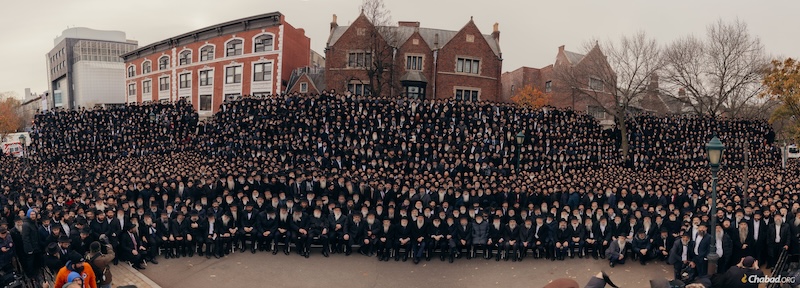
Thousands of rabbis pose for a group photo in front of Chabad-Lubavitch world headquarters in Brooklyn, NY, on Dec. 1. (photo by Shmulie Grossbaum/Chabad.org)

Some 6,500 Chabad rabbis and Jewish leaders from around the globe gathered Nov. 27-Dec. 1 in Brooklyn, NY, for the annual International Conference of Chabad-Lubavitch Emissaries, the largest rabbinic gathering in the world.

Attending from British Columbia were Rabbi Yechiel Baitelman (Chabad Richmond), Rabbi Binyomin Bitton (Chabad of Downtown Vancouver), Rabbi Mottel Gurevitz (Tri-Cities Chabad), Rabbi Shmuel Hecht (Okanagan Chabad House), Rabbi Meir Kaplan (Chabad of Vancouver Island), Rabbi Dovid Rosenfeld (BC Regional Hebrew Schools), Rabbi Bentzi Shemtov (Chabad Nanaimo and Central Vancouver Island) and Rabbi Yitzchok Wineberg (Lubavitch BC).

While the yearly conference has a celebratory feel, welcoming rabbinic leaders from Alaska to Zambia, the past year was a difficult one for the Jewish people, seeing tragedy in Israel, and elsewhere. For Jews around the globe and the family of emissaries in particular, the days just prior to the conference were especially difficult: on Nov. 25, Abu Dhabi-based Chabad Rabbi Zvi Kogan was buried in Israel, after being murdered by terrorists in Dubai at the age of 28.

Chabad-Lubavitch emissaries, known as shluchim, are husband-and-wife teams who dedicate their lives to strengthening Jewish life in communities worldwide, often in remote locations without established Jewish infrastructure. They aim to reach both affiliated and unaffiliated Jews, welcoming Jews from all walks of life.

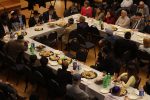
The annual conference, also known as the Kinus Hashluchim, unites rabbis and lay leaders from all 50 US states and more than 100 countries and territories around the world for four days of workshops, networking and spiritual uplift. The conference concludes with a gala banquet, which brings all the Chabad rabbis and their guests together in a giant conference centre in New Jersey. 

The Thursday was a day of catch-ups between colleagues, as well as the first of a series of workshops on contemporary issues that ran over the weekend. Topics included disaster relief, combating hate, education, counseling and dealing with grief. Conference-goers who serve students on college campuses where Chabad has become part of Jewish life participated in a separate track, discussing issues specifically relevant to campus communities.

The Friday visit to the Ohel, in Queens, NY, the resting place of the Rebbe, Rabbi Menachem M. Schneerson, of righteous memory, marked the pinnacle of the conference. The emissaries came to pray for their families and communities, carrying with them countless prayer requests. Many came with handwritten letters from Jews in their hometowns and read them by the holy site. The Ohel visit culminated in the reading of the pan klali (“general letter”) that was signed by all emissaries and contained prayers for Israel, the Jewish people and humanity at large.
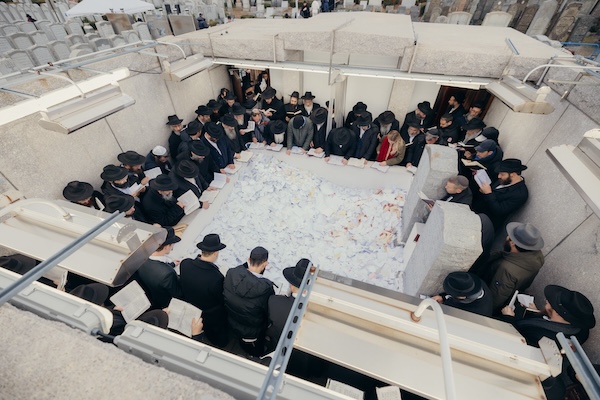
photo - Chabad-Lubavitch rabbis pray at the resting place of the Rebbe, Rabbi Menachem M. Schneerson, in Queens, NY, on Nov. 29
Chabad-Lubavitch rabbis pray at the resting place of the Rebbe, Rabbi Menachem M. Schneerson, in Queens, NY, on Nov. 29.  (photo by Shmulie Grossbaum/Chabad.org)

With the onset of Shabbat on Friday evening, the emissaries spent the Jewish day of rest in prayer and brotherly camaraderie, often in the company of family and friends. 

Sunday morning saw the snapping of the annual “class picture” under the iconic gables of 770 Eastern Parkway, the headquarters of the Chabad-Lubavitch movement, and perhaps the most recognizable Jewish building in the world. The photo, featuring thousands of black-hatted rabbis, represents not just an annual tradition but also the many faces of the Chabad rabbis who bring Judaism to the world, from wartorn Ukraine to the towns along Israel’s hostile borders, to anti-Israel-filled college campuses across North America, to sleepier towns in quieter places.

The capstone of the conference was the gala banquet, held at the New Jersey Convention and Expo Centre, a powerful moment of remembrance and resilience. Speakers honoured Kogan with emotional tributes that emphasized the importance of continuing their global mission. The conference linked by video with the home of Kogan’s parents in Jerusalem, where his family was sitting shiva, and all 6,500 gathered shared the traditional text of comfort with the family.

Rabbi Yehuda Krinsky, chair of Merkos L’Inyonei Chinuch – Chabad’s educational arm – greeted the audience, sharing words of consolation with Kogan’s family and the emissaries, his “extended family,” and sending prayers for the Israeli soldiers defending the Holy Land, as well as the hostages still held in Gaza.

A video tribute was made for Rabbi Moshe Kotlarksy, the vice-chair of Merkos L’Inyonei Chinuch, who passed away after a lengthy illness on June 4. Kotlarsky was well-known for his role in the annual Kinus Hashluchim, directing an army of planners, staff and volunteers to ensure every detail of the massive event was perfect.

Among the most inspiring presentations of the evening was that of Rabbi Yehoshua Soudakoff, director of Chabad for the Deaf Community in Israel, who spoke of his path to finding his Jewish self as a deaf Jew.

“The voice you hear is not mine, but the words definitely are,” he said through an interpreter. “It is hard for a deaf person to find a place within the community. Torah and mitzvah while deaf are difficult. That is why I established Chabad for the Deaf Community. There are deaf Jews and Jews with various disabilities throughout the world. Let us continue our holy work to reach out to every single one of them and inspire them, just as I was once inspired,” he said to applause.

The gathering culminated in a roll call of Chabad emissaries. The event featured multilingual welcomes from emissaries around the world, including a notable announcement that a new Chabad couple had been dispatched to Andorra, highlighting Chabad’s ongoing expansion.

The evening concluded with dancing, the assembled rabbis united in their determination to continue their mission of Jewish outreach and community building, regardless of the challenges they face. 
Format ImagePosted on December 13, 2024December 11, 2024Author Rabbi Moshe New CHABAD.ORGCategories WorldTags Chabad-Lubavitch, conference, education, Kinus Hashluchim, Lubavitcher Rebbe
Event in honor of the Rebbe

Event in honor of the Rebbe

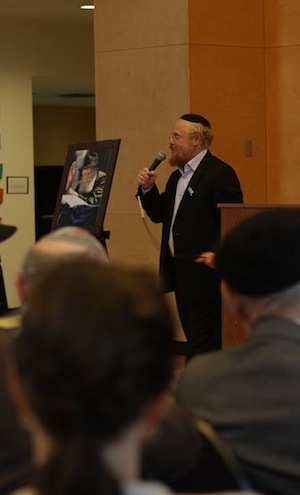
Moishe New makes a point while Rabbi Yitzchak Wineberg and other attendees listen. (photo by Lior Noyman Productions)

photo in Jewish Independent - Rabbi David Aaron at the event
Rabbi David Aaron at the event. (photo by Lior Noyman Productions)

On June 21, more than 200 people came to King David High School to hear Rabbi David Aaron, founder and dean of the Isralight Institute on Awakening to Your Divine Purpose, and Rabbi Moshe New, director of the Montreal Torah Centre, at Evening of Inspiration and Connection, which also featured music by Itamar Erez and Liron Man. The farbrengen was held in honor of the 22nd yahrzeit of the Lubavitcher Rebbe, Rabbi Menachem Mendel Schneerson, which this year is observed July 8-9 (3 Tammuz). The June event was co-hosted by Chabad Lubavitch BC and the Ohel Ya’akov Community Kollel, and more photographs can be found on both groups’ Facebook pages, facebook.com/LubavitchBC and facebook.com/kollel, respectively.

Format ImagePosted on July 8, 2016July 6, 2016Author Lubavitch BCCategories LocalTags Chabad, Kollel, Lubavitcher Rebbe, yahrzeit
Dreidel is more than a game

Dreidel is more than a game

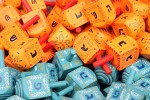
Dreidels for sale in Mahane Yehuda in Jerusalem. (photo by Adiel lo via commons.wikimedia.org)

“Dreidel, dreidel, dreidel, I made it out of clay, and when it’s dry and ready, oh dreidel I shall play.” This children’s song has been sung for generations on Chanukah. A dreidel (Yiddish for spinning top; drey is Yiddish for spin) is a unique toy. It is still called by its original name all these centuries later and is enjoyed by children (and adults) of all ages the world over during Chanukah. It is also perhaps the oldest toy in history, but it is not only functional – it is wrought with symbolism.

In Hebrew, a dreidel is called a sevivon. It dates back to the time of the Greek-Syrian rule over the Holy Land, which set off the Maccabean revolt that culminated in the Chanukah miracle. Learning Torah was outlawed and was punishable by death. The Jewish children resorted to hiding in caves in order to study their beloved Torah. When Greek soldiers were on patrol and would approach them, the children would pull out their dreidels and pretend to be playing a game instead of learning. By playing dreidel during Chanukah, we are reminded of the courage of these brave children.

Dreidels generally do not require any maintenance at all. They are silent but strong. They are thrilled to be taken out every year for Chanukah from the cupboard to be a plaything, to see the sheer delight on the faces of generations of Jewish people who have survived so much persecution. They don’t mind if we touch them with our oily or sticky fingers, spin them endlessly, let them fall onto the floor repeatedly in our enthusiasm, smash them down mercilessly when we lose, throw them up in the air when we win, or spin them upside down to show off for our friends and family. They are so happy to be used for the eight-day festival, which this year begins on the evening of Sunday, Dec. 6, and continues until and including the last night, which will be on Sunday, Dec. 13.

Dreidels come in plastic, wood, metal and even crystal and are collector items, too. But, dreidels are not just objects to be admired and collected, they are actually used to play a game, which has rules. Players gather around a table and divide up a pile of items for tokens (coins, candies, peanuts, etc.). Players take turns spinning the dreidel to see how it will fall and then try to win the whole pot based on the turns. A dreidel has four sides and each side has a Hebrew letter: a nun, a gimmel, a hey and a shin.

After spinning, the top lands and the letter that is facing up determines what happens next. For nun, meaning nisht (nothing), you don’t do anything. For gimmel, meaning gantz (the whole thing), you get to keep the whole pot and then everyone has to put one item in to make a new pot. For hey (halb, or half), you get half of the pot and for shin (shtel arein), you have to put one in the pot. It boils down to having to give or take. It also gives us something to think about while we’re waiting for our next turn. Are we going to be givers or takers? Give: G-d gives us so much, so we can share with others this Chanukah (money, food, time, etc.). Take: we can take upon ourselves an additional aspect of spirituality (a Torah class, a mitzvah, synagogue attendance, etc.).

A dreidel is not a simple toy either, though. It is imbued with the blood of martyrs, the tears of the pious and the endurance of the faithful. No matter what material forms it, a dreidel is made of pretty tough stuff, just like us.

The letters on the dreidel spell out the Hebrew phrase, “Nes gadol haya sham,” which translates as, “A great miracle happened there” (meaning in the Holy Land). Israeli dreidels have the letter pey instead of shin to represent the word poh (here).

Aside from being a symbol of courage and a fun game, how does the small, simple dreidel embody the Chanukah message? What’s striking about the dreidel is that its “religious” aspect isn’t readily apparent upon looking at it. In fact, while it’s spinning, we can’t even make out any letters at all and certainly cannot make words out of the letters even when the dreidel stops. Its message is hidden.

Our lives are like a game of dreidel. In the course of our hectic day-to-day routine, we are often too busy to notice the “letters” – those small and big miracles that accompany us all the time. Taking a first breath upon waking in the morning, stepping onto the floor, being able to get dressed, being able to eat, pray, read the newspaper, drive to work and do all of the activities that we may take for granted in our busyness.

I like to think of the letters of the dreidel as modes of being. We all have our “gimmel” days, when we feel that everything is going great for us. Then there are our “hey” days, when things are going well but could be better. On the “shin” days, we spend time wishing for the hey and gimmel days. The “nun” days, when all the good things seem like a distant memory, we feel that we may never have another hey or gimmel day again in our whole lives.

Each of these letters though, represents only one face of the dreidel – a single perspective of the whole. Together, they spell out a sentence – and, every once in awhile, we have to give the spinning dreidel a break and reflect on its message, “A great miracle happened there.” This, of course, refers to the miracles of Chanukah that occurred in the Holy Land when the situation seemed beyond hope. The commitment of a few people turned the situation around (just like a dreidel) and brought about the miracle through G-d’s salvation. The Maccabees didn’t dwell on the fact that they were being oppressed and persecuted by an enemy larger and stronger than they were. They focused on the gimmel that was on the other side of the shin. They used this attitude to act to create a vehicle for a divine miracle.

It’s important to remember that whatever letter we seem to land on, it’s all part of one dreidel and that the dreidel has the message that miracles can and do happen every day. We can transform the dark situations of our lives into the bright lights of the Chanukah candles to help us battle the darkness. We only have to draw on the strength of the Maccabees, those brave children and the letters of the dreidel. When they fall, they get up, with a little help, and spin ecstatically over and over again.

After the terror we have seen over the past few months in Israel every single day, as well as the terror in Europe and all around the globe, we might think of how we can help during these horrific attacks on completely innocent civilians. In our physical world, there is the notion of cause and effect known as the “butterfly effect,” where a butterfly can flap its wings in one part of the world and cause a storm on the other side of the globe.

In a spiritual realm, a small positive action can push away and dispel much evil, as the Lubavitcher Rebbe, of blessed memory, said – a tiny light can dispel much darkness. How appropriate for us today. We can get involved in positive actions of any type wherever we find ourselves. This goodness will work to counteract the evil, even on the other side of the world.

We need not feel helpless at the terrible news we receive constantly, as there is much we can do through our positive actions. Let’s hope and pray that, as we say in the second blessing on the candles each night of Chanukah, “Blessed are You, Lord our G-d, King of the Universe, who performed miracles for our forefathers in those days, at this time,” that G-d will continuously send us miracles and protection wherever we are in the world and wherever His protection is needed.

Chag samayach!

Esther Tauby is a local educator, writer and counselor.

Format ImagePosted on December 4, 2015December 3, 2015Author Esther TaubyCategories Celebrating the HolidaysTags Chanukah, dreidel, Lubavitcher Rebbe, Maccabees
Proudly powered by WordPress