COVID relief delivered

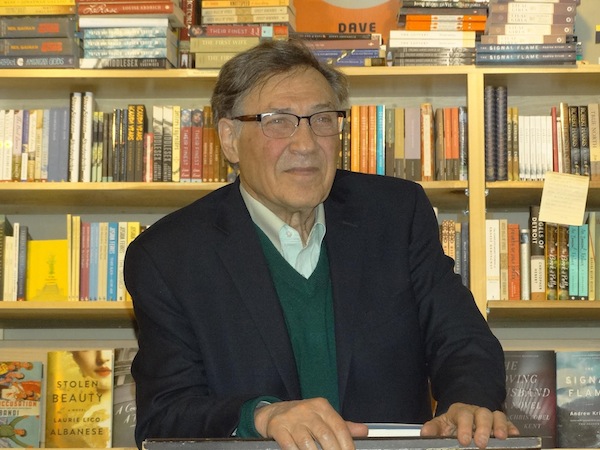
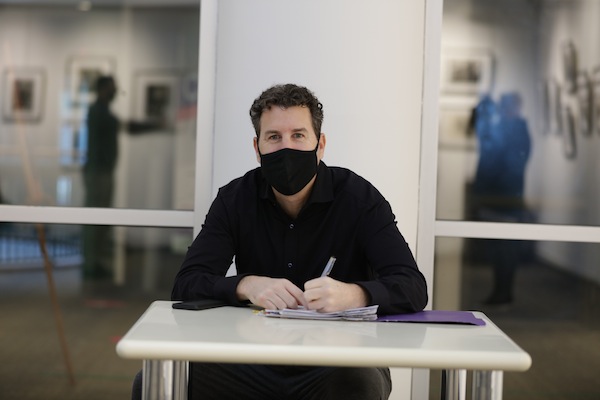
Alex Cristall, Jewish Federation of Greater Vancouver board chair, arrived early at the Jewish Community Centre of Greater Vancouver on Jan. 26 to sign community recovery cheques for grant recipients. (photo by Rob Trendiak)

On Jan. 26, the Jewish Federation of Greater Vancouver released the first round of community recovery funding to address the urgent needs arising from the pandemic’s impacts. A total of $416,000 in grants was distributed among 21 partner agencies and community organizations.

“When COVID first hit, we immediately developed a comprehensive strategic approach to address its impact,” Ezra Shanken, chief executive officer of Jewish Federation, told the Independent. “We met with our partner agencies to learn firsthand about how they were coping, and we released $505,000 in emergency funding just days into the initial lockdown.

“We then worked closely with major donors to launch the Community Recovery Fund, which became a key focus of the annual campaign. We also established the Community Recovery Task Force, comprised of well-respected and experienced community leaders, to work with us to respond effectively to the immediate and long-term consequences of COVID that are affecting our community agencies. During the annual campaign, we asked donors to make an additional gift to support community recovery, if they could.

“We have always been fortunate to have an extremely generous community, and the depth of giving this year has been extraordinary,” he said. “Community members have responded to the call to help in unparalleled ways, however they can. They understand the breadth and scope of need, the immense challenges facing organizations, individuals and families, and that recovery will take some time. Most of all, they appreciate that we are all partners in recovery, and have really stepped up to play their part.”

The initial relief grants were distributed to 19 of Jewish Federation’s partner agencies, as well as to the Louis Brier Home and Hospital and the Hebrew Free Loan Association.

“For the first round of grants, all Jewish community organizations were invited to apply for up to $25,000, regardless of their size,” explained Risa Levine, chair of the Community Recovery Task Force. “Our priority was to meet organizations’ urgent needs resulting from the pandemic, and to ensure they could continue to deliver their programs and services. In the next few weeks, as part of this initial round of funding, we will be recommending grants for synagogues and other places of worship. These grants will be awarded in late February.

“The task force expects the two rounds of funding after that will focus on longer-term needs,” she said. “For example, are there organizational changes that would substantially increase an agency’s capacity to deliver their programs? We also recognize that the pandemic has gone on longer than anyone anticipated, and that the uncertainty of what lies ahead continues. New needs may emerge and COVID-related government subsidies, which have helped a lot of our agencies, may end. So, ensuring organizations’ ongoing sustainability in the face of pressures created by the pandemic will continue to be a priority.”

When the task force met with community organizations last summer and fall, the focus was on understanding how the pandemic had affected the programs and services they offer. While the details differed, said Levine, “they all had been impacted by COVID in similar ways.

“Based on this information, the task force identified six themes, which ultimately became funding categories for the recovery grant application: technology upgrades; critical social services; COVID-related expenses; revenue and rental losses; mental health support for staff and community members; and organizational capacity. Community organizations were invited to apply for a grant to meet urgent, COVID-related needs in two of these six categories.”

The recovery grants comprise but one of three funding streams being distributed in the next couple of months. Other financial assistance will come from the Jewish Community Foundation’s Unrestricted Grant Program, and allocations from the Federation’s annual campaign.

“The Jewish Community Foundation’s Unrestricted Grant Program is designed to complement Jewish Federation’s annual campaign allocations by providing charitable organizations with seed money to support new, innovative programs and services,” explained Shanken.

Grants awarded through the program “give charitable organizations the opportunity to pilot initiatives that address the community’s evolving needs, or to launch startup and capital projects,” he said. “Once the programs demonstrate success over several years, they may then qualify for ongoing funding through Jewish Federation’s allocations.

“This year,” he added, “the foundation adapted some conditions of the program to be as responsive as possible to organizations challenged to deliver their programs and services in new and innovative ways. In this way, the Unrestricted Grant Program is complementing the work of Jewish Federation’s Community Recovery Task Force, which has identified areas of critical need through its consultation process with community organizations.”

The Unrestricted Grant Program funds for 2021 will be awarded in mid-February.

“Jewish Federation has always been proactive and strategic about preparing for crises, so that we can lead a coordinated community response,” said Shanken. “And, while this is unlike anything the community has ever been through, we are in a strong position to respond. We have in place the infrastructure, the community planning expertise, and the staff and team of experienced leaders needed to respond swiftly and effectively to the enormity and ongoing uncertainty of COVID’s impact.

“We know how vital it is to get funds working in the community, and this involves so much more than fundraising,” he noted. “As the pandemic evolves, we will continue to adapt our strategic approach so that we are well-positioned for today and tomorrow, and to convene with all of our stakeholders so that we have our finger on the pulse of the community and can problem-solve together. We’re also collaborating with Jewish federations across North America to leverage their collective knowledge and capacity.”

Levine acknowledged the board and staff of our local Jewish Federation “for their vision and professionalism in organizing the task force and leading the recovery process, as well as the many generous donors who have supported this crucial work.”

She said, “I have been inspired and buoyed by the commitment and passion of everyone involved in the task force’s work to ensure that our community continues to function effectively: by the task force members for their dedication to the work, and by the community organizations for their candour and resilience in adapting their operations to meet the needs of community members.

“The biggest challenge,” she said, “has been to focus and refine our work to be able to respond effectively to the needs we learned about. Hearing firsthand about the challenges that organizations faced revealed the enormity of COVID’s impact through a sharper, more personal lens that added another layer of urgency to our work.”

Despite the challenges, Shanken said, “I remain positive because of the tremendous fortitude and the outpouring of compassion and generosity that I see every day. I am incredibly proud of how this community has pulled together to tackle the road to recovery, and am convinced that we will emerge stronger.”

For more information, visit jewishvancouver.com.

Protect ecommerce ventures

(image from pxhere.com)

Many businesses are shifting their focus to ecommerce, and many new ecommerce businesses are popping up due to the COVID-19 pandemic. British Columbia has recognized this by launching a plan to support these businesses.

Whether your business operates its own ecommerce site or operates through a service like Shopify or Etsy, how you deal with conflict in the ecommerce environment is up to you. I always caution people against finding website policies and legal documents online, as I’ve yet to see one that adequately deals with the concerns of the business.

There are two major areas fraught with risk when using out-of-the-box or cobbled together online legal documents. Not surprisingly, one of them is privacy law. Unlike the United States, Canada has strict privacy laws that are similar to those in the European Union. You know those prompts you get now to “accept cookies” on websites? Those are to make the site compliant with the European GDPR – a set of regulations dealing with the collection and use of personal information. If you are operating a business in British Columbia, any information you collect from visitors to your website, from a visitor’s computer’s ID address (automatically collected by the web server) to the personal information they submit to buy things from your site, is governed by the Personal Information Protection Act (PIPA). Right away, that should tell you that you need a privacy policy that’s made in British Columbia or you risk penalties under PIPA.

The other areas that I find suffer from a one-size-does-not-fit-all problem are dispute resolution and intellectual property.

Dispute resolution is an often-overlooked part of any agreement, especially ecommerce terms of use. Clients often tell me that disputes won’t happen or they’re not worried. I remind them that lawyers get a lot of our work from situations that no one expected. And that solving a messy dispute is much more expensive than anticipating it and being prepared.

There are many types of disputes that can arise and many types of resolution tools. No one tool is the best for all situations.

Ecommerce businesses have certain aspects that make arbitration the best path, and some that would be more appropriate for the court system.

For example, intellectual property disputes often have to be tried in Supreme Court, not Small Claims. The cost of making a claim in Supreme Court is often higher than the cost of arbitration.

Arbitration is often used for ecommerce disputes because you can select an arbitrator with the specialized knowledge needed to understand the claim. If arbitration is an appropriate dispute resolution tool, you should discuss with your lawyer what set of rules and what type of panel will be used.

I recently advised regarding a dispute involving a breach of contract related to intellectual property in an ecommerce situation. I looked at the contract and the situation and thought about it from the perspective of a solicitor drafting terms of use.

Let’s say you craft custom mezuzot and you sell them through Etsy. There are two main areas where I see disputes arising.

One of them is sale completion, like payment, delivery, etc. This is pretty standard business stuff, such as, who is responsible for the mezuzah after payment is made but before either the payment is received or the product is delivered? There is a wealth of case law dealing with this, and it’s important that you understand what kind of insurance you’ll need in case it’s stolen or lost during that interim period.

Another type of dispute arises from the originality of your artwork. The mezuzot themselves are covered by copyright law, as are the photos of them, but how will you deal with someone who makes unauthorized copies of either the mezuzot or the photos? If the copies are slightly different, who will be the best person to determine whether there is infringement?

What if someone takes an idea that is clearly yours and makes their own mezuzot that are similar but definitely not the same? Is there a style that identifies them as part of your business? That might be a trademark issue, which cannot be dealt with in Small Claims in British Columbia. If they’re not copies of the mezuzot but inspired by them, is there infringement? Likely not. This brings us back to the terms of use.

Let’s say you have a site called TeleSeder. You sell an app and run a course to help people run their Passover seders through videoconferencing software, like Zoom or Skype. Someone signs up for the course, pays for everything, and then turns around and creates VirtuaPesach. It does almost exactly the same thing – it’s clearly using your idea, including a similar app and course, right down to the course materials. But the person running VirtuaPesach has done their homework on copyright and made sure that they’ve made enough changes to escape a claim for copyright infringement.

Copyright doesn’t protect ideas; it protects the specific works expressing those ideas. But that’s not fair, you say. They came to my site, even paid for my materials, and then ran off with them to create a competitor!

This is where a made-for-you ecommerce agreement can help. It’s true that VirtuaPesach probably doesn’t infringe your copyright, but the person behind VirtuaPesach did sign an agreement when they paid for TeleSeder. When they paid for your product, there was an exchange, and that exchange can have more terms than just “pay money, receive product.” What if you included a clause in the terms of use saying that they agree not to create a competitive product based on yours? There are limits to how far you can go with that, but it’s definitely an option. Now, you have them for breach of contract. Choosing whether to use court or arbitration to settle the dispute will be based on a discussion of certain details with your lawyer, but why not build some of the resolution right into the agreement?

You can put remedies – as long as they’re not excessive and they’re realistically tied to the problem – right into the agreement. There’s a way that the agreement can say, “Not only will you not steal my idea, but if you do, whatever you create with it will be mine.” Enforcing that could put the brakes on VirtuaPesach and hand over all of its assets to TeleSeder. The extent to which you can do that depends on circumstances, of course, but this is something to consider when transitioning to an online business.

Using carefully crafted online documents for your ecommerce business helps protect you and your business. From securing what’s yours to controlling dispute resolution before a dispute arises, an ecommerce venture has new challenges and new spins on old challenges that can be managed by getting the right advice.

Jeremy Costin is a business and estates lawyer practising in Vancouver. He sits on the board of directors and is the chair of the governance committee of the Vancouver Holocaust Education Centre, and is a frequent guest instructor at the Law Society of British Columbia.

***

Disclaimer: This article should not be construed as legal advice. Only your lawyer can give you proper advice specific to your needs.

Tu b’Shevat when it’s -30°C

As I went through my undergraduate and graduate school years, I cobbled together several different part-time jobs. One of my favourites was teaching Jewish music at weekend religious schools. This time of year, Tu b’Shevat (aka the New Year of Trees), songs were part of the lesson plan. Often, the kids I taught were just learning Hebrew for the first time, so I taught in English, too. One of my all-time hits was “The Garden Song,” which started with “Inch by inch, row by row, I’m gonna make this garden grow. All it takes is a rake and a hoe and a piece of fertile ground.” My second chart-topper was “Inchworm, inchworm, measuring the marigolds, won’t you stop and try to see how beautiful they are?”

Now, as I write this, I feel transported to a warm, sunny day in my garden, which is good, because it was -30°C with the windchill when I walked my dog in Winnipeg this morning! It’s good to be in touch with both the long-term hopes and dreams of summer and the realities of where we are. Holding that paradox, of both frostbite weather and sunny heat at once, is a great metaphor for where many of us are these days.

As a dual U.S.-Canadian citizen, I’ve been in knots over the unrest “down south” and the U.S. presidential transition. As well, I’m worried about the pandemic and about how poorly vaccine roll out has gone so far in Manitoba, and in Canada overall. I’m both thrilled to hear that all my children’s grandparents have gotten their first vaccine shot in the States, and also so sad to know that our local “adopted” Manitoba grandparents, both over 80, have no idea when they’ll get theirs.

Many people who have been sick with COVID-19 have struggled with challenging effects afterwards, including significant mental health issues. The anxiety and mortality struggles are pretty serious concerns for many of us, even if we haven’t gotten sick. One way my household has succeeded in coping is in burrowing in at home – into learning, good books, art and other DIY projects, building Lego and cooking. Everyone here, from age 9 and up, has kept busy with work and learning. We try to keep positive things in mind as much as we can.

I’ve been thinking about all of this, as I’ve considered what my plans are for the next days, months and even the year. In early January, I celebrated a birthday and the one-year anniversary of starting to study Daf Yomi, a page of Talmud a day. I am proud of finding the time to do this, however brief and poor my attention span may be sometimes. While I struggled with finding good (quick) resources for study, I found an Instagram page, posted by a rabbi, which seemed to summarize each page of study.

Hurray! I thought, I can review this in a glance while I help my kids with remote school lessons. Of course, anything that is in my Instagram feed has to then be kid-safe. Imagine my surprise when my account dumped two Daf Yomi posts with very scary images at me. One showed a person with a plastic bag over her head, struggling to breathe. The other showed someone’s hands, coated and dripping with blood.

Normally, I would simply unfollow this kind of thing without comment. However, these posts about Talmud were written by a rabbi, so I messaged her. “Hey!” I said, “I am so pleased to be doing Daf Yomi. I followed your posts, but I have to unfollow. These images on Tractate Pesachim 57 & 59 are too graphic. I don’t want my kids to see them.”

I got a response that left me, well, reminded that rabbis are just people, and that some of them may miss the mark at times. It was a “sorry to offend” kind of message. She indicated that she was a visual learner, that these posts were meant for those over 18 and that, to her, these seemed essential as an artist/interpreter, and she was guessing others felt the same. While she congratulated me on taking on Talmud study, I was also “othered,” as she, an artist, felt that dedicated followers would prefer this gory imagery in their social media feed.

I was disappointed. Although I am way past age 18, I am choosing, over and over, to focus on what I can gain positively from the talmudic text, even during a hard time. The talmudic rabbis, in parsing what had happened in Temple sacrifice, were trying to understand ritual events that had occurred a long time before. It was a disruptive period in history. Things weren’t stable. In fact, they weren’t actually doing sacrifices or actively harming people who didn’t observe properly. They were ironing out Jewish law for centuries to come, by confronting the past and figuring out the future through discussion, debate and study.

They did this by examining one small thing at a time. Much like the “Inchworm” song, Jewish rabbinic tradition teaches us to examine what is in front of us and to find solutions to challenges. I am distraught when I have to “hold” overwhelming images of rioting in the U.S. Capitol, the pandemic illness and deaths, and even a gory Instagram feed in my mind. Instead, I’m choosing a different path. It’s one that focuses on the next kids’ snack and meal, the next dog walk, and the next time I pick up the warm handknit mitts from the radiator as I face a cold morning outside. Inch by inch, row by row, we will get to sunny days in the garden ahead.

Sometimes, we do best when we embrace the ritual of “one thing at a time.” It’s one wintertime walk and, even, to knit each stitch as it presents itself on the needle to make more mittens. We’ve got a lot on our plate these days. Even so, we must eat only one bite at a time. It’s a metaphor and a paradox that the talmudic rabbis knew well. It might be a cliché but, for us, it also works.

Joanne Seiff has written regularly for CBC Manitoba and various Jewish publications. She is the author of three books, including From the Outside In: Jewish Post Columns 2015-2016, a collection of essays available for digital download or as a paperback from Amazon. Check her out on Instagram @yrnspinner or at joanneseiff.blogspot.com.

Fairy tales still relevant

Jack Zipes gives the lecture Resurrecting Dead Fairy Tales on Facebook Feb. 17. (photo from MISCELLANEOUS Productions)

Some fairy tales are timeless in that they still have lessons to impart. For example, The Pied Piper, a story dating back to the Middle Ages, “is a tale of plague, greed, betrayal, conformity/confinement with allusions to child abuse,” explained Elaine Carol, co-founder and artistic director of MISCELLANEOUS Productions.

MISCELLANEOUS’s Plague project will have participating youth, along with professional artists, interpreting the Brothers Grimm’s The Pied Piper “from an intersectional, anti-racist, anti-oppression, queer feminist perspective.” In preparation, Carol told the Independent, “we have been reading our way through the mountain of brilliant writing by Jack Zipes, asking him many questions – even our film editor of Resurrecting Dead Fairy Tales is now reading two of his hundred or more published books.”

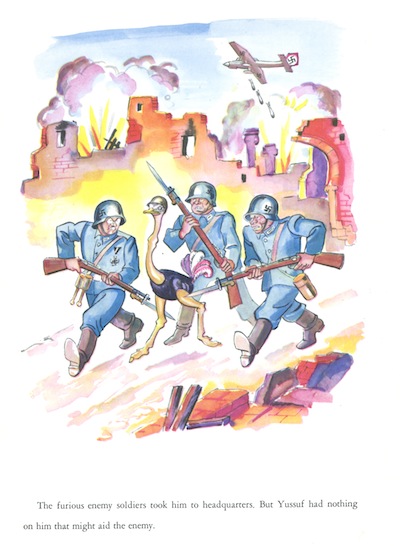
image - In Yussuf the Ostrich, political caricaturist Emery Kelen tells the story of a young ostrich who helps defeat the Nazis in northern Africa during the Second World War.
In Yussuf the Ostrich, political caricaturist Emery Kelen tells the story of a young ostrich who helps defeat the Nazis in northern Africa during the Second World War.

Zipes’ recorded Facebook Watch talk, Resurrecting Dead Fairy Tales, will be streamed Feb. 17, followed by a live Q&A with Zipes. Some of the lecture will be part of the documentary being created about the youth-centred theatre project, which will include various workshops and an eventual stage production at the Scotiabank Dance Centre in 2022.

“I have also been working with young professional artists Tiffany Yang, who was a youth in our Monsters production, national and international tours, and Julia Farry, our production assistant/outreach worker,” said Carol. “Tiffany has translated four indigenous Taiwanese folk tales that are stories of plague – mostly in coastal communities, including animal wonder tales of fantastical fishes and other fascinating narratives. Julia has translated three Japanese folk tales focusing on plagues. There are many plague stories that we still hope to collect, including the facts of disease spread by European settlers to the Indigenous people of Turtle Island, as research materials for our project-in-development.

“We are currently collecting these tales to bring to our youth cast after it is deemed safe to work with them in person,” Carol continued, “as we will be using theatre, hip hop/streetdance, contemporary dance, marimba and world music, urban music, performance art, etc., to co-create a new play. This play will be used as a vehicle for the youth to discuss their own experiences of living in a world pandemic.”

Zipes’ lecture was filmed in Minneapolis by MISCELLANEOUS Productions’ professionals. The professor emeritus of German and comparative literature at the University of Minnesota is an expert on folklore and fairy tales. He is a storyteller himself and the founder of the publishing house Little Mole and Honey Bear.

“My parents and grandmother always told me tales of different kinds,” Zipes told the Independent. “When I began studying for a PhD at Columbia University, I wrote my dissertation on ‘The Great Refusal: Studies of the German and American Romantics in the 19th Century.’ My interest in fairy tales grew as I realized that these imaginary tales hold more truth than the so-called realistic future. And I also was angered by Bruno Bettelheim’s book about fairy tales in which he imposed a Freudian interpretation on readers. Since then, I have been trying to reveal how relevant fairy tales are to our lives.”

image - One of the fairy tales Jack Zipes has resurrected is Keedle, The Great, first published in 1940
One of the fairy tales Jack Zipes has resurrected is Keedle, The Great, first published in 1940.

The examples given in the lecture’s press release are from two books Zipes has translated and published: “For example, in Yussuf the Ostrich, well-known political caricaturist Emery Kelen tells the story of a young ostrich who helps defeat the Nazis in northern Africa during World War II. In Keedle, The Great, first published in 1940, Deirdre and William Conselman Jr. sought to give Americans hope that the world can overcome dictatorships. To the authors, the title character Keedle represented more than Hitler, but all dictators then and now.”

Zipes said, “I don’t think that my being Jewish accounts for my interest in fairy tales. My Jewishness makes me a bit meshuggah, and this is why I try to think out of the box and have developed a storytelling program for children without sanitizing the fairy tales. The best of folk and fairy tales have never been sanitized, and I use tales to tell so that children will be enabled to tell their own miraculous tales.”

“My Jewishness is complex,” said Carol, “because I am mixed-race Sephardic-Romani and Ashkenazi. One of one million reasons I love Jack Zipes and think his work is crucial is his lucid critique of the Disneyfication of fairy tales and folklore.”

Resurrecting Dead Fairy Tales starts at 5pm on Feb. 17 and is intended for older youth and adult audiences. On the day and time, click here for link to watch.

ניסויים קליניים בתרסיס לאף למניעת קורונה

(sanotize.com/covid-19)

בריטניה החלה בשבוע שעבר לערוך ניסויים קליניים בתרסיס לאף למניעת התפשטות חיידק הקורונה, שמיוצר על ידי חברה בוונקובר “סנוטיז”. החברה בבעלות הישראלית, ד”ר גילי רגב, שמשמשת גם המנכ”לית שלה. קנדה השלימה כבר את השלב הראשון בניסויים הקליניים שלה ואילו ארה”ב אמורה להתחיל בניסויים דומים בימים הקרובים. בישראל לעומת זאת שוקלת מערכת הבריאות להגדיר את התרסיס של “סנוטייז” כמכשיר רפואי ולא כתרופה, כך שהתהליך לאישורו יהיה הרבה יותר מהיר.

התריס לאף של “סנוטיז” מבוסס על תרכובות שנמצאות במזון ויוצרות תחמוצת חנקן בכמות קטנה. הוא אמור לסייע במניעת מעבר נגיף הקורונה דרך האף ומערכת הנשימה. לדברי ד”ר רגב החברה קוראת למוצר חומר חיטוי לאף – בדומה לג’ל חיטוי לידיים למניעת התפשטות הקורונה. לדבריה מאה איש שהשתתפו בשלב הראשון של הניסויים הקליניים בקנדה והשתמשו בתרסיס, ואף אחד מהם לא חלה בנגיף.

ד”ר רגב למדה באוניברסיטה העברית בירושלים וסיימה את הדוקטורט בביוכמיה. לאחר מכן עברה לוונקובר והיא הקימה כאן את “סנוטיז” ביחד עם ד”ר כריס מילר לפני כארבע שנים.

קנדה רכשה פי חמישה חיסונים מהנדרש אך חיסנה רק אחוז מהאוכלוסייה

סיפור כשלון שמעורר תמיהה מתרחש בקנדה. המדינה שרכשה מראש יותר מנות של חיסונים נגד הקורונה מכל מדינה אחרת (כמעט פי חמישה מהנדרש), ומערכת הבריאות הציבורית שלה נחשבת מצויינת ומתוקצבת כראוי. אך למרות זאת, בקנדה התחסנו עד כה רק כאחוז אחד מכלל האוכלוסיה. ממש מביש.

לדעת המומחה, ריאן אימגרונדל, קנדה נתנה כל כך הרבה תשומת לב לאחסון הזריקות בהקפאה, ולא מספיק תשומת לב לשלב שבו הן יוצאות מההקפאה ועוברות לזרוע של האזרחים. הרשויות היו מודאגות לגבי דרישות האחסון, ונראה שהם “שכחו” שהזריקות היו אמורות למעשה להינתן לאנשים.

מומחה למחלות זיהומיות באוניברסיטת טורונטו, ד”ר איזק בוגוך, הסביר מדוע ישראל הצליחה להפיץ את החיסון בצורה מסיבית הרבה יותר. לדבריו ישראל היא מדינה קטנה והאוכלוסייה מרוכזת הרבה יותר מאשר קנדה. כידוע קנדה היא המדינה השנייה בגודלה בעולם מבחינת שטח. האוכלוסיה של קנדה מפוזרת באזורים שונים ומרוחקים זה מזה. צריך שרשרת אספקה (בטמפרטורות הנמוכות) לשמירה על החיסונים, וזה מסובך באזורים מרוחקים, כפריים ונטולי שירותים. זה אתגר מאוד גדול בקנדה.

אמזון לא עוצרת: רוכשת לראשונה מטוסי ארוכי טווח להעברת משלוחים מקנדה

ענקית המסחר האלקטרוני האמריקנית אמזון ממשיכה לגדול בתקופת משבר הקורונה, ורוכשת לראשונה מטוסים ארוכי טווח להעברת מישלוחים לאירופה ואזורים מרוחקים נוספים. עד כה החברה רק החכירה מטוסים להעברת המישלוחים.

אמזון חתמה לפני מספר ימים על הסכמים לרכישת אחד עשר מטוסי בואינג שבע שש שבע/שלוש מאות: שבעה מחברת התעופה האמריקנית דלתא וארבעה מחברת התעופה הקנדית ווסט ג’ט. מטוסי הנוסעים יוסבו לקרגו ויוכנסו לשימוש ע”י אמזון.

זו אגב הוכחה נוספת שחברות התעופה מקטינות את צי המטוסים שלהן לטיסות ארוכות טווח, נוכח המשבר הקשה שפוקד את ענף התעופה.

אמזון החליטה לפני כשנתיים להטיס בעצמה את מטעניה לכל רחבי ברחבי העולם, והיא מחזיקה כיום בציא ענק של שמונים מטוסים מוחכרים. עתה החברה כאמור רוכשת מטוסים והציא שלה יגדל אפוא לתשעים ואחד מטוסים. לפי הערכות אמזון מתכוונת להמשיך ולהגדיל את ציא המטוסים שלה למאתיים, בדומה למתחרה האמריקנית שלה להעברת מטענים – חברת יו.פי.אס.

אמזון מעסיקה כיום קרוב למיליון עובדים ברחבי העולם ושווי השוק שלה נאמד ביותר מטריליון דולר.

Camps plan tentatively

Normally, this issue of the Independent would feature our third Camp Guide of the season, with several camps advertising their summer sessions, and several articles on various topics related to Jewish camp. But COVID-19 seriously affected last summer’s programming and it’s making this year’s planning difficult, to say the least. Camp Hatikvah and Camp Miriam – which are overnight camps – have been particularly impacted by the pandemic.

With record camper enrolment, 2020 was slated to be Camp Hatikvah’s best year ever. By the third week of March, however, it became apparent that the summer wasn’t going to go as planned. By the end of May, the Provincial Health Officer had announced that overnight camps would be prohibited from operating and Camp Hatikvah had to cancel its upcoming season.

“It was devastating,” said Liza Rozen-Delman, the camp’s director. “My heart immediately broke for the 700 participants and 80 young counselors who were signed up for our programming. After such a hard few months in lockdown, I knew everyone was hanging on to the hope that they would still get to go to camp. The fact that this was no longer a possibility was so hard for everyone. I just wanted to fix this for kids but was helpless to do so. It was a very difficult time.”

The cancellation also created a financial crisis, as there was no program revenue to cover fixed costs, such as insurance fees, site maintenance and administrative expenses. Camp Miriam faced financial issues as well, and the Jewish Federation of Greater Vancouver provided emergency funding to both camps last April.

“Our community made it clear that we would not face this challenge alone,” said Joanna Wasel, Camp Hatikvah board president. “They knew we were in trouble and they immediately felt the call to action.” By the first week of June, Hatikvah had raised enough money to cover all of their 2020 fixed operational expenses.

“This was one of the hardest years in the camp’s history and yet, in a strange way, it was also one of our most meaningful,” said Wasel. “The way the community stepped up for us is an incredible affirmation of the value of our work and the impact Camp Hatikvah has had on generations of people. It has touched us beyond words and we will be forever grateful.”

“Last spring, as the reality of the pandemic hit, it was as if the rug had been pulled out from under us,” said Leah Levi, registrar of Camp Miriam. “We were scrambling to figure out how to provide what we do each summer on Gabriola Island – the fun, magic, community, friendship and Jewish experiences that our campers have come to expect from us. It was very overwhelming and we were sort of lost, until our youth staff stepped up and started planning for what was possible: day camps in Vancouver, Victoria and Portland, and even online programming for those who couldn’t attend the day camps. We rented space with the JCC’s Camp Shalom at Vancouver Talmud Torah, and in Victoria at the JCC. Donors and the Vancouver Jewish Federation backed our plans with financial support and, as they say, the rest is history!”

The camp’s staff, who are all between the ages of 17 and 22, got “to spend the summer being mentors and learning valuable leadership skills,” said Levi. “Parents and kids were grateful that we gave them a break from each other and a fun, unplugged, Jewish, social experience during COVID. For over 200 campers, COVID-19 took a backseat for six-and-a-half hours a day, and they were able to enjoy a physically distanced ‘normal.’ Even though they weren’t on Gabriola Island, campers and staff alike felt that they were at Miriam. As one camper put it, ‘We learned that Camp Miriam is not a place, it’s a feeling and we can take it anywhere.’”

For this coming summer, Camp Miriam has opened registration for three two-week sessions on Gabriola.

“All registrations are considered ‘pre-registrations’ and everyone is on a waitlist,” said Levi. “We will only accept campers when we have permission from the B.C. health authority, as their decision made last spring to not allow overnight camp still stands…. If we do not get permission to open … we will offer similar programming as last summer.”

Hatikvah translates to “the hope” in English and, while COVID is still raging, Camp Hatikvah remains hopeful they will be able to operate this summer, too.

“We are full for the upcoming season,” Rozen-Delman said. “Kids need camp, perhaps now more than ever, and we are going to do whatever we can to get them back there this summer.”

Acknowledging that much of the situation is out of their hands, Rozen-Delman is planning for a variety of scenarios. “And, while it is hard to face so many unknowns,” she said, “we are determined to find creative solutions to whatever challenges lay ahead.”

Demand almost double

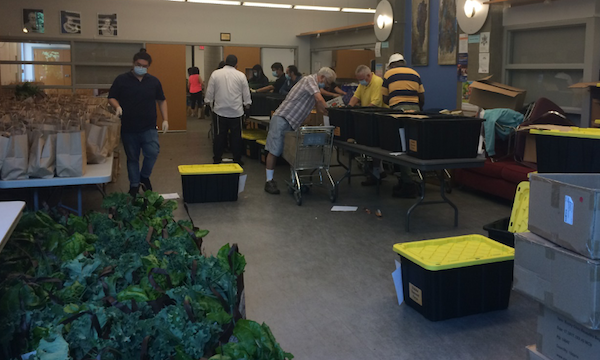
The Vancouver Jewish Food Bank is now distributing more than 10,000 kilograms of food every month. (photo from BI and JFS)

According to the Community Food Centres Canada report Beyond Hunger: The Hidden Impacts of Food Insecurity in Canada, “Even before COVID-19, nearly 4.5 million Canadians struggled to put good food on the table for themselves and their families. In the first two months of the pandemic, that number grew by 39%, affecting one in seven people.”

Demand on the Vancouver Jewish Food Bank has almost doubled since the start of COVID-19. The organization is now distributing more than 10,000 kilograms of food every month; supporting seniors, families and individuals. While some of us have been impacted by food scarcity during COVID-19, those most in need live in a state of constant worry about where their next meal will come from.

The 1996 World Food Summit defined food security as: “when all people, at all times, have physical and economic access to sufficient, safe and nutritious food to meet their dietary needs and food preferences for an active and healthy life.” To this end, Jewish Family Services and Congregation Beth Israel are hosting More Than a Bag of Food on Jan. 28, bringing organizations and people together for a Tu b’Shevat program on food security in our community and beyond.

Vancouver Talmud Torah and Richmond Jewish Day School students are raising awareness about the food bank and reaching out to recipients. King David High School is hosting a cooking demonstration with Hilit Nurick and Rabbi Stephen Berger at 4 p.m. on Jan. 28, which will feature local ingredients and discuss the need for healthy food for everyone. Hillel BC is running an online quiz, with prizes, and a deep dive into information around food security.

At 7:30 p.m. on the 28th, there will be a Zoom panel including Dr. Tammara Soma, assistant professor, School of Resource and Environmental Management, Simon Fraser University; Dr. Eleanor Boyle, educator and author; Krystine McInnes, director and chief executive officer of Grown Here Farms; Mara Shnay, chair of the JFS client advisory committee; and Cindy McMillan, director of programs and community partnerships at JFS. Lawyer Bernard Pinsky will moderate the discussion.

“This is an important conversation,” said McInnes. “The stakes are very high. The pandemic has thrown into sharp relief just how vulnerable we are, given the way our society is organized. ”

Food systems produce and deliver based on historic demand. With the advent of COVID-19, the system has been stretched, leading to empty grocery shelves and desperate food banks. International supply chains are no longer reliable, with Russia and Vietnam limiting the sale of wheat and rice outside of their countries. Canadian food production plants have been hard hit by pandemic outbreaks and the lack of international workers. This is particularly problematic when food production is concentrated at large facilities; for example, two plants in Alberta provide 70% of Canadian beef.

“We are going to talk about initiatives from local to global,” said Boyle, “and panelists will let audience members know about some of the creative approaches to food security that are being taken at the Jewish Food Bank, as well as what’s going on around the world to try to shift agriculture and diets toward being better for climate and public health.”

To register for the cooking event and/or the food security conference, visit bethisraelvan.ca/event/tubishvat5781.

Critical to take a stand against hate

Since time immemorial, no matter what calamity occurred in the world, if there was a problem plaguing humanity, Jews were used as the convenient scapegoat.

Earlier this year, as the coronavirus pandemic spread across Europe and then throughout North America, conspiracy theorists claimed that Israel and Jews around the world were secretly involved in spreading and even engineering the deadly disease. While these conspiracies are baseless and seem almost comical at first glance, thanks to the power and ubiquity of social media, even the most bizarre falsehoods can find fertile ground and poison the minds of millions of people almost instantaneously.

Unfortunately, the pandemic continues to rage across Canada and the world and, though the claim that Jews are behind COVID-19 remains utterly fictional, that hasn’t stopped a dangerous new crop of antisemites from spreading their toxic bigotry.

Not only is Canada not immune to the age-old virus of antisemitism, but British Columbia has also been infected. As was reported in the Georgia Straight, an anti-mask activist in Vancouver, Marco Pietro, who organized and participated in a number of rallies protesting coronavirus restrictions and policies, released a Holocaust denial video on social media. The two-minute-long video features Pietro saying that the Holocaust is a myth perpetrated by fake survivors to scam money out of the wider, unsuspecting public. He also claimed that Mein Kampf – Adolf Hitler’s antisemitic manifesto – didn’t contain any objectionable material, and that the coronavirus pandemic is a plot used by Jews in a quest for control. Pietro also said that concentration-camp survivors are liars and accused “a bunch of Zionist Jews” of “setting up” Hitler.

Meanwhile, on Nov. 15, a speaker at an anti-mask rally in Vancouver condemned “satanic, talmudic” people. The Canadian Anti-Hate Network (CAHN) reported that the No More Lockdowns group (which now goes by the name “Human Rights Movement”) produced an event in Vancouver organized by antisemitic conspiracy theorist Raoul Taylor van Haastert, who has decried the “Zionist media” and stated “our WWII history is a lie.” CAHN’s report cited Vancouver neo-Nazi Brian Ruhe, who, in an antisemitic post that went viral, shared his beliefs about “Rothschild-Zionist-communist control” that is being covered up, claiming that Jews control the media.

Let there be no doubt, there’s no evidence whatsoever that the Jewish people or the state of Israel are behind the coronavirus pandemic or any of these other odious libels. Conversely, the evidence supporting the Holocaust’s veracity is so overwhelming and indisputable that, to deny its occurrence, far from being a legitimate disagreement on historical facts, is rather merely an attempt to deny the Jewish people’s collective suffering at the hand of the Nazis to further an antisemitic agenda.

Most British Columbians would rightly brush off Pietro’s and Ruhe’s words as illogical rants of mad men, but, tragically, as bothersome and as offensive as their statements are, antisemitic acts are at or near all-time highs across Canada, including in British Columbia.

Earlier this year, B’nai Brith Canada’s annual audit of antisemitism logged more than 200 such incidents in British Columbia alone, ranging from harassment to vandalism. In one such incident, for example, Camp Miriam, on Gabriola Island, was vandalized with graffiti, including a swastika and other images. The image and symbol that represented the Nazi regime that murdered six million Jews in Europe less than 100 years ago is today being used to attack young Jewish summer campers. One can only imagine the long-lasting psychological damage inflicted on young people as a result of such an incident – and multiply that by more than 200 incidents last year alone.

Such antisemitic conspiracy theories, as espoused by Pietro, Ruhe and others must be forcefully repudiated and condemned by all. Thanks to social media, even the most bizarre lie can have a worldwide impact, and that’s why it’s so critical to take a public stand against antisemitic hate and propaganda. As history has taught, while antisemitic words are bad enough, the paramount concern is that they can often morph into violence. Enough is enough.

Mike Fegelman is the executive director of HonestReporting Canada (honestreporting.ca), a nonprofit organization working to ensure fair and accurate Canadian media coverage of Israel.

Kindness a blessing to share

I was crying in front of the computer screen during a funeral service livestream. Again. It wasn’t my first of this pandemic. Even if the person didn’t ostensibly die of COVID, he’d been ill alone, unable to see family for long stretches because of it. And, because of COVID, I couldn’t be at the funerals in person, which were all in the United States. In normal times, I’d be rushing across the continent to be at these services with my family.

The person being eulogized, Rabbi Laszlo Berkowits, was a family friend, and was close to my parents. I called him “uncle” as a kid. He and his family were always part of our family’s holiday celebrations and gatherings. I played with his kids at his house. Their phone number was my elementary school’s emergency contact for me.

Rabbi Berkowits (Uncle Larry) was my family’s rabbi. He was also a Holocaust survivor. For a person who spent his teenage years in concentration camps, including Auschwitz, my Uncle Larry’s positivity, joy and ability to find the good in others were amazing. He had an incredible, long career, supporting and inspiring others to make positive change.

At the funeral, his family and friends (including my pediatrician) talked about how my Uncle Larry felt so grateful for the kindness of others, including the kindness of strangers. Without that help, he wouldn’t have survived the Second World War. Without the assistance and loving kindness of strangers – in Sweden, the United States and beyond – he wouldn’t have regained his health, gone on to serve in the U.S. military or received a full scholarship to become a rabbi. He wouldn’t have had the opportunities that truly enabled him to make such a difference in so many others’ lives.

This pandemic makes me think about how important that effort, to be kind and to reach out to one another, is for all of us right now. A year ago, the CBC Manitoba webpage ran a piece I wrote, “Mom’s emergency granola bar is there when you need it – no matter who you are.”

The article was about how I try to carry around snacks (granola bars) for my kids, just in case they need one, but that, sometimes, the best option for me is to offer that extra snack to someone else on the street, who is hungry, instead.

The thing is, since the pandemic started, like many Manitobans, we haven’t been out and about nearly as often. I don’t carry around snacks now because my kids are remote schooling. We’re working and learning at home, trying, like most of us, to reduce the number of people who might get sick or die from COVID. On a daily basis, I am not physically handing out those granola bars to anybody other than my kids.

A week ago, I got the most amazing email from a single mom friend who is a grocery store cashier in a city more than 200 kilometres away. She works very hard to keep her family afloat. She’d been waiting until her break to write me: “A man came through with 25 boxes of granola bars. No judgment – they were on sale! Then, he tells me he read an article about someone and their child or children who handed a person a granola bar and it stuck with him. So, now he has granola bars in his car and always hands them out to panhandlers and people who need them when he can.”

I could imagine her hearing this at the grocery store, her jaw dropping in surprise. She told the man that we were good friends and that she would tell me about this. The man said to pass along that, she wrote, “he has been doing this since the week he read your article and to thank you! Simple acts of kindness are what is keeping him going these days.”

When I read her email, I cried. It had been “one of those pandemic days” – where the news, the work and learning struggles at home, had all felt so hard. We’re all tired of worrying, so concerned about our loved ones. In fact, I’d been feeling badly that I couldn’t do more for others, write more, donate more, while juggling things on the stay-at-home front.

Another email from my friend arrived. She’d mentioned this man’s purchase to one of the grocery store owners. He’d said, if she sees this man again, the store would give him a discount on these purchases. Then he printed out the story to pass along, too.

I felt so grateful to this anonymous stranger who was carrying around all these granola bars to feed others, and continuing this kindness when I couldn’t. I wanted to thank him, but I also respect just how many anonymous givers might be out there. It takes all of us to beat this pandemic. Next year, I hope to host my amazing essential worker friend and her kids for a big celebratory Chanukah dinner again.

I’m so heartened to hear that the kindness my Uncle Larry encouraged in others is continuing to be passed along. I carry with me his constant reminders to be an upstanding person who does the right thing, who helps others, shines a light for others, even if he himself isn’t here anymore.

My Uncle Larry would say, “Be the best. Be a blessing.” He’d add something like, “We never know how long we’ll be here on earth. It’s our job to do good for others whenever we can – right now.”

At his funeral, another longtime family friend, Sam Simon, spoke, reminding us: “Be that stranger whose kindness is a blessing to someone so that they, too, can become a blessing to the world.” I am sure the biggest blessing of all would be if more people took that to heart.

Joanne Seiff has written regularly for CBC Manitoba and various Jewish publications. She is the author of three books, including From the Outside In: Jewish Post Columns 2015-2016, a collection of essays available for digital download or as a paperback from Amazon. Check her out on Instagram @yrnspinner or at joanneseiff.blogspot.com.

Aliyah despite COVID

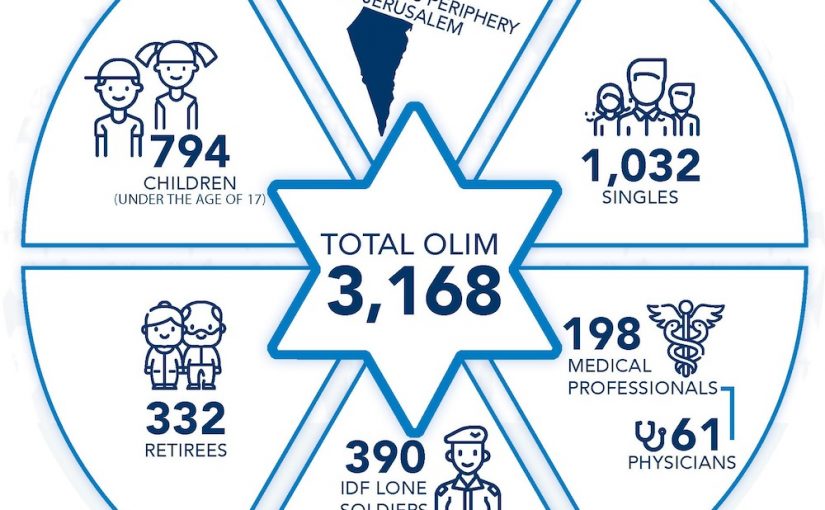
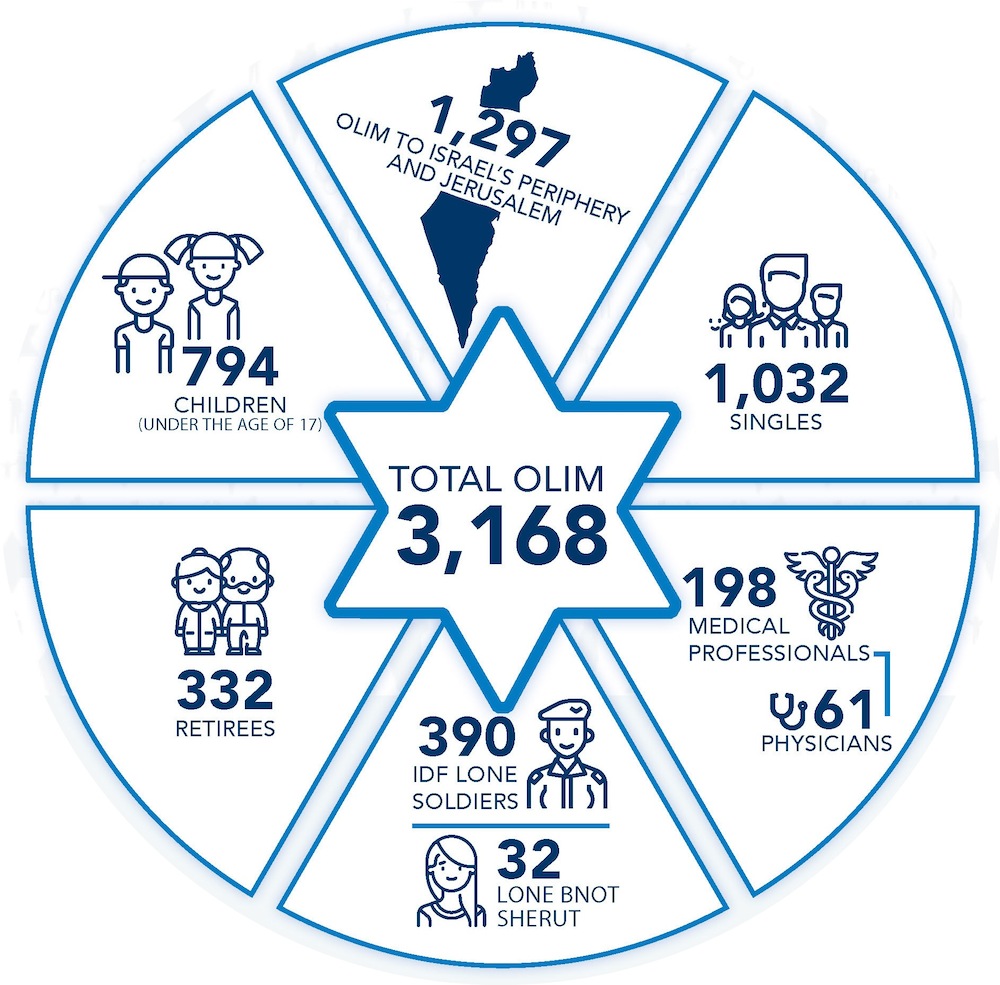
The breakdown of Nefesh B’Nefesh 2020 aliyah. (image from Nefesh B’Nefesh)

Despite a challenging and tumultuous 2020, 291 individuals from Canada decided to make aliyah and move to Israel with Nefesh B’Nefesh (NBN) over the past year. The Canadians were among the 3,168 individuals who moved to Israel from North America in 2020 – 2,625 since the COVID-19 pandemic hit.

Founded in 2002, Nefesh B’Nefesh, in partnership with Israel’s Ministry of Aliyah and Integration, the Jewish Agency for Israel, Keren Kayemeth LeIsrael and Jewish National Fund-USA, has assisted in easing the aliyah process for more than 65,000 olim since its inception. With the help of its partners, NBN assisted nearly 90% of the total number of olim that arrived in 2019.

Since January of 2020, Nefesh B’Nefesh olim have most often hailed from New York, New Jersey, California, Florida, Ontario, Illinois, Massachusetts, Maryland, Pennsylvania and Texas. Altogether in the past year, 811 families chose to move their lives to Israel, along with 1,032 singles and 332 retirees. There were 61 physicians among a total of 198 medical professionals who arrived in Israel in the last year, most of whom joined the frontlines in Israel’s fight against the coronavirus. And 390 young men and women stepped off the plane with the desire to serve Israel as lone soldiers.

In addition to the olim who arrived throughout 2020, Nefesh B’Nefesh received 6,704 aliyah applications, in contrast to 3,035 in 2019 – marking a 126% increase in interest in aliyah.

image - The breakdown of Nefesh B’Nefesh 2020 aliyah
The breakdown of Nefesh B’Nefesh 2020 aliyah. (image from Nefesh B’Nefesh)

“From the earliest days of the Jewish state, no matter how trying or difficult the circumstances, aliyah has always continued in order to preserve what was once a distant dream for our parents and grandparents,” said Rabbi Yehoshua Fass, NBN co-founder and executive director. “As we look back at the challenges everyone faced in 2020, we are extremely proud of what we have accomplished together. We look forward to watching each oleh grow and build their new lives in Israel, and eagerly look ahead to 2021, a year with the potential to exceed all expectations in aliyah.”

“I welcome the dozens of new olim who chose to leave everything, especially during the time of a global epidemic, and fulfil their dreams of building new homes for themselves in Israel,” said Minister of Aliyah and Integration Pnina Tamano-Shata. “Many will surely remember 2020 as a challenging and complex year, but the olim who arrived [recently] from across the U.S. and are part of the last group of olim this year, are enabling it to be shaded in more encouraging and optimistic colours.

“Despite COVID-19, the Jewish nation is thriving and aliyah is continuing,” Tamano-Shata continued. “In the past year, more than 20,000 olim from 80 countries around the world made aliyah.”

“The thousands of new olim from North America and around the world, during a year of a global pandemic, lockdowns and almost complete paralysis of international air travel, emphasizes how much the longing for Zion is deeply ingrained in the hearts of the Jewish people around the world,” said Isaac Herzog, chair of the Jewish Agency.

The top 10 cities in Israel that new olim chose as their homes this year were Jerusalem, Tel Aviv, Beit Shemesh, Ra’anana, Haifa, Herzliya, Netanya, Modiin and Be’er Sheva. The olim most commonly worked as educators, physicians, nurses, social workers and lawyers, as well as in the fields of marketing, sales and business. The average age of an oleh this year is 30, with the oldest being a 97-year-old and the youngest being only 35 days old.

When the pandemic began in earnest in March 2020, Nefesh B’Nefesh adapted its various programming and transitioned into holding virtual meetings, webinars and informational sessions. The online seminars have allowed the organization to reach a much wider audience and have included a wide range of subjects, from choosing communities and special webinars for medical professionals, to how to pack and ship for aliyah.

The ongoing support after aliyah provided by NBN has meant that 90% of its olim have remained in Israel, leading to tens of thousands of new Israelis who go on to make significant contributions to the country.