Israeli ventilation invention

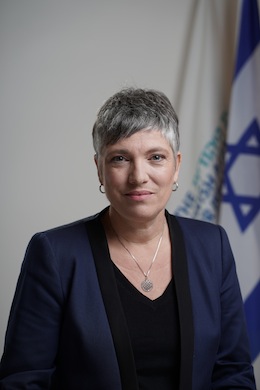
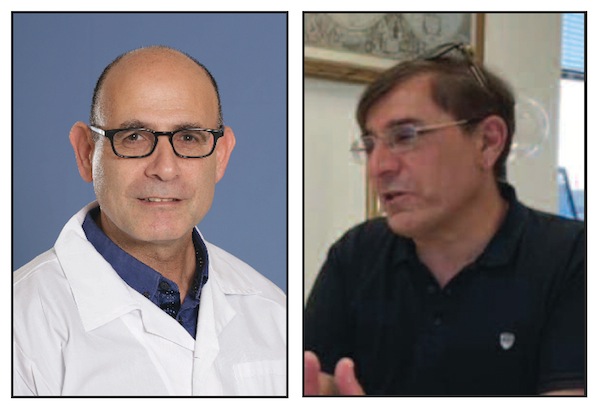
Prof. Ori Efrati, left, and Dr. Michael Cohen. (photos from IMP)

With the arrival of the coronavirus vaccine, there has also been a spike in morbidity, clearly indicating that we’re not out of the woods yet. In fact, hospitals in Israel have warned that they are steadily approaching maximum capacity, as the numbers of severely ill COVID patients breaks all records.

When COVID-19 first erupted in March 2020, health authorities warned that a surfeit in severely ill coronavirus patients would overwhelm the system due, in large part, to a lack of ventilation machines – the standard of care for coronavirus patients whose condition deteriorates to pneumonia. In the ensuing months, Prof. Eyal Leshem, director of the Centre for Travel Medicine and Tropical Diseases at Sheba Medical Centre, explained that, in addition to the shortage of ventilators, one of the most pressing issues is the lack of highly trained intensive-care-unit staff to monitor patients attached to those devices.

An innovation by Yehonatan Medical addresses both of these issues.

Yehonatan Medical, in collaboration with Prof. Ori Efrati, director of the pediatric pulmonary unit at Sheba Medical Centre, devised a first-of-its-kind ventilation system that can treat multiple patients.

“Conventional ventilators, aside from being very costly, are limited in that they can only be used with one patient at a time,” explained Efrati. “Their capacity factor and programming functions were designed for single-patient use, and there is also the danger of cross-contamination.”

The new ventilation system resolves issues that corona ICU wards have been grappling with as the number of severely ill patients rises.

“We were able to use the relatively simple and inexpensive BipaP non-invasive ventilation machine as the basis for the advanced ventilation technology,” said Efrati. “Thanks to the high-power output and built-in disinfecting mechanism, the new system can safely treat three to five patients simultaneously.”

Moreover, a system that can treat multiple patients at one time necessitates fewer ICU-trained staff. Thanks to the remote interface, the medical team can monitor patients from a safe distance.

“This tremendous breakthrough is nothing less than a game-changer when it comes to caring for large numbers of corona patients,” Efrati added.

Dr. Michael Cohen, an engineer and scientist and the founder of Yehonatan Medical, said, “All in all, we’re talking about a system that delivers personalized care in a multi-user format.”

Additional features based on artificial-intelligence technology include the ability to have a hierarchy and classification of alerts; the ability for automatic parameter correction according to set criteria; respiratory rehabilitation for the patient by adjusting to changes in the patient responsiveness; and more. The streamlined, relatively low-cost system can be implemented in makeshift clinical settings, such as field hospitals, as well as in step-down units within the hospital, in the internal and other wards.

Yehonatan Medical is the medical department of Mofet Etzion, a company that for more than two decades has developed various security and military innovations for the Israel Defence Forces and foreign armies. Cohen has developed dozens of life-saving innovations, including in the area of cardiology, in collaboration with cardiologists and cardiothoracic surgeons from Israel, the United States and Canada.

“Some of the insights for the development of this revolutionary ventilation system were provided by cardiologists who helped us to devise the various accoutrements and sensors,” Cohen said, making specific mention of Dr. David Adams, professor and system chair of the cardiovascular surgery department at Mount Sinai Hospital in New York; Dr. David Tirone, chief of cardiac surgery at Toronto General Hospital; and Dr. Gideon Cohen, cardiothoracic surgeon at Sunnybrook Health Sciences Centre in Toronto. The development of the system itself took place in Israel, marking the first time that an invasive ventilation machine has been built in Israel.

The advanced ventilation technology is currently in advanced phase trials at the MSR Medical Simulation Centre at Sheba, where it is being tested on artificial lungs, and is expected to be ready for mass marketing in the coming months.

– Courtesy International Marketing and Promotion (IMP)
Books foster identity

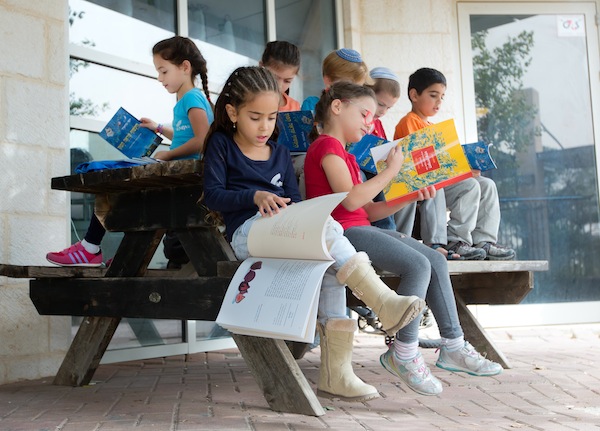
Sifriya Pijama has created approximately 100 books in Hebrew and Arabic. (photo by David Salem)

Keren Grinspoon Israel promotes literacy through the gift of books to young children in Israel. Last fall, KGI was chosen by the U.S. Library of Congress as a Literacy Awards Program Best Practice Honoree, “in recognition of the organization’s long-standing achievement in promoting literacy and the development of innovative methods and effective practices in the field.” This past December, KGI’s founding director, Galina Vromen, retired, and the organization welcomed Andrea Arbel to its helm.

photo - Keren Grinspoon Israel’s new executive director, Andrea Arbel
Keren Grinspoon Israel’s new executive director, Andrea Arbel. (photo by David Salem)

The Harold Grinspoon Foundation started PJ Library in 2005 in the United States. According to its website, the program now sends “free books to more than 230,000 subscribers throughout the United States and Canada” and “is an expanding global community linked by shared stories and values that spans across five continents and more than 670,000 subscribers.”

The program reached Israel in 2008, when the foundation’s director of special projects, Vromen, moved back to Israel. She said Harold Grinspoon jumped at the opportunity to extend the program. “He basically said, ‘OK … if you’re going back to Israel, see if you can start PJ Library there,’” Vromen told the Independent. “We were giving away about a million and a half dollars’ worth of grants each year there. He said, ‘I don’t think I need a full-time person to watch over those grants in Israel … so I can assure you full-time employment for six months.’” The job lasted much longer than that, of course.

According to Vromen, the PJ Library book delivery system needed to be different in Israel, as mailboxes there are too small for books. But, on the plus side, unlike in North America, where Jewish populations are spread out, in Israel, you can reach practically every Jewish kid through the public school system.

In 2009, a pilot program was launched with Israel’s Ministry of Education, starting with 3,500 children in the Gilboa region.

“People knew me [in that area] and I came to them and said that we wanted to do a book program,” explained Vromen. “They asked, ‘What books?’ And we answered that we didn’t know yet. So, they basically said, ‘Well, if Grinspoon says he’s going to do it, he’s going to do it.’ And they gave me a lot of support.”

After the first year, the numbers increased to 40,000 children, with funding being split between the foundation and the ministry. The program – called Sifriya Pijama – continued to expand and, eventually, in 2014, the foundation started a program in Arabic.

“Harold Grinspoon, when he started PJ Library, he was inspired by Dolly Parton – a program called Imagination Library, which was really one that served inner-city families, gifting books,” said Vromen.

In Israel, Sifriya Pijama gives kids a shared experience, as they start learning to read.

“Whether it’s a religious or secular school, they get the same books, with the same parent suggestions, for teachers to implement the program within the classroom and, so, it has become quite a bridge-builder,” said Vromen. “I think that children coming from religious homes and those from secular or non-religious homes in Israel don’t normally read the same books or authors. It’s not like in America, where everyone grows up reading Dr. Seuss.

“So, in that way, we’ve managed to make it so that kids now, across the board, are really experiencing the same kind of books. And, with the Arabic program, one could say … What’s a Jewish foundation group dedicated to Jewish education doing running a book program with the Ministry of Education in Arabic? But, the truth of the matter is that, for Israel’s Arab minority, language is an issue.”

Spoken and written Arabic differ. Formal Arabic, which is found in books, unifies Arabs around the world, and the books for kids in formal Arabic begin to build language skills, said Vromen. Just like Sifriya Pijama, Maktabat al-Fanoos is a program about identity, she said.

Many PJ Library books in North America focus on Jewish holidays and Jewish values. The books in Israel focus less on holidays and more on values, like hospitality, taking care of the sick, and honouring your parents.

“We have a book about a bear that is sick and someone takes care of him, and then they all get sick and he takes care of them,” said Vromen. “That’s a perfectly good story for the programs. Another good example is a story we have about a mother koala bear who is very, very busy, but the little koala bear wants to play with her all the time … and the little koala bear learns to do things by himself, eventually deciding to make mud pies, and they come together at the end. It’s a cute little story and a way of discussing an important issue that, when you’re 4 years old is a big concept … giving mom a little bit of mom time and you needing to play by yourself for now … explaining values to a child in a child’s world.

“What’s really important is choosing books that open up a conversation,” said Vromen. “This is a book you can have a conversation about between parents and children. Basically, we’re trying to create opportunities for parents and children.”

Since the program in Israel is school-based, however, the education process starts with the teacher introducing the book to their class, reading it aloud a couple of times. Often, there is an activity included. Then, eventually, the kids take the book home.

“Each child takes home a copy and they keep it,” said Vromen. “There are eight books per year, per child, for three years in preschool. There are four books in first grade and in second grade. And so, by the time the child goes into third grade, they already will have received 32 books from us over the years.”

While most schools are either Jewish or Arab, a small minority are mixed. In mixed schools, the program starts by delivering four Hebrew books in the first half of the year, then four Arabic books in the second half of the year.

So far, the program has created approximately 100 books in Hebrew and Arabic, with nearly 30 of them being translated into English and other languages.

COVID-19 posed a challenge in Israel when schools were closed, but the younger kids were the first to be sent back to school, so the program has more or less caught up on the missed books and is now running as normal.

“For the Arab program, about 90% of the books they receive are the only children’s books they have in their home. In Hebrew-speaking families, it’s about 47%,” said Vromen. “We’re the largest book-giving program in Arabic in the world.”

The program reaches about “70% of Hebrew-speaking children,” she added. “So, we’re talking about 80% of children in public schools in Israel – that’s quite extraordinary.”

Late last year, Vromen retired and, on Dec. 1, Andrea Arbel stepped in to lead KGI, after having worked for 18 years at the Jewish Agency.

“I relate to PJ Library on several spheres – as a published author who believes in the positive power of the written word on children; as someone who cares about strengthening Jewish culture in Israel and overseas Jewish communities; and as a mother of three who understands the critical importance of nurturing young minds and how much these efforts put children on a successful trajectory,” said Arbel.

Together with KGI’s leading partners and other supporters, Arbel is hoping to expand Sifriya Pijama and Maktabat al-Fanoos in both scope and depth, and to widen their sphere of influence on the broader community in new ways. For more information, visit hgf.org.

Rebeca Kuropatwa is a Winnipeg freelance writer.


Cookin’ old school meatloaf

As if the pandemic weren’t enough, I’m supposed to think of something tantalizing and healthy to cook every night? Right. Roger that. My motto is: go with the tried and true. Or, given the times we’re in: go with the tired and true. Translation: something my mom used to make in the 1960s and ’70s. Something delicious but notoriously unhealthy.

Let’s face it, back then, the general public didn’t know bupkas about heart-healthy diets, Keto or low cholesterol. Not even doctors’ families. Nobody measured their BMI (body mass index) at the gym, because no one went to the gym. No one had their goal weight etched in their brain. It was a kinder, gentler time. Albeit with lots more spontaneous and fatal heart attacks and strokes. But still.

Back to the task at hand. It was a dark and stormy afternoon. I was tired. Really tired. Of cooking. But we have to eat. So, I did what any self-respecting accidental balabusta would do: I pulled out my mother’s old National Council of Jewish Women Cookbook. It’s a miracle that it isn’t falling apart after all these decades doing yeoman service. As I was searching for something simple and doable within 30 minutes, I happened upon a dog-eared page. One my mother had probably marked for good reason. Which is ironic, since the standing joke in my family was this – as soon as my mom cooked anything that my dad loved, she never made it again. We’ve speculated on the rationale for years. Was it intentional? Happenstance? Payback for something? Maybe it had to do with the electric can opener my dad gave mom for her birthday one year; or was it their anniversary?

The dog-eared recipe, thankfully, was – drum roll, please – Meatloaf. Yes, Virginia, you heard correctly, Meatloaf. I capitalize it because, well, it deserves the recognition. There is no problem in this world that can’t be solved by a good meatloaf. (Alright, maybe athlete’s foot and world wars, but, otherwise….)

In sync with the majority of the recipes in that cookbook, it called for an envelope of onion soup mix, undoubtedly a staple in those days. Chip dip – sour cream and onion soup mix. Spinach delight – onion soup mix. Apricot chicken – onion soup mix. Being a culinary rebel (ha!), I decided to go rogue and omit the onion soup mix. I had to draw my own line in the sand. And I swapped Panko for breadcrumbs. This recipe makes a moist, dream-of-a-1960s dinner. Once again, you’re welcome. You may be excused from the table.

MEATLOAF

2 lbs ground beef (extra lean)
1 1/2 cup soft breadcrumbs (or Panko)
2 eggs
1/2 to 3/4 cup water
1/3 cup ketchup (or, as they called it in the ’60s, catsup)

Preheat the oven to 350°F. In a large bowl, combine all the ingredients and place the mix into a greased loaf pan. (I covered the top with more ketchup – I know, very radical). Bake for approximately one hour.

It doesn’t get much easier than this. Seriously. Both Harvey and I kept cutting little pieces off, to even out the end. We were insatiable! We easily ate half of this two-pound loaf in one sitting, and polished off the rest the next day in sandwiches. What can I say? We’re dyed-in-the-wool carnivores.

To switch it up a little, and marry old school to multicultural, I also made Greek lemon potatoes. While I could eat meat and potatoes every night of the week, I don’t. And don’t go getting all judgy on me, either – there was broccoli in attendance.

The Greek lemon potatoes were a new thing for me (the making part), and I only made the Greek kind because I had a bunch of fresh rosemary leftover from baking focaccia the day before. (It was delicious!) Plus, we had a truckload of lemons in the fridge getting overripe from neglect (scurvy in our future?). I have to say, the potatoes were simple and simply delicious. Again, Harvey declared them “guest-worthy.”

GREEK LEMON POTATOES
(from recipetineats.com)

2.5 lbs potatoes (about 4 large russets)
1 1/2 cups chicken broth
1/2 cup olive oil
1/3 cup fresh lemon juice
5 cloves garlic, minced (I used 4)
2 tsp salt (I used 1 tsp)
dash of pepper
1 tbsp dried oregano (I used 2 tbsp fresh rosemary instead)

Preheat oven to 400°F. Peel the potatoes and cut into semi-thick wedges. Place in a roasting pan with all the other ingredients; toss well. Roast covered with foil for 40 minutes. Remove foil and turn the potatoes. Roast for another 25 to 30 minutes until the liquid is mostly absorbed by the potatoes. If you like your potatoes a bit crispy, leave them in for another five minutes or so.

They end up super-moist, soft, lemony and fabulous. Oh yeah, and garlicky. Harvey said they were even better than the ones at Apollonia, our favourite Greek restaurant. It was hard to refrain from eating the whole darn batch, but we showed the teensiest bit of restraint. After all, we wanted some left over for the next day. They’re like potato candy, if you will. Except better.

Sometimes, the most obvious recipes are the best. I often consult that Council cookbook. Who better to advise on such Jewish delicacies as honey-glazed cocktail franks, deviled tongue canapes and fruited rice salad? I rest my case.

There’s no question that the NCJW of Canada does many admirable things to enhance the community through education, social action, furthering human welfare and more. Far be it from me to make it sound like all they did was produce a cookbook. But, thank you, NCJWC for having done so – the meatloaf alone is worth the price of admission. And, of course, kol hakavod for all the great work you do.

Shelley Civkin, aka the Accidental Balabusta, is a happily retired librarian and communications officer. For 17 years, she wrote a weekly book review column for the Richmond Review. She’s currently a freelance writer and volunteer.

Honouring history amid virus

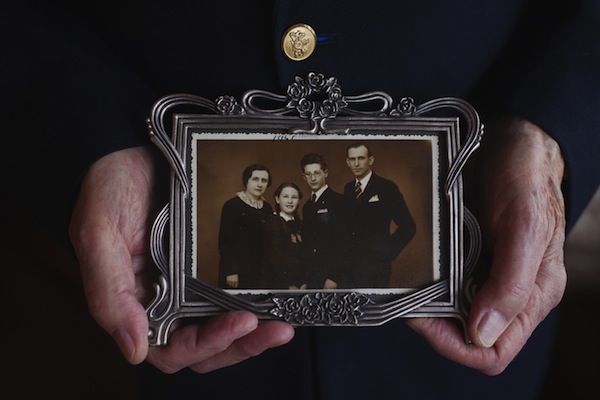
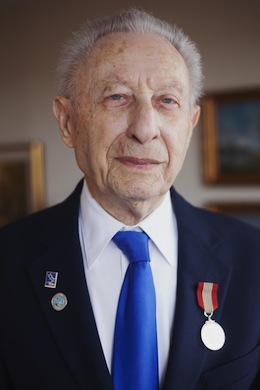
Leslie Vértes shares a family photograph. Vértes is one of the survivors featured in the Montreal Holocaust Museum exhibit Witnesses to History, Keepers of Memory. (photo from Montreal Holocaust Museum)

Collective memory has always played an important role in Jewish life and traditions. For thousands of years, Jews have celebrated holidays, mourned loss and memorialized history together as a people. And, most often, we have done so in person.

We say Kaddish as a community, celebrate a bris among a gathering of peers and family and come together every year to retell over dinner the story of the exodus of the Jewish people from ancient Egypt. The 20th-century philosopher and historian Isaiah Berlin noted, “All Jews who are at all conscious of their identity as Jews are steeped in history.” The late Lord Rabbi Jonathan Sacks expressed it another way: “Memory for Jews is a religious obligation.”

This past year has presented huge challenges for those institutions that strive to educate the public about history in general and, specifically, the Holocaust. During the pandemic, many museums and educational centres have been forced to choose alternative venues to connect with their members and the larger community. On Yom Hashoah and Kristallnacht, organizations across the world turned to recordings and interactive discussions in their effort to remind people that the Shoah’s messages remain relevant, even if their institution’s doors were temporarily closed.

Finding ways to continue that education and connection on a daily basis has required some creative thinking, said Sarah Fogg, who serves as the head of marketing, communications and PR for the Montreal Holocaust Museum. The museum, which was founded by Holocaust survivors, had been planning to launch a special photographic exhibit this year, highlighting the lives and wartime experiences of 30 survivors from the Montreal area.

“[The exhibit] was something that we had dreamt of for a really long time,” said Fogg. The museum had planned to narrate each of the stories visually using a triptych of personal images and the sharing of an artifact that the survivors had preserved: a father’s cap that he was required to wear at Auschwitz, a woman’s prayer book, an irreplaceable but tattered passport to freedom. But how could such stories be presented in the midst of a pandemic?

“The pandemic completely forced us to change, to rethink, to overhaul the plan we had for the exhibit,” said Fogg, who admitted there was a sense of urgency to the exhibit’s launch. Some of the speakers are now in their 90s and have already retired as volunteers. Plus, 2020 marked the 75th anniversary of the liberation of the concentration camps (and the 41st anniversary of the museum’s founding). This year, 2020, was the ideal time to launch the exhibit.

photo - Leslie Vértes
Leslie Vértes (photo from Montreal Holocaust Museum)

“[The online presentation] is the result of many brainstorming sessions where we discussed … how we could present this exhibit in a way that is different to other portrait exhibits that have happened around the world,” said Fogg. “And so, the ‘triptych’ as we have been calling it, the three photos, was really the result of wanting to showcase more than one portrait of the survivor and really wanting to showcase their uniqueness and their personalities.”

Fogg said it was in the middle of one of the photography sessions that the staff suddenly realized what was needed to translate this photographic essay to an online presentation. It was the survivors’ own accounts of why their personal artifacts held irreplaceable significance. It was also the story of how they had survived and how it had transformed them, once they began their new lives in Canada.

“So often when we talk about the stories of Holocaust survivors, the narrative tends to end when they leave Europe,” Fogg said. “But there is so much more to talk about.” Many of the survivors, who were children or young adults when they arrived in Montreal, went on to raise a family. All became volunteer speakers through the museum and other organizations in order to educate people about the Holocaust. Some became published authors and teachers. All, Fogg said, became inspiring leaders of their community.

photo - Margaret Newman Kaufman with her wedding photograph
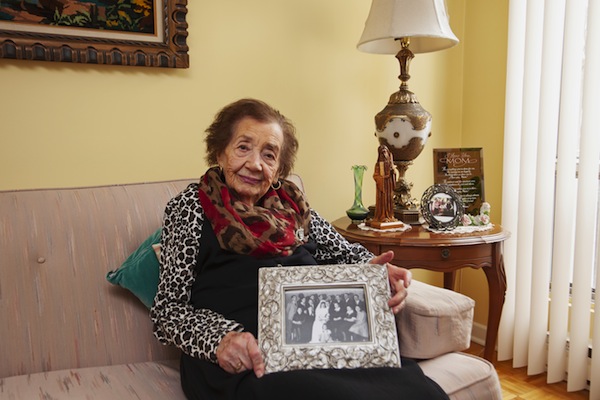
Margaret Newman Kaufman with her wedding photograph. (photo from Montreal Holocaust Museum)

“If I had to summarize what the lesson or the inspiration would be for viewers, it’s resilience. I mean, not only are they incredible survivors who escaped the Holocaust, but they come to Canada, they build new lives, they start careers, they make families and they find happiness again. They are this embodiment of resilience.”

Taken on their own, the artifacts tell dozens of unique and often heart-rending stories about the Holocaust. But they are also testimony to the survivors’ remarkable ability to draw meaning, purpose and even beauty from the darkest of memories. Sarah Engelhard’s black-and-white snapshot tells the story of her first Passover in Canada. Ted Bolgar’s touching account gives renewed significance to friendship and the value of a precious tea set. Marguerite Elias Quddus’s last memory of her father, as he was arrested, is embodied in a bitter-sweet tale about his forgotten eyeglasses.

photo - Margaret Newman Kaufman displays her wedding rings
Margaret Newman Kaufman displays her wedding rings. (photo from Montreal Holocaust Museum)

Following the Second World War, Montreal became a second home for thousands of Holocaust survivors, some who saw it as a temporary port of refuge, and many who stayed to make it their home. The museum was opened in 1979 by members of the Association of Survivors of Nazi Oppression as a means to educating the public about the dangers of antisemitism and racism. More than four decades after its founding, the museum’s legacy still continues to be relevant, Fogg said. And, like the testimonies and artifacts that illumine these stories, the message it carries is an intensely human and important one.

“You know, we’re not talking about numbers or figures, we’re talking about Ted, Leslie, Liselotte and Daisy. These are real people that we love and care about and they are real people whose families and lives were torn apart by the Holocaust,” said Fogg. “And so, I think we can make a parallel to situations today, where real people are continuing to be impacted and devastated by genocide.

“I think what’s beautiful about the exhibit and working with survivors is that they are real people. What better way to understand history and especially difficult, complex and painful history than to hear it from such wonderful and caring and generous individuals,” she said. “They are the best educators and we are so lucky to learn from them, and we’re so lucky that they wanted to be a part of this exhibit.”

The museum’s effort to reach virtual audiences during the pandemic does appear to be working. Fogg said that, since its launch in September, the exhibit has not only been seen by viewers around the world, but has won three international awards for its visual presentation and design. The pandemic may have temporarily limited the world’s physical ability to connect, but it hasn’t stopped innovation or the heartfelt effort to care about others.

To see the Montreal Holocaust Museum’s exhibit, Witness to History, Keepers of Memory, visit witnessestohistory.museeholocauste.ca.

***

Montreal Jewish history in brief

The first Jews in the Montreal area were Sephardim serving in a British regiment. One was Aaron Hart, whose son would later be elected to the legislature to represent the Trois-Rivières area.

By the early 19th century, Ashkenazim from Eastern Europe had begun to trickle in and, by the early 20th century, more than 7,000 Jews had made their way to Montreal, most fleeing antisemitism in the Russian Empire and Europe. Many would arrive to find that prejudice and discriminatory policies weren’t exclusive to distant geography. The election of Ezekiel Hart to the legislature would later inspire a resolution to ban Jews from serving in office. It take another 60 years before a law would be enacted that would give Jews in Lower Canada the right to self-representation.

By the 1930s, Montreal’s Jewish population had increased to 60,000, making it the largest Jewish hub in the country. Many worked in the growing garment industry or owned stores and restaurants in the city. A smaller number moved to the country to become farmers and use skills they brought with them from the old country.

Distrust toward Jews and the growing number of Jewish refugees looking desperately for a new home before and after the Holocaust made immigration to Canada virtually impossible in the early 1940s. It took the efforts of organizations like the Canadian Jewish Congress to push for changes to immigration laws and open doors to refugee families. By the early 1950s, another 9,000 Jewish refugees eventually made their way to Montreal’s port. By the 1970s, those numbers had swelled again, reaching close to 120,000.

Today Montreal’s Jewish community is much smaller, for many reasons, including out-migration from the 1970s to 1990s. But the early Jewish pioneers, those who arrived in Montreal in the 18th and 19th centuries, are not only credited with building new businesses and opportunities for a growing city, but for planting the seeds for Canada’s diverse Jewish community.

Jan Lees articles and blog posts have been published in B’nai B’rith Magazine, Voices of Conservative and Masorti Judaism, Times of Israel, as well as a number of business, environmental and travel publications. Her blog can be found at multiculturaljew.polestarpassages.com.

Christmas Carol goes online

David Adams as Scrooge and Scotia Browner as Tiny Tim in Metro Theatre’s production of A Christmas Carol – The Radio Play. (photo by Nicol Spinola)

Metro Theatre was all set to provide socially distanced, safety-first live performances of A Christmas Carol – The Radio Play this month. But then the provincial restrictions on gatherings came down, and the struggling theatre company had to cancel its in-theatre run. But the production team used what holiday spirit it had to film the show and an online version will be available for viewers to watch from Dec. 21 through Jan. 3.

“We are fortunate to have our talented friends Nico Dicecco and [playwright] Erik Gow film the show and put together a beautiful digital stream of it that is available by donation,” stage manager Kat Palmer told the Independent.

Palmer has had a few shows canceled since the pandemic hit. “Right at the beginning of COVID,” she said, “I was in rehearsals for a sweet little concert Wendy Bross Stuart put together called With a Song in My Heart. I was also looking forward to Hello Dolly! at Theatre Under the Stars. And, most importantly, my company, Raincity Theatre, was gearing up for our production of Cabaret. Obviously, intimate, site-specific theatre is not possible during COVID.”

But A Christmas Carol – The Radio Play was created with COVID-19 protocols in mind. The theatre is a large space, enough for patrons to be distanced from one another. “Even the set was designed to keep actors more than six feet apart at all times,” said Palmer. In rehearsals, every cast member arrived masked and wore their mask until they were in their show spacing, she said. For the stage show, they were ready with two understudies, prepared to go on, lest “any actor wake up with any sort of tickle in their throat.”

But those plans went for naught when, last month, large public gatherings were prohibited and the show, which was to open Dec. 3, was delayed to organize the online version.

“It is no surprise that COVID has deeply impacted our arts community,” said director Chris Adams. “The Metro Theatre is a not-for-profit theatre company that relies on ticket sales to get by. Once a thriving arts hub in a former movie-house, Metro has been hit hard by COVID restrictions that have seriously impacted their revenue. The Metro also rents out their space to schools and dance companies over the quieter spring/summer months but, due to our new reality, that was also impossible this year. The Metro Theatre is at risk of closing its doors.”

Nonetheless, the show is also raising money for the charity Backpack Buddies.

“When Charles Dickens published A Christmas Carol in 1843, charitable giving soared overnight,” said Palmer. “The story has forever changed how we celebrate the holiday season and reminds us of the importance of generosity. It is in this spirit that the Metro always selects a charity to support each year at Christmas.

“Early in the show, we meet Abigail – an orphan who speaks of food insecurity. It is shocking to find parallels between children today and the Dickensian era. British Columbia has one of the highest child poverty rates in Canada, with 20% of children living below the poverty line. The Backpack Buddies program provides backpacks of food to children in need so that they do not go hungry over the weekend.”

A Christmas Carol – The Radio Play is an original work by writer Gow, based on the Charles Dickens novel, of course.

“With Christmas Carol, there is an expected order that ghosts appear. Erik has decided to shake it up,”

said Adams. “There are also some scenes that do not appear in the book that add an extra level of character development.”

The radio play stars David Adams as Ebeneezer Scrooge, who meets all the characters in A Christmas Carol, “from Bob Cratchit to Jacob Marley, but with only six actors creating and voicing over 40 of the beloved characters,” reads the play’s description. Joining David Adams “on stage” will be Roger Monk, Jill Raymond, Chris Ward, Emilia Michalowska and Scotia Browner. The COVID covers were Jim Stewart and Courtney Shields, who is also the assistant director of the production.

“All of our actors have created a character for their narrator in addition to playing every character in the piece,” said Palmer. “For the majority of our performers, they play four or five characters each. For the simplicity of the storytelling, David plays Scrooge but has also created a very unique and distinct character for his narrator. While David has played many Jewish characters, like the Merchant of Venice, Tevye and Fagin, he is not Jewish himself. Although, he has had to learn some Yiddish for roles from time to time.”

As for being a Jewish person working on a Christmas play, Palmer said, “At this time of year, I sometimes feel like Scrooge. I despise the commercialism of the holiday season, how it seems to consume the entire month of December and don’t get me started on cheesy Christmas movies. But, as a Jewish person working on this show, it is easy to see Jewish values on every page of the script. Yes, A Christmas Carol takes place at Christmas but, in many ways, A Christmas Carol is really a story of teshuvah, tzedakah and tikkun olam…. It’s a story that celebrates kindness, charity and human transformation – ideals that all parents hope to instil in their children – ideals that have deep roots in Jewish tradition. Don’t we all want to believe even the worst among us has a core of goodness?”

The filmed version of A Christmas Carol – The Radio Play is available by donation at metrotheatre.com.

Orchestra faces crises

Members of the Recycled Orchestra of Cateura, Paraguay, are among those helping provide relief services during COVID-19 and after a devastating fire. (photo from IBB)

Times are tough for everyone, but that hasn’t stopped one Vancouver group from organizing an urgent fundraising drive to support an orchestra that is a testament to the transformative power of music.

Instruments Beyond Borders (IBB) is a registered Vancouver-based charity that supports music education in disadvantaged communities. The group is raising funds to support the Recycled Orchestra of Cateura, Paraguay (aka the Landfill Harmonic) as they are dealing with two major crises: not only the COVID-19 pandemic, but a devastating fire in the landfill, next to which they reside.

Since 2014, IBB has delivered donated instruments and funds to the Recycled Orchestra, which was borne out of a desire to teach music to eager children living in the marginalized landfill community of Cateura.

photo - Compounding the hardships wrought by the pandemic, the Cateura landfill recently suffered a major fire, resulting in the destruction of many of the orchestra families’ homes
Compounding the hardships wrought by the pandemic, the Cateura landfill recently suffered a major fire, resulting in the destruction of many of the orchestra families’ homes. (photo from IBB)

The Recycled Orchestra of Cateura is internationally renowned, performing all over the world with their instruments made out of recycled materials from the neighbouring landfill. They deliver a resounding message of environmental stewardship and hope and endurance in the face of poverty.

The pandemic has suspended the capacity of the orchestra to travel internationally – which was a major source of their revenue. Compounding the hardships wrought by the pandemic, the Cateura landfill recently suffered a major fire, resulting in the destruction of many of the orchestra families’ homes. Consequently, this has all but eliminated the opportunity of the parents to derive much-needed income from the gathering of saleable recyclables from the landfill.

photo - The students of the Recycled Orchestra, along with the Orchestra’s Parents Association, have become the hub of relief services
The students of the Recycled Orchestra, along with the Orchestra’s Parents Association, have become the hub of relief services. (photo from IBB)

In 2014, IBB donated $10,000 towards the building of a music school in Cateura. Fortunately, the school was not damaged by the fire, and today it is temporarily being used as a food relief centre – for the preparation and distribution of upwards of 5,000 meals daily to the devastated local community. Incredibly, the students of the Recycled Orchestra, along with the Orchestra’s Parents Association, have become the hub of relief services.

In the midst of these crises, Favio Chavez, the orchestra’s founder and director, is determined to keep both the orchestra and the hope of music alive, and to support the orchestra’s education program.

The IBB fundraising drive aims to assist the orchestra recover from these dire circumstances. To jumpstart this urgent appeal, the Ben and Esther Dayson Charitable Foundation has pledged to match the first $5,000 donated.

The Recycled Orchestra was the subject of an award-winning 2016 feature film Landfill Harmonic, the trailer for which can be watched on YouTube. Donations can be made at instrumentsbeyondborders.org.

That glitter gets everywhere

I’ve been thinking about Caillou, a TV show for toddlers and preschoolers. It’s been on television since 1997. Caillou is a little bald French-Canadian kid. He’s broadcast in both French and English, and offers gentle lessons to kids everywhere. My twins watched a lot of Caillou.

The episode I’ve been remembering offers something basic that we should all know. The summary: Caillou’s doing art at preschool with glitter. When he finishes, he doesn’t clean up or wash his hands. The rest of the episode shows off exactly where the glitter ends up, from light switches to friends’ bodies to snack and the table and chairs. That’s why it’s so important to wash your hands after playing with glitter.

The glitter message sticks with kids. It’s also a remarkably easy way to explain germ theory – useful during a pandemic. Glitter, like germs, gets everywhere.

As an early glitter fan, I found this lesson powerful. As a kid, I had several surgeries for birth defects by the time I was 5. I was in the hospital a lot. During one recovery period, I was brought to a big sunny room in the pediatrics ward to do arts and crafts, including glitter, which I loved. My mother still jokes about this more than 40 years later – remembering the day the surgeon came to check my incisions. My mom likely hovered, anxious, as he checked my abdomen and sides. He looked up and grinned when she asked how things were healing. He said things were coming along nicely and were “very colourful!”

What does this have to do with Judaism? I’ve been studying Tractate Pesachim as part of my pursuit of Daf Yomi (a page of Talmud a day). Pesachim’s topic is Passover. In Pesachim 15, the issue is how to burn all the chametz (leavened bread) that we get rid of right before the holiday. It’s considered “impure.”

Impurity here is often defined as something “in the wrong place at the wrong time.” There are many reasons why something is considered impure. The questions the rabbis are weighing are interesting. They wonder, “Is it OK to burn two different kinds of impure things together?” They imagine the Temple priests having to get rid of all this and finish cleaning by the start of the holiday.

The other impure things brought up – and this rabbinic impurity topic is complex – are pigul and nottar, two categories of sacrificial meats that have gone wrong. Jane Shapiro, in introducing this issue on the My Jewish Learning website, explains that pigul is something sacrificed “with improper thought.” That is, something sacrificed in error; that is, the priest thought it was to be burnt or eaten at the wrong time. Nottar was an offering made at the right time and not eaten – basically, leftovers, which are then considered impure. There’s common sense in this. Sometimes we cook things incorrectly (pigul) or, lacking refrigeration, we might just have to get rid of leftovers (nottar) to avoid food poisoning. In these cases, the impurity’s a mess-up. It’s not an unclean animal, another source of impurity, but, rather, a human mistake that leads to the disposing of something.

As the rabbis sort through what can be burned together, they examine how one kind of impurity causes a first-degree impurity, which, if it touches something else, becomes a second or a third degree of impurity. Something in this discussion reminded me of glitter and, then, germ theory.

Even the most careful person can be surprised by a sneeze, or get too close to someone when they are supposed to be social distancing. In fact, keeping oneself safe from invisible germs, like the coronavirus, can be difficult. Even healthcare workers, swathed in protective equipment, can slip up. In a sense, this rabbinic concept of impurity is a lot like catching germs. If we accidently mix items or people inappropriately, we pass along impurity, or germs.

If we visualize germs like Caillou’s glitter or my preschooler hospital craft project, we better understand how tricky a time we’re in. We’re still facing a long haul.

Yes, we hear a vaccine is on its way, but we don’t yet know how long it will take for enough Canadians to be vaccinated. We don’t know how effective the vaccine will be, or if enough people will be willing to take it. Meanwhile, COVID-19 is spreading just like that glitter. It’s everywhere that we are, and it’s scary. There’s every chance that we might encounter the virus through an inadvertent slip up (like the rabbinic impurity of pigul or nottar) but, since it’s germs and not glitter, we won’t know until later. We must act as if we are impure because the virus isn’t visible.

The most poignant part of this whole complicated impurity narrative is that the rabbis just can’t figure it all out. They say more than once that we’ll just have to wait for the prophet Elijah to return to give us the right answers. Reading it, you can imagine their shoulders shrugging as they struggle with what they don’t know and can’t figure out.

Scientists and doctors everywhere are also figuring things out as they go. They have to learn to live with the mystery. We don’t know everything – about the pandemic, how it works, when it will end and about those germs that spread like glitter.

For most, 2020 has been a rocky year. As we turn towards the secular year 2021, it’s important to remember that a vaccine might not be an instant fix. We face the future much as the rabbis faced some of these difficult questions about impurity long ago, and the researchers do today. We don’t know all the answers. We must do our best, square our shoulders, and keep on keeping on.

Yet, every week, as we end Shabbat, we sing about Eliyahu (Elijah) and we welcome him to every Passover and every bris. It’s in yearning for Elijah that we find the faith to keep trying.

Wishing you a happy and healthy 2021! I hope your home celebrations are great – and without glitter!

Joanne Seiff has written regularly for CBC Manitoba and various Jewish publications. She is the author of three books, including From the Outside In: Jewish Post Columns 2015-2016, a collection of essays available for digital download or as a paperback from Amazon. Check her out on Instagram @yrnspinner or at joanneseiff.blogspot.com.

Views on various occupations

COVID-19 changed a lot of people’s perceptions as to what types of jobs are essential. Not only doctors, nurses and other healthcare workers are on the front lines, but so are retail clerks, maintenance workers, truck drivers and many others. In this context, it is interesting to think about what occupations, if any, have been promoted or praised in Judaism.

As it turns out, Jewish scholars gave work considerable attention. Talmudic sages advocated for working rather than living off charity. Indeed, this principle provides some food for thought for modern-day Israel, where many ultra-Orthodox do live off charity. According to a January 2020 report by Dr. Lee Cahaner and Dr. Gilad Malach for the Israel Democratic Institute, between the years 2003 and 2018, about 50% of ultra-Orthodox men aged 25-64 and 76% of women in the same age bracket worked.

Scholars had a great deal of respect for labour. The Talmud abhorred idleness and argues that it leads to mental illness and sexual immorality. (See Babylonian Talmud, Tractate Ketubot 59b, at jlaw.com/articles/idealoccupa.html.)

“Rabban Gamliel the son of Rabbi Judah HaNasi would say: Beautiful is the study of Torah with the way of the world, for the toil of them both causes sin to be forgotten. Ultimately, all Torah study that is not accompanied with work is destined to cease and to cause sin.” (Pirkei Avot, Ethics of the Fathers, 2:2). Midrash Rabbah Bereshit (Vayetze chapter) goes even further, saying that practising a craft saved lives.

Yet, the sages believed that being absorbed with making money is not the ideal for an individual. Again referring to the Pirkei Avot (4:10), Rabbi Meir asserted: “Rather limit your business activities and occupy yourself with the Torah instead.”

Historically, teachers were valued – but only to a point. The high priest Joshua ben Gamla (circa the first century CE) issued an opinion that “teachers had to be appointed in each district and every city and that boys of the age of six or seven should be sent.” Where the boy had a father, it was the father’s responsibility to make sure his son had a basic education. Significantly, between the third and the fifth century CE, providing the salary of the Torah and Mishnah teacher became a communal task. Even those without children contributed to the teacher’s wages.

But teachers were not fully trusted. The Mishnah of Tractate Kiddushin 82a teaches that a single man or single woman should not become a teacher. The Gemara explains that the rabbis worried that such a teacher might have an affair with a parent of one of the students.

On torahinmotion.org, Rabbi Jay Kelman contends that the Gemara initially suggests that the Mishnah is afraid that an unmarried teacher might molest his students, but then rejects this explanation, noting that molestation is not something we need to suspect happening. Kelman, however, says, “this is something which no longer can be said with any degree of certainty. What we can say with certainty is such a fear is warranted even with those who are married and that, while rare, when it occurs, the results are devastating and tragic.”

While on the subject of sexual misconduct in certain occupations, here is an idea that might resonate with the #MeToo movement: the Talmud lists certain precarious trades that require men to often be alone with women. For example, a male goldsmith who makes jewelry for women. Talmud scholars were uneasy that such a businessman would be tempted to sin.

Curiously, harsh words were said about doctors. Tractate Kiddushin 82a ends with this statement by Rabbi Yehudah: “The best of physicians deserves Gehenna.” Why do they deserve a damned place? An article on talmudology.com contends that the opinion was based either on the belief that doctors were haughty before G-d or the fact that their treatment sometimes killed the patient.

Even though Israeli citizens highly value their army, Shalom Sabar points out in a Forward video that, in Medieval Haggadot, the “bad son” was portrayed as a soldier. This was because, at the time, non-Jewish soldiers would come to kill Jews.

Sailors, on the other hand, “are mostly pious … with many a ship sinking, sailors were in constant fear causing most to be super honest in the hope that G-d would protect them.” As Kelman summarizes, there really are no atheists in the foxhole.

On myjewishlearning.com, Rabbi Jill Jacobs states that, since Mishnah Zeraim (Seeds) deals solely with agricultural issues, we have proof that Judaism emerged from an agriculturally based community. Yet, in the Torah, farmers get off to a really bad start. Early in Genesis, we learn that Cain was the first farmer. Notwithstanding, G-d refused to accept his offering, accepting only his brother Abel’s. Cain couldn’t accept this rejection. In a jealous rage, Cain killed his brother and hid what he had done. G-d, consequently, reduced Cain to a life of wandering.

At a time when, around the globe, people are learning more about the extreme misconduct of some police officers, it is worth looking further into the Torah to see what Deuteronomy 16:18 and later commentators wrote about the police. Deuteronomy points out that both judges and police should be appointed to govern the people with due justice. Drawing on various Jewish sources, Rabbi Jacobs divides the function of the Deuteronomy-based police into several specific, but integrated parts: the patroling police person who “reminds the public to obey the law”; the roving inspector who ensures fair pricing and compliance with local ordinances; the arresting police officer who, while assuming the person is innocent until judged guilty, nevertheless begins the judgment process by arresting the suspect; the bill collector police officer who extracts payment from the obligated party to give to the aggrieved party; and the police officer who is a leader in his/her community. From Jacob’s assessment on truah.org, it would appear that today’s police have what to improve, especially when it comes to trust-building measures.

Over the centuries, Jewish scholars have taken into account the fallibility of people engaged in certain occupations. With tremendous insight into human behaviour, our sages apparently realized progress is not always in a forward direction. We have a long way to go in (re)establishing the integrity that Jewish scholars outlined for certain professions.

Deborah Rubin Fields is an Israel-based features writer. She is also the author of Take a Peek Inside: A Child’s Guide to Radiology Exams, published in English, Hebrew and Arabic.

***

The abstract of the article “Jewish Occupational Selection: Education, Restrictions or Minorities?” (The Journal of Economic History 65, no. 4 [2005]), Maristella Botticini and Zvi Eckstein reads: “Before the eighth-ninth centuries CE, most Jews, like the rest of the population, were farmers. With the establishment of the Muslim Empire, almost all Jews entered urban occupations

despite no restrictions prohibiting them from remaining in agriculture. This occupational selection remained their distinctive mark thereafter. Our thesis is that this transition away from agriculture into crafts and trade was the outcome of their widespread literacy, prompted by a religious and educational reform in Judaism in the first and second centuries CE, which gave them a comparative advantage in urban, skilled occupations.”

The full article is available at jstor.org.

– DRF

Gift of doing nothing at all

Recently, one of my twins convinced me we needed to look at an online mindfulness app. It featured ocean beaches, a sunset, a waterfall, a forest, a rainstorm …. you get the picture. The notion was that one could stare at each image, take deep cleansing breaths and feel restored. Except, with the twins crowding my iPad screen, within moments we had hopped from one view to the next. The app kicked us out, as we had “seen” all its tranquil views. What was supposed to be meditative became a crazed, erratic two-minute virtual tour of all the outdoors, at once. Oops. That didn’t work out right.

There’s a lot of discussion online and in the media about how the pandemic has caused mental health issues because people are lonely, restless and bored, and many have a hard time with restrictions and lockdown. This may well be true for many people.

For those of us with kids, it feels more like a Ferris wheel/merry-go-round mash-up, where both rides have the music playing, it’s all set on a fast speed and there’s NO. WAY. TO. GET. OFF. We’re crazy busy staying home. We chose remote schooling for safety. This gives no breaks from parenting, and no way to get all the work done. My house is a mess. The housework and cooking? – seriously out of control.

My parents, living alone in Virginia, have an opposite experience. Due to their age and health, they, too, are staying home to stay safe, with lots of time, not enough socializing in person, feeling adrift without their usual travel plans and volunteer activities.

Our extended family is far away and cannot help us in Winnipeg. We can’t support them in person either, so we’ve had a long stretch of time, including holidays, on our own. Chanukah won’t be different. My parents are sending fun toys in the mail, ordered online, to keep the kids busy during the hours and hours ahead indoors this winter, which we will appreciate, whenever they arrive.

We’ve also been planning way in advance. When you celebrate Passover, Rosh Hashanah, Yom Kippur, Sukkot, etc., on your own as a nuclear family, it takes more thought to make it special. Giving ourselves time to prepare has meant we have had some amazing meals and meaningful home-based observances, without going farther than our back deck sukkah.

My husband and I prepared for Chanukah by worrying if we had enough candles or if we had to shop for them – were Chanukah candles considered essential by the Manitoba government? To our relief, unless the kids insist on lighting all the chanukiyot at once, we’re fine. We’ve got plenty left over from last year, no need to go out and buy more. This, and internet ordering for kids, has been the extent of our preparations.

My twins, however, started the Chanukah countdown much earlier than usual. On a quiet Sunday afternoon, I discovered they were making paper chains and complicated construction paper cut-outs of dreidels, jugs of oil, a menorah, and more. The cut-outs were carefully hung up on our living room’s French doors – approximately 17 days before the first candles would be lit. Anticipation makes a holiday special.

However, the gift I love the absolute best these days won’t come on Chanukah. It’s Shabbat, which happens every week. It’s an opportunity to just sit on the couch. We stream services and I cook ahead so there’s nothing to do on Saturday. We sometimes magically find take-out appearing on the table Saturday night, when the leftovers don’t seem appealing. We’re not shomer Shabbat, and I’ve been known to disappear for a cozy chair and some knitting or to spend time with my sewing machine to deepen my relaxation, but Jewish traditional practice was really onto something with Shabbat.

Since having twins – they are now 9 years old – I’ve had people ask what would help, if I could have absolutely anything. I’d say: going to a quiet place in the country, alone, with a big bed with clean white sheets, lots of good food prepared, and time to just sleep, eat, read and hang out by myself. In reality, I felt that leaving my household for any length of time might result in worse chaos when I returned. My husband is well-intended, but an absentminded professor. He often forgets to feed the kids snack or the dog dinner if I don’t remind him over and over.

However, Shabbat at our house has become that oasis, where I get the chance to just be. It’s not the sunset, waterfall, rainfall, forest walk, ocean waves vision that the mindfulness app thinks we need. Not at all. It’s nothing idyllic – or tidy – but it’s a time to step away from social media, the chores, the craziness, and just be. Nowadays, I don’t have to get everyone dressed up for Shabbat services. I can’t invite guests or stress about getting a fancy meal made. I have many fewer work deadlines. And while, yes, there are some negatives in that, there’s a whole lot of positives, too.

We’re facing so many things that aren’t like anything we’ve experienced before. The unexpected can be scary. It can also be an amazing opportunity to let go, embrace and learn something different. Shabbat has long been my favourite holiday, but it took a pandemic for me to settle even more fully into one day a week of rest.

Turns out I don’t need to gaze at a mindfulness app to unwind. I’ll stick with making a huge Shabbat dinner, sleeping (late!) until 8 a.m., and participating in services from the couch, surrounded by the kids’ Lego and Playmobil congregation.

This year might be a chance to discover new gifts within this very challenging experience. Mine might be the best thing I could imagine – doing nothing at all.

Joanne Seiff has written regularly for CBC Manitoba and various Jewish publications. She is the author of three books, including From the Outside In: Jewish Post Columns 2015-2016, a collection of essays available for digital download or as a paperback from Amazon. Check her out on Instagram @yrnspinner or at joanneseiff.blogspot.com.

Making sense of chaos?

Earlier this fall, the National Film Board of Canada released the short Come to your senses, co-created Alicia Eisen and Sophie Jarvis. It is part of NFB’s The Curve, an online series “featuring the talents of 40 creators and filmmakers, giving a voice to millions whose lives have been touched by COVID-19.”

Eisen, a member of the Jewish community, is an animation filmmaker and visual artist, while Jarvis is a writer and director. Both women are based in Vancouver and have worked together before.

“We met in 2015, when Alicia was in pre-production on her first short film, Old Man,” they co-wrote in an email interview with the Independent. “A mutual friend introduced us, as he knew that Sophie was interested in learning more about stop-motion. It turned out that we live across the street from each other, and a wonderful friendship was formed.

“We first worked together on a short film for kids that blended live action (Sophie’s arena) with stop-motion (Alicia’s arena) and was basically a vessel for us to learn more about each other’s practice and to test the waters of a working relationship. It was an intense experience that threw every obstacle at us, and we came out stronger and ready for more. Which leads us to the stop-motion short film we are currently working on with the National Film Board, Zeb’s Spider.”

When their work was interrupted by the pandemic back in March, they said, “It was very disorienting to have that full-time routine stopped cold, so, when the NFB offered us the opportunity to contribute to their pandemic series, The Curve, it was a blessing to focus our creative energy into something new, and completely different from anything we have ever created before.”

Using the format of a group Zoom, Come to your senses explores the question, “Is the human need to make sense of chaos an inherently chaotic pursuit?”

“The five senses can be a somewhat intangible subject to explore, especially through film (which is an audiovisual medium). We aimed to evoke the other three senses with these limitations, which meant that we had to get a little weird with imagery and sound,” said Eisen and Jarvis. “A large part of our process was to let our intuition guide us; instead of planning what footage we needed to collect to complete the film, we issued open guidelines to ourselves and our artistic collaborators and worked with what we received…. It was exciting to see the patterns and instincts that were shared amongst the group (who were all working remotely from each other), and these similarities helped guide our process into the next phase: the edit.

“Our editor, Kane Stewart, was integral to helping organize this experimental film and to creating what you see in the final cut. We gave him direction on the tone and the arc, and detailed notes on the material that we wanted to include, but ultimately let him organize the material with fresh eyes. Our sound designer, Eva Madden, took the core intention of the project and brought her own spin to the film, which was exciting. The score really sets a tone, and we were thrilled to work with Yu Su, whose personal work we admire.”

The film is voiced by an AI voice-generator, said Eisen and Jarvis. “This way, we could manipulate the speed of the voice and revel in the tech restrictions that come with that choice (which are mirrored in the group video call). We landed on a voice named Tessa, who struck the right tone – gentle but commanding, like a self-help audiobook.”

The artists collaborating on the film were people with whom Eisen and Jarvis had worked over the years: Mona Fani, Suzanne Friesen, Meredith Hama-Brown, Charlie Hannah, Kara Hornland, Arggy Jenati and Janessa St. Pierre.

“We gave everybody a list of creative prompts designed to be completed within two days … things like ‘choose a spherical item from your home and interact with it using each of your five senses.’ We asked each person to approach each prompt with a design sensibility informed by our mood board, but to ultimately bring their own flair and artistry to it, so what we received from each person was unique, yet fit into the collage that ultimately makes the film.”

To watch the short, visit nfb.ca/film/come-to-your-senses.