Breathing life into patients

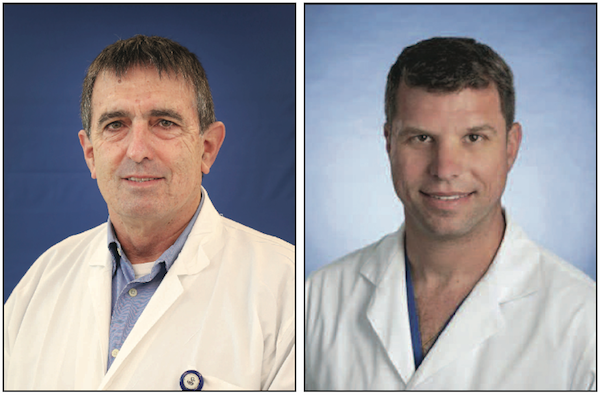
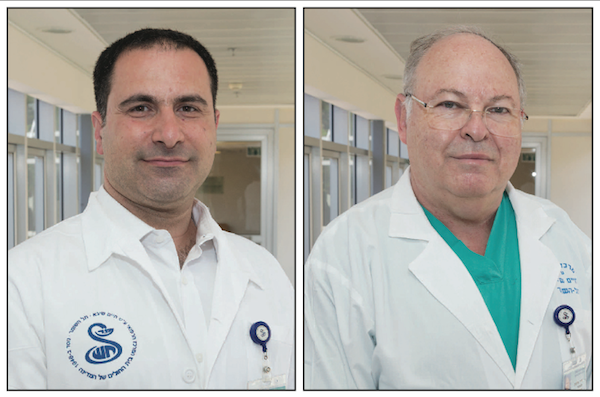
Dr. Liran Levy, left, and Dr. Milton Saute. (photo from IMP)

Sheba Medical Centre in Israel and Canada’s Toronto General Hospital are collaborating to advance the field of lung transplantation in Israel and to enhance medical education in both countries.

In the last year, Sheba’s Institute of Pulmonary Medicine has established a new lung transplant program, headed jointly by Dr. Liran Levy – who, in 2019, completed four years of clinical, research and surgical training at Toronto General – together with surgeon Dr. Milton Saute, an expert in lung transplantation. According to Sheba’s head of pulmonary medicine, Dr. Amir Onn, collaboration with Toronto General will “put Sheba on the map of lung transplantation,” due, in large part, to revolutionary technology that can increase the number of donor lungs by almost 50%.

Toronto General is renowned for having performed the world’s first successful lung transplant, in 1983. They have since expanded their lung transplantation program, both clinically and in terms of research. One of the most groundbreaking discoveries was made in 2013 by Dr. Marcelo Cypel, a staff thoracic surgeon at Toronto General and director of their ECLS (extracorporeal life-support) program. This technique, said Cypel, “effected a change in paradigm for how we do lung transplants.”

photo - Dr. Amir Onn, left, and Dr. Marcelo Cypel
Dr. Amir Onn, left, and Dr. Marcelo Cypel. (photo from IMP)

The innovation, called ex vivo lung prefusion (EVLP), doubles the amount of time that the donor lungs can remain outside of the body. “Previously, donor lungs could be kept for only six to eight hours,” Cypel explained. “Patients had to uproot their lives to live near a transplant centre, and staff had to race against the clock to transfer the organ from the donor to the recipient, often forced to perform the complex surgery in the middle of the night.”

The valuable hours gained don’t just optimize the logistics of the operation, they actually allow for recovery of the organ itself.

“As a rule, over 80% of donor lungs are unsuitable for lung transplantation, due to poor functioning, infection, blood clots or injury,” said Cypel. By pumping a solution of oxygen, proteins and nutrients into the injured donor lungs, the EVLP system enables injured cells to heal themselves, or to be prepared for more sophisticated repair techniques. “The method doubled the number of lung transplants performed in Toronto in the last seven years,” he said.

With the help of Toronto General, Saute estimated that the EVLP program will become operational at Sheba by the middle of 2021. “We anticipate that [EVLP] will make a huge impact and significantly increase the pool of donors for lung transplantation in Israel, especially now, during COVID, with donors reduced by more than 50%,” he said.

According to Cypel, some of the reasons for the reduction in donor lungs during the pandemic include deaths that occur at home, due to reluctance of patients to seek hospital care, and the fewer car accidents (whose victims supply donor lungs) that occur while populations are in lockdown.

Collaboration will encompass clinical care, as well, including consultations regarding challenging patients, as well an exchange of trainees, in both directions. “We hope to send members of our team to Sheba to learn from their unique expertise,” Cypel said.

Onn added that COVID-19 has created new potential candidates for lung transplant. He is currently treating patients in Sheba’s designated post-COVID clinic who present with an unusual combination of symptoms – shortness of breath, chest pain and forgetfulness. Some, he said, have sustained irrevocable damage to the lungs.

A growing population of “COVID-19 survivors,” are being referred to the lung transplant centre. “We are in the process of identifying those who may be potential transplant cases,” said Levy.

Levy remarked that he is looking forward to working with his former colleagues and mentors from Toronto General. Looking back on his years spent in Canada with his wife and four children, he admitted that it was hard to leave. “The Jewish community made us feel very much at home, and we still miss Toronto,” he said. “But I think we have a very important mission here in Israel.”

When the teams from both hospitals met one year ago to discuss collaboration, Cypel and Saute were delighted to discover that they both hail from the same city in southern Brazil. “Although we didn’t meet in Brazil, Dr. Saute told me that he knew my grandparents quite well, and that was very emotional for me,” Cypel shared. Saute added that they both had the same mentor in thoracic surgery and, thus, “We have the same ideas.”

The scope of research and complexity of cases at Toronto General have made it a national and international source for discovery, education and patient care. Sheba Medical Centre, home to the ARC Innovation Centre, and where 25% of all clinical research in Israel takes place, has likewise distinguished itself in patient care, particularly in the era of COVID-19. Patients in both countries, and worldwide, can look forward to the fruits of this collaboration.

– Courtesy International Marketing and Promotion (IMP)


Little hat store that could

SherlockS has a window display starring a two-foot-high teddy bear dressed like Sherlock Holmes. (photo by Micha Paul)

There is a small, magical hat store right in the heart of Jerusalem, called SherlockS. It’s not hard to find. Just walk along King George Street until you see a two-foot-high teddy bear dressed in a SherlockS deerstalker hat and Inverness cloak, holding a pipe in one hand and a magnifying glass in the other, perched on a table in the display window.

SherlockS is packed with hundreds of hats for both men and women. The store specializes in hard-to-fit heads and carries hats by Stetson, Bailey, Kangol, Christys’ and many other quality hat companies. There are even Borsalinos, the kind the snazzy Italians wear. SherlockS is also the home of handmade hats by local milliners like Danielle Mazin and Justine. And SherlockS makes their own Panama hats, as well.

Owner Yaacov Peterseil decided to create this store after his dermatologist warned him about the damage the sun’s ultraviolet rays were doing to his head. “You must wear a hat outside in summer and winter,” said the doctor.

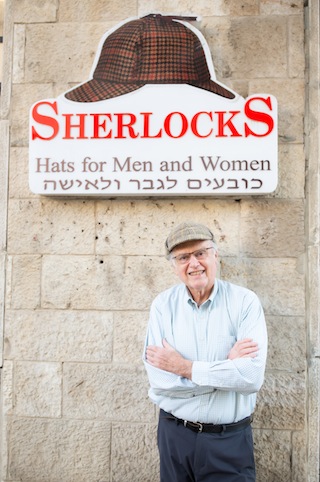
photo - Yaacov Peterseil is owner of SherlockS
Yaacov Peterseil is owner of SherlockS. (photo by Micha Paul)

“I was just looking for something to do, having left publishing,” Yaacov explained. “Could a hat store afford me the opportunity to help people by keeping the sun’s rays at bay and be financially rewarding, as well? I wondered. I had to try. So, in 2016, I opened SherlockS Hats in my garage. Before long, people came in droves to the store, which was way too small to hold both the hats and the people. So, I moved to Diskin Street, in an underground mall. But, soon, that store was too small, too. Finally, I moved to King George Street, where people could stop by, relax, get a cappuccino and a muffin, and even buy a hat.”

When Yaacov was choosing a name for his business, Sherlock and Sherlock Holmes were already taken. “So, I thought of SherlockS. SherlockS Hats has a nice ring to it. And there’s no need for an apostrophe,” he said.

Peterseil was born in 1946, in Salzburg, Austria, in a displaced persons camp. His family moved to the United States in 1949. Eventually, his father opened a wholesale clothing shop, selling ladies sweaters and T-shirts to all the big chains in New York.

“I worked with my dad for awhile,” said Yaacov. “It was there I developed a love of quality clothing.”

Yaacov believes that his varied business endeavours all led him to SherlockS Hats. He worked as a copywriter for Prentice-Hall, had his own byline in the Nassau Herald, taught journalism at the University of Michigan, was a speech writer for B’nai B’rith, founded Enjoy-A-Book Club, and owned K’tonton Book Store on Long Island. He also found time to get his rabbinic degree, and joined the rabbinate in the United States and in Newfoundland, where he taught Jewish studies at Memorial University.

In 1986, he, his wife Tamar (a family and sex therapist) and their (then) six children made aliyah. Once they settled in, Yaacov kept busy as public relations director for his mentor, Rabbi Shlomo Riskin, and developed Pitspopany Press for Children.

It was while he was busy publishing Jewish children’s books at Pitspopany that Yaacov asked me to review some of their titles. Since then, our paths have crossed a number of times.

“One of my first hat purchases was the deerstalker hat,” said Yaacov. “It was made famous in 1891 when Sidney Paget illustrated one of Conan Doyle’s Sherlock Holmes stories, putting a deerstalker hat on the detective. Today, I sell about 50 deerstalker hats a year in Israel.”

When COVID-19 forced him to keep his shop closed for weeks and months at a time, Yaacov took his store online. He created sherlockshats.com, which features a 3-D tour of his hat-filled store, as well as hundreds of hats from which to choose.

“I write two kinds of blogs for the website,” he said. “One is a story-type blog called The Adventures of the Mad Hatter. The blog tells the story of some of the strange and unusual things that happen in my hat store. The other blog gives a bit more practical information about hats and how to wear them. I’m writing one now on how to fit the hard-to-fit head.”

Next time you get to Israel, you’re invited to visit SherlockS at 31 King George. It’s not as famous as 221b Baker St. yet, but it’s getting there. And, if you want to talk hats with Yaacov, call him at 972-50-361-2342 or message him via the website.

Sybil Kaplan is a journalist, lecturer, book reviewer and food writer in Jerusalem. She created and leads the weekly English-language Shuk Walks in Machane Yehuda, she has compiled and edited nine kosher cookbooks, and is the author of Witness to History: Ten Years as a Woman Journalist in Israel.

Pandemic rouses memories

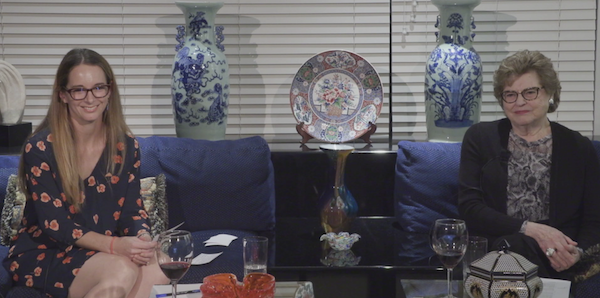
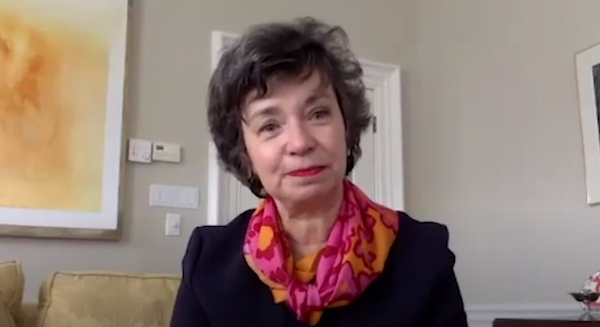
Simon Fraser University’s Prof. Lauren Faulkner Rossi, left, interviews child survivor Marie Doduck in a Zoom presentation Nov. 5. (screenshot)

For some survivors of the Holocaust, the COVID pandemic has brought back the traumas of the past. Marie Doduck spoke recently at a virtual event, recounting her survival story and her life in Canada, including her response to the initial lockdown in the spring. It is a response, she said, that is paralleled by many others in Vancouver’s group of child survivors of the Shoah.

Born in Brussels, the youngest of 11 children, Doduck spent most of her childhood hiding in orphanages, convents and strangers’ homes. In 2020, she found herself opening her front and back doors, reminding herself that she was free to go for a walk, yet haunted by the long-ago memory of hiding.

“It brought back a terrible time for us at the beginning of COVID,” she said during an interview that was webcast as part of Witnesses to History, a series presented by the Simon Fraser University department of history in partnership with the Vancouver Holocaust Education Centre. “I know the other survivors feel the same way. I would say that was the hardest of all.”

When the war began, Doduck (then Mariette Rozen) was 4 years old. Her father died when she was a toddler and some of her older siblings were already married and had their own families. After the occupation of Belgium, those who remained at home set out on foot headed for Paris, where a sister lived, unaware that Paris, too, was under occupation. She remembers riding on the shoulders of her brother Henri and seeing what she thought was a magnificent sight.

“I saw this beautiful silver bird in the sky and I thought that was so beautiful,” Doduck recalled. It was surrounded by stars. “The next thing I know, I was flying into the ditch on the side of the road. Of course, the bird and those stars were planes diving and, even now, I can hear the whistle of the diving and the shooting. They were killing people on the road. That was my first contact with death and blood. It was all over the place.”

Soon, the family dispersed and Mariette began a years-long succession of shuttling between hiding places in various countries of northwestern Europe. A facility for languages began then and Doduck is now working on learning Mandarin, her 10th tongue.

In some homes where she was hidden, she would sit under the table while the family’s children did their homework. Then, after others had gone to bed, she scoured the homework to educate herself.

She also has something of a photographic memory and she realizes now that she served as a messenger, repeating what she had been told when asked by siblings who had joined the resistance and who could make occasional contact while she was in hiding.

As is the case with many survivors, Doduck has stories of almost-miraculous near-misses.

As is the case with many survivors, Doduck has stories of almost-miraculous near-misses.

While being hidden in a convent, she was exposed. The mother superior of the convent knew that Mariette was Jewish, but presumably most of the nuns did not. When one sister discovered her secret, she denounced the child to the Gestapo.

“Being a good nun, she went to the mother superior and told the mother superior what she had done,” Doduck recounted. “The mother superior had woken me up and taken me to the centre of the convent to the sewers and dumped me in the sewer. They came to the convent to search for me and they didn’t find me.”

In the sewer, filled with fetid water and rats, Mariette held her breath as she heard the boots of the Gestapo officers above her.

“I killed some rats to make a mountain so I didn’t have to stand in the cold water,” she said. “The mother superior saved me and that night I left and went to another place.”

Even more frighteningly, Mariette was rescued from a train almost certainly headed to catastrophe in the east.

“I was caught and I was put on a train,” she said. “I was the last one put on a cattle car and I was lucky because the cattle car had slats so I was able to breathe because they pushed us like sardines.… I remember the gate shouting and the clang, clang, clang, I can hear it now, and the lock.… Then the train stopped. I have no knowledge of places.”

The gate opened and Mariette saw a Gestapo officer.

“Black uniform, black hat, swastikas on his lapel, black boots, a leather strap with a revolver, a leather strap attached to a baton,” she recalled. “And, in German, he said, ‘What is my sister doing on this train?’ I looked left and I looked right. There was no other child but me.… This Gestapo that had probably killed hundreds of people, children as well probably, took me off the train, put me on his motorcycle and took me [away]. Years later, I found out that this Gestapo went to school with my brother Jean and used to come to my house on Friday to have dinner with us and he recognized me, that I was Jean’s sister.”

In the course of research for her memoir, Doduck recently discovered that her mother and one brother, Albert, were arrested and sent first to a transit camp and then on to Auschwitz. Her brother Jean, who was in the French resistance, was arrested elsewhere but was on the same train. Another brother, Simon, survived the war but died at Auschwitz in the weeks after liberation. Like thousands of others, he succumbed after well-intentioned Allied officials provided food to the starving inmates, whose stomachs could not assimilate it.

Including Doduck, eight siblings survived and somehow found one another after the war. One brother, Jule, chose to remain in Brussels with his family. Charles, who was also married before the war, moved to Brazil. Sister Sara went to the United States. Brother Bernard went to Palestine with Hashomer Hatzair, the socialist-Zionist youth movement.

Doduck, aged 12 at the time, and the three other siblings – Esther, Henri and Jack – were four of 1,123 Jewish child survivors of the Holocaust sponsored to come to Canada under the auspices of Canadian Jewish Congress in 1947.

Her recollections of arrival in her new homeland are not warm.

As the children disembarked the ship in Halifax, they found themselves in a compound surrounded by barbed wire, as though they would try to escape. From there, they were moved to a room with bars on the windows.

“I wasn’t called by my name,” she said. Each refugee had a number pinned to their chest. Hers was 73, she thinks, or possibly 74.

“Nobody talked to us,” she said. “Nobody really welcomed [us]. We were just a bunch of probably wild children. I can only describe that I had an adult’s mind in a child’s body. We survivors saw too much dirt, too much killing, too much that a child should ever see.

“We were treated like we were nothing at all,” she recalled.

She wanted to go to Vancouver. She had seen a map and knew that there were beaches there.

“I remember as a child we used to go to la plage, the beach, with the family,” she said. “That was happy times.

“And just like Brussels, it rains a lot too,” she added, laughing.

The four siblings were fostered by four different families in Vancouver. While not all the 1,123 children who were sponsored found loving homes, Doduck believes that she and her brother Jack were among the luckiest.

Doduck was taken in by a couple, Joseph and Minnie Satanov, who had no children and, weeks after Mariette arrived, celebrated their 30th wedding anniversary. The couple would become surrogate grandparents to Doduck’s three daughters and Doduck would care for them in their old age.

Still, the early months were difficult. The Satanovs spoke Yiddish, but it was a “highbrow” variation, Doduck said. Hers was “street Yiddish” and the initial communication was largely pointing and miming.

While her foster family was wonderful, Doduck, like some other survivor refugees, said their treatment by the broader Jewish community was inhospitable. Asked if the community welcomed her and her peers, she replied: “I hate to say it, they didn’t.”

As a child, she didn’t understand it. As an adult, especially now, as she plumbs her experiences in the process of writing her history, she thinks she understands and empathizes.

“The community did not accept us,” she said. “They were fearful. I understand this now. They were fearful of what we knew, of what we saw. As a child, I didn’t understand that. As an adult, I understand it today.”

Her process of assimilation is akin to a split personality, she explained. She encompasses both the child Mariette and the adult Marie.

“Survivors – this is a secret but I’ll tell the world today – survivors are two people. Mariette is the child who is still in me and is trying to come out, and Marie [is] the person I created to become a Canadian and to fit into our society here in Vancouver.”

“Mariette is a child from Europe. Marie is the name I took in Canada to hide who Mariette was,” said Doduck. “Survivors – this is a secret but I’ll tell the world today – survivors are two people. Mariette is the child who is still in me and is trying to come out, and Marie [is] the person I created to become a Canadian and to fit into our society here in Vancouver.”

That internal dichotomy is most evident when she speaks with school groups and others about her war-era experiences.

“When I do outreach speaking, I speak as Mariette,” she said. “When I leave the school, Mariette is put on a shelf and Marie takes over and becomes a Canadian. Marie cannot survive with the memories if I don’t put Mariette on the shelf…. I can’t live the memories. It takes a lot out of me to relive.”

The stories she has to share can be harrowing and there are still details that she is only now learning as she works on writing her memoirs. Lauren Faulkner Rossi, an assistant professor at SFU’s department of history interviewed her for the Nov. 5 event and is collaborating on the memoir.

While the pandemic may have jogged loose deep-seated memories, Doduck sees other alarming parallels in the world today that hearken to the dark past.

“We are again being persecuted, we are again being hated, we are again being hit, we are again being abused constantly,” she said of rising authoritarianism and antisemitism in parts of the world. “I see what I saw as a 4-year-old, 5-year-old. I’m seeing it around the world and nobody seems to see it, that the hate is coming again.”

Past helps decode present

My husband saw the pair of decoder rings in a catalogue, long before our twins were old enough for them. Still, he ordered them and put them away. At the time, it amused me. How could he predict the future? Would our kids want these someday?

Fast forward to one October 2020 pandemic weekend. I’m not sure how he knew it was the right time. Before I knew it, two 9-year-olds were whizzing around the house, holding onto rings much too large for their fingers, and sending each other secret messages in code.

When they returned to school that Monday, they continued with the crazy codes, trying to teach their classmates about it. Unfortunately, this fun was short-lived. About a week later, we got an email from the school. It said that remote learning “may” be offered, and that we could sign up if we “might” be interested.

The situation was worsening in Manitoba, so we clicked through late on a Saturday night. This seemed wise, if we indeed understood the confusing letter correctly, that this remote learning might be happening. In any case, if some people signed up for the remote learning, it would allow more room in our older, smaller school building for others to social distance. Well, surprise! We were contacted on Monday morning and, by that Wednesday, our kids were at home again, learning with us. In the long run, this is the right choice – Judaism teaches us to value life above all else.

Both my husband and I are already working from home. At the beginning of my career, I used to teach school. Although I’ve never taught Grade 4 before, we’re muddling through. The remote learning we’re offered doesn’t continue the Hebrew curriculum we had before. It started with a single Hebrew packet, but, when it looked like we were nearing the end and I asked the school if it had more to share, I got a stern “no” in response. Remote learning offers only the basics, even if we can see via Instagram that, in class, the kids’ schoolmates are still doing fun projects without us.

It’s hard on children to feel left out. However, since there’s already been a COVID virus exposure at the school, we made the safe choice for us. My kids are lonely for their friends. My husband, a biology professor, thinks that schools should shut down now, until the infection rate lessens and the health system isn’t so overburdened.

Yet, here we are, with an everyday virtual, multi-age “school lesson” that lasts an hour. We do the reading, writing, math and science on our own. We also do something Jewish. One night, it was a discussion about Mezritch, which was a centre of Chassidism. Another day we talked about tefillin. On a third day, we learned about Sigd, the Ethiopian Jewish holiday celebrated 50 days after Yom Kippur, which is now a national holiday in Israel. The kids keep up their Hebrew as best we can, with my support and by using a free language program online.

Today, we hit the very last page of the Hebrew packet sent home by the school a couple weeks ago. There were moans about how hard it was and further cries when they realized there was no more of the “packet Hebrew.” For me, the last page left a special, coded gift.

This page taught about how each letter of the aleph bet, the Hebrew alphabet, also signified a number. Aleph is one, for instance. The numerical values of the letters of chai, the word for life, add up to 18.

My kids struggled with this page for entirely different reasons. But, if we can learn to write the numbers in Arabic numerals (also called the Hindu-Arabic system), we can learn the Hebrew ones. We’ll learn to spell out the number names in Hebrew. Like magic, I’d been given a gift, a secret decoder system to share. We just have to learn all the symbols together!

I won’t lie. I wish my kids’ class had all gone “remote” together, so they could see their classmates for an hour a day. I wish the pandemic hadn’t happened. I wish I’d gone to bed earlier over the weekend, instead of staying up late, reading the huge obituary section – but wait, that’s not right.

My biggest wish that puts all these little ones to shame? I want to honour every life that’s in those obits, every life that has been lost. There’s so much suffering, death and loss right now, and we’re all working our way through it.

I also want to honour the diverse positive ways we’ve innovated and managed during a scary, singular experience. Studying a textual tradition like ours, that’s thousands of years old, means we have deep resources. We can hear about deaths and the first obituaries in the Torah portions this time of year. We imagine similar chaotic experiences like Noah’s ark in the flood, or the destruction of Sodom and Gomorrah. There are plenty of opportunities to think through our rich history during remote or home school.

On the plus side? It also means that I have a Hebrew lesson plan for tomorrow and beyond. We have access to an ancient, special Hebrew numerical code, called Gematria, and a mom teacher who now gets to figure out how to use that, along with those fancy decoder rings, for good – for the twins to learn math, puzzles, Hebrew and more … in Grade 4.

Joanne Seiff has written regularly for CBC Manitoba and various Jewish publications. She is the author of three books, including From the Outside In: Jewish Post Columns 2015-2016, a collection of essays available for digital download or as a paperback from Amazon. Check her out on Instagram @yrnspinner or at joanneseiff.blogspot.com.


Trying to protect cyberspace

As the use of the internet has grown, so has the need to protect data stored online, as well as prevent an organization’s website or social media platforms from being hacked. Since COVID-19 has hit, that need has increased manifold, as businesses, communal agencies, schools and synagogues have moved most of their activities online.

Cybersecurity, and security in general, is an area on which the Jewish Federation of Greater Vancouver has focused attention and resources for years. In 2015, it formed a security advisory committee, headed on a volunteer basis by Vancouver lawyer Bernard Pinsky.

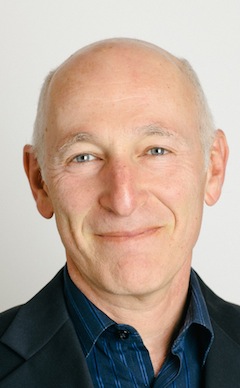
photo - Bernard Pinsky, head of Jewish Federation of Greater Vancouver’s security advisory committee
Bernard Pinsky, head of Jewish Federation of Greater Vancouver’s security advisory committee. (photo from Jewish Federation)

Pinsky, who was born and raised in Winnipeg, has been involved in the local Jewish community in various ways since he and his wife, Daniella Givon, an Israeli, moved here in 1981.

“Since the first war in Lebanon, I got involved in the Jewish community in a very big way … because I was concerned that the Jewish community in Vancouver was way too reluctant to get involved and raise their head and fight anti-Israel sentiment, both in Vancouver and across Canada,” said Pinsky.

Pinsky has volunteered with and supported many charitable organizations, both in the Jewish and general communities, and his efforts were recognized with a Queen Elizabeth II Diamond Jubilee Medal in 2012.

Over three years ago, the Jewish Community Centre of Greater Vancouver was one of almost 150 North American Jewish institutions that received a bomb threat. All of these threats ended up being traced to an Israeli teen and no one was hurt, but the potential harm raised concerns higher than they’d been in the past.

“In 2015, the Jewish Federation of Greater Vancouver decided we need to start a security committee, which was focused on physical security,” said Pinsky. “They asked me to be the committee chair.

“We started a physical security committee, which would train some volunteers, send people to events and help some of the synagogues train their people in security – not to carry weapons or actually try to take down terrorists, but to be extra eyes and ears before police are necessary … and to know how to defuse situations, if possible.”

The idea was to work with an overarching communal view and pool resources, rather than having each organization have to take on their own security initiatives. Jewish Federation annual campaign funds have since helped with security-related equipment, policies and programs. In 2017, Daniel Heydenrich was hired by Federation as director of security and he has coordinated efforts, trained volunteers and staff, worked with community members and law enforcement, as well as helped procure federal government Security Infrastructure Program grants.

About a year ago, when cyber-attacks on companies and institutions worldwide started involving ransom demands after systems were hacked, it became obvious that, in addition to physical security, cybersecurity was also an issue that needed to be addressed. And, in 2019, a cybersecurity and information protection subcommittee was created.

“We spent the first few months determining what our mandates were, who we were going to be helping, how we’d help, and how much would be as volunteer work and how much would be referring people out,” said Pinsky. “Then, COVID-19 hit. Very quickly after, we started making all of these decisions. With COVID-19, everybody had to be working from home, all of a sudden … people weren’t going to work in the office. So, the fact that you had office cybersecurity protocols … from home, this could be completely different – your own personal computer could be hacked.

“We realized that what we really needed to do was to offer to go into organizations and help them determine how well-protected they were. One committee volunteer decided to create an assessment tool, where we’d go through a series of questions with the organization and could tell them how weak or strong they were in different areas of cybersecurity and information protection.”

After making that assessment, the committee would then provide a list of recommendations to bridge any security gaps.

The mandate of the subcommittee, wrote Pinsky in Federation chief executive officer Ezra Shanken’s Sept. 25 Shabbat message, “is to recommend and communicate to Jewish community agencies information about specific cyberthreats and guidance that is published by recognized authoritative sources regarding cybersecurity (e.g., best practices, assessment tools, educational/training materials and policies/procedures); to provide training sessions; and to help Jewish community agencies work together to procure and implement cybersecurity services from commercial providers, where available. A key aspect of the subcommittee’s work is to help our partner agencies understand their level of exposure to cybercrime and to make recommendations on how to reduce the risk.”

So far, the cybersecurity experts on the committee have conducted six or seven assessments. Not wanting these volunteers to be overtaxed in the long run, Pinsky said, “We’re starting to train some additional people now. Hopefully, we’ll have some people qualified to do [assessments] within a month or so.”


Rebeca Kuropatwa is a Winnipeg freelance writer.

Albert solos reimagined

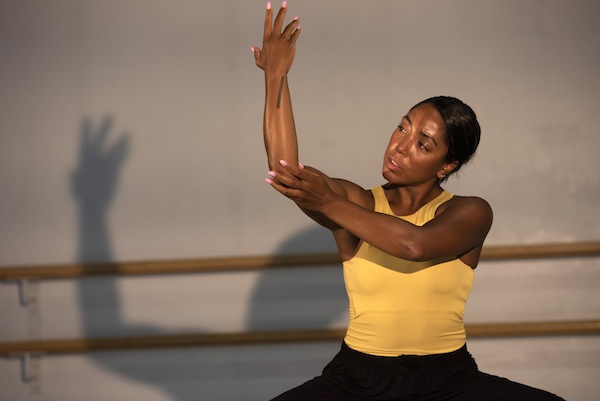
Livona Ellis rehearses for the DanceCentre performance of Mary-Louise Albert: Solo Dances/Past into Present. (photo by Sylvain Senez)

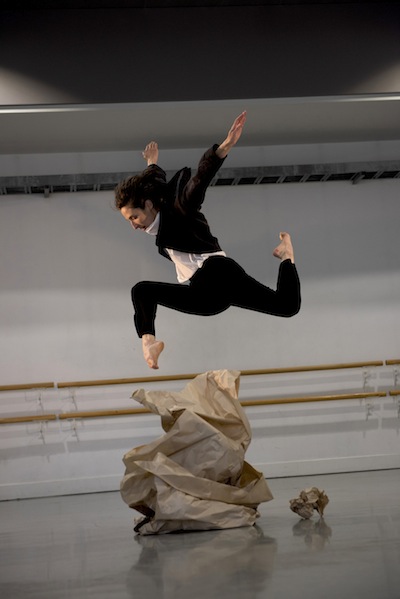
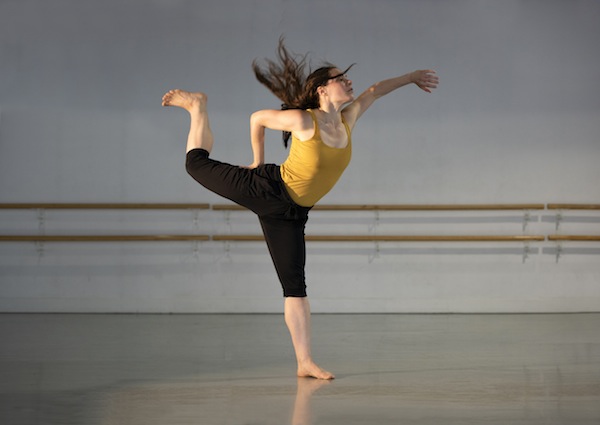
Mary-Louise Albert: Solo Dances/Past into Present at the Dance Centre Nov. 19-21 features Livona Ellis, Vanessa Goodman and Rebecca Margolick performing works that were created for Mary-Louise Albert. Albert herself returns to the stage, at age 65, after a 19-year hiatus, to perform the first phase of a solo work commissioned from Serge Bennathan.

The three solos being reimagined were created during the last six years of Albert’s 20-year professional dance career (see jewishindependent.ca/generations-combine). They have not been performed since.

“When Mary-Louise first approached me to share her ideas about this project, I was transitioning out of a company,” said Ellis, who is performing Woman Walking (away) by Peter Bingham. “It seemed like the perfect work to describe the state of transition I was about to enter. I was leaving something behind and going towards the unknown. For me, the piece deals with a lot of questions and conversations we have with ourselves; reflecting on memories and being curious about the future.”

Ellis is a dancer with Ballet BC. She is on the faculty at Arts Umbrella and is the programming advisor for BC Movement Arts Society, which was founded and is directed by Albert. The rehearsal process for Woman Walking (away) started with Albert teaching Ellis the solo before COVID hit.

“It was great to have her insight and point of reference,” said Ellis. “I then worked with Peter Bingham where, in particular, he talked a lot about the intent and physical and theatrical sensations. It was very much an open dialogue, my input with Peter was very welcome.”

Recently, Ellis started rehearsing again with Albert. “She is really interested in melding our two interpretations and finding more ways for me to fully embody the solo in my own way,” said Ellis, mentioning her excitement to be sharing “the evening with these other talented and strong women – Vanessa, Rebecca and Mary-Louise – and to experience again performing in front of a live audience.”

Making the dance her own has been something that Goodman also has been working on with Albert, and with choreographer Tedd Robinson, who created oLOS.

“The work is a journey and allows me, as an interpreter, to transport myself into an embodiment that is both full of form and deconstruction. This is a beautiful place to experience the work, which is both deeply intuitive and dichotomous,” said Goodman, who is a choreographer herself, as well as artistic director of Action at a Distance Dance Society. She first worked on the piece more than a year ago, in May 2019, spending time with Albert and Robinson reenvisioning it.

photo - Vanessa Goodman
Vanessa Goodman (photo by Sylvain Senez)

“We worked in Sointula, where Mary-Louise lives, visiting what the solo meant to all of us; examining the process physically and mentally of passing along a living archive,” explained Goodman. “Every time an artist embodies a work, it transforms with their system – this work continues to transform with, and for, me each time I inhabit it.

oLOS has been a tremendous opportunity to be able to learn from both Tedd and Mary-Louise,” she continued. “They both have an incredible amount of information to share. Both of these artists have helped to shape dance on a national level, and it is a gift to be able to experience oLOS now with them.

“Both Tedd and Mary-Louise have been a part of my development for the last 18 years,” she added, “with Tedd teaching me in my last year of high school at CCDT [the School of Canadian Contemporary Dance Theatre, in Toronto] before moving out west and then providing me with great insight into my solo Container in Ottawa in 2015. And, Mary-Louise has supported me in so many ways as a creator over my professional career, allowing me to develop and share work…. These two artists have shared so much with me, and it is an exciting intersection to be able to work on this project all together.”

For Margolick, who is performing Allen Kaeja’s Trace Elements, the intersection is even more personal. The solo was created in 2000, she said, and she remembers watching her mother dance it at the Rothstein Theatre – Margolick was 9 years old at the time.

“Fortunately, Allen and I had our creation period prior to the pandemic,” said Margolick about the piece’s latest iteration. “We rehearsed without Mary-Louise during the remounting/creation process in Toronto. We had another week to finish the piece in Sointula, B.C., with Mary-Louise coming in to watch runs and sharing her thoughts and expertise on the work, past and present. As she is also my mom, she made sure to facilitate the space needed, with great sensitivity, for the work to become personal to me.

“Allen made space for me to experiment and try things out and his process can be summed up in three words – generous, kind and courageous. Every time I run the piece, it feels different emotionally and my reactions to the text vary day to day … it makes the work always feel alive. We say ‘reimagine,’ as we were all interested in how I can bring myself into the solo and give the tools needed to make it my own.”

Margolick is based in Brooklyn. A dancer and choreographer, she was a 2020 New Directions Choreography Lab Fellowship at the Ailey School and is a 2020 artist in residence at the Dance Deck here in Vancouver. As well, she is artistic associate of BC Movement Arts Society.

When Margolick worked with Kaeja in Toronto on the solo, she said, “We had many in-depth conversations around the subject of the piece, and Allen shared with me his experience around learning and researching his father’s story. Allen’s father was a Holocaust survivor, and creating work around the Holocaust became a way for Allen to process his dad’s experience. What came about from reimagining this solo was this merging of past and present with my movement and Mary-Louise’s movement, and a linking between different generations of the Jewish experience and family.”

photo - Rebecca Margolick
Rebecca Margolick (photo by Sylvain Senez)

Since Albert is her mother, Margolick said there is an “inherent natural connection I have to her movement and expression. It’s a beautiful way to explore this connection between us.

“This piece speaks to me on many levels,” Margolick added. “The text is a conversation between a young German man and woman, 22 years ago, referencing Nazi Germany propaganda and the apathetic, yet unfortunately relatable, responses from the young woman about her mother’s experiences during the war. It is eerily relevant to what is happening around the world, as we reckon with the ongoing oppression of systemic racism, colonialism, greed, antisemitism and the rise of fascism and the alt-right. This piece for me is an eerie reminder of how quickly things can change, and how easy it is to fall into apathetic thinking, which dangerously leads to losing one’s empathy.”

Mary-Louise Albert: Solo Dances/Past into Present is part of the Dance Centre’s Global Dance Connections. In addition to the Nov. 19-21 live-stream shows, a recorded performance will be available online Dec. 3-17. For tickets and more information about both offerings, visit thedancecentre.ca.

A shidduch like none other

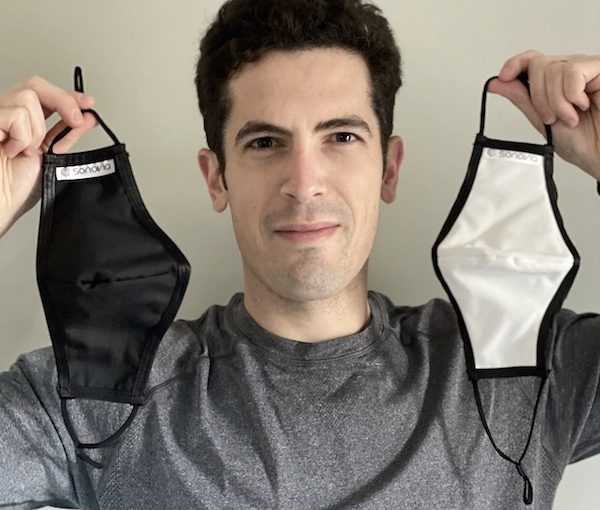
Brad Chenkis shows off a couple Sonovia masks. (photo from Tikva Housing)

It all began when Boris Chenkis, owner of After Five Fashions, was watching Israel Daily TV (ILTV) and saw an interview with Liat Goldhammer, the chief technology officer of an Israeli startup called Sonovia. She was talking about a new fabric-finishing technology for textile manufacturing developed at Bar-Ilan University, explaining that the technology could repel and kill bacteria located on clothing. Because it was in early January, a few weeks before COVID-19 became a worldwide pandemic, Chenkis just listened with interest.

On ILTV March 18, Dr. Jason Migdal, a microbiology researcher in Israel, discussed how the Sonovia technology mechanically impregnates metal nanoparticles into masks that destroy microorganisms in fabric. This was verified by two independent labs. It was also durable and washable. Now Chenkis was very interested.

With COVID becoming widespread, Sonovia had positively impacted Israeli doctors and health professionals by providing them with the technologically advanced masks. On May 12, Chenkis saw another interview about the Sonovia mask technology on ILTV – and an opportunity to get involved.

During his teenage years, Chenkis lived in Israel, studying and working at Kibbutz Rosh Hanikra. With this connection to Israel that never left his heart, he wanted to support an Israeli startup and so he purchased some masks to keep his family, friends and community safe. Soon after, he received an email from Sonovia, offering him an opportunity to help distribute the masks in Canada. Chenkis said yes. The masks were shipped from Ramat Gan to Vancouver and, within days, he was delivering hundreds to friends and family.

One of those who received the Sonovia mask was Yosef Wosk. Being both pleased and impressed with the technology, Wosk, like Chenkis, saw an opportunity to help not only the community here but also Israel. Wosk wondered how the masks could be made available locally to community members who might not be able to afford them, as they cost $65 each.

Wosk spoke with Shelley Karrel, chair of Tikva Housing, who contacted Tanja Demajo, chief executive officer of Jewish Family Services Vancouver. The need for the masks was confirmed and the shidduch almost complete.

Working with Chenkis’s son, Brad Chenkis, and with Wosk’s help, Tikva has acquired and will distribute 500 masks to residents of Tikva Housing, as well as clients of Jewish Family Services. It’s a win, win and win – tikkun olam, tzedakah and chesed.

For more information about the Sonovia masks, contact Brad Chenkis directly at inquiry@afterfivefashion.com.


Women in labour force

Pamela Jeffery, founder of the Prosperity Project. (screenshot)

Pamela Jeffery, the driving force behind the Prosperity Project, led an Oct. 7 webinar entitled When Women Succeed, We all Prosper – Don’t Let COVID-19 Hold Us Back, which was part of a National Council of Jewish Women of Canada series on women and justice.

Launched on May 21 of this year, the Prosperity Project hopes to ensure that gains made by women in the workplace and elsewhere are not set back permanently by the pandemic. In July, a Royal Bank of Canada report showed that women’s participation in the labour force had decreased to its lowest level in 30 years. Women, according to RBC, have been disproportionately affected by the overall decline in work hours since March, and this has been exacerbated by the household and childcare responsibilities for which women take on a greater share than men, particularly when children are not learning in school.

“We all know that the women’s movement is unfinished,” said Jeffery. “This is why our leadership is necessary – no matter what our age or our gender. It is up to all of us to ensure that men and women have equal opportunity, which is at the heart of the Prosperity Project.”

She stressed, “There is a clear focus on making sure that the progress made over the last 60 years on gender equality is not rolled back. That is why the Prosperity Project exists.”

Jeffery spoke of three essential themes to advancing the movement: resourcefulness, relationships and risk. “Each of us has the power to bring an idea forward. We can take a calculated risk and draw on our resourcefulness and relationships to make things happen,” she said.

The Prosperity Project has several initiatives it hopes will safeguard the progress by women in the past few decades and propel it further. Among them is a “matching initiative” for nonprofit organizations whose mission is geared towards helping women with training, employment pathways, crisis counseling and mental and physical health. The initiative introduces women and men in the private sector with specific skill sets to the staff and existing boards of these nonprofits for extended volunteer assignments.

Jeffery pointed out the importance of role models and mentors for women. “A good mentor pushes someone outside of their comfort zone. Women are less likely to have mentors than men, which can explain our different career trajectories,” she said.

The Prosperity Project also plans to research and share practical solutions that will provide insights to employers and policy-makers on how to improve gender equality. Furthermore, it will enable women to learn from one another, to increase their employment income and well-being.

Jeffery cited a 2017 study by McKinsey & Co., reporting the overall societal benefits of advancing women’s equality. By addressing this issue, McKinsey found that Canada could “add $150 billion in incremental GDP in 2026 or see a 0.6% increase of annual GDP growth.”

The Prosperity Project also plans to create a modern-day Rosie the Riveter campaign, inspired by the iconic image used in advertising materials to encourage women to do factory work during the Second World War. The modern-day objective is to increase the labour force participation rate of women and, at the same time, encourage partners to share household responsibilities equally and motivate employers to bolster advancement opportunities and achieve gender parity at all levels of an enterprise.

The Prosperity Project has thus far brought on board 62 diverse female leaders from across the country, such as Enterprise Canada chief executive officer Barbara Fox, Sleep Country co-founder Christine Magee and former B.C. premier Christy Clark.

Jeffery’s own biography is one of enterprise, determination and success. An MBA graduate from Western University, in Ontario, she is the founder of the Women’s Executive Network and Canadian Board Diversity Council. She has served on the board of numerous organizations and has been a frequent contributor to the Globe and Mail and National Post.

“I am optimistic about the situation we find ourselves in, in 2020. I remind myself of how far we have come,” she said. “Back in 2003, six percent of FP500 board seats were held by women. Now, it is over 25%. I am confident we are going to be able to work together to make sure that COVID-19 does not bring us back.”

The webinar was serendipitously scheduled for an hour before the American vice-presidential debate between Kamala Harris and Mike Pence.

“We are doing quite a lot, but there is so much more to be done,” Jeffery concluded.

For more information, visit canadianprosperityproject.ca.

Sam Margolis has written for the Globe and Mail, the National Post, UPI and MSNBC.

Making a will during COVID

For hundreds of years, the basic rules for making a valid will have been the same: the person making the will has to sign it in the company of witnesses, and the witnesses have to sign, too. How can that requirement stand when we’re supposed to stay apart? Is it OK to sign and witness a will with everyone two metres apart from one another and wearing masks and even gloves?

Signing with COVID-19 precautions like distancing and wearing safety gear is legally valid, but not always practical. You’re passing around a paper document, and possibly sharing a pen. As we move into the winter months, it becomes less likely that you’ll all gather outside to sign. Signing indoors, despite social distancing and personal protection equipment, is still considered a greater risk than staying home.

Many of us have become far more familiar with videoconferencing technologies this year than we ever expected to be. How many of us had a Zoom seder or a Skype Rosh Hashanah dinner? Why can’t we update a centuries-old practice for the 21st century, especially given the COVID-19 crisis? We can.

The British Columbia government, as part of the emergency measures brought in this year, made changes to the rules for executing wills to accommodate pandemic precautions, and has also made those changes permanent. The Wills, Estates and Succession Act, which governs how we make wills, was amended to include two new sections on something called “electronic presence.”

The basic rules are still the same – the will has to be signed by the person making the will and by two witnesses, all witnessing one another more or less simultaneously, but they can sign separate paper copies – to be put together and treated as one original document – as long as they are in each others’ “electronic presence.” In other words, it should be the “witnessing a will” version of that Zoom seder.

Like everything with a will, there are technical details and you should always get professional guidance, but it is reassuring that you can remain safe, while attending to your critical planning needs.

Jeremy Costin is a business and estates lawyer practising in Vancouver. He sits on the board of directors and the governance committee of the Vancouver Holocaust Education Centre, and is a frequent guest instructor at the Law Society of British Columbia.

(Disclaimer: This article should not be construed as legal advice. Only your lawyer can give you proper advice specific to your needs.)

Comfort food and COVID

There’s been an uptick in the eating of comfort food in our house since the pandemic began. Cooking and eating are a big deal during stressful times.

Now, we were “into” food pre-pandemic. I cook a lot. However, everything went up a notch when our focus turned inwards, particularly for holidays like Passover, Rosh Hashanah, Sukkot and Thanksgiving. When our neighbourhood bakery closed down in the spring, I went from making only challah to making all our bread. My kids, surprised, said, “Mommy, you made this? It’s really good!” – as they gobbled up the crusty spelt bread I turned out. Over these months, it’s gone from bread production to canning. Once the shelves filled up with jams, pickles and applesauce, autumn became baking and roasting season.

We’ve eaten too much: apple pie and crisp, sweet potato pie, cherry pies, and more. I tried for moderation – and then my husband bought Halloween candy. He started doling out two snack-sized chocolates a day. I couldn’t resist.

In the summer, I combated all this “extra” with dog walks and playing outside, but now it’s cold out again. It’s harder to take long walks. Fall virus numbers have soared, so swim lessons, gym visits and other kinds of exercise are off the table for now.

Imagine my surprise when Daf Yomi, the practice of reading a page of Talmud a day, came to the rescue! I found good advice while reading Eruvin 82b and 83b. After all, it’s not the first time in Jewish history that we’ve gone through periods of stress. When feeling out of control, it might only be natural to struggle with basics like “how much is enough to eat?”

In Eruvin 82b, a discussion emerges. To extend the eruv, the boundary of how far you can go on Shabbat, you can place food in a location, usually cooperatively, with your neighbours, so that you all “share” the space. When you establish this with your neighbours, it’s communal space, like in your house. You can carry things within a larger area. Imagine a block party potluck, and you’re understanding this.

How much food is enough? It’s supposed to be enough when each neighbour puts in enough for two meals. However, that amount must be defined. Is that food enough for two “work day” meals, when people might be doing hard labour? On Shabbat, we eat more, so do we put more out to designate the eruv? How much should it weigh? Does it need to be expensive or fancy food?

The rabbis then do math, which is always a bit dodgy, to be honest. Why? Measurements in the ancient world varied from one geographic location to another. Food staples varied, too – for instance, some places had better access to one kind of grain as compared to others. Rice bread is acceptable, for example, but millet bread can’t be used, because the rabbis say it’s hard to make edible millet bread.

Different communities couldn’t afford the same things and, even if they could afford them, in some cases, the bread they produced was simply not edible. In Eruvin 81a, there’s a discussion about a kind of mixed grain lentil bread, a concoction of wheat, barley, beans, lentil, millet and spelt as spelled out in Ezekiel 4:9. “Rav Hiyya bar Avin said that Rav said: One may establish an eruv with lentil bread.” The Gemara determines that there was a bread made like this in the days of Mar Shmuel, and even his dog wouldn’t eat it. So, the food put out for the eruv must be edible to humans (and dogs) and taste good!

The rabbis refer to the Torah and decide that the manna the Jewish people received while wandering in the desert was about an omer (two litres) each. There’s some dubious calculating to determine how much food is “enough.” The most helpful information I found was repeated by multiple sages over more than a thousand years.

In Sue Parker Gerson’s introduction of Eruvin 83 on myjewishlearning.com, she offers some context for understanding the talmudic text. The sages say, “One who eats roughly this amount [an omer] each day is healthy, as he is able to eat a proper meal; and he is also blessed, as he is not a glutton who requires more. One who eats more than this is a glutton, while one who eats less than this has damaged bowels and must see to his health.”

Maimonides, a physician and a Torah scholar more than 800 years ago, wrote a lot on healthful eating. In Gerson’s article, she includes eating tips from him, as well as from Rashi and Adin Steinsaltz. Regarding Maimonides, he said, “One should not eat until his stomach is full. Rather, he should stop eating when he has eaten close to three-quarters of his full satisfaction.… Overeating is like poison to anyone’s body.”

It’s only natural to use food to celebrate, to comfort and to cope during this crazy time of upheaval. How can we combat this temptation? The rabbis advise: remember not to overeat, eat only what is edible and healthy, and practise moderation.

This is hard. We live in a world of plenty, possibly even including leftover Halloween chocolates. But there are Jewish teachings, over generations, about avoiding overeating. Weight gain could make us more susceptible to complications from COVID-19, and so many other illnesses. It’s not good for us, but, knowing how much food is “enough” isn’t a new issue and, like everything else, it’s a Jewish one. The rabbis probably didn’t have leftover candy or sweet potato pie, but they knew the temptations we might feel to make, or eat, too much of them.

Joanne Seiff has written regularly for CBC Manitoba and various Jewish publications. She is the author of three books, including From the Outside In: Jewish Post Columns 2015-2016, a collection of essays available for digital download or as a paperback from Amazon. Check her out on Instagram @yrnspinner or at joanneseiff.blogspot.com.