First-ever virtual Chutzpah!

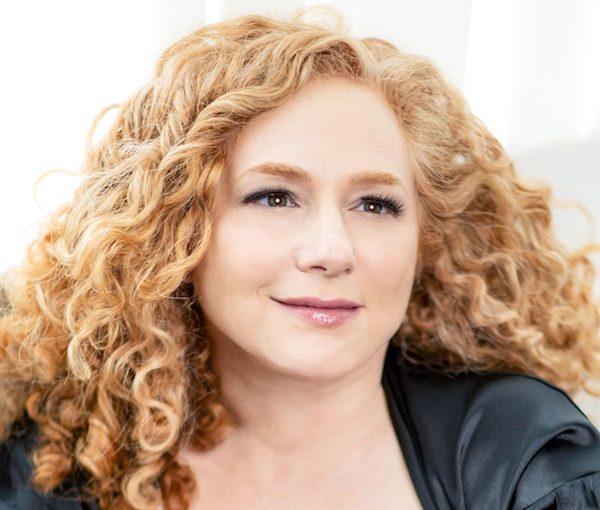
The new artistic managing director of Chutzpah!, Jessica Mann Gutteridge, faced unique challenges in presenting the festival. (photo from Chutzpah!)

“This has been a challenging time for all communities. I hope that this year’s Chutzpah! Festival can bring a sense of joy, and the communal spirit that comes from sharing performing arts experiences with others, whether at the theatre or from the comfort of home,” said artistic managing director Jessica Mann Gutteridge in a recent interview with the Jewish Independent.

This will be the first-ever Chutzpah! The Lisa Nemetz International Jewish Performing Arts Festival that people will be able to watch at home. Given the COVID-19 pandemic, all of the performances will be available online, Nov. 21-28, with a few opportunities to attend small-audience shows that are being live-streamed from the Norman and Annette Rothstein Theatre. Not only will this be the first Chutzpah! presented digitally in the festival’s 20-year history, but it will be the first directed by Gutteridge.

“I knew that I had an exciting and challenging year ahead of me when I took the helm of Chutzpah! from Mary-Louise Albert, who was artistic director before me for 15 years,” said Gutteridge. “I really could not have anticipated how much the world would change just three weeks later, when the pandemic shuttered the Rothstein Theatre and the entire performing arts sector. The first month or so was spent focusing on our staff’s well-being and helping the many users of our theatre to reschedule and replan all the events that had to be canceled.

“The first thing I did for the Chutzpah! Festival was to take some time to think,” she said. “My board was wonderfully supportive from Day 1 and assured me that whatever scale I felt was right would be all right with them – even if I wanted to postpone for a year. I spent a great deal of time just thinking about the purposes of the festival, how it serves the community and the relationships we have with our audiences and community of artists. Even before COVID, when I was thinking about what my first festival might look like in a transition time, I felt inspired to bring together artists who had performed in the festival in the past with new artists who I hoped would join us in the future. So, I began by reaching out to artists from both groups so that we could just start to get to know each other, and find out how everyone was responding to this unprecedented situation.”

By early summer, said Gutteridge, it became clear that the health-related restrictions with respect to the pandemic would still be in place in November, “so I began to think about how we might incorporate digital presentations into the festival, and to talk to artists who were exploring this form of performance in their work.

“I was thrilled to learn that Iris Bahr, who was in the 2019 festival, is not only a brilliant actor and stand-up comic, but is also a podcaster who interviews other artists and public intellectuals with much wit and insight. I invited her to perform her solo stand-up, but also to function as our festival host and conduct live interviews with all the festival artists,” said Gutteridge. “Because Iris divides her time between Israel, New York and Los Angeles, we knew she would have to appear digitally and, though this adds another layer of technical complexity, I think it’s such a special opportunity that the present moment brings us – to join artists from across the world and have a chance to learn more about how the pandemic is changing and shaping their creative work.”

The festival’s online-only shows will include Bahr’s stand-up comedy performance (click here for story); New York-based playwright Rokhl Kafrissen’s Shtumer Shabes (Silent Sabbath) and former Vancouverite-current Londoner (England) Tamara Micner’s Old Friends, both of which are works-in-progress; a concert by Israeli pianist and composer Guy Mintus; and Israeli choreographer Ella Rothschild’s Pigulim.

There will be two shows live-streamed from the Rothstein, where limited audiences will be permitted. Ben Caplan will perform music from Old Stock, which is adapted from his music-theatre piece Old Stock: A Refugee Love Story (see jewishindependent.ca/searching-for-a-safe-harbour). And Chutzpah! artist-in-residence Idan Cohen (Ne. Sans opera and dance) presents the world première of Hourglass. Closing out the festival are Jess Salomon and Eman El-Husseini (click here for story), who will be live-streaming from Brooklyn, joined by yet-to-be-announced local comedians performing at the Rothstein.

The lineup is a fraction of what it would have been if not for COVID, but Gutteridge thought it important to proceed with the event.

“Well, for starters, I’m stubborn and I like a challenge!” she said of the decision. “I also knew that we were well-positioned with staff and support to execute a creative and fulfilling festival, even though it would not look much like past festivals. In talking to colleagues inside and outside the JCC, and hearing from our community via a survey in July, I understood that there was a lot of enthusiasm to keep experiencing the kind of performing arts presentations that Chutzpah! has offered for 20 years now. And, looking ahead to dark November nights, I think we can offer a communal experience that will bring some much-needed joy.”

In addition to focusing on quality entertainment, health and safety has been at the forefront of the planning.

“We have worked carefully with health and performing arts sector experts to make sure that we are providing the safest possible experiences for audiences, staff and artists, including at our physically distanced, intimate live events at the Rothstein Theatre,” said Gutteridge. “I’m also very impressed by how our artists have risen to the challenge. Rokhl Kafrissen, the playwright of Shtumer Shabes, has been working with her cast via Zoom since April, when they presented a workshop of the play in lieu of the debut performance they were scheduled to have at LABA in New York. Our audiences will have a chance to meet the artists and see excerpts from the play, with context about the work’s meaning and creation, all performed from the artists’ individual locations. It’s a special opportunity for our audiences to peek inside the creative process.

“Idan Cohen’s Hourglass, a new dance piece with live piano accompaniment, is being created this fall at the Rothstein Theatre as part of our creative residency program. With 318 seats and a large stage, the theatre is large enough for physical distancing, and Idan is working with a skeleton crew – often just himself and the two dancers at work. The dancers, Brandon Lee Alley and Racheal Prince, are partners offstage as well as on, so they are already in a household bubble. The other dance piece, Ella Rothschild’s Pigulim, comes to us from the Suzanne Dellal Centre in Tel Aviv, where the performance was previously recorded in a studio theatre, so that health and safety protocols could be observed and the dancers could form their own bubble.”

Tickets for the festival start at $18 and are available online at chutzpahfestival.com or by phone at 604-257-5145.
Doctors urge mask use

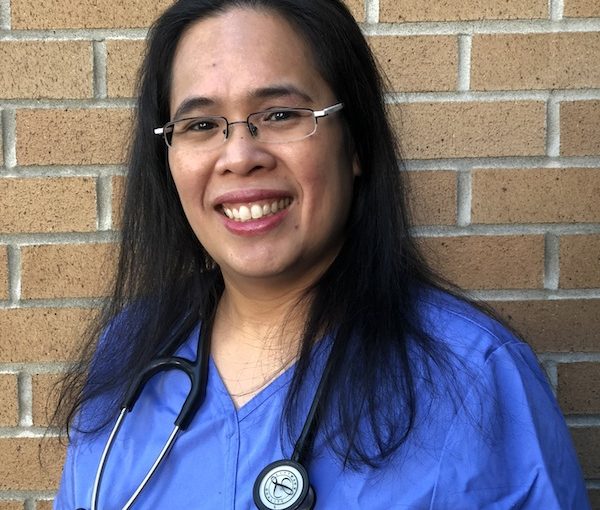
Dr. Anna Wolak is one of the doctors who started Masks4BC. (photo from King Edward Medical Centre)

Mandatory use of masks, in addition to physical distancing and hand hygiene, will help save lives and the economy in the wake of the coronavirus, according to Masks4Canada, a nation-wide, grassroots group of healthcare professionals. The group was formed in May, while a provincial branch, Masks4BC, started operations in July.

Masks4Canada works to inform all levels of Canadian government and the public of the critical importance of wearing masks in reducing the transmission of COVID-19. The group promotes the use of masks in all indoor settings – such as schools, businesses, factories and stores – on public transport and outdoors, when physical distancing is not possible.

Jewish community member Dr. Anna Wolak, the medical director at Vancouver’s King Edward Medical Centre, is one of the doctors who started Masks4BC, following the implementation of mask mandates in Ontario and Alberta. As of this writing, such a mandate had not been instituted in British Columbia and Masks4Canada has written a public letter to the B.C. government, including Dr. Bonnie Henry, urging the adoption of one.

“A universal mask use mandate has always been up to the provincial health officer and the B.C. health minister. As numbers continue to rise, all we can do is vocalize the need for it and continue making sure the information about masks is available,” said Wolak, who also serves as a family physician and as a clinical assistant professor of family medicine at the University of British Columbia.

“As more businesses bring in mandatory mask use, it will make it easier to normalize their use. Scientific journals are also very good at making sure findings about the protectiveness of masks are available, but these publications are not typically read by the lay public and, therefore, need to be conveyed through various media channels,” Wolak added.

In its letter to the provincial government, Masks4Canada recommended that mandatory masking policies be applied with the acronym “ACT”: all indoor spaces outside the home (such as hospitals, schools, shops and businesses), crowds (any place where it is difficult to distance from others) and transit.

Though the B.C. government did not respond to the letter, the group has made an impact. Transportation authorities, including BC Transit and TransLink, have mandated masks on all public transit – buses, SkyTrain and SeaBus – and BC Ferries has followed suit. Individual businesses have likewise taken strides to implementing the wearing of masks to protect the public from infection.

According to Wolak, a mask mandate should have been introduced when numbers of daily infections were low, and before schools reopened. She emphasized, however, that it is not too late to bring about a mandate as long it happens before the respiratory viral season – which includes influenza, parainfluenza, RSV (respiratory syncytial virus) and the common cold – really gets underway.

“I think B.C. missed an opportunity to contain the virus,” Wolak told the Independent. “Ideally, I would like to see masks required in all indoor areas outside of the home, including classrooms, as well as masks in crowded outdoor areas. Of pressing importance is the need for a mask mandate in hospitals because, as surprising as this might sound, it is not currently the case.”

Masks4Canada does state that people with certain medical conditions or disabilities, along with young children, be exempt. Nonetheless, for most people they recommend the use of masks.

Further, they say there should be free distribution of masks to populations that may be vulnerable or at higher risk. Rather than focusing on penalties to enforce policy, the group encourages education to help the public understand how to wear a mask properly, as well as the importance of wearing masks for the protection of health and provincial economic recovery.

British Columbia and other provincial mask groups have seen an increase in the number of doctors supporting the cause. As other provinces put mandates in place, focus in those areas has broadened to other relevant issues, such as effective ventilation protocols and tracking school outbreaks.

Masks4Canada does not sell masks or medical supplies, nor does it endorse or partner with for-profit enterprises.

Wolak has had a significant media presence since helping create Masks4BC. She has appeared on CTV Vancouver, Global News, CTV News Ottawa and OMNI Television, among other TV news programs. She has also spoken on various news radio shows, including CKNW’s Lynda Steele Show, The Jill Bennett Show and the nationally broadcast Charles Adler Live.

For more information, go to masks4canada.org.

Sam Margolis has written for the Globe and Mail, the National Post, UPI and MSNBC.

Bahr to host Chutzpah!

Iris Bahr pulls double duty at the 2020 Chutzpah! Festival, as host and performer. (photo from Chutzpah!)

Comedien, writer, actor, director, producer and podcaster Iris Bahr will both host this year’s Chutzpah! Festival, Nov. 21-28, and perform her stand-up live Nov. 26.

Known for her eclectic characters, Bahr will call on many of them as she converses with the other festival artists as part of her hosting duties.

“I’ll be conducting these conversations either as myself or as some of my characters, depending on the artist I’m speaking to,” Bahr told the Independent. “My alter egos include Shosh, the salty Israeli who has become popular on Instagram, Rae Lynn Caspar White, my ‘Southern redneck intellectual,’ and Shuli, my Orthodox character who is beyond excited to ‘dive into the arts’ for the first time.”

Many JI readers will know Bahr’s stand-up from having seen her perform at last year’s Chutzpah! The show will be somewhat different this time around.

“My stand-up will involve more crowd work and storytelling versus just straight-on stand-up to camera,” she said. “I have found that to be a more captivating and enjoyable experience for everyone involved when the audience can also engage and experience each other’s presence, it’s the closest we can get to a communal live theatrical experience in these challenging times.”

For more on Bahr, see jewishindependent.ca/bahrs-many-personas. For more about Chutzpah!, visit chutzpah.com and read the next issue of the JI.

Living and working together

Eman El-Husseini, left, and Jess Salomon with furry family member Esther Honey El-Husseini. (photo by Mike Bryck)

Jess Salomon and Eman El-Husseini, aka the El-Salomons, close out this year’s Chutzpah! Festival on Nov. 28. They will live-stream from Brooklyn, and local comedians will join the event from the Rothstein Theatre.

In performance, the married Jewish-Palestinian lesbian comedy duo leans into the things that make them unique. Their chemistry is not only evident on stage, but even comes out in an email interview, where the pair play off one another like, well, a couple who knows and loves each other well.

JI: You met when you were each performing solo routines and continued in that vein, I think, even after you were married. When and why did you team up professionally as well?

Jess: It didn’t really come from us. We weren’t out in comedy until we got engaged so it was only after that, that we started making jokes about our relationship. Sometimes, we’d follow each other on a show and it became obvious who we were talking about. Like how many Jewish-Muslim-Palestinian Canadian couples that moved to America from Canada are there? Another comedy couple might be able to be on a show together and say my boyfriend did this or my girlfriend did that, and no one would connect that they were referring to one another. So, we built in this reveal and, eventually, people started asking if we were going to share the stage together. We didn’t want to, but it’s a sacrifice we make for the fans!

Eman: The first time we shared the stage was at a gig in an old synagogue turned community centre in L.A. I went on first and introduced Jess for her performance. We bantered, unprepared, on stage for about 10 minutes. We had no idea a reviewer from Tablet was in the audience and, although we individually performed for about 30 minutes separately, that 10 minutes of banter stole the show…. We didn’t think much of it but, a year later, 2018, we were in our hometown of Montreal for the Just for Laughs Festival. The BBC World Service was in town to put on a comedy show. They called us and asked if we’d want to record a set together and we said, ‘absolutely not.’ First of all, they have a huge listenership and we wouldn’t be able to polish an act under such short notice and, second, no one wants or should want to work with their spouse. But, the British have a way to persuade, it must be the accent.

At the same time, because we were back in our hometown, Just for Laughs offered us two shows to do whatever we wanted. We decided to perform individually for 20 minutes and then 20 minutes together. We almost got divorced but the audience loved it! We sold out both nights and added a third. Who would have thought a duo act would be so sought after? We’ve been working together ever since, and we are still married! I think, at this point, if we ever separated, we’d have to be closeted about getting divorced.

JI: From where do you get the strength and confidence to be a stand-up comedian?

Eman: I have no idea why and how I’ve stuck with this career after my first set. I bombed so hard and, until today, continue to bomb at times, but there is truly an addictive element to making someone laugh. Even if it’s a single person in a room. Laughter is so genuine and isn’t easily had. I mean, even in our day-to-day life Jess and I will share with each other how we made a stranger laugh shopping for groceries or walking the dog. It’s so rewarding.

Jess: Making strangers laugh and then talking about it is 100% an Eman thing. Right now, we’re in an argument over a speech therapist I’m convinced she hired just to entertain while she insists she has a speech impediment that must be fixed.

Eman: I feel like my strength and confidence comes from my parents. Although my sister and I have a brother, I managed to be the favourite.

Jess: You do have a masculine energy they might be responding to.

Eman: A big reason I wanted to be a stand-up comic is because of how misrepresented and underrepresented Arabs, Muslims and particularly Palestinians are in the media. More often than not, I am the first Palestinian someone meets in real life. I feel like an ambassador of sorts, dispelling stereotypes about my people. Exposure is such a powerful tool in getting through to people and if you can make them laugh that’s a big bonus. Even if people are immediately turned off by what I represent, they are still curious to hear what I have to say. I remember headlining a show in Niagara Falls once. I had to be on stage for 45 minutes. Twenty minutes in, I realized I haven’t made a single person laugh….

Jess: I love that it took you 20 minutes! That’s confidence.

Eman: They were conservative-leaning so, I called them out, ‘Guys! I know you don’t like what I’m saying but I can tell you like me.’ That eviscerated the room! From that moment forward I knew I could never quit comedy even if I wanted to.

Jess: I tried to do a joke about the no smoking sign on the plane and quickly realized there were at least a few comics who had done the same joke. That’s when I realized it’s better when I pull from personal experience. Even if I’m not an ambassador like Eman. I’m not the first Jewish comedian people have seen.

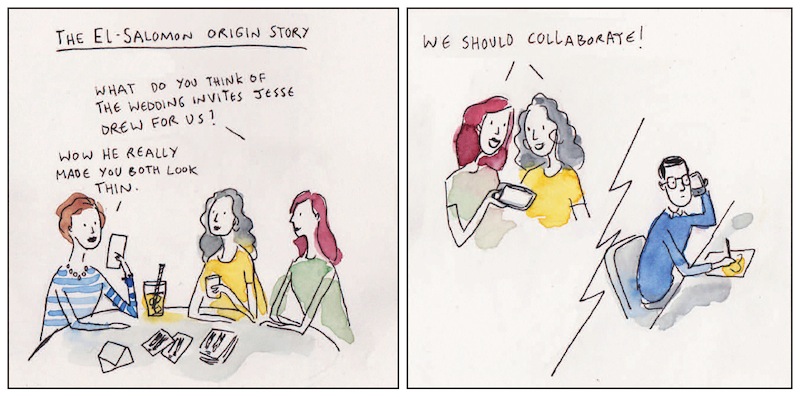
illustrations - The El-Salomons have their own cartoon. (Illustrations by Jesse Brown)
The El-Salomons have their own cartoon. (illustrations by Jesse Brown)

JI: How and when did your new Crave Canada special, Marriage of Convenience, come about?

Jess: After performing in Montreal for Just for Laughs and the BBC in 2018, we kept working on our duo act and growing our audience on Instagram for our comics (@theelsalomons). We sent a tape of what grew into an hour-long show to Just for Laughs and that’s how we got booked for the Crave special.

Eman: We realized people preferred us together than individually, which is insulting considering we had about a decade each of solo experience. It’s understandable, there are so many stand-up comics but rarely any duo acts.

Jess: There’s no one I’d rather lose my individual identity for.

Eman: Aw.

JI: What is the origin of the cartoons?

Eman: Jess came up with the idea. We would get such a huge response on social media when we’d write these back-and-forth status updates about each other.

Jess: Huge is relative.

Eman: People asking when the sitcom was coming out.

Jess: And, knowing that it would take awhile for us to find the time to write a pilot that was pitch-ready and be in a place where we could sell a series, a weekly cartoon on Instagram seemed like a manageable place to start to develop the character version of ourselves and, hopefully, an audience. We also have a close family friend, Jesse Brown, who just happens to be an incredible illustrator that wanted to work on this with us. So that’s how it was born.

Eman: The El-Salomons was the hashtag for our wedding, and Jesse drew us for our invitations … my mother-in-law saw them and said, “He made you look thin.”

Jess: Actually, yes, that is how it was born.

* * *

Chutzpah! starts Nov. 21. For the full lineup and tickets, visit chutzpahfestival.com or call 604-257-5145.

Generations combine

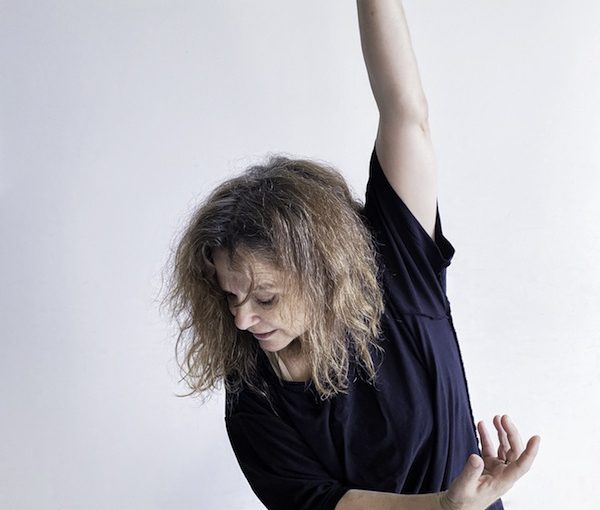
Mary-Louise Albert returns to the stage Nov. 19-21 in a new work by choreographer Serge Bennathan. (photo by Maxx Berkowitz)

The Dance Centre presents Mary-Louise Albert: Solo Dances/Past into Present Nov. 19-21. Jewish Independent readers will be very familiar with Mary-Louise Albert, whose resumé includes a two-decade career as a solo dance artist and dance company member, as well as 15 years directing the Chutzpah! Festival.

The JI last spoke to Albert as she was moving on from Chutzpah! to other endeavours (jewishindependent.ca/bidding-adieu-to-chutzpah). In that interview last year, Albert said, “At 64, I still have a bit of ‘oomph’ left to pursue.”

“The ‘oomph’ related to centring work and artistry, in this next journey of mine, on dance and having the energy and focus to do it well,” Albert said when the JI caught up with her in anticipation of the upcoming show. “This next phase of my working life includes not only personal dance creation and performance projects like this one, but, as well, developing new Canadian and international professional contemporary dance through the B.C. Movement Arts Society, which I co-founded and direct, that will take place in remote and rural areas of B.C. We have received the very good news of confirmed provincial and federal funding and our first series starts late spring to December 2021.

“The Solo Dances/Past into Present project was developed over the past two years. The three solos being presented were created and performed during the last six years of my 20-year professional dance career, when I was between 39 and 45 years old. Because they were created during this latter period of my dancing career, when I stopped dancing, they stopped with me. I was never really interested in choreographing so, when I stopped dancing, I didn’t look back. I was ready and wanted to head into the next chapter of my working life, which involved business school and ended with directing the Chutzpah! Festival and Norman and Annette Rothstein Theatre for 15 years. We, the choreographers and myself, were all in our 40s and older and everyone moved on.

“But,” she added, “in the back of my mind, over these past years, I knew it was not right to let these beautiful dances end with me. I felt like there was ‘a little something’ still missing from this very enjoyable period of my career as a solo-commissioning dancer. A sense that something was not quite complete. It became clear that I needed to pass on the solos to this generation of outstanding female dancers and support their growth with performing options by way of building their solo repertoire. I received personal financial support from the Canada Council and BC Arts Council and this multilayered project of artistic sharing that brings two generations of dance artists together in the reconstruction of Canadian contemporary choreography began!”

Solo Dances/Past into Present features Peter Bingham’s Woman Walking (away), danced by Livona Ellis; Tedd Robinson’s oLOS, featuring Vanessa Goodman; and Allen Kaeja’s Trace Elements, performed by Rebecca Margolick. (More to come in the Nov. 13 JI.)

“The solos have not been performed since 2001 and have never been remounted and reworked,” said Albert. “As a dance professional, I feel strongly that it is important to revisit these eclectic and beautifully crafted solos and put them back in repertoire with Canadian (B.C.-based/-born/-raised) dancers who have the versatility and desire to further develop the works, enjoy and share.

“Working so intimately with Allen Kaeja, Tedd Robinson and Peter Bingham many years ago brought a level of understanding as a solo performer that I had not experienced before in such depth,” she said. “As people, they all had/have a wonderful down-to-earth approach to themselves and their work and this led to a generosity and nonjudgmental approach to their creative process with me.”

Albert said the three solos “are all very different and timeless.” She described oLOS as “a deeply intuitive and somewhat mysterious work that transports performer and audience on an inquisitive journey, via the nature-walking and naïve love of [Gustav] Mahler’s Songs of a Wayfarer”; Woman Walking (away) as “a journey of one, arriving or leaving, listening to memory that is gently propelling what is next for her in an exploration of a complex yet personal quest”; and Trace Elements “wishes that this work of memory of persecution was just a source of history uncovered, but the dance is as relevant today with the growth of fascism and antisemitism as it was 21 years ago when it was created.”

In addition to remounting these works with other soloists, Albert herself will be performing the première of the first phase of a new solo work, Empreintes (which means fingerprints), commissioned from Serge Bennathan.

“At the age of 65, I’m going back on stage after a 19-year hiatus. I am still a bit dumbstruck by this,” said Albert, “and will be honest that I still often find myself mentally whispering WTF? But it is part of this new dance journey of mine as a senior citizen. I’ve never shied away from challenges and listening to my soul. There are many dance artists still performing at this age but most have never stopped. This is certainly a special experience, with its range of physical and emotional exploration, to be coming back to it at the age of 65.”

Bennathan, she said, “is a profound dance artist and is a beautiful painter and poet, as well. This new work explores the layers of artistry, physical trust and depth of reflection that a new stage in life, which I am embarking on, opens up. Serge is interested in the artist in me that is now, and the work reflects this…. The simplicity, strength and internal depth of the work, and the trust we have in each other, is quite simply a gift.”

In creating a commissioned work, Bennathan said, “The process always starts by trying to feel the energy of the dancer, then trying to discover what is just behind, what is the essence of why the artist desires to do such a work. Then, once together in the studio, if I can reduce the process to one word it would be ‘listening.’ That is the most important, to be listening to the inner self of each other to create a dynamic.”

He said “the idea of Albert passing on works created for her by powerful creators to magnificent dancers is fantastic. What a beautiful and creative way to feed the texture of a community in all its dimensions.”

“I feel that Mary-Louise’s foresight and inspiration to reenvision her past solos with the original choreographers and giving them, if wanted, the freedom to also reimagine the solos on these three mid-career dancers, was brilliant,” agreed Kaeja. “Her project intrinsically melds past with present in a generational sharing for all of us involved.”

For Trace Elements, which “deals with present and past antisemitism and cultural intolerance,” Kaeja said Margolick brings “not only her natural Jewish genealogy, but her depth of self, range of talent and profound and thoughtful life experience into this creative process…. I love that Mary-Louise has also invited Serge to choreograph a new solo for her – created specifically for who she is now as an individual, dancer, creator, innovator, curator and powerhouse – is profound.”

For Kaeja, creating a commissioned work centres around the person commissioning it. “My process is called ‘structured innovations,’ whereas I create a series of parameters that are clearly defined in physicality, intent and quality and texture of the movement,” he said. “With these boundaries, the dancer begins to create movement vocabularies and physical ideas. I then invite variations to the movement suggestions, redefine these in many ways and finally create the final choreography. I have always credited the dancers as ‘created with and performed by.’”

The creative process “is different with each solo,” said Bingham. “It depends partially on what the dancer is used to. I would say that it is always collaborative and research-oriented. The search is to find a language, both verbal and physical, that becomes our focus. I stress that the search must be mutually creative, an exchange. We try physical ideas and curiosities until the piece begins to reveal itself. In short, it becomes a product of our relationship.”

Similarly, Robinson works closely with the dancers involved. “When commissioned,” he said, “I assess the room (the space) and performer (who will move in the space). I start with basic concepts that I have developed, steps that sort of help us to get to know one another. As I see how the performer(s) interpret what I show or say, then I am better able to assess the space we will cover, the space of the creation and the space that the performer will need to inhabit. From there, we work together to create.”

With regards to the piece he created with Albert, Robinson said, “It was a more technical solo than I might normally do, because Mary-Louise likes to move and move big, so that is what we incorporated, plus the small and detailed work that I often use. I also worked on some bigger dramatics and that attracted me. I liked to lip sync when I was younger, so I feel that we lip synced with our total body for this work of Mahler.”

The planning and creation process of Solo Dances/Past into Present began and was completed before COVID-19, except for her solo with Bennathan, said Albert. “There have been challenges,” she said, “as the dancers have gone back to the solos, needing studio space to rehearse for this show during the pandemic. Serge and I worked mainly in Sointula, which has an inherently blissful feel to it (and lots of humpback whales!) so it made creating during COVID easier. We also are working at the Dance Centre, as are the other dancers, which has been excellent.”

The Dance Centre has COVD-19 protocols in place. “Executive director Mirna Zagar and the entire Dance Centre staff are working tirelessly, making it possible on so many levels for artists to be able to get back into the studio and on stage and be safe,” said Albert, who also gave “a big shout out” to technical and lighting director Mimi Abrahams. “We have worked together now for over 10 years and she is truly the unsung hero that makes it all happen,” said Albert. “Her calmness and clear head gives us a grounded base as we gear up to perform in the middle of a pandemic.”

For tickets and more information, visit thedancecentre.ca.

Lucky to do what she loves

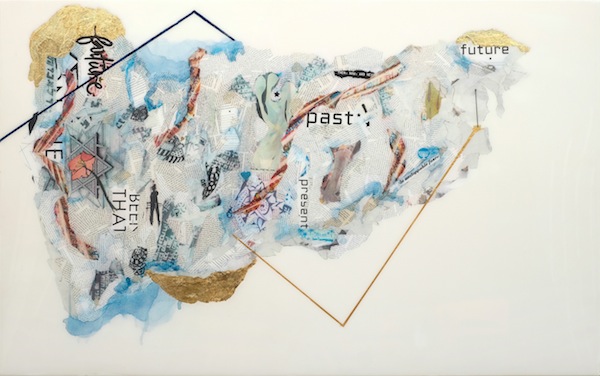
Stacy Lederman’s “past present future” is one of the works she will be sharing at the Eastside Culture Crawl this month.

Despite the pandemic, the Eastside Culture Crawl is not only back this year, but it’s offering “an expanded celebration of the creative resilience of the Eastside Arts District’s visual arts community.” The annual free event will take place over two weekends, Nov. 12-15 and Nov. 19-22, with the opportunity to view the artwork online, as well as schedule an appointment to join a limited in-person visit to the studios of your choice.

Participating artists in the Crawl include many Jewish community members, such as Miriam Aroeste, Suzy Birstein, Olga Campbell, Lori Goldberg, Lynna Goldhar Smith, Karly Leipsic, Stacy Lederman, Shevy Levy, Rebekah McGurran (Hive Printing), Lauren Morris, Ideet Sharon and Zohar. The Jewish Independent has featured several of these artists over the years. Lederman is a first-time Crawl participant.

“I was born in Vancouver and grew up in Tsawwassen. I have lived in Vancouver since I was 17 and also spent one year in San Diego,” Lederman told the Independent by way of introduction. “Obviously, things are different now with travel, but I used to spend a lot of time in New York and spent extended periods of time visiting in the summers. Exploring and being able to immerse myself in such a vibrant, energetic city was what led me to my career in art.”

Lederman has a background in corporate sales and fashion. She said she stopped working outside the home when her children were born.

“I started art lessons after a summer in New York, with the intention of having a hobby for myself and trying something completely new,” she said. “My ‘ah-ha’ moment came slowly, after a few years of learning, when I realized that friends were asking where I bought the art in my home. I would say, ‘Oh, I made that. You can have it if you like.’ After a few times, I realized that I could do this as a career, as people seemed to like my work.

“My first meeting with a gallery, I was offered to do a show and I thought that was amazing and unexpected, so let’s see where this goes. I am so grateful the show was a success and, with this, my full-time art career began. Although I had been involved in creative industries before, such as fashion, starting art lessons in 2014 was my first time giving it a try. I feel so lucky to be able to do what I love and feel like it came to me organically because it was really what I was meant to pursue.”

photo - Stacy Lederman
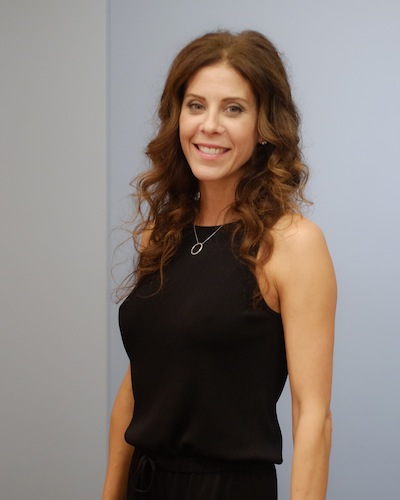
Stacy Lederman (photo from Eastside Culture Crawl)

Lederman has had several solo shows and exhibits since. She works in mixed media, which, she said, allows her “to be creative without expectation of perfection.

“I wouldn’t work well as a literal painter, as I would get lost in the perfection and most likely never finish a piece,” she explained. “Mixed media allows me to feel confident as an artist and make pieces that reflect a moment or feeling. Sometimes, it’s a lyric in a song, or a bit of graffiti, or an image I see on the street or in a magazine that inspires me to create. Blending different mediums allows me to use my inspiration when it comes and evolve the piece organically instead of worrying about the outcome. I can draw on all areas of creativity, from photography, painting, texture, abstract and collage, to create works that are meaningful and tell a story or spark a conversation. Also, my brain is always firing and so different mediums allow me to use different techniques, so I can always find a way to create and grow as a mostly self-taught artist.”

As for her interest in urban settings, she said she often features them in her work, “because, generally, big cities feed my soul. I love to be in nature and have calm moments, but there is something about the vibrancy of a big city, the potential of excitement, and taking a moment to slow down within the chaos and see all the unexpected and overlooked beauty. This environment fuels my creative spirit.”

And her creativity extends to the naming of her works, which doesn’t always seem to match up with what is depicted.

“The names of my pieces either reflect the meaning behind how the idea for the piece came to me, or a detail within it, if I am doing a series and just letting it flow naturally,” she said. “Sometimes, a work of mine comes from a moment or specific image and so then I will then choose a name that reflects the inspiration. Other times, I will get lost in the process of a series and a certain detail will catch my eye and start to dictate the direction of the piece – in that case, I would use the detail, or a representation of the details, as the name. Occasionally, there is a meaning within the numbers and/or letters I use that appear random but they are always intentional. It isn’t often but, occasionally, I will use the deeper meaning that isn’t obvious within the piece and I explain that to the person who purchases it.”

Lederman both sells her work and donates it. With her art, she has supported such causes as Arts Umbrella Splash, Zajac Ranch, Music Heals, Face of Today and York House School.

“Although I was not raised with the idea of tikkun olam, it has always been important to me to give back and I became very involved and aware of the importance of philanthropic endeavours in university,” she said. “There are so many ways to contribute to the greater good, either with time, money or donations. I am happy to help in whatever way I can and love helping to raise funds for such important and necessary causes. Art can bring joy in many ways – being able to give back to the community is something I am grateful to be able to contribute to and brings me joy as well.”

While she may not have been raised with the concept of tikkun olam, Lederman said, “Jewish culture definitely plays a role in my family’s life. We celebrate the Jewish holidays and have been involved with the community here in Vancouver in many different ways over the years. Two years ago, my children and I traveled to Israel for the first time. It was an incredible experience and I was so inspired in both Jerusalem and Tel Aviv that I created a collection based on the experience, energy and imagery from these cities. I felt that Israel was like no other place I have ever visited and the combination of cultures and raw energy inspired me to want to capture the feeling of the country.”

During the Eastside Culture Crawl, Lederman’s studio – Eastside Atelier Building, 14-1310 William St. – will be open for viewing, both virtually and in-person.

“This year has had its share of challenges for us all,” she said, “and I am thrilled to be able to share what I love with local art lovers.”

To see Lederman’s latest collections or schedule a private appointment with her, check out stacylederman.com. For the full schedule and to register for the Crawl, visit culturecrawl.ca. There is also a “sneak peak” of Crawl activities being offered virtually Nov. 2–9, which features a selection of workshops, demonstrations and talks, as well as the annual Moving Art exhibition.

COVID stories and moments

(“Skewed Priorities,” photo by Bob Prosser)

COVID-19 has upended all of our lives in multiple ways. More people work from home. Self-isolation has become customary. Masks are everywhere. The anxiety and fear of infection have spread as widely as the virus itself. To reflect these and other changes, the Sidney and Gertrude Zack Gallery invited Jewish community members – not professional artists but lay people – to share their experiences, thoughts and emotions in both visual and oral formats. The results can be found in the gallery’s current show, What We See: Stories & Moments from the COVID-19 Pandemic.

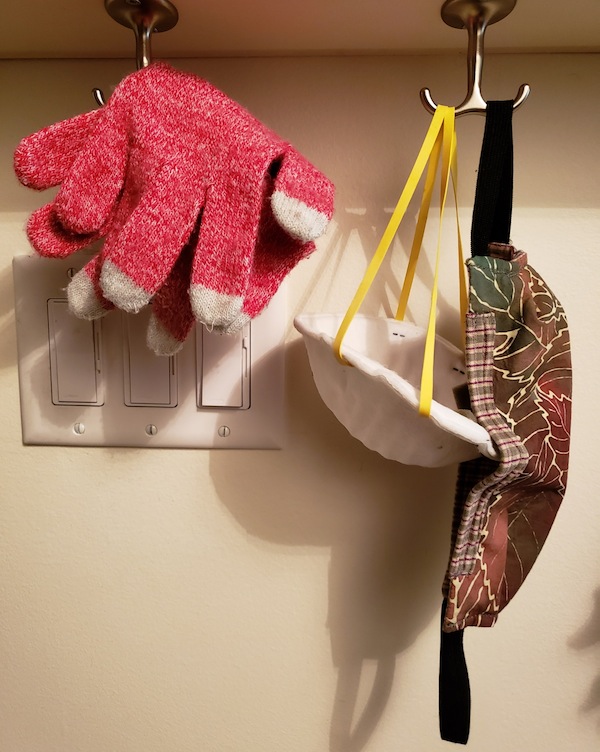
photo - “Gloves and Masks” by Doris Fiedrich
“Gloves and Masks,” photo by Doris Fiedrich.

The exhibit, which opened Sept. 10, consists of 15 entries. Each entry, submitted by one person, includes a few photos depicting that person’s new reality and a short essay, in which the participant wrote what has touched them most profoundly. As the deadline for the submissions was early July, everything in the show is about the first few months of the pandemic, before we all got more used to it and the new rules of social interaction became the norm.

Participant Sandra Collet presents her impressions through a poem on the meaning of the current crisis: “… A time of loneliness / A time of LIFE … A time of sadness / A time of hope.” Its last line, “Together apart,” encapsulates one of the most significant changes wrought by the pandemic.

Bob Prosser has written about his “ordinary experiences” and contemplates the days ahead: “… my wife sewed masks, we’re growing herbs and vegetables, we have learned to bake bread.… I’m hopeful but pessimistic about the post-COVID future.” One of the most memorable photographs of the whole show is his: the stockpile of toilet paper in his house.

photo - “Owl” by Evan Groberman
“Owl,” photo by Evan Groberman.

For Derry Lubell, the hardest aspect of social distancing is her inability to be with her family, to interact with her grandchildren. Her short essay is almost a lament. She writes, “… one afternoon, I went to their house and stood on the sidewalk. They all came out onto their front porch.… I took these shots of our separation.”

Micah Groberman encountered a different challenge. Before the pandemic, his business was focused on tourism and, like most every other business connected to tourism, it fizzled out due to the global travel and gathering bans. He writes, “… before COVID, I would walk my sons – Evan, 8, and Jonas, 5 – to school and then begin my workday, but suddenly, I became my boys’ teacher.” He admits that he is not too good at math, so he decided to teach his sons about what he knew, instead: photography and nature. His older son’s photographs of wild birds, taken under Groberman’s tutelage and included in the show, prove the father’s talent for teaching. The images are outstanding.

Paul Steinbok’s photos capture simple, everyday images. In his essay, he expresses sympathy and compassion for those who have suffered from COVID. His own feelings have become more acute, more attuned to the life surrounding him. “This year,” he writes, “I have observed more closely and photographed the ever-changing colours and textures of spring. In addition, I have photographed some situations that have resulted from the COVID restrictions, such as messages of hope, COVID-style birthday parties and exercise classes.”

Tybie Lipetz, the mother of a 4-year-old daughter, writes about the disappointments young children have faced, the school closures and birthday party cancellations. “Life was turned upside down for the kids,” she notes.

photo - “Dog Scarlett” by Fran Goldberg
“Dog Scarlett,” photo by Fran Goldberg.

Despite the drawbacks and dangers of COVID, many entries emphasize the authors’ hope and joy. For example, Fran Goldberg, who belongs to the especially vulnerable age group of 70-plus, has found positivity from her family and her dog. She and her children stay in touch by phone daily. “Instead of talking about what I couldn’t do, we started to focus on what I could,” she writes. “For one thing, I could Zoom with my family.… I have a dog.… She is 13 years old and, on our walks, she still takes the time to ‘smell the roses.’ She and my family have taught me to slow down and appreciate the beauty I see around me.”

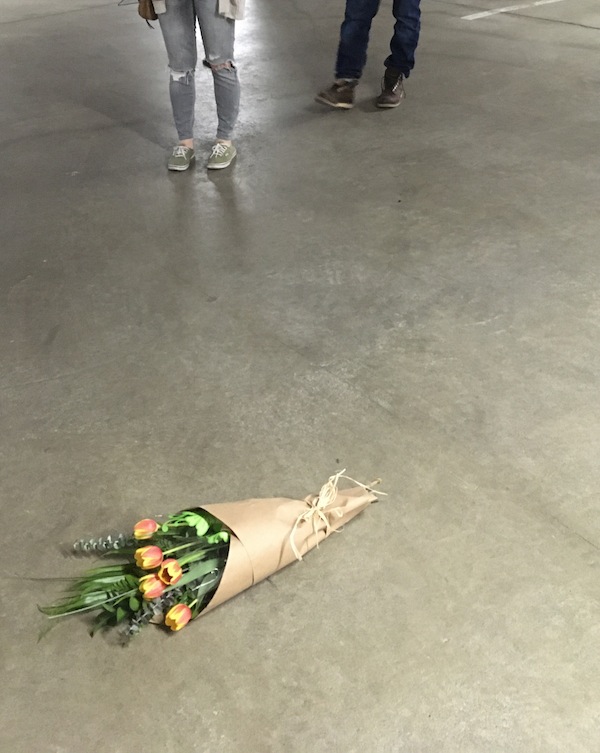
photo - “Bouquet” by Kathy Bilinsky
“Bouquet,” photo by Kathy Bilinsky.

Kathy Bilinsky also recognizes the beauty around her, however unexpected, and has captured it with her camera. In her essay, she mentions walking around Granville Island, which she did countless times before the pandemic, and notes how, at the pandemic’s onset, everything looked different, abandoned: “… no vendors, no shoppers, no tourists. It felt surreal…. So many doors that we can’t enter, nor do we want to.”

In her photos of the closed doors of Granville Island, the familiar noisy streets are almost unrecognizable. Who had ever seen those doors in broad daylight without a crowd in front of them?

Another of Bilinsky’s photographs is a bouquet on the asphalt, a gift from her children on Mother’s Day: “… flowers received ‘socially distanced,’ awkwardly tossed on the parking lot floor.… We all just stood and stared at them.”

The 15 participants in this unique show offer stories and moments ranging from eerie to prosaic, from heartwarming to poignant, all contributing to this combined slice of memory of the first few months of the pandemic in Vancouver.

What We See: Stories & Moments from the COVID-19 Pandemic runs until Nov. 10. You can visit the Zack Gallery by appointment or view the show’s digital book at jccgv.com/art-and-culture/gallery.

Olga Livshin is a Vancouver freelance writer. She can be reached at olgagodim@gmail.com.

Childbearing choice

Michael Scholar Jr. directs Lungs, which is at Studio 16 Nov. 13-22. (photo from Mitch and Murray Productions)

If you’ve not been to the theatre in many months, consider treating yourself to a COVID-19-safe performance of Lungs, opening at Studio 16 in Vancouver Nov. 13, and running to Nov. 22. Michael Scholar Jr. is the Jewish director of the play, which stars real-life married couple Aaron Craven and his wife, Kate Craven, who is also a member of the Jewish community.

Audience numbers will be limited to 25 in this two-actor performance, in which the couple discusses whether or not they should have a child. The discussion takes place over many years and the debate is over whether childbearing is the morally correct choice in a world brimming with overpopulation, hatred, racism and climate change.

“The ideas and issues brought up in this piece really resonate right now in the pandemic, with regards to questions like, Are we taking care of the planet, our neighbours and ourselves?” Scholar told the Independent. “This really resonates with us as artists and, to approach this during the pandemic, seems really timely.”

Lungs was written by Duncan McMillan, a British playwright, and debuted in 2011. Aaron Craven, the co-producer and owner of the Vancouver theatre and film production company Mitch and Murray Productions, determined a two-actor play starring a husband and wife would satisfy COVID-19 safety protocols. With small audiences and barriers between the actors and audience, the show will go on.

Scholar notes that Lungs is a much-loved play to mount not just because of its relevant subject matter, but also because of its production simplicity. “The author’s notes say there’s not to be any costume changes, furniture or set pieces, so 60 scenes happen without any indication as to where and when they are,” he said. “They keep jumping forward in time and it’s up to the audience to figure out where and when they are taking place. So, theatrically, it’s a relatively simple, low-fi production.”

While there’s no overtly Jewish content, Scholar believes that to be a Jew is to wrestle with G-d and, at the heart of this play, is a wrestling match about childbearing in a morally tenuous moment in time.

For ticketing information, visit mitchandmurrayproductions.com.

Lauren Kramer, an award-winning writer and editor, lives in Richmond. To read her work online, visit laurenkramer.net.

Arts Club stage opens

Among the theatre performances around town cautiously returning to live venues is the Arts Club’s production of Buffoon, a one-man play being presented at the Granville Island Stage until Dec. 6, and featuring the contributions of two members of the Jewish community, Amir Ofek and Itai Erdal.

Buffoon is the second of three works being put on by the Arts Club this fall. The play has two different actors playing the lead in separate shows at different times, and audience size in the theatre, which can seat 400 people, is limited to a maximum of 50.

“The fall theatre trio will be the first time for audiences to see fully staged and designed shows at the Arts Club since March,” remarked Ofek, the play’s set designer, when he spoke to the Independent before the opening of the play’s run Oct. 22. “Buffoon will be a real visual feast for the audience. Seating arrangements were planned. Actors can only get so close to the audience.

“The set, lighting, costume and sound design surrounding the sole performer will take the audience on a ride into the magical world of circus,” he added.

On working in the time of COVID-19, Ofek mused, “As a designer, we work at a personal level and often have animated meetings. Now, all the conversations had to be done over the phone or, in the case of a socially distanced meeting with director Lois Anderson, in a schoolyard.”

Erdal, the lighting designer, expressed his excitement at being involved with this production, while pointing out that there are unique demands posed during the pandemic. “I am used to coming and going from the theatre. We have to be very careful now. We have to wear masks and only so many people are allowed in at a given time. Working with these safety precautions during the pandemic is a challenge. Having to do it twice with two casts of one is also a challenge,” he told the Independent.

Indo-Canadian playwright Anosh Irani’s Buffoon tells the story of Felix. Born to a circus family who prefer trapezing to parenting, he quickly learns to turn life’s hard knocks into comedy. His longing for family and home is piqued at the tender age of 7, when he falls for an older woman, aged 8 – an event that inspires his journey to becoming a true buffoon.

The show is one part of a full season for both artists. Ofek is also working on Francis Poulenc’s La Voix Humaine for Vancouver Opera. That production had its digital première on Oct. 24.

“I am really happy to be busy now, at a time when theatre and live performance struggle to exist. I hope it is not a farewell burst of fireworks that signals the end of our time,” Ofek said.

Erdal, meanwhile, has recently designed two shows, B for Rumble Theatre and This Crazy Show for Company Vision Selective at the Queer Arts Festival, and is designing the Nov. 12-22 run of The Amaryllis for the Firehall Arts Centre. He has a photo exhibit at Luppolo Brewing, is writing a play, Check Point, for his company, Elbow Theatre, and is teaching an online course for the Musical Stage Company in Toronto.

Ofek and Erdal have collaborated in the past – on Florian Zeller’s The Father, at the Vancity Culture Lab in 2019, and on Joan MacLeod’s The Valley, in 2016 at the Arts Club.

The Arts Club stresses that the performance and rehearsal models for its fall trio of presentations were designed to be as safe as possible for artists, staff and audience members. All shows are being staged in adherence to safety guidelines established by the B.C. government, including the aforementioned cap of 50 patrons per show, staggered admission times and a mandatory mask policy (with the exception of patrons with respiratory or other health concerns). Each show has two rotating casts and crews, who do seven performances each week and rehearse in separate halls.

“Smaller, more intimate shows allow us to be nimbler than we would be with larger productions,” explained Peter Cathie White, the executive director of Arts Club. “This ‘bubble method’ of alternating casts and crews is a brand-new way of producing theatre for the Arts Club, and we hope it will become a model for performances to come.”

Other shows in the Arts Club fall lineup include No Child, to Nov. 8, about an underfunded high school in the Bronx; and the holiday comedy The Twelve Dates of Christmas, running Nov. 19-Jan. 3.

Besides the in-theatre experience, patrons have the option of purchasing tickets to a digital recording of each of the three productions, which is available to view for a limited time.

For more information and to purchase tickets, visit artsclub.com.

Sam Margolis has written for the Globe and Mail, the National Post, UPI and MSNBC.

Need more women leaders

Dr. Patricia Daly (photo from vch.ca)

Dr. Patricia Daly, the chief medical officer for Vancouver Coastal Health, provided an illuminating but discouraging perspective on the status of women in leadership positions in medicine during a National Council of Jewish Women of Canada webinar Oct. 14.

A familiar media presence in Metro Vancouver since the COVID-19 pandemic hit earlier in the year, Daly touched upon the history of women in medicine in Canada and their underrepresentation at board tables and in positions of authority.

Daly, who is also a clinical professor at the University of British Columbia’s School of Population and Public Health, pointed out that, at the time she graduated from medical school in the mid-1980s, one in three students were women. “I am at the stage in my career where physicians would traditionally be in leadership positions,” she said. “Yet, when I look around the tables where I sit, I don’t see one-third of those leaders as women, and I don’t see leadership reflecting the current reality that most students are now women.”

By 1995, there were more women entering medical school in Canada than men. By 2018, 63% of the student body nationwide was female. Nevertheless, only two of 17 Canadian medical school deans were women in that year and the Canadian Medical Association board was comprised of 20 men and six women.

Some of the theories put forward as to why there is a lopsided domination by men in positions of leadership include “unconscious biases” against women, family demands and a confidence gap between the genders, said Daly.

In the Vancouver Coastal Health region, just over 40% of doctors are women, reflective of the national average. Still, she said, fewer than 20% of all VCH leadership roles are filled by women, and that percentage decreases at more senior levels.

Recommendations of how to address this problem encompass leadership training, mentorship opportunities for young female employees and the creation of structures that would incorporate, among other things, the provision of childcare.

“We need to think about how we can support women (and men) who want a work-life balance so that they can advance in their careers and they can achieve leadership roles,” she maintained.

Daly then went into a wide-ranging overview of public health, a field with the mandate of improving the health of entire populations – through prevention of disease and injury, promotion of good health, and protection from potential harms.

Among public health’s many achievements in the past century are vaccinations, family planning, motor vehicle safety, healthier foods, control of infectious diseases, fluoridation of drinking water, safer workplaces and recognition of the hazards of smoking. Recent areas of focus in public health have been climate change and the prevention of substance abuse.

According to information provided by Daly, the average lifespan of Canadians has increased by 30 years since the 1900s, much of which can be attributed to advances in public health.

She added, “A lot of the work we do is centred on maternal-child health. In order to maximize someone’s health potential, we need to start in early childhood; in fact, in utero. Brain development is most important in the first two to five years of life. About 80% of our resources, including public health nurses, are focused on early childhood, supporting women to have healthy pregnancies, to help vulnerable mothers and for childhood immunizations.”

Public health also works on what is known as the “social determinants” of health, said Daly. These include levels of education and income, social connections and risk behaviours, i.e., diet, exercise and smoking.

“People living in poverty are at much greater risk of illness and disease, as well as injuries, despite universal healthcare,” she said. “The goal of public health is to reduce these disparities and bring the system towards one of health equity.”

The third part of Daly’s lecture was about public health and how it handles pandemics. In 1918, Vancouver’s chief medical officer, Dr. Fred Underhill, had to deal with the deadly outbreak of the Spanish flu. (The photos presented at the lecture from at that time showed an exclusively male and Caucasian medical leadership.)

COVID-19 has been Daly’s primary focus for the past eight months. As is broadly known, public health policies during the current pandemic have focused on the need to isolate cases and contacts for 14 days until a person is non-infectious; restrict travel; limit public gatherings; encourage people to physically distance; and have physicians provide virtual care when possible.

“Having access to tests is an important public health measure,” said Daly. “The single most important intervention is to isolate people who test positive and to identify their close contacts and quarantine them. We are fortunate that COVID-19 has a long incubation period. If we can identify cases, then, even if they get sick, they are not going to pass the virus onto others.”

She warned, “Despite the relatively draconian measures taken, we are not going to stop this virus without a vaccine.”

Daly also brought up some of the unintended consequences of the pandemic response, such as the growing number of overdose deaths, increased social isolation in long-term care facilities, suspended elective surgeries and the effects on the broader economy.

She concluded, “The good news is that vaccine development is very promising.”

Sam Margolis has written for the Globe and Mail, the National Post, UPI and MSNBC.