Skip to content

  • Home
  • Subscribe / donate
  • Events calendar
  • News
    • Local
    • National
    • Israel
    • World
    • עניין בחדשות
      A roundup of news in Canada and further afield, in Hebrew.
  • Opinion
    • From the JI
    • Op-Ed
  • Arts & Culture
    • Performing Arts
    • Music
    • Books
    • Visual Arts
    • TV & Film
  • Life
    • Celebrating the Holidays
    • Travel
    • The Daily Snooze
      Cartoons by Jacob Samuel
    • Mystery Photo
      Help the JI and JMABC fill in the gaps in our archives.
  • Community Links
    • Organizations, Etc.
    • Other News Sources & Blogs
    • Business Directory
  • FAQ
  • JI Chai Celebration
  • JI@88! video
image - Weizmann Canada Physics Tournament 2025
image - The CJN - Visit Us Banner - 300x600 - 101625

Recent Posts

  • היהירות היא אחד האויבים הגדולים ביותר של ישראל
  • Vrba monument is unveiled
  • Music to build bridges
  • A better future possible
  • Anne Frank exhibit on now
  • Human rights in sport
  • Telling the story of an icon
  • Crawl bigger than ever
  • JCC Maccabi in Toronto
  • A way to meet fellow Jews
  • Time to include
  • Add Jewish joy to the mix
  • Reminder of humanity’s light
  • From the archives … editorials
  • Year-round holiday recipes
  • מדוע עזבתי את ישראל ואינני חושב לחזור ארצה
  • OJC hosts Oct. 7 memorial
  • A journey beyond self
  • Antisemitism a problem
  • Young man is missed
  • Orr action sparks complaint
  • Prison sentence for hate
  • Etgar Keret comes to Vancouver
  • New fall lecture series
  • Series explores music
  • Doc on Zapiro screens Nov. 6
  • Joy of shared existence
  • Community milestones … October 2025
  • MAID vs Jewish values
  • Cheshvan a great month, too
  • Bull, bear or bubble?
  • From the archives … a coin, etc.
  • מדוע האנטישמיות הולכת וגואה בעולם
  • New bio gives Vrba his due
  • Joy brighter than ever
  • When approaches differ

Archives

Follow @JewishIndie

Tag: COVID-19

Sidewalk Seder

Sidewalk Seder

(photo by Avi Dolgin)

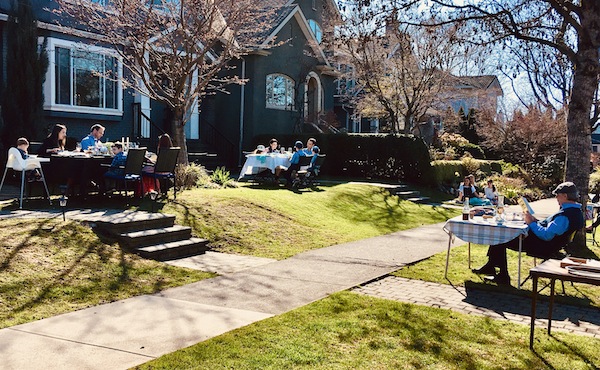
Families on 23rd Avenue in Vancouver found an innovative way to celebrate Passover. Each family brought their own meal and, while there was no sharing of dishes, everyone participated in reciting the blessings, reading from the Haggadah and singing together. The gathering was organized by Talia and Josh Bender, top left with their children, and Elana and Brian Jacobson, top right with their children.


Format ImagePosted on April 24, 2020April 24, 2020Author The Editorial BoardCategories Celebrating the HolidaysTags COVID-19, Passover

Thank you to frontline

There are many new routines in this unusual time. Social media feeds suggest baking has become the comforting go-to for many of us. Binge-watching shows and finally getting to the books we’ve been meaning to read is another. Cleaning those closets that were filled with mismatched sheets sets and nearly empty rolls of birthday wrapping paper was a long-overdue task.

But, at 7 p.m. each night now for a couple of weeks, another, less solitary routine has emerged. Metro Vancouverites – and people further afield – take a step outside, onto their balconies or into their driveways, and make like it’s New Year’s Eve. Clanging pots and pans, applauding, shouting cheers and generally making as much noise as possible for a minute, the behaviour is not merely burning off steam by a people holed up and stir crazy. It is a heartfelt act of solidarity and gratitude for the frontline healthcare workers, first responders and others whose responsibilities to protect the public require them to remain at their posts. It is also a way for us to say hello to our neighbours, and to receive reassurance that, while the streets and stores may be almost empty, humanity has not been wiped out, just relegated to our homes.

The nightly event was given steam by Rory Richards, a member of the Jewish community who understands the meaning of the power of one. Several years ago, at the height of the refugee crisis in the Mediterranean, she traveled to Greece and helped welcome those fleeing their homelands, while mobilizing support for the effort back home via social media. In this time of need, she saw what others were doing in the world to express themselves, while staying in quarantine, and brought the practice to her West End neighbourhood. And it has resonated with many – so many that the Vancouver Park Board has decided to change the firing time of Stanley Park’s Nine O’Clock Gun to 7 p.m. until the end of April.

The noisemaking trend is still relatively new, but already we hear of the emotional impact it is having on exhausted and anxious frontline workers. As is the solidarity at 7 p.m. nightly of their fellow emergency workers – fire trucks, police cars and ambulances driving the streets around their local hospitals, flashing their lights and sounding their sirens.

Mostly unsung are other frontline workers, those whose jobs, until this crisis, were not considered dangerous or irreplaceable: grocery store workers, cashiers, fruit and vegetable store operators, bakers, letter carriers, parcel delivery personnel, bank tellers, people maintaining the internet, bus drivers, garbage and recycling collectors, city workers who are making sure the traffic lights and other essential services remain operational, employment insurance office staff and other bureaucrats who are rushing to put aid programs into place. The list goes on. These people are continuing their work of keeping the world functioning at the level it must, without the luxury of sheltering in place.

In the Jewish community, agencies and individuals are stepping up. Jewish Family Services continues to deliver its vital programs, knowing that the physical, emotional and economic toll this crisis is taking is not yet at its peak. Jewish Federation of Greater Vancouver has launched a fund to help the community address the crisis, with specific emphasis on food security, housing support and subsidies to ensure that the economic impacts of the pandemic do not prevent individuals and families from participating to the greatest extent possible in Jewish communal activities. The Centre for Israel and Jewish Affairs has mobilized, creating a COVID-19 resource guide that is a clearinghouse for related information nationally and in each province. And organizations such as the Canadian Council for Reform Judaism and Reform Rabbis – which sent a letter to the federal government last week – are working to ensure that relief efforts centre on the most vulnerable, “including those who are homeless or housing insecure, migrants or refugees, living in underserved indigenous communities, being held in detention facilities or at risk of domestic violence.”

Locally and internationally, synagogues, day schools and community organizations have turned on a dime to use online platforms as an alternative meeting space for virtual services and gatherings. Some senior Sephardi rabbis in Israel are releasing opinions that would allow observant Jews to leave Zoom running for Passover seders, so that separated families can join together to celebrate our Festival of Freedom.

How many of us, three weeks ago, had heard of Zoom? An old long-distance telephone ad declared, “It’s the next best thing to being there,” which is true of this new technology, but we can’t deny that the shmoozing before and after (and during) services and events isn’t quite the same. Humans are likely to take for granted anything we receive almost as soon as we have it, so it is worth taking a moment to consider the incredible good fortune that allows us to have technology that we could barely dream about 30 years ago to keep us virtually together when we are, most of us, actually apart.

There’s no question that the emotional toll of our separateness will be keenly felt next week as the seders that, for our entire lifetimes, have meant the coming together of extended families and close friends, will be massively different than in the past. There will be a seat at the table for Eliyahu, but many others also will be there only virtually, and they will be missed.

When we participate in the 7 p.m. clangfest, or even if we just watch it from our homes, let’s consider the clapping, hollering and pan-banging as a testament to our admiration for medical and other frontline personnel, including the people who never imagined that they would be so crucial a part of maintaining our society’s functioning but who are, irreplaceably, ensuring that many of us are able to shelter in place in relative privilege and comfort.

Posted on April 3, 2020April 1, 2020Author The Editorial BoardCategories From the JITags coronavirus, COVID-19, frontline workers, gratitude

Emergency services available in community

The Jewish Federation of Greater Vancouver has released $400,000 to address the immediate needs of its local partner agencies over the next month. The funds will address needs in the key areas of food security, to increase the capacity of the food bank and other food distribution programs in our community; housing support, subsidies for community members unable to make their rent payments; seniors services, to help them stay safe, healthy and connected to community while they are self-isolating in their homes; tuition support so that families with children in Jewish day schools can keep their children enrolled; subsidies for Jewish programs, daycare, summer camps and part-time educational programs; and support so that Jewish supplementary schools can provide alternatives to classroom learning and maintain uninterrupted delivery of Judaic studies to the children and families they serve.

For more on Federation’s response to the COVID-19 crisis, as well as what other community organizations are doing at this time, visit jewishvancouver.com/covid-19-updates.

***

With the support of Jewish Federation, Jewish Family Services (JFS) has launched the JFS Community Care Hotline as an emergency response resource. It is available from 9 a.m.-9 p.m., seven days a week and staffed by JFS to provide emergency essential services. Priority services include meal or food bank grocery delivery; counseling/emotional support; and friendly phone “visiting.”

There are three ways to contact JFS for help: call 604-558-5719, email [email protected] or complete the form at jfsvancouver.ca/jfs-cares.

If you know anyone who needs to lean on JFS at this time, please share this information via your social media networks and other forms of communication. JFS also has a volunteer registration page, as many people have offered to help.


Posted on April 3, 2020April 1, 2020Author The Editorial BoardCategories LocalTags coronav, coronavirus, COVID-19, Jewish Federation, JFS
Kind Café offers vegan food

Kind Café offers vegan food

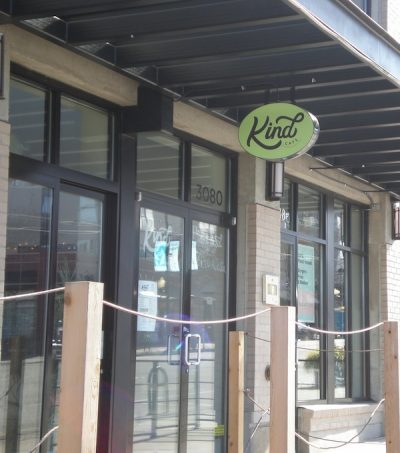
Samantha Emerman opened Kind Café last year. While closed during the COVID-19 pandemic, they are operating a pickup service twice a week. (photo by Olga Livshin)

Kind Café is a warm, airy space, a place for friends to meet and eat together. Or, at least it will be a welcoming meeting place again, after the coronavirus pandemic is over. In the meantime, the restaurant is offering takeout service only.

Jewish community member Samantha Emerman, with her father, Marvin Emerman, opened the café in August 2019. The main idea behind it was threefold: no meat, no dairy, no waste.

“I became a vegan in 2013. I went to a nutritionist college here, in Vancouver. I learned where our meat and milk come from, so I stopped eating them,” Samantha Emerman told the Independent in a recent interview.

Initially, she opened an online business, ran some seminars on healthy eating habits and offered nutrition coaching. She supplemented her income by working at local restaurants and coffee shops.

“Do you know how much garbage Starbucks produces?” she said by way of but one of many possible examples. “In a busy location, they take out the garbage every hour. I wanted to create a space for people to enjoy their meals, while generating no garbage at all. It’s a much kinder way to feed people – kinder to the environment, to our planet.”

Emerman started doing research on what kind of restaurant she wanted. “There are other vegan restaurants in Vancouver. Being vegan has become trendy, but there is no other vegan café, except ours,” she said. “And no eating establishment in the city offers the ‘no waste’ policy, except ours.”

The next important decision was where to set up shop.

“I researched for a long time. We looked into downtown locations,” she said, “but most people in downtown rely heavily on their daily to-go coffee. We checked out the suburbs, like White Rock. In the end, we decided that the best location for our café would be Main Street, with its diverse people.”

And, last August, Kind Café opened its doors on Main Street.

“We offer a vegan menu and we don’t generate any garbage. We don’t even have a garbage can inside,” Emerman said proudly. “We don’t have any plastic or any single-use items here. Everything is reusable.”

The zero-waste initiative extends to all areas of eating, including the takeout aspect of the business. The café doesn’t have paper coffee cups or foam containers for to-go orders.

Before the coronavirus hit, Emerman said, “If people want[ed] takeout, they should come in with their own containers. It took awhile for the people to get used to that idea, but now, most of our customers who want a takeout come with their own containers.”

She called this policy BYOC (bring your own container). “We are passionate about BYOC,” she said. “When you dine inside, we have you covered with metal cutlery, ceramic plates, mugs and glasses. Otherwise, instead of the disposable plastic utensils, paper cups and single-use food containers that are polluting the environment, we kindly ask our customers to bring their own.”

Even with the COVID-19 restrictions, Emerman isn’t sacrificing her environmental beliefs. Instead, she is extending the practice of “renting” containers, which was in place before the virus. The café is temporarily suspending its BYOC policy and is now only offering customers food served in new glass containers for which there is a monetary deposit that will be returned to the customers at a later date, when they return the container so that it can be washed and reused.

“We’re trying to shift the focus away from the single-use mindset altogether,” she said. “Why use any product only once and throw it away? We are here to shake up the food industry, change people’s behaviour pattern, and to make BYOC the norm.”

The demographics of Kind Café are as diverse as the Main Street population. “About 60% of our customers are regulars who work or live in the area,” Emerman said. “Most of them are between 14 and 40, professionals and students. The rest are walk-ins. All kinds of people, really. And people are still discovering us.”

photo - Kind Café opened its doors on Main Street last August
Kind Café opened its doors on Main Street last August. (photo by Olga Livshin)

As a way for people to discover the new café, Emerman has been offering the space for events and seminars on healthy eating. One of the events that fit the café’s no-waste strategy was a clothing swap. “It’s the same principle,” she said. “You don’t want this sweater, but someone else might want it. No throwing away anything.”

The no-waste guidelines apply to the restaurant’s suppliers as well.

“We don’t accept the products in plastic bags. We have our own large containers for the supplies we use,” said Emerman. “The only bags we do accept are paper and reusable. But it took some time to find suppliers who share our beliefs. That’s why we have 11 suppliers for different products, not two or three, like Starbucks.”

The café is a family business. “My father is my partner and mentor,” Emerman said. “He taught me a lot. Most of the recipes are our family recipes or my own, although now that we hired a chef, he contributes, too. My sister is the office admin. My mom does everything that needs to be done. We are a very close family.”

Of course, they have some hired staff, all of whom happen to be, like the Emermans, vegan. “It is not a requirement for working here,” she stressed, “but our staff want to work for us. There are not too many vegan places in the city.”

The majority of work falls to Emerman herself. “Owning this café is the hardest thing I’ve ever done. I do everything. I bake. I manage front and back. I look for suppliers. I do advertising on social media – Facebook and Instagram. It’s a 24/7 job and the most rewarding I’ve ever done.”

To order takeout and for more information on the café, visit kindcafe.ca. The website notes, “We know that getting your hands on certain groceries, specifically vegan food, during this time can be challenging. Although we do not currently have a delivery service, we will be open for a small window, of three hours, twice a week, for you to come pick up orders!”

They request that customers preorder by Friday, 10 a.m., for Saturday pickup and Monday, 10 a.m., for Tuesday pickup. There is an online form to fill out, and an invoice will be provided once your order is confirmed.

Olga Livshin is a Vancouver freelance writer. She can be reached at [email protected].

Format ImagePosted on April 3, 2020April 1, 2020Author Olga LivshinCategories LocalTags coronavirus, COVID-19, Kind Cafe, restaurants, Samantha Emerman, takeout, vegan
A Jewish guide to streaming

A Jewish guide to streaming

Mike Wallace is Here is one of the smartest and best documentaries of 2019. (photo from Cinando)

In the streaming universe, as with all entertainment, there’s the stuff that everyone watches and talks about. But that’s just the tip of a vast catalogue, a lot of it quite good, that doesn’t get the hype and the buzz. Here’s an eclectic list of accessible Jewish-themed movies that received some hosannas on their initial release. The more obscure (and great) Jewish films of recent years will be on a future list, since, alas, it appears we’ll have ample time to watch more after catching up with these.

The Zigzag Kid (j-flix): The Toronto Jewish Film Foundation has launched a free streaming platform, j-flix, with dozens of terrific recent fiction and documentary features and shorts. You could get lost there for weeks. I suggest you start with this irresistible, action-packed, family-friendly adventure about a precocious Dutch boy, adapted in 2011 by a Belgian director from Israeli author David Grossman’s novel.

The Women’s Balcony (Chai Flicks): Menemsha Films, the venerable U.S. distributor of Jewish-themed films from around the world, offers a free 30-day trial of their streaming platform. (A subscription will then run you $5.99 US a month.) Israeli director Emil Ben-Shimon and screenwriter Shlomit Nehama set their warm and wonderful romp in a small Orthodox congregation dislocated by structural damage to the shul.

Tel Aviv on Fire (Amazon Prime): Sameh Zoabi’s clever comedy about a Palestinian soap-opera writer trying to navigate the demands of both his bosses and an Israeli checkpoint commander will lift your spirits without insulting your IQ. Make a batch of hummus first.

1945 (Amazon Prime): This extraordinary black-and-white Hungarian film parlays the postwar arrival of two exhausted Jews at a small village into an exposé of guilt, betrayal, corruption and murder. One of the most acclaimed European films of 2017, 1945 is a gripping and haunting reckoning with dark history.

Mike Wallace is Here (Hulu): One of the smartest and best documentaries of 2019 examines, entirely through archival television footage, the ambitious journalist who made 60 Minutes essential viewing. Not a Jewish film, oddly enough, but a riveting one.

Disobedience (Amazon Prime): Sebastian Lelio’s taut, understated 2017 drama, adapted from Rebecca Lenkiewicz’s novel, is a remarkably nonjudgmental story that follows a volatile, adrift woman’s (Rachel Weisz) return to London after the death of her estranged father, an Orthodox rabbi. Community, identity, responsibility, sexuality – everything is on the table.

Prosecuting Evil: The Extraordinary World of Ben Ferencz (Netflix): The last surviving U.S. attorney from the Nuremberg trials has an impeccable memory, a spotless moral compass and enormous gravitas. If your fortitude is at a low ebb, Ben Ferencz will give you the strength to persevere.

A Serious Man (Netflix): The Coen Brothers’ most personal and most Jewish film, filmed in and around their childhood stomping grounds of Minneapolis-St. Paul, is a painfully hilarious moral fable guaranteed to provoke a cross-generational dinner table conversation. One politically incorrect question that this devious 2009 movie poses: Are Jews our own worst enemies?

Michael Fox is a writer and film critic living in San Francisco.

Format ImagePosted on April 3, 2020April 2, 2020Author Michael FoxCategories TV & FilmTags COVID-19, documentaries, Judaism, movies, streaming services
A virtual community

A virtual community

With COVID-19, we now must connect online.

As the world continues to grapple with the coronavirus (COVID-19) pandemic, Jewish organizations across Metro Vancouver are finding new ways to connect with the public.

Last week, schools and most businesses and places of worship closed their doors to support the provincial government’s directives for new social-distancing policies. For everyone, this change has required the adoption of different ways to address daily needs, like shopping, study and religious practice. It has put increased demand on organizations and businesses to think out of the box when it comes to staying in touch with and supporting their membership, clients and connections. Here’s some of what the community is doing.

New lesson plans

Schools have shifted their classes to online attendance and are creating lesson plans that allow students to study virtually and independently. Some schools, like Richmond Jewish Day School, have sent out private communications to parents, outlining class schedules and continued services. Others are using their websites or other online services to keep families apprised and facilitate the learning curve that students, parents and teachers will inevitably face using the technology.

Students at Vancouver Talmud Torah will have independent study periods and be able to use social media to connect with their teachers and peers. The school is using Google Classroom for study plans and assignments and its website notes that students who are experiencing problems, need to discuss study plans or want to connect with other class members will be able to do so during the teacher’s virtual office hour each day. For families that don’t have a computer available, the school says students will be able to sign out a laptop to use at home (one laptop per family, as inventory is limited).

King David High School’s new multimedia program launched a week ago, and it uses Zoom video services, Moodle and Google Classroom to connect with at-home students. According to KDHS’s website, the school is doing its best to keep schedules and study periods the same as they were prior to the shutdown. It is using classes prior to Passover break (April 3) to test and refine the online structure.

Shalhevet Girls High School is also working hard to keep schedules standardized and reflective of the lesson plans it offers, and students can still connect with one another during the “lunch and shmooze” hour.

Take-out and online

On March 21, the City of Vancouver ordered all in-house restaurant service to cease. Restaurants that provide take-out and delivery services have been permitted to remain open.

Many of Vancouver’s kosher restaurants already provide take-out or delivery services to the public. Omnitsky Kosher, Nava Creative Kosher Cuisine and Maple Grill have enhanced their takeaway and catering services. Some provide service through the DoorDash online app or Uber. Most are urging customers to order with sufficient advance notice.

A staff person at Maple Grill said that ordering ahead is necessary for very large orders, “but we always have take-out between 4 and 8 p.m. for smaller orders.” Patrons should keep in mind that seating – even while waiting for orders – will be closed in all restaurants during this time.

Nava, which has a take-out restaurant at the Jewish Community Centre of Greater, has requested 24-to-48-hour notice on all orders. According to Susie Siegel, although the JCCGV is currently closed, customers can pick up orders by calling or emailing their order ahead of time. Sabra Kosher Bakery also will be open for take-out and larger Passover orders.

Other restaurants that have relied largely on their in-house service have found it challenging to meet the requirements of the city’s precautionary ban. Café FortyOne has announced that it has “made the difficult decision to temporarily close to protect the health and safety of customers and staff.”

Restaurants – including non-kosher establishments like Market Meats – are also accepting orders for Passover and most have cut-off dates for orders. While many kosher restaurants are scheduled to close on April 8 for the week of Passover, customers may wish to call ahead to confirm deadlines for orders and take-out during the current shutdown.

Meanwhile, stores are also struggling. Buchan’s Kerrisdale Stationery on West 41st Avenue, which has a selection of Judaica, among many other items, is now offering delivery service. And Olive and Wild, on Main Street, which offers a variety of Judaica, Passover items, art and home décor items, is transitioning its services to better serve customers who aren’t able to shop in-person.

Simon Zaidel, who co-owns Olive and Wild with his wife Bella, admitted that the COVID-19 alert hasn’t been easy. The owners have added an online store to their website and Zaidel said patrons can either pick up their orders, have them delivered or, for those outside the Lower Mainland, request delivery by Canada Post. He added that the store is currently providing a discount to offset any delivery costs.

Safeguarding the vulnerable

Jewish Family Services, like many organizations, is shifting its services to meet increased at-home demands. Kassidy Taylor, JFS marketing and communications manager, said the organization realizes that the current health concerns are financially and logistically difficult for people of all ages. Its Emergency Care Campaign allows families and individuals to reach out for help with food, deliveries and other social support.

“It is for anyone who needs a meal or grocery delivery, counseling, emotional support or just a friendly phone visit,” Taylor said. “We are trying to support as many people as possible.”

Taylor added that, for many seniors and other individuals, having to stay at home has cut them off from food banks and various resources that don’t deliver. “We are just trying to fill in the gaps as we can,” she said of JFS’s focus.

Individuals needing assistance can contact JFS through its website or by calling the agency’s hotline, 604-558-5719. As well, the emergency care program is in need of volunteers, and those wishing to donate are welcome to contact JFS as well. “There is a lot of need right now,” Taylor said.

On another front, healthcare facilities have been taking successive steps to address the impacts of the COVID-19 outbreak. On March 17, Vancouver Coastal Health announced the closure of all adult day centres, such as the L’Chaim Adult Care Centre at the JCCGV, in an effort to protect seniors and healthcare workers from the virus. Care workers are monitoring participants by phone to ensure that medications, food and support are coordinated as necessary through VCH case managers. More information is available by logging onto the Lower Mainland Adult Care Centre Association’s website and clicking on the appropriate care centre’s link.

As of March 17, Vancouver Coastal Health also restricted visitors to Louis Brier Home and Hospital, Weinberg Residence and other care homes to “compassionate visits” that meet specific limited guidelines for continued care and end-of-life support. VCH stresses the rules are a precautionary measure to keep patients and staff protected.

Most of the community’s organizations have instituted changes to address social distancing and other limitations brought about by the outbreak. Links to each one and an overview of temporary changes are accessible through the Jewish Federation of Greater Vancouver’s website.

Virtual davening

Few Jewish organizations have been as impacted by the call for social distancing than Vancouver’s religious institutions, which have been faced with myriad challenges. Restrictions on attendance (at press time, it was limited to 50 people) and other issues have forced synagogues to rethink how best to both continue regular religious services and provide social and educational support to their members, many of whom are seniors and required to stay at home. It’s also forced organizations across Metro Vancouver to change programs and services for Passover. Most religious institutions have already canceled or transitioned upcoming holiday celebrations to Zoom online services.

On March 21, rabbis from Vancouver Lower Mainland institutions issued a joint statement to congregants outlining the synagogues’ new guidelines for attendance. Many of the congregations have transitioned to online religious services via Zoom video to ensure that their members can stay connected, supported and engaged in religious life.

Congregations Schara Tzedeck, Beth Israel, Temple Sholom and others are providing daily and/or weekly minyanim online, along with classes and “meetings” throughout the day.

Most congregations are also working to fill the gap when it comes to much-needed social interactions for teens and younger members. Synagogues have found ways to both address concerns about halachah and ensure that members struggling with the impact of isolation are supported.

Both Schara Tzedeck and Beth Israel issued new cemetery guidelines earlier this week, calling on members and guests to adhere to practices that help safeguard both the participants and others who may be at risk from exposure to the virus. Cemetery facilities are closed to the general public. Burials are, in most cases, limited to family members, with some allowances to ensure that there will be enough attendees for a minyan so mourners can say Kaddish, and unveilings have been canceled to April 30 at least. Congregants and those interested should contact the synagogues in charge for more information on the revised guidelines.

Helping those in need

Many Jewish organizations are also finding ways to help those most vulnerable get financial aid if needed. The Hebrew Free Loan Association has announced that it will lend up to $2,000 to individuals or families impacted by loss of a job or other economic problems stemming from the coronavirus outbreak. Organizations, like Or Shalom, for example, are accepting donations within its congregation to help those struggling from illness or loss of income.

***

For the most comprehensive list of community resources and organizations, visit jewishvancouver.com/covid-19-updates.

Jan Lee’s articles and blog posts have been published in B’nai B’rith Magazine, Voices of Conservative and Masorti Judaism, Times of Israel, as well as a number of business, environmental and travel publications. Her blog can be found at multiculturaljew.polestarpassages.com.

Format ImagePosted on March 27, 2020March 26, 2020Author Jan LeeCategories LocalTags coronavirus, COVID-19, education, Judaica, Judaism, restaurants, synagogues, technology
Gymnast excels at her sport

Gymnast excels at her sport

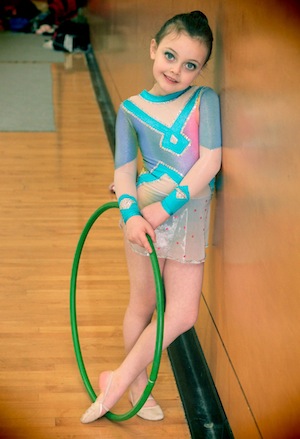
At the B.C. Winter Games in Fort St. John last month, Belle David received a silver medal for her ball routine and placed fourth all around. (photo from Danica David)

Local athlete Belle David started the year off with success after success after success in her chosen sport: rhythmic gymnastics.

The 10-year-old gymnast competes provincially at level 3B (ages 9-11). At the Queen of Hearts invitational competition in Vernon Jan. 24-26, she received an all around first place, a gold medal in the ball routine, a silver medal in the free routine and a bronze in rope. At the Olympia Cup in Burnaby Feb. 7-9, she received a bronze medal in rope, as well as a special award for Miss Dance Jr. And, at the B.C. Winter Games in Fort St. John Feb. 20-23, she received a silver medal for her ball routine and placed fourth all around.

“The most fun part of rhythmic gymnastics is the competitions,” Belle told the Independent in a recent interview. “The most difficult part of rhythmic gymnastics is the long practices.”

Admitting that she gets a little nervous when she competes, she said, “but I have a lot of practise with competitions and that practise helps my nerves.”

Belle trains three times a week for four hours each time at rhythmic gymnastics and she also trains in ballet twice a week. “Altogether, I train for rhythmic gymnastics over 14 hours a week (including mandatory ballet) and, combined with my other sports, I do 25 hours a week.”

The restrictions that have been implemented by various levels of government to try and manage the spread of COVID-19 have brought changes in that regimen, however.

“Belle’s coach has set an individual stretch and strengthen program for each athlete,” Belle’s mother, Danica David, told the Independent. “The coach has sent a video, 26 minutes long, of basic training exercises she expects the athletes to follow, along with detailed plans for each gymnast. Belle is expected to film herself training and send in the film to the coach to check in daily.

“Mentally, Belle is processing the end of the season coming early. When there are still three competitions left, it’s disappointing, after all her hard work, but she will keep practising at home. She said, ‘I feel like there’s nothing to do and nowhere to go.’”

In Grade 4 at David Oppenheimer Elementary School, Belle said her favourite subject is art. Interviewed before the pandemic forced closures, she said, “I socialize at school and at practice because I don’t have time for friends outside of practice. I mostly do my homework early in the morning before school.”

photo - Belle David at her first rhythmic gymnastics competition, at age 6
Belle David at her first rhythmic gymnastics competition, at age 6. (photo from Danica David)

Belle started dance classes at the Jewish Community Centre of Greater Vancouver when she was 4 years old and began taking rhythmic gymnastics classes when she was 5.

“I love sports,” she said. “I love baseball, dance, rikudei ’am [folk dances], swimming, skating and artistic gymnastics.”

She also makes time for community and cultural activities.

“I celebrate all the Jewish holidays and I keep Jewish traditions,” she said. “Our family hosts holiday parties and I enjoy PJ Library events and books.”

After three years performing in Goh Ballet’s The Nutcracker, Belle said, “I took a break this year to really enjoy Chanukah with my ima, abba, grandma, brother and friends. When I danced in The Nutcracker, sometimes I performed in two shows a day during the run and I missed the Chanukah fun. This year, we did Chanukah bowling, skating, the party bus and menorah parade and, as always, we lit candles and opened presents each night of Chanukah.”

Belle said she wears a red-string kabbalah bracelet on her left wrist, including in competitions, that her mom blesses.

Family is important to Belle and one of her ambitions centres around her grandparents in Israel.

“I have a short-term goal to learn the apparatus hoop,” she said. “I have a long-term goal of making it to the Grand Prix Holon.

“The Grand Prix Holon takes place in my home city (Holon) in Israel,” she explained. “I would like to compete for Canada or Israel. It’s an international competition and it’s across the street from my savta and saba’s apartment. All my family could come and see me compete. This is my dream.”

Belle’s family moved from Israel to Vancouver almost seven years ago, said her mother.

“I was born in Canada and her dad was born in Israel – we met in India,” David said. “Belle was born in Israel and she has a brother born in Canada, named Omri, he is 6 years old. Their father, Ofir, has never been able to move permanently to Canada because of the nature of his work but he visits often. We live in a multigenerational household in Vancouver with my mother, who was a former competitive athlete. She finds great joy in supporting her grandchildren to pursue athletics – it’s a family passion that skipped a generation. Belle and Omri have seven cousins in Israel and a large extended family that they miss very much.”

In Israel, David said they didn’t have access to activities like they have here. “In our town,” she said, “private country clubs dominated and we had no access without costly memberships. When we came to Canada, Belle was interested in trying everything, sports, arts, activities of all kinds, and, through the JCC and local community centres, it was affordable.

“Belle’s grandmother really encouraged rhythmic gymnastics, as she was involved in the sport herself as a teacher,” continued David. “Belle participated in a rhythmic gymnastics camp at age 5 and she was hooked. When I came to pick her up, her face was red and she looked exhausted. I expected her to want to quit but exactly the opposite – she loved the challenge. The coach had been a Russian-Israeli who spoke Hebrew and Belle felt right at home. She continued camp during the summer. In the fall, she was asked by a club to enter the competitive rhythmic gymnastic training stream.”

As the parent of athletes, David said her “biggest challenge has been being a witness to the highs and lows of the sport without holding any attachments to them. The same goes for their achievements. What Belle achieves is hers alone. It is her self-discipline and motivation to grow in sport that encourages us to support her in any way we can.

“The biggest joy for me,” said David, “is to see that Belle is a wonderful sister, modeling hard work and perseverance to her brother. Belle is self-determined: she chooses her goals and achieves them in her own time. She chose to sacrifice social time and other opportunities to train two years for the winter games. It wasn’t always easy on the family or her but she followed through. I admire her drive – when I was 10 years old, I couldn’t even keep my hamster alive.”

David described herself as “hopelessly non-competitive and uncoordinated” and, therefore, said it is hard for her “to truly invest in the competitive aspect of the sport. Judging and performance can alter from competition to competition and a place on the podium is never guaranteed.

“I find my niche in the esthetic aspect of the sport,” she said, “and support Belle by adding Swarovski crystals to her bodysuits and finding the most complimentary apparatus. These athletes place a lot of pressure on themselves and, after the long hours and hard work, people question why we subject our children to the intensity of the competitive sport. In my opinion, most of the kids at this level of sport are progressing from an inner motivation and they have cultivated a sense of belonging through sport.”

Format ImagePosted on March 27, 2020March 26, 2020Author Cynthia RamsayCategories LocalTags Belle David, coronavirus, COVID-19, gymnastics, sports, youth

We must continue to ask

Probably every action or event has unintended consequences. The more significant the initial act, the more dramatic the consequences, for better or worse.

Significant historical events illustrate a few of these. Income tax, for example, was an outcome of the First World War, which was, like all wars of course, cataclysmic to individuals and countries.

The Depression resulted, again among many other things, in public acceptance of vast government interventions into the economy through programs like the New Deal in the United States, and similar initiatives in Canada and elsewhere.

The Second World War, one of the worst human catastrophes ever known, was accompanied by a universe of social and economic changes, including the effective nationalization of critical industries to support the war effort. That period of social upheaval – during which personnel of all races served side by side and women entered the workforce in large numbers to fill the places of men at war – contained the seeds of social revolutions to follow, including the civil rights movement and the transformation of the role of women in society. The war was also a direct antecedent to formal decolonization in the developing world.

In other words, some terrible events can result in transformative consequences. This is not to play the ethics game and ask, if we could reverse history and prevent this act, would we do so, knowing that some positive byproducts would likewise be erased. It is merely to draw attention to the consequential moment in which we find ourselves.

The terror attacks of Sept. 11, 2001, are perhaps the freshest parallel for most of the current generation. On that day, we understood that everything had changed but we could only imagine in what ways. Wars would soon begin that continue to this day and, closer to home, social schisms between groups, including the rise of Islamophobia, emerged.

Political debates shifted dramatically to erstwhile largely dormant issues like government surveillance, balancing collective security with individual rights, the use of enhanced interrogation – torture, that is – and the thing that affects most of us most obviously: massive changes in airport security processes.

Since then, we have seen the rise of social and economic inequality and the attendant antisemitism and xenophobia it has engendered. Such shocks to the system produce reverberating impacts, often felt by more vulnerable and marginalized groups, Jews included, and we know that the consequences of any one shock can compound the waves of others in ways expected and unexpected.

We have plenty to worry about right now, with the immediacy of the pandemic. But we should also make time to consider potential unintended outcomes from this experience.

We have seen already, as we mentioned here a very long week ago, a vast outpouring of social unity. On social media, Vancouverites are coming together in mutual support. At 7 p.m. each night, for example, many are joining together to cheer frontline healthcare workers in a small but meaningful act of solidarity and hope. Most people, with notable exceptions that are being rightly called out, are responding appropriately to the advice of experts.

But consider the small, perhaps less obvious ways this experience could impact us. When it’s all over, will we be more reticent to shake hands, to hug? Will we be more attuned to the reality that we are each a part of an inseparable collective humanity, regardless of human-created boundaries?

More substantively, might we see the early reports of decreased air pollution due to this situation continue for the weeks or months this endures and realize that substantive progress on climate change is possible if we recognize the difference between essential and non-essential carbon-consuming activities? Could the once-unimaginable international coordination we are witnessing rekindle our collective hope in unified action for any number of good causes? If we can come together against a threat to us all, could world peace be less remote a dream than we might think?

Conversely, we should be cognizant, as well, that the vast power of the state – our state, every state – to effectively shut down entire societies and economies represents a unique global event. It is done in this case, of course, for the right reasons. But could a less-than-benevolent leader, tasting this level of control, envision ways to use it for their own purposes and against the common good? Might one use coronavirus as justification to delay or cancel elections?

There are a great number of question marks in this week’s editorial. The point here is not to play Nostradamus but to remind ourselves to question. At Passover, in whatever virtual or altered form we celebrate this year, we will ask questions for which we know the answers, and have been pondering for millennia. As this unprecedented time of humankind proceeds, we should remember to continue asking. How will this experience change us? What good might come of it? How can we ameliorate the terrible things that seem to be nearing their peak? Who might be trying to exploit this situation for ill and who is modeling the best of human kindness?

For more information and updates from the B.C. Centre for Disease Control and Canada’s public health authorities, visit covid-19.bccdc.ca and canada.ca/en/public-health/services/diseases/2019-novel-coronavirus-infection/prevention-risks.html, respectively.

Posted on March 27, 2020March 26, 2020Author The Editorial BoardCategories From the JITags coronavirus, COVID-19, liefstyle, Passover
Baking under quarantine

Baking under quarantine

These “quarantini” cookies were baked by Lynne Altow and her aunt, Alexandra Altow. When Queen’s University closed earlier this month, Lynne stayed at her uncle David and aunt Alexandra’s house in Toronto on her way home to Vancouver, where her parents, Lisa and Andrew Altow, and grandparents, Bill and Debby Altow, live. Debby shared this photo with the Independent.

Format ImagePosted on March 27, 2020March 26, 2020Author Debby AltowCategories NationalTags Altow, baking, coronavirus, COVID-19, family life

Posts pagination

Previous page Page 1 … Page 16 Page 17
Proudly powered by WordPress