Skip to content
  • Home
  • Subscribe / donate
  • Events calendar
  • News
    • Local
    • National
    • Israel
    • World
    • עניין בחדשות
      A roundup of news in Canada and further afield, in Hebrew.
  • Opinion
    • From the JI
    • Op-Ed
  • Arts & Culture
    • Performing Arts
    • Music
    • Books
    • Visual Arts
    • TV & Film
  • Life
    • Celebrating the Holidays
    • Travel
    • The Daily Snooze
      Cartoons by Jacob Samuel
    • Mystery Photo
      Help the JI and JMABC fill in the gaps in our archives.
  • Community Links
    • Organizations, Etc.
    • Other News Sources & Blogs
    • Business Directory
  • FAQ
  • JI Chai Celebration
  • JI@88! video

Recent Posts

  • Sharing her testimony
  • Fall fight takes leap forward
  • The balancing of rights
  • Multiple Tony n’ Tina roles
  • Stories of trauma, resilience
  • Celebrate our culture
  • A responsibility to help
  • What wellness means at JCC
  • Together in mourning
  • Downhill after Trump?
  • Birth control even easier now
  • Eco-Sisters mentorship
  • Unexpected discoveries
  • Study’s results hopeful
  • Bad behaviour affects us all
  • Thankful for the police
  • UBC needs a wake-up call
  • Recalling a shining star
  • Sleep well …
  • BGU fosters startup culture
  • Photography and glass
  • Is it the end of an era?
  • Taking life a step at a time
  • Nakba exhibit biased
  • Film festival starts next week
  • Musical with heart and soul
  • Rabbi marks 13 years
  • Keeper of VTT’s history
  • Gala fêtes Infeld’s 20th
  • Building JWest together
  • Challah Mom comes to Vancouver
  • What to do about media bias
  • Education offers hope
  • Remembrance – a moral act
  • What makes us human
  • המלחמות של נתניהו וטראמפ

Archives

Follow @JewishIndie
image - The CJN - Visit Us Banner - 300x600 - 101625

Tag: COVID-19

Passover’s second chances

Passover is coming! I’m actually looking forward to this second chance at the pandemic seder. Sounds crazy, perhaps, but the rabbis in talmudic times believed in second chances, and this is one of them – an opportunity to make a smaller holiday experience meaningful.

The second-chance concept has a long history. Have you ever noticed Pesach Sheini on the Jewish calendar and wondered? Well, a month after Passover started, there was a second opportunity. Those who’d been impure (interacted with a corpse, for instance) or been on a distant journey, could still potentially sacrifice the Paschal lamb at the Temple on this second Passover date.

This second Passover was not a huge, inclusive repeat opportunity. The Jewish community was required to plan ahead. It wasn’t acceptable to say, “Oops, I missed #1, so now I have a free do-over.” The only opportunities to do Pesach Sheini were spelled out very clearly. Most of those who messed up the first time weren’t eligible for the second round.

Planning ahead for the Passover sacrifice was spelled out in the Talmud. It struck me as interesting because, even now, like many big Jewish holidays, Passover requires a ton of planning. Even when the Temple was standing, one had to “register” to sacrifice a lamb. For Passover, everyone needed to do it, so imagine that version of old-fashioned registration, long before curbside pickup, cellphones, computers or online platforms came on the scene!

We all know many people who are more “in the moment” and aren’t good at the planning-ahead parts of life. Whether it’s a holiday, a big winter storm or a pandemic, some people are just better able to prepare in advance. This isn’t a modern issue, it’s a human one. It’s something akin to Aesop’s poem about the ant and the cricket. While the cricket sings and dances away the summer, the ant prepares for winter.

In some ways, my household was oddly ready for a pandemic. To clarify, no one is really ready for emergencies like this. However, our household had an odd assortment of skills that allowed us to make the best of a difficult situation. I’m not making light of the situation, not at all – having lost a relative during this time, we know the virus means business. Even with such a serious challenge, however, it’s possible to see things that worked out.

For one thing, I’m married to a biology professor. Although he scared the pants off me in early 2020, I can’t say I wasn’t warned about what might happen as the coronavirus spread. It gave me an early warning system that worked, although it was hard to manage my anxiety at the beginning, too, since no one else seemed as alarmed.

We might have been practically prepared in some ways. We have always tried to eat carefully, with homemade local foods. We had full freezers. Our canning closet was stocked with homemade jams, pickles, and more. We had homebody skills, too. I’ve been making bread (and not just challah!) for years. We were fine in the food department.

The transition to learning and staying at home involved screaming, upset twin 8-year-olds at first. Again, though, we felt oddly lucky. I used to be a teacher and, while that never involved grade school students for anything other than religious school, we got into the swing of things. “Once a teacher, always a teacher” is apparently true. I wasn’t swayed by the screaming – I taught high school and community college in urban U.S. environments, where occasional weapons (and screams) weren’t unusual. I’ve figured it out. We’re still voluntarily remote schooling. It has worked for us.

We’re also mostly introverted. As creative folk, our stash of things to do has kept us sustained. There’s been lots of reading, as well as sewing, knitting, weaving and spinning, as well as coin collecting and building with Lego, and we’ve made good use of the kids’ art supplies. We’ve felt well-occupied.

Yet, the story of “second Passover” and planning ahead struck hard these past few weeks. We had a serious issue with our car. Then our boiler needed repairs during a frigid part of Winnipeg’s winter. And our hot water heater needed replacing.

When the weather began to warm up, we glibly thought we’d solved all the hard stuff. Whew. Never think that! On a Sunday evening, my husband went to the basement to get the dog food. He heard a trickling sound. In short order, he was dismantling part of the basement. We had a radiator pipe that froze and then burst as things warmed up. This cued yet another round of emergency plumbers’ visits during a pandemic, with the kind of repairs for which you just can’t plan ahead.

All this led me to thinking about our second, upcoming pandemic Passover. Passover is always a home-based holiday. We can make plans. We can save up and attempt to make everything work. Yet, some things are like the Yiddish saying, “Man plans. G-d laughs.” Even so, we keep trying. My parents in Virginia have already told us that they plan to join us (via Zoom) for the first seder. Our twins seem surprisingly motivated to clean up a mountain of toys, as we tidy the house before the holiday. We’re getting ready.

These days, Jews mostly don’t observe Pesach Sheini, but I’m really hopeful about enjoying another “first” Passover while apart. For months to come, a continuation of the Purim “everything’s upside down” spirit will be normal. We’re not done with this pandemic yet, so we must both plan ahead – and be grateful for flexibility and all these second chances.

Joanne Seiff has written regularly for CBC Manitoba and various Jewish publications. She is the author of three books, including From the Outside In: Jewish Post Columns 2015-2016, a collection of essays available for digital download or as a paperback from Amazon. Check her out on Instagram @yrnspinner or at joanneseiff.blogspot.com.

Posted on March 5, 2021March 4, 2021Author Joanne SeiffCategories Op-EdTags coronavirus, COVID-19, Judaism, lifestyle, Passover, Pesach Sheini
הדירוג החדש של בלומברג

הדירוג החדש של בלומברג

(Marco Verch/flickr)

כמעט שנה מאז התפרצה הקורונה, נראה כי ארה”ב וחלקים מאירופה מתחילים לצאת מהחשכה ומטפסים במעלה הדירוג החדש של בלומברג, שמבקש לבחון את האופן שבו מתמודדות 53 מדינות עם הנגיף.

למרות שבראש הכותרות בחלק ממדינות אלה, הופיעו בחודש האחרון בעיקר המאמצים שלהן בנושא החיסונים, ההתקדמות של חלק מהן במעלה הדירוג הושגה במידה רבה בזכות מאמצים משמעותיים יותר שננקטו על ידן בנושא חבישת מסיכת והותרת אזרחים בבתיהם. ארה”ב, מתכוננת להתאוששות כלכלית מהירה מהצפוי, ובדירוג פברואר של בלומברג זינקה המדינה שמונה מקומות לעבר המקום ה-27 ברשימה.

מי שממשיכה להוביל את הדירוג של בלומברג זה החודש הרביעי ברציפות היא ניו זילנד עם ציון של 77.6. בין היתר, הצליחה המדינה לשמור על הדירוג הגבוה היות ששמרה על הגבולות שלה סגורים במהלך פברואר, ביצעה ארבע עסקאות להשגת חיסונים והצליחה כמעט לחסל כליל את התפשטות הנגיף בקרבה.

במקום השני צועדת אוסטרליה, שעלתה מקום אחד בדירוג, וסינגפור במקום השלישי שירדה מקום אחד, ופינלנד במקום הרביעי שעלתה שלוש מקומות מהמקום השביעי. עוד בצמרת המדינות שמתמודדות בצורה הטובה ביותר עם הקורונה בעולם: נורווגיה במקום החמישי שעלתה מהמקום השישי, סין במקום השישי שירדה מקום אחד מהמקום השביעי, וטיוואן במקום השביעי שירדה שלושה מקומות מהמקום הרביעי. סוגרות את העשירייה הראשונה: דרום קוריאה במקום השמיני שעלתה ארבע מקומות, יפן במקום התשיעי שירדה בדירוג מקום אחד, ותאילנד במקום העשירי שעלתה ארבע מקומות. במקום האחד עשרה דנמרק, במקום התשיים עשרה קנדה, במקום השלוש עשרה הונג קונג ובמקום הארבעה עשרה ישראל עם ציון כולל של 59.6 והתקדמה מקום אחד מהמקום ה-15 – כמעט אך ורק בזכות מספר המתחסנים הגבוה. בפרמטר אחר שנבחן על ידי בלומברג – מספר מקרי הקורונה החודשי – ישראל צועדת בתחתית הרשימה עם 1,874 נדבקים בקורונה ל-100 אלף איש שנמדדו בחודש האחרון. רק פורטוגל (1,598 מקרים ל-100 אלף איש) וצ’כיה (2,156 מקרים ל-100 אלף איש) יותר גרועות ממנה. אחריה איחוד האמירויות במקום החמישה עשר, הודו במקום השישי עשרה ווערב הסעודית במקום השבעה עשר.

עורכי הדירוג כותבים כי “ישראל – המובילה העולמית בתחום החיסונים – מספקת הוכחה בעולם האמיתי לכך שחיסוני ה- mRNA הניסיוניים פועלים לא רק למניעת מקרי מוות אלא גם מאטים את קצב העברת הנגיף”. בבלומברג מציינים כי ישראל עלתה שלב אחד בדירוג למקום ה-14 “עם השקת החיסונים המהירה”, אף שזו עדיין לא השכיחה את גל המוטציה הבריטית שפוקד את המדינה ומדגים את הסכנה שהמוטציות ממשיכות להוות.

הדירוג מבוסס על פרמטרים שונים, ובכלל זה את מספר הנדבקים בקורונה בחודש האחרון ל-100 אלף איש, מספר המתים מקורונה בחודש האחרון ל-100 אלף איש, מספר המתים מהנגיף למיליון איש מתחילת המגפה, שיעור המאומתים העדכני בבדיקות קורונה, נגישות לחיסונים (שיעור האזרחים ששוריינו עבורם חיסונים), ומספר המתחסנים בפועל ל-100 תושבים.

עורכי הדירוג מציינים, בין היתר, כי כלכלות עשירות שהיו בעבר בתחתית הרשימה, כמו צרפת, בלגיה ואיטליה, טיפסו במעלה הדירוג מאז החלה לפרסם אותו בלומברג בנובמבר ודחקו מטה מדינות כמו דרום אפריקה ואינדונזיה. כעת השליש התחתון של הדירוג מורכב ממדינות מתפתחות באמריקה הלטינית ובאפריקה.

השליטה של מדינות עשירות באספקת החיסונים העולמית – שמנכ”ל ארגון הבריאות העולמי כינה כ”כישלון מוסרי קטסטרופלי – ככל הנראה תמנע ממדינות עניות להתקדם במעלה הדירוג בחודשים הקרובים. כך לדוגמה מקסיקו נותרה בתחתית הדירוג במקום ה-53, האחרונה בין כל המדינות שנבדקו.

Format ImagePosted on March 3, 2021March 3, 2021Author Roni RachmaniCategories עניין בחדשותTags Bloomberg, Canada, coronavirus, COVID-19, Mexico, New Zealand, ranking, United States, vaccines, ארה"ב, בלומברג, דירוגשל, חיסונים, מגיפת הקורונה, מקסיקו, ניו זילנד, קנדה
Plays explore future of love

Plays explore future of love

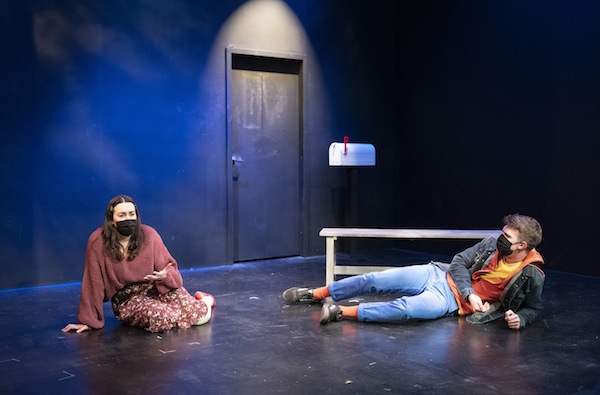
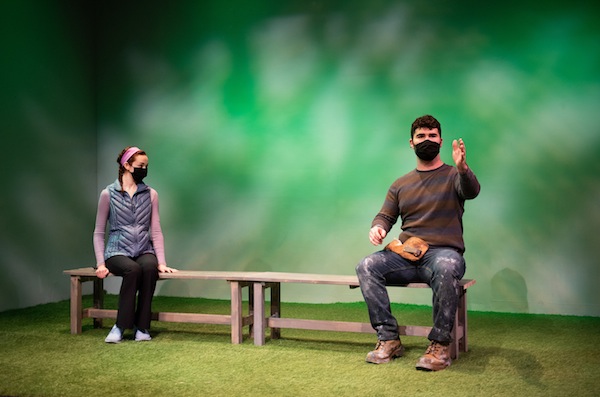
Katherine Matlashewski and Tanner Zerr in Fast Foward. (photo by Emily Cooper)

Since COVID-19, we have been learning how to relate to one another from a distance, as well as how to use the technologies, like Zoom, that have allowed us to retain a more personal connection than we could have if we had experienced the pandemic even a handful of years ago. While our reality seems stolen from the script of a futuristic sci-fi horror film, playwright Rosamund Small’s visions of love in the future and how technology affects it, TomorrowLove, are “hilarious, snappy, moving and refreshingly fun in these times,” according to Shekhar Paleja and Lauren Taylor, co-directors of Studio 58’s production of Small’s playlet collection.

Jewish community members Samantha Levy and Katherine Matlashewski are among the cast members of the production, which will be released online on Feb. 28 and available to watch individually or collectively until March 7.

Studio 58 is Langara College’s professional theatre training program, and this spring’s lineup – which TomorrowLove launches – is the first under the direction of Courtenay Dobbie. Both Levy and Matlashewski are in their second year of study.

“I was finishing up my first year when the pandemic began in earnest here,” Levy told the Independent. “COVID-19 has forced me to be more isolated from my school community through Zoom classes, but it has not taken away the care and dedication of my professors, or the support of my peers. We are still a family, even though we are distanced or online.”

It has become a hybrid program since the pandemic, with some classes online and others held in person with social distancing, said Matlashewski. “Since Studio 58 is a hands-on conservatory program, the transition to online studies was challenging at first,” she admitted. “The faculty and staff, however, have been extremely supportive during these uncertain times. They have all worked tirelessly to adapt our training while also prioritizing our safety.

“That being said,” she added, “as a result of COVID, students are now required to commute to and from the college quite a bit … [and] the hours of online Zoom classes are exhausting. Despite these challenges, I appreciate the continuation of our small in-person classes.”

Prior to her post-secondary training at Studio 58, Matlashewski appeared as Mopsy in King Arthur’s Court (Metro Theatre), where she received the Community Theatre Coalition Award for best supporting actress. Other select credits include Alana in Dear Evan Hansen (Laughing Matters), Luisa in The Fantasticks (Stage 43) and Little Red Riding Hood in Into the Woods: In Concert (Royal City Musical Theatre). Most recently, she was awarded the 2021 Cheryl Hutcherson Award by Applause! Musicals Society.

“I have been a part of the Vancouver theatre and dance community from a very young age,” said Matlashewski. “I feel incredibly blessed to live, create and play on the unceded territories of the Musqueam, Squamish and Tsleil-Waututh Nations.”

In TomorrowLove, Matlashewski said, “I have the pleasure of acting in the playlet called Fast Forward, alongside Tanner Zerr. This playlet explores themes of love, abandonment, age difference, time travel and the consequences that come with it.”

Levy plays the role of Jessie in the short play Take This Soul. “In Take This Soul, Jessie’s ex-partner, Rylan, shows up at her doorstep after having disappeared for four days,” explained Levy. “He tells an outlandish tale of an experiment in a distant country that has allowed him to return and present her with his literal soul.”

Samantha Levy and Riley Hardwick co-star in Take This Sou
Samantha Levy and Riley Hardwick co-star in Take This Soul. (photo by Emily Cooper)

In addition to this Studio 58 production, Levy’s acting credits include Love, Loss and What I Wore (Centaur Theatre), Fancy Nancy: The Musical (Côte Saint-Luc Dramatic Society, Segal Centre) and It Shoulda Been You (Dora Wasserman Yiddish Theatre, Segal Centre). Her TV and film credits include Annedroids and 18 To Life.

“I’ve been performing since the age of 5, when my parents signed me up for an extracurricular theatre troupe in my hometown, Montreal,” said Levy. “Little did they know that I would fall in love with performing! Since then, I’ve acted on stage and on screen, trained at the Stratford Festival’s Theatre Arts Camp, and dabbled in directing both plays and musicals. Now, I am so thrilled my love of acting has led me to Studio 58!”

But the experience is not what it normally would be, of course.

“During the pandemic, the lovely production team has been working extra hard to keep us all safe,” said Levy, “and that includes managing our schedules closely to avoid contact between folks. So, I have come to value the time I have with others in person even more. When we are in person, we are also wearing masks and social distancing at all times. This often means coming up with innovative new ways to express ourselves without proximity or touch on stage, which has been a wonderful challenge. It is incredibly uplifting for me to have the privilege to be able to continue to create with others, be vulnerable and connect.”

Acknowledging that the “pandemic has been an emotional rollercoaster for everyone,” Matlashewski said, “One of the challenges that I have faced is navigating acting while wearing a mask. Prior to COVID, I did not realize how much I relied on the non-verbal cues and facial expressions of my scene partners. However, now that two-thirds of the human face is covered by a mask, I find that I have to listen more closely to fully understand my scene partner. With that in mind, we all have had to adjust and be patient with ourselves and others.

“My biggest take away from acting during COVID is the importance of human connection,” she continued. “We have had to find new ways to connect and communicate while maintaining physical distancing. During the rehearsal process of Fast Forward, I discovered how social distancing impacted my acting choices. Since I had to maintain a two-metre distance from my scene partner, each movement that I made on stage had to be carefully considered. Our fantastic director, Lauren Taylor, guided us through this process and helped specify our blocking.

“Although we are required to maintain physical distance and wear masks while we are acting, I am thankful that I get to act in person for my first mainstage show at Studio 58.”

Reflecting on her connections to Jewish community and culture, Matlashewski said, “Within Judaism, community is a value that is held with the highest importance. Although we cannot gather in person, I invite you all to find the light where you can and share it with those around you.”

For her part, Levy said, “As my parents are across the country in Montreal and my brother (he’s a doctor!) is in St. John’s, Jewish culture and art are an anchor to the family who love me. Seeing Jewish representation in art is healing and beautiful.”

She then added a “non-performance-related anecdote.”

“I walked into a Jewish bakery during Chanukah to get a few latkes,” said Levy, “and I left with tears in my eyes and a bag full of items I had not planned to buy.”

To see one or all 13 of the TomorrowLove playlets, visit studio58.ca.

Format ImagePosted on February 26, 2021February 24, 2021Author Cynthia RamsayCategories Performing ArtsTags acting, coronavirus, COVID-19, Katherine Matlashewski, Langara College, Samantha Levy, Studio 58, theatre
Reform shuls partner

Reform shuls partner

Rabbi Allan Finkel of Temple Shalom in Winnipeg initiated the collaboration. (photo from facebook.com/TheCJN)

Five Reform synagogues in Western Canada have banded together to offer their congregants greater opportunities to share resources, participate in services, celebrate holidays, and connect at cultural and educational events. The congregations participating in the Western Canadian Reform Collaboration include Temple B’nai Tikvah in Calgary, Temple Beth Ora in Edmonton, Kolot Mayim Reform Congregation in Victoria, Temple Sholom in Vancouver and Temple Shalom in Winnipeg.

Rabbi Allan Finkel, spiritual leader of the Winnipeg congregation, initiated the collaboration. “I had come to recognize that, because of COVID-19, we were all starting to develop innovative digital content – educational and cultural programs and events – that we were each delivering within our own congregations and communities,” Finkel said.

The delivery of that digital content, whether for holiday celebrations or for Jewish ritual events such as baby namings and shivas, consistently demonstrated that people thousands of miles apart could sit side by side online and connect in meaningful and spiritual ways.

“For me, the Western Canadian Reform Collaboration was a practical next step – simply, the opportunity for each of us to share our unique liberal Jewish programs and events with fellow congregations and congregants across Western Canada,” he said.

Reform Judaism in Western Canada, as in the rest of the country, remains a relatively small denomination compared to that of the United States. And yet, every one of the synagogues has experienced increased membership interest and engagement in the months since COVID arrived and synagogue life moved from the sanctuary to virtual space.

“Surprisingly, our participation has risen sharply during the pandemic,” said Rabbi Mark Glickman, spiritual leader at Calgary’s Temple B’nai Tikvah. “I think the isolation that people are feeling has made them yearn for connection, which is something the religious community is uniquely positioned to provide.”

Rabbi Lynn Greenhough has found that to be the case among her congregants in Victoria, as well. “We have had more people attend services than ever before,” she said. “Their attendance may be a human hunger for connection with others. Even if all we see is a face and hear one voice at a time, there is connection and continuity.”

photo - Since COVID-19, Kolot Mayim Reform Temple’s Rabbi Lynn Greenhough said, “We have had more people attend services than ever before”
Since COVID-19, Kolot Mayim Reform Temple’s Rabbi Lynn Greenhough said, “We have had more people attend services than ever before.” (photo from Kolot Mayim)

That sense of connection and continuity will be enhanced through joint programming with the other Western Reform synagogues. Much of the programming is still being developed, but it already includes a livestreamed, co-sponsored event scheduled for March in celebration of International Women’s Day. The event will be hosted by Finkel and feature Greenhough and Temple Beth Ora’s Rabbi Gila Caine as two of the speakers.

Even after COVID restrictions are lifted entirely and in-person synagogue attendance is allowed to resume, the Western rabbis intend to keep offering virtual programming and to keep working together. The collaboration might have been initiated by the pandemic, Greenhough said, but it is not limited to the pandemic. “In many ways, I think this pandemic has forced us to reassess what works for those of us in organized, institutional religious practice, what are our delivery systems, and how can we make these systems most effective and most inclusive,” she said.

That reassessment is motivating the members of the Reform collaboration to keep redefining what they mean by community, developing a variety of learning and liturgical opportunities, and breaking out beyond the traditional walls of their buildings.

“As for the long term of our Western Canadian Reform Collaboration,” Finkel said, “we see this as a work in progress as we figure out what to share and how, but it has a solid foundation of rabbis finding that we like each other and that we enjoy working with each other. Our championing of this initiative and in developing shared, co-sponsored events won’t stop when COVID-19 ends.”

This article originally was published on facebook.com/TheCJN. For more on Rabbi Lynn Greenhough, see jewishindependent.ca/kolot-mayim-installs-rabbi.

Format ImagePosted on February 26, 2021February 24, 2021Author Sharon Chisvin The CJNCategories NationalTags Allan Finkel, coronavirus, COVID-19, education, Lynn Greenhough, Mark Glickman, Reform, technology, Western Canada
Waldman thrives

Waldman thrives

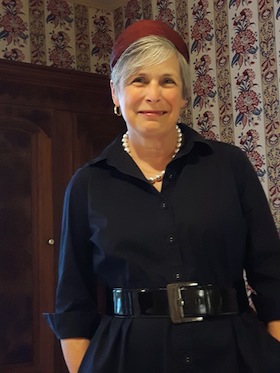
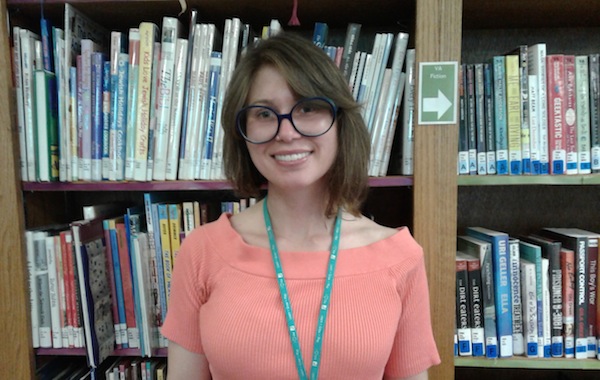
Aviva Rotstein, full-time coordinator of the Isaac Waldman Jewish Public Library, is only the fourth person to head the facility. (photo from Waldman Library)

In a time of reduced social interaction, people have turned to books, videos, audiobooks and other pursuits to entertain and enrich. Libraries have had to find ways to deliver their services while maintaining strict protocols around cleaning and maintaining distancing.

For the Isaac Waldman Jewish Public Library, the last year has been a period of adapting to changing public health directives, and finding new ways to provide services to members and the public. Having marked its 25th anniversary in recent years, the library, located in the Jewish Community Centre of Greater Vancouver, like so many other agencies worldwide, turned on a dime to meet readers’ needs.

Aviva Rotstein had just taken over as interim library coordinator after the retirement of longtime librarian Helen Pinsky in December 2019. She became permanent coordinator in May. Guided by provincial rules and in coordination with the JCC, Rotstein and the library responded rapidly.

Like most of the world, the library shut down completely in March 2020, but continued providing access to ebooks and audiobooks online. New members joined specifically for these resources, said Rotstein.

In May, the library started offering curbside pickup and drop-off services, as well as launching a delivery service to Vancouver residents, later expanded to Richmond. By late summer, the library was open by appointment. It is now back to regular hours of 10 a.m. to 6 p.m. Monday to Thursday, and Sundays 10 a.m. to 1 p.m. Families are especially welcome on Sundays and kids’ storytimes can be arranged by request.

Cleaning protocols remain vigilant, with hard cover books and items like DVDs sanitized on return and other items sequestered before being recirculated.

Rotstein assumed the leadership of the library at this extraordinary time and she is one of a surprisingly small number of individuals – four, to be precise – who have headed the facility.

Talk of a Jewish public lending library began seriously almost 30 years ago. The first meeting of the JCC’s ad hoc library committee took place Oct. 29, 1991. The minutes include a brief synopsis of the Jewish community’s libraryscape. There were existing small libraries in synagogues and schools, as well as a Jewish Resource Centre, run by Betty Nitkin and aimed at educators, and a small Jewish library with no budget, run by Rita Weintraub.

While the Waldman Library is, to many visitors, a central part of the JCC experience, it was not a foregone conclusion when the building was being redeveloped in the early 1990s. Larry Barzelai, a family doctor who was on the board of the JCC, chaired the library committee.

The redevelopment of the community centre was the impetus for the push to get a permanent library, he said.

“We had to convince them that the library was a good thing to have,” Barzelai recalled. “My friend Karl Taussig was quite supportive of the library from day one. He was president of the JCC at that time.”

There were concerns about the economic viability of the project and the idea was not secured until Weintraub obtained the enthusiastic support of philanthropist Sophie Waldman. Waldman’s late husband, Isaac, was good friends with Weintraub’s husband, Marvin. Waldman saw the library project as a fitting tribute to her husband, who, she said at the time, “had a deep interest in education and agreed with Ahad Ha’am that the future survival of the Jewish people depends on learning through the richness of our literary heritage.”

With the library’s viability assured, any hesitation on the part of the JCC board dissipated.

“They were totally on side by the time the new JCC was built and the library took a prominent place in there,” said Barzelai.

After years of planning, the library opened with a literary splash on Nov. 15, 1994. Renowned Israeli author Amos Oz spoke on “Israel through its literature” and Rabbi Dr. Yosef Wosk affixed the mezuzah. (Wosk succeeded Barzelai as chair of the library board.)

The first librarian was Eric Pellow, who served a number of months until Karen Corrin began a 20-year run at the head of the library. Corrin had just finished library school when she was hired, but her previous work experience was ideally suited to the role. She had worked with the Vancouver Volunteer Centre (now Volunteer Vancouver) and, since the Waldman Library’s vision was to engage volunteers, Corrin’s combination of experience and skills was deemed an ideal fit.

From the start, she said, the Waldman Library was surprisingly unique. At conferences of the Association of Jewish Libraries, Corrin discovered there were very few community centres that had a public library independent of a school or as part of the local Jewish federation.

Corrin credits Rita Weintraub, who passed away last year, as the mobilizing force behind the project.

The purpose of the library was a matter of discussion and the first years were a time of learning, as new technologies in the world generally and libraries in particular were burgeoning.

“When I went to library school, it was just the beginning of the internet,” said Corrin. “When I got to the library, it was card catalogue … there was no computer system and that had to be developed.”

Figuring out what the community wanted in a Jewish public library was paramount, she continued. It was decided that it should be a lending library that is also a meeting place for everybody in the community – religious, secular, academic and avocational, all ages and interests, including resources in English and Hebrew.

“It is not an Orthodox library or Reform library, it’s a Jewish library,” said Corrin. “It meets the needs of the whole community.”

Like Corrin, Helen Pinsky had also just completed library school when she was tapped to lead the Waldman Library.

Pinsky was a lawyer who, after the last child took off to university, decided to make a shift herself and returned to study. Library people, she determined, were more her type.

“Lawyers were smart people who wanted to show off their smarts and were Type A and librarians were smart people who were curious and were Type B,” she said. “Going to university was a hoot in your 50s, oh my God. I was the bubbe of the group.”

While still a student, Pinsky spoke to Corrin about volunteering. She ran some storytime programs and filled in for other volunteers at the library. She completed her program in spring 2011 and then took the summer off.

“Come September, I decided one day that I’d better brush off my resumé and start thinking about actually doing something with this degree that I had just earned in May,” Pinsky recalled. “So I went to my computer and I found this very old copy of my resumé and was just looking at it and the phone rang and it was Karen, who said, hi Helen, have you graduated from library school yet? She said, congratulations. How would you like a job?”

Pinsky filled in while Corrin took a leave of several months, then worked as library assistant until Corrin retired in 2015. Pinsky retired on Dec. 31, 2019.

Reflecting on the meaning of a Jewish public library, Pinsky said, “I think it plays the role of any public library and then some. What is a public library to a community? It’s a place for gathering, it’s a place for learning, it’s a place for connecting, with knowledge, with information, with resources and with people.”

Rotstein, the latest in a short line of library leaders, is the first to have childhood memories of the place.

“When I was a child, I came into this library,” she said. “It’s very familiar.”

In addition to her long personal connection to the library, Rotstein sees the place in the context of a much larger connection.

“I think we provide a link to Jewish thought and imagination from the Jewish past and the present,” she said. “We offer a low barrier to participation as much as we can, and we strive to be an accessible and welcoming place for everyone. We try to uphold the Jewish value of learning and knowledge.”

Format ImagePosted on February 26, 2021February 24, 2021Author Pat JohnsonCategories LocalTags Aviva Rotstein, coronavirus, COVID-19, Helen Pinsky, history JCC, Karen Corrin, Larry Barzelai, Waldman Library
Community milestones … Rosenblatt, Klein, Cohen Weil

Community milestones … Rosenblatt, Klein, Cohen Weil

Dr. Cirelle Rosenblatt (photo from pesachonthemountain.com)

The Stroke and Brain Injury Assistance Organization (BINA), based in New York, awarded Dr. Cirelle Rosenblatt their Brain Injury Leadership Award on Jan. 24.

Created in 2003, BINA provides guidance and support to thousands of stroke and brain injury survivors and their families. Dr. Rosenblatt has been involved with BINA since its early days.

Dr. Rosenblatt has worked as a neuropsychologist for more than 25 five years in a wide range of rehabilitation medicine settings. She is a sought-after expert in neuropsychological evaluation and therapy.

Dr. Rosenblatt trained and worked at leading facilities in the United States prior to moving to Vancouver with her family in 2003.

She founded and is currently the clinical director of Advance Concussion Clinic (ACC). Located in Vancouver and Surrey, ACC is British Columbia’s only dedicated concussion clinic. She also serves as a consultant to national and Olympic snow athletes and teams, and other professional and competitive athletes.

Mazal tov to Dr. Cirelle Rosenblatt!

* * *

photo - Alison Klein
Alison Klein

Alison Klein was selected to participate in the CBC Hot Docs Podcast Career Accelerator, which took place during the CBC Hot Docs Podcast Festival (Jan. 27-29). She was one of 70 emerging Canadian audio creators chosen for their innovative Canadian podcasts. Alison’s show, The Self Advocate, was created to provide a forum to talk to people with cognitive disabilities who advocate for themselves. It can be heard on Co-op Radio 100.5 FM or coopradio.org, and is available on Spotify and other podcast providers.

* * *

photo - Ayelet Cohen Weil
Ayelet Cohen Weil (photo from Louis Brier Foundation)

The board of directors of the Louis Brier Foundation recently announced the appointment of Ayelet Cohen Weil as the new executive director of the foundation. With more than 12 years of experience working in Jewish community organizations, both in British Columbia and in Israel, Cohen Weil brings an impressive background in nonprofit management, fundraising, strategic planning, community relations and development.

Prior to joining the foundation on Feb. 1, Cohen Weil held the position of associate director of community engagement at the Jewish Federation of Greater Vancouver, as well as manager of women’s philanthropy and manager of major gifts for Jewish Federation’s annual campaign. Her previous experience includes working in academia at the Interdisciplinary Centre Herzliya, as well as serving as managing director of Hillel BC. She holds a master’s degree in public policy, conflict resolution and mediation, with international mediation certification and distinction from Tel Aviv University.

The Louis Brier Foundation has a broad perspective and commitment in fulfilling its mission statement, and raising funds to maintain and foster the well-being, care and happiness of the seniors of the Snider Campus, site of the Louis Brier Home and Hospital and the Weinberg Residence.

“This year, one like no other, and after more than 12 years of working in Jewish communal life and being exposed to the many facets of the fabric of our community, I have been pondering upon the vitality in embracing, more than ever, the value of caring warmly and worthily for our seniors, the ones who built our community for us in the first place,” said Cohen Weil. “They are the living examples of our aspirations: the builders, the thinkers, the visionaries, the creators.

“I started working with the young generation in my years in Hillel and then at Federation across the community…. I truly wish to impress upon the younger generation how important this is for immediate family members and for the kavod we owe to our elderly. I would love to raise even more the profile of the centrality of this foundation in our community across all generations. This, for me, is thinking of the fabric of our Jewish community … in its full cycle and in its entirety. This is what excites me the most – to hopefully be able to contribute and create a large impact where it’s mostly needed after what we have experienced in 2020 with the COVID-19 pandemic…. To now be part, as well, of ensuring that the physical, mental and spiritual needs of our Jewish seniors are met so that they have a life of dignity, fulfilment and happiness, which they so much deserve…. Anything that would bring an extra smile, a feeling of comfort and warmth to Jewish seniors in our community is never too much, and I am incredibly excited and humbled for this opportunity.”

Format ImagePosted on February 26, 2021February 24, 2021Author Community members/organizationsCategories LocalTags Alison Klein, Ayelet Cohen Weil, BINA, brain injury, Cirelle Rosenblatt, COVID-19, health, Louis Brier Foundation, podcasts, seniors, stroke, The Self Advocate

Combat online hate

Since the beginning of the pandemic, we have been confronted by two viruses: COVID-19 and, in its wake, the rampant spread of online hate.

As much of the world has been forced indoors, our time on the internet using social media has increased, which has advantages. We have found new ways to engage, stay in touch with our loved ones, and maintain and transform our connections to our workplaces and the world.

But the same technologies that have allowed us to keep connected have also served as springboards for the spread of online hate and conspiracy theories, which form the perfect Venn diagram of antisemitism. Since the pandemic broke, we have witnessed the emergence of ludicrous conspiracy theories accusing Jews of being responsible for the spread of COVID-19 or of profiting from the havoc. As a community that has consistently encouraged compliance with public health measures, we may be tempted to dismiss these outlandish conspiracy theories as nonsense. It is a type of nonsense, however, that spreads quickly and remains a cause for great concern.

Recent history has taught us that what begins online as the absurd mutterings of a few haters can, and too often does, turn into real-world violence. What we witnessed in Pittsburgh, Christchurch and Halle can certainly happen again. The threat is even greater today because people are spending more time online while also under considerable financial and emotional stress, a combination that makes people even more susceptible to messages hate-mongers are peddling.

Curbing online hate has been a priority for the Jewish community – and, therefore, for the Centre for Israel and Jewish Affairs – for nearly a decade. Since the beginning of the pandemic, we have remained on high alert, monitoring the emergence of antisemitic and hateful activity and bringing it to the attention of law enforcement and social media platforms.

Recently, we launched Stop the Transmission! (cija.ca/stop-the-transmission), a campaign powered by CIJA and funded by Canadian Heritage through the Anti-Racism Action Program. The campaign has provided practical tools and tips to hundreds of thousands of Canadians to identify and slow the spread of conspiracy theories, misinformation and deliberate disinformation.

We have also engaged directly with social media giants and are proud to have collaborated with our colleagues at the World Jewish Congress to urge Facebook to ban Holocaust denial, one of the most pernicious forms of Jew-hatred, from their platform, an action they took earlier this year.

We continue to call on social media companies to adopt the International Holocaust Remembrance Alliance definition of antisemitism, the most widely accepted definition in use today, including by the Government of Canada, who adopted it as formal policy in its 2019 Anti-Racism Strategy. In response to the global collective effort of our community, Facebook’s chief operating officer, Sheryl Sandberg, said “the IHRA’s working definition of antisemitism has been invaluable – both in informing our own approach,” and that Facebook would “continue to refine” its “policy lines as speech and society evolve.”

A continuing aspect of our work is advocating for governments to advance policies to address online hate directly. Federally, we continue our call for a national strategy on online hate that includes clear, harmonized and uniform regulations that apply to platforms and providers operating in Canada, as well as an independent regulator to enforce them. You can help by visiting notonmyfeed.ca and taking action.

CIJA is also working with Canadian Heritage to host the Action Summit to Combat Online Hate, scheduled for April 14-15. You can pre-register at cija.ca/action-summit. The summit will feature discussions with experts, law enforcement, industry leaders and community groups like ours. The goals are to create greater understanding of the issue and develop concrete actions to address it.

Even once the pandemic is over, our migration to the digital world will endure. We, therefore, must stay committed and united in our efforts to combat antisemitism and other forms of hatred online.

Judy Zelikovitz is vice-president, university and local partner services, at the Centre for Israel and Jewish Affairs.

Posted on February 26, 2021February 24, 2021Author Judy ZelikovitzCategories Op-EdTags anti-racism, antisemitism, Canadian Heritage, Centre for Israel and Jewish Affairs, CIJA, coronavirus, COVID-19, Facebook, online hate, Stop the Transmission!

Youth during the pandemic

Eleven months into the global COVID-19 pandemic and the statement, “we are living in unprecedented times,” has become commonplace and cliché. But, truth is at the root of this clichéd phrase. Finding and feeling our way through this new reality has been fraught with stark and opposing responses; from being immobilized and stuck, to being re-inspired and productive. As an educator and counselor who has been working with tweens, adolescents and adults in the community, I have witnessed both responses, or states of being, which are completely understandable and interchangeable as minutes turn into hours, as hours turn into days, as days turn over into weeks, and weeks turn into months.

For the purpose of this article, I want to focus on how the tweens and adolescents I work with have acknowledged that, while living life through COVID-19 is extremely tough, they have found, as the late Maya Angelou phrased it, “rainbows in the clouds” during this period. It is important to acknowledge the challenges youth face, such as experiencing restrictions to peer group interactions and experiencing the change of their schooling to remote learning. Further, an important yet more general challenge youth have faced is that the developmental stage these tweens and adolescents are in is typically punctuated by healthy detachment from their families and, in turn, usually is a period where more independence is fostered. This has been halted, interrupted and/or confused, as COVID-19 has demanded that youth are at home with their parents and families.

My overarching teaching and therapeutic philosophy is to meet the individual where they are. I try to listen to their spoken and unspoken language without handing out a quick fix. I am interested in how individuals, especially tweens and adolescents, connect with themselves as their lives have slowed down, as they have retreated to bedrooms, and in-person interactions and experiences have reverted to screens and the virtual world.

To facilitate a way into the interiority of my clients, I use the modalities of expressive arts therapies, contemplative writing and mindfulness practices. In the sessions I hold with them, they commiserate on how life is for them; grieving the smaller and larger losses and disappointments they have experienced; they freely use the session to rant and complain, and share their fears and anxieties. I then work with them in various creative and expressive modalities, which has enabled them to clarify, settle, discover and deepen a connection to their mind, body and heart.

Conducting expressive art exercises on secured video has been a poignant and immediate process. Using the shared-screen option, tweens and adolescents have been able to create and present their creations in real time. Expressive art therapies have encouraged self-discovery and enabled youth to access a range of emotions and insights that many of them did not even know they were experiencing. Engaging in exercises such as “what is in my heart?,” “draw a place,” “shape of me” (for which they can attach photos) have lowered stresses and anxieties, assisted in attention span and focus, and created an emotional uplift and emotional awareness. In these stressful, highly anxious times, expressive arts therapies have assisted greatly in calming, centring and linking youth to both their interior selves and the larger landscape of their lives, despite the uneasy and ongoing pandemic landscape.

Contemplative writing is a compassion practice that encourages one to write whatever the mind has to offer. It is a modality that helps to access who we are, what we need and what we want. It is an embodied practice that allows connection of one’s head, heart, body, breath and the page. Individual contemplative writing sessions have enabled youth to listen fully to themselves and the stories they need to tell and share. It has enabled youth to be listened to and, furthermore, to understand their own insights and often non-realized thoughts. I often tell my clients: tell your stories, I will hold your words and the spaces between them. The modality of contemplative writing has allowed youth to gain confidence and feel empowered, as they accessed and used their own voices, and overall experienced a sense of agency through their writing, telling and sharing of stories.

Throughout my sessions, in conjunction with expressive arts therapies and contemplative writing, I often employ various mindfulness practices. The general aim of mindfulness is also to connect with oneself. For tweens and adolescents, who are used to, even in COVID-19, a fast-paced, pop-up, manic existence with multiple devices in reach of their hands and gazes, mindfulness offers a sharp departure. The frenzied pace of day-to-day life often increases anxiety and depression in young people. It needs to be said that, often, the anxiety and depression is more of a low-grade malaise that we are unaware of until we begin to practise mindfulness.

Generally, mindfulness involves slowing down, delving into a deeper breath, noticing and following through into various practices to relax the mind and body. With tweens and adolescents, I also invoke the senses, encouraging them by carrying out exercises that use guided imagery and engagement of the five senses. This sensory engagement includes holding and touching various objects and taking time to peel and eat (taste) an orange. In the slowing down, in the distillation to being in the moment, in the focus of breath awareness and sensory awareness, I have found youth to become more relaxed, receptive and connected. Once they have practised mindfulness, it serves as a useful and cushioning tool whereby youth are able to calm and centre themselves as they navigate their day-to-day lives.

Dr. Abby Wener Herlin holds a doctorate degree from the University of British Columbia. She is the founder of Threads Education and Counselling and works with tweens, adolescents and adults. She carries out themed social justice and creative arts and writing workshops for students, teachers and schools. She is available for therapeutic sessions and contemplative writing workshops. She can be reached at [email protected] or via threadseducation.com. This article was originally published on health-local.com.


Posted on February 26, 2021February 24, 2021Author Dr. Abby Wener HerlinCategories Op-EdTags adolescents, children, COVID-19, expressive arts, health, mindfulness, therapy, tweens, writing, young adults

A livelihood, not a hobby

So enthralled am I by the sheer volume and calibre of free online Jewish learning opportunities since the start of the pandemic, that I sometimes forget that the people who do the teaching do it as their livelihood, not as a hobby. Therein lies the problem.

We, the students, the partakers of all manner and sorts of online classes and lectures during COVID, gobble up the learning as though it’s candy, or fine wine. We sit in front of our laptops, tablets and smartphones and act for all the world as though we deserve this high level of education. It should rain down upon us. We’re Jews. We’re the People of the Book. We’re entitled. Teach us!

Make no mistake: we are blessed to be the recipients of this stratospheric level of dedication, and we should not and cannot take it for granted.

But, sometimes, we forget.

We forget that the rabbi or rebbetzin or Jewish scholar or educator who is teaching us needs to feed their family and pay their bills. We forget that we need to support them just like they support us. Too often, we blithely go on learning from week to week, month to month, blissfully ignoring this reality. Yet, we expect a paycheque. Or a pension check, if we’re lucky. Why shouldn’t they?

Zoom classes have become as common as dust since the beginning of the pandemic. Every Jewish religious and/or spiritual organization I can think of is offering Zoom classes weekly, if not daily. They have filled the gaping holes that once were our thriving, healthy, “normal” lives. These same Jewish organizations recognize the desperate need for some kind of normalization, some sort of lifesaver for people to hang onto. In the absence of our daily routines of work, socializing and gathering together as a community, there is little left to celebrate, never mind sustain us. Local synagogues have leaped into the abyss to lift us all up, or those of us who needed lifting, anyway. They have rallied together to create curricula, offer Torah classes, general Jewish study courses, podcasts, livestream videos and so much more. Not only because it’s the source of their livelihood, but because they feel our desperate need, the soul’s yearning for Jewish learning.

There is enormous comfort in seeing others – even if only virtually – and knowing that we are studying Jewish topics together, learning as a community. The overwhelming isolation felt by so many people right now is beyond description. The personal losses, the devastating repercussions from COVID-19 can’t be counted. Our lives have been turned upside down in every way imaginable. And then some. But learning offers hope.

Sure, everyone copes differently with the pandemic, but anybody who says they haven’t been affected by it is just plain lying. Being the adaptable creatures that we are, we take comfort (or relief) where we can find it. For some, it’s food, or alcohol, or Netflix. For others, it’s learning. And, for others still, it must be Jewish learning. Something draws us – something draws me – to our heritage, our history, our Judaism. And, suddenly, we are home.

Myriad times, sitting in front of my computer during or after a Zoom class, usually given by a rabbi, I find myself weeping. Partly as a release from all the stress and anxiety I’m feeling right now; but mostly from a deep sense of gratitude. Gratitude that we, as a community of Jews, haven’t been forgotten. That, amid the detritus of COVID, our faith leaders have intuitively known that we need help, that we can’t do this on our own. So they step up to the plate, full of enthusiasm and inspiration, and they fill us up. Not only do the classes inform us and expand our brains, but they benefit us by keeping us moving forward in a meaningful, purposeful way.

So, why am I writing all this? To remind each and every one of us, myself included, that we should be menschen and pay the favour forward. Pay it, literally, to every rabbi and rebbetzin and Jewish scholar or other educator who shares not only their time, but their wisdom, to help us get through this pandemic in the most meaningful way they know how. Make a donation. Show you care. Make as many donations as you’re able. Big or small, the act is a sign of appreciation. A sign that we value the learning. A sign that we know little, and yearn to know more. A sign that we appreciate their caring, knowing that they will do anything in their power to help. And G-d knows we need it right now. So, whatever we do, we shouldn’t forget to support those who support us.

It would be the century’s grossest understatement to say that I’ve learned a lot during the pandemic. Sure, I’ve learned immeasurable things about human nature and caring and compassion. But I’ve also expanded my Jewish learning a hundred-fold, maybe a thousand-fold. The pandemic has given me the time. But those doing the teaching have given me the inspiration, the foundation, the thirst for more. Instead of being overcome with hopelessness, I’m filled with hope. I see a pattern to life, a way out of this. That is no small thing. We need to pay it forward. Or pay it back. Either one will do.

If there’s a global sense of helplessness pervading much of what we do these days, we can counteract that by not only feeling grateful, but showing it. It could be construed as crass to say that we should pay for our Zoom classes and livestream lectures and podcasts. So be it. Call me crass. It wouldn’t be the first time. Just get out that credit card and do the right thing.

Shelley Civkin is a happily retired librarian and communications officer. For 17 years, she wrote a weekly book review column for the Richmond Review. She’s currently a freelance writer and volunteer.

Posted on February 26, 2021February 24, 2021Author Shelley CivkinCategories Op-EdTags coronavirus, COVID-19, education, Judaism, online learning, synagogues
בעידן המגפה הקשה

בעידן המגפה הקשה

את הלוויות של אבי ראיתי עם עוד מספר בני משפחה וחברים באמצעות “הזום” בשעה שתיים לפנות בוקר לפי שעון ונקובר.

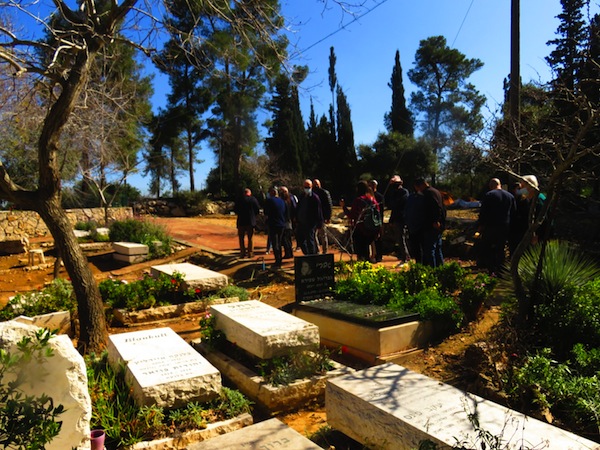
הפעם הרגשתי מקרוב את הנזקים האיומים שמגיפת הקורונה עושה לנו, לחיינו, לקרובים כמו גם לרחוקים. אבי, משה רחמני, בן התשעים ואחד נדבק בנגיף בבית החולים איכילוב שבתל אביב, ולאחר פחות משבועיים נפטר מסיבוכים קשים. אני לצערי לא הצלחתי לעזוב את ונקובר והגיע להלוויתו שהתקיימה ביום ראשון האחרון, בבית הקברות האזרחי של קריית ענבים, בגלל שקשה מאוד לטוס מכאן בעת הזו. לפחות שתיים-שלוש עצירות בדרך ואני הייתי צריך לקבל בנוסף אישור מיוחד ממשלת ישראל להגיע להלוויה. לאחר מכן היה עלי להיכנס לסגר באיזה שהיא מלונית בישראל למשך כשבועיים ימים. ובחזרה לקנדה הייתי צריך לעבור הליך סיוטי דומה. החלטנו לכן במשפחתי שלא אטוס. זו היתה החלטה קשה אך מתבקשת בימים אלה.

את הלוויות של אבי ראיתי עם עוד מספר בני משפחה וחברים באמצעות “הזום” בשעה שתיים לפנות בוקר לפי שעון ונקובר. בקריית ענבים השעה הייתה שתיים עשרה בצהרים, וכארבעים איש הורשו להגיע לבית הקברות, בראשות אמי, לוצי רחמני שגם היא בת תשעים ואחת, ואחי, אמיר רחמני, שניהל את הטקס הקשה הזה. זה לא פשוט לראות איך קוברים את אבא שלך כל כך מרחוק – באמצעות הטכנולוגיה המתקדמת, במקום פשוט להשתתף בטקס צנוע עם חברי משפחה וחברים קרובים. זה מאוד מוזר ויוצר הרגשה של ניכור ומרחק המאוד אופיינית לעידן מגיפת הקורונה, ששינתה את חיינו לחלוטין.

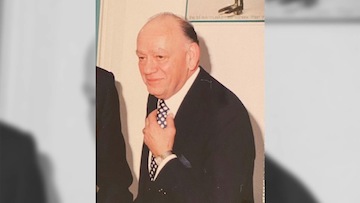
photo - My father, Moshe Rahmani, ninety-one years old, contracted the virus at Ichilov Hospital in Tel Aviv, and after less than two weeks died of serious complications
אבי, משה רחמני, בן התשעים ואחד נדבק בנגיף בבית החולים איכילוב שבתל אביב, ולאחר פחות משבועיים נפטר מסיבוכים קשים

אני נפגשתי עם אבי לאחרונה רק לפני קרוב לשנה. היה זה בחודש מארס אשתקד, שבוע לפני שקנדה הכריזה על סגר לאור המגפה שהחלה לתפוס תאוצה בכל רחבי העולם. הגעתי לישראל למספר ימים כדי לפגוש את הורי בביתם בתל אביב. הם חששו קצת מהחלטתי לטוס כי אולי אני אדבק ואז גם אסכן אותם. הביקור עבר בשלום ובשלווה. הספקתי לשבת עם הורי ערב ערב ולשוחח שעות על שלל נושאים. אחרי שבוע טסתי בחזרה לוונקובר ולא ידעתי אז (כמובן) שאלו יהיו הפגישות האחרונות שלי עם אבי.

אבי נולד בירושלים. הוא גדל בבית דתי אך כבר כתלמיד תיכון החליט לבחור בדרך אחרת – חילונית. אמי ילידת אוסטריה הגיעה עם משפחתה לישראל עת הייתה בת שמונה. תחילה לנהלל ולאחר מכן המשפחה התיישבה בירושלים. הורי הכירו איפוא בירושלים ולאחר שלוש שנות חברות התחתנו ונשארו ביחד למשך שבעים שנה עד למועד פטירתו של אבי. הם הספיקו לגדל את אחי ואותי בביתם ברחוב המלך ג’ורג’ שבמרכז העיר. לאחר שעזבנו את הבית, הורי עברו לשכונת בית הכרם. לבסוף הם מאסו בירושלים ולפני כשבע עשרה שנה עזרו אומץ ועברו לתל אביב ופתחו בחיים חדשים.

אבי עבד כל חייו בתחום הביטוח בתקופת מגוריו בירושלים. הוא יצא לפנסיה עם המעבר לתל אביב. בעת שגר בירושלים נחשב לאוהד שרוף של קבוצת הכדורגל בית”ר ירושלים, וצפה במשחקים רבים מהיציעים במגרשי הכדורגל ברחבי הארץ. בשנות השמונים המיר את המגרשים בטלוויזיה ועד לאחרונה צפה במרבית המשחקים של בית”ר.

אבא נחלש בתקופה האחרונה ולפני שלושה שבועות הוא אושפז לטיפול מאסיבי בבית החולים איכילוב. שם לתדהמת כולנו נדבק בקורונה ומטבע הדברים מצבו החמיר מיום ליום. אמי, אחי ושתיים מהנכדות הספיקו לבקר אותו יום לפני מותו. התמונה הייתה קשה מנשוא. עכשיו הוא לא סובל יותר.

היום אני יכול להביו היטב את המשפחות שאיבדו את יקיריהם שנדבקו בקורונה.

Format ImagePosted on February 17, 2021February 17, 2021Author Roni RachmaniCategories עניין בחדשותTags Canada, coronavirus, COVID-19, death, Israel, mourn, parents, הורים, ישראל, להתאבל, מוות, קורונה, קנדה

Posts pagination

Previous page Page 1 … Page 4 Page 5 Page 6 … Page 17 Next page
Proudly powered by WordPress